4 751 résultats
Folio. 3 pp. With integral address leaf. Appointed by King Henri III, Jacques de Germigny served as French Ambassador to the Ottoman Empire from 1579 to 1585. - Writing to Lieutenant General M. de Montholon, recounting the torment of two Jewish women and their Jewish and Christian lovers: "[…] nous attendons encor de ce coste là le boyteaux avecq les gallères du cappitaine Bassa lequel est Osman Bassa [Assan Bassa, roi d’Alger] sont ycy attenduz en bonne dévotion. Nottamment led. Osman que ce seigneur veult faire triompher à son entrée audid Constantinople pour sa valeur et ses conquestes qu’il a faites […]. Et le mesme mofti a envoyé un fetfa ou advis à cedit seigneur portant que si son Altesse lui alloit en personne au devant qu’elle ne feroit chose qui fust contre leurs lois. Et ia esté deffendu par cry publicq à touttes femmes de ne se trouver le jour de lad. entrée par les rues, sous grand peine, ainsi demeurer aux maisons et à venir par les fenestres pour plusieurs respects. Et sur ce propos je vous diray qu’il se faict teftis ou informations aud. Constantinople en tous les quartiers ou parroisses des mosquées de la prud’hommie et chasteté de toutes lesdictes femmes turques à l’instance des spahis et aïas bassi, pour avoir esté trouvées et prinses en adultère ces jours derniers. Deux femmes de semblables hommes leurs compaignons qui se retrouvent à la guerre, l’une avec un Juif qui en fut samedy dernier empallé vif, devant la porte de la grande sinagogue, qui soit audit, et icelle ayant esté noyée. Et aultres pour avoir esté aussi prinse avec un chrétien arménien, que l’on tient, seront ensemblement et aujourd’huy traynez à la queue d’un cheval les visaiges contre terre par tout ladit. ville. Et après s’ils auront encore vie mis aux Ganches sur le port […]". - Early diplomatic correspondence relating to the Ottoman Empire, especially on such a delicate matter, is of the utmost rarity.
8vo. 9 pp. On three bifolia attached to one another with green string. A letter by a member of the British Consulate in Trieste, apparently written to a British official in Cyprus, responding to an enquiry regarding "the probable price of a pair of horses about 15 hands". "The kind of horses that you speak of are known here as 'Jukers', light, active, strong [...], fast trotting, able to go 14 kilometres an hour. A pair of horses of such description 5 years old & sound will cost about fls 1200 or say £100. Hungarian horses in my opinion will suit the best for your Island as they have Arab blood in them". The writer explains that he is not a dealer himself, "but being very fond of horses & having many native friends in India I have very often occasions to buy for them & also for my brother, who resides in Bombay at present". He explains that "no good horses are to be found in Trieste", and that "as a rule" he visits "the fairs in the interior" to buy horses. He names the four breeding farms of the Hungarian Government and describes the types of horses bred at each ("lastly the Fogaras stud, where stallions from the Lipizza private farm belonging to the Emperor are supplied"). Describes the auction of the "superfluous horses of these establishments of the age of 4 & 5" at "Tattersall's in Budapest in the 1st week of October", with prices for each type of horse, giving examples from his own experience. "Two British Cavalry officers belonging to the Egyptian Army came over here in the Autumn of 1896. They bought 60 remounts for the Egyptian cavalry. The Greek Cavalry & Artillery are wholly supplied with horses from Hungary". While discussing "sires for breeding purposes" he mentions that he knows "the Director of the Lipizza farm [...] personally" and gives the price at which he is offered superior horses by him. Ends with details of possible "charge for freight on each horse to Cyprus". - Text clear and complete.
4to (240:190 mm). 8 pp. on two double-leaf stationery, watermarked "Original Malling Mill Kent". To "my dear Smith": "It is most pleasing to see here the S[lave] T[rade] is driven back [...] In fact Kilwa now seems the saintly place [...] If this scarcity of food and failure of crops extends far inland we shall have the population begging to be sold. Mafia [Island] may take in slaves but it is so near the mainland that no person on earth could prevent it while the institute exists - but is their demand enough on Mafia for any great number of slaves? Boette and coconuts are its chief exports. When you go there visit Kisiwani [...] where corals are washed out of the bank in thousands [...] The Kilwa ruling family fled at one time it is mentioned in the old Kilwa chronicle. Did these old Kilwa kings [grow?] nothing but coffee & do the Bavarians buy up the silver and gold? Native traders are no fools and if gold & silver is ever found I would gladly pay a little over the value of the metal to settle a few permits [...] If you see your way I think a trip south should may be time well spent. I daren't visit the Kilwa people (Indians) [...] I feel sure the end of the land S[lave] T[rade] is further south and the local demand must be very great. I have little faith in estimates made on short experience, so often a man takes the one month or two when slaves are brought down and multiplies it by twelves for the year's estimate. One thing is to find out the caravan men [...]". - Written during the Berlin Conference of 1884/1885 which regulated European colonisation and trade in Africa during the New Imperialism period, and coincided with Germany's sudden emergence as an imperial power, Kirk discusses trade of slaves, as well as gold and silver, the latter mainly in reference to Germans. He suggests that slave trade activity is diminishing near Kilwa due to British abolition efforts, though not as much further south. He then presents theories on estimating the numbers of slaves captured. Also interesting and infrequently documented, he presents concern respecting slavery on Mafia Island. [In the mid-1820s, the town of Kua on Juani Island, the southernmost of the Mafia archipelago, was attacked by Sakalava cannibals arriving from Madagascar with 80 canoes, who ate many of the locals and took the rest into slavery. Under a treaty of 1890, Germany took control of Mafia and constructed the buildings still evident on Chole Island.] - The recipient of the letter, identified as 'Smith', may be Sir Charles Euan-Smith, a Colonel in the British Army who in 1887 he would be appointed Her Majesty's Agent and Consul-General for the Dominions of the Sultan of Zanzibar. [In February 1890 the Sultan died and Euan-Smith took advantage of the situation to persuade the new Sultan, Ali bin Said, that Zanzibar should be a British protectorate. This resulted in the so-called Heligoland-Zanzibar Treaty of July 1890 in which Germany and the United Kingdom agreed on territorial interests in East Africa.]. - By 1868 Omani traders of Zanzibar had long since driven the Portuguese out and Kilwa had been a leading Arab center of the East African slave trade for more than a century. Thriving European plantation economies as close as Mauritius and as far away as Brazil perpetuated the nefarious trade. Kilwa was eventually absorbed into the Sultanate of Zanzibar (1841-1884) which controlled the lion's share of the East African trade. Zanzibar attracted the attention of European imperial and anti-slavery interests which forced the Sultan to close its then-famous slave market in 1873. To this end, the Sultan Bargash signed an edict making slavery illegal and imprisoned the Governor of Kilwa. Even so, the trade for a time remained brisk and a slave was allegedly sold there as late as 1935. Kilwa was part of the colony of German East Africa from 1886 to 1918. - Sir John Kirk (1832-1922) was a Scottish physician, naturalist, explorer, and British administrator in Zanzibar. He accompanied David Livingstone on his second Zambesi expedition from 1858 to 1863. In 1873 Kirk was made the first British Agent and Consul General of Zanzibar, where he eventually convinced the Sultan of Zanzibar to ban the highly lucrative slave trade. He held this post until he returned to England in 1887. He was also a keen botanist, highly regarded by Sir William Hooker, Joseph Dalton Hooker and William Thistleton-Dyer. After the death of Livingston, Kirk pledged to continue Livingston's work to end the East African slave trade. For years he negotiated with the ruler of Zanzibar, Sultan Bargash, gaining his confidence and promising to help enrich the East African domain through legitimate commerce. The Sultan officially banned slave trading in 1873, but it would continue. In 1881 Kirk decided to post a vice-consul, Mr. Jack Haggard to Lamu, Kenya. By 1885, the region was larger and more profitable, his endeavours becoming ever more challenging. Unfortunately, after the Berlin Conference, the British Government forced Kirk as British Consul in Zanzibar to drop the Sultan as part of the "Scramble for Africa". - In 1873, British agent John Kirk by threatening to blockade Zanzibar got Sayyid Barghash ibn Sa'id to sign a treaty banning the slave trade by sea and promising to protect all liberated slaves. On 5 March, the Sultan passed a decree prohibiting the export of slaves from main land and closing of slave market at Zanzibar. Zanzibar slave market was to be closed within 24 hours. In 1875 Sayyid Barghash visited Queen Victoria in England, and in 1876 he proclaimed that conveyance of slaves by land was prohibited nor could slave caravans approach the coast from the interior. Riots broke out in Mombasa against the freed-slave work of the missions, and at Kilwa slave-traders hid 6,000 slaves near the coast. In 1876 the Sultan decreed that no slaves were to be transported overland. Kirk persuaded Barghash to raise an army, and in 1877 Lt. William Lloyd Mathews was appointed to drill the recruits. Slave-trading continued until the Sultan put the Governor of Kilwa in prison. Kirk estimated that during the 1870s about 10,000 slaves a year crossed the Juba River into Somaliland. As the slave trade eventually declined, the export of rubber, cloves, and ivory greatly increased. In 1907 slavery was finally abolished entirely in Zanzibar and Pemba. Kirk died in 1922 at the age of 90.
Small folio (310 x 210 mm). 8 lines in Arabic on bifolium. With a French translation in a different hand on the same page. Letter of recommendation for one of Adelkader's sons to Stéphane Poignant, the prefect of Algiers: "A sa seigneurie le grand, l'élevé, Monsieur le Préfet d'Alger, que Dieu vous bénisse [...] Nous espérons de votre bonté et de votre excellente initiative, un bon accueil en faveur du porteur Es-Séid Kaddour ben Mahi Ed-din qui est au nombre de mes enfants et qui compte parmi les personnes que nous chérissons le plus. Nous espérons que vous l'aiderez de tout votre pouvoir dans ses affaires [...]". - Stéphane Poignant served as prefect of the Department of Algiers from 1864 to 1869. Emir Abd el-Kader is an important figure in the Algerian resistance to French colonisation. Captured in 1847, he was held in France and released in 1852. After spending some time in Paris, he travelled the Middle East and settled in Syria in 1860. During the anti-Christian riots in the same year, he saved numerous Christians threatened by the Druze from massacre, which brought him international recognition. - Traces of folds and some browning.
Folio. 1 page. Ministry headed blue notepaper mounted on uncut wove paper, bearing the Schoellers-Parole blind embossed seal, margins uncut. The original autograph contribution of the Egyptian Foreign Minister to the Committee of the World League for Peace (Ligue Mondiale pour la Paix), a remarkable organization formed in 1925 with close ties to the League of Nations. The Committee itself was composed of such notaries as Queen Elizabeth of Belgium, King Carol II of Romania, John D Rockefeller, Marie Curie, and Albert Einstein, who personally gathered the present manuscripts over the course of seven years (1925-32). Among the public figures who contributed to the project were dignitaries from the newly-created League of Nations' member states. "Peace, the ultimate goal of all nations, can only dare to be conceived if all states are equally imbued with their reciprocal rights. [Signed] A. Yehca." Pax Mundi. Livre d'or de la paix. Enquete universelle de la Ligue mondiale pour la paix sous le haut patronage de son comite d'honneur avec l'approbation de la Societe des nations, du Bureau international du travail et de la Cour permanente de justice internationale. Geneve, Societe paxunis, 1932.
Folio. 1 page. On uncut wove paper, bearing the Schoellers-Parole blind embossed seal, margins uncut. The original autograph contribution of Aberrahman ou Rabah to the Committee of the World League for Peace (Ligue Mondiale pour la Paix), a remarkable organization formed in 1925 with close ties to the League of Nations. The Committee itself was composed of such notaries as Queen Elizabeth of Belgium, King Carol II of Romania, John D Rockefeller, Marie Curie, and Albert Einstein, who personally gathered the present manuscripts over the course of seven years (1925-32). Among the public figures who contributed to the project were dignitaries from the newly-created League of Nations' member states. "Our wish, we French Muslims of Algeria, like that of all Frenchmen, is the peace in dignity of France and the safeguarding of her global interests. But if this peace that we wish for so ardently might prove impossible, on a troubled day, the native Algerians would be, as we well know, in the front ranks of the defenders of the country. [Signed] Abberrahman Ou Rabah, Bachagha, Member of the Supreme Council of the Government, Member of the Chamber of Agriculture, Grand Officer of the Legion of Honour". Pax Mundi. Livre d'or de la paix. Enquete universelle de la Ligue mondiale pour la paix sous le haut patronage de son comite d'honneur avec l'approbation de la Societe des nations, du Bureau international du travail et de la Cour permanente de justice internationale. Geneve, Societe paxunis, 1932.
Folio. 1 page. On uncut wove paper, bearing the Schoellers-Parole blind embossed seal, margins uncut. The original autograph contribution of Ahmed Ali Khan to the Committee of the World League for Peace (Ligue Mondiale pour la Paix), a remarkable organization formed in 1925 with close ties to the League of Nations. The Committee itself was composed of such notaries as Queen Elizabeth of Belgium, King Carol II of Romania, John D Rockefeller, Marie Curie, and Albert Einstein, who personally gathered the present manuscripts over the course of seven years (1925-32). Among the public figures who contributed to the project were dignitaries from the newly-created League of Nations' member states. "The finest ideal for humanity is a peace based on justice and the integral independence of all nations. [Signed] Ahmed Ali". Pax Mundi. Livre d'or de la paix. Enquete universelle de la Ligue mondiale pour la paix sous le haut patronage de son comite d'honneur avec l'approbation de la Societe des nations, du Bureau international du travail et de la Cour permanente de justice internationale. Geneve, Societe paxunis, 1932.
Folio. 1 page. On uncut wove paper, bearing the Schoellers-Parole blind embossed seal, margins uncut. The original autograph contribution of Si Kaddour Benghabrit to the Committee of the World League for Peace (Ligue Mondiale pour la Paix), a remarkable organization formed in 1925 with close ties to the League of Nations. The Committee itself was composed of such notaries as Queen Elizabeth of Belgium, King Carol II of Romania, John D Rockefeller, Marie Curie, and Albert Einstein, who personally gathered the present manuscripts over the course of seven years (1925-32). Among the public figures who contributed to the project were dignitaries from the newly-created League of Nations' member states. "Rebellion sleeps in the heart of man, may he be cursed who awakens it'. Thus spoke our Prophet. This is still the living doctrine of modern Islam. How could it not prefer the pure and simple joys of peace to the torments and dark nights of war! [Signed] Benghabrit". Si Khaddour Benghabrit rose to prominence under the French regime in Morocco . He is also remebered for his courage in saving the lives of the many Jews during the Second World War by disguising them as Muslim members of his Paris mosque - somewhere between 500 and 1600 people were saved from deportation in this way, and the Medal of Justice has been awarded to the descendants of Benghabrit by the Yad Vashem Memorial. Pax Mundi. Livre d'or de la paix. Enquete universelle de la Ligue mondiale pour la paix sous le haut patronage de son comite d'honneur avec l'approbation de la Societe des nations, du Bureau international du travail et de la Cour permanente de justice internationale. Geneve, Societe paxunis, 1932.
Folio. 1 page. On uncut wove paper, bearing the Schoellers-Parole blind embossed seal, margins uncut. The original autograph contribution of Dr Rouchdy Bey to the Committee of the World League for Peace (Ligue Mondiale pour la Paix), a remarkable organization formed in 1925 with close ties to the League of Nations. The Committee itself was composed of such notaries as Queen Elizabeth of Belgium, King Carol II of Romania, John D Rockefeller, Marie Curie, and Albert Einstein, who personally gathered the present manuscripts over the course of seven years (1925-32). Among the public figures who contributed to the project were dignitaries from the newly-created League of Nations' member states. "I cannot conceive of any offensive war whose advantages could equal the benefits of peace for a nation which is independent and which has the possibility of developing itself in freedom. [Signed] Dr Rouchdy". Pax Mundi. Livre d'or de la paix. Enquete universelle de la Ligue mondiale pour la paix sous le haut patronage de son comite d'honneur avec l'approbation de la Societe des nations, du Bureau international du travail et de la Cour permanente de justice internationale. Geneve, Societe paxunis, 1932.
Folio. 1 page. On uncut wove paper, bearing the Schoellers-Parole blind embossed seal, margins uncut. The original autograph contribution of Sultan Mohammed V to the Committee of the World League for Peace (Ligue Mondiale pour la Paix), a remarkable organization formed in 1925 with close ties to the League of Nations. The Committee itself was composed of such notaries as Queen Elizabeth of Belgium, King Carol II of Romania, John D Rockefeller, Marie Curie, and Albert Einstein, who personally gathered the present manuscripts over the course of seven years (1925-32). Among the public figures who contributed to the project were dignitaries from the newly-created League of Nations' member states. "The Prophet of God, may He be blessed by God, said 'War is sleeping. May he be cursed who awakens it'. [Signed] Mohammand ben Youssef]". Mohammed V was chosen by the French regime as Sultan of Morocco, but secretly collaborated with the underground nationalist movement in his country, stirring deep and violent tensions with the French government. In 1953 he was deposed, but refused to formally abdicate and was exiled to Madagascar for 3 years. In 1955 he returned in triumph to a new, independent Morocco and took office once again as chief of state. Pax Mundi. Livre d'or de la paix. Enquete universelle de la Ligue mondiale pour la paix sous le haut patronage de son comite d'honneur avec l'approbation de la Societe des nations, du Bureau international du travail et de la Cour permanente de justice internationale. Geneve, Societe paxunis, 1932.
Folio. 1 page. On uncut wove paper, bearing the Schoellers-Parole blind embossed seal, margins uncut. The original autograph contribution of General Djevad Pasha to the Committee of the World League for Peace (Ligue Mondiale pour la Paix), a remarkable organization formed in 1925 with close ties to the League of Nations. The Committee itself was composed of such notaries as Queen Elizabeth of Belgium, King Carol II of Romania, John D Rockefeller, Marie Curie, and Albert Einstein, who personally gathered the present manuscripts over the course of seven years (1925-32). Among the public figures who contributed to the project were dignitaries from the newly-created League of Nations' member states. "In the march towards the ideal of definitive peace, speed is proportional to the development of international solidarity. Once that solidarity has been achieved and the masses feel its effects, war will be definitively banished. [Signed] P. Djivad, Gl., Delegate of the Turkish Republic to the Preparatory Conference on Disarmament". Pax Mundi. Livre d'or de la paix. Enquete universelle de la Ligue mondiale pour la paix sous le haut patronage de son comite d'honneur avec l'approbation de la Societe des nations, du Bureau international du travail et de la Cour permanente de justice internationale. Geneve, Societe paxunis, 1932.
Folio. 1 page. On uncut wove paper, bearing the Schoellers-Parole blind embossed seal, margins uncut. The original autograph contribution of Samad Khan to the Committee of the World League for Peace (Ligue Mondiale pour la Paix), a remarkable organization formed in 1925 with close ties to the League of Nations. The Committee itself was composed of such notaries as Queen Elizabeth of Belgium, King Carol II of Romania, John D Rockefeller, Marie Curie, and Albert Einstein, who personally gathered the present manuscripts over the course of seven years (1925-32). Among the public figures who contributed to the project were numerous dignitaries from the newly-created League of Nations' member states. "War, terrible in all times, has become vain and profitless today, and is equally disastrous for all involved, as even the counquering countries, as well as neutral countries, without exception, can no longer escape the suffering engendered by that calamity! The solidarity between nations has thus become fatally clear. Because of this, peace is no longer simply an ideal, it is becoming a necessity and an obligation. Even the most sceptical among us must finally give pause and reflect. Yet, how rarely are the means we choose to attain this much desired goal the most practical ones! Despite the fact that it is easy to understand that warfare and arms are merely effects, and that it is illogical to wish to avoid them while their causes persist! Can we extinguish an electric light without turning off the switch? Peace can only be seriously envisaged if it is also on a solid base, honest and practical, cemented by the work of the League of Nations, itself equipped with the effective means of intervention! Security for all, men of state and the people, should be the objective, the effect of which will be an inevitable disarmament and sincerity between nations. General fear must make way for a general trust and for faith in the respect of rights and in the future of humanity. Our civilisation owes this to itself, lest it be overcome. [Signed] Prince Smad, former Extraordinary Ambassador to London, former Persian Minister in Holland, and in France, former Premier Delegate of Persia to the Conference in The Hague and the Conference on the Revision of the Geneva Convention, and Permanent Court of Arbitration". Prince Samad was Ambassador to London, Holland, France. He personally owned the Embassy in Paris, which he made his home. Briefly Prime Minister of Persia in 1918. Pax Mundi. Livre d'or de la paix. Enquete universelle de la Ligue mondiale pour la paix sous le haut patronage de son comite d'honneur avec l'approbation de la Societe des nations, du Bureau international du travail et de la Cour permanente de justice internationale. Geneve, Societe paxunis, 1932.
Folio. 1 page. On uncut wove paper, bearing the Schoellers-Parole blind embossed seal, margins uncut. The original autograph contribution of Shah Wali to the Committee of the World League for Peace (Ligue Mondiale pour la Paix), a remarkable organization formed in 1925 with close ties to the League of Nations. The Committee itself was composed of such notaries as Queen Elizabeth of Belgium, King Carol II of Romania, John D Rockefeller, Marie Curie, and Albert Einstein, who personally gathered the present manuscripts over the course of seven years (1925-32). Among the public figures who contributed to the project were dignitaries from the newly-created League of Nations' member states. The inscription is in Arabic with a typset translation below: "War is a terrible catastrophe, which all peoples of all epochs have always abhorred. [Signed] Prince Shah Wali, Minister of Afghanistan in Paris". - Shah Wali, the brother of Mohammad Nader (ruler of Afghanistan 1929-33), was posted in Europe as a foreign minister from 1929 until 1945. Pax Mundi. Livre d'or de la paix. Enquete universelle de la Ligue mondiale pour la paix sous le haut patronage de son comite d'honneur avec l'approbation de la Societe des nations, du Bureau international du travail et de la Cour permanente de justice internationale. Geneve, Societe paxunis, 1932.
Large 4to. 1 p. "La santé est le seul et unique principe de vie pour le corps humain: pour un peuple c'est l'union avec l'accord et non la guerre qui le fera vivre [...]". - Mounted on cardboard.
Folio. 1 page. On uncut wove paper, bearing the Schoellers-Parole blind embossed seal, margins uncut. The original autograph contribution of Bajironde Zallaku to the Committee of the World League for Peace (Ligue Mondiale pour la Paix), a remarkable organization formed in 1925 with close ties to the League of Nations. The Committee itself was composed of such notaries as Queen Elizabeth of Belgium, King Carol II of Romania, John D Rockefeller, Marie Curie, and Albert Einstein, who personally gathered the present manuscripts over the course of seven years (1925-32). Among the public figures who contributed to the project were dignitaries from the newly-created League of Nations' member states. "The League of Nations acts for peace and security for the whole world". With French inscription in his hand "Premier Deleguè de l'Empire d'Ethiopie, Bajironde Zallaka". Zallaka was the former Ethiopian Minister of Finance. - The Ethiopian Empire's relationship with the League of Nations is of particular interest during this period. In 1923 Haile Selassie I had secured entry into the League as the only remaining independent African state. In 1936 the Italian delegation withdrew from the League after their brutal invasion of Ethiopia, and Haile Selassie made his famed journey to Geneva to plead his country's case in person. Although the Empire was by now in Italian hands, Selassie's entry to the hall of the League of Nations was sympathetically accompanied by an introduction as "His Imperial Majesty, the Emperor of Ethiopia". His speech on the occasion, given amids the jeers of the Italian journalists present, is sometimes considered among the most stirring of the 20th century. Pax Mundi. Livre d'or de la paix. Enquete universelle de la Ligue mondiale pour la paix sous le haut patronage de son comite d'honneur avec l'approbation de la Societe des nations, du Bureau international du travail et de la Cour permanente de justice internationale. Geneve, Societe paxunis, 1932.
Folio. 1 page. The Pasha's headed notepaper mounted on uncut wove paper, bearing the Schoellers-Parole blind embossed seal, margins uncut. The original autograph contribution of Hajd Thami Glaoui to the Committee of the World League for Peace (Ligue Mondiale pour la Paix), a remarkable organisation formed in 1925 with close ties to the League of Nations. The Committee itself was composed of such notaries as Queen Elizabeth of Belgium, King Carol II of Romania, John D Rockefeller, Marie Curie, and Albert Einstein, who personally gathered the present manuscripts over the course of seven years (1925-32). Among the public figures who contributed to the project were dignitaries from the newly-created League of Nations' member states. The present manuscript has been studied extensively by native Arabic scholars, who nevertheless have been unable to decipher the Pasha's handwriting (see accompanying document). "Praise be to God! [...] war and establishing peace is the goal of every human being [...] decisions [...] goal. Truth is victory [...] nations [...] purposes [...] the League of Nations [...] he who knows his goal must strive to support [...] and peace. [Signed] Hajd Thami Glaoui". Thami Glaoui ruled as Pasha of Marrakech from 1912 until his death in 1956, amassing one of the largest fortunes in the world (reckoned to be $50 million) from harvests, stock, taxation, and (according to a Time Magazine article) a cut of the earnings of the 27,000 prostitutes operating in the Marrakech area. He has become a despised figure in Moroccan politics; he was, for example, a full ally of the French regime and conspired with them to successfully overthrow Sultan Mohammed V in 1953. His personal style and charm, as well as his prodigality with his wealth, made him many friends among the international fashionable set of the day. He visited the European capitals often, while his visitors at Marrakech included Winston Churchill, Colette, Maurice Ravel, and Charlie Chaplin. Pax Mundi. Livre d'or de la paix. Enquete universelle de la Ligue mondiale pour la paix sous le haut patronage de son comite d'honneur avec l'approbation de la Societe des nations, du Bureau international du travail et de la Cour permanente de justice internationale. Geneve, Societe paxunis, 1932. TIME Magazine May 20th, 1957.
Folio. 1 page. On uncut wove paper, bearing the Schoellers-Parole blind embossed seal, margins uncut. The original autograph contribution of Anouchirevan Khan Sepahbodi to the Committee of the World League for Peace (Ligue Mondiale pour la Paix), a remarkable organization formed in 1925 with close ties to the League of Nations. The Committee itself was composed of such notaries as Queen Elizabeth of Belgium, King Carol II of Romania, John D Rockefeller, Marie Curie, and Albert Einstein, who personally gathered the present manuscripts over the course of seven years (1925-32). Among the public figures who contributed to the project were dignitaries from the newly-created League of Nations' member states. "Peace is the foundation for the prosperity of the world. [Signed] Anouchirevan Khan Sepahbodi". Sepahbodi was Envoy Extraordinary and Minister Plenipotentiary of Persia at Berne. Pax Mundi. Livre d'or de la paix. Enquete universelle de la Ligue mondiale pour la paix sous le haut patronage de son comite d'honneur avec l'approbation de la Societe des nations, du Bureau international du travail et de la Cour permanente de justice internationale. Geneve, Societe paxunis, 1932.
Folio. 1 page. On uncut wove paper, bearing the Schoellers-Parole blind embossed seal, margins uncut. The original autograph contribution of Sidi Ahmed Pasha to the Committee of the World League for Peace (Ligue Mondiale pour la Paix), a remarkable organization formed in 1925 with close ties to the League of Nations. The Committee itself was composed of such notaries as Queen Elizabeth of Belgium, King Carol II of Romania, John D Rockefeller, Marie Curie, and Albert Einstein, who personally gathered the present manuscripts over the course of seven years (1925-32). Among the public figures who contributed to the project were dignitaries from the newly-created League of Nations' member states. "Praise be to God! Be friends and love one another, for you are all brothers who worship God. Peace is the best policy and God leads the righteous to that which is in the best interest of nations and peoples [Signed] Sidi Ahmed Pasha". Sidi Ahmed Pasha, better know as Ahmed II Bey, ruled Tunisia from 1929 until his death in 1942 as a member of the Husseinite dynasty. Pax Mundi. Livre d'or de la paix. Enquete universelle de la Ligue mondiale pour la paix sous le haut patronage de son comite d'honneur avec l'approbation de la Societe des nations, du Bureau international du travail et de la Cour permanente de justice internationale. Geneve, Societe paxunis, 1932.
4to. 1 page. Scarce signed leaf removed from an autograph album. Signed in bold black ink, in Arabic, dated 17th September 1925. Also signed by the King's aide-de-camp and companion Tahsin Kadry. With a third, unidentified autograph underneath.
19302554Alexis Redier | Paris s. d. [circa 1930] | 16.50 x 21 cm | broché
193311942Paris Bonne Presse 1933 1 Un fort volume de format in 8° de XVI, 658 pp.; nombreux croquis, dessins, reproductions photographiques. Cartes dépliantes en couleurs. Reliure de l'éditeur en demi toile brune à coins. Tranches chinées. Titres dorés. Couverture polychrome conservée.
Un fort volume de format in 8° de XVI, 658 pp.; nombreux croquis, dessins, reproductions photographiques. Cartes dépliantes en couleurs. Reliure de l'éditeur en demi toile brune à coins. Tranches chinées. Titres dorés. Couverture polychrome conservée. Bel exemplaire, très frais. Etiquette de prix scolaire. Photos.
197953862Editions Privat | Toulouse 1979 | 16.50 x 24 cm | agrafé
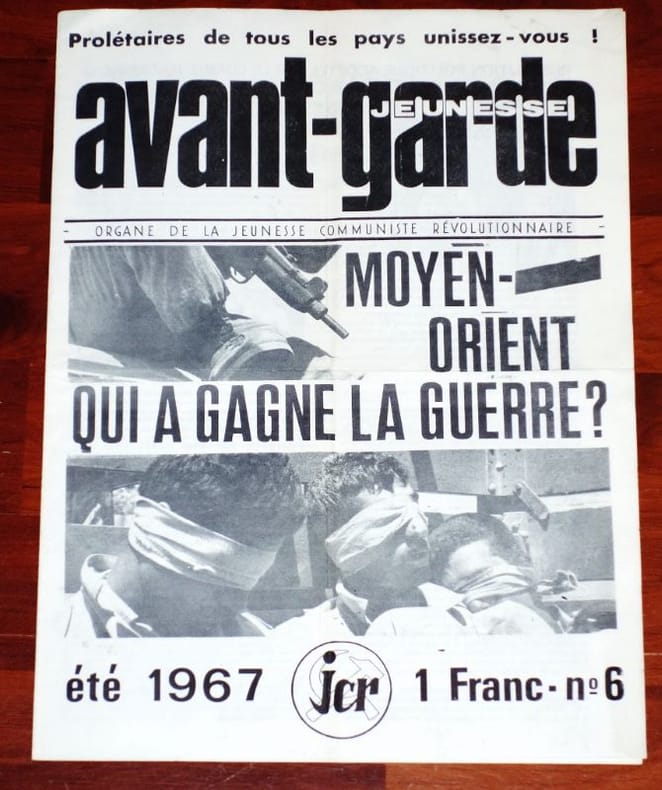
1967188761967 Paris, JCR, 1967. Au sommaire : Moyen-Orient, qui a gagné la guerre ? - Le Monde enchanté des vacances - Regis Debray. Journal de 4 pp., au format 23 x 31 cm. Deux pliures centrales sinon très bon état.
544963Aix-en-Provence, PUP, 2012. In-8 broché, 345 pp., ill., bibliogr. (La page et l'écran).