1 365 résultats
34 pages. Plus photographic plates and a large fold-out colour map, measuring approximately 16 x 21 inches (40 x 53cm). Original condition with blue wrappers, titles to front, and containing all the ads. This is a complete issue, seldom found in such good and original condition. This is a fascinating expedition report on the author's explorations in Arabia, which Predate his All-Important Book - Arabia Felix; Across the Empty Quarter of Arabia, published in 1931. Accompanied by a vivid and descriptive map, this narrative is an outstanding early report into the harsh savage regions of Arabia. Thomas undertook the exploration of the magnificent Rub' Al Khali in three journeys. The first camel journey of 600 miles through the south-eastern borderlands was made in the winter of 1927-1928, the second, travelling nortwards 200 miles from the central south to the edge of the sands, were undertaken under his own initiative, a part of his plan to explore the unkown south and also as a preliminary reconnaissance for a final desert crossing. The realization of that journey is the subject of this report. In order to make the journeys, Thomas grew a beard, donned Arab clothing, and lived as one of the Badus themselves. On completion of his second journey he entered into a secret arrangement, sealed with only 20 Pounds Sterling, with a member of his party, an influential member of the Rashid tribe, to bring him in the following winter, by caravan to a point in the desert where occasionally Murra tribesmen would come from the north, and that from there he would make his way by being passed from tribe to tribe! The author's captivating story of his third and successful pioneering exploration, includes notes on the tribes, geography, and extensive appendices on the natural history collections. The writer of this book was one of the most talented of the younger political officers in Mesopotamia during and after the War, and served in a similar capacity in Trans-Jordan, before being selected to fill the responsible post of Financial Advisor and Wazir to His Highness the Sultan of Muscat and Oman. He showed courage and resource in circumstances of much difficulty and great danger during and after the war in Mesopotamia. He performed two remarkable journeys over territory hitherto completely unknown. The first was along the Southeastern Borderlands of the Rub 'al Khali from near Ras al Had to Dhufar, the second from Dhufar for a distance of some two hundred miles inland. The two journeys, taken together, constitute the most important and most extensive piece of geographical exploration undertaken in any part of the world since the War.
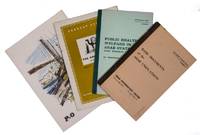
1951ABC_45233New York & London: The Arab Information Center 1951. 2 booklets a magazine and a menu all in original publishers wrappers. 8vo. Comprising:1 EL-KHATIB M. Fatallah foreword. Basic Documents of the Arab Unifications. New York Arab Information Center June 1958.2 OMRAN Abdel-Rahim. Public Health & Welfare in the Arab States: Past Present and Future. New York Arab Information Center November 1959. The booklet opens with a history of the Arab contributions to medicine followed by modern statistics.3 WRIGHT Esmond. The Arab World. Current Affairs no. 125. London Bureau of Current Affairs 3 February 1951.4 MENU. P&O menu. On board the S.S. Arcadia Sunday 25 March 1962. Set of four publications two of which by the Arab Information Center in New York. Together with other Arab information centers in various cities in the Americas Europe and Asia the New York office belonged to the Press and information department of the League of Arab states. As well as the monthly newspaper Arab World the office published numerous research reports on various aspects of the individual member states and the Arab world at large. Ad 1: The most important documents concerning the unification of Arab states. These documents include: the Proclamation of the United Arab Republic the Proclamation of the Arab Union the Provisional Constitution of the United Arab Republic the Charter of the United Arab States and the Constitution of the Arab Union.Ad 2: An overview of both the history of Arab medicine and the current state in 1958 of the demographics and healthcare in various states of the League.Ad 3: A short overview of the Arab world.Ad 4: Menu offered during a cruise in the Gulf on board the S.S. Arcadia.The staples in ad 1 somewhat rusted and ad 2 with an owners stamp. All in very good condition.l MacDonald The league of Arab states pp. 135-138. The Arab Information Center, unknown
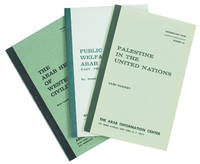
1951L95CCFTRZTEWNew York & London 1951. 3 booklets and a menu. 1 EL-KHATIB M. Fatallah foreword. Basic documents of the Arab unifications.New York Arab Information Center June 1958. 8vo. 43 pp. includes: the Proclamation of the United Arab republic the Proclamation of the Arab Union the Provisional constitution of the United Arab republic the Charter of the United Arab States and the Constitution of the Arab Union.2 OMRAN Abdel-Rahim. Public health & welfare in the Arab states past- present and future.New York Arab Information Center November 1959. 8vo. 32 pp. The booklet opens with a history of the Arab contributions to medicine followed by modern statistics.3 WRIGHT Esmond. The Arab World. Current affairs number 125.London Bureau of current affairs 3 February 1951. 8vo. 19 1 pp. Short overview of the Arab World.4 MENU. P&O menu.On board the S.S. Arcadia Sunday 25 March 1962. 8vo. Menu with on front a coloured illustration of a Dhow in the Arabian Sea. Probably offered during a cruise in the Gulf. unknown
br. L'idea della "forma-dizionario" me l'ha suggerita involontariamente mio figlio. Capitava di guardare insieme il telegiornale, e se dicevano: "bombardamenti su Sana'a oppure "combattimenti a Sirte", lui immancabilmente chiedeva: "Papà, dov'è Sana'a?" oppure "dove si trova Sirte?". Mi sono accorto che le conoscevo tutte, quelle città. In alcune ci avevo vissuto, di altre conservavo un ricordo impresso in un frangente di solo poche ore. Assai umilmente, ho cercato sempre di seguire due stelle comete: Jack Kerouac e Ibn Battuta, due caratteri e due approcci diametralmente opposti. Per Jack Kerouac la meta del viaggio era la strada stessa. Ho visto coi miei occhi il manoscritto del suo capolavoro srotolato in una enorme sala. È il tracciato di un cammino di cui non ha senso cercare di individuare la meta. Ardentemente, Ibn Battuta desiderava invece raggiungere "quella" città o "quel" mausoleo, fino a quando non ci aveva messo piede. Per me il viaggio è entrambe le cose: l'atto stesso di spostarsi e l'anelito di toccare con le proprie mani proprio quella cosa e non altro. Lo stridore fra l'intimo ricordo e gli scenari tragici che avvolgono oggi molti di questi luoghi è in animo mio ciò che dolorosamente mette insieme tutto ciò.
Authentic Facsimile Limited Edition of 750 copies produced by Pierway Publishing. This production mirrors the original in exacting detail. The book is almost completely hand made. It is printed on acid-free, vellum paper with maroon dutch comb endpapers, smyth-sewn in the traditional way and bound in morocco textured red gilt cloth. Book is in FINE Condition. This book is Richard F. Burton's rarest book and there are only 6 copies in Libraries worldwide. One copy showed up on Portobello Road in London a few years ago and another one in New England and both disappeared quickly in private collections. Elusive and rare, Burton supposedly was paid very little by the war office to acknowledge his authorship. The book never caught on in England but the Prussian Army bought most of the copies to train their troops as it was considered the best work on the use of the Bayonet at the time. It is rumored that a fire in the Prussian barracks destroyed most copies which would account for the book's rarity today.
Detailed analysis of Banian and Parsi creationist beliefs, including the first humans, the first and second age of the world, God's communication to the world through Bremaw's book (Banian), ceremonial law, order of government, the derivation and meaning of 'Banian,' and 'Persee,' and more. This is the first printed summary of Hindu doctrines and practices to appear in Europe. Topics examined include idolatry, fire worship, immortality, rapture, vegetarianism, the Indian caste system and Hindu theory of world cycles - specifically Satya Yuga and Treta Yuga, as well as Persian migration to the East Indies, the prophet Zerdusht (Zarthusthra, Zarthost), so forth. A fascinating early treatise. Henry Lord's book was the first in English to be entirely devoted to discussion of Indian religions, and represents the first serious attempt to go beyond reports by travellers of the strange religious beliefs and practices that they had observed in India. Initially publishing his account in 1630, Lord was a chaplain, rather than a missionary, and made a serious attempt to understand the religions rather than condemn them. The display was used as a source by later European writers on Indian religions, most notably François Bernier. "Lord was sometime resident in India at Surat and Preacher to the Honourable Company of Merchants trading to East India (Cox I p.270)." Folio, measuring approximately 13.5 inches x 9 inches. 42 pages, numbered from 315 to 356, plus title page. In itself complete, this account is from Churchill's eight-volume work which contained numerous travel narratives, and was titled "A Collection of Voyages and Travels, Some Now First Printed from Original Manuscripts. Others Now First Published in English." These are the original pages printed in 1752. Mild foxing, otherwise in very good condition, clean and bright with wide margins, a lovely example of early printing. Attractively bound in recent green cardstock covers with label.
Two accounts in one issue, altogether 35 pages (27 on Thesiger's account). Plus photographic plates and a fold-out colour maps, measuring approximately 11 x 11 inches (28 x 28cm) and a fold-out sketch map, measuring approximately 13 x 7.5 inches (33 xx 19cm). Original condition with blue wrappers, titles to front, and containing all the ads. This is a complete issue, seldom found in such good and original condition. Thesiger has an immense ability to describe very vividly the life and ways of the people of the desert, and his writings shine with his clear attachment to them. Accompanied by a spectacular detailed fold-out color map, illustrating Thesiger's journey through western and northern Rub al Khali. This is Thesiger's first-hand account and pre-dates his book, "Arabian Sands", published in 1959 by Longmans. His account of the Arabian Sands and its people, its tribal warfare and ancient history, its daily life and landscape, is of such range and value, so supremely well written, that the book can confidently claim to be a classic of Arabian travel literature. Also included in this issue is an 8 page account by Philby, entitled "Two Notes from Central Arabia", accompanied by a fold-out sketch map of the Jabal Tuwaiq region of Arabia. Phibly provides an illuminating description of the pools of Aflaj and the Qariya ruin field, from his excursion in 1948 and his journey in 1918. Also included is a brief description of Phibly's map.
Narrative is 53 pages, plus black and white photographic plates, and a large fold-out colour map measuring approximately 11 x 9 inches (28 x 23cm). In original condition, published in two separate consecutive monthly issues of the Geographical Journal. Seldom found in such very good condition, two complete issues with blue wrappers, titles to front, and containing all the ads. Major Bagnold's third journey into the Libyan Desert concentrated on three relatively broad fields of inquiry that included the area's series of geological events; the compilation of a fairly complete account of the series of strata present and the examination of sand sheets. Also features Sandford's geology and geomorphology of the southern Libyan desert; a section dedicated a history of the area's rainfall; sand and sand dunes: the Malha crater; the barchan dune; whalebacks, undulations or billows; sand drifts, as well as fascinating appendices relating to ornithology, entomoloy, botany, cartography, barometric altitudes, transport arrangements, food and costs of the expedition.
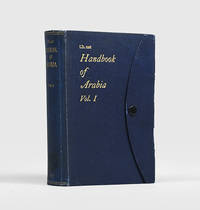
1916192452London: Admiralty War Staff Intelligence Division May 1916. A detailed intelligence handbook the folding maps in excellent condition First edition of this regional survey for the armed services published for official use only and compiled by the Arab Bureau's David Hogarth following his recruitment to naval intelligence in 1915. The four folding maps present Arabia's settlements tribal distribution and orographic and land-surface features. After general physical and social surveys chapters cover Bedouin tribes the Hejaz Asir Yemen Aden and the Hadhramaut Oman the Gulf coast Nejd Jebel Shammar the northern Nefud and Dahanah belts and settled tribes. The appendices comprise a system of transliteration from Arabic to English and an extensive glossary of topographical terms. "The sources from which this work has been compiled include native information obtained for the purpose since the outbreak of the war. This applies in particular to the strength and distribution of the Bedouin tribes and to their political relationships. Recent information from native sources has also been used for parts of the Red Sea littoral such as the little-known region of Asir" preliminary note. Volume II published the following year was concerned with detailed routes. The work was reissued in 1920. Octavo. With 15 photographic half-tone plates 4 folding colour maps in end pocket. Original blue cloth flap case metal stud-fastener spine and front cover lettered in gilt. Annotated bookplate of Royal Artillery Institution Woolwich. Shadow from old label on spine fold of front flap splitting at ends and consequently a little fragile ring stain on outer face of folded map another map with small pinhole couple of small splash marks: a very good copy indeed. hardcover
8 pages, plus photographic plates and a fold-out colour map, measuring approximately 11.5 x 8.5 inches (29 x 22cm). Original condition with blue wrappers, titles to front, and containing all the ads. This is a complete issue, seldom found in such good and original condition. This is a fascinating expedition report on Nuristan - the little known part of the Hindu Kush which lies inside Afghanistan to the north of Jalalabad along the Chitral border. Excerpt from the introduction: "Sir George Scott Robertson was the first European to visit this country, in 1889. Nuristan was then independent, and known as Kafiristan and its inhabitants as Kafirs. Kipling wrote his famous story "The Man Who Would Be King" about this country. Two important German Expeditions travelled extensively in Nuristan, and owing to that the Nuristans refer to all Europeans as Germans..." End Excerpt Wilfred Thesiger is perhaps the last, and certainly one of the greatest of the British travellers. Thesiger had the immense ability to describe very vividly the life and ways of the peoples and places he explored and visited. His work shines with his clear attachment to them. After leaving Arabia he travelled extensively in the Karakoram and the Hindu Kush (the setting of his meeting with Eric Newby immortalised in Newby's A Short Walk in the Hindu Kush), the mountains of Kurdistan and the marshlands of Iraq.
29 pages, including an in-text sketch map. Plus photographic plates, one of which is double-sided fold-out panoramas. Original condition with blue wrappers, titles to front, and containing all the ads. Stamp of the Royal Asiatic Society to front cover, otherwise this is a complete issue, seldom found in such good and original condition. The author's arduous journey, led him into the highlands of central Yemen, at altitudes of over 9,000 and sometimes up to 10,000 feet, known to very few Europeans and to only a handful of British at the time. The northernmost point reached was about 12 miles north of Sana and over 200 miles north of Aden. Originating in a desire to compare fauna and flora, Scott also harboured a geographical interest and the report also describes the mosques of Dhala, the characterisitcs of dress and customs of the Jewish communities in southern Arabia, the dhurra harvest procedure of the tribesmen of Jebel Jihaf, the most remarkable city of Ibb, and San'a, the then largest city in the south of Arabia. Featuring the first ever agricultural show to be held in the Aden Protectorate, in Dhala; the villagers of Al Muriah and the tomb of Weli Isma'il; discussion of the rise of the Zaidi sect, named from Zaid, descendant of Ali, son-in-law of the prophet; the hot springs of Huwemi; descriptions of Ta'izz, the most beautiful city in the Yemen; a meeting with the 'Amil of Yarim; vivid depictions of old San'a: houses, mosques; the Jews of south-western Arabia; a private audience with the Imam in San'a. The author illustrates his journey most impressively with sketch illustration and an abundance of plates, including one which is a double-sided fold-out of panoramic views. Also includes an appendix relaying information on general use of the drug, Qat.
73329Sans lieu, Tihama, sans date (vers 1980/1990), in 4°, cartonnage de l'éditeur, jaquette illustrée.
48455Arabesque Editions, 1992. 22 x 30, 87 pp., très nombreuses illustrations en couleurs, reliure d'édition carton imprimé, très bon état.
17 pages. Plus photographic plates and an extra large fold-out colour map, measuring approximately 17 x 25 inches (43 x 64cm). Original condition with blue wrappers, titles to front, and containing all the ads. This is a complete issue, seldom found in such good and original condition. Wilfred Thesiger has an immense ability to describe very vividly the life and ways of the people of the desert, the Bedu, and his work shines with his clear attachment to them. After leaving Arabia he travelled extensively in the Karakoram and the Hindu Kush (the setting of his meeting with Eric Newby immortalised in Newby's A Short Walk in the Hindu Kush), the mountains of Kurdistan and the marshlands of Iraq. But he says that none of these places moved him as did the deserts of Arabia. He spent five years in the region travelling on camels and on foot across some ten thousand miles of a vast empty land. What he found, as in his time with the people of the Iraq marshes which he described in his book "The Marsh Arabs", was a way on life on the threshold of destruction. The 20th century was very fortunate in being able to have a record of some of the glory it lost as seen through the eyes and camera of this very remarkable explorer.
25 pages, including a full-page sketch map. Plus black and white plates. Original condition with blue wrappers, titles to front, and containing all the ads. This is a complete issue, seldom found in such good and original condition. This is a fascinating and comprehensive historical report on the Persian Gulf, illustrated with black and white plates and a sketch map and dealing with the early records of commerce dating back to 2000 BC, the important sheltered port of Sur, Albuquerque's control over the Portuguese, and much more. This report being a preface to his book published the following year, Wilson gives us a compelling geographical and historical overview of civilian life, Bahrain and the pearling industry, the Islam religion, and Christain missions, in a time of British presence and much change in Iraq. The author spent almost 18 years in the Persian Gulf and was one of the most important British civil servants in the Middle East. He served in consulates at Ahwaz and Khorramshahr from 1907-1914 and also worked for the Anglo Persian Oil Company. He has been described as a versatile, fearless and exceptionally gifted man who was at home in all walks of life, and in all circumstances. In January 1919, the British set up a military administration under Sir Arnold Wilson, and in April 1920 the League of Nations confirmed the British Mandate over the region. Wilson's rule, however, helped set the stage for Great Arab Revolt in 1920. Because of the major economic investments, British war-time policy in Iraq was very different from western Arabia where they overtly encouraged and aided the Arab Revolt. The British managed to suppress the revolt at great expense. Wilson was later replaced by Sir Percy Cox who was sympathetic to Arab aspirations. On the outbreak of the Second World War Sir Arnold Wilson (who had served in parliament as MP for Hitchin since 1933) joined the Royal Air Force Volunteer Reserve. An air gunner in Bomber Command, he was killed in action over northern France in 1940 shortly before publication of his second book, S. W Persia: Letters and Diary of a Young Political Officer 1907-1914 (1941). This report pre-dates Wilson's book published in 1928, entitled The Persian Gulf: An Historical Sketch from the earliest Times to the Beginning of the Twentieth Century. A most incredible report on the ancient commerce of Persia, that shaped to a large extent the state of affairs in the turmultuous regions of the Middle East.
183935591London: Printed for Thomas Tegg 1839. Originally published in 1831. Engraved folding map and plates. 1 vols. 8vo. Late 19th century burgundy morocco-backed cloth. Joints and spine rubbed some light spotting bookplate and embossed and printed stamps on endpaper and contents leaf and verso of title respectively else very good. Originally published in 1831. Engraved folding map and plates. 1 vols. 8vo. Printed for Thomas Tegg unknown books
1948ARABIA016090George Allen & Unwin London. 1948. First edition. Octavo. 314 pages. Photographs and maps. A biography of the man who was Emir of Mecca and became engaged in Arab nationalism during the First World War.Fore-edge a bit spotted. Very good in very good price-clipped dustwrapper slightly rubbed at the edges a bit marked on the rear panel and with a few short closed tear to top edge. George Allen & Unwin, London. unknown
"From the moment they met, their marriage seemed both inevitable and impossible. Isabel was a schoolgirl, scion of the Arundells, England's most distinguished Catholic family, and when they passed each other while walking at a seaside resort, Richard Burton had already made his mark as a linguist, scholar, traveler, and rebel against Victorian conformity. A hundred yards on, Isabel looked back and found him staring after her: she decided then that she would marry him. It was several years before they met again. By then Burton was one of the most accomplished linguists in the Indian Army. An intelligence agent with a genius for disguise, he had risked death to penetrate Mecca during the hadj, posing as a native pilgrim. He would soon become even more famous as one of the earliest explorers of East Africa. After their marriage, the Burtons traveled the world from diplomatic postings in Brazil and Africa to hair-raising adventures in the Syrian desert. In later life Richard courted further controversy as translator of such erotic classics as the unexpurgated edition of The Arabian Nights, The Perfumed Garden, and The Kama Sutra. Based on previously unavailable archives, Mary Lovell has written a compelling joint biography that sets Isabel in her proper place as Burton's equal in daring and endurance, a fascinating figure in her own right." 910p. bibliography.index Book
Two Reports on the Gilf Kebir in One Complete Issue of the Royal Geographical Society. 11 pages, including a full-page sketch map. Plus several photographic plates. Original condition with blue wrappers, titles to front, and containing all the ads. This is a complete issue, seldom found in such good and original condition. Featuring the Clayton-Almàsy Expedition of 1932 drawn from the late Robert Clayton's notes and diaries (he died of poiomyelitis within two months of leaving the Gilf Kebir) and written by one of Clayton's companions on the expedition, P A Clayton, of the Egyptian Survey Department. Much of the area's reconnaissance was conducted from Robert Clayton's Gypsy Moth but the near disaster that befell Clayton and Penderel occurred when the two became lost whilst returning by car to pick up provisions from Dune Camp. Excerpt from the text: "That wait was the worst time I have ever had. I thought of Tankards of beer, England, and all the wet things one does think about on these occasions, wondered why I had spent a lot of money to go and die in a desert, and trying to think what to do about last letters, will, etc. I remebered all the lovely descriptions of people dying of thirst that I have read about and realized that they were mild in comparison. Finally, I thought of all the drinks I have refused, all the wickednesses I might have committed, and again of water..." End excerpt. "The Western Side of the Gilf Kebir" is P A Clayton's 1931 survey of the area traversed in the Clayton-Almàsy Expedition, followed by an account in his own words of the expedition's intentions to reconnoitre the top of the Gilf Kebir plateau and to examine the district between Gebel Arkenu and the southern tip of the Gilf.
100298aafLondon, Hodder and Stoughton, 1957, gr. in-8vo, Frontispice + 460 p. + 24 p. with illustrations, cloth with jacket.
8vo., First Edition, with a portrait frontispiece, 25 plates on 22, 2 full-page facsimiles, a full-page pedigree, 26 maps (2 full-page) and endpaper maps, some faint offsetting from fold-ins to free endpapers, small neat inscription on front free endpaper verso; original navy blue cloth gilt, gilt back, blue top, a very good, clean copy in unclipped dustwrapper, the latter lightly frayed and browned at extremities. Nice copy of the personal story of Glubb Pasha.
233 p. con molte illustrazioni nel testo; 24,5 x 19 cm. Brossura editoriale. Buono
1954542581954 P., Amiot-Dumont, 1954, in 8° broché, 191 pages ; jaquette illustrée en couleurs.
1954123705Amiot-Dumont, 1954, in-8°, 190 pp, 16 pl. de photos hors texte, 2 cartes, broché, jaquette illustrée, bon état
x + 265pp.+ 12 plates out-of-text & map, cloth, dustwrapper, 21cm., VG