Livre Rare Book
[Vue de Beyrouth].
1930LBW-8491Beyrouth, 1930. Aquarelle originale in-12 (14,6 x 10,9 cm), exécutée sur papier à dessin et montée sur papier noir.

Librairie Le Bail · Paris, France300,00 €
1 303 résultats
Very Good Turkish Original silver gelatin photographic print mounted on cardboard. 53x42 cm (Photo size: 38x30 cm). Signed by Yildiz Moran. Yildiz (Vahid) Moran Arun was born on 24 July 1932, in Istanbul. She is the youngest of three children born to Nemide Moran and Ahmet Vahid Moran. Her father, Ahmet Vahid Moran, was a military officer who served in important positions both at home and abroad. He was the writer of Turkey's very first English-Turkish dictionary printed in Latin script in 1924. In 1950, Yildiz Moran quit her high school education during her final year at Robert College and, following the guidance of her uncle, the art historian Mazhar Sevket Ipsiroglu, went to Great Britain to study photography. After completing her education at Bloomsbury Technical College (1950-52) and Ealing Broadway Technical College, she began to work for John Vickers, the acclaimed photographer of The Old Vic. Moran combined her technical and theoretical knowledge with the practical experience she gained at the studio and stage shoots. She had the opportunity to meet famous artists of the time. The exhibitions and works she saw during her time in Great Britain helped her develop her photographic vision. Following her internship period, she began to make a living taking portrait and lobby photographs. She opened her first exhibition in 1953 in Cambridge. In 1954, she held four more exhibitions in London. All these shows attracted much attention. In her first exhibition, her entire collection was sold. She went traveling in Europe. After making a photo book on Spain and Portugal, she returned to Turkey in 1954. Between 1955 and 1962, she held five solo exhibitions. In 1963, she married Özdemir Asaf (Halit Özdemir Arun) and gave birth to three children in four years. She dedicated the rest of her life to her children. She opened her last exhibition in 1970, in Istanbul. After that, she only took part in retrospective exhibitions. She quit her professional photography career and began to work as a translator and dictionary writer. Between 1981 and 1987, she prepared the complete works of Özdemir Asaf for publication and translated some of his poetry and prose into English. In 1982, the Istanbul State Academy of Fine Arts Photography Institute awarded her with honorary membership on account of her contributions to the art of photography. Lyrically conveying a universal language through her own perspective, Moran became a school in herself with her "timeless" photographs. Turkey's first academically-trained photographer, Yildiz Moran is renowned for the new vision and aesthetic she introduced into photography and considered to be one of the best photographers of all time. Masterfully combining the tradition of the East with the aesthetic of the West, she left behind a legacy of black and white photographs beautifully composed to capture the world of light and shadow reflecting on people and lands. Considering the conditions in the world of photography in the 1950s and 1960s, it is a great achievement that she defined at the age of 20 her passion for photography as the foundation of her life, became the first academically-trained woman photographer in her country, acquired in-depth knowledge of the discipline and combined this knowledge with her talent and hard work. "The camera must be like an extension of your being so that it doesn't create an obstruction between you and your subjects. Anything that has poetry in it is the subject of photography. My only intention has always been to photograph what was universal while staying true to the concept embodied by my subject." Besides her portraits, landscapes, and abstract details, she is also known for her photographs reflecting the lives of the Anatolian people. As a woman photographer traveling in Anatolia, she accessed otherwise inaccessible environments, moments, and perspectives; and, with profound respect, she conveyed the purity of the people she met there and allowed us... (Biography: Merih Akogul).
Very Good Turkish Original silver gelatin photographic print mounted on cardboard. 53x42 cm (Photo size: 38x30 cm). Signed by Yildiz Moran. Yildiz (Vahid) Moran Arun was born on 24 July 1932, in Istanbul. She is the youngest of three children born to Nemide Moran and Ahmet Vahid Moran. Her father, Ahmet Vahid Moran, was a military officer who served in important positions both at home and abroad. He was the writer of Turkey's very first English-Turkish dictionary printed in Latin script in 1924. In 1950, Yildiz Moran quit her high school education during her final year at Robert College and, following the guidance of her uncle, the art historian Mazhar Sevket Ipsiroglu, went to Great Britain to study photography. After completing her education at Bloomsbury Technical College (1950-52) and Ealing Broadway Technical College, she began to work for John Vickers, the acclaimed photographer of The Old Vic. Moran combined her technical and theoretical knowledge with the practical experience she gained at the studio and stage shoots. She had the opportunity to meet famous artists of the time. The exhibitions and works she saw during her time in Great Britain helped her develop her photographic vision. Following her internship period, she began to make a living taking portrait and lobby photographs. She opened her first exhibition in 1953 in Cambridge. In 1954, she held four more exhibitions in London. All these shows attracted much attention. In her first exhibition, her entire collection was sold. She went traveling in Europe. After making a photo book on Spain and Portugal, she returned to Turkey in 1954. Between 1955 and 1962, she held five solo exhibitions. In 1963, she married Özdemir Asaf (Halit Özdemir Arun) and gave birth to three children in four years. She dedicated the rest of her life to her children. She opened her last exhibition in 1970, in Istanbul. After that, she only took part in retrospective exhibitions. She quit her professional photography career and began to work as a translator and dictionary writer. Between 1981 and 1987, she prepared the complete works of Özdemir Asaf for publication and translated some of his poetry and prose into English. In 1982, the Istanbul State Academy of Fine Arts Photography Institute awarded her honorary membership on account of her contributions to the art of photography. Lyrically conveying a universal language through her own perspective, Moran became a school in herself with her "timeless" photographs. Turkey's first academically-trained photographer, Yildiz Moran is renowned for the new vision and aesthetic she introduced into photography and is considered to be one of the best photographers of all time. Masterfully combining the tradition of the East with the aesthetic of the West, she left behind a legacy of black and white photographs beautifully composed to capture the world of light and shadow reflecting on people and lands. Considering the conditions in the world of photography in the 1950s and 1960s, it is a great achievement that she defined the age of 20 her passion for photography as the foundation of her life, became the first academically-trained woman photographer in her country, acquired in-depth knowledge of the discipline and combined this knowledge with her talent and hard work. "The camera must be like an extension of your being so that it doesn't create an obstruction between you and your subjects. Anything that has poetry in it is the subject of photography. My only intention has always been to photograph what was universal while staying true to the concept embodied by my subject." Besides her portraits, landscapes, and abstract details, she is also known for her photographs reflecting the lives of the Anatolian people. As a woman photographer traveling in Anatolia, she accessed otherwise inaccessible environments, moments, and perspectives; and, with profound respect, she conveyed the purity of the people she met there and allowed us... (Biography: Merih Akogul).
Very Good Turkish Original silver gelatin photographic print mounted on cardboard. 53x42 cm (Photo size: 38x30 cm). Signed by Yildiz Moran. Yildiz (Vahid) Moran Arun was born on 24 July 1932, in Istanbul. She is the youngest of three children born to Nemide Moran and Ahmet Vahid Moran. Her father, Ahmet Vahid Moran, was a military officer who served in important positions both at home and abroad. He was the writer of Turkey's very first English-Turkish dictionary printed in Latin script in 1924. In 1950, Yildiz Moran quit her high school education during her final year at Robert College and, following the guidance of her uncle, the art historian Mazhar Sevket Ipsiroglu, went to Great Britain to study photography. After completing her education at Bloomsbury Technical College (1950-52) and Ealing Broadway Technical College, she began to work for John Vickers, the acclaimed photographer of The Old Vic. Moran combined her technical and theoretical knowledge with the practical experience she gained at the studio and stage shoots. She had the opportunity to meet famous artists of the time. The exhibitions and works she saw during her time in Great Britain helped her develop her photographic vision. Following her internship period, she began to make a living taking portrait and lobby photographs. She opened her first exhibition in 1953 in Cambridge. In 1954, she held four more exhibitions in London. All these shows attracted much attention. In her first exhibition, her entire collection was sold. She went traveling in Europe. After making a photo book on Spain and Portugal, she returned to Turkey in 1954. Between 1955 and 1962, she held five solo exhibitions. In 1963, she married Özdemir Asaf (Halit Özdemir Arun) and gave birth to three children in four years. She dedicated the rest of her life to her children. She opened her last exhibition in 1970, in Istanbul. After that, she only took part in retrospective exhibitions. She quit her professional photography career and began to work as a translator and dictionary writer. Between 1981 and 1987, she prepared the complete works of Özdemir Asaf for publication and translated some of his poetry and prose into English. In 1982, the Istanbul State Academy of Fine Arts Photography Institute awarded her honorary membership on account of her contributions to the art of photography. Lyrically conveying a universal language through her own perspective, Moran became a school in herself with her "timeless" photographs. Turkey's first academically-trained photographer, Yildiz Moran is renowned for the new vision and aesthetic she introduced into photography and is considered to be one of the best photographers of all time. Masterfully combining the tradition of the East with the aesthetic of the West, she left behind a legacy of black and white photographs beautifully composed to capture the world of light and shadow reflecting on people and lands. Considering the conditions in the world of photography in the 1950s and 1960s, it is a great achievement that she defined the age of 20 her passion for photography as the foundation of her life, became the first academically-trained woman photographer in her country, acquired in-depth knowledge of the discipline and combined this knowledge with her talent and hard work. "The camera must be like an extension of your being so that it doesn't create an obstruction between you and your subjects. Anything that has poetry in it is the subject of photography. My only intention has always been to photograph what was universal while staying true to the concept embodied by my subject." Besides her portraits, landscapes, and abstract details, she is also known for her photographs reflecting the lives of the Anatolian people. As a woman photographer traveling in Anatolia, she accessed otherwise inaccessible environments, moments, and perspectives; and, with profound respect, she conveyed the purity of the people she met there and allowed us... (Biography: Merih Akogul).
Very Good Arabic Original chromo-lithograph map in brown tones. On a special paper with an ongoing blindstamped "Regestre Robur" during the borders. Folded. 70x100 cm. In Arabic. Scale: 1 /1.000.000. Chipped on margins, split on folded traces. Slight discoloration and one stain on lower margin. Otherwise a good copy. An attractive and detailed map of Syria shows the capital (as Aleppo n that map), other cities like Damascus, Raqqa, Homs, Latakia, Ayn al-Arab, Idlib, Hama, Deir Ez-Zor, Jarabulus, et alli. And it shows Turkey on the north (as Turkey containing Hatay and Alexandrette), The Mediterranean shores of the land as well as Lebanon and Palestine (and Jerusalem) on the west, Sharq al-Urdun (Jordan) and Iraq on the south and east. It's very detailed on showing the roads spread throughout the land like railways and ancient roads from the Roman period. Additionally this roads can be followed to the other Arabic countries and regions on the map. This map was calligraphed by Kamel Al-Baba, (1905-1991), who was a Lebanese contemporary / modern calligrapher. He is the son of famous calligrapher Mokhtar Al-Baba. Cannot be found in WorldCat.; Not in Library of Congress Map Collection. Very scarce.
Good Greek, Modern (post 1453) Original booklet. Cr. 8vo. (20 x 14 cm). In Greek (Modern). 8 p. Heavily stains on pages, tear on lower spine and lower right cover, staple rusted. Fair copy. Extremely rare pamphlet of the regulations of "the Maronite Brotherhood, or Enosis" which consists of 27 articles in modern Greek. The Maronites constitute a Christian group whose members adhere to the Syriac Maronite Church with the largest population around Mount Lebanon in Lebanon. The Maronite Church is an Eastern Catholic sui iuris particular church which is in full communion with the Pope and the Catholic Church, with the right of self-governance under the Code of Canons of the Eastern Churches, one of more than a dozen individual churches which are in full communion with the Holy See. The Maronites derive their name from the Syriac Christian Saint Maron, some of whose followers migrated to the area of Mount Lebanon from their previous place of residence which was located around the area of Antioch, and established the nucleus for the Syriac Maronite Church. Saint Maron sent Saint Abraham, often referred to as the Apostle of Lebanon, to convert the non-Christian native population to Maronite Christianity. The name of the Adonis River was changed to Abraham's river by the inhabitants after Saint Abraham preached there. Mass emigration to the Americas at the outset of the 20th century, due to famine mainly resulting from Ottoman blockades and confiscations during World War I, which killed an estimated one third to one half of the population during the Lebanese Civil War between 1975-1990 and the low fertility rate greatly decreased their numbers in the Levant. Maronites today form more than one-quarter of the total population in the Republic of Lebanon. All Lebanese presidents have been Maronites as part of a tradition that persists as part of the National Pact, by which the Prime Minister has historically been a Sunni Muslim and the Speaker of the National Assembly has historically been a Shi'i Muslim. Enosis is the movement of various Greek communities that live outside Greece, for incorporation of the regions they inhabit into the Greek state. Widely known is the case of the Greek-Cypriots for the union of Cyprus into Greece. The idea of enosis is related to the Megali Idea, an irredentist concept of a Greek state which dominated Greek politics following the creation of the modern Greek state in 1830. The Megali Idea was a project which called for the annexation of all ethnic Greek lands, parts of which had participated in the Greek War of Independence in the 1820s but were unsuccessful and remained under foreign rule. In 1821, several parts of Western Thrace rebelled against Ottoman rule, participating in the Greek War of Independence. During the Balkan Wars, Western Thrace was occupied by Bulgarian troops and in 1913 Bulgaria gained Western Thrace under the terms of the Treaty of Bucharest. Following World War I, Western Thrace was withdrawn from Bulgaria under the terms of the 1919 Treaty of Neuilly and put temporarily under Allied management before being given to Greece at the San Remo conference in 1920. Following the conclusion of World War I, Greece began the occupation of Smyrna and surrounding areas of Western Anatolia in 1919 at the invitation of the victorious Allies of World War I, particularly David Lloyd George the British Prime Minister. The occupation was given official status in the 1920 Treaty of Sèvres, with Greece being awarded most of Eastern Thrace and a mandate to govern Smyrna and its hinterland. Smyrna was declared a protectorate in 1922. However, the attempted Enosis failed when the new Turkish Republic prevailed in the resulting Greco-Turkish War of 1919-1922, after which most Anatolian Christians who had not already fled during the war were forced to relocate to Greece in the 1923 population exchange treaty executed between Greece and Turkey. Not located in OCLC.
Very Good Turkish Original fine photograph. 55x54 cm. Framed. Signed by Kortan Tümerdem and Emine Öztekin on verso, on a card.
Very Good English Original gold-tones albumen photograph from 'Holy Land pictures', London, 1870. Oblong folio. (30,5 x 38 cm); photographic image size: 15x20 cm. Descriptive text in English ( Baalbec, and the Lebanon range. This city may possibly have been built by King Solomon. "And Solomon built Balalath (Baalbek) and Tadmor in the wilderness (Palmyra)", I Kings ix, 18.). Frank Mason Good, born 1839 in Deal, Kent, began his photographic career as an assistant to photographer Francis Frith. Good is known to have been active during the 1860s and 1870s. He lived most of his life at Phoenix Green, Hartley Wintney, (and died there on 28th June 1928) but had studios in London and Brighton. In 1870 he married Margaretta Teape at St Mark, Goodman's Fields. Following Margaretta's death (on 29th December 1904) he married his second wife, Jessie Emily Waghorn, in 1906, at Hartley Wintney. He is best known for his stereographic photographs of the Near East, and it was Frith who sponsored Good's first trip there. Other geographic locations captured by Good include Spain, Greece, and the Isle of Wight. Frank Mason Good is best known for his series of views of the Middle East taken on four separate tours of the area in the 1860s and 1870s. He first traveled to Egypt as an assistant to Francis Frith in late 1857. He joined the Photographic Society in 1864, and in 1880 served as a judge of its annual exhibition. He lived at Hartley Wintney, Winchfield, Hampshire.
Very Good English Original gold-tones albumen photograph from 'Holy Land pictures', London, 1870. Oblong folio. (30,5 x 38 cm); photographic image size: 15x20 cm. Descriptive text in English. (Nazareth, from the East, with the Well of the Virgin. In this neighborhood, our Lord and Savior Jesus Christ spent nearly thirty years of his life: And over these "Sacred Acres" often roamed "Those blessed feet that once were nailed, for our advantage to the bitter cross.".). Frank Mason Good, born 1839 in Deal, Kent, began his photographic career as an assistant to photographer Francis Frith. Good is known to have been active during the 1860s and 1870s. He lived most of his life at Phoenix Green, Hartley Wintney, (and died there on 28th June 1928) but had studios in London and Brighton. In 1870 he married Margaretta Teape at St Mark, Goodman's Fields. Following Margaretta's death (on 29th December 1904) he married his second wife, Jessie Emily Waghorn, in 1906, at Hartley Wintney. He is best known for his stereographic photographs of the Near East, and it was Frith who sponsored Good's first trip there. Other geographic locations captured by Good include Spain, Greece, and the Isle of Wight. Frank Mason Good is best known for his series of views of the Middle East taken on four separate tours of the area in the 1860s and 1870s. He first traveled to Egypt as an assistant to Francis Frith in late 1857. He joined the Photographic Society in 1864, and in 1880 served as a judge of its annual exhibition. He lived at Hartley Wintney, Winchfield, Hampshire.
Very Good English Original gold-tones albumen photograph from 'Holy Land pictures', London, 1870. Oblong folio. (30,5 x 38 cm); photographic image size: 15x20 cm. Descriptive text in English. (Shechem (Nablus), between Ebal and Gerizim Shechem (Nablus), between Ebal and Cerizim: This was Abraham's first halting-place, Gen. xii. 6; Here Jacob settled and bought a piece of land, Gen, xxxiii, 19; Here Joshua assembled the people just before his death, Josh, xxiv; And here the ten tribes rebelled against Rehoboam, 1 Kings xii.). Frank Mason Good, born 1839 in Deal, Kent, began his photographic career as an assistant to photographer Francis Frith. Good is known to have been active during the 1860s and 1870s. He lived most of his life at Phoenix Green, Hartley Wintney, (and died there on 28th June 1928) but had studios in London and Brighton. In 1870 he married Margaretta Teape at St Mark, Goodman's Fields. Following Margaretta's death (on 29th December 1904) he married his second wife, Jessie Emily Waghorn, in 1906, at Hartley Wintney. He is best known for his stereographic photographs of the Near East, and it was Frith who sponsored Good's first trip there. Other geographic locations captured by Good include Spain, Greece, and the Isle of Wight. Frank Mason Good is best known for his series of views of the Middle East taken on four separate tours of the area in the 1860s and 1870s. He first traveled to Egypt as an assistant to Francis Frith in late 1857. He joined the Photographic Society in 1864, and in 1880 served as a judge of its annual exhibition. He lived at Hartley Wintney, Winchfield, Hampshire.
1373614Paris: La revue française de l'élite européenne, 1950 in-4, 116 pages., illustrations. Broché. Numéro consacré au Moyen Orient (Irak, Syrie, Arabie Saoudite, Liban).
1373106Paris: Musée de l'Homme, Museum National d'Histoire Naturelle, 1964 in-4, nombreuses illustrations. Broché. Très bon état, cachet. Sommaire: Anne MASSION, Les bâtons africains décorés du Musée de l'Homme. - Robert CRESSWELL, La poterie libanaise. - Jacques MILLOT, De quelques erreurs zoologiques... - Corneille JEST, Népal 1963.
Very Good Turkish, Ottoman (1500-1928) Original pictorial wrappers. Demy 8vo. (22 x 14 cm). In Ottoman script (Old Turkish with Arabic letters). 302 p. Slightly chipped on extremities, stains on cover. Otherwise a good copy. First Ottoman Turkish edition of this Arabic historical novel that takes its subject from Arabic nights. "Romance and intrigue provide the central plot of the novel that is woven into the broader picture of the fall of the Barmakis. Harun held his sister Abbasa in great affection and loved to spend his evenings in her company. But his favorite companion was Ja'far. It was quite unsuitable for a man from outside the family to be admitted to the company of a young woman, but Harun found a way to arrange things; he decided to marry them to each other in what the French call a "marriage blanc". As he explained to Ja'far "you see her only in my company, your body never approaches hers and you have no conjugal relations with her. You may thus share our evenings of pleasure without risk." Ja'far accepted and swore solemnly in front of witnesses never to visit his young wife, stay alone with her or even spend a minute under the same roof unless Harun was present. But Jafar was handsome and Abbasa's beauty was second to none. The inevitable occurred. How and why no one is certain. There was a great political advantage for Ja'far to unite himself with the sister of the Caliph. But did his mother who was close to both her son and Abbasa prod them in that direction? Or was their deep love sufficient to consummate their marriage, as Zaidan seems to imagine? No one knows for sure and the novel does not speculate on what really happened. The only sure thing is that Abbasa became pregnant and gave birth to at least one child and perhaps two as related in the novel. And when Harun learned of the relationship, this was the beginning of the end for the Barmakis. The close friendship between Harun and Ja'far spawned jealousies among the Caliph's entourage. Chief among them was the hostility that Al-Fadl ibn al-Rabi' had towards Ja'far. The two men detested each other and did everything they could to destroy each other. Last but not least Zubayda, Harun's favorite Hashemite wife also did not like Ja'far. He had been a tutor to al-Ma'mun, the son of a Persian slave girl, her son's rival. It was known that Harun admired Ma'mun's gifts and was thinking of promoting him over Al-Amin in the order of succession. There is every reason to believe that Zubayda exercised her considerable influence against Ja'far. She comes across as shrewd, skillful, and willful. Zaidan never explicitly speculates to what extent al-Rashid's reaction was politically or emotionally motivated. The narrative and dialogue suggest a combination of those factors. Ja'far had been disloyal to Harun and had stained the family honor: his disobedience could not go unpunished. But Harun was shrewd and feared for his power and influence - to the extent that the Barmakis might usurp the Abbasid caliphate. Within this broad historical canvass, Zaidan's fast-paced narrative with its twists and turns is full of suspense. It covers only a few months of Harun al-Rashid's reign but one that fatefully changed the course of 'Abbasid history." (Source: The Zaidan Foundation). Zaidan was a prolific Lebanese novelist, journalist, editor, and teacher, most noted for his creation of the magazine Al-Hilal, which he used to serialize his twenty-three historical novels. His primary goal, as a writer and intellectual during the Nahda, was to make the common Arabic population know their own history through the entertaining medium of the novel. He has enjoyed widespread popularity. He is also considered to have been one of the first thinkers to help formulate the theory of Arab nationalism. OCLC: 780178860.; Özege 2.
1930LBW-8491Beyrouth, 1930. Aquarelle originale in-12 (14,6 x 10,9 cm), exécutée sur papier à dessin et montée sur papier noir.
1930LBW-8519Beyrouth 1930 Aquarelle originale in-12 (14,6 x 10,9 cm), exécutée sur papier à dessin et montée sur papier noir.
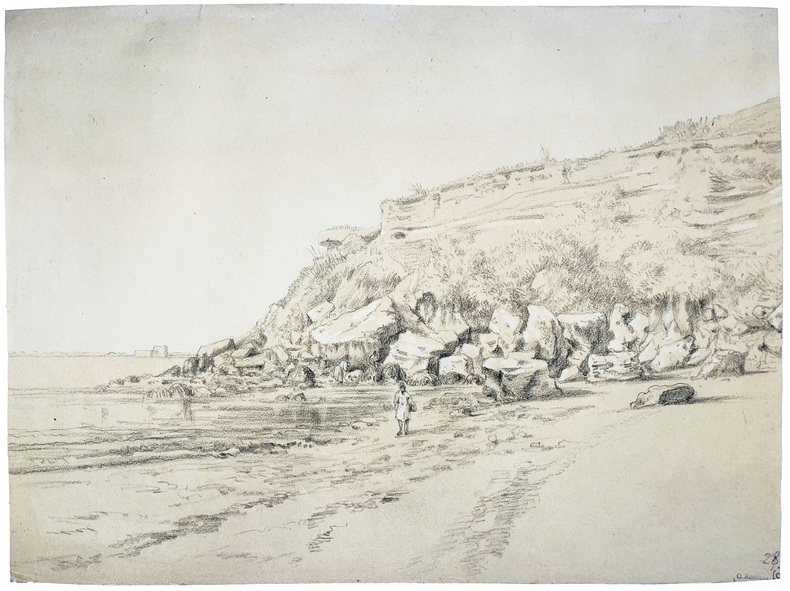
1860LBW-8902S.l., [vers 1860]. Dessin in-4 oblong (32,1 x 44,8 cm) exécuté à la mine de plomb avec de légers rehauts de gouache blanche; cachet «O. Romieux» apposé dans l’angle inférieur droit, trace de montage au verso.
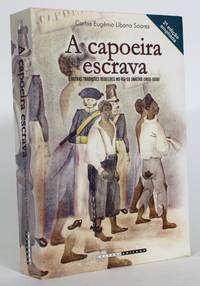
2002015010Campinas Brasil: Colecao Varias Historias 2002. 2nd Edition. Soft cover. Fine. 2nd Revised Edition. Paperback 608 Text in Portuguese. Fine. The martial art of Capoeira and other rebellious traditions of Rio Di Janeiro between 1808-1850 at the height of the Brazilian and Portuguese slave trade. Originating among Africans in Brazil during the colonial period Capoeira is known as the Dance of Freedom. Colecao Varias Historias unknown
pp. 195-272. Illustrated with photographs. Tall 8vo. Original pictorial wraps. Nice copy. PA PAMPH 20_21 BX7
201896432Beirut: Australian Embassy 2018. 1st edition. As New. quarto. softback with french flaps 64pp. colour & b/w plates Fine selection of images drawn from the Australian war Memorial archives. Tiny print run & very scarce Australian Embassy unknown
1527853489.Gpaperback. Good. Access codes and supplements are not guaranteed with used items. May be an ex-library book. paperback
ill., ril. Il Libano è un paese che custodisce molti segreti della vita prima della guerra civile, e più recentemente dell'esplosione del porto di Beirut. In questo libro fotografico sarà possibile scoprire una villa abbandonata dell'ex primo ministro, uno degli edifici più notevoli di Zokak el-Blat, a Beirut. O, ancora, un hotel glorioso che mostra ancora le sue ferite di guerra, un palazzo del XVII secolo a Deir el Qamar e uno straordinario progetto di passione incompiuto in cui ogni arco della struttura riflette una civiltà diversa.
19646184Paris, Editions de la Source, (Harissa au Liban, imprimerie St Paul), 1964 ; in-8, demi-toile bleu ciel, pièce de titre de basane brune ; (5) ff. , 647, (3) pp. , (2) ff.
195884116Bayrut: Dar al-Kutub 1958. Paperback. Near Fine. 78p. Original wrapper. 25cm. Arabic text; added title-page "The Way Prepared: A Reading Book in Modern Arabic" and Preface in English. <br/><br/> Dar al-Kutub paperback books
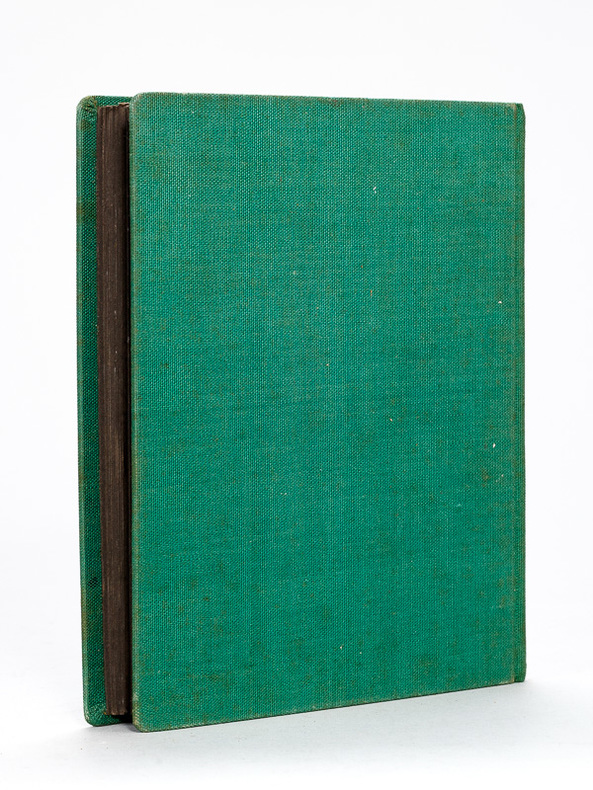
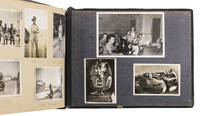
1 album pleine toile verte, format 21,5 x 18 cm, avec 22 photos format 17 x 11 cm, circa 1918-1937, Vartan Derounian Bel album en parfait état, réunissant 22 photographies par Vartan Dérounian, l'un des plus grands photographes arméniens du Proche-Orient de l'Entre-Deux-Guerres. Né à Arapkir en Turquie en 1888, décédé en 1954 à Beyrouth (Liban), Vartan Arounian y débute sa carrière de photographe chez les frères Sarafian en 1911. Il part à Karthoum où il forme son frère Agop. Etabli au Caire pendant la Première Guerre Mondiale, il travaille auprès du suisse Heinzelmann, photographe de la cour égyptienne du sultan d'Egypte et futur roi Fouad Ier. Sitôt la guerre terminée, Vartan et son frère Philippe reparte à Alep, où il épouse la fille du photographe Krikor Missirlian. Photographe reconnu, il se voit confier de nombreuses missions par le Haut-Commissariat français en Syrie et au Liban. Vartan Derounian quittera Alep pour Beyrouth en 1937. Français
1930552451 album pleine toile verte, format 21,5 x 18 cm, avec 22 photos format 17 x 11 cm, circa 1918-1937, Vartan Derounian
1940ABC_484251940. Contemporary embossed brown calf with flowers on the front and back board and an aluminium view of David's Tower and Jerusalem's old city wall embedded in the front board. Oblong album 30 x 20 cm. With 128 gelatin silver prints most ca. 6.5 x 9.5 cm. Beautiful album with 128 photographs of Egypt and Palestine present day Israel and the West Bank during the British Mandate. It was likely compiled by a British soldier who was stationed in the Middle East during the 1940s. Some of the photographs are numbered in the negative and may have been made by important photographers active in the area at the time like G. Eric Matson and his wife Edith the founders of the Matson Photo Service. The images show Cairo and various locations in Palestine including Jerusalem Bethlehem Nazareth Tiberias Sea of Galilee Nathanya Tel Aviv the Jordan river Haifa Beirut and the Dead Sea. Other than important locations like churches and gates the photographs also show many locals including for example street barbers in Cairo shepherds and farmers in Palestine and beautifully dressed women in Haifa. In the back of the work a few dried leaves from local plants have been mounted namely orange lemon fig eucalyptus grapevine and mulberry. The eucalyptus leaf still retains some of its scent.The edges and vorners of the boards are somewhat scuffed with some loss of material at the head and foot of the spine and around the edges of the embedded aluminium plate. The photographs mounted on the inside of the front board are slightly stained the fig leaf mounted on one of the final pages is damaged and the cyprus leaf is missing. Otherwise in good condition. unknown