BELL D'ANTERMONY (Jean) , LANGE (Lorenz)Livre Rare Book

4 538 résultats
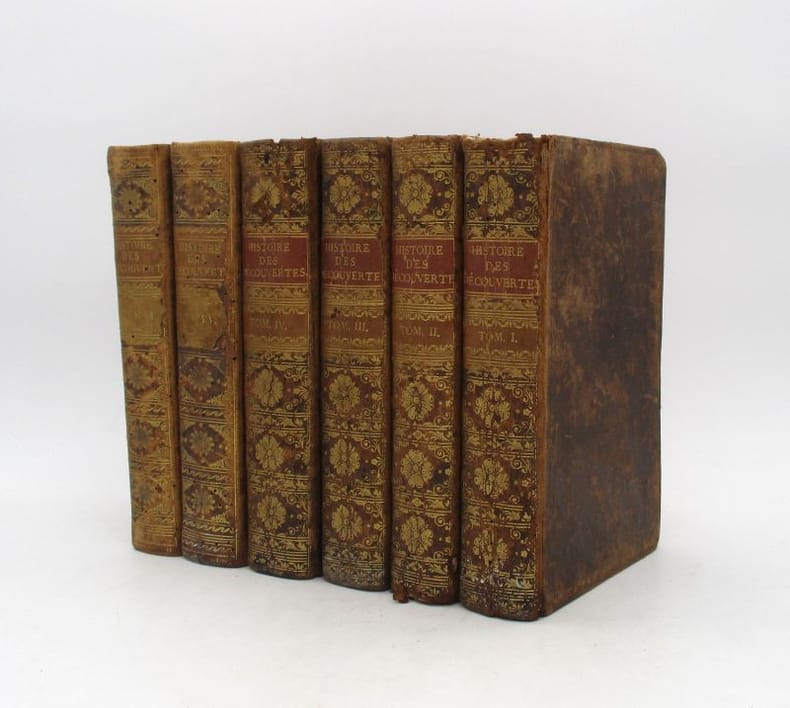
1766PHO-1265Paris, Robin, 1766. 3 volumes in-12, veau marbré, dos là nerfs orné (Reliure de l'époque) avec pièce de titre et tomaison , tranches rouges , ex-libris sur le contre-plat , défauts de reliure , coins et coiffes usés , début de fentes aux charnières , etc.
1960199231960 Paris, Gallimard, 1960, in-4 de 31-(3) pp., rel. d'époque de demi-veau fauve flammé, dos à nerfs ornés de roulettes dorés et soulignés de filets dorés, couverture imprimée orange conservée, bel ex.
Very Good Persian Original wrappers. Folio. (33 x 25 cm) and some different sizes. In Persian with bilingual titles in English and Persian. A lot including 124 issues, published between July 30, 1991, to 1999. A lot including 124 issues of this rare Iranian satyric magazine "Gol Agha", which was the first such publication in post-revolutionary Iran, maintaining its dominance for more than two decades after its debut, adding monthly and annual editions as well as producing new generation of satirists and cartoonists. Kioumars Saberi Foumani, (1941-2004), also known by his pen name Gol-Agha, was an Iranian satirist, writer, and teacher. Saberi was born during the Second World War in Souma'eh Sara a city in Gilan Province. His father, originally from Rasht, worked for the Ministry of Economic Affairs and Finance. He was transferred to Souma'eh Sara in 1938 and then to Fuman in 1942 where he died a few months later. His mother, who was the daughter of a respected cleric and one of the few educated women in the city, taught the Quran after the death of her husband. His brother, who was 14 years older, had to leave school at the age of 15 to work to help with the family expenses. Education for Saberi was hard because of his family's poverty and he had to start working in a tailor shop after finishing his elementary education. He also worked in his brother's bicycle repair shop during elementary school and high school. He started high school education at his mother's insistence. At the age of 16, he gained entry to Sari's Agriculture teacher's college which only accepted one student from Fuman each year. He continued his college education and graduated in 1959. He worked as a teacher from 1959-1961. At the age of 20, he took his high school exams and received his high school diploma. He continued his education at the University of Tehran while working as a teacher. He achieved his bachelor of science degree in political science in 1965. He spent most of the 1970s reading and teaching and in 1978 he obtained his master's degree in comparative literature from the University of Tehran. Saberi got married in 1966 and he had a daughter and a son. His son died in a car accident in 1985 but this sad incident did not stop him from reaching his goal, which was to make people smile. Kioumars Saberi Foumani died on April 30, 2004. During his first year at university, Saberi was arrested for participating in student demonstrations and started to write political satire in Towfigh magazine. Towfigh magazine was Iran's most respected pro-democracy political satire magazine, with the highest circulation in Iranian history. Its editor-in-chief was Hossein Towfigh who, along with his brothers Hassan and Abbas, turned Towfigh magazine into the most influential journal in Iranian history. Saberi became one of the many staff writers of Towfigh magazine. After the Iranian Revolution, he became the cultural advisor for Mohammad Ali Rajai. One of his other political posts was as the counselor to the minister of Housing and Urban Development of Iran. Following the Revolution, Saberi worked in different political positions before deciding to leave politics. He was in charge of Roshde-Adabe-Farsi magazine and sometimes he wrote for the Ettelaat newspaper. He started a column called "Do-Kalame-Harfe-Hesab" in Ettelaat in 1984 which was a starting point for political satires after the revolution. He continued writing for this column for six years until he started his own magazine called Gol-Agha in 1990. His courageous and powerful writings were appreciated by many famous authors such as Mohammad Ali Jamalzadeh. Saberi received first prize in the press exhibitions of 1992 and 1994 and second prize in 1993. He stopped writing for Ettelaat in 1993. The main characters in his writings are Gol-Agha, Shagholam, Mamasadegh, Kamineh, The wife of Mamasadegh), Mash-Rajab, and Ghazanfar. In 2003 in his last editorial in Gol-Agha, Saberi announced that publishing Gol-Agha will be stop
New New English Original bdg. Dust wrapper. In publisher's special box. Folio. (34 x 25 cm). In English and Persian (parallel text in all descriptions of visual materials; historical texts also bilingual in English and Persian separate). 12, [3], 585 p., many color and b/w ills. and photos. Gouy-O-Chogân: The ball and the polo stick in history, culture and art of Iran.= Guy va chugan: Der gustere tarikh, farhang va hanr Iran. English translation by Shirin Samii. [BOXED]. According to historical documents, the polo game in Iran is more than 3000 years old and has been uninterrupted throughout history and has become so intertwined with the history, culture, art and literature of Persian land that it has become part of every Iranian's identity. There are thousands of important historical documents from the polo game about different periods of history, some of which are mentioned in this book. The role of the polo and the polo stick, the spread of this game dating back 3000 years to the empires of Zoroastrianism, Achaemenid and Sasanid, and the continuation of it to the present day, is clearly seen in the seals found in the archaeological excavations in the large plateaus of Iran. One of the most important challenges of this study was the lack of reliable researches and sources of polo game from the prehistoric period to the Achaemenid period and the dispersal of recorded sources from the Achaemenid Empire to the Islamic period of Iran. Undoubtedly, if more extensive researches are done in different periods of ancient Iranian history, more and more traces of the game of polo can be traced and recorded. Contents: THe Achaemenid Empire.; Simultaneous development of the body and the mind.; Local governments of Persian Kings.; The history of Iran as described by Cambridge.; Arthur Upam Pope.; The Parthian Empire.; The Sassanid Empire.; The written customs of the Sassanid Era.; A part of the teaching of polo (from the book of Aeen Namak).; The language of polo in the Sassanid Era.; Army medals or Sassanid emblems.; Chogandar (the person responsible for the game of polo).; Polo in the Nasr Samanid Era.; Polo in Ghaznavid and Seljuq Era.; Naqsh-e Jahan Square.; Ali Qapoo.; Charles Richard.; Shah Abbas's love for polo.; Horse riding and polo playing of women in the Safavid Era.; Teahouses and Zoorkhaneh in the Safavid Era.; The travelogue of the Shirley Brothers at the time of Shah Abbas the Great.; The Qajar Era.; The Pahlavi Era.; Polo in the Iranian Armed Forces.; Polo in the contemporary era.; Thee history of the game of polo.; The role of the horse in the history and culture of Iran.; Kurdish horses.; The Caspian horses.
Very Good Turkish, Ottoman (1500-1928) Paperback. Foolscap 8vo. (18 x 13 cm). In Ottoman script (Turkish with Arabic letters). 80 p., [10] unnumbered b/w plts. Yenisehirlizâde Halit Eyüp was the son-in-law of Ahmet Midhat Efendi, one of the shaded names of Turkish literature. This rare book has 10 unnumbered b/w plates shows firstly Abd Al-Rahman Khan, (1845-1901), who was Emîr of Afghanistan and played a prominent role in the fierce and long-drawn struggle for power waged by his father and his uncle, A'?am Khân, against his cousin Shîr 'Alî, the successor of Dost Mo?ammad Khân. And then, Khaybar Fortress, Peshaver city in India, Tajik chief of Afghanistan: Maaz Khan (two-paged print), a view of Kabul city (two-paged print), Ghaznawid Fortress, North Gate of Kandahar, Herat Fortress (two-pages print), Cohat Fortress, a portrait of Afghan Sufi. An extremely rare and richly illustrated book of the history of Afghanistan. Hegira: 1316 = Gregorian: 1899. First and Only Edition. TBTK 12178.; Özege 19966.; Three copies located in OCLC: 944246927 (One copy in Library of Congress - Karl Süssheim Collection, No. 7.).; 163633157 (Orient-Institut Istanbul and Bayerische Staatsbibliothek).
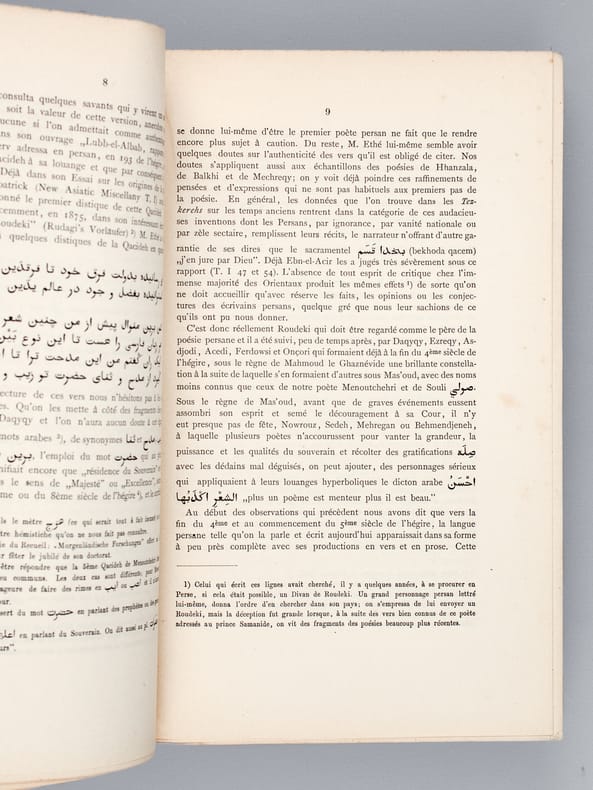
188665481Texte, traduction, notes et Introduction historique par A. de Biberstein, 1 vol. grand in-8 br., Klincksieck, Paris, 1886 [ 1887 en couverture ], VIII-413 pp. et 112 ff. n. ch (texte en persan)
Small octavo. Pp. (50), 800, (204). Title printed in red and black, signature at top. Hardcover, bound in contemporary full laced case vellum, manuscript lettering to spine faded, sprinkled edges, evenly age-toned. Overall a fine, attractive copy, very well preserved. ~ Barnabé Brisson (1531-1591); Jean Henri Lederlin (1672-1737); Friedrich Sylburg (1536-1596).
1800PHO-1932Paris, de l’imprimerie de Guilleminet, 1800, 2 tomes en 1, in-8, xvi-303pp,1f-319pp., demi basane, dos lisse avec pièce de titre rouge et date verte, tranches mouchetées, illustré de 8 planches dont 2 dépliantes, étiquette en page de garde « Marquis de Civille » et ex-libris manuscrit au titre, quelques écritures en marge, frottements aux plats et coupes. A été relié avec, écrit à la plume, la table des volumes ainsi qu’un texte fustigeant le coté révolutionnaire de l’auteur considéré comme un espion de Bonaparte désirant conquérir la Grèce.
18215640Paris, Pélicier et Nepveu, 1821. In-8 (200 x 125 mm), (4)-XII-506-(2) pp., frontispice et 9 planches lithographiées, 1 grande carte dépliante. Reliure d'époque en demi-veau glacé, dos lisse orné d'une palette, de filets dorés et de fleurons à froid, tranches marbrées. Petit manque à la coiffe sup., dos assombri, coupes légèrement déformées à quatre endroits suite à des chocs, quelques rares rousseurs principalement sur le frontispice et la carte.
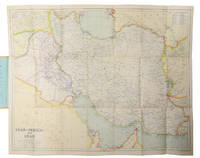
1930L6CC0NQYKB25London: George Philip & sons 1930. Colour printed map 54 x 68 cm with yellow covers 19.5 x 11 cm. Map of Iran Iraq and parts of the surrounding countries including modern Kuwait Bahrain Qatar and the UAE in the 1930s published in the series "Philips' authentic imperial maps for tourists & travellers". Published in the early years of the discovery of oil in the Middle East the map shows roads and railways but also caravan routes submarine cables and oil pipelines.Slightly soiled in very good condition. George Philip & sons, unknown
52091Gervais Clouzier.1673.In-8 relié.133 p.E.O.Frontispice.Complet de la carte et de 7 gravures HT. rempliées.Ouvrage en état très moyen avec de nombreuses marques de mouillures; quelques pages brunies avec une lecture aisée.Basane usagée avec griffures,et manques de cuir aux coiffes.Tampon sans gène en marge de la page de titre.Rare.
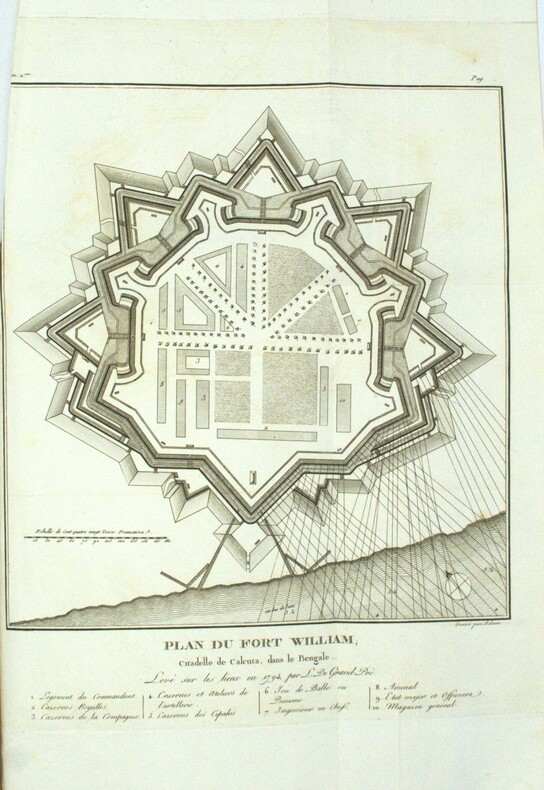
1801PHO-1972Paris, Dentu, an IX (1801); Atlas seul, in-4 (33x24,5cm),composé de 7 planches gravées dépliantes dont une grande vue de la citadelle de Calcutta et un plan du Fort William.. Bel exemplaire, relié basane époque, roulette aux plats et à l’intérieur, tranches dorées, manque au dos, coins usés, intérieur frais.
1930324915London: Faber 1930. First edition. One of 350 copies signed by T. S.Eliot. 75 pp. 1 vols. Tall 8vo. Green cloth titled in gilt t.e.g. Fine copy light paste action to endpapers in edgeworn publisher's slipcase. First edition. One of 350 copies signed by T. S.Eliot. 75 pp. 1 vols. Tall 8vo. T. S. Eliot won the 1948 Nobel Prize in Literature. Gallup A16b Faber unknown
1971188876Moskau / Moskva 1960/1971. Paralleltitel in kyrillischer Schrift: Firdous? Sach-n?me : kriti?eskij tekst / pod redakciej E. ?. Bertel?s ; Text prepared by A. E. Bertel?s (volumes 2, 9), by O. I. Smirnova (volume 3), by R. M. Aliev (volumes 4-5, 8), by M.-N. O. Osmanov (volumes 6-7), under editorial direction of E. ?. Bertel?s (v. 1-2), A. Nushin (volumes 3-7, 9), A. Azer (volume 8). *neuwertig* fehlt Bd 4 !
190312183London, De La More Press [Alexander Moring], 1903 [printed January MDCCCCIV. Reich verzierter Ledereinband, Lex-8°, 4 falsche Bünde, 26 S., 12 kolorierte Tafeln mit montierten Illustrationen, Einband datiert und signiert; -Kanten berieben, Papier mit vorsichtigen Braunflecken, gutes Exemplar/ green full leather, decorativ, gilt lettering, large 8vo, 26 pp, 12 colour plates with mounted illustrations, binding signed and dated; -cover worn, paper with some stain, very good copy.
174035465London: Printed for J. Brindley et al. 1740. 1st UK Edition thus i.e. by Brindley one of two English editions published in 1740. Modern respining with tan leather & maroon leather title label over period marbled paper boards. Wear to boards with paper lacking to fore-edge. Title leaf a bit grubby. P4 with tears along gutter. A VG copy. 2 ii 163 1 blank. Printer's ornament to t.p. Head- tailpieces. Decorative initial capital letters. 12mo: A2 B - O6 P4. 6-3/4" x 4" <br/><br/>OCLC records 6 cc of this edition. Printed for J. Brindley, et al. hardcover books
80424o. Angaben Organisation nationale pour la conservation des monuments historiques en Iran 1977. Quer-4° 30.5 x 42 cm 130 S. zahlr. Abb. Pläne Kart. Einband etw. unsauber u. gebrauchsspurig Bibliotheksschild am Fuss Fuss min. läd. Stempel a. Schmutztitel Papier min. gebräunt innen sonst tadellos. EA. Enth.: Résumé et conclusions; Aspects historiques et archéologiques; Concept de restairation; Aspects techniques. 010 o. Angaben, [Organisation nationale pour la conservation des monuments historiques en Iran], 1977 unknown
Very Good Turkish, Ottoman (1500-1928) Original illustrated wrappers. Cr. 8vo. (19 x 13 cm). In Ottoman script (Old Turkish with Arabic letters). 105 p., 8 b/w plates. First edition of this illustrated travel account of one of the exiled Young Turks to Afghanistan, who was invited to the country by the reformist Afghan Emir Habibullah Khan (1872-1919), who was the ruler of Afghanistan from 1901 to 1919. The news that the reformist Afghan Emir Hamidullah Khan was looking for well-educated Turkish youth to help the development of his country, reached the Young Turks in exile in Egypt. The author of this book, Mehmet Fazli was one of the Young Turks (A reformist group in the early 20th century that favored the replacement of the Ottoman Empire's absolute monarchy with a constitutional government), and he followed this royal invitation and set off with his friends. He reached Kabul via an adventurous journey through Austria-Hungary, Russia, Azerbaijan, Turkmenistan, and Iran. With his guide and friend who was an Afghan and his Turkish friend Hüseyin Hüsni Bey, Fazli met in Cairo and they went to Afghan lands. He described Kabul, Herat, Ghazna, Belh, and Kandahar cities during their travel, wrote about the Afghan Emîr and the dynasty. His book revolves around the many details on Afghan peoples' customs, social life, education, industry, roads, antiquity, postage system and organization, arms and army, etc. The book has a photo of the Afghan Emir beside other attractive illustrations and photographs. (Sources: Afganistan'da Bir Jöntürk: Misir Sürgününden Afgan Reformuna., Prep. by Kenan Karabulut.; History of Geographical Literature during the Ottoman Period., Edited by Ekmeleddin Ihsanoglu). Özege 16749.; OCLC 868007927.; MKAHTBK, II 948.
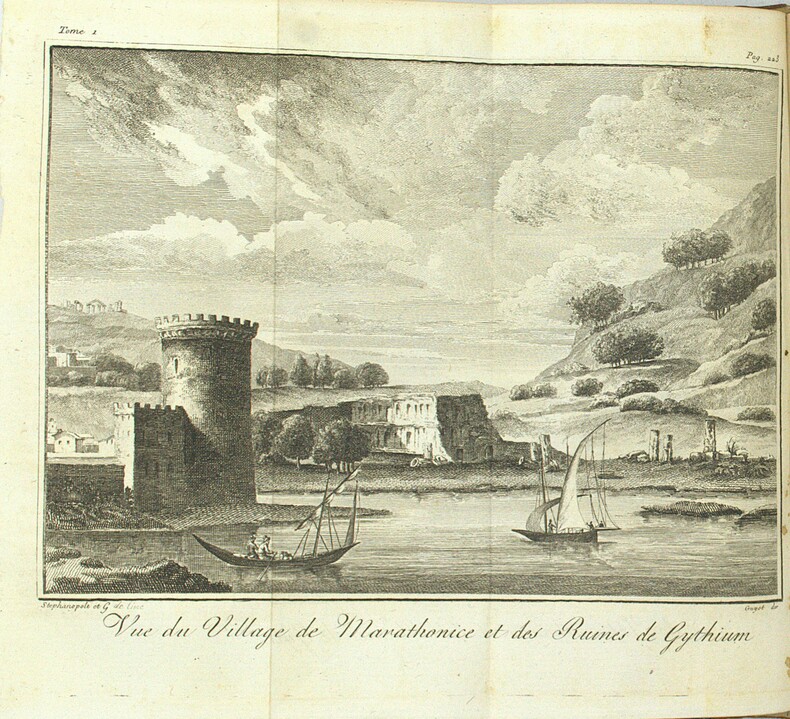
18638Berne, chez la Société typograpique [puis] la nouvelle société typographique [puis] chez François Seizer et comp., 1779-1787. 6 vols. in-12, 502 pp. 9 pl. + 469 pp. 8 pl. + 515-[5] pp. 7 pl. + 492-[6] pp. 10 pl. + 591 pp. 13 pl. + 534 pp. 7 pl., veau marbré brun, filets à froid en encadrement sur les plats, dos lisse orné de filets et fleurons dorés, pièce de titre brune, pièce de tomaison havane, tranches rouges (reliures très frottées, quelques taches, rousseurs, galeries de ver, déchirure à la carte du 4e volume, pâle mouillure aux derniers ff. et à la carte du 5e volume).
166343094Paris, Jean Du Puis, 1663. 1 vol. In- 4 de (6)-632-(24) pp., demi-veau havane moucheté, dos lisse orné, supra libris frappé or au centre, pièce de titre en maroquin rouge, tranches jaspées (relié vers 1800).
1608002907Apud Ioannem Maximilianum Helmlin. Friburgi, Brisgoiae, 1608
1725PHO-2135Paris & Rouen, J.B.C Bauche, Ferrand, Machuel, 1725. 1 Volume in-4° (5) (25x19cm), 3ff.-520pp.-6ff., illustré de 2 cartes et 12 gravures (13 ), relié veau époque, dos à nerfs avec pièce de titre et tomaison, coiffes abimées, coins usés, frottements, déchirure aux cartes, ex-libris manuscrit au titre.
18370Paris, Eugène Fasquelle, Bibliothèque Charpentier, 1921 ; in-8 (214 x 155 cm), broché, chemise demi maroquin vieux rose, dos à nerfs, titre doré, étui bordé ; 320, [2] pp., couverture beige.
174117196Seutter, Augsburg ca. 1741. Altkolorierte gestochene Karte. Blattgröße ca. 65x54,8 cm, Bildgröße ca. 58,2x50 cm. Gefaltet. Im Falz unten ca. 3 cm glatt eingerissen. Sauberes, kräftig gedrucktes Blatt mit figürlicher Titelkartusche. Schöne Karte Irans aus der Zeit des Machtwechsels
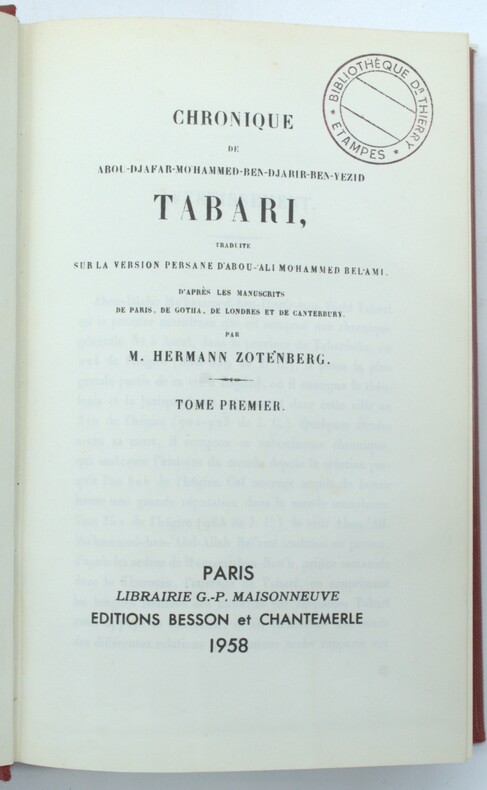
1958PHO-1454Paris, , Maisonneuve ; Besson & Chantemerle, 1958 , 4 volumes in-8 , relié pleine toile rouge , supra libro aux plats, cachets ,2ff.-viii-599pp., 2ff.-ii-552pp. ,2ff.752pp.,2ff.iii-665pp.