199 résultats
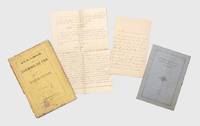
1928053485Istanbul: Servet-i Fünûn - Ahmed Ihsan Matbaasi i.e. Printing House" Letterhad 1928. No Binding. Very Good. 8vo - over 7¾ - 9¾" tall. Original manuscript autograph letter/document signed by Muhtar Halid sent to the presidency of the Republican Party of Turkey in Ankara. 205x135 cm. In Ottoman script. Dated September 23 1928. Six lines. Two punching holes out of text on the paper. The document says that 26.000 alphabets 57.000 brochures and pamphlets and 100.000 are printed and will be sent to the 'Cumhuriyet Halk Firkasi' i.e. Republican Party CHF - CHP in Ankara city. This rare autograph documents how widespread and comprehensive work was done to switch from Arabic letters to Latin letters during the Letter Revolution in 1928. "Muhtar Halid Kitabhanesi i.e. Printing House of Muhtar Halid was located on Bâb-i Alî i.e. The Sublime Port main street number 17; a place where is located old Izmir Terzihanesi i.e. Old Smyrna Taylor Shop. Muhtar Halid was the Late period Ottoman / Turkish typographer the elder brother of the famous Turkish typographer and translator of Ahmed Ihsan Tokgöz 1868-1942 and the owner of 'Muhtar Halid Kitabhanesi'. He worked together with his brother's printing and publishing house especially when he was publishing 'Servet-i Fün'un' periodicals. Servet-i Fünûn i.e. The Wealth of Knowledge was a long-running and an avant-garde literary and sometimes political periodical and journal or magazine. It's published to support the Ittihat ve Terakki Cemiyeti i.e. The Union and Progress Society later Party initially by Ahmed Ihsan Tokgöz. Source: Tanzimat'tan Cumhuriyet'e Tarihi Kentsel Çevrede Mekânlar Üzerinden Bir Semt Okumasi: Cagaloglu Semti Örnegi by Melek Yalvaç Ph.D. Thesis. <br/> <br/> Servet-i Fünûn - Ahmed Ihsan Matbaasi [i.e. Printing House]" Letterhad unknown
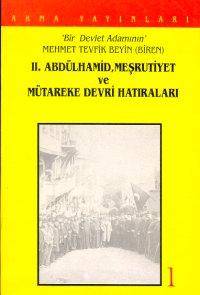
1993047899Istanbul: Arba Yayinlari 1993. Soft cover. Very Good. 8vo - over 7¾ - 9¾" tall. Paperback. Cr. 8vo. 20 x 14 cm. In Turkish. 2 volumes set: 1048 p. ills. II. Abdülhamid Mesrutiyet ve Mütareke devri hatiralari. 2 volumes set. Prep. By F. Rezan Hürmen. Memoirs of a Turkish / Ottomaan statesman in the period of Abdülhamit II Second Constitution and the Truce. <br/> <br/> Arba Yayinlari paperback
1922052114Istanbul: Manuscript - Autograph letter / Letterhead 'Sura-yi Devlet'. H.: 1338 1922. Soft cover. Very Good. 4to - over 9¾ - 12" tall. Original manuscript autograph document signed by Mehmed Tevfik Biren. 335x20 cm. Folded. 1 p. In Ottoman script. Dated 25 Saban 1338 AH. Letterhead of 'Sûrâ-yi Devlet' addressed to 'Bâb-i Âlî Teshilât Sandigi Komisyonu'. Biren served as a high-ranking statesman such as the Minister and the Governor in the last period of the Ottoman Empire. Also he was last chief of the council of the state i.e. Shûrâ al-Devlet. Mehmet Tevfik Bey was born in 1867 in Istanbul. His father was a high-ranking statesman in the Ministry of Education. After graduating from Mekteb-i Mulkiye in 1885 at the age of 18 he started his first duty as the clerk of Abdulhamid II at Yildiz Palace. From 1897 to 1901 he served as the Governor of Jerusalem. After that he was appointed as the Governor of Thessaloniki. He was the governor of Yemen between 1904-1905. He became the Minister of Finance in the last years of the Ottoman Empire. He participated in the negotiations of the Treaty of Sevres signed in 1920. He was last appointed on 19 August 1921 as the 'Sûrâ re'isi'. He continued this duty until the abolition of the Sultanate on 4 November 1922. Thus he was the last 'al-Shura' of the Ottoman Empire. After the proclamation of the Republic he left the state. Wikipedia. <br/> <br/> Manuscript - Autograph letter / Letterhead 'Sura-yi Devlet'., [H.: 1338] paperback
1908051592Istanbul: Manuscript - Autograph letter. fî 3 Subat sene 1324 1908 1908. Soft cover. Very Good. 4to - over 9¾ - 12" tall. Original autograph letter handwritten signed by Mehmed Semseddin Pasha addressed to 'Kütahya Evkâf-i Humâyûn' i.e. Kütahya Imperial Foundations. It starts with 'Huve' traditionally. 29x21 cm. In Ottoman script. Letterhead 'Nezâret-i Evkâf-i Humâyûn' i.e. Ministry of foundations. 1 p. including eight lines with additional annotation. Mehmed Semseddin was an Ottoman / Turkish statesman with Circassin Adige - Shapsig origin descended from Tletseruk or Tleseruk family. Mehmed Semseddin Pasha was the son of Hacizade Osman Bey who was a Circassian chieftain. In 1864 his family emigrated to Samsun and then to Istanbul in the Great Immigration of Circassians. He was graduated from Galatasaray High School. He was also groom of Egypt Extraordinary Commissioner Circassian Rauf Pasha a member of the Society Circassian Charity Çerkes Teavun -Yardim- Cemiyeti the manager and author of Guaze newspaper published in Turkey which was first published journal in Latin letters in Turkey. <br/> <br/> Manuscript - Autograph letter., [fî 3 Subat sene [1]324 [1908]] paperback
1914050889Paris: Press photo by Dupuy & Cie. 1914. Soft cover. Very Good. Original b/w press photograph of Mehmed Salih Hüsnü Pasha who was Turkish / Ottoman lieutenant and son-in-law of Damad Mehmed Serif Pasha. He lived in Egypt and he's known with his contacts with the Kurdish committee in Alexandria and also personally closing to Arif Pasha. 155 x 115 cm. Text in French on verso. Stamps of photographer and 'Miroir' Newspaper Archives. <br/> <br/> Press photo by Dupuy & Cie. paperback
1903051627Istanbul: Manuscript - Autograph letter / Letterhead 'Sura-yi Devlet'. H.: 1319 1903. Soft cover. Very Good. 4to - over 9¾ - 12" tall. Original manuscript autograph document signed by Mehmed Said Pasha sent to Trabzon Vilayat Ordu Kaza Hasbamane Nahiya local manager faziletlu 'Mehmed Ali Sevki Beyefendi'. 335x20 cm. Folded. 1 p. In Ottoman script. Mehmed Said Pasha was an Ottoman monarchist senator statesman and editor of the Turkish newspaper Jerid-i-Havadis. He supported the CUP the political party which came to power after the Ottoman coup d'état of 1913. His origin comes from 'Sebazâde family' from Ankara. He became first secretary to Sultan Abdul Hamid II shortly after the Sultan's accession and is said to have contributed to the realizations of his majesty's design of concentrating power in his own hands; later he became successively minister of the interior and then governor of Bursa reaching the high post of grand vizier in 1879. He was grand vizier seven more times under Abdul Hamid II and once under his successor Mehmed V. He was known for his opposition to the extension of foreign influence in Turkey. n 1896 he took refuge at the British embassy in Constantinople and though then assured of his personal liberty and safety remained practically a prisoner in his own house. He came into temporary prominence again during the revolution of 1908. On 22 July he succeeded Mehmed Ferid Pasha as grand vizier but on the 6 August was replaced by the more liberal Kâmil Pasha at the insistence of the Young Turks. Also during 1908 Mehmed Said Pasha bought the famed Istanbul arcade in the Beyoglu Pera district today known as Çiçek Pasaji "Flower Passage". The modern name became common in the 1940s; during Mehmed Said Pasha's ownership in the 1900s and 1910s the arcade was known as Sait Pasa Pasaji "Said Pasha Passage". During the Italian crisis in 1911-12 he was again called to the premiership. He was again removed from power by the Savior Officers who backed the Freedom and Accord Party Liberal Union against the Committee of Union and Progress and replaced by a new cabinet supported by the Officers and the Freedom and Accord Party. The CUP would return to power however the next year after the Ottoman coup d'état of 1913. Source: Wikipedia. Seven lines on special paper with watermark 'Joynson Superfine'. Letter of request to provide teaching for some students in the region. <br/> <br/> Manuscript - Autograph letter / Letterhead 'Sura-yi Devlet'., [H.: 1319] paperback
1877050824Paris - Istanbul: H.: 1293 1877. No Binding. Very Good. Original handwritten autograph letter signed 'Refet' sent to his brother 'Mahmud Fehim Bey' who was the Second Secretary of the Turkish Embassy in Paris like it's written on envelope as bilingual in French and Ottoman Turkish: 'Paris Sefâret-i Seniyyesi Ikinci Serkâtinbi = Seconde Secrétaire de l'Ambassade de Turquie en ParisSeconde Secrétaire de l'Ambassade de Turquie Paris'. Folded in its original envelope. Letter open size: 20x25 cm; envelope size: 11x14 cm. In Ottoman script. 3 p. full. Dated Hegira 27 Ramazan 1293 = Gregorian: 1877. They were sons of Bastirmali Sadrazam -Ottoman Grand Vizier- Mehmed Esad Safved Pasha 1814-1883 and one of the signatories of the Treaty of Ayastefanos -Treaty of San Stefano-. Mehmed Refet Bey was 'Hariciyye Mektubçusu' which was an important part of foreign relations of Ottoman diplomacy and their duty was dealing with legal cases between Ottoman citizens and foreigners. <br/> <br/> [H.: 1293] unknown
18262Without date or place. On irregular strip of paper roughly 1.5 x 4 cm. in dimensions. In fair condition on lightly-aged paper. The son of a noted poet Pacha began his career as a translator before serving as a diplomat. He was instrumental in reforming the Tanzimat and was an ardent Anglophile. See Image. Without date or place. unknown
1890051593Istanbul: N. p. Hijri: 1307 1890. Hardcover. Very Good. 8vo - over 7¾ - 9¾" tall. Modern cloth bdg. Cr. 8vo. 19 x 13i5 cm. In Ottoman script. 45 p. Tear in last page. Partly uncut and untrimmed. Hilye-i Hakanî. AH: 1307 = AD: 1890. The term hilya denotes both a visual form in Ottoman art and a religious genre of Ottoman Turkish literature each dealing with the physical description of Muhammad. Hilya literally means "ornament". They originate with the discipline of shama'il the study of Muhammad's appearance and character based on hadith accounts most notably Tirmidhi's al-Shama'il al-Muhamadiyyah wa al-Khasa'il al-Mustafawiyyah "The Sublime Characteristics of Muhammad". In Ottoman-era folk Islam there was a belief that reading and possessing Muhammad's description protects the person from trouble in this world and the next it became customary to carry such descriptions rendered in fine calligraphy and illuminated as amulets. In 17th-century Ottoman Turkey hilyes developed into an art form with a standard layout often framed and used as a wall decoration. Later hilyes were also written for the first four Caliphs the companions of Muhammad Muhammad's grandchildren Hasan and Hussein and Islamic saints walis. Mehmed Hakani Beg's 'Hilye' is one of the first example of the 'hilye' literature in the Turkish / Ottoman world. Özege 7631.; Not in TBTK It has earlier and later editions. <br/> <br/> N. p. [Hijri: 1307] hardcover
1874141678Turkey: 1874-86. Constantinople to Vienna Fascinating group of documents relating to Baron Maurice de Hirsch's concessions to build and operate the Ottoman Empire's railway lines from Constantinople to Vienna dating to the time the agreements were revised 1872 to when he was seeking to extricate himself 1887: 1. Covering letter to the annotated Actes 1874 document addressed to Baron Hirsch 1887 2. Actes 1874 covering the revised 1872 agreements annotated in 1887 for Baron Hirsch 3. Further amendments from the Ottoman Minister of Works for Hirsch c1887-88 4. Agreement to advance funds to the Sublime Porte to finance a military response to Bulgarian annexation of Eastern Rumelia 1885-86 The Ottoman rail network was constructed to boost trade maintain imperial control and facilitate Hajj and relied to a great extent on foreign private finance and expertise. First ventures in the 1860s included the Chernovoda to Constanza line connecting the Danube to the Black Sea and the Rustchuk to Varna line taking cargo to the Danube and Black Sea. The latter built by a British group was owned by the Rustchuk-Varna Railway Company under a 99 year concession which leased it in 1873 to Austrian banker Baron Maurice de Hirsch 1831-1896. In 1869 the Porte granted its most important concession to Hirsch to build 2 500 km of main and branch lines connecting Constantinople and Vienna; and in 1870 Hirsch founded the Societe Imperiale des Chemins de Fer de la Turquie d'Europe to build the lines and Compagnie pour l'exploitation des Chemins de Fer de la Turquie d'Europe to operate them. The venture was financed by the Turkenlose 3% Turkish Lottery Bond designed by Hirsch himself and German and Austrian bank loans. Over the 99 year concession Societe Imperial would receive 14000 francs rent per completed kilometre from the Porte and 8000 from the Compagnie. Grand Vizir Mehmed Emin Ali Paca 1815-71 a moderniser who wanted closer ties with Western Europe signed the agreement for the Porte. However he died in 1871 and his successor Mahmoud Nedim Paça 1818-83 whose appointment was influenced by General Nikolai Ignatieff Russia's ambassador at Constantinople preferred a link with Russia via Romania. Mahmoud Paca's efforts to cancel the concession were however unsuccessful due partly to Hirsch's appointment of Ralph Earle former British MP and secretary to Lord Beaconsfield who renegotiated the agreements signed off on 18 May 1872 item 2. By 1872 four disconnected lines "stumps" had been built and the Turkenlose had not raised sufficient funds. Under the new agreements the Porte took back the building concession including the most difficult and costly parts in the process reducing the distance to 1250km with the Societe Imperial as its contractor and cutting the Compagnie's concession from 99 to 50 years. Small archive of original documentation as above. Overall in very good condition. unknown
1909052756Trablussam: Original Manuscript ALS. Ah 1325 1909. No Binding. Very Good. Original autograph letter sealed by Mahmud Naci Balkis. 21x15 cm. In Ottoman script Turkish with Arabic letters. 1 p. To his unnamed respectable friend. Congratulations to Abdussaid Bey a kind appeal for a payment behalf of himself and sending the receipt to his mother "Islahat Komisyonu" etc. Dated fî sene 1 Subat February 1325 AH = 1909 AD. Mahmud Naci Bey was a Turkish politician soldier deputy of the Ottoman Parliament Assembly Tripoli 17 December 1908 founder of Besiktas Gymnastics Club 1903. Mahmut Naci Bey who was one of the founders of the Ottoman Besiktas Terbiye-i Bedeniye School also became a member of the Ottoman Deputy Council and served as the Deputy of Tripoli. He wrote a book titled "Trablusgarp - Hedefteki Ülke Libya'nin Tarihi" i.e. "Tripoli - The History of the Destination Country Libya" which also wrote the situation in Libya with his memories here. Mahmut Naci Bey who was of Caucasian origin was against the policy of Sultan Abdülhamid II. He joined Mustafa Kemal Pasha during his occupation years. He took part in the National Struggle in secret weapon shipments from Anatolia to Istanbul. The Independence Medal was awarded for his active role in the War of Independence. <br/> <br/> Original Manuscript ALS., [Ah 1325] unknown
1914050850Gümüshane: Manuscript Autograph Letter. H.: 1330 1914. No Binding. Very Good. Original manuscript autograph letter signed 'Gümüshane Mutasarrifi Celaleddin' addressed to 'Gümüshane Tahrirat Müdürü Cenab ve Alâsi'. 36x23 cm. In Ottoman script. 1 p. Sealed. "Gayretlü efendim; Tekâlif-i Harbiye Kanunu'nun ikinci maddesine tevfîken teskil eden riyaset vekâletine zan dolayisiyle. fî 4 Agutsos sene 1330 August 4 1914. An example of standard state correspondences at the beginning of World War 1. Mahmud Celaleddin was Turkish Gümüshane district governor in the last Ottoman and early Republican period. Also he wrote his book called 'Mir'ât-i Hakikât'. Book describes the events of the last period of the Ottoman Empire and the first period of the Republic of Turkey. Rare. <br/> <br/> Manuscript Autograph Letter., [H.: [1]330] unknown
1909051578Gümüshane: Manuscript Autograph Letter. H.: 1325 1909. No Binding. Very Good. Folio - over 12 - 15" tall. Original manuscript autograph letter signed 'Gümüshane Mutasarrifi Celaleddin' and Nâib Vekil-i muhasebeci Vekil-i müdür-i tahrîrât müftü Vekil-i polis and members. 1 p. Text has five lines. Letterhead 'Sûrâ-yi Devlet' blind stamped. Folio. 38x25 cm. In Ottoman script. Eight seals. Mahmud Celaleddin was Turkish Gümüshane district governor in the last Ottoman and early Republican period. Also he wrote his book called 'Mir'ât-i Hakikât'. Book describes the events of the last period of the Ottoman Empire and the first period of the Republic of Turkey. Rare. <br/> <br/> Manuscript Autograph Letter., [H.: [1]325] unknown
1909055883Trabzon: Mesveret Matbaasi. AH 1325 1909. 1st Edition . Soft cover. Very Good. 8vo - over 7¾ - 9¾" tall. Original wrappers. Cr. 8vo. 20 x 11 cm. In Ottoman script Old Turkish with Arabic letters. 15 p. Restored spine by special tape chippings on extremities of the front cover uncut pages. Overall a good copy. The first and only edition of this epic poem written in memory of Turkish Unionist Captain Ilyas from Trabzon one of the first to fall when the sultan's supporters opened fire at the bridgehead in Galata Istanbul during the outbreak of the March 31 Incident. The poem which can also be regarded as an elegy for the Captain contains severe accusations against Sultan Abdulhamid II. The book was published by the Mesveret Printing House sharing its name with the Unionist and anti-sultan newspaper that had been published in Trabzon since the 1890s. It was written in 66 verses using an 11-syllable meter. The identity behind the pen name "Maçka Sairi" which appears at the end of the poem remains undetermined. He was likely a member of the Mesveret newspaper staff a close acquaintance of Captain Ilyas and a staunch opponent of Sultan Abdülhamid as well as a supporter of the Committee of Union and Progress. According to historical sources Captain Ilyas from Trabzon was the first person killed during the March 31 Incident. Due to this significant distinction an extensive poem was composed in his honor. While detailed information about Captain Ilyas is scarce it is believed that he was either a native of Trabzon or became affiliated with Mesveret while serving there. He was likely an Ottoman soldier who shared the same political views as the poem's author. Özege 25512. As of February 2025 we couldn't trace any copies in the OCLC. <br/> <br/> Mesveret Matbaasi., AH 1325 paperback
1906053711Erzurum: ALS. Dated AH Fî 24 Tesrînisânî 1322 1906. No Binding. Very Good. Original autograph letter sealed by Lütfullah Vehbi as'Erzurum müftüsü' to an unnamed friend. 20x13 cm. In Ottoman script. 1 p. 12 lines. Dated November 24 1906 AH 1322. Signed as 'Erzurum müftîsi' i.e. The cleric of Erzurum. Lütfullah Vehbi Efendi was born in 1850 AH 1266 in Erzurum. He was an Arabic teacher at the Military School of Erzurum in 1878 and he was the müftü i.e. cleric of Erzurum in 1897. After his retirement he was a deputy of Erzurum city in he Osmanli Meclis-i Mebûsân i.e. Ottoman parliamentary. He is famous with his annotation to 'Cilâu'r-Ruh' by Molla Abdurrahman Camî titled 'Feyzü's-sünûh'. <br/> <br/> ALS., [Dated AH Fî 24 Tesrînisânî [1]322] unknown
1934051454Ankara: Direction Generale de la Presse et de l'Information 1934. Soft cover. Very Good. 4to - over 9¾ - 12" tall. Paperback. Pbo. 4to. 32 x 24 cm. In French. 31 p. ills. and photos. La Turquie Kamâliste Kemaliste. No. No. 1. Juin 1934. <br/> <br/> Direction Generale de la Presse et de l'Information paperback
1867052131Ellenborough House Roehampton 1867. No Binding. Very Good. Original manuscript handwritten letter ALS signed as an Turkish / Ottoman ambassador in the UK addressed 'Mrs. Darby Griffith' wife of Christopher Darby Griffith M.P. who was a British politician and a Member of the Parliament of the United Kingdom for Devizes 1857-1868. 18x12 cm. In English. 2 p. Deep black borders the Ambassador's personal seal in black wax transferred from an envelope to the first page. With the separate engraved visiting - business card of l'Ambassador de Turquie. Ellenborough House Roehampton 31 August 1867. Konstantinos Mousouros also known as Kostaki Musurus Pasha was an Ottoman Greek diplomatic official of the Ottoman Empire who served as ambassador to Greece Austria Great Britain Belgium and the Netherlands. He was born in 1807 in Constantinople Istanbul to a distinguished Phanariote family. His brother Pavlos Mousouros also became a diplomat. Mousouros became the first ambassador of the Ottoman Empire to the newly independent Kingdom of Greece in 1840 a position he kept until 1848. In 1847-48 he was a central figure in the events known as Mousourika which led to his temporary recall and the breakdown of relations between the two states. On his return to Athens he survived an assassination attempt leading to his transfer to Vienna. In 1850 he took up the post of Ottoman ambassador to the Great Britain and Ireland which he kept for 35 consecutive years until his retirement in 1885. During the same period he also served as ambassador to the Netherlands 1861-77 and Belgium 1861-75. In 1876-78 he was ex officio a member of the short-lived Senate of the Ottoman Empire. Well educated in 1883 Mousouros translated Dante's Divine Comedy into ancient Greek. He was married and had a son Stephanos Mousouros who later became Prince of Samos. <br/> <br/> unknown
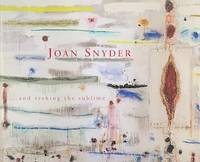
69-0525Nielson Gallery Boston Massachusetts 2008. 4to. 40 pp. Soft Cover. Very Good. Some stains on back cover. Color Plates. Scarce.Provenance: From the estate of Gerald Nordland 1927-2019. Nordland was a museum director art critic educator and author.Dean of the Chouinard Art Institute 1960-64 Director of the San Francisco Museum of Art now SFMoMA 1966-73 Milwaukee Art Museum 1977-85 and the UCLA Wight Art Gallery 1973-1977. He is the author of over 60 publications including books on Lachaise Nakian Diebenkorn and Frank Lloyd Wright. Nielson Gallery, Boston, Massachusetts 2008 paperback
1905049551Egypt: ca. 1905 1905. Soft cover. Very Good. Original business card. 7x11 cm. Written 'Le Khedive'. Abbas Hilmi Pasha was the last Khedive Ottoman viceroy of Egypt and Sudan ruling from 8 January 1892 to 19 December 1914. In 1914 after Turkey joined the Central Powers in World War I the nationalist Khedive was removed by the British then ruling Egypt in favor of his more pro-British uncle Hussein Kamel marking the de jure end of Egypt's four-century era as a province of the Ottoman Empire which had begun in 1517. Extremely rare. See. 'Tamga pençe tugra imza' by Kologlu Orhan. p. 98. <br/> <br/> [ca. 1905] paperback
1920054028Baku: P. V. CH. Hükümet Matbaasi i.e. Government Presss. AH 1336 1920. 1st Edition . Soft cover. Very Good. Original wrappers. Demy 8vo. 21 x 14 cm. In Ottoman script Turkish with Arabic letters. 3 158 p. Occasionally minor age-toning on pages and cover. Spine restored. Uncut and untrimmed copy with sensitive extremities. Otherwise a good copy. First Edition and extremely rare Baku imprint of Karabekir's book including his advices to children printed in Baku in the same year when the Red Army captured Azerbaijan. Printing types are peculiar to the Caucasus imprints. The author wrote this book in his own words to teach children "the first facts of life". Kâzim Karabekir Pasha who took care of thousands of children who lost their parents during the First World War is a statesman and soldier who was also closely interested in the education of these children. "My Advice" book purposes to reach teachers and parents as well as primary and secondary school students. The rights and wrongs that every child should know about life are explained in a sweet way. The book contains more than a hundred moral and other advices on issues such as the importance of being friendly how to spend money hospitality rules spies paying attention to cleanliness helping each other and respecting elders. Musa Kazim Karabekir Pasha was a Turkish general and politician. He was the commander of the Eastern Army of the Ottoman Empire at the end of World War I and served as Speaker of the Grand National Assembly of Turkey before his death. Karabekir was appointed commander of the 2nd Corps on the Caucasian front Erzurum Kars and Baku and fought bitterly against the Russian and Armenian forces for almost ten months. In September 1917 he was promoted to brigadier general by a decree of the Sultan. OCLC 13180947.; Özege 16062. <br/> <br/> [P. V. CH.] Hükümet Matbaasi [i.e. Government Presss]., [AH 1336] paperback
H0-OAXJ-JSWRNew. unknown
JA-AINN-PNHOVery Good. unknown
1920051625Istanbul: Yeni Sahne Müdüriyet-i Umumiyesi. ca. 1920 1920. Soft cover. Very Good. 8vo - over 7¾ - 9¾" tall. Original manuscript autograph letter signed ALS sent to Darülbedayi actor Behzad Bey Haki Butak. 21514 cm. In Ottoman script. 1 p. Five lines. The Darülbedayi was an Ottoman imperial theatre established in Istanbul in 1914. Its history was closely linked to that of its director the actor Muhsin Ertugrul. On 31 March 1920 the second regulation prepared by the Municipality has thirty-three articles and with this regulation Dârülbedayi became a theater that only gave representations. Upon the disagreement between the artists and the board a significant number of the artists separated and established a private theater The New Stage. The work of this group did not last long and when the founder Ismail Faik Bey went bankrupt the group fell apart. Source: Tiyatromüzesi i.e. Turkish Theater Museum. Text: "Darülbedayi sanatkârlarindan Behzad Beyefendiye; Bugünkü gazetelerde asker merâsiminizi icrâ ettiginizi okudum. Darilbedayi'nin ve memleketin sanatkârlarina karsi daimâ br hüsn-ü hürmetle mütehassis olur.Yeni Sahne saadetinizi temennî eder. Signature: Müdür Ismail Faik.". Written on a special paper with letterhead 'Yeni Sahne' i.e. The New Stage. <br/> <br/> Yeni Sahne Müdüriyet-i Umumiyesi., [ca. 1920] paperback
1916050354Istanbul Constantinople: Darü'l-Hilâfeti'l-Âliye Hikmet Matbaa-i Islâmiyesi. R.: 1332 1916. 1st Edition . Soft cover. Very Good. 8vo - over 7¾ - 9¾" tall. Paperback. Untrimmed and uncut pages. Demy 8vo. 21 x 14 cm. In Ottoman script. 280 2 p. unnumbered many b/w photographic plates of portraits in text and some tables. Cemiyet-i Tedrisiye-i Islamiye salnamesi 1332 / 1913. "Particularly after the Tanzimat Reform intellectuals in our country with an accuracy of educators on teaching literacy to stop the deficiencies in literacy instruction only in formal education reforms have been exposed the fact that the correction will not. Cemiyet-i Tedrisiye-i Islamiye the arrangement of formal education literacy education in Turkey as well as the public in the history of literacy is the first public educational institution.". Source: SAHBAZ & BAGCI: Teaching Reading and Writing to The People in The First Important Institutions: Cemiyet-i Tedrisiye-i Islamiye and Publications. This book includes educators and their small biographies activities and program of this establishment. Roumi: 1332 = Gregorian: 1916. Özege 2914.; Only two copies in OCLC. OCLC: 1030917453 One copy in Orient Institut Library / 949511420 One copy in Bogaziçi Uni. Library. First and Only Edition. <br/> <br/> Darü'l-Hilâfeti'l-Âliye Hikmet Matbaa-i Islâmiyesi., [R.: 1332] paperback
1928052325Istanbul: N.d. ca. 1928-1930 1928. Soft cover. Very Good. Original TLS signed 'Ihsan Schükrü-Aksel' sent to 'Herrn Prof. Dr. Hecht' Budapest to Psychiatrische Klinik Budapest VIII Balassa Utca 6.". 28x21 cm. In German. 1 p. 'Bank Extra Strong' watermarked paper and 'Sinir ve Beyin Hekimi Dr. Ihsan Sükrü Aksel - Bakirköy ve Haydarpasa Nümune Hastaneleri Mütehassisi' letterhead. Text: "Sehr geeheter Herr Kollege! Ich erlaube mir Ihren eine Patientin von mir Frl. Nihat zu empfehlen die zurzeit in Budapest ist und möchte ich Sie bitten Ihre gütige Anempfehlungen nicht fehlen zulassen. Für Ihre Bemühungen danke ich Ihnen im voraus und zeichne und sehr ergebener.". Aksel was a Turkish / Ottoman specialist phsycian-psychiatrist. He was born in Istanbul in 1889. He graduated from Istanbul Darülfünun Medical Faculty in 1919 and started working as an assistant at "Emraz-i Akliye and Asabiye Hospital". He went to Germany for education in 1922. In Munich and Hamburg he worked with Prof. Kraeplin Prof. Spielmayer Prof. Weygand and Prof. Jakob. He returned to Turkey in 1925 I was appointed as the chief of Emraz- i Akliye ve Asabiye Hospital i.e. Mental and Nervous Diseases Hospital and established the neuropathology laboratory. He became 'ordinarius' in 1951. In 1953 he became the dean of Istanbul University Faculty of Medicine; he prioritized the establishment of a psychiatry clinic in Çapa and established the Institute of Child Psychiatry in 1958. <br/> <br/> N.d., [ca. 1928-1930] paperback