[OTTOMAN EMPIRE - TREATY ARTICLES].Biblio.com
199 résultats
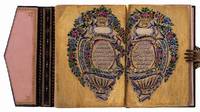
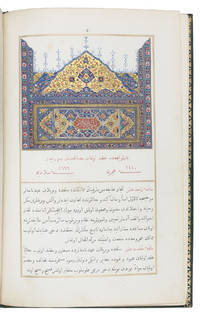
1846JBDC1K1DW82QVienna: Dar tiba al-imberaturiyy k. k. Hof- und Staatsdruckerei 1846. Contemporary green morocco binding with fore-edge flap covers giltstamped with an oriental design. All edges gilt. Large 8vo. Printed in black with red headings within printed gilt rules. Illuminated head-piece and unwan printed in three colours and gilt in imitation of manuscript illumination. Gilt tail-piece. With: Raccolta dei trattati e delle principali convenzioni concernanti il commercio e la navigazione dei sudditi Austriaci negli Stati della Porta Ottomana. Vienna Dar tiba al-imberaturiyy k. k. Hof- und Staatsdruckerei 1844. The full text of 19 trade treaties in Ottoman Turkish throughout closed between the Austrian and the Ottoman Empire between 1110/1699 Peace of Karlovac and 1259/1844. Bound in the same volume is the 1844 Italianlanguage edition containing the texts of the various treaties in their respective original European language with an Italian translation on the opposite pages.Ownership "C Fr Jelinek 1855" signed to endpaper. The Turkish text shows occasional insignificant foxing as common; altogether very well preserved. A splendidly bound copy.l Zenker BO II 805. Dar tiba al-imberaturiyy (k. k. Hof- und Staatsdruckerei), unknown
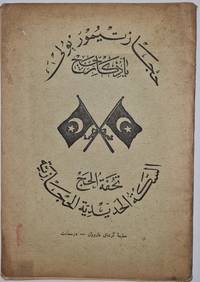
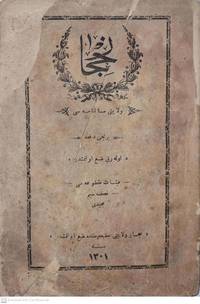
1900000208<p>19 p. Ottoman Turkish text. Official report of the hajj and health quarantine law in 1889-1900. Consists of 20 articles. The Anglo-ottoman Hajj policy conflict. Rare.</p> Osmaniye press paperback
1899000432<p>Basra – Ottoman Imperial Authority<br />Basra Vilayet Department 1317 AH / 1899 AD</p><p>First edition of the third official provincial report salname / administrative report issued by the Vilayet of Basra during a critical period of political and strategic tension in southern Iraq and the Arabian Gulf under the reign of Sultan Abdülhamid II.<br />Printed in Basra this volume represents one of the earliest locally produced Ottoman governmental publications from the province. The work consists of 172 pages of Ottoman Turkish text and was issued in original printer's wrappers bearing the Ottoman coat of arms and the tughra of Sultan Abdülhamid II on the cover.</p><p>The report provides a comprehensive and official survey of administrative military and political conditions throughout the vilayet and its dependent sanjaks and kazas including:</p><p><br />Basra<br />Amara<br />Muntafiq Nasiriyya<br />Zubayr<br />Ahsa al-AḥsÄʾ<br />Najd<br />Kuwait<br />Qatar</p><p>Of particular historical importance are the named references to key regional political figures including Shaykh MubÄrak al-á¹¢abÄḥ Kaymakam of Kuwait and members of the Ä€l ThÄnÄ« family of Qatar providing valuable contemporary documentation of Ottoman administrative recognition and authority in the Gulf.</p><p><br />Format: 8vo 7¾–9¾ in.<br />Pagination: 172 pp.<br />Language: Ottoman Turkish<br />Edition: First edition<br />Condition: As new. Original wrappers very lightly stained; three small neat wormholes. Otherwise as issued and in excellent condition.</p><p><br />A rare and highly significant primary source for late Ottoman governance in Basra and the Arabian Gulf documenting imperial authority regional administration and local power structures on the eve of the twentieth century.</p> The Ottoman authority, Basra dept.
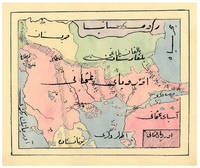
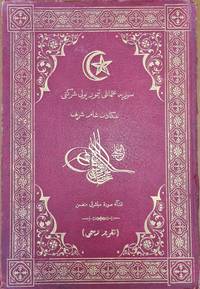
1910ABC_47241Ottoman Empire 1910. Gold-stamped cloth with the tughra of Mehmed V ruled 1908-18 on the front board when reading right to left and "Album" on the back board the front when reading left to right with an inscription below the tughra and the European numerals 16 and 2 flanking an ornament below the inscription the whole framed by 4 large floral cornerpieces. Oblong 4to 26.5 x 19.5 cm. 14 leaves with 10 pen-and-ink maps hand coloured with watercolours. Tissue guards. An album of hand-drawn maps forming an atlas of the western mostly European parts of the Ottoman Empire with legends in Ottoman Turkish written in the Arabic script. The overview map shows Albania Kosovo Macedonia and the Ottoman controlled northern parts of Greece coloured together with Thrace and the northwest parts of Anatolia shown treating them as a single unit while Serbia and Bulgaria like the small parts of territories outside Ottoman control are coloured separately. Most of the other maps give more detailed views of some of these regions including the Bosporus the Dardanelles Halkidiki Chalcidice Albania etc. but there is also a map of Crete not in the overview map.In fine condition. hardcover
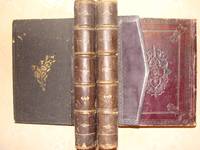
1883000519<p>Istanbul: Matbaa-i Bahriye the Navy press 1883 Book. Very Good. Hardcover. 1st Edition. 8vo - over 7¾ - 9¾" tall. THE MOST COMPREHENSIVE ENCYCLOPAEDIA IN THE OTTOMAN TURKISH ABOUT THE ARABIAN PENINSULA AND THE TOW HOLY SANCTUARIES IN HEDJAZ BY THE WELL-KNOWN AUTHOR WHO WAS EMPLOYED IN THE OTTOMAN ARMY IN HEJAZ IN C. 1865 AND THEN BECAME AN ADMIRAL IN THE OTTOMAN NAVY. EYUP SABRI PASHA WAS BORN IN TASALYA THESSALIA IN THE 19th C. AND DIED IN ISTANBUL IN 1890. HE IS BETTER KNOWN WITH HIS DESCRIPTIVE BOOKS ABOUT MECCA MEDINA THE ARABIAN PENINSULA AND THE WAHHABY ACTIVITIES BESIDE HIS RELIGIOUS BOOKS. HE WAS AWARE OF THE OFFICIAL ISSUES OF THE HEJAZ BECAUSE OF HIS BEING ACQUAINTED ON THE OFFICIAL CORREPONDENCE BETWEEN THE VILAYET OF HEJAZ AND THE CENTRAL AUTHORITY IN ISTANBUL. PART 1 MIR'AT MECCA TOW SECTIONS IN ONE VOLUME. 22 INDEX 1175 P WITH SEVERAL LITHOGRAPHIC PLATES OF WHICH TOW ARE IN COLOURS. CONTEMPORARY FULL LEATHER OTTOMAN BINDING WITH FLAP. PART 2 MIR'AT AL MEDINA TOW SECTIONS IN TOW VOLUMES. PRINTED IN 1886. VOL.1 8 INDEX PAGES 1 TO 642 WITH 3 LITHOGRAPHIC PLATES OF WHICH ONE IS FOLDING AND IN COLOURS. VOL.2 PAGES 643 TO 1343 WITH ONE FOLDING PLAN OF THE HOLY MOSQUE IN MEDINA AND ONE DIAGRAM. PART 3 MIR'AT JAZIRAT AL 'ARAB VIEW OF THE ARABIAN PENINSULA INDEX 416 P WITH 2 LITHOGRAPHIC PLATES. PRINTED IN 1888. THE THREE VOLUMES OF MIR'AT AL MEDINA AND MIR'AT JAZIRAT AL 'ARAB ARE IN SIMILAR GILTED OTTOMAN BINDINGS. Tall 8vo. THE FIRST AND ONLY EDITION. For other set of this book see no. 000276 in our inventory.</p> Matbaa-i Bahriye (the Navy press) hardcover
1913000166Very rare brochure printed in Armenian house in İstanbul 1913. In English Ottoman Turkish Arabic Russian and Urdu. 10 p. Text with 11 plates. In the printer wrappers. Archak Garoyan paperback
1900000209<p>10 p. Of text in English Ottoman Turkish Arabic Urdu and Russian with 9 full page plates. A hajj travel brochure printed in İstanbul supposed to be by an Armenian press in c. 1900. Rare</p> An Armenian press paperback
000177<p>Ottoman Turkish script with crescent figures and map on the back of the Ottoman Railway. A free boarding pass should be declared on demand. Holder can carry up to 30 kg . 14.5 x 11 cm.</p> Seruchin (?) An Armenian press
1885000205192 p. Arabic text a rare print. Stamp of the general Ibrahim Rif'at Pasha in 1335 an endorsement copy. With several notes during the copy. Modern binding. Hejaz printing house hardcover
1891000206310 p. Ottoman Turkish text. Ownership by Mesud Qasim zaynal Ali Riza in jeddah the son of the Ottoman delegate of Jeddah. Hejaz printing house hardcover
1885000210<p>182 pages. Ottoman Turkish text. The first official yearbook printed by a lithographic press in Mecca. An early work printed in the Hejaz. Rare.</p> Lithograph press hardcover
1816ABC_47147Paris or Istanbul 1816. Half calf marbled paper sides gold-tooled spine. Large 4to 31.5 x 24 cm. The text of an Ottoman-French treaty set in the Ottoman Turkish alphabet a version of the Arabic script. Very rare edition possibly the first of the Ottoman capitulations agreed between a French envoy on behalf of King Louis XV of France and a grand vizier on behalf of Sultan Mahmud I of the Ottoman Empire on 4 Rabi al-Awwal 1153 AH 30 May 1740 CE. We have located only three other copies: in the Bayerische Staatsbibliothek the Österreichische Nationalbibliothek and Harvard's Houghton Library. This particular agreement comprises eighty-five articles nearly all concerning the granting of trade economic and legal rights favourable to France. It was mostly a renewal of articles previously agreed upon but includes some newly introduced articles.The capitulations are a type of treaty by which foreign people are given certain privileges mostly relating to trade and transportation over or even at the expense of native citizens. These treaties did facilitate mutually beneficial commercial and financial contracts for the parties involved considering an evolving global marketplace for example by minimizing the transaction costs taxes etc. of their exchanges. The foreign power often bought their influence benefitting local government officials partly at the expense of the people they were supposed to govern."The Ottoman-French Treaty of 1740 marked the apogee of French influence in the Ottoman Empire in the eighteenth century. In the following years the French had an unchallenged position in Levant trade and in transportation between Ottoman ports." Olson p. 75. The Ottomans first made capitulations to France in 1569 first as a strategy European powers used to eliminate the risk of falling victim to Ottoman raids and later to gain influence over Ottoman trade. These Ottoman-French treaties were renewed and amended several times from the 16th to the 19th century until they were abolished as a whole with the Treaty of Lausanne of 1922-1923 which also ended the Greco-Turkish War and defined the modern borders of Turkey.Binding shows signs of wear slight foxing throughout otherwise in good condition.l Europeana 1 copy Österreichische NB; WorldCat 612814438 1 copy Harvard and 165919643 1 copy Bayerische SB; on the treaty: Olson Robert. "The Ottoman-French treaty of 1740: a year to be remembered" in: Imperial meanderings and republican by-ways: essays on eighteenth century Ottoman and twentieth century history of Turkey. 2010 pp. 75-82. unknown
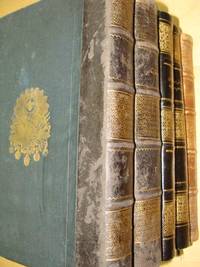
1883000521<p>Istanbul: Matbaa-i Bahriye the Navy press 1883 Book. Very Good. Hardcover. 1st Edition. 8vo - over 7¾ - 9¾" tall. THE MOST COMPREHENSIVE ENCYCLOPAEDIA IN THE OTTOMAN TURKISH ABOUT THE ARABIAN PENINSULA AND THE TOW HOLY SANCTUARIES IN HEDJAZ BY THE WELL-KNOWN AUTHOR WHO WAS EMPLOYED IN THE OTTOMAN ARMY IN HEJAZ IN C. 1865 AND THEN BECAME AN ADMIRAL IN THE OTTOMAN NAVY. EYUP SABRI PASHA WAS BORN IN TASALYA THESSALIA IN THE 19th C. AND DIED IN ISTANBUL IN 1890. HE IS BETTER KNOWN WITH HIS DESCRIPTIVE BOOKS ABOUT MECCA MEDINA THE ARABIAN PENINSULA AND THE WAHHABY ACTIVITIES BESIDE HIS RELIGIOUS BOOKS. HE WAS AWARE OF THE OFFICIAL ISSUES OF THE HEJAZ BECAUSE OF HIS BEING ACQUAINTED ON THE OFFICIAL CORREPONDENCE BETWEEN THE VILAYET OF HEJAZ AND THE CENTRAL AUTHORITY IN ISTANBUL Five parts in five volumes. Part 1 Mir'at Mecca in tow volumes. Vol. 1 44 Index pages 1 to 640 with lithographic plates of which tow are in colours on double pages and one gilted. Vol. 2 p. 45 to 58 index pages 641 to 1175 with lithographic plates of which one is in green and silver one unusual to be existing big folding plate in colours gilt and sprinkled in gold of the curtain of the gate of Ka'baa. One folding plan of the holy mosque in Mecca. The tow volumes of Mecca are in contemporary fine bindings with the arm of the Ottoman state and richly gilted spines. Part 2 Mir'at al Medina in tow volumes printed in 1886. Vol. 1 pages 1 to 698 with some diagrams and lithographic plates including one folding in green and silver. Vol. 2 8 index pages 699 to 1343 with a plan of the holy mosque in Medina. The tow volumes of Medina are in contemporary or possibly later fine Ottoman bindings with richly gilted spines. Part 3 Mir'at Jazirat al 'Arab View of the Arabian Peninsula one vol. printed in 1888. index 416 p. with 2 lithographic plates. Contemporary fine Ottoman binding with richly gilted spine. FINE SET WITH EXTRA PLATE WHICH IS VERY DIFFICULT TO EXIST. For other copies of this book see inventory no. 000276 000519 and 000520.</p> Matbaa-i Bahriye (the Navy press) hardcover
1913000275<p>Suleymaniye Istanbul: Military press 1913 Book. Very Good. No Binding. 12mo - over 6¾ - 7¾" tall. 12 PP OTTOMAN SCRIPT ON CAMEL CORPS SYSTEM ESTABLISHED BY THE OTTOMAN AUTHORITY IN THE DYNASTY OF SULTAN MEHMED RESHAD IN 1911 WITH HEADING TUGHRA IN THE FIRST PAGE OF HIM . CONTAINS FIVE CHAPTERS WHICH CONTAINS 50 ARTICLES . CAMEL CORPS CREATION WAS ORGANIZED FROM BEDOUINS IN AL QASEEM AND ENVRONS IN NEJD UNDER PATRONAGE OF OTTOMAN OFFICERS . SOME OF ARAB SEPARATERS LATER CAME FROM THIS FOUNDATION LIKE RAMAZAN SHELASH WHO TOOK AN IMPORTANT ROLE IN THE ARAB REVOLUTION IN SYRIA .</p> Military press
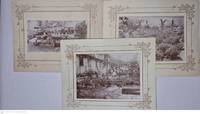
1910000180Each 16.5 x 14 11 x 8 cm. Contains 2 of which published in the book listed in our inventory; health reform and organizations in Hejaz during the Hajj season 1330 AH. By Dr. Kasim Izzeddin. The other 3 photos are not published in this book.
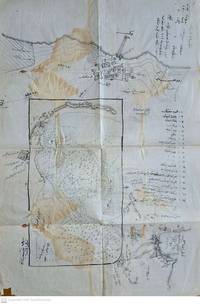
1909000140<p><strong>80 × 75 cm. Produced by KolaÄŸası Osman Nuri secretary of the Military School of Geography in 1323 AH 1907 AD.</strong></p><p>The map rarely includes a small inset map of the city of DirÊ¿iyyah in the Najd region together with additional inset maps of Medina ṬÄʾif Mecca and the harbor of Jeddah.</p> The Ottoman geographical military school, war press
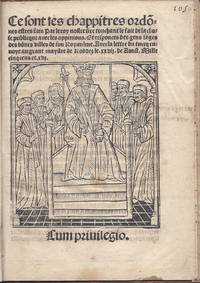
15161704S.l.: s.n. 1516. First edition. Title page with large woodcut illustration showing the King on his throne surrounded by the delegates. In Bastarda type with two floral woodcut initials. In later hard paper. Gilt title vignette on spine damaged. Concise marginal notes and page-numbers in ink by a contemporary hand throughout. Trimming of the leaves slightly affects the glosses with no effect to legibility otherwise the margins are wide. Title page crinkled at the upper right corner with a small tear that only affects the margin. Narrow inkblot to the lower margin throughout. B4 with two light brown stains C1 crinkled at lower corner. Bookplates on the inner front panel G. J. Arvanitidi; Antoine Mouradian. Overall in very good condition. First edition. Title page with large woodcut illustration showing the King on his throne surrounded by the delegates. In Bastarda type with two floral woodcut initials. In later hard paper. Gilt title vignette on spine damaged. 20 p. <p><br /> A bibliographically unrecorded early sixteenth-century French book about royal ordinances regarding the commonwealth along with the French translation of Sultan Selim I's letter of conquest fethname addressed to the Grand Master of Rhodes. <br /> <p><p><br /> The first and major part of the book presents nine concepts of orders of Francis I 1494-1547 King of France from 1515 until his death regarding the commonwealth chose publique. The drafts concern such topics as the commerce of spices and drugs wool cloth and other goods chapter 1-4 the weights and equivalents of coins and the recognized foreign currencies chapter 5 the recognized units of measures chapter 6 the regulation of the extravagance of clothing chapter 7 the inn trade chapter 8 and the money that goes to Rome for obtaining Bulls chapter 9. <br /> <p><p><br /> The second section comprises the responses to the aforementioned concepts of the representatives of the Good Cities Bonnes Villes Provence and Dauphiné who had been previously assembled in Paris by the order of the King in March 1516. In most cases they requested a delay of reply to discuss the matters with those who they were representing.<br /> <p><p><br /> The third section presents the grievances and requests delivered to the King by the delegates regarding the provincial councils conciles provinciaux the prolixity of the trials the tariffs the public officers the superior courts cours souveraines the land taxes tailles and the abuse and plunder by the soldiers crossing the kingdom. <br /> <p><p><br /> These sections were recorded and written down by the court clerk Jean Hesselin Seigneur of Girodon. Hesselin mentions himself twice p. 14 and 17 once by name p. 14 within the text.<br /> <p><p><br /> The final part is the French translation of the Ottoman Sultan Selim I's fethname letter of conquest sent on 27 August 1516 from Aleppo to Fabrizio del Carretto 1455-1521 Grand Master Magnus Magister of the Knights Hospitaller in Rhodes between 1513 and 1521. The fethname accordingly to its genre details Selim's expedition and the conquest and emphasizes the power and grandeur of the Sultan and his army. <br /> <p><p><br /> Selim I 1470-1520 ascended the throne as the Sultan of the Ottoman Empire in 1512. He is remembered for the enormous expansion of the Empire during his reign thus raise the Ottomans to the leaders of the Muslim world. Selim's most notable deed was the conquer of the Mamluk Sultanate which included Levant Hejaz and Egypt in 1516 and 1517 at the Battles of Marj Dabiq and Ridaniya.<br /> <p><p><br /> The Battle of Marj Dabiq near Aleppo took place on August 24 1516 where Selim defeated the Mamluk Sultan Al-Ashraf Qansuh al-Ghuri. This was a decisive victory of the war between the Ottoman Empire and the Mamluk Sultanate which ended in the conquest of much of the Middle East. Such an expansion of the Ottoman territory was a clear threat to Rhodes which was the nearest Christian possession to the coast of Asia halfway between Constantinople and Egypt. At the time the Grand Master in Rhodes was the Italian admiral Fabrizio del Carretto 1455-1521; Grand Master from 1513 to 1521 for a short interlude of a course of fifty-five years of Frenchmen serving as the supreme heads of the Order. Selim announced his victory and forecasted his threat to del Carretto in a fethname presented here in French translation however eventually he did not have the time to conduct the campaign against Rhodes. It was his successor Suleiman I who conquered the island in 1522 thus gained control over the eastern Mediterranean for the next centuries. By the time of the siege the commander of the Order was again a Frenchman Grand Master Philippe Villiers de L'Isle-Adam 1464-1534. Suleiman allowed him and the surviving knights to leave unmolested and eventually the Hospitallers were quartered permanently on Malta in 1530.<br /> <p><p><br /> To the best of our knowledge the original fethname has not survived and we could not trance any other printed version or edition of the French translation. We could find one surviving copy of a Spanish translation of Selim's letter which was addressed to Pope Leo X titled Carta de nuevas grandes buenas y ciertas embiada a nuestro s. padre Leon X de las cosas que han passado en Levante entre el gran turcho y el gran solda Valencia Juan Viñao 1517; Norton 1256 IB 11215 USTC 344377 kept at Cambridge University Library F151.d.8.12.<br /> <p><p><br /> Provenance: Bookplate of Georgios Arvanitidis 1876-1953 a noted Constantinopolitan collector of books on Turkish and Greek history. Bookplate with the motto "On abuse du vrai" of Antoine Mouradian.<br /> <p><p><br /> Ref.: Bibliographically unrecorded.<br /> <p><p><br /> Bibl.: Setton K. M. Hazard H. W. ed.: A History of the Crusades. Vol. 3. Wisconsin: The University of Wisconsin Press 1975. pp. 332-335. Pedani-Fabris M. P.: Ottoman Fetihnames. The Imperial letters announcing a Victory. In: Tarih İncelemeleri Dergisi 13 1998. 181-192. <br /> <p>. [s.n.] unknown
1892000167Very rare report in English Arabic and Ottoman Turkish. Binding tooled in gold with Ottoman Tughra of the Sultan Abdul Hamid II . Marbled inner paper and edges sprinkled in gold. Privately prepared for the high level officials in the Ottoman state. Gilbert and Rivington Limited hardcover
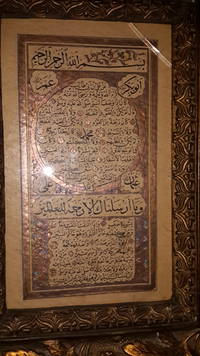
000043<p><strong>Rare miniature <em>Hilye</em></strong> by an Ottoman calligrapher originally from Bursa Turkey who later lived in Baghdad. Only one work by <strong>Süleyman Vehbi</strong> is recorded by İbnü'l-Emin Mahmud Kemal İnal <em>Son Hattatlar</em> p. 451 preserved in the Topkapı Palace Museum and dated <strong>1247 AH 1830 CE</strong>.</p><p>An additional example by the calligrapher's student <strong>Halil Şükrü</strong> is documented in <em>Türk Hattatları</em> by Şevket Rado p. 210. The present example displays a typical script consistent with other known works including the text and the signature of <strong>Süleyman el-Vehbi</strong>.</p><p><strong>Measurements:</strong> 14 × 9 cm smaller than the hand.</p>
63854Ottoman Empire dated 1266 AH/1849-50 AD. Arabic manuscript on paper 308 leaves plus 4 fly-leaves 15 lines to the page written in naskh in black ink verses separated by gold and polychrome illuminated rosettes within gold and black rules hizb sajda and juz' marked by illuminated floral marginal devices surah headings in white thuluth on gold and polychrome illuminated panels f.1b and 2a illuminated in gold and polychrome with rococo floral decoration against a gold ground pin-pricked with cintamani motifs the colophon within similarly illuminated panels in Ottoman gilt dark brown leather binding with flap with fitted box. Text panel: 8 by 5.1cm. Leaf: 12.5 by 8.2cm. Isma'il Najib is recorded as a pupil of Ahmed Zarifi and teacher to Tentene-zade Seyyid Hasan Vehbi Stanley 2009 p.248. Further Qur'ans by the scribe have sold in Christie's London 26 April 2018 lot 177; 26 October 2017 lot 229 and 12 October 1978 lot 7 and another was sold at Sotheby's London 21 November 1985 lot 390. The latter example is illuminated in a very similar manner to the present lot in a fully Rococo style unlike the typical Shumen style of illumination. In the 19th century one of the most important places of Ottoman manuscript production was Shumen a strategically-important fortress in what is today Bulgaria. Tim Stanley and Süheyl Ünver have independently worked on the corpus of manuscripts there identifying more than fifty Qur'anic scribes from the town apparently divisble into three groups according to their original teacher: Seyyid Mehmed Nuri Ahmed Zarifi and Ahmed Nazifi Tim Stanley The Decorated Word volume II. Oxford 2009 p.226. By the 1850s Qur'ans from Shumen had come to be remarkably homogenous: all observe the principle of ayet ber kenar in which every page ends with a completed Qur'anic verse; all are written with 15 lines of text to a page; all have between 300 and 310 pages. The dimensions of these manuscripts are also fairly constant. Although these manuscripts were produced in quantities to make them available to many relatively prosperous subjects of the Ottoman Empire Shumen Qur'ans were presented by Ottoman sultans to important figures including Ali Rif'at Pasha the Khedive of Egypt and al-Husayn Sharif of Mecca. The production of Qur'ans in Shumen came under increasing pressure with the rise of lithographic printing and came to a complete stop with Bulgarian indepedence in 1878. For a fuller discussion of the Shumen school of calligraphy see Tim Stanley "The Shumen Phenomenon" The Decorated Word volume II. Oxford 2009 pp.222-51. The illumination of Shumen manuscripts - though united by a Baroque idiom and a bright pastel colour palette - exhibits some variety suggesting that there were several different schools of illumination in the city alongside the numerous calligraphers. Ottoman Empire, dated 1266 AH/1849-50 AD. hardcover
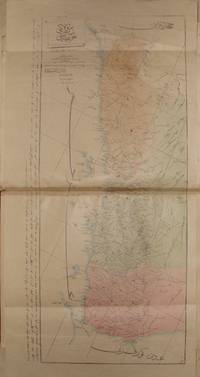
000444<p>Üsküdar: Mühendishane-i Berr-i Hümâyun<br />Imperial / Royal School of Military Engineering<br />c. 1840s</p><p>Rare Ottoman administrative atlas produced at the Mühendishane-i Berr-i Hümâyun in Üsküdar the principal Ottoman military and cartographic institution of the 19th century.</p><p>Folio 40 × 28 cm later hard cover binding.<br />Illustrated by Yümnî with thirty-nine 39 hand-colored double-page maps most signed in the stone by Yümnî. The maps are titled dated and carry printing details with the majority accompanied by Ottoman Turkish descriptive text.<br />Printed in the 1840s shortly after the establishment of the Ottoman telegraph network this atlas is possibly the earliest comprehensive administrative atlas printed in Üsküdar reflecting the modern vilayet system of the Tanzimat era.<br />Condition: Very good. All maps complete and well preserved. Scarce.</p><p>List of Maps 39</p><p>Arabistan Arabian Peninsula – 56 × 47 cm<br />Trablusgarb ve Tunus Libya and Tunisia – 56 × 39 cm<br />Trablusgarb Libya – 56 × 40 cm<br />Mısır Eyalet-i Mumtazası Territory of Egypt – 56 × 46 cm<br />Yemen – 69 × 33 cm<br />Hicaz Hejaz – 56 × 39 cm<br />Ankara<br />Sivas<br />Ma'mûretülaziz<br />Diyarbakır<br />Bitlis<br />Erzurum<br />Van<br />Musul Mosul – 56 × 39 cm<br />Bağdad Baghdad – 56 × 39 cm<br />Basra – 55 × 39 cm<br />Zor Mutasarrıflığı part of Mesopotamia<br />Halep Aleppo<br />Adana<br />Konya<br />Kıbrıs Cyprus<br />Cezâ'ir-i Bahr-i Sefîd Aegean Islands Vilayet<br />Aydın<br />Biga Mutasarrıflığı<br />İzmit Mutasarrıflığı ve Hüdavendigâr Vilayeti<br />Trabzon<br />Kastamonu<br />Bulgaristan Eyalet-i Mumtazası Territory of Bulgaria<br />Rumeli-i Şarkî Eastern Rumelia – 56 × 39 cm<br />Bosna Bosnia<br />Kosova Kosovo<br />Manastır Monastir / Bitola<br />İşkodra Vilayet of Shkodër<br />Yanya Janina / Ioannina<br />Selanik Thessaloniki<br />Edirne<br />İstanbul<br />Bahr-i Siyâh Boğazı Black Sea Strait<br />Kal'a-i Sultâniyye Boğazı Dardanelles</p><p>Significance<br />A highly important and scarce example of Ottoman state-sponsored military and administrative cartography documenting the Empire's territorial organization across Anatolia the Arab provinces North Africa the Balkans and the Straits during a key phase of modernization and infrastructural reform.<br />This atlas stands alongside the earliest telegraph-era Ottoman mapping projects and represents the mature output of the Mühendishane cartographic tradition.</p> MuhendisHane-i Berr-i Humatun (The Royal school of military engneering) hardcover
000195<p>16x11 cm. Contemporary Ottoman binding tooled in gold with Shamsa on each board and flap. Surah headings in gold and colors golden durations between verses and all pages out-ruled in gold. 16th c. Signed Hamdullah el Amasi. The signature due to the Era of the calligrapher and the writing character is same of the calligrapher's. Sheikh Hamdullah was born in Amasya a north-central town in Anatolia. His father Mustafa Dede was a Sheik of the Suhrawardi order and had migrated from Bukhara in present-day Uzbekistan to Anatolia. In Amasya he studied the six scripts under the tutelage of Hayreddin Mar'asi. He learned the traditional method of the old masters but struggled to reproduce it. While studying he met Bâyezïd the son of Sultan Mehmed the Conqueror who was a fellow student and the pair became friends. When Bâyezïd assumed the throne in 1481 following his father's death he invited his friend Sheikh Hamdullah to the capital Istanbul. Hamdullah went on to become a master calligrapher at the Imperial Palace. In 1485 Bâyezïd II acquired seven works by the great calligrapher Yaqut al-Musta'simi. Bâyezïd then encouraged his court calligrapher Hamdullah to devise a new script inspired by the acquisition. Hamdullah regarded al-Musta'simi's work as unsurpassable but at Bâyezïd's insistence Hamdullah reluctantly agreed. Scholars have suggested that Bâyezïd's enthusiasm for a new script was symbolic of his desire to establish a new empire and a new dynasty. Hamdullah underwent a period of reclusion during which time he claimed that a prophet taught him the new scripts in a vision. He ultimately recodified and refined the nashk style of calligraphy originally developed by Yaqut al-Musta'simi. Hamdullah's scripts were more elegant balanced and legible. From 1500 the majority of Q'rans adopted Hamdallah's new style which became known as the Ottoman style or "Seyh's manner'. For this he is often considered to be the "father of Ottoman calligraphy". His many students spread his style throughout the Ottoman Empire. His style endured for 150 years making him one of the greatest Ottoman calligraphers of all time. As much as two centuries later students of calligraphy such as Hâfiz Osman continued to copy his works assiduously as part of their training. He devoted his whole life to the art of calligraphy continuing to produce works well into his 80s. He produced 47 Mus'hafs book of Quran and innumerable En'ams Evrads and Juz' a number of which are held in the collection of the Topkapi Palace.12 His inscriptions also decorate the Bâyezïd Firuzaga and Davud Mosques in Istanbul and the Bâyezïd Mosque in Erdine. His son Mawlana Dede Chalabi became a calligrapher after studying with Hamdallah his father and Hamdallah's daughter whose name is unknown married a calligrapher by the name of Shukrullah Halife of Amasya who had also been one of her father's pupils. Hamdullah's grandsons also became calligraphers; Pir Muhammad Dede d. 986/1580 son of Hamdallah's daughter and Dervish Muhammad d. 888/1483 son of Mawlana Dede. As his reputation grew many myths to his abilities outside calligraphy sprang up. It was said that he was a great archer falconer swimmer and even an extraordinary tailor. He died in Istanbul in 1520 and was buried at Karacaahmet Cemetery in the district of Üsküdar at Istanbul. Surviving examples of his works are held in the Topkapi Collection.</p> hardcover
1917000214<p><strong>We believe this to be the first complete collection of its kind</strong> including several items that we have not encountered in public libraries or archival sources. In any case it represents the most comprehensive collection of issues that we have traced over a period of twenty-five years of Ottoman state publications many of which are difficult to assemble. The collection essentially consists of official reports most of which were prepared by the two ambassadors <strong>Fakhr al-Din Rûm Bey Oğlu</strong> and <strong>Muhammad Nâbi</strong>. These reports are highly restricted official documents.</p>Description of the Collection<p>The reports were prepared in <strong>Ottoman Turkish</strong> except for four items written in modern Turkish after the alphabet reform; these were prepared by <strong>İsmail Hakkı Tevfik</strong> and <strong>Abdulgani Seni Bey</strong>.</p>1. <em>Najd Issue</em> Najd Question<p>Ottoman Turkish report published by the Ministry of Foreign Affairs Istanbul 1918. 15 pages octavo.<br />Prepared by Ambassador Fakhr al-Din Rûm Bey Oğlu and the Ottoman Ambassador in Rome Muhammad Nâbi dated 11 March 1917.</p><p>The report discusses the political borders of Ottoman Najd; the treaty signed between Süleyman Şefik Pasha and Abdulaziz ibn Saud; the Ottoman–British treaty concerning Najd including Qatar; and the Ottoman treaty with Ibn Saud converting Najd from a <em>mutasarrifate</em> into a province <em>vilayet</em> appointing Ibn Saud as governor and commander-in-chief including military organization.</p><p>Topics include:<br />Midhat Pasha's report; Wahhabis; the conflict between Saud and Abdullah ibn Faisal; the sheikhs of Muscat Mukalla Oman Hadhramaut and Bahrain and their relations with Britain; Saudi movements along eastern Najd; Ottoman naval response under Midhat Pasha; the administrative difficulty of Najd; support of Mubarak al-Sabah for the Ottomans; coercion of Abdullah al-Faisal to sign the al-Ahsa treaty; Ibn Rashid's advances; tribal dynamics; British support of Al-Sabah; British protection; Ibn Saud and the Muntafiq sheikh; Ottoman–Wahhabi agreements 10 April 1905; British protests regarding Ibn Saud's border violations and interference in Qatar and Oman; the 12-article Ottoman–Ibn Saud treaty of 12 July 1913 including the separation of Qatar from Najd; maritime boundaries; recognition of Jasim Al Thani; compensation to the Sheikh of Bahrain.</p>2. <em>Muscat Issue</em><p>Ottoman Turkish report Ministry of Foreign Affairs Istanbul 1918. 6 pages.<br />Prepared by Fakhr al-Din Rûm Bey Oğlu and Muhammad Nâbi dated 27 November 1916.</p><p>Covers Muscat modern Oman the Imamate foreign involvement Ottoman views rejecting Muscat's independence from the Arabian Peninsula; relations between Najd Muscat and British India; strategic location; occupation history; Al-Sa'id relations with Wahhabis; British and French recognition of Omani independence in 1862; Ottoman perspective on Oman's connection to Arabia.</p>3. <em>Qatar Coasts Issue</em><p>Prepared 8 January 1917. Printed at the Imperial Press. 7 pages plus 9 pages of French appendices.</p><p>Topics include British expansion from Bahrain to Qatar; Ottoman claims; British intervention since 1891; correspondence with the Ottoman state; Bahrain–Qatar disputes over Zubarah and al-'Udayd; appointment of Abd al-Rahman Al Thani; British encroachments; Qatar within the Kuwait treaty framework; confirmation of Jassim Al Thani's authority in 1913.</p>4. <em>Kuwait Issue</em><p>Fakhr al-Din Rûm Bey Oğlu & Muhammad Nâbi. Imperial Press Istanbul 1334 AH. 34 pages.</p><p>Geography population sect history of Al-Sabah; Ottoman administration of Baghdad and Basra; British policy; secret treaties 1899–1904; borders; railways; maritime flags; taxation refusal; British attempts to place Kuwait under protection; Ottoman responses; oil islands Bubiyan Khor Abdullah; Sheikh's declaration of being an officer in the British army. Dated 31 August 1918.</p>5. <em>Basra Gulf Issue</em> Bahrain Qatar Pirate Coast/Emirates<p>İsmail Hakkı Tevfik. Ankara 1931. 32 pages.<br />Political tribal and documentary history in Turkish English and French.</p>6. <em>Irrigation in Arabia</em><p>Fakhr al-Din Rûm Bey Oğlu & Muhammad Nâbi. 14 pages.<br />Ottoman irrigation projects; British interference since 1910; German involvement.</p>7. <em>Asir Revolt of 1911</em><p>Report by Consul General İsmail Hakkı. 31 pages.<br />Ottoman military actions; Idrisi revolt; tribal loyalties; Wahhabi involvement; detailed military maps.</p>8. <em>Aqaba Issue</em><p>By Rashdi Infantry Brigade Commander. Istanbul 1326 AH. 154 pages.<br />Ottoman–British relations; Egypt's role; Hijaz railway; Aqaba dispute.</p>9. <em>War in Arabia between Ibn Saud and the Imam of Yemen</em><p>By Abdülgani Sünni Bey. Ankara 1934. 20 pages.<br />Unique copy. Covers causes tribal alignments Asir Aden Najran foreign involvement.</p>10. <em>Guide to the Gulf of Aden</em><p>Ottoman Turkish. Istanbul 1310 AH. 276 pages.<br />Includes maps; authored by naval officer Süleyman Nutqi.</p>11. <em>Tripoli Benghazi and the Twelve Islands Issue</em><p>Report dated 27 November 1916. 24 pages French treaty texts.<br />Ottoman North Africa American conflicts Italian ambitions Lausanne Treaty.</p>12. <em>Sheikh Sa'id Island Issue</em><p>Istanbul 1916. 4 pages.<br />Strategic Bab al-Mandab island dispute with France.</p>13. <em>Palestine Issue – Zionist Claims</em><p>Istanbul 3 March 1918. 43 pages.<br />Origins of Zionism; European diplomacy; Jerusalem administration.</p>14. <em>Notes on the Iraq War</em><p>Military Press 1333 AH. 88 pages.<br />Translated from English for official use only. Rare.</p>15. <em>Bahrain Issue</em><p>Report dated 8 January 1917. 12 pages French texts.<br />History British protection treaties 1820–1898 inclusion in 1913 Gulf treaty.</p>16. <em>Muhammarah Issue</em><p>Report dated 1 March 1917. 8 pages.<br />Borders oil Sheikh Khaz'al Anglo-Iranian-Ottoman relations.</p>17. <em>Oil Concessions in Arabia</em><p>Report dated 26 March 1917. 9 pages English treaty.<br />Mosul Baghdad Basra Shell Najd Kuwait.</p>18. <em>Baghdad Issue</em><p>Report dated 31 August 1917. 53 pages French texts.<br />Baghdad Railway; British–Ottoman rivalry; Gulf politics.</p>19. <em>Farasan Islands Issue</em><p>Report dated 28 November 1916. 8 pages.<br />German coal depot request; British occupation; oil and gas.</p>20. <em>Hadhramaut Issue</em><p>Report dated 11 March 1917. 6 pages.<br />Tribal governance; British relations via Aden.</p>21. <em>Aden and the Nine Districts</em><p>Report dated 27 November 1916. 39 pages French annexes.<br />Portuguese Ottoman British rule; Yemen administration; sovereignty claims.</p>22. <em>Memorandum on British Claims Regarding the Baghdad Line and Basra Gulf</em><p>Istanbul 21 January 1911. 35 pages appendices.<br />Detailed diplomatic negotiations since 1903.</p>23. <em>Guide to the Red Sea</em><p>Istanbul 1307 AH. 459 pages.<br />Comprehensive nautical and railway guide with ports and routes.</p>24. <em>South Arabia Issue</em> Hadhramaut Socotra etc.<p>İsmail Hakkı Tevfik. Bulgaria 1935. 132 pages with photographs and maps.</p>25. <em>The Egyptian Issue</em><p>Prepared March 1918. 186 pages.<br />Ottoman legal and political analysis of Egypt from Muhammad Ali to British occupation.</p>26. <em>Shatt al-Arab Issue</em><p>Istanbul 1917. 30 pages.<br />1913 treaty with Britain; navigation borders Iran Muhammarah.</p><p><strong>Note</strong><br />İsmail Hakkı Tevfik was a senior Ottoman and Republican diplomat and son-in-law of Sultan Mehmed VI. Fakhr al-Din Rûm Bey Oğlu and Muhammad Nâbi were leading Ottoman statesmen. Other contributors include Süleyman Nutqi naval officer and Abdulgani Seni Bey later a key Republican thinker.</p><ul><li><strong> 26 items</strong></li></ul> Ottoman Ministry of Foreign Affairs paperback
1902000110<p><strong>29 × 20 cm. Comprising 158 text plates including 95 photographs produced by the committee of which 42 photographs appear on separate plates measuring approximately 23 × 15 cm.</strong></p><p>The work documents the Photography Committee's journey from Istanbul to MaÊ¿Än in Transjordan. The accompanying text was compiled from articles originally published without illustrations in various issues of the newspaper <em>Vakit</em> "Time" in 1902.</p><p>This is a unique work prepared for publication with photographs taken by a private committee that included prominent figures such as the German general Karl Auler Pasha who served as an adviser on Hejaz affairs until the fall of Medina in 1918.</p> hardcover