199 résultats
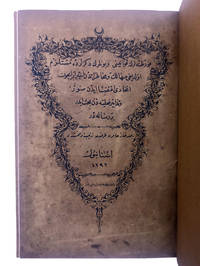
1884052629London: William And Norgate 1884. 1st Edition . Hardcover. Very Good. 8vo - over 7¾ - 9¾" tall. Original decorative cloth bdg. with Dante's portrait gilt on front board and spine. Black cloth with red decorative borders. With a new cloth spine. Some little wormholes on cloth and several pages. Pages are partly opened uncut and untrimmed. Slightly faded on cloth's board. A stamp on first page. Otherwise a very good copy. Roy. 8vo. 23 x 16 cm. In Greek Modern. 18 324 p. 'prologos' by Musurus. Konstantinos Mousouros also known as Kostaki Musurus Pasha was an Ottoman Greek diplomatic official of the Ottoman Empire who served as ambassador to Greece Austria Great Britain Belgium and the Netherlands. He was born in 1807 in Constantinople Istanbul to a distinguished Phanariote family. His brother Pavlos Mousouros also became a diplomat. Mousouros became the first ambassador of the Ottoman Empire to the newly independent Kingdom of Greece in 1840 a position he kept until 1848. In 1847-48 he was a central figure in the events known as Mousourika which led to his temporary recall and the breakdown of relations between the two states. On his return to Athens he survived an assassination attempt leading to his transfer to Vienna. In 1850 he took up the post of Ottoman ambassador to the Great Britain and Ireland which he kept for 35 consecutive years until his retirement in 1885. During the same period he also served as ambassador to the Netherlands 1861-77 and Belgium 1861-75. In 1876-78 he was ex officio a member of the short-lived Senate of the Ottoman Empire. Well educated in 1883 Mousouros translated Dante's Divine Comedy into ancient Greek. He was married and had a son Stephanos Mousouros who later became Prince of Samos. Wikipedia. He is known as the first translator of Dante's Divine Comedy into modern Greek. Musurus Pasha had an intellectual identity. One of the most important occupations of Musurus Pasha in the last years was the translation of Dante's Divine Comedy from Italian to Greek. Being able to translate a work of Italian classics and masterpieces of western literature should be an indication of Musurus Pasha's performance and intellectual dimension. Due to negative statements about Muhammad and Ali in Dante's work the book was not allowed to be published within the Ottoman Imperial borders. Despite this Musurus Pasha asked him to be permitted to publish his translation but it was not accepted. Source: Bir Tanzimat diplomati Kostaki Musurus Pasa 1807-1891. NURDAN SAFAK. Dante's Divine Comedy originally called Comedia and later christened Divina by Giovanni Boccaccio is widely considered the most important poem of the Middle Ages and the greatest literary work in the Italian language. This is only 'Purgatorio' book from the set. It's signed and inscribed by Musurus Pasha with a dedication in French to Monseigneur Auguste Bonetti as "A la grandeur Monseigneur Bonetti Hommage de veneration Musurus". Bonetti was in 1887 after the appointment of Monsignor Rotelli to the Vatican Ambassador to Paris the new Constantinople patriarch appointed by Rome for him. First Greek Edition. Extremely rare. <br/> <br/> William And Norgate hardcover
1698371989Ottoman Empire 1698. 13 leaves written in divani and tavki script. Incomplete at the beginning and end. With four later miniatures. 1 vols. 4to 11.5 x 8 inches. Later cloth-covered board binding over an earlier binding. Rubbed and worn but sound text leaves edgeworn some loosened. AS IS. 13 leaves written in divani and tavki script. Incomplete at the beginning and end. With four later miniatures. 1 vols. 4to 11.5 x 8 inches. This is a fascinating 17th-century Ottoman manuscript compilation mecmua of various recipes historical notes numerology brief histories of prophets mentioned in the Qur'an a recipe for an aphrodisiac attributed to Sultan Bayezid II and records of various Ottoman officials and their tenures all reflecting the intellectual and daily life of the period. The text leaves bear various numbers suggesting this was formed from several different manuscript sources. The manuscript features four miniatures likely added in the 20th century. These include a depiction of a nude male anatomical figure an illustration of Ottoman scholars engaged in astronomical calculations and two drawings inspired by Kitab al-Hiyal by Al-Jazari showcasing mechanical devices and automata. The manuscript also contains numerous signatures marginalia and graphical notations.<br /> <br /> An intriguing manuscript that offers insight into the intellectual pursuits and everyday concerns of the Ottoman elite. unknown
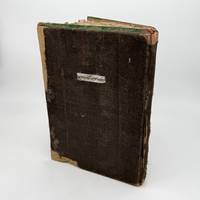
1903055899Edirne Adrianople: Manuscript Edirne Adrianople fî 11 Rebiü'levvel sene AH 1321 = 7 June 1903 1903. No Binding. Very Good. Folio - over 12 - 15" tall. Highly uncommon and exceedingly rare law manuscript documenting the slavery continued during the last period of the Ottoman Empire at the beginning of the 20th century recording the dispute between the defendant and the plaintiff in Edirne on June 7 1903. The document recorded and certified by the Ottoman judge of the time contains the records of a lawsuit between the plaintiff Ahmed Efendi Ibn Salih and the defendant Süleyman Aga Ibn Fülan in the Fülan neighbourhood of the city of Edirne. The document includes the petition and ruling regarding the case in which the plaintiff demands that Süleyman Aga pay 500 kurus for a mule purchased by his "Abd-i Mecrûh" a slave without the right to engage in trade. The judge of Edirne at the time ruled in favor of the defendant Süleyman Aga on the grounds that a slave classified as "Abd-i Mecrûh" was not legally permitted to engage in trade and therefore the owner could not be held responsible for the transaction. The ruling stated: "taleb ser'an iltifâta sayan olmayin ser'i muarizdan menine ilâm" i.e. The request is not legally admissible and the claim is dismissed according to Sharia law. By the early 20th century slavery in the Ottoman Empire was in significant decline due to legal reforms and international pressure. The empire had a long history of slavery particularly involving African and Circassian slaves but efforts to abolish it gained momentum in the 19th century. Empire formally abolished the slave trade in the mid-19th century under British pressure issuing decrees in 1847 banning the trade of Circassian women and 1857 outlawing the African slave trade. However enforcement was inconsistent. The final legal abolition of slavery came in 1909 under the Young Turk government with 1909 Decree formally ending the practice. Despite legal bans domestic slavery especially of women in harems and household service persisted informally into the early 20th century particularly in remote areas. With the collapse of the Ottoman Empire after World War I and the founding of the Republic of Turkey in 1923 slavery was completely eradicated under the new legal system. In the Ottoman Empire hüccet ujjat was a legally binding document issued by a kadi Islamic judge to certify and record various legal matters such as contracts property transactions debts inheritance claims and disputes. Serving as official proof of a legal act or decision hüccets were widely used as evidence in court to confirm rights and obligations. These documents followed a formal structure detailing the parties involved the legal matter at hand the judge's ruling and in some cases witness testimonies. They played a crucial role in the Ottoman legal system by ensuring the documentation and enforcement of civil and commercial laws making them essential records of legal and social history. <br/> <br/> Manuscript, Edirne [Adrianople], fî 11 Rebiü'levvel sene [AH] [1]321 = [7 June 1903] unknown
1902056055Constantinople: Daire-yi Umûr-i Sihhiyye = Administration Sanitaire de l'Empire Óttoman Matbaa-i Osmaniye Imprimerie Osmanié & Imprimerie F. Loeffler Lithographie de S. M. I. le Sultan. 1902-1907 1902. 1st Edition . Soft cover. Very Good. 4to - over 9¾ - 12" tall. Original greenish and yellowish wrappers and hardcover 1317/1901-1902 vol. Folio. 335 x 235 cm. In Ottoman script and French. 4 volumes: 144 p.; 4 150 p.; 12 p. 6 folded statistical tables. The third volume lacks its back cover and has a detached front cover with some staining present; the fourth volume shows wear and tear along the edges. First and only editions of these four exceedingly rare volumes form an invaluable collection presenting the earliest statistical tables that shed light on the diseases most commonly and least frequently encountered in early twentieth-century Ottoman Istanbul the causes of death resulting from illness and other factors average life expectancy and the overall health conditions of the city's population. The registers constitute an exceptional data source as the information is systematically disaggregated by religious affiliation Muslim and non-Muslim age and gender and further classified by neighbourhood and season. The statistical data contained in these registers documenting the causes of death in Istanbul and its surrounding districts is based on information compiled from ten divisions of the Department of Health Affairs as well as from major medical institutions including the Sixth Department Hospital Darü'l-Aceze Haseki Nisa Hospital Gümüssuyu Hospital Gureba-yi Müslimîn Hospital Toptasi Bîmârhâne the French Hospital the Jérémie Hospital established by the French Lazarists the Yedikule Armenian Hospital the Russian Hospital and the Italian British and German hospitals. According to these statistics tuberculosis organic heart failure and pneumonia were among the leading causes of death in Istanbul. Infant and child mortality also occupies a prominent place in the records largely attributable to poverty lack of education and inadequate hygienic conditions. Rare surviving copies from the statistical registers known to have been published between 1899 and 1907 specifically those for the years 1902 two issues 1903 and 1907. All these statistical bulletins are extremely rare; according to WorldCat only three copies are recorded worldwide in institutional holdings. <br/> <br/> Daire-yi Umûr-i Sihhiyye = Administration Sanitaire de l'Empire Óttoman, Matbaa-i Osmaniye, Imprimerie Osmanié & Imprimer paperback
1871055210Istanbul: Mekteb-i Bahriye Matbaasi i.e. The Naval School Printing House. AH 1288 1871. 1st Edition . Hardcover. Very Good. 8vo - over 7¾ - 9¾" tall. Original cloth bdg. with marbled boards. Cr. 8vo. 20 x 135 cm. In Ottoman script Old Turkish with Arabic letters. 176 1 p. Lithographed edition. Extremely rare first and only edition of this guide to the distances and meridian calculations of some cities from Batumi located on the shores of Black Sea Europe until Great Britain Asia and Africa shores prepared for Turkish naval officers mariners and vessels describing the shores of the countries located on these routes. ABOUT THE AUTHOR: Ibrahim Edhem Pasha was an Ottoman statesman who held the office of Grand Vizier at the beginning of Abdul Hamid II's reign between 5 February 1877 and 11 January 1878. He resigned from that post after the Ottoman chances of winning the Russo-Turkish War 1877-1878 had decreased. He furthermore served in numerous administrative positions in the Ottoman Empire including minister of foreign affairs in 1856 then ambassador to Berlin in 1876 and to Vienna from 1879 to 1882. He also served as a military engineer and as Minister of Interior from 1883 to 1885. In 1876-1877 he represented the Ottoman Government at the Constantinople Conference. He was born in Chios of Greek ancestry in a Christian Greek Orthodox village on the island of Chios. Strangely his connection to Chios is not well-documented: his son Osman Hamdi Bey claimed that he was a member of the Scaramanga family but Edhem Pasha himself tried to efface his Greek connections. As a young boy in 1822 he was orphaned and captured by Ottoman soldiers during the massacre of the Greek population of Chios. He was sold into slavery brought to Constantinople and adopted by the later grand vizier Hüsrev Pasha. Lacking his own children and family Hüsrev Pasha raised about ten children who had been orphaned or bought as slaves many of whom ascended to important positions. The child now named Ibrahim Edhem quickly distinguished himself with his intelligence and after having attended schools in the Ottoman Empire he was dispatched along with a number of his peers and under the supervision of his father then grand vizier and of the sultan Mahmud II himself to Paris to pursue his studies under state scholarship. There he returned with a Bachelor of Arts and was one of the top pupils at the École des Mines. He was a classmate and a friend of Louis Pasteur. He thus became Turkey's first mining engineer in the modern sense and he started his career in this field. Edhem Pasha was the father of Osman Hamdi Bey a well-known archaeologist and painter as well as the founder of the Istanbul Archaeology Museum and the Mimar Sinan Fine Arts University. Another son Halil Edhem Eldem took up the archaeology museum after Osman Hamdi Bey's death and has been a deputy for ten years under the newly founded Turkish Republic. Yet another son Ismail Galib Bey is considered the founder of numismatics as a scientific discipline in Turkey. Later generations of the family also produced illustrious names. The architect Sedat Hakki Eldem a cousin is one of the pillars of the search for modern architectural styles adopted by the Republic of Turkey called the Republican style in the Turkish context in its early years and which marks many important buildings dating from the period of the 1920s and the 1930s. A great-grandson Burak Eldem is a writer while another Edhem Eldem is a renowned historian. More names include Erol Eldem Tiana Eldem Levent Eldem and Ercan Eldem an architect. Source: Wikipedia. Özege 4522.; Only one copy in OCLC: 162837008 Bayerische Staatsbibliothek. <br/> <br/> Mekteb-i Bahriye Matbaasi [i.e. The Naval School Printing House]., [AH 1288] hardcover
1882054723Istanbul: Mihran Matbaasi. AH 1299 1882. 1st Edition . Hardcover. Very Good. 8vo - over 7¾ - 9¾" tall. Contemporary handsome quarter leather binding raised four bands and gilt lettering to spine. Roy. 8vo. 24 x 17 cm. In Ottoman script Old Turkish with Arabic letters. 171 1 p. 15 folded maps. First and only edition of this early naval guide to the Mediterranean and Aegean Islands and shores prepared by the Ottoman Admiral Süleyman Faik. A comprehensive early printed guide to the Cezâyir-i Bahr-i Sefid i.e. Ottoman Province of the Archipelago including the descriptions of all islands in the Archipelago such as Patmos Peraka Paros Delos Ipsara Acina Sekino Mikonos Bozcaada Tenedos Istanköy Kos Imroz Crete Anti Paros Alosis Islands with West and East of the Archipelago and Edremit Bay Doris Bay Rafti Port Aynaroz Bay; and Anatolian shores such as Izmir Smyrna Kusadasi Gallipoli. This rare book has 15 folded portolan maps of Marmaris Port Makri Port Naghos Port Karaagach Ptelea Evros in Greece Port Kakuve and Tertumos Ports portolan of Iskenderun Alexandrietta portolan of Lazkiye Al-Lazkiyya in Syria portolan of Avret Island and Trablus-Sam and portolan of Beirut and Sida. Süleyman Faik 1845-1909 was a general and afterwards an admiral and a Chairman of the Turkish / Ottoman Navy General Staff divisional. Only six copies in OCLC: 773143926 67075343.; Özege 16579.; Not in ATYB: Askerî Tarih Yayinlari Bibliyografyasi = Bibliography of Turkish History of Military Books. <br/> <br/> Mihran Matbaasi., [AH 1299] hardcover
1869055007Istanbul: Ceride-i Havadis Matbaasi. AH 1286-1287 = AD 1869-1870 1869. 1st Edition . Leather. Very Good. 8vo - over 7¾ - 9¾" tall. Original handsome 1/3 leather bdgs. with attractive decorations at spines. A chipped on the second and a period label on the first volume's spines. Spines are not homogeneous in their artistic style. Roy. 8vo. 24 x 17 cm. In Ottoman script Old Turkish with Arabic letters. 2 volumes set: 412 p.; 398 p. Extremely rare first printed Turkish edition of this first-hand account with a compilation of period sources of 150 dynasties from 1000 AH to c. 1655 self-translated from Arabic by the author of his Arabic work titled "Fadhlakat al-Tawarîh" i.e. The report of history with an addendum for the Ottoman readers by adding what he had seen since 1653. In the book the events starting from 1592 are told in accordance with the classical Islamic historiography tradition and short biographies of the viziers scholars sheikhs poets and famous people who died in that year are given at the end of each year. Hadji Khalifa influenced the Arab and Turkish historiographers who succeeded him in terms of methodology. Hadji Khalifa was the celebrated Ottoman-Turkish polymath and leading literary author of the 17th-century Ottoman Empire. Franz Babinger hailed him "the greatest encyclopaedist among the Ottomans." OCLC lists only three sets: 1030930786 1030930787 One is complete in Orient-Institut in Istanbul; 634635343 634635657 Two are complete in Berlin and München.; Özege 5707. <br/> <br/> Ceride-i Havadis Matbaasi., [AH 1286-1287] = [AD 1869-1870] hardcover
1875055260Constantinople Istanbul: Neologos Litografyasi - Votîra ve Sürekasi Matbaasi. AH 1292 1875. 1st Edition . Leather. Very Good. 8vo - over 7¾ - 9¾" tall. Contemporary 1/4 leather bdg. with marbled boards. Small 4to. 27 x 19 cm. 23 p. 11 p. in Ottoman script Old Turkish with Arabic letters; 12 p. in French with rare 4 folded maps. A very good copy. First and only edition of this extremely rare bilingual book in French and Ottoman Turkish including the first records on the formation and characteristics of storms to explain how storms and hurricanes occurred which route they followed and how they were conveyed to the regions that need to be warned by telegraph for the vessels sailing in the seas by French expert Coumbary who was founded the Rasathâne-i Âmîre i.e. Ottoman Imperial Observatory. Both the original French and Turkish translations of the work were published together in one volume. The work also included four maps which were drawn for this work only. The first map shows the movement of a storm that occurred on March 8 1865 the second one shows the occurrence between the Tropic Cancer and Capricorn whirlwinds storms in the Atlas and Indian oceans the movements in the Bay of Bengal the storms in different directions in the China Sea the Gulfstream Grönland and Azores. The second observatory in the Ottoman era was established for meteorology. Before this center was established beginning from the Reformation 1839 many meteorological observatories were built by foreigners in various cities such as Istanbul Smyrna Trebizond Tekirdag and Merzifon both as private and public establishments. The very first known temperature readings are the meteorological observations made by the Priest Dalmas at the St. Benôit monastery between 1839-1847. Later William Lane an Englishman who came to Istanbul during the Crimean War made observations at the British Cemetery at Haydarpasa. W. Noe director of the Mekteb-i Fünûn-u Sahane made observations at the house in Kalyoncukulluk where he lived until the Beyoglu Fire in 1848; and finally it is known that French engineer Ritter who was invited by the government for waterworks in Kuruçesme 1856-1860 also conducted meteorological observations. Observations on precipitation and humidity conducted between 1875-1892 by an amateur observer on the Thomson Farm in Erenköy are invaluable on the subject of Istanbul's climate. These observations have been published in Budapest in 1928. Excellent observations on heat pressure and humidity made in the summer residence of the Russian ambassador on Büyükada have also been published in Annales St. Petersburg. In 1858 the French government established the first observatory communicating data over the telegraph and in 1863 by compiling meteorological data in France the French National Meteorological Network started operations. In 1868 upon the recommendation of the French government the Rasathane-i Âmire was founded to convey meteorological forecasts to certain centers by telegraph. Instruments were purchased from leading European factories and operations started on top of a hill 74 meters high on Pera. The first director was Mr. Aristide Coumbray who came to Istanbul to renovate the telegraph network. Instruments commissioned from France were set up at Mr. Coumbary's home which stood at the garden of the Swedish Embassy. The observatory was later moved after its offices were prepared. Coumbary represented Turkey in the first international meteorology congress convened in Wien five years later in 1873. Rasathane-i Âmire worked by the same system as the National Meteorology Center in France. In the observation books of 1868 August-November names of affiliated stations are given to us Soulina Köstence Constantia Varna Burgaz Valona Elbasan Durazzo and Beirut. Later stations in Izmir Diyarbakir Baghdad and Fao were also added. The observatory founded by Aristide Coumbary in 1868 in Istanbul operated until the end of the First World War. Özege 5735.; TBTK 7688 10862.; Not in OCLC. <br/> <br/> Neologos Litografyasi - Votîra ve Sürekasi Matbaasi., [AH 1292] hardcover
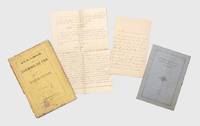
052630Istanbul: Manuscript Letters and Album. No Binding. Very Good. Original 110 autograph letters ALS and several autograph postcards with almost all their original envelopes one signed cabinet photograph and one photograph album including Pertev Pasha's funeral photos which shows many famous politicians and soldiers beside his daughter Nevin Demirhan Bengisu and his wife Leman Demirhan. Various sizes. All material in Ottoman script. Most of letters addressed to his daughter Mrs. Nevin. His funeral album includes one newspaper clipping contains his short life six newspaper obituaries 20 b/w photos of his funeral and famous people attending the funeral one telegraph of condolences by Kazim Orbay 1886-1964 and his wife Mrs. Orbay. Sait Pertev Demirhan 1871-1964 was a Turkish soldier and politician. He is a graduate of Erkân-i Harbiye. He was an author intellectual Erkân-i Harbiye School teacher 6. Army chief of staff Harbiye Undersecretariat 3rd Army Chief of Staff 1st Corps and 4. Corps Commands Military Schools Inspector Member of History and Geography Councils Member of Military Appeals Court a deputy of Erzurum. He was the son of Yanyali Mustafa Pasha. He graduated from Harbiye as a staff captain 1892. In 1894 he was sent to Germany to advance his military education. After being a colonel he was appointed to the Staff School as a teacher 1904. He was sent to the Russian-Japanese War as an observer. So he written a book titled 'Japonlarin asil kuvveti: Japonlar niçin ve nasil yükseldi' i.e. The principal power of Japan: Why and how did Japan rise printed in 1937 in Turkish. He returned to Istanbul in 1906 and was promoted to "Pasha" and was appointed as the 6th Army Chief of Staff. He participated in the Balkan Wars 1912-1913 and was on the Caucasian front during the First World War. He was sent to Vienna as a military diplomat. Upon his return he moved to Anatolia to participate in the Turkish War of Independence. He died in Moda district of Kadiköy. A fine and rare collection. <br/> <br/> Manuscript Letters and Album unknown
1895055453Istanbul: Ikdam Matbaasi. AH 1313 1895. 1st Edition . Leather. Very Good. 8vo - over 7¾ - 9¾" tall. Original handsome brown quarter leather binding with Ottoman lettered gilt to spine. Five raised bands to spine separated from each other with lined gilt. Slight stains on the title page. Else a fine copy. Roy. 8vo. 23 x 16 cm. In Ottoman script Old Turkish with Arabic letters. 99 p. Hegira: 1313 = Gregorian: 1895. Extremely rare first printed edition of this one of the earliest travel accounts of an Ottoman admiral's early expeditions to the Indian Ocean Arabian Sea Red Sea and Persian Gulf to counter Portuguese piracy and attacks on Muslim pilgrim ships which describes the lands he has seen during his voyage from India to Constantinople by Sidi Seydi Ali Reis 1498-1563 sent by Sultan Suleiman the Magnificent covering the years 1553-1556. During these naval wars after two marine battles against the Portuguese fleet and a great storm named The Elephant Typhoon Tufan-i Fil by the locals Reis' remaining six galleys drifted to India. The fleet was unserviceable resulting in his return home overland with 50 men. Reis then arrived at the royal court of the Mughal Emperor Humayun in Delhi where he met the future Mughal emperor Akbar who was twelve years old at the time. He returned to the Ottoman Land over Muslim states in South Asia; Afghanistan Central Asia and Iran. But he delayed his return because of the war between the Ottoman and the Safavid Empires in Iran. Finally following the treaty of Amasya in 1555 he was able to return home and present his book of this narrative journey to the Sultan in 1557. This work offers an extensive insight into the Muslim situation in 16th century South and Central Asia and the Middle East Islamic navigation and Turkish - Portuguese relations as well as Persian Afghan and Indian geography naval routes flora and fauna. Seydi Ali Reis formerly also written Sidi Ali Reis and Sidi Ali Ben Hossein was an Ottoman admiral and navigator. Known also as Katib-i Rumi Galatali or Sidi Ali Çelebi he commanded the left wing of the Ottoman fleet at the naval Battle of Preveza in 1538. He was later promoted to the rank of fleet admiral of the Ottoman fleet in the Indian Ocean and as such encountered the Portuguese forces based in the Indian city of Goa on several occasions in 1554. Seydi was able to unite several Muslim countries on the coast of the Arabian Sea such as the Makran Kingdom Gujarat Sultanate and Adal Sultanate against the Portuguese. He is famous today for his books of travel such as the Mir'ât ül Memâlik i.e. The Mirror of Countries and his books of navigation and astronomy such as the Mir'ât-i Kâinât Mirror of the Universe and the Kitâb ül Muhit: El Muhit fî Ilmi'l Eflâk ve'l Buhûr i.e. Book of the Regional Seas and the Science of Astronomy and Navigation which contain information on navigation techniques methods of determining direction calculating time using the compass information on stars sun and moon calendars wind and sea currents as well as portolan information regarding the ports harbours coastal settlements and islands in the various regions of the Ottoman Empire. His books are translated into numerous languages including English French Italian German Greek Arabic Persian Urdu Russian and Bengali and are considered among the finest literary works dating from the Ottoman period. "When Sultan Suleiman had taken up his winter residence in Aleppo I the author of these pages was appointed to the Admiralship of the Egyptian fleet and received instructions to fetch back to Egypt the ships 15 galleys which some time ago had been sent to Basrah on the Persian Gulf. But 'Man proposes God disposes.' I was unable to carry out my mission and as I realized the impossibility of returning by water I resolved to go back to Turkey by the overland route accompanied by a few tried and faithful Egyptian soldiers. I traveled through Gujarat Hind Sind Balkh Zabulistan Bedakhshan Khotlan Turan and Iran <br/> <br/> Ikdam Matbaasi., [AH 1313] hardcover
1874141678Turkey: 1874-86. Constantinople to Vienna Fascinating group of documents relating to Baron Maurice de Hirsch's concessions to build and operate the Ottoman Empire's railway lines from Constantinople to Vienna dating to the time the agreements were revised 1872 to when he was seeking to extricate himself 1887: 1. Covering letter to the annotated Actes 1874 document addressed to Baron Hirsch 1887 2. Actes 1874 covering the revised 1872 agreements annotated in 1887 for Baron Hirsch 3. Further amendments from the Ottoman Minister of Works for Hirsch c1887-88 4. Agreement to advance funds to the Sublime Porte to finance a military response to Bulgarian annexation of Eastern Rumelia 1885-86 The Ottoman rail network was constructed to boost trade maintain imperial control and facilitate Hajj and relied to a great extent on foreign private finance and expertise. First ventures in the 1860s included the Chernovoda to Constanza line connecting the Danube to the Black Sea and the Rustchuk to Varna line taking cargo to the Danube and Black Sea. The latter built by a British group was owned by the Rustchuk-Varna Railway Company under a 99 year concession which leased it in 1873 to Austrian banker Baron Maurice de Hirsch 1831-1896. In 1869 the Porte granted its most important concession to Hirsch to build 2 500 km of main and branch lines connecting Constantinople and Vienna; and in 1870 Hirsch founded the Societe Imperiale des Chemins de Fer de la Turquie d'Europe to build the lines and Compagnie pour l'exploitation des Chemins de Fer de la Turquie d'Europe to operate them. The venture was financed by the Turkenlose 3% Turkish Lottery Bond designed by Hirsch himself and German and Austrian bank loans. Over the 99 year concession Societe Imperial would receive 14000 francs rent per completed kilometre from the Porte and 8000 from the Compagnie. Grand Vizir Mehmed Emin Ali Paca 1815-71 a moderniser who wanted closer ties with Western Europe signed the agreement for the Porte. However he died in 1871 and his successor Mahmoud Nedim Paça 1818-83 whose appointment was influenced by General Nikolai Ignatieff Russia's ambassador at Constantinople preferred a link with Russia via Romania. Mahmoud Paca's efforts to cancel the concession were however unsuccessful due partly to Hirsch's appointment of Ralph Earle former British MP and secretary to Lord Beaconsfield who renegotiated the agreements signed off on 18 May 1872 item 2. By 1872 four disconnected lines "stumps" had been built and the Turkenlose had not raised sufficient funds. Under the new agreements the Porte took back the building concession including the most difficult and costly parts in the process reducing the distance to 1250km with the Societe Imperial as its contractor and cutting the Compagnie's concession from 99 to 50 years. Small archive of original documentation as above. Overall in very good condition. unknown
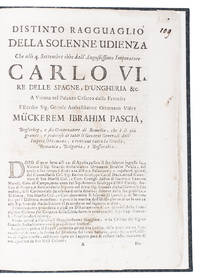
1719G84EBF01U79OColophon: Rome 1719. 4to. Giovanni Francesco Chracas Modern boards covered with chemical-marbled paper black morocco spine label. With a hatched roman capital used as an initial. Set in roman types with extensive italic. 8 pp. Extremely rare contemporary account of the audiences of the first Ottoman ambassador to the Holy Roman Empire before the Emperor himself and before Prince Eugene of Savoy both in the year 1719. This signalled the beginning of the attempted transition from war to negotiation in the ever difficult relations between the great Islamic and Christian powers. The Holy Roman Emperor Charles VI 1685-1740 conducted the successful Austro-Turkish War against the Ottoman Empire in the years 1716 to 1718 lead by Prince Eugene of Savoy 1663-1736. After the Treaty of Passarowitz ended the war on 21 July 1718 the Ottoman Sultan Ahmed III sent Ibrahim Pasha to Vienna to serve as Ambassador and Charles VI sent Count Hugo von Virmont to Constantinople as Ambassador to the Sultan. This exchange of ambassadors was celebrated with a grand ceremony near the border where the two ambassadors met on 15 June 1719. The present publication begins by noting Ibrahim's arrival in Vienna on 14 August and gives an account of his audience before Charles VI on 4 September. The last two pages with their own drop-title give an account of Ibraham's meeting with Prince Eugene of Savoy on 7 September. Both accounts include lists of presents exchanged. Eugene was to receive Ibrahim Pasha again at his newly built Belvedere palace in Vienna on 2 October 1719.We have located no other copy of the present edition but the ICCU records one copy of an undated edition. It is also a 4to of 4 leaves but the fourth leaf is blank and it apparently omits the account of Ibraham's meeting with Prince Eugene which appears on the fourth leaf of the present edition. WorldCat records one copy of a German edition of the account of the meeting with Prince Eugene and three copies of a German publication on Ibrahim's arrival in Vienna.Somewhat foxed but otherwise in very good condition and wholly untrimmed preserving all deckles. An important document of the Ottoman Empire's relations with Christian Europe and a window into the opulence accompanying the diplomacy.l Cf. ICCU RMLE047805 1 copy of undated ed. omitting meeting with Eugene of Savoy; KVK same copy; WorldCat 1 copy each of 2 related publications in German; for the background: C.W. Ingrao ed. The Peace of Passarowitz 1718 2011. hardcover
1570311740Istanbul 1570. Text in Ottoman Turkish and Persian mostly in double columns. Ornamental headpiece. Nastaliq in black and red on colored leaves ruled in black and in gold. 39 ff. Dated on last leaf. 1 vols. Large 8vo. Red leather with gilt mandorlas with floral motif tooled in blind. Collectors' stamps on first and last leaves: Hilmi Hassan Tahsin 1306 1888; 'Uthman bin Hassan Tahsin and two others. Some staining. Text in Ottoman Turkish and Persian mostly in double columns. Ornamental headpiece. Nastaliq in black and red on colored leaves ruled in black and in gold. 39 ff. Dated on last leaf. 1 vols. Large 8vo. unknown
1885052354Lonndon: William And Norgate 1885. 1st Edition . Hardcover. Very Good. 8vo - over 7¾ - 9¾" tall. Original decorative cloth bdg. with Dante's portrait gilt on front board and spine. Black cloth with red decorative borders. Gilt on spine with Greek letters 'Dantou o Paradeisos . Metaphrasis Konstantinou Mousourou' and gilt publisher's name in English on lower. A small etiquette on lower spine. Some little wormholes on cloth and several pages. Pages are partly opened uncut and untrimmed. Slightly faded on cloth's board. A stamp on first page. Otherwise a very good copy. Roy. 8vo. 23 x 16 cm. In Greek Modern. xiv 334 p. 14 p. 'prologos' by Musurus. Konstantinos Mousouros also known as Kostaki Musurus Pasha was an Ottoman Greek diplomatic official of the Ottoman Empire who served as ambassador to Greece Austria Great Britain Belgium and the Netherlands. He was born in 1807 in Constantinople Istanbul to a distinguished Phanariote family. His brother Pavlos Mousouros also became a diplomat. Mousouros became the first ambassador of the Ottoman Empire to the newly independent Kingdom of Greece in 1840 a position he kept until 1848. In 1847-48 he was a central figure in the events known as Mousourika which led to his temporary recall and the breakdown of relations between the two states. On his return to Athens he survived an assassination attempt leading to his transfer to Vienna. In 1850 he took up the post of Ottoman ambassador to the Great Britain and Ireland which he kept for 35 consecutive years until his retirement in 1885. During the same period he also served as ambassador to the Netherlands 1861-77 and Belgium 1861-75. In 1876-78 he was ex officio a member of the short-lived Senate of the Ottoman Empire. Well educated in 1883 Mousouros translated Dante's Divine Comedy into ancient Greek. He was married and had a son Stephanos Mousouros who later became Prince of Samos. Wikipedia. He is known as the first translator of Dante's Divine Comedy into modern Greek. Musurus Pasha had an intellectual identity. One of the most important occupations of Musurus Pasha in the last years was the translation of Dante's Divine Comedy from Italian to Greek. Being able to translate a work of Italian classics and masterpieces of western literature should be an indication of Musurus Pasha's performance and intellectual dimension. Due to negative statements about Muhammad and Ali in Dante's work the book was not allowed to be published within the Ottoman Imperial borders. Despite this Musurus Pasha asked him to be permitted to publish his translation but it was not accepted. Source: Bir Tanzimat diplomati Kostaki Musurus Pasa 1807-1891. NURDAN SAFAK. Dante's Divine Comedy originally called Comedia and later christened Divina by Giovanni Boccaccio is widely considered the most important poem of the Middle Ages and the greatest literary work in the Italian language. This is only 'Paradiso' book from the set. It's signed and inscribed by Musurus Pasha with a dedication in French to Monseigneur Auguste Bonetti as "A la grandeur Monseigneur Bonetti Hommage de veneration Musurus". Bonetti was in 1887 after the appointment of Monsignor Rotelli to the Vatican Ambassador to Paris the new Constantinople patriarch appointed by Rome for him. First Greek Edition. Extremely rare. <br/> <br/> William And Norgate hardcover
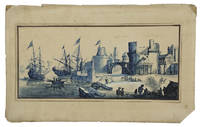
1720D55H803XSZ3ZThe Netherlands 1720. Oblong folio 19.5 x 31.5 cm. Framed 37 x 49 cm. Pen and blue-black ink-wash drawing on laid paper showing the city of Edremit its harbour and fortifications with an Ottoman and a Dutch ship and a lighthouse in a brown thick-thin-thin border signed in the border below right but difficult to read I. P. Sto. I. P. Ste. A detailed ink drawing of the harbour of and fortifications of Edremit an Ottoman port city on the west coast of Turkey. The drawing is made after Johannes Peeter's print Ladimistri nel' archipelago originally engraved by Lucas Vorsterman the younger and first appearing 1664/65 in the series Diverse vis te! delli Dardaneli del' dtrecio come delle città e castelli nel archipelago. The series was published by Jacob Jacques Peeters 1637-1695 and the prints were engraved after drawings by his brother Jan Johannes Peeters 1625-1677 best known for his drawings of city views engraved by Merian. Johannes Peeters was a pupil of their eldest brother Bonaventura Peeters a well-known painter and draughtsman and specialized in maritime scenes.Slightly browned and with a few small and mostly marginal stains. The foremost canon appears to have lost some of its ink but the drawing is otherwise in good condition. The corners are damaged or discoloured from a previous mounting far outside the border of the drawing. unknown
1916000483<p>Istanbul: TanÄ«n 1916.<br />Book. As new. Hardcover. 8vo over 7¾–9¾ in.<br />An official report issued by the Ottoman Fourth Army under Jamal Pasha concerning the proceedings of the Supreme Court Martial Tribunal convened at ʿĀliyah Aley Lebanon established to prosecute alleged Arab separatists and Pan-Arabist movements in Syria and Egypt during the First World War.<br />The report claims that the names of prominent Arab nationalists were discovered by the Ottoman authorities among documents seized from the French Embassy in Beirut reportedly placed under the safekeeping of the American Embassy following the outbreak of war. These documents formed the evidentiary basis for the tribunal's investigations.<br />125 pages of Arabic text accompanied by over 50 facsimile plates issued as a supplement reproducing original documents and correspondence between the accused Arab nationalists and other related parties examined by the tribunal.<br />Preserved in a modern hardcover binding.<br />A significant and controversial contemporary Ottoman publication providing rare primary documentation on wartime military justice Arab nationalist movements and Ottoman intelligence practices during the final years of the empire.</p><p>An important Arabic political and legal work presenting the Arabic version of La Vérité sur la Question Syrienne addressing the investigations and proceedings of the Ottoman Martial Law Tribunal DÄ«wÄn al-Ḥarb al-Ê¿UrfÄ« convened in ʿĀliyah Aley during the First World War.<br />The work constitutes a contemporary defense and documentary clarification of political accusations brought against Syrian and Lebanese figures shedding light on:<br />Ottoman wartime judicial procedures<br />political repression and accusations of separatism<br />and the broader Syrian Question in the late Ottoman period.<br />As the original Arabic edition this publication is a key primary source for the study of Ottoman military justice Arab political movements and Syro-Lebanese intellectual history during the final years of Ottoman rule.<br />A scarce and historically significant work particularly sought after in collections relating to the Arab provinces of the Ottoman Empire World War I Middle Eastern politics and constitutional and legal history.</p> Tanine hardcover
1874055638Kostantiniyye Constantinople - Istanbul: Basiret Matbaasi. AH 1291 1874. 1st Edition . Leather. Very Good. 8vo - over 7¾ - 9¾" tall. Contemporary fine half and quarter calf. The title "Tarih-i Yemen" lettered gilt on spine of the first volume with volume no and four decorative elements gilt on the compartments; the second volume's spine is decorated fully. Bindings are not homogeneous. Roy. 8vo. 24 x 17 cm. In Ottoman script Old Turkish with Arabic letters. 2 volumes set: 3 322 20 p.; 6 374 p. no illustrations and maps. Occasional foxing on pages a very good set. Extremely rare first edition of this two-volume set including Lieutenant General Ahmed Rashid Pasha's firsthand account of a fourteen-month expedition of Yemen he participated in with the Ottoman army between 1871-1874. The book also enlarged with the author's detailed eyewitness descriptions of the South Arabian Peninsula's agricultural and natural resources geographical structure climate various sects and beliefs of the region as well as a history of the Ottoman rule in Yemen from the beginning in 1495. This exceptional book starts with the author's reason for writing the book sebeb-i telîf and a list of the Arabic sources he used. In addition to the author's diary in the form of a travelogue Isa ibn Lütfullah's Rawha al-Rûhad which has detailed information about the Zaydis and includes the history of Yemen between 1494 and 1620 as well as Tekmilet al-Ravha al-Rûh Tibb al-Kesâ Jami al-mutun bi Ahbari Yemen al-Maymun and Al-Deyba's Qurrat al-'Uyûn fî Akhbâr al- Yemeni'l-Maymûn were used as sources. The first volume is published in AH 1291 Cemâziyelâhir i.e. July-August 1874 and the second volume is published in AH 1291 Zilhicce i.e. January-February 1875 in Basiret Publishing House in Constantinople. After the publishing first volume the author presented it to the Ottoman Sultan Abdülaziz and he was awarded the Medjidi Order of the third rank. In the book the activities of the Ottoman Empire in the region since 1495 the region's becoming a province the governors who ruled the land the important rebellions and wars in Yemen as well as the 14-month Ottoman Expedition between 1871-1874 which also the author participated in are explained in detail. At the end of this operation the division of the Yemen Province into four liwâs named Sana'a Taizz Hudayda and Asir and their restructured administrative organization with the situation of peoples and Arab tribes in the region are also valuable firsthand details in the work. Ahmed Rashid Pasha collected the historical documents of the events between 1680-1844 related to Yemen and Arabia during his duty in Yemen. In the second volume the author presented himself as "Mirliva" i.e. Brigadier General three years later 3 July 1877 he was promoted to the rank of "Ferîk" i.e. Lieutenant General. Ahmed Rashid Pasha was promoted to the rank of Major in 1870 when he was the Clerk of the fourth battalion of chefs in Medina in 1862. While he was under the command of Muhtar Ahmed Pasha as a Major he was given the rank of district governor of the first "Ihtiyât" army of the Hejaz Firkasi due to his activities in Benî Teym. OTTOMAN RULE IN YEMEN Since the Ottoman conquest of Yemen in 1517 it has been known as the Yemen Eyalet. After the Tanzimat reforms in the Ottoman Empire Yemen Vilayet was established from most of the former Eyalet in 1872. In the 1830s aided by the collapse of the Zaidi Imamate due to internal division and the adoption of modern weaponry after the Crimean War the Ottomans moved into northern Yemen eventually taking San'a and making it the capital of the Yemen Vilayet in 1872. Even then Ottoman control was largely confined to cities and the Zaidi imam's rule over Upper Yemen was formally recognized. Starting in 1872 after the Sana'a region was firmly under control Ahmed Muhtar Pasha set about restructuring the administration of the Yemen vilayet dividing it into four sanjaks with San'a city serving as the capital of the vilayet. Asir became a sanjak of Yemen in 1872. Tu <br/> <br/> Basiret Matbaasi., [AH 1291] hardcover
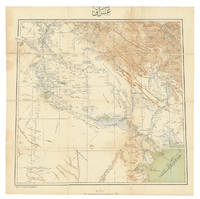
1915ABC_47201Istanbul: Erkan-i Harbiye-i Umumiye 1915. Colour-lithographed map of Iraq Kuwait and southwestern Iran 65.5 x 66 cm in black brown blue and green at a scale of 1:1000000 dissected into 12 sections and mounted on contemporary cloth. First edition of the first accurate Ottoman general map of Central and Southern Iraq Kuwait and Khuzestan southwestern Iran; the authoritative map used by the Ottoman army for strategic planning during the "Mesopotamia Campaign" where Ottoman-German forces mounted a unexpectedly strong resistance to Britain's invasion of Iraq in World War I. Examples of the present map were used by Ottoman commanders who oversaw the successful Ottoman-German defence of Baghdad at the Battle of Ctesiphon 22-25 Nov. 1915 as well as the capture of the main British army at the Siege of Kut-al-Amara 7 Dec. 1915-29 April 1916. It shows the tip of the Gulf and the Tigris and Euphrates vallies including Kuwait most of Iraq and Khuzestan province in southwestern Iran. Mountain ridges are rendered in brown with rivers and marshes in blue permanent bodies of water in green and parallels and meridians at every degree ranging from about 43.5 to 49.5°E longitude and 29 to 34°N latitude. With the text entirely in Ottoman Turkish the map is based on the British War Office's "Lower Mesopotamia between Baghdad and the Persian Gulf" 1911 which was itself in part based on Ottoman sources. Both maps were dramatically superior in all respects to previous efforts forming the culmination of over three generations of reconnaissance capped by critical late-breaking discoveries.Some light stains in the margins and the lower-right quadrant but generally in good condition. Very rare. [Erkan-i Harbiye-i Umumiye], hardcover
1846JBDBKGMJ1PXZVienna 1846. Large 8vo. Dar tiba al-imberaturiyy k. k. Hof- und Staatsdruckerei Contemporary green morocco with a fore-edge flap gold-stamped boards with an oriental design gilt edges. Printed in black with red headings within printed gilt rules. Illuminated head-piece and unwan printed in three colours and gilt in imitation of manuscript illumination. Gilt tail-piece. 88 pp. The full text of 19 trade treaties in Ottoman Turkish throughout closed between the Roman/Austrian and the Ottoman Empire between 1110/1699 Peace of Karlovac and 1259/1844. An Italian-language edition had appeared in 1844 "Raccolta dei Trattati e delle principali convenzioni concernanti il commercio e la navigazione dei sudditi Austriaci negli Stati della Porta Ottomana".Occasional insignificant foxing; altogether very well preserved. A splendidly bound copy.l Zenker BO II 805. hardcover
1627ABC_48068Amsterdam: Broer Jansz. 1627. 19th-century gold-tooled brown morocco with the gold-tooled coat of arms of Victor Masséna 5th Prince dEssling and 3rd Duke of Rivoli 1836-1910 on both boards the title impressum and repeatedly the monogram "VM" lettered in gold on the spine gold-tooled board edges and turn-ins gilt edges marbled endpapers. Bound by the 19th-century French bookbinders Allô-Wampflug signed in the lower turn-ins at the front and back. 4to. With a large woodcut on the title page showing the Ottomans reaching Constantinople and 16 engravings in the text with emblematic scenes featuring sultans including Mehmet II and Sulaiman I animals such as unicorns nursing bears eagles ravens wolves snakes mythological figures rulers etc. Each plate is followed by an epigram and explanation. First Dutch edition of the divinations of the Byzantine Emperors Severus probably Lucius Septimius Severus 145-211 CE and Leo VI the Wise 866-912 CE on the fall of the Ottoman Empire in the 17th century. A second edition with the same plates appeared with the same publisher in 1640. The work is a separately published part of Historie van den oorsprongh geslacht geboorte opvoedinge en leere des grooten valschen progheets Mahomets also published by Broer Jansz in Amsterdam in 1627 and 1640. The 16 engravings are after the illustrations in the Codex of the Oracula of Leo Sapiens in the Amsterdam University Library MS 16.This copy was bound for Victor Masséna 5th Prince dEssling and 3rd Duke of Rivoli 1836-1910 by the famous 19th-century French bookbinders Allô-Wampflug. Masséna was a French army officer a member of Parliament for the Grasse constituency Alpes-Maritimes from 1863 to 1871 a Knight of the Légion d'honneur in 1859 and a bibliophile and scholar.With a small inscription on the verso of the first flyleaf "1847" washed. Overall in very good condition.l Livres à figures prov. De la biblioth. Du Prince dEssling. Vol. 2 1939 no. 228; STCN 841466505; USTC 1029656; Waller no. 1389. Broer Jansz., hardcover
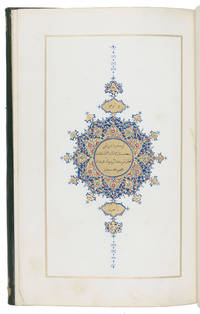
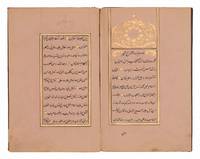
65596Ottoman Empire: Signed Hajj Isma'il Haqi Ibn Mohammed Islamboli first Imam of Sultan Selim Mosque and head of shiekh reciters and dated the fourteenth of Jumada al-Akhirah in the year one thousand two hundred and ninety-four of hijra 1294 AH 1877 AD. Arabic manuscript of 9 leaves of pink polished paper plus 3 blank leaves at the end 11 lines of neat black naskh per page text framed within gilt borders gold roundel verse markers with catchwords decorative endpapers first leaf decorated with illuminated headpiece comprised of saz-style floral sprays and three different varieties of flowers including roses and tulips final leaf likewise decorated with gilt ornamentation and with round stamp of the 'Chief of the Sheikhs of Qur'an Reciters Sayyid Ismail'. Housed in contemporary purple morocco binding with prominent gilt filets to sides. Folio: 18.2 cm. Text Panel: 11.5 x 6.3 cm. Some light rubbing to exterior outer margins with some light wrinkling toning and a few nicks generally a very good example in a handsome leather binding. In the Ottoman tradition a Qur'an school certificate is known as an Ijaza. It is a formal license granted by a teacher to a student certifying that they have mastered the recitation or memorisation of the Qur'an and are now qualified to transmit that knowledge to others. These were prestigious manuscripts granted to students who had mastered the components of Qur'anic sciences such as recitation 'Tajwid' and memorisation 'Hifz' and often include as here a chain of transmission 'Sanad' listing the pupil's teachers. Ottoman Empire: Signed Hajj Isma'il Haqi Ibn Mohammed Islamboli first Imam of Sultan Selim Mosque and head of shiekh reciters, a hardcover
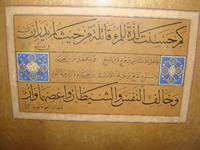
00007932x25 cm. Thuluth and Naskhi in black ink on paper illustrated and fexed on illustrated paper in golden flworal shapes. Signed in wite ink in Thuluth: Katabahu al Hajj Kamil. Ahmed Kamil Akdik is one of the last great Ottoman calligraphers. Born in the Fındıklı neighborhood of Istanbul in 1861 Ahmed Kâmil displayed an interest in the art of calligraphy from his earliest years in primary school. In 1879 he began to study thuluth sülüs and naskhi nesih scripts with the most renowned calligrapher of the era Sami Efendi 1838-1912 and after earning his certificate in 1884 with the approval of Şevki Efendi he became one of the foremost Ottoman calligraphers. His certificate icazet is preserved in the Library of the Topkapı Palace Museum.After beginning to work for the Divan-ı Hümayun the Ottoman Imperial Council in 1894 he learned from his teacher Sami Efendi the divani and celi divani scripts as well as the inscription of the tuğra or imperial monogram and replaced his teacher after the latter's retirement.He taught the thuluth and naskhi script at the Medresetü'l-Hattatin school of calligraphy that was established in 1915 and in 1918 gave lessons in rik'a script at the Galatasaray Secondary School. In 1915 he was honored by Sultan Reşad r. 1909-1918 with the title of Reisü'l-Hattatin Chief Calligrapher for his standing and success in his profession.Ahmed Kâmil began to teach calligraphy in 1936 at the State Academy of the Fine Arts and continued doing so until his death; he experienced all the changes that took place during the transition from Arabic script to the Latin alphabet conforming to the changes brought about by this language revolution in all the schools in which he taught and becoming one of the leaders of this last generation of calligraphers. Ahmed Kâmil Akdik is the father of painter Şeref Akdik 1899-1972. Sakib Sabanci collection note.
elala5475Paris: British & Foreign Bible Society at the Imprimérie Royale 1827. First Edition of the complete Bible in Ottoman Turkish the chief language of European and Asiatic Turkey and the official language of the Turkish Empire. The translation was undertaken in the 17th century by Wojciech Bobowski a Polish convert to Islam known as Ali Bey chief translator to Sultan Muhammad IV at the instigation of Levin Warner then Dutch Ambassador at Constantinople. It is apparently based upon a French protestant version. The New Testament from his manuscript held by Leyden University was edited by Heinrich Friedrich Diez former Russian Ambassador at Constantinople and further revised and edited by French Oriental scholar Jean Daniel Kieffer 1767-1832 before being printed in Paris in 1819. In 1820 Kieffer became the first Agent of the British and Foreign Bible Society in France and in the same year began a thorough revision of Ali Bey's translation of the Old and New Testaments. The complete Bible without the Apocrypha was published in 1827 in an edition of 5000 copies together with a further 2000 copies of the New Testament on its own. Darlow & Moule 9456. 2 Parts in 1. 4to. pp. 2 p.l. 7 1blank 984; 2 p.l. 3 1blank 318. printed in Arabic type with full vocalization. later cloth binding worn but sound internally very good. elala5475 Paris: British & Foreign Bible Society, at the Imprimérie Royale, 1827 hardcover
1801000449<p>.Istanbul Üsküdar: Imperial Press DÄr al-ṬibÄÊ¿a al-ʿĀmira 1801.<br />Folio over 12–15 in.<br />KitÄb Laḥjat al-LughÄt<br />Tri-lingual Dictionary Turkish–Arabic–Persian<br />First edition. An early Ottoman printed dictionary produced at the Imperial Press of Muhendishane established by imperial decree following the closure of the İbrahim Müteferrika press. Printed under the supervision of Ê¿Abd al-RaḥmÄn al-Mudarris head administrator of the Üsküdar printing house.<br />Contemporary French binding in yellowish-brown morocco richly gilt in Ottoman Turkish decorative style with original folding envelope flap. Gilt panels and tooling spine and flap partially worn.<br />Collation:<br />2 pp. imperial decree and justification for the establishment of the press signed by Ê¿Abd al-RaḥmÄn al-Mudarris<br />7 pp. index<br />851 pp. text<br />Upper left corners of the imperial decree index and first six pages with early professional restoration slightly affecting the first letters of the opening lines on some pages. Light water staining throughout as commonly encountered in early Ottoman imprints. The upper half of the colophon leaf is neatly adhered to the rear cover. Otherwise complete with the text internally clean crisp and fully legible.<br />Binding shows wear: minor losses to spine and flap covers lightly rubbed. Overall good condition with notable bibliographical integrity.<br />Provenance / Reference:<br />An identical copy recorded in the Atabey Sale Sotheby's 28 May 2002 Lot 844.</p><p>Rare and important: among the earliest products of the post-Müteferrika Ottoman state press representing a major milestone in Ottoman lexicography and multilingual scholarship.</p><p>Muḥammad EsÊ¿ad Efendi was a prominent Ottoman jurist Ê¿Älim religious authority and statesman who served as Åžeyhülislâm the highest religious office in the Ottoman Empire during the mid-18th century.<br />Educated in the classical Ottoman madrasa system he rose through the ranks of the Ê¿ilmiyye learned hierarchy serving in various judicial and scholarly posts before attaining the office of Åžeyhülislâm where he exercised authority over Islamic law Sharīʿa legal opinions fatwÄs and religious appointments throughout the Empire.<br />EsÊ¿ad Efendi was known for his legal scholarship administrative prudence and engagement with intellectual life at a time when the Ottoman state was navigating institutional consolidation and reform. He authored and supervised works in Islamic jurisprudence theology and language and his name appears on several important Ottoman scholarly and administrative publications of the period.<br />He died in 1166 AH / 1753 AD leaving a legacy as one of the notable religious jurists of the 18th-century Ottoman Empire.</p> the Imperial press, Muhendishane hardcover
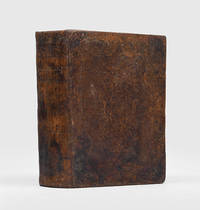
1827180737Paris: Darü't T baatü'l Mülkiyyeü'l Mamure 1827. The Old and New Testament in Ottoman Turkish First Ottoman Turkish edition of the Old and New Testaments together funded by the British and Foreign Bible Society and based on the translation made by Ali Ufki Bey d. 1675 an influential agent for European diplomats in 17th-century Turkey. We have only traced four institutional copies. Unusually the Ottoman text is fully vocalized. Ali Ufki Bey christened Wojchiech Bobowski was known in Europe as Albertus Bobovius. After his enslavement by the Tartars in the Ukraine he was forcibly converted to Islam and brought to Istanbul where he worked in the Ottoman palace for over two decades. The editor the famous Turcologist Jean-Daniel Kieffer d. 1833 had published a standalone Turkish edition of the New Testament in 1819 always with the British and Foreign Bible Society. Kieffer's starting point was Ali Ufki Bey's Ottoman Turkish text revised according to critical comments on the first edition of his New Testament. Kieffer also compared the Ottoman text "with the original texts as well as with the standard English French and German versions. W. Seaman's Nogai New Testament of 1666 T. Erpenius' Arabic version H. Martyn's Persian version H. Brunton's Nogai New Testament of 1813 and with the London Polyglot. On crucial questions he had the advice of Baron Silvestre de Sacy" Darlow & Moule. The present edition was printed in 5000 copies on the presses of the Louvre hence the "Royal Printing House" imprint. The same binding - arguably a publisher's binding - is found on another copy of this edition. 2 vols in one large quarto 257 x 222 mm pp. ii 984; ii 3 i 318. Titles within double typographical ruling. Contemporary Ottoman Turkish brown sheep blind stamped to a panel design arabesque cornerpieces on inner corners large arabesque centrepieces flat spine triple blind ruled gilt lettered title. 20th-century inked and pencilled Ottoman Turkish annotations on pastedowns and first title. Spine and extremities refurbished boards a bit rubbed contents slightly toned but overall clean a little light marginal water staining along outer edge of initial gatherings: a very good copy. Darlow & Moule 9456. hardcover