2 675 résultats
60409 ½ inches 24 cm. diameter; 21 inches 53 cm. total height. Single pedestal globe with horizon ring armature & meridian all of wood wear and staining on meridian at point where fits into stand some chipping at extremities else fine; globe with vibrant original color and clear sharp patina; some abrasion & losses mostly in lower and upper extremities; overall very good plus condition.<br /><br />An attractive very capably executed table or desk globe in the distinctive style of the Delamarche firm <i>"the most successful French entrepreneurs in maps and globes"</i> Dekker/ van der Krogt. This was an original work by the son Felix who succeeded his father in the management of the firm in 1817. The globe is geographically up-to-date notably in the South Pacific and Alaska with information from then recent Russian voyages such as Krusenstern's. Related to this at the time the globe appeared and reflected on it Europeans were beginning to differentiate between various regions of the Pacific. These were based on a better understanding of cultural and other differences between the peoples of various areas encountered on these recent voyages. For example in 1831 the French explorer Dumont d'Urville proposed the use of the terms "Micronesia" and "Melanesia" for various parts of the Pacific as distinguished from Polynesia. Printed dashed lines on this globe labeled "Division Oceanique" roughly approximate the three eventually accepted divisions of what is referred to as the South Pacific though the regions are not named on the globe. Delamarche also clearly identifies on the globe the more traditional divisions of the Pacific between "Grand Ocean Boreal" "Grand Ocean Equinoxial" and "Grand Ocean Austral."<br /><br />The Delamarche firm was the first to successfully reach a fairly sizable general market of globe buyers. It accomplished this by reducing the cost of constructing globe stands and other parts while maintaining a high level of quality in the maps of their globes which are cleanly and attractively engraved. Traditional brass meridians were replaced by wooden ones and the horizon rings and armatures supporting the rings were greatly simplified and made from either wood or stiff board. Also the firm generally used simpler single-pedestal stands rather than four-legged designs. Yet as this well-preserved example demonstrates Delamarche's design and materials proved to be very durable.<br /><br />Charles-Francois Delamarche 1740-1817 the founder of the family firm was the successor of the great map and globe-making family the Robert De Vaugondys as is cited in the title of this globe. Delamarche in fact seemed to have cornered the globe market in France by also incorporating the stocks of Jean Fortin and Jean Lattre. Delamarche's son Felix took over the firm upon his father's death and managed it until 1848 when Gosselin succeeded him. The firm continued well into the latter 19th century under yet another Delamarche descendent.<br /><br />Dekker/ Van der Krogt <i>Globes from the Western World</i> pp. 63 74; Dekker E. <i>Globes at Greenwich</i> pp. 321-25; Suarez T. <i>Early Mapping of the Pacific</i> p. 25.
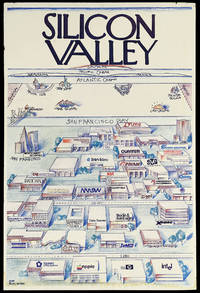
14949California: Pacific Ventures 1984. 912 by 610mm. 36 by 24 inches. Colour printed poster laid down on foamcore. A view of Silicon valley in its early days parodying Saul Steinberg's classic New Yorker cover "View of the World from 9th Avenue". This view shows Silicon Valley and the offices of its important technology companies looming large in the foreground. Among the companies named are Apple Hewlett Packard and Intel. As the view recedes across San Francisco bay there is a humorously foreshortened view of North America with much smaller views of Lake Tahoe Las Vegas New York and Boston with of course MIT. North Carolina and Texas' computer industry centres are competitively nodded at as well with Piedmont NC's Research Triangle and Austin's Silicon Gulch both shown. Further in the distance is the Atlantic Ocean with France and Germany shown as long islands followed by the Pacific Ocean culminating in Japan. "Silicon Valley" is written at the top of the image in the New Yorker's instantly recognisable font. By appropriating Steinberg's image a self-aware joke about New York City's self-centredness Silicon Valley lays claim to its own importance in the world. Funnily enough they weren't entirely wrong as the next few decades of innovation and economic success would prove. The company behind this image Pacific Ventures appears to have been a venture capital firm in the area that was involved in the technology sector. However we have been unable to find any mention of a Pacific Ventures operating at this time in Silicon Valley though there was a explosion of such companies in the area following Apple's 1980 IPO. Nonetheless the statement behind this image would have served a Silicon Valley based investment firm well. Saul Steinberg's "View of the World from 9th Avenue" appeared on the cover of the New Yorker in March 1976. It has since become one of the most popular and recognisable covers in the magazine's history and it spawned countless parodies as every city from Boston to Omaha clamoured to make a version of their own. Steinberg is quoted in a 2001 New York Times article as having said that if he had received the proper royalties " I could have retired on this painting." Pacific Ventures, unknown
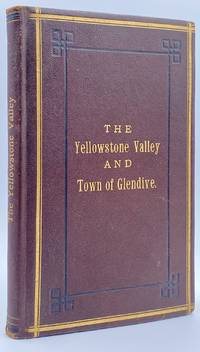
188210945St. Paul MN: The Pioneer Press Co 1882. First Edition First State. 100pp. Octavo 24 cm Presentation binding. Publisher's full grained brown leather with the title gilt stamped on the front board and backstrip. A.E.G. Satin moire endsheets. Near fine. Inscribed on the front free endsheet. 'Mr. Minnie with compliments of the author. Map of the Yellowstone Valley 42 cm x 70 cm and the Plat map of Glendive 40 cm x 56 cm present and both linen backed and in nice condition. Presentation copy. The trade edition of this work was bound in green printed wrappers with 10 pages of advertisements in the front and 3 to 10 pages of advertisements in the rear. Map of transcontinental was attached to the rear free endsheet. Our copy predates the various issues with advertisements and the map attached to the rear free endsheet. Eberstadt and Yale copies and others only list the plat and cattle trails maps. Early Montana promotional item from the Northern Pacific Railroad a year before they opened the Gardiner Gateway at the north end of Yellowstone Park. An important descriptive tract of the new country at the time of its settlement with a fine large map showing the towns and cattle trails. Eberstadt 132: 478. Howes Y8. Rampaging Herd 1535. This is the first time that we've handled or encountered this title. Rare. The Pioneer Press Co unknown
192052937Klamath Falls OR: Colonel Boyd Yaden & Myrtle Madison Yaden Public Works Administration United States Army Corps of Engineers ca. 1920-1960. Eight albums. 1st - Oblong 14 x 9.25 in. 80 pp unpaginated. With 244 photos sized from 1 x 1 in. up to 7 x 10 in. many hand-coloured as well as a few Real Photo Postcards. Limp calf stamped & decorated in colour on front & back covers sewn w/ rawhide tie at gutter margin; 2nd - Oblong 4to. 11.25 x 7.25 in. 100 pp unpaginated. With 249 original photos many w/ annotations some w/ markings within the negative sized 2.75 x 3.5 in. up to 6.75 x 10 in. Limp black simulated leather post-binder sewn at gutter margin w/ black silk braid silver lettering stamped on front cover. 3rd - 4to. 96 pp unpaginated on thick toned paper stock w/ 154 original photos tipped-in taped and mounted with corners into album some with ink annotations below or beside images. Black boards post-binder sewn at gutter margin w/ black silk braid scuffing edgwear some rubbing occasional tears. 4th - Thick folio. 12.25 x 14.25 in. 70 pp unpaginated. on thick toned paper stock. With 104 photos sized from 4 x5 in. up to 8 x 10 in. most 7 x 10 in. nearly all with text in lower fore-edge of negative or printed in blank below image on lower fore-edge all mounted either with tape or glue. Tan padded boards post-binder sewn at gutter margin w/ brown silk braid some scuffing edgewear rubbing. 5th - Thick folio. 154 pp unpaginated. With 239 photographs sized 3.75 x 5.75 up to 8 x 10 in. many of them are 9 x 9 in. most with text in lower fore-edge of negative or printed in blank below lower fore-edge all mounted either with tape or glue. Embossed & decorated padded dark brown boards post-binder nickel-plated screwposts rear hinge repaired in black tape scuffing rubbing. 6th - 4to. 32 pp unpaginated. typed sheets attached to portfolio leaves with 17 original photos mounted 1 large folding colour map 4 pp. TLS signed by Governor Paul Fannin on Arizona State letterhead 2 TLS from Harry Wildnauer Federal Works Agency and Guy Kirksey Air Corps tipped-in. contained with padded leather portfolio gilt decorations silk endpapers minor scuffing. 7th - Oblong 4to. 12 x 7.5 in. 96 pp unpaginated. thick black paper stock. With 228 original photos sized 7 x 11 in. with two 4 pp. programs for Pig’n Whistle Evening Concerts in Seattle WA. Limp embossed Arts & Crafts brown cloth post-binder black silk braid rounded corners front inner hinge starting. 8th - Oblong folio. 13 x 10.5 in. 100 pp unpaginated. on thick black paper stock. With 484 original photographs many with annotations on versos some mounted with glue others with corners some loose a few missing sized from 1 x 2 in. up to 8 x 10 in. Limp textured brown calf post-binder rounded corners sewn at gutter margin with brown silk braid some edgewear rubbing weakening to many leaves at gutter margin an excellent archive filled with bright images strong contrast. This immense photo album archive assembled by Lt. Colonel Boyd Yaden 1906-1980 incorporates eight albums. The first of these albums document his career serving with the Provisional Co. No. 2 1st Battalion 55th Coastal Artillery of the U.S. Army serving the batteries at Fort Kamehameha Fort Kam. The 55th CA was equipped with 155 mm. Grande Puissance Filloux guns typically mounted atop concrete Panama Mounts which enabled the pieces to traverse 360 degrees as well as 75 mm. field pieces. These remarkable images show the artillery gun crews test firing the 155 mm. guns loading shells night firing camp drills inspections athletics expanding the tracks for the 41st Coast Artillery Locomotive at Fort Kamehameha and more. Of special interest are three photos documenting the first Navy Pacific Flight by Commander John Rodgers in the PN-9 Seaplane from San Pablo CA non-stop to Honolulu HI which ran out of gas and landed in the Pacific Ocean. The crew fashioned sails from wing fabric and later leeboards to steer the flying boat and finally came within 15 miles of Kauai where it was discovered by the USS R-4 submarine. The second & third albums chronicle Boyd Yaden’s life with his wife Myrtle Yaden 1901-1988 moving from Klamath Falls OR to Alaskan Resident Engineer and Inspector for the Public Works Administration overseeing the installation of the sewer system in Petersburg Alaska with several photos showing street scenes digging up of streets to lay pipe earthmoving equipment steam shovels and finally the finished streets with bustling economic activity. In addition there are photos of building railroad trestles bridges and logging operations on Wrangell Island Alaska with photos showing the construction logging sites totem poles and then his work as supervising engineer for the Public Works Administration during the Depression building a power plant near Anchorage AK followed by the project of rebuilding the power plant in Seward AK with photos showing the phases of construction. The third album includes photos of the couple on the steamship SS Hazel B No. 2 hunting & fishing in Alaska and the Pacific Northwest the Pioneers Home in Sitka as well as documenting trips to visit relatives in Seattle North Dakota and New York. Two very large photo albums are devoted to Colonel Yaden’s activities as Division Engineer for United States Army Corps of Engineers and later for the Air Transport Command in Alaska and Western Canada. The albums open with an extensive group of photos of Hammer Field near Fresno California now Fresno Yosemite International Airport with images showing the laying of foundations training crash of a B-24 Bomber June 27 1942 the theaters bowling alley Sub Exchange NCO Club tennis courts recreational facilities swimming pool sandstorms and more. In addition Yaden oversaw the mineral and strategic materials facilities in Trona CA with images of the nearby Ruth Mine loading operations onto trucks and railcars. In 1943 Yaden began an engineering and photographic survey of the Western Canadian air bases for the ATC and has included large photos of Calgary Air Base aerial views of Edmonton Air Base and the Edmonton Air Base Edmonton Airport Wing Hangars under construction the Edmonton Satellite Airport aerial views and detailed photos of the Namao Airbase Alberta along with others such as the Grand Prairie Airbase Dawson Creek Fort Neslon Airbase Watson Lake Y.T. Whitehorse Y.T. and the ATC engineering post including the sawmill lumber racks and construction equipment in Canada. The last half of the fifth album is devoted to airfields and airbases in Alaska including the Northway Airfield showing aircraft landing hangars under construction engineering and structural detail photos Tanacross Airport AK Ladd Field and a whole series of large aerial views of the Galena Flood. Yaden also oversaw Airfield site surveys in Port Clarence Nome Point Spencer Imuruk Basin even including a dog sled team and Native American guide in the depths of winter. In addition The final two albums are devoted to the life and activities of Myrtle A. “Madison†Yaden 1901-1988 who taught school in Whitefish Montana then moved to Mullan Idaho the Puget Sound region during the 1920s and later Klamath Falls where she would meet Boyd Yaden. This album includes photos of the gold dredges in Mullan Idaho near Wallace North Dakota Agricultural College band members Montana High School basketball champions football teams hijinks with fellow students and teachers the YWCA Camp on Bainbridge Island treks to Seattle Poulsbo and other areas around the Sound. Boyd Yaden was the nephew of Oregon Pioneer George Nurse who founded Linkville attended the Univ. of Oregon served with the 55th Coast Artillery in Hawaii joined Battery D 249th Coast Artillery of the Oregon National Guard was commissioned a 2nd Lieutenant became a licensed civil engineer in Klamath Falls worked in Alaska Canada California and Oregon where he became an engineering expert on building and working on permafrost in the Arctic and later worked with the Flood Control Agency in Phoenix AZ before returning to Klamath Falls OR as basin engineer. See: Laisa Leao Remembering Hammer Field U.S. Department of Veterans Affairs 2015; William Gaines Coast Artillery Organizational History 1917-1950. Part I Coast Artillery Regiments The Coast Defense Journal Vol. 23 Issue 2 pp. 29-31; Siemon Muller Frozen in Time: Permafrost and Engineering Problems 2008. Colonel Boyd Yaden & Myrtle Madison Yaden, Public Works Administration, United States Army Corps of Engineers, hardcover
186895331868. <p>The Transcontinental Railroad made possible the winning settlement and development of the American West. It led to a revolution in interstate and international trade opening the markets of the west coast and Asia to the east and Europe while bringing products of eastern or European industry to the growing populace west of the Mississippi and beyond. The railroad caused a great production boom and was in a sense America’s first technology corridor. As it encouraged the growth of American trade and business so too did the railroad impact the nation's public discourse and intellectual life by making it possible to come and go across the length of the continent in just over a week. Now for the first time the beauties and riches of the central part of the continent could be accessed any anyone in days. Nothing was the same afterwards. Many people consider the Transcontinental Railroad the greatest technological feat of the 19th century and one of the most consequential major construction projects ever undertaken.</p><p>Before the advent of the Transcontinental Railroad a journey across the continent to the west coast meant months of careful preparation and acquisition of a conveyance and supplies then a dangerous six month trek over rivers deserts and mountains all the way risking the loss of necessities and encounters with blizzards and Indians. Alternatively a traveler could hazard a three to six month sea voyage around ferociously stormy Cape Horn which proved a graveyard to many ships or sail to Central America and cross the Isthmus of Panama through the jungle in part by pack animal and in part by rail which took five or six weeks risking exposure to any number of deadly diseases in the crossing. So it is no surprise that interest in building a railroad uniting the east and west coasts of the continent began soon after the advent of the locomotive.</p><p><strong>Early Trains in the US and the Idea to Build a Train Connecting East and West Coasts</strong></p><p>The first trains began to run in the U.S. in the 1830s along the East Coast and by the 1840s the nation's railway networks extended throughout the East South and Midwest. The annexation of the western territories including California following the Mexican War the almost immediately subsequent discovery of gold in the region in 1848 the resultant Gold Rush starting in 1849 and statehood for California in 1850 brought momentum to the idea of building a railroad across the nation to the Pacific. Meanwhile thousands of immigrants and miners sought their fortune in the West. During the 1850s Congress sponsored numerous survey parties to investigate possible routes for a transcontinental railroad. No particular route emerged as a clear favorite as the project became yet one more point of contention between the North and South before the Civil War with each wanting the railroad to go through their section.</p><p>Theodore Judah was a civil engineer who helped build the first railroad in California and he became obsessed with the idea of a transcontinental railroad running through Nebraska Wyoming Utah Nevada and California. In 1859 he drew up letters of incorporation for the Central Pacific Railroad Company. Judah surveyed the route creating maps that he used to bolster a presentation of the scheme he made to Congress in October 1861. Many Congressmen were leery of beginning such an expensive venture especially with the Civil War underway but President Abraham Lincoln a long-time supporter of railroads saw in the proposal an important additional opportunity: to help knit California and the West to the Union. He agreed with Judah and on July 1 1862 Lincoln signed the Pacific Railway Act authorizing land grants and government support which amounted to $32000 per mile of track laid to two companies the Central Pacific Railroad and the Union Pacific Railroad. The Central would start at California’s eastern rail point in Sacramento cross the Sierras go through Nevada and into northern Utah where it would meet up with the Union Pacific. The Central Pacific Railroad spiked the first rail on October 26 1863 and its construction crews began building the line east from Sacramento.</p><p>At the eastern end of the project Gen. Grenville Dodge and his assistant Peter Dey surveyed the potential route the Union Pacific would take. They recommended a line that would follow Nebraska’s Platt River along the North Fork would then cross the Continental Divide at South Pass in Wyoming and continue along to Green River then head into Utah. President Lincoln favored this route and made the decision that the eastern terminus of the Transcontinental Railroad would be Council Bluffs Iowa across the Missouri River from Omaha Nebraska.</p><p><strong>The Union Pacific</strong></p><p>Thomas Durant a medical doctor turned businessman gained control of the Union Pacific Railroad Company in July 1863. Though Durant took the office of vice president he was the actual leader of the railroad. In 1864 Congress passed the second Pacific Railway Act which doubled the size of the land grants and allowed the railroads to sell their own bonds. The Union Pacific began to lay tracks at Omaha Nebraska in July 1865. But Durant's management of the actual building of the rail line was sub par and lacked both organization and people with sufficient knowledge and skills to accomplish its ambitious task.</p><p>So as 1866 dawned Durant hired Grenville Dodge as chief engineer of the railroad Dodge began advising Durant immediately although he would not leave the service until May and Dodge insisted up front that Jack Casement and his brother be hired to lay the track and actually construct the Union Pacific line. John S. Jack Casement had worked as a railroad contractor on the Ohio Railroad prior to the Civil War. During the war he rose to the rank of General and Brigade commander and was admired for his bravery management skills and railroad experience. Jack and his brother Daniel had formed the firm of J.S. & D.T. Casement; “General Jack†was construction leader while Daniel handled financial matters.</p><p><strong>Jack and Dan Casement Build the Railroad</strong></p><p>The Casements came to an understanding with Durant and they agreed upon a proposal letter dated February 6 1866. That letter provided that the Casement firm would ""lay and fill the track on the Union Pacific Rail Road for seven hundred fifty dollars per mile on the following terms and conditions. The Rail Road Company to furnish motive power cars wood and water and tracks for boarding cars and pay for delays of over three consecutive days caused by want of material motive power or other default or neglect of Company. The track to be laid in a good and workmanlike manner and filled and surfaced with material taken from the side of the road the whole to be subject to the approval and acceptance of the Engineer of the Company in charge of the work and the track to be accepted on the completion of every twenty miles and approximate estimates to be made by the Engineer in charge and paid monthly. We will lay the track as fast as required not to exceed one mile per day and will at the option of the Company on ten days notice reduce our gang to a force sufficient to lay one half mile per day. We will furnish engineer men and all other help for the trains used in distribution of material and take the materials for track at any point on the Rail Road within one hundred feet of the track and we will furnish oil waste etc for trains in our employ. All trains used in construction or for any purpose by us are to be run subject to the regulations & schedule time of the Company & under the general control of the Superintendent of the Company. We will make no extra charge in cutting and filling in leveling ties unless it exceeds six inches. No extra charge for putting in frogs and switches for all necessary sidings. And we will place the labor of all our men at the disposal of the Company whenever the delays exceed three days and charge for their time as per our payroll. We will commence as soon as the Company requires & will lay track during the whole of the present season and longer if the Company requires.†This proposal was signed “J.S. & D.T. Casement.†Durant responded to the Casements two days later on February 8 1866. His letter stated: “J.S. & D. T. Casement Painesville Ohio. Gentlemen: Your proposition to the Union Pacific Railroad Company under date of Feb. 6 1866 in relation to track-laying is received and has been considered. The Company decides to regard your proposition and this acceptance as the agreement upon the subject. The Company reserves the right to terminate this arrangement in case you do not perform the agreement on your part. Yours truly Thomas C. Durant V. P.""</p><p>Jack Casement was responsible for all matters relating to building the Union Pacific. He hired the workers many of whom were former military personal gathered the materials and supplies and went into the field. As during the war his post was at the front in the construction camps which he ran like an army at the end of the line where the work was being done or in his car at the tail of the work train. Scrappy and hard-working he oversaw not just the laying but the grading of the track as well. As one of the necessities of his job to get to and from the work sites the Union Pacific presented him with annual passes to use their cars.</p><p><strong>Jack Casement’s engraved Union Pacific pass for 1868</strong> used by him to manage and supervise work on the Transcontinental Railroad signed by Company President John D. Perry. This pass was retained by Casement’s descendants until recently when we obtained it directly from them.</p><p>Under Casement’s leadership the Union Pacific laid 1087 miles of track from Fremont Nebraska west to Utah where the Central Pacific and Union Pacific Railroads met to form the transcontinental railroad. His was a magnificent achievement that compares well with the Central Pacific Railroad which laid 690 miles.</p><p>On April 9 1869 with construction work nearing a conclusion and both the Union Pacific and Central Pacific needing a meeting point Congress established it as Promontory Summit north of the Great Salt Lake in Utah. Less than one month later on the morning of May 10 1869 locomotives from the two railroads met nose-to-nose to signal the joining of the two lines. At 12:57 p.m. local time at a ceremony planned to connect the railroads Leland Stanford Governor of California and president of the Central Pacific and Durant as vice-president of the Union Pacific were to pound in the golden spike with silver hammers. Both men proved unable to hit the spike so Jack Casement stepped up to do the job accompanied by much cheering from the workers surrounding him. Telegraphers announced the completion of the Pacific Railway. Canons boomed in San Francisco and Washington. Bells rang and fire whistles shrieked as people celebrated across the country. The nation was indeed united.</p> unknown
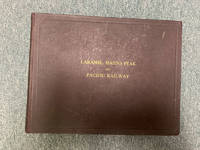
191048451Boston: Tudor Press n. d. ca 1910. 1910. RAILROAD WYOMING COLORADO UTAH. First and only edition. A special deluxe limited edition for presentation this being copy no. 479. Original oblong maroon boards with titles stamped in gilt on the front cover decorated front and rear endpapers n. p. 210 pp. 115 full-page photographs 85 pages of text one in-text map showing the route of the railroad and an elephant folio map coded in color showing the route from Laramie to Coalmont laid-in the front of the volume. The large folding map measures 65.4 x 90 cm 25 3/4" x 35 1/2" with a scale of about 14 miles for 1 inch. This large and handsomely produced volume was likely published for the purpose of luring potential investors into view the Company's operations. Having also the recipient's name in autograph and presented with the compliments of the railroad. This unusual and most remarkable album amounts to what can honestly be described as an extensive visual history of the development of the Laramie Hahns Peak and Pacific Railway System with much material on the region through which it passed including photographs of the people the industries the immense natural resources available to them the construction of dams and canals farming mining ranching lumbering etc. The text and captions emphasize the prospects for further development with much important information both textual and visual on Laramie Steamboat Springs Hayden Vernal Meeker etc. We find no note of this edition nor even the title of this edition in Howes or Graff. The Eberstadts had a so-called trade edition with no mention of the splendid map nor the presentation leaf. Overall an album of immense importance beauty and rarity especially having the large folding map. Minor wear to the corners else a near fine tight copy housed in a cloth slipcase with leather spine label and titles stamped in gilt. Map fine. Tudor Press, n. d. (ca 1910). hardcover
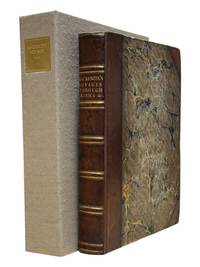
18019122London: Printed for T. Cadell Jun. & W. Davies; Cobbett & Morgan; and W. Creech by R. Noble 1801. First edition. 4to 4 viii 412 2 errata cxxii pp with "General History of the Fur Trade" following the Voyages section and errata leaf. Complete with half title often lacking frontis portrait three large folding engraved maps. Fine 1/2 polished calf tooled in blind and lettered in gilt on spine marbled boards endpapers and page edges. Few stains and foxing to prelims most notably at the inner margin of the frontis and title pages. Otherwise scattered light foxing mainly marginal and more pronounced on the final dozen leaves or so. Maps quite nice with typical offsetting from folds some foxing and toning. A very good copy in attractive binding housed in a custom oatmeal cloth Solander box lined with green felt gilt spine label. <br /> <br /> A cornerstone work on early Pacific Northwest exploration being the first account of crossing the continent from ocean to ocean by a white man some dozen years before Lewis and Clark. This text also represents the first published account of the fur trade which was attributed to Roderick Mackenzie. A nice copy in attractive binding. <br /> <br /> Howes M 133. Sabin 43414. Streeter 3653. <br /> <br /> <br /> . Printed for T. Cadell, Jun. & W. Davies; Cobbett & Morgan; and W. Creech, by R. Noble unknown
1798205561798. Very good condition. Scarce copper engraved proof plate for a very early image of Canada's British Columbia coast depicting First Nations people and their village as encountered by Captain George Vancouver. This is a proof for plate IV Volume I of George Vancouver's Voyage 'A Voyage of Discovery to the North Pacific Ocean and Round the World; in which the Coast of North-west America has been Carefully Examined and Accurately Surveyed .'. <br /> <br /> Vancouver's voyage was intended to ensure Britain's hold on territory on the Northwest coast of North America and to search for the Northwest Passage. Vancouver who began his career sailing under Capt. Cook explored the mouth of the Columbia River Vancouver Island and Puget Sound. <br /> <br /> There were no commissioned artists on the voyage; Thomas Heddington 1776-1860 was one of four gifted crewmen who made drawings of the new territory. A midshipman on the ship Chatham Heddington's view shows a tree covered hill with the village at the top with wooden fish drying structures on the slope and with First Nation people in canoe on the water. Bute's Canal is now known as Bute's Inlet about 125 miles from Vancouver on the southwest coast of British Columbia. <br /> <br /> Vancouver describes the scene depicted here: ". fires of the natives had been observed on entering this canal; which I distinguished by the name of 'Bute's Canal'. Here was found an Indian village situated on the face of a steep rock containing about one hundred and fifty of the natives some few of whom had visited our party on their way up the canal and now many came off in the most civil and friendly manner with a plentiful supply of fresh herrings and other fish which they bartered in a fair and honest way for nails". <br /> <br /> The drawings were later revised by William Alexander to illustrate Vancouver's Voyage. The original ink and wash sketch for this proof plate sold in Vancouver in 2012 for $55000 Heffel Fine Art Auction House May 17 2012.<br /> <br /> The proof plate printed on tissue paper laid on to India paper. Image size 13 1/2 x 10 1/2". Full paper size 17 1/4 x 12". Two faint diagonal creases upper left side.<br /> <br /> with the printed edition of the print titled 'Village of the Friendly Indians at the entrance of Bute's Canal'. "W. Alexander del: from a Sketch taken on the Spot by T. Heddington" and "J. Landseer sculp" printed below the image. London published May 1st 1798 by R. Edwards New Bond Street J. Edwards Pall Mall & G. Robinson Paternoster Row. 11 1/2 x 9 1/4". Both images in very good condition. unknown
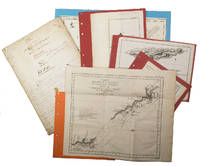
1755ABC_474521755. Manuscript of 24 pages 6 printed maps on cardboard. This wonderful logbook details the journey of a French captain from Manila to the Maluku Islands in todays Indonesia. The journey took place during the months of March to May of 1755. The captain of the ship recounted with great detail the events of every day of the journey with detailed daily accounts of the weather winds manoeuvres of the ship its departures anchorages and precise coordinates at every point of the journey. The captain furthermore had a keen eye for the geographical and nautical details along the journey. He recounted the exact locations of for example sandbanks and bays where ships and their crews can take provisions and fresh water. The accounts are detailed and captivating: "After our boats were back on board we set sail . in the afternoon to moor under the old Portuguese fort on the Solor island Indonesia the winds for the tide were fresh at 1:34 a.m. . sand and gravel and then I went back to mooring. The pavilion of the fort . the village is under the said fort at 3 cables from us .". The captain goes on to describe the geographical features of the islands as well as other places en route with great detail. Curiously we find inscriptions in Spanish and the names of one don Phelipe Qui who describes himself as el piloto and one Padre Don Estevan de Melo. The latter might be identical with Don Estevan Roxas y Melo a native of Lima Peru and secretary to the Archbishop of Manila Rodriguez since 1736. Roxas y Melo was part of the 1751 reconstruction of the Cathedral of Manila working under the auspice of the Italian architect Juan de Uguccioni.The logbook comes with six printed maps partly illustrating the journey of the captain pasted on contemporary cardboard. They depict the Bay of Sulavesi with the city of Bantang Pitcairn the coast of New Guinea the coast of Queensland the Santa Cruz Islands in the present-day Solomon Islands and Alejandro Selkirk Island. The plates stem from the French translation of James Hawkesworths An Account of the Voyages Hawkesworth Relation des voyages entrepris par ordre de sa Majesté Britannique actuellement regnante; pour faire des découvertes dans l'hemisphère meridional Paris 1774.Some holes on the first sheet not affecting the text. Small water damage some slighlty affecting the text. Remnants of seals on last page. Otherwise in good condition. unknown
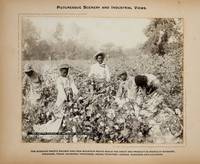
1900373823St. Louis 1900. 34 photographs mounted recto and verso on 17 cards with printed album title on each the images captioned in the negative on linen guards. Oblong small folio 10-1/8x12-1/2 inches. Contemporary half calf and cloth covered boards titled in gilt on the upper cover leather perished contents loose. The images generally dark printings in good condition. Provenance: Battery Park Hotel Asheville NC presentation in gilt on the upper cover from H. C. Townsend Gen'l Pass'r and Ticket Agent St. Louis. 34 photographs mounted recto and verso on 17 cards with printed album title on each the images captioned in the negative on linen guards. Oblong small folio 10-1/8x12-1/2 inches. The images by an unindentifed photographer comprise lovely compositions of buildings and scenes along the route in Missouri Kansas Nebraska and Arkansas. OCLC locates only a single example at University of Texas Austin. unknown
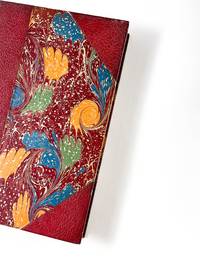
188553538Paris: Imprimé pour Isadore Liseux et ses amis 1885. First edition thus. Near fine. First vernacular translation of these suppressed Latin elegies that include the most explicit poetic expressions of homosexual desire of the Italian Renaissance. The HECATELEGIUM was first published in Florence in 1489 by a poet so notorious for his open homosexuality that Machiavelli named him in a 1501 letter as one of those poets who would have been burned at the stake had they not been protected by powerful cardinals "qui nisi haberent refugium in asylum nunc huius nunc illius Cardinalis combusti iam essent". Massimi's fame during his long life was nearly extinguished over the centuries of suppression and silence that followed which saw a heavily bowdlerized edition of the HECATELEGIUM published in Parma in 1691 and this privately printed edition in French and Latin only in 1885 the first uncensored edition since 1523. Though the Latin of this edition is complete certain obscene Latin words are printed in Greek rather than French in the facing translation still deemed too filthy to be read by anyone without a protective classical education. Undertaken by the shadowy publisher Antoine-Isidore Liseux 1835-1894 it was printed in Liseux's elegant typographical style in a "private" edition of 120 copies. Rare and important. 9.75'' x 6.5''. Later three-quarter cherry-red calf over marbled boards signed "Canape Belz" with matching marbled endpapers. Edition of 120 copies this copy no. 80. Text in French and Latin. xvi 354 2 pages. Minor rubbing to extremities. Old shelf label removed from head of spine. Else bright clean and sound. Imprimé pour Isadore Liseux et ses amis unknown
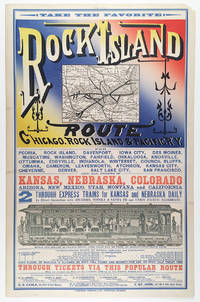
5510Chicago: Cameron Amberg & Co. Printers ca. 1880. Illustrated chromolithographic broadside with map 21.25†x 13.125†plus margins inset map measuring 4.5†x 5.875†illus. measuring 3.25†x 12.5â€. CONDITION: Very good margin chipped at upper right corner a few minor stains. <p>A rare and striking broadside issued by the Chicago Rock Island & Pacific Railway advertising the Rock Island through-express route and promoting the railroad’s numerous destinations connections and amenities.</p> <p>Featuring the eye-catching mix of typefaces and colors that characterized railroad advertising in this era this attractive broadside promotes the numerous midwestern stops and destinations accessible via the Chicago Rock Island & Pacific R’y. At this time two through-express trains for Kansas and Nebraska ran daily in connection with the Atchison Topeka & Santa Fe and Union Pacific railroads. As noted here meals were served in palace dining cars for seventy-five cents each and 150 pounds of baggage were allowed on each full ticket and seventy-five pounds on each half ticket free. The line’s various destinations included Iowa City Council Bluffs Denver Salt Lake City and San Francisco as well as “all points in Kansas Nebraska Colorado Arizona New Mexico Utah Montana and California.â€</p> <p>Showing the Rock Island R.R. in bold the inset map spans from Chicago and Lake Michigan in the east to Omaha and Council Bluffs in the west and reaches from St. Paul in the north to St. Louis and Kansas City in the south—with Lake Michigan lying in the upper-right corner. One axis of the line extends from Milwaukee and Racine Wisconsin to Leavenworth Kansas and another stretches from Chicago to Omaha. Various spurs connect to both.</p> <p>The lower section of the broadside features a marvelously detailed illustration of the interior of a palace dining car showing numerous fashionably dressed passengers seated and dining among African American waiters who are shown in the small kitchen and serving food. In the far-right end of the train men are depicted in drawing rooms—reading newspapers and smoking—and various railway operators and ticket-men appear at the ends of the car. Also included is a table of connections with various railroads that could be made in “Union depots.†Through-tickets via this route could be found on sale at all coupon offices in the U.S. and Canada. Those seeking additional information folders maps and times-tables are encouraged to contact any of the ten agents and managers of the Rock Island R.R. listed at the bottom who were based in New York Toronto Philadelphia Chicago etc.</p> <p>Established in 1847 as the Rock Island & LaSalle R.R. the company was reincorporated in 1851 as the Chicago & Rock Island R.R. Co.—its rails during this period reaching to Morris Illinois and later Ottawa. After acquiring the Mississippi & Missouri R.R. in 1866 the company was renamed Chicago Rock Island & Pacific R.R. Co. Expanding between 1873 and 1882 the company built more branch lines that reached into Iowa as well as Kansas City. In 1880 the firm was reorganized under the name Chicago Rock Island and Pacific R’y Co. and by 1883 extended nearly to the southern boundary of Kansas. After Congress granted passage across Indian Territory in 1887 the Rock Island R.R. began developing through Texas to Galveston as well as New Mexico Territory. During the 1920s the railroad enjoyed considerable success. In 1926 the company began constructing a freight line between Amarillo Texas and Liberal Kansas which was finished in 1929 and served to make accessible a country of rich grain. While the railroad industry continued fairly steadily through 1930 between 1931 and 1935 the Depression took a toll on the Rock Island R.R. and went into decline. The company ceased operation in 1980.</p> <p>OCLC records just one copy held at Yale.</p> <p>REFERENCES: “Chicago Rock Island and Pacific Railway Records†at Kansas Historical Society online.</p> Chicago: Cameron, Amberg & Co., Printers, [ca. 1880] unknown
19048792San Francisco: Whitaker & Ray Company 1904. First Edition. Hardcover. Good. Whitaker & Ray Company San Francisco 1904. First Edition. Covers reinforced at the outer edges and spine with white tape. First free end-paper missing. Front hinge separated from the text. Moderate foxing to a few pages most pages clean and bright. -- A Juvenile book of jingles characteristic of the west. Contains jingles on such subjects as the Chinaman Cliff House Golden Gate Park etc. Beautifully illustrated by 19 full page seven color litho-prints. -- One edition published in 1904 in English and held by 2 libraries worldwide. Size: Quarto. 39 pages not numbered. -- Condition:. Whitaker & Ray Company hardcover
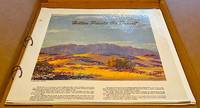
196010179Place of publication unknown: Self Published 1960. Deluxe Limited Edition. Very good . Oblong Folio 20" by 16". Heavy plastic overlay with title "Hilton Paints the Desert" stiff rear board. -- Introduction page with limitation inscription at the bottom in the author's hand: and his signature; "Number 52 of a deluxe edition of 350 for Leo and Irene Moore with best wishes". -- Condition. Twenty Seven Prints some duplicates twenty-five signed two not signed. Some prints signed in silver and some in regular ink. --: Hills of Home 3 - Joshuas in the Moonlight 2 - Oasis Mara 3 - Papago Dawn 3 - Power and Glory 3 - Red Mountain 2 - Smoke Trees and Thunderheads 2 Superstition Spring 1 - Sands of Tim 3 - San Jancinto Sunrise 3 - Wickenburg Yuccas 2. Self Published unknown
1908138240High Bluff Manitoba: Edwin C. Blair c1908. Undetermined. very good. 24pp. Oblong quarto. Black cloth photo album rubbed with some loss of cloth on front board. Spine reinforced with additional patterned cloth. 24 albumen photographs loosely inserted between 12 double-mounted leaves. 10 photos are signed "Blair" a few with additional titling in pen to photo. 23 photos with a stamp on verso: "Real photographs of real life in Canada by Edwin C. Blair High Bluff Manitoba; 1 photo stamped "Photo by E.C. Blair. Two photos are dated 1908. Photos measure approximately 6.75" X 5". very good A fantastic collection of photographs documenting the construction of the Grand Trunk Railway in Alberta. Includes a variety of subjects such as horse-drawn lumber operations steam-powered construction equipment hard rock excavation construction of the Battle River and Clover Bar bridges steam locomotives and camp life. 1908 Edwin C. Blair unknown
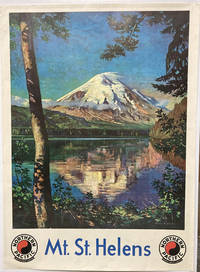
193249308N. P.: Published for the Northern Pacific Railway Company n. d. ca 1932. 1932. Color illustrated poster 40" x 30" after the painting by Gustav Wilhelm Krollman with his name and "Cascade Mountains State of Washington U.S.A. Northern Pacific Railway" in print. This striking vintage travel poster shows a view of Mount Saint Helens with its reflection in Spirit Lake many years before its dramatic eruption in 1980. Starting in the late 1920s Austrian-born artist and commercial illustrator Gustav Krollman produced a series of scenic paintings for the Northern Pacific. This view of Spirit Lake and Mt. St. Helens was one of the few that did not have a locomotive in it. Colorful original mounted poster with a tiny pinhole in each corner else in fine condition. Suitable for framing. Published for the Northern Pacific Railway Company, n. d. (ca 1932). unknown
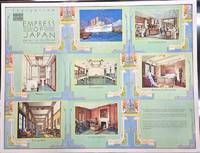
1930P2531Montreal: Canadian Pacific c. 1930. Very Good; laid down on acid-free canvas for long-term preservation. Image Size : 685x908 mm 26.97x35.75 Inches Platemark Size : Paper Size : 724x948 mm 28.50x37.32 Inches Coloring: Printed in Color Medium: Lithograph Categories: Advertising; Transportation Ships; Posters; Canadian Pacific unknown
1860100432Large thick 4to contemporary calf spine and tips with marbled boards 70 very attractive color lithograph plates 358 41 pp. Extremeties worn minor aging one map has tear in lower corner plates bright and clean. The Pacific Railroad Surveys 1853-1855 explored possible routes for a transcontinental railroad. However the surveys went beyond looking for a place for a railroad they included and incredible amount of information on natural history and the peoples that inhabited the areas where the surveys explored. Representing the first part of the final volume of these surveys this installment focused on the northern route for a railroad. The 12 volumes included in these surveys is also known for rich illustrations many of which were in color. With 70 color plates one folding and three folding maps in Volume XII part 1 this edition is particularly rich in illustration and the plates are bright and clean. Thomas A. Ford hardcover
elala2550Montreal: Canadian Pacific Railway 1912. Descriptive timetable of the western Canadian tour from Toronto to Vancouver and back by rail and steamship by the new Governor-General of Canada H.R.H. Prince Arthur William Patrick Albert first Duke of Connaught and Strathearn 1850-1942. The royal party consisted of the Duke and Duchess Princess Patricia two ladies in waiting Lt.-Col. H.C.Lowther Capt. T.H.Rivers 2 aides-decamp Major E.S.Worthington medical officer and Mr. W.R.Baker representing the CPR. The work is illustrated by photographic based views of the countryside and cities of western Canada. This would appear to be one of a limited number of copies specially bound for presentation. No records have been located. Prince Arthur Arthur William Patrick Albert first Duke of Connaught and Strathearn was posted to Canada on military duty in 1869-70 serving during the Red River Rebellion and the Fenian Raid of 1870. In 1911 he was appointed Governor-General of Canada a position he held until 1916. Not in Peel or Edwards and Lort. Not found in the Amicus data base Library of Congress or British Library catalogues. No copies found in the Canadian auction records. narrow 8vo. pp. 3 p.l. 89. printed in red & dark brown ink. 26 plates. bound for presentation to H.R.H. Prince Arthur third son of Queen Victoria and H.R.H. Albert in full padded dark green sheep gilt title on front cover with mounted colour royal coat of arms gilt inside dentelles all edges gilt dark green watered silk endleaves spine damaged & with 3 cloth tape repairs corners worn internally very good [Montreal: Canadian Pacific Railway], 1912 hardcover
199539280San Francisco CA: Pacific Book Auction Galleries /PBA Galleries. New. 1995. Paperback. FREE UPGRADE to Courier/Priority Shipping Upon Request IN STOCK AND IMMEDIATELY AVAILABLE FOR SHIPMENT - FLAWLESS COPY PRISTINE BRAND NEW - 214 lots none illustrated -- with a bonus offer-- . Pacific Book Auction Galleries /PBA Galleries paperback
200025757San Francisco CA: Pacific Book Auction Galleries /PBA Galleries. New. 2000. Paperback. FREE UPGRADE to Courier/Priority Shipping Upon Request - IN STOCK AND IMMEDIATELY AVAILABLE FOR SHIPMENT - FLAWLESS COPY BRAND NEW PRISTINE NEVER OPENED -- with a bonus offer-- . Pacific Book Auction Galleries /PBA Galleries paperback
199912806San Francisco: Pacific Book Auction Galleries / PBA Galleries. New. 1999. Paperback. FREE UPGRADE to Courier/Priority Shipping Upon Request - IN STOCK AND IMMEDIATELY AVAILABLE FOR SHIPMENT - -- Like new condition. Softbound auction catalogue. 8vo - over 7¾" - 9¾" tall. Interior text is clean tight and unmarked. Pages are intact and tight to the spine. -- with a bonus offer-- . Pacific Book Auction Galleries / PBA Galleries paperback
199737988San Francisco CA: Pacific Book Auction Galleries /PBA Galleries. New. 1997. Paperback. FREE UPGRADE to Courier/Priority Shipping Upon Request IN STOCK AND IMMEDIATELY AVAILABLE FOR SHIPMENT - FLAWLESS COPY BRAND NEW PRISTINE NEVER OPENED 427 lots a number of which are illustrated in black and white. -- with a bonus offer-- . Pacific Book Auction Galleries /PBA Galleries paperback
199717499San Francisco CA: Pacific Book Auction Galleries /PBA Galleries. New. 1997. Paperback. FREE UPGRADE to Courier/Priority Shipping Upon Request - IN STOCK AND IMMEDIATELY AVAILABLE FOR SHIPMENT - FLAWLESS COPY BRAND NEW PRISTINE NEVER OPENED -- with a bonus offer-- . Pacific Book Auction Galleries /PBA Galleries paperback
199626416San Francisco CA: Pacific Book Auction Galleries /PBA Galleries. New. 1996. Paperback. FREE UPGRADE to Courier/Priority Shipping Upon Request - IN STOCK AND IMMEDIATELY AVAILABLE FOR SHIPMENT - FLAWLESS COPY BRAND NEW PRISTINE NEVER OPENED -- with a bonus offer-- . Pacific Book Auction Galleries /PBA Galleries paperback