HIROSHIGE, Ichiryusai IIIBiblio.com

6 096 résultats
99001601Edo 1891. A brocade silk covered album Oban size all edge gilt with a total of 65 fine color prints including 2 title pages one dedication printbook size 24.5 x 35.5 cm. 4.15 cm. thick. A stunning group famous sights. R A R E ! . . . A STUNNING EXAMPLE WITH A SIXTY-FIVE . . . COLOR WOODBLOCK BLOCK PRINTS . . . BY THE MASTER OF JAPANESE LANDSCAPE . . Hiroshige II 1826-1869 and III 1843-1894: Were one in the same a pupil of the most famous and great master of landscape & composition Ando Hiroshige I. . Using his master's name plus his old name Ichiryusai he was the adopted son of Hiroshige I and was a very skilled painter who actually painted alongside & with the master until his master's death in 1858. . After that Ichiryusai specialized in Japan's modernization railroad prints depicting these new innovations recently imported from the West around Yokohama as well as issuing many series of beautiful landscape views and scenery. . In his later years he executed a most beautiful and exquisite set of his own interpretation of his master's most well-known series of prints showing Mt. Fuji and the celebrated places around Edo. This was not done to merely copy the master's works but rather as a sincere Confucian tribute to his adopted father & now father-in-law and master. He married his master's daughter. . He took each of the master's views & repainted them in pastel colors with great control & precision. Some of the more delicate places such as rainbows and clouds behind a flock of birds were actually brushed on by hand a technique rarely ever done. The woodblocks used were of the highest quality a majority of which were center cuts & these have left a most beautiful wood-pattern in the print. This example shows 28 prints from the Fuji Sanju Rokkei and 35 from the Edo Yonju Hakkei series with the title page from each present. . There is a dedication & memorial print to Hiroshige I from his faithful son and pupil. This print is most similar to one found as the frontispiece to the book by E. F. Strange: THE COLOR PRINTS OF HIROSHIGE London 1925. . It's clear that this print by Kunisada who is Toyokuni I was used as a model by Ichiryusai as it differs in what the master is holding. Kunisada shows him holding his rosary beads while Ichiryusai shows the master with his Fude brush pen and paper in hand. Ichiryusai and Kunisada had collaborated to issue a series of 36 prints: EDO JIMAN or THIRTY-SIX PLACES OF WHICH YEDO IS PROUD. . Ichiryusai has taken much care to represent the most wonderful views of Mt. Fuji & Edo with great skill. A majority of these prints are certainly well-known to the art world at large as well as by Japanese print collectors. . Many of these prints show up in the usual reference books. Some of the more famous Edo views are showing a falcon in winter rain on the river bridge storks cat view in Asakusa busy street scenes Asakusa temple & lantern in snow river scenes &c. . Some Mt. Fuji views show many snow scenes seasonal views cherry blossoms a majority show water and mountains a very charming set of prints. . Alternate title is MEISHO EDO HYAKKEI. . THE BINDING: This stunning album is beautifully bound in traditional silk-gilt brocade with prints on both sides of an accordion folded album. . Color photos are posted to our website. . REFERENCES: . L. Roberts: A DICTIONARY OF JAPANESE PRINTS ARTISTS p.44-45 for background on Hiroshige III & III. E. F. Strange: THE COLOR PRINTS OF HIROSHIGE R. Lane: IMAGES FROM THE FLOATING WORLD p.232-254 most all of the prints in this album are listed under Hiroshige I's series: MEISHO EDO HYAKKEI: ONE HUNDRED FAMOUS VIEWS OF EDO. . . unknown
2092902141600218Tsuta kichi ita N.A. Soft Cover. Fine. Size: 70cm width 69.5cm Number of books: 1 Tsuta kichi ita paperback
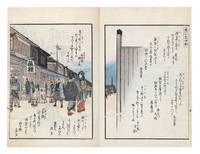
1107625 finely color-printed double-page woodcuts. 25.5; 15; 21.5 folding leaves. Three vols. 8vo orig. semi-stiff wrappers orig. block-printed title-slips on upper covers new stitching. Edo: 1853-54.<br /> <BR> <BR> First edition of this finely illustrated book which rarely appears complete in all three volumes. The “KyÅka Edo Hanabi SenryÅ has sub-titles that show the sort of specialization that was associated with the three leading Utagawa artists. Volume One by Hiroshige entitled ‘Nihonbashi Section’ consists mainly of views of central Edo figures in some prints threading their way through the hanging curtains of calligraphy showing the second floor of a brothel; Volume Two by Kuniyoshi related to the ‘licensed quarter’; and Volume Three by Kunisada = Toyokuni san sei to ‘theatre-land’.â€â€“Hillier The Art of the Japanese Book p. 848 & image 559.<br /> <BR> <BR> At the time of publication these three members of the Utagawa school were at the pinnacles of their careers. The color-printed illustrations depict the fish markets of Nihonbashi the pleasure quarter of Yoshiwara and the backstage preparations in a kabuki theater. The witty and humorous kyÅka poetry appears with the images.<br /> <BR> <BR> Fine and fresh set preserved in an attractive modern chitsu. In the first volume the first 13 leaves have a wormhole maximum 50 mm. in length and becoming shorter as one progresses. This wormhole expertly repaired throughout is present in the woodcuts. unknown
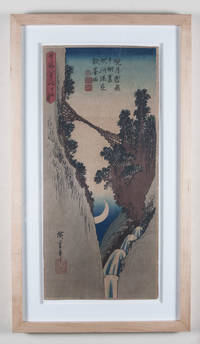
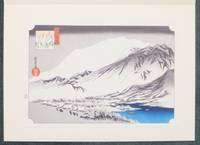
44873ca. 19th century. Later printing. Color woodblock print O-tanzaku format. 15 x 6 3/4" in a wooden frame with a white mat. This is one of only two known prints from a series titled "Twenty-Eight Moonlight Views." It is thought that the series was never completed and these are the only two that exist. Scarce. unknown
18822110502150903343Okura Shirobe version 1882. Soft Cover. Fine. Number of books: 3 Okura Shirobe version paperback
18592091202133206168Not Available 1859. Soft Cover. Fine. Volume: 1 Not Available paperback
18882092902138300158Kumajiro Fukuda: Edition 1888. Soft Cover. Fine. Size: 72x48.5cm Kumajiro Fukuda: Edition paperback
2110502150909151Zanmaido N.A. Soft Cover. Fine. Number of books: 2 Zanmaido paperback
18552111902160200833Not Available 1855. Soft Cover. Fine. Number of pages: 86 pages Size: 22.5 cm x 15.5 cm 86 pages Number of books: 1 book Not Available paperback
2092902138300577Nihonbashi Yorozu board N.A. Soft Cover. Fine. Number of books: 19 Nihonbashi Yorozu board paperback
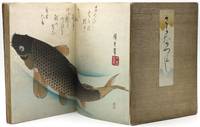
191110476Tokyo: Daikokuya 1911. Second-hand hardcover. <p>Hiroshige Utagawa artist Uozukushi Every Variety of Fish. Reprint Daikokuya: Tokyo Meji 44 1911. 240x175mm cloth bds lepperollo oblong colour wood block prints 240x350mm In Japanese. Near Fine</p> <p><br /> <br /> æŒå·åºƒé‡ HIROSHIGE Utagawa born AndÅ TokutarŠ安藤 徳太郎 1797-1858<br /> <br /> ã•ã‹ãªã¤ãã— Uo Zukushi Shoal of Fishes<br /> <br /> Tokyo : 大黒屋 Daikokuya Meji 44 1911. First and only edition thus; illustrations first published TenpÅ 3-4 1832-3 and TenpÅ 11-13 1840-42<br /> <br /> 240x175mm tatami mat style boards illustrated colour title label accordion or lepperello folding horizontal chÅ«ban album cream handmade paper seven nishiki-e woodblock engraved illustrations with kirazuri silver mica decoration. Boards faintly soiled edges lightly frayed; hinges fragile first fold neatly split; remnants of bookseller ticket to front paste-down; faint age toning and soiling not affecting the illustrations.<br /> <br /> ¶ Hiroshige is widely considered the last of the grand master printers of the Ukiyo-e tradition. In 1832-4 TenpÅ 3-4 he produced a series of ten illustrations of fish with accompanying culinary herbs and vegetables together with poems published by Eijudo. A decade later a series of a further ten illustrations were produced by Yamasho. The illustrations were then reproduced commercially bearing publisher and censor stamps. Together the two untitled series are known as "Large Fish" or "Shoal of Fishes" or "Every Variety of Fish". <br /> <br /> The illustrations here are a selection from both series: Carp Koi swimming amongst reeds circa 1840-42 TenpÅ 11-13 poem by Makuzu; Abalone Awabi or Tokobushi Needlefish Sayori and Peach Blossoms circa 1832-3 TenpÅ 3-4 poems by Kumogaki Fujimi and Miwagaki Mimiki; Black Sea Bream Kurodai Small Sea Bream Kodai Asparagus shoots and Japanese Peppercorns Sansho circa 1832-33 TenpÅ 3-4 poems by Tomigaki Uchiyasu and Echigo Kawabukuro Kaôan hôshi Kaôan hôshi from Kawabukuro in Echigo Province; Lobster Ise ebi and Prawn Ama ebi circa 1832-33 TenpÅ 3-4 poems by Shimotsuke Edozaki Ryokujuen Motoari Ryokujuen Motoari from Edozaki in Shimotsuke Province and Nen'an Machikado; Flying fish Tobiuo White Croaker Ishimochi Guchi or Shiroguchi and a lily circa 1840-42 TenpÅ 11-13 poem by Toshigaki Maharu; Gurnard Kanagashira Right-Eye Flounder Konoa-garei and Bamboo Grass Sasa circa 1832-33 TenpÅ 3-4 poems by Shimotsuke Edozaki Ryokujuen Motoari Ryokujuen Motoari from Edozaki in Shimotsuke Province and Jakuyakutei Chikuson; and Japanese Sea Perch Suzuki and Red Bream Kaneme-tai and shiso leaves circa 1840-42 TenpÅ 11-13 poem by Atsugaki. <br /> <br /> To the front paste down is a calligraphic inscription 御ã†ã¤ãã—ã¿ã®æ³¢ Waves of Imperial Beauty by Maresuke Nogi 1859-1912 a Meiji era career military man in the Japanese Imperial Army. A general in the first Sino-Japanese War 1894-5 the invasion of Taiwan and the Russo-Japanese War 1904-5 he was feted as a national hero for his role in the capture of Port Arthur. He was also a man of letters and a renowned Kanshi poet a form of Han Chinese poetry popular amongst the Japanese elite during his life. Several of his poems were very popular during the early decades of the Twentieth century. In 1912 Nogi and his wife committed ritual suicide by seppuku shortly after the death of Emperor Meiji in accordance with the samurai practice of following one's master into death. At the time Nogi became a public symbol of loyalty and sacrifice and there are several Shinto shrines to his memory in Tokyo and Kyoto.<br /> <br /> Daikokuya was a multi-generational publisher of ukiyo-e prints illustrations and later illustrated books from 1764-1931 in Edo/Tokyo. Artists published during the nineteenth century include Utagawa Hiroshige. Daikokuya were quite successful during the late Meji era publishing many illustrated works relating to the Russo-Japanese War; perhaps explaining the inscription by Nogi.<br /> <br /> Rare. A lovely copy.<br /> <br /> § OCLC records no holdings. NIJL holds one copy.<br /> <br /> </p> Daikokuya unknown
18302110502150906851Hoeidoban 1830. Soft Cover. Fine. Number of books: 1 Hoeidoban paperback
39332Prints. From the collection of a prominent Central New York family. Comprises twenty-five woodblock prints including a complete triptych. They feature Kabuki theater scenes; New Year's celebration; view no. 10 from the series Harimaze Pictures of the Tokaido; No. 29 Hashidate from the series An Excellent Selection of Thirty-six Noted Courtesans; samurai warlords; No. 40 from the series Magic Lantern Slides of That Romantic Purple Figure and more. Size varies but most are roughly 25 x 35 cm. Overall condition is good/very good. Please refer to scans for each print condition. Prints come in sleeves with acid free backing boards. Set may require extra postage. unknown
19640049822 Hitotsubashi Kanda Tokyo Japan: Shuei-Sha Publishing Co Ltd 1964. Limited Edition . No Binding. Near Fine. Elephant Folio - over 15 - 23" tall. Ando Hiroshige. In white vinyl clamshell box titles to top cover and spine in blue inks. 24 superbly printed colour plates loose as issued each mounted in a paper folder with plate number and title in green to lower corner plates are bright and unmarked 3735 cm either folio or oblong with a 4 pp red paper contents list and a 20 pp cream loose folder containing an introduction biography and plate listing with description in both Japanese and English. Titles include Soto to Uchi Tokaido 53-Tsugi No Uchi Kiso Kaido 69 Tsubaki ni Kotori etc. Housed in a cardboard boz with corners gone titles to spine and top cover. Stunning colour plates! These 24 plates make up the Hiroshige 24 Masterpieces which were part 4 of a broader set of Japanese woodblock illustrations. Utagawa Hiroshige was a Japanese ukiyo-e artist and one of the last great artists in that tradition. He was also referred to as Ando Hiroshige an irregular combination of family name and art name and by the art name of Ichiyusai Hiroshige. See Wiki for a full Bio. <br/> <br/> Shuei-Sha Publishing Co Ltd unknown
27050601Edo 1865 Kinrin Do. Blue stiff covers accordion folded very clean bright example without flaw folds down to 12.2 x 18.3 cm. opens to a large 120.8 x 37.7 cm. published Keio 1st year = 1865. RARE FIRST & ONLY EDITION BRILLIANT EXAMPLE . . . HIROSHIGE'S STAR PUPIL AND SON-IN-LAW'S SUPERBLY . . . IMAGINATIVE BIRD'S EYE VIEW MAP OF JAPAN . . . WITH NAMES OF CITIES & VILLAGES CITED . . . A MARVELOUS COLOR WOODBLOCK PRINTED MAP UTAGAWA Hiroshige II aka. Kisai Rissoh 1826-1869: He was Ni-daime 2nd generation Japanese designer of Ukiyo-e art. He inherited the name Hiroshige II following the death in 1858 of his master Hiroshige I whose daughter he married. . In 1865 he moved from Edo to Yokohama after dissolving his marriage and began using the name Kisai Rissho alternate pronunciation Ryusho. His work so resembles that of his master that scholars have often been confused. . Ryusai used many Go studio names but after taking over from his master he favored Ichiryusai Kisai Yusho Rissho and the bewildering Shigenobu his first Go. He most likely assisted his master in the last few years of his life. Roberts devotes a long entry to him see below. He is well collected by world museums. . THE MAP: The map is signed Kisai Ryuushoh/Risshou. . The map is bound in its original reverse embossed swastika designs on blue paper. It is according folded in half then in 9 folded parts as issued. The map is undated but has a Kiwame censor's seal indicating a date range of on the right edge of the first page. Places of interest and milage distances are cited at the top of the map similar information is at the bottom on the first & last pages. On the last page far left is a red cartouche with the name and address of the publisher. . CONTENTS OF THE MAP: . The map is executed in pastels for the ost part except for the bright red boxed indicating larger more important places and smaller yellow boxes for villages. Even smaller places are simply noted by written names. . The work covers all of the major Japanese islands Kyushu in the south Sado to the west Hokkaido to the north. . The area around each ocean is a atender blue fading to the background paper color. Dark blue indicates deep ocean dark green indicates trees pale green mountains brown and gray for baron lands. Small pagodas with blue roofs are shrines castles indicated by name in yellow boxes other shrines and holy sites again in blue. Rivers in blue small ships ply the waterways . The work has an overall charm with a pleasant view with a command of all areas from far above in the uniquely Japanese period "Bird's Eye View." . DATE: The map was printed in Keio 1st year=1865. . CONDITION: The map is in its original front & back paper covers with a later brushed title slip. . The map is beautifully printed with fine registry and excellent impression soft tender pastels. . The hinges are firm with a couple of tiny Washi paper mends to double-folded areas else back is clean overall very soild and firm. . There are no marks stains or worm holes. By and large an excellent example in the best of condition. . REFERENCE: . KOBE CITY MUSEUM. KOBE SHI RITSU HAKUBUTSU KAN.: AKIOKA KO CHIZU KOLEKUSHYON MEI HIN TEN: EXHIBITION OF THE AKIOKA COLLECTION OF FAMOUS OLD MAPS see p.66 plate #79 for this exact map & p.102 #79 for description & notes. ROBERTS Laurance P.: A DICTIONARY OF JAPANESE ARTISTS: PAINTING SCULPTURE CERAMICS PRINTS LACQUER. Listed on p.45. Lane Richard.: IMAGES FROM THE FLOATING WORLD The Japanese Print. D IN: KOBE CITY MUSEUM. KOBE SHI RITSU HAKUBUTSUKAN: EZU TO FUKEI E NO YONA CHIZU CHIZU NO YONA E: BETWEEN LANDSCAPE PAINTING AND PANORAMIC MAPS. . . unknown
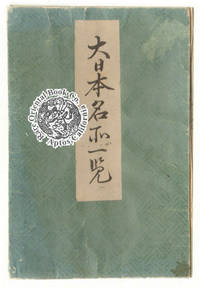
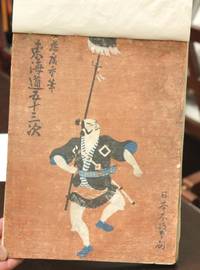
1890B6305Japan. c.1890. A very good example of this beautifully designed book. . Binding: period soft paper wrapper. Notes: The Fifty-Three Stations of the TÅkaidÅ is a series of ukiyo-e woodcut prints created by Utagawa Hiroshige after his travel along the TÅkaidÅ. The TÅkaidÅ road linking the shÅgun's capital Edo to the imperial one KyÅto was the main travel and transport artery of old Japan. It is also the most important of the "Five Roads" GokaidÅ—the five major roads of Japan created or developed during the Edo period to further strengthen the control of the central shogunate administration over the whole country. The Fifty-Three Stations of the TÅkaidÅ was such a popular subject that it led Hiroshige to create some 30 different series of woodcut prints on it all very different one from the other by their size Åban or chuban their designs or even their number some series include just a few prints.<br><br>Utagawa Hiroshige 1797 – 1858 was a Japanese ukiyo-e artist considered the last great master of that tradition. In terms of style Hiroshige is especially noted for using unusual vantage points seasonal allusions and striking colors. In particular he worked extensively within the realm of meisho-e pictures of famous places. During the Edo period tourism was also booming leading to increased popular interest in travel. Travel guides abounded and towns appeared along routes such as the TÅkaidÅ a road that connected Edo with Kyoto.<br><br> Size: Oblong quarto Illustration: Illustrated title and 56 full page landscape woodcut prints. Category: Book Asia Far East unknown
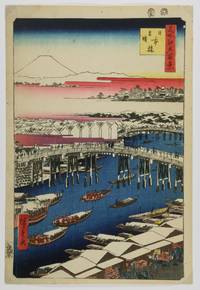
1850552891850. Broadside. Color woodblock print oban tate-e format. Measuring 14 1/4x 9 1/2" and mounted to white cardboard backing with plastic mounting tabs at the corners. Protected in plastic sleeve. This work is No. 1 from the acclaimed series "One Hundred Famous Views of Edo". Aratame seal in the top margin of the print. Print is very clean vibrant and sharp. 8 small holes along the very right edge of the print resulting in minor loss of the image. unknown
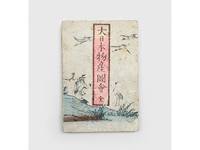
1877186040Tokyo: Okura Magobee 10 August 1877. Vivid scenes of industry from across Japan A striking set of prints produced at the time of the First National Industrial Exhibition 1877 an event designed to promote Japanese local craftmanship and encourage a growing export industry. This example shows tatami mat production in Bingo Hiroshima indigo farming in Awa Tokushima camphor logging in Hyuga Miyazaki and whaling in Iki Nagasaki. The First National Industrial Exhibition was held from 21 August to 30 November 1877 with a total of 16172 exhibitors showing 84353 items. "In anticipation of the event the government clearly stated its interest in encouraging the growth of export industries and requested that every prefecture in Japan participate in the exhibition suggesting that the domestic fairs were intended to provide a survey of the products and industries of the entire country and to offer a venue for assessing which of those products might be suitable for export" Lavenberg. At the same time Utagawa Hiroshige III 1842-1894 released approximately 120 prints showing local industries across Japan. He was known for his representations of Meiji period society and was one of the most popular artists of his age. Only 118 of the Dai nihon bussan zue prints survive representing 58 provinces. These were sold as individual sheets that could be bound into books with each book containing a different number and configuration of prints. The 30 prints in this example cover 14 provinces stretching from Hokkaido in the north to Hyuga in the south. The construction of the books mean that splits are often found along the central joints such as in the copy held by the British Museum 197307230.116. Octavo concertina-style. With 30 double-page colour woodblock prints; text in Japanese. Original patterned paper boards decorated with scenes of Japanese cranes red printed paper label on front board. Housed in grey archival box. Contemporary price sticker on one print. Boards a little creased and abraded prints bright with some light foxing in margins some split along central fold as usual: a very good example. "Dai Nippon Bussan Zue Products of Greater Japan 1877" The Lavenberg Collection of Japanese Prints 2018. hardcover
2092902138300939Takamizawa Mokuhansha N.A. Soft Cover. Fine. The book is in fine condition. Takamizawa Mokuhansha paperback
1970224245London: Robert Sawers 1970. Limited. hardcover. fine. Hiroshige. 1 page of introductory text by Jack Hillier followed by the collection of 21 finely printed plates each mounted with wheat paste and matted within an individual paper folder. The folders measure 9.5 x 13 inches and the prints are approximately 4.5 x 9.5 inches. 4to plates loose as issued in blue cloth portfolio with bone closures. London: Robert G. Sawers circa 1970. First and only edition -- number 15 of 250. A very fine unread copy as new in the original cardboard mailing box. Scarce.<br/> <br/> Intended for Edo era release these sketches were never published until Robert Sawers produced this rather lavish collection in the early 1970s. Strictly limited to 250 sets each print is numbered in pencil on rear of woodblock and rear of folder.<br/> <br/> Robert Sawers unknown
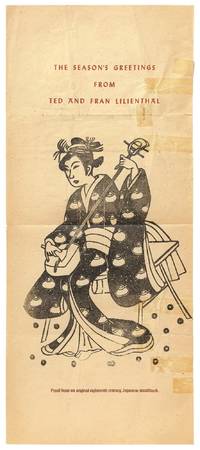
1940527378San Mateo California: The Quercus Press 1940. Unbound. Near Fine. First edition by this publisher. Pictorial broadside printed on recto only and folded twice horizontally as issued measuring 21 1/2 inches by 9 1/4 inches illustrated with a woodcut printed in black on recto only with lettering printed in red printed on laid paper with no watermark. Very good with glassine tape mends some foxing and tiny tears but the striking Japanese woodblock print is quite fresh and bright. The original woodblock print depicting a Japanese woman dressed in a kimono seated on a stool playing a musical stringed instrument. The woodblock image measuring circa 11 inches by 8 inches is printed by Ted and Fran Lilienthal at the Quercus Press from an original eighteenth century Japanese woodblock The upper and lower margins are printed in red with the following information: "Proof from an original eighteenth century Japanese woodblock" publisher's statement in lower margin beneath the woodblock print. The upper margin states: "THE SEASONS GREETINGS/ FROM/ TED AND FRAN LILIENTHAL." Unrecorded by OCLC which lists no citation for this publication.<br /> <br /> Theodore Max Lilienthal 1893-1972 in 1924 with Leon Gelber established the Gelber-Lilienthal Book Shop in San Francisco and a publishing company under the imprint Lantern Press. Mr. and Mrs. Theodore Max Lilienthal with Mrs. William C. Van Antwerp later established The Quercus Press in San Mateo California; in 1940 the press began using the Albion Press that once belonged to William Morris press was acquired from the estate of Dr. J. W. Bartlett of New York. Issued as a Season's Greetings from Ted and Fran Lilienthal. [The Quercus Press] unknown
19842080502106915144Not Available 1984. Soft Cover. Fine. The book is in fine condition. Not Available paperback
200161864Harry N. Abrams Distribution. New. 2001. Hardcover. 0810965763 . FREE UPGRADE to Courier/Priority Shipping Upon Request IN STOCK AND IMMEDIATELY AVAILABLE FOR SHIPMENT - Flawless copy brand new pristine never opened --160 pp. With 149 ills. 142 col. . 26 x 22 cm. -- with a bonus offer-- . Harry N. Abrams (Distribution) hardcover
2014111804Marsilio Editori. New. 2014. Paperback. 8831720120 . FREE UPGRADE to Courier/Priority Shipping Upon Request - IN STOCK AND IMMEDIATELY AVAILABLE FOR SHIPMENT - Flawless copy brand new pristine never opened - Text in Italian. -- with a bonus offer-- . Marsilio Editori paperback
2012104138Museum; Et Al. New. 2012. Hardcover. 2353401449 . FREE UPGRADE to Courier/Priority Shipping Upon Request - IN STOCK AND IMMEDIATELY AVAILABLE FOR SHIPMENT - Flawless copy brand new pristine never opened -- Text in French. 176 pages; many color illustrations. -- with a bonus offer-- . Museum; Et Al hardcover