HIROSHIGE, Ando I [Utagawa]Biblio.com
6 121 résultats
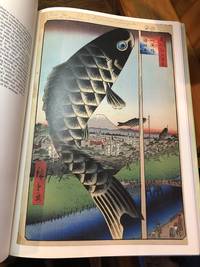
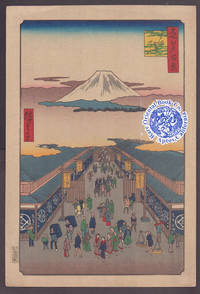
44025801Tokyo n.d. ca 1920's.A color Oban woodblock print sheet: 25 x 37 cm. print: 21.7 x 33.4 cm. multi-colors excellent impression and registry UNUSED old fine exaple reprint. RARE ORIGINAL COLOR WOODBLOCK PRINT . . . MEISHO EDO HYAKKEI: ONE HUNDRED FAMOUS VIEWS OF EDO. . . . A PRINT FROM THE SERIES OF 119 VIEWS . . . A SUPERB VIEW OF #8 MITSUI ECHIGOYA SURUGA TEFU: . . NIHONBASHI-MURO-MACHI CHUO . . MITSUI TEXTILE STORES & MT. FUJI . A bright view of Mt. Fuji from the textile sellers at Suruga-street including the Mitsui textile store later to become the famous Mitsukoshi Store at Yago Echigoya corner and others. . Done in what could be thought of "Western Perspective" more than likely influenced by the Dutch traders at Deshima Island in Nagasaki bay. . The red title cartouche in upper right corner reads: MEISHO EDO HYAKKEI HYAKKEI. . Left to that is an orange series title: "Suruga-cho." In block signed inside the red cartouche in lower left corner: "HIROSHIGE GA" i.e. "drawn by Hiroshige." Originally issued in autumn i.e. September 1856. . The scene is in the colors of autumn the original orange color has turned brownish-black due to oxidation over time. . The series was depicted using major landmarks that appear in the print listed in order of increasing distance from the viewer. . THE ARTIST: UTAGAWA Hiroshige 1797-1858: He was a Japanese Ukiyo-e artist considered the last great master of that tradition. . The original series was published from 1856-1858. This being a 20th century high-quality original color woodblock printed reprint edition. No date or publisher's seal as usual. . Color photos are posted to our website. . CONDITION: . The print is in superb UNUSED condition brilliantly colored with superb impression & registry. By and lager about as good as it can get. . Ready for framing and display. . There is a small stamp on the back:"Made in Japan" in blue i k. . REFERENCE: . See Wikipedia for comprehensive info on Hiroshige and One Hundred Famous Views of Edo. . . unknown
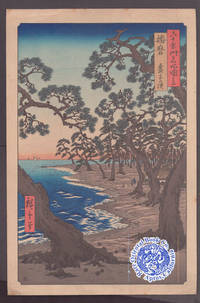
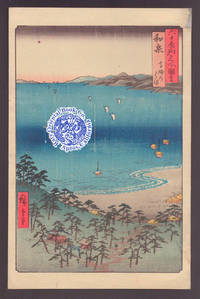
44026201Tokyo n.d. ca 9120's. Vertical color woodblock print in very bright condition superb impression & registry sheet: 25.2x 37.8 cm.; print: 22.4 x 35.5 cm. Watanabe square seal in lower left corner also there is a small bump. RARE . . . STUNNING SUNSET ON THE BAY FROM THE PINE FOREST . . . VIEW OF HARIMA AT MAIKO NO HAMA: MAIKO BEACH . . This is an excellent example. It shows the shore of the bay with the tide coming in. The view is of the sunset three tiny sailing vessels are on the horizon. The view is from the thick pine forest along the shoreline with three people and a teahouse in the mid-ground. A classic view by Japan's master of landscape scenery. . THE SERIES: ROKUJUYOSHU MEISHO ZUE is a series of Ukiyo-e color woodblock prints by the eminent Japanese master landscape artist Hiroshige 1797-1858: . The series consists of a 70 prints of famous views from each of the 68 provinces of Japan plus a print of Edo the capital and a contents page for a total of 70 prints. The prints were first published in serialized form by Koshimuraya Heisuke in 1853-56. . This charming example represents one of the best from that series. It is printed on an oversized large Oban size sheet . Color photos are posted to our website. . THE PUBLISHER: This print was published by Takemura a woodblock printing & publishing house in Tokyo of the period. . CONDITION: In excellent condition superb impression & registry strong colors no fading. Verso blank with two tiny old glassing hinges at top edge. Lower left & right corners mildly bumped now pressed flat very minor impression. . There are two tiny paper defects in the lower margin They are so small that our scanner could not pick them up they can be matted out when framed very minor issue. . . unknown
51-2009Tokyo : Takamizawa Ukiyoe circa 1960s. Oblong accordion format with miniature woodcuts pasted on pages. 13 x 19.5 cm. Red brocade silk covered cloth in buckram slipcase. OCLC Number: 893642632 Tokyo : Takamizawa Ukiyoe, circa 1960s hardcover
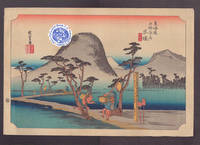
44025701Tokyo n.d. ca 1920's. An Oban horizontal color woodblock print:35 x 22.8 cm. sheet: 38.1 x 22.3 cm. with superb impression and registry UNUSED excellent example seldom found. RARE EARLY EDITION . . . SUPERB COMPOSITION LANDSCAPE BY JAPAN'S MOST ICONIC . . . LANDSCAPE ARTIST & PRINTMAKER . . . HIROSHIGE . . . FROM THE SERIES: . . . TOKAIDO GO JU SAN TSUGI NO UCHI: . . . NO. 8 IN "THE 53 STATIONS OF THE TOKAIDO HIGHWAY" . . HIRATSUKA NAWATA MICHI: HIRATSUKA NAWATA ROAD . . THE ARTIST: ANDO Hiroshige 1797-1858 was the last major master of the Ukiyo-e school. In 1811 he entered the studio of Utagawa Toyohiro soon given the 'nom d'artiste' "Hiroshige." . He published his first color woodblock printed book in 1818. He was greatly influenced by Hokusai's series of landscape prints including this series TOKAIDO GO JU SAN TSUGI. Being impressed Hiroshige set out to do his own impressions of the Tokaido highway series. . . Hiroshige soon distinguished himself as the landscape master of Japan during this period. He made a large contribution to the development of the landscape color print as well as the traditional "Kacho" "Bird & Flower" prints with a tendency to the Kyoto Shijo School. He remained the master of impressionist creating poetic views of nature and remained the best-loved of all Japanese artists. See Lane below p.229. With signature samples by dates. . This is a circa 1920's reprint of the original edition. A pristine example UNUSED with superb impression and registry about as good as it can get. Ready for framing and display. . Color photos are posted to our website. . . unknown
19232083002116204309Nankodo Bookstore Hiroshige Shiota 1923. Soft Cover. Fine. Number of books: 7 Nankodo Bookstore Hiroshige Shiota paperback
A beautiful two-sided accordion book with dark purple paper covered boards containing purple and silver threads. 18 tipped-in plates show the stages of color separation of a woodblock print, printed on mulberry paper. A few of the plates have small creases. 5 1/8"w x 6 3/4"h. Introductory text in English and Japanese. No date given; circa 1970's.
19692091502133530787Chuokoronsha 1969. Soft Cover. Fine. Number of books: 1 Chuokoronsha paperback
1981Q-0870992376Metropolitan Museum of Art 1981-06-01. Hardcover. New. In shrink wrap. Looks like an interesting title! Metropolitan Museum of Art hardcover
195542796Paris, Huguette Berès, (1955). Large 4to. Orig. printed wrappers. (42) pp. and 16 plates, of which 4 are lithographed in colour.
195542796Paris Huguette Berès 1955. Large 4to. Orig. printed wrappers. 42 pp. and 16 plates of which 4 are lithographed in colour. <br/><br/><em>Ce catalogue tiré à 1200 exemplaires tiré à 1200 exemplaires a été réalisé par l'Imprimerie Union. Les Lithographies en couleurs sortent des presses de Mourlot frères. </em> unknown
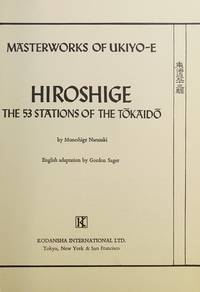
1969Q-0870111000Kodansha International 1969-01-01. Paperback. New. In shrink wrap. Looks like an interesting title! Kodansha International paperback
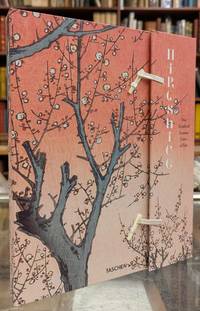
2010109500Taschen 2010. Softcover. Fine/No jacket. Japanese style bound book in a folding case with bone ties. Taschen unknown
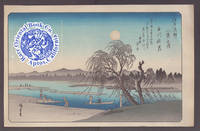
44026101Japan n.d. ca. 1920's. Oban size color woodblock printed horizontal format sheet: 38.5 x 24.5 cm.; print: 35 x 22.2 cm. superb registry impression flawless UNUSED in blue grey black green & tan solid example. SELDOM FOUND . . . . AUTUMN MOON BESIDE THE TAMAGAWA RIVER. . A stunning view of the Tamagawa river in autumn showing the mountains moon willow tree boaters fishermen along the placid river. . Color photos are posted to our website. . CONDITION: The impressin & registry are superb this is an UNUSED example without flaw as good as it can get. Ready for framing and display. . . unknown
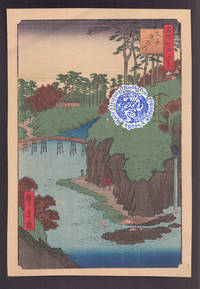
44025601Tokyo n.d. ca 1920's.A color Oban woodblock print sheet: 20.6 x 30 cm. print: 18.4 x 28 cm. multi-colors excellent impression and registry UNUSED old fine exaple reprint. RARE ORIGINAL COLOR WOODBLOCK PRINT . . . MEISHO EDO HYAKKEI: ONE HUNDRED FAMOUS VIEWS OF EDO. . . . A PRINT FROM THE SERIES OF 119 VIEWS . . . A SUPERB VIEW OF TAKINOGAWA IN OJI # 88 IN THE SERIES . . A bright view of the Takinogawa river hills & forests Matsubashi foot bridge cliffs waterfall bathers tea house Kongoji temple & Benten Shinto shrine. All located in Kita Oji north Oji. Edo is the old name of Tokyo. . The red title cartouche in upper right corner reads: MEISHO EDO HYAKKEI HYAKKEI. . Left to that is an orange series title: "Takinogawa in Oji." In block signed inside the red cartouche in lower left corner: "HIROSHIGE GA" i.e. "drawn by Hiroshige." Originally issued in 1856. . The scene is in the colors of autumn the original orange color has turned brownish-black due to oxidation over time. . The series was depicted using major landmarks that appear in the print listed in order of increasing distance from the viewer. . THE ARTIST: UTAGAWA Hiroshige 1797-1858: He was a Japanese Ukiyo-e artist considered the last great master of that tradition. . The orignal series was published from 1856-1858. This being a 20th century high-quality original color woodblock printed reprint edition. No date or publisher's seal as usual. . Color photos are posted to our website. . CONDITION: . The print is in superb UNUSED condition brilliantly colored with superb impression & registry. By and lager about as good as it can get. . Ready for framing and display. . REFERENCE: . See Wikipedia for comprehensive info on Hiroshige and One Hundred Famous Views of Edo. . . unknown
44026601Tokyo n.d. ca. 1920's. Oban color woodblock print superb copy excellent impression & registry vertical formatsheet size:19.8 x 30.3 cm.; print:18.1 x 26.7 small mend to upper right corner & right edge else superb. RARE EXAMPLE . . . A STUNNING VIEW OF THE THE BAY FROM THE PINE FOREST . . . . VIEW OF HARIMA AT MAIKO NO HAMA MAIKO BEACH . . . #4 OF THE SERIES OF 69 PRINTS IN ALL . This is an excellent example. It shows the shore of the bay with the tide coming in. The view is of the sunset three tiny sailing vessels are on the horizon. The view is from the thick pine forest along the shoreline with three people and a teahouse in the mid-ground. A classic view by Japan's master of landscape scenery. . THE SERIES: ROKUJUYOSHU MEISHO ZUE is a series of Ukiyo-e color woodblock prints by the eminent Japanese master landscape artist Hiroshige 1797-1858: . The series consists of a 70 prints of famous views from each of the 68 provinces of Japan plus a print of Edo the capital and a contents page for a total of 70 prints. The prints were first published in serialized form by Koshimuraya Heisuke in 1853-56. . This charming example represents one of the best from that series. It is printed on an oversized large Oban size sheet . Color photos are posted to our website. . CONDITION: In excellent condition superb impression & registry strong colors no fading. Verso blank with a small mend from the back side at the top right corner and lower right edge margins not major can be matted out. . There is a purple stamp in the lower right corner: Made in Japan." . . unknown
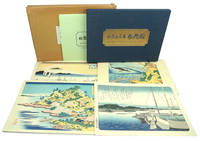
54672np: np nd. Hardcover. Very good. Hardcover. Suite of four sets of 9.75 by 14.5 inch prints 37 total each in a rice paper folder all contained in a blue cloth box with bone claps and original shipping carton. Information sheet in both English and Japanese. Prints in fine condition box near fine carton very good with some wear. <br/><br/> np hardcover
20082255Ateneum Art Museum 2008. 1. Very Good. Released alongside an exhibition of the same name held at Ateneum Art Museum in 2008. The articles in the richly illustrated book shed light on the lives of Hokusai and Hiroshige as well as the development of Japanese woodcut art and the process of making the works. Many of the works in the Ateneum's exhibition are also presented in more detail with pictures. Yellowing on the cover. Text in English and Finnish. 190 pp. Ateneum Art Museum unknown
1956705290PN. New. 1956. Soft Cover. Date is original print. This is a reprint edition. . PN paperback
198063923New York: Metropolitan Museum of Art / Viking Studio Book 1980. First Edition; First Printing. Hardcover. Very Good in boards in a Very Good slipcase. Sticker and a few minor creases to slipcase. Owner impressed stamp verso title page. Tear to title page. Accordion-like fold-out pages. ; 10.70 X 7.70 X 1 inches; 54 pages. Metropolitan Museum of Art / Viking Studio Book hardcover
1986501945New York : George Braziller Inc 1986. Hardcover. As New/As New. 10 x 14.5 inches approximately. As new condition. Blue cover with red script. Colour illustrated dust jacket protected in Brodart. 188 splendid woodblock landscape and genre scenes of mid-nineteenth century Tokyo full colour full page prints. Reproduced from a first edition set in the Brooklyn Museum of Art. Introductory essays and commentaries by Henry D Smith. George Braziller Inc hardcover
19732092902141502069Misuzushobo 1973. Soft Cover. Fine. Size: A5 size Misuzushobo paperback
2092902138300266Ise tatsu N.A. Soft Cover. Fine. Size: 26.5x40cm Ise tatsu paperback
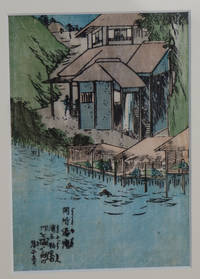
X14<p>HIROSHIGE Ando 1797-1858. Relaxing by the Water. Original woodblock from the series "Ehon Edo Miyage" published by Kikuya Kozaburo Volume 3 printed in Japan 1850-68. 295 x 210mm. This original print is delivered to you in its <strong>unframed</strong> state carefully protected in a solid cardboard tube.</p><p>Utagawa Hiroshige born AndÅ TokutarŠ安藤 徳太郎; 1797 – 12 October 1858 was a Japanese ukiyo-e artist considered the last great master of that tradition.<br />Hiroshige is best known for his horizontal-format landscape series The Fifty-three Stations of the TÅkaidÅ and for his vertical-format landscape series One Hundred Famous Views of Edo. The subjects of his work were atypical of the ukiyo-e genre whose typical focus was on beautiful women popular actors and other scenes of the urban pleasure districts of Japan's Edo period 1603–1868. The popular series Thirty-six Views of Mount Fuji by Hokusai was a strong influence on Hiroshige's choice of subject though Hiroshige's approach was more poetic and ambient than Hokusai's bolder more formal prints. Subtle use of color was essential in Hiroshige's prints often printed with multiple impressions in the same area and with extensive use of bokashi color gradation both of which were rather labor-intensive techniques.<br />For scholars and collectors Hiroshige's death marked the beginning of a rapid decline in the ukiyo-e genre especially in the face of the westernization that followed the Meiji Restoration of 1868. Hiroshige's work came to have a marked influence on western European painting towards the close of the 19th century as a part of the trend in Japonism. Western European artists such as Manet and Monet collected and closely studied Hiroshige's compositions: Vincent van Gogh for instance painted copies of some Hiroshige prints.</p><p><br />Japanese woodblock prints known as ukiyo-e<br />Produced in their many thousands and hugely popular during the Edo period 1615 – 1868 these colourful woodblock prints known as ukiyo-e depicted scenes from everyday Japan. Ukiyo-e literally means 'pictures of the floating world'. The 'floating world' referred to the licensed brothel and theatre districts of Japan's major cities during the Edo period. Inhabited by prostitutes and Kabuki actors Kabuki is a traditional Japanese form of theatre these were the playgrounds of the newly wealthy merchant class. Despite their low status in the strict social hierarchy of the time actors and courtesans became the style icons of their day and their fashions spread to the general population via inexpensive woodblock prints.<br />The ukiyo-e style was developed in 1765 and remained popular until the closing decades of the Meiji period 1868 – 1912. While only the wealthy could afford paintings by the artists of the day ukiyo-e prints were enjoyed by a wide audience because they could be produced quite cheaply and in large numbers.<br />The production process<br />The earliest woodblock prints were simple black and white prints taken from a single block. Sometimes they were coloured by hand but this process was expensive. In the 1740s additional woodblocks were used to print the colours pink and green but it wasn't until 1765 that the technique of using multiple colour woodblocks was perfected. The glorious full-colour prints that resulted were known as nishiki-e or 'brocade pictures'.<br />The team involved in the production of ukiyo-e was known as the 'ukiyo-e quartet'. It comprised the publisher who usually had overall control of the process the designer/artist the block cutter and the printer.<br />The artist would draw the design on paper. Once complete an exact copy was made and placed face-down on a cherry wood block. Cherry wood was favoured due to the fine even grain and consistent density. The block cutter then carved directly through the copy to produce what is known as the 'key-block'.<br />The printer used the key-block to produce a number of black and white prints from which further blocks could be made for each colour needed in the final print. Known as 'key-block proofs' these prints feature registration marks: small rectangles outside the area of the picture. When the colour blocks were carved these marks were used to create stops so that the printer could line up the separate colours precisely.</p>
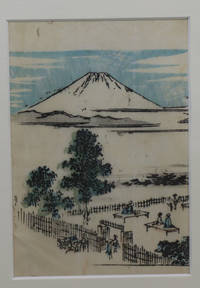
X16<p>Sipping Tea Viewing Mount Fuji. Original woodblock from the series "Ehon Edo Miyage" published by Kikuya Kozaburo Volume 3 printed in Japan 1850-68. 295 x 210 mm. This original print is delivered to you in its <strong>unframed</strong> state carefully protected in a solid cardboard tube.</p><p>Utagawa Hiroshige born AndÅ TokutarŠ安藤 徳太郎; 1797 – 12 October 1858 was a Japanese ukiyo-e artist considered the last great master of that tradition.</p><p>Hiroshige is best known for his horizontal-format landscape series The Fifty-three Stations of the TÅkaidÅ and for his vertical-format landscape series One Hundred Famous Views of Edo. The subjects of his work were atypical of the ukiyo-e genre whose typical focus was on beautiful women popular actors and other scenes of the urban pleasure districts of Japan's Edo period 1603–1868. The popular series Thirty-six Views of Mount Fuji by Hokusai was a strong influence on Hiroshige's choice of subject though Hiroshige's approach was more poetic and ambient than Hokusai's bolder more formal prints. Subtle use of color was essential in Hiroshige's prints often printed with multiple impressions in the same area and with extensive use of bokashi color gradation both of which were rather labor-intensive techniques.</p><p>For scholars and collectors Hiroshige's death marked the beginning of a rapid decline in the ukiyo-e genre especially in the face of the westernization that followed the Meiji Restoration of 1868. Hiroshige's work came to have a marked influence on western European painting towards the close of the 19th century as a part of the trend in Japonism. Western European artists such as Manet and Monet collected and closely studied Hiroshige's compositions: Vincent van Gogh for instance painted copies of some Hiroshige prints.</p><p>Japanese woodblock prints known as ukiyo-e</p><p>Produced in their many thousands and hugely popular during the Edo period 1615 – 1868 these colourful woodblock prints known as ukiyo-e depicted scenes from everyday Japan. Ukiyo-e literally means 'pictures of the floating world'. The 'floating world' referred to the licensed brothel and theatre districts of Japan's major cities during the Edo period. Inhabited by prostitutes and Kabuki actors Kabuki is a traditional Japanese form of theatre these were the playgrounds of the newly wealthy merchant class. Despite their low status in the strict social hierarchy of the time actors and courtesans became the style icons of their day and their fashions spread to the general population via inexpensive woodblock prints.</p><p>The ukiyo-e style was developed in 1765 and remained popular until the closing decades of the Meiji period 1868 – 1912. While only the wealthy could afford paintings by the artists of the day ukiyo-e prints were enjoyed by a wide audience because they could be produced quite cheaply and in large numbers.</p><p>The production process</p><p>The earliest woodblock prints were simple black and white prints taken from a single block. Sometimes they were coloured by hand but this process was expensive. In the 1740s additional woodblocks were used to print the colours pink and green but it wasn't until 1765 that the technique of using multiple colour woodblocks was perfected. The glorious full-colour prints that resulted were known as nishiki-e or 'brocade pictures'.</p><p>The team involved in the production of ukiyo-e was known as the 'ukiyo-e quartet'. It comprised the publisher who usually had overall control of the process the designer/artist the block cutter and the printer.</p><p>The artist would draw the design on paper. Once complete an exact copy was made and placed face-down on a cherry wood block. Cherry wood was favoured due to the fine even grain and consistent density. The block cutter then carved directly through the copy to produce what is known as the 'key-block'.</p><p>The printer used the key-block to produce a number of black and white prints from which further blocks could be made for each colour needed in the final print. Known as 'key-block proofs' these prints feature registration marks: small rectangles outside the area of the picture. When the colour blocks were carved these marks were used to create stops so that the printer could line up the separate colours precisely.</p>
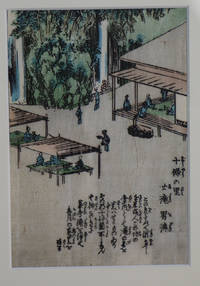
X13<p>HIROSHIGE Ando J 797-1858. Waterfall at Jujyo No Sato. Original woodblock from the series "Ehon Edo Miyage" published by Kikuya Kozaburo Volume 3 printed in Japan 1850-68. 295 x 210 mm.</p><p>This original print is delivered to you in its <strong>unframed</strong> state carefully protected in a solid cardboard tube.</p><p>Utagawa Hiroshige born AndÅ TokutarŠ安藤 徳太郎; 1797 – 12 October 1858 was a Japanese ukiyo-e artist considered the last great master of that tradition.</p><p>Hiroshige is best known for his horizontal-format landscape series The Fifty-three Stations of the TÅkaidÅ and for his vertical-format landscape series One Hundred Famous Views of Edo. The subjects of his work were atypical of the ukiyo-e genre whose typical focus was on beautiful women popular actors and other scenes of the urban pleasure districts of Japan's Edo period 1603–1868. The popular series Thirty-six Views of Mount Fuji by Hokusai was a strong influence on Hiroshige's choice of subject though Hiroshige's approach was more poetic and ambient than Hokusai's bolder more formal prints. Subtle use of color was essential in Hiroshige's prints often printed with multiple impressions in the same area and with extensive use of bokashi color gradation both of which were rather labor-intensive techniques.</p><p>For scholars and collectors Hiroshige's death marked the beginning of a rapid decline in the ukiyo-e genre especially in the face of the westernization that followed the Meiji Restoration of 1868. Hiroshige's work came to have a marked influence on western European painting towards the close of the 19th century as a part of the trend in Japonism. Western European artists such as Manet and Monet collected and closely studied Hiroshige's compositions: Vincent van Gogh for instance painted copies of some Hiroshige prints.</p><p>Japanese woodblock print known as <strong>ukiyo-e</strong> were produced in their many thousands and hugely popular during the Edo period 1615 – 1868</p><p>These colourful woodblock prints depicted scenes from everyday Japan. Ukiyo-e literally means 'pictures of the floating world'. The 'floating world' referred to the licensed brothel and theatre districts of Japan's major cities during the Edo period. Inhabited by prostitutes and Kabuki actors Kabuki is a traditional Japanese form of theatre these were the playgrounds of the newly wealthy merchant class. Despite their low status in the strict social hierarchy of the time actors and courtesans became the style icons of their day and their fashions spread to the general population via inexpensive woodblock prints.</p><p>The ukiyo-e style was developed in 1765 and remained popular until the closing decades of the Meiji period 1868 – 1912. While only the wealthy could afford paintings by the artists of the day ukiyo-e prints were enjoyed by a wide audience because they could be produced quite cheaply and in large numbers.</p><p>The production process</p><p>The earliest woodblock prints were simple black and white prints taken from a single block. Sometimes they were coloured by hand but this process was expensive. In the 1740s additional woodblocks were used to print the colours pink and green but it wasn't until 1765 that the technique of using multiple colour woodblocks was perfected. The glorious full-colour prints that resulted were known as nishiki-e or 'brocade pictures'.</p><p>The team involved in the production of ukiyo-e was known as the 'ukiyo-e quartet'. It comprised the publisher who usually had overall control of the process the designer/artist the block cutter and the printer.</p><p>The artist would draw the design on paper. Once complete an exact copy was made and placed face-down on a cherry wood block. Cherry wood was favoured due to the fine even grain and consistent density. The block cutter then carved directly through the copy to produce what is known as the 'key-block'.</p><p>The printer used the key-block to produce a number of black and white prints from which further blocks could be made for each colour needed in the final print. Known as 'key-block proofs' these prints feature registration marks: small rectangles outside the area of the picture. When the colour blocks were carved these marks were used to create stops so that the printer could line up the separate colours precisely.</p>