Kyu-Young Whang, Jaideep Srivatava, Pacific-Asia Conference On Knowledge Discovery And Data Mining 2Biblio.com

289 résultats
2003Adhya-9783540047605Springer 2003. Paperback. New. Springer paperback
19622092902137304616Japan Arts and Crafts Company 1962. Soft Cover. Fine. The book is in fine condition. Japan Arts and Crafts Company paperback
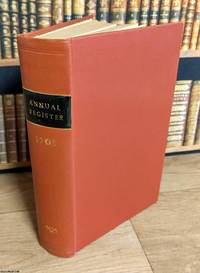
1793373234J. Dodsley London 1793. 5th Edition. Hardcover. Very Good Condition. 21 pages. This 1765 article published in The Annual Register provides a detailed account of John Harrison's groundbreaking work in solving the longitude problem at sea through the use of artificial time-keepers. Harrison an English clockmaker developed the marine chronometer a device that allowed sailors to accurately determine their longitude while at sea. His invention was crucial for safe navigation reducing the risk of ships becoming lost or wrecked due to miscalculations. The article outlines the proceedings and debates surrounding Harrison's work including his struggles with the Longitude Board which was reluctant to grant him the full 20000 prize promised under the 1714 Longitude Act. Despite proving the accuracy of his time-keepers Harrison faced political opposition and bureaucratic delays before finally receiving recognition for his achievements. Published at around the same time that Harrison's book of a similar title was published this contemporary 21 page account quotes Harrison extensively and represents the opinions and ideas regarding navigation from the perspective of the time. The whole volume extends to around 600 pages. Bound in modern but not recent brown buckram with a contrasting black leather lettering piece gilt title. Library label to the endpapers stamp on first blank and label to reverse of the title page. The first blank has a hand note stating "Given by Lt.Col. A.R. Hurst". Hurst has served with the Royal Field Artillery in the First World War. The whole volume is very clean with bright pages very firmly bound and in attractive condition. Size: 13.5 x 21 cms. Category: Antiquarian & Rare; Featured Items; Printed before 1800; Special Features. This item may require more postage than the rates shown for delivery outside the UK. If extra postage is required we will contact you before processing your order and you will be given the details and option to decline the extra cost. J. Dodsley hardcover
186959086Paris Gauthier-Villars 1869. 4to. In: "Comptes Rendus Hebdomadaires des Séances de L'Academie des Sciences" Tome 68 No 7. Pp. 349- 408. Entire issue offered. Janssen's paper pp. 367-376. <br/><br/><em>First printing of the paper in which Janssen announced the discovery of a new element. On August 18 1868 Janssen managed to do just that. He became the first person to observe helium an element never before seen on Earth in the solar spectrum. At the time though Janssen didn’t know what he’d seen"just that it was something new""Helium the second most abundant element in the universe was discovered on the sun before it was found on the earth. Pierre-Jules-César Janssen a French astronomer noticed a yellow line in the sun's spectrum while studying a total solar eclipse in 1868. Sir Norman Lockyer an English astronomer realized that this line with a wavelength of 587.49 nanometers could not be produced by any element known at the time. It was hypothesized that a new element on the sun was responsible for this mysterious yellow emission. This unknown element was named helium by Lockyer." </em> unknown
187844231Paris G. Masson 1878. 8vo. Contemp. hcalf raised bands gilt spine. Light wear along edges. Small stamps on verso of titlepage. In: "Annales de Chimie et de Physique" 4e Series - Tome 15. 512 pp. a. 3 folded engraved plates. The entire volume offered. Janssen's memoir: pp. 414-426. <br/><br/><em>First appearance of this milestone paper in chemistry physics and astronomy announcing the discovery of the helium lines in the spectrum of the sun. It was Lockyer in the same year that named it 'helium' for Helios the Greek God of the Sun. Helium was not discovered on the earth before 1895 by William Ramsay and it was Crookes who established its identity with the helium Janssen and Lockyer observed in the spectrum of the sun."He Janssen met immortality by travelling to India in 1868 to study the total eclipse. It was then that he observed the helium line and forwarded the spectral data to ockyer. He also noted the size of the solar prominences. The day after the eclipse he attempted to take their spectra again and succeeded despite the absence of the obscuring moon. he then announced jubilantly that it was the day after the eclipse that was the real eclipse day for him. Lockyer also reported this method of studying prominences without an eclipse.Like Lockyer he lived to see his observation of the helium line vindicated by Ramsay's discovery of that element on earth."Asimov."This the discovery of helium lines in the sun by Lockyer was announced on the same day by the French astronomer Janssen who was in India observing a total eclipse. As a result the French government some ten years later struck a medallion showing the heads of both scientists.By that time the two men had made a much more dramatic discovery at the same time this time in cooperation. Janssen studying the spectrum ofthe sun during the eclipse had noted a fine line he did not recognize. he send a report on this to Lockyer an acknowledges expert on solar spectra. Lockyer compared the reported position of the line with lines of known elements concluding that it must belong to a yeat unknown element possibly not even existing on the earth. He named the element from the Greek word for the sun."Asimov.Parkinson "Breakthroughs" 1868 A. - The volume contains other notable papers by Dumas Berthelot et al. </em> hardcover
1331911052.Gpaperback. Good. Access codes and supplements are not guaranteed with used items. May be an ex-library book. paperback
0887290280New. paperback. New. Satisfaction Guaranteed or your money back. paperback
178053319Paris Théophile Barrois 1780. 8vo. Fine cont. full mottled calf richly gilt spine and gilt titlelabel in red leather. Edges gilt. LXVIII3333 pp. and 1 folded engraved plate showing his experimental apparatus. Light browning to margins of title-page otherwise clean and with broad margins. A fine copy. <br/><br/><em>First French edition of perhaps the most important work in plant physiology. It is in this work that Ingen-Housz for the first time expounds the ideas and experiments that lead to his discovery of Photosynthesis in plant life and as such it is of fundamental importance in the economy of living things. "His Experiments upon vegetables was published in the autumn of 1779 and was at once recognized as a very important advance. In brief he showed that oxygen evolution by plant is absolutely dependent on light and that it only occurs from those parts which are green.The proof that light and green tissues are both essential for oxygen production finally cleared up the apparent contradictions and variable results of earlier experiments. Priestly was "much pleased" with Ingen-Housz's experiments and pointed immediately to the salient facts that he had established." A.G. Morton: History of Botanical Science. p. 332. Dibner: Heralds of Science No. 29. - Garrison & Morton No. 103. - Horblit No. 55. All the English edition of 1779. </em> hardcover
177746614London W. Bowyer and J. Nichols 1777. 4to. Extracted from "Philosophical Transactions" Year 1777. Vol. 67 - Part I. Pp. 260-265. Clean and fine broadmargined. <br/><br/><em>First apperarance of this paper constituting the first reliable account of colour blindness.Usually Goethe or John Dalton - Huddart's case was cited in Dalton's paper of 1794 - is supposed to have discovered colourblindness. However the English oculist Joseph Huddart was the discoverer of this phenomenon. The first physiological explanation of it does come from Goethe.Garrison & Morton: 5832. </em> unknown
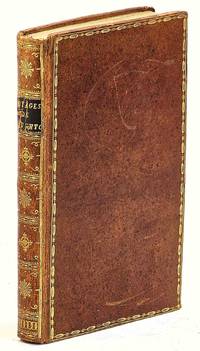
1797105650Paris: Chez Tavernier. 1797. 1st ed. An VI. Octavo full-leather binding with gilt-stamped decorations bands and title to spine gilt dec border to boards contemporary marbled endpapers pp viii 243 last page misprinted as 343. Three large folding engraved maps drawn up by Major James Rennell the leading British geographer of his time when Mungo Park returned from West Africa: all in very good condition. Spine rubbed minor scuffs to boards front free endpaper just starting to detach. Very good condition. First edition. Published in Paris in the revolutionary "An VI" 1797. Describes the explorations in the interior of Africa of Daniel Houghton 1740 - 1791 and Mungo Park 1771 - 1806. Daniel Houghton was sent by the African Association the Association for Promoting the Discovery of the Interior Parts of Africa; his instructions were to sail to the mouth of the Gambia navigate the river to the Barra Kunda falls and then to travel overland to the Hausa lands to the east. He was one of the first European explorers in the interior of Africa but after a successful visit in Bambouk territory he disappeared somewhere on his journey to Timbuctoo his last despatch being in July 1791. Mungo Park was then sent by the African Association and travelled more extensively in West Africa. He published the book "Travels in the interior districts of Africa" in 1799 i.e. this book precedes Park's publication. Uncommon. 1st Edition. Leather. Chez Tavernier hardcover
184342662London Richard and John E. Taylor 1843. 4to. No wrappers as extracted from "Philosophical Transactions" 1843 - Part I. Pp. 1-6. <br/><br/><em>First appearance of a pioneer-paper in the history of early photography as Herschel here for the first time describes his discovery of the iron printing process with ammonio-citrate of iron by both methods namely with blue lines on a white background and white lines on a blue ground. </em> unknown
184242843London Richard and John E. Taylor 1842. 4to. No wrappers as extracted from "Philosophical Transactions" 1842 - Part II. Pp. 181-214 and one double-page folded engraved plate. <br/><br/><em>First appearance of a pioneer-paper in the history of early photography in which Herschel announced some of his importent discoveries of the photographic printing processes the process of photographic contact-printing in Prussian blue brought to light just three years after Louis Daguerre and Henry Talbot had announced their independent inventions of photography in silver using metal and paper substrates respectively. and the photographic properties of red ferro sesquicyanuret of potassium."This is the first recorded observation of Prussian blue being formed for a photographic purpose by the action of light on potassium ferricyanide so it represents the moment of discovery of the first cyanotype process although this name still lay in the future. The significance of this observation impressed Herschel sufficiently to mention it also in his general diary entry for 23 April 1842."Mike Ware in "John Herschel's Cyanotype. Invention or discovery ". </em> unknown
180143599Halle Rengerschen Buchhandlung 1801. Without wrappers as published in "Annalen der Physik. Herausgegeben von Ludwig Wilhelm Gilbert" Bd. 7 Zweites Stück. The entire issue offered =Heft 2. Pp. 137-264 a. 2 folded engraved plates. Herschels papers: pp. 137-156. The plate depicts Herschel's experimental arrangements. <br/><br/><em>First appearance in German of Herschel's epochal announcement of his discovery of infrared light in 1800. This was the first time that a form of light beyond visible light had been detected. The paper offered is the German translation of the main parts of Herschel's paper "An Investigation of the Powers of Prismatic Colours to Heat and Illuminate Objects"."In 1800 he tested various portions of the sun's spectrum by thermometer to see if he could find interesting differences in the amount of heat the different colors delivered. He did but in a rather unexpected way for he found that the temperature rise was highest in no color at all at a spot beyond the red end of the spectrum. He concluded that the sunlight contained invisible light beyond the red. This is now called infrared radiation. The following year Ritter was to extend the visible spectrum in the other direction."Asimov.Parkinson "Breakthroughs" 1800 P. </em> unknown
183547003Philadelphia Fraklin Institute 1835. 8vo. Later full green cloth. Tome-and titlelabels in leather with gilt lettering on spine. In: "Journal of the Franklin Institute of the State of Pennsylvania. Edited by Thomas P. Jones" Vol. XV. New series. Engraved frontisp. 2446 pp. 2 folded engraved plates and 2 folded engraved maps. Entire volume offered. Henry's announcement: pp. 169-70. A stamp to verso of frontispiece Library of Congress duplicate stamp. <br/><br/><em>First printing of this importent paper the first to describe in detail how the phenomena of Self-Induction was discovered. Henry discovered the induction phenomena - how an electric current in one coil may set up a current in the other through the development of the magnetic field - independently of Faraday but Faraday was first to publish on electromagnetic induction. Henry's experiments with induction led him to his importent discovery of SELF-INDUCTION which is the phenomenon in which a change in electric current in a coil produces an induced emf in the coil itself. This phenomenon was also discovered inependently by Faraday but this time Henry had published first. The basic unit of inductance was to be called "the Henry". Relevant to the controversy between Faraday and Henry is the following statement by A D Bache Secretary of the American Philosophical Society introducing an abstract of Henry in J Franklyn Inst. 1835 pp. 169-70 H. Norman 1053 and the paper offerd: "A memoir on this subject has been since submitted to the Society containing an extension of the subject the primary fact in relation to which was observed by Professor Henry as early as 1832 and announced by him in the American Journal of Science. Mr. Faraday having recently entered upon a similar train of observations the immediate publication of the accompanying is important that the prior claims of our fellow countryman may not be overlooked."Spark Museum.Magee "Source Book in Physics" p. 515. </em> hardcover
183747418London Richard and John E. Taylor 1837. No wrappers. Extracted fron "Scientific Memoirs selected from The Transactions of Foreign Academies of Science and Learned Societies. Edited by Richard Taylor." Vol. I. Pp. 540-547. <br/><br/><em>Henry's milestone paper announcing his discovery of electrical self-induction. "Henry independently discovered electro-magnetic induction and in this paper announced his discovery of electric self-induction one of the prime properies of an electro-magnetic circuit. Henry was an eminent experimenter but was casual in publishing his findings with resulting lack of recognition of his contributions."Bern Dibner.Dibner "Heralds of Sciece" No.63.It was also printed the same year in "Transactions of the American Philosophical Society New Series Vol. 5". The paper was later printed in "Philosophical Magazine" 1840."The direction of Henry’s thought became somewhat apparent in his 1835 paper refers to the papers reading before the American Phil. Soc. febr. 6th 1835 on the action of a spiral conductor in increasing the intensity of galvanic currents. The paper started out as an affirmation of Henry’s priority in the discovery of self-induction. He then combined induction proper using Faraday’s findings and his own with selfinduction to show how these produce a pattern of repulsions yielding an increased effect in spirals. He specifically linked these “magneto-electrical†results to the principles of static induction developed by Cavendish and Poisson. This explanation was then applied to Savary’s report of changes of polarity when magnetic needles were placed at varying distances from a wire in which a current was being transmitted "Mémoire sur l’aimantation" in Annales de chimie et de physique 34 1827. That is currents appeared periodically in the air surrounding a current-bearing straight wire as a result of the actions of induction and self-induction." DSB.Wheeler Gift: 2724-2725a. </em> unknown
184244147Leipzig Johann Ambrosius Barth 1842. Without wrappers. In "Annalen der Physik und Chemie. Hrsg. von J.C. Poggendorff" Ergänzungsband 1 Stück 2. Pp. 193-384 a. 1 folded engraved plate. The entire issue offered. Henry's paper: pp. 282-312. <br/><br/><em>First German version of Henry's description of his discovery of self-induction. He missed the credit for the discovery of induction to Faraday but he had done the key experiment ahead of Faraday but Faraday was the first to publish. But he is credited for the discovery of self-induction 1832 and Faraday discovered it independently two years later 1834."In Henry's paper however he explained thet the electric current in a coil can induce another current not only in another coil but in itself. The actual current observed in the coil is then the combination of the original current and the induced current. This is called self induction."Isac Asimov.The issue contains further notable papers Michael Faraday's "Vierzehnte Reihe von Experimental-Untersuchungen über Elektricität" § 2o-22. Nos 1667-1748. Pp. 249-281. First German version. In this paper FARADAYamplifies his theory of electrostatic induction by making further use of the analogy with the induction of magnetism. Whittaker describes the paper as having "THE FUNDAMENTAL EQUATION OF ELECTROSTATICS" as modified in order to take into account the effect of the specific inductive capacity."Whittaker I pp.187-89. </em> unknown
ria9780198825937_inpPaperback / softback. New. New Book; Fast Shipping from UK; Not signed; Not First Edition; The first textbook to describe the ecology and epidemiology of wildlife and zoonotic animal-to-human infectious diseases and the applications to conservation biology and public health. Examples of disease agents enliven the text and i paperback
ria9780323711968_inpPaperback / softback. New. New Book; Fast Shipping from UK; Not signed; Not First Edition; N/A paperback
1892043A45L. Friederichsen & Co. Hamburg: 1892. 1892 Two Volumes. I: pp. 54 132 90 256 22 Two folding maps "Caspar Vopell's Erdglobus von 1542" - Western & Southern Hemisphere; II: pp. 8 328 9 One folding map: "Sir Walter Ralegh's Karte von Guayana um 1595." Tall 8vo. 276 mm. Attractive full white linen cloth bindings decorated and lettered in red blue black and gilt. Bindings slightly soiled but still nice. The text includes: Neumayer G. Einleitung. Ruge S. Die entdeckungsgeschichte der Neuen welyt. Gelcich E. Die instrumente. der nautik zur zeit grossen lander-entdecking. Baasch E. Geschichte der handelsbeziehungen zwischen Hamburg und Amerika. Michow H. Caspar Volpell; Schumacher H.A. Die unternehmungen der Augsburger Welser in Venezuela und Juan de Castellanos. Friedrichsen L. Sir Walter Ralegh's karte von Guyana; Etc. Hardbound. Very good. W152 Language: eng. Hardcover. Very Good. L. Friederichsen & Co., Hamburg: 1892. hardcover
190542829Leipzig S. Hirzel 1905. No wrappers. Issued in "Jahrbuch der Radioaktivität und Elekronik" 2. Bd. Heft 3. Hahn's paper: pp. 233-264. Enntire issue: pp. 233-262 = entire "Heft 3". Fine and clean. <br/><br/><em>First printing of this paper which is Hahn's Habilitation paper announcung his discovery of a new element in residues from a Ceylon mineral called Thorianite. He later showed that it is an intermediate disintegration product."Because the sample thorianite was small Ramsay proposed that Hahn confirm Marie Curie's determination of the atomic weight of radium by preparing it in some organic compounds thereby greatly increasing the total amount being examined and calculating the atomic weight from the measured molecular weights. Chance sometimes favors the unprepared mind and Hahn who familiarized himself with only the basic of radioactivity followed the prescribed separationss technique and found himself the discovere of a new radioelement: radiothorium. The explanation was that the material given him came from an ore which contained a large percentage of thorium in addition to the radium. Thus upon completion of the chemical procedure not all the activity was confined in the radium-containg fraction; indeed the nes subsyance in the remainder was several hundred thousand times more active than thorium and ultimately yielded the characteristic one.minute halflife of thorium emanation."DSB VI p. 15. - Weeks Discovery of the Elementsp. 308 ff. </em> unknown
195044583Washington: Government Printing Office. 1950. First Edition; First Printing. Original Printed Wrappers. Very Good. US Congress Serial Set No. 11401 81st Congress No. 152; 8vo; v 1 99 pages; Contents clean and secure in original printed stapled wrappers; dime-size chip at lower edge of rear wrapper otherwise in very good condition. An examination of the interactions between the Russians and the native populations of Alaska Territory from the late 18th century through the 19th century . From the Russian discovery of Alaska to the establishment of the Russian American Company 1749-1799. Baranov's Rule 1799-1818. Alaska under the Second and Third Charters of the Russian American Company 1821-1867. Period of Transition 1862-1867. Tribal Property Rights. Vladimir Gsovski was Chief of the Foreign Law Section and later Chief of the European Law Division in the Law Library of the U.S. Library of Congress from 1942 until 1960. He was born in Moscow and graduated from the Law School of Moscow University after studying at Law Schools in university of Heidelberg and Leipzig. He left Russia in 1920 after havig fought on the Anti-Communist side during the war. In 1927 he came to the U.S. He was an internationally recognized authority of the law of the U.S.S.R. and other Communist countries as well as an expert on Roman law. . Government Printing Office unknown
190047268Paris Gauthier-Villars 1900. 4to. No wrappers. In: "Comptes Rendus Hebdomadaires des Séances de L'Academie des Sciences" Tome 130 No 20. Pp. 1285- 1344. Entire issue offered. Grignard's paper: pp. 1322-24. One leaf repaired in upper margin affecting the text on verso but without loss of letters. Light browning poor paperquality. <br/><br/><em>First apperance of an importent paper in which Grignard revealed the "Grignard Reagent" an important means of preparing organic compounds from smaller precursor molecules. For this work Grignard was awarded the Nobel Prize in Chemistry in 1912 jointly with fellow Frenchman Paul Sabatier."A large number of general synthetic methods had been developed by the end of the nineteenth century. However one of the most versatile and importent was first described as the new century opened. This was the Grignard synthesis." Leicester "A Source book in Chemistry 1900-1950" where this paper is translated "Some New Organometallic Compounds of Magnesium and Their Application to the Synthesis ofAlchohols and Hydrocarbons"."Grignard treated magnesium turnings in anhydrous ether with methyl iodide at room temperature preparing what came to be known as the Grignard reagent which could be used for reaction with a ketone or an aldehyde without first being isolated. On hydrolyzing with dilute acid the corresponding tertiary or secondary alcohol was produced in much better yield than Barbier had been able to obtain. Grignard’s discovery was reported in a short paper at a meeting of the Académie des Sciences in May 1900 the paper offered." DSB. </em> unknown
180843299Paris Chez Mad. Ve. Bernard 1808 Contemp. hcalf. gilt spine. Some scratches to binding. Verso of titlepage and plates with small stamps.In: "Annales de Chimie" Vol. 68. - 358 pp. a. 3 engraved plates. The entire volume offered. Gay-Lussac's a. Thenard's paper: pp. 169-174. <br/><br/><em>First announcement of the results that they had obtaines by treating boric acid with potassium showing that acid is composed of a combustible substance and oxygen. "Before regarding their proof of the existance of a new element as complete Gay-Lussac and Thenard wished not only to decomposed boric acid but to recompose it. On November 30 of the same year they were able to state in the 'Annales de Chemie et de Physique" the paper offered that "the composition of boracid s no longer problematical. In fact said they "we decompose and we recompose this acid at will" Weeks "Discovery of the Elements" p. 160. - Parkinson "Breakthroughs" 1808 C. - Bunch 1808.The volume contains other importent paper Davy's famous paper on electrolysis in first French translations Gayton-Morveau"Description d'un hygrometre pour le gaz." d¨'Arcet "Observations sur la potasse et sur la soude préparées à l'alcool" etc. </em> unknown
19946946Sao Paulo: Fundacao Quadrilátero do Descobrimento 1994. 1st ed. Paperback. Used; Like New. Small Folio bds 239 pp.dust jacket semi glossy stock maps color plates facsimiles bibl. Fundacao Quadrilátero do Descobrimento paperback
0365857920.Gpaperback. Good. Access codes and supplements are not guaranteed with used items. May be an ex-library book. paperback