5 989 résultats
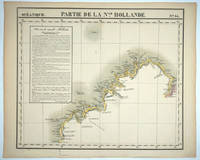
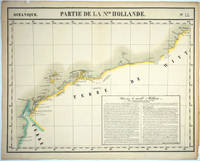
182725576Brussels: P. Vandermaelen 1827. An early map of the Exmouth Western Australia area from the North West Cape to Roebuck Bay. Lithograph with original outline color 15 3/4 x 21". Scale ca. 1:1 650 000. Plate no. 44 Partie de La Nlle. Hollande in vol. 6 Oceanique of Atlas Universal de Geographie Physique Politique Statistique et Mineralogique" by P. Vandermaelen 1827. Tooley 1286; Phillips 749; Bib ID 1553060. P. Vandermaelen unknown
182725575Brussels: P. Vandermaelen 1827. Maps. Very good condition. An early map of the Broome & the Kimberly Western Australia area from P. Cantheaume to Cambridge Gulf including the Lacepede Islands. Broome is at the bottom of the Dampier Peninsula called "C. Boileau." Lithograph with original outline color 25 x 21.5". Plate no. 35 Partie de La Nlle. Hollande in vol. 6 Oceanique of Atlas Universal de Geographie Physique Politique Statistique et Mineralogique" by P. Vandermaelen 1827. Tooley 1282; Phillips 749; Bib ID 30855. P. Vandermaelen unknown
small 8vo [18 x 12.5 cm]; xvi, 285 pp, map frontis. bound in modern quarter tan morocco leather, gilt rules on spine, gilt title lettering on black leather label, marbled boards, signature on half-title and on verso map, near fine, attractive copy. A picture of this book is available upon request by email. BAL 13652, the first state. Day 51 (Pacific Islands Literature, 100 Basic Books) states that the first edition was issued first in London, and later issued in New York, entitled 'Typee: A Peep at Polynesian Life', with some passages omitted. This is the first of Melville's books, and with the exception of Moby Dick, is the most widely read. 'Melville was the first author of genius to use the South Seas as material and most of those who followed say the region through his eyes and adopted his patterns' (Day). Hill p. 196 cites the 1847 London edition. Taylor 176.
1925140245Adelaide: 'Printed for the Publishers by Hunkin Ellis & King' 1925. First Edition. Hardcover. Very Good. Adelaide 'Printed for the Publishers by Hunkin Ellis & King' 1925 to 1928. Tabloid 48 monthly issues bound as one volume approximately 12 pages per issue each with the large pictorial masthead and illustrated advertisements. Contemporary quarter cloth and marbled papered boards lightly rubbed with slight wear to the extremities; acidic paper uniformly tanned; minimal signs of age and use; in excellent condition. The editorial in Volume X Number 12 31 December 1928 states that 'It would be a pity for this independent non-party and outspoken monthly to go out and we hope such an event will not happen but after carrying on the paper for ten years we feel with advancing years that we cannot longer bear the strain of the extra work involved in its publication. Perhaps we may be able to sell it .'. Apparently they were unable to do so and this proved to be the last issue of the journal. <p>From Volume IX Number 3 March 1927 the last words in the subtitle were changed from 'Progressive Farmers' to 'Progressive People'. However a far more radical transformation had occurred earlier foreshadowed in the second issue in this run: the front cover proclaims 'Special this issue -- The Proposed Aboriginal State'. Genders had been appointed to the general committee of the Aborigines' Friends' Association in early 1924 but he established the Aborigines' Protection League in November 1926 with Dr Herbert Basedow as president and himself as honorary secretary to promote the cause of an 'Australian Black State' in the Northern Territory. The final issue records that the APL had been 'largely instrumental in awakening a world-wide interest in the position of the Australian aboriginals and as the official organ of the League "Daylight" may justly claim to have assisted in this much overdue movement'. <p>'Contested Destinies: Aboriginal Advocacy in South Australia's Interwar Years' by Robert Foster 'Aboriginal History' Volume 42 2018 available online provides much detail on Genders 'Daylight' the Australian Black State and the APL. 'Printed for the Publishers by Hunkin, Ellis & King' hardcover
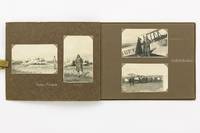
1929142560Adelaide: Harry Carew Nott 1929. Fine. Adelaide Harry Carew Nott 1929. A commercial photograph album oblong quarto 230 × 318 mm comprising 4 card leaves cord-bound in overlapping card covers with 21 gelatin silver photographs 84 × 136 mm or the reverse loosely attached with photocorners on both sides of the leaves and the inside surface of the covers; all photographs are captioned in white ink on the mount. Cord-bound commercial album stamped in blind 'Portraiture'; covers slightly marked and a little worn at the corners; the contents are in fine condition the last photograph is creased and cracked at one corner. A lengthy article related to this event appeared in 'The Advertiser' Thursday 23 May 1929: 'The Victorian section of the Australian Aero Club will conduct an aerial pageant at the Essendon Aerodrome near Melbourne on Saturday afternoon. The programme of events includes the Aerial Derby for which over 20 machines have been entered. Of these about eight will represent New South Wales and eight Victoria. South Australia will also have a strong representation. <p>Seven planes will leave the Parafield Aerodrome for Melbourne this morning at 9.30 if the weather permits. The following planes will comprise the formation: D.H. 60 Gipsy Moth G-AUIB D.H. Moth V-HUAM D.H. Moth V-EUAR D.H. Gipsy Moth G-AUIV D.H. Gipsy Moth G-AUKO Avro Avian G-AUSY and probably the De Havilland "Old Gold" passenger machine. The first three are Aero Club planes and the others are privately owned. <p>Flying-Officer J.A. Mollison Aero Club instructor will be leader of the formation and Mr. C.A. Hewitt will be deputy-leader. Others making the flight to Melbourne are Messrs. N. Birks J.A. Jukes A.H. Wilkins E.B. Lawson P. Knapman F. Wellington S. Hamilton L. Wood J. Churchill Smith secretary of Aero Club and Dr. H.C. Nott. The flight to Essendon will be made via Nhill Victoria. Friday will be spent by the airmen in tuning up engines for the races on the following day'. <p>The first eight photographs were taken at Parafield Aerodrome in outer-suburban Adelaide with portraits of Nott and Wood identified. These are followed by two at Nhill Aerodrome 'Mollison refuelling' and 'Lawson'; two at Ararat Aerodrome 'on Racecourse'; and eight taken at Rockbank 28 kms west of Melbourne. These are captioned 'Mollison taking off in "1B"'; 'Hewitt'; 'Nott in "A5"'; Lawson Mollison Hewitt & Wellington éxamining "A17"'; 'Hewitt Mollison Lawson & Wellington'; 'Nott Mollison Lawson & Wellington'; and 'Mollison Lawson & Hewitt'. <p>The last one taken from the air is captioned 'Crashed Aero at Nhill'. The Nhill Aviation Heritage Centre website records that on 23 May 1929 'J.A. Mollison arrived from Adelaide with 6 aircraft. One crash-landed at old Dimboola road aerodrome instead of landing at New site at Halpin Park'. The pilot was possibly Lin Wood. Harry Carew Nott unknown
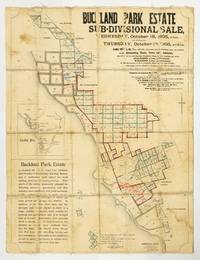
1905130579Adelaide: Elder Smith & Co. Ltd. printed by Vardon & Pritchard Litho. 1905. Fair. Adelaide Elder Smith & Co. Ltd. printed by Vardon & Pritchard Litho. 1905. A large map printed on paper and mounted on linen as issued external dimensions 955 × 740 mm with freehold boundaries printed in blue and an inset locality plan 200 × 180 mm. Later manuscript addenda include red ink outlines on some blocks with acreages in blue ink; 'Sold' written in black ink on the most northerly blocks; a group of blocks close to St Kilda outlined and hatched in orange for 'ICI' Imperial Chemical Industries began construction of solar evaporation lagoons in the area in 1935; and some additional blocks added in ink close to Two Wells. The map has been folded into eight panels and the paper has flaked off in places particularly along the folds resulting in minor loss to the printed surface; a few light stains and minor signs of use and age; overall a decent copy of an item we find no record of in Trove or elsewhere. On offer was approximately 23000 acres of freehold land and 13000 acres of leasehold land. The 'Narracoorte Herald' Tuesday 24 October 1905 contains a report on the sale which took place the previous Wednesday: 'the well-known Buckland Park Estate which has been subdivided . is being offered to the public in blocks of from 40 to 1800 acres. There was a splendid attendance landowners and pastoralists from all parts of the state being present. Competition was however very dull and only nine sic lots found purchasers at the auction sale. The following lots were sold: Block 5 186 acres £3 2s. 0d. per acre; block 1 118 acres 30s. per acre; block 53 60 acres £7 per acre; block 54 57 acres £7 per acre; block 55 40 acres £7 per acre; block 56 40 acres £7 per acre; block 83 196 acres with leasehold given in £1 Is. per acre; block 84 105 acres with leasehold given in £4 per acre. The blocks offered on Wednesday comprised only the poorer quality country. The remainder of the estate will be sold privately'. A successful conclusion to that sale apparently did not take place for another five years. The South Australian pastoralists' who's who 'Our Pastoral Industry' Adelaide 1910 records that the pioneering pastoralist George Brooks 1849-1926 and his son Edmund Albert Brooks purchased 'the picturesque estate at Buckland Park comprising 20000 acres . situated about 25 miles north of Adelaide' from Leonard Browne in 1910 the property is featured under 'The Brownes of Moorak Buckland Park and Booboorowie' pages 137-156. Elder, Smith & Co. Ltd. (printed by Vardon & Pritchard, Litho.) unknown
184180317London: The Queen's Printers 1841. First Edition. Hardcover. Very Good. London The Queen's Printers 1841. Foolscap folio 166 pages with the last page the printed endorsement only. Later but not recent binder's cloth; leading edge of the title leaf has minimal expert reinforcement; tiny bottom corner pieces missing from the first and last few leaves; first and last pages a little discoloured and lightly marked; a very good copy. Ferguson 3222: 'A very valuable repository of information concerning South Australia and its early troubles. Copies of the foundation documents are given'. At the head of the title page 'Colonial Land & Emigration Office' is written in ink next to an oval ink stamp noting it was 'Received CL&EO Mar 13 1841'. The Queen's Printers] hardcover
1840132007London: 'Ordered by the House of Commons to be Printed' 1840. First Edition. Hardcover. Very Good. London 'Ordered by the House of Commons to be Printed' 10 April 1840. Foolscap folio 32 pages last one a docket with numerous tables and lists. Uncut and sewn as issued; outer pages lightly marked; occasional light foxing; an excellent copy in a fine custom-made Solander box with a leather title-label on the spine. Great Britain and Ireland Parliamentary Paper Number 223 of 1840. The full title runs to 23 lines enumerating ten separate returns. 'Contains valuable information with respect to many South Australian subjects' Ferguson but the perennial value of this paper is the headline one which runs to eleven pages. Its complete title is 'A Return of the Quantity of Land in South Australia sold by the Colonization Commissioners since the 5th day of May 1835:- Of the Amount of Money paid for the same in London and the Names of the Purchasers:- Of the Amount of Money paid to Agents in England and Scotland as Commission on Sales effected through their Agency specifying the Name of the Agent and the Name of the Purchaser on whose Purchase Commission has been charged'. Ferguson 3002. Provenance: the signature 'C.A.S. Hawker' is written in pencil at the head of the first page. Charles Allan Seymour Hawker 1894-1938 politician and pastoralist: his grandfather George Charles Hawker arrived in Adelaide with his brother Charles in September 1840. They settled on land at Bungaree near Clare in December 1841; C.A.S. Hawker he was born there. He was seriously wounded on several occasions at the Western Front losing one eye and 'his legs were in surgical irons to the end of his life'. He was a minister in the Lyons Government from 1932 until he 'was killed on 25 October 1938 when the aircraft "Kyeema" crashed into Mount Dandenong in Victoria. His untimely death was sharply felt. He had been an outstanding and respected figure in the Federal parliament whom some of his own party would have supported as prime minister. John Curtin the Opposition leader believed he had been on the threshold of great achievements' 'Australian Dictionary of Biography'. 'Ordered, by the House of Commons, to be Printed' hardcover
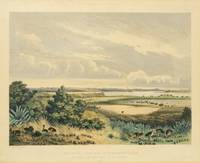
1847133913London: Thomas M'Lean 1847. Very Good. London Thomas M'Lean 1847. An original hand-coloured lithograph matted framed and glazed visible image size 320 × 395 mm external dimensions 595 × 760 mm. Paper a little tanned; in very good condition. Plate 52 from 'South Australia Illustrated'; the lithographer is James William Giles. Thomas M'Lean unknown
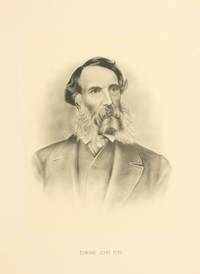
133136No Place: No Publisher. Very Good. No Place No Publisher No Date but circa 1860s. A lithograph on tinted paper artificial plate mark size 305 × 233 mm; paper size 430 × 318 mm mounted on slightly larger thick card; the caption 'Edward John Eyre' is printed in the margin below the image. Minimal foxing to the margins; slight marks around the edges of the paper a legacy of prior framing easily matted out; a superb portrait in excellent condition. 'Edward John Eyre 1815-1901 explorer and administrator emigrated to New South Wales from England when he was seventeen. Settling in Adelaide after pioneering expeditions with sheep and cattle he made several attempts to find an overland stock route from the city to the west. In January 1840 he learned that a committee was organising an expedition to find a way west. Eyre persuaded them to refocus the expedition on the north agreeing to pay for half of this bid to 'discover the inland of Australia'. Many gruelling months into the trip one of his party was murdered and the rest disappeared. Eyre and his Aboriginal colleague Wylie staggered into Albany more than a year after they had set out. <p>In 1844 after having served as Protector of Aborigines in South Australia Eyre 'served as lieutenant governor of New Zealand 1846-53 and governor of St Vincent 1854-60. Appointed governor of Jamaica in 1864 he was recalled in 1866 after his suppression of an Afro-Jamaican uprising with over 400 executions' History Trust of South Australia. Returning to England he found the intelligentsia divided on his actions; court proceedings were three times brought against him but dismissed. In the early 1870s the government paid all his legal costs and awarded him a governor's pension; he lived in seclusion near Tavistock Devon for the rest of his life' National Portrait Gallery of Australia. <p>The NPGA has a similar portrait a less-accomplished engraving captioned 'Edward John Eyre. Late Governor of Jamaica. Engraved by J. Brown from a Carte de Visite by H. Hering. London Richard Bentley 1867'. The State Library of South Australia has a contemporary photograph of the lithograph; the online version of the 'Australian Dictionary of Biography' reproduces it in its entry on Eyre. An example of the carte de visite by Henry Hering 157 Regent Street London on which all these versions are based is available online in The Caribbean Photo Archive reference 4892686740 where it is catalogued as 'Published by Marion & Co London UK circa 1860'. This lithograph appears to be rare if searches in the usual places are any indication. No Publisher unknown
1890141145Adelaide: E.S. Wigg 1890. First Edition. Hardcover. Very Good. Adelaide E.S. Wigg 1890. Oblong quarto 19 leaves all rectos blank comprising the gilt-pictorial title page by E.C. May 14 full-page tinted lithographic views with tissue-guards the 3-page list of 181 subscribers and the key to plate 5 between plates 4 and 5. Original gilt-decorated half maroon morocco and gilt-lettered brown cloth lightly marked and a little rubbed and bumped at the extremities impacting a little on the top corner of the textblock; minimal light foxing and occasional mild signs of age and use; a very good copy with the plates in excellent condition. Ferguson 9924e but we have seen any number of bindings identical to ours and none as described by Ferguson. He also states that 'The Mitchell Library copy has a pencil note: 200 printed in George Robertson's hand-writing'. In spite of this comment and the 181 subscribers' names in our experience the book is not as rare as these figures would suggest. The fact that this item is essentially the same as Ferguson 9807 with the Galbraith imprint under the gold blocking carrying the Wigg imprint and the Wigg binder's label on the rear pastedown leads us to suspect that the answer has something to do with this change of publisher after the book was printed. Correspondence on this matter is welcome . <p>Provenance: Rodney Davidson 1933-2016 lawyer National Trust luminary and book collector with his 'M. & R. Disney Davidson' bookplate on the front pastedown. E.S. Wigg hardcover
1890112995Adelaide: E.S. Wigg 1890. First Edition. Hardcover. Fine. Adelaide E.S. Wigg 1890. Oblong quarto 19 leaves all rectos blank comprising the gilt-pictorial title page by E.C. May 14 full-page tinted lithographic views with tissue-guards the 3-page list of 181 subscribers and the key to plate 5 between plates 4 and 5. Original gilt-decorated half maroon morocco and gilt-lettered brown cloth slightly rubbed at the extremities and lightly bumped on the rear corners; cloth lightly flecked; inner hinge a little loose at the title page; minimal light foxing; essentially a fine copy. Ferguson 9924e but we have seen any number of bindings identical to ours and none as described by Ferguson. He also states that 'The Mitchell Library copy has a pencil note: 200 printed in George Robertson's hand-writing'. In spite of this comment and the 181 subscribers' names in our experience the book is not as rare as these figures would suggest. The fact that this item is essentially the same as Ferguson 9807 with the Galbraith imprint under the gold blocking carrying the Wigg imprint and the Wigg binder's label on the rear pastedown leads us to suspect that the answer has something to do with this change of publisher after the book was printed. Correspondence on this matter is welcome. E.S. Wigg hardcover
185775590Adelaide: Government Printer 1857. First Edition. Hardcover. Fine. Adelaide Government Printer 1857 and 1857. Foolscap folio two Parliamentary Papers 11 pages plus 2 folding maps 267 × 190 mm and approximately 220 × 385 mm printed surface and 2 pages plus a large folding map 510 × 715 mm. Modern binder's cloth lettered in gilt on the front cover; in fine condition. Hack's instructions were to travel by sea to Port Lincoln go overland to Streaky Bay then travel 'as nearly due north as the features of the country will allow . as far as the northern boundary of this province. Every endeavour is to be made to conciliate and win the goodwill of such natives as may be encountered during the journey; and you are to urge upon each individual of the party the great desirability of impressing the aborigines favourably towards Europeans by keeping good faith with them and by not offending against their natural habits and prejudices'. The northerly route in fact commenced about 40 miles east of Streaky Bay; the return route from their furthest north was basically south-east around the bottom of Lake Gairdner to Port Augusta. The bulk of the paper comprises various progress reports from Hack during the course of the expedition from June to September accompanied by the two maps plus two lengthy summary reports after the event. <p>The second paper comprises a report from Harris the surveyor on the expedition and a detailed route map of the entire area covered. It includes the tracks of Warburton who also conducted 'his first notable journey in 1857 to the dry country south and west of Lake Gairdner. Hack did not follow Warburton's tracks but rather supplemented and extended his examinations' Feeken Feeken and Spate. South Australian Parliamentary Papers Number 156 and Number 189 of 1857-58. McLaren 9482 and 9483. Government Printer hardcover
1858114205Melbourne: Government Printer 1858. First Edition. Hardcover. Fine. Melbourne Government Printer 1858. Foolscap folio ii title page verso blank 9 pages plus a large folding map 'Country in South Australia explored by John McDouall Stuart. June to September 1858' 600 × 510 mm 'Lithographed by W. Knight at the Crown Lands Office Melbourne'. A fine copy in recent blind-decorated quarter calf and cloth lettered in gilt on the front cover. Victorian Parliamentary Paper Number A3 of 1858 a reprint of South Australian Parliamentary Paper Number 119 of 1858. This is an account of Stuart's first independent expedition; he had previously travelled with Sturt's 1844-45 expedition into Central Australia. The party of three 'started out from the Northern Flinders Ranges in mid-May. They skirted the south end of Lake Torrens and then turned north and north-west until they reached the present site of Coober Pedy. They then followed a southerly course to Lake Gairdner passing it on the west side. After a strenuous march they arrived at Ceduna . By now the men had run out of provisions. They travelled along the coast to Streaky Bay and from there to the settled districts at Mount Arden in a state of semi-starvation' Feeken Feeken and Spate 1970. McLaren 15457 noting the map but as ever recording the size of the sheet of paper not the printed surface. Government Printer hardcover
187481902Adelaide: J.T. Shawyer Printer 1874. First Edition. Hardcover. Very Good. Adelaide J.T. Shawyer Printer 1874. Octavo iv ii 107 pages plus an original albumen paper photographic frontispiece 184 × 113 mm. Flush-cut black cloth marked and a little rubbed at the extremities with slight loss at the head and foot of the spine; cloth on the front joint split but the joint is firm with minor conservation to one early opening; large printed paper title-label on the front cover has some loss to the bottom half mainly marginal but with the loss of one word and some letters of a few others in the bottom right-hand corner; minimal foxing; a very good copy internally excellent. The frontispiece a Townsend Duryea photograph is a composite of five numbered oval portraits; the identification key is printed on the verso of the title page. Ferguson 16706 not identifying the photographer and not indicating that the five photographic portraits are in fact one composite photograph. The revised second edition of this work Ferguson 16707 does not retain the photograph; it contains six tinted lithographs as does the version published in the 1879 collection of reprints 'The Native Tribes of South Australia' Ferguson 13095. <p>Loosely inserted is a lengthy cutting from the South Australian 'Register' of 24 April 1889: 'An Australian Native Fifty Years Ago' By the Late Mr F.W. Taplin' introduced thus: 'Subjoined is the lecture which was delivered by Mr Taplin before the Australian Natives' Association three nights before the author's tragic death in the Coffee Palace fire'. Frederick William Taplin 1853-1889 a son of George Taplin had succeeded him as superintendent of the mission 'Australian Dictionary of Biography'. J.T. Shawyer, Printer hardcover
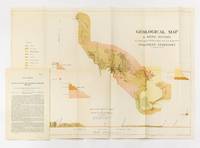
1886142541Adelaide: E. Spiller Government Printer 1886. Very Good. Adelaide E. Spiller Government Printer 1886. Foolscap folio 16 pages plus a large folding chromolithographic geological map printed surface 560 × 840 mm - and very attractive at that. Drop-title; a few pinholes and notches in the left-hand margin where sewn when bound now disbound; tiny closed tear to the map near the stub; in excellent condition. South Australian Parliamentary Paper Number 122 of 1886; one of 800 copies. Not in McLaren but see 15901 an octavo edition without the map published in the Northern Territory undated by McLaren but dated 1886 in Ferguson 18823. <p>Setting out from Burrundie Tenison-Woods 'examined all the places where mining has been or was actually being carried out. In the course of these journeys most of the intervening country was prospected and the geology was noted'. He then undertook 'an exploration in the less known portions of the interior. Our course was from Mount Wells to Mount Douglas and thence south-eastward across the ranges to the Eveleen mine. From thence we traced the River Mary to its sources and then having crossed a small patch of tableland reached the upper waters of the Katherine which we followed down to the telegraph station; from thence we proceeded along the line to Pine Creek. I returned to Palmerston by the overland route from Southport'. E. Spiller, Government Printer unknown
189029560Adelaide: RGSSA 1890. First Edition. Hardcover. Very Good. Adelaide RGSSA 1890. Octavo 5 pages plus a very large and detailed folding map of the boundary line between South Australia and Western Australia 845 × 300 mm. Early half calf and cloth; leather rubbed at the extremities and a little worn at the head of the joints and three corners with slight loss to the surface of the spine; endpapers offset and a little discoloured at the corners by the leather; some foxing to the leaves at the front and rear and near the folding maps; the Tietkens map has two very short tears expertly sealed; a very good copy with the pencilled surname 'Cowlishaw' lightly erased from the title page possibly Leslie Cowlishaw 1877-1943 physician medical historian and bibliophile. Unquestionably rare and important with all but one of the numerous articles in this volume relating to North Australia or Australian Aborigines. They are WINNECKE Charles: Physical Features of Central Australia 8 pages; WORSNOP Thomas: The Pre-historic Arts of the Aborigines of Australia 25 pages plus 4 lithographs 7 chromolithographs and a small folding map; KRICHAUFF F.: The Customs Religious Ceremonies etc. of the Aldolinga Tribe of Aborigines in Krichauff Ranges Central Australia 5 pages plus 4 pages of further notes; CARRINGTON Captain: The Rivers of the Northern Territory of South Australia 22 pages plus a large folding map 405 × 515 mm; LINDSAY David: Explorations in the Northern Territory of South Australia 16 pages; SUTTON T.M.: The Adjahdurah Tribe of Aborigines on Yorke's Peninsula 3 pages; and NEWLAND S.: The Parkengees or Aboriginal Tribes of the Darling River 14 pages. The other article is ROBINSON Sir Wm.: The Physical Geography of the South-West of Western Australia 13 pages plus a large folding map 380 × 425 mm. RGSSA hardcover
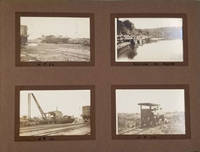
1926238471926. Photography. Good overall. 200 original photographs of a 1925/26 trip which begins in the Philippines and includes Singapore Java Australia New Zealand and Suva with many great images of Middle Harbor in Sydney. This is followed by a railway trip across Canada from the Pacific coast and Banff cross country ending in Montreal with the last image of the Engineering building at McGill University.<br /> The album is likely an American military man's photographic record of his trip beginning in December 1925 and ending April 1926 as many of the images are of railways bridges ships and military installations and one image identifies a Captain Richardson in white Navy uniform. <br /> <br /> The album opens with images of the Philippines with rail yards captioned "H. P. Co"; Fabrica Occ. Negros; San Carlos; Fort Santiago Manila; SS "Taiping" of A-O Line; Zamboanga including a shot of "Pettit Barracks" this was the location of the US Army's 43rd Infantry Regiment which was a Philippine scout unit in 1921; Fort Pilar Zamboanga; SS 'Darvel' at Jolo; and city streets of Jolo.<br /> <br /> The next stage of the trip is the through southeast Asia and Malaysia and Indonesia with images of Sandakan North Borneo; Jesselton Soldier's Monument rubber grove; Labuan government building Naval cemetery two western men in the caption identified as "Jefferson & Watt"; Singapore Bridge government building street scene reservoir old cemetery; Johore Causeway; Fort Canning; Batavia current day Jakarta Indonesia Batavia street scenes bridge canals old Portuguese fort; near Djokjakarta; lowland locomotive; Papandajan smoking craters; Mendoet; Borodbudur temples; Prambanan temples; Surabaya; KPM SS 'Plancius' Dutch ship; Semarang steam tram; KPM SS 'Houtman'; old Fort Macassar; and Celebes canal works views of country side.<br /> <br /> On to Australia with Brisbane Victoria Bridge Sydney Harbor north & south Head Garden Island "Sydney bridge site" the future site of the Bridge Fort Dennison Spit Bridge Middle Harbor Middle Head Bradley's Head Kuringai Chase Manly and Darling Harbor.<br /> <br /> Auckland and Fiji are next with images of the RMS 'Niagara' at Auckland and views from Mt. Eden; then on to Suva Fiji with city views landscapes and natives & their dwellings. The author is next in Canada with a Canadian Pacific Railway trip with views from the train windows of the Selkirks Rockies Banff Cascades Mt. Rundle Banff hot springs Mt. Royal Montreal the St. Lawrence River the Victoria Bridge and closing with a shot of the facade of the Engineering Building at McGill University. <br /> <br /> Oblong album 9 1/4 x 7 1/2". Three quarter leather and stamped patterned paper covered boards the leather at corners rubbed and perished at the spine. 50 pages with 4 photographs per page a total of 200 images 3 x 2 1/2" each dated and captioned on the frame. Photographs in excellent condition. unknown
1799716781799. Four 1799 Parliamentary Acts Relating to Penal Transportation to Australia Australia. Transporation. An Act for Making Perpetual So Much of an Act Made in the Nineteenth Year of the Reign of His Present Majesty. An Act to Explain and Amend the Laws Relating to the Transportation Imprisonment And Other Punishments of Certain Offenders As Relates to the Punishment of Burning in the Hand of Certain Persons Convicted of Felony within the Benefit of Clergy drop-head title. London: Printed by George Eyre and Andrew Strahan 1799. 437-438 2 pp. Woodcut arms of Great Britain above title. With An Act for Making Perpetual so Much of an Act Made in the Nineteenth Year of the Reign of His Present Majesty Chapter Seventy-Four Videlicet On the Twenty-Sixth Day of November One Thousand Seven Hundred and Seventy-Eight Intituled An Act to Explain and Amend the Laws Relating to Transportation Imprisonment And of the Punishment of Certain Offenders As Relates to the Lodgings of Judges at County Assizes drop-head title. London: Printed by George Eyre and Andrew Strahan 1799. 441-442 2 pp. Second leaf blank. Woodcut arms of Great Britain above title. And An Act for Continuing Until the Twenty-Fifth Day Of March One Thousand Eight Hundred And Two Several Laws Relating to the Transportation of Felons and Other Offenders to Temporary Places of Confinement in England and Scotland Respectively drop-head title. London: Printed by George Eyre and Andrew Strahan 1799. 461-462 2 pp. Second leaf blank. Woodcut arms of Great Britain above title. And An Act for Continuing Until the Twenty-Fifth Day of March One Thousand eight hundred and two So Much of an Act Made in the Nineteenth Year of the Reign of His Present Majesty Chapter Seventy-Four. Videlicit On the the Twenty-Sixth Day of November One Thousand Seven Hundred and Seventy-Eight Intituled An Act to Explain and Amend the Laws Relating to the Transportation Imprisonment And Other Punishments of Certain Offenders As Relates to Penitentiary Houses drop-head title. London: Printed by George Eyre and Andrew Strahan 1799. 465-466 2 pp. Second leaf blank. Woodcut arms of Great Britain above title. Four disbound items 12-1/2" x 8." Light toning and edgewear light soiling to edges small chi. unknown books
71704Very good. A collection of reports campaign literature newsletters and other literature produced in the early 1970s as part of the Women's Liberation Movement in Australia. Among the organizations represented are the Women's Electoral Lobby the Women's Liberation Center the Working Women's Group and the Women's Abortion Action Campaign. Suzanne Fairbanks senior archivist at The University of Melbourne Archives summarized this period: "In the midst of the social activism that characterized the late 1960s the women's movement in Australia regained the public visibility it had first achieved at the beginning of the 20th century. The energy of women's renewed campaigns was directed into strategies of which two stand out: work for equal civil rights through the courts and government; and actions for personal and social liberation through consciousness-raising direct activism and alternative arenas for self-expression. The fight for civil equality had a long tradition in the Australian women's movement but women were becoming frustrated. Following campaigns by unions and women in the post-war period in 1969 the Arbitration Commission awarded equal pay for women but only for strictly equal work. The commission's decision would have no impact on women who worked in predominantly 'female' jobs. Taking their lead from the early suffragists Zelda D'Aprano trade unionist and communist and teachers Thelma Solomon and Alva Geikie chained themselves to the door of the Arbitration Commission in a very public protest which attracted wide media attention. The success of direct protest action in gathering publicity and support led to these women's forming with Jessie 'Bon' Hull the Women's Action Committee WAC which engaged in further public protest such as insisting on paying only 75 per cent of the fare on trams as they received 75 per cent of a male wage. Most importantly in March 1972 WAC founded the Women's Liberation Centre in Melbourne to provide a meeting place and support centre for feminists. By 1972 women led by Beatrice Faust a University of Melbourne graduate and civil liberties campaigner established the Women's Electoral Lobby WEL which produced a form guide to all candidates in the December 1972 federal election. The results of WEL's Australia-wide survey of candidates' attitudes to child care equality in education and work and planned parenthood were published in newspapers in November 1972. In Victoria WEL targeted sitting members of parliament in marginal seats on polling day. When Gough Whitlam led the Australian Labor Party to victory women's issues were firmly to the fore. In Melbourne the Women's Liberation Movement WLM was closely connected to trade unions and the workers' movement. By the early 1970s a Women's Liberation Group had become affiliated with the Student Union at the University of Melbourne. Just as universities provided a haven for anti-war and radical ideas they proved favourable for the ideas and activism of the women's movement. Indeed the women's movement grew when women active in trade unions the Communist Party anti-conscription and anti-war movements perceived that the talk of a new society mostly included the old sexism. At the University of Melbourne the University Assembly formed a Women's Working Group which first reported on the status of women at the university in 1975; this report was instrumental in forcing the university to adopt equal opportunity policies." This collection consists of 28 pieces including one duplicate along with five pages of holographic notes and a newspaper clipping. Among the highlights are: EQUAL PAY VERDICT an undated leaflet 5 1/4" x 8 1/8" issued by the Union of Australian Women in Melbourne criticizing the 1969 decision of the Arbitration Commission "For some women the judgement will result in true equal pay but probably one woman in five will miss out."; SISTERHOOD IS POWERFUL No. 3 1972 mimeographed on both sides of a legal-size leaf this newsletter features a lengthy piece entitled "Women and the Environmental Crisis" "Since both the liberation of women and the rescue of the environment are essentially freedom-oriented pro-life movements they are inevitably inter-related."; WOMEN'S LIBERATION NEWSLETTER: March 1973 14 p. photomechanically reproduced on both sides of seven yellow legal-size leaves includes a report by co-editor Ky Barrett on the February general meeting a list of contacts the Manifesto of the Women's Liberation Movement event announcements etc.; JOIN HANDS. No. 2 - June 1973 an early publication of the Communist Party of Australia which was founded in 1971 this journal includes several pieces on the Women's Liberation Movement including "Towards a Science of Women's Liberation" by Isabel Larguia and John Dumoulin and "Historical Origins of Female Oppression" by Nola Cooper; SHOULD W.E.L. SUPPORT A MOTHER'S WAGE a nuanced discussion by feminist writer Elizabeth Windschuttle of the merits and shortcomings of the Department of Social Security's mother's wage proposal 1973 12 p. photomechanically reproduced on the recto of legal-size sheets of white paper and bound with a staple; and WOMEN'S INFORMATION SHEET circa 1973 includes the name and contact information for university action areas feminist organizations contraceptive services and child care as well as a feminist reading list produced by the Victorian Women's Liberation on two sheets of yellow legal-size paper and accompanied by another sheet listing the 45 Women's Liberation groups with contact information. The vast majority of the material in this collection is photomechanically reproduced on legal-size paper. Some have been hole punched along the left margin and a few bear holographic notations. There is some occasional toning and minor edgewear. Overall the material is in very good or better condition. unknown books
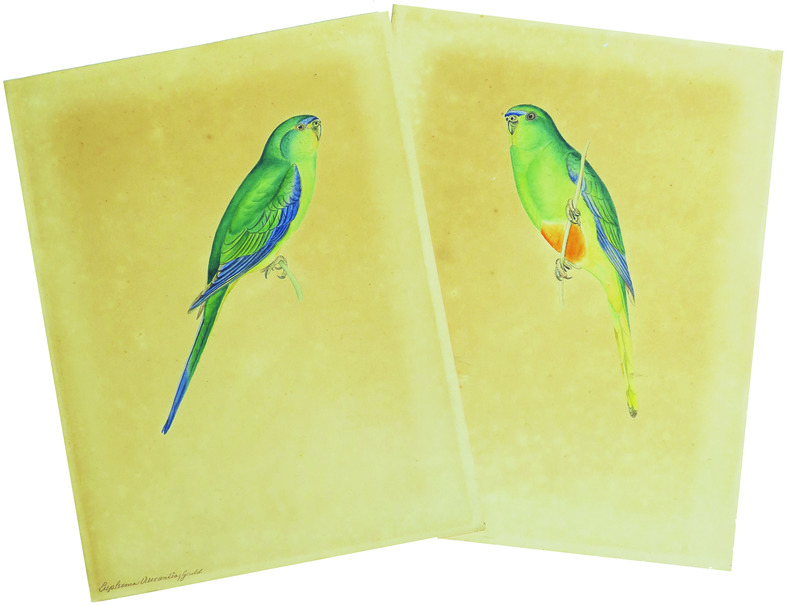
1840LBW-7321Vers 1840. Aquarelles originales sur papier Whatman (30,5 x 23 cm).
1774PHO-1976Paris, Saillant et Nyon, Panckoucke, 1774. 4 volumes in-4, 2 ff., xviii, 1 ff., xxxii, 388 ; 3 ff., 536 ; 3 ff., 394, 1 ff.; 1 ff., viii, 367, demi veau et coins , dos lisse orné avec titre et tomaison ,tranches bleues, supra libris aux premiers plats ,cachets de bibliothèque, illustré de 43 planches et cartes (52), la plupart dépliantes, 5 planches détachées, quelques planches courtes en marges, mouillure sur une dizaine de feuille (tome 1) , petites rousseurs , plats ,coins et coupes frottés,
1715PHO-1978Rouen : Jean-Baptiste Machuel le jeune, 1715. 4 volumes in-12 (160 x 97 mm). 3 frontispices gravés sur cuivre et 42 cartes, plans et figures dont de nombreux dépliants. Plein veau époque, dos à nerfs ornés avec tomaison et pièce de titre, tranches rouges. Tome 1, 7ffnch (préface)408pp-12ff (table), illustré d’un frontispice par Scotin le jeune, 3 cartes dont la mappemonde et 6 planches. Tome 2 ,2ff (titre et chapitre) 396pp-5ff (table), contient le traité des vents (p275), illustré d’un frontispice et 9 planches dont la rose des vents et les cartes des 2 hémisphères. Tome 3 ,393pp,5ff (table), illustré d’un frontispice par Scotin le jeune, 2 cartes et 6 planches. Tome 4, 20pp-381pp-8ff (table), illustré de 18 planches dont 3 cartes. L'illustration se compose de 3 titres-frontispices et de 42 planches hors texte, souvent dépliantes : mappemonde, cartes des différentes îles, profils de côtes, vues de ports (Manille, Bahia, Scio) et vues d'îles (Canaries, Cap Vert), monuments, Indiens, scènes de bataille, naufrage, flore (abricotier, cacaotier), oiseaux, poissons, insectes et une curieuse représentation de la « vache de la montagne ou cheval marin ».
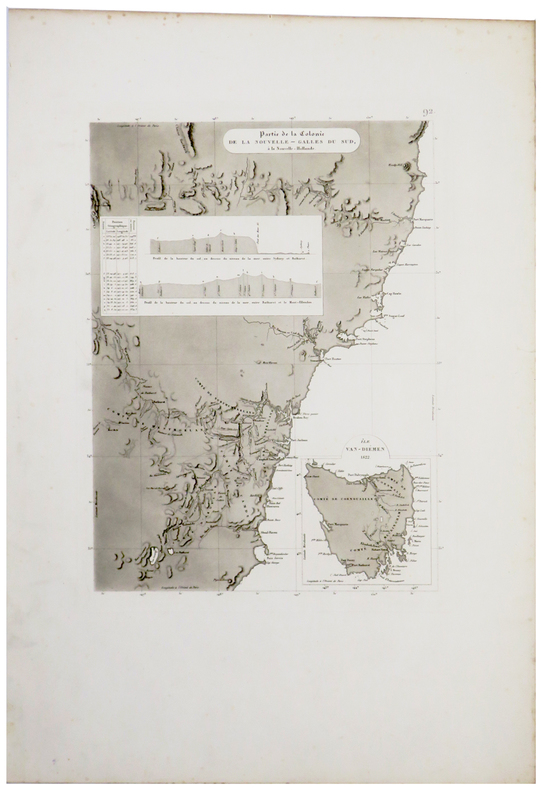
1825LBW-5459[Paris, 1825]. 308 x 223 mm.
1839PHO-1115Paris, Pourrat frères, 1839. 2 volumes in-8 (220x150), demi veau vert contemporain, dos lisse orné avec pièces de titre et auteur , tomaison rouges ,petits frottements aux plats , manque de papier p299 avec atteinte et réparation p301,rousseurs ,mouillures. Édition originale, illustrée d'un portrait de l'auteur et 38 planches gravées sur cuivre et sous serpentes, dont 18 finement coloriées représentant des animaux, des poissons et des oiseaux.