Various; Images Australia Pty LtdBiblio.com
3 315 résultats
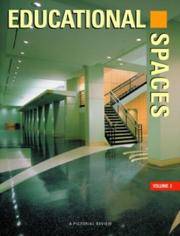
200192385Images Publishing Dist Ac. New. 2001. Hardcover. 1864700335 . FREE UPGRADE to Courier/Priority Shipping Upon Request - IN STOCK AND IMMEDIATELY AVAILABLE FOR SHIPMENT - Flawless copy brand new pristine never opened -- 212 pages. Description: "In all probability the planning of educational institutions is the most socially responsive design that an architect can pursue and doubtless the most difficult to perform well. The primary purpose of all featured buildings is education and this ranges from tertiary institutions colleges Biographies fo participating firms are provided." -- with a bonus offer-- . Images Publishing Dist Ac hardcover
134831An unbroken run of the of Australia's premier contemporary art journal uniformly bound in 45 gilt-lettered half faux leather and cloth-bound volumes retaining the original card covers of the quarterly publication there was one double issue: Volume 14 Numbers 3 and 4 January to June 1977. In fine condition albeit lightly trimmed when bound. Copies of Volume 46 Numbers 1 and 2 in the original pictorial card covers as issued are included with the collection. unknown
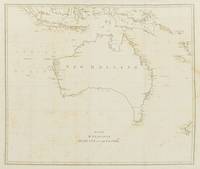
1800144429London: Printed by Luke Hansard . and sold by John White 1800. Very Good. London Printed by Luke Hansard . and sold by John White 1800. An engraved map printed surface 498 × 585 mm sheet size approximately 560 × 690 mm engraved by W. Palmer. Folded as issued; old repaired tear near the stub just encroaching on the printed surface; some moderate foxing; in very good condition with ample margins. A map of Australia labelled 'New Holland' noting but not showing the 'Supposed New discov'd Straits' between Tasmania and the mainland Matthew Flinders and George Bass had discovered Bass Strait in 1798. Bound as issued in the fourth volume of Pennant's 'Outlines of the Globe' titled 'The View of the Malayan Isles New Holland and the Spicy Islands' quarto contemporary quarter calf and marbled boards; edges uncut; covers worn; in very good condition overall with pages 97-147 devoted to New Holland. <p>See Ferguson 278; not in Tooley; Perry and Prescott 1800.11. Printed by Luke Hansard ... and sold by John White unknown
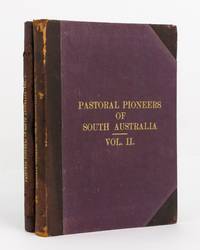
1925141101Adelaide: Publishers Limited 1925. First Edition. Hardcover. Very Good. Adelaide Publishers Limited 1925 and 1927 first editions. Quarto two volumes 207 1 colophon and 263 pages with numerous portraits and illustrations from photographs. Matching original half maroon roan and cloth lettered in gilt on the spines and front covers; leather a little rubbed and scuffed with minor wear to the extremities and the head and foot of the spine of the first volume expertly renewed; cloth flecked mottled and a little marked; endpapers in the first volume a little tanned with the margins discoloured by the leather turn-ins; trifling signs of age and use; a very good set internally excellent of these rarely-seen first edition volumes. An important series of lengthy biographical sketches of SA pioneering pastoralists. 'Publication of the series began in the "Adelaide Stock and Station Journal" on January 10 1923 and continued weekly until August 10 1927. During that period a total of 230 articles was published and the number of pastoralists to receive attention is in the neighbourhood of 300. No really representative pioneer sheep-farmer or cattle-breeder who operated in South Australia has been overlooked and in many cases it has been possible to retrieve from almost complete oblivion the interesting records of lesser lights' foreword to the second volume. A short article in 'The News' 8 July 1941 relating to a substantial gift of books and papers to the SA Archives by A.T. Saunders states in part that 'Among the books is a copy of the very rare first volume of Cockburn's "Pastoral Pioneers of South Australia"'. We recall reading in one of James Dally's catalogues in our early days in the late 1970s that many copies of the first volume of this work were destroyed in a fire. Although we cannot substantiate this fact in our experience it is indeed an absolute rarity. <p>Provenance: Alexander Cockburn brother of the compiler of these volumes. The verso of the title page is inscribed 'To Alexander Cockburn from his son Malcolm as a Souvenir of the first fee received by him for his professional services Dec 1925'. At the foot of the foreword Malcolm has written 'The majority of the sketches herein were written by Rodney Cockburn brother of Alexander Cockburn'. 2 items. Publishers Limited hardcover
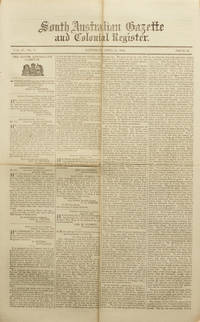
190684574Adelaide 1906. Fair. Adelaide 1906 facsimile of Number 1 1878 facsimile of Number 2 and 1837 to 1840. Tabloid approximately 128 issues each generally 4 to 6 pages but Number 10 lacks the last leaf. Unbound as published more than half of them or disbound with some inner marginal blemishes; marginal stains to a few early issues; occasional signs of use and age; the first issue on acidic paper discoloured and brittle; overall in decent condition. The original first number was published in London the second one in Adelaide almost a year later. Although the originals of these two significant issues are not present in this run it must be said that ALL of these early issues of South Australia's first newspaper are utterly rare on the open market and the opportunity to purchase virtually all of the first three years' worth and more will probably not arise again. unknown
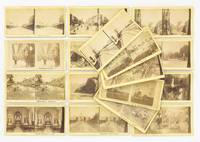
138947Very Good. Original gelatin silver photographs with the pairs of images printed as one plate 86 × 144 mm mounted on light yellow cards 98 × 178 mm uniformly printed and decorated on the verso 'Photographed by Edwin C. Thomas. Australasian Stereo Views'. Some have hand-written captions see below. Minimal signs of age and handling; overall in excellent condition. The 'Petersburg Times' on Friday 12 May 1893 contained a short article under the headline 'Photography'. 'It will be noted by our advertising columns that Mr Edwin C. Thomas has commenced business at Petersburg as a Photographer and thus another long felt local want has been filled. The Studio which is replete with the latest accessories to the photographic art is in Jervois Street opposite the Courthouse. <p>Besides the ordinary work of the photographer Mr Thomas makes a specialty of stereoscopic views in which he is very successful. The prices quoted for photographs are extremely moderate whilst good work is assured. We believe there is a good opening for a photographer in the town and we hope Mr. Thomas may be successful in working up a thriving business. Farmers and others who would like their residences taken should communicate with him'. <p>Thomas merely appears on the 'List of Names' compiled by Robert Noye AGSA. Davies and Stanbury simply note 'Edwin Thomas Petersburgh sic Peterborough South Australia 1894'. Institutional holdings of his works are almost non-existent: if Trove is any indicator the State Library of SA is the only location of any of his photographs with a grand total of two examples one of which is a battered stereo view of 'Stoney Creek near Quorn' B 78542. <p>The 'Evening Journal' and the 'South Australian Register' both carry the following snippet on Tuesday 18 October 1892: 'From Mr. Edwin C. Thomas travelling photographer we have received six stereo views of South Australian scenes: two of the Burra Burra Mines and one each of the Kooringa State School Botanic Gardens Parkside Asylum and King William street. The workmanship is good and the pictures are attractive'. <p>Ten of the stereographs in this collection have short captions in ink: nine are on the verso four of which have the same caption on the recto with the other five having some variant of it; one is captioned solely on the recto 'Mr Crocker's Farm'. In the main they confirm what is apparent from the scene and apart from a number in Adelaide King William Street Adelaide Arcade Parkside Lunatic Asylum several in the Botanic Gardens they depict scenes in Clare the interior of the Catholic Church at Seven Hills Orroroo Port Augusta Quorn Saltia Pichi Richi Pass and unidentified rural settings. <p>One identifying S.A. Blondin walking a high wire in Quorn enables us to date it to the month and year. The 'Manning Index of South Australian History' online records that 'A photograph of "Blondin at Quorn" is in the Pictorial Australian on Monday 1st October 1894 page 169'. It is a slightly different image - Blondin seems to have taken a step or two forward and is now balancing on one leg - and the caption states 'With a Country Photographer - Blondin at Quorn. From a Negative by Mr. E. Thomas'. 17 items. unknown
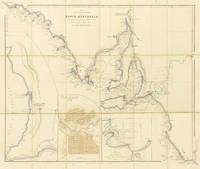
1839144319London: John Arrowsmith 1839. Very Good. London John Arrowsmith 5 February 1839 second state/ 1838. A hand-coloured engraved map printed surface approximately 536 × 655 mm sheet size approximately 562 × 665 mm dissected into 18 panels and mounted on linen folding down to 188 × 113 mm with plain paper mounted on the two external surfaces. A few small spots; some very faint offsetting; unobtrusive marks and pencilling to the backing linen on the verso; an excellent copy. A very early map of the fledgling colony of South Australia with three inset maps showing: 1. The eastern coast of Gulf St. Vincent; 2. 'The City of Adelaide with the Acre Allotments numbered surveyed by Col. Light'; and 3. 'Sketch of Nepean Bay and Kingscote Harbour by Wm. Chesser'. <p>'Arrowsmith's Australian Maps' an online resource by Dorothy Prescott suggests this is the second state prior to the addition of a fourth inset map of Encounter Bay in the upper right-hand corner. <p>Provenance: James Edge-Partington with his bookplate by Charles Praetorius on one of the external surfaces; afterwards Geoffrey Ingleton with the G. & N. Ingleton bookplate and the Ingleton Collection catalogue inkstamp and number 10415. John Arrowsmith unknown
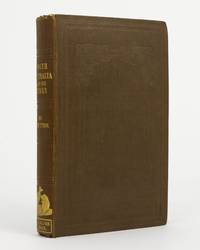
1846139438London: T. and W. Boone 1846. First Edition. Hardcover. Very Good/Dust Jacket Included. London T. and W. Boone 1846. Octavo ii x 361 pages with 7 illustrations in the text 2 full-page plus 5 plates 4 tinted a map and a large folding hand-coloured map by John Arrowsmith printed surface 613 × 494 mm sheet size 683 × 530 mm in a pocket. Three additional advertisements from the publisher are tipped in namely: on the front endpaper 2 pages for J. Lort Stokes' expedition; before page 1 a slip printed recto only for Eyre; and on the rear flyleaf an 8-page catalogue for T. and W. Boone's 'Library of Australian Travels'. Original brown ribbed cloth lettered and decorated in gilt on the spine with the sides decorated in blind; all edges uncut; cloth slightly chipped at the head of the spine with the joints slightly split now protected with a Mylar dustwrapper; folding map lightly offset and marked; plates and adjacent pages a little foxed and offset; stitching slightly strained near the centre of the textblock; a few other minor signs of age and handling; overall an excellent copy of a scarce work difficult to find in this condition and rarely found complete with the map. A presentation copy inscribed in ink on the front free endpaper 'Mrs T. Wilkinson with the authors kind regard'. <p>Wantrup: 'Thomas & William Boone's Library of Australian Travels' page 81 this copy conforming with his Aii variant. Ferguson 4267. T. and W. Boone hardcover
83654First Edition. Hardcover. The prints 195 × 245 mm or the reverse in uniformly fine condition are tipped in on album leaves rectos only; these are cord-bound into the cloth-covered album now slightly rubbed and marked. They are all individually captioned and signed 'Hugo Keil ARPS' in pencil on the wide bottom margins; undated but we suggest the early 1940s. The Northern Territory Archive Service has an album containing the same twenty-five images captioned but apparently unsigned. The catalogue record for that album NTRS 3050 states that 'Hugo Keil was a photographer who worked at the Appropriation Ledger Section of the Allied Works Council in Alice Springs during the Second World War. Hugo gave this wonderful album of Central Australian images to Phyllis Prideaux later Johnson which has come into NTAS as part of the Phyllis Johnson collection. Hugo took many photographs of Central Australian scenes including images of Mount Gillen the Hugh River Palm Valley and the Spotted Tiger Mine at Harts Range'. <p>An article in the 'Barrier Miner' 28 October 1938 makes mention of a forthcoming 'exhibition of Bromoil Prints by Hugo Keil of the Crown Studios Adelaide' and a review in the Adelaide 'Advertiser' 21 August 1940 of The Adelaide Camera Club's exhibition of pictorial photography notes that 'Hugo Keil shows fine timber sharply etched in "Grandeur of the North"'. hardcover
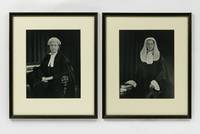
19621455901962. Fine. 1962. Two vintage gelatin silver photographs visible image size 237 × 187 mm matted glazed and framed to match external dimensions 366 × 306 mm. Both photographs and frames are in fine condition. Dame Roma Mitchell 1913-2000 was Australia's first female Queen's Counsel judge university chancellor and state governor among other achievements. Mitchell was particularly proud of her appointment as Queen's Counsel in September 1962 considering it a highlight of her career and these fine portrait photographs must have been commissioned to mark this occasion. Both show her in court dress against an identical backdrop and with similar props. In one she wears her everyday bar wig and bands and in the other she wears full ceremonial dress with lace jabot and cuffs and full-bottomed wig worn only on formal occasions. <p>Mitchell's appointment attracted scant media attention but an article in 'The Australian Women's Weekly' on 10 October 1962 makes more ado of her new full-dress regalia than it does of her already-distinguished legal career and pioneering advocacy of women's causes: 'Miss Mitchell an easy-to-talk-to elegantly dressed woman of 48 is tall and will wear full dress with distinction'. For women QCs 'full dress is laid down thus: "Coat made of black superfine cloth in the same style as a man's coat except that it should not be skirted but instead be short as in a lady's ordinary suit . black flexible buttons. Plain white blouse . lace frill and ruffles at wrist. Plain black skirt of superfine cloth. Black silk stockings . black patent-leather ladies' court shoes . cut-steel buckles. Black silk gown . full bottomed wig . black silk "wig-bag" . white gloves"'. <p>The State Library of South Australia holds examples of both images PRG 778/57/5 and PRG 778/57/6 but does not identify the photographer. 2 items. unknown
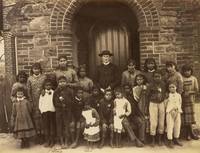
141099Original sepia-toned albumen paper photograph 158 × 210 mm unmounted as issued; in fine condition. Captain Samuel White Sweet 1825-1886 sea captain surveyor and photographer: after he was censured when his ship ran aground in 1875 he 'retired from the sea opened a photographic studio in Adelaide and concentrated on landscapes. With his horse-drawn dark room he travelled through South Australia taking hundreds of skilful pictures of the outback stations and homesteads. The colony's foremost documentary photographer of the 1870s in the early 1880s he was one of the first to use the new dry-plate process' 'Australian Dictionary of Biography'. <p>'Sweet Adelaide ' is inscribed in the negative the three-digit reference number is cropped but it appears to be 442 or 443; 'Poonindie native mission school' is written in pencil on the verso. The Art Gallery of South Australia and the State Library of Victoria also have an example of this print. There are several differences between all these three examples: they are different enlargements; the AGSA example does not have the photographer's credit in the negative; the SLV example does but the negative is printed in reverse. <p>'Captain Sweet's Colonial Imagination - The Ideals of Modernity in South Australian Views Photography 1866-1886' by Karen Magee a 2014 University of Adelaide doctoral thesis accessible online records that Sweet visited Poonindie in 1884. Magee reproduces the AGSA photograph in her extensive catalogue see number 820. unknown
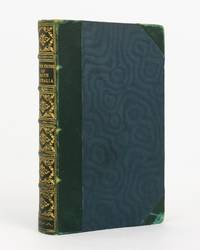
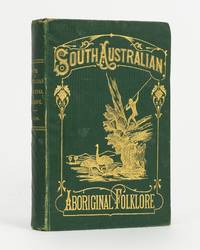
1879123987Adelaide: E.S. Wigg & Son 1879. Hardcover. Very Good. Adelaide E.S. Wigg & Son 1879 first thus. Octavo xliv 316 pages plus 8 tinted lithographs with tissue-guards. Original publisher's half morocco and watered cloth; spine lettered and decorated in gilt in compartments; edges and endpapers marbled; leather moderately rubbed at the extremities; trifling signs of age and use; a very good copy internally excellent. An early collected reprint of works already scarce at the time; the lithographs and lengthy 34-page introduction by Woods were new to this edition. Not commonly known is that Taplin's substantial contribution 'The Narrinyeri' 156 pages plus 6 preliminaries is the text of the revised edition of 1878 see his informative preface dated 12 April 1878 at page xliii. The Wyatt contribution was not previously published as such; the text here was 'principally extracted from his official reports' stemming from his relatively short and unhappy time as the third South Australian Protector of the Aborigines from 1837 to 1839 'Australian Dictionary of Biography'. The contributions by Meyer Schuermann Gason and Bennett first appeared in 1846 1846 1874 and 1869 respectively. Ferguson 13095 noting blue sand-grain cloth and another binding in half leather but not an unillustrated edition we have identified. <p>Provenance: John Harris Browne 1817-1904 expeditioner and pastoralist with his contemporary ownership signature 'J.H. Browne 1879' on the front flyleaf. 'In 1844-45 he went as medical officer with Charles Sturt's expedition into Central Australia. Unusually observant and intensely practical he was probably the most useful member of the party and although he suffered like the others from scurvy his courage and professional skill certainly brought Sturt back alive' 'Australian Dictionary of Biography'. The later armorial bookplate of James Angas Johnson 1841-1902 accountant pastoralist and a grandson of George Fife Angas is mounted on the front pastedown. The marginal annotation in pencil on page 212 alongside text relating to body painting of the 'Port Lincoln Tribe' may be in his hand: 'The White paint is Gypsum the Black is the Black Oxide of Manganese the Red is Hematite viz Red Iron ore'. E.S. Wigg & Son hardcover
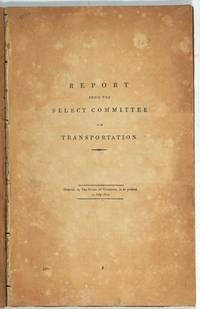
181227311London: The House of Commons 1812. First printing. Self wrappers pamphlet. Very good condition. A rare and important British Blue Paper illustrating Governor Macquarie's early years. The report published in 1812 was the result of a report by a Parliamentary Select Committee to explore the future of transportation of convicts to New South Wales a system that had operated for almost 25 years. It includes a complete transcript of evidence given by many important witnesses including former Governor John Hunter former Governor William Bligh Scottish Martyr Maurice Margarot Matthew Flinders First Fleet chaplain Richard Johnson and many other colonial officials. Extracts from several of Macquarie’s early dispatches are included. <br /> <br /> The report is a document of great significance in the early history of Australia. It is the first major document from the Macquarie era. It endorsed the existing system of transportation and “the liberal views of the present Governor†and became the foundation for Macquarie’s program of civil and administrative improvement. Ferguson 543; Wantrup 3; Trove Libraries Australia ID 4191118.<br /> <br /> Foolscap folio 117pp last blank. Parliamentary papers / House of Commons ; no. 341; Disbound from a compilation lacking the original blue wrappers with later brown paper wrappers which have tanned the title and last page. Internally a bright clean copy of a very scarce piece of Australiana. The House of Commons unknown
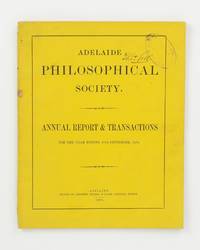
1871144583Adelaide: Printed by Andrew Thomas & Clark at the 'Register' 'Observer' and 'Journal' Offices 1871. First Edition. Paperback. Very Good. Adelaide Printed by Andrew Thomas & Clark at the 'Register' 'Observer' and 'Journal' Offices 1871. Quarto 42 pages with a diagram plus 7 plates 2 showing sunspot observations the remainder meteorological graphs numbered 1-5. Printed yellow wrappers lightly creased and marked with minor loss to the ends of the spine; small burst with minor loss to one leaf affecting a few words in a handful of lines of text in one column recto and verso; small light stains to the bottom edge of the five meteorological graphs at the rear; a few creases marks and other signs of age and handling; overall in excellent condition. The pamphlet comprises a title page list of office-bearers and members and the report for the year each one leaf verso blank followed by 11 papers read at the society's meetings during the year. The papers are: <p>'Irrigation' by C.S. Hare 2 pages with a small diagram; <p>'The Camel in South Australia' by J.S. Lloyd 4 pages; <p>'The Use and Properties of Plants. No. II' by Richard Schomburgk 2 pages; <p>'The Currents of the Air and the Ocean. No. III' by Benjamin Herschel 3 pages; <p>'The Importance of Silk Culture as a Branch of Colonial Industry' by T.S. Reed 2 pages; <p>'Remarks on Sun Maps' by D.B. Adamson 1 page plus 2 plates; <p>'Light Railway Construction' by R.C. Patterson 6 pages; <p>'The Influence of Forests on Climate' by Richard Schomburgk 2 pages being the leaf with minor loss; <p>'Light Railway Construction' by A.F. Lindsay 5 pages; <p>'The Cause of Disease in Silkworms' by Richard Schomburgk 1 page; and <p>'Some Observation on the Rainfall at Adelaide and the Connection between Meteorological Changes and the Yield of Wheat' by Benjamin Herschel 3 pages plus 5 plates containing meteorological graphs. Loosely inserted is a lengthy newspaper clipping from 'The Register' 19 May 1858 on 'Camels in Australia' based heavily on information supplied by Arthur Horrocks brother of the ill-fated explorer John Ainsworth Horrocks. <p>The Adelaide Philosophical Society was founded in 1853 and in 1880 became the Royal Society of South Australia. This annual report lists the name of the 73 current members: the president His Excellency Sir James Fergusson 12 'Honorary and Corresponding Members' and 60 ordinary members. The final paragraph of the short report will sound familiar to anyone who has served on a committee: 'The Council wish to impress upon members the necessity of paying their subscriptions punctually; during the past year out of sixty-seven ordinary members it appears only thirty-nine have paid their annual subscriptions'. These extremely small numbers let alone the passage of 150 or more years must account for the utmost rarity of this publication. <p>Provenance: Thomas Gill 1849-1923 the South Australian historian and bibliographer with his ownership signature on the front cover; later the Royal Geographical Society of Australasia South Australian Branch with its stamp ditto. 'Gill was also a governor of the Public Library Museum and Art Gallery of South Australia from 1896 until his death and a member of the Library Association of Australasia. He wrote "The History and Topography of Glen Osmond" 1905 for the Glen Osmond Institute. Gill was treasurer of the South Australian branch of the Royal Geographical Society of Australasia from its inception in 1885 until his death. The society's acquisition of the valuable York Gate Library was largely due to his energy and enthusiasm. His library was sold to the society for £300 as his will directed' but numerous items from his collection mainly duplicates of existing holdings in the RGSSA library were later sold. Printed by Andrew, Thomas, & Clark, at the 'Register,' 'Observer,' and 'Journal' Offices paperback
1845109128Adelaide: Andrew Murray Printer Rundle Street Sold by C. Platts Bookseller Hindley Street . 1845. First Edition. Paperback. Adelaide Andrew Murray Printer Rundle Street Sold by C. Platts Bookseller Hindley Street . 1845. Octavo xii last blank 106 pages plus a folding etching but lacking the folding frontispiece map noted by Ferguson. Original bright green wrappers with the full title page details repeated on the front cover with the date of publication now added; wrappers a little marked but expertly conserved the front cover is now lined on the verso stabilizing a long tear and filling in some minor loss to the edges; title page a little marked; occasional chips and dog-ear creases to the uncut edges; trifling signs of age and use but essentially a very agreeable copy. The State Library of South Australia has a copy of this item with the map and it's a beauty - a hand-coloured lithograph 322 × 213 mm produced in 'Goodwood nr Adelaide' in 1845. However reading between the lines a case may be made for stating that not all copies were issued with the map. Its absence here notwithstanding this is by any account a very rare publication and worthy of serious consideration on at least two counts. The folding plate is an etching paper size approximately 220 × 280 mm of 'Ridley's Reaping Machine. S. Australia' signed and dated in the plate 'NRF 1845'. The artist is Frederick Robert Nixon circa 1817-1860 who arrived in Adelaide in May 1838 to take up a position as assistant surveyor. In 1845 he published 'Twelve Views in Adelaide and its Vicinity South Australia. Drawn etched and printed by F.R. Nixon'; it was the earliest South Australian plate book. He was a self-taught artist who 'had to manufacture all his machinery for preparing and pressing his etchings . they are superior as works of art and accurately as well as pleasingly depict the scenes which they represent 'The South Australian' 21 February 1845. Nixon left Adelaide in May 1846 bound for Mauritius where he died in 1860. Kerr's 'The Dictionary of Australian Artists' 1992 records that the Ridley etching was the only other one he is known to have produced. There is a lengthy chapter 10 pages on the Aboriginal inhabitants and the chapter on horticulture contains seven pages on vines and wine-making with the information credited to M. Vaillant see page 58. Ferguson 4014. Andrew Murray, Printer, Rundle Street (Sold by C. Platts, Bookseller, Hindley Street ...) paperback
188080022Adelaide: J. Williams Printer for the Author 1880. 2nd Edition. Hardcover. Very Good. Adelaide J. Williams Printer for the Author 1880 second edition/ 1879. Octavo viii 84; 80; and 23 pages plus 3 albumen paper photographs of 5 drawings on 3 unnumbered leaves. Blue cloth lettered in gilt on the spine with both sides ruled in gilt and decorated in blind; covers a little bumped and rubbed at the extremities with minor wear to the corners; spine unevenly sunned; light stains to the front cover removing some of the gilt from the left-hand border; rear free endpaper replaced with near-matching paper tanning the last page a blank; overall a very good copy internally excellent. A presentation copy inscribed in ink on the front free endpaper 'From G. Hamilton to Capt Dashwood with the Author's best wishes 22 Dec 1880'. George Frederick Dashwood 1806-1881 arrived in South Australia in the early 1840s; in 1843 he 'was appointed one of the four non-official nominees in South Australia's first Legislative Council. From 1847 to 1852 he was commissioner of police' 'Australian Dictionary of Biography'. George Hamilton 1812-1883 succeeded him in that role in 1867 retiring the year before his death. He arrived in Adelaide in 1839 when he overlanded cattle along Charles Bonney's southern route. A most satisfying association copy presented from one significant pioneer to another in the twilight of their lives. <p>The particulars of the photographs match those given in Holden where the discrepancy in the number of plates present as against listed is explained. The plates are of drawings by Hamilton; he contributed similar sketches to the published journals of Grey and Eyre. The first edition was not photographically illustrated. <p>Ferguson 10184 inadequately describing the plates; Holden 49. J. Williams, Printer [for the Author] hardcover
185378787Adelaide: W.C. Cox Printer 1853. First Edition. Hardcover. Very Good. Adelaide W.C. Cox Printer 1853. Octavo 46 pages. Antique-style quarter calf and marbled papered boards; title page slightly dusty and a trifle marked with two tiny closed tears to the top edge; a few pencilled emphases to the margins; light vertical crease down the centre of the last six leaves; an excellent copy. The author Clerk of the Executive Council of South Australia was on board the vessel; this is his account of the first successful navigation of the Murray as far as Swan Hill by Captain Francis Cadell. Fellow-passenger James Allen also published his version of events. Captain William Randell and his paddle-steamer 'Mary Ann' left Goolwa at the Murray mouth ahead of Cadell and travelled much farther up the Murray but Cadell overtook him en route and reached Swan Hill first. However both men deservedly earned the bonus of 2000 pounds offered by the South Australian Government 'for each of the first two steamers to travel up the Murray as far as the Darling junction' 'Australian Dictionary of Biography'. W.C. Cox, Printer hardcover
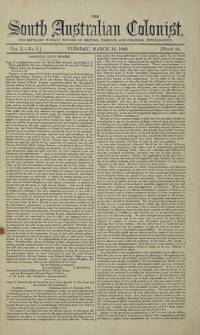
184080314London: 'Printed for the Proprietor by William Cecil Huttmann' 1840. First Edition. Hardcover. London 'Printed for the Proprietor by William Cecil Huttmann' 1840. Folio 352 pages 16 pages each issue. Early binder's cloth recently rebacked retaining the top two-thirds of the original spine; cloth marked and mottled with some neat restoration to the corners; edges a little marked; very light tidemarks to the leading edge of the front flyleaf and an initial blank; leading edge of the first few leaves of Number 22 slightly chipped; bottom left-hand corner piece missing from the last leaf with the loss of about 15 words of text and a small amount of the colophon which is the same in each issue; overall an excellent run of the first 22 issues of this very rare weekly newspaper which ceased publication with Volume 1 Number 29 on Tuesday September 22 1840. The prospectus appears on pages 7 and 8 of the first issue; the proprietors' object is 'not mercenary but patriotic . they are not the organs of any party . they will offer a fearless and uncompromising opposition to every deviation from the self-supporting principle on which South Australia is founded'. Their aim in part 'is to present an impartial record of the colonial intelligence . 1st from the colonial papers; 2ndly from direct correspondents in the colony and other exclusive sources'. Accordingly it contains much original material. The editor was John Stephens 1806-1850; 'about 1838 George Fife Angas employed him to write emigration propaganda. Stephens's first notable work was "The Land of Promise" republished in 1839 as "The History of the Rise and Progress of the New British Province of South Australia". In that year his exposure of absurdities in T. Horton James "Six Months in South Australia" London 1839 ran to three editions. He also edited the "South Australian Colonist" on which Angas lost heavily; it was replaced in 1841 by the monthly "South Australian News" at a cheaper rate' 'Australian Dictionary of Biography'. The ownership signature of Robert Kyffin Thomas is pencilled onto the front flyleaf and the blindstamp of the 'Register & Observer Office Adelaide' appears on an early blank leaf. Sir Robert Kyffin Thomas 1851-1910 the grandson of Robert Thomas who arrived on the 'Africaine' at Holdfast Bay in 1836 with a printing press was himself an influential newspaperman in the state. 'In 1877 he became the principal joint proprietor of the "South Australian Register" and as chief of staff he also edited the "Adelaide Observer". A parliamentary reporter he was in charge of the Hansard branch until 1882 when he became general manager of the "South Australian Register" which became the "Register" in 1901' ADB. Ferguson 3082. 'Printed for the Proprietor, by William Cecil Huttmann' hardcover
1879144271Adelaide: E. Spiller Acting Government Printer 1879. First Edition. Hardcover. Very Good. Adelaide E. Spiller Acting Government Printer 1879. Octavo viii 174 2 24 'The Grammar of the Narrinyeri Tribe' xii lithographed 'Facsimiles of Letters Written by Aborigines' one leaf folding 2 25-28 index pages including a page of lithographed music plus 9 lithographs from drawings by Aboriginal artists and 7 original albumen silver photographs 3 are approximately 105 × 145 mm; 4 are approximately 115 × 95 mm mounted on captioned leaves. Original green cloth attractively blocked in gilt on the front board and in blind at the rear; spine ruled and lettered in gilt; covers a little worn and marked with the binding a little shaken; acidic paper tanned with the folding facsimile document splitting at one fold; mounts a little cockled; trifling loss to the corner-tip of one photograph; page 29 printed close to the right-hand edge an imposition error during production; a few mild signs of age and handling; a very good copy of a rare and important work with the photographs in excellent condition. An early ownership signature on an initial blank is proving difficult to decipher Ruppard Sheppard. The original photographs that illustrate the book are almost certainly the work of Captain Samuel Sweet see Robert Holden: 'Photography in Colonial Australia. The Mechanical Eye and the Illustrated Book' 1988. We have handled a number of copies of this work and this copy conforms with what we suggest might be called the first and most desirable issue of these photographs. The substance of the book was derived from a 48-question circular compiled by George Taplin and 'distributed to all the keepers of aborigines' depots throughout the colony and to all persons who are known to be acquainted with the manners customs and languages of the aborigines'; the value of the work may be judged by the editor's remark in the introduction 'that much information has been elicited and that most of the papers show that the writers have used their powers of observation in an intelligent manner'. The untimely death of Taplin in June 1879 at the early age of 47 may account for the failure of further volumes in the series to materialize. <p>Ferguson 16711; Holden 105 and pages 49-51. E. Spiller, Acting Government Printer hardcover
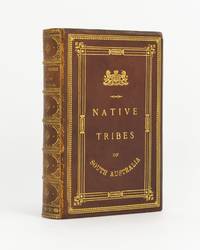
1879144282Adelaide: E.S. Wigg & Son 1879. Hardcover. Very Good. Adelaide E.S. Wigg & Son 1879 first thus. Octavo xliv 316 pages plus 8 tinted lithographs with tissue-guards. Full russet morocco extensively tooled in gilt; all edges gilt; spine lightly sunned; joints slightly cracked but firm; a few minor signs of age and handling internally; overall in excellent condition. The handsome colonial presentation binding has the ticket 'Bound at Government Printing Office Adelaide S.A.' on the rear pastedown; it was almost certainly executed by Emanuel Spiller the South Australian Government Printer at the time. An early binder's blank contains the inscription 'The South Australian Institute to Dr. Francis Reuleaux; Privy Councillor and Royal Professor; Chief Commissioner for the Empire of Germany at the Melbourne International Exhibition. Adelaide 1881'. Franz Reuleaux 1829-1905 was an influential German mechanical engineer who oversaw German machinery exhibits at the Sydney and Melbourne exhibitions 1879-81. He is best known as the father of modern kinematics. His armorial bookplate with manuscript inventory number is mounted opposite the inscription. <p>Spiller's name appears as exhibitor and jury-member of competitions and exhibitions of binding and printing throughout the 1880s. The 'Sydney Mail and New South Wales Advertiser' for 27 March 1880 carries a lengthy article by John Plummer on colonial bookbindings displayed at the Sydney International Exhibition noting that '. in the South Australian Court Mr. E. Spiller the Government printer of Adelaide occupies the foremost rank'. <p>The book itself is an important early collected reprint of works already scarce at the time; the lithographs and lengthy 34-page introduction by Woods were new to this edition. Not commonly known is that Taplin's substantial contribution 'The Narrinyeri' 156 pages plus 6 preliminaries is the text of the revised edition of 1878 see his informative preface dated 12 April 1878 at page xliii. The Wyatt contribution was not previously published as such; the text here was 'principally extracted from his official reports' stemming from his relatively short and unhappy time as the third South Australian Protector of the Aborigines from 1837 to 1839 'Australian Dictionary of Biography'. The contributions by Meyer Schuermann Gason and Bennett first appeared in 1846 1846 1874 and 1869 respectively. Ferguson 13095 noting blue sand-grain cloth and another binding in half leather but not an unillustrated edition we have identified. E.S. Wigg & Son hardcover
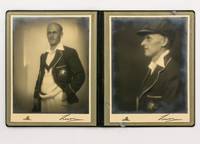
1934144537London 28 George Street Hanover Square W.1.: Lenare 1934. First Edition. Hardcover. Very Good. London 28 George Street Hanover Square W.1. Lenare 1934. Two large-format gelatin silver photographs each 351 × 264 mm signed by the photographer in the negative with his studio inkstamp and manuscript reference number on the versos. Some silvering-out mainly around the edges; tiny creases to the corners of the white margins of one print; overall in excellent condition loosely inserted in the original cloth portfolio lettered in gilt on the padded front panel in excellent condition albeit with a spot of surface wear near the middle of the spine. Clarrie Grimmett the NZ-born Australian Test cricketer was one of the finest leg-spinners of his time. He is photographed in two different poses: head-and-shoulders from the side wearing his cap and blazer; and three-quarter length from the front wearing pullover and blazer with cap in hand. Lenare was the professional name of Leonard George Green 1883-1946; he specialised in society portraits at his London studio. <p>Provenance: Clarrie Grimmett originally purchased at the Christie's auction of the Clarrie Grimmett Collection sold in Melbourne on 13 May 1998. Grimmett played 37 Tests between 1924 and 1936 taking 216 wickets at an average of 24.21. His record for the fastest bowler to take 200 wickets in Tests achieved in his 36th match stood for 82 years and was broken only in 2018. His first-class record of 1424 wickets in 248 matches between 1911 and 1941 includes 513 wickets in his 79 Sheffield Shield matches. He was a Wisden Cricketer of the Year in 1931 along with Don Bradman. He was posthumously inducted into the Australian Cricket Hall of Fame in 1996 as one of the ten inaugural members and in 2009 he was inducted into the ICC Cricket Hall of Fame. 2 items. Lenare hardcover
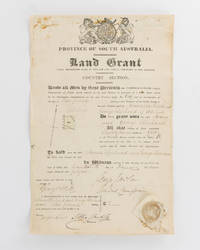
120374Folio approximately 353 × 232 mm a single leaf trimmed from a standard form a bifolium with the centrefold blank and the last page merely docketed now mounted on plain paper 360 × 228 mm with a small hand-coloured diagram of the block showing the orientation of the land and a paper-over-wax impressed seal signed by George Gawler as Resident Commissioner 19 January 1841. Other signatories are the Private Secretary George Hall; the Treasurer John Alexander Jackson; and Alfred Reynell brother of John patriarch of the eponymous wine family. The document has a few horizontal creases where originally folded; the mounted document has been rolled up at some stage and is a little curled; a short sealed tear to the right edge; a few minor blemishes near the top edge and the bottom portion of the seal and some light overall fading these are possibly a legacy from having been framed at some stage overall a very presentable example of a very rare colonial document. Land Grant Number 639 is for 'Eighty-two acres numbered "903" in the Provincial Survey' purchased by 'James Warland and George Warland of Adelaide' for the sum of £2. Elizabeth Warburton in 'The Paddocks Beneath. A History of Burnside from the Beginning' 1981 makes short work of locating the land in question in this leafy suburb about eight kilometres from the Adelaide GPO and paying the brothers Warland their due. 'There can hardly be a family with deeper roots in Burnside than the Warlands who settled there in 1838. <p>James Warland 1796-1875 with his brothers from Wimborne in Dorset took assisted passages to South Australia in 1837. Their first leaseholding was on Section 904 Clifton; then in 1840 having paid two pounds down they were in nominal possession of Section 903 on the other side of Greenhill Road bounded on the west by today's Wyatt Road. After his retirement Henry Warland built here on land inherited from his father George a pleasant stone farmhouse named "Wimborne" which his grandson Eric Warland maintains at 6 Wyatt Road' page 24. <p>George Gawler 1795-1869 was South Australia's second governor. 'Disputes between the first governor Captain Sir John Hindmarsh and the resident commissioner Sir James Fisher over their respective jurisdictions had retarded the colony's development so the two offices were combined in Gawler. Thus as governor he became representative of the Colonial Office in the province and as resident commissioner representative of the non-governmental Colonization Commission which was responsible for the control of land sales for applying the proceeds to the emigration of labourers and for raising loans until such time as the colony had sufficient revenue to support itself. On 12 October 1838 Gawler with his wife and five children arrived in Adelaide in the "Pestonjee Bomanjee" and found conditions far worse than he had been led to expect. The most urgent necessity he believed was to promote rural settlement. <p>He persuaded Charles Sturt to accept the post of surveyor-general and until he could assume office Gawler himself took charge of the Survey Department reorganizing it and conducting preliminary explorations. He also hired every available surveyor including some of Light's former officers. In October 1839 to his dismay he was ordered to dismiss them. The commissioners had appointed Lieutenant Edward Frome as surveyor-general and sent him out with a party of sappers. Gawler solved the problem by amalgamating the two forces feeling justified by the increasing volume of land sales. In 1839 over 170000 acres 68797 ha were sold'. Gawler produced results: within twelve months 200000 acres had been surveyed and by May 1841 mapping of 7000 square miles had been completed and over 500000 acres divided into sections. This rare land grant is evidence of Gawler's energy and zeal. Unhappily for him history was about to repeat itself: his 'major weakness was his complete failure to understand political realities. His recall and his successor Captain Sir George Grey arrived together on 10 May 1841' 'Australian Dictionary of Biography'. unknown
1638110770Paris: Chez Rolet Boutonné 1638. 2nd Edition. Hardcover. Paris Chez Rolet Boutonné 1638 second edition/ 1630. Octavo 170 × 105 mm four parts bound as one volume xvi 280; 64 last blank; 63-106 12 index last three blank; and 39 1 blank pages with woodcut printer's devices on the four title pages and 84 illustrations throughout approximately 80 woodcut illustrations and a few type-set diagrams. There are five leaves missing from the 'Troisième Partie' F4 F5 G1 G4 and G5: pages 85-90 95-96 and 101-104. Nineteenth century half calf and marbled boards now lacking the leather corner-pieces revealing earlier full vellum boards underneath; covers a little worn; light tidemark to the bottom inner corner of the text block throughout; a little worming to the top blank margin of the first 25 leaves; insect damage to the bottom edge extending at most a few millimetres into the wide blank bottom margins; first title leaf dusty and a little soiled; the five missing leaves notwithstanding overall a very presentable copy. The second edition of Claude Mydorge's expanded edition and critique of this popular early work of recreational mathematics first published in 1624 and usually attributed to Jean Leurechon. Each of Leurechon's mathematical problems is reprinted here in roman type with Mydorge's explanatory notes and criticism following in italic. The third part albeit relatively insubstantial only 44 well-illustrated pages is devoted exclusively to fireworks and their construction which probably explains the few missing leaves. The subtitle is: 'Composée d'un receuil de plusieurs plaisantes & recreatives inventions de feux d'artifice plus la maniere de faire toutes sortes de fuzées tant simples que doubles avec leur composition le tout representé par figures sic' Comprising a collection of several pleasant and recreative inventions of fireworks plus the manner of making all sorts of rockets both single and double with their composition all represented in figures. This third part together with the second made its first appearance in a 1628 edition of 'Récréations Mathématiques' published by Charles Osmont at Rouen. Their authorship has not been established HEEFER Albrecht: 'Récréations Mathématiques 1624 A Study on its Authorship Sources and Influence' revised 7 October 2004. <p>The fourth part 'Nottes sic sur les Recreations .' is by D.H.P.E.M. Denis Henrion Professeur ès Mathématiques. <p>Claude Mydorge 1585-1647 French mathematician was a friend of René Descartes with whom he shared a strong interest in optics and the nature of vision. 'Mydorge's first major work was the "Examen du livre des Récréations mathématiques" published in 1630. As the title suggests it was a work on recreational mathematics and was effectively a critique of Laurechon's sic book on the theme 'Récréations mathématiques' by the French Jesuit Jean Leurechon writing under the pen name of van Etten first appeared in 1624. However it was through his work on conic sections that Mydorge made the greatest scientific impact' The Cambridge Descartes Lexicon online. <p>Provenance: a 1713 signature on the first page; an early ownership inscription 'Michael Hutchins His Book' on a preliminary page; 'G.S. Kingston Sept 1834' on the front pastedown: Sir George Strickland Kingston 1807-1880 the South Australian pioneer engineer and politician deputy-surveyor-general under Colonel William Light co-discoverer of the River Torrens first Speaker in the House of Assembly. Chez Rolet Boutonné hardcover
1853100379Adelaide: W.C. Cox Printer 1853. First Edition. Hardcover. Very Good. Adelaide W.C. Cox Printer 1853. Octavo 46 pages. Relatively recent quarter morocco and buckram by the Law Bindery Melbourne; title leaf a little foxed with minimal light scattered foxing to a few other leaves; an excellent copy with most interesting provenance see below. The author Clerk of the Executive Council of South Australia was on board the vessel; this is his account of the first successful navigation of the Murray as far as Swan Hill by Captain Francis Cadell. Fellow-passenger James Allen also published his version of events. Captain William Randell and his paddle-steamer 'Mary Ann' left Goolwa at the Murray mouth ahead of Cadell and travelled much farther up the Murray but Cadell overtook him en route and reached Swan Hill first. However both men deservedly earned the bonus of 2000 pounds offered by the South Australian Government 'for each of the first two steamers to travel up the Murray as far as the Darling junction' 'Australian Dictionary of Biography'. We have noted previously the manuscript correction page 5 line 4 'largest' to 'longest' river and presume it is in Kinloch's hand. At the head of the title page of this copy is the pencilled ownership name possibly his signature of Robert Wadsworth over-written in red ink by the subsequent owner 'John Shillinglaw from Robert Wadsworth 1854'. Shillingworth has annotated the text in both pencil and red ink three and seven pages respectively. The pencilling identifies the 'gentleman's son' working as a shepherd as 'old "Bigodd Macdonald"' and asks elsewhere of a sentence nine lines long 'what does this wretched twaddler mean' he's got a point too!. Robert Wadsworth was eventually Clerk of the Victorian Executive Council from 1875 to 1889; of passing interest to bibliophiles his son Arthur 1864-1931 was the first Commonwealth Parliamentary Librarian having 'charge of the Commonwealth library for over twenty-six years while also being titular head of the Victorian State parliamentary library' ADB. <p>John Joseph Shillinglaw 1831-1905 public servant and historian was the eldest son of the librarian of the Royal Geographical Society. 'He was to study under Captain John Washington eminent maritime surveyor and in 1852 he migrated with his father and brothers to Victoria arriving in October. From November he was chief clerk of petty sessions at Williamstown and in 1854 was appointed inspector and sometime acting superintendent of the Water Police. He was also secretary to the Steam Navigation Board until December 1857. In 1856-69 he was shipping-master for the Port of Melbourne and registrar of seamen; he helped to found the first Sailors' Home and did much to improve the working conditions of seamen'. It is hardly surprising that he should be given a copy of this book soon after its publication. He held various public service positions over the years; from 1885-94 he 'was secretary to the royal commission on vegetable products. He was also secretary to the Board of Viticulture. Shillinglaw was an enthusiast in whatever department he worked; however he is remembered for his association with colonial literature and history'. He was the author of numerous books and on his death his estate 'included a vast collection of papers and rare books' presumably including this item ADB. Ferguson 11196. W.C. Cox, Printer hardcover
82561First Edition. Hardcover. Foolscap folio; uniformly and handsomely bound in quarter morocco and buckram with contrasting title-labels on the spines 'Early Port of Adelaide Parliamentary Papers 1869-1878' and 'Early South Australian Ports. Parliamentary Papers 1869-1880'; typed title leaves signed by Ingleton and lists of contents are bound in. The first volume contains eleven Parliamentary Papers in all 98 pages plus 7 plans or charts plus a printed broadside and 11 manuscript documents totalling 19 pages. The documents all dated 1878 include a proof copy of the Report of the Board of Advice one page foolscap folio signed in ink by the State Treasurer and third-time Premier James Boucaut with a few minor corrections in pencil by Captain Frederick Howard Chairman of the Board; a four-page draft report on Largs Bay - Semaphore Jetty Beach Boats with a cover note initialled by Boucaut; and a two-page draft 'Report on probable effect of sea outlet for sewerage sic of Adelaide' by Howard. It also contains a large broadside 570 × 295 mm printed in four columns recto only headed 'Outer Harbour at Marino. Public Meeting at Brighton. "South Australian Register" August 31 1878'. The most substantial Parliamentary Paper is 'Report of the Select Committee . on Holdfast Bay Pier and Railway Bill 1869-70 SAPP 209 of 1870; vi 53 pages plus a small plan of Sandridge Old Pier. The best of the maps are Goalen's 1875 'Port Adelaide' 610 × 870 mm and 'Plan of Proposed Harbour at Marino' 330 × 540 mm. <p>The second volume contains twelve Parliamentary Papers five of them duplicates of those in the first volume in all 216 pages plus 2 maps and a plan but lacking the 3 plans from one duplicated paper 'Ocean Steamer Accommodation' SAPP 108 of 1878; 3 pages plus an additional leaf printed later and not present in the first volume. The most substantial paper is 'Report of the Select Committee . into the Desirability of forming an Outer Harbor' SAPP 113 of 1876; viii 122 pages. The other maps are a folding 'Plan of Port Adelaide 342 × 251 mm and 'Marino Bay with Proposed Breakwater' 400 × 555 mm. Most of the maps and charts are detached and some have a few tears; there is sporadic foxing to the printed material but overall the condition is excellent. Further details are available on request. hardcover