Biblio.com

48 379 résultats
189035353Épinal: Olivier-Pinot 1890. Fine. Olivier-Pinot Épinal s. d. circa 1890 29.50 x 40.50 cm une feuille Image d'Épinal color lithograph medium format printed on heavy paper. Missing corners significant tears in right and lower margins with loss but without damage to the print colors very well preserved. These plates are cardboard constructions or models on which a pattern was printed. This pattern must be cut out then assembled to construct various objects or life scenes. The Épinal imagery published several series of cut-out models including the ""Large Constructions"" in 39 x 49 cm format the ""Medium Constructions"" and the ""Small Constructions"". From 1880 to 1908 constructions were published featuring architecture costumes boats and various vehicles. During this same period paper theaters or ""theater at home"" also enjoyed great success. This toy model developed and lasted until the Second World War. Once sold by peddlers the images d'Épinal owe their name to Jean-Charles Pellerin who was the first printer to publish this type of image in series and who lived in the town of Épinal Vosges. The subjects are very varied but generally revolve around religion history French Revolution battles military uniforms or drawn from successful novels. Épinal imagery takes its origins in imagery popular art born in the 15th century intended mainly for the illiterate rural public. Originally the image is engraved on a wooden plate and printing is done using a hand press. It is then colored by means of stencils. In the 19th century lead castings are made from the engraved wood: stereotypes which allow production to be increased. In 1820 lithography was adopted which induced a radical change in style with finer drawings. In 1900 coloring was still done by stencil thanks to a machine that could color 300 images per hour the Aquatype. Olivier-Pinot unknown
189026114Épinal: Olivier-Pinot 1890. Fine. Olivier-Pinot Épinal s. d. circa 1880-1900 49 x 39 cm Image d'Épinal color lithograph large format printed on heavy paper. Minimal marginal lacks without any damage to the engraving otherwise very fine condition colors very well preserved. These plates are cardboard constructions or models on which a pattern was printed. This pattern must be cut out then assembled to construct various objects or scenes from life. The Imagerie d'Épinal published several series of cut-out models including the ""Grandes Constructions"" in 39 x 49 cm format the ""Moyennes Constructions"" and the ""Petites Constructions"". From 1880 to 1908 constructions were published featuring architecture costumes boats and various vehicles. During this same period paper theaters or ""théâtre chez soi"" also enjoyed great success. This type of toy developed and lasted until the Second World War. Once sold by peddlers the images d'Épinal owe their name to Jean-Charles Pellerin who was the first printer to publish this type of image in series and who lived in the town of Épinal Vosges. The subjects are very varied but generally revolve around religion history French Revolution battles military uniforms or drawn from successful novels. The Imagerie d'Épinal has its origins in imagery a popular art form born in the 15th century intended mainly for the illiterate public of the countryside. Originally the image is engraved on a wooden plate and printing is carried out using a hand press. It is then colored using stencils. In the 19th century lead castings were made from the engraved wood blocks: stereotypes which allowed production to be increased. In 1820 lithography was adopted which induced a radical change in style with finer drawings. In 1900 coloring was still done by stencil thanks to a machine that could color 300 images per hour the Aquatype. Olivier-Pinot unknown
189025467Épinal: Olivier-Pinot 1890. Fine. Olivier-Pinot Épinal s. d. circa 1880-1900 39 x 49 cm Image d'Épinal color lithograph large format printed on heavy paper. Three small tears repaired in margin 1 cm without any damage to the engraving otherwise very fine condition colors very well preserved. These plates are cardboard constructions or models on which a pattern was printed. This pattern must be cut out and then assembled to construct various objects or life scenes. The Épinal imagery published several series of cut-out models including the ""Large Constructions"" in 39 x 49 cm format the ""Medium Constructions"" and the ""Small Constructions"". From 1880 to 1908 constructions were published featuring architecture costumes boats and various vehicles. During this same period paper theaters or ""home theater"" also enjoyed great success. This toy model developed and endured until the Second World War. Once sold by peddlers the images d'Épinal owe their name to Jean-Charles Pellerin who was the first printer to publish this type of image in series and who lived in the town of Épinal Vosges. The subjects are very varied but generally revolve around religion history French Revolution battles military uniforms or drawn from successful novels. The Épinal imagery has its origins in imagery a popular art born in the 15th century intended mainly for the illiterate rural public. Originally the image is engraved on a wooden plate and printing is done using a hand press. It is then colored using stencils. In the 19th century lead castings were made from the engraved wood: stereotypes which allowed production to be increased. In 1820 lithography was adopted which induced a radical change in style with finer drawings. In 1900 coloring was still done by stencil using a machine that could color 300 images per hour the Aquatype. Olivier-Pinot unknown
189026130Épinal: Olivier-Pinot 1890. Fine. Olivier-Pinot Épinal s. d. circa 1880-1900 49 x 39 cm Image d'Épinal color lithograph large format printed on heavy paper. Fine condition colors very well preserved. These plates are cardboard constructions or models on which a pattern was printed. This pattern must be cut out then assembled to construct various objects or life scenes. The Épinal imagery published several series of cut-out models including the ""Grandes Constructions"" in 39 x 49 cm format the ""Moyennes Constructions"" and the ""Petites Constructions"". From 1880 to 1908 constructions were published featuring architecture costumes ships and various vehicles. During this same period paper theaters or ""théâtre chez soi"" also enjoyed great success. This toy model developed and endured until the Second World War. Once sold by peddlers the images d'Épinal owe their name to Jean-Charles Pellerin who was the first printer to publish this type of image in series and who lived in the town of Épinal Vosges. The subjects are very varied but generally revolve around religion history French Revolution battles military uniforms or drawn from successful novels. Épinal imagery has its origins in imagery a popular art born in the 15th century intended primarily for the illiterate rural public. Originally the image is engraved on a wooden plate and printing is carried out using a hand press. It is then colored by means of stencils. In the 19th century lead castings were made from the engraved wood: stereotypes which allowed production to be increased. In 1820 lithography was adopted which induced a radical change in style with finer drawings. In 1900 coloring was still done by stencil thanks to a machine that could color 300 images per hour the Aquatype. Olivier-Pinot unknown
189026107Épinal: Olivier-Pinot 1890. Fine. Olivier-Pinot Épinal s. d. circa 1880-1900 39 x 49 cm Épinal print colour lithograph large format printed on thick paper. A small repaired tear in the margin 2 cm without any damage to the print otherwise very fine condition colours very well preserved. These sheets are cardboard constructions or models on which a pattern was printed. This pattern must be cut out then assembled to build various objects or life scenes. The Épinal printing house published several series of cut-out models including the ""Grandes Constructions"" in 39 x 49 cm format the ""Moyennes Constructions"" and the ""Petites Constructions"". From 1880 to 1908 constructions were published featuring architecture costumes boats and various vehicles. During this same period paper theatres or ""théâtre chez soi"" also enjoyed great success. This toy model developed and lasted until the Second World War. Once sold by peddlers Épinal prints owe their name to Jean-Charles Pellerin who was the first printer to publish this type of print in series and who lived in the town of Épinal Vosges. The subjects are very varied but generally revolve around religion history French Revolution battles military uniforms or drawn from successful novels. Épinal imagery has its origins in popular art born in the 15th century intended primarily for the illiterate public of the countryside. Originally the image is engraved on a wooden block and printing is done using a hand press. It is then coloured by means of stencils. In the 19th century lead casts were made from the engraved wood blocks: stereotypes which allowed production to be increased. In 1820 lithography was adopted which induced a radical change in style with finer drawings. In 1900 colouring was still done by stencil thanks to a machine that could colour 300 images per hour the Aquatype. Olivier-Pinot unknown
189026145Épinal: Olivier-Pinot 1890. Fine. Olivier-Pinot Épinal s. d. circa 1880-1900 49 x 39 cm Épinal print color lithography large format printed on heavy paper. Fine condition colors very well preserved. These sheets are cardboard constructions or models on which a pattern was printed. This pattern must be cut out and then assembled to construct various objects or life scenes. The Épinal imagery published several series of cut-out models including the ""Grandes Constructions"" in 39 x 49 cm format the ""Moyennes Constructions"" and the ""Petites Constructions"". From 1880 to 1908 constructions were published featuring architecture costumes boats and various vehicles. During this same period paper theaters or ""théâtre chez soi"" also enjoyed great success. This type of toy developed and persisted until the Second World War. Once sold by peddlers the Épinal prints owe their name to Jean-Charles Pellerin who was the first printer to publish this type of image in series and who lived in the town of Épinal Vosges. The subjects are very varied but generally revolve around religion history French Revolution battles military uniforms or drawn from successful novels. Épinal imagery has its origins in popular imagery a folk art born in the 15th century intended mainly for the illiterate rural public. Originally the image is engraved on a wooden block and printing is carried out using a hand press. It is then colored using stencils. In the 19th century lead castings called stereotypes were made from the engraved woodblocks allowing increased production. In 1820 lithography was adopted which induced a radical change in style with finer drawings. In 1900 coloring was still done by stencil using a machine that could color 300 images per hour the Aquatype. Olivier-Pinot unknown
189026399Épinal: Olivier-Pinot 1890. Fine. Olivier-Pinot Épinal s. d. circa 1880-1900 49 x 39 cm Épinal Image color lithograph large format printed on heavy paper. Fine condition colors very well preserved. These sheets are cardboard constructions or models on which a pattern was printed. This pattern must be cut out then assembled to construct various objects or life scenes. The Épinal imagery published several series of cut-out models including the ""Grandes Constructions"" in 39 x 49 cm format the ""Moyennes Constructions"" and the ""Petites Constructions"". From 1880 to 1908 constructions were published featuring architecture costumes ships and various vehicles. During this same period paper theaters or ""théâtre chez soi"" also enjoyed great success. This toy model developed and endured until the Second World War. Once sold by peddlers the Épinal images owe their name to Jean-Charles Pellerin who was the first printer to publish this type of image in series and who lived in the town of Épinal Vosges. The subjects are very varied but generally revolve around religion history French Revolution battles military uniforms or drawn from successful novels. Épinal imagery takes its origins from imagery a popular art born in the 15th century intended primarily for the illiterate rural public. Originally the image is engraved on a wooden block and printing is done using a hand press. It is then colored by means of stencils. In the 19th century lead castings were made from the engraved wood blocks: stereotypes which allowed production to be increased. In 1820 lithography was adopted which induced a radical change in style with finer drawings. In 1900 coloring was still done by stencil thanks to a machine that could color 300 images per hour the Aquatype. Olivier-Pinot unknown
189026694Épinal: Olivier-Pinot 1890. Fine. Olivier-Pinot Épinal s. d. circa 1880-1900 49 x 39 cm Image d'Épinal color lithograph large format printed on heavy paper. Light marginal foxing otherwise fine condition colors very well preserved. These plates are cardboard constructions or models on which a pattern was printed. This pattern must be cut out and then assembled to construct various objects or life scenes. The Épinal imagery published several series of cut-out models including the ""Grandes Constructions"" in 39 x 49 cm format the ""Moyennes Constructions"" and the ""Petites Constructions"". From 1880 to 1908 constructions were published featuring architecture costumes boats and various vehicles. During this same period paper theaters or ""théâtre chez soi"" also enjoyed great success. This toy model developed and endured until World War II. Once sold by peddlers the images d'Épinal owe their name to Jean-Charles Pellerin who was the first printer to publish this type of image in series and who lived in the town of Épinal Vosges. The subjects are very varied but generally revolve around religion history French Revolution battles military uniforms or drawn from successful novels. Épinal imagery has its origins in popular art born in the 15th century intended primarily for the illiterate rural public. Originally the image is engraved on a wooden plate and printing is done using a hand press. It is then colored using stencils. In the 19th century lead castings called stereotypes were made from the engraved wood blocks which increased production. In 1820 lithography was adopted which induced a radical style change with finer drawings. In 1900 coloring was still done by stencil thanks to a machine that could color 300 images per hour the Aquatype. Olivier-Pinot unknown
189026655Épinal: Olivier-Pinot 1890. Fine. Olivier-Pinot Épinal s. d. circa 1880-1900 49 x 39 cm Épinal Image color lithograph large format printed on heavy paper. Light marginal foxing otherwise fine condition colors very well preserved. These plates are cardboard constructions or models on which a pattern was printed. This pattern must be cut out then assembled to construct various objects or life scenes. The Épinal imagery published several series of cut-out models including the ""Large Constructions"" in 39 x 49 cm format the ""Medium Constructions"" and the ""Small Constructions"". From 1880 to 1908 constructions were published with subjects including architecture costumes boats and various vehicles. During this same period paper theaters or ""theater at home"" also enjoyed great success. This type of toy developed and endured until the Second World War. Formerly sold by peddlers Épinal images owe their name to Jean-Charles Pellerin who was the first printer to publish this type of image in series and who lived in the town of Épinal Vosges. The subjects are very varied but generally revolve around religion history French Revolution battles military uniforms or drawn from successful novels. Épinal imagery has its origins in imagery a popular art born in the 15th century intended primarily for the illiterate rural public. Originally the image is engraved on a wooden plate and printing is done using a hand press. It is then colored using stencils. In the 19th century lead castings were made from the engraved wood: stereotypes which allowed production to be increased. In 1820 lithography was adopted which induced a radical change in style with finer drawings. In 1900 coloring was still done by stencil using a machine that could color 300 images per hour the Aquatype. Olivier-Pinot unknown
189026407Épinal: Olivier-Pinot 1890. Fine. Olivier-Pinot Épinal s. d. circa 1880-1900 49 x 39 cm Image d'Épinal color lithograph large format printed on heavy paper. Tiny tears to lower margin otherwise fine condition colors very well preserved. These sheets are cardboard constructions or models on which a pattern was printed. This pattern must be cut out then assembled to construct various objects or life scenes. The Épinal imagery published several series of cut-out models including the ""Grandes Constructions"" in 39 x 49 cm format the ""Moyennes Constructions"" and the ""Petites Constructions"". From 1880 to 1908 constructions were published featuring architecture costumes boats and various vehicles. During this same period paper theaters or ""théâtre chez soi"" also enjoyed great success. This toy model developed and endured until the Second World War. Once sold by peddlers the images d'Épinal owe their name to Jean-Charles Pellerin who was the first printer to publish this type of image in series and who lived in the town of Épinal Vosges. The subjects are very varied but generally revolve around religion history French Revolution battles military uniforms or drawn from successful novels. Épinal imagery takes its origins in imagery a popular art born in the 15th century intended mainly for the illiterate public of the countryside. Originally the image is engraved on a wooden plate and printing is done using a hand press. It is then colored using stencils. In the 19th century lead castings were made from the engraved wood blocks: stereotypes which allowed production to be increased. In 1820 lithography was adopted which induced a radical change in style with finer drawings. In 1900 coloring was still done by stencil thanks to a machine that could color 300 images per hour the Aquatype. Olivier-Pinot unknown
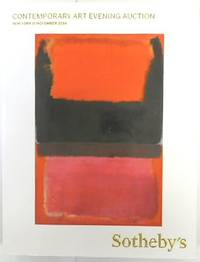
2014531555New York: Sothebys 2014. Paperback auction catalogue in very good condition. Sale no. 9221. Held 11 November 2014 at 6:30pm. 475pp. Spine is creased and covers are worn along edges. Contents clean and bright. AD. Paperback. Very Good. Used. Sothebys Paperback
173612992Aix Aix-en-Provence: Chez Joseph David 1736. Fine. Chez Joseph David Aix Aix-en-Provence 1736 20.50 x 16 cm broché First edition. In original wrappers covered with transparent yellow paper. Yellow dampstaining on the title page. Renewal by the assembly of communities of Provence of the lease of treasurer general of Provence of Henry Gautier articles of this lease. Chez Joseph David unknown
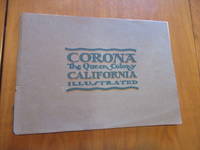
1902055860Corona Ca: Corona Publishing Company / Press Of George Rice & Sons Los Angeles 1902. 1st Edition . Soft cover. Very Good. 70 Pp. Gray Card Covers Printed In Green And Orange Staple Bound. Light Usage No Marks But Text Block No Longer Attached To Covers Foxing To Edges Of First And Last Leaves. <br/> <br/> Corona Publishing Company / Press Of George Rice & Sons (Los Angeles) paperback
1896026193Mittineague No Date But Circa 1896/1916: Strathmore Paper Company 1896. First Edition . String Bound Wrappers. Fine/Very Good Printed Envelope. 7 1/8" x 5 1/4. Designs By Will Bradley. Covers and pages printed in green and red. Catalog for Coronet deckle edge papers here with the original envlope with lettering "Strathmore Deckle Edge Papers" indicating this catalog attributed to "Coronet" in Bambace as a wayside Press production is another Strathmore catalog. The catalog is undated and makes no mention of company information printer or designer. A pencilled note on the back of the envelope by a knowledgeable printer and collector of Bradley material states "probably the first specimen book Bradley did for Strathmore" indicating possibly an 1896 or 1897 date. <br/> <br/> [Strathmore Paper Company] unknown
1940038368Los Angeles Circa 1940 1940. Original Artwork . No Binding. Fine. Single Sheet Unsigned. <br/> <br/> unknown
28379Courvoisier. Very Good with No dust jacket as issued. N.D. Brochure. A nice piece of advertising ephemera. Blue card covers illustrated in color. No date but the back cover shows F. C. G. Inporters inc in New York. No postal zone which at least puts this in the 1940's or before. The only dates mentioned inside are both for 1911 used at the coronation of King George and on the Zeppelin service. Spot of soil on both the front & back covers. ; 8vo 8" - 9" tall; 8 pages . Courvoisier unknown
1910003429New York: Cresca Company 1910. A very rare piece of ephemera from the Cresca Company purveyor of fine foods from the turn of the last century 1910 profusely illustrated with period photographs decorations and illustrations. Cresca Company was a successor company to another food purveyor Reiss and Brady. It was headquartered in New York City and Bordeaux France. It billed itself as "importer of the world's delicacies." 12mo size softcover with both stapled and sewn binding; some pages are numbered most are not about 35 pages. Stated Second Edition. The cover illustration has an Edwardian style with its Gibson Girl-like illustration. Alas none of the illustrations include the name of the artist but these illustrations are from that time period. This is an interesting piece of ephemera for a food lover or historian: sample menus; recipes for the items on the sample menus and a list of Cresca Imported Delicacies one could have ordered at the time including green figs in cognac; tuny fish in tin really it says "tuny" cailles quail in tin; confits in glass; much more to peruse including Cresca assorted boxes "roast capon whole in aspic for automobile luncheon." Recipes include: Eggs Gourmet; Spinach Timbales; Coup Moquin; Smelts a la Somerset; Pimiento Bisque; Brussel Sprouts a la Magdeburg; Frozen Cheese Alexandria; Poinsettia Salad; Fraise Salad; Delmonico Chicken with Glazed Sweetbread; Asparagus in Lemon Rings many more. Cresca Company no longer exists. This is a fragile item a Reading Copy with the front cover fep and last page detached. Our photographs show the item in three separate pieces. There is a dampstain on the top quarter inch with some yellow or blue ink bleed this occurs in the blank space above any text or decorations with dampstain to the last page and back cover and inside front cover and to top quarter of last several pages. There is a half inch tear in margin of front cover and chips to top inside covers and bottom back corner. Dealer Direct Payment Only. Thanks for shopping with us! 100% of your purchase benefits charity and supports literacy and lifelong learning. 2nd. Stapled. Good/No Jacket. 8vo - over 7¾" - 9¾" tall. Private Press. Cresca Company Paperback
1986PC495NY: Kraus Iinternational 1986. Two-volume set. Clean and sound with minimal wear. Ex-library with usual stamps and labels. 1387 pp. This heavy set will require additional postage. First Edition. Blue Cloth w/Gilt Titling. Very Good/No Dust Jacket. 4to - Over 9 ¾" -12" Tall. Ex-Library Hard Cover. Kraus Iinternational Hardcover
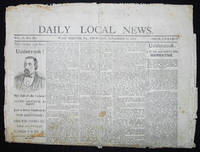
1874009604West Chester PA: Daily Local News 1874. Fair . 8 p.: illustrations; 47 cm. Printed in 5-column pages. Most of the newspaper concerns the murder of Winfield Scott Goss by William Udderzook following their involvement in insurance fraud. Udderzook's conviction rested on the novel use of a photograph to establish the identify of the victim. The newspaper recounts the details of the case as well as the execution of Udderzook. Also contains local news and advertisements. Very scarce. In Fair Condition: first leaf is separating along center fold with minor loss of text; first leaf and last are separating; chipping at edges; small stains on first leaf. Daily Local News unknown
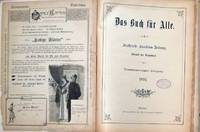
189413788Stuttgart Union Deutsche Verlagsgesellschaft . 1894. HLwd.d.Zt. 684 S. 2°. Enthält eine Erzählung von Robert KRAFT: "Das Seegespenst" sowie von PAJEKEN " "Peter Baum´s Jagdglück" und von Walter KABEL "Alice Weathers Bekerhrung " und der schlafende Fakir" leicht bestoßen ANY QUESTIONS Please don´t hesitate to ask for details !! unknown
1842052781New Berlin PA: S. G. Miller 1842. Book. Very Good. Hardcover. 1st Edition. 24mo - over 5" - 5¾" tall. Black 1/4 cloth brown paper covered boards. Covers are spotted and show surface rubbing; cloth typically soiled with loss to lower spine panel and two chips along front joint binding firm. 1856 ownership inscription in pencil on front flyleaf. 116 pp. Interior typically foxed ranging light to moderate with paper loss and some scribbling inside back cover. Text in German. Scarce. S. G. Miller Hardcover
1799000811Germantaun: Michael Billmeyer. Good. 1799. Full-Leather. Full leather clasps intact overall very good save for rubbing to the edges and some chipping to the head of the spine. Lovely frontis woodcut with David at the harp praising God. 585 numbered pages detailed index pages of catechism.; German Language; 12mo - over 6¾" - 7¾" tall; antiquité contrat vélin document manuscrit papier Antike Brief Pergament Dokument Manuskript Papier oggetto d'antiquariato atto velina documento manoscritto carta antigüedad hecho vitela documento manuscrito Papel Religion Christianity German Luthern Reformist Catechism . Michael Billmeyer hardcover
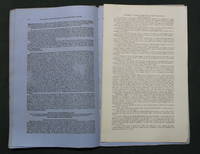
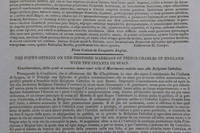
1869MH132bCheltenham: Typis medio-montanis Jacobus Rogers impressit 1869 Book. Good. Disbound. 25 blank 1 blank p. Holzenberg 406 with the 4 page insertion after page 18 but lacking title page and first insertion. With at the rear a sheet titled Capita hujus operis which seems not to be listed in Holzenberg. Copied from Phillipps ms 2753 concerning Catholic plans to conquer England during the reign of Elizabeth I. Documents copied are in Italian and Spanish. Printed on blue paper. Disbound. One of many anti-Catholic works produced by Sir Thomas at his Middle Hill Press. [Typis medio-montanis Jacobus Rogers impressit] unknown
1869MH132aCheltenham: Typis medio-montanis Jacobus Rogers impressit 1869 Book. Good. Disbound. 25 blank 1 blank pages. Holzenberg 406 but lacking title page and insertions but with at the rear a sheet titled Capita hujus operis which seems not to be listed in Holzenberg. Copied from Phillipps ms 2753 concerning Catholic plans to conquer England during the reign of Elizabeth I. Documents copied are in Italian and Spanish. Printed on blue paper. Disbound. One of many anti-Catholic works produced by Sir Thomas at his Middle Hill Press. [Typis medio-montanis Jacobus Rogers impressit] unknown
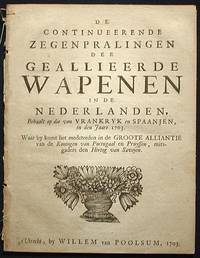
1703001480Utrecht: Willem van Poolsum 1703. Paperback. Very Good . 56 p.; 19 cm. Signatures: A-G4 4to. Disbound but solid. Woodcut title vignette of a vase with flowers and initial letter. Knuttel 14961. A report on victories of the Allied nations in the Netherlands against France and Spain in 1703. An extremely scarce pamphlet from the War of the Spanish Succession. Disbound; otherwise in Very Good Condition: slightly soiled and creased. Willem van Poolsum paperback