Lincoln, AbrahamBiblio.com
12 695 résultats
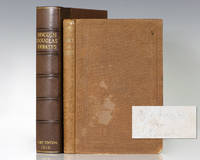
1860138634Columbus: Follett Foster and Company 1860. First edition first issue of the most famous debates in American history which cemented Lincoln as a national presidential candidate; inscribed by Lincoln in pencil to close friend Martin S. Morris and accompanied by the table from the Morris household that Lincoln signed the book on. Octavo original cloth stamped in blind. First issue with no advertisements no rule above the publisher’s imprint on the copyright page and with numeral 2 at the bottom of page 17. Association copy inscribed by Abraham Lincoln in pencil on the front free endpaper "M. S. Morris Esq A. Lincoln." The recipient Martin S. Morris was was a long-time political supporter and friend of Abraham Lincoln from Menard County Illinois. In March 1843 Lincoln wrote to Morris “It is truly gratifying to me to learn that while the people of Sangamon have cast me off my friends of Menard who have known me longest and best of any still retain their confidence in me.†Morris was selected as one of the delegates from Menard County to attend the Whig convention in Pekin in May 1843 but was detained by an illness and Francis Regnier attended in his place. The convention selected John J. Hardin rather than Lincoln as the Whig candidate for Congress from that district. In June 1852 Morris's close friend Whig Congressman and later Illinois governor Richard Yates wrote to him from Washington regarding the 1852 presidential election. The Democratic National Convention was then underway in Baltimore and after 32 ballots by the convention Yates believed the chances of receiving the nomination were against U.S. Senator Stephen A. Douglas of Illinois unless “his almost never failing good luck may avail him.†Ultimately on the 49th ballot the Convention nominated Franklin Pierce who had received no votes until the 35th ballot. Laid in is Yates' letter to Morris which reads in part “Washington June 4 1852 Dear Morris I thank you kindly. The Democratic Convention is now in session in Baltimore. The 32nd ballot has been had and no nomination. Douglass does not appear to have as much strength as anticipated and if we were to judge from present indications the chances are against him. How far his almost never failing good luck may avail him remains to be seen. The contest between Fillmore & Scott it is now believed will be very close. Some of the knowing ones who have not much to do but make calculations say that the vote of Illinois will decide the question. We do not know how the Illinois delegation stands but we suppose nearly equal for Scott and for Fillmore. Fillmore and his friends will if necessary to defeat Gen'l Scott cast their vote for Mr. Webster. My opinion and it is only an opinion is that Gen'l Scott will receive the nomination. Of one thing I feel pretty sure that either Scott or Fillmore will be supported most cheerfully by the Whigs and what is better the Whigs here and throughout the Union have an abiding confidence that they will again gloriously triumph in November. Such was not the case at the beginning of the session. There was more or less of despondency then but the skies are bright ahead now and be the result what it may the Whigs will march up to the work with unfaltering purpose and in the confident hope of victory. Your friend Richard Yates." The Whig National Convention met a few weeks later also in Baltimore and the contest remained close between Winfield Scott and incumbent president Millard Fillmore with Daniel Webster running a distant third until Scott finally received the nomination on the 53rd ballot. In his letter to Morris Yates was confident of a Whig victory in November but Pierce went on to defeat Scott with 51 percent of the vote to Scott’s 44 percent and an overwhelming 254-to-42 victory in the Electoral College. In May 1858 Morris wrote to Lincoln that he and other Republicans in Menard County “are up and doing†and “though we are in a minority we nevertheless intend to give them the Democrats the best fight we can.†Four months later he again wrote to “Friend Lincolnâ€: "If there is any reliance to be placed on the papers which I read you are certainly making a very successful electioneering tour through the state and whether you are elected to the senate or not you certainly have reason to congratulate yourself and feel proud of the manifestations of confidence every where shown you by the people I have said and believed ever since Douglass repealed the MO. Com. That you would be his successor the first chance the people had to vote in matter that was a most rascally thing and I believe would and know it ought to politically damn him and all who had anything to do with it at least in the north. But my object is not to write a dissertation on politicks knowing well that I could say nothing But which you already know But merely to inform you by way of adding to the encouragement which I believe you are every where receiving the good news that you may calculate with a very great degree of certainty on a vote from Menard & Cass. We are glad that you have made an appointment to speak here and will endeavor to get you a large crowd." Contrary to Morris’s assurances in the race for state representative from Cass and Menard Democrat William Engle defeated Republican James W. Judy for a seat in the legislature where he dutifully voted for Stephen A. Douglas for the U.S. Senate. In September 1859 Morris was a delegate from Menard County to the Republican Congressional Convention for the Sixth Congressional District in Springfield. At the Convention Morris was elected to the District Central Committee which consisted of one delegate from each county. Among the resolutions passed by the Convention were “Resolved That the Territories of the United States are the common property of all the free white citizens of the whole Union but that the institution of Slavery has no right or heritage therein.but at the same time we strenuously oppose every attempt to interfere with slavery in the States where it now exists.†and “Resolved That Freedom is universal and Slavery sectional and cannot exist where it is not authorized by virtue of special local legislation; and that the Government of the United States in the exercise of its powers whether executive legislative or judicial is bound to adhere in substance and in form to the generous and noble spirit of these important maxims.†6 Less than a month later John Brown did “interfere with slavery in the States where it now exists†by seizing the federal arsenal in Harpers Ferry Virginia. In 1862 Morris wrote to President Lincoln on behalf of his friend Henry Clay Denison who was serving as a commissary clerk in the 14th Illinois Infantry regiment. Denison wanted a position as assistant quartermaster or assistant commissary in the army. Morris stressed that Denison was “a descendant of a good Whig family of the good old Whig state of Vermont his native place being Woodstock. He is also as good a Republican as lives and if he didn’t do as much he tried as hard as any one else to bring about your nomination &election.†President Lincoln dutifully forwarded the letter to the War Department. With Yates' June 1852 letter to Morris laid in and with the ownership inscription of Morris' great granddaughter beneath Lincoln's inscription “Property of Pauline Madgett Welton Lincoln’s signature above." Provenance: kept in the Morris family for over six generations Martin S. Morris 1816-1884 husband of Elizabeth Waggoner Morris 1820-1901; Their daughter Jane Eliza Morris Nance 1857-1927 wife of Benjamin Franklin Nance 1853-1914; Their daughter Pauline E. Nance Madgett 1879-1971 wife of William P. Madgett 1875-1951; Their daughter Pauline Helen Madgett Welton 1908-1978 wife of Claude R. Welton 1908-1978; Their son William R. Welton 1939-2014; Welton family. Ownership inscription of Pauline Helen Madgett Welton. In very good condition. Housed in a custom half morocco clamshell box. Exceptionally rare signed by Lincoln with no other signed copies traced at auction. Accompanied by the original pedestal table from the Morris household that according to generations of family lore Lincoln sat at with Morris signed the book and ate apples as well as an oil portrait of Martin S. Morris which hung by the table. With a letter of provenance signed by a descendant of Pauline Helen Madgett Welton attesting to the provenance of the book table and a portrait. According to Rae Katherine Eighmey Abraham Lincoln in the Kitchen: A Culinary View 2014 fellow lawyer Charles S. Zane recalled Lincoln at a circuit town inn: "There was a 'large basket of apples in the sitting room and we were invited to help ourselves. Mr. Lincoln was a great eater of apples. He said to me once that a man should eat and drink only that which is conducive to his own health. "Apples" he said "agree with me."'" p. 131 citing Zane's article in the Journal of the Illinois State Historical Society in 1921. According to Eighmey Herndon wrote of Lincoln: "He loved best the vegetable world generally.and especially did he love apples. Running as a little-known candidate for the Illinois senatorship in 1858 Lincoln challenged incumbent and Democratic leader Stephen Douglas to a series of debates. The result was a memorable chain of lively arguments in front of cheering crowds. Though Lincoln lost the senatorial race “he began collecting a scrapbook of his best speeches particularly those from the just-concluded campaign against Douglas for possible inclusion in a book. Assiduously pasting newspaper accounts of the debates into the scrapbook Lincoln cast about for a publisher. Initial efforts failed mainly because Lincoln wanted the book printed in Springfield which had no local publishing or printing facilities. Eventually however the Columbus Ohio firm of Follett Foster & Company showed interest and he began preparing the first edition… Somewhat surprisingly for an attorney Lincoln did not seek Douglas’ permission to publish a book of their combined speeches although Douglas was later given the last-minute opportunity—he declined—to make corrections to his own remarks†Morris 121. Follett, Foster and Company hardcover
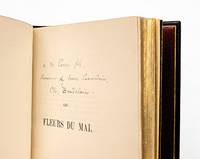
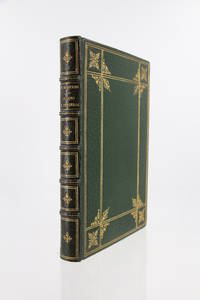
185765388Paris: Poulet Malassis & De Broise 1857. Fine. Exceptional copy inscribed by Charles Baudelaire Poulet Malassis & De Broise Paris 1857 12.10 x 18.80 cm relié sous étui First edition printed on vélin d'Angoulême paper with the usual misprints and including the six condemned poems one of the few copies given to the author and intended for friends who do not deliver literary services. Full emerald morocco binding signed by Marius Michel original wrappers preserved. Precious presentation copy inscribed and signed by the author in pencil on the half-title page: à M. Tenré fils souvenir de bonne camaraderie Ch. Baudelaire to M. Tenré Jnr a reminder of good friendship Ch. Baudelaire and three handwritten corrections in pencil on pages 29 and 110 and in ink on page 43. Exceptional inscription to a childhood friend banker and intellectual one of the rare contemporary inscriptions that were not motivated by judicial necessity or editorial interests. Indeed even the few examples on papier hollande were largely devoted to strategic gifts in order to counter or reduce the wrath of justice that in June 1857 had not yet returned its decision. Poulet-Malassis will hold a bitter memory of it: Baudelaire got his hands on all thick paper copies and addressed them to more or less influential people as a means of corruption. Since they have not got him out of trouble I believe he would do well to ask for them back. Baudelaire's correspondence makes it possible to define quite precisely the different types of inscriptions the poet made on the publication of his collection. He himself sent a list to de Broise to mention those to whom the press deliveries were dedicated mainly possible judicial intercessors and influential literary critics. The poet then requires twenty-five copies on ordinary paper intended for friends who do not deliver literary services. A letter to his mother tells us that he only got twenty. Some of them were sent in June 1857 to his friends including one for Louis-Ludovic Tenré. Others were saved by the poet or offered late like the ones for Achille Bourdilliat and Jules de Saint-Félix. If Tenré this childhood friend whom Baudelaire has just found again in December 1856 is honored with one of the poet's rare personal copies of the Fleurs du mal publication the three misprints he immediately noticed having been carefully corrected by hand it is not on account of a service delivered or in anticipation of an immediate benefit. However as always with Baudelaire neither did he send his masterpiece to his boarding companion from Louis-le-Grand school as a simple reminder of good friendship. As early as 1848 Louis-Ludovic Tenré took over from his father the publisher Louis Tenré who like other major publishers moved into investment providing loans and discounts exclusively for those in the book industry. These bookseller-bankers played a key role in the fragile publishing economy and contributed to the extreme diversity of literary production in the nineteenth century supporting the activities of small but bold publishers and liquidating other major judicial clashes. In December 1856 Baudelaire tells Poulet-Malassis that he had deposited an expired banknote with this old school mate which Tenré out of friendship agreed to accept. It was the initial advance for the printing of one thousand copies of a collection of verses entitled Les Fleurs du Mal. With this copy hot off the presses Baudelaire then offers Tenré the precious result of the work discounted by his new banker. It is the beginning of a long financial relationship. Amongst all of Baudelaire's discounters Louis-Ludovic Tenré will be the poet's favorite and the only one to whom an autographed work will be sent. Nicolas Stokopf in his work Les Patrons du Second Empire banquiers et financiers parisiens dedicates a chapter to Louis-Ludovic Tenré and evokes the privileged relationship between the poet and this unusual and scholarly financier Paraguay con Poulet Malassis & De Broise unknown
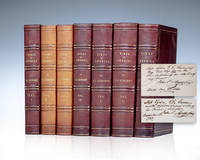
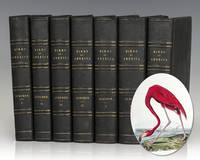
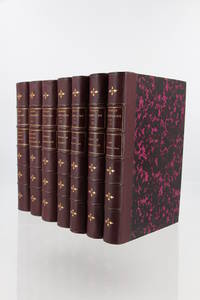
1840143567New York: Published by J. J. Audubon. Philadelphia: J. B. Chevalier 1840-1844. First octavo edition of Audubon's landmark work; one of the most spectacular collections of ornithological prints ever produced. Royal octavo 7 volumes bound in full 19th-century morocco by P. Low of Boston with their ticket gilt titles and ruling to the spine in six compartments within raised gilt bands gilt ruling to the front and rear panels gilt turn-ins marbled endpapers ribbons bound in. Illustrated with 500 hand-colored lithographed plates after Audubon by W. E. Hitchcock R. Trembly and others printed and colored by J. T. Bowen wood-engraved anatomical diagrams in text. Presentation copy inscribed by John James Audubon on the on the contents leaf of volume one "Miss Lydia E. E. Greene with the affectionate good wishes of her friend and servant John J. Audubon Boston June 8 1844" and additionally on the front free endpaper of Vol. II. "Miss Lydia E. E. Greene; and may God bless her with the sincerest wishes of her old friend and servant John J. Audubon Boston June 8 1844." The recipient Lydia E. E. Greene became a Proprietor of the Boston Athenaeum in 1854.  Audubon spent only a few months living in Boston from 1832-1833 but the city made an impact on him; his wife Lucy wrote to  a friend that the city “is a more interesting place than any I have seen in the United States and where we met with a most cordial welcome and obtained eight subscribers to our work The Birds of America.â€Â Audubon exhibited sketches of his Birds of America at the Boston Athenaeum in August 1832. In very good condition with the plates exceptionally clean. Audubon’s double-elephant folio edition of The Birds of America 1827-1838 established his reputation as the greatest ornithological artist of his time. Though that edition was published in London to ensure the quality of the plates he employed the Philadelphia firm of J. T. Bowen to produce this more commercially viable edition under the close supervision of his sons. The original subscription price was $100 and its commercial success granted Audubon financial security. To the original plate count included in the double-elephant folio edition the octavo edition adds 65 new images for a total of 500 plates making it "the most extensive color plate book produced in America up to that time" Reese. "The most splendid book ever produced in relation to America and certainly one of the finest ornithological works ever printed… Audubon insisted on drawing from life never from stuffed specimens and was much in advance of his time in portraying the birds in many cases unrecorded species in their natural surroundings… The courage and faith of the Audubon family is breathtaking… This immense undertaking this unparalleled achievement was not the production of a great and long-established publishing house nor was it backed by a wealthy institution. It was the work of a man of relentless energy with no private fortune… It is a story without equal in the whole history of publishing†Great Books and Book Collectors 210-13. Nissen IVB 51; Reese 34; Sabin 2364 Published by J. J. Audubon. Philadelphia: J. B. Chevalier unknown
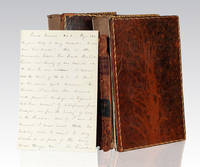
1885145720New York: Charles L. Webster & Company 1885-86. Exceedingly rare first edition of the autobiography of Ulysses S. Grant the 18th President of the United States which focusing mainly on his military career during the Mexican War and the Civil War entirely singular owned and annotated by Grant's close friend and most esteemed general: William Tecumseh Sherman. Octavo 2 volumes bound in the original full deluxe tree calf with gilt titles and elegant tooling to the spine gilt ruled borders to the front and rear panels gilt inner dentelles all edges gilt engraved portrait frontispieces illustrated with numerous facsimile letters 2 folding maps and wood engravings. William Tecumseh Sherman evidently read thes volumes in great detail making marginal notes on at least 18 pages in Vol. I several of them signed with his initials. On the last page of Vol. I Sherman wrote: "Read at St. Louis Mo. Dec 5 6 1885. This account of the Civil War is wonderfully accurate and him. W.T.S." Many of the notes are small corrections and additions by Sherman. On a passage regarding the Yazoo Pass Expedition on page 435 of Vol. I Sherman pointedly writes: "This conforms literally to my memoirs on the point most contested by Grant's pretended friends. W.T.S." He provides further thoughts regarding political interference on the next page: "If Grant had gone ahead living off the country we would have been inside of Vicksburg by Christmas 1862 the distance from Grenada to Vicksburg is little more than the circuit we afterward made from Bruinsberg via Jackson to Vicksburg --- This was my understanding when we parted at Oxford and the intervening country was better supplied with hay hominy. W.T.S." On p. 440-441 Grant wrote about the need to assign politically-connected John McClernand as Corps Commander: "I would have been glad to put Sherman in command to give him an opportunity to accomplish what he had failed in the December before; but there seemed no other way out of he difficulty for he was junior to McClernand. Sherman's failure needs no apology." In the margins Sherman's distinctive hand writes passionately: "because it was no failure at all." There is only one marginal annotation in Vol. II; however an autograph note is laid in at p. 123 supplying Sherman's recollection of Grant's first meeting with Lincoln which corroborates Grant's account. While Sherman was not present at the meeting between Grant and Lincoln he almost certainly heard about what transpired from Grant himself. The note reads in full: "Grants Memoirs Vol 2 Page 123 A good story is very correct. 'Si non vero ben trovalo.' Even if it is not true it is well conceived. This is the conversation between Genl. Grant President Lincoln and Secretary of War Stanton at the time he was addressed to command all the Armies of the U.S. Grant said in his usual quiet manner 'Mr. Lincoln I am told that several well planned campaigns in Virginia have been marred by interference from Washington viz from the Secretary of War or the President now if I am to command I must insist that no military order be issued to any detachment or part of the Army except through me' Mr. Lincoln in his inimitable way turning to Stanton said 'Stanton you and I have been running this machine for two years and have not made a brilliant success. I guess we had better trust this little man' Grant and then then and there the promise was made. And it is to the credit of Mr. Lincoln to say that he kept his word literally never interfering or making any order even when Washington was in real peril from Early's Army in 1865." Grant's insistence that there would be no political interference was likely particularly important to General Sherman who famously hated politicians. In good condition with detaching of the front boards and spines of each volume detaching of the rear board and separation of the folding facsimile letter at p. 312-313. Copies bound in highly polished gilt tree calf are extremely rare with only three other copies known. The first prospectus of Grant's Memoirs listed only 4 bindings: fine cloth full sheep fine half morocco and full Turkey morocco. The only other copy of Grant's Memoirs bound in tree calf was sold at auction - a copy presented to Mark Twain by Julia Grant and inscribed by both. Only two other known copies are located in private collections. To date no copies bound in the tree calf have been traced to institutional collections. As Grant died before publication was complete the only copy that he saw before his death was a prospectus bound in cloth; the extant tree calf copies suggest that the binding was perhaps reserved exclusively for presentations made by Julia Grant. Even the copies presented by publisher Mark Twain to his friends and colleagues were bound in one of the other available bindings. Though this copy bears no presentation inscription by Julia Grant Mark Twain or anyone else it is plausible that one of these figures would have sent the copy directly to General Sherman. After his second presidential term and world tour President Grant was stripped of nearly all of his life's earnings by conman Ferdinand Ward. Grant had forfeited his and his widow's military pension when he resigned as general to assume the presidency and his recent throat cancer diagnosis brought him deep concern about how his wife and family would manage financially after his death. In this moment of crisis Sherman rushed to Grant's aid and assisted him in restructuring his debt ensuring that Grant was able to keep his most prized possesions. Most importantly Sherman also encouraged Grant to do what he should have done years ago - write his memoirs. By June 1884 Grant had begun publishing articles on his major engagements of the Civil War for 'Century Magazine' which paid him $500 for each submission. The articles were received with great enthusiasm and Grant met with the magazine's representatives in early September to arrange for the publication of his memoirs. However when Samuel Clemens popularly Mark Twain learned of the potential arrangement with 'Century Magazine' he convinced Grant to sign with his own subscription publishing company which was able to offer Grant 70% of the net profit made from the sale of his memoirs. This rate was exorbitantly higher than what 'Century Magazine' had proposed. Grant began writing his memoirs in earnest racing against the illness to finish and ensure his family's financial stability. During this time Grant welcomed Sherman's repeated visits. On December 24 1884 Sherman wrote to his wife Ellen: "Grant says my visits have done him more good than all the doctors" Flood p.395. Grant with the moral support of Sherman lived to finish the memoir dying five days after its completion. Widely considered the finest military narrative ever published the memoirs were a national bestseller and Grant's widow Julia would eventually receive nearly $450000 about ~$14000000 today in royalties from their sale. Charles L. Webster & Company hardcover
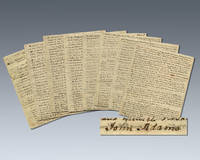
18091215601809. Exceptionally rare 16-page autograph letter signed by and entirely in the hand of Founding Father John Adams defending the ultimate necessity of American sovereignty and its precedence over international alliances. Sixteen pages entirely in the hand of John Adams and written on both the recto and verso of each page the letter is dated January 9 1809 and addressed to Speaker of the House of Representatives Joseph Bradley Varnum. Although France and America shared a strong alliance which proved crucial to winning the Revolutionary War at the onset of the French Revolution in 1789 Washington's fear that American involvement would weaken the new nation before it had firmly established itself created tensions and a new war between England and France broke out in 1793. The British Navy soon began targeting French vessels and trading interests across the Atlantic and although many Federalists thought that America should aid its ally Washington proclaimed that the United States would be "friendly and impartial toward the belligerent parties." The Neutrality Proclamation was ignored by Britain and angered France which then allowed its navy and privateers to prey on American trade. To protect American sailors and merchants without provoking Britain in March 1794 Congress passed a 30-day embargo which it then extended. Britain the strongest sea power began to seize American ships suspected of trading with France and stepped up its practice of impressment. From 1806-1807 the British navy in desperate need of men to oppose Napoleon forced roughly 5000 American sailors into service on the pretense that they were deserters. In 1807 King George III proclaimed his right to call any British subjects into war service and claimed that Britain had full discretion to determine who was a British citizen. The crisis reached one peak for America in June of 1807 when the HMS Leopard attacked the USS Chesapeake off the coast of Virginia. Three American sailors were killed eighteen were wounded and the Chesapeake surrendered after firing only one shot. The Leopard seized four American seaman claimed as deserters from the British navy and hanged one of them. Jefferson and Madison his Secretary of State responded with the Embargo of 1807 a ban on all American vessels sailing for foreign ports. Meanwhile Russia allied with Napoleon and pressed Denmark to turn over her fleet. In September 1807 Britain preemptively bombarded Copenhagen and seized the Danish-Norwegian fleet. While Jefferson's Republicans still generally favored France a schism grew in the Federalist party. Men like Timothy Pickering downplayed impressments while focusing on trade and access to British manufacturing. On October 16 1807 King George III aggravated already high tensions with American following the British attack of the USS Chesapeake off the coast of Virginia by issuing a Royal Proclamation expanding the British right to impressment the King's right to call any British subjects into war service and determine their citizenship. News of the King's Proclamation arrived in the United States in December 1807 and lacking military options President Jefferson proposed an embargo to ban all U.S. exports on American vessels in order to protect American sailors' lives and liberties despite its potential to cripple American trade. The Embargo Act was signed on December 22 1807 causing immediate economic devastation. In protesting the Embargo rather than wrestling with the difficulty of defending American sovereignty some opponents chose to declare the legality of impressments as defined by King George's Royal Proclamation. John Adams' former Secretary of State Timothy Pickering took a leading role in fighting the embargo arguing that Jefferson was using it to draw America closer to Napoleon's France. Given the devastating economic effects of the embargo Pickering's message found a wide audience. Adams on the other hand recognized the dire threat the King's Proclamation posed in denying America the right to determine its own rules for citizenship and in December took his arguments to Speaker of the House Joseph Varnum. As he stated in the present letter "He Pickering thinks that as every Nation has a Right to the Service of its Subjects in time of War the Proclamation of the King of Great Britain commanding his Naval Officers to practice Such Impressments on board not the Vessells of his own Subjects but of the United States a foreign Nation could not furnish the Slightest ground for an Embargo! . But I Say with Confidence that it furnished a Sufficient ground for a Declaration of War. Not the Murder of Pierce nor all the Murders on board the Chesapeake nor all the other Injuries and Insults We have received from foreign Nations atrocious as they have been can be of such dangerous lasting and pernicious Consequence to this Country as this Proclamation if We have Servility enough to Submit to it." Adams suggested repealing and replacing the Embargo Act with one that allowed international trade with all but the belligerents while building up the navy. Varnum asked to publish it. Before assenting Adams completely reworked his argument mustering all the reason and rhetoric at his disposal into a stirring defense of sovereignty and citizenship resulting in the present letter. On March 1 1809 Congress repealed the Embargo Act following Adams' suggestion to replace it with the Non-Intercourse Act which allowed trade with all nations except Britain and France. In fine condition. A remarkable piece of early American history illustrating the second President of the United States' impassioned devotion to the pursuit of American liberty. Housed in a custom half morocco clamshell box. The longest letter signed and entirely in the hand of John Adams obtainable. American Founding Father John Adams served as the first vice president of the United States from 1789 to 1797 and subsequently the second president of the United States from 1797 to 1801. A lawyer and political activist prior to the revolution Adams was devoted to the right to counsel and presumption of innocence. He defied anti-British sentiment and successfully defended British soldiers against murder charges arising from the Boston Massacre. Adams was a Massachusetts delegate to the Continental Congress and became a principal leader of the Revolution. He assisted in drafting the Declaration of Independence in 1776 and was its foremost advocate in Congress. As a diplomat in Europe he helped negotiate the peace treaty with Great Britain and secured vital governmental loans. Adams was the primary author of the Massachusetts Constitution in 1780 which influenced the United States' own constitution as did his earlier Thoughts on Government. Adams was elected to two terms as vice president under President George Washington and was elected as the United States' second president in 1796. He was the only president elected under the banner of the Federalist Party. He and his wife generated a family of politicians diplomats and historians now referred to as the Adams political family which includes their son John Quincy Adams the sixth president of the United States. John Adams died on July 4 1826 - the fiftieth anniversary of the adoption of the Declaration of Independence - hours after Jefferson's death. unknown books
18091215601809. Exceptionally rare 16-page autograph letter signed by and entirely in the hand of Founding Father John Adams defending the ultimate necessity of American sovereignty and its precedence over international alliances. Sixteen pages entirely in the hand of John Adams and written on both the recto and verso of each page the letter is dated January 9 1809 and addressed to Speaker of the House of Representatives Joseph Bradley Varnum. Although France and America shared a strong alliance which proved crucial to winning the Revolutionary War at the onset of the French Revolution in 1789 Washington's fear that American involvement would weaken the new nation before it had firmly established itself created tensions and a new war between England and France broke out in 1793. The British Navy soon began targeting French vessels and trading interests across the Atlantic and although many Federalists thought that America should aid its ally Washington proclaimed that the United States would be “friendly and impartial toward the belligerent parties.†The Neutrality Proclamation was ignored by Britain and angered France which then allowed its navy and privateers to prey on American trade. To protect American sailors and merchants without provoking Britain in March 1794 Congress passed a 30-day embargo which it then extended. Britain the strongest sea power began to seize American ships suspected of trading with France and stepped up its practice of impressment. From 1806-1807 the British navy in desperate need of men to oppose Napoleon forced roughly 5000 American sailors into service on the pretense that they were deserters. In 1807 King George III proclaimed his right to call any British subjects into war service and claimed that Britain had full discretion to determine who was a British citizen. The crisis reached one peak for America in June of 1807 when the HMS Leopard attacked the USS Chesapeake off the coast of Virginia. Three American sailors were killed eighteen were wounded and the Chesapeake surrendered after firing only one shot. The Leopard seized four American seaman claimed as deserters from the British navy and hanged one of them. Jefferson and Madison his Secretary of State responded with the Embargo of 1807 a ban on all American vessels sailing for foreign ports. Meanwhile Russia allied with Napoleon and pressed Denmark to turn over her fleet. In September 1807 Britain preemptively bombarded Copenhagen and seized the Danish-Norwegian fleet. While Jefferson’s Republicans still generally favored France a schism grew in the Federalist party. Men like Timothy Pickering downplayed impressments while focusing on trade and access to British manufacturing. On October 16 1807 King George III aggravated already high tensions with American following the British attack of the USS Chesapeake off the coast of Virginia by issuing a Royal Proclamation expanding the British right to impressment the King's right to call any British subjects into war service and determine their citizenship. News of the King’s Proclamation arrived in the United States in December 1807 and lacking military options President Jefferson proposed an embargo to ban all U.S. exports on American vessels in order to protect American sailors' lives and liberties despite its potential to cripple American trade. The Embargo Act was signed on December 22 1807 causing immediate economic devastation. In protesting the Embargo rather than wrestling with the difficulty of defending American sovereignty some opponents chose to declare the legality of impressments as defined by King George’s Royal Proclamation. John Adams’ former Secretary of State Timothy Pickering took a leading role in fighting the embargo arguing that Jefferson was using it to draw America closer to Napoleon’s France. Given the devastating economic effects of the embargo Pickering’s message found a wide audience. Adams on the other hand recognized the dire threat the King’s Proclamation posed in denying America the right to determine its own rules for citizenship and in December took his arguments to Speaker of the House Joseph Varnum. As he stated in the present letter “He Pickering thinks that as every Nation has a Right to the Service of its Subjects in time of War the Proclamation of the King of Great Britain commanding his Naval Officers to practice Such Impressments on board not the Vessells of his own Subjects but of the United States a foreign Nation could not furnish the Slightest ground for an Embargo! … But I Say with Confidence that it furnished a Sufficient ground for a Declaration of War. Not the Murder of Pierce nor all the Murders on board the Chesapeake nor all the other Injuries and Insults We have received from foreign Nations atrocious as they have been can be of such dangerous lasting and pernicious Consequence to this Country as this Proclamation if We have Servility enough to Submit to it.†Adams suggested repealing and replacing the Embargo Act with one that allowed international trade with all but the belligerents while building up the navy. Varnum asked to publish it. Before assenting Adams completely reworked his argument mustering all the reason and rhetoric at his disposal into a stirring defense of sovereignty and citizenship resulting in the present letter. On March 1 1809 Congress repealed the Embargo Act following Adams’ suggestion to replace it with the Non-Intercourse Act which allowed trade with all nations except Britain and France. In fine condition. A remarkable piece of early American history illustrating the second President of the United States' impassioned devotion to the pursuit of American liberty. Housed in a custom half morocco clamshell box. The longest letter signed and entirely in the hand of John Adams obtainable. American Founding Father John Adams served as the first vice president of the United States from 1789 to 1797 and subsequently the second president of the United States from 1797 to 1801. A lawyer and political activist prior to the revolution Adams was devoted to the right to counsel and presumption of innocence. He defied anti-British sentiment and successfully defended British soldiers against murder charges arising from the Boston Massacre. Adams was a Massachusetts delegate to the Continental Congress and became a principal leader of the Revolution. He assisted in drafting the Declaration of Independence in 1776 and was its foremost advocate in Congress. As a diplomat in Europe he helped negotiate the peace treaty with Great Britain and secured vital governmental loans. Adams was the primary author of the Massachusetts Constitution in 1780 which influenced the United States' own constitution as did his earlier Thoughts on Government. Adams was elected to two terms as vice president under President George Washington and was elected as the United States' second president in 1796. He was the only president elected under the banner of the Federalist Party. He and his wife generated a family of politicians diplomats and historians now referred to as the Adams political family which includes their son John Quincy Adams the sixth president of the United States. John Adams died on July 4 1826 – the fiftieth anniversary of the adoption of the Declaration of Independence – hours after Jefferson's death. unknown
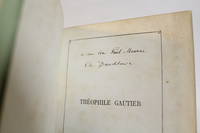
185968622Paris: Poulet Malassis & De Broise 1859. Fine. Baudelaire and Hugo: The Storm-Swept Meeting of the Albatross and the Man of the Ocean Poulet Malassis & De Broise Paris 1859 11.50 x 18 cm relié First edition of which only 500 copies were issued. With an etched frontispiece portrait of Théophile Gautier by Émile Thérond. With a substantial prefatory letter by Victor Hugo. Full red morocco binding gilt date at the foot of spine marbled endpapers Baudelairian ex-libris from Renée Cortots collection on the first endpaper wrappers preserved top edge gilt. Pale foxing affecting the first and last leaves beautiful copy perfectly set. Rare handwritten inscription signed by Charles Baudelaire: À mon ami Paul Meurice. Ch. Baudelaire. To my friend Paul Meurice. Ch. Baudelaire. In addition we have mounted on a guard an autograph ex-dono slip by Victor Hugo addressed to Paul Meurice. This slip which was doubtless never used had nevertheless been prepared along with several others by Victor Hugo in order to present his friend with a copy of his works published in Paris during his exile. If History did not allow Hugo to send this volume to Meurice this presentation note hitherto unused could not in our view be more fittingly associated. Provenance: Paul Meurice then Alfred and Renée Cortot. This exceptional inscription from Charles Baudelaire to Paul Meurice the true surrogate brother of Victor Hugo bears witness to a singular literary encounter between two of the most important French poets Hugo and Baudelaire. Paul Meurice was indeed the indispensable intermediary between the condemned poet and his illustrious exiled counterpart for asking Victor Hugo to associate their names with this elegy to Théophile Gautier was one of Charles Baudelaires great audacities and would scarcely have had any chance of succeeding without the invaluable assistance of Paul Meurice. Ghost-writer to Dumas author of Fanfan la Tulipe and the theatrical adaptations of Victor Hugo George Sand Alexandre Dumas and Théophile Gautier Paul Meurice was a gifted writer who chose to remain in the shadow of the great artists of his time. His unique relationship with Victor Hugo nevertheless granted him a decisive role in literary history. More than a friend Paul together with Auguste Vacquerie stood in place of Victor Hugos deceased brothers: I have lost my two brothers; he and you you and he you replace them; only I was the younger; I have become the elder that is the only difference. It was to this brother of the heart whose wedding he witnessed alongside Ingres and Dumas that the exiled poet entrusted his literary and financial affairs and it was he whom Hugo named together with Auguste Vacquerie as his executor. After the poets death Meurice founded the Maison Victor Hugo which remains today one of the most celebrated writers house-museums. In 1859 Pauls home had become the Parisian antechamber to Victor Hugos Anglo-Norman retreat and Baudelaire therefore turned quite naturally to this official ambassador. Baudelaire knew Meurice well ever since an earlier intercession on his behalf with Hugo had earned him an exceptional copy of Les Fleurs du mal as a testament of friendship. The two men also shared a close friend Théophile Gautier with whom Meurice had worked from 1842 on an adaptation of Falstaff. Meurice thus stood as the ideal intermediary through whom to secure the goodwill of the otherwise inaccessible Hugo. Baudelaire had however already met Victor Hugo briefly. At the age of nineteen he sought an audience with the greatest modern poet to whom he had been devoted since childhood: I love you as one loves a hero a book as one loves purely and disinterestedly every beautiful thing. Even then he imagined himself as a worthy successor as he half-confesses: At nineteen would you have hesitated to write as much to . Chateaubriand for instance For the young apprentice poet Victor Hugo belonged to the past and Baudelair Poulet Malassis & De Broise unknown
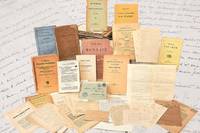
188785181s. l.: S. n. 1887. Fine. S. n. s. l. 1887 divers 11 pages sur 7 feuillets pour les manuscrits 4 feuillets pour la transcription Very important and last remaining archives in private hands including autograph manuscripts typescripts corrected proofs offprints first editions etc. Exceptional collection of manuscript and printed archives the last in private hands of the founder of liberalism and modern economics Léon Walras preserved and annotated by his most prominent scholar William Jaffé. One of the 5 most important sets of personal archives belonging to Walras considered by Schumpeter the greatest of all economists. This collection of 42 important documents including complete autograph manuscripts corrected proofs abundantly annotated offprints and expanded printed material was given by his daughter Aline Walras and then Gaston Leduc to William Jaffé who added his autograph notes to some of them and used them to edit the first translation of Éléments déconomie politique pure. PROVENANCE AND HISTORY OF THE WALRAS ARCHIVES A founder of economic science along with Stanley Jevons and Carl Menger he is considered the father of liberalism while his social and humanist commitment is generally omitted. The general equilibrium theory developed by Walras has in fact disrupted the classic conception of the economy which since Smith Riccardo and Marx based value on the labor necessary for production and on the opposition of social classes. Despite the importance of Léon Walras' manuscript production and his numerous contributions to several economic journals original documents whether autographed or printed by one of the most important economists of the late 19th century are extremely rare whether in private hands in public auctions or in institutions. This extreme rarity has contributed to a lack of recognition of Walras' name while the co-founders of marginal theory are often presented as his predecessors. However as the historian of economic thought Mark Blaug writes: Jevons' Theory of Political Economy 1871 was not well received when it appeared but it was read. Menger's Principles of Economics 1871 was both read and well received at least in his own country. But Walras's two-part Elements of Pure Economics 1844-77 was monstrously neglected everywhere despite his indefatigable efforts to get the book noticed. That was in part because Walras set himself a task that went beyond Jevons and Menger his co-discoverers of marginal utility theory namely to write down and solve the first multi-equational model of general equilibrium in all markets. In addition Walras went far beyond Jevons in employing a mathematical mode of exposition and this was enough to scare off most of his contemporary readers. But whereas Jevons and Menger are now regarded as historical landmarks rarely read purely for their own sake posthumous appreciation of Walras's monumental achievement has grown so markedly since the 1930s that he may now be the most widely-read nineteenth-century economist after Ricardo and Marx particularly since the translation of the Elements into English in 1954. Indeed it was only thanks to this first translation by William Jaffé almost 80 years after the original that the theories of Léon Walras will experience international diffusion and become a pillar of twentieth-century economics as Milton Friedman noted in his essay on Léon Walras on the publication of Elements of Pure Economics: Though I regard as somewhat extravagant Schumpeter's judgment that ""so far as pure theory is concerned Walras is . . . the greatest of all economists""2 there can be no doubt that the Elements is a great work which marked an important step forward in the development of economics as a science and which still plays an important role in economic thinking. It is well worth having a translation even at this late date in order to make it more readily accessible both to the profession at large and particularly t S. n. unknown
1840111832New York: Published by J.J. Audubon 1840. First octavo edition of this landmark work. Octavo bound in original publisher's morocco 7 volumes gilt titles and ruling to the spine marbled endpapers complete with 500 hand-colored lithographed plates by J.T. Bowen after J.J. Audubon; woodcuts in the text. From the library of Boston businessman and Ambassador T. Jefferson Coolidge with his bookplate to the front pastedown. Coolidge was born to a prominent Boston Brahmin family and was a great-grandson of the 3rd United States President Thomas Jefferson through his maternal grandparents Thomas Mann Randolph Jr. and Martha Jefferson Randolph. His uncles were Thomas Jefferson Randolph George Wythe Randolph Andrew Jackson Donelson and a relative of Calvin Coolidge. <sup id="cite_ref-2" class="reference"></sup>He was an uncle to Archibald Cary Coolidge through his older brother Joseph Randolph Coolidge. He was appointed by President Benjamin Harrison as United States Ambassador to France on May 12 1892 a role his great-grandfather had held from May 1785 to September 1789. Coolidge presented his credentials on June 10 1892 and he presented his recall on May 4 1893 terminating his mission. <sup id="cite_ref-state_6-0" class="reference"></sup>In 1898 and 1899 he was a member of the American delegation to the commission to resolve the Alaska boundary dispute. <sup id="cite_ref-7" class="reference"></sup>Historian Ernest May says Coolidge was "a prototype member of what today we call the foreign policy establishment." In 1898 Coolidge donated a collection of Thomas Jefferson's personal papers to the Massachusetts Historical Society in Boston. The collection contained more than 8000 items: Correspondence including 3280 letters that Jefferson had written and 4630 letters that he had received; Jefferson's garden book 1766-1824 and farm book 1774-1824; annotated almanacs from 1771-1776; account books for 1783-1790; manuscript expense accounts from 1804-1825; notes on the weather spanning the years 1782-1826; plans of American forts in 1765; law treatises 1778-1788; legal papers 1770-1772; and Jefferson's 1783 catalog of his personal library. In near fine condition. An exceptional set with noted provenance rare in the original publisher's morocco. One of the most spectacular collections of ornithological prints ever produced and a landmark attempt to document the birds of North America. "The most splendid book ever produced in relation to America and certainly one of the finest ornithological works ever printed. Audubon insisted on drawing from life never from stuffed specimens and was much in advance of his time in portraying the birds in many cases unrecorded species in their natural surroundings. The courage and faith of the Audubon family is breathtaking. This immense undertaking this unparalleled achievement was not the production of a great and long-established publishing house nor was it backed by a wealthy institution. It was the work of a man of relentless energy with no private fortune. It is a story without equal in the whole history of publishing" Great Books and Book Collectors 210-13. Published by J.J. Audubon unknown books
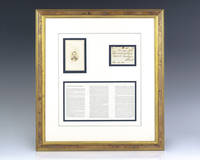
1864132045Washington D.C.: War Department Adjutant General's Office 1864-1869. Rare autograph Oath of December 8 endorsement signed and entirely in the hand of the 16th President of the United States Abraham Lincoln with an exceedingly rare contemporary printing of Lincoln's Amnesty Proclamation which includes the wording of the oath itself and a rare carte-de-visite of Lincoln Providence RI: Salisbury Bro. & Co. n.d. One page the endorsement is signed and inscribed by Lincoln “Let these men take the oath of Dec. 8 1863 & be discharged – A. Lincoln Dec. 30 1863.†One page disbound the contemporary printing of the Amnesty Proclamation consists of 6 pages printed by order of the Secretary of War: E.D. Townsend Washington D.C.: War Department Adjutant General's Office February 18 1864. Lincoln issued the Proclamation of Amnesty and Reconstruction in his annual message to Congress on December 8 1863. In the message Lincoln declared that he would offer a pardon to any man who would swear without coercion his allegiance to the Union. This provided then a general pardon to soldiers in the Rebellion and to those too who deserted the Union cause. All Southerners except for high-ranking Confederate army officers and government officials could be granted a full pardon by taking the oath and Lincoln guaranteed Southerners that he would protect their private property though not their slaves. The oath read in part “I do solemnly swear in presence of Almighty God that I will henceforth faithfully support protect and defend the Constitution of the United States and the Union of the States thereunder; and that I will in like manner abide by and faithfully support all acts of congress passed during the existing rebellion with reference to slaves so long and so far as not repealed modified or held void by Congress or by decision of the Supreme Court; and that I will in like manner abide by and faithfully support all proclamations of the President made during the existing rebellion having reference to slaves so long and so far as not modified or declared void by decision of the Supreme Court. So help me God.†Double matted and framed. The entire piece measures 17 inches by 19 inches. The autograph pardon is in very good condition. The carte-de-visite is in fine condition. The contemporary printing of the Amnesty Pardon is in fine condition and is exceedingly rare with only one other copy appearing at auction over the course of the past century. An exceptional grouping of Lincolnalia. Abraham Lincoln served as the 16th President of the United States from March 1861 until his assassination in April 1865. He led the United States through the American Civil War the country's greatest moral cultural constitutional and political crisis and in doing so preserved the Union of the United States of America abolished slavery and strengthened the federal government. Lincoln ran for President in 1860 sweeping the North in victory. The South was outraged by Lincoln's election and in response secessionists implemented plans to leave the Union before he took office in March 1861. War began in April 1861 when secessionist forces attacked Fort Sumter in South Carolina just over a month after Lincoln's inauguration and after years of deadly military conflict officially ended on April 9 1865 when Confederate General Robert E. Lee surrendered to Union General Ulysses S. Grant at the Battle of Appomattox Court House. On April 14 1865 just days after the war's end at Appomattox Lincoln was attending a play at Ford's Theatre with his wife Mary when he was assassinated by Confederate sympathizer John Wilkes Booth. Lincoln is remembered as the martyr hero of the United States and is consistently ranked as one of the greatest presidents in American history. War Department, Adjutant General's Office unknown
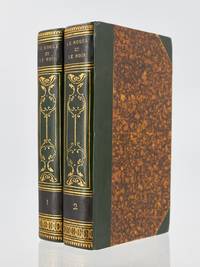
183187102Paris: A. Levavasseur 1831. Fine. A rare copy with no foxing A. Levavasseur Paris 1831 13.10 x 20.80 cm 2 volumes reliés First edition ""very rare and extremely sought-after"" Clouzot one of 750 copies on laid paper with title vignettes engraved by Henri Porret after Henry Monnier. Skilful restoration of a tear at the foot of a page with slight damage to a letter. A rare copy with no foxing. Green half calf binding smooth spines with arabesques stamped in gilt black title labels and volume labels; marbled paper boards spine boards and endpapers speckled edges later bindings in the Romantic style. Stendhal began writing 'Le Rouge et le Noir' under the Restoration and completed it just four months after the July Revolution of 1830. The seminal novel was published in the last weeks of 1830. All critics immediately praised the novel's exceptional qualities although even its most enthusiastic supporters were shocked by the hero's harsh judgment of society and Jacobinism. A handsome first-edition copy of this great classic of French literature. A. Levavasseur hardcover
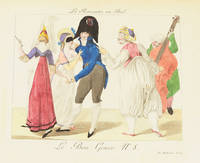
182787629Paris: chez l'éditeur boulevard Montmartre no 1Vassalet EsslingImprimeurs 1827. Fine. Princess Murat's copy chez l'éditeur boulevard Montmartre no 1 Vassal et EsslingImprimeurs Paris 1801-1827 ; 1827 pour le texte 41.20 x 27.80 cm relié Complete set of 115 copper-engraved plates with an additional plate 116 plates all printed on either laid or wove paper all hand-colored with watercolor. Two entirely different plates 39 follow each other in first issue: ""Les Titus et les cache-folies"" was published in the 1817 and 1822 sets and the other ""La Politicomanie"" appeared in 1827. This is the most complete series which also includes the 11 new plates published from 1818 to 1822 numbered 105 to 115. According to Vicaire the plates were probably all printed between 1801 and 1822 and only the text preceding the plates was reprinted in 1827. 3/4 long-grained cherry half-morocco smooth spine elaborately framed in gilt lentghwise gilt tooled center of spine gilt lettered title at head of spine framed in gilt marbled boards marbled paper endpapers and flyleaves. Minor brown spots are mainly confined to the 24 pp. of text with very few on the plates mainly on the margins and versos. A rare and famous collection of costumes genre and entertainment scenes from the French First Empire and Restoration eras with very wide margins and magnificently hand-colored at the time. A veritable encyclopedia of thrills pleasures and pageantry published by Pierre de la Mésangère leading fashion editor at the turn of the century. This copy includes two versions of plate 39 both of which are extremely scarce. These magnificent copper-engraved prints by Georges Jacques Gatine Schenker and others were based on drawings by the greatest painters of Parisian fashion: Carle Vernet Philippe-Louis Debucourt Jean-Baptiste Isabey Louis-Marie Lanté Dutailly. They were initially sold as a supplement to the successful magazine Le Journal des Modes before being published as a collection. Some plates bear the engraver's name and several the draftsmen's. This gallery of figures is singularly representative of a period of upheaval in French history in terms material but also moral and intellectual values - depicting a frivolous and daring part of feminine society eager to please and well-versed in the games of love. The ensemble perfectly combines social satire with the refinement expected of fashion engravings. It includes the famous portraits of the extravagantly dressed Directoire women called ""Merveilleuses"" and ""Incroyables"" - representations that have henceforth served as a reference. From beautiful silhouettes reclining on Greek-style beds to provocative and undressed courtesans everything is designed to illustrate the finery of these pretty coquettes often followed by a host of suitors and servants. Dresses hats and furs rub shoulders with elegant male figures in frock coats and even a few transvestites Trois grâces parisiennes no. 16. Many of the scenes have a clear erotic connotation especially the salon games featuring suggestive embraces and positions. Dancing takes pride of place: no fewer than twenty plates feature fashionable ballroom dances ""Danse du Schall"" named after the popular scarf quadrille figures such as ""La Poule"" ""La Trénis"" or more daring ones like ""La Sauteuse"" ballets or even the famous tightrope dancers Ravel and Forioso. The movement of the characters is reflected in the drapery of the large Empire muslin gowns and hair flowing in the wind. Among the dozens of hand-colored plates a great many are devoted to leisure and entertainment activities available at the beginning of the 19th century. Gastronomy games of skill sports acrobatics circus tricks music and even real sensational attractions: several plates depict the very first Parisian roller coaster installed in Belleville then at the Odeon for the 1817 Carnival. Clowns pierrots and masked figures are seen dancing in front of the structures and hurtling down steep slopes on small carriages. Anothe chez l'éditeur, boulevard Montmartre, no 1Vassalet EsslingImprimeurs hardcover
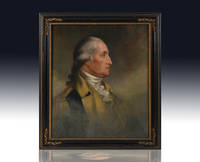
18621492021862. Fine oil portrait of George Washington as General and Commander-in-Chief of the Continental Army by Joseph Alexander Ames. Oil on canvas the portrait depicts Washington in profile in his Continental Army uniform. Signed and dated by the artist in the lower right corner "J. Ames 1862." Ames a self-taught artist born in 1816 in Roxbury New Hampshire was known for his portraits and genre scenes. He was influenced by Washington Allston's "old master" techniques which is evident in the rich layered colors and detailed rendering of this portrait. Ames's works were exhibited in prominent venues such as the Boston Athenaeum and the National Academy of Design. His portraits including those of Daniel Webster and Abraham Lincoln were widely recognized and reproduced during his lifetime. In near fine condition with a repair on the right side of the painting. Framed. The painting measures 30.25 inches by 25 inches. The entire piece measures 35.75 inches by 30 inches. As Commander-in-Chief of the Continental Army from 1775 to 1783 George Washington played a critical role in shaping the military and political outcomes of the American Revolutionary War. His leadership was marked not by tactical brilliance alone but by strategic endurance organizational discipline and an acute understanding of the symbolic and practical dimensions of command. Faced with chronic shortages of manpower supplies and financial support Washington focused on sustaining the army through long periods of adversity most notably during the winter encampment at Valley Forge. He emphasized professionalization working closely with figures like Baron von Steuben to impose standardized training and drill procedures. Washington’s decision to engage in a war of attrition rather than direct confrontation with the superior British forces reflected a broader political strategy aimed at maintaining colonial unity and prolonging resistance until foreign aid—particularly from France—could be secured. His leadership during the culminating siege of Yorktown in 1781 conducted in coordination with French forces marked a decisive turning point and demonstrated his ability to integrate diplomatic logistical and military considerations into a coherent wartime strategy. unknown
1861125637Richmond VA: Printed for Private Distribution Only 1861. First edition of the first book printed in the Confederacy. Quarto original stiff paper wrappers one of approximately 50 copies issued on regular paper. Ten being issued on thick paper and twenty copies destroyed in a fire. In very good condition reinforcement to the hinges. Housed in a custom full morocco clamshell box. Howes F26. Sabin 23778. Exceptionally rare. David Fanning was one of the most infamous of the Southern Tories raiding Patriots throughout the Carolinas. His guerilla warfare only paused when he was captured but following each of his multiple escapes he would quickly resume his vengeful predation. His narrative was to be the first in a series but the Civil War intervened and only this initial volume was produced. It was reprinted by Sabin in 1865 but this original edition was noted by Goodspeed's "as one of the finest of Confederate imprints." Printed for Private Distribution Only unknown books
1861125637Richmond VA: Printed for Private Distribution Only 1861. First edition of the first book printed in the Confederacy. Quarto original stiff paper wrappers one of approximately 50 copies issued on regular paper. Ten being issued on thick paper and twenty copies destroyed in a fire. In very good condition reinforcement to the hinges. Housed in a custom full morocco clamshell box. Howes F26. Sabin 23778. Exceptionally rare. David Fanning was one of the most infamous of the Southern Tories raiding Patriots throughout the Carolinas. His guerilla warfare only paused when he was captured but following each of his multiple escapes he would quickly resume his vengeful predation. His narrative was to be the first in a series but the Civil War intervened and only this initial volume was produced. It was reprinted by Sabin in 1865 but this original edition was noted by Goodspeed's "as one of the finest of Confederate imprints. Printed for Private Distribution Only unknown
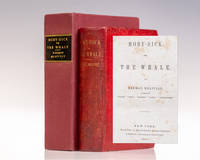
1851150358New York: Harper & Brothers Publishers 1851. First edition first issue binding of Melville’s masterpiece. Octavo original red variant cloth BAL’s A grain covers stamped in blind with Harper’s circular device at the center of the front panel within a heavy blind ruled frame plain orange endpapers. Issued in a single volume in black green blue red purple slate or brown cloth gilt. The first state of the binding has a circular device at center of covers that is absent from the second state binding. Much has been made of whether the earliest copies bound should have orange-coated end papers but in fact there is no priority between copies with orange dark orange maroon veined in gold or marbled end papers. Of uncertain status are three copies that have been seen with plain white end papers and a copy seen with yellow-coated end papers. Copies in bindings with beaded rope-like designs or Grolier-esque strapwork borders are very likely copies that survived Harper's terrible fire of December 10 1853 which destroyed 287 copies 212 were still unbound in sheets. The first printing by Harper's in 1851 numbered 2915 copies approximately 300 copies were destroyed in a warehouse fire in 1853 and as late as 1854 copies of the first edition were still available from the publisher. A second printing of 250 copies was issued in 1855 and in 1863 the third printing of 253 copies was issued. In very good condition rebacked. Housed in a custom cloth clamshell box. Rare and desirable in the rare variant publisher's red cloth. Initially panned by critics and readers when published in 1851 "in the 20th century Moby Dick would be rediscovered and acknowledged as possibly the greatest of all American novels" Chronology of American Literature. Arguably the greatest single work in American literature Moby-Dick was initially “a complete practical failure misunderstood by the critics and ignored by the public. Nevertheless Melville’s permanent fame must always rest on the great prose epic of Moby-Dick a book that has no equal in American literature for variety and splendor of style and for depth of feeling†DAB. Harper & Brothers, Publishers hardcover
18941307<p>London/Hammersmith: Kelmscott Press 1894. Limited First Edition. green goatskin. Fine. 16mo: 5 13/16" x 4 1/8" x 3/4" 14.8 x 10.5 x 1.9 cm.</p><p>First Printing. Printed by and sold by William Morris. Bound in fine tooled in gilt by Deborah Evetts with a diaper pattern of alternating small Kelmscott flowers and dots across covers and spine title running across top and bottom of upper cover uncut stamp-signed "DE'08" on rear turn-in. One of 20 at two guineas velum copies plus 525 at seven shillings and sixpence on paper; this copy on vellum. Colophon in red and black. iv 130 pp.</p><p>Printed in black and red throughout in the Chaucer type designed by Morris for his press. Woodcut frontispiece title within a floral border and facing page with full woodcut floral page-border borders 11a and 11. Numerous 7- 6- and 3-line woodblock initial capitals all designed by Morris engraved by William Harcourt Hooper. Shoulder notes and some lines including colophon in red.</p><p>A medieval French tale translated by Morris who found them in a collection of medieval romances printed in Paris in 1856 NOUVELLES FRANcAISES EN PROSE DU XIIIEME SIeCLE. The Kelmscott Press also published two other works from the same source. THE TALE OF EMPEROR COUSTANS was the source of THE MAN BORN TO BE KING in THE EARTHLY PARADISE. The second story is A TALE OF OVER SEA. Cockerell 26. Peterson A26. Walsdorf 26.</p><p>Housed in green buckram drop-back box brown goatskin label titled in gilt on spine. Condition overall: Fine.</p> Kelmscott Press
180858602Charenton asylum: S. n. 1808. Fine. S. n. Charenton asylum août 1808 17.50 x 21.50 cm broché sous chemise et étui The complete original manuscript of one of Sade's first works ruled in pencil throughout comprising 40 leaves written recto and verso. This manuscript like the other extant items from the Marquis was dictated to a scribe and corrected by Sade himself. Contemporary green paper wrappers with a small lack to middle of spine. Ink title partly erased to upper cover: 9/ Net et corrigé en août 1808 bon brouillon. Les Antiquaires. Comédie en prose en 1 acte Copied and corrected August 1808 a good draft. The Antiquaries. A prose comedy in 1 Act. This title is repeated on the verso of the upper cover. Numerous manuscript corrections annotations and deletions in Sade's hand principally adding blocking and rich in both stage and acting directions. Written in 1776 and re-copied at Charenton in 1808 and most likely augmented at the time with various topical references notably including an allusion to Napoleon of whom he was hoping in vain to receive permission to leave the asylum at Charenton as a free man p.94 Les Antiquaires is one of the first theatrical pieces written by the Marquis and therefore one of his first literary works overall written eight years before the Dialogue entre un prêtre et un moribond Dialogue Between a Priest and a Dying Man. Though the precise dating of these pieces is made difficult due to the lack of the original manuscripts several clues have allowed bibliographers to date the initial composition of this piece to 1776 possibly with a corrected version during the Revolution and a few final changes at the time of this last edit which is today the only extant manuscript of this play. These clues include the status of the Jewish and English characters the style of the dialogues and Sade's correspondence with theatres; the strongest clue being biographical in nature. Les Antiquaires can essentially be considered the true theatrical version of Sade's Voyage en Italie with which it shows a sustained intertextuality. The play is about an antiquary in the 18th century sense of the term which is to say a learned devotee of Classical culture who wants to marry off his daughter to a friend with the same passion who nonetheless finds a way of convincing him to let her marry her young lover. Whether it be in the learned dialogues of the antiquaries or in their eccentric parody by the young lover imitating them Sade draws upon his own experience and observations from his travels which he expands or twists according to the viewpoint of his various characters. Hence the description of Mount Etna by the lover Delcour is a parody of Sade's detailed description of the Pietra Malla volcano and the made-up subterranean tunnel linking Etna to America is directly inspired by the tunnel of the Crypta Neapolitana described by Sade in his Voyage. The Marquis would reach back to this same experience of volcanoes in one of the most famous scenes in his Histoire de Juliette. Barely returned from his latest grand tour and almost at the same time as writing his passionate and detailed account of the experience Sade was thus also writing a satirical version of his own work until his problems with the military authorities. The work is at the same time a social critique of pointless erudition and a self-mockery of his own passion for history and of his zeal to see everything his insatiable curiosity cf. Maurice Lever preface to Voyage en Italie. This virulent satire is paradoxically twinned with a very erudite display of the author's knowledge of the latest architectural discoveries and the major contemporary questions in the field. This was in fact the element criticized by the two heads of theatres to whom Sade sent the play for consideration most likely during 1791 or 1792: The work is well-written. It shows the author's spirit and depth of knowledge but it's too serious too scientific S. n. unknown
184387676Paris: Chez Gihaut frères Edit. Boulevard des Italiens 5 1843. Fine. Chez Gihaut frères Edit. Boulevard des Italiens 5 Paris s.d. 1843 36.40 x 49.80 cm relié Complete set of 13 original lithographs by Eugène Delacroix in first edition first issue with the letter one of 20 copies on Chine paper pasted on laid paper: ""It was originally printed in a few proofs on Chine the format of which exceeds the square line by one or two centimeters. They are highly sought-after even though they bear the letter"" Robaut. Bound in the original publisher's brown half-shagreen binding title gilt stamped on first board original first cover wrapper preserved. Small restored tear to the margin of the wrapper over 5 cm sunned spine joints and corners rubbed scattered foxing and a dampstain to the lower part of the laid paper on which the lithographs are pasted on without affecting the lithographs themselves. Exceptional and rare set of original lithographs by Eugène Delacroix on Chine paper illustrating Shakespeare's masterpiece. A cornerstone of Romantic art this series was ""made at M. Delacroix's personal expense. Only 80 copies were printed 60 on blanc and 20 on chine and these were sold out at the time of the author's death"" Henri Béraldi. It is now esteemed as Delacroix's most accomplished graphic undertaking which took him more than ten years to achieve and generally considered to be one of the first modern livres de peintre. This is Delacroix's second lithographic portfolio based on a literary work after Goethe's 'Faust' in 1828. Strongly influenced by Goya's Caprices the plates feature deep black tones and striking contrasts magnified by the Chine paper: ""No one is unaware of the important role played by Delacroix in lithography . in the Hamlet in the Horse struck down by a tiger or better still in the Lion of the Atlas and the Royal Tiger these marvels he shows what vigor and color the lithographic pencil can acquire in the hand of a master""Henri Béraldi. Despite good reviews from Théophile Gautier and Jules Janin the Hamlet suite remained little-known from the moment of its publication by the Gihaut brothers upon Delacroix's request: ""I had them printed in small numbers and I was well advised for they were not successful and were far from having met printing costs"" wrote Delacroix in a letter to Champfleury May 1 1852. Even in the 19th-century copies on Chine paper were almost impossible to find: only twenty years after publication Philippe Burty considered the set ""so rare now"" regardless of its different issues Colonel De La Combe sale 1863. His contribution to Hamlet's visual imagination and iconography is immense. Delacroix first created the pose of Ophelia's lifeless body lying horizontally on the water - foreshadowing John Everett Millais' famous painting. It was from these lithographs that a number of his paintings were created: ""Between the 1830s and his death Delacroix also painted oil versions of a number of lithographs including Hamlet and His Mother now in the Metropolitan Museum."" Alan R. Young Hamlet and the Visual Arts 1709-1900. Delacroix showed interest in Shakespeare's theater - and Hamlet in particular - early on. As a youth he signed some of his letters ""Yorick"" when recounting his first passions for the young Englishwoman Elizabeth Salter. According to his diary studied by Luciana Lourenço Paes he probably read the play in the original English and identified with the main protagonist who inspired his ""Self-portrait as Hamlet"" now in the Musée Delacroix. In 1825 the painter traveled to London where he attended several of the Bard's plays and apparently regretted missing the Hamlet performed by the legendary Henry Keane at the Drury Lane Theater. Two years later Delacroix was among the Romantics who fell under the spell of a special performance of Hamlet at the Théâtre de l'Odéon by the English company of Covent Garden director Charles Kemble. It was the first time Shakespeare had been played in his origin Chez Gihaut frères, Edit. Boulevard des Italiens, 5 unknown
185783397Paris: Michel Lévy frères 1857. Fine. Flauberts masterpiece on deluxe paper bound at the time Michel Lévy frères Paris 1857 11.50 x 18.50 cm relié First edition one of the very rare copies on heavy vellum paper Clouzot counts 75. Bound in contemporary half navy blue shagreen spine with four raised bands decorated with gilt garlands partly faded and tooled with gilt fillets and fleurons gilt roll at foot dark blue paper-covered boards marbled endpapers and pastedowns a period binding. Some occasional foxing. Unlike the trade copies printed in two volumes the deluxe paper copies are presented in a single volume without title-page or half-title for the second part the gatherings being continuously signed. They also retain all the first-issue points including the misprint ""Sénart"" on the dedication leaf. A very rare deluxe paper copy strictly bound at the time of publication. Michel Lévy frères hardcover
186983415Leipzig: Verlagsbuchhandlung von J.J. Weber 1869. Fine. Verlagsbuchhandlung von J.J. Weber Leipzig 1869 14.50 x 23 cm relié Inscribed copy concealing the secret truth of Wagner's thwarted love story Second edition with parts previously unpublished with a new preface ""An Constantin Frantz"" dated April 28 1868 Tribschen bei Luzern. The first edition was published by the same publisher in 1852. Full burgundy morocco binding spine with five raised bands gilt date at foot marbled endpapers and pastedowns gilt turn-ins original first softcover preserved top edge gilt gilt leading edges. Some foxing more pronounced on some leaves a small restoration to the upper right-hand corner on pages IX-XIV not affecting the text pencil annotation on pages 116 and 139 skillful restorations to head and foot of the upper joint. Exceptionally and intimately signed and inscribed by Richard Wagner to a mysterious dedicatee:« Hierbei sollst du meiner gedenken denn alles habe ich ernstlich gemeint. R. W. » At this you shall remember me for I have meant everything seriously. This moving autograph confession with its highly personal tone written on the most important of his theoretical writings radically differs from the hasty ""Zur Erinnerung"" written by the composer on his opera scores or the little notes he used to hand out to patrons after concerts. We did not find any other inscribed copies of Oper und Drama' on the market or in public institutions. However the composer's autobiography and correspondence reveal the existence of two dedications on this major work. The first was addressed to Theodor Uhlig on the original manuscript with an autograph inscription inspired by Goethe. The second and only other inscription mentioned in a letter from Wagner is said to have been made for Malwida von Meysenbug on the same edition as our copy. Although it is not impossible this could be the very same inscription written on the ""book of all books on music"" according to Richard Strauss the style and content of the inscribed words allow for an even more prestigious attribution. A ""VERY SOLID"" MANIFESTO In February 1851 Wagner completed Oper und Drama. This ""very solid book"" - as described in a letter to Franz Liszt - sets out the revolutionary principles of Leitmotiv and Gesamtkunstwerk political and aesthetic utopia of a musical drama acting as a synthesis of the Arts. The text is part of his Zürcher Kunstschriften three seminal essays written during his Swiss exile along with Kunstwerk der Zukunft' and Die Kunst und die Revolution'. He outlines in his treatises the shape of his future scenic festival"" - the celebrated Ring and includes his reflections on the relationship between art and society as well as his theories on the future of opera. In 1868 he decided to complete the composition of this monumental tetralogy and simultaneously worked on the second edition of Oper und Drama' published at the end of 1868 - mistakenly stated on the cover as 1869. In the end it differed from the previous edition only in its new preface the very few changes proving once more the permanence of his musical and artistic vision almost twenty years after it was first written. Wagner will tirelessly defend and promote his ideas which found their ultimate achievement during the 1876 Bayreuth festival. This second corrected edition with a revised preface is an integral part of the artist's creative process giving his reflections the status of a political and musical manifesto as evidenced by the intimate and enigmatic dedication on our copy. The importance of this work in the eyes of the composer the absence of any explicit attribution to the inscription's recipient the use of the familiar form of address and the content of the message confirm the importance of the dedicatee and his place within the author's inner circle. Among the personalities around the master at the time of this inscription several may have inspired these words: FRIEDRICH Friedrich Nietzsch Verlagsbuchhandlung von J.J. Weber paperback
187381415Bruxelles Brussels: Alliance typographique M.J. Poot & Cie 1873. Fine. Alliance typographique M.J. Poot & Cie Bruxelles Brussels 1873 12.50 x 18.50 cm relié sous étui Une saison en enfer A Season in Hell Alliance typographique M. J. Poot & Cie Bruxelles 1873 125 x 185 cm full morocco and custom slipcase First edition published in small numbers at the author's expense. Binding in full black morocco elaborately decorated in blind original wrappers preserved half black morocco slipcase outstanding binding signed Semet & Plumelle. This very scarce first edition of Une saison en enfer is a major collector's piece on several counts: it remains the only work published by Rimbaud himself then a young unknown 19-year-old poet. He eventually never honored his debt towards the printer. The latter therefore kept almost the entire print subsequently forgotten in the workshop Arthur Rimbaud obtained only a dozen copies offered to his friends. The stock was found in 1901 by a bibliophile who retrieved the well-preserved 425 copies and destroyed the rest damaged by humidity. The curious composition of the work is also a surprising peculiarity of this precious edition: without a title page nor endpapers the text begins ex abrupto after the cover and finishes the same way the seventeen blank pages inserted far and wide in the book as well as the misprints and spelling errors peppered through the text are also curiosities studied by scholars. Sought-after and collected very early on by bibliophiles copies of this mythical edition were bound by the greatest French binders namely Pierre Lucien Martin Semet & Plumelle Paul Bonet or Georges Leroux. A very beautiful copy set in an outstanding blind tooled full morocco binding by Semet & Plumelle. Alliance typographique (M.J. Poot & Cie) unknown
186879508Paris: Michel Lévy frères 1868. Fine. Michel Lévy frères Paris 1868-1870 11 x 18 cm 7 volumes reliés et une lettre montée sur onglet uvres complètes with an autograph letter: Les Fleurs du Mal Curiosités esthétiques L'Art romantique Petits Poèmes en prose Histoires extraordinaires Nouvelles Histoires extraordinaires Aventures d'Arthur Gordon Pym Michel Lévy Frères Paris 1868-1870 11 x 18 cm 7 volumes bound in shagreen & one letter Extremely important edition according to Clouzot: More and more sought after rightly so it includes in first edition: part of Fleurs du Mal Petits Poèmes en prose Curiosités esthétiques except the two Salons L'Art romantique except Gautier and Wagner. The Fleurs du Mal is in its third edition the last version revised by the author in part original with the correct date of 1868. Twenty-five poems from Fleurs du Mal are published here for the first time. Volume 1: Les Fleurs du Mal volume 2: Curiosités esthétiques volume 3: L'Art romantique volume 4: Petits Poèmes en prose volume 5: Histoires extraordinaires volume 6: Nouvelles Histoires extraordinaires et volume 7: Aventures d'Arthur Gordon Pym. Half burgundy shagreen spine in five compartments decorated with gilt fleurons marbled paper plates caillouté marbled endpapers contemporary bindings. A very evocative letter quoting each work in progress from Charles Baudelaire signed C. B. addressed to Auguste Poulet-Malassis has been mounted on the guards at the beginning of Fleurs du Mal. Four pages written in pencil on a double sheet dated 13 June 1859. This letter has been published in Les Lettres Mercure de France 1906. Baudelaire wrote to his publisher from Honfleur where he had been with his mother since April 1859. She reserved two attic rooms in her house for her son and the proximity to the sea seems conducive to work: You will tell me what you think of my Salon. And of my Gautier In a short while I will be able to deliver your Opium et Haschisch and shortly thereafter Curiosités complètes which will be followed by Nouvelles Fleurs. The poet must work tirelessly to pay off his Parisian debts and in particular those contracted with the recipient of this letter: Can I go to Paris without fear Without worry I am referring to the bill of 430 430. You would quarrel with De Broise if you had a protest and if I have one here my mother would fling me out the door. However I want to use the good work arrangement where I am until the end of the year. Rare and precious complete set in uniform contemporary binding of the famous first edition of his works. Preceded by Théophile Gautier's beautiful foreword paying tribute to his impeccable disciple enriched with a beautiful handwritten letter in which the Albatros talks of his works. Michel Lévy frères unknown
189879719Paris: Charpentier & Fasquelle 1898. Fine. Charpentier & Fasquelle Paris 1898 13.50 x 19.50 cm relié sous étui First edition one of the rare leading copies on Japan paper limited to 50 numbered copies and a few name-specific copies the tirage de tête. Binding in full green morocco spine in five compartments set with gilt stippling and adorned with double gilt panels decorated with gilt fleurons intheir centres recolouring and discreet restoration to a joint gilt roll tooling on the spine ends frame of double gilt fillets on the boards brightened in the corners with a set of interlacings and gilt fleurons iridescent green silk endpapers frame of five gilt fillets and gilt floral motifs in the corners of the pastedown endpapers covers preserved top edge gilt double gilt fillets on the leading edges superb binding signed Gruel. Extremely rare and magnificent copy of the most popular play in French theatre the tirage de tête set in a perfect binding in full morocco signed Gruel. Charpentier & Fasquelle hardcover
18950002437GROTON MASSACHUSETTS HYDE PARK CHICAGO. Good. 1895. Full-Leather. On offer is an extraordinary collection of diaries that give incredible insight into young Franklin Delano Roosevelts years at Groton--one of the most exclusive preparatory schools in the United States at the time--from the perspective of his closest schoolmate James Lippincott Goodwin. In these six diaries a young J. L. Goodwin chronicles his daily life from 1895 to 1898 and 1903 and features a cast of characters whose family legacies live on to this day. Classmates mentioned include Robert Rutherford "Colonel" McCormick who went on to become owner and publisher of the Chicago Tribune; J. R. "Tadd" Roosevelt Jr. nephew to both FDR and Colonel John Jacob "Jack" Astor IV; Lathrop "Jake" Brown who was FDRs roommate at Harvard and who would go on to become a member of the U. S. House of Representatives; and most significantly Franklin Delano Roosevelt who became 32nd president of the United States and who along with Winston Churchill would lead the free world through its darkest days in WWII. Goodwin himself was also part of a well-connected family. His father owned a railroad and two insurance companies and was the cousin of American financier J. P. Morgan. Goodwins brother Philip was one of the architects of New Yorks Museum of Modern Art. J. L. Goodwin and FDR were both new to Groton School in 1896 and these outsiders became fast friends as they adjusted to student life. Both boys were prolific writers and FDR mentions Goodwin in his letters home. Similarly FDR appears often in Goodwins diary entries. For example: "Passed with Riggs and Franklin Roosevelt during our time after school but it was very disagreeable on account of the ground being so wet" May 3 1897. "This is a legal holiday being Lincolns Birthday. Mrs. Roosevelt is visiting came up today" February 12 1898. "Franklin Roosevelt was down from Harvard. Saw him at the fence a while" May 18 1903. J. L. Goodwin graduated from Groton in 1900 and Yale in 1905. He later pursued a Masters in Forestry and was a noted conservationist and pioneering forester. Although the diaries do not bear his name there are ample contextual clues to determine that they were indeed kept by Goodwin. His collected papers reside in the James L Goodwin collection at Yale University. In this archive there are six personal diaries of J. L. Goodwin: 1 1895: 5.75" x 3.5" 122 pages 100% complete good condition. 2 1896: 5.75" x 3.5" 183 pages 80% complete good condition. 3 1897: 5.75" x 3.5" 183 pages 70% complete good condition. 4 1897: 8.75" x 4.5" 198 pages 50% complete fair condition. This diary was kept at the same time as the other 1897 diary. Some entries overlap but it contains entries that were not entered in the 5.75" x 3.5" 1897 diary. 5 1898: 5.75" x 3.5" 365 pages 75% complete good condition. 6 1903: 5.75" x 3.5" 365 pages 85% complete good condition. Also included in this archive is a first edition copy of the 1947 book "F. D. R. His Personal Letters: Early Years." It is the first in a 3-volume series collated and published by FDR's son Elliott. Many of these letters were written by FDR from Groton School at the same time as J. L. Goodwin was writing his diaries and the volumes are a wonderful complement to each other. This exceptional archive offers historians scholars and collectors valuable information about the formative years of F. D. Roosevelt J. L. Goodwin and many of their prestigious contemporaries who went on to shape the history of the United States. ; Manuscript; 5.75" x 3.75"; Keywords: J. L. Goodwin FDR History of Groton Franklin D. Roosevelt President of the United States Pre World War I Groton School Yale Robert R. McCormick James Roosevelt Roosevelt Tadd Roosevelt Hyde Park Eleanor Roosevelt J. P. Morgan Americana handwritten manuscript autographed authors document letter autograph keepsake writer hand written documents signed letters manuscripts historical holograph writers autographs personal memoir memorial personal history archive diary diaries journal log primary source first hand account social history personal stories living history antiquité contrat vélin document manuscrit papier antike brief pergament dokument manuskript papier oggetto d'antiquariato atto velina documento manoscritto carta antigüedad hecho vitela documento manuscrito papel biography biographical autobiographical autobiography personal narratives . hardcover