[HITACHI SEISHAKUJO]. 日立製作所.Biblio.com

173 résultats
1572170897No place of publication.: 日立製作所. Hitachi Seisakujo. Circa 昭和 35. 1960. 21 pamphlets with colour photographic illustrations varied sizes and pages a few chips and tears but generally in very good condition. This interesting collection of Hitachi home appliances pamphlets from the 1960s covers washing machines black and white televisions refrigerators cooling fans toasters sewing machines electric heaters water pumps and florescent lights. Many of them have stamps of an electric retail shop in Matsuzaka City in Mie Prefecture. The pamphlets provide interesting snap shots on evolution on electric home appliances and their advertisement. Their prices were quite high for ordinary consumers of that period and often exceeded monthly wages. This interesting collection provides not only information but also beautifully illustrates some of the dreams of many aspiring Japanese households at that time. . 日立製作所. [Hitachi Seisakujo]. unknown
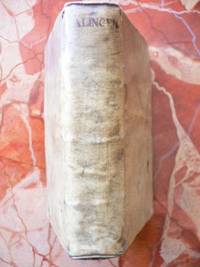
155914509Lugduni Leiden Lyon: apud Ioannem TornaesiumGul. Gazeium 1559. Fine. apud Ioannem Tornaesium Gul. Gazeium Lugduni Leiden Lyon 1559 12 x 8 cm relié New edition after the original of 1531. Brunet IV 317. Caillet 7096. Title page within an engraved border. Contemporary limp vellum binding with overlapping edges. Title author in black ink. Some red ink annotations on the endpaper facing the title concerning the book's history. Copy trimmed short on certain pages notably of the index. Collection composed of 12 Latin poems on the liberal arts human existence and happiness each corresponding to a sign of the zodiac. Due to the criticisms the book contains about the church and the pope the 1531 edition was banned and the Inquisition kept a watchful eye on Palingenius's activities until he was condemned to the stake. The 11th book deals with astronomy and the 12th sets forth a theory of light that would be partly followed by Giordano Bruno. Marcellus Palingenius is the anagram of Pietro Angelo Manzolli. Ex libris Mathieu Varille Lyonnois. apud Ioannem TornaesiumGul. Gazeium hardcover
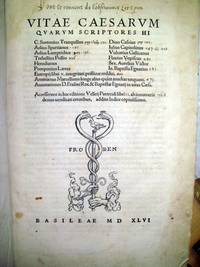
154613096Basilae Basel Bâle Basel: Froben 1546. Fine. Froben Basilae Basel Bâle Basel 1546 33 x 22.50 cm relié Colophon: Basileae per Hieronymvm Frobenivm et Nic. Episcopvm mense Septembri M.D.XLVI. First edition. Decorated with numerous historiated initials. Printer's device on the title page and verso of the final leaf. Absent from French catalogues but present in English catalogues 2 copies in Germany at the GBV union catalogue of northern Germany and one at the University of Munich. The 1544 edition published in Paris does not include Erasmus's notes and the complete assembly of authors gathered in this edition; the Parisian edition was reissued in 1551 in Lyon by Gryphium but not this Froben edition which reproduces only Egnazio's edition. The first edition of Suetonius dates from 1479. Full sheep binding 17th century decorated raised spine red morocco title label. Overall rubbed and worn on boards numerous scratches upper headcap missing 2 upper corners broken and missing. Fine interior condition with pale dampstaining running through about twenty pages at top center pp. 29 to 45. Several pagination errors same number repeated leaf skipped without lack. The evident interest of this edition was to gather together all the writers of antiquity who wrote about the Roman empire not only Suetonius but also rarer writers such as Dio Cassius translated by Merula Herodian translated by Angelo Ambrogini Poliziano Spartianus or Lampidius Velleius Paterculus Vulcatius Gallicanus Ammianus Marcellinus. Two commentators: Erasmus died in 1536 and Giovanni Battista Egnazio 1478-1553. Froben 1501-1563 is one of the great publishers of the Renaissance and the worthy successor of Johann Froben the first of the dynasty who established his printing house in Basel in 1491; it was with him that Erasmus was linked and worked and Jerome Froben merely reaped the fruits. This edition is the alliance of Froben and Nikolaus Episcopius his brother-in-law. Gothic manuscript note: ""pour le couvent de l'observance des Lyon"" and manuscript pagination of the authors. Froben hardcover
15990001479SEGOVIA SALAMANCA SPAIN ESPANA. Very Good. 1599. On offer is a superb late 16th early 17th Century manuscript book in two volumes being the transcribed works of John of Segovia the influential Catholic Theologian who was a professor at the Spanish University of Salamanca represented Castille at the Council of Basel and represented the council in the 1439 Diet of Mainz. He played a large role in the removal of Pope Eugene IV and the placement of Antipope Felix V. Volume One: "Tractatus de Deo" a 333 page work in a fine hand though not necessarily the work of a scrivener the endpapers featuring heraldic and maybe royal watermarks each is topped with a crown very similar to a Spanish heraldic crown of higher nobility. There seems to be the use of quartering and a pallet like central division. Pictured within the escutcheon are castles lions fleur de lis like symbols likely eagles a cross three horizontal circles with the use of borders and orles without the use of supporters or mottoes with other watermarks specifically a star over anchor on interior pages. Volume Two: "Tractatus de Sacramentis" 303 pages both 4to 26.5cm x 20cm. Tucked in the volume is one sheet of paper of identical type which we conclude is a leaf missed in binding or perhaps and erratum paage. Bound in period sheep vellum. There is some general mostly light soiling to the covers one worm hole to the vellum the odd interior fault but overall these volumes are VG. NOTA BENE: John of Segovia - His most important literary work is an extensive history of the Council of Basle "Historia generalis concilii Basiliensis. Libri XVIII" edited by Birk and Beer in "Monumenta conciliorum generalium saeculi decimi quinti: Scriptor." II-IV Vienna 1873-96. His other works are a treatise in favour of the Immaculate Conception of our Lady printed at Brussels in 1664; a refutation of the Koran entitled "De mittendo gladio in Saracenos"; a defense of the "Filioque" against the Greeks entitled "De processu Spiritus Sancti" Basle 1476; a Biblical concordance "Concordantiae biblicae vocum indeclinabilium" Basle 1476; and a few works defending the superiority of a general council over the Pope.; Latin; 4to - over 9¾" - 12" tall; KEYWORDS: RELIGION SPECULATIVE RELIGION JUAN DE SEGOVIA JOHN OF SEGOVIA JOHANNES VON SEGOVIA UNIVERSITY OF SALAMANCA ROMAN CATHOLIC CATHOLIC CATHOLICISM THEOLOGY THEOLOGIANS TRACTATUS DE DEO TRACTATUS DE SACRAMENTIS CASTILE JESUIT WATERMARKS SACREMENT SACREMENTAL COUNCIL OF BASLE UNIVERSITY OF SALAMANCA CHRISTIAN CHRISTIANITY CATHOLIC CHURCH HANDWRITTEN MANUSCRIPT AUTOGRAPHED AUTHORS AMERICANA MANUSCRIPT DOCUMENT LETTER AUTOGRAPH KEEPSAKE WRITER HAND WRITTEN DOCUMENTS SIGNED LETTERS MANUSCRIPTS HISTORICAL HOLOGRAPH WRITERS AUTOGRAPHS PERSONAL MEMOIR MEMORIAL PERSONAL HISTORY ARCHIVE DIARY DIARIES antiquité contrat vélin document manuscrit papier Antike Brief Pergament Dokument Manuskript Papier oggetto d'antiquariato atto velina documento manoscritto carta antigüedad hecho vitela documento manuscrito Papel . hardcover
158310458Venetiis Venice Venise Venice: Apud Felicem Valgrisium 1583. Fine. Apud Felicem Valgrisium Venetiis Venice Venise Venice 1583 16 x 11.50 cm relié First edition. Not in Brunet or other French catalogues. Not in French National Library's Italian catalogue either. Modern vellum flaps. 8vo 16 76 ll. A treatise on different types of fever hectic erratic plague-like and what's more unusual on the circulation of the blood. William Harvey gave a full description of the circulation of blood in 1628; this treatise thus comes in the wake of and at the time of the great discoveries on the blood. Galen placed the origin of blood in the liver and this view was not challenged before the 16th century. Apud Felicem Valgrisium hardcover
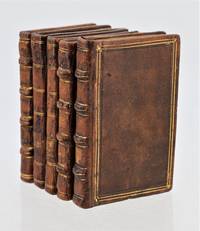
154682797Paris: Robert Estienne 1546. Fine. Robert Estienne Paris 1546 7 x 11.50 cm 5 volumes reliés TORAH Quinque libri legis BIBLE IN HEBREW ESTIENNE Robert Estienne Paris 1546 16mo 7x115cm 5 bound volumes. First 16mo edition of the Torah in Hebrew by Robert Estienne. Printer's woodcut device on each title page with book titles set within woodcut cartouche head-pieces. Only the title page is in Latin-Hebrew. Slightly later brown morocco bindings 1590-1615 two of the volumes with a smooth spine the three others with gilt raised bands gilt tooled boards all edges gilt. Some wormholes on the fifth volume not affecting the text. Numerous contemporary Latin marginalia mainly in the first two volumes. This five-volume Torah includes Genesis Exodus Leviticus Numbers and Deuteronomy. ""This little edition said to be very accurate is a true typographical jewel and perhaps the most beautiful one ever printed in the Hebrew language. Cette petite édition que l'on dit fort exacte est vraiment un bijou typographique et peut-être ce qui a jamais été imprimé de plus beau en langue hébraïque"" A. A. Renouard Annales de l'imprimerie des Estienne Brown morocco later binding 1590-1615 smooth spine with gilt fillets double gilt borders on covers all edges gilt. Some wormholes to the fifth volume not affecting the text. Joints corners and spine-ends expertly restored. Numerous contemporary marginal annotations in Latin manly in the first two volumes. This little edition said to be very accurate is a true typographical jewel and perhaps the most beautiful one ever printed in the Hebrew language.A. A. Renouard Annales de l'imprimerie des Estienne Exceptional copies of the Books of the Bible in Hebrew in first 16mo edition published by Robert Estienne. This pocket edition was printed in 17 volumes between 1544 and 1546 after the success of the four-volume quarto edition printed from 1539 to 1544. Based on the Hebrew Soncino princeps published in 1488 it was established by Humanist François Vatable. The text in Hebrew follows the Masoretic tradition and presents diacritics that facilitate its vocalization. Talented exegete François Vatable 1495-1547 early scholar of Hebrew studies during the French Renaissance was a member of the 'Cénacle de Meaux' founded by Jacques Lefèvre d'Étaples and translated for him in 1509 the Hebraicum one of the five psalters of the Quincuplex Psalterium published by Henri Estienne. After founding the Collège de France in 1530 King Francis I appointed him chair of Hebrew studies. As a Royal lecturer he actively participated ten years later in a Hebrew edition of the Bible with Robert Estienne 1503-1559 printer to the King in Latin and Hebrew. This edition is undoubtedly a real typographical feat for a small format text in Hebrew lettering. It was certainly intended for scholarly use by Sorbonne and Collège Royal students given its pocket size sold in separate individual volumes. The presence of numerous contemporary marginal notes further indicates its educational purpose as is the numbering of lines of several pages in some of our volumes. A very beautiful and scarce collaborative work by two of the greatest figures of Parisian humanist scholarship a fine example of the renewed interest in classical texts and their study in the original language. Provenance: library of Charles John Dimsdale 1801-1872 fifth baron of the Russian Empire with his bookplate on each pastedown endpaper. Robert Estienne hardcover
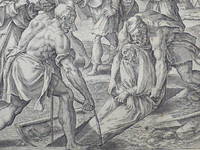
160029903s. l. Hollande Holland: S. n. 1600. Fine. S. n. s. l. Hollande Holland Circa 1600 33 x 27.50 cm une feuille Original engraving executed in burin after a 16th-century painting by Maarten de Vos or Martin. Proof on watermarked laid paper work from the early 17th century. This is an illustration from the Book of Tobit 2.9. in the Old Testament: ""But Tobit fearing God more than the king took away the bodies of those who had been killed hid them in his house and buried them during the night."". Latin legend in the lower part of the engraving. Artist's signature in the plate. Numbered marking ""8"" in the lower right corner of the engraving and manuscript notation ""116"" in the margin in the upper right corner. A manuscript annotation in pencil in Greek characters under the right corner of the plate mark translation of the legend. Watermark visible by transparency. Very rare and minimal foxing mainly marginal a discreet angular fold mark without damage to the engraving otherwise very fine condition for this extremely rare engraving of great freshness. Maarten de Vos or Martin Antwerp 1532-1603 is a Flemish painter. He was a pupil of Frans Floris then completed his training with Tintoretto. We owe him historical paintings in the Mannerist style notably a 'Saint Paul Bitten by a Viper on the Island of Malta' 1568 which is in the Louvre Museum in Paris. S. n. unknown
1590016809Paris Circa 1590: Tomas De Leu / Leuuw 1590. Original Engravings . Single Sheets. Very Good. Original Woodcuts. Seven Of Twelve Engravings One For Each Month Of The Year Approximately 7 12" X 5 1/2" Each. Tomas De Leu Or De Leeuw 1560 / 1562 - 1612 / 1620 Son-In-Law Of Antonio Caron Was An Engraver And Publisher Who Worked In Paris During The Years 1576-1612 Or 1614 In The Workshop Of Jean Rabel. This Set Includes Seven Of The Twelve Engravings. These Are Strong Impressions Trimmed Within The Plate Mark Including January March April July August October And December. April Has A Missing Piece At The Center About 6 Cm Long In A Narrow Band Up To 8Mm Wide. Remarkable In Fineness Of Design And Detail Resembling Little Paintings Rather Than Engravings; These Are Exquisite And Rare. Part Of A Large Collection Of Original Antique Engravings Formed By A Southern California Artist In The Early To Middle Twentieth Century. Each Plate Has Small Glue Marks On Reverse Where They Were Tipped In To An Album. <br/> <br/> Tomas De Leu / Leuuw unknown
1599007232London: Richard Field 1594 1599. Second English Edition . Quarter Calf. Good. 943 X. Quarter Calf. Second English Language Edition. Folio. Quarter Calf Over Marbled Boards. Pages 10 3/4" Tall All Three Edges Watered. Leather Is Quite Worn Joints Cracked Frayed At Corners With Small Losses Paper Covering The Boards Is Partly Worn Away At Edges. Lacks Initial Blank. Contemporary Gilt And Embossed Compartmented Spine. Signs Of Removed Bookplate On Front Pastedown. Hinges Cracked But Firm. Title Page With Complex "Anchora Spei" Ornamental Engraving Missing Lower Right Corner About One Square Inch Total With No Loss Of Text Or Ornament. Text Divided Into Twenty Books With Woodcut Ornaments And Initials For Each; Unpaginated Ten Page Table Index At End. Dedication To Queen Elizabeth I By Fenton. Small Waterstains Showing Irregularly At Bottom Of Some Pages Well Below Text Block. First Page Missing Lower Corner Adjacent To Spine With No Loss Of Text. Light 1/2" Ink Smear P. 8 With No Loss Of Text. Page 49 Mis-Numbered 53 Otherwise Correct. Page 57/58 With Two Inch Tear At Bottom Extending 1/2" Into Text Block With No Loss Of Text. Small Chip To Side Of Text Block On P. 135/136 Not Affecting Text. Page 161 Mis-Numbered 155 Otherwise Correct. One-Eighth-Inch Hole Through P. 209/210 Affecting One Letter. A Few Letters Near Bottom Of P. 212 Apparently Once Obliterated Or Misprinted Carefully Restored In Ink. About One And A Half Square Inches Of Lower Left Corner Of P. 235 Missing With No Loss Of Text Block But Loss Of Most Of Gloss Note At Bottom Of P. 235 X3. One-Eighth-Inch Hole At Top Margin Of P. 271/272 With Loss Of One Letter Of Gloss Note. One Eighth Inch Hole P. 327/328 With Loss Of A Letter On Each Page. There Are No Pages 460 Through 500; The Tenth Book Ends On Page 459 Rr As It So States In The Text And The Eleventh Book Begins On P. 500 P. 501 Is Rr2. One Quarter Inch Foxing Spot Pp 535-544 At Upper Left Margin At Edge Of Page Not Affecting Text. Page 584 Mis-Numbered 588 Otherwise Correct. Page 593 Mis-Numbered 597 Otherwise Correct. Pp599-603 Bbb3--Bbb4 Somewhat Browned. One Sixteenth Inch Spot Pages 641-643 Obscuring A Letter On Each Page. A One-Eighth-Inch Hole And Singed Margin Through Page 673/674 Causing Loss Of One Or Two Letters On Each Page 673-674. A Small Stain Spot Extending Through Pp713-721 Another Few Pp723-725 Without Obscuring Text. Small Stain P 736 Not Obscuring Text. There Is No Page 787-788; A Reading Of The Text On Pages 786 And 789 Indicates That The Text Is Complete Regardless. Page 798 Is Mis-Numbered 799 Otherwise Correct. Apparently A Former Water Stain Now Invisible Obscured A Few Letters On P. 802; These Have Been Re-Inked. De Sanctis Has Written " From The Point Of View Of Intellectual Power It Is The Most Important Work Ever To Come From An Italian Mind." A Printing And The Mind Of Man Title. First Published In 1561 Twenty One Years After Guicciardini's Death. Fenton's English Translation Was First Printed In London In 1579 And Went Through Three Editions In Fifty Years. The First Edition Of 1594 Is Rarely Seen. This Copy Is Still Quite Readable. <br/> <br/> London: Richard Field (1594) unknown
156069414Lyon: Antoine Vincent 1560. Fine. Antoine Vincent Lyon 1560 14.8 x 21.4 cm relié First edition. The privilege was shared with Mathieu Bonhomme in Lyon as we find perfectly similar copies but with different addresses. Bilingual edition with the text upstream and in italics and 2 columns sharing the translation. Printer's device on title page. Contemporary full brown sheep binding certainly from Lyon. Spine with raised bands decorated with 4 fleurons. Title label in the first compartment partly torn off. Central rectangular frame on covers formed by 3 thick fillets with fleurons in the corners and central gilt medallion. The whole rubbed and stained. A tear in the tail compartment causing 2 holes. 3 lacks along the edges. Pale dampstain in the lower part of the first leaves including the title page; the same on the last leaves. Outstanding edition of these Comedies of Terence produced by Antesignan. It includes 2 translations in 2 columns under the original text in italics a literal translation and a paraphrastic translation more interpretative. It contains notes on all the authors who had written on Terence Melanchton Erasmus Scaliger Muret. To the right of the original text Antesignan marks the accents on all words of more than 2 syllables and next to each verse the way to scan them. Antoine Vincent hardcover
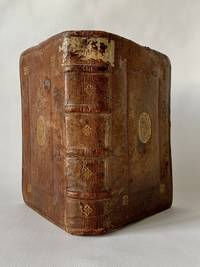
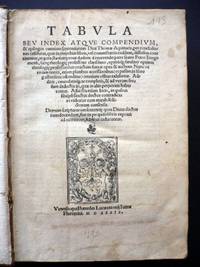
153926396Venetiis Venice Venise Venice: Apud Haeredes Lucaeantonij Iuntae Florentini 1539. Fine. Apud Haeredes Lucaeantonij Iuntae Florentini Venetiis Venice Venise Venice 1539 17 x 24 cm In-4 relié New edition following the princeps of 1473 in Bologna under a different title. Very rare. Printers device of the Junta on the title page and the final leaf. Dedication to Hercules Gonzaga of Mantua. Not in Brunet. One copy in Oxford and one in the Italian catalogues but none in the French catalogues nor in the Bibliothèque nationale de France. Half calf binding c. 1800. Spine with raised bands and gilt fillets. Brown morocco title-piece. Headcap trimmed. Rubbing to edges. NB: This volume is available at the bookshop on request within 48 hours. Pietro da Bergamo died 1482 whose real name was Almaldura authored this work known as the tabula aurea the golden table as it became the unique and essential instrument for the reading and consultation of the works of Saint Thomas see La tabula Aurea di Pietro da Bergamo by T. Sterli Trento published in 2003. The tabula is a universal index to the entire work of Thomas Aquinas. A second part with separate pagination comprises another index: Concordantiae dictorum et conclusionum divi Thomae de aquino. Finally a last part lists entries by biblical term Psalms Daniel Deuteronomy etc. This new edition is the work of Vincenzo Giaccari. Having been revered as a saint during his studious life as a Dominican friar Fra Pietro da Bergamo was laid to rest in the crypt of the chapel of Saint Thomas Aquinas. Apud Haeredes Lucaeantonij Iuntae Florentini hardcover
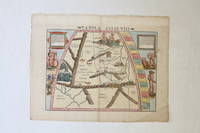
155068933s. l. Bâle Basel 1550. Fine. s. l. Bâle Basel s. d. circa 1550 42.10 x 33 cm une feuille Tabula Asiae VIII Basel ca 1550 42.1 x 33 cm one map Original map titled and heightened in colors by a contemporary hand. Published for the first time in 1540 in Munster's Geographia. Central fold. Two repairs with paper strips to verso and two little wormholes without consequence. A very good copy of one of the most important maps of monsters from the 16th century done by one of the most famous mapmakers of the Renaissance. The map covers the territories of Central Asia as well as Tibet and Nepal. One finds at the edges of the topography three kinds of congenital deformations monopods headless men and people with the heads of dogs as well as a legendary bird. All these creatures emerged from the superstitions of the Middle Ages based on accounts by travelers who had preceded Marco Polo into Central Asia. Also worth noting is a scene showing cannibalism in the North part of the map. unknown
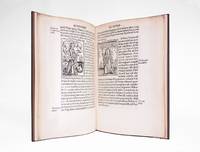
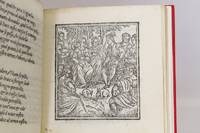
151165641Strasbourg: Matthias Schurerius 1511. Fine. Matthias Schurerius Strasbourg 1511 14 x 20 cm relié Syntagma de Musis Matthias Schurerius Strasbourg 1511 4to 14 x 20 cm 16 f. A4 B8 C4 modern full morocco Rare editio princeps illustrated with a large title vignette 86 x 95 mm featuring the Muses playing their instruments under the water of a fountain overlooking the Hippocrene spring surmounted by a verse from Hesiod's Theogony: Ennea thugateres megalou Dios / £ Nine daughters engendered by the almighty Zeus. This was the very first collective representation of the Muses bathing in the fountain of youth. Nine magnificent in-text woodcuts 63 x 50 mm also showing these same Muses elegantly dressed and holding their distinctive symbols. 30 lines per page in rounded characters a full-margined copy not rubricated. The leaf a2 does not have a signature c2 is incorrectly labelled b2. First publication of the Strasbourg printer Matthias Schürer to contain Greek letters as the latter points out in the colophon: Finis libelli de Musis compositi a Lilio Graegorio Ziraldo Ferrariensi quem Matthias Schurerius artium doctor summa cum diligentia impressit non omissis accentibus in eisque Gareca sunt. Argentorat. Ann. salutis. M.D.XI. Idibus August. Modern binding 20th century in brown morocco Jansenist spine in five compartments gilt date at the foot gilt fillet in a silver frame all gilt edges. Binding signed Honegger. Ex-libris from the Guelfo Sitta and Gianni de Marco libraries glued to the inside of the first board dry stamp of the latter at the right-hand bottom of the first white endpaper. Several very discreet wormholes without loss of text on the last leaves. Verified complete by a bibliographer of the Bernard Quaritch Ltd bookshop on 8 May 1925 cf. note on the verso of the last leaf. Rare and important treatise the very first on the topic marking a significant advance in the humanist and philological knowledge of the ancient deities. It is preceded by several lines addressed to the reader as well as a inscription entitled Andreae Reginio Romarici monti Sonrario by Philesius Vogesigena Matthias Ringmann humanist and scientific publisher of the work. Then follows a dedicatory epistle to Luca Ripa one of Giglio Gregorio Giraldi's old Ferrarese teachers dated 1507 in Milan. The author claims to have composed his Syntagma de Musis when he was still only an adolescent. The dissertation closes with several verses by ancient or contemporary poets to Giraldi Virgil Pico della Mirandola and Fausto Adrelini who have before him praised the graces of the Muses. This treatise emblematic of Medici-neoplatonism will have a significant influence on pictorial cycles and mythographers of the 16th century. The superb wood engravings illustrating the work do not conform to the ancient or Italian tradition but rather represent Germanic virgins. These woodcuts close in style to those of Dürer are very clearly inspired by the artist without being able to be formally attributed to him. Very beautiful full-margined copy of this rarity representing higher German education. Matthias Schurerius unknown
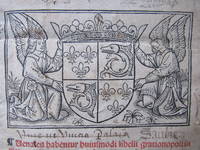
150868717Grationopoli Grenoble Grenoble: Franciscum Pichatum et Bartholomeum Bertoletum François Pichon et Bartholomé Bertholet 1508. Fine. Franciscum Pichatum et Bartholomeum Bertoletum François Pichon et Bartholomé Bertholet Grationopoli Grenoble Grenoble 1508 S.d. 17 x 24 cm relié First edition. Title page in red and black. Title vignette with the arms of Dauphiné flanked by 2 angels. Manuscript inscriptions from the 16th century in the margins of the title page the one at the bottom of the page recalling the history of Humbert bequeathing Dauphiné to the eldest son of the King of France. On the last leaf manuscript ex libris as well as on the verso of the first blank leaf: Je suis l'abbé de Pinet et de Cours ""I am the abbot of Pinet and Cours"". Title inside the volume in the upper margin: Statuta Delphinatus. Gothic printing in 2 columns of 45 lines. Brunet J.-C. Manuel du libraire et de l'amateur de livres 5th ed. II 1812. As Brunet specifies 2 blank leaves at the end one separating the 2 parts. 2 copies in the Harvard Hollis catalog Harvard Law School Library and Brown University nothing in the catalogs of the Bibliothèque Nationale de France one copy located at the Caen library. Full chamois binding 17th century. Jansenist spine with raised bands. Red morocco title label. Holes and worm damage on the spine. Extensive worm damage on the boards. Visible stitching along the inner hinge. Title page browned some stains. A dampstain on the verso of the title page and various traces of brown dampstains throughout the volume. From leaf XVI of the second part wormholes affecting some letters. In 1349 the Dauphin Humbert II without heir bequeathed Dauphiné to the eldest son of the King of France who would henceforth bear the title of Dauphin as sovereign of this province. Louis XII son of Charles VII would be the first Dauphin. Going to Dauphiné would be the first responsibility of the future King of France. From 1447 the Dauphin Louis went to his lands where he resided for 10 years. Louis decided to govern this province and modernized it by having a register of the rights privileges and freedoms of Dauphiné compiled the delphinal register. This register would be the basis of the statutes of Dauphiné found in this customary. In 1461 Louis the Dauphin became Louis XI upon the death of his father. All the customs of Dauphiné were compiled in 1482 in Grenoble. The first part of the work reflects this. The second part largely in French is the result of the meeting of the three estates forming Dauphiné and which met in Tours where Louis XII resided. The text is a response to their requests and grievances establishing new edicts for Dauphiné. There is found at the end as Brunet stipulates a piece dated March 1508 so the publication cannot be earlier: ""Actum quarta martij. Anno domini M. cccccviij"". Franciscum Pichatum et Bartholomeum Bertoletum( François Pichon et Bartholomé Bertholet) hardcover
153762983s. l. Venise Venice 1537. Fine. s. l. Venise Venice 1537 14.60 x 9.20 cm 2 textes reliés en 1 volume Rare edition of this bawdy tale complete in two parts published separately. It is illustrated with four wood-engraved vignettes borrowed from Decameron of Boccace Venice 1531 and ingeniously twisted to suit their context. This edition is the first text of the author and is unique in that it has not been corrected. The book will be translated in French only in 1792. Modern binding in full red morocco the spine in five compartments gilt date and title golden fillets surround the cover the endpaper and pastedown of vellum. Provenance: Library of Gianni de Marco with its book plate and itsseal. No copies in an American Library one in the British Library and some others in European Libraries. No copy has been sold in the past 20 years. Ode to the harvest in which Luigi Tansillo 1510-1568 poet and soldier of the Renaissance recounts the carnival-like celebration of the country side of Nola Campanie. During this celebration inspired by those of the antiquity the drunk peasants give all sorts of bawdy speeches about Neapolitan women with a licentiousness that was still tolerated without distinction of age or sex or social class. The allegory of Tansillo a truly priapic creation alarmed the modesty. The Inquisition placed the work on the index and the poet was forced to beg forgiveness from Pope Paul IV by composing the Lagrime de san Pietro: the supreme Pontiff accorded his mercy to the sinner and removed the ban on all his works except for this one. hardcover
1574016807Venice / Vinetia/ Padovano: Girolamo Porro 1574. First Edition 1st Printing. Disbound. Very Good. Title Page And All Nine Full Page Portraits A Set Of These Plates Only Without The Pages Of The Book Trimmed Close To Plate Mark Each Approximately 8 1/4" X 6"; This Item Includes The Plates Only Excised From The Book Which Is Not Present. All Editions Of The Book Are Rare; These Detached Plates Were Part Of A Large Collection Of Original Antique Engravings Formed By A Southern California Artist In The Early To Middle Twentieth Century. Each Plate Has Small Glue Marks On Reverse Where They Were Tipped In To An Album. Very Short Tear At Left Edge Of Title Page Otherwise All Plates Well Preserved. <br/> <br/> Girolamo Porro unknown
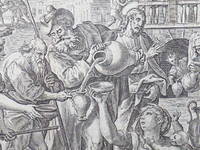
160029897s. l. Hollande Holland: S. n. 1600. Fine. S. n. s. l. Hollande Holland Circa 1600 33 x 27.50 cm une feuille Original engraving executed with burin after a 16th-century painting by Maarten de Vos or Martin. Proof on watermarked laid paper early 17th-century work. This is an illustration of the Gospel according to Matthew 25.35 ""I was thirsty and you gave me drink"". Latin caption in the lower part of the engraving. Artist's signature in the plate. Numbered reference ""3"" in the lower right corner of the engraving and manuscript notation ""111"" in the margin in the upper right corner. An old manuscript annotation in Greek characters below the right corner of the plate mark. Watermark visible by transparency. Rare and minimal foxing and marginal stains not affecting the engraving otherwise very fine condition for this extremely rare engraving of great freshness. Maarten de Vos or Martin Antwerp 1532-1603 was a Flemish painter. He was a pupil of Frans Floris then completed his training with Tintoretto. He is credited with historical paintings in the Mannerist style notably a 'Saint Paul Bitten by a Viper on the Island of Malta' 1568 which is in the Louvre Museum in Paris. S. n. unknown
1575000429bLUGDUNI. Very Good with no dust jacket. 1575. Half-Leather. ROYAL FOLIO. PRINTED 1575. ONE OF THE MOST IMPORTANT HEBREW GRAMMARS EVER COMPILED AND AT THE DISPOSAL OF THE TRANSLATORS OF THE KING JAMES BIBLEFrom the esteemed 18th century library of Thomas Peckitt himself the author of Hebrew Grammar and other theological works with his fine bookplate and signature. It should be noted that this is a very important volume in the Biblical Studies; The Trinitarian Bible Society in their April - June 1979 Quarterly Record cites this volume as being at the disposal of the translators for the KING JAMES BIBLE. The Book: Pagninus "Thesaurus Linguæ Sanctæ" Lugduni 1575. Large Folio Orginal soft calf with blindstamping sympathetically rebacked internally clean. From the famed library of Henry Peckitt well known 18th century scriptural scholar with his siganture and handsome bookplate. Pagninus was perhaps the greatest of Christian Lexicographers and whose work was fundamental as an aid to 16th-century scriptural translators. A highly important work only one copy of this 1575 edition in 30 years of auction records and that copy was a very poor one lacking a leaf. A Finer 1548 Edition of this work Christies June 26 1996 lot 113 $9240.00 As a measure if Pagninus' importance it should be noted that that the first printed Bible divided into verses was an Old Testament Latin edition by Pagninus. ; Latin Hebrew; Elephant Folio - over 15" - 23" tall; JUDAISM HEBREW LANGUAGE GRAMMAR CHRISTIANITY BIBLE STUDIES THESAURUS DICTIONARYREFERENCE JUDAICA JUDAISM HEBREW ETHNIC CHOSEN PEOPLE PEOPLE OF THE BOOK JEW HEBRAIC JUDEO-CHRISTIAN . LUGDUNI hardcover
1574GT1274London: Henri Binneman for Lucas Harison and George Bishop 1574. 1st Edition . Hardback. Vg. Folio. English edition translated by Arthur Golding. Woodcut decorative initials throughout and final leaf with woodcut device to the foot. Lacking the illus. title-page. Original full calf panelled binding incomplete with worn covers. A rare copy in the original state. Sadly the illus. title-page lacking as often with early books. Spine missing and gatherings loose. Fine illus. rear page with 'Imprinted at London by Henri Binneman for Lucas Harison and Geoge Bishop Anno 1574 followed by complete 24pp index. Engraved illus. initials throughout the volume. ORIGINAL BINDING <br/> <br/> [Henri Binneman] for Lucas Harison and George Bishop hardcover
1581016808Antwerp: Phillip Galle 1581. Original Engraving . Single Sheet. Near Fine. 16 Cm x 9.2 Cm. Original Engraving 6 3/8 X 3 5/8". Maarten De Vos Of Antwerp 1532-1602. De Vos Studied In Rome 1551Then To Venice Where He Was The Pupil And Friend And Collaborator Of Tintoretto. In 1558 He Returned To Antwerp Where He Worked As A Painter. He Executed Some Engravings And Was A Prolific Source Of Drawings That Were Then Engraved And Published By Others. In The Twenty Pieces Depicting The Celebrated Women Of The Old Testament His Drawings Were Engraved By Adrien Collaert C. 1560-1618 And Karel De Mallery C 1576-After 1631 Two Of Phillip Galle's Sons-In-Law And Adrien's Brother Hans / Jan Collaert 1566-1628. Sara New Holl. De Vos 224 Ii/Ii Published In Antwerp By Phillip Galle 1537-1612. This Example Is A Fine Very Eary Printing All Lines And Shade Lines Very Sharp. Mounted On A Fragment Of An Album Sheet. Part Of A Large Collection Of Original Antique Engravings Formed By A Southern California Artist In The Early To Middle Twentieth Century. Each Plate Has Small Glue Marks On Reverse Where They Were Tipped In To An Album. <br/> <br/> Phillip Galle unknown
152574530Paris: Apud Joannem Parvum 1525. Fine. Apud Joannem Parvum Paris 1525 11 x 17.50 cm relié New edition. Rosarium aureum mysticum first appeared in 1519 and the second work: De secretis secretorum in 1511. Collective edition of these two works for which the privilege was granted to Claude Chevallon and Jehan Petit with his device on the two title leaves in red and black. Printed by Claude Chevallon. Colophon at the end of the second book: Anno oni millesimo quingentessimo vigessimoquinto mense octobri. Contemporary full brown morocco binding spine with three raised bands decorated with crosses and cold fillets boards stamped in cold with fillets and typographical motifs traces of ties manuscript inscriptions on edges. Stamp on first title page: Bibliotheca St. Bartholome Fulginei. Originally from Evreux where he became prior of the convent after completing his studies in Paris Guillaume Pepin preaching friar devoted his existence to preaching whose interest and success are demonstrated by the multiple publications of his works. He brought the convent under his charge into the reformed Congregation of Holland. ""However rigorous and doctrinal it may be his preaching remains warm and convinced; this is undoubtedly what made it successful in his time. Hence the adage: Nescit praedicare qui nescit pepinare. His works cover the entire annual liturgical cycle. But he also touched on the genre of scriptural commentary. His preaching of the Rosary enjoyed the success of editions; more than a devotion it is for Pepin the occasion to preach the mystery of Christ and Mary; he is an emulator of Alain de la Roche protagonist of the Rosary in the 14th century."" M. Gorce. Apud Joannem Parvum hardcover
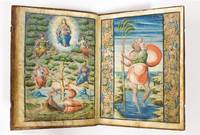
156957498s. l. Grenade Granada: S. n. 1569. Fine. S. n. s. l. Grenade Granada 1569 21.50 x 30.50 cm relié ILLUMINATED MANUSCRIPT ANONYMOUS Regla y Constitutiones de la Cofradia del Sanctissimo Sacramento de la Yglesia de San Christoval de Granada Autograph manuscript with three miniatures no publisher Granada 1569 folio 21.5 x 30.5 cm upper margin: 35 mm bottom margin: 50 mm interior margin: 30 mm exterior margin: 40 mm 31 ff. 16th-century full calf gilt Manuscript on vellum comprising 31 leaves: 50 pages of text ruled and lined and 3 full-page miniatures in colours heightened in gold. The four final leaves were numbered and partly ruled but left empty. Contemporary manuscript ex-libris on front endpaper. In Spanish throughout written in Caroline minuscule on 24 lines the text is very readable and very regular. The manuscript begins with a three-page summary covering the 24 chapters that comprise the Regla y constitutiones de la cofradia del Sanctissimo sacramento de la yglesia de San Christoval de Granada. One illuminated capital in red and blue indents and pagination in red small sketch in black ink to the inner margin. The verso of the final page of the summary has been ruled and lined in red but left blank. There follow the three full-page miniatures. The first shows a Communion scene on the recto of one leaf the second the Tree of Jesse verso of the same leaf and the third Saint Christopher bearing the baby Jesus recto of the following leaf. The verso of the miniature bears a short manuscript text explaining that these rules are those of the confraternity and brotherhood of the Holy Sacrament established in the Church of Saint Christopher of Granada on the 1st of May 1568. This is followed by the prohemio a prologue of two and a half pages in which the confraternity takes an oath; this starts with an imposing illuminated capital in red and blue. The chapters then follow on directly each with a tidy initial. The important terms are heightened in red allowing for quick navigation in the text. A long manuscript annotation to the outer margin of leaf 24. The aforementioned rules take up 23 ruled leaves ruled and lined in red. Leaf 27 bears two manuscript privileges. We have not been able to read the signature on the first dated May 1569 though quite elaborate. The second later one May 1596 is signed by Justino Antolinez de Burgos 1557-1637 at the time the Chaplain Royal charged with the inspection of ecclesiastical lodges. Long contemporary manuscript note to reverse of leaf 24. Contemporary light-brown calf spine in five compartments with gilt fillets and fleurons gilt fillet frame to boards small gilt fleurons to corner and a larger gilt fleuron to centre of covers. One clasp preserved. A few very skilful repairs and regilding practically invisible. This manuscript has three spectacular full-page miniatures in gouache heightened in gold. The first shows the Holy Communion with Christ himself establishing the Eucharist with the words This is my body this is my blood. The Apostles and Jesus with a halo blessing them are seated around a table set with bread and fish. This motif became a major theme of Christian art in the Renaissance as this miniature also shows. The second miniature shows the Tree of Jesse which symbolises the genealogy of Christ traced from Jesse Xese shown as an old man reclining. In keeping with the iconographic tradition a tree protrudes from his side the main branches of which bear some of Jesus's ancestors. Here they are: Zachary Jeremiah David an unidentified king and at the pinnacle Mary holding the Christ child within a mandorla. The third miniature presents a scene with Saint Christopher the patron of the Church in Granada to which the Confraternity of the Holy Sacrament was attached with a child on his shoulders as he was commonly represented. The iconography derives from a passage in the Golden Legend in which St Christopher helps a small b S. n. hardcover
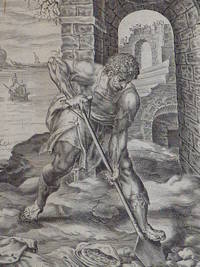
160029889s. l. Hollande Holland: S. n. 1600. Fine. S. n. s. l. Hollande Holland Circa 1600 33.50 x 27.50 cm une feuille Original engraving executed with burin by Harman Jansz van Muller. Proof on watermarked laid paper work from the early 17th century. This is an illustration of the Gospel according to Matthew 25:18 ""And he that had received one went and digged in the earth and hid his lord's money."" Legend in Latin in the lower part of the engraving. Artist's signature in the plate. Numbered mentions ""3"" at the bottom in the engraving and in the lower right corner in the section devoted to the legend and manuscript mention ""105"" in the margin in the upper right corner. An old manuscript annotation in Greek characters under the right angle of the plate mark. Watermark visible by transparency. Rare and discreet foxing mainly marginal light traces of marginal dampstaining not touching the engraving a tiny corner lack an old marginal restoration using a paper strip otherwise very handsome state of preservation for this extremely rare engraving of great freshness. The engraver Harman Jansz van Muller worked with Cornelis Cort also known as Cornelio Fiammingo and was perhaps his pupil. S. n. unknown
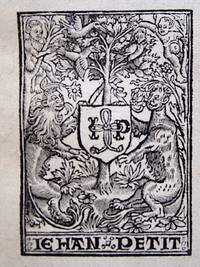
150847403Paris: Jehan Petit 1508. Fine. Jehan Petit Paris 1508 10 x 16.50 cm relié New post-incunabula edition in Petit Jehan. Gothic print in two columns to 45 lines. Thumbnail of the printer on the title page. The first edition was published in 1498. Jehan Petit reprinted several times in sermons 1506-1522 Brunet. Many white initials on black full of stars or others. Colophon transcribed: ""Opera Johannis Barbier impensis vero honesti viri Johannis Small Bibliopole parisiensis impressorum. Anno. M.CCCCC. VIII quarto nonas maii. » Full burgundy morocco binding late nineteenth or early twentieth century. Back with nerves decorated with jewels box section 5. Golden tail date basis. Cold coaching nets on the dishes. Gilt edges. Wetting the top right corner of folios 65-73 and 153-175. Beautiful specimen rare in this condition. Olivier Maillard 1430-1502 Vicar General of the Franciscan observant of France in 1502 is one of the greatest figures of the Franciscan order at the end of the XV. From Brittany and died in Toulouse he was a preacher of Louis XI and the Duke of Burgundy. His reputation is mainly based on the preaching he did during the years 1494 and 1508 in the church of Saint-Jean en Greve in Paris and strange liberties he gave it. He seemed never find the word hard enough nor sufficiently vivid expression to his sermons. ""Nobody had ever attacked all classes and all social professions more boldly virulence and tasteless. Each of his sermons is a bitter and outrageous satire covered with foul language trivial and words borrowed from bad places of the lowest ""Hoefer. The style of Olivier Maillard was rated ""Macaronic"" by Sainte-Beuve in his historical and critical Table of poetry and the French theater in the eighteenth century. See Moreau chronological inventory Parisian editions of XVIII century. ""Brother Olivier Maillard was a preacher of the fifteenth century who acquired much fame pronouncing several Latin sermons mixed with French in which he declaimed against the vices of the great the church people and lawyers. ""Brunet III 1318 Jehan Petit unknown
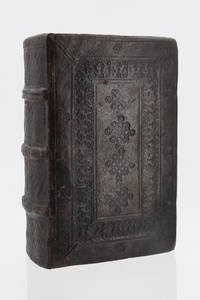
15546951Bâle Basel: Chez Nicolas Bryling 1554. Fine. Chez Nicolas Bryling Bâle Basel 1554 11 x 17.5 cm relié New edition. Although we have found no trace of this Basel edition the first edition was published in Venice by Aldus in 1527 with a different collation. Not held by the Bibliothèque nationale de France and absent from French catalogues. Oxford holds an edition with the same date. English catalogues mention several copies at different dates. Printed in italic type. Fine contemporary German binding on pigskin with clasps in perfect working order. Spine with 3 raised bands unlettered with handwritten paper lettering piece boards stamped in blind with decorative rolls in frames leafy designs with medallions representing Erasmus of Rotterdam and Philip of Milan Martin of Paris John of . Central rectangle with interlacing foliate mirror patterns. 2 dampstains on the upper board one 2cm in diameter and the other 4cm extending outward. Fresh paper. Priscian was a Roman grammarian of the 6th century AD whose Latin name was Priscianus Caesariensis named after his native city of Caesarea in Mauritania. Little is ultimately known of his existence except that he taught in Constantinople and above all that his major work to which he owes his fame the Institutiones Grammaticae in 18 books became the reference for Latin grammar until the end of the Middle Ages. The present work is a collection that brings together different works by Priscian linguistic studies or translations of Hermogenes and Dionysius Periegetes. Chez Nicolas Bryling hardcover