1 506 résultats
19151200Braunschweig: Friedr. Vieweg & Sohn 1915. 1st Edition. FIRST EDITION FULL BOUND VOLUME OF THE EINSTEIN-DE HAAS EFFECT -- an experimental observation that illustrates the relationship between magnetism and angular momentum and in which a change in the magnetic moment causes the rotation of a free body. In this 1915 paper Albert Einstein and Wander de Haas report that changing the magnetization of a suspended iron rod by applying an external magnetic field leads to mechanical rotation of the rod - a result that still stands as a textbook illustration of the relationship between magnetism and angular momentum. Papers by Planck The Quantum Hypothesis for Molecules with Multiple Degrees of Freedom von Laue Warburg Siegbahn and Born are also present. <br /> <br /> Einstein had long contemplated Ampère's 1820 conjecture that magnetism is caused by the microscopic circular motions of electric charges. In light of this Einstein and de Haas devised an experiment to test not just Ampère's hypothesis but also "Lorentz's theory that the rotating particles are electrons. The aim of the experiment was to measure the torque generated by a reversal of the magnetization of an iron cylinder" Calaprice Einstein Almanac 52. <br /> <br /> In the experiment Einstein and de Haas designed "a magnetic material was suspended with the aid of a thin string inside a magnetic field coil. When the magnetic field was increased by the application of an electric current through the field coil the magnetic material is magnetized. In order to keep the total magnetic moment of the magnetic material constant the latter rotates. This classical Einstein-de Haas effect demonstrates that the spin angular momentum is of the same nature as the angular momentum of rotating bodies as conceived in classical mechanics" Ganzhorn Nature Communications 7 11443 2016. <br /> <br /> Einstein spoke enthusiastically of the experimental results he and de Haas has achieved stating that they had "given firm proof of the existence of Ampère's molecular currents" Pais Subtle is the Lord 245. <br /> <br /> ALSO INCLUDED: Papers by Planck "Die Quantenhypotese für Molekeln mit mehreren Freiheitsgraden" and "Bemerkung über die Entropiekonstante zweiatomiger Gase" as well as a paper by von Laue "Die Einsteinischen Energieschwankungen" CONDITION & DETAILS: Braunschweig: Friedr. Vieweg & Sohn. 8vo. Unobtrusive stamp on front paste down and title page. In-text figures throughout. Tightly bound in leather over marbled paper boards; gilt-lettered and tooled at the slightly faded spine. Unusually beautiful marbled paper edges. Bright and very clean throughout. Near fine. Friedr. Vieweg & Sohn hardcover
191538835Braunschweig Vieweg & Sohn 1915. Contemp. hcalf gilt. Spine with a few scratches and light wear to spine ends. "Verhandlungen der Deutschen Physikalischen Gesellschaft im Jahre 1915. 17. Jahrgang. Im Auftrage der Gesellschaft herausgegeben von Karl Scheel." VI489 pp. textillustr. Einstein/Haas papers: pp. 152-170 a. p. 203 a. p. 420. - Planck paper: pp. 407-418 a. 418-19 a. 438-51. - Laue paper: pp. 198-202. Internally clean and fine. The whole volume offered. <br/><br/><em>All papers first edition. - In the papers by Einstein and Haas prooved the Ampere hypothesis that permanent magnetism is caused by the microscopic circular motions of electric charges. The experimental results was very close to the theoretical value and as such they gave a brilliant proof of the soundness of the hypothesis. </em> unknown
191538835Braunschweig, Vieweg & Sohn, 1915. Contemp. hcalf, gilt. Spine with a few scratches and light wear to spine ends. ""Verhandlungen der Deutschen Physikalischen Gesellschaft im Jahre 1915. 17. Jahrgang. Im Auftrage der Gesellschaft herausgegeben von Karl Scheel."" VI,489 pp. textillustr. Einstein/Haas papers: pp. 152-170 a. p. 203 a. p. 420. - Planck paper: pp. 407-418 a. 418-19 a. 438-51. - Laue paper: pp. 198-202. Internally clean and fine. The whole volume offered.
1991Q-0876686900Jason Aronson Inc 1991-01-01. Hardcover. New. In shrink wrap. Looks like an interesting title! Jason Aronson, Inc hardcover
1991DADAX0876686900Brand: Jason Aronson Inc 1991-01-01. New Printing. hardcover. New. 6.40x0.85x9.30. Buy with confidence. Excellent Customer Service & Return policy. Brand: Jason Aronson, Inc hardcover
1989Q-0807404349Urj Press 1989-08-01. Paperback. New. In shrink wrap. Looks like an interesting title! Urj Press paperback
1995Q-0876544723Pomegranate 1995-09-01. Paperback. New. In shrink wrap. Looks like an interesting title! Pomegranate paperback
195050104New York: Philosophical Library 1950. First Edition. Hardcover with Dust Jacket. Rare VG First Edition. DJ is in VG condition and has the original $3.00 price. In an acetate. Moderate foxing through the book but unmarked with VG binding. . Philosophical Library hardcover
19839780802224170-2025Philosophical Library 1983. Hardcover. New/New. <p><strong>Author:</strong> Albert Einstein</p><p><strong>Publisher:</strong> Philosophical Library</p><p><strong>Binding:</strong> Hardcover</p><p><strong>ISBN:</strong> 9780802224170</p><p><strong>Release Date:</strong> 1983</p><p><strong>Number Of Pages:</strong> 122</p><p><strong>Details:</strong> Book by Einstein Albert</p> Philosophical Library hardcover
19839780802224170-2025Philosophical Library 1983. Hardcover. New/New. <p><strong>Author:</strong> Albert Einstein</p><p><strong>Publisher:</strong> Philosophical Library</p><p><strong>Binding:</strong> Hardcover</p><p><strong>ISBN:</strong> 9780802224170</p><p><strong>Release Date:</strong> 1983</p><p><strong>Number Of Pages:</strong> 122</p><p><strong>Details:</strong> Book by Einstein Albert</p> Philosophical Library hardcover
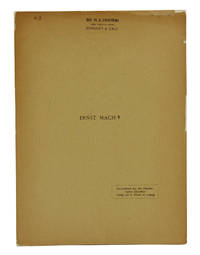
1916140941831Leipzig Germany: S. Hirzel 1916. First separate edition. First separate edition. 4 pp. Illustrated with portrait of August Mach from photograph. Publisher's original printed wrappers. Very Good with some small chips to fragile wrappers faint crease to top of front wrap contents toned with age. This copy belonged to Hans Albert Einstein Albert Einstein’s oldest son with his inkstamp at top of front wrapper; likely a presentation copy from his father. Neatly written at top of front wrapper is "43" and date "14.III.16." OCLC/WorldCat locates four copies two at the University of Toronto one at the Smithsonian Institution and one at the American Philosophical Society. Weil 89.<br /> <br /> <p>Very rare author's offprint stating "Uberreicht vom Verfasser" of the eulogy by Albert Einstein for fellow physicist Ernst Mach as first published in Physikalischen Zeitschrift. A noted scientist in his own right Mach is best known for the concept of "Mach's principle" which asserts that an entity's inertial mass is determined by all the other masses in the universe. Einstein in fact coined the phrase "Mach's principle" and his application of it had major ramifications for the development of his theory of general relativity Einstein in 1918 labeling it one of the "three pillars" of general relativity. S. Hirzel unknown
1967102850BBBerlin, Union Verlag, (1967). 8°. 72 S. mit 2 Portraits. Original-Engl.Broschur.
1951WB16897New York: Van Vechten Press 1951. Limited Edition. Hardcover. Fine. One of a total edition of 350. Full blue morocco binding by Suzanne Schrag; housed in clamshell box also by Schrag. With dedicatory essays by John Berryman Herman Broch Albert Einstein Ben Shahn Thomas Mann and others. <br/><br/> Van Vechten Press hardcover books
1951WB16897New York: Van Vechten Press 1951. Limited Edition. Hardcover. Fine. One of a total edition of 350. Full blue morocco binding by Suzanne Schrag; housed in clamshell box also by Schrag. With dedicatory essays by John Berryman Herman Broch Albert Einstein Ben Shahn Thomas Mann and others. <br/><br/> Van Vechten Press hardcover
191376293Leipzig ; Berlin : Teubner 1913. 1st Edition 1st Edition 38 S. ; 25cm Halbleinen [3 Warenabbildungen] 0
191343305Leipzig & Berlin: Teubner 1913. 38pp. 254 x 170 mm. Original printed wrappers chipped. Library stamps. Very good. First separate edition. "After his first discussions with Grossmann Einstein had found the correct starting point for general relativity. The real work could now begin . . . The Einstein-Grossmann paper published in 1913 contains profound physical insight into the nature of measurement some correct general relativistic equations some faulty reasoning and clumsy notation" Pais Subtle is the Lord p. 216. Weil Albert Einstein Bibliography 58. Teubner unknown books
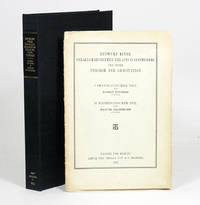
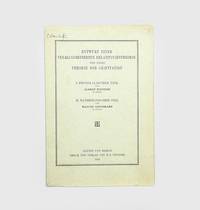
19132064Leipzig and Berlin: Teubner 1913. First edition. Original wrappers. Very Good. FIRST EDITION COMMERCIAL OFFPRINT ISSUE of Einstein's breakthrough work on general relativity: the famous "Entwurf" paper. "In this book Einstein and Grossman investigated curved space and curved time as they relate to a theory of gravity. They presented virtually all the elements of the general theory of relativity with the exception of one striking omission: gravitational field equations that were not generally covariant. Einstein soon reconciled himself to this lack of general covariance through the 'hole argument' which sought to establish that generally covariant gravitational field equations would be physically uninteresting. Einstein did not adopt the gravitational field equations until late in 1915 in his final formulations of the general theory. Here Einstein contributed the physics and Grossman the mathematics" Calaprice The Einstein Almanac 40. Weil 59a. Offprint from Zeitschrift für Mathematik und Physik volume 62. Leipzig and Berlin: Teubner 1913. Octavo original wrappers; custom box. Pencil notation on title. Small chips at spine ends. An outstanding copy without any of the cover-foxing so common with this issue. Teubner unknown books
191344851Leipzig & Berlin: Teubner 1913. 38pp. 254 x 170 mm. Original printed wrappers chipped. Library stamps ownership inscription. Very good. First separate edition. "After his first discussions with Grossmann Einstein had found the correct starting point for general relativity. The real work could now begin . . . The Einstein-Grossmann paper published in 1913 contains profound physical insight into the nature of measurement some correct general relativistic equations some faulty reasoning and clumsy notation" Pais Subtle is the Lord p. 216. Weil Albert Einstein Bibliography 58. Teubner unknown books
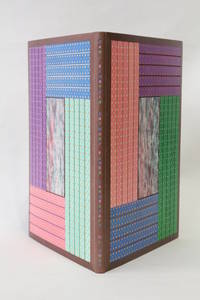
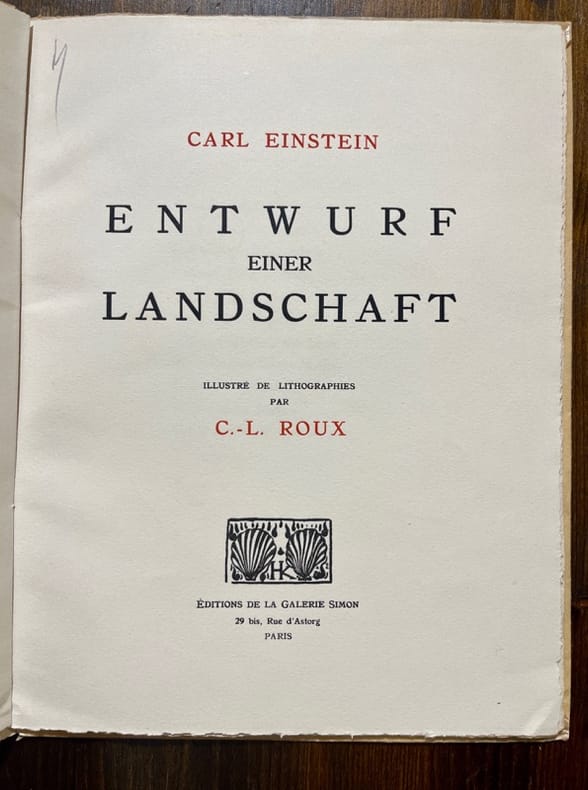
193067602Paris: Edition de la Galerie Simon 1930. Fine. Edition de la Galerie Simon Paris 1930 19 x 25 cm relié Entwurf einer Landschaft Sketch of a Landscape Édition de la Galerie Simon Paris 1930 19 x 25 cm full calf First edition one of 90 numbered copies on Holland paper signed by Carl Einstein and Gaston-Louis Roux on the justification page the only issue with 10 copies on Japan paper and 10 on Chapelle paper. With five full page black lithographs by Gaston-Louis Roux one of which on the frontispiece. Binding in full brown-pink box spine with blue pink and green title in ser significant inlaid decoration on the boards four bands of five strips of pink purple green and blue calf arranged around a central piece of rectangular multi-colored marbled box endpapers in flesh-side pink suede wrappers and spine preserved all edges gilt dust jacket in half brown-pink box spine with blue pink and green title in ser slip case lined with brown-pink box binding signed by Georges Leroux and dated 1994. Carl Einstein is an anarchist writer art historian friend of George Grosz Georges Braque and Pablo Picasso collaborator of Jean Renoir lived through the wars and revolutions that shook Europe during the first part of the twentieth century. He volunteer during the Spanish civil revolution in 1936 and went to Barcelona to fight in the ranks of the Confédération nationale du tra vail National Labor Confederation before joining the Groupe international de la Colonne Durruti Durruti Column International Group. Of Jewish faith he committed suicide in 1940 to avoid failing into the hands of the Nazis. Magnificent copy perfectly set in a full inlaid box binding signed by Georges Leroux one of the greatest binders of the second part of the 20th century. Edition de la Galerie Simon hardcover
1913188059Leipzig and Berlin: B. G. Teubner 1913. Generalizing relativity First edition of Einstein's early articulation of general relativity his first paper to describe gravity as the curvature of spacetime containing "virtually all the essential features of his general theory of relativity" Norton p. 253. In 1912 Einstein's old school friend Marcel Grossman 1878-1936 secured him a professorship at ETH Zurich where they had both studied as undergraduates. The two men began a collaboration to provide a firmer mathematical foundation to Einstein's concept of gravity as a geometrical property of time and space. The two sections of the Entwurf outline the resulting theory in full complete with gravitational field equations relating the curvature of spacetime to the distribution of mass and energy within it. Einstein contributed the initial section focussing on physical theories while Grossman added the following section developing the more complex mathematical formulae. Michel Janssen editor of the Einstein Papers Project notes that the Entwurf "was published as a separatum in early 1913 and was reprinted the following year in Zeitschrift für Mathematik und Physik" p. 1. The Zeitschrift reprint includes an added section outlining the famed "Hole" argument. An offprint dated 1914 was published with the journal. Provenance: Edward Vermilye Huntington 1874-1952 the American academic who studied the foundations of mathematics at Harvard for 40 years with his signature on the front wrapper. Octavo. Device to title page formulae in the text. Original light green wrappers printed in black. Light rubbing chipping and creasing to wrappers contents clean: a very good copy indeed. Boni 50; Norman 693; Weil 58a. Michael Janssen "Einstein's First Systematic Exposition of General Relativity" 2004; John Norton "How Einstein found his field equations: 1912-1915" Historical Studies in the Physical Sciences vol. 14 no. 2 1984. unknown
191343305Leipzig & Berlin: Teubner 1913. 38pp. 254 x 170 mm. Original printed wrappers chipped. Library stamps. Very good. First separate edition. "After his first discussions with Grossmann Einstein had found the correct starting point for general relativity. The real work could now begin . . . The Einstein-Grossmann paper published in 1913 contains profound physical insight into the nature of measurement some correct general relativistic equations some faulty reasoning and clumsy notation" Pais Subtle is the Lord p. 216. Weil Albert Einstein Bibliography 58. Teubner unknown
19132064Leipzig and Berlin: Teubner 1913. First edition. Original wrappers. Very Good. FIRST EDITION COMMERCIAL OFFPRINT ISSUE of Einstein's breakthrough work on general relativity: the famous "Entwurf" paper. "In this book Einstein and Grossman investigated curved space and curved time as they relate to a theory of gravity. They presented virtually all the elements of the general theory of relativity with the exception of one striking omission: gravitational field equations that were not generally covariant. Einstein soon reconciled himself to this lack of general covariance through the 'hole argument' which sought to establish that generally covariant gravitational field equations would be physically uninteresting. Einstein did not adopt the gravitational field equations until late in 1915 in his final formulations of the general theory. Here Einstein contributed the physics and Grossman the mathematics" Calaprice The Einstein Almanac 40. Weil 59a. Offprint from Zeitschrift für Mathematik und Physik volume 62. Leipzig and Berlin: Teubner 1913. Octavo original wrappers; custom box. Pencil notation on title. Small chips at spine ends. An outstanding copy without any of the cover-foxing so common with this issue. Teubner unknown
196945657Olten, Stuttgart, Salzburg, Fackel-Buchklub, 1969. Sonderausgabe 176 Seiten , 30 cm , Leinen
193067602Edition de la Galerie Simon | Paris 1930 | 19 x 25 cm | relié
193018547Paris, Éditions de la Galerie Simon, 1930. Grand in-4 broché, couverture imprimée. Chemise en demi-box noir, étui (Honegger).