LESSON (René-Primevère)Livre Rare Book
20 126 résultats
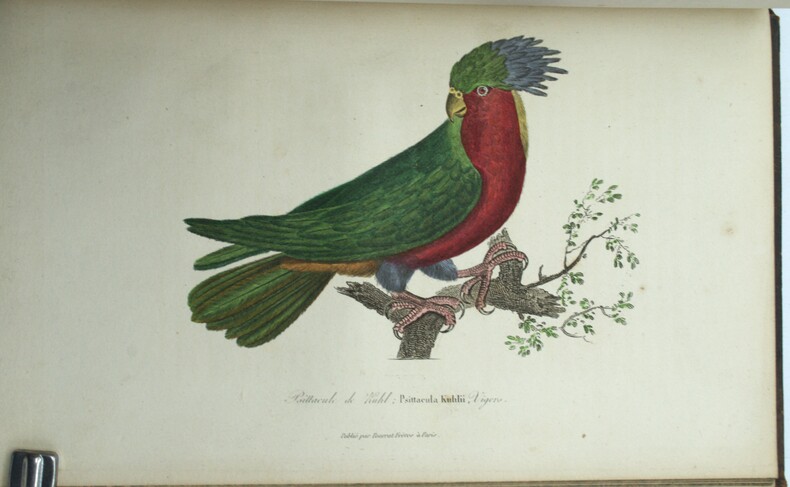
1839PHO-1704Paris, Pourrat frères, 1839. 2 volumes in-8 (220x150), plein veau raciné époque, dos lisse orné avec pièces de titre, auteur et tomaison, frises aux plats et aux coupes, , 2ff.-510pp.-1f. , 2ff.-547pp.-2ff. , illustré d’un frontispice et de 41 planches dont 19 en couleurs d’époque représentant des animaux, des poissons et des oiseaux, un cahier (tome 2) dérelié, 1 planche volante, petits frottements, 1 coin usé, quelques rousseurs .
17864383CBKöln, Allobrogum, 1786. 8°. LXXV, LXXVI, 604 S.; (4) 732, 52 S. Mit 5 gest., gef. Kupfertafeln u. 1 gef. Tabelle. Halbleinenband des 20. Jahrhunderts. + Wichtig: Für unsere Kunden in der EU erfolgt der Versand alle 14 Tage verzollt ab Deutschland / Postbank-Konto in Deutschland vorhanden +, 4383C Teil 5-6 (von 7) = Band 1-2 in 2 Bänden.
026838sans nom, sans lieu, ni date 0 un volume in-4° (310 x218mm). Reliure en demi-basane maroquinée fauve, dos lisse orné d'une pièce de titre (reliure ancienne du début du xixe siècle). (sur l'ensemble des planches présence d'une cerne claire en bordure inférieure avec parfois atteinte aux figures, rousseurs, pas de page de titre ni de pages de texte, planches seules). Ce volume contient 200 planches de figures de botanique gravées sur cuivre d'une grande finesse. Planches 101 à 200 ; Planches 301 à 400. Fait partie de la monumentale encyclopédie méthodique (1783-1817) de Panckoucke. Lamarck, Jean-Baptiste Pierre Antoine de Monet de (1744-1829) : officier, naturaliste, d'abord botaniste puis professeur de zoologie au Muséum d'histoire naturelle, membre de l'Académie des sciences et de l'Institut, de l'Institut Royal de France, de la Légion d'honneur. Panckoucke, Charles-Joseph (1736-1798) : Imprimeur-libraire, libraire de l'Imprimerie royale (1764-1778), libraire titulaire de l'Académie (royale des Sciences et des Inscriptions et Belles-Lettres, 1764). Rare.
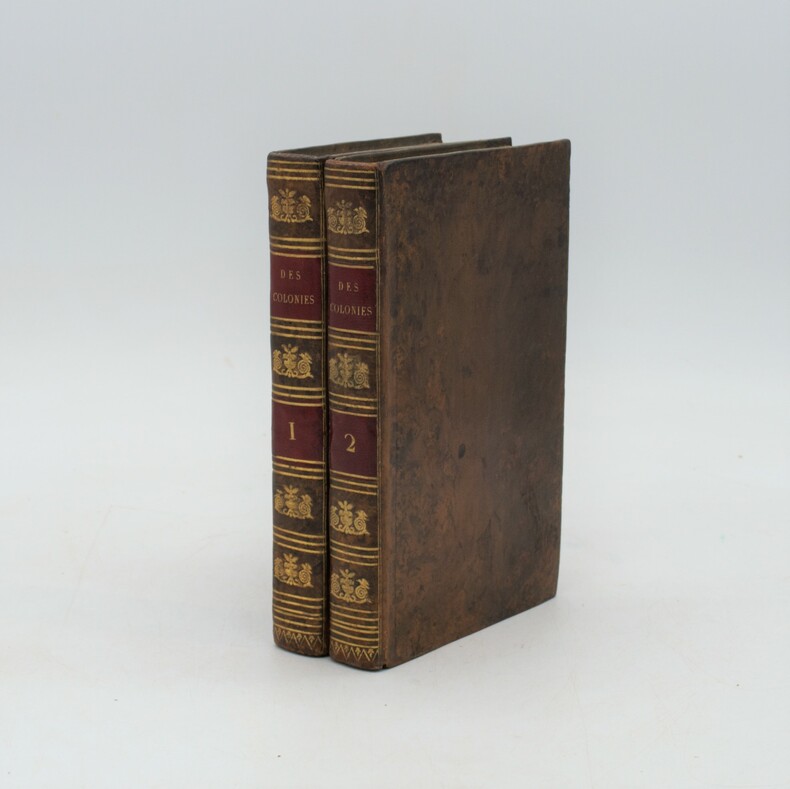
1817PHO-1170Paris, F. Bechet ; A. Égron, février 1817; 2 volumes in-8 ,xxxii,403,[2]; [4],394,[2]pp., relié plein veau raciné époque , dos lisse orné avec pièces de titre et tomaisons rouges, dos lisses. Édition originale.
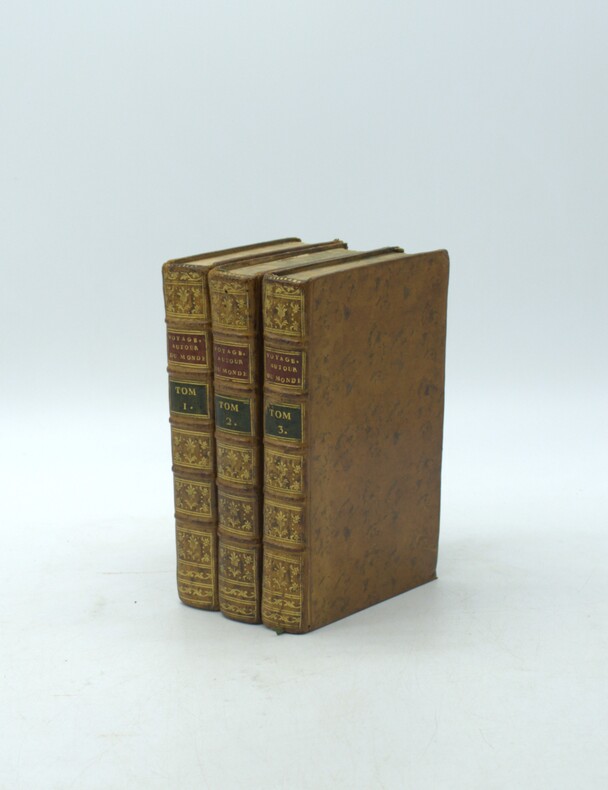
1787PHO-2220Paris, Buisson, 1787. Trois volumes in-8 (198x120mm), xxxii-388pp.-2 pl., 2ff.-366pp.- 8 pl., 2ff.-363pp.- 6pl.. Basane marbrée de l'époque, tranches marbrées, dos à nerfs ornés avec pièce de titre (rouge) et tomaison (verte) mouillure au t2, carte volante.
4to [26.5 x 19 cm]; 4 volumes, ix, 192; v, 200; ix, 196; v, 204 pp, 192 fine colored lithographed plates (chromolithographs) by Prang's esteemed firm from paintings by Alois Lunzer, tissue guards. orig cloth, gilt title lettering & rules on spines, gilt cover lettering & vignette, all edges gilted, slight fading where small spine labels removed, bookplate removed from front endpaper, light cover wear, interiors are clean and fine, excellent set. A Bennett p75. Nissen 1331. Taxonomic Literature 5783. A complete set of both series with all of the plates, most of which are flowers rather than ferns, a corner stone work of any collection of north american botanical color plate books. Prang was a leading printer of chromolithographed plates in the nineteenth century.
Cm. 26, pp. (14 di 16, manca l'antiporta figurata) 80 (2) 56 (2). Con 7 belle tavole incise in rame e ripiegate f.t. Leg. coeva in cartonato rigido. Sguardie recenti, due timbri privati francesi al frontespizio, un angolo delle prime carte con macchiette, peraltro esemplare marginoso, stampato su carta forte e con le belle tavole, incise dal pittore milanese Gaetano Bianchi, in ottimo stato di conservazione. Edizione originale ed unica di questa celebre opera in cui l'autore spiega l'utilizzo di un nuovo tipo di aratro meccanico sostenuto, senza troppa fatica, dalle braccia dell'uomo.
Cm. 26, pp. viii, 254 (2) iv. Con 36 belle tavole fuori testo in fine coloritura coeva. Solida legatura in mezza pelle con punte. Dorso con titoli e filetti in oro (recenti?). Esemplare marginoso ed in ottimo stato di conservazione, senza difetti. Edizione originale, non comune ed interessante.
17864383CBTeil 5-6 (von 7) = Band 1-2 in 2 Bänden. Köln, Allobrogum, 1786. 8°. LXXV, LXXVI, 604 S.; (4) 732, 52 S. Mit 5 gest., gef. Kupfertafeln u. 1 gef. Tabelle. Halbleinenband des 20. Jahrhunderts.
3044Cicra 1860 Grand In-8 étroit à l’italienne (25x16 cm), relié en pleine percaline bleue marine dos à 4 nerfs titre frappé « Album de Plantes Marine », filet d’encadrement doré sur les plats, doré sur tranches. Traces de mouillures sur la reliure ainsi qu’à l’intérieur sur plusieurs pages. 74 ff avec sur chaque page une belle algue appliqué ainsi que son nom manuscrit indiqué à la plume bleue.
240522S.l. [Gèdre], s.d. (1871) in-4 oblong (24 x 31 cm), [37] ff. n. ch., regroupant 204 échantillons légendés en latin, soit manuscritement, soit par de petites étiquettes imprimées et datées, demi-basane fauve, dos lisse muet, plats de toile cerise gaufrée, titre poussé en lettres dorées au centre du plat supérieur (reliure de l'époque). Coins abîmés.
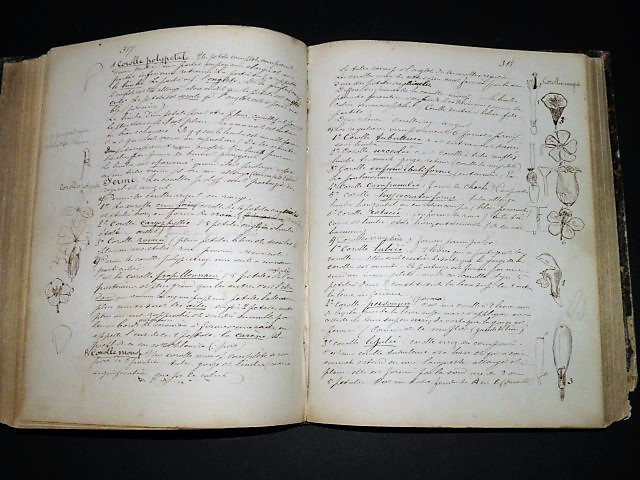
18661970Louvain (Belgique), Manuscrit, pièce unique, 1866. 19x23cm. Reliure de l’époque en demi-veau havane, dos à 4 nerfs guillochés, pièce de titre en basane fauve, plats de papier marbré. 507 pages paginées. Manuscrit totalement inédit, qui ne semble pas avoir fait l’objet d’une publication. In fine, sont inscrits un lieu et une date : Louvain, le 3 juillet 1866 (le dernier chiffre est cependant raturé). Le cahier compte 507 pages paginées, abondamment illustrées de schémas et croquis marginaux. Quelques ajouts et annotations (sans doute postérieurs) au crayon, également en marge. Le nom de l’auteur, « Martens », figure sur la pièce de titre. Natif de Maastricht en 1797, étudiant brillant de l’université de Liège, Martin Martens excelle à la fois en médecine et en sciences (physique et mathématiques) : il obtient un doctorat dans chaque discipline en 1821 et remporte les concours organisés par les deux facultés, qui publient ses travaux. C’est à Paris qu’il complète ensuite sa formation, aux côtés des savants les plus prestigieux du temps, tels que Dupuytren, Lamarck, Laennec, Broussais, Gay-Lussac… Puis sa carrière se partage entre la pratique de la médecine et les recherches scientifiques, domaines dans lesquels il glane de nombreuses récompenses. Professeur de pharmacologie et de chimie pharmaceutique dans sa ville natale en 1825, il occupe la chaire de chimie et de botanique à l’Université catholique de Louvain dix ans plus tard. Membre de l’Académie royale des Sciences et Belles-Lettres de Bruxelles en 1835, il siège également à l’Académie de Médecine dès la création de celle-ci, en 1841, et participe à la rédaction de la pharmacopée belge. Cette intense activité scientifique, jalonnée de succès, ne l’empêche nullement d’entretenir une véritable passion pour la botanique : de la confection d’un herbier reconnu comme l’un des plus remarquables de Belgique à la direction du Jardin botanique de Louvain (de 1837 à 1848), en passant par le cours gratuit qu’il ouvrit à Maastricht et plusieurs mémoires distingués, Martin Mertens n’eut de cesse d’enseigner et de faire progresser ce domaine. Affaibli par la maladie, il meurt littéralement à la tâche le 8 février 1863. En l’absence de toute trace d’édition de ce cours, malgré nos recherches, l’on se bornera à formuler deux hypothèses à partir de la date indiquée à la fin du manuscrit, posthume : il peut s’agir des notes par un élève du cours publics ou un étudiant de l’Université, retranscrites de manière détaillée après le décès du professeur. Le caractère soigné et méticuleux de l’écriture ainsi que l’abondance des illustrations incitent par ailleurs à penser que ce travail a pu être copié, puis mis en forme dans la perspective d’une édition. Copieux et précieux témoignage de la qualité de l’enseignement prodigué par l’un des principaux scientifiques belges du XIXe siècle.
1887R300001411CHEZ L'AUTEUR. 1887. In-4. Relié. Bon état, Couv. convenable, Dos satisfaisant, Intérieur frais. 28 planches avec serpentes. Quelques herbier sont en attentes de positionnement définitif.. . . . Classification Dewey : 580-Botanique
1917R300001412CHEZ L'AUTEUR. 1917. In-16. Relié. Bon état, Coins frottés, Dos satisfaisant, Intérieur frais. 12 planches d'herbier naturel avec descriptifs, serpentes et gravures couleurs.. . . . Classification Dewey : 580-Botanique
Magnifica incisione tratta dal celebre Hortus Eystettensis di Basilius Besler, edito per la prima volta ad Amsterdam nel 1613. Pubblicata con una tiratura di soli 300 esemplari, questa magnifica opera può essere considerata la pietra miliare dei libri di botanica ed il più maestoso ed importante libro del genere mai pubblicato. Le 367 tavole finemente incise in rame, di formato in-folio, contengono oltre 1000 diversi fiori rappresentanti 667 specie differenti. Basilius Besler era farmacista e botanico; le opere raffigurano il meraviglioso giardino del Cardinale Konrad von Gemmingen, che commissionò l’opera a Besler proprio per illustrare il giardino che circondava il suo castello. Incisione in rame, finemente colorata a mano, in ottimo stato di conservazione. Etching with later hand colour. Folio prints listed from a special edition of the work entitled Hortus Eystettensis: the Bishop's Garden by Basilius Besler, a pharmacist and botanist, published in 1613. Johann Konrad von Gemmingen, Prince Bishop of Eichstätt, Germany, arranged a magnificent garden to encircle his castle. This garden was one of the first of its kind, an inclusive display of shrubs and flowering plants, mostly European, but with some from Asia, Africa and the Americas. The Prince commissioned this marvelous botanical book to be made, which chronicles the garden through the four seasons, with most of the plants depicted actual size. A team of at least ten engravers worked under Besler on this massive project for 16 years, translating in situ and specimen drawings faithfully to copperplates. On 367 folio size plates over 1000 flowers representing 667 species are depicted. Published in an edition of 300 in 1613, Hortus Eysttensis is a landmark work in the history of botanical art and considered one of the greatest botanical books ever created. Copperplate with fine later hand colour, very good condition.
Magnifica incisione tratta dal celebre Hortus Eystettensis di Basilius Besler, edito per la prima volta ad Amsterdam nel 1613. Pubblicata con una tiratura di soli 300 esemplari, questa magnifica opera può essere considerata la pietra miliare dei libri di botanica ed il più maestoso ed importante libro del genere mai pubblicato. Le 367 tavole finemente incise in rame, di formato in-folio, contengono oltre 1000 diversi fiori rappresentanti 667 specie differenti. Basilius Besler era farmacista e botanico; le opere raffigurano il meraviglioso giardino del Cardinale Konrad von Gemmingen, che commissionò l’opera a Besler proprio per illustrare il giardino che circondava il suo castello. Incisione in rame, finemente colorata a mano, in ottimo stato di conservazione. Etching with later hand colour. Folio prints listed from a special edition of the work entitled Hortus Eystettensis: Bishop's Garden by Basilius Besler, a pharmacist and botanist, published in 1613. Johann Konrad von Gemmingen, Prince Bishop of Eichstätt, Germany, arranged a magnificent garden to encircle his castle. This garden was one of the first of its kind, an inclusive display of shrubs and flowering plants, mostly European, but with some from Asia, Africa and the Americas. The Prince commissioned this marvelous botanical book to be made, which chronicles the garden through the four seasons, with most of the plants depicted actual size. A team of at least ten engravers worked under Besler on this massive project for 16 years, translating in situ and specimen drawings faithfully to copperplates. On 367 folio size plates over 1000 flowers representing 667 species are depicted. Published in an edition of 300 in 1613, Hortus Eysttensis is a landmark work in the history of botanical art and considered one of the greatest botanical books ever created. Copperplate with fine later hand colour, very good condition.
Magnifica incisione tratta dal celebre Hortus Eystettensis di Basilius Besler, edito per la prima volta ad Amsterdam nel 1613. Pubblicata con una tiratura di soli 300 esemplari, questa magnifica opera può essere considerata la pietra miliare dei libri di botanica ed il più maestoso ed importante libro del genere mai pubblicato. Le 367 tavole finemente incise in rame, di formato in-folio, contengono oltre 1000 diversi fiori rappresentanti 667 specie differenti. Basilius Besler era farmacista e botanico; le opere raffigurano il meraviglioso giardino del Cardinale Konrad von Gemmingen, che commissionò l’opera a Besler proprio per illustrare il giardino che circondava il suo castello. Incisione in rame, finemente colorata a mano, in ottimo stato di conservazione. Etching with later hand colour. Folio prints listed from a special edition of the work entitled Hortus Eystettensis: Bishop's Garden by Basilius Besler, a pharmacist and botanist, published in 1613. Johann Konrad von Gemmingen, Prince Bishop of Eichstätt, Germany, arranged a magnificent garden to encircle his castle. This garden was one of the first of its kind, an inclusive display of shrubs and flowering plants, mostly European, but with some from Asia, Africa and the Americas. The Prince commissioned this marvelous botanical book to be made, which chronicles the garden through the four seasons, with most of the plants depicted actual size. A team of at least ten engravers worked under Besler on this massive project for 16 years, translating in situ and specimen drawings faithfully to copperplates. On 367 folio size plates over 1000 flowers representing 667 species are depicted. Published in an edition of 300 in 1613, Hortus Eysttensis is a landmark work in the history of botanical art and considered one of the greatest botanical books ever created. Copperplate with fine later hand colour, very good condition.
Magnifica incisione tratta dal celebre Hortus Eystettensis di Basilius Besler, edito per la prima volta ad Amsterdam nel 1613. Pubblicata con una tiratura di soli 300 esemplari, questa magnifica opera può essere considerata la pietra miliare dei libri di botanica ed il più maestoso ed importante libro del genere mai pubblicato. Le 367 tavole finemente incise in rame, di formato in-folio, contengono oltre 1000 diversi fiori rappresentanti 667 specie differenti. Basilius Besler era farmacista e botanico; le opere raffigurano il meraviglioso giardino del Cardinale Konrad von Gemmingen, che commissionò l’opera a Besler proprio per illustrare il giardino che circondava il suo castello. Incisione in rame, finemente colorata a mano, in ottimo stato di conservazione. Etching with later hand colour. Folio prints listed from a special edition of the work entitled Hortus Eystettensis: Bishop's Garden by Basilius Besler, a pharmacist and botanist, published in 1613. Johann Konrad von Gemmingen, Prince Bishop of Eichstätt, Germany, arranged a magnificent garden to encircle his castle. This garden was one of the first of its kind, an inclusive display of shrubs and flowering plants, mostly European, but with some from Asia, Africa and the Americas. The Prince commissioned this marvelous botanical book to be made, which chronicles the garden through the four seasons, with most of the plants depicted actual size. A team of at least ten engravers worked under Besler on this massive project for 16 years, translating in situ and specimen drawings faithfully to copperplates. On 367 folio size plates over 1000 flowers representing 667 species are depicted. Published in an edition of 300 in 1613, Hortus Eysttensis is a landmark work in the history of botanical art and considered one of the greatest botanical books ever created. Copperplate with fine later hand colour, very good condition.
Magnifica incisione tratta dal celebre Hortus Eystettensis di Basilius Besler, edito per la prima volta ad Amsterdam nel 1613. Pubblicata con una tiratura di soli 300 esemplari, questa magnifica opera può essere considerata la pietra miliare dei libri di botanica ed il più maestoso ed importante libro del genere mai pubblicato. Le 367 tavole finemente incise in rame, di formato in-folio, contengono oltre 1000 diversi fiori rappresentanti 667 specie differenti. Basilius Besler era farmacista e botanico; le opere raffigurano il meraviglioso giardino del Cardinale Konrad von Gemmingen, che commissionò l’opera a Besler proprio per illustrare il giardino che circondava il suo castello. Incisione in rame, finemente colorata a mano, in ottimo stato di conservazione. Etching with later hand colour. Folio prints listed from a special edition of the work entitled Hortus Eystettensis: the Bishop's Garden by Basilius Besler, a pharmacist and botanist, published in 1613. Johann Konrad von Gemmingen, Prince Bishop of Eichstätt, Germany, arranged a magnificent garden to encircle his castle. This garden was one of the first of its kind, an inclusive display of shrubs and flowering plants, mostly European, but with some from Asia, Africa and the Americas. The Prince commissioned this marvelous botanical book to be made, which chronicles the garden through the four seasons, with most of the plants depicted actual size. A team of at least ten engravers worked under Besler on this massive project for 16 years, translating in situ and specimen drawings faithfully to copperplates. On 367 folio size plates over 1000 flowers representing 667 species are depicted. Published in an edition of 300 in 1613, Hortus Eysttensis is a landmark work in the history of botanical art and considered one of the greatest botanical books ever created. Copperplate with fine later hand colour, very good condition.
Magnifica incisione tratta dal celebre Hortus Eystettensis di Basilius Besler, edito per la prima volta ad Amsterdam nel 1613. Pubblicata con una tiratura di soli 300 esemplari, questa magnifica opera può essere considerata la pietra miliare dei libri di botanica ed il più maestoso ed importante libro del genere mai pubblicato. Le 367 tavole finemente incise in rame, di formato in-folio, contengono oltre 1000 diversi fiori rappresentanti 667 specie differenti. Basilius Besler era farmacista e botanico; le opere raffigurano il meraviglioso giardino del Cardinale Konrad von Gemmingen, che commissionò l’opera a Besler proprio per illustrare il giardino che circondava il suo castello. Incisione in rame, finemente colorata a mano, in ottimo stato di conservazione. Etching with later hand colour. Folio prints listed from a special edition of the work entitled Hortus Eystettensis: Bishop's Garden by Basilius Besler, a pharmacist and botanist, published in 1613. Johann Konrad von Gemmingen, Prince Bishop of Eichstätt, Germany, arranged a magnificent garden to encircle his castle. This garden was one of the first of its kind, an inclusive display of shrubs and flowering plants, mostly European, but with some from Asia, Africa and the Americas. The Prince commissioned this marvelous botanical book to be made, which chronicles the garden through the four seasons, with most of the plants depicted actual size. A team of at least ten engravers worked under Besler on this massive project for 16 years, translating in situ and specimen drawings faithfully to copperplates. On 367 folio size plates over 1000 flowers representing 667 species are depicted. Published in an edition of 300 in 1613, Hortus Eysttensis is a landmark work in the history of botanical art and considered one of the greatest botanical books ever created. Copperplate with fine later hand colour, very good condition.
Magnifica incisione tratta dal celebre Hortus Eystettensis di Basilius Besler, edito per la prima volta ad Amsterdam nel 1613. Pubblicata con una tiratura di soli 300 esemplari, questa magnifica opera può essere considerata la pietra miliare dei libri di botanica ed il più maestoso ed importante libro del genere mai pubblicato. Le 367 tavole finemente incise in rame, di formato in-folio, contengono oltre 1000 diversi fiori rappresentanti 667 specie differenti. Basilius Besler era farmacista e botanico; le opere raffigurano il meraviglioso giardino del Cardinale Konrad von Gemmingen, che commissionò l’opera a Besler proprio per illustrare il giardino che circondava il suo castello. Incisione in rame, finemente colorata a mano, in ottimo stato di conservazione. Etching with later hand colour. Folio prints listed from a special edition of the work entitled Hortus Eystettensis: Bishop's Garden by Basilius Besler, a pharmacist and botanist, published in 1613. Johann Konrad von Gemmingen, Prince Bishop of Eichstätt, Germany, arranged a magnificent garden to encircle his castle. This garden was one of the first of its kind, an inclusive display of shrubs and flowering plants, mostly European, but with some from Asia, Africa and the Americas. The Prince commissioned this marvelous botanical book to be made, which chronicles the garden through the four seasons, with most of the plants depicted actual size. A team of at least ten engravers worked under Besler on this massive project for 16 years, translating in situ and specimen drawings faithfully to copperplates. On 367 folio size plates over 1000 flowers representing 667 species are depicted. Published in an edition of 300 in 1613, Hortus Eysttensis is a landmark work in the history of botanical art and considered one of the greatest botanical books ever created. Copperplate with fine later hand colour, very good condition.
Magnifica incisione tratta dal celebre Hortus Eystettensis di Basilius Besler, edito per la prima volta ad Amsterdam nel 1613. Pubblicata con una tiratura di soli 300 esemplari, questa magnifica opera può essere considerata la pietra miliare dei libri di botanica ed il più maestoso ed importante libro del genere mai pubblicato. Le 367 tavole finemente incise in rame, di formato in-folio, contengono oltre 1000 diversi fiori rappresentanti 667 specie differenti. Basilius Besler era farmacista e botanico; le opere raffigurano il meraviglioso giardino del Cardinale Konrad von Gemmingen, che commissionò l’opera a Besler proprio per illustrare il giardino che circondava il suo castello. Incisione in rame, finemente colorata a mano, in ottimo stato di conservazione. Etching with later hand colour. Folio prints listed from a special edition of the work entitled Hortus Eystettensis: Bishop's Garden by Basilius Besler, a pharmacist and botanist, published in 1613. Johann Konrad von Gemmingen, Prince Bishop of Eichstätt, Germany, arranged a magnificent garden to encircle his castle. This garden was one of the first of its kind, an inclusive display of shrubs and flowering plants, mostly European, but with some from Asia, Africa and the Americas. The Prince commissioned this marvelous botanical book to be made, which chronicles the garden through the four seasons, with most of the plants depicted actual size. A team of at least ten engravers worked under Besler on this massive project for 16 years, translating in situ and specimen drawings faithfully to copperplates. On 367 folio size plates over 1000 flowers representing 667 species are depicted. Published in an edition of 300 in 1613, Hortus Eysttensis is a landmark work in the history of botanical art and considered one of the greatest botanical books ever created. Copperplate with fine later hand colour, very good condition.
Magnifica incisione tratta dal celebre Hortus Eystettensis di Basilius Besler, edito per la prima volta ad Amsterdam nel 1613. Pubblicata con una tiratura di soli 300 esemplari, questa magnifica opera può essere considerata la pietra miliare dei libri di botanica ed il più maestoso ed importante libro del genere mai pubblicato. Le 367 tavole finemente incise in rame, di formato in-folio, contengono oltre 1000 diversi fiori rappresentanti 667 specie differenti. Basilius Besler era farmacista e botanico; le opere raffigurano il meraviglioso giardino del Cardinale Konrad von Gemmingen, che commissionò l’opera a Besler proprio per illustrare il giardino che circondava il suo castello. Incisione in rame, finemente colorata a mano, in ottimo stato di conservazione. Etching with later hand colour. Folio prints listed from a special edition of the work entitled Hortus Eystettensis: Bishop's Garden by Basilius Besler, a pharmacist and botanist, published in 1613. Johann Konrad von Gemmingen, Prince Bishop of Eichstätt, Germany, arranged a magnificent garden to encircle his castle. This garden was one of the first of its kind, an inclusive display of shrubs and flowering plants, mostly European, but with some from Asia, Africa and the Americas. The Prince commissioned this marvelous botanical book to be made, which chronicles the garden through the four seasons, with most of the plants depicted actual size. A team of at least ten engravers worked under Besler on this massive project for 16 years, translating in situ and specimen drawings faithfully to copperplates. On 367 folio size plates over 1000 flowers representing 667 species are depicted. Published in an edition of 300 in 1613, Hortus Eysttensis is a landmark work in the history of botanical art and considered one of the greatest botanical books ever created. Copperplate with fine later hand colour, very good condition.
Magnifica incisione tratta dal celebre Hortus Eystettensis di Basilius Besler, edito per la prima volta ad Amsterdam nel 1613. Pubblicata con una tiratura di soli 300 esemplari, questa magnifica opera può essere considerata la pietra miliare dei libri di botanica ed il più maestoso ed importante libro del genere mai pubblicato. Le 367 tavole finemente incise in rame, di formato in-folio, contengono oltre 1000 diversi fiori rappresentanti 667 specie differenti. Basilius Besler era farmacista e botanico; le opere raffigurano il meraviglioso giardino del Cardinale Konrad von Gemmingen, che commissionò l’opera a Besler proprio per illustrare il giardino che circondava il suo castello. Incisione in rame, finemente colorata a mano, in ottimo stato di conservazione. Etching with later hand colour. Folio prints listed from a special edition of the work entitled Hortus Eystettensis: Bishop's Garden by Basilius Besler, a pharmacist and botanist, published in 1613. Johann Konrad von Gemmingen, Prince Bishop of Eichstätt, Germany, arranged a magnificent garden to encircle his castle. This garden was one of the first of its kind, an inclusive display of shrubs and flowering plants, mostly European, but with some from Asia, Africa and the Americas. The Prince commissioned this marvelous botanical book to be made, which chronicles the garden through the four seasons, with most of the plants depicted actual size. A team of at least ten engravers worked under Besler on this massive project for 16 years, translating in situ and specimen drawings faithfully to copperplates. On 367 folio size plates over 1000 flowers representing 667 species are depicted. Published in an edition of 300 in 1613, Hortus Eysttensis is a landmark work in the history of botanical art and considered one of the greatest botanical books ever created. Copperplate with fine later hand colour, very good condition.
Magnifica incisione tratta dal celebre Hortus Eystettensis di Basilius Besler, edito per la prima volta ad Amsterdam nel 1613. Pubblicata con una tiratura di soli 300 esemplari, questa magnifica opera può essere considerata la pietra miliare dei libri di botanica ed il più maestoso ed importante libro del genere mai pubblicato. Le 367 tavole finemente incise in rame, di formato in-folio, contengono oltre 1000 diversi fiori rappresentanti 667 specie differenti. Basilius Besler era farmacista e botanico; le opere raffigurano il meraviglioso giardino del Cardinale Konrad von Gemmingen, che commissionò l’opera a Besler proprio per illustrare il giardino che circondava il suo castello. Incisione in rame, finemente colorata a mano, in ottimo stato di conservazione. Etching with later hand colour. Folio prints listed from a special edition of the work entitled Hortus Eystettensis: Bishop's Garden by Basilius Besler, a pharmacist and botanist, published in 1613. Johann Konrad von Gemmingen, Prince Bishop of Eichstätt, Germany, arranged a magnificent garden to encircle his castle. This garden was one of the first of its kind, an inclusive display of shrubs and flowering plants, mostly European, but with some from Asia, Africa and the Americas. The Prince commissioned this marvelous botanical book to be made, which chronicles the garden through the four seasons, with most of the plants depicted actual size. A team of at least ten engravers worked under Besler on this massive project for 16 years, translating in situ and specimen drawings faithfully to copperplates. On 367 folio size plates over 1000 flowers representing 667 species are depicted. Published in an edition of 300 in 1613, Hortus Eysttensis is a landmark work in the history of botanical art and considered one of the greatest botanical books ever created. Copperplate with fine later hand colour, very good condition.