73 298 résultats
Very Good Turkish, Ottoman (1500-1928) Original leather bdg. Large roy. 8vo. (25 x 17 cm). In Ottoman script. [1], 555 p. Hegira-Hijri: 1251 = Gregorian: 1835. One of the classic works of the Eastern literature, Kalila and Dimna is a book full of stories and tales written with advice to assist rulers in state administration. The work, which is inspired by Indian-origin Panchatantra tales, was written by Bidpai, Brahman Priest from the Vishnu religious sect, in Kashmir around the 3rd century. The work also known as five books on the art of politics and administration consists of five books on politics and administration each of which is called tantra (the case, right way by which man uses his intelligence). The book was written in Sanskrit language, and it aims to teach wisdom to rulers by means of animal fables. The work was translated into Turkish in the 14th century for the first time. Nasrallah's Persian translation constituted the source text for the translation by Kul Mesut. Kalila and Dimna, titled as Humâyûn-nâme, was presented to the Ottoman Sultan Suleiman the Magnificent and Abdulhamid II. It is understood that the work was presented to sultans during the Ottoman's earliest days. Baydaba's masterpiece 'Kalila and Dimna' also was an important narrative used for education of masses. This Indian-origin work was a common work used in the education of the masses in both Iranian and Turkish literatures. This Edition is the First Printed Edition in the Turkish / Ottoman world printed in Bulaq Printinghouse. Özege 8084. Chauvin II, 17b [Chauvin says 'C'est le texte de de Sacy, avec l'addition de la fable de la Colombe et le Renard (No. 113,81)']. Extremely rare.
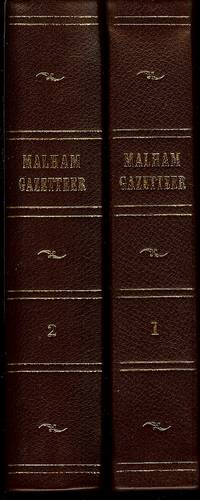
1797042012-EBoston Mass. USA: W. Spotswood & J. Nancrede 1797. Book. Illus. by Various Map Makers. Very Good. Full-Leather. 1st. American Edition. 1st. Edition USA 1797 . 1st. Printing Walnut brown leather with gilded letters on the spine. Volume 1 536 page book with 11 fold out maps . Both volume have been rebound with new leather and blank end papers aging and light staining on some pages and maps. Volume 2 573 page book with 5 fold out maps and errata at back page with directions to the binder for placing the charts with a list of books by the publisher Joseph Nancrede. Condition : Very Good see Image . Note no international sale. Size: 8vo - over 7¾" - 9¾" tall Size: 8vo - over 7¾ - 9¾" tall. W. Spotswood & J. Nancrede Hardcover
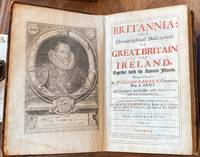
17229900002372London: James and John Knapton et al. 1722. Hardcover. Maps engravings. Folio. Two large volumes in original full leather bindings. Title pages are printed in red and black with an elegant full-page copper engraving of Camden as the frontispiece of the first volume. There are 50 double-page maps of the English counties Ireland Scotland and 'the Islands'; six of the maps are folding. There are also twelve large full-page engravings and numerous smaller engravings in the text. There is a comprehensive index and the errata page is present. A previous owner has reinforced the hinges with linen-like binding tape. The boards are quite worn and rubbed but a competent bookbinder could restore both bindings. The contents are remarkable clean with only occasional foxing and a few stained pages. The maps by the cartographer Robert Morden and which are usually removed and sold individually are all in excellent condition. Overall a good set. William Camden 1551-1623 was an English antiquary and historian who during the reign of Queen Elizabeth travelled throughout England collecting material for 'Britannia' which was first published in 1586. Initially written in Latin it is a survey of the British islands; its archaeology geography institutions monetary system and inhabitants 'chiefly intended for the instruction of foreigners' or so Gibson states in his Preface to this edition. It was first translated into English in 1610 probably under Camden's direction see Ency. Brit. 11th vol. V p. 101. Gibson's revision was first published in 1695. Our set is the undated 'Second Edition' but by comparing particulars with available bibliographical resources we believe it was published in 1722. Printing and the Mind of Man 101. James and John Knapton et al. hardcover
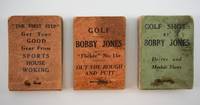
1930ST20235London: Harrods Ltd 1930s. FIRST EDITION. 76 x 51 mm. 3 x 2". 100 pp. <br/> Original green or orange paper wrappers side stitched titling on front cover and imprint on spine. In a custom-made folding buckram box with book wells for the three books and gilt-stamped marbled paper label inset on spine of the box. Consisting of three bound sets of 50 sequential photographs that when flipped either from back to front or front to back generate a stop motion animation of Bobby Jones demonstrating the proper form for executing a shot with various golf clubs see below. Advertisements on inside wrappers. Donovan & Murdoch 22610. One volume with portions of spine gone at either end with partial loss of imprint wrappers inevitably somewhat soiled corners a bit rounded as expected but still remarkably well preserved especially considering its inevitable hard use being entirely sound and with the photographs in excellent condition.<br/> <br/> This is a scarce grouping of some of the most charming sports as well as miniature books we've ever offered for sale. In the 1930s the famous London department store Harrods published a series of so-called sports "flicker" books of which these three are perhaps the most famous other sports books involved cricket tennis lacrosse soccer badminton swimming and greyhound racing. Our three "flicker" books when the pages are riffled with one's thumb or fingers show the famous smooth-swinging American golfer Bobby Jones executing shots with various clubs. The first book #11a in the Harrods series features the driver and the mashie. The modern equivalent for this latter piece of equipment is slightly elusive but the "mashie" is an iron club with considerable loft meant to hit a golf ball a relatively short distance with a high trajectory Jones' "driver" has the same meaning today as it did 90 years ago. The second book features shots with a "brassie" roughly equivalent to today's 3- or 4-wood and an "iron" also called a "driving iron" which is like today's 1- or 2-iron. The third book shows Jones putting and escaping from heavy rough with a high-lofted club like today's sand wedge. It is great fun--not to mention still instructive--to riffle through these photographs watching one of the world's most celebrated golf swings come to life complete with Jones' knickers white shirt and flapping tie. It is also a fact of some interest that this English series would feature an American player at a time when British dominance in golf was beginning to erode. Given the physical use to which these items have been subjected it is difficult to believe that they are still intact let alone that they are solid enough to be handled without worry. Harrods Ltd unknown
17211314654Leipzig, diverse Verlage, 1600-1721. Hprgtbd. Einbd. berieben. Rücken etwas rissig. Vord. Vorsatz erneuert. Teilw. stärker gebräunt. Ränder etwas scharf, vereinzelt unter Beschädigung d. obersten Zeile bzw. d. Randbuchstaben beschnitten.
1941028483Los Angeles: Art Center School 1941. 1st Edition . Hardcover. Fine. Photographs. 35 Pages In Red Plastic Binder 13" X 10 1/4" With White Plastic Comb Spine. The Book Consists Of 32 Pages Of Photographic Paper On Card Each With A 10 1/4" X 8 3/8" High Quality Photographic Image At Top On Each Side Documenting All Kinds Of Class Settings In The Studios And In Outside Locations And 3 Pages Of The Same Paper Each With Four 4 3/4" Square Photographs Attached To The Pages On Each Side Portraits Of The Teachers For A Total Of 88 Photographs. There Is No Text Or Writing Of Any Kind Anywhere In The Book But It Is Very Similar To A Set Of Pages In The Art Center School Of Design Archives In Pasadena Punched For A Spiral Binding But Unbound Having Four More Pages Than This Set But Lacking Some Of The Photographs Present Here. Ansel Adams Is Shown Instructing Many Of The Classes As Are Fred Archer Clarence Bull James H. Doolittle Edward Kaminski Paul Dorsey C. K. Eaton Otto Hulmer A B Shore Herman Wall And Others. The Photographs Are Very High Quality Showing Excellent Composition And Detail. This Particular Collection Of Photographs May Be Unique And In Any Case A Quite Rare And Desirable For Collectors Of Photography And In Particular The Ansel Adams Collector. Adams Developed His Zone System Technique Of Photography In 1941 While Teaching At The Art Center. <br/> <br/> Art Center School hardcover
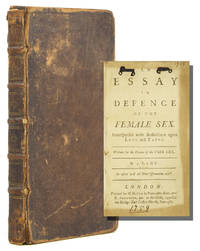
175013363London: printed for C. Hitch in Paternoster-Row and R. Akenhead jun. at the Globe opposite the Bridge-End Coffee-House Newcastle 1750. Fifth edition. 6 149 1 ad pp. 1 vols. 12mo. Contemporary calf. neatly rebacked flyleaves removed some light browning or spotting mostly marginal ink date 1759 at foot of title page a few pen or pencil marks on title and in margins. Fifth edition. 6 149 1 ad pp. 1 vols. 12mo. First published in two editions in 1696 and reprinted in 1697 1721 and the present edition ca. 1750 with changing subtitles. Variously attributed to Mary Astell Judith Drake and H. Wyatt.<br /> The present edition includes an ad for The Universal Library kept by Newcastle bookseller R. Akenhead jun. The date is conjectured from the R. Akenhead junior imprint which surfaces briefly in two other works dated 1750.<br /> A curious note on the verso of the dedication explains the lack of a subscriber's list. Apparently most of the "generous Encouragers" did not want to have their names included so "no List is printed lest Offence might be given."<br /> The author observes: "we are taught only our Mother-Tongue or perhaps French which is now very fashionable and almost as familiar amongst Women of Quality as Men; whereas the other Sex by means of a more extensive Education to the Knowledge of the Roman and Greek Languages have a vaster Field for their Imaginations to rove in and their Capacities thereby enlarged."<br /> <br /> RARE. ESTC T123106 BL NLS Smith College; Wing A 4058 printed for C. Hitch in Paternoster-Row, and R. Akenhead, jun. at the Globe, opposite the Bridge-End Coffee-House, Newcastle unknown
192121397El Paso Texas: Not Published 1921. The collection includes over 150 dated and signed letters written to and a few items from Dr. Lucinda DeLeftwich Templin 1888-1969 author historian & collector ".one of El Paso's best-loved and most distinguished educators - in 1916 she took her undergraduate and Master's at U. of Missouri and became Dean of Lindenwood College in St. Charles MO. did doctoral work at Harvard and Columbia and took over as principal at the Radford School in 1927 at the time called El Paso School for Girls; Dr. Templin interested Mr. and Mrs. G. A. Radford of Webster Grove Mo. in the school and the Radfords paid off the mortgage provided an endowment fund that insured the institution's stability and the name of the school was changed in honor of these benefactors. During Dr. Templin's administration Radford School grew to a nationally accredited school for girls in the Southwest and when she retired in 1967 the 22-acre campus had more than $1000000 in physical improvements and was debt-free. Dr. Templin had also completed plans for construction of a $400000 library and museum on property owned by the school; she was a member of the nation's leading educational organizations and honorary societies named consistently to Who's Who in America and Who's Who in American Education; author of numerous publications most of which were concerned with the field of education. The above material from her obituary; This wide-ranging diverse collection has three intertwining themes - letters concerning Dr. Templin's ongoing interest in education and educational materials for her school letters which relate to the business and academic part of Radford and letters of reference for applicants and correspondence which relates to the creation of her War Museum where she collected military autographs uniforms photographs paraphernalia weapons from around the world. A sampling of what is found here chronological order: 1921 Dr. James G. Kiernan writing about some autographs he was sending to Templin - he was famous for the earliest-known use of the word heterosexual in the United States; 1921 Ellen Shaw Barlow writing in relation to the national Committee on Prisons and Prison Labor requesting Templin's presence for a meeting of the Committee on the Care and Training of Delinquent Women and Girls; 1926 Roy Franklin Nichols 1896-1973 American historian and a Pulitzer Prize winner writing regarding one of Templins' publications; 1928 Breckinridge Long 1881 - 1958 diplomat and politician served in the administrations of Woodrow Wilson and Franklin Delano Roosevelt on Democratic National Committee letterhead - regarding a portrait of Rev. John Breckinridge his great-grandfather Templin was sending in appreciation of his " defense of Religious Freedom "; Federico de Onis Sánchez 1885 - 1966 Spanish writer and literary critic taught Spanish literature at Columbia University in New York concerning a recommendation of one of his students for a position at Radford ; educator John L. Bergstresser; Jessie H. Humphries Associate Dean Texas Womens University; Butler Ames 1871-1954 American politician engineer soldier and businessman; Richard Fenner Burges 1873-1945 Texas legislator and conservationist; Alice Mildred Burgess; William Blair Roberts 1881-1964 Episcopal Suffragan Bishop South Dakota; Katharine Denworth president of Bradford Academy regarding an article on sororities in colleges; N. Floyd Templin of the Ohio House of Representatives writing on Templin family genealogical matters; John G. Barry consulting mining geologist and engineer of El Paso regarding an educational alliance between the Radford School and the Texas College of Mines; Arthur L Burroughs publisher writing about the subject of grammar in education; Harriet M. Chase of the National Education Assoc.; Jack Braveheart regarding a talk on the American Indian; Ivan Lee Holt Methodist bishop of St. Louis; Cornelia McKinne Stanwood of the Sarah Dix Hamlin School San Francisco; Joseph Dorfman economic historian at Columbia Univ. asking Templin about her studies with Thorstein Veblen; an interesting 2-page letter from Dr. J. Travis Bennett of El Paso regarding the setting-out of a chart for the physical examination and reportage on condition of applicants to Radford with suggestions; Bertha Baur 1858-1940 directed the Cincinnati Conservatory of Music; A.F. Kuhlman Assoc. Dir. University of Chicago regarding research work on childrens' reading habits information; Dr. William S. Gray 1885-1960 American educator and literacy advocate also of U. of Chicago on the same subject; Sallie Caldwell Teachers College Columbia University regarding early learning & English curriculum materials; Mrs. Florence F. Osgood of the Neshobe camp for girls in Vermont requesting an alliance with Radford School; U.S. Army major later colonel Livingston Watrous; Colonel D.C. Pearson New Mexico Military Institute; Ruth Elliott of Wellesley College; Chris P. Fox sheriff El Paso regarding falling down on the job for police protection near the school; Brent N. Rickard American Smelting & Refining Works; Louise Traxell Greeley Dean of Women at U. of Wisconsin Madison; Lieutenant Colonel Joseph P. Aleshire Fort Bliss Texas; Mrs. L.J. Calvocoressi Chairman of the Women's Auxiliary of the Greek War Relief Assoc.; Lt. Col. later major-general Ray. T. Maddocks; Robert E. McKee Sr. 1889-1964 major U.S. contractor engineer builder; Columbia Broadcasting System program press information director George Crandall; Colonel later Brig. General Charles G. Sage; Elmer Davis 1890 1958 news reporter author the Director of the United States Office of War Information during World War II and a Peabody Award recipient; William McChesney Martin Jr. 1906-1998 ninth and longest-serving Chairman of the United States Federal Reserve serving from April 2 1951 to January 31 1970 under five Presidents; Bernard Hoffman 1913 - 1979 American LIFE magazine photographer and documentary photographer first American photographer on the ground at Hiroshima and Nagasaki after the atomic bomb was dropped in 1945; Alfred E. Stearns Chairman Overseas Schools Committee; Colonel Hugh J. Deeney Chief of the Adjutant General Division; Col Harold R. Turner first commander of White Sands Missile Proving Ground; Guy Sylvestre Jean-Guy Sylvestre OC FRSC 1918 -2010 Canadian literary critic librarian and civil servant; Rear Admiral Barry Kennedy Atkins 1911 -2005 officer of the United States Navy best known for his achievements as a destroyer captain in World War II; R. Burdell Bixby prominent Republican of NY State; Robert W. Hamilton justice of the Texas Supreme Court regarding a Radford school girl reference; Colombian world federalist Santiago Gutiérrez; M.S. Sundaram Head of Education Indian embassy; Raymond L. Telles Jr. b. 1915 was the first Mexican-American Mayor of a major American city El Paso Texas 3 letters; Ángela Acuña de Chacón Chilean who served as commissioner 1960-1972 on the Inter-American Commission on Human Rights; William G. Stark Consul General of Canada; Rene Mascarenas Miranda Municipal President mayor of Juarez; Gordon Llewellyn Allott 1907-1989 Republican politician; Mrs. William Barclay Parsons president of the National Council of Women of the United States; John Koehler Gerhart 1907 - 1981 United States Air Force four star general; J. T. Rutherford 1921 - 2006 United States Representative from Texas; R. G. Follis Chairman of Board. Standard Oil Company of California; Robert John Morris 1914-1996 President of the University of Dallas American anti-Communist activist 2 notes; Karl Robin Bendetsen 1907 -1989 remembered primarily for his role as architect of the internment of Japanese Americans during World War II; Elmer Ellis 1901 - 1989 American educator and fourteenth president of the University of Missouri; historian C.L. Sonnichsen; Marshall S. Carter Deputy Director of Central Intelligence CIA; Millicent C. McIntosh 1898-2001 fourth dean of Barnard College 1947-1952 and the College's first president - this is the last letter dated 1962 and in it Dr. Templin is asking for McIntosh to help with providing a successor to the headship at Radford - Templin was soon to retire and died relatively soon afterwards. Some of the letters and notes are very short with limited content; others more voluminous.Additional materials include: letters to another Templin family member from Scott Wike Lucas 1892 - 1968 two-term Democratic United States Senator 1939-1951 from Illinois and Joel Bennett Clark 1890 -1954 better known as Bennett Champ Clark Democratic United States Senator from Missouri from 1933 until 1945 later a United States federal judge; and a few other letters; an undated letter to Templin from pianist Ola Gulledge; a two -page undated letter on The American School Foundation Mexico letterhead; a few letters from Frank S. Ross Major Gen. U.S. Army regarding the Templin War Museum project; a clipped signature of Alvan Tufts Fuller 1878 -1958 and one of John Kieran; and a unidentified sepia-tone matte-finish photograph circa 1920s that may be Dr. Templin or perhaps a friend; a few of the items with the original mailing envelopes; many letters with old adhesive residue from being mounted at some time some with old tape marks in the corners some of the items trimmed as if to accommodate in a smaller frame or album not here; old fold lines ageing; some with corner-attrition due to being removed; in overall good to very good condition and an interesting group of material encompassing the rich educational business and personal life of this well-known Texas woman educator whose contacts spanned the United States and the world. . Unique. Not Bound. Very Good. Not Published Paperback books
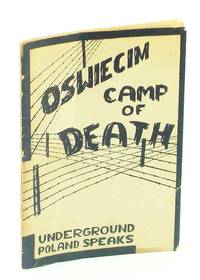
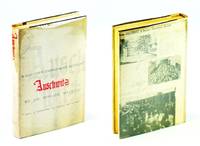
1944214h1991New York: Poland Fights. Fair. 1944. First American Edition. Paperback. "The moving and almost incredible story of Oswiecim Auschwitz concentration camp. Written under the tension of the vibrant poignancy that is an inseparable part of the miseries Poland has endured. Written by a Polish Underground Labor 'historian' experienced in the underground struggle who drew his material from actual contact with persons who underwent and saw others suffer the things that he describes. A compilation of the viciousness of Nazism as seen at Oswiecim so that all who read might understand and make a just evaluation of that which Poland faces of the problem of ridding all Europe of a scourge that gives rise to such things as Oswiecim." - Foreword. 48 page stapled booklet. Includes a one-page facsimile of the cover of the 1942 Polish first edition published underground. Full-page map shows locations of major concentration camps in Poland. According to Wikipedia this book was written by Natalia Zarembina 1895-1973 and was the first documentary about the Auschwitz concentration camp based on reports from refugees or people dismissed from the camp mainly Eryk Lipinski Henryk Swiatkowski and Edward Bugajski. Also includes information about the network of slave camps in Poland including Camp Districts Temporary Concentration Camps General Concentration Camps Forced Labor Camps Concentration Camps for Clergy Concentration Camps for Women Concentration Camps for Jews Camps for "Improvement of the Race" where "the only duty that is absolutely enforced of the young defect-free Polish and German inmates is the regular performance of sexual intercourse with the partner assigned" Camps for "Correction of Youth" and Concentration Camps for Children So-Called "Educational Institutes". Front cover loose but present. Lacking back cover. Unmarked with somewhat above-average wear. Moderate tanning to contents. Binding intact. A rare copy of this early Auschwitz exposé. 8.25" x 5.4". Weiner Library Cat. Series 7 - #1660.; Cover Art; 8vo . Poland Fights paperback
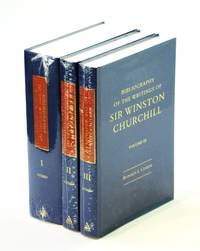
728H4404United Kingdom: Thoemmes. New. 2006. First Edition. Hardcover. The product of twenty-five years of meticulous research this essential Churchillian bibliography exhaustively covers thousands of books pamphlets leaflets speeches letters and more. All three volumes new and unread in original shrinkwrap in publisher's box. We believe this to be one of only four hundred sets printed. 25 x 17.5 x 13cm. 4.2kg. ; 4to - over 9¾" - 12" tall; Winston Churchill - Bibliographies . Thoemmes hardcover
1938566j1985London: Frederick Muller Ltd. Good with no dust jacket. 1938. First English Edition. Hardcover. "There is no question of the depth or of the luminous quality of the reasoning with which the author combats the deification of the State and demolishes the Hegelian conception of the State as 'an end in itself'. I welcome this book as a contribution of outstanding value to the clarification of thought at a moment of supreme crisis in the political history of the world. Its author believes that against the 'totalitarian State' the ideal and the faith of "totalitarian man' will arise and prevail and that 'the blackest cloud which has overshadowed the history of humanity is beginning to pass away." - Introduction. "The object of this book is to introduce clarity into the confusion of demagogy and lying which to-day so obscures the grave problems of our time that even politicians can only with difficulty recognise the forces and ideas which underlie the events and changes of our day. Further it attempts to indicate to all men of good will a way into a better and clearer future out of the labyrinth of unsolved problems which vex our age." - Preface. "Richard von Coudenhove-Kalergi 1894-1972 was a politician and philosopher. A pioneer of European integration he served as the founding president of the Paneuropean Union for 49 years. His Pan-Europeanism earned vivid loathing from Adolf Hitler who excoriated its pacifism and mechanical economism and belittled its founder as 'a bastard.' Nazi criticism and propaganda against Coudenhove-Kalergi and his European worldview would decades later form the basis of the Kalergi Plan conspiracy theory which claims he conceived of a plot to mix and replace white Europeans with other races via immigration." - Wikipedia. 4-196 pp. Translated from the German. Unmarked with average wear and soiling to original dark maroon cloth lettered and decorated in gilt. Binding intact. Slight bow to back board. No dust jacket. A sound example. ; 8vo . Frederick Muller Ltd. hardcover
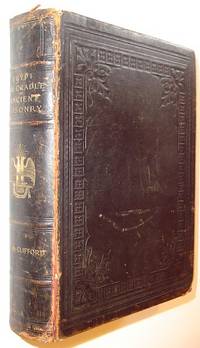
1902142a9606Philadelphia PA: Lincoln Publishing Co. 1902. Book. Fair. Hardcover. First Edition. 4to - over 9¾" - 12" tall. 20 644 pages. Index. Twenty-six black and white photographic plates. Leather binding. "Comprising a history of Egypt with a comprehensive and authentic account of the antiquity of masonry resulting from many years of personal investigation and exhaustive research in India Persia Syria and the Valley of the Nile." - title page. After first receiving the Light in India the author was moved to "investigate to the fullest extent the meaning and purport of the numerous hieroglyphic inscriptions symbols and characters found upon the ancient tombs and temples so that the Masonic Fraternity might understand appreciate and apply the teachings of the hierophants and sages of bygone days." - Preface. Chapters: Alexandria - the Antiquity of Masonry; Ruined Temples - Masonry and Masonic Symbols; Ancient Cities - Soirian Myth - Karma; the Nile - Origin of the Name Free Mason - Scottish Rite Philosophy; Ancient Mysteries - Scottish Rite philosophy; Suez Canal - The Druses Their Manners and Customs; Agriculture - Irrigation - Lotus - Papyrus; The Supreme Architect of the Universe; Mosques - Tombs - Massacre of Mamelukes - Heliopolis; Esoteric Teaching of the Scottish Rite - Brain and Thought; Pyramids - Sphinx - Tombs; Solomon - Death of Hiram - Cross - Swastica; Mummification - Transmigration - Re-incarnation; Sixteen Saviours - Lost Knowledge; The Golden Fleece - Roman Eagle - Masonic Apron - What it Teaches; Pyramids of Sakkarah - Lisht - Medum - The Fayum - Labyrinth; Sun Worship - Zodiac - Masonic Allegories; A Voyage up the Nile - Description of Tombs and Temples - Pro Doric Columns; Ineffable degrees - Thoughts on Ecclesiastes - I.N.R.I. - Voyaging up the Nile - examining Tombs and Temples - Paintings - Sculptures; Masonic teachings - Hindu beggar - Roman Catholicism; Thebes - Colossi - Der-El-Bahari - Luxor - Karnak; Ceremonies - Initiation - Blue Lodge - Transmigration - Mystery Language; The Gawazee - exploring Temples and tombs - Philae and its ruins - Nubia; Jewish Traditions and customs - Cable tow - Ceremonies of ancient Initiation - book of the Law; Circumsision - upon what the Ancient Craftsmen were obligated - the lost word. All edges gilt. Protected frontis portrait of author. Ornately embossed boards. Raised bands to spine. Partially rubbed gilt lettering and decoration upon back strip. Marbled endpapers. Hinges intact internally open or opening externally. Front board partially detached. Somewhat above-average wear to boards. Unmarked. A worthy original copy of this monumental work. 12" x 9.5" x 2.5". 11 pounds. Lincoln Publishing Co. Hardcover
15265Extensive correspondence collection 1920-1940s. 66 letters by various authors mostly women native to the Indian sub-continent all very unusual in the fact that they are highly educated and in the midst of further studies or early in their careers decades prior to Indian Independence. The letters are addressed to a young teacher Probha who was former classmate to most of the writers as well as a few to her sister Rani or to both and follows them as they finish school enter teacher training college and ultimately fan out over India as bearers of a new generation of independent Indian women. In 1931 Indian female literacy hovered at just under 3% making the experiences of these forerunners and their correspondence incredibly rare.<br/> <br/>Prior to Indian Independence from Britain Gandhi called for uplifting the status of women through education and recognition of their inherent worth as human beings. Determined to inculcate the equality of the sexes into Indian culture Gandhi publicly did household tasks that were traditionally women's work and declared that "the future is with women." Indeed other activists also equated India's independence with new freedoms for women. However by 1931 Indian female literacy hovered under 3% and was often lower in the rural provinces where schools were few child marriage was prevalent and patriarchal norms dominated society. On the cusp of vast cultural change educated women and female schoolteachers and professionals were the rare exception. <br/> <br/>These letters record the interactions between a rare group of highly educated women their thirst for personal and financial independence as well as their conflicting feelings regarding the traditions that defined their lives and restricted them. Their nexus was the Queen Victoria Girls' High School in Agra a small city in the rural northern province of Uttar Pradesh most notable for being the home of the world famous Taj Mahal a symbol of reverence to a much-loved wife of antiquity and of honor to the traditional woman. In its tall shadow young sisters Probha and Rani Thomas attended high school at "QVHS" in the late 1920s-early 1930s where lifelong friendships developed with female students Libawati Ivy Monica Lila Mercy Winnie among others. Most of them became teachers where the extraordinary nature of their achievement stood in stark relief to the lot of most other women "This year only one out of five girls has passed from our village schools." As their lives continued and they spread across the country education became the uniting factor that drove the young women forward and brought them back to each other. "Probha what are you going to do now I am going back to old Q.V. to become a teacher and I am feeling very sad as my dear old class girls won't be there. All these past years seem like a dream. So soon the parting took place.No more Tenthies no more H.M. Club. All have faded like a passing cloud.I shall never find such a jolly set again Probha. This future seems very hard." They were witness to an extraordinary moment in history when the world was changing particularly for women and with their education they are in a unique position to describe the change "It is funny that when it is time for us to be silent we have to look after our visitors and perform useless ceremonies-someday we'll change but not yet." One recalls a train ride in which she sat near "a bold Gandhi's follower.In his eloquent poetical language he was telling people that he had been to jail and was saying that for the love of country he can endure anything." Probha and Rani's father a judge had lessons for them about the danger of Revolutionary activities when one of their friends gets involved "Arel De is intelligent and emotional but he has no self control.You may write to him but make it plain that you will drop correspondence if he writes politics again. He is either already on Police books or will soon be." Though they shied away from direct involvement in politics they encapsulated Indian women's liberation in the early century: striving after independent employment deferring marriage yet with respect for their elders. In one letter Monica sadly reports to Probha "I am not coming back to school. Although I am feeling very bad but yes father has done what is good for me. I asked many times to let me go but he forced me to stay here." And in another poignant letter "Lovey" writes "Rani sis do you remember once we were talking about this problem of getting married Now very soon I shall be facing it. John wants to settle down after my working for one year only & I wish to work for at least two years. I think I shall have to do my parents will decide. Please pray that I may get a chance of working for at least two years."<br/> <br/>In tone the women are warm and sisterly to an extent not found in letters of Western cultural origin and also profoundly honest in reporting to one another their successes and failures; a good or bad test score the struggle to study while encountering difficulties such as lack of clean drinking water and large snakes and even having the security of their families placed on their young shoulders "May God help me. May I pass in the 3rd division only for it is difficult time for us two sisters. Our father's money is nearly spent and if I pass I go for training. Please remember us in your prayers that we may soon become independent." As one of the young women finds out who goes back to QVHS as a student teacher life becomes more complicated as time goes on "My examination result is so bad.my poor mother is working so hard at home. It was too much to disappoint her.I know you would ask me but why have you done so badly The only answer I can give you is that I got 7 periods a week to teach & being a slow writer the notes of lessons & the preparation took all my study time." What they share is a clarify on the value of their education to all their future lives: "All the Normal Students High School and the middle candidates.tell each one of them that I wish them a very brilliant success. Tell them that I remember each one of them in my prayers that they all may pass in the 1st Division with scholarships."<br/> <br/>Cultural references show the writers and recipients of these letters were generally native of India although they often went by Western cognoms. A few of the letters from British servicemen or coworkers offer an interesting perspective on intercultural understanding and friendship in the days when Indian Independence loomed so closely on the horizon. A serviceman befriended by Probha writes "In those days we were very ignorant. We knew nothing at all of the country or the people and their ways and customs. I think we were most surprised to find that you spoke English.We were astounded to see such bad conditions existed for some people and very upset to find such a feeling of bitterness between our two peoples." Reflecting the dichotomy inherent to the lives of these girls several letters are from their mother who simultaneously pushes them on to achieve independence and reminds them of their cultural anchor. anxious for them and resolute that they will have every opportunity possible. An intelligent woman in her own right Probha's mother offers advice on her exams "Your last quarterly should have had better marks. I wrote a few little hints in my last letter. Please keep them in mind.I'll send your saris in a day or two.I couldn't get even a bit of voil in the bazaar. There was no chance of getting it from any out station. I've used the bits I had at home.I pray God to be with my baby & help her to be a true hearted & brave soldier." <br/> <br/>The letters are in English except for a few brief passages in Hindi as English was the primary language of education and commerce prior to Independence. A few are from an object of romance; a male teacher who courts Probha with poetry but does not succeed in convincing her to give up her freedom as a single woman. A rare archive of letters from an extremely uncommon cross-section of pre-Independence society: the forerunner of the modern educated and independent woman of India. unknown books
1927169H4514Garden City New York: Doubleday Page & Company. Good. 1927. First Edition. Hardcover. "There is no man living who from the beginning or in the progress or at the ending of federal reserve legislation was more closely or constantly than I privy to and identified with the consideration and enactment of the law under which the federal reserve banking system was set up. Ever since the enactment of the federal reserve law it has been my intention to write some day a story of the many inside events word of which never reached beyond a closely restricted circle and had no such thing as current newspaper attention. Very likely my desire to tell the dramatic story would have abated if not for the recent publication of the 'Intimate Papers' in which the paternity of the Federal Reserve Act and its particular management are placidly ascribed to Colonel E.M. House." - Introduction. Accordingly Chapter III of this book is devoted to a scathing critique of the veracity of 'The Intimate Papers of Colonel House' first published in 1926. Colonel House was an intimate confidant of Woodrow Wilson President when the Federal Reserve Act was passed. Latter day conspiracy researchers argue House successfully advocated for the interests of the House of Rothschild during the development and passage of the Federal Reserve Act. In response to Glass's book Paul Warburg also instrumental in the founding of the Federal Reserve was "impelled to lay down in black and white my recollections of certain events in the history of banking reform." - Preface to his two-volume work The Federal Reserve System Its Origins and Growth - Reflections and Recollections published in 1930. Commenting on Glass's book James Grant of Interest Rate Observer fame notes "the story of the creation of the Fed by its chief progenitor Carter Glass makes you doubt he would recognize today's Federal Reserve were he brought back to life to inspect it. He explodes in indignation at any who would impugn the proposed Federal Reserve note as mere fiat money. In fact he considered the currency to be as good as gold - or better." Clearly Glass's recollections herein represent a profoundly important chronicle of the origins and founding of the Federal Reserve System. Frontispiece photo portrait of Woodrow Wilson. x 2 423 pages. Index. Former university library copy with usual markings. Sturdily rebound in navy buckram.; 8vo - over 7¾" - 9¾" tall; Senator Carter Glass Federal Reserve Act - history Federal Reserve Paul Warburg Henry Parker Willis Central Bank - United States Edward M. House The Intimate Papers of Colonel House Edward Mandell House The creature from jekyll Island . Doubleday, Page & Company hardcover
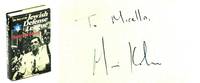
1971734j0655Los Angeles: Nash Publishing. Good in Good dust jacket. 1971. First Edition. Hardcover. 0840212399 . Signed and briefly inscribed by Meir Kahane upon first blank leaf. "Meir David HaKohen Kahane born Martin David Kahane 19321990 was an American-born Israeli ordained Orthodox rabbi writer and ultra-nationalist politician who served one term in Israel's Knesset before being convicted of acts of terrorism. He founded the Israeli political party Kach. A cofounder of the Jewish Defense League JDL he espoused strong views against antisemitism." - Wikipedia. "Includes a detailed discussion of the philosophy of the Jewish Defense League a philosophy based on: hadar - dignity and pride; barzel - strength; mishmaat - discipline and unity; bitachon - faith in the indestructibility of the Jewish people. Relates the history of Jewish oppression and proclaims the birth of a Jewish resistance with well-trained well-organized chapters throughout the world." - dust jacket. Bright gilt JDL logo of fist on Star of David emblazened upon black cloth of front board. Book clean tight and unmarked with light wear. Moderate wear to complete dust jacket now preserved in archival-grade Brodart. A quality signed copy.; 8vo; 287 pages; Signed by Author . Nash Publishing hardcover
1975545H3804Radnor PA: Chilton Book Company. Good in Good dust jacket. 1975. First Edition. Hardcover. 0801962471 . Signed and briefly inscribed by Kahane upon front free endpaper. xii 338 pages. Index. "The inside story by its founder of the militant organization determined to defend Jews in whatever manner necessary." - dust jacket. "I am not ashamed to admit it. I do not understand the Jew. I am at a loss to understand a man so clever in business so keen in science so intellectually bright in debate - and so incredibly stupid when it comes to saving himself." - dust jacket. Book tight and square with moderate wear and bump to upper corner of front board. Average wear to dust jacket which is now preserved in archival-grade Brodart.; 8vo - over 7¾" - 9¾" tall; JDL Jewish Defense League Rabbi Meir Kahane Jews in the United States - Politics and Government Soviet Jewry Black Panthers Chaya Squad; Signed by Authors . Chilton Book Company hardcover
1903443j2092London: C.W. Daniel. Fair with no dust jacket. 1903. First British Edition. Hardcover. "It is a deplorable fact and one to which is accountable the continuance of a system which has been a failure many times during the last century that not one person in ten thousand has any really intelligent idea of the science of money - a subject which is usually treated as one of profound mystery and which only a banker is capable of understanding. To one not blinded by custom and prejudice the money question is quite comprehensible. But because of the prevalence of false and contradictory theories students find the subject hopelessly involved in ambiguities and intricacies. It is with the hope that it my evoke a spirit of inquiry leading to a clearer understanding of this most important subject that this work is published." - Preface to the British Edition. First published in the U.S. in 1894. xxvi 231 p. "Arthur Kitson 1859-1937 was a British monetary theorist and inventor. He formed the Economic Freedom League with Frederick Soddy and was active in this venture through the 1920s. He became convinced Jewish bankers were the cause of his bankruptcy and most of the world's miseries. He sent Ezra Pound a copy of The Protocols of the Elders of Zion even before Pound changed from a money radical to a notorious anti-Semite. By the time of his death Arthur Kitson was the second most influential fascist in Britain the first being Oswald Mosley. In his late years he was brought to Germany to consult with Nazi Party economists." - Wikipedia. Binding intact. Prior owner's name inside front board. Former library copy with minor evidence where all related markings have been removed. Above-average wear to original red cloth lettered in gilt upon spine. No dust jacket presumably as issued. A sound and rare example of this highly-regarded analysis of the money question. Masui p.248 ; 8vo . C.W. Daniel hardcover
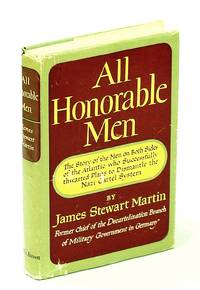
1950113H5110Boston: Little Brown and Company. Good in Good dust jacket. 1950. First Edition. Hardcover. pp. viii 326. Index. "The story of the men on both sides of the Atlantic who successfully thwarted plans to dismantle the Nazi cartel system. The first complete account of how the giant German industrial and financial combines subsidized Hitler and the Nazi military machine on the one hand and on the other hand conspired to weaken Europe and America through favorable cartel agreements in preparation for world conquest. Names all the major individuals and all the major firms involved. Describes incidents of how we actually aided the enemy in wartime. Written from firsthand experience by the man who as Chief of the Decartelization Branch of our Military Government was not allowed to complete the mission set by President Roosevelt. Reveals the obstacles that blocked the mission's path. Exposes what happened when the interests of businessmen conflicted with U.S. war aims." - dust jacket. Author was a lawyer turned professor who was invited to join the Board of Economic Warfare BEW in 1942. Light wear to publisher's pale green cloth. Prior owner's name upon front free endpaper. Short marginal ink lines on approximately fourteen pages otherwise contents clean and bright. Average wear to dust jacket now preserved in archival-grade Brodart. This title has been assigned a prestigious place on the 'Forbidden Bookshelf' a short list of American books once 'vanished' by state and corporate entities but now being revived with a view to providing a better understanding of America's past and how her future course might be corrected.; 8vo - over 7¾" - 9¾" tall; Forbidden Bookshelf I.G. Farben the Rayon Trust the International Steel Cartel General Aniline and Film . Little, Brown and Company hardcover
1960864H4378New York: Frederick Fell Inc. Good in Good dust jacket. 1960. First Edition. Hardcover. xviii 222 pages. Black and white photographic plates. "When the Germans invaded Hungary in 1944 they immediately shipped virtually the entire Jewish population to Auschwitz. Separated from his family Dr. Miklos Nyiszli 1901-1956 was chosen to direct the medical pathology work carried on among the prisoners by the Nazis for the purpose of 'scientific research' in that most infamous of all concentration camps. Through the doctor's eyes we relive not only the day-to-day horrors of life in the KZ but also witness the slow disintegration of an empire built to last a thousand years. What Dr. Nyiszli lived through few will want to believe or even read about." - dust jacket. "Tells of events which though gruesome need to be told and retold until their meaning for our times is accepted." - Foreword. Tight and square with moderate external wear. Foxing to top edge. Prior owner's details written and stamped upon front endpaper. Name stamped on top edge. Average wear to dust jacket which is now preserved in archival-grade Brodart. A sound copy of this important account. Laska 1317 Enser p.114.; 8vo - over 7¾" - 9¾" tall; Holocaust Auschwitz Dr. Miklos Nyiszli Twelfth Sonderkommando SS World War 1939-1945 - Concentration Camps Josef Mengele Medical Experimentation Twins Dwarfism . Frederick Fell Inc. hardcover
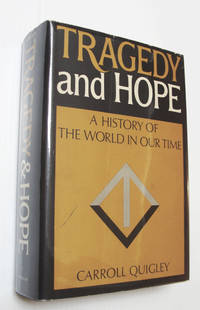
1966766j0041New York: Macmillan & Co Ltd. Fair in Good dust jacket. 1966. First Edition. Hardcover. First printing. 1348 pages. Index. "Shows the years 1895-1950 as a period of transition from the world dominated by Europe in the nineteenth century to the world of three blocs in the twentieth century." - from dust jacket. Most notable for its frank admission that there is in fact a secret plan to create a global government. Author served as mentor to Bill Clinton while the latter studied at Georgetown. Usual library markings. Average wear. Binding intact. Dust jacket now preserved in glossy new archival-grade Brodart. A sound copy of the true first printing. Weems p.69. Please note that any copy of this book which is listed with an ISBN number is not a first edition. Weems p.69; 8vo - over 7¾" - 9¾" tall; Tragedy and Hope - A History of the World in Our Time FIRST PRINTING New World Order Global Government Nwo Bill Clinton Georgetown Rothschild Cecil Rhodes . Macmillan & Co Ltd hardcover
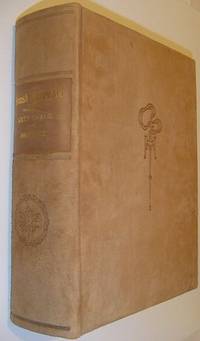
1913559a9589British Columbia: British Columbia Historical Association 1913. Book. Fine. Hardcover. Signed by Authors. First Edition. Folio - over 12" - 15" tall. Unread. As new. Number 216 of limited edition of 350 copies. Signed by co-author R.E. Gosnell. "Few publications if any of similar size and excellence have been produced in Canada." - From Editor's Foreword. Part I includes 210 pages and eighteen chapters which constitute "a survey of events from the earliest times down to the Union of the Crown Colony of British Columbia with the Dominion of Canada." Part II is "a history mainly political and economic of the Province since Confederation up to the present time." Part I is preceded and followed by dozens of tissue-protected black and white portraits of individuals influential in the early history of the province complete with their brief biographies upon the tissue. Part II comprises eighteen chapters over 226 pages plus 5 pages of addenda followed by dozens of tissue protected portraits of "some of the men conspicuous as present day factors in development." Top edge gilt. Gilt lettering upon backstrip. Marbled endpapers. Exceptionally clean bright and unmarked with zero wear. Brown suede exterior appears as fresh as the day it was applied over 100 years ago. This majestic fourteen pound tome measures 13" x 10.5" x 4". A magnificent acquisition for any serious collector of British Columbia history. A better copy will not be found. Lowther 1607 Hale 2523 Edwards & Lort 3177 Strathern 495. British Columbia Historical Association Hardcover
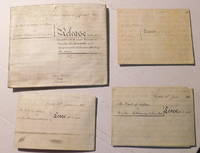
181899422Liverpool June 16 1818. 1818. Fine. - Original vellum document consisting of 2 attached sheets with scalloped top edges. An indenture 24 inches high by 30 inches wide and the assigns 22 inches high by 30 inches wide as usual folded down to 9 inches by 10-1/2 inches. 84 lines of text handsomely calligraphed over the two sheets. Within the initial "T" is the British emblem encircled by the words: "Honi soit qui mal y pense" a motto of the British chivalric Order of the Garter which translated means "Shamed be whoever thinks ill of it". The document has 2 George III embossed revenue stamps with a metal band one for three pounds and the other for one pound. There are also 2 Royal Cyphers.<p>On the rear fold of the document is a sketch of property showing several divisions including "Embleton Street 12 yards wide Dr Solomons land & Cottage". Upper Stanhope Street "20 yards wide" is on the south and Hayton Street "6 yards wide" is on the north. To the west of Solomon's land is land of Bland and another party. Further to the west is a 12 yard plot of land sold to Rowland Owen and "Release dated 23rd & 24th December 1818". This parcel appears to have the signature of Sefton over its description. Another entry on the indenture dated August 11th & 12th 1820 conveys property to Robert Rawlinson and Thomas Hesketh by the trustees of the will of Samuel Solomon. The conveyance is signed by two of Solomon's sons Abraham an oculist in Birmingham and John an amateur boxer and non-practicing lawyer. It is also signed by Ebenezer Daniell the manager of Solomon's Cordial Balm firm. Further in 1828 there is notice of "59 yards including half of Hayton Street" being conveyed to James Watts of Toxteth Park. It was later conveyed to a M J Hicks in October 1832. Both of these later conveyances are accompanied by minimal sketches. <p>The document is signed by the Earl of Sefton a party of the first part Peter Still and Alexander Strong of Lincoln's Inn parties of the second part Joseph Dawson of Liverpool party of the third part John Henderson of Toxteth party of the fourth part John Clare of Liverpool party of the fifth part. The lessees are described as "Samuel Solomon of Gilead House near Liverpool Doctor of Physic" and his Trustees "John Bird of Liverpool aforesaid Architect" and "Thomas Murrow of Liverpool".<p>In addition to the June 16 indenture there are 3 others:<p>1 A 15 inch high by 24 inch wide indenture on parchment dated June 15 1818 and titled "The Earl of Sefton to Doctor Solomon & Trustee / Lease for a year". The trustee is identified as John Bird of Liverpool Architect and it is signed by Sefton.<p>2 A 16 inch high by 23-1/2 inch wide indenture on parchment dated June 15 1818 and titled "The Earl of Sefton to Doctor Solomon & Trustee / Lease for a year". The trustee is identified as John Bird of Liverpool Architect and it is signed by Sefton.<p>3 A 17 inch high by 23 inch wide indenture on parchment dated August 17 1818 and titled "Peter Brown to Dr. Solomon and Trustee / Lease for a year". The trustee is identified as John Bird of Liverpool Architect and it is signed by Peter Brown. The indentures are folded down to approximately 8-1/4 by 6 inches.<p>Each of these 3 indentures on parchment has a George III embossed revenue stamp of one pound fifteen shillings a royal cypher the stamp of James Walker of Bermondsey parchment dealer and the British emblem within the initial "t" encircled by the words: "Honi soit qui mal y pense".<p>The 3 indentures by the Earl of Sefton are of particular interest for this reason - parliamentary elections were being held from June 17 to July 18 1818 and being an Irish peer Sefton was eligible to run for a seat. Dr. Solomon who by this time had become quite wealthy was the chief organizer of the Earl's campaign. Solomon spared no expense on his behalf in Liverpool which was famous for lively electioneering. It was to no avail as Sefton lost his election to George Canning. It seems quite possible that these leases given their dates within 2 days of the campaign served as a kind of reward for Solomon's future efforts.<p>"Doctor" Samuel Solomon c. 1768 - May 21 1819 was born in Cork and moved to Dublin influenced by his uncle Isaac Solomon who worked as a druggist there. Around 1789 he and his uncle went into business in Liverpool's dockland area. In 1796 he began marketing his "Cordial Balm of Gilead" which he claimed would cure one of ulcers of the lung kidneys and liver sexual dysfunction hypochondria female complaints etc. His claim to have been a Doctor of Medicine is suspect. Solomon became very wealthy from the sales of his expensive tincture made from a mixture of brandy and turpentine flavored with herbs as well as from real estate investments. [Liverpool], June 16, 1818. hardcover
1962426h2073New York: The Truth Seeker. Very Good with no dust jacket. 1962. Reprint. Hardcover. "The first sequel the literary world knows to Spengler's monumental The Decline of the West. Presents unique and almost esoteric political social and historical definitions and explanations which shall become more widely known - indeed commonly understood - if our West survives. The first comprehensive and profoundly constructive alternative to the Marxist-liberal degeneracy surrounding us. In Imperium a creative genius has given the world something new: a fourth dimension of intellect and a new concept of spirituality. The original two volumes are here combined unabridged into one with a brilliant Introduction by W.A. Carto." - dust jacket. "In six months - working entirely without notes Francis Parker Yockey 1917-1960 completed Imperium. His only real crime was to write a book and for this he had to die. " - W.A. Carto. xliii 4 3-626 pages. Index. 1962 First reprint of the 1948 first edition. Bright gilt lettering upon backstrip of original black cloth. Tight and unmarked with light wear. Top corner of last two pages rumpled. Bold 4" x 2.5" National States Rights Party sticker at base of front free endpaper. Includes new replica dust jacket preserved in archival-grade Brodart. An attractive copy of this epic work. Singerman 0757. ; Dust Jacket; 8vo . The Truth Seeker hardcover
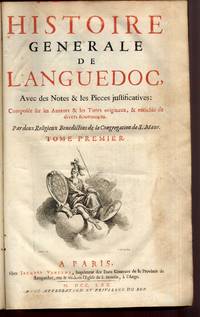
1730043619Paris: Jacques Vincent 1730. First Edition. Hardcover Full Leather. Good Condition. 5 volumes in contemporary gilt calf worn dry hinges and joints split boards attached but precariously in a few cases. Scattered browning internally and occasional creased pages spine labels bookplates and old embossed theological library stamps to title but generally clean and unmarked otherwise. 36 plates many folding and 4 maps hand colored in outline. Published 1730-1745. Size: Folio. 5-volume set complete. Quantity Available: 1. Shipped Weight: Over 3 kilos. Category: History; Antiquarian & Rare. Inventory No: 043619. <br/><br/> Jacques Vincent hardcover books
1924163a4961London: Boswell Printing & Publishing Co. Ltd. Fair. 1924. First Edition. Hardcover. 419 pages. Index. Footnotes. Frontis portrait of Adam Weishaupt. "I have felt impelled to devote one more book to the Revolution as a whole by going this time further back into the past and attempting to trace its origins from the first century of the Christian era. For it is only by taking a general survey of the movement that it is possible to understand the causes of any particular phase of its existence. The French Revolution did not arise merely out of conditions or ideas peculiar to the eighteenth century nor the Bolshevist Revolution out of political and social conditions in Russia on the teaching of Karl Marx. Both these explosions were produced by forces which making use of popular suffering and discontent had long been gathering strength for an onslaught not only on Christianity but on all social and moral order." - Preface. Bookplate upon front free endpaper. Last two leaves of index loose but present. Back free endpaper missing. Front board loosely attached. Tiny bit of writing atop last blank page. Gilt lettering upon backstrip worn but legible. SINGERMAN 161 WEEMS p.71.; 8vo - over 7¾" - 9¾" tall; Secret Societies and Subversive Movements First Edition Zionism Protocols of the Learned Elders of Zion Freemasonry Talmud Torah Russian Revolution Bolshevism French Revolution . Boswell Printing & Publishing Co., Ltd. hardcover