34 831 résultats
191260874Le Programme est tiré sur papier d'Arches, 1 brochure grand in-8, Typographie "Le Papier", 1912, 5 ff. et une grande planche dépliante ("La Salle vue de la Scène") : Soirée du 13 mars 1912. La Revue. Distribution Mlle Falchieri du Théâtre Apollo. Primerose - Mlle des Lurées - Cera Laparcerie. Au Piano, le maëstro Enody, Ingénieur des Constructions civiles [ Contient les textes de chansons : ] Chanson de Primerose - le Piscing - Le Cubisme - Le Futurisme - La Vie chère - Un incompris - Quelques cours - Fiat Lux
134891. Première Partie: I L'Architecture du Monument Introduction et Planches 1 A 72. II Planches 74 A 150. Deuxième Partie: La Sculpture Ornementale du Temple I Introduction et Planches 151 A 218. II Planches 219 A 286. Troisième Partie: I La Galerie des Bas-Reliefs I Introduction Planches 287 A 350: Pavillons D'Angle. II Planches 351 A 496 Galerie Est Galerie Nord et Galerie Quest Aile Nord. III Planches 497 A 608 Galerie Quest Aile Sud et Galerie Sud. Text: French. Paris: Les Éditions G. van Oest 1929 - 1932. Hbks. Former Library copies with the associated markings. A discard from a closed Library. Series: Mémoires Archéologiques Publiés par de l'École Française d'Extrême-Orient Tome II. KEYWORDS: 078 Zuidoost Azië - Buddhisme/ Hinduisme/ Sculptuur/ Angkor unknown
Bulino, circa 1614, in basso a sinistra: David Vinckboons Inventor in basso a destra: Joan londerseel Schulptor /ICVisscher excudebat. Nel margine inferiore, tra le due firme, versi in latino dal Secondo libro di Samuele (11, 1), dove è narrata la vicenda di Betsabea e il re Davide. Da un soggetto di David Vinckboons, edito da Claes Visscher. In un giardino, Betsabea riceve la lettera di Davide presso una fontana. In lontananza un castello, in primo piano uno stagno e vari animali ai margini del bosco. Magnifica prova, finemente acquerellata da mano contemporanea, impressa su carta vergata coeva, in eccellente stato di conservazione. L’eccelsa qualità della coloritura a mano distingue e impreziosisce questo esemplare dalle prove in bianco e nero. Engraving, circa 1614, signed lower left: David Vinckboons Inventor Lower right: Joan londerseel Schulptor /IC (entwined) Visscher excudebat. In the lower margin, Latin verses related to the second book of Samuel, where the story of Bathsheba and King David is narrated. After a subject by David Vinckboons. Claes Visscher as publisher. In a richly landscaped castle garden, Bathsheba receives David's letter by a fountain. In the distance a castle, in the foreground a pond and various animals near the forest edge. Magnificent proof, splendid contemporary hand-colouring, printed on contemporary laid paper, with margins, usual trace of central vertical fold, in very good condition. The excellent quality of the colouring significantly distinguishes and enhances these examples from those in black and white. Hollstein Dutch 6_; Hollstein Dutch 7-3(3).
Bulino, datato in lastra 1597. Sulla cornice ovale: ‘BARTHOLOMAEUS SPRANGER, S. CAES. M. PICTOR CELEBERRIMUS’. Nel cartiglio in basso: ‘NATURAE OMNIPARENTI / PRAESTANTISSIMI EIUS AEMULI IMAGINEM,/INVIDIA GEMENTE/D D/IOANNES AB ACH.S.ITEM/CAES. M. PICTOR / An o 1597’ Nel margine inferior, al centro ‘In perpetuam amici memoriam Joan Mullerus grato lubentique animo aeri incidebat / F.de Wit excudit’. Ritratto di Bartholomeus Spranger (1546-1611) in cornice ovale, affiancato da due putti con trombe, uno scudo, una lancia e un elmo. Il ritratto ovale è basato su un modello (probabilmente un dipinto) di Hans von Aachen. Entrambi gli artisti dedicano esplicitamente la stampa in amicizia a Spranger. Durante questo periodo Jan Muller diventò il principale incisore dei disegni di Spranger, il famoso pittore di corte di Praga, ed è intorno a questo period che ha produsse dieci incisioni, la maggior parte di un formato abbastanza grande, basati sui disegni del celebre pittore. Spranger inviava i suoi disegni ad Amsterdam e un certo numero di di prove di stampa esistenti rivelano che questi furono inviati a Praga per la correzione. Muller probabilmente non incontrò Spranger fino alla visita di quest'ultimo nei Paesi Bassi nel 1602. Si può supporre che Hans von Aachen (1552 - 1615), un altro pittore alla corte di Praga, abbia inviato il ritratto di Spranger (sia esso dipinto o disegnato) affinché Muller lo utilizzasse come modello per la sua incisione; la cornice, tuttavia, fu disegnata da Muller stesso. Il disegno tracciato da Muller per la cornice, con un disegno inziale per il ritratto attaccato all'interno, è conservato ad Amsterdam ( Rijkprentenkabinet), ed è possibile seguire con precisione la realizzazione della stampa attraverso ogni fase successiva: prima venne inciso il volto nella lastra, poi il resto della figura, dopo di che la cornice e infine la decorazione. Bellissima prova, ricca di toni, impressa su carta vergata coeva, rifilata al rame, in ottimo stato di conservazione. Engraving, dated on plate 1597.On the frame: ‘BARTHOLOMAEUS SPRANGER, S. CAES. M. PICTOR CELEBERRIMUS’ Inscribed on the bottom, on cartouche: ‘NATURAE OMNIPARENTI / PRAESTANTISSIMI EIUS AEMULI IMAGINEM,/INVIDIA GEMENTE/D D/IOANNES AB ACH.S.ITEM/CAES. M. PICTOR / An o 1597’ inscribed on the bottom: ‘In perpetuam amici memoriam Joan Mullerus grato lubentique animo aeri incidebat / F.de Wit excudit’. Bust portrait of Bartholomeus Spranger (1546-1611) in oval frame, flanked by two putti with trumpets, a shield, spear and a helmet. “The oval portrait is based on a model (probably a painting) by Hans von Aachen. Both artists explicitly dedicate the print in friendship to Spranger. During this period Jan Muller had become the chief engraver of the designs by Spranger, the famous court painter of Prague, and it was around now he produced ten engravings, most of a fairly large format, after his designs. Spranger sent his drawn designs to Amsterdam and a number of extant proof impressions reveal that these were sent to Prague for correction. Muller probably did not meet Spranger until the latter’s visit to the Netherlands in 1602. It can be assumed that Hans von Aachen (1552 – 1615), another painter at the Prague court, sent Spranger’s portrait (whether painted or drawn) for Muller to use as a model for his print; the frame, however, was designed by Muller himself. Muller’s traced design for the frame, with the initial design for the portrait engraving attached inside, has been preserved (Amsterdam, Rijkprentenkabinet), and it is possible to follow the making of the print precisely through each successive stage: first the face was engraved in the plate, then the rest of the figure, after which the frame and finally the circumscription were engraved.” F. Kok, Artists Portrayed by Their Friends: Goltzius and His Circle, in Netherlands Quarterly for the History of Art,Vol. 24, pp. 167-168. A fine example printed on contemporary laid paper, trimmed to the platemark, in good condition. Le Blanc, 69; F. Kok, Artists Portrayed by Their Friends: Goltzius and His Circle, in Netherlands Quarterly for the History of Art,Vol. 24, pp. 167-168.
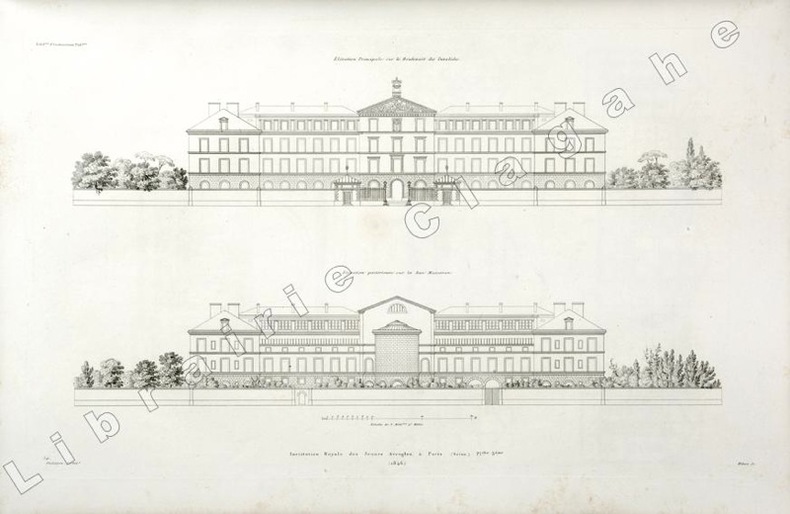
184619809(Paris, 1846) ; in folio, toile vert foncé, double encadrement de filets dorés maigre et gras, tranches dorées, titre doré en long ; papier de garde multicolore peigné (reliure de l’époque); [4], 6 planches gravées de plans des bâtiments et des jardins situés au N°56 du boulevard des Invalides à Paris.
80 pages. Features: Magnificent cover illustration by William Winter depicts a quintessentially Canadian backyard skating rink; Household Finance (HFC) ad on page one features photo of Mr. J.B. Vaillancourt, manager of the Shawinigan Falls, Quebec office; Our Sham Defense Battle - Editorial; Krupp, Schacht and Rommel - Beverley Baxter reflects on what happened at the Castle Harben on October 1, 1946 in the wake of the Nuremberg Trials verdicts; William Stephenson - The Biggest Private Eye of All - he directed the most secret of all cloak-and-dagger operations of the Second World War - here, for the first time, is the story of the man who pulled the strings which spiked Hitler's guns in the western hemisphere - article with photo; Dr. Gordon M. Bell's School for Sobriety - The Shadow Brook Health Foundation for men and the Willowdale Hospital for Women, both located on the outskirts of Toronto; Karsh's Charlottetown (PEI) - The City That's One Big Farm - article with great Karsh photos, especially a large shot of Premier Walter Jones meeting voters to resolve their issue, and another of Dr. Roderick Macdonald at age 94; Maude Burbank and her Musical Moppets - she takes care of two musical bands of Moncton youngsters; Manitoulin Island - The Eden Isle of Evil Spirits - article with nice colour photos; What the Boyd Gang Fiasco Can Teach Us - the Mayor or Toronto, Allan Lamport assails conditions which helped the Boyd Gang terrorize his city; The Slide That Shook The West - A Maclean's Flashback article to the April 29, 1903 Frank Slide, in which part of Turtle Mountain crashed into Crowsnest Pass, destroying the town of Frank; The World's Most Ardent Birdwatcher - Peter Scott, the gifted son of Scott of the Antarctic will fly anywhere to gaze lovingly at rare wildfowl - article with photos; You Can't Stop a Woman Crying; Nice one-page colour ad for Stanfield's "Look-Alike" Balbriggan Pajamas with happy family scene; Gaines Meal dog food ad features illustration of Saint Bernard; Vintage Frigidaire ad includes lengthy Christmas message and suburban evening scene of appliances being delivered to happy homes; Cream of Wheat ad features Li'l Abner; Vintage colour ad for Christie's Premium Crackers; Colour centrefold ad for Ekco and their many kitchen products; Champion Spark Plug ad includes photos of 12 new members of the 100-mile-an-hour club at Indianapolis; Two-page colour ad for Revere Cookware - 'the world's finest'; Lightning Zipper ad shows irate wife fixing husband's trousers while he stands, semi-dressed, taking her abuse; and more. Unmarked with moderate wear. Two-inch opening to fore-edge of front cover and first two pages mended with archival tape. A sound copy of this very special issue. Book
240085Paris, imprimerie Nationale, 1791 in-4, 216 pp., 9 tableaux repliés, veau fauve, dos lisse orné aux petits fers, roulette d'encadrement sur les plats, tranches dorées, coupes guillochées, roulette intérieure (reliure de l'époque).
445 pages. Index. Translator's Note. First English language edition, translated from the second (1924) German edition. "A detailed sophisticated explanation of the quantity theory of money based on the subjective, marginal utility theory. Explains money's origin, the development and nature of banking, the cause and consequences of inflation and credit expansion, the differences in the value of different moneys, as well as the reason for 'cyclical' economic fluctuations." (B2 Greaves & McGee). Black top stain. Bottom edge uncut. Above-average wear to black cloth exterior. Narrow opening between backstrip and back board. Quarter-inch missing from top of backstrip which bears bright gilt lettering. No external markings. Usual internal library markings. Minor quantity of light pencil marginalia and underlining to contents. A worthy reading copy of this classic work by the famed libertarian and prominent member of the Austrian School. COHEN 72, GREAVES & McGEE p.11 Book
A treasure from the formative years of jazz diva Diana Krall. In 1980 Diana graduated from Woodlands Junior Secondary School in Nanaimo, British Columbia on Vancouver Island, Canada. Her photo first appears on page 19 where she is recognized on the 1978-79 Arts Honour Roll. On page 121 in the Band section appears a gorgeous head-shot of a young Diana playing the saxophone, beneath which appears the caption 'Diana!'. Michelle Krall, Diana's younger sister, appears on page 106. Finally, Diana's graduation photo and write-up appear on page 58. Beside her photo we read "Diana Piano resembles her Dad. In her spare time she eats and sleeps. Her life ambition is to replace Oscar Peterson. 'Way to go, Diana!'". Diana's current global superstardom is clearly no accident! The book itself is clean, tight and unmarked with very light wear. An excellent copy of this truly wonderful and inspiring item. Book
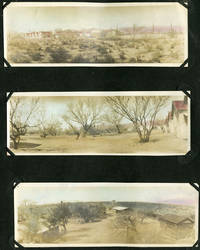
1930WRCAM52672Paradise Valley Az 1930. 220 silver gelatin photographs most 2 1/2 x 4 1/4 inches to 3 1/4 x 5 3/4 inches with a handful of larger photographs and some smaller-format panoramas. Oblong folio. Original brad-bound album. Minor dust-soiling. Overall very good. An engaging collection of original photographs from Arizona circa 1930. The album would seem to depict the early days of the Judson School a well-known boarding school which opened in Paradise Valley Arizona in 1928. It was evidently assembled by one of the students. The first photograph shows the student body of nineteen young men in coat and tie; the second shows founder and head George Judson and the three men who evidently constituted the whole faculty at the time. Since one of the photographs contains a joking reference to Prohibition it would seem to date before 1933; at the same time there are enough buildings and structures to suggest the school had been going for several years hence our dating to circa 1930. <br> <br> The school prided itself on offering a vigorous outdoor life as well as regular schooling. The students are shown in various settings: tending to a camp surveying or on horseback in the desert a few shots depicting a snow-covered desert. The young men are also depicted at leisure: reading in chairs indoors and outdoors playing baseball and tennis wrestling and roping. Also present are a good number of photographs depicting the landscape around the area captured while the boys were exploring the areas around Paradise Valley and Phoenix with numerous shots of the men preparing food while out on the desert prairies. Five photographs depict a railroad derailment and a handful capture Spanish-style buildings or Native American structures in the area with one image of a Native American family inside a makeshift tent. There is also a group of photographs in an eastern setting presumably the student back home. <br> <br> The Judson School once in a rural desert setting was eventually surrounded by the explosive growth of Phoenix. The owner of the school which was always a private for- profit endeavor sold the land to luxury real estate developers and closed the school in 2000. <br> <br> A wonderful collection of photographs depicting a famous pioneering school in Arizona. unknown books
185020700Paris 1850. Pencil pen and wash drawing with numerous sub-titles in ink signed "J. Litoux" A fascinating and beautiful architectural drawing - or 'rendu' of basic elements of house construction in cluding walls floors doorways roofs and ceilings.<br/> <br/> A fine drawing from an architectural student at the Ecole des Beaux-Arts in Paris the most influential architectural school in existence during much of the 18th century the whole of the 19th century and the first part of the 20th century. 'Students were eligible for the Ecole if they were at least fifteen years old or under thirty. They began with the seconde classe in which they competed in the concours d'émulation. These alternated between an esquisse - a rough sketch for which up to twelve hours was allowed - and a rendu - the large-scale finished drawing for which one to three months were allowed. Two to four years were usually required for a student to accumulate enough credits to enter the première classe. The same system was followed again usually for two to three years after which the student should have accumulated enough credits to compete for the Grand Prix de Rome. The winner of the Grand Prix was entitled to five years study under the auspices of the French Academy in Rome. For each of his first three years he was required to submit an analytical study of an ancient monument. For his fourth year he had to submit a complete reconstruction of a major classical work. For his fifth year he was required to submit an original work designed to a program of his own invention. In the seconde classe the student was required to attend a variety of lectures in theory history and construction and learned to prepare construction drawings. Work was done at ateliers located outside the precincts of the Ecole des Beaux-Arts. These were rented and organized by the students themselves and the students had the right to invite a teacher of their own choice to serve as their maître. The teacher himself did not have to be a member of the faculty of the Ecole nor - at least in principle - did he have to be a practicing architect.' Arthur Drexler. The Architecture of the Ecole des Beaux-Arts. New York MoMA 1977 p.8-9<br/> <br/> Arthur Drexler The Architecture of the Ecole des Beaux-Arts. New York MoMA 1977. unknown
185020700Paris 1850. Pencil pen and wash drawing with numerous sub-titles in ink signed "J. Litoux" A fascinating and beautiful architectural drawing - or 'rendu' of basic elements of house construction in cluding walls floors doorways roofs and ceilings.<br/> <br/>A fine drawing from an architectural student at the Ecole des Beaux-Arts in Paris the most influential architectural school in existence during much of the 18th century the whole of the 19th century and the first part of the 20th century. 'Students were eligible for the Ecole if they were at least fifteen years old or under thirty. They began with the seconde classe in which they competed in the concours d'émulation. These alternated between an esquisse - a rough sketch for which up to twelve hours was allowed - and a rendu - the large-scale finished drawing for which one to three months were allowed. Two to four years were usually required for a student to accumulate enough credits to enter the première classe. The same system was followed again usually for two to three years after which the student should have accumulated enough credits to compete for the Grand Prix de Rome. The winner of the Grand Prix was entitled to five years study under the auspices of the French Academy in Rome. For each of his first three years he was required to submit an analytical study of an ancient monument. For his fourth year he had to submit a complete reconstruction of a major classical work. For his fifth year he was required to submit an original work designed to a program of his own invention. In the seconde classe the student was required to attend a variety of lectures in theory history and construction and learned to prepare construction drawings. Work was done at ateliers located outside the precincts of the Ecole des Beaux-Arts. These were rented and organized by the students themselves and the students had the right to invite a teacher of their own choice to serve as their maître. The teacher himself did not have to be a member of the faculty of the Ecole nor - at least in principle - did he have to be a practicing architect.' Arthur Drexler. The Architecture of the Ecole des Beaux-Arts. New York MoMA 1977 p.8-9<br/> <br/>Arthur Drexler The Architecture of the Ecole des Beaux-Arts. New York MoMA 1977. unknown books
1967ZB394408Vikas Pub. House 1967-1994. volumes 4-9 11 12; 16-17; 20 21 30 31. 1967-1994. partly bound library markings textually clean & tight PRICE IS FOR THE LOT. - If you are reading this this item is actually physically in our stock and ready for shipment once ordered. We are not bookjackers. Buyer is responsible for any additional duties taxes or fees required by recipient's country. Photos available upon request. Vikas Pub. House unknown
2081502111906678Chinese book office N.A. Soft Cover. Fine. The book is in fine condition. Chinese book office paperback
2092902137704475Chugai shobo N.A. Soft Cover. Fine. The book is in fine condition. Chugai shobo? paperback
1934ZB642998Durham N.C. School of Law Duke University 1934. Volumes 1-46 partly bound minor library markings else text clean & bindings tight. - If you are reading this this item is actually physically in our stock and ready for shipment once ordered. We are not bookjackers. Buyer is responsible for any additional duties taxes or fees required by recipient's country. Photos available upon request. Durham, N.C. School of Law, Duke University unknown
18692111902160200041Mr. Hayashi's woodblock copy 1869. Soft Cover. Fine. Number of pages: 186 pages Size: 13.5cmx18.3cm Number of books: 1 Mr. Hayashi's woodblock copy paperback
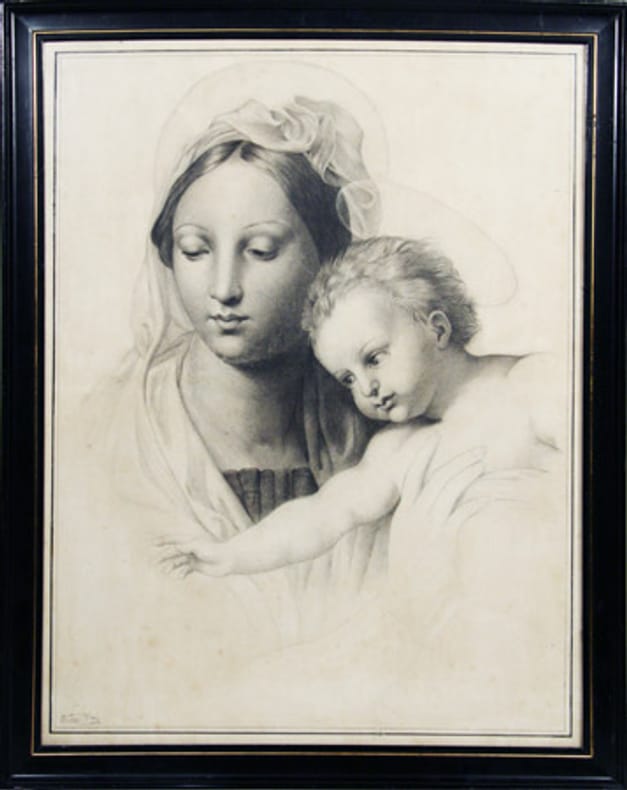
100619aafS.d., vers 1835, 59 x 44 cm, dessin au crayon, signé en bas a gauche ‘M. IM-HOF’. 1 feuille / encadrée.
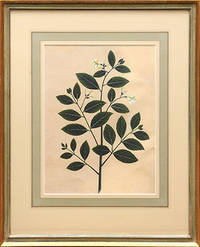
1900127351India: c.1900. Company School or Company Painting is a term that defines a hybrid Indo-European style made by Indian artists in India under British rule during the 18th and 19th centuries. The style reflects the influences of Mughal style with some European techniques such as perspective or volume made mainly for a Western clientele. Company School style went into decline with the arrival of photography towards the end of the 19th century. Original watercolour on paper. Image size: 480 x 280 mm. Framed size: 615 x 500 mm. Very good condition. unknown
1900127362India c.1900. Company School or Company Painting is a term that defines a hybrid Indo-European style made by Indian artists in India under British rule during the 18th and 19th centuries. The style reflects the influences of Mughal style with some European techniques such as perspective or volume made mainly for a Western clientele. Company School style went into decline with the arrival of photography towards the end of the 19th century. Original watercolour on paper. Image size: 480 x 280 mm. Framed size: 615 x 500 mm. A closed tear on the top right hand corner otherwise in very good condition. unknown
1900127361India c.1900. Company School or Company Painting is a term that defines a hybrid Indo-European style made by Indian artists in India under British rule during the 18th and 19th centuries. The style reflects the influences of Mughal style with some European techniques such as perspective or volume made mainly for a Western clientele. Company School style went into decline with the arrival of photography towards the end of the 19th century. Original watercolour on paper. Image size: 480 x 280 mm. Framed size: 615 x 500 mm. Very good condition. unknown
1880630641880. 20-1/2 x 20-1/4 inches. Burl frame. 20-1/2 x 20-1/4 inches. unknown
19272110502151105755Keiwakai 1927. Soft Cover. Fine. Number of books: 2 Keiwakai paperback
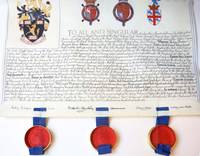
61035United Kingdom d.d. 5 March 1964. Vellum charter 37x52 cm. Mint condition. Handwritten calligraphy partly in gold with a large hand coloured coat-of-arms as bestowed on the Ltd. and the coats-of-arms of the mentioned officials as well as their signatures. Three wax seals attached in copper cases. Encased in an oblong red morrocco leather box with three gilt crowned monograms EIIR. All in mint condition. Eshton Hall School was situated in Gargrave in the West Riding of the County of York until the premises were abandonned and the building was turned into a nursing home. There is still an active group of alumni. During the Second World War Bentham School was relocated to Eshton Hall and afterwards in 1949 an independent public school was realised. Therefore Eshton was born as a co-ed initially. The original main building was burnt to the ground in the late 1500's leaving only the old wing and arch. The new main building with its impressive tower was built in the early part of the 1600's by the Wilson family who were Royalist sympathisers. H169. hardcover
179138981791. 13 x 9 inches. Dark brown body colour on prepared paper. Inscribed "N.2.Stück" and "am 9ten Aprill 1791--nach der Natur gezeichnet von JEW" ink collector's stamp "Linel-Smlg. No." followed by pencilled number "1046" all on verso. Framed. Provenance: Linel ink collector's stamp on verso.<br/> <br/> A high quality image that clearly is drawn from life as the inscription claims. The artist's use of a dark prepared ground recalls the work of Barbara Regina Dietsch and her family. A search of Nissen's index of artists reveals one possible name: the Swiss artist Johann Emmanuel Wyss 1782-1837. However the maturity and assurance shown in the present drawing would seem to rule him out: he could have been no older than nine in April 1791. unknown