34 831 résultats
196859134Providence RI: Museum of Art Rhode Island School of Design. As New. 1968. Paperback. 0933856032 . FREE UPGRADE to Courier/Priority Shipping Upon Request IN STOCK AND IMMEDIATELY AVAILABLE FOR SHIPMENT - AS NEW THE TEXT BLOCK IS PRISTINE CLEAN UNMARKED AND IN EXCELLENT CONDITION - - .108 pp. With 80 ills. 22 x 18 cm. -- with a bonus offer-- . Museum of Art, Rhode Island School of Design paperback
2014112085NUS Press. New. 2014. Paperback. 9810911165 . FREE UPGRADE to Courier/Priority Shipping Upon Request - IN STOCK AND IMMEDIATELY AVAILABLE FOR SHIPMENT - Flawless copy brand new pristine never opened - Text in English and Chinese. -- with a bonus offer-- . NUS Press paperback
2015111258Skyhorse Publishing. New. 2015. Paperback. 1629145955 . FREE UPGRADE to Courier/Priority Shipping Upon Request - IN STOCK AND IMMEDIATELY AVAILABLE FOR SHIPMENT - Flawless copy brand new pristine never opened - -- with a bonus offer-- . Skyhorse Publishing paperback
196691792New York New York: New School Art Center. As New. 1966. Paperback. FREE UPGRADE to Courier/Priority Shipping Upon Request - IN STOCK AND IMMEDIATELY AVAILABLE FOR SHIPMENT - AS NEW THE TEXT BLOCK IS PRISTINE CLEAN UNMARKED AND IN EXCELLENT CONDITION - - -- with a bonus offer-- . New School Art Center paperback
199331772Niskayuna New York: Niskayuna Central School Office of Art Education. New. 1993. Paperback. FREE UPGRADE to Courier/Priority Shipping Upon Request - IN STOCK AND IMMEDIATELY AVAILABLE FOR SHIPMENT - FLAWLESS COPY BRAND NEW PRISTINE NEVER OPENED -- 51 pages of art poetry and very short stories. -- with a bonus offer-- . Niskayuna Central School Office of Art Education paperback
197457960Palm Beach FL: Norton Gallery and School of Art. As New. 1974. Paperback. FREE UPGRADE to Courier/Priority Shipping Upon Request IN STOCK AND IMMEDIATELY AVAILABLE FOR SHIPMENT - AS NEW THE TEXT BLOCK IS PRISTINE CLEAN UNMARKED AND IN EXCELLENT CONDITION - - 40 pp. With 18 ills. On 16 pls. 6 col. . 29 x 21 cm. -- with a bonus offer-- . Norton Gallery and School of Art paperback
196828251Providence RI: Rhode Island School of Design. As New. 1968. Paperback. FREE UPGRADE to Courier/Priority Shipping Upon Request - IN STOCK AND IMMEDIATELY AVAILABLE FOR SHIPMENT - Text pristine clean & unmarked - 83 works catalogued and illustrated in black and white. Includes a a frontispiece portrait of Tissot by Degas an introductory essay on Tissot illustrated with photographs and a bibliography. -- with a bonus offer-- . Rhode Island School of Design paperback
197059438Boston MA: School of Fine and Applied Arts Boston University. As New. 1970. Paperback. FREE UPGRADE to Courier/Priority Shipping Upon Request IN STOCK AND IMMEDIATELY AVAILABLE FOR SHIPMENT - AS NEW THE TEXT BLOCK IS PRISTINE CLEAN UNMARKED AND IN EXCELLENT CONDITION - - 60 pp. With 47 ills. 27 x 23 cm. -- with a bonus offer-- . School of Fine and Applied Arts, Boston University paperback
196428236Maine: Skowhegan School of Painting & Sculpture. As New. 1964. Paperback. FREE UPGRADE to Courier/Priority Shipping Upon Request - IN STOCK AND IMMEDIATELY AVAILABLE FOR SHIPMENT - AS NEW THE TEXT BLOCK IS PRISTINE CLEAN UNMARKED AND IN EXCELLENT CONDITION - - -- with a bonus offer-- . Skowhegan School of Painting & Sculpture paperback
198416674College Park MD: of Maryland. New. 1984. Paperback. FREE UPGRADE to Courier/Priority Shipping Upon Request - IN STOCK AND IMMEDIATELY AVAILABLE FOR SHIPMENT - FLAWLESS COPY BRAND NEW PRISTINE NEVER OPENED -- with a bonus offer-- . of Maryland paperback
198126725Tallahassee FL: University. As New. 1981. Paperback. FREE UPGRADE to Courier/Priority Shipping Upon Request - IN STOCK AND IMMEDIATELY AVAILABLE FOR SHIPMENT - -- with a bonus offer-- . University paperback
2015113220Birkhäuser. New. 2015. Paperback. 3038219843 . FREE UPGRADE to Courier/Priority Shipping Upon Request - IN STOCK AND IMMEDIATELY AVAILABLE FOR SHIPMENT - IN STOCK AND IMMEDIATELY AVAILABLE FOR SHIPMENT - Flawless copy brand new pristine never opened - -- with a bonus offer-- . Birkhäuser paperback
Very Good Turkish, Ottoman (1500-1928) Collection includes six postcards by him sent to Mehmed RAsih Bey, Âli Türkgeldi (Sofia, Bulgaria), Satvet Lütfi Tozan, one newspaper clipping about Gerede, eight autograph letters signed 'Hüsrev' sent to Satvet Lütfi Tozan, (1889-1975), Âli Türkgeldi, 1867-1935) and beside ones which came from them to him. Some letters are more than one page. Full text. In Ottoman script. Items dated from 1920 to 1929/30 on letters and postcards. All in one envelope with Ottoman script autograph notes and name of Hüsrev Gerede on it. Letters and other material include mostly important diplomatic contents and early Republican Turkish historical info. These material is not published. Gerede was a Turkish career officer, who served in the Ottoman Army and the Turkish Army. He was also a politician and diplomat of the Republic of Turkey. He has Medal of Independence with Red-Green Ribbon.
19124149Senior Class of 1912 Nebraska State Normal School at Peru 1912 A 1912 yearbook from Nebraska's first college first state-supported college. Stiff card boards full dark brown leather gilt front board lettering/decoration bright 10 3/8 x 8 inches 218 pp. Very good modest edgewear/rubbing; pages clean with no marks and binding sound. Rare. K071. 1st Edition. Hardcover. Very Good/No Jacket. Senior Class of 1912, Nebraska State Normal School at Peru hardcover
19114148Senior Class Nebraska State Normal School at Peru 1911 A 1911 yearbook from Nebraska's first college first state-supported college. Hardcover full brown leather gilt front board lettering and decoration bright 10 1/2 x 8 inches 232 pp. Laid in: a card with a printed Peru poem. Very good modest edgewear; sunning spine; pages clean with no marks and binding tight. Rare. K071. 1st Edition. Hardcover. Very Good/No Jacket. Senior Class, Nebraska State Normal School at Peru hardcover
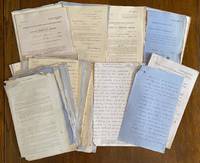
16092Kemble Parochial School Record Book 1871-1904. Kemble Cirencester Gloucestershire. Collection of approximately over 100 documents on approximately 180 leaves many written on both sides comprising the complete records of the Kemble Parochial School. Unbound contained in original protective black cloth boards. Large legal "foolscap" size pages. Comprising both printed Circulars directed to the schools from the Education Department and handwritten copies of records the school was ordered to send as reports to the Education Department. This school is built from grant money received in the wake of the first of the Forster Acts known as the Elementary Education Act of 1870 which made education compulsory in England and Wales for all children aged 5 to 13. <br/><br/> The Forster Acts named for the sponsor of the original bill William Forster brought a sweeping change to elementary education in England by declaring public education for children to be mandatory. It also mandated that the schools should be publicly funded and overseen by regular inspections. The Kemble Parochial school founded at the very inception of this legislation provides a window into the dramatic shift to public education. The first document in this record is a Circular of Instructions and Rules for the construction of a school building. Through the handwritten retained copies of annual reports by Principal A.G.W. Wilts to the Inspector of Schools we are able to grasp the immensity of the change. Wilt first report comes in 1872 when the schools 18 students were taught in an old traditional schoolhouse by headmistress Ms. Hopkinson who did not have an official certification in teaching "This is an average country School carried on at present in rather inadequate premises but a new and handsome school-room and teacher's residence have just been erected.The mistress is a successful disciplinarian and has much natural aptitude for teaching." By 1875 the school has grown to 49 students though still under the tutelage of the unfortunate Ms. Hopkinson who continues struggling to obtain a teaching credential. By 1878 undergoing regular inspections it is reported that the school needs improvement in multiplication and to better follow the state mandated provisions as to Needlework. Their ranks swelled to around 80 students just before the end of the century before petering out and ending in 1904 with only 3 students registered. By then Ms. Hopkinson had been replaced by two subsequent teachers Ms. Lane and Ms. Reed who also struggle to obtain a Certificate while managing a large class.<br/><br/> Circulars from the Education Department show that the idea of public education while welcomed in many quarters arrived also with surprise and some distrust. In 1878 the Circulars report the most recent developments of the Forster Acts "As it has now become evident that by the operation of recent legislation the great majority of the labouring classes will be virtually compelled to send their children to Public Elementary Schools." A major controversy of the Forster Acts surrounded the requirement that the schools operate non-denominationally. While individual churches pushed for the right to educate children under their own religious tenets the Church of England feared that doing so would weaken state control of education. The archive contains notes of this church-state tension in a handwritten letter of 1880 in which the Rev. R.H. Taylor inquires of the Education Department "whether the School is now conducted as a public elementary school.Section VII of the Elementary Education Act 1870 having been conspicuously put up in the School. If not my Lords cannot direct H.M. Inspector to inspect the School annually as a public elementary school." <br/><br/>On the lighter side repeated entreaties from the Education Department in Whitehall during the 1870s call for "teachers of Schools will be willing to give their assistance in endeavoring by due warning to the scholars to put a stop to.the mischief caused by throwing stones at the insulators of telegraph wires." Threatened punishments to the "schoolboys" responsible for this "great evil" include "imprisonment and flogging." Documents are in very good condition on large size sheets of blue or white paper clear and legible. Some dog-ears and a couple pages of the archive have been chewed on the corners but most are complete. Names of all enrolled students appear yearly on the Examination Schedule. A very complete set of records and historical resource on the most dramatic transition ever to come to education; that of going from independent schoolhouses to systemized public education. unknown books
19902091502135700588Rinsen Bookstore Sogakusha 1990. Soft Cover. Fine. The book is in fine condition. Rinsen Bookstore Sogakusha paperback
2081502111907580Chinese social sciences N.A. Soft Cover. Fine. The book is in fine condition. Chinese social sciences paperback
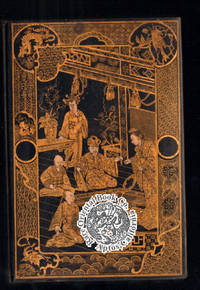
35006201Canton ca.1800-1820 Lam-Qua.Black lacquer gold painted 12 fine gouache hand-drawn & colored paintings 12.5 x 16.5 cm. very fine condition each mounted in an album with old gold paper corners on pith paperexcellent example. RARE ! . . . A SUPERB SUITE OF TWELVE STUNNING COLOR PITH PAINTINGS . . . ILLUSTRATING VARIOUS CHINESE IN ELABORATE COSTUME . This is a charming suite of 12 lovely portraits of Chinese men women and military men. . THE PAINTED SUBJECTS: . 1. An old sage holds a scroll of holy texts while he is seated behind him stands a guard with a pole sword. . 2. A young warrior holds a long axe ready for action. . 3. A young lady a white porcelain teacup. . 4. A warrior holds his halberd ready for action. . 5. A fierce older warrior holds a sword and his shield. . 6. A guard holds his long sword at the ready. . 7. An elderly man strokes his long beard. . 8. A young man takes a stroll holding a fan behind his back. . 9. An elderly an holds two Burmese-green jade bracelets. . 10. A man holds a feather fan. . 11. A very old man holds his long sword. . 12. A bearded man points with his hand toward the right. . The twelve paintings are gently mounted to stiff black album pages with the old style "NuAce" photo mounting corners. There is no damage to the paintings with this technique. . THE STUNNING GOLD OVER BLACK ILLUSTRATED LACQUER COVERS: This is a very unusual binding hand-painted in gold lacquer over black lacquer background on wooden boards. . The cover illustration shows five Chinese: The Lord & Master; his concubine; his son Prince; his retainer; and the maid. . The Lord & master is seen seated before a tea service with three golden cups and a golden ceramic tea pot. The Lord & Master reaches for the hand of his fair and very young concubine who holds a fan. The tea service is clearly for three people: The Lord & Master his son the Prince and the concubine. . The retainer is seated just behind the Lord & Master's right side showing proper respect by looking at the floor. The young Prince the son is seated before his father and looks at the concubine. At the rear is the maid waiting for order. She puts her right hand on the adjacent table holding a tray. . The work has an elaborate and stunning border. In the upper corners are two stunning illustrations: the upper left sows the Golden Dragon in the upper right is the Phoenix. At the left center margin is a golden Peacock. The margin-borders are elaborately done with differing traditional Chinese patterns and designs. A most stunning view inside of the . The back is plain black lacquer. . The spine is black leather with period Chinese swastika design white over black end papers. Some of the old glue is showing through the very thin tissue endpapers else very solid with heavy black pages. . CONDITION OF THE GOLD AND BLACK LACQUER COVERS: The covers are in exceptionally good condition. There are two minor spots: one ca. 1.5 cm spot at the son's midsection and another black spot .05 cm just below his robe. . There is the very small amount of occasional and barely visible usual and very minor mild scuffing with a minor discoloration of the face of the maid. There is a bit of 'crackle' to the black lacquer which is normal for a piece 200 years old. Else this is in very nice condition. . CONDITION OF THE PAINTINGS: These are exceptionally bright and clean drawings lightly mounted on a now browned backing paper with blue-glossy patterned paper borders. . Numbers: . 1 has a tiny 1.5 & .5 cm. small split at bottom left this does not affect the painting. . 2 has the lower portion folded in the process of paper-making which is normal variation and does not detract. . 5 has a tiny 1 cm. split at top in the margin this does not affect the painting. . 9 has a 7 cm. split from the elbow to the bottom of the work apparently restored from the verso minimal impact. . 11 has a small 1 cm. scuff in the right margin this does not affect the image. . 12 has a similar but less obvious 1 cm. scuff in the right margin at the same place as #11 this does not affect the image. . The balance i.e. numbers: 3467810 are without issues. . OVERLY CRITICAL: We are commonly obsessive and overly critical about pointing out any and all defects. Please view the scans posted to our website. All in all these look much better than the above description. Perfectly clean no blemishes. . NOTE: Typically "pith" paintings are prone to be very brittle and delicate. We are happy to state this suite is exceptionally very solid and intact. The colors are brilliant bright and stunningly fresh without any fading or issues. They appear to have been properly cared for protected. These are in excellent "Collector's Condition." . PAINTING QUALITY AND FRESH BRILLIANTLY COLORED: The paintings are meticulously executed with fine detail painted a steady skilled hand. . LAM-QUA TING-QUA SCHOOLS: The works are done in the Canton style of Lam-Qua and his brother Ting-qua. See link below. . Ting-qua born ca. 1809; flourished 1840-70. He was the brother of Lam-Qua 1801-1860 and probably a close relation of Spoilum. Ting-qua's studio at 16 China Street Guangzhou was perhaps the most prolific source of Chinese export paintings of its time. Working in a manner influenced by Western artistic traditions Ting-qua and the painters of his studio restricted themselves to gouache and water-colors perhaps to avoid rivalry with Lam-qua's oil paintings. Their pictures which were often sold in sets." . PITH PAPER: The paintings were done on pith paper. "Pith paper or rice paper" a misnomer as it is sometimes known is made from the inner pith of the plant Tetrapanex papyrifera which is a member of the Araliaceae family. The plant is a shrub native to Southern China and Taiwan. As well as a painting material pith paper was used to make artificial flowers and surgical dressings." . RARITY: Gouache pith paintings are now rare most were damaged cracked and brittle rendering them useless. The few that survived are considered RARE and uncommon. The paintings were drawn with much skill and patience and were for the most part drawn for and sold to foreigners in the treaty ports of China in the early 19th century. Drawn with a fine brush in vivid colors the paintings depicted things that would fascinate foreigners and encourage them to bring home as souvenirs. The current examples shows portraits of Chinese officials guards military men as well as upper class citizens. . Albums of pith paintings were typically issued in a suite of twelve. . BIBLIOGRAPHY: . -org/wiki/Lam_Qua C.L. Crossman.: THE DECORATIVE ARTS OF THE CHINA TRADE p.173-203 and the associated color and b.w. photo examples. . C.L. Crossman.: THE CHINA TRADE p.93-120 and the photos. Arthur Chu.: ORIENTAL ANTIQUES AND COLLECTIBLES pp.62-67 photo #60. . . unknown
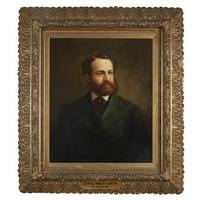
1870690701870. 30" x 24. 30" x 24" A Philadelphia Lawyer Who Served as Pennsylvania's Deputy Attorney General American School 19th Century. Smith Lewis Waln 1846-1881. Portrait of Lewis Waln Smith. Philadelphia c.1870. 24" x 30" image size. Oil on canvas in ornate nineteenth-century gilded wood frame. Some minor nicks and chips to frame gilding slightly dulled otherwise fine. $1800. Lewis Waln Smith was a lawyer who served as Deputy Attorney General for the State of Pennsylvania. This portrait belonged to the Philadelphia Bar Association. Founded in 1802 it is the oldest association of lawyers in the United States. Its library where this portrait was last displayed was renamed the Theodore F. Jenkins Memorial Law Library in 1967. unknown books
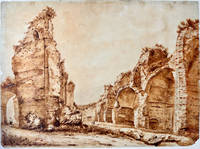
185212381852. Ink wash in brown ink on cream wove paper 9 7/8 x 13 inches 250 x 330 mm titled and dated in brown ink lower right. In fair condition with minor scattered soiling uniform age tone and edge 'nics;' all consistent with age. Laid down to archival mat board. unknown
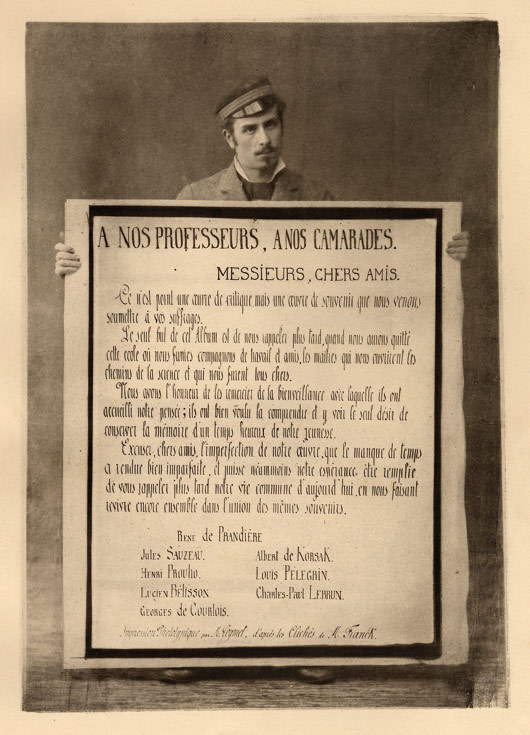
187714504Paris, Impression Phototypique de Gleymet d'après les clichés de M. Franck ; in-folio, demi-chagrin vert, faux-nerfs à froid et dorés, fleurons dorés, titre doré sur le plat, en arc, plats de percaline (reliure de l'époque) ; (51) ff. montés sur onglets dont le titre, composition emblématique : juchée sur le pare-chocs d'une locomotive, l'Ecole Centrale, représentée par une femme nue tenant haut une torche dont les rayons Arts, Métallurgie, Construction, Mécanique et Chimie symbolisent le Progrès qui bouscule et écrase le clergé, les Indiens, les Allemands à casque à pointe, les "ânes", les Musulmans, une sorte de Juif errant, les incrédules et les oies ; les phares de la locomotive sont triangulaires ! Viennent ensuite 50 photographies ou sympathiques caricatures des dirigeants et professeurs de l'Ecole ; identité imprimée sur des papillons collés au dos de chaque planche.
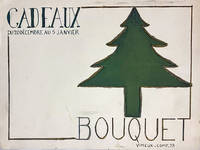
1935102552<p>With 22 printed documents several of which are present as the original project. And 20 sketches in pencil. All loose sheets. Paris between 1935 and 1940. Most of the sheets are 32 x 24 cm with several exceptions.</p><p>A. Vimeux must have been a student at the 'Ecole Estienne' in Paris between 1935 and 1940. The present file contains 80 original projects on various kinds of strong paper and paper of different colours. The projects are more or less finished. There are projects for posters letterheads trade cards exhibitions advertisements covers for various publications drawing of lettrs and other typographic work etc. All of these are done in the style of the 1930's and show the development of this student's work and the style taught at the 'École Estienne".</p>
Acquaforte e punta secca, 1924. Misure della lastra 85x130 mm. Prova d’autore, firmata a matita in basso “L. Bartolini”. Esemplare rifilato al rame ed applicato su cartoncino coevo. Perfetto stato di conservazione. All’incisione, databile al 1924-25 come altre opere analoghe dell’artista, Bartolini assegnerà poi il titolo definitivo di Tre donne alla fontana. Un’esemplare dell’opera definitiva è passato in asta a Berna nel novembre del 2007: https://www.mutualart.com/Artwork/Tre-donne-alla-fontana/591860B3A0845475 Luigi Bartolini è considerato uno dei maggiori incisori italiani del Novecento, insieme a Giorgio Morandi e Giuseppe Viviani. Oltre ad essere un prolifico incisore (al suo attivo oltre mille acqueforti), fu anche pittore e scrittore. Partecipò sia come pittore che come incisore a diverse edizioni della Biennale di Venezia dal 1928 al 1962. Presente a varie manifestazioni artistiche, sviluppò diverse maniere definite: ‘maniera bionda’, ‘lineare’ e ‘nera’. Ricordiamo soprattutto le acqueforti della serie Marche e della serie Sicilia. Iniziò la sua produzione grafica nel 1914 e il suo stile si rifà alla tradizione naturalistica dell’Ottocento. Molte sue incisioni si possono ricollegare ad alcune opere del Goya, di Telemaco Signorini e di Giovanni Fattori. Eccellente nella rappresentazione della natura morta e del paesaggio, spesso il Bartolini rappresentò dolcemente le cose e gli oggetti più umili, i soggetti di natura più dimessi. In essi ritroviamo il sentimento che diviene immagine e la forma che si sviluppa in espressione. Con Bartolini l’incisione torna ad essere un mezzo di espressione poetica libera dal simbolismo e dal vedutismo allora in voga presso le accademie. Nelle sue acqueforti prevale ora un tratteggio leggero (genere biondo), ora una ricerca del chiaroscuro alla Rembrandt (genere nero). Rara. Etching and drypoint, 1924. Plate size 85x130 mm. Artist's proof, signed in pencil at the bottom "L. Bartolini". Example trimmed to copper and applied on contempoary paperboard. Excellent state of preservation. Rare. Born in Cupramontana near Ancona, Luigi Bartolini was the twentieth century Italian etcher, who came closest to the stature of his great rival, Morandi. As a teenager, he saw the collection of etchings, including work by Callot, owned by the Corradi family in Iesi. From 1907 to 1910 Bartolini studied at the Istituto di Belle Arti in Siena, and started to etch c. 1909. He moved to Rome in 1910, where until 1912 he frequented the Accademia di Belle Arti, while also attending lectures on literature and the history of art, and courses on anatomy at the University in Rome. Bartolini studied the etchings of Goya and took lessons on drawing at the Accademia di Spagna. From there, he went to Florence in 1913, where he attended the Scuola del nudo. Bartolini continued his anatomical research, as well as studying architecture, making himself the most assiduous student of all Italian twentieth century printmakers. He also visited the Uffizi and Florentine print dealers to look at the etchings of Rembrandt and Fattori. Bartolini painted his first oils just before the outbreak of the First World War. Although he painted pictures throughout the rest of his career, and was awarded the Premio Marzotto for them in 1956, they have been far eclipsed in fame by his etchings and writings. During the First World War, Bartolini published his first collection of poetry. A very prolific and accomplished writer, in this field he is best known today as the author of the novel, 'Ladri di biciclette' (Bicycle thieves), of 1946, which was quickly turned into a celebrated film by Vittorio de Sica and Cesar Zavattini. After the First World War, Bartolini held a series of minor teaching posts in Macerata, Sassari, Avezzano, Pola, and Caltagirone, while he continued to etch, and started a long career as a polemical journalist and critic of art and architecture. From 1923 to 1929, he wrote for the Naples periodical, 'Cimento', but he also contributed to 'Il Selvaggio', 'Quadrivio', 'Italia letteraria', and 'L'Ambrosiana'. Bartolini's 1924 exhibition of etchings at the Casa d'Arte Bragaglia in Rome was a great success, and later that year he showed 70 etched landscapes of the Marches at the Casa Palazzo di Roma. The following year he visited Paris, where he paid particular attention to the paintings of Van Gogh. Bartolini's political convictions led him to being assaulted by Fascists and hospitalised in 1928. Two years later, he won a prize at the Venice Biennale, where he had exhibited a portfolio of etchings. In 1930, the Turin publisher, Buratti, began to issue a series of portfolios of etchings by contemporary Italian artists under the editorship of Cipriano Oppi, selecting Bartolini for the first album. The following year, Buratti published 'Le carte parlanti', a portfolio of 10 of Bartolini's etchings, which was published in an edition of 20. In 1932, Bartolini shared the first prize at the Prima mostra dell'incisione moderna at the Uffizi with Morandi and Boccioni. His close friend, the leading anti-Fascist art historian, Lionello Venturi, acted as his agent selling his etchings in Paris. Bartolini's correspondence with his compatriots in exile led to his imprisonment, from which he was released on Mussolini's personal intervention. He was then placed under political surveillance. From 1933 to 1938, Bartolini taught in Merano, where he painted and etched in the open air, finding subjects on the banks of the fast flowing Adige. Despite being under political suspicion, he was given a one - man show of 50 etchings at the second Rome Quadriennale in 1935, when he was awarded the first prize for printmaking. Bartolini still encountered political difficulties, and his 'Modi', published by Edizioni del Cavallino in 1938, was censured by Al...

Prior owner's name, "Edw. D. Jones" written atop title page - possibly the founder of Edward Jones Investments, founded in St. Louis in 1922. Prior owner's small initials (E.D.J.) and date inked atop first blank leaf. pp. [v], vi-xlv, [2], 2-431. Index. Translated from the German. "While it would be bold to affirm that Professor Böhm-Bawerk [1851-1914] has said the last word on the theory of Interest, his book must be regarded as one with which all subsequent writers will have to reckon." - Translator's Preface. Of the first edition, at p.22 Batson wrote "The first large treatise produced by the Austrian School, and although it is not so comprehensive as that since published by Wieser, it leaves very few parts of economic theory unillumined." Schumpeter "regarded Böhm-Bawerk as one of the 'great masters' in economics." - Swedberg p.14. Moderate wear to publisher's pebbled brown cloth. Bright gilt lettering upon backstrip. Binding intact. 22.6 x 15cm. Batson p.167, Cohen 171, Masui p.151, Fundaburk 9663. Book