Mughal School, 18th centuryBiblio.com
34 831 résultats
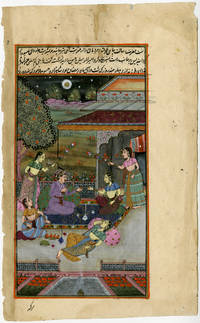
9171750. Gouache and ink with heightening in gold on lightweight brown laid paper 10 x 6 1/4 inches 254 x 159 mm the full sheet. Some scattered light areas of discoloration and age related toning small edge losses and scattered handling tear along the left sheet edge well outside of the image area. Extensive hand inscriptions in black and red ink on the verso. Colors are exceptionally bright and fresh with good saturation. Mirza Nur-ud-Din Muhammad Salim 30 August 1569 - 28 October 1627 known by his imperial name Jahangir "Conqueror of the World' was the fourth Mughal Emperor who ruled from 1605 until his death in 1627. He was the third and only surviving son of Akbar and his chief empress Mariam-uz-Zamani born to them in the year 1569. He was named after the Indian Sufi saint Salim Chishti. <br /> <br /> -Singh Pashaura; Fenech Louis E. eds. 2014. The Oxford handbook of Sikh studies. Oxford University Press. p. 647. ISBN 978-0-19-969930-8. unknown
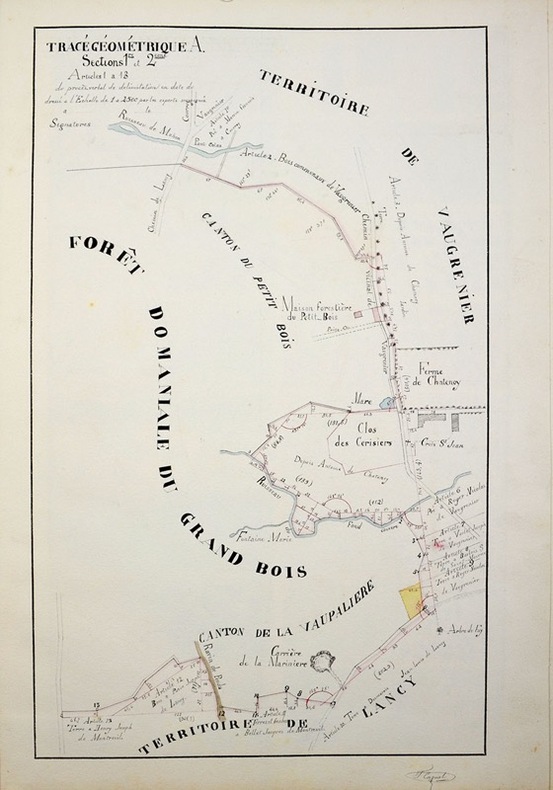
13282[Nancy], 1877 - 1879. 1 vol. in-folio. Demi-veau vert, titre et date en palladium sur les premier plat, planches montées sur onglets.
Acquaforte,1952. Lastra mm. 148x82. Firma a matita in basso a destra Luigi Bartolini. Dedica a matita in basso “Auguri per il 1954”. Tiratura a 20 esemplari, inserita nelle copie di testa del libro Ombre fra le metope, Schwarz Editore 1953, stampato da Luigi Maestri, Milano. Luigi Bartolini è considerato uno dei maggiori incisori italiani del Novecento, insieme a Giorgio Morandi e Giuseppe Viviani. Oltre ad essere un prolifico incisore (al suo attivo oltre mille acqueforti), fu anche pittore e scrittore. Partecipò sia come pittore che come incisore a diverse edizioni della Biennale di Venezia dal 1928 al 1962. Presente a varie manifestazioni artistiche, sviluppò diverse maniere definite: ‘maniera bionda’, ‘lineare’ e ‘nera’. Ricordiamo soprattutto le acqueforti della serie Marche e della serie Sicilia. Iniziò la sua produzione grafica nel 1914 e il suo stile si rifà alla tradizione naturalistica dell’Ottocento. Molte sue incisioni si possono ricollegare ad alcune opere del Goya, di Telemaco Signorini e di Giovanni Fattori. Eccellente nella rappresentazione della natura morta e del paesaggio, spesso il Bartolini rappresentò dolcemente le cose e gli oggetti più umili, i soggetti di natura più dimessi. In essi ritroviamo il sentimento che diviene immagine e la forma che si sviluppa in espressione. Con Bartolini l’incisione torna ad essere un mezzo di espressione poetica libera dal simbolismo e dal vedutismo allora in voga presso le accademie. Nelle sue acqueforti prevale ora un tratteggio leggero (genere biondo), ora una ricerca del chiaroscuro alla Rembrandt (genere nero). Bibliografia https://www.luigibartolini.com/gli_amanti_crucciati_74.html Etching,1952. Plate mm. 148x82. Signature in pencil at lower right Luigi Bartolini. Dedication in pencil at the bottom "Auguri per il 1954". Limited edition of 20 copies, inserted in the leading copies of the book Ombre fra le metope, Schwarz Editore 1953, printed by Luigi Maestri, Milan. Born in Cupramontana near Ancona, Luigi Bartolini was the twentieth century Italian etcher, who came closest to the stature of his great rival, Morandi. As a teenager, he saw the collection of etchings, including work by Callot, owned by the Corradi family in Iesi. From 1907 to 1910 Bartolini studied at the Istituto di Belle Arti in Siena, and started to etch c. 1909. He moved to Rome in 1910, where until 1912 he frequented the Accademia di Belle Arti, while also attending lectures on literature and the history of art, and courses on anatomy at the University in Rome. Bartolini studied the etchings of Goya and took lessons on drawing at the Accademia di Spagna. From there, he went to Florence in 1913, where he attended the Scuola del nudo. Bartolini continued his anatomical research, as well as studying architecture, making himself the most assiduous student of all Italian twentieth century printmakers. He also visited the Uffizi and Florentine print dealers to look at the etchings of Rembrandt and Fattori. Bartolini painted his first oils just before the outbreak of the First World War. Although he painted pictures throughout the rest of his career, and was awarded the Premio Marzotto for them in 1956, they have been far eclipsed in fame by his etchings and writings. During the First World War, Bartolini published his first collection of poetry. A very prolific and accomplished writer, in this field he is best known today as the author of the novel, 'Ladri di biciclette' (Bicycle thieves), of 1946, which was quickly turned into a celebrated film by Vittorio de Sica and Cesar Zavattini. After the First World War, Bartolini held a series of minor teaching posts in Macerata, Sassari, Avezzano, Pola, and Caltagirone, while he continued to etch, and started a long career as a polemical journalist and critic of art and architecture. From 1923 to 1929, he wrote for the Naples periodical, 'Cimento', but he also contributed to 'Il Selvaggio', 'Quadrivio', 'Italia letteraria', and 'L'Ambrosiana'. Bartolini's 1924 exhibition of etchings at the Casa d'Arte Bragaglia in Rome was a great success, and later that year he showed 70 etched landscapes of the Marches at the Casa Palazzo di Roma. The following year he visited Paris, where he paid particular attention to the paintings of Van Gogh. Bartolini's political convictions led him to being assaulted by Fascists and hospitalised in 1928. Two years later, he won a prize at the Venice Biennale, where he had exhibited a portfolio of etchings. In 1930, the Turin publisher, Buratti, began to issue a series of portfolios of etchings by contemporary Italian artists under the editorship of Cipriano Oppi, selecting Bartolini for the first album. The following year, Buratti published 'Le carte parlanti', a portfolio of 10 of Bartolini's etchings, which was published in an edition of 20. In 1932, Bartolini shared the first prize at the Prima mostra dell'incisione moderna at the Uffizi with Morandi and Boccioni. His close friend, the leading anti-Fascist art historian, Lionello Venturi, acted as his agent selling his etchings in Paris. Bartolini's correspondence with his compatriots in exile led to his imprisonment, from which he was released on Mussolini's personal intervention. He was then placed under political surveillance. From 1933 to 1938, Bartolini taught in Merano, where he painted and etched in the open air, finding subjects on the banks of the fast flowing Adige. Despite being under political suspicion, he was given a one - man show of 50 etchings at the second Rome Quadriennale in 1935, when he was awarded the first prize for printmaking. Bartolini still encountered political difficulties, and his ...
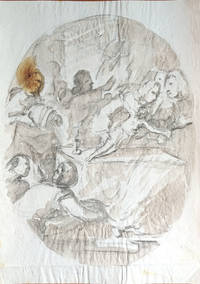
12337282x201mm. 11x8". Siglo XVIII. 282 x 201mm. Carboncillo y aguada sepia-ocre sobre papel agarbanzado verjurado. Con filigrana Escudo de Pavia. Papel italiano del siglo XVIII. Inscrito: "Maella" en el anverso. unknown
Opera tratta dai "Los Caprichos", per la prima volta pubblicati nel 1799. Prova della quarta edizione di dodici, stampata dalla calcografia di Madrid (circa 1870).Acquaforte, acquatinta brunita e puntasecca, in perfetto stato di conservazione. La serie chiamata Los Caprichos è composta da ottanta incisioni, la cui prima edizione [l’unica a non essere pubblicata postuma] venne alla luce nel 1799. Curata in fase d’edizione dallo stesso artista, la serie fu commercializzata e dopo poco tempo ritirata dal mercato. Infatti, a causa dei numerosi soggetti che ironizzavano sulla società spagnola di fine secolo, il Goya subì una censura. L’interpretazione dei soggetti rappresentati su queste lastre, sempre enigmatiche, è spesso controversa. Plate 55: old woman prettifying herself at mirror, maid and two male servants watching; from an album of the fourth edition. 1799 Etching, burnished aquatint and drypoint.From the fourth edition of twelve of the so-called "Los Caprichos" series, edited by the Madrid Calcografia.A very good impression, with good contrast, printed on contemporary paper, customary margins, in very good conditions. The series called Los Caprichos, consists of eighty etchings. This first edition of 1799, the only one not to be published posthumously, is imprinted on soft laid pape. Cured in phase edition by the same artist, the series was marketed and before long withdrawn from the market. In fact, because of the many subjects that mocked the Spanish society of the century, Goya suffered censorship. The interpretation of the subjects represented on these plates, always enigmatic, is often controversial. Harris 90; Delteil 92.
Opera tratta dai "Los Caprichos", per la prima volta pubblicati nel 1799. Prova della seconda edizione di dodici, stampata dalla calcografia di Madrid. Acquaforte, acquatinta brunita e puntasecca, in perfetto stato di conservazione. La serie chiamata Los Caprichos è composta da ottanta incisioni, la cui prima edizione [l’unica a non essere pubblicata postuma] venne alla luce nel 1799. Curata in fase d’edizione dallo stesso artista, la serie fu commercializzata e dopo poco tempo ritirata dal mercato. Infatti, a causa dei numerosi soggetti che ironizzavano sulla società spagnola di fine secolo, il Goya subì una censura. L’interpretazione dei soggetti rappresentati su queste lastre, sempre enigmatiche, è spesso controversa. Plate 56: figures falling through air, including satyr; from a bound album of the second edition impressions. 1799 Etching and burnished aquatint.From the second edition of twelve of the so-called "Los Caprichos" series, edited by the Madrid Calcografia.A very good impression, with good contrast, printed on contemporary paper, customary margins, in very good conditions. The series called Los Caprichos, consists of eighty etchings. This first edition of 1799, the only one not to be published posthumously, is imprinted on soft laid pape. Cured in phase edition by the same artist, the series was marketed and before long withdrawn from the market. In fact, because of the many subjects that mocked the Spanish society of the century, Goya suffered censorship. The interpretation of the subjects represented on these plates, always enigmatic, is often controversial. Harris 91; Delteil 93.
187 pages. Index. Attractive gilt advertisement upon black front board. Few black and white illustrations. Contents secured to boards by original black cord. "Covers a three-years course in Household Science." - from Preface. Above-average but not excessive overall wear. Errata page at front and memo page at back very heavily worn. Many contemporary hand-written recipes upon nine memo pages at back. Minimal markings to contents, excepting pages 114-115 upon which are handwritten contemporary prices of dozens of grocery items. A worthy copy of this wonderful and very uncommon antiquarian British Columbia household science text. Book
Acquaforte, 1875 circa, priva di firma. Stampata su carta cina applicata su supporto coevo. Opera non descritta dai repertori consultati. Telemaco Signorini nasce a Firenze il 18 Agosto del 1835 e, nonostante prediliga gli studi letterari, suo padre, un modesto pittore della corte del Granduca, lo avvia allo studio della pittura e fu lui il suo insegnante. Dopo aver frequentato i corsi di disegno dal nudo all'Accademia di Belle Arti fiorentina, e dopo aver dipinto dal vero con Odorado Borrani e Vincenzo Cabianca, inizia a frequentare il Caffè Michelangelo, accostandosi ai pittori che in quegli anni stavano teorizzando la pittura di macchia, ossia i Macchiaioli. Durante un viaggio a Parigi conosce personalmente l'anziano Camille Corot, interessandosi alla sua pittura di paesaggi e Constant Troyon; tornato a Firenze, con l'amico Diego Martelli, consolida l'amicizia con Silvestro Lega e Odoardo Borrani, insieme ai quali dipinge nei dintorni di Pergentina, divenendo il maggior rappresentante dei Macchiaioli. Bellissima prova, in ottimo stato di conservazione. Dimensioni 114x172 mm, il foglio 239x325 mm. Al verso timbro della collezione di Raffaele Alianello (Lugt 5K). Etching, circa 1875, unsigned. Printed on Chinese paper applied to carboard. Work not described by the repertories consulted. Telemaco Signorini was born in Florence on August 18, 1835 and, although he preferred literary studies, his father, a modest painter of the court of the Grand Duke, initiated him to the study of painting and he was his teacher. After having frequented the courses of drawing from the nude to the academy of Belle Arti fiorentina, and after having painted from the true one with Odorado Borrani and Vincenzo Cabianca, it begins to frequent the Cafe Michelangelo, approaching the painters that in those years were theorizing the painting of stain, that is the Macchiaioli. During a trip to Paris he knows personally the old Camille Corot, being interested in his painting of landscapes and Constant Troyon; returned to Florence, with the friend Diego Martelli, consolidates the friendship with Silvestro Lega and Odoardo Borrani, together with which it paints in the surroundings of Pergentina, becoming the greater representative of the Macchiaioli. Beautiful example, in excellent condition. Size: platemark, 114x172 mm; sheet 239x325 mm. On the verso collection mark of Raffaele Alianello (Lugt 5K).
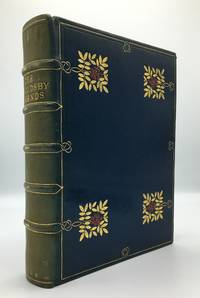
19291302London: William Heinemann. 1929. Reprint. Quarto 20 x 26cm. Handsomely bound in contemporary full blue morocco with sinuous gilt borders and gilt foliate decoration incorporating red morocco onlays representing berries to the boards the spine with five raised bands ruled in gilt and with titles in gilt. Gilt dentelles incorporating red morocco onlays. Binder's signature in gilt to the bottom turn-in of the lower board: "ML 1930". All edges gilt. Attractive colour woodblock-printed floral endpapers. Binder's inscription in pencil to the front endpaper: "Bournville School of Art 1930 M. Laud Oct / '30". Illustrated with 24 tipped-in colour plates with captioned tissue-guards 12 full-page tinted illustrations and numerous black and white in-text illustrations by Arthur Rackham. 549pp. A very good copy the binding square and tight with fading to the spine and some minor scuffs to the raised bands. The contents remain clean and crisp throughout. An appealing copy of Arthur Rackham's edition of 'The Ingoldsby Legends' splendidly bound in the Arts and Crafts Movement style by a student or teacher at the Bournville School of Art Birmingham.</p><p>The grand hall which housed the Bournville School of Art was the first public building in Bournville the model village founded by the Cadbury family. In line with typical Arts and Crafts Movement ideals and with a specific aim to further the ideas and principles of John Ruskin the school was originally conceived as a social centre for the village offering a practical and artistic education for the community. It became more formalised as a 'School of Arts and Crafts' in 1911 later becoming an art college in the 1920s.</p><p>As a city Birmingham served as an important centre of the Arts and Crafts movement with the 'Birmingham Group' of artist-craftsmen cultivating their own distinct style. Predominantly based around the Birmingham School of Art and the Birmingham Guild of Handicraft the leading figures of the group included Joseph Southall Arthur and Georgie Gaskin Bernard Sleigh Maxwell Armfield and Charles Gere.</p><p>An uncommon example of a bookbinding emanating from the dynamic atmosphere of Birmingham's Arts and Crafts Movement. London: William Heinemann. hardcover
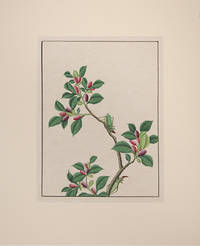
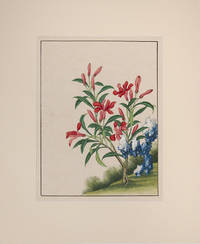
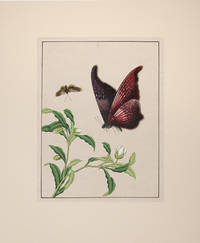
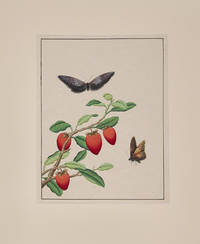
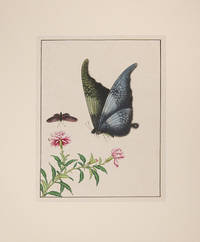
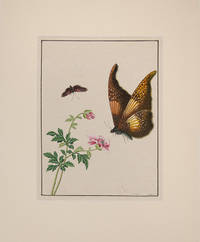
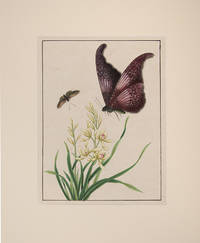
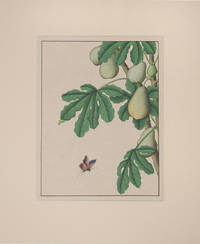
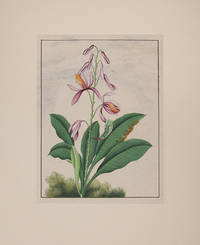
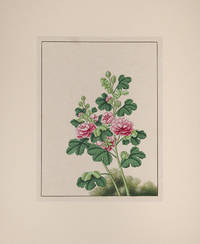
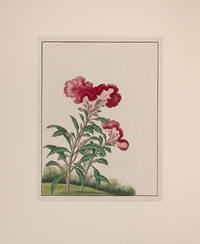
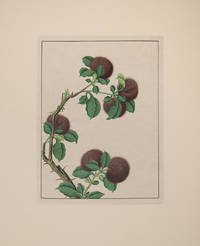
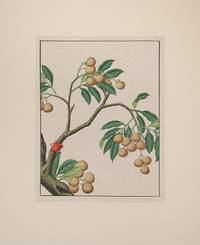
109666China mid nineteenth century. . Ink and gouache on paper mounted. Image size: 356 mm x 300 mm; mounted: 465 mm x 380 mm.<br /> Fine well executed decorative Chinese export watercolour. Light and easily transportable these watercolours mostly produced in the Canton region found a ready market in the West. Natural history studies were and continue to be amongst the most sought-after subjects.<br /> China, mid nineteenth century. unknown
109665China mid nineteenth century. . Ink and gouache on paper mounted. Image size: 356 mm x 300 mm; mounted: 465 mm x 380 mm.<br /> Fine well executed decorative Chinese export watercolour. Light and easily transportable these watercolours mostly produced in the Canton region found a ready market in the West. Natural history studies were and continue to be amongst the most sought-after subjects.<br /> China, mid nineteenth century. unknown
109627China mid nineteenth century. . Ink and gouache on paper mounted. Image size: 356 mm x 300 mm; mounted: 465 mm x 380 mm.<br /> Fine well executed decorative Chinese export watercolour. Light and easily transportable these watercolours mostly produced in the Canton region found a ready market in the West. Natural history studies were and continue to be amongst the most sought-after subjects.<br /> China, mid nineteenth century. unknown
109624China mid nineteenth century. . Ink and gouache on paper mounted. Image size: 356 mm x 300 mm; mounted: 465 mm x 380 mm.<br /> Fine well executed decorative Chinese export watercolour. Light and easily transportable these watercolours mostly produced in the Canton region found a ready market in the West. Natural history studies were and continue to be amongst the most sought-after subjects.<br /> China, mid nineteenth century. unknown
109626China mid nineteenth century. . Ink and gouache on paper mounted. Image size: 356 mm x 300 mm; mounted: 465 mm x 380 mm.<br /> Fine well executed decorative Chinese export watercolour. Light and easily transportable these watercolours mostly produced in the Canton region found a ready market in the West. Natural history studies were and continue to be amongst the most sought-after subjects.<br /> China, mid nineteenth century. unknown
109628China mid nineteenth century. . Ink and gouache on paper mounted. Image size: 356 mm x 300 mm; mounted: 465 mm x 380 mm.<br /> Fine well executed decorative Chinese export watercolour. Light and easily transportable these watercolours mostly produced in the Canton region found a ready market in the West. Natural history studies were and continue to be amongst the most sought-after subjects.<br /> China, mid nineteenth century. unknown
109621China mid nineteenth century. . Ink and gouache on paper mounted. Image size: 356 mm x 300 mm; mounted: 465 mm x 380 mm.<br /> Fine well executed decorative Chinese export watercolour. Light and easily transportable these watercolours mostly produced in the Canton region found a ready market in the West. Natural history studies were and continue to be amongst the most sought-after subjects.<br /> China, mid nineteenth century. unknown
109625China mid nineteenth century. . Ink and gouache on paper mounted. Image size: 356 mm x 300 mm; mounted: 465 mm x 380 mm.<br /> Fine well executed decorative Chinese export watercolour. Light and easily transportable these watercolours mostly produced in the Canton region found a ready market in the West. Natural history studies were and continue to be amongst the most sought-after subjects.<br /> China, mid nineteenth century. unknown
109660China mid nineteenth century. . Ink and gouache on paper mounted. Image size: 356 mm x 300 mm; mounted: 465 mm x 380 mm.<br /> Fine well executed decorative Chinese export watercolour. Light and easily transportable these watercolours mostly produced in the Canton region found a ready market in the West. Natural history studies were and continue to be amongst the most sought-after subjects.<br /> China, mid nineteenth century. unknown
109658China mid 19th century. . Ink and gouache on paper mounted. Image size: 356 mm x 300 mm; mounted: 465 mm x 380 mm.<br /> Fine well executed decorative Chinese export watercolour. Light and easily transportable these watercolours mostly produced in the Canton region found a ready market in the West. Natural history studies were and continue to be amongst the most sought-after subjects.<br /> China, mid 19th century. unknown
109659China mid nineteenth century. . Ink and gouache on paper mounted. Image size: 356 mm x 300 mm; mounted: 465 mm x 380 mm.<br /> Fine well executed decorative Chinese export watercolour. Light and easily transportable these watercolours mostly produced in the Canton region found a ready market in the West. Natural history studies were and continue to be amongst the most sought-after subjects.<br /> China, mid nineteenth century. unknown
109663China mid nineteenth century. . Ink and gouache on paper mounted. Image size: 356 mm x 300 mm; mounted: 465 mm x 380 mm.<br /> Fine well executed decorative Chinese export watercolour. Light and easily transportable these watercolours mostly produced in the Canton region found a ready market in the West. Natural history studies were and continue to be amongst the most sought-after subjects.<br /> China, mid nineteenth century. unknown
109662China mid nineteenth century. . Ink and gouache on paper mounted. Image size: 356 mm x 300 mm; mounted: 465 mm x 380 mm.<br /> Fine well executed decorative Chinese export watercolour. Light and easily transportable these watercolours mostly produced in the Canton region found a ready market in the West. Natural history studies were and continue to be amongst the most sought-after subjects.<br /> China, mid nineteenth century. unknown
2022125 Mount Vernon Street Boston Massachusetts. 29 September 1884. 4pp. 12mo. Bifolium. In good condition lightly aged. The letter would appear to relate to the formation of the American Society for Psychical Research. Six days before the writing of the present letter on 23 September 1884 Minot had been a member of a committee of nine scientists who met at Boston to consider the advisability of the formation of a society for psychical research in America William James being another member. Minot begins the letter by informing Ramsay that 'in regard to the International Congress' 'The matter has progressed thus far favourably and the extent of the interest in the project surpasses our expectations'. He continues with reference to 'The American Committee' which has been given 'full powers to act' by 'the Amer. Asstn. We have already received a gift of £1000 with promise of more as a fund the income to be expended by the Congress for the prosecution of research.' He continues: 'No definite public announcements can be made until the Council B.A.A.S. i.e. the British Association for the Advancement of Science has taken action in regard to the enterprise. As soon as it is in my power I shall take the liberty of communicating with you again concerning our plans.' Ramsay 'will readily understand that so vast an undertaking necessarily matures slowly; at present we are still in the stage of tentative suggestion and no services can be more valuable than those which contribute to spreading interest in the movement.' He hopes that Ramsay 'will assist in this way. There can be no question as to the readiness of the Americans to join in the proposed Congress – The next step must be to ensure the participation of the British scientists.' 25 Mount Vernon Street, Boston, Massachusetts. 29 September 1884. unknown
194829372Hanoi: Vien Dong-Phuong Bac-co Xuat Ban 1948. 3 volumes 4to text alternately in Vietnamese and French; table of alphabets 3 maps 2 folding 2 plates with 15 photographic illustrations on rectos and versos 7 folding plans including one of the Imperial Palace large folding table tables and illustrations in the text text occasionally in double column; original printed wrappers; some toning of the text as well as some browning and wear but generally a good sound set. An early Vietnamese scientific periodical emphasizing archaeology ethnography philology and history. It began publication with no. 1 in May 1948 and ceased with no. 3 in Aug. 1949. Issued under the auspices of École francais d'Extreme-Orient. Vien Dong-Phuong Bac-co Xuat Ban unknown
20112081502111901472Chinese book office 2011. Soft Cover. Fine. Size: A5 Soft Cover Book Chinese book office paperback