Japanese SchoolBiblio.com
34 831 résultats
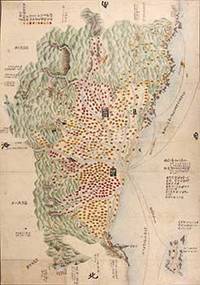
51-2947Japan: 19th Century. Manuscript map of Sakata and Tsuruoka on the coast of northern Japan indicating the sea routes to Akita to the north and Niigata to the south Mount Gassan shown to the south-east and Mount Chokai to the north a color key to the the various affiliations of the neighbourhoods pen and black ink with watercolor on four sheets joined 785 x 535mm. a few minor repairs old folds 19th century Japan: 19th Century unknown
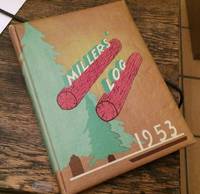
1953056295Springfield OR: Springfield High School 1953. 1st . Hardcover. Very Good/No Jacket. 4to - over 9¾" - 12" tall. 152pp.incl.index; HB lt.brwn.w/greenwhite&red-pic.cover; some rub w/wear on edges&corners; usual signaturesetc.otherwises cleantight pgs. Springfield Oregon yearbook - writer Ken Kesey's senior year covered. Photos of Kesey on pgs. 2430316372769097105116117129&130. <br/> <br/> Springfield High School hardcover
196028178nantes 1960 Un dessin original au fusain, Format : 50 centimètres de haut par 63,5 centimètres de large, sur papier contrecollé sur carton marron clair, signé en bas à droite : P. DAUCE, sans date (1960), DESSIN ORIGINAL AU FUSAIN : "VENEZ AVEC NOUS CHEZ LA DAME ET DANS SON JOLI JARDIN" - NOTRE DAME DE L'ESCALADE (GARDERIE EN FAVEUR DES ENFANTS DU MARCHIX - COURS DE DÉCORATION E.B.A.[ECOLE DES BEAUX ARTS DE NANTES] NANTES) par PAUL DAUCE,
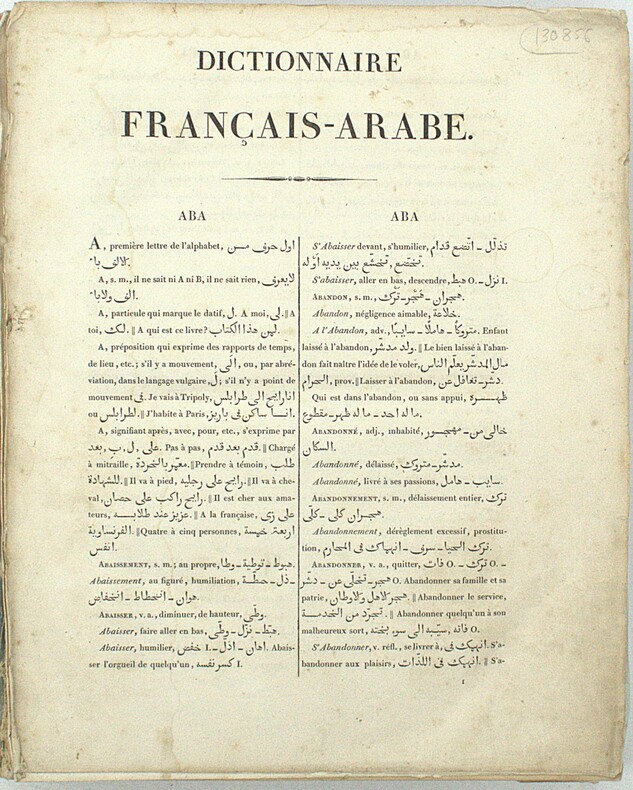
1828PHO-1950Paris, Firmin Didot, 1828, 2 tome en 1 volume in-4, VII-461pp.-435pp., sans couverture, manque les pages de titres (copie), quelques rousseurs.
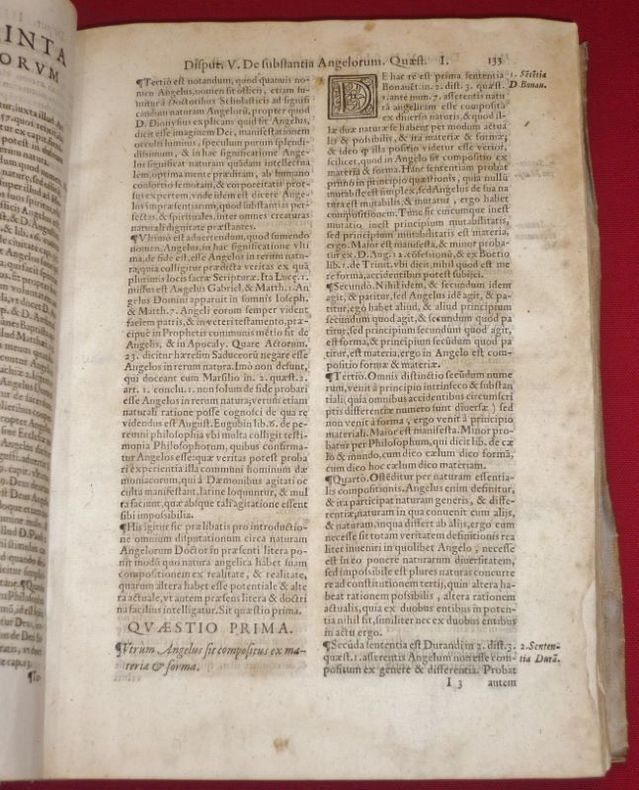
101568Salamanticae (Salamanque), Apud Ioannem & Andream Renaut Fratres, 1595, 1 volume 290x210 mm environ, 6 feuillets (titre avec large vignette, Licencia, as lectorem, Censurae), 718 pages, 12 feuillets (index, , reliure plein parchemin crème, impression sur 2 colonnes. Quelques déchirures et auréoles sur la couverture, des rousseurs rares, tampons sur la page de titre et p.9, ex-libris sur le premier contreplat, des mouillures marginales et pages brunies, des erreurs de pagination sans manque, petits défauts de marge par endroits, sinon bon état.
2312111829 à vue : 8.5 x 12.5 cm - cadre : 29.5 x 35 cm , cadre moderne en bois et stuc peint Petits manques au cadre
Acquaforte su lastra di zinco, misure: mm 103 x 190; foglio mm 375x 505. In basso a destra timbro a secco «Centenario Gio. Fattori 1925». Lastra conservata presso il Gabinetto Disegni e Stampe degli Uffizi. Esemplare appartenente alla tiratura Benaglia, eseguita in occasione del centenario dalla nascita di Giovanni Fattori nel 1925, quando Giovanni Malesci (nominato dal Maestro suo erede universale) decise di dare alle stampe 164 lastre (per un totale di 166 fogli, perchè due incise anche sul verso) tra le 178 ritrovate nello studio di Fattori stesso. Così furono eseguite 2 tirature da 50 esemplari presso l’editore Benaglia di Firenze, a seguito delle quali le matrici furono donate al Gabinetto dei Disegni e delle Stampe degli Uffizi. Bellissima impressione stampata su carta con filigrana "Corona merlata sulla scritta UMBRIA / ITALIA" e filigrana "Ovale con lettere CPO". Ampi margini intonsi, ottima conservazione. Pittore e incisore. Viene soprattutto ricordato come uno dei principali esponenti del movimento dei Macchiaioli e come artista di spicco nel panorama ottocentesco, nonché come prolifico incisore dal segno vivace e del tutto personale. Fattori era solito stampare da sé i suoi lavori utilizzando un piccolo torchio, esegue tirature irregolari spesso contraddistinte da una ricerca per gli effetti di chiaroscuro e da un uso sapiente delle velature. Gli esemplari di una stessa lastra sono perciò spesso differenti, più carichi e attenti agli effetti di luce nelle tirature curate dall’autore, meno caldi e più nitidi quelli fatti stampare presso la Calcografia. Il ritratto, i soggetti militari, testimonianza dell’interesse verso i fatti risorgimentali, gli animali della campagna e gli scorci di vita comune sono i soggetti che più lo impegnano. Bibliografia L. Servolini, 177 Acqueforti di Giovanni Fattori, Milano 1982, n. 87; 1983. Etching on zinc plate, size mm 103 x 190; sheet mm 375x 505. Bottom right stamp "Centenario Gio. Fattori 1925". The plate is kept at the Cabinet Drawings and Prints of the Uffizi. Example belonging to the Benaglia issue, made on the occasion of the centenary of the birth of Giovanni Fattori in 1925, when Giovanni Malesci (appointed by the Master as his universal heir) decided to print 164 plates (for a total of 166 sheets, because two of them were also engraved on the reverse) from among the 178 found in Fattori's studio. Thus, two issues of 50 copies were printed by the publisher Benaglia of Florence, and afterwards the plates were donated to the Gabinetto dei Disegni e delle Stampe of the Uffizi. Beautiful impression printed on paper with watermark "Crown embattled on the writing UMBRIA / ITALY" and watermark "Oval with letters CPO", wide margins uncut, mint. Literature L. Servolini, 177 Acqueforti di Giovanni Fattori, Milano 1982, n. 87; 1983.
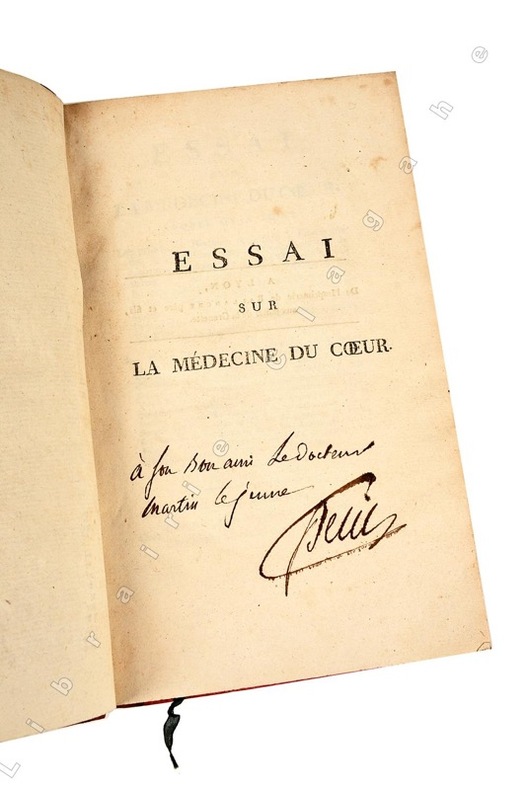
180621439Lyon, Garnier, Reymann (Imprimerie de Ballanche père et fils), 1806 ; in-8, demi-veau et petits coins de parchemin, dos à nerfs décoré de filets dorés, pièce de titre rouge, tranches jaspées (reliure de l’époque) ; XVI, 341, [3] pp.
wc980Saumur, S. Milon fils, libraire-éditeur Relié 2 forts volumes in-8, (19.5x28 cm), relié demi-chagrin bleu d'époque,dos à 4 nerfs titrés, XIII-593 [1]pp et 774-[1] pp, couverture illustrée conservée pour chaque volume, 52 gravures hors-texte, épidermures au tome 2, reliures frottées. Livraison a domicile (La Poste) ou en Mondial Relay sur simple demande.
18394350Nebst einem Bericht über das von Sr. Majestät dem Könige Ludwig von Bayern allergnädigts in der Art gegründete Institut zu Nürnberg... Zum besten der Anstalt herausgegeben. Mit 7 gefalt. lithogr. Tafeln. Nürnberg, im Verlag beim Verfasser, 1839. 8vo. (17,0 x 10,0 cm). X, 256 S. Bayrisch-blauer Pappband d. Zt. mit silbergeprägtem Rücken u. Deckeln sowie dreiseitigem Silberschnitt.
Telephone Talk was the glossy bimonthly publication of the British Columbia Telephone Company. It was written by employees for employees to present information of interest to those engaged in the plant, traffic, commercial, operating, accounting and other departments of the service. Each issue is replete with black and white photos and information on topics such as: company, industry and technological news, traffic levels, expansion plans, personnel announcements, publicity and social events, deaths, weddings, lists of exchanges, and more. As such, these issues serve as a vital preserve of rare and fascinating British Columbia history. This volume covers topics including: Photo of downton Nelson; Bird's-eye photo of Nelson from atop a mountain on north shore of west arm; Kootenay Feature 'The Romance of the 1890s - 8 pages of text and archival photos, including electric street cars in Nelson!; Table showing 'Exchanges in order of percent good toll calls; Cover advert. for Northern Electric Vacuum Cleaner!; Review of growth show steady expansion - 3 pages; Telephoning across Atlantic by AT&T Wireless continued for hours; When the Victoria and Esquimalt Telephone Company issued its own (one call) nickels; B.C. Industrial Review - statistics; Bar graph of # of phones operated from 1906 through 1923; the company's operator school; Issuing of monthly phone bills a work of magnitude - 4 page article with photos; photos of the halibut industry before 'the fish were scarcer in quantities and their habitats more scattered'; William Farrell- an appreciation of the former company president; 7 page article on B.C.'s deep sea fishing industry - great photos - halibut, herring, flounder; multiple photos from the Kootenays of snakes which have climbed up phone poles onto the wires!; photo of 25 year-old phone; Great full-page photo of the CIBC building at Hastings and Granville; 8 page article on the banks of vancouver with excellent photos; First interdepartmental football game; new power plant at Seymour office; A phone in B.C. for every 6 persons; Feature on Dams and the water-powers that turn the wheels of industry - photos of dams and various industries which use electricity, including the American Can factory and grain elevators; new power plant at Seymour office - illustrated; photos of productive farms and ideal homesites with super centerfold luxury Saanich home; Cover photo of U.S. President Harding in Stanley Park; Full-page photos of the U.S.S. Henderson entering the narrows and at dock with President Harding aboard; 13 page illustrated feature on the visit of President Harding - the first visit to Canada made by a President of the United States (President Harding died mere days later on August 2nd in San Francisco and this is reported as well); Photo of Crosland Bros. Farm in Duncan; 9 page illustrated feature on the seed growers of B.C.; photo of Duncan office under construction; Nice 8-page illustrated feature on Haney and area; photographing sound; Exploring Kootenay - Bill Skilling; 9 page illustrated feature on the Delta and Ladner district; Many miles of new long distance circuits; Improved inter-office trunk lines in Vancouver; and more. Half-leather binding. Average wear overall with the exception of the backstrip which is missing small chips and loose at back edge. Ink stamp of company executive E.P. LaBelle upon top edge else unmarked. Binding intact. Spine leaning moderately. Book
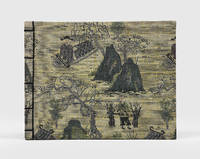
1930176834Chefoo: Self-help Department Women's Bible School Presbyterian Mission c.1930. A dainty album of handmade papercuts by Chinese students at the Ai Dao Women's Bible School attached to the American Presbyterian Mission in Chefoo. Throughout the 1930s the school produced various themed papercut collections to raise funds and comparison with other copies of the same title reveals that each was bound in brocade of a unique design. The collection tells the story of seven moral exemplars who all displayed obedience and respectfulness towards their elders even when faced with hardships. The story of Jiang Si is typical: "The mother of this boy demanded fish to eat every day and insisted that all their food be cooked in spring water. This kept the family hard pressed as the son had to waste half of each working day while fishing. His little wife had to make a long trip to get the spring water also. But they did this uncomplainingly till in appreciation of such devotion the fairies gave them a wonderful spring right by their door and in it each day they found two fish!" The education of women became a priority for social reformers in the wake of the May Fourth Movement and schools like Ai Dao were at the forefront of this revolution in education. Landscape octavo 181 x 234 mm ff. 8. Papercut showing a master and his student mounted on title page 7 similar papercuts with captioned glassine guards. Original decorative silk brocade black thread xianzhuang stitching edges untrimmed. Explanatory sheet loosely inserted as issued. Light rubbing explanatory sheet creased and nicked in one corner: a fine copy. unknown
162 pages plus advertisements. Includes the following four lectures: Theories of the Influence of Money on Prices; The Conditions of Equilibrium Between the Production of Consumers' Goods and the Production of Producers' Goods; The Working of the Price Mechanism in the Course of the Credit Cycle; The Case for and Against an 'Elastic' Currency. Appendix: Capital and Industrial fluctuations - a reply to criticism. No. 107 in the series of Monographs by writers connected with the London School of Economics and Political Science. Average wear. Prior owner's address and his Yale University address upon front endpaper else unmarked. Cohen 183, Cody & Ostrem B-2, Hutchinson 912. Book
2111902160200707Shahon N.A. Soft Cover. Fine. Volume: 1 Shahon paperback
2016125011<p>Book is brand new shrink-wrapped unread.</p> Abrams hardcover
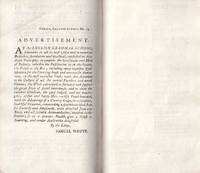
177532351AB1775. First Edition. Dublin Printed by R.Marchbank Cole's Alley Castle-Street 1775. Small-Octavo 11.2 cm wide x 17.2 cm high. Pagination: Whyte's "Modern Education." is bound to the rear of the Volume: 77 pages plus "Corrigenda" complete" / Sheridan's "Lecture on the Art of Reading - Part I" is bound at the start of the Volume: vii 1 213 pages plus 1 page "Advertisement" of Whyte's "English Grammar-School" in Dublin Grafton-Street No.75". Hardcover / Original full 18th century leather with gilt ornament and new spine-label in the style of the 18th century. In protective Mylar. Very good condition with only minor signs of wear. Extremely scarce title ! Samuel Whyte 1733-1811 Born on shipboard between Ireland and Liverpool; cousin of Francis Chamberlaine Sheridan raised by the Sheridan family in Dublin; opened his famous school at 75 Grafton St. in 1758; Whytes School became alma mater to R. B. Sheridan the Duke of Wellington and Thomas Moore - who eulogised him early with the lines hail heaven-taught votary of the Muses nine .; Donovan the Latin ussher at his school was an ardent patriot acc. Stephen Gwynn Thomas Moore 1905; ed. Shamrock or Hibernian Cresses 1772 containing poems of his protegés and later a selection of same as Poems on Various Occasions 1792; rev. 1795 heavily subscribed and twice reprinted containing verses by his pupils and others incl. Hall Hartson Thomas Moore and Thomas Dermody; provided guide to pronunciation for 1798 edition of Dr. Johnsons English Dictionary; also Miscellanea Nova Dublin 1800. ODNB DIW FDA OCIL Works: The Shamrock or Hibernian Cresses edited by Samuel Whyte Dublin 1772; Do. another edn. London: printed for S. Bladon No. 28 Pater-Noster Row MDCCLXXIII 1773 viii 272pp. 8°; Do. pirated 2nd edn. London: R. Snagg No. 29 Pater-Noster Row MDCCLXXIV 1774 2 v-viii 272pp.; and Do. reissued as A Collection of Poems the production of the kingdom of Ireland; selected from a collection pub. in that kingdom intituled The Shamrock; or Hibernian Cresses Dublin 1792-94 with add. material. ed. Poems on Various Subjects including The theatre a didactic essay; in the course of which are pointed out the rocks and shoals to which deluded adventurers are inevitably exposed. Ornamented with cuts and illustrated with notes original letters and curious incidental anecdotes 1792 printed with 705 subscriptions; Do. The second edition carefully revised and conducted through the press by Edward Athenry Whyte Dublin: printed by Robert Marchbank and sold by Exshaw Archer Jones Moore Rice Grueber Draper Mercier &c. and by the editor 1794 2 vii 1 vii 2 iv-x 1 x-lvi 2 257 7 257-343 1pp. ill. pls.: port. 8° bearing add. t.p. engraved Dublin printed for the editor Edward Athenry Whyte F.C.T.C.D. 1793; incls. list of subscribers the addenda to which are dated April 16th 1794; text continuous despite some mispagination; and Do. 3rd edn. 1796 see details; also electronic edition Eighteenth Century Reel 5001 No. 3. Miscellaneous Works: 1. ed. James Burgh The Art of Speaking: Containing I. An essay; in which are given rules for expressing properly the principal passions and humours . and II. Lessons taken from the antients and moderns . London : printed for T. Longman J. Buckland and W. Fenner in Pater-noster-Row; J. Waugh in Lombard-street; E. Dilly in the Poultry; and T. Field in Cheapside M.DCC.LXI. 1761 437319pp.; Do. 2nd edn. London 1768; Do. 4th edn. London: T. Longman & J. Buckland etc. 1775 373pp. 8°; Do. 5th edn. London 1781 8°; 6th edn. Dublin 1784 12°; Do. 7th Edn. London: printed for T. Longman and J. Buckland in Pater-noster-Row; T. Field in Leadenhall-street; and C. Dilly in the Poultry 1787 1792 373pp. see details; and Do. another edn.; so-called 7th Edn London 1792 copy held in Oxford UL. 2. English grammar-school Grafton Street Dublin Dublin c.1765 8pp.; 22 cm./8° Next to the preservation of life the education of our children is indisputably of the highest importance .; longer version of the text given in Samuel Whyte Shamrock 1772 as Thoughts on the prevailing system of school education. 3. Anonymously "Modern education; or An attempt to explain the chief causes and effects of our errours and deficiencies in that particular : with practical proposals for a reformation. In the course of which the female right to literature is asserted . and the trite witticisms usual on the question fairly stated and confuted ." Dublin: printed by R. Marchbank Coles-Alley Castle-Street MDCCLXXV. 1775 2 78pp. 12°/18 cm. 4. The Beauties of History . A new edition enlarged and carefully corrected. To which is prefixed an introductory tract on education . By Samuel Whyte Dublin: printed by R. Marchbank 1775 2 vol. 12° the author named on the titlepage of Vol. 2. 5. The theatre a didactic essay in the course of which are pointed out the rocks and shoals to which deluded adventurers are inevitably exposed by Samuel Whyte London: Printed for the editor Edward Athenry Whyte MDCCXCIII 1793 viii viii iii-x ix-xl 260 4 257-77 2 277-79 3 280-365 1 xli-lxxx 2 341-42 ill. 6pp. of pls.; port. 8°. Do. as The Theatre a didactic essay: including an idea of the character of Jane Shore as performed by a young lady in a private play &c. Dublin: printed by Zachariah Jackson for John Jones 1790 xiv 2 30 8pp. The last three leaves contain the prologue to The Sailor metamorphosed and Address &c. to Miss Whyte followed by a final advertisement leaf; ESTC T92974; also electronic copy Gale / Eighteenth Century Reel 17349 No.03. 6. An Introductory Essay on the Art of Reading and Speaking in Public Part First and Second; in which an Investigation of the Principles of Written Language is Attempted. By Samuel Whyte Principal of the English Grammar and Classic-School Dublin: printed by Robert Marchbank for the editor Edward-Athenry Whyte; where it may be had and of the booksellers 1800 vii 1 288pp. 8°. mentions Miscellanea Nova Dublin 1800 on t.p. 7. with Edward Athenry Whyte Miscellanea Nova; containing Amidst a Variety of Other Matters Curious and Interesting Remarks on Boswells Johnson . a critique on Bürgers Leonora . and an introductory essay on the art of reading and speaking in public In two parts. A new edition. By S. Whyte and his son E. - A. Whyte Dublin 1800 1801 iii-ix 280pp. 8°/20cm.; see note. Note: Samuel Johnson A Dictionary of English .; 8th edn.Dublin: printed by R. Marchbank No. 18 Chancery-Lane. 1798 - being first edition to incorporate a guide to pronunciation supplied by Samuel Whyte acc. to a note on a2v in TCD copy observed by Robin Alston. An earlier issue of this edition has Vol. 1 dated 1797 and gives Marchbanks address as Temple-Lane; texts are from same setting of type except that titlepage to Vol. 1 has been reset in this later issue. Subscribers list present a2; note at end states that as not enough subscriptions were received Marchbank had to relinquish a half share in the edition to William Gilbert and Jeremiah Sullivan. Issued in parts see nos. in signature lines: 26 in Vol.1 and 27 in Vol. 2; text in 3 columns; press figures present in Vol. 1; substantial amount of Anglo-Saxon type used in prelims. TCD Lib. cat. no. OLS L-5-186-187. Commentary: John OKeeffe Recollections London: Colburn 1826 Vol. I 304: . the children of Mr. Samuel Whytes school in Grafton Street getting up Cato at Crow Street theatre . succeeded to the delight of every feeling mind Quoted in P. Kavanagh Irish Theatre 1946 p.54. Note that OKeeffe goes on to describe how the master of a most eminent classical school in Dublin permitted and encouraged his boys to act the First Part of Shakespeares Henry IV. The schoolroom was fitted up as a theatre in very good style . &c. Quoted La Tourette Stockwell Dublin Theatres and Theatre Customs 1637-1820 NY: Benjamin Blom 1968 p.353. Thomas Moore: Moore wrote that Whyte stood at the head of his profession and that he owed to that exalted person all the instruction in English literature I have ever received Memoirs of Richard Brinsley Sheridan I p.3. Moore also speaks of Whytes theatricals Memoirs Journals and Correspondence 8 vols. 1853 Vol. I p.8. Further: In the direction of those private theatricals which were at that time so fashionable among the higher circles in Ireland he had always a leading share. Besides teaching and training young actors he took frequently a part in the dramatis personae himself and either the prologue or the epilogue were generally furnished by his Pen. Moore idem. Robert E. Ward Encycopedia of Irish Schools 1500-1800 Mellen Press 1995 remarks on Whyte as ideal teacher for Thomas Moore and author of elocution textbook The Art of Reading and Speaking in Public 1768 &c. who encouraged his students to write and recite poetry; Moores early verses were written in emulation of Whytes. Ward further quotes from Moores preface to the Poetical Works referring to the period when he was Whytes show scholar in this line Moore p.16 contributing an item called An Epilogue A Squeeze to St. Pauls to a performance of 1790 in Lady Borrowes private theatre. Ward. op. cit. p.154. Bibl. Hoover. H. Jordan Bolt Upright: The Life of Thomas Moore 2 vols. Salzburg: Salzburg Institut für Englische Sprache und Literatur 1975. Rolf Loeber & Magda Loeber A Guide to Irish Fiction 1650-1900 Dublin: Four Courts Press 2006 Intro.: Prose fiction in the English language started to replace ppoetry in the first part of the nineteenth century. Samuel Whyte anticipated this change in a poem published in Dublin in 1795: If though must write and wouldst they work disperse / Write novels sermons and any thing but verse. He was right about novels which became a popular genre of writing . p.liv. Quotations: Poetry or fiction If thou must write and wouldst thy works disperse Write novels sermons and any thing but verse. Poems on Various Subjects Dublin 1795 p.161; quoted in Rolf Loeber & Magda Loeber A Guide to Irish Fiction 1650-1900 Dublin: Four Courts Press 2006 p.lii. Source: ricorso.net hardcover
0153114347New. Brand new and still unused unknown
Acquaforte e bulino, 1650 circa, numerata 11 nell’angolo superiore sinistro. Questa tavola appartiene alla suite di Baccanalia descritte da Robert- Dusmenil (IV, 12-17) il cui frontespizio, inciso da Nicolas Cochin il Vecchio recita “Recueil de diverses Baccanales de Poussin, Chapperon, D’origny et autres”. Tutte le stampe della serie contengono gli indirizzi dei rispettivi editori ma non i nomi dei disegnatori e degli incisori, il che rende difficile attribuire definitivamente le opere ad artisti specifici. Le stampe furono probabilmente pubblicate per la prima volta dagli editori François Langlois, noto come 'il Ciartres' (1589 Chartres - 1647 Parigi), e Philippe Huart (attivo intorno al 1639-1648) e furono seguite da una seconda edizione pubblicata da Pierre Mariette. I disegni per le incisioni potrebbero provenire da Nicolas Chaperon o dallo stesso Dorigny. Sei tavole della suite, benchè prive della firma dell’autore, per ragioni stilistiche, sono riconducibili a Dorigny, autore di un’altra suite di Baccanalia, composta anch’essa da sei lastre, tutte recanti la sua firma (Robert-Dusmenil, IV, 6-11). Incentrate sulle attività di Bacco, Sileno e la loro allegra compagnia, queste due serie di affascinanti composizioni all'acquaforte dimostrano la ricchezza e la destrezza dei poteri di invenzione di Dorigny. In contrasto con la maggior parte delle sue prime interpretazioni delle opere di Vouet e altri, dove spesso usava il bulino per aumentare leggermente la sua vigorosa acquaforte (vedi cat. 102), alcune delle stampe successive di Dorigny, in particolare queste due suite di baccanali, si affidano ancora di più al bulino. Questa tendenza è parallela a un graduale cambiamento nel suo disegno, che rivela una crescente tendenza verso contorni pronunciati e figure più scultoree. Dopo essersi formato per cinque anni sotto Georges Lallemand a Parigi, Michel Dorigny si unisce presto alla cerchia del pittore Simon Vouet, con il quale stringe un'amicizia stretta e duratura. Dorigny divenne in seguito uno dei principali interpreti in campo tipografico dell'opera pittorica di Vouet e fu anche coinvolto come pittore in diversi progetti artistici del maestro. Le sue stampe comprendono opere su temi religiosi e mitologici così come stampe singole e serie su temi dionisiaci. Le suite probabilmente risalgono agli anni ’50 del XVII secolo quando, dopo la morte di Vouet. Bellissima prova, ricca di toni, impressa su carta vergata coeva, con margini, in ottimo stato di conservazione. Bibliografia Robert-Dusmenil, IV, p. 254, 14: Reed, French Prints from the Age of the Musketeers, p. 233. Etching and engraving, 1650 circa, numbered 11 at lower left. After training for five years under Georges Lallemand in Paris, Michel Dorigny soon joined the circle around the painter, Simon Vouet, with whom he struck up a close and lasting friendship. Dorigny subsequently became one of the main printmaking interpreters of Vouet’s painted oeuvre and was also involved as a painter in several of the master’s artistic projects. His prints include works on religious and mythological themes as well as individual prints and series on Dionysian topics. It is to this latter category that six etchings belong which Dorigny produced together with Nicolas Chaperon and other artists for the series entitled Recueil de diverses Bacchanales (Robert-Dumesnil, vol. IV, p. 254, nos. 12–17). All the prints in the series contain the addresses of the respective publishers but not the names of the designers and engravers, which makes it difficult to definitively ascribe the works to specific artists. The prints were probably first issued by the publishers François Langlois, known as ‘il Ciartres’ (1589 Chartres – 1647 Paris), and Philippe Huart (active around 1639–1648) and were followed by a second edition published by Pierre Mariette. The designs for the etchings may well stem from Nicolas Chaperon or from Dorigny himself. Another suite of six bacchanals (Robert – Dusmenil 6-11) bears on each plate the name of D’Origny as engraver. Both suites probably date to the 1650 when, after Vouet’s death, Dorigny became one of the most important decorative painters in Paris. Focused on the activities of Bacchus, Silenus, and their merry band of associates, these two etched sets of charming compositions demonstrate the wealth and dexterity of Dorigny's powers of invention. In contrast to most of his earlier interpretations of the works of Vouet and others, where he often used engraving to lightly augment his vigorous etching (see cat. 102), some of Dorigny's later prints, espe- cially these two suites of bacchanals, rely even more on engraving. This trend parallels a gradual shift in his draftsmanship, which reveals an increasing tendency towards pronounced contours and more sculptural figures. A fine impression, printed with tone on contemporary laid paper, with margins, very good condition. Bibliografia Robert-Dusmenil, IV, p. 254, 14: Reed, French Prints from the Age of the Musketeers, p. 233.
63502Wittenberg - Witteberg , Johannes CRATO, 1572 Reliure de l' poque, infolio, (30) 746 pages, index (56). Portrait (1pp) + planche depliantes. Latin Text.
2090502128700756Kodansha N.A. Soft Cover. Fine. Size: Number of books in axle box: 1 book Kodansha paperback
18732111902156202536Not Available 1873. Soft Cover. Fine. Number of books: 3 Not Available paperback
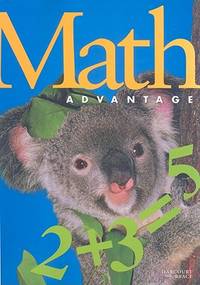
2004201081021095HARCOURT SCHOOL PUBLISHERS 2004-05-01. Spiral-bound. Good. good condition pages are clean and free of written markings except for name on title page or inside cover light wear to corners and edges has dust jacket where applicable ships same or next business day HARCOURT SCHOOL PUBLISHERS unknown
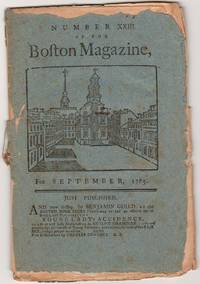
17853784<b><i>Founding of Harvard Medical School</i></b><br /><br /><i>The Boston Magazine</i> was published from October 1783 to December 1786 and was the first magazine to be published in Boston in the aftermath of the American Revolution. A major attraction of this issue is the presence of the front and rear printed wrappers although they are frayed and detached. The front wrapper features a large woodcut of the State House and surrounding buildings in Boston.The first 3 1/2 pages of the<i> Magazine</i> are Harvard's announcement from September 1783 of the creation of "the Medical Institution" now known as Harvard Medical School. This is followed by about two pages of an address "to the students in physic" i.e. the medical students reflecting upon the first two years of the medical school and outlining the requirements for a medical degree. About two pages are devoted to the sailing directions into and out of Plymouth Harbour. A brief news item in the "Monthly Chronology" reports a meeting to be held in October in Falmouth in the District of Maine on creating a "separate government" for the eastern counties -- a very early report on a separation that would not happen for another 35 years. Issues of <i>The Boston Magazine</i> in the original wrappers are extremely uncommon.<b>References</b>: Mott<i> A History of American Magazines 1741-1850</i>: Vol. I p. 28. Richardson <i>A History of Early American Magazines 1741-1789</i>: pp. 212-227. Lomazow <i>American Periodicals</i>: 15. <br /><br /><br /><b>Condition:</b> Signatures loose. Front and back wrappers present but frayed and detached; top 1/2" or so of front wrapper lacking. Occasional spotting. Interior pages very good. ICN 2933. Printed and published by Edmund Freeman
18508857Paris 1850. Pencil pen and wash drawing with numerous detailed measurements. A fascinating and beautiful drawing--or "rendu"--of an ancient Roman sarcophagus.<br/> <br/> A fine drawing from an architectural student at the Ecole des Beaux-Arts in Paris the most influential architectural school in existence during much of the 18th century the whole of the 19th century and the first part of the 20th century. 'Students were eligible for the Ecole if they were at least fifteen years old or under thirty. They began with the seconde classe in which they competed in the concours d'émulation. These alternated between an esquisse --a rough sketch for which up to twelve hours was allowed--and a rendu --the large-scale finished drawing for which one to three months were allowed.Two to four years were usually required for a student to accumulate enough credits to enter the première classe. The same system was followed again usually for two to three years after which the student should have accumulated enough credits to compete for the Grand Prix de Rome. The winner of the Grand Prix was entitled to five years study under the auspices of the French Academy in Rome. For each of his first three years he was required to submit an analytical study of an ancient monument. For his fourth year he had to submit a complete reconstruction of a major classical work. For his fifth year he was required to submit an original work designed to a program of his own invention. "This study of the sarcophagus of Lucius Cornelius Scipio Barbatus was part of an Ecole de Beaux Arts student's portfolio. The sarcophagus was one of many in the Scipio family tomb on the Via Appia just outside of Roma and it dates from c. 290 B.C. The obituary text reads English "Lucius Cornelius Scipio Barbatus son of Gnaeus a valiant gentleman and wise whose fine form matched his bravery very well was aedile consul and censor among you he conquered Taurasia and Cisauna in fact Samnium he overcame all the Lucanian lands and brought back hostages."<br/> <br/> Arthur Drexler The Architecture of the Ecole des Beaux-Arts. New York MoMA 1977. unknown