Rouault, George (1871 - Paris - 1958)Antiquariat.de

34 831 résultats
19351901251935. Kräftiger vollrandiger Druck auf festem Bütten mit Wasserzeichen. 31,7 x 22,5 cm. Papier: 44,2 x 33 cm.
Acquaforte e bulino, circa 1810/15. Il titolo dell’opera è tratto da una scrittura a mano in una prova di stampa dell’opera che Goya include nell’album dei “Disastri della guerra” che donò al suo amico Ceán Bermúdez e che ora è conservato al British Museum di Londra. Il disegno preparatorio dell’opera è conservato al Prado di Madrid. Esemplare nel terzo stato di quattro, inserito nella Gazette des Beaux-Arts (1867); si tratta della prima vera edizione dell’opera, conosciuta altrimenti solo attraverso due prove di stampa. "A seated prisoner raises his clasped hands, both fastened with chains, in a gesture of supplication. We cannot see his features since his face is hidden beneath his long, dark hair. His feet are fastened in large shackles. Both the chains and the shackles are of considerable size, underlining their importance in any interpretation of the print. In fact, just as the title of the etching shows, the painter is comparing the excessive zeal employed in preventing the prisoner from escaping to the brutality of the crime he is accused of. It is possible that the way in which the prisoner is secured in this work by Goya was habitual at the time, an idea which is supported by certain passages of Forensic Discourses (Discursos forenses), by Juan Meléndez Valdés (Ribera del Fresno, Badajoz, 1754- Montpellier, 1814), whose portrait Goya painted in 1797. This book, published in Madrid in 1821, speaks of the cumbersome chains and shackles used to hold one María Vicente, put to death on the 23rd April 1798. Goya could well have known of her story: "But it is said that Doña María Vicente must have been treated, as the noblewoman that she is, in a very different manner, and not locked in shackles; and even thus fettered it was the judge's responsibility to examine their state and quality beforehand, to order them put on correctly". The painter has made extensive use of the etching technique here, building up the background with short, horizontal lines, whilst leaving large areas on the prisoner's clothing untouched and white, underlining his innocence. This etching would have been made at the same time as two others: The custody of a prisoner does not call for torture and If he is guilty, let him die quickly. In these images, Goya openly expresses his repulsion of the way in which prisoners were treated, as well as his opposition to the death penalty, echoing the ideas of Cesare Beccaria (Milan, 1738- Milan, 1794). In the pages of the work entitled Dei deliti e delle pene, published between 1763 and 1764, the Milanese talks of the need to modify the penal system, to lessen the severity of punishments and to seek out mechanisms for preventing crime. It is possible that these etchings also contributed to the debate on the abolition of torture which was being discussed in the Courts of Cádiz. Goya reiterates this same topic in some of the prints in his Disasters of War series, such as no. 15, And it can't be helped, no. 31, That's tough!, no. 32, Why?, no. 34, On account of a knife, no. 35, One can't tell why and no. 36, Not in this case either. Despite the gritty subject matter, the figure depicted in this etching possesses great dignity, recalling some earlier precedents which Goya may have been familiar with. One of these is an anonymous print based on Interior of a Prison (16th century, Museum of Fine Arts, Boston), by Giulio Romano (Rome, 1499-Mantua, 1596). When he was making this print, Goya may also have had in mind the disturbing, gloomy ambience of the prisons of Giambattista Piranesi (Mogliano Veneto, Treviso, 1720- Roma, 1778)." (cfr. https://fundaciongoyaenaragon.es/eng/obra/tan-barbara-la-seguridad-como-el-delito/712). Tomás Harris ritiene che la matrice di rame si trovi in una collezione privata di Parigi. Bibliografia Harris 26 III/IV; Delteil 31. Etching and engraving, circa 1810/15. The title of this work is taken from the handwritten title of a state proof that Goya included in the album of his Disasters of War prints which he gave to his friend Ceán Bermúdez and which is now in the British Museum, London. The preparatory drawing for this etching is in the Prado Museum, Madrid. Example of the third state of four, form the Gazette des Beaux-Arts (1867), firts edition of this work, before known only for proof states. "A seated prisoner raises his clasped hands, both fastened with chains, in a gesture of supplication. We cannot see his features since his face is hidden beneath his long, dark hair. His feet are fastened in large shackles. Both the chains and the shackles are of considerable size, underlining their importance in any interpretation of the print. In fact, just as the title of the etching shows, the painter is comparing the excessive zeal employed in preventing the prisoner from escaping to the brutality of the crime he is accused of. It is possible that the way in which the prisoner is secured in this work by Goya was habitual at the time, an idea which is supported by certain passages of Forensic Discourses (Discursos forenses), by Juan Meléndez Valdés (Ribera del Fresno, Badajoz, 1754- Montpellier, 1814), whose portrait Goya painted in 1797. This book, published in Madrid in 1821, speaks of the cumbersome chains and shackles used to hold one María Vicente, put to death on the 23rd April 1798. Goya could well have known of her story: "But it is said that Doña María Vicente must have been treated, as the noblewoman that she is, in a very different manner, and not locked in shackles; and even thus fettered it was the judge's responsibility to examine their state and quality beforehand, to order them put on correctly". The painter has made extensive use of the etching technique here, building up the background with short, horizontal lines, whilst leaving large areas on the prisoner's clothing untouched and white, underlining his innocence. This etching would have been made at the same time as two others: The custody of a prisoner does not call for torture and If he is guilty, let him die quickly. In these images, Goya openly expresses his repulsion of the way in which prisoners were treated, as well as his opposition to the death penalty, echoing the ideas of Cesare Beccaria (Milan, 1738- Milan, 1794). In the pages of the work entitled Dei deliti e delle pene, published between 1763 and 1764, the Milanese talks of the need to modify the penal system, to lessen the severity of punishments and to seek out mechanisms for preventing crime. It is possible that these etchings also contributed to the debate on the abolition of torture which was being discussed in the Courts of Cádiz. Goya reiterates this same topic in some of the prints in his Disasters of War series, such as no. 15, And it can't be helped, no. 31, That's tough!, no. 32, Why?, no. 34, On account of a knife, no. 35, One can't tell why and no. 36, Not in this case either. Despite the gritty subject matter, the figure depicted in this etching possesses great dignity, recalling some earlier precedents which Goya may have been familiar with. One of these is an anonymous print based on Interior of a Prison (16th century, Museum of Fine Arts, Boston), by Giulio Romano (Rome, 1499-Mantua, 1596). When he was making this print, Goya may also have had in mind the disturbing, gloomy ambience of the prisons of Giambattista Piranesi (Mogliano Veneto, Treviso, 1720- Roma, 1778)." (cf. https://fundaciongoyaenaragon.es/eng/obra/tan-barbara-la-seguridad-como-el-delito/712). Tomás Harris believes that the plate for this etching may be in a private collection in Paris. Literature Harris 26 III/IV; Delteil 31. Harris 26, III/IV; Delteil 31.
Xilografia a chiaroscuro, 1745, in basso al centro la dedita dello stampatore: Illustrissimo, & Erudito Viro CAROLO FREDERICK Armigero, liberalium Artium Patrono, / Pauli Cagliari praeclarum hoc Opus in Ligno coelatum, in grati animi argumentum humiliter D. D. D. / J: B: Jackson”. Da un dipinto di Paolo VeroneseBell’esemplare, impresso su carta vergata coeva, completo dei margini bianchi, in ottimo stato di conservazione.La tavola è una della 24 dell’opera dal titolo “Titiani Vecelli, Pauli Caliarii, Jacobi Robusti, et Jacobi de Ponte opera selectiora” edita da J. B. Jackson nel 1745.La stampa è tratta dal dipinto di Paolo Caliari, detto il Veronese (1528-1588) per la cassa dell’organo della chiesa di S. Sebastiano, a Venezia, realizzato tra il 1558 e il 1560: le portelle dell’organo, chiuse, mostrano la “Presentazione di Gesù al Tempio”, mentre sul retro, visibile quando lo strumento è in uso, appare la scena della “Probatica piscina”. Chiaroscuro woodcut, 1745. inscribed lower center: “Illustrissimo, & Erudito Viro CAROLO FREDERICK Armigero, liberalium Artium Patrono, / Pauli Cagliari praeclarum hoc Opus in Ligno coelatum, in grati animi argumentum humiliter D. D. D. / J: B: Jackson”. After Paolo Veronese.Good example, printed on contemporary laid paper, white margins, in very good condition.Published as 1 of 24 prints and originally issued in portfolio with title: “Titiani Vecelli, Pauli Caliarii, JacobiRobusti, et Jacobi de Ponte opera selectiora”The plate is after an organ shutter of ca. 1588 painted by Paolo Veronese (1528-1588) for the Church of San Sebastiano, Venice. In 1558, Paolo designed the organ and painted its external shutters with the Presentation of Christ and the internal ones with a Pool of Bethesda (1560). The Presentation represents the bringing of the infant Jesus by Mary and Joseph to the Temple in Jerusalem to be 'consecrated to the Lord.' The Jewish rite of the 'purification' of the mother was celebrated simultaneously and involved the sacrifice of doves or pigeons and incorporated a procession of candles, both of which are portrayed by Veronese. The painted and actual architecture of Paolo's organ in San Sebastiano are coordinated so that, whether the shutters are open or closed, painted architecture continues the organ’s exterior architecture in both perspective and vocabulary. Kainen, Jacob. John Baptist Jackson : 18th-century master of the color woodcut, 1962
ANAIS-1556482574Amer Hospital Pub. hardcover. Good. 8.8x0.8x11. Buy with confidence. Excellent Customer Service & Return policy. Amer Hospital Pub hardcover
ANAIS-1880366185Texas School for the Blind &. other. Good. 1.8x09x2.1. Buy with confidence. Excellent Customer Service & Return policy. Texas School for the Blind & unknown
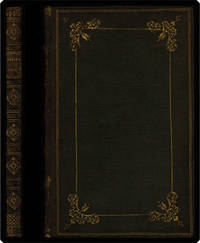
181439223Londini: Ex officinâ Johannis Nichols et Sociorum 1814. Small 8vo 18.5cm 7.25". Frontis. port. 1 f. 62 pp. <br><br>John Colet 14671519 Dean of St. Paul's seems in 1508 to have begun to think about "applying his patrimony to education by the reconstitution of St Paul's Cathedral school in new premises reflecting a preoccupation with education as prerequisite for spiritual regeneration" DNB online. He "opened the doors to St Pauls School in 1509 to educate boys 'from all nacions and countres indifferently' St. Paul's School website.<br>Â Â Â Â Elegantly bound and handsomely printed this is the first edition of this collection for use of the boys of the school and is comprised of "Preces quotidianae ut celebrantur in scholâ Paulina" and "Catechismus cum ordine Confirmationis." The prayers were first published in 1642 and are in Latin while the catechism is in Greek on versos of leaves and Latin opposite on rectos. The engraved frontispiece portrait of Colet is by John Taylor Wedgwood 17831856 a cousin of Josiah Wedgwood.<br>Â Â Â Â Provenance: Late 19th-century bookplate of the Rev. George H. Culshaw; most recently in the library of American collector Albert A. Howard small booklabel "AHA" at rear.<br>Â Â Â Â Binding: Contemporary green straight-grain goat spine gilt extra; both boards with a gilt double-rule outer border and an inner center frame of single gilt rule with large gilt corner devices. Board edges with a gilt roll; narrow turn-ins with a different gilt roll. All edges gilt.<br>Â Â Â Â Searches of WorldCat locate only six U.S. libraries IU NjNbT PPiT IEN NNC NNG reporting ownership. Binding as above; spine sunned to olive front cover with scuff sometime well disguised boards showing signs of having been bent some time ago. Bookplate and label as above. A very few light spots of foxing pages overall clean and crisp. Very good condition. => A very attractive book. Ex officinâ Johannis Nichols et Sociorum hardcover books
194186279Aberdeen Proving Ground MD: The Ordnance School 1941. Presumed First Edition First printing thus. Four-hole punched and held together with two two pronged clips. Good. Format is approximately 8 inches by 13 inches four-hole punched with two two pronged clips holding the text together. 3iii-vii 250 pages. Three pages of errata sheets. 18 appendices. 50 Figures. Printed single-sided only. Cover worn torn and soiled with some page wear and soiling noted. Pencil marks and notations on cover and some pages. The major portion of this text appears to be an early version of Field Manual No. 9-10 The Ordnance Company -Medium Maintenance; The Ordnance Battalion--Maintenance. It was apparently expected to be issued in July 1941 the the date of issue is blank. FM 9-10 Ordnance Field Manual Ordnance Field Maintenance was published on April 20 1942. There are substantial differences between this text and what was officially published as FM 9-10. This publication was intended solely for use as an Ordnance School text for instruction purposes only. It was not intended for general distribution to agencies or personnel outside the Ordnance training Center at Aberdeen Proving ground Md. It is reasonable to conclude that this instructional text was also a draft text for what would eventually become FM 9-10 and that the experience gained in its use at The Ordnance School contributed to the development of material changes. As such then this early version not labeled as a draft provides a significant and perhaps unique insight into the development of Ordnance doctrine training and practice at the Company and Battalion level at the time when the United States entered the Second World War. One page on Machine Gun Repairs to the M9197A1 laid in. The purpose of this manual was to present a coordinated and complete picture of the problem of ordnance field maintenance together with a logical solution of that problem. While this manual will be found to be helpful as a reference for operation of the maintenance organizations in garrison it was intended primarily as a guide for use in field operations. There are included in the various parts of this manual a discussion of a typical ordnance field shop and a method of conducting operations; a discussion of details pertaining to a typical maintenance company; and discussions of particular problems in ordnance field maintenance as they are encountered and solved. Except where obviously necessary in the interests of uniformity throughout all ordnance service it is not intended that this manual shall impose unnecessary restrictions on the imagination and initiative of ordnance personnel responsible for the operation of the units covered by this manual. On the contrary it is intended that the thoughts and imagination of such personnel will be stimulated to evolve more satisfactory solutions to the problems of ordnance field service. The organization of ordnance maintenance in the field army is based on the principle of progressive increases in available maintenance facilities from front to rear. The equipment and personnel assigned to each echelon are designed to carry the normal load of that echelon plus a certain peak load of the subordinate echelons. In Part I. The Ordnance Company - Medium Maintenance there are Chapters on General; Organization and Equipment; Operations; Duties of Individuals; and Administrative Details. Part II. The Ordnance Battalion Maintenance has Chapters on General and Operations. A list of appendices follow and are in turn followed by the list of Figures. There are specific discussions of ordnance weapons and vehicles and materiel. There is significant discussion of the inspection of ordnance materiel especially ammunition. The Ordnance School unknown
185072325ca 1850. Chinese rice paper. Size: 170 x 280 mm Framed size: 315 x 425 mm Good condition. unknown
20002'Reprinted and circulated amongst the Governors by Order of the General Court 21st July 1870.' Printed by Winter & Bailey 24 Chancery Lane London. 7 69pp. 4to. In grey printed paper wraps with brown faux-leather spine. Aged and worn. In six parts: 'Preliminary'; 'Governing Body'; 'Endowments'; 'Application of Endowments'; 'Regulations relating to Schools'; and 'Final' with pp.47-69 carrying twelve 'Schedules' ranging from 'I. - Metropolitan Parishes Districts and Precincts affected by the abrogation of Trusts for the admission of Children therefrom' to 'XII.- Endowments for Special Prizes'. No other copy traced either on OCLC WorldCat or on COPAC. 'Reprinted and circulated amongst the Governors, by Order of the General Court, 21st July, 1870.' Printed by Winter & Bailey, 24 paperback
1926HALL508920Hardback. 1926. Large 8vo Chicago 1926-1932. 12 vols. Very good copies. . hardcover
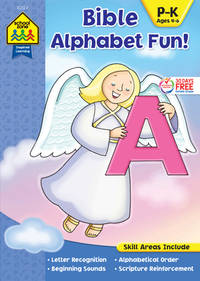
ANAIS-088743794XSchool Zone Publishing. paperback. Good. 0x0x0. Buy with confidence. Excellent Customer Service & Return policy. School Zone Publishing paperback
19342092902137200813Kawaideshobo 1934. Soft Cover. Fine. Number of books: 1 Kawaideshobo paperback
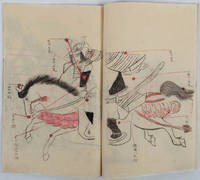
219848Japan. Later Edo. Colour manuscript illustrations presented in a handmade slim volume with paper ties. 14 double folded leaves 27 x 17.5cm. A prior owner's seal upper cover. A good copy of an attractive manuscript. This richly illustrated manuscript on shooting hand-copied in colour was most likely produced in the late Edo period probably in the 1850s. The original material was transmitted between 1703 and 1797 through several named individuals whose names appear on the final two pages. <br><br><br>The manuscript is chiefly concerned with where to aim a gun when hunting. A range of birds is shown both on the ground and in flight with the recommended points of aim marked by red circles. These markings shift according to whether the birds or animals are stationary or in motion. Three double-page illustrations depict fighting samurai and shooting targets. Particularly interesting is the final section which deals with shooting at stationary targets including a fan a branch and even a cloud. . unknown
19322091502135412446Not Available 1932. Soft Cover. Fine. Volume: 17 Not Available paperback
19062111902160200727Toyuridono Castle General High School 1906. Soft Cover. Fine. Volume: 1 Toyuridono Castle General High School paperback
19022110502151108586Hanshichi Yoshikawa 1902. Soft Cover. Fine. Number of books: 5 Hanshichi Yoshikawa paperback
19242091202133200111book series 1924. Soft Cover. Fine. Volume: 1 book series paperback
2091202133212450Maekawa zenbee N.A. Soft Cover. Fine. Number of books: 10 books in total Maekawa zenbee paperback
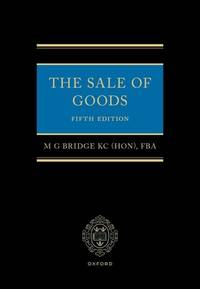
2026x-0198959095Oxford University Press 2026. Hardcover. New. 5th edition. 954 pages. 6.89x2.22x9.92 inches. Oxford University Press hardcover
188021937Librarie De L'Art 1880 Introduction de J. Comyns Carr. London, Librarie De L'Art, (c. 1880), in-folio, vélin à la Bradel biseauté estampé à froid d'un décor aux amours à l'or fin.
46847Paris.Bruxelles.1785.In-4 en reliure d'époque.428 p.21 planches. Veau moucheté.Tranches rouges.Mors bas droit ouvert.Coiffes absentes.Brunissures in-texte.Planches très fraiches.
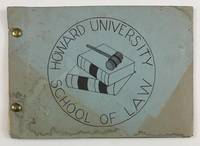
19593137Washington D.C. 1959. Good plus. 19pp. mimeographed on rectos only. Original printed blue wrappers brad bound. Covers stained and worn. Mild uneven toning to a few leaves. A seemingly unrecorded directory for the Howard University School of Law published by the Student Bar Association in 1959. This humble handmade directory includes a short acknowledgement followed by listings of the faculty administrative staff Student Bar Association the Howard Law Journal the National Moot Court Team the Legal Assistance Program the "Law Wives" the class officers and finally the "Student Directory 1959-1960" arranged alphabetically. The directory lists the name expected year of graduation address phone number if any and undergraduate institution for each of the seventy-nine law students attending Howard at the time. Among the more notable names in the directory is Vernon Jordan Jr. who was then in his final year at Howard Law School. No listings for this ephemeral and homespun African American law school directory. unknown
194312163Harrisburg PA: Army Air Forces Intelligence School 1943. Very good. Quarto unpaginated about 100pp. illustrated with 83 original tipped-in photographs and an envelope containing 13 more loose and unidentified images laid-in. Housed in the original cardstock clasped folder. Many of the pages have a bottom fold which does not fully open without the potential to tear though all of the contents can be read with some effort. Some pages a touch foxed and a few prints are loosened from their pages and laid-in in the right place. Overall in very good condition. A well-organized and illustrated military textbook for a wartime class on aircraft identification which was probably taught in many places but organized at the US Army Air Force base in Harrisburg. An introductory sheet in perfect bureaucratic fashion placed near the end of this textbook states: "The course in Aircraft Identification consists of ten hours spaced over a period of six weeks." It goes on to list a series of 42 aircraft--American German Italian French and Japanese--which will be easily identified by all successful students by the end of the course. <br /> <br /> The first few dozen pages consist of detailed folding charts with data on dimensions payloads etc. Another section of about 12pp. gives a background on various best practices when trying to identify aircraft as well as some of the principles behind the course. <br /> <br /> The course utilized the "WEFT" system wings engine fuselage tail to help individuals soldiers intelligence agents etc. identify planes in the field from various angles at different heights and in certain contexts. Most of the pages dedicated to individual planes contain two photographs from different angles and with different shading trying to mimic real battlefield conditions under which someone might try to identify an aircraft.<br /> <br /> An unusually engaging wartime military textbook appealing to photography aviation and military collectors alike. Not located in OCLC thus notably absent in the holdings of the Army War College Library which retains most technical manuals and course books. Army Air Forces Intelligence School unknown
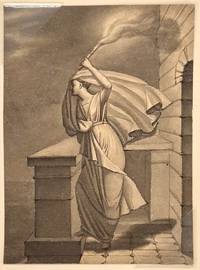
2503Pen and ink and wash on cream wove paper 5 x 3 3/4 inches 128 x 95mm the full sheet. In excellent condition with minor toning and some light scattered soiling on the verso. Hero is shown holding a torch to guide her lover Leander as he swims across the strait from Abydos each night to be with her. The dramatic billowing of her cloak and the flickering flame of the torch suggest the "stormy night" mentioned in the myth. According to the legend the wind eventually blew out her light causing Leander to lose his way and drown after which Hero threw herself from the tower in grief. unknown
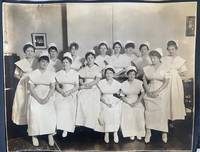
1915174731915. Nursing student photograph album circa 1915 documenting the training social life and professional formation of young women entering the medical field during the First World War with direct relevance to the expansion of nursing education public health campaigns and women's participation in wartime medical systems in the United States. The album centers on a cohort of fourteen student nurses shown in clinical settings including operating rooms as well as in informal group settings providing visual evidence of institutional training environments and peer networks within early twentieth-century nursing programs. One photograph prominently features the group posed behind a sign reading "Smallpox!" pointing to the ongoing presence of infectious disease and the role of nurses in public health response during a period of recurring outbreaks that shaped both medical training and recruitment into the profession. Additional photographs extend the documentary scope to include soldiers early aviation imagery and domestic scenes situating the nurses within the broader social and wartime context of the United States during the 1910s.<br /> <br /> Photograph album containing 184 silver gelatin photographs taken across multiple locations in the United States including Michigan Texas and mountainous regions of the American West with images ranging from approximately 1.5 x 1 inches to 11 x 8 inches most measuring around 4 x 2.5 inches. The photographs are mounted to black album pages and depict nursing instruction clinical practice and group portraiture alongside scenes of military presence and early aviation including images taken from a World War I-era biplane above the clouds suggesting personal connections between the compiler and an early aviator. The geographic and thematic range of the album reflects patterns of mobility training and social connection among young Americans during the wartime period.<br /> <br /> 184 photographs mounted on black pages in an album measuring approximately 11.5 x 8.5 inches with textured black covers and tight binding. Minor wear consistent with use; overall very good condition. A cohesive visual record of women's medical education public health awareness and wartime-era social networks in the United States during the First World War. unknown