34 831 résultats
20222081502111906222Chinese book office 2022. Soft Cover. Fine. The book is in fine condition. Chinese book office paperback
Very Good Turkish, Ottoman (1500-1928) Contemporary red cloth bdg. 16mo. (15 x 11 cm). Text in Ottoman script; some terminological words in French in text. 80 p. First, only, and early Turkish Edition of this extremely rare tractate on Jesuit instructions. There's a description on verso of imprint page like: "Memanat yoktur; J. B. Kosta J. T.'den 23 Kanun-u Sâni 1926'da tâb olunmustur"; means it's printed from [original title] 'J. B. Kosta J. T.' in 1926, January 23. 'J. B.' should be Jerusalem Bible. This note is written by A. Rota according to the descriptive continuing text, and it goes on as 'Hasmetlü Papa hazretleri Dersaadet vekili, 25 Mart 1927' means 'The Pope the Great, his majesty, Dersaadet (Constantinople) delegate; 1927, 25 March'. This tractate was translated from the early Jesuit Christian instructions according to the Paris bishopric during the 17th century. It's printed by Jesuit Monks' Church in Beyoglu, Ayazpasa, in Constantinople. Just one copy in Bogaziçi University Library in OCLC: 949501963. Not in Özege. Extremely rare book on Jesuit literature in Turkey.
196827403Cleveland: Ghost Press 1968. First edition. Paperback. Very Good . 4to. STapled mimeograph typescript pages with silkscreen cover by Kryss. One of only 255 "vanishing" copies published by the Ghost Press in Cleveland. Book contains poems and silkscreens by the four contributors. A tribute to Rev. John R. Scott who was sentenced in 1968 to two years in the Cuyahoga County Ohio Workhouse on charges of contributing to the delinquency of a minor. Light staining to lower edge of front cover else an exceptionally nice example of this Cleveland poetry rarity. Ghost Press paperback books
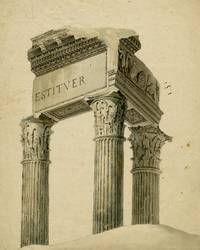
180010251800. Ink and wash in black ink with pen in black ink on watermarked C & I Honig cream laid paper 14 7/8 x 12 1/4 inches 378 x 311 mm the full sheet. In very good condition with some minor areas of light brown spotting in the right-center sheet margin. An excellent drawing with fine detail. The ruins of the Temple of Vespasian and Titus are located in the Roman Forum in Rome. The temple is a marble ruin that honors the deified emperors Vespasian and Titus. Located near the Temple of Saturn all that remain standing are three Corinthian columns that formed part of the colonnade. The temple was also dedicated to the son of Vespasiano Titus. Construction started on this temple in 79 AD. unknown
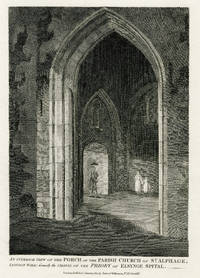
1815952London: Robert Wilkinson 1815. Etching and engraving on wove paper with an "1809" watermark 13 1/2 x 10 inches 342 x 252 mm full margins. In very good condition with some age related toning and light spots of discoloration in the lower sheet quadrant. Damaged in the Blitz and largely demolished in the 1960s what remains of St Mary Elsing includes these doorways which still stand looking back towards London Wall. The ruins include tall arches which once formed the base of the tower. There is also a low wall with an arched recess which may have been used to house a tomb. Robert Wilkinson unknown
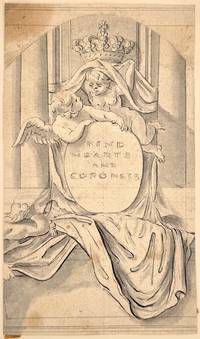
175025101750. Graphite ink and wash on cream laid paper with an extensive yet partial and illegible series of alphabetic watermarks. 7 1/4 x 4 1/2 185 x 115 mm the full sheet. With an contemporary support adhered to the top sheet edge. 19th century text in graphite added to the shield held by the putti. The image has been cropped to exclude the top portion of a recumbent figure whose legs are covered by a shroud and whose left hand remains visible in the left-center image area propped upon an pillow holding a heart. While this drawing appears to have been completed in the mid-18th century given the Neoclassical style media and paper the text "Kind Hearts and Coronets" comes from the poem Lady Clara Vere de Vere by Alfred Lord Tennyson. The poem was pubished in 1842 indicating that the pencil inscription in the image was added later. unknown
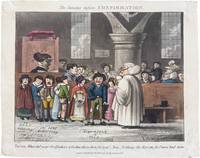
18501887London: Thomas McLean 1850. Lithograph and engraving with hand coloring in watercolor on fibrous cream wove paper 8 13/16 x 11 1/8 inches 223 x 281 mm with unevenly trimmed wide margins. In good condition with minor toning and one vertical tear at the lower-center sheet edge which extends approximately 1/8 inch into the image area. Four circular areas of adhesive on the verso at each of the four corners on the verso from a former mount. Thomas McLean unknown
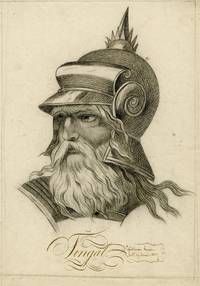
183310261833. Black chalk and graphite on lightweight cream wove paper 16 1/8 x 11 1/4 inches 410 x 286 mm the full sheet. Signed titled and dated in sepia ink in the lower-center sheet area. With horizontal folds approximately 1-inch from the sheet edge at each of the four sheets. The drawing appears to have been folded at the sheet edges to fit into a frame. "Inscribed Guillaume hameau del. 29 Janvier 1883." Finn mac Cumail or mac Umaill often anglicized Finn McCool or MacCool is a hero in Irish mythology as well as in later Scottish and Manx folklore. He is the leader of the Fianna bands of young roving hunter-warriors as well as being a seer and poet. He is said to have a magic thumb that bestows him with great wisdom. He is often depicted hunting with his hounds Bran and Sceólang and fighting with his spear and sword. Fionn MacCumhail was transformed into the character "Fingal" in James Macpherson's poem cycle Ossian 1760 which Macpherson claimed was translated out of discovered Ossianic poetry written in the Scottish Gaelic language. <br /> <br /> Fionn MacCumhail features heavily in modern Irish literature. Most notably he makes several appearances in James Joyce's Finnegans Wake 1939 and some have posited that the title taken from the street ballad "Finnegan's Wake" may also be a blend of "Finn again is awake" referring to his eventual awakening to defend Ireland. unknown
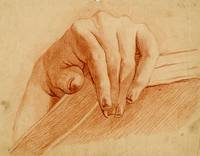
170013741700. Red chalk on cream laid paper 7 1/4 x 9 3/8 inches 182 x 236 mm the full sheet. In very good condition with minor toning and two small nicks in the top sheet edge. Some modern notations in pencil on the verso as well as one early inscription with the numeral "10" ink in the top left corner verso. A beautiful study of a dainty hand. unknown
19852110502150908384Not Available 1985. Soft Cover. Fine. Number of books: 9 Not Available paperback
Sm. folio, First Edition, with frontispiece (original tissue guard present), title-vignette and numerous illustrations (a number full-page) in the text, endpapers very lightly spotted; elegantly bound in green full morocco, sides with multiple frame border stopped at corners by Eton lilies and rosettes, and enclosing title and decorative cartouche reprising Eton lilies and rosettes all in gilt, back gilt extra, gilt edges, gilt doublures, marbled endpapers heightened in gilt, a splendid, crisp copy in themed Eton binding. A PRESENTATION COPY FROM AINGER TO HIS PUPIL ANGUS VALDEMAR HAMBRO WITH THE FORMER'S SIGNED HOLOGRAPH INSCRIPTION ON FRONT FREE ENDPAPER. Ainger (1841-1919) taught at Eton until his retirement in 1901. Hambro (1883-1957) was educated at Eton, elected twice as MP for Dorset and served as High Sheriff of the county. This copy was presented at Election 1900.
19822091502133511318Japan Editor School Publishing Department 1982. Soft Cover. Fine. Number of books: 1 Japan Editor School Publishing Department paperback
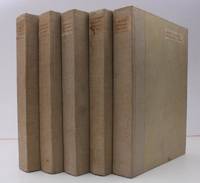
181936358For Harrow School by Philip Lee Warner 1918-1920. 5 vols. of 6 roy. 8vo. First Edition on laid paper with numerous mounted portraits toned in sepia; ivory boards oatmeal holland backs upper boards and backstrips with printed paper labels gilt tops uncut blue silk markers boards mildly dust-soiled else a very good bright clean crisp run. One of the finest and most comprehensive of the public school WWI rolls of honour. The run comprises Vol. I: 23 August 1914 to 20 March 1915; Vol. II: 31 March 1915 to 11 September 1915; Vol. III: 13 September 1915 to 3 July 1916; 5 July 1916 to 11 April 1917; Vol. V: 11 April 1917 to 10 April 1918. A crisp run tragically wanting the sixth and final volume. SCARCE IN THIS CONDITION. For Harrow School by Philip Lee Warner, hardcover
5 vols., [of 6], roy. 8vo., First Edition, on laid paper, with numerous mounted portraits toned in sepia; ivory boards, oatmeal holland backs, upper boards and backstrips with printed paper labels, gilt tops, uncut, blue silk markers, boards mildly dust-soiled else a very good, bright, clean, crisp run. One of the finest and most comprehensive of the public school WWI rolls of honour. The run comprises Vol. I: 23 August 1914 to 20 March 1915; Vol. II: 31 March 1915 to 11 September 1915; Vol. III: 13 September 1915 to 3 July 1916; 5 July 1916 to 11 April 1917; Vol. V: 11 April 1917 to 10 April 1918. A crisp run tragically wanting the sixth and final volume. SCARCE IN THIS CONDITION.
First edition. Original paper wrappers in protective cardboard binding. 8vo. 49 pages. 24cm. In Yiddish. Title translates to Sixteen: A Collection of End Compositions of Sixteen Graduate of the Shalom Aleichem Elementary School in Chicago. Rare collection of writings from elementary-age boys and girls from secular-Yiddish Chicago schools but published in Warsaw; this copy signed by all but one of the young authors on their essays! The young Chicago writers include: Bashe Slabadkin, Nate Shechter, Mendel Zilberman, Hanah Kamski, Menuche Ben-Ami, Dabe Izrael, Yitsak Rozenfeld, Shulamit Malkin, Tsiril Gordin, Khayke Nayman, Sarah Veksler, Zalman Imianatof, Blume Miler, Chaim Miler, Motl Rozenblum, and Chanah Gekhtler. Yiddish schools in America were always supplemental schools, meeting several times a week after public schools. This was a major difference between the Yiddish schools in Poland which were, if chosen by the parents, the primary day school of the child, and the Yiddish schools in America which never developed a single Yiddish day school. On the political spectrum of the Yiddish cultural world in the 1920s and 1930s, the Sholem Aleichem Folk Institute and its schools, and the Yiddish camp, Camp Boiberik, were more to the right, with less emphasis on socialism and more stress on the humanistic values that can be learned from traditional Judaism and applied to the modern Jewish experience. Founded in 1918, the Institute lasted until the 1970s, and was a national movement which attained its greatest support in the 1930s (UTexas, 2017) . SUBJECTS: School prose, Yiddish -- Illinois -- Chicago. Jews -- Education -- Illinois -- Chicago. Jews -- Education. School prose, Yiddish. OCLC lists only 2 copies worldwide (Harvard, NLI, ) . Pages browning. Some light soiling to front wrapper. Overall Very Good Condition. Rare and important(YID-27-39)
46367In-4,format à l'italienne.Photo originale de l'équipage, et ensemble de reproductions de photos depuis les Iles Canaries jusqu'au Hardanger Fjord et tout l'équipage. Bel exemplaire de demi-cuir bleu à coins.Lettres dorées.Rares rousseurs.
Bulino, 1630 circa, firmata nell'immagine in basso a sinistra: F floris inventor N excudit Numerata 6. Nel margine inferiore: Mutilat indefessum Acheloum divite cornu caussa trucis pugnae Deianira fuit.Della serie "Le fatiche di Ercole", da dipinti di Frans Floris realizzati nel 1554 e andati poi perduti. La scena mostra Ercole, con la pelle del leone che svolazza sulle sue spalle, nel momento culminante della lotta con il toro. Sullo sfondo, in alto a sinistra, nei pressi di un boschetto, tre figure femminili nude: in piedi è la Fortuna, che sta facendo riempire da due ancelle una cornucopia; in alto a destra è raffigurata la conclusione dell'impresa: il toro si allontana, lasciato libero da Ercole; in lontananza le case di un borgo. Magnifica prova, ricca di toni, impressa su carta vergata coeva, con sottili margini, in perfette condizioni. L’opera è una fedele replica dell’incisione di Cornelis Cort realizzata nel 1563 ed è edita dall’incisore Nicolaes Lauwers verso il 1630. Magnifico esemplare.Bibliografia: Bierens de Haan 1948 177; New Hollstein (Dutch & Flemish) 177 (Cornelis Cort); Van de Velde 1975 51; New Hollstein (Dutch & Flemish) 72.III (Frans Floris); Riggs 1977 78. Engraving, 1630 circa, signed on plate, lower left in the image: F floris inventor N excudit Numbered 6. In lower margin: Mutilat indefessum Acheloum divite cornu caussa trucis pugnae Deianira fuit. Hercules Struggling with Achelous, in the Form of a Bull; Hercules kneels on the neck of the animal and tugs on its horn; in the background, to left, two figures seated by a builduing, holding a cornucopia; after Floris. From the series "The labors of Hercules", after paintings by Frans Floris, made in 1554 and then went lost. Copy from a series of ten plates (New Hollstein 172-181). After a lost series of paintings by Floris painted in 1554-55 for the Antwerp merchant and art collector Nicolaas Jongelinck.Magnificent proof, rich tone, printed on contemporary laid paper, with narrow margins, in good condition. The work is a faithful replica of the engraving by Cornelis Cort built in 1563 and is edited by the engraver Nicolaes Lauwers around 1630. Magnificent example. Hollstein 117b.
Acquaforte. Lastra mm 160x245, foglio 350x500 mm. Firma e data in lastra in basso e in alto a sinistra Bartolini 1957. Tiratura a matita in basso al centro 9/50. Firma a matita in basso a destra Luigi Bartolini Altri titoli: Vaso di fiori, Fiori, I fiorellini. Le genziane, insieme alle fonti marchigiane, sono uno dei soggetti più amati da Bartolini. Dagli anni del confino politico meranese fino alla fine degli Anni Cinquanta, l’artista ne ha inciso almeno una ventina di versioni, dieci delle quali solo nel 1934. Il presente soggetto riprende, con alcune modifiche e un tratto diverso, una lastra del 1934 dal titolo Genziane. Luigi Bartolini è considerato uno dei maggiori incisori italiani del Novecento, insieme a Giorgio Morandi e Giuseppe Viviani. Oltre ad essere un prolifico incisore (al suo attivo oltre mille acqueforti), fu anche pittore e scrittore. Partecipò sia come pittore che come incisore a diverse edizioni della Biennale di Venezia dal 1928 al 1962. Presente a varie manifestazioni artistiche, sviluppò diverse maniere definite: ‘maniera bionda’, ‘lineare’ e ‘nera’. Ricordiamo soprattutto le acqueforti della serie Marche e della serie Sicilia. Iniziò la sua produzione grafica nel 1914 e il suo stile si rifà alla tradizione naturalistica dell’Ottocento. Molte sue incisioni si possono ricollegare ad alcune opere del Goya, di Telemaco Signorini e di Giovanni Fattori. Eccellente nella rappresentazione della natura morta e del paesaggio, spesso il Bartolini rappresentò dolcemente le cose e gli oggetti più umili, i soggetti di natura più dimessi. In essi ritroviamo il sentimento che diviene immagine e la forma che si sviluppa in espressione. Con Bartolini l’incisione torna ad essere un mezzo di espressione poetica libera dal simbolismo e dal vedutismo allora in voga presso le accademie. Nelle sue acqueforti prevale ora un tratteggio leggero (genere biondo), ora una ricerca del chiaroscuro alla Rembrandt (genere nero). Magnifica prova, con margini, in ottime condizioni. Bibliografia L. Palumbo Scalzi, Luigi Bartolini Incisioni, Galleria Flaviostocco, Castelfranco Veneto, 1998, pag. 69 (variante tirata a 30 esemplari). Etching. Plate 160x245 mm, sheet 350x500 mm. Signature and date on plate at bottom and top left Bartolini 1957. Pencil print run at bottom center 9/50. Signature in pencil at lower right Luigi Bartolini. Other titles: Vaso di Fiori (Vase of Flowers), Fiori (Flowers), I Fiorellini (The Little Flowers). The gentians, together with the Marche sources, are one of the subjects most loved by Bartolini. From the years of political exile in Merano until the end of the 1950s, the artist engraved at least twenty versions, ten of which in 1934. The present subject is taken, with somechanges, from a 1934 plate entitled Genziane. Born in Cupramontana near Ancona, Luigi Bartolini was the twentieth century Italian etcher, who came closest to the stature of his great rival, Morandi. As a teenager, he saw the collection of etchings, including work by Callot, owned by the Corradi family in Iesi. From 1907 to 1910 Bartolini studied at the Istituto di Belle Arti in Siena, and started to etch c. 1909. He moved to Rome in 1910, where until 1912 he frequented the Accademia di Belle Arti, while also attending lectures on literature and the history of art, and courses on anatomy at the University in Rome. Bartolini studied the etchings of Goya and took lessons on drawing at the Accademia di Spagna. From there, he went to Florence in 1913, where he attended the Scuola del nudo. Bartolini continued his anatomical research, as well as studying architecture, making himself the most assiduous student of all Italian twentieth century printmakers. He also visited the Uffizi and Florentine print dealers to look at the etchings of Rembrandt and Fattori. Bartolini painted his first oils just before the outbreak of the First World War. Although he painted pictures throughout the rest of his career, and was awarded the Premio Marzotto for them in 1956, they have been far eclipsed in fame by his etchings and writings. During the First World War, Bartolini published his first collection of poetry. A very prolific and accomplished writer, in this field he is best known today as the author of the novel, 'Ladri di biciclette' (Bicycle thieves), of 1946, which was quickly turned into a celebrated film by Vittorio de Sica and Cesar Zavattini. After the First World War, Bartolini held a series of minor teaching posts in Macerata, Sassari, Avezzano, Pola, and Caltagirone, while he continued to etch, and started a long career as a polemical journalist and critic of art and architecture. From 1923 to 1929, he wrote for the Naples periodical, 'Cimento', but he also contributed to 'Il Selvaggio', 'Quadrivio', 'Italia letteraria', and 'L'Ambrosiana'. Bartolini's 1924 exhibition of etchings at the Casa d'Arte Bragaglia in Rome was a great success, and later that year he showed 70 etched landscapes of the Marches at the Casa Palazzo di Roma. The following year he visited Paris, where he paid particular attention to the paintings of Van Gogh. Bartolini's political convictions led him to being assaulted by Fascists and hospitalised in 1928. Two years later, he won a prize at the Venice Biennale, where he had exhibited a portfolio of etchings. In 1930, the Turin publisher, Buratti, began to issue a series of portfolios of etchings by contemporary Italian artists under the editorship of Cipriano Oppi, selecting Bartolini for the first album. The following year, Buratti published 'Le carte parlanti', a portfolio of 10 of Bartolini's etchings, which was published in an edition of 20. In 1932, Bartolini shared the first prize at the Prima mostra dell'incisione moderna at the Uffizi with Morandi and Boccioni. His close friend, the leading anti-Fascist art historian, Lionello Venturi, acted as his agent selling his etchings in Paris. Bartolini's correspondence with his compatriots in exile led to his imprisonment, from which he was released on Mussolini's personal intervention. He was then placed under political surveillance. From 1933 to 1938, Bartolini taught in Merano, wh...
Acquaforte e puntasecca stampata su carta coeva, in eccellente stato di conservazione. Incisione originale eseguita all'acquaforte su matrice di rame; in lastra, sotto la parte figurata, indicazione dell'artista in qualità di inventore ed esecutore, nome dello stampatore e titolo. L'opera, pregevole e coinvolgente per l'intenso effetto chiaroscurale, è tratta da una delle principali riviste d'arte italiane dell'epoca. L'immagine, riproducente un dipinto dello stesso Bianchi oggi conservato presso la Galleria d'arte moderna di Milano, rappresenta una scena ispirata agli ideali del Risorgimento: nella penombra di una chiesa, tre giovani donne pregano dinanzi all'altare per i fratelli che sono al campo di battaglia. Dipinto fortunato e celebratissimo anche per l'indovinata scelta del soggetto, ispirato alla terza guerra d'indipendenza combattuta per la liberazione di Venezia (1866), con chiari sottintesi risorgimentali e patriottici evocati fin dall'allusione al tricolore nelle vesti delle tre giovinette, fu tra le opere di Mosè Bianchi che maggiormente piacquero ai suoi primi critici. L'opera risente del giovanile soggiorno a Venezia, evidente nella cromia accesa e luminosa. La fama dei "Fratelli al campo" contribuì a moltiplicare le versioni, sotto forma di repliche, pseudo-bozzetti, varianti, in tecniche diverse, dall'olio all'acquarello, all'acquaforte. Influenzato dallo stile di Faruffini e Mariano Fortuny, Mosè Bianchi inizia con quadri storici di soggetto romantico, per volgersi poi al genere e al paesaggio. La sua pittura parve assai rinnovatrice, per l’attenzione data agli effetti atmosferici e per la tecnica spigliata, in realtà più vicina a quella del Fortuny che a quella degli impressionisti. Egli realizzò circa settanta opere incise all’interno delle quali riportò ciò che rappresentava nei dipinti ma l’attenzione non è più rivolta tanto al soggetto quanto ai giochi chiaroscurali. Etching and drypoint printed on contemporary paper, in excellent condition. Original etching executed on copper matrix; on the plate, under the image, indication of the artist as inventor and executor, name of the printer and title. The work, valuable and involving for the intense chiaroscuro effect, is taken from one of the main Italian art magazines of the time. The image, reproducing a painting by Bianchi himself, now preserved at the Gallery of Modern Art in Milan, represents a scene inspired by the ideals of the Risorgimento: in the half-light of a church, three young women pray before the altar for their brothers who are at the battlefield. This is a fortunate and celebrated painting, also because of the fortunate choice of the subject, inspired by the third war of independence fought for the liberation of Venice (1866), with clear Risorgimento and patriotic subtexts evoked by the allusion to the tricolor flag in the garments of the three young girls. It was one of the works by Mosè Bianchi that his critics liked the most. The work is influenced by his youthful stay in Venice, evident in the bright and vivid colors. The fame of the "Fratelli al campo" contributed to the multiplication of versions, in the form of replicas, pseudo-sketches, variants, in different techniques, from oil to watercolor, to etching. Influenced by the style of Faruffini and Mariano Fortuny, Moses Bianchi began with historical paintings of romantic subjects, then turned to the genre and landscape. His painting seemed very innovative, for the attention given to the atmospheric effects and for the easy technique, actually closer to that of Fortuny than to that of the impressionists. He made about seventy engraved works in which he reported what he represented in the paintings but the attention is no longer directed so much to the subject as to the chiaroscuro games. Bibliografia Giubbini G., "L'acquaforte originale in Piemonte e in Liguria. 1860-1875", Genova 1976, p. 103 fig. 41; "Mosè Bianchi e il suo tempo", cat. della mostra, Milano 1987, p. 202 fig. 3.
Acquaforte, tratta da 'A series of subiects peculiar to the campagna of Rome and Pontine marshes designed from nature and etched by C. Coleman', edito a Roma nel 1850. Magnifica prova, impressa su carta cina applicata su cartoncino, pieni margini, in perfetto stato di conservazione. Charles Coleman è stato un pittore inglese di paesaggi e animali, nato a Pontefract, nello Yorkshire, in Inghilterra. Fu attivo principalmente a Roma, dove fu un'importante influenza su Nino Costa e diede un contributo significativo alla formazione della Scuola di pittura di Campagna Romana. Dalle brulle colline dello Yorkshire, Charles Coleman arriva a Roma nel 1831 e si mostra un pittore appassionato del territorio che circonda l’urbe, pubblicando alla metà del secolo, presso la libreria Spithover, un ricco volume con 53 acqueforti: A series of subiects peculiar to the campagna of Rome and Pontine marshes designed from nature and etched by C. Coleman. I paesaggi che Coleman rappresenta somigliano molto alle vedute desolate del suo Yorkshire, “ventose e abitate soltanto dall’erica”. Nella gran parte delle vedute dell’artista inglese il paesaggio si presenta con vivaci contrapposti, facendo sì che Coleman rappresenti un vero e proprio maestro per una o due generazioni di pittori romani e non solo. Era sprezzante dell'insegnamento accademico, credendo che l'osservazione dalla natura fosse la migliore educazione per un artista. Espose cinque volte alla Royal Academy di Londra, per l'ultima volta nel 1869. Etching from the 'A series of subiects peculiar to the campagna of Rome and Pontine marshes designed from nature and etched by C. Coleman', printed in Rome in 1850. A fine work, printed on China paper and laid on cardboard, full margins, in perfect condition. Charles Coleman was an English landscape and animal painter, born in Pontefract, Yorkshire, England. He was active primarily in Rome, where he was an important influence on Nino Costa and made a significant contribution to the formation of the School of "Campagna Romana" Painting. From the barren hills of Yorkshire, Charles Coleman arrived in Rome in 1831 and showed himself a passionate painter of the territory surrounding the urbe, publishing in the middle of the century, at the Spithover bookstore, a rich volume with 53 etchings: A series of subiects peculiar to the countryside of Rome and Pontine marshes designed from nature and etched by C. Coleman. The landscapes that Coleman depicts are very similar to the desolate views of his Yorkshire, "windy and inhabited only by heather". In most of the English artist's views, the landscape is presented with vivid contrasts, making Coleman a true master for a generation or two of painters in Rome and beyond. He was contemptuous of academic teaching, believing that observation from nature was the best education for an artist. He exhibited five times at the Royal Academy in London, for the last time in 1869.
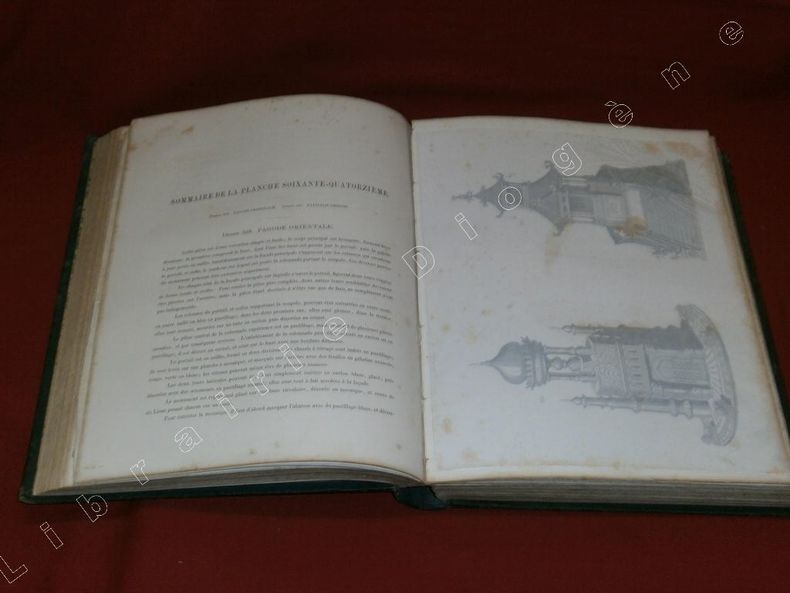
92525Paris, Librairie E. Dentu, 1874, 1 volume (tome 2 vendu seul) in-folio de 305x235 mm environ, pagination de 224 à 444 pour le texte et 54 à 105 pour les planches + 28 planches pour la partie : Appendices du Froid et de la Patisserie, demi chagrin vert foncé et cartonnage toilé, dos à nerfs portant titres et tomaison dorés, gardes marbrées. Complet des 52 planches gravées sur acier, hors-texte annoncées pour la seconde partie. Des rousseurs, fortes sur les serpentes, frottements sur le cartonnage et les coiffes, des ressauts de cahier, une planche détachée avec bordures fendillées et insolées, mors interne fragilisé.
1945RO80078992***. 1939 - 1945. In-8. Relié. Etat d'usage, Couv. légèrement passée, Dos satisfaisant, Intérieur frais. Album de 23 planches composées de 2 à 6 photos sur chacune, soit environ 80 / 100 photos.. . . A l'italienne. Classification Dewey : 0-GENERALITES
18785Gouache et aquarelle sur papier, signée et datée en bas à droite, 1929, 31.5 x 35 cm.
192413276Madrid: Junta Para la Ampliación de Estudios.1912-1924.- 5 Fascículos 127; 128; 198; 124; 129 pp. en un solo volumen ; 4º mayor 279 x 205 cm.; Media Piel Chagrén Puntas conservando las cubiertas originales de cada fascículo.- CONTIENE: J. PIJOAN: Miniaturas españolas en manuscritos de la Biblioteca Vaticana; JUAN M. PEREA: Frescos descubiertos en la sacristía de la iglesi a nacional de España en Roma; RAMON DE ALOS: El Cardenal de AragónFr. Nicolas Rosell; P.A. MARTIN ROBLES: Del Epistolario de Molinos; F. MARTORELL: Fragmentos inéditos de la "Ordinatio Eclesiae Valentinae"; J. SERRANO: Causas de la guerra entre el Papa Paulo IV y Felipe II; E. PACHECO Y DE LEYVA: Relaciones vaticanas de Hacienda española del siglo XVI; L. SERRANO: Alfonso XI y el Papa Clemente VI durante el cerco de Algeciras; E. PACHECO Y DE LEYVA: La intervención de Floridablanca en la redacción del Breve para la supresión de los jesuítas 1772-1773; I SERRANO: Primera negociaciones de Carlos V con la Santa Sede; L. SERRANO: El Papa Pío IV y dos embajadores de Felipe II; A. ANDRES: Proyecto de una diplomática española en el siglo XVIII. COLECCION COMPLETA MAGNIFICAMENTE ENCUADERNADA Y EN IMPECABLE ESTADO. HISTORIA DEL SIGLO DE ORO ESPAÑOL Libro en español Junta Para la Ampliación de Estudios... hardcover
Acquaforte, 1808, firmata in lastra in basso a sinistra. Edita da H. Humphreys a Londra.Bellissima prova, impressa su carta coeva, rifilata al rame, in ottimo stato di conservazione.L'opera raffigura, nello stile satirico tipico del Gillray, il ritratto di George Granville (1758–1833), secondo Duca di Stafford, all'ingresso della casa d'aste Christie's nel 1808. Etching, 1808, signed at lower left. A fine impression, printed on wove paper, trimmed to the platemark, very good condition. Published by H. Humphreys, London.This print is the satirical portrait of George Granville (1758–1833), the 2nd Marquis of Stafford walking into Christie's Auction House. Wright & Evans 560; British Museum Satires VIII.11076; Grego, p. 360; reprint G.W.G. (1830) II.66; Godfrey, Gillray 180B