34 831 résultats
19102082402113508874Not Available 1910. Soft Cover. Fine. Volume: 1 Not Available paperback
1998x-0750708204Falmer Pr 1998. Hardcover. New. 1st edition. 165 pages. 9.50x6.50x0.75 inches. Falmer Pr hardcover
1963ZB288466Philadelphia etc.: 1963-1993 passim. volumes 7-37 most volumes available; price is for the lot. - If you are reading this this item is actually physically in our stock and ready for shipment once ordered. We are not bookjackers. Buyer is responsible for any additional duties taxes or fees required by recipient's country. Photos available upon request. Philadelphia, etc.: unknown
2026__0198959095Oxford University Press 2026. Hardcover. New. 5th revised edition edition. Oxford University Press hardcover
First edition. Original paper wrappers in protective cardboard binding. 8vo. 49 pages. 24cm. In Yiddish. Title translates to Sixteen: A Collection of End Compositions of Sixteen Graduate of the Shalom Aleichem Elementary School in Chicago. Rare collection of elementary-age writings from secular-Yiddish Chicago but published in Warsaw. Yiddish schools in America were always supplemental schools, meeting several times a week after public schools. This was a major difference between the Yiddish schools in Poland which were, if chosen by the parents, the primary day school of the child, and the Yiddish schools in America which never developed a single Yiddish day school. On the political spectrum of the Yiddish cultural world in the 1920s and 1930s, the Sholem Aleichem Folk Institute and its schools, and the Yiddish camp, Camp Boiberik, were more to the right, with less emphasis on socialism and more stress on the humanistic values that can be learned from traditional Judaism and applied to the modern Jewish experience. Founded in 1918, the Institute lasted until the 1970s, and was a national movement which attained its greatest support in the 1930s (UTexas, 2017) . SUBJECTS: School prose, Yiddish -- Illinois -- Chicago. Jews -- Education -- Illinois -- Chicago. Jews -- Education. School prose, Yiddish. OCLC lists 2 copies worldwide (Harvard, NLI, ) . Pages browning. Some light soiling to front wrapper. Overall Very Good Condition. Rare and important(YID-27-39)
8232"Roterodami, Ex Officina Arnoldi Leers, 1649. In 8 plein vélin (titre manuscrit au dos), 24 ff. dont frontispice-519 pp.-6 ff. (index); (accroc aux trois derniers feuillets. "
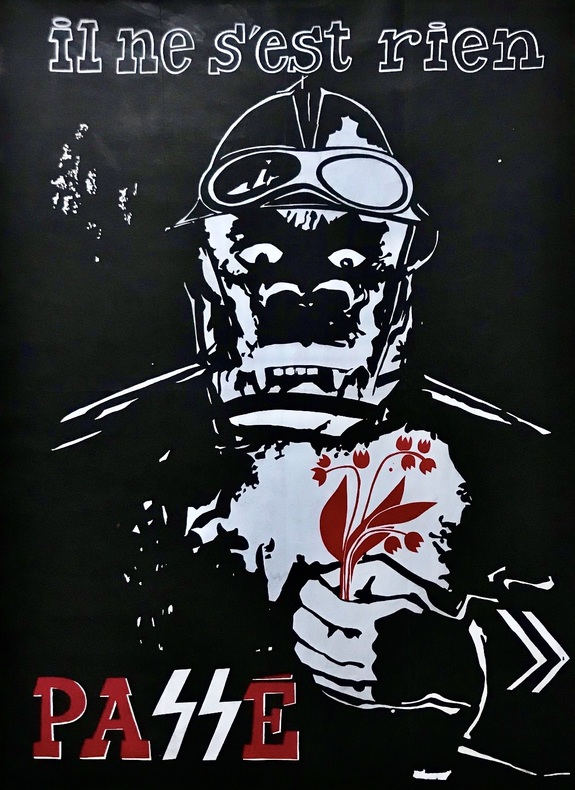
awd-438Mai 68, affiche imprimée en noir et rouge sur papier blanc. Bon état (50/68 cm).
186810910Texte + atlas, 2 tomes in-4 ; demi-percaline vert-sapin, plats cartonnés et papier marbré vert (reliure de l'époque) ; 386 pp., texte manuscrit lithographié, 234 figures dans le texte, Première partie, Atlas 19 planches dont 2 doubles également lithographié par Broise à Paris.
Acquaforte, tratta da 'A series of subiects peculiar to the campagna of Rome and Pontine marshes designed from nature and etched by C. Coleman', edito a Roma nel 1850. Magnifica prova, impressa su carta cina applicata su cartoncino, pieni margini, in perfetto stato di conservazione. Charles Coleman è stato un pittore inglese di paesaggi e animali, nato a Pontefract, nello Yorkshire, in Inghilterra. Fu attivo principalmente a Roma, dove fu un'importante influenza su Nino Costa e diede un contributo significativo alla formazione della Scuola di pittura di Campagna Romana. Dalle brulle colline dello Yorkshire, Charles Coleman arriva a Roma nel 1831 e si mostra un pittore appassionato del territorio che circonda l’urbe, pubblicando alla metà del secolo, presso la libreria Spithover, un ricco volume con 53 acqueforti: A series of subiects peculiar to the campagna of Rome and Pontine marshes designed from nature and etched by C. Coleman. I paesaggi che Coleman rappresenta somigliano molto alle vedute desolate del suo Yorkshire, “ventose e abitate soltanto dall’erica”. Nella gran parte delle vedute dell’artista inglese il paesaggio si presenta con vivaci contrapposti, facendo sì che Coleman rappresenti un vero e proprio maestro per una o due generazioni di pittori romani e non solo. Era sprezzante dell'insegnamento accademico, credendo che l'osservazione dalla natura fosse la migliore educazione per un artista. Espose cinque volte alla Royal Academy di Londra, per l'ultima volta nel 1869. Timbro di collezione la verso di Luciana Simonetti (Lugt 3616). Etching from the 'A series of subiects peculiar to the campagna of Rome and Pontine marshes designed from nature and etched by C. Coleman', printed in Rome in 1850. A fine work, printed on China paper and laid on cardboard, full margins, in perfect condition. Charles Coleman was an English landscape and animal painter, born in Pontefract, Yorkshire, England. He was active primarily in Rome, where he was an important influence on Nino Costa and made a significant contribution to the formation of the School of "Campagna Romana" Painting. From the barren hills of Yorkshire, Charles Coleman arrived in Rome in 1831 and showed himself a passionate painter of the territory surrounding the urbe, publishing in the middle of the century, at the Spithover bookstore, a rich volume with 53 etchings: A series of subiects peculiar to the countryside of Rome and Pontine marshes designed from nature and etched by C. Coleman. The landscapes that Coleman depicts are very similar to the desolate views of his Yorkshire, "windy and inhabited only by heather". In most of the English artist's views, the landscape is presented with vivid contrasts, making Coleman a true master for a generation or two of painters in Rome and beyond. He was contemptuous of academic teaching, believing that observation from nature was the best education for an artist. He exhibited five times at the Royal Academy in London, for the last time in 1869. Collection marks on verso, by Luciana Simonetti (Lugt 3616).
64 pages. Features: Great photo ad for International Trucks on page 1; Junior Boxing Champion of Quebec - Laurier DesRochers is featured in full-page Cream of Wheat ad; Judgement (short story); Taming the Seven Sisters - gigantic hydro-electric development in Manitoba - article with photos; Dusty Courage (short story); Maker of Champions - Captain J.R. Cornelius trains the Hamilton Central Collegiate track team to success - article with photos; A Salute for the Constitution - a plea for veneration of the document that makes us what we are; Dancing Partners (short story); How I Do Love Water-Lilies!; The Kincade Mystery - Who Killed Ethel Kincake of Hamilton? - article with photos; The Beggar of Ur (shorted story); The Queen of the "Turks" - Turkey farmer Mrs. W.A. Freeman of Ardenode, Alberta - article with photos; Premier of Nova Scotia - Hon. Gordon Sydney Harrington - article with photo; Mr. Gobbins Falls In (short story); The Silver Scale (part I); Political article by Sir Austen Chamberlain, with his photo; Canada's pioneer steam engine, long lost, returned to Nova Scotia - the 'Samson'; full-page Dodge car ad; full-page ad for the new Reo Flying Cloud car; Nice full-page photo ad for Hoover vacuums features cute chilid on vintage phone; Nice full-page ad for Auburn cars features the 5-passenger 2-door Brougham $1445; De Soto Six ad; The School Lunch - article with photos; crossword; Transforming the Cellar - article and photos with ideas of how to transform waste cellar space for an extra games and play room; Nice full-page Studebaker ad; Nice colour Calay soap ad inside back cover; Colour Old Dutch Cleanser ad on back cover. Average wear. Unmarked. A sound vintage issue. Book
26603CARTES DESSINS ET PLANS RELATIFS AU COURS D'ASTRONOMIE 1ere DIVISION DES ANNEES 1880 en feuilles sous chemise (56x38 cm); 27 planches de diverses dimensions, CARTES DU MONDE FRANCE ALGERIE ET TUNISIE - CHROMOLITHO PLANETES JUPITER MARS ET SATURNE, COMETES COGGIA ET DONATI, PLANISPHERE CELESTE 1850, SYSTEME SOLAIRE, ETOILES ZONE EQUATORIALE, CERCLE MERIDIEN DU BUREAU DES LONGITUDES, CERCLE AZIMUTAL DU DEPOT DE LA GUERRE, CERCLE A REFLEXION DE BRUNNER, SEXTANT DE GAMBEY, THEODOLITE DE BRUNNER, THEODOLITE DE GAMBEY, INSTRUMENTS A REFLEXION EMPLOYES EN ASTRONOMIE, LUNETTE MERIDIENNE DE GAMBEY, CERCLE MERIDIEN, OBSERVATOIRE DE PARIS(telescopes) -dont PHOTOGRAPHIE LUNE 1865 RUTHERFURD LEMERCIER , RARE PHOTOGRAPHIE ( PHOTOGLYPTIE ) DE LA LUNE PAR L'ASTRONOME PHOTOGRAPHE Lewis Morris RUTHERFURD ( 1816/1892 ) POUR LE COURS D'ASTRONOMIE DE L'ECOLE POLYTECHNIQUE - PORTEFEUILLE DES ELEVES CARTES DESSINS ET PLANS RELATIFS AU COURS D'ASTRONOMIE 1ere DIVISION DES ANNEES 1880- LA CHEMISE EST EN Bon ETAT,rare presque plus que complet( exemplaire de l' Ecole Polytechnique;24 planches).
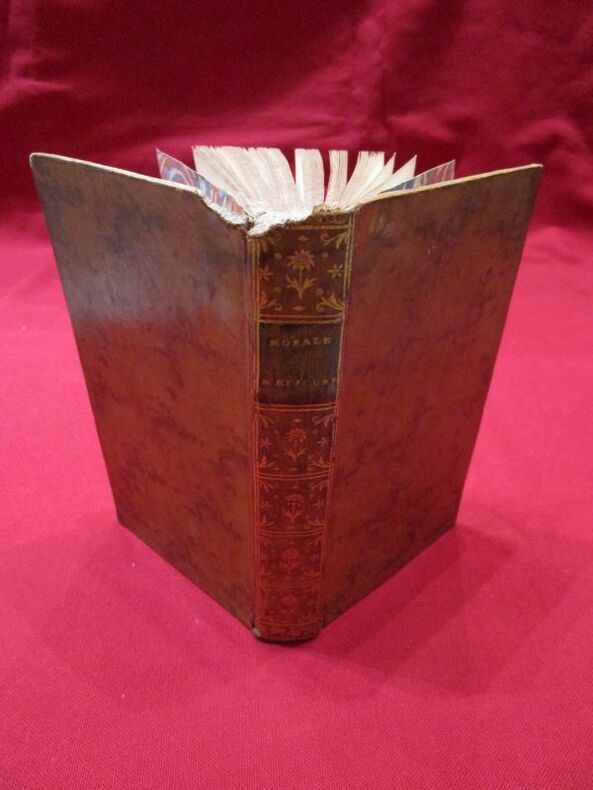
111294A Paris, Chez THOMAS GUILLAIN, 1685, 1 volume in-12 de 170 x 95 mm environ, 1 portrait en frontispice, 22 ff. (titre, Epistre, Préface, Approbation), 364 pages (paginées 374 par erreur<), reliure plein cuir, dos lisse orné portant titre doré sur pièce de cuir, coupes filetées, tranches mouchetées de rouge. Petit manque à signaler sur la coiffe supérieure et une partie du plat inférieur, galeries de vers sur la queue du dos, discrète mouillure sur le frontisipice sinon bon état.
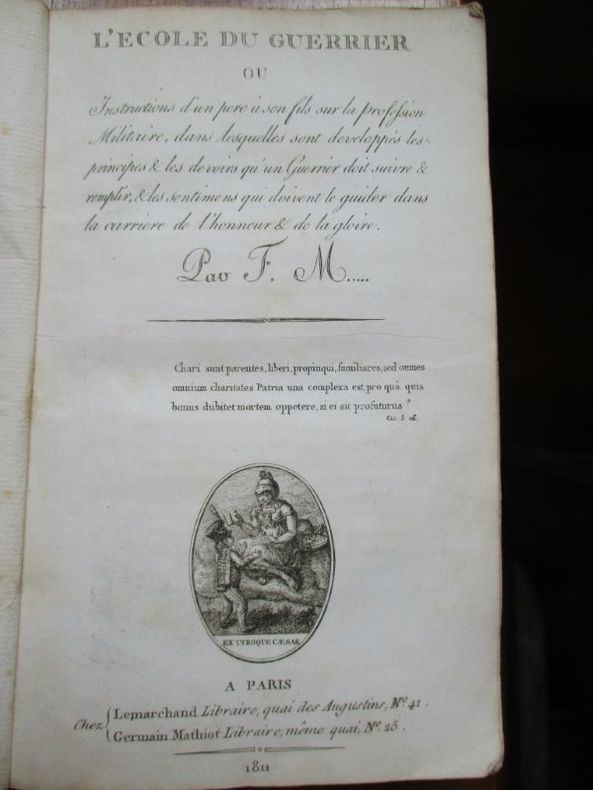
3358à paris chez lemarchand libraire quai des augustin No 41et germain mathio libraire même quai No 26 - 1811 - in 8 broché 218 pages couverture muette d'époque pièce de titre manuscrite. dos de la couverture insolé uniformément, quelques mouillures.
Acquaforte e puntasecca, 1910 circa, firmata in alto a sinistra Fisher f. Dedicata dall'artista a Malcolm Salaman; iscrizione con inchiostro marrone in basso a destra: "To Malcolm Salaman from A. Hugh Fisher". Una bella impressione, stampata su carta avorio, con margini, in buone condizioni. Malcolm Charles Salaman (Londra 6 settembre 1855 - 22 gennaio 1940) è stato un autore, giornalista e critico inglese. Fu educato alla University College School e all'Owens College di Manchester. Anche se aveva studiato ingegneria meccanica per quattro anni, divenne un giornalista e pubblicò due settimanali. I suoi scritti critici erano dedicati principalmente alle stampe e alle opere teatrali. Dal 1883 al 1894 fu critico drammatico e d'arte per il Sunday Times, e dal 1890 al 1899 fu nello staff di The Graphic. Scrisse regolarmente sulle stampe per le riviste d'arte The Studio e Apollo. Salaman scrisse anche le introduzioni ai 33 volumi della serie Modern Masters of Etching pubblicati tra il 1925 e il 1932 da The Studio, ognuno dei quali conteneva riproduzioni di 12 stampe di un grande incisore. Questa serie includeva volumi su Frank Brangwyn, Alphonse Legros, Ernest Stephen Lumsden, Malcolm Osborne e Edmund Blampied. Hugh Fisher si dedicò inizialmente all'incisione paesaggistica e architettonica, ma fu anche un abile incisore e incisore di ritratti, studi di figure e raffigurazioni di animali. Bibliografia H. Fisher, 'Catalogue of Etchings and Drypoint by A. Hugh Fisher', 1927. Etching and drypoint, circa 1910, signed at upper left Fisher f. Dedicated by the artis to Malcolm Salaman; inscribed woth brown ink at lower right: “To Malcolm Salaman from A. Hugh Fisher”. A fine impression, printed on ivory wove paper, with margins, good condition. Malcolm Charles Salaman (London 6 September 1855 – 22 January 1940) was an English author, journalist and critic. He was educated at University College School and at Owens College, Manchester. Although he had studied mechanical engineering for four years, he became a journalist, and edited two weekly papers. His critical writing was devoted chiefly to prints and to plays. From 1883 to 1894 he was dramatic and art critic for the Sunday Times, and from 1890 to 1899 was on the staff of The Graphic. He wrote regularly on prints for the art magazines The Studio and Apollo. Salaman also wrote the introductions to the 33 volume series Modern Masters of Etching published between 1925 and 1932 by The Studio, each of which contained reproductions of 12 prints by a great etcher. This series included volumes on Frank Brangwyn, Alphonse Legros, Ernest Stephen Lumsden, Malcolm Osborne and Edmund Blampied. Hugh Fisher initially dedicated himself to landscape and architectural engraving, however he was also an accomplished etcher and engraver of portraits, figure studies and animal depictions. Bibliografia H. Fisher, 'Catalogue of Etchings and Drypoint by A. Hugh Fisher', 1927.
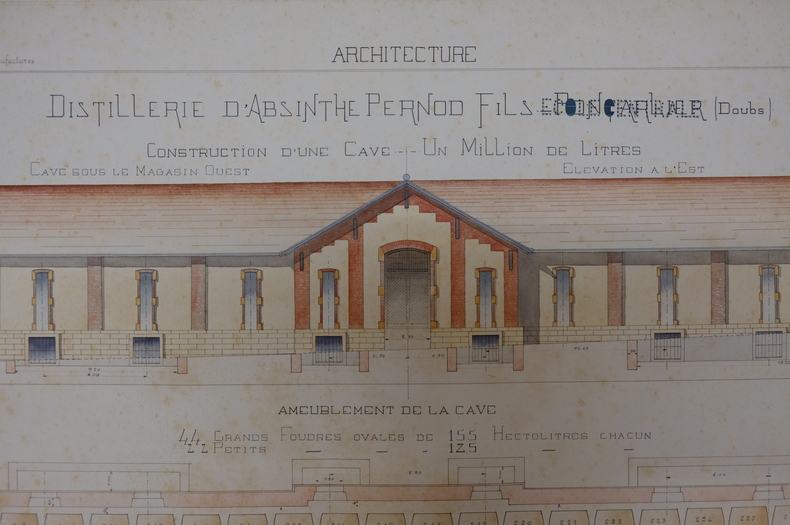
est232t8Dimension extérieur : 49 x 68 cm. Beau dessin d'architecture, réalisée par Gaston Benoît en août 1910. Réalisé à l'école centrale des Arts et Manufactures. Echelle 1/100 Numéro 1. Dans son jus, présente quelques rousseurs et très légères déchirures qui n'altère pas l'image.
36542Les Voyages Extraordinaires. Hetzel, 1893. 2ème cartonnage au steamer. In-8 . 51 dessins par L.Benett. Bel état malgré quelques rousseurs sur les 2 premières pages. Catalogue. Tranches dorées.
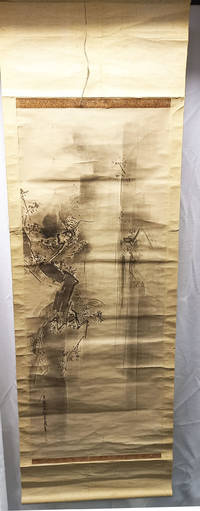
0227-26Japan. Antique hanging paper scroll. Bordered with block printed paper. Heigth 71". Width 23" ca. 181 3 x 58 cm. Wooden roller ends. Folding lines visible slightly rubbed. Japanese paper hanging scroll depicting the Japanese legend where a carp becomes a dragon. Probably from the Kano-Ha school. With an unknown signature seal. Japan. unknown
Pages 365-438 plus 68 pages of ads. Printed upon glossy stock. Black and white photography throughout. Features: Hotel De Ville at Loches, France (Illustration); Builder and Poet - Frank Lloyd Wright - Review of his Autobiography; Night Views of New York City; The Juilliard School of Music - article and cover photo; Firm Specifications; Portfolio of Current Architecture; An Innovation in Steel Flooring; Theater Designs for Rockefeller Center; Portfolio of Theaters; Dozens of sensational full-page illustrated ads; and much more. Minimal library markings. Average wear. External soiling. Binding intact. A sound copy of this excellent vintage issue. Magazine
Acquaforte e bulino, 1753, nel margine inferior a sinistra: Adr. Manglard fecit Romae La data 1753 che seguiva la firma è abrasa. Bell’esemplare, ricco di toni, rifilato alla linea del rame, in ottimo stato di conservazione. Adrien Manglard (1695-1760) nativo di Lione, visse a lungo a Roma dove si distinse come pittore e incisore di marine. Etching and engraving, 1753, signed at lower left, beneath the image Adr. Manglard fecit Romae The date 1753, at the end on the inscription is abraded. Magnificent example, printed on contemporary paper, trimmed close to platemark, in good condition. Robert-Dumesnil, Le peintre-graveur français, ou catalogue raisonné des estampes gravées par les peintres et les dessinateurs de l'école française : ouvrage faisant suite au peintre-graveur de Bartsch, cat.nr. 27.
Acquaforte, 1880 circa, firmata in lastra in basso. Esemplare nel quinto stato di sei, con l’indirizzo di Cadart. Bellissima prova, impressa su carta vergata coeva, con margini, in buono stato di conservazione. Pittore, incisore e fotografo abruzzese. Si forma presso l’Accademia di Belle Arti di Napoli sotto Domenico Morelli che ne riconobbe immediatamente le doti. L’ambiente napoletano lo spingerà a dedicarsi ad una pittura realista e naturalista grazie anche ai contatti con Filippo Palizzi, Giuseppe De Nittis e Marco De Gregorio, artisti della cosiddetta Scuola di Resina. Abbandonata l’Accademia per la troppa rigidità torna in Abruzzo a Francavilla. Nel 1871 parte per Parigi per partecipare al Salons, apprezzato dal pubblico e dalla critica riesce a farsi conoscere da un pubblico internazionale; a Parigi presso l’editore Cadart vengono pubblicate le quattro lastre che hanno così una tiratura regolare: Cueillette d’olives dans les Abruzzes 1875, L’enfant au panier, Gardeuse de dindons, Jeunes bergers des environs de Chieti. Le altre quattro lastre note di Michetti Tatone, Ragazza alla fontana, Pastorella abruzzese e Ritratto di anziano sono ad oggi note in pochissimi esemplari. L’incontro con il pittore spagnolo Mariano Fortuny nel 1874 a Napoli favorisce un cambiamento nella tavolozza e lo avvicina a soggetti più folkloristici. Intorno al 1879 risale la sua amicizia, fratellanza con il vate Gabriele d’Annunzio che considera l’artista mei dimidium animi. Nel cosiddetto Conventino, abitazione e studio di Michetti a Francavilla, si riunisce il cenacolo michettiano: un’esperienza unica in cui il pittore Michetti, il poeta Gabriele d’Annunzio, lo scultore Costantino Barbella e il musicista Francesco Paolo Tosti – ai quali poi si uniranno altri scrittori ed artisti – lavorarono insieme e sviluppano il tema comune della natura e della gente d’Abruzzo. Una bambina in abiti tradizionali incede frontale verso lo spettatore. La figura è in piena luce, si staglia su uno sfondo costituito da una fitta boscaglia, potente è l’uso del chiaroscuro che conosce la lezione di Rembrandt. La bimba ha le braccia appoggiate sul ventre per reggere un cestino, i capelli mossi incorniciano il volto, sembra che stia canticchiando e il particolare degli orecchini e della collana di perle accentuano la luminosità del suo incarnato. Il soggetto è già affrontato in pittura, in particolare nel dipinto La Petite Fille au panier sul mercato parigino nel 1875 come appartenente alla collezione H. Nel catalogo di venidita il dipinto è illustrato con l’incisone di Michetti che dunque costituisce un termine ante quem di datazione della lastra. La figura è costruita con il tipico segno fine e libero di Michetti, un segno graffiato, elegante; i volumi sono costruiti con un fitto e irregolare intrecciarsi di tratti delicati e punti, morsure successive marcano progressivamente le zone in ombra. Firma nella lastra in basso a destra P Michetti. Nel margine inferiore oltre l’immagine a sinistra “Paolo Michetti del. et sc. “, titolo al centro, a destra “Imp.Cadart, Paris” e a sinistra “Gazzette de Beaux-Arts”. L’esemplare è tratto da La Gazette des Beaux-arts numero del marzo 1880. Etching, circa 1880, signed in plate at bottom. Exemplar in the fifth state of six, with Cadart's address. Beautiful proof, impressed on coeval laid paper, with margins, in good condition. A little girl in traditional clothes walks frontally towards the viewer. The figure is in full light, stands out against a background of dense brushwood, powerful is the use of chiaroscuro that knows the lesson of Rembrandt. The child has her arms resting on her stomach to hold a basket, the wavy hair frames her face, it seems that she is humming and the detail of the earrings and the pearl necklace accentuate the brightness of her complexion. The subject is already addressed in painting, particularly in the painting La Petite Fille au panier on the Paris market in 1875 as belonging to the H collection. In the sale catalog, the painting is illustrated with Michetti's engraving, which therefore constitutes a terminus ante quem for the dating of the plate. The figure is constructed with Michetti's typical fine and free mark, a scratched, elegant mark; the volumes are constructed with a dense and irregular interweaving of delicate strokes and dots, successive morsure progressively marking the areas in shadow. Signature in the lower right corner of the plate P Michetti. In the lower margin beyond the image on the left "Paolo Michetti del. et sc.", title in the center, on the right "Imp.Cadart, Paris" and on the left "Gazzette de Beaux-Arts". The copy is taken from La Gazette des Beaux-arts issue of March 1880. Francesco Paolo Michetti (1851 – 1929) learned painting's rudiments from a local fresco painter. In 1868 he traveled to Naples, supported by a small grant to study at the academy there. Asserting that his temperament would benefit more from real life situations, he was allowed to return to the Abruzzo region in 1869 and continued to receive his grant. Michetti exhibited at the Paris Salons of 1872 and 1875, but he also belonged to Scuola di Resina, a group of Neapolitan painters that aimed to bring Italian art into Europe's mainstream. Abruzzo was his emotional and aesthetic inspiration. He captured its people, animals, and local events in emotionally charged paintings with luminous colors and vibrant light. In 1883 Michetti purchased a convent as his home and studio. For the next twenty years, the convent was a meeting place for Abruzzo's artists and exponents of culture, including writer Gabriele D'Annunzio. Michetti's 1895 Daughter of Iorioinspired D'Annunzio's 1904 tragedy, for which Michetti designed the sets and costumes. From 1872 onward, Michetti also produced small, decorative clay sculptures. After a lukewarm response to his paintings at the 1900 Exposition Universelle in Paris, he abandoned painting, sold his studio, and generally lived as a recluse. Bibliografia: Davoli, 5; Prandi 4 (ill.); V. Bindi, Artisti abruzzesi, Napoli 1883, pp. 172-176; G. D’Annunzio, Nota su F.P. M., in Convito, VIII (1896), pp. 583-592; R. De Logu, Per un profilo di M., in Mostra dei disegni, incisioni e pastelli di F.P. M.

33 pages. Features: Photo of smiling Eisenhower and an animated Patton, plus smiling Bradley and Hodges; Photo of Japanese Shrine on Saipan plus journal notes from a Japanese soldier; Photos of Juan Trippe, Lewis Douglas, Army nurses drilling at Camp Capson Colorado, Forger Alexander Thiel; Article on Okinawa; Full-page military map entitled "The Floods Come" shows positions centered around Hitler's inner fortress of Berchtesgaden; photo of U.S. armour on one of Germany's fine roads; Photo of very long column of German prisoners; Article and photo on German youth; Photo of "German Looters"; Photo of Chiang Kai Shek with General Hurley; Photo of St. Louis Browns' one-armed baseball player Pete Gray; Photo of a Brooklyn Public School classroom trashed by three young boys; Great photo of a navy bank in a quonset hut on Guam. No ads in this edition. Moderate wear. Unmarked. Binding intact. A quality copy of this excellent Patton collectible. Book
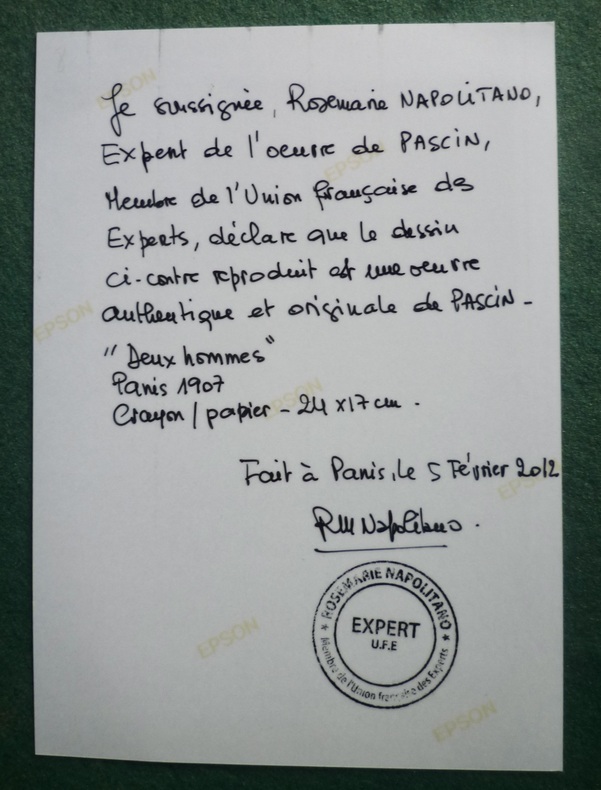
1907P1Dessin crayon 24x17cm, Paris, 1907, griffe de la signature et cachet de l'atelier. Annotations manuscrites à l'encre de Lucy Krohg: "Paris 1907"
Acquaforte (mm 229x174; foglio: mm 335x292), monogrammata sulla lastra in basso a sinistra. Esemplare del secondo stato su due, stampato da Carlo Lovera e pubblicata su L’Arte in Italia del novembre 1870. Ottima impressione. Grandi margini, ottima conservazione. Alberto Pasini nasce a Busseto (PR) nel 1826. Iscrittosi all’Accademia di Belle Arti di Parma ha come maestro Girolamo Magnani, per la pittura. Nel 1851 si reca a Parigi dove, alla scuola dei pittori di Barbizon, si dedica alla pittura di paesaggio. Nel 1855, per interessamento del pittore Théodore Chassériau è aggregato ad una missione diplomatica diretta in Persia. Da qui la svolta nella sua vita. In questo primo e in successivi viaggi in vari paesi affacciati sul Mediterraneo, rimane conquistato dall’Oriente traendone spunti in disegni che poi svilupperà in numerosi dipinti. A Parigi dove si stabilisce espone ai numerosi Salon ottenendo prestigiosi premi. Lo Scià di Persia e il Sultano di Costantinopoli gli commissioneranno varie opere e i collezionisti si contenderanno i suoi piacevolissimi dipinti. Dal 1871 si ritira a Cavoretto, nelle colline piemontesi, non rinunciando tuttavia a continuare a viaggiare a Parigi e Venezia, città che verrà spesso ritratta nei suoi dipinti. Muore a Cavoretto nel 1899. È da considerarsi uno dei più notevoli orientalisti a livello europeo. Bibliografia G. Giubbini, L’acquaforte originale in Piemonte e in Liguria 1860 - 1875, Genova 1976, n.1. Etching (mm 229x174; sheet: mm 335x292), monogrammed on the plate at lower left. Exemplar of the second state of two, printed by Carlo Lovera and published in L'Arte in Italia - November 1870. Very good impression. Large margins, excellent conservation. Alberto Pasini was born in Busseto and attended the Academy at Parma. From 1851 to 1853 he studied under Eugène Ciceri (1803-1886) in Paris, where he completed his training in the atelier of M.E. Isabey (1813-1890). He made his Salon debut in 1853. From his first visit to Persia in 1855, as part of the suite of the French delegation to the Persian Gulf and Tehran, Pasini specialized in views of remote corners of Turkey and Persia. He travelled to Constantinople between 1868 and 1869 and to Asia Minor and Syria in 1873. Pasini was also a seasoned traveller within Europe and from 1878 visited Venice on several occasions, and made a journey to Spain with Gérôme from 1879 to 1883. "Principally a landscape and architectural painter, Pasini came under the influence of Théodore Rousseau and Fromentin in the late 1850s, though his later style reveals affinities with the Néo-grec school of painters. Apart from his Orientalist work, he painted some genre scenes and subjects taken from Turkish history and was also known for his lithographic work. "After the Franco-Prussian War (1870-71), Pasini returned to Italy, but continued to exhibit at the Salon until his death in 1899” (MaryAnne Stevens, ed., The Orientalists: Delacroix to Matisse - The Allure of North Africa and the Near East, exhibition catalogue, National Gallery of Art, Washington, DC, 1984, p. 195). References: G. Giubbini, L’acquaforte originale in Piemonte e in Liguria 1860 - 1875, Genova 1976, n.1.
191220934Paris, Goupil et Cie, Manzi, Joyant, 1912 ; grand in-4° (323 mm), large demi-maroquin rouge, dos à nerfs, titre doré, tête dorée sur témoins, couverture et dos conservés, non rogné (reliure de l'époque) ; 171 pp., [1]f., 61 planches dont 57 hors-texte (4 en couleurs).