Ribes BrunoLivre Rare Book

3 223 résultats
1978RO30312845Unesco. 1978. In-8. Broché. Etat d'usage, Tâchée, Dos satisfaisant, Papier jauni. 180 pages.. . . . Classification Dewey : 170-Ethique
1967RO30313001Gonthier. 1967. In-8. Broché. Etat d'usage, Couv. légèrement pliée, Dos plié, Papier jauni. 199 pages.. . . . Classification Dewey : 170-Ethique
2001R320052837BREAL. 2001. In-12. Broché. Bon état, Couv. convenable, Dos satisfaisant, Intérieur frais. 124 pages.. . . . Classification Dewey : 170-Ethique
44927Paris, Bernard Grasset, 2003. 14 x 22, 382 pp., broché, très bon état (sauf traits au crayon dans les marges).
70464Louvain-la-Neuve (Belgique), Bruylant-Academia, 2000. 16 x 24, 326 pp., broché, très bon état.
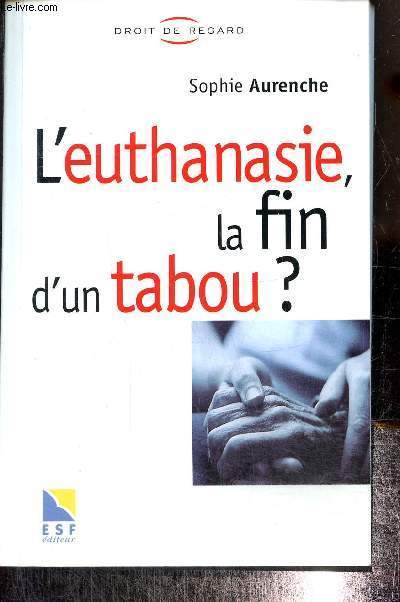
1999RO80239547ESF. 1999. In-12. Broché. Bon état, Couv. convenable, Dos satisfaisant, Intérieur frais. 188 pages.. . . . Classification Dewey : 170-Ethique
68562Bruxelles, De Boeck/Wesmael, 1993. 16 x 24, 356 pp., broché, très bon état.
2004R100058342Cnrs éditions. 2004. In-8. Broché. Bon état, Couv. convenable, Dos satisfaisant, Intérieur frais. 335 pages.. . . . Classification Dewey : 170-Ethique
1989ROD0107716CERF. 1989. In-12. Broché. Bon état, Couv. convenable, Dos satisfaisant, Intérieur frais. 127 pages. Quelques annotations au crayon à papier sans réelle conséquence sur la lecture;. . . . Classification Dewey : 170-Ethique
68563Université de Mons-Hainaut (Belgique), 1997. 16 x 24, 472 pp., broché, très bon état.
34789Bruxelles, Ferdinand Larcier, 1977. 15 x 23, 493 pp., broché, bon état.
2000R320035228AUTREMENT. 2000. In-8. Broché. Etat d'usage, Couv. convenable, Dos satisfaisant, Intérieur frais. 219 PAGES - Illustration en couleurs sur le 1er plat.. . . . Classification Dewey : 170-Ethique
70467Bruxelles, De Boeck Université, 1990. 16 x 24, 239 pp., broché, très bon état.
1973ROD0106459CENTURION. 1973. In-8. Broché. Bon état, Coins frottés, Dos frotté, Intérieur frais. 128 pages. Texte sur 2 colonnes. Nombreuses illustrations en noir et blanc dans et hors texte.. . . . Classification Dewey : 170-Ethique
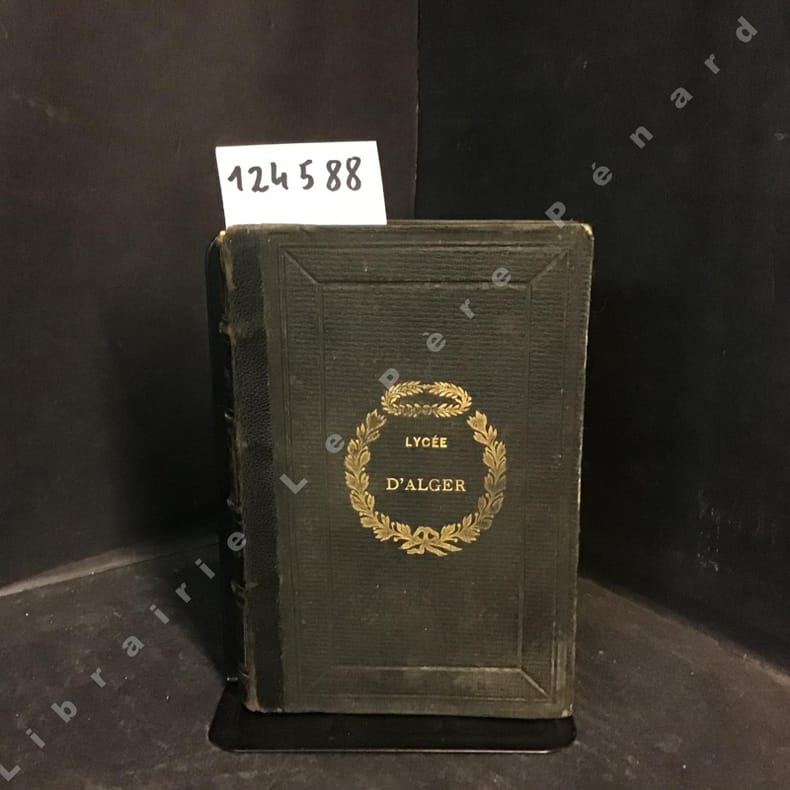
18771245881877 E. Plon et Cie, Imprimeurs-Editeurs, Paris / John Murray, Libraire-Editeur, Londres - 1877 - Grand in-12; reliure demi chagrin; plats en percaline; dos à 4 nerfs orné du titre, de l'auteur, de caissons et de fleurons en doré, couronne et inscription "Lycée d'Alger" en doré sur le premier plat - 372 pages
34795Bruxelles, Presses Universitaires, 1968. 16 x 24, 559 pp., figures, reliure d'édition pleine toile + jaquette, très bon état.
br. Economisti, imprenditori e changemakers di tutto il mondo sono chiamati a promuovere la rigenerazione dell'economia. Cura, generatività, inclusione, solidarietà: sono questi gli ingredienti necessari al cambiamento sollecitato da papa Francesco. Mai come ora, l'etica economica francescana si propone come soluzione alla saturazione del sistema economico mondiale. Francesco d'Assisi ha dimostrato che per curare una società malata non serve l'uomo perfetto, serve la perfetta comunità: la fraternitas. La fratellanza è un patto coraggioso tra individui che non sono uguali ma che scelgono di essere fratelli, è un progetto economico già testato, è il bene comune del futuro. Questo libro, scritto da uno storico del Medioevo, espone l'efficacia della prospettiva francescana come opposizione al profitto neocapitalista.
109774Berne, Stämpfli Editions SA 2019, 230x155mm, XIV - 761pages, broché. Dédicacé. Très bel exemplaire.
ill., br. Con questo 10° Rapporto continuiamo il lavoro di monitoraggio dello stato dell'arte del microcredito in Italia, avviato nel 2005, proponendo una lettura dei dati raccolti nel corso degli anni secondo un doppio punto di vista: da un lato vengono analizzati i dati delle singole annualità, dall'altro vengono confrontate le variazioni rispetto ai valori di stock delle diverse variabili utilizzate. Questa doppia chiave di lettura consente di evidenziare le tendenze che abbiamo individuato e di apprezzare come sia cresciuto, nel decennio esaminato, l'ecosistema del microcredito, cioè il complesso e variegato insieme di soggetti pubblici e privati (oltre 300 tra promotori, finanziatori e garanti) che hanno consentito la concessione di oltre 1miliardo di euro a più di 100.000 beneficiari, tra imprese e famiglie.
Con questo 10° Rapporto continuiamo il lavoro di monitoraggio dello stato dell'arte del microcredito in Italia, avviato nel 2005, proponendo una lettura dei dati raccolti nel corso degli anni secondo un doppio punto di vista: da un lato vengono analizzati i dati delle singole annualità, dall'altro vengono confrontate le variazioni rispetto ai valori di stock delle diverse variabili utilizzate. Questa doppia chiave di lettura consente di evidenziare le tendenze che abbiamo individuato e di apprezzare come sia cresciuto, nel decennio esaminato, l'ecosistema del microcredito, cioè il complesso e variegato insieme di soggetti pubblici e privati (oltre 300 tra promotori, finanziatori e garanti) che hanno consentito la concessione di oltre 1miliardo di euro a più di 100.000 beneficiari, tra imprese e famiglie.
Hans Reiner 1° edizione! Etica. Teoria e storia. Roma, Armando 1971 italian, 315 CH40Brossura editoriale volume in discrete condizioni, 1° edizione, segni di usura causati dal fattore tempo sulla copertina, segni di lettura sul dorso, sottolineature all'interno, legatura salda315 pagine circa Copertina come da foto
Bausola Adriano 1° edizione! Tra etica e politica. Milano, Vita e pensiero 1998 italian, 374 BTT64 Copertina rigida volume come nuovo, 1° edizione , copertina e interno in condizioni eccellenti, legatura salda 374 pagine circaCopertina come da foto
1999100118596Puf 1999 448 pages 13 6x2 4x21 4cm. 1999. Broché. 448 pages.
Very Good Persian Original decorative dark brown full leather bdg. 44 p. Printed on a special paper with an early 18th century watermark. The Advice by Attâr includes 901 couplet in Persian. Attar Persian poet, Sufi, theoretician of mysticism, and hagiographer, born ca. 540/1145-46 at Nisapur, and died there in 618/1221. His name was Abû ?âmed Mo?ammad b. Abî Bakr Ebrâhîm or, according to Ebn al-Fowatî, b. Sa'd b. Yûsof. ?Attâr and Farîd-al-dîn were his pen-names. It seems that 'Attâr was not well known as a poet in his own lifetime, except at Nisâpûr. 'Awfî, who traveled widely, may have heard about him while staying there , or perhaps from Majd-al-dîn Bagdâdî if this Majd-al-dîn was their common Sufi mentor, though Awfî appears to have only known about Attâr's lyric poetry. Farid al-din 'Attar is one of the most famous spiritual poets of Persia. His works were the inspiration of Rumi and many other mystical poets. 'Attar, along with Sana'i were two of the greatest influences on Rumi in his Sufi views. Rumi has mentioned both of them with the highest esteem several times in his poetry. Rumi praises 'Attar as follows: "Attar roamed the seven cities of love... we are still just in one alley." 'Attar reached an age of well over 80 and died a violent death in the massacre which the Mongols inflicted on Nishapour in April 1221. The world depicted in 'Attar's works reflects the whole evolution of the Sufi movement. The starting point is the idea that the body-bound soul's awaited release and return to its source in the other world can be experienced during the present life in mystic union attainable through inward purification. In explaining his thoughts, 'Attar uses material not only from specifically Sufi sources but also from older ascetic legacies. Apart from his two famous epic masnavi poems 'The Conference of the Birds' and 'The Book of God' he composed a Divan full of powerful, enlightened ghazals and ruba'is. The Pand-nama is a small book of wise, moral advice in short poems in rhyming couplets that is practical and spiritual... (Encyclopedia Iranica & Pand-nama : (Book of Wisdom) Selections Introduction). [EARLY FIRST PERSIAN EDITION of the ADVICE by ATTAR PRINITED in the OTTOMAN EMPIRE] Pend-i Attar. Published by Fâkîr Seyhzâde Es-Seyyid Mehmed Es'ad. Only two printed copies of this edition in OCLC: 819123862.; Türkiye'de basilmis Farsça eserler çeviriler ve Iran'la ilgili yayinlar bibliyografyasi [= Bibliography of the Persian books, their translations and books on Iran published in Turkey] 721.; Mushar -.
Good Armenian Full modern leather binding. An ex-library stamp on the colophon. Small 4to. (27 x 18 cm). In Armenian. 512, [8] p., engraved plates. Richly illustrated. Stains on pages and edges. Otherwise a good copy. Extremely rare first Armenian edition of Fenelon's "Telemaque". According to Abdolonyme Ubicini's account in his La Turquie actuelle (Paris 1855), Les Aventures de Télémaque was the most popular classic among Levantines in Istanbul in the first half of the 19th century, and it was translated into many languages besides Turkish and Arabic in the Ottoman Empire. The first printed version of a Greek translation dates from the 18th century, while an Armenian version by Ambroise Calfa was published in Paris in 1860. (The Ottoman Reception of Fénelon's Télémaque.; Meral, Arzu). The translator, Ambroise Calfa Nar Bey, Guy de Lusignan, (1831-1906), was a Franco-Armenian historian and linguist from the second half of the 19th century and the beginning of the 20th century. Ambroise Calfa is one of the three sons of Kévork (Georges) -Youssouf Calfa, an Armenian trader living in Constantinople, and Sophie Cantar (or Kantaroglou), daughter of an Armenian merchant or banker from the Ottoman capital. Member of several learned societies, including the Asian Society, Ambroise Calfa published several historical or linguistic works, including an Armenian Calligraphy (Paris, 1853), a work awarded at the Universal Exhibition of 1855, and, above all, an Armenian-French Dictionary ( Paris, Hachette, 1861) dedicated to Emperor Alexander II. (Wikipedia). Les Aventures de Télémaque, fils d'Ulysse (The adventures of Telemachus, son of Ulisses) with the original title is a didactic French novel by Fénelon, Archbishop of Cambrai, who in 1689 became tutor to the seven-year-old Duc de Bourgogne (grandson of Louis XIV and second in line to the throne). It was published anonymously in 1699 and reissued in 1717 by his family. The slender plot fills out a gap in Homer's Odyssey, recounting the educational travels of Telemachus, son of Ulysses, accompanied by his tutor, Mentor, who is revealed at the end of the story to be Minerva, goddess of wisdom, in disguise. OCLC 953068302 (One institutional copy in BnF). (Utopias from the Middle East 3).