Cords, Jens (1932-2024)Antiquariat.de

1 249 résultats
1978637641978. Plattengröße 11,8 x 17 cm.
168553234(München, Johann Hermann Gelder, 1685). 4to. Later hcalf (rebound), spine worn but intact. Shaved close throughout, loosing pagination number mainly at end. Some leaves with repairs, some loosing text. Scattered brownspots. Traces of use. Some leaves frayed in margins. (22) pp., lacking titlepage.The first part paginated 1-1506, the second part ca. 400 pp. (pagination shaved and ending abruptly). 14 engraved plates, mounted and some with loss and defective. With around 70 large textengravings by Leonhard Heckenauer, Jeremias Renner, H.G. Bodenehr et al.
In-folio, cartella originale con illustrazione, che contiene le 10 incisioni su linoleum, sciolte, tutte numerate e firmate dall’autore, e il testo di Consagra “E’ trascurabile esprimere se stessi”; tiratura limitata, dopo la stampa le matrici furono distrutte. Ottimo esemplare.
1984774061984. Bildgröße 5 x 8,5 cm. Unter Passepartout.
Very Good English Paperback. Pbo. Roy. 8vo. (23 x 16 cm). In Turkish. There's a minor stain on cover. [13] p. B/w ills. Exhibition of Roman views (paints) in the 17th and 19th centuries. 17.-19. yüzyillardan Roma manzaralari. 18 Kasim - 9 Aralik 1983. Istanbul Resim ve Heykel Müzesi. [Exhibition catalogue].
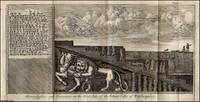
1747351229Printed for T. Osborne in Gray's Inn; A. Miller in the Strand; and J. Osborn in Paternoster Row London 1747. Unframed Print. Very Good Condition. The engraving depicts inscriptions and relief carvings found on the staircases of Persepolis the ceremonial capital of the Achaemenid Empire in modern-day Iran. These carvings showcase royal inscriptions symbolic figures and decorative motifs reflecting the empire's grandeur and artistic sophistication. The hieroglyphics and characters likely represent Old Persian Elamite and Babylonian script which were commonly used in Achaemenid inscriptions. The engraving was printed 1747 in London by T. Osborne A. Miller and J. Osborn.1 folding plate. Size: 23 x 36 cms. Category: Universal History; PRINTS : Antiquarian Interest; Printed before 1800; Special Features. This item may require more postage than the rates shown for delivery outside the UK. If extra postage is required we will contact you before processing your order and you will be given the details and option to decline the extra cost. Printed for T. Osborne, in Gray's Inn; A. Miller, in the Strand; and J. Osborn, in Paternoster Row unknown
Oblong 8vo., First Edition, with 30 steel-engraved plates, one or two leaves lightly spotted in blank margins; original green cloth, boards elaborately embossed in blind, upper board lettered in gilt, red sprinkled edges, lower hinge starting (but binding wholly sound), a remarkably well-preserved bright, crisp, clean copy. The engravings, produced by Rook & Co of London, are dated variously between 1849 and 1864. VERY SCARCE, ESPECIALLY IN THIS CONDITION.
Very Good French A fine original chromo-lithograph print from "Souvenirs de Constantinople" by Brindesi, printed in 1845. Framed, but will be sent no frame. 52x49 cm / 39x 44 cm print area. Stains on right bottom margins of the paper. The Ottoman navy, stationed in front of the Tophane Artillery barracks, is preparing to sail under the leadership of Kapudan Pasha's ship "Amiraute". Jean Brindesi was born in 1826 and worked primarily as a watercolour artist. During the Abdulmecid period (1831-1861), he worked on scenes involving soldiers in Istanbul. Two albums of lithographs after his drawings were produced by Lemercier in Paris: Elbicei Atika - Musee des Anciens Costumes Turcs de Constantinople, 1855, and Souvenirs de Constantinople, 1860; these two works are collections of picturesque views of the city of Constantinople. The originals are kept at the Istanbul Topkapi Palace Museum and at the University of Istanbul. (Source: Levantine Heritage).
77666o.J. Plattenmaß 20 x 15 cm (Blattmaß 24 x 19 cm). Unten rechts signiert (Hugo Müller (?)). Brauner Abzug. Feinkartonpassepartout.
Folio, plate volume only, [8pp., Arrangement and Analysis of the Plates] + unpaginated 'Scientifical Index', 148 engraved plates (some double-page, some folding), small work track to blank margin of first 7 plates, small unobtrusive stain to lower blank margin of several other plates, but overall all plates are clean and bright, cont. calf, rubbed, joints cracked.
Very Good French Original color copper engraving. Oblong folio. (26 x 36 cm). Description in French. Incendie du quartier de Pera a Constantinople, 9 Aôut 1839. Painted by Theodore Gudin, (1802-1880); Engraved by Joseph John Skelton, (1783-1871). Rare color engraved print. Shows 1839 fire in Pera area in Istanbul (probably that district is Kasimpasa which mostly mariners live in), and its chaos: hectic people have appeared on the roofs of the burning houses, law enforcement agencies are working, and the muezzin has been seen on balcony for 'selâ'. Jean Antoine Théodore Gudin was a French painter of the 19th century, born in Paris. He especially painted navy scenes, and was a pupil of Girodet-Trioson. Gudin was one of the first Peintres de la Marine, at the court of Louis-Philippe and Napoleon III. Gudin died at Boulogne-sur-Seine in 1880. His daughter Henriette Gudin also became a marine painter. Skelton was an English engraver. He was brother of William Skelton, and became an engraver specialising in topographical and antiquarian subjects. Before 1819 he went to live at Oxford. Later Skelton settled in France. He was elected a Fellow of the Society of Antiquaries of London in 1825; his name disappears from its lists in 1844. At Oxford he published Oxonia Antiqua Illustrata (1823); Antiquities of Oxfordshire, from drawings by F. Mackenzie (1823); Pietas Oxoniensis, or Records of Oxford Founders (1828); and Engraved Illustrations of Antient Arms and Armour from the Collection at Goodrich Court from the Drawings, and with the Descriptions of Dr. Meyrick, (2 volumes, 1830). He also engraved the heading to the Oxford almanacks for the years 1815 to 1831, from drawings by F. Mackenzie and C. Wild; and executed a set of fifty-six etchings of the antiquities of Bristol after H. O'Neill. (Source: Wikipedia).
Very Good English Original color engraving with its frame. Oblong folio. (28 x 41 cm). Description in English. Originally folded. It's in frame. It's from the book named 'A Journey through Albania, and other Provinces of Turkey in Europe and Asia, to Constantinople, during the years 1809 and 1810' by John Cam Hobhouse printed in 1813, London. Attractive one of 17 color plates in the book. Scarce.
Very Good English Original copper engraved plate. 35x23,5 cm. French text on verso on 'Cuisinier Turc'. This is palte numbered 18. From "Plusieurs descriptions des accoutremens tant des magistrats et officiers de la Porte de l'Empereur des Turcs que des peuples assujettis à son Empire. Avec les figures représentant le tout au naturel, tirées des Medailles antiques & descriptions de eux qui ont frequenté parmy ces nations, ou des bons Autheurs qui en ont écrit.". Published in 1598, Quatre premiers livres des navigations (Travels in Turkey) recorded Nicolay's observations about the Ottoman court and peoples from his 1551 mission to Istanbul on behalf of the French government. The book served as the first comprehensive survey of customs and costumes in the Ottoman world, and is hailed as one of the earliest and most accurate depictions of the Islamic world to appear in Europe. Travels in Turkey achieved a high level of commercial success upon its release. It was later reissued and translated for a number of different countries, including Italy, the Netherlands, England, and Germany. The widespread popularity of the book contributed to the proliferation of costume books throughout Europe at the end of the 16th century, and continued to influence Orientalist artists well into the 19th century such as Eugene Delacroix and Jean-Auguste-Dominique Ingres. Travels in Turkey is divided in four books, following Nicolay's voyage to Istanbul, accounts of ethnic groups and Ottoman court life, and the religious and military administration in Istanbul. Louis Danet made 60 engravings based on Nicolay's original drawings, which serve as the core of the books, and each print is followed by a caption, describing Islamic ritual, religion and monuments. The images cover all aspects of Ottoman daily life, and depict figures ranging from sultans and sultanas to wrestlers, cooks and Janissary generals.
Very Good English Original copper engraved plate. 35x23,5 cm. French text on verso on 'La gentille femme Turque estant dans sa maison ou Serail'. This is palte numbered 40. From "Plusieurs descriptions des accoutremens tant des magistrats et officiers de la Porte de l'Empereur des Turcs que des peuples assujettis à son Empire. Avec les figures représentant le tout au naturel, tirées des Medailles antiques & descriptions de eux qui ont frequenté parmy ces nations, ou des bons Autheurs qui en ont écrit.". Published in 1598, Quatre premiers livres des navigations (Travels in Turkey) recorded Nicolay's observations about the Ottoman court and peoples from his 1551 mission to Istanbul on behalf of the French government. The book served as the first comprehensive survey of customs and costumes in the Ottoman world, and is hailed as one of the earliest and most accurate depictions of the Islamic world to appear in Europe. Travels in Turkey achieved a high level of commercial success upon its release. It was later reissued and translated for a number of different countries, including Italy, the Netherlands, England, and Germany. The widespread popularity of the book contributed to the proliferation of costume books throughout Europe at the end of the 16th century, and continued to influence Orientalist artists well into the 19th century such as Eugene Delacroix and Jean-Auguste-Dominique Ingres. Travels in Turkey is divided in four books, following Nicolay's voyage to Istanbul, accounts of ethnic groups and Ottoman court life, and the religious and military administration in Istanbul. Louis Danet made 60 engravings based on Nicolay's original drawings, which serve as the core of the books, and each print is followed by a caption, describing Islamic ritual, religion and monuments. The images cover all aspects of Ottoman daily life, and depict figures ranging from sultans and sultanas to wrestlers, cooks and Janissary generals.
Very Good English Original hand-coloured engraved plate. Edges gilt. Large 4to. (37 x 27 cm). With its separate sheet of descriptive bilingual text in English and French. An attractive, richly colored and detailed engraved image. Very good, bright. An original plate from Dalvimart's famous and extremely rare work 'The costume of Turkey', first edition in 1802. Little is known about Octavien Dalvimart, besides the facts that he worked in Britain as painter and engraver, and that he was living in Paris in 1803. According to the prologue to this edition, he travelled during four years (starting in 1796), always drew from nature, and was in Athens in 1797. This elegant work was first published in 1802, and again in 1818 and 1820. It includes 60 drawings of human types from the Ottoman Empire. (Abbey Travel 370; Colas 782; Lipperheide 1422). The explanatory texts, in English and French, are based on extracts from works by Baron de Tott, J. Dallaway, G.A. Olivier, M. Montague, J. Pitton de Tournefort, ?ouradgea d'Ohsson and others. Dalvimart's drawings have been used in similar albums and illustrated other travel accounts. Human types are precisely drawn and handsomely depicted in very real colors. "This singular body of Arabs never inhabit any town, but constantly live under tents...". etc.
Very Good English Original hand-coloured engraved plate. Slightly chipped on paper. Edges gilt. Large 4to. (37 x 27 cm). With its separate sheet of descriptive bilingual text in English and French. An attractive, richly colored and detailed engraved image. Very good, bright. An original plate from Dalvimart's famous and extremely rare work 'The costume of Turkey', first edition in 1802. Little is known about Octavien Dalvimart, besides the facts that he worked in Britain as painter and engraver, and that he was living in Paris in 1803. According to the prologue to this edition, he travelled during four years (starting in 1796), always drew from nature, and was in Athens in 1797. This elegant work was first published in 1802, and again in 1818 and 1820. It includes 60 drawings of human types from the Ottoman Empire. (Abbey Travel 370; Colas 782; Lipperheide 1422). The explanatory texts, in English and French, are based on extracts from works by Baron de Tott, J. Dallaway, G.A. Olivier, M. Montague, J. Pitton de Tournefort, ?ouradgea d'Ohsson and others. Dalvimart's drawings have been used in similar albums and illustrated other travel accounts. Human types are precisely drawn and handsomely depicted in very real colors. "This may be considered as the companion of the last plat. The dress, though not elegant, is not uninteresting. The Arabian women of the desert wear a number singular ornaments; large metal rings in the ears, others of the same kind upon the ancles and arms, pieces of coral hung about hem, and also necklaces of all sorts. They sometimes even hang small bells to their hair, and the young girls fix them to their feet. And it is not an uncommon custom among the Bedouins, as with the more civilized Arabians, to puncture different parts of the body and insert a blue dye.". etc.
Very Good English Original hand-coloured engraved plate. Edges gilt. Large 4to. (37 x 27 cm). With its separate sheet of descriptive bilingual text in English and French. An attractive, richly colored and detailed engraved image. Very good, bright. An original plate from Dalvimart's famous and extremely rare work 'The costume of Turkey', first edition in 1802. Little is known about Octavien Dalvimart, besides the facts that he worked in Britain as painter and engraver, and that he was living in Paris in 1803. According to the prologue to this edition, he travelled during four years (starting in 1796), always drew from nature, and was in Athens in 1797. This elegant work was first published in 1802, and again in 1818 and 1820. It includes 60 drawings of human types from the Ottoman Empire. (Abbey Travel 370; Colas 782; Lipperheide 1422). The explanatory texts, in English and French, are based on extracts from works by Baron de Tott, J. Dallaway, G.A. Olivier, M. Montague, J. Pitton de Tournefort, ?ouradgea d'Ohsson and others. Dalvimart's drawings have been used in similar albums and illustrated other travel accounts. Human types are precisely drawn and handsomely depicted in very real colors. "This is the dress of a Turk, whenever he ventures abroad on foot: but this, among the higher ranks, is never done in the streets of Constantinople. The clokes are generally ornamented with rich and valuable furs, and the châlls [sic. shals] or shawls, are also very richly worked. The male dress of the Turks is regulated by sumptuary laws, and is distinctive of the different classes, but the females are permitted to wear any sort of ornament they choose. The TUrks of any considerable rank in life consider it as a degradation to be seen walking; and they constantly go about the city on horseback, accompanied by a numerous train of servants on foot. Some very pompous and rich individuals have been known to have above an hundred in their train. These are always as richly dressed, and as numerous as possible at any of their feasts, particularly that of the Beyram (sic. Bayram)". = "Tel est l'habillement d'un Turc toutes les fois qu'il lui rrive de sortir a pied. Mais c'est ce que les gens de distinction ne font jamais dans les rues de Constantinople. Les mantaux sont generalement ornes de fourrures de tres grand prix, et les châles aussi sont tres richement brodees..." etc.
Very Good English Original hand-coloured engraved plate. Edges gilt. Large 4to. (37 x 27 cm). With its separate sheet of descriptive bilingual text in English and French. An attractive, richly colored and detailed engraved image. Very good, bright. An original plate from Dalvimart's famous and extremely rare work 'The costume of Turkey', first edition in 1802. Little is known about Octavien Dalvimart, besides the facts that he worked in Britain as painter and engraver, and that he was living in Paris in 1803. According to the prologue to this edition, he travelled during four years (starting in 1796), always drew from nature, and was in Athens in 1797. This elegant work was first published in 1802, and again in 1818 and 1820. It includes 60 drawings of human types from the Ottoman Empire. (Abbey Travel 370; Colas 782; Lipperheide 1422). The explanatory texts, in English and French, are based on extracts from works by Baron de Tott, J. Dallaway, G.A. Olivier, M. Montague, J. Pitton de Tournefort, ?ouradgea d'Ohsson and others. Dalvimart's drawings have been used in similar albums and illustrated other travel accounts. Human types are precisely drawn and handsomely depicted in very real colors. "No dress can possibly be better calculated to conceal the person, than that worn by the Turkish females, both in Constantinople and the country, whenever appear abroad. No woman is ever seen without her maharmah, which is generally formed of muslin; one part of which fastens under the chin, and encloses the head, the other crosses the mouth and nose, and admits only space enough to see from. They also constantly wear a feredje, which entirely envelops their whole person". = "Il n'est pas d'habillemet mieux invente pour se cacher, que celui que portent les femmes Turques, lorsqu'elles proîssen dans les rues de Constantinople, ou dans le campagne. On ne vot jamais de femme sans son maharmah, qui est ordinairement fait de mousseline. Une partie s'aatche sous le menton, et enveloppe le tête; l'autre traverse la bouche et le nez, et laisse a peine assez d'espace pour y voir. Elles portent aussi un feredje, dont elles s'enveloppent entierement".
Very Good English Original hand-coloured engraved plate. Edges gilt. Large 4to. (37 x 27 cm). With its separate sheet of descriptive bilingual text in English and French. An attractive, richly colored and detailed engraved image. Very good, bright. An original plate from Dalvimart's famous and extremely rare work 'The costume of Turkey', first edition in 1802. Little is known about Octavien Dalvimart, besides the facts that he worked in Britain as painter and engraver, and that he was living in Paris in 1803. According to the prologue to this edition, he travelled during four years (starting in 1796), always drew from nature, and was in Athens in 1797. This elegant work was first published in 1802, and again in 1818 and 1820. It includes 60 drawings of human types from the Ottoman Empire. (Abbey Travel 370; Colas 782; Lipperheide 1422). The explanatory texts, in English and French, are based on extracts from works by Baron de Tott, J. Dallaway, G.A. Olivier, M. Montague, J. Pitton de Tournefort, ?ouradgea d'Ohsson and others. Dalvimart's drawings have been used in similar albums and illustrated other travel accounts. Human types are precisely drawn and handsomely depicted in very real colors. "The varieties of female dress in most of the eastern nations can never be distinguished when they are in the streets, both form their veils and the long cloaks in which they are concealed. At Cairo they conceal the head and part of the body by a large black veil; and those who can afford rich habits, are always covered with a large wrapper. The veil, which is always the first concern with the women, for it is the very last part of their dress they would part with, is formed of a long triangular piece of linen cloth fitted to the head, and falling down before, so as to cover all the face except the eyes. At Cairo this is always black, and very large. All the oriental women wear drawers, and the poorer sort in Egypt wear little ese but these drawers, and a long blue shirt.". etc.
Very Good English Original hand-coloured engraved plate. Edges gilt. Large 4to. (37 x 27 cm). With its separate sheet of descriptive bilingual text in English and French. An attractive, richly colored and detailed engraved image. Very good, bright. An original plate from Dalvimart's famous and extremely rare work 'The costume of Turkey', first edition in 1802. Little is known about Octavien Dalvimart, besides the facts that he worked in Britain as painter and engraver, and that he was living in Paris in 1803. According to the prologue to this edition, he travelled during four years (starting in 1796), always drew from nature, and was in Athens in 1797. This elegant work was first published in 1802, and again in 1818 and 1820. It includes 60 drawings of human types from the Ottoman Empire. (Abbey Travel 370; Colas 782; Lipperheide 1422). The explanatory texts, in English and French, are based on extracts from works by Baron de Tott, J. Dallaway, G.A. Olivier, M. Montague, J. Pitton de Tournefort, ?ouradgea d'Ohsson and others. Dalvimart's drawings have been used in similar albums and illustrated other travel accounts. Human types are precisely drawn and handsomely depicted in very real colors. "This plate, which represents the dress of an inhabitant of the coast of Syria, is also very similar to that worn by the Asiatic Janissaries. It is highly picturesque, and very different from the janissaries of Constantinople. In many eastern countries the climate is very variable, and the inhabitants therefore are obliged to clothe themselves warmer than Europeans perhaps might think it necessary, and to put on several kinds of dress, one over the other, that they may either lay them aside or resume them at their pleasure, as the temperature of the atmosphere varies. The blue cloak thrown over the left shoulder is for that purpose". = "Cette planche represente le costume d'un habitant de la côte de Syrie. Il ressemble beaucoup a celui des Jannisaires Asiatiques. Il est tres pittoresque, et differe beaucoup du costumes des Jannisaires de Constantinople. Dans la pluspart des pays de l'orient le climat est res variable, et les habitans sont obliges par consequent de s'habiller plus chaudement que des Europeens ne le croiroient necessaire. Ils mettent divers habillemens l'un sur l'autre; il les otent, ou les remettent a volonte, selon les variations de l'atmsphere. Le manteau bleu sur l'epaule gauche est pour cet usage"."
Very Good English Original hand-coloured engraved plate. Slightly chipped on paper. Edges gilt. Large 4to. (37 x 27 cm). With its separate sheet of descriptive bilingual text in English and French. An attractive, richly colored and detailed engraved image. Very good, bright. An original plate from Dalvimart's famous and extremely rare work 'The costume of Turkey', first edition in 1802. Little is known about Octavien Dalvimart, besides the facts that he worked in Britain as painter and engraver, and that he was living in Paris in 1803. According to the prologue to this edition, he travelled during four years (starting in 1796), always drew from nature, and was in Athens in 1797. This elegant work was first published in 1802, and again in 1818 and 1820. It includes 60 drawings of human types from the Ottoman Empire. (Abbey Travel 370; Colas 782; Lipperheide 1422). The explanatory texts, in English and French, are based on extracts from works by Baron de Tott, J. Dallaway, G.A. Olivier, M. Montague, J. Pitton de Tournefort, ?ouradgea d'Ohsson and others. Dalvimart's drawings have been used in similar albums and illustrated other travel accounts. Human types are precisely drawn and handsomely depicted in very real colors. "Simia is one of the numerous islands scattered all over the Archipelago. It is at a very small distance from the Asiatic coast, and a little to the north of the island of Rhodes. Most of these islands were formerly the cause of frequent wars, and were sometimes subject to one power, sometimes to another, and many of them were often also independent of all. They have now, however, for a great length of time, been subject to the Turkish government, which derives an annual tribute from each of them. It has been remarked before, that the dress of the women in many of these islands was extremely picturesque and becoming. The present, perhaps, is only partially so, on account of the concealment of the lower part of the face; as well as on account of the form of the body, which is too undeterminate, and therefore appears ill-formed". = "Simie est une de ces isles qui sont repandues en grand nombre dans l'Archipel. Elle est fort pres de la côte d'Asie, et en peu au nord de l'isle de Rhodes. Ces isles ont ete jadis la cause de guerres frequente, et ont apartenues, tantôt a un pouvoir, tantôt a un autre; quelques une ont souvent aussi ete independentes. Il y a deja longtems cependant qu'elles sont sous la domination de l'empire Ottoman, qui tire un tribut chaqu'une d'elles...".
Original single-sheet, hand-coloured print of fine quality. Overall size 24.5 x 16.5 cm, printed on heavy paper with ample margins. Bearing at foot the legend "Légion polonaise, 1810. Régiment de la Vistule". Excellent. - - Beautiful, exquisitely produced print from a highly acclaimed work, Bellangé's hallmark series of Napoleonic military uniforms. It is rich in fine details and delicately hand-coloured by contemporary hand. Preserved in acid-free, pH-balanced archival paper. Colas 287. Glasser p. 59/60.
Original single-sheet, hand-coloured print of fine quality. Overall size 24.5 x 16.5 cm, printed on heavy paper with ample margins. Bearing at foot the legend "Mameluck, Garde Impériale". Fine (marginal spotting). - - Beautiful, exquisitely produced print from a highly acclaimed work, Bellangé's hallmark series of Napoleonic military uniforms. It is rich in fine details and delicately hand-coloured by contemporary hand. Preserved in acid-free, pH-balanced archival paper. Colas 287. Glasser p. 59/60.