1 249 résultats
Original single-sheet, hand-coloured print of fine quality. Overall size 24.5 x 16.5 cm, printed on heavy paper with ample margins. Bearing at foot the legend "Régiment des Dromadaires, 1798. Armée d'Égypte". Fine (very light marginal soiling, far away from image area). - - Beautiful, exquisitely produced print from a highly acclaimed work, Bellangé's hallmark series of Napoleonic military uniforms. It is rich in fine details and delicately hand-coloured by contemporary hand. Preserved in acid-free, pH-balanced archival paper. Colas 287. Glasser p. 59/60.
Fine English In modern black frame. Size; (26 x 57 cm). Limited edition. Original graphic poster of Altintas in memoriam François Truffaut for 13. International Istanbul Film Festival, 2-12 April, 1994. He was born in 1935 in Istanbul. He graduated from the Poster Atelier of the Istanbul Academy of Fine Arts in 1957. His first solo exhibition was held in 1964 in Istanbul and it was recognized as the first Turkish graphic design exhibition. In 1968 he pioneered the establishment of the Association of Graphic Artists. In 1976 he became a lecturer at the Academy of Fine Arts, School of Applied Industrial Arts, and he was appointed as the director of the school in 1979. He was the chairman of the Professional Association of Graphic Designers in 1982 and from 1987 to 1993. He held exhibitions in Turkey and abroad, and participated in many collective exhibitions. He showed his artworks in international biennials and triennials in different countries. By virtue of 60. birthday, he invited selected graphic designers worldwide and held an international poster exhibition in 1995 in Istanbul. Eventually he initiated the establishment of the international poster archive in Mimar Sinan University, Department of Graphic Design, with the posters sent to the exhibition. He became a professor in 1995, was appointed as the chair of the Department of Graphic Design in 1996, and as a member of the board of directors of Mimar Sinan University in 2001. Altintas has retired from the same university in 2002. A number of his works were accepted by museums and archives in countries such as Switzerland, Poland, France, and the USA. He received various national awards. In 2004, he was awarded Icograda Achievement Award by ICOGRADA (International Council of Graphic Design Associations) due to his contributions in Turkish graphic arts. In 2009, he was selected as a member to AGI (Alliance Graphique Internationale). In 2011 he received the 'Artist of Honor Award' of the TÜYAP 21st Istanbul International Art Fair. In 2012 he was awarded the Gloria Artis Medal, a decoration in Arts awarded by the Ministry of Culture and National Heritage of the Republic of Poland, and in 2014 "Knight's Cross of the Order of Merit of the Republic of Poland". He has been working as a Professor at Feyziye Schools Foundation, Isik University, Faculty of Fine Arts, Visual Communication Design Department since 2012.
New Turkish Original color photograph on positive paper. In original cover with its cartoon frame. Size: (all 50x60 cm - photograph 30x20 cm). Positive paper is a light-sensitive paper on which the image taken on the negative film was created in accordance with the original image. A short biography on verso. Signed by the photographer. 400 copies were printed. All copies were numbered. This is no. 196. Ara Güler was an Armenian-Turkish photojournalist, nicknamed "the Eye of Istanbul" or "the Photographer of Istanbul". He was "one of Turkey's few internationally known photographers". In 1958, the American magazine company Time-Life opened a branch in Turkey, and Güler became its first correspondent for the Near East. Soon he received commissions from Paris Match, Stern, and The Sunday Times in London. After completing his military service in 1961, Güler was employed by the Turkish magazine Hayat as head of its photographic department. About this time, he met Henri Cartier-Bresson and Marc Riboud, who recruited him for the Magnum Photos agency, which he joined (though later withdrew from). He was presented in the British 1961 Photography Yearbook. Also in that year, he was accepted as the only Turkish member of the American Society of Magazine Photographers (ASMP) (today called the American Society of Media Photographers). The Swiss magazine Camera honored him with a special issue. In the 1960s, Güler's photographs were used to illustrate books by notable authors and were displayed at various exhibitions throughout the world. His works were exhibited in 1968 in 10 Masters of Color Photography at the New York Museum of Modern Art and at Photokina Fair in Cologne, Germany. His book Türkei was published in Germany in 1970. His photos on art and art history were used in Time, Life, Horizon, and Newsweek and publications of Skira of Switzerland. Güler traveled on assignment to Iran, Kazakhstan, Afghanistan, Pakistan, India, Kenya, New Guinea, Borneo, as well as all parts of Turkey. In the 1970s he photographed politicians and artists such as Indira Gandhi, Maria Callas, John Berger, Bertrand Russell, Willy Brandt, Alfred Hitchcock, Ansel Adams, Imogen Cunningham, Marc Chagall, Salvador Dalí, and Pablo Picasso. Some critics consider his most renowned photographs to be his melancholic black and white pictures taken mostly with a Leica camera in Istanbul, mainly in the 1950s and 1960s. He has exhibited frequently since then, and also had his work published in special supplements. International publishers have featured his photographs.
New Turkish Original color photograph on positive paper. In original cover with its cartoon frame. Size: (all 50x60 cm - photograph 23x36 cm). Positive paper is a light-sensitive paper on which the image taken on the negative film was created in accordance with the original image. A short biography on verso. Signed by the photographer. 400 copies were printed. All copies were numbered. This is no. 27. Ersin Alok was born in 1937, in Istanbul, Turkey. He graduated from Istanbul University, School of Arts and Letters, Psychology Department, and from Journalism and Commerce Department of The I.I.T.I Academy. (Academy of Economic and Commercial Sciences). He founded the Photography Institute of the Mimar Sinan University. Alok, who started his art career as a painter, held his first exhibition in 1953, at the exhibition hall of the School of Languages, History, and Geography of Ankara University. He started his professional career as a photographer in 1967. He won the first prize, with his Absurd in photography, in the 5th Paris Biennial Then first prizes in Rome, Brussels, Sofia, Warsaw, and USA Barkley follow In 1989, World Photography Association gave Alok the right to represent Asia, and held his panoramic triangular exhibition with three other artist Alok, who has realized 199 exhibitions, has also had 41 exhibitions abroad He has formed a sound archive with his studies on sound recording. He also founded the first DIABANK in Turkey with his 6,500,000 dia archive. Alok has 21 published books.
New Turkish Original color print with its green frame. Oblong folio. (39 x 53 cm). In Turkish. Printed to 53 copies. This copy is no. 16. Signed by Altintas as 'Yurdaer'. [ORIGINAL PRINT] Kösk kapisi, Hacivat, Karagöz. (16/53).
Very Good Turkish Ten original gelatin silver photographs of different views and places of Inebolu district which is a seaside town of Kastamonu city of Turkey, located at the southern coast of the Black Sea. The photos taken by Foto Cebe, established by Sabri Cebecioglu (1900-1985) in Inebolu. Sabri Cebecioglu was a local Turkish photographer immortalizing Atatürk's travels to Kastamonu during the Hat Revolution. This was the world's first hat revolution took place in Turkey in 1925. On November 25 of that year, the parliament passed a law that made it mandatory for all men to wear Western-style hats in public places; all civil servants had to wear them, and no other type of hat would be allowed. All photos sizes' are 9x14 cm, versos of some have small notes in Ottoman script (Old Turkish with Arabic letters). A very good collection of photographs. This photograph collection includes Inebolu's different views: An overhead view of the town center (1939), a view of the town center from the sea (1929), houses and a garden on the Black Sea coast, another view of the town center from the sea (same with 1929 one), buildings and houses of Inebolu (1929), houses and a mosque by the river (1937), houses and buildings (no date), Black Sea coast of the town (1936?), the coast of town with ships and view of the town center from the sea with fishermen's boats (no date). Inebolu is a town and district of the Kastamonu Province in the Black Sea region of Turkey. It is a typical Black Sea port town with many fine examples of traditional domestic architecture. Inebolu was initially called Aboniteichos. The name was changed to Ionopolis in the middle of the 2nd century CE. Over time, the name "Ionopolis" metamorphosed to "Inepolis", and then to "Inebolu", though sometimes spelled "Ineboli" by foreign travelers. By 1834, Inebolu was considered a sub-district of today's city of Kure (approx. 30 km (19 mi) inland), but it became a district in its own right in 1867. In the late 19th and early 20th century, Inebolu was part of the Kastamonu Vilayet of the Ottoman Empire. During the Turkish War of Independence, arms and ammunition were transferred to Anatolia through Inebolu. The town was attacked and defended itself with determination, for which it was honored with the Independence Medal by the Turkish Grand National Assembly. Atatürk initiated a campaign in Inebolu to reform personal appearance and "civilize" garments; Atatürk made a well-known speech about hats there. In accordance with the population exchange between Greece and Turkey in 1923, the town's Greek inhabitants were exiled to Greece. Many of these emigrants settled in a neighborhood called Inepolis in the Athenian suburb of Nea Ionia. (Source: Wikipedia).
1968931101968. Blattmaß 39,5 x 27,5 cm; Plattengröße 29,6 x 17,7 cm.
Original single-sheet steel engraving of a very fine quality. Overall size ca. 215 x 270 mm. Image size ca. 130 x 190 mm. A two-line caption engraved at bottom in elegant handtooled open-face and italic types. Engraved Artist's and Engraver's signatures underneath image. Engraved Publisher's line below. The print is in its original state, trimmed and gilded on three sides. It is printed with warmer ink, somewhat more dramatic in mood, with fine, crisp detail, subtlety and elegance. In overall fine condition. (Some marginal spotting.) Preserved in pH-balanced, acid-free Renaissance archival paper. ~ A delicately executed steel engraving, representing a major illustrative work on 19th century Palestine, Syria, and Asia Minor. William Henry Bartlett (born London, 1809) was one of the foremost illustrators of topography of his generation. He travelled extensively throughout Britain, the Americas, and the Middle East, producing his work on location. In 1854 he made his last trip to the Holy Land; he died of fever on board a French ship on his return voyage to England. Bartlett's primary concern was to extract the picturesque aspects of a place and render "lively impressions of actual sights", as he wrote in the preface to "The Nile Boat" (London, 1849). His work became widely known through the numerous engravings after the original drawings and paintings he made. The interest in these engravings today is as much for the exquisite quality of the rendering and presentation of the architecture of the period, as it is for the representation of the landscape. Published in 1836 by Peter Jackson, Late Fisher, Son & Co. of London, it was originally accompanied by descriptions written by John Carne.
Original single-sheet steel engraving of a very fine quality. Overall size ca. 215 x 270 mm. Image size ca. 130 x 190 mm. A two-line caption engraved at bottom in elegant handtooled open-face and italic types. Engraved Artist's and Engraver's signatures underneath image. Engraved Publisher's line below. The print is in its original state, trimmed and gilded on three sides. It is printed with warmer ink, somewhat more dramatic in mood, with fine, crisp detail, subtlety and elegance. In overall fine condition. Preserved in pH-balanced, acid-free Renaissance archival paper. ~ A delicately executed steel engraving, representing a major illustrative work on 19th century Palestine, Syria, and Asia Minor. William Henry Bartlett (born London, 1809) was one of the foremost illustrators of topography of his generation. He travelled extensively throughout Britain, the Americas, and the Middle East, producing his work on location. In 1854 he made his last trip to the Holy Land; he died of fever on board a French ship on his return voyage to England. Bartlett's primary concern was to extract the picturesque aspects of a place and render "lively impressions of actual sights", as he wrote in the preface to "The Nile Boat" (London, 1849). His work became widely known through the numerous engravings after the original drawings and paintings he made. The interest in these engravings today is as much for the exquisite quality of the rendering and presentation of the architecture of the period, as it is for the representation of the landscape. Published in 1836 by Peter Jackson, Late Fisher, Son & Co. of London, it was originally accompanied by descriptions written by John Carne.
Original single-sheet steel engraving of a very fine quality. Overall size ca. 215 x 270 mm. Image size ca. 130 x 190 mm. A two-line caption engraved at bottom in elegant handtooled open-face and italic types. Engraved Artist's and Engraver's signatures underneath image. Engraved Publisher's line below. The print is in its original state, trimmed and gilded on three sides. It is printed with warmer ink, somewhat more dramatic in mood, with fine, crisp detail, subtlety and elegance. In overall fine condition. (Few marginal spots, not affecting image.) Preserved in pH-balanced, acid-free Renaissance archival paper. ~ A delicately executed steel engraving, representing a major illustrative work on 19th century Palestine, Syria, and Asia Minor. William Henry Bartlett (born London, 1809) was one of the foremost illustrators of topography of his generation. He travelled extensively throughout Britain, the Americas, and the Middle East, producing his work on location. In 1854 he made his last trip to the Holy Land; he died of fever on board a French ship on his return voyage to England. Bartlett's primary concern was to extract the picturesque aspects of a place and render "lively impressions of actual sights", as he wrote in the preface to "The Nile Boat" (London, 1849). His work became widely known through the numerous engravings after the original drawings and paintings he made. The interest in these engravings today is as much for the exquisite quality of the rendering and presentation of the architecture of the period, as it is for the representation of the landscape. Published in 1836 by Peter Jackson, Late Fisher, Son & Co. of London, it was originally accompanied by descriptions written by John Carne.
Original single-sheet steel engraving of a very fine quality. Overall size ca. 215 x 270 mm. Image size ca. 130 x 190 mm. A two-line caption engraved at bottom in elegant handtooled open-face and italic types. Engraved Artist's and Engraver's signatures underneath image. Engraved Publisher's line below. The print is in its original state, trimmed and gilded on three sides. It is printed with warmer ink, somewhat more dramatic in mood, with fine, crisp detail, subtlety and elegance. In overall fine condition. Preserved in pH-balanced, acid-free Renaissance archival paper. ~ A delicately executed steel engraving, representing a major illustrative work on 19th century Palestine, Syria, and Asia Minor. William Henry Bartlett (born London, 1809) was one of the foremost illustrators of topography of his generation. He travelled extensively throughout Britain, the Americas, and the Middle East, producing his work on location. In 1854 he made his last trip to the Holy Land; he died of fever on board a French ship on his return voyage to England. Bartlett's primary concern was to extract the picturesque aspects of a place and render "lively impressions of actual sights", as he wrote in the preface to "The Nile Boat" (London, 1849). His work became widely known through the numerous engravings after the original drawings and paintings he made. The interest in these engravings today is as much for the exquisite quality of the rendering and presentation of the architecture of the period, as it is for the representation of the landscape. Published in 1836 by Peter Jackson, Late Fisher, Son & Co. of London, it was originally accompanied by descriptions written by John Carne.
Original single-sheet steel engraving of a very fine quality. Overall size ca. 215 x 270 mm. Image size ca. 130 x 190 mm. A three-line caption engraved at bottom in elegant handtooled open-face and italic types. Engraved Artist's and Engraver's signatures underneath image. Engraved Publisher's line below. The print is in its original state, trimmed and gilded on three sides. It is printed with warmer ink, somewhat more dramatic in mood, with fine, crisp detail, subtlety and elegance. In overall fine condition. (A spot.) Preserved in pH-balanced, acid-free Renaissance archival paper. ~ A delicately executed steel engraving, representing a major illustrative work on 19th century Palestine, Syria, and Asia Minor. William Henry Bartlett (born London, 1809) was one of the foremost illustrators of topography of his generation. He travelled extensively throughout Britain, the Americas, and the Middle East, producing his work on location. In 1854 he made his last trip to the Holy Land; he died of fever on board a French ship on his return voyage to England. Bartlett's primary concern was to extract the picturesque aspects of a place and render "lively impressions of actual sights", as he wrote in the preface to "The Nile Boat" (London, 1849). His work became widely known through the numerous engravings after the original drawings and paintings he made. The interest in these engravings today is as much for the exquisite quality of the rendering and presentation of the architecture of the period, as it is for the representation of the landscape. Published in 1836 by Peter Jackson, Late Fisher, Son & Co. of London, it was originally accompanied by descriptions written by John Carne.
Original single-sheet steel engraving of a very fine quality. Overall size ca. 215 x 270 mm. Image size ca. 130 x 190 mm. A two-line caption engraved at bottom in elegant handtooled open-face and italic types. Engraved Artist's and Engraver's signatures underneath image. Engraved Publisher's line below. The print is in its original state, trimmed and gilded on three sides. It is printed with warmer ink, somewhat more dramatic in mood, with fine, crisp detail, subtlety and elegance. In overall fine condition. (Few marginal spots.) Preserved in pH-balanced, acid-free Renaissance archival paper. ~ A delicately executed steel engraving, representing a major illustrative work on 19th century Palestine, Syria, and Asia Minor. William Henry Bartlett (born London, 1809) was one of the foremost illustrators of topography of his generation. He travelled extensively throughout Britain, the Americas, and the Middle East, producing his work on location. In 1854 he made his last trip to the Holy Land; he died of fever on board a French ship on his return voyage to England. Bartlett's primary concern was to extract the picturesque aspects of a place and render "lively impressions of actual sights", as he wrote in the preface to "The Nile Boat" (London, 1849). His work became widely known through the numerous engravings after the original drawings and paintings he made. The interest in these engravings today is as much for the exquisite quality of the rendering and presentation of the architecture of the period, as it is for the representation of the landscape. Published in 1836 by Peter Jackson, Late Fisher, Son & Co. of London, it was originally accompanied by descriptions written by John Carne.
Original single-sheet steel engraving of a very fine quality. Overall size ca. 215 x 270 mm. Image size ca. 130 x 190 mm. A three-line caption engraved at bottom in elegant handtooled open-face and italic types. Engraved Artist's and Engraver's signatures underneath image. Engraved Publisher's line below. The print is in its original state, trimmed and gilded on three sides. It is printed with warmer ink, somewhat more dramatic in mood, with fine, crisp detail, subtlety and elegance. In overall fine condition. Preserved in pH-balanced, acid-free Renaissance archival paper. ~ A delicately executed steel engraving, representing a major illustrative work on 19th century Palestine, Syria, and Asia Minor. William Henry Bartlett (born London, 1809) was one of the foremost illustrators of topography of his generation. He travelled extensively throughout Britain, the Americas, and the Middle East, producing his work on location. In 1854 he made his last trip to the Holy Land; he died of fever on board a French ship on his return voyage to England. Bartlett's primary concern was to extract the picturesque aspects of a place and render "lively impressions of actual sights", as he wrote in the preface to "The Nile Boat" (London, 1849). His work became widely known through the numerous engravings after the original drawings and paintings he made. The interest in these engravings today is as much for the exquisite quality of the rendering and presentation of the architecture of the period, as it is for the representation of the landscape. Published in 1836 by Peter Jackson, Late Fisher, Son & Co. of London, it was originally accompanied by descriptions written by John Carne.
Original single-sheet steel engraving of a very fine quality. Overall size ca. 215 x 270 mm. Image size ca. 130 x 190 mm. A two-line caption engraved at bottom in elegant handtooled open-face and italic types. Engraved Artist's and Engraver's signatures underneath image. Engraved Publisher's line below. The print is in its original state, trimmed and gilded on three sides. It is printed with warmer ink, somewhat more dramatic in mood, with fine, crisp detail, subtlety and elegance. In overall fine condition. (A light spot.) Preserved in pH-balanced, acid-free Renaissance archival paper. ~ A delicately executed steel engraving, representing a major illustrative work on 19th century Palestine, Syria, and Asia Minor. William Henry Bartlett (born London, 1809) was one of the foremost illustrators of topography of his generation. He travelled extensively throughout Britain, the Americas, and the Middle East, producing his work on location. In 1854 he made his last trip to the Holy Land; he died of fever on board a French ship on his return voyage to England. Bartlett's primary concern was to extract the picturesque aspects of a place and render "lively impressions of actual sights", as he wrote in the preface to "The Nile Boat" (London, 1849). His work became widely known through the numerous engravings after the original drawings and paintings he made. The interest in these engravings today is as much for the exquisite quality of the rendering and presentation of the architecture of the period, as it is for the representation of the landscape. Published in 1836 by Peter Jackson, Late Fisher, Son & Co. of London, it was originally accompanied by descriptions written by John Carne.
Original single-sheet steel engraving of a very fine quality. Overall size ca. 215 x 270 mm. Image size ca. 130 x 190 mm. A two-line caption engraved at bottom in elegant handtooled open-face and italic types. Engraved Artist's and Engraver's signatures underneath image. Engraved Publisher's line below. The print is in its original state, trimmed and gilded on three sides. It is printed with warmer ink, somewhat more dramatic in mood, with fine, crisp detail, subtlety and elegance. In overall fine condition. (Some spotting.) Preserved in pH-balanced, acid-free Renaissance archival paper. ~ A delicately executed steel engraving, representing a major illustrative work on 19th century Palestine, Syria, and Asia Minor. William Henry Bartlett (born London, 1809) was one of the foremost illustrators of topography of his generation. He travelled extensively throughout Britain, the Americas, and the Middle East, producing his work on location. In 1854 he made his last trip to the Holy Land; he died of fever on board a French ship on his return voyage to England. Bartlett's primary concern was to extract the picturesque aspects of a place and render "lively impressions of actual sights", as he wrote in the preface to "The Nile Boat" (London, 1849). His work became widely known through the numerous engravings after the original drawings and paintings he made. The interest in these engravings today is as much for the exquisite quality of the rendering and presentation of the architecture of the period, as it is for the representation of the landscape. Published in 1836 by Peter Jackson, Late Fisher, Son & Co. of London, it was originally accompanied by descriptions written by John Carne.
Original single-sheet steel engraving of a very fine quality. Overall size ca. 215 x 270 mm. Image size ca. 130 x 190 mm. A two-line caption engraved at bottom in elegant handtooled open-face and italic types. Engraved Artist's and Engraver's signatures underneath image. Engraved Publisher's line below. The print is in its original state, trimmed and gilded on three sides. It is printed with warmer ink, somewhat more dramatic in mood, with fine, crisp detail, subtlety and elegance. In overall fine condition. Preserved in pH-balanced, acid-free Renaissance archival paper. ~ A delicately executed steel engraving, representing a major illustrative work on 19th century Palestine, Syria, and Asia Minor. William Henry Bartlett (born London, 1809) was one of the foremost illustrators of topography of his generation. He travelled extensively throughout Britain, the Americas, and the Middle East, producing his work on location. In 1854 he made his last trip to the Holy Land; he died of fever on board a French ship on his return voyage to England. Bartlett's primary concern was to extract the picturesque aspects of a place and render "lively impressions of actual sights", as he wrote in the preface to "The Nile Boat" (London, 1849). His work became widely known through the numerous engravings after the original drawings and paintings he made. The interest in these engravings today is as much for the exquisite quality of the rendering and presentation of the architecture of the period, as it is for the representation of the landscape. Published in 1836 by Peter Jackson, Late Fisher, Son & Co. of London, it was originally accompanied by descriptions written by John Carne.
Original single-sheet steel engraving of a very fine quality. Overall size ca. 215 x 270 mm. Image size ca. 130 x 190 mm. A two-line caption engraved at bottom in elegant handtooled open-face and italic types. Engraved Artist's and Engraver's signatures underneath image. Engraved Publisher's line below. The print is in its original state, trimmed and gilded on three sides. It is printed with warmer ink, somewhat more dramatic in mood, with fine, crisp detail, subtlety and elegance. In overall fine condition. (Few marginal spots.) Preserved in pH-balanced, acid-free Renaissance archival paper. ~ A delicately executed steel engraving, representing a major illustrative work on 19th century Palestine, Syria, and Asia Minor. William Henry Bartlett (born London, 1809) was one of the foremost illustrators of topography of his generation. He travelled extensively throughout Britain, the Americas, and the Middle East, producing his work on location. In 1854 he made his last trip to the Holy Land; he died of fever on board a French ship on his return voyage to England. Bartlett's primary concern was to extract the picturesque aspects of a place and render "lively impressions of actual sights", as he wrote in the preface to "The Nile Boat" (London, 1849). His work became widely known through the numerous engravings after the original drawings and paintings he made. The interest in these engravings today is as much for the exquisite quality of the rendering and presentation of the architecture of the period, as it is for the representation of the landscape. Published in 1836 by Peter Jackson, Late Fisher, Son & Co. of London, it was originally accompanied by descriptions written by John Carne.
Original single-sheet steel engraving of a very fine quality. Overall size ca. 215 x 270 mm. Image size ca. 130 x 190 mm. A two-line caption engraved at bottom in elegant handtooled open-face and italic types. Engraved Artist's and Engraver's signatures underneath image. Engraved Publisher's line below. The print is in its original state, trimmed and gilded on three sides. It is printed with warmer ink, somewhat more dramatic in mood, with fine, crisp detail, subtlety and elegance. In overall fine condition. Preserved in pH-balanced, acid-free Renaissance archival paper. ~ A delicately executed steel engraving, representing a major illustrative work on 19th century Palestine, Syria, and Asia Minor. William Henry Bartlett (born London, 1809) was one of the foremost illustrators of topography of his generation. He travelled extensively throughout Britain, the Americas, and the Middle East, producing his work on location. In 1854 he made his last trip to the Holy Land; he died of fever on board a French ship on his return voyage to England. Bartlett's primary concern was to extract the picturesque aspects of a place and render "lively impressions of actual sights", as he wrote in the preface to "The Nile Boat" (London, 1849). His work became widely known through the numerous engravings after the original drawings and paintings he made. The interest in these engravings today is as much for the exquisite quality of the rendering and presentation of the architecture of the period, as it is for the representation of the landscape. Published in 1836 by Peter Jackson, Late Fisher, Son & Co. of London, it was originally accompanied by descriptions written by John Carne.
Original single-sheet steel engraving of a very fine quality. Overall size ca. 215 x 270 mm. Image size ca. 130 x 190 mm. A two-line caption engraved at bottom in elegant handtooled open-face and italic types. Engraved Artist's and Engraver's signatures underneath image. Engraved Publisher's line below. The print is in its original state, trimmed and gilded on three sides. It is printed with warmer ink, somewhat more dramatic in mood, with fine, crisp detail, subtlety and elegance. In overall fine condition. (Light spot or two.) Preserved in pH-balanced, acid-free Renaissance archival paper. ~ A delicately executed steel engraving, representing a major illustrative work on 19th century Palestine, Syria, and Asia Minor. William Henry Bartlett (born London, 1809) was one of the foremost illustrators of topography of his generation. He travelled extensively throughout Britain, the Americas, and the Middle East, producing his work on location. In 1854 he made his last trip to the Holy Land; he died of fever on board a French ship on his return voyage to England. Bartlett's primary concern was to extract the picturesque aspects of a place and render "lively impressions of actual sights", as he wrote in the preface to "The Nile Boat" (London, 1849). His work became widely known through the numerous engravings after the original drawings and paintings he made. The interest in these engravings today is as much for the exquisite quality of the rendering and presentation of the architecture of the period, as it is for the representation of the landscape. Published in 1836 by Peter Jackson, Late Fisher, Son & Co. of London, it was originally accompanied by descriptions written by John Carne.
Original single-sheet steel engraving of a very fine quality. Overall size ca. 215 x 270 mm. Image size ca. 130 x 190 mm. A three-line caption engraved at bottom in elegant handtooled open-face and italic types. Engraved Artist's and Engraver's signatures underneath image. Engraved Publisher's line below. The print is in its original state, trimmed and gilded on three sides. It is printed with warmer ink, somewhat more dramatic in mood, with fine, crisp detail, subtlety and elegance. In overall fine condition. Preserved in pH-balanced, acid-free Renaissance archival paper. ~ A delicately executed steel engraving, representing a major illustrative work on 19th century Palestine, Syria, and Asia Minor. William Henry Bartlett (born London, 1809) was one of the foremost illustrators of topography of his generation. He travelled extensively throughout Britain, the Americas, and the Middle East, producing his work on location. In 1854 he made his last trip to the Holy Land; he died of fever on board a French ship on his return voyage to England. Bartlett's primary concern was to extract the picturesque aspects of a place and render "lively impressions of actual sights", as he wrote in the preface to "The Nile Boat" (London, 1849). His work became widely known through the numerous engravings after the original drawings and paintings he made. The interest in these engravings today is as much for the exquisite quality of the rendering and presentation of the architecture of the period, as it is for the representation of the landscape. Published in 1836 by Peter Jackson, Late Fisher, Son & Co. of London, it was originally accompanied by descriptions written by John Carne.
7 vols., 8vo., with wood-engraved frontispieces, numerous engraved illustrations in the text and pictorial endpapers; original patterned paper boards, dark cloth backs lettered and tooled in gilt, ivory endpapers, a near fine set in publisher's board slip-case. The text is based on Chapman's definitive edition; the patterned paper boards were designed by Hassall. First published by Folio Society between 1957-1963, with the Second Edition reset in 1975. In this reissue several novels contain additional wood-engravings. Gilson, E281(P&P; 1957); E286(S&S; 1958); E300(MP; 1959); E307(NA; 1960); E328 (P; 1961); E340(E; 1962); F17 (SW; 1963).
1331992397.Gpaperback. Good. Access codes and supplements are not guaranteed with used items. May be an ex-library book. paperback
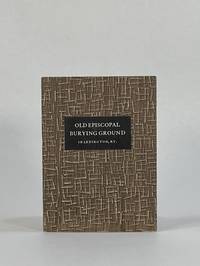
19679403Lexington KY: Gravesend Press printed by Robert Middleton 1967. Original Wrappers. Near Fine binding. 12mo. 4 5 3 pp. frontis illus. Limited edition. As issued sewn into pastepaper wrappers with printed paper label on the front wrapper. <br /> <br /> A beautiful copy with three engravings by DePol including the final tail-piece "Finis / Gravesend / Press." The book was nearly complete already set in type at the time of Graves's unexpected death in 1960. After many years Joe's wife and partner Lucy Graves decided to complete this edition as the final Gravesend imprint complete with the prophetic tailpiece. An absolutely charming piece of Lexington history and most certainly a part of the private press movement that was burgeoning. No indication of the size of the edition. Gravesend Press | printed by Robert Middleton unknown