46 412 résultats
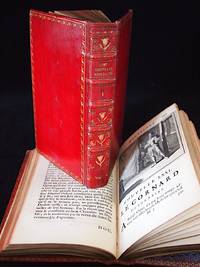
1685743Lyon: Jean Girin & Barthélemy Rivière 1685. First edition. <br /> <br /> A landmark in the cultural and scientific history of coffee tea and chocolate — the three “new beverages†of early modern Europe. Written by Philippe Sylvestre Dufour 1622–1687 a Lyon apothecary physician and merchant this 1685 first edition is among the earliest treatises devoted to the preparation medicinal properties and social virtues of these drinks. Dufour discusses the origin of coffee in the Ottoman Empire tea in China and cacao in the Americas blending pharmacological observation with moral reflection on their consumption. The work marks an important moment in the spread of global trade and early modern dietary theory illustrating how exotic imports became staples of European life and medicine.<br /> <br /> Illustrated with three full-page engravings and an engraved frontispiece including a striking depiction of an Ottoman coffee drinker a Chinese tea ceremony and a native American holding a chocolate vessel. These plates helped define the visual iconography of coffee and chocolate in the 17th century. Dufour’s Traitez became the foundational French-language reference on these drinks influencing subsequent European authors. This copy shows early marginal notes and the presence of all plates noted for the true first edition confirming its completeness and authenticity.<br /> <br /> Condition & Binding: Contemporary full mottled calf spine gilt in compartments with floral ornaments and gilt title “TRAITÉ DU CAFÉ.†Light rubbing and edge wear; some cracking along joints but binding remains solid and entirely original. Mild staining and toning to a few leaves; scattered foxing consistent with age. Engravings crisp and well-inked showing excellent impression quality. Early manuscript notes on title and endpaper likely from an 18th-century hand. Overall- good. Jean Girin & Barthélemy Rivière unknown
1692LV1992Paris:: Chez Claude Barbin Jean Boudot George & Louis Josse avec privilege du Roy 1692. 1692. Sm. 4to. xx 406 xxiv pp. 6 chapter vignettes engraved by Vallet pp. aii 1 71 165 231 323 large engraved portrait of General Stanislas Jablonowski by Picart large folding map of Siberia 3 engraved plates: engr. pl. of transport sled of Moscow facing p.150 engr. pl. of a Calmouc Tartar facing p. 195 "Esquiss des Cosaques" facing p. 356. Nineteenth century quarter maroon morocco maroon paper over boards; rubbed. Rubber-stamp of Abbe E. Emile Longin Beaujeu fl.1904; receipt of sale of this copy to Armand Pushman 1932 NYC. First edition. This work was first translated into English in 1693. "At this time a major preoccupation of the Catholic Church and its China mission was to discover a safe land route from Europe to Peking through central Asia. This was due to the large numbers of out-going clergy who perished tragically every year at sea." Ames & Love p. 202. "The last decade of the century saw the publication of the accounts of several overland travelers to China and their destinations of China’s inner-Asian neighbors. The story of the Jesuit Philippe Avril’s attempt to establish a route across Russia for the safe passage of missionaries to China appeared in 1692 and includes descriptions of both the routes from Moscow to China and the peoples on China’s frontiers. Avril himself however did not travel beyond Moscow and his descriptions therefore are not the result of his own observations." Lach & Kley pp. 1685-1686. The same for Nicolaas Witsen. Avril Philippe a Jesuit born in France explored extensively throughout Asia and the Far East. He was a professor of mathematics and philosophy in Paris before he began his overland journey. He traveled for six years through Kurdistan Armenia Astrakhan Persia and other parts of the southeast. At one point he came to Moscow and was refused entry to Tatary. He was sent by the government to Poland via Istanbul and back to France. Apparently affected by exhaustion and disease he still undertook another voyage his last for the ship was lost at sea circa 1698. – Love Ronald S. "A Passage to China: A French Jesuit’s Perceptions of Siberia in the 1680s." French Colonial History 3: p. 94 2003. Ames & Love offer: "Though obliged to leave Moscow Avril did not return to France with Louis Barnabe . . . Remaining instead at Warsaw the two Jesuits had entered in early March 1688 Avril attempted twice more to achieve his objective or reaching China by land – if not through Siberia then via Persia and Central Asia. Aided in part by the Polish monarch John Sobieski r.1674-1696 and his ambassador to Russia the French priest once again traveled to Moscow in late spring. Just two days after his arrival in the Muscovite capital however Avril was ordered summarily out of the country. Once again he appealed the command in vain. ‘Russia intended to keep her trade with China a secret.’ Nor did he have better luck later the same year 1688 when he and a fellow Jesuit Pere de Beauvillier tried going south to Constantinople instead and thence through Persia to Bokhara Samarkland and the Chinese frontier. Crossing secretly into Ottoman territory the two men were arrested as spies. After several weeks they secured their release and resumed their trek. But Avril whose health had been waning as a result of relentless exertions suddenly developed a hemorrhage. Ordered to abandon the search and return home by his superiors he reached France in autumn 1689." Ames & Love p. 219. For Abbe Emile Longin provenance: see Bulletin de la Societe des sciences et arts du Beaujolais 1904 p.92. There is a Maggs Bros. London booksellers receipt of sale of this copy to Armand Pushman 10 Nov. 1932. Armand was one of two sons of Hovsep Pushman 1877-1966 an American artist of Armenian descent. He had studied art at the Imperial School of Fine Arts Istanbul. For a time Pushman lived at the famous Mission Inn Riverside California. He was also involved in the founding of the Laguna Beach Art Association. Armand Pushman d.1999 lived to 98 years and had been throughout his career a partner with his brother in their carpet business Pushman & Company. See: NYT Obituary January 11 1999. See: Henri Cordier Bibliotheca Sinica Dictionnaire Bibliographique des ouvrages relatifs a l’Empire chinois t. III 2088; De Backer Augustin & Carlos S.J. Sommervogel Bibliotheque de la Compagnie de Jesus. Bibliographie tome I p.706; Donald F. Lach Edwin J. Van Kley Asia in the Making of Europe Volume III: A Century of Advance book 4: East Asia. University of Chicago Press 1998; Glenn Joseph Ames Ronald S. Love Distant Lands and Diverse Cultures: The French Experience in Asia 1600-1700. Praeger 2003 – pp. 202 219; Howgego A142; Salmaslian Armenag Bibliographie de l’Armenie 1946 p. 238; Walravens Hartmut China illustrata. Das europaische Chinaverstandnis im Spiegel des 16. bis 18. Jahrhunderts. Mit einem Beitrag von David E. Mungello. Ausstellung im Zeughaus der Herzog August Bibliothek Wolfenbuttel vom 21. Marz bis 23. August 1987. Ausstellungskataloge der Herzog-August-Bibliothek Nr. 55 Wolfenbuttel: Herzog August Bibliothek 1987 55. 1691. Chez, Claude Barbin, Jean Boudot, George & Louis Josse, avec privilege du Roy, 1692. hardcover books
1692LV1992Paris:: Chez Claude Barbin Jean Boudot George & Louis Josse avec privilege du Roy 1692. 1692. Sm. 4to. xx 406 xxiv pp. 6 chapter vignettes engraved by Vallet pp. aii 1 71 165 231 323 large engraved portrait of General Stanislas Jablonowski by Picart large folding map of Siberia 3 engraved plates: engr. pl. of transport sled of Moscow facing p.150 engr. pl. of a Calmouc Tartar facing p. 195 "Esquiss des Cosaques" facing p. 356. Nineteenth century quarter maroon morocco maroon paper over boards; rubbed. Rubber-stamp of Abbe E. Emile Longin Beaujeu fl.1904; receipt of sale of this copy to Armand Pushman 1932 NYC. First edition. This work was first translated into English in 1693. "At this time a major preoccupation of the Catholic Church and its China mission was to discover a safe land route from Europe to Peking through central Asia. This was due to the large numbers of out-going clergy who perished tragically every year at sea." Ames & Love p. 202. "The last decade of the century saw the publication of the accounts of several overland travelers to China and their destinations of China's inner-Asian neighbors. The story of the Jesuit Philippe Avril's attempt to establish a route across Russia for the safe passage of missionaries to China appeared in 1692 and includes descriptions of both the routes from Moscow to China and the peoples on China's frontiers. Avril himself however did not travel beyond Moscow and his descriptions therefore are not the result of his own observations." Lach & Kley pp. 1685-1686. The same for Nicolaas Witsen. Avril Philippe a Jesuit born in France explored extensively throughout Asia and the Far East. He was a professor of mathematics and philosophy in Paris before he began his overland journey. He traveled for six years through Kurdistan Armenia Astrakhan Persia and other parts of the southeast. At one point he came to Moscow and was refused entry to Tatary. He was sent by the government to Poland via Istanbul and back to France. Apparently affected by exhaustion and disease he still undertook another voyage his last for the ship was lost at sea circa 1698. – Love Ronald S. "A Passage to China: A French Jesuit's Perceptions of Siberia in the 1680s." French Colonial History 3: p. 94 2003. Ames & Love offer: "Though obliged to leave Moscow Avril did not return to France with Louis Barnabe . . . Remaining instead at Warsaw the two Jesuits had entered in early March 1688 Avril attempted twice more to achieve his objective or reaching China by land – if not through Siberia then via Persia and Central Asia. Aided in part by the Polish monarch John Sobieski r.1674-1696 and his ambassador to Russia the French priest once again traveled to Moscow in late spring. Just two days after his arrival in the Muscovite capital however Avril was ordered summarily out of the country. Once again he appealed the command in vain. 'Russia intended to keep her trade with China a secret.' Nor did he have better luck later the same year 1688 when he and a fellow Jesuit Pere de Beauvillier tried going south to Constantinople instead and thence through Persia to Bokhara Samarkland and the Chinese frontier. Crossing secretly into Ottoman territory the two men were arrested as spies. After several weeks they secured their release and resumed their trek. But Avril whose health had been waning as a result of relentless exertions suddenly developed a hemorrhage. Ordered to abandon the search and return home by his superiors he reached France in autumn 1689." Ames & Love p. 219. For Abbe Emile Longin provenance: see Bulletin de la Societe des sciences et arts du Beaujolais 1904 p.92. There is a Maggs Bros. London booksellers receipt of sale of this copy to Armand Pushman 10 Nov. 1932. Armand was one of two sons of Hovsep Pushman 1877-1966 an American artist of Armenian descent. He had studied art at the Imperial School of Fine Arts Istanbul. For a time Pushman lived at the famous Mission Inn Riverside California. He was also involved in the founding of the Laguna Beach Art Association. Armand Pushman d.1999 lived to 98 years and had been throughout his career a partner with his brother in their carpet business Pushman & Company. See: NYT Obituary January 11 1999. See: Henri Cordier Bibliotheca Sinica Dictionnaire Bibliographique des ouvrages relatifs a l'Empire chinois t. III 2088; De Backer Augustin & Carlos S.J. Sommervogel Bibliotheque de la Compagnie de Jesus. Bibliographie tome I p.706; Donald F. Lach Edwin J. Van Kley Asia in the Making of Europe Volume III: A Century of Advance book 4: East Asia. University of Chicago Press 1998; Glenn Joseph Ames Ronald S. Love Distant Lands and Diverse Cultures: The French Experience in Asia 1600-1700. Praeger 2003 – pp. 202 219; Howgego A142; Salmaslian Armenag Bibliographie de l'Armenie 1946 p. 238; Walravens Hartmut China illustrata. Das europaische Chinaverstandnis im Spiegel des 16. bis 18. Jahrhunderts. Mit einem Beitrag von David E. Mungello. Ausstellung im Zeughaus der Herzog August Bibliothek Wolfenbuttel vom 21. Marz bis 23. August 1987. Ausstellungskataloge der Herzog-August-Bibliothek Nr. 55 Wolfenbuttel: Herzog August Bibliothek 1987 55. 1691. Chez, Claude Barbin, Jean Boudot, George & Louis Josse, avec privilege du Roy, 1692. hardcover
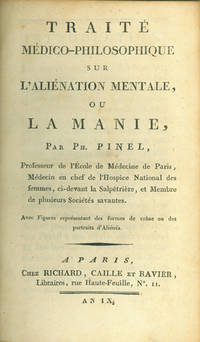
180134528Paris: Richard An IX 1801. <p>Foundation of Modern Psychiatry</p> <p> Pinel Philippe1745-1826. Traite medico-philosophique sur l'alienation mentale ou la manie. 8vo. lvi 318pp. Fold. printed table 2 engraved plates. Paris: Richard Caille & Ravier An IX 1800/1801. 193 x 118 mm. Quarter mottled sheep paste paper boards vellum corners slightly worn at spine. Light browning & foxing but a fine copy.</p> <p> First Edition. Garrison-Morton 4922. Pinel was one of the first to treat the insane humanely striking the chains from the lunatics at the Bicetre Hospital and implementing his "traitement moral" a compassionate form of psychiatric therapy that identified insanity with illness rather than moral perversity or demonic possession. In his Traite Pinel replaced the theorizing and speculation characteristic of earlier works on mental illness with his own practical observations of the Bicetre's mental patients whose behavior could now be observed undistorted by cruel treatment. He retained the old classifications of mental illness but distinguished mania from delirium and recognized the relationships between periodic mania melancholy and hypochondria. He recognized emotional disorders to be the main cause of intellectual dysfunction but also took into account heredity predisposition and hypersensitivity and attempted to find relationships between insanity and cranial deformity. Pinel founded the Salpetriere's famous school of psychiatry and trained a generation of psychiatrists the most important of whom was Esquirol. Norman 1701. Hunter & Macalpine pp. 602-10. Zilboorg pp. 319-41. </p> . Richard (An IX) unknown books
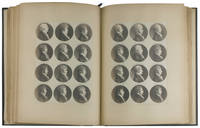
1862CAT0173New York: Elias Dexter 1862. Small folio later black cloth viii 104 pp. Complete with sixty-three plates as well as a photographic title page. One of 100 copies. Very Good. A very scarce and important reference on Saint-Memin also important as one of the earliest books illustrated with unique sets of photographic prints. This copy generally well preserved with some occasional fading to plates. Some dampstaining to text portion at margins. Light marginal creasing to corners of plates not affecting images. The photographic title page appears to be a copy of an earlier edition reading: Partie de la Collection des 818 / Portraits graves / par / Ch. Balt Julien Fevret de Saint Memin ancien Officier / aux Gardes Francaises pendant son emigration aux Etats-Unis. 1793 - 1814 and includes sixteen portraits surrounding the text. This title page detached all other pages soundly attached with a sound 20th-century cloth binding in generally excellent condition with some slight bowing to boards. A nice copy of a very scarce work. Title continues "Photographed by Gurney and Son of New York from proof impressions of the original copper-plates engraved by M. de St.-Memin from drawings taken from life by himself during his exile in the United States from 1793 to 1814. To which are prefixed a memoir of M. de St.-Memin by Ph. Guignard and biographical notices of the persons whose portraits constitute the collection compiled from authentic and original sources by the publisher E. Dexter." Miles Saint-Memin 212; Howes F107 "b"; Sabin 75444 OCLC 4827791. Elias Dexter unknown books
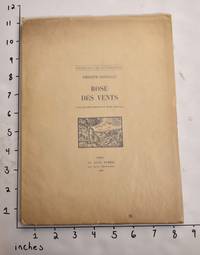
1920165270Paris: Au Sans Pareil 1920. 1 of 9 copies on Japon Imperial paper Copy No. IV. Softcover. VG or better glassine jacket with minor chipping few tiny tears no significant loss microscopic at best. Printed oversize wraps with glassine jacket. Half-title. Title-page with woodcut vignette and 4 woodcut illustrations by Marc Chagall. 48 pp. Among Marc Chagall's earliest book illustrations preceded only by appearances in 1914 and 1918. With Andre Breton Soupault was one of the founders of the Surrealist movement: "Soupault's earliest verse collection 'Aquarium' 1917 was published with the help of Guillaume Apollinaire who introduced Soupault to André Breton. In 1919 Soupault Breton and Louis Aragon cofounded the review 'Littérature'. Originally drawn to the antirationalism of the Dada movement Soupault soon rejected its nihilism and he and Breton experimented with other revolutionary techniques. One result of their experimentation was the "automatic writing" of the jointly authored 'Les Champs magnétiques' 1920; 'The Magnetic Fields' known as the first major Surrealist work. Soupault soon abandoned automatic writing to produce carefully crafted verses such as those in 'Westwego' 1922 and 'Georgia' 1926. As the Surrealist movement became increasingly dogmatic and political Soupault grew dissatisfied with it and eventually broke with it and Breton" Encyclopedia Britannica online. Exceptionally rare one of 9 such copies. Au Sans Pareil unknown books
elala3421Brussels: A.Mertens Printer 1829. First Edition of the English Translation of this rare romanticized account. The Battle of Navarino the last naval battle in history to be fought entirely with sailing vessels took place on 20 October 1827 during the Greek War of Independence 1821–32 in Navarino Bay on the west coast of the Peloponnese peninsula in the Ionian Sea. Equipped with superior vessels and arms and better trained crews the smaller combined English French and Russian force commanded by Vice-Admiral Sir Edward Codrington succeeded in destroying a combined Ottoman Algerian and Egyptian armada. 8vo. pp. 88. folding lithographed frontis. contemporary quarter roan dampstained throughout some light foxing neat repairs to frontis.– no loss Brussels: A.Mertens, Printer, 1829 unknown
140727aafA Basle, publié par Chrétien de Mechel, 1795, gr. in-8vo, 142 p. + 1 f. de table + 1 grande carte dépl. ‘Carte pétrographique du St. Gothard par M.M. Exchaquet, Struve et I.:P. van Berchem’ levée en1791 et publié par Chr. Mechel en 1795. La page de titre avec cachet (Bibliothèque Gd. St. Bernard - Martigny et signature) et une vignette gravée par C. Haldenwang qui montre un alpiniste devant les hautes cimes enneigées, le faux-titre, le titre et la page 100 portent un cachet ovale de ,Bibliothèque Gd. St. Bernard - Martigny’ ainsi l'ex libris manuscrit de ‘Sup. Mr. Murith C.R. Prieur de Martigny’, entièrement non rogné, auréole humide vers la fin dans un coin marginale extérieure, brochure originale d'attente d'époque. Pièce de titre ms. sur papier au dos, bas du dos avec pte restauration. Dans son état original mis dans une boite spécial avec dos en cuir, auteur et titre or.
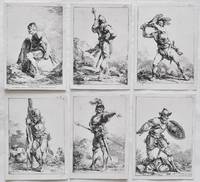
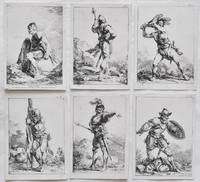
175525093<p>A work from Loutherbourg`s early career when he was in Paris 1755 – 1770. This series is outstandingly rare. Ca. 11.9 x 8.5 cm; plate mark not visible; in fine condition.</p><p>Literature: Le Blanc.</p><p>Loutherbourg an Alsatian painter who studied etching in Johann Georg Wille's academy clearly admired the prints of the seventeenth-century Neapolitan painter Salvator Rosa as did many other French printmakers of the time. In the set entitled "First suite of Soldiers"Loutherbourg took up a format associated with Rosa in order to showcase his own inventiveness and fluency.</p><p><strong>Philip James de Loutherbourg</strong> RA 31 October 1740 – 11 March 1812 whose name is sometimes given in the French form of <strong>Philippe-Jacques</strong> the German form of <strong>Philipp Jakob</strong> or with the English-language epithet of <strong>the Younger</strong> was a French-born British painter who became known for his large naval works his elaborate set designs for London theatres and his invention of a mechanical theatre called the "Eidophusikon". He also had an interest in faith-healing and the occult and was a companion of the confidence-trickster Alessandro Cagliostro</p><p><input type="checkbox"></p></p><p>Loutherbourg was born in Strasbourg in 1740 the son of an expatriate Polish miniature painter.1 Intended for the Lutheran ministry he was educated at the University of Strasbourg.2</p><p>Rejecting a religious calling Loutherbourg decided to become a painter and in 1755 placed himself under >Charles-André van Loo in Paris and later under Francesco Giuseppe Casanova. His talent developed rapidly and he became a figure in the fashionable society of the day. In 1767 he was elected to the French Academy although below the age required by the rules of the institution and painted landscapes sea storms and battles all of which work had a celebrity above those of the specialists then working in Paris. He made his debut with the exhibition of twelve pictures including <em>Storm at Sunset</em> <em>Night</em> and <em>Morning after Rain</em>.2</p><p>Loutherbourg then travelled through Switzerland Germany and Italy distinguishing himself as much by his mechanical inventions as by his painting. One of these showing new effects produced in a model theatre was the wonder of the day with its use of lights behind canvas representing the moon and stars and the illusory appearance of running water produced by clear blue sheets of metal and gauze with loose threads of silver.2</p><p>In 1771 he settled in London where David Garrick paid him £500 a year to design scenery and costumes and oversee the stage machinery at the Drury Lane Theatre.3 His stage effects attracted the admiration not just of the general public but also of artists including Joshua Reynolds. He devised scenic effects in which for instance green trees gradually became russet and the moon rose and lit the edges of passing clouds:2 illusions achieved through the use of coloured lantern-slides and the ingenious lighting of transparencies.4 He continued to work at the theatre until 1785.3</p><p>He achieved an even greater success with an entertainment called the <em>Eidophusikon</em> meaning "image of nature". This was a miniature mechanical theatre measuring six by eight feet and described as displaying "Various Imitations of Natural Phenomena represented by Moving Pictures". It was presented at Loutherbourg's home from March 1781 in an auditorium seating about 130 people. He used Argand lamps to light the stage and stained glass to change colours.</p><p>At Christmas 1781 Loutherbourg mounted a spectacle at a party in the Egyptian Hall at Fonthill for William Beckford promising according to Beckford to "present a mysterious something that the eye has not seen or heart of man conceived".4 Following this he attempted rather more fantastical subjects for the Eidophusikon presenting a scene from <em>Paradise Lost</em> with "Satan arraying his troops on the banks of the Fiery Lake and the rising of the Palace of Pandemonium".4 The Eidophusikon soon closed however as the income did not cover the costs and the audience demanded new productions faster than Loutherbourg could create them. He has been called the inventor of the panorama but although it first appeared about the same time as the Eidophusikon the first panorama was painted and exhibited by the Scottish painter Robert Barker.</p><p>Despite these other projects Loutherbourg still found time for painting. <em>Lord Howe's action or the Glorious First of June</em> exhibited 1795 and other large naval pictures were commissioned to commemorate British naval victories many of them ending up soon afterwards in the Greenwich Hospital Gallery in whose successor the National Maritime Museum they still remain. His finest work was the <em>Destruction of the Armada</em>. He also painted the <em>Great Fire of London</em> and several historical works including the <em>Attack of the Combined Armies on Valenciennes</em> 1793.2 He was interested in the industrial revolution and his 1801 painting <em>Coalbrookdale by Night</em> shows iron foundries at work.</p><p>Seven of his paintings including <em>Lodore Waterfall</em> and <em>Skating in Hyde Park</em> are in the Government Art Collection.5</p><p>He was made a member of the Royal Academy in 1781.</p><p>Two sets of drawings by de Loutherbourg were published reproduced in aquatint under the title <em>Picturesque English Scenery</em> in 1801 and 1805. He also contributed illustrations to a Bible published by Thomas Macklin in 1800.3 After his death Cadell and Davies published a volume of the Apocrypha. All 110 of his drawings for the vignettes but not the Apocrypha are pasted in the Bowyer Bible in Bolton Museum in Greater Manchester.</p><p>Esoteric interests</p><p>In 1789 Loutherbourg temporarily gave up painting in order to pursue an interest in alchemy and the supernatural.3 He met Alessandro di Cagliostro who instructed him in the occult.3 He travelled about with Cagliostro leaving him however before his condemnation to death.2 He and his wife also took up faith-healing. A pamphlet called <em>A List of a Few Cures performed by Mr and Mrs De Loutherbourg of Hammersmith Terrace without Medicine</em> was published in 1789. Written by a follower named Mary Pratt it claimed that the Loutherbourgs had cured two thousand people between Christmas 1788 and the following July "having been made proper recipients to receive divine manuductions".6</p><p>Death</p><p>Loutherbourg died in Chiswick in 1812.</p><p>There are paintings by him in the collections of many British institutions including Tate Britain The Victoria and Albert Museum The National Portrait Gallery The Royal Academy of Art Leicester Farnham and Derby Art Gallery.7</p><p>Loutherbourg was buried in Chiswick Old Cemetery adjoining the graveyard of St Nicholas Church Chiswick. Buried nearby are the artists William Hogarth and James Abbott McNeill Whistler.</p>
176022093<p>A work from Loutherbourg`s early career when he was in Paris 1755 - 1770. This series is outstandingly rare. Ca. 11.9 x 8.5 cm; plate mark not visible; in fine condition.</p><p>Literature: Le Blanc.</p><p>Loutherbourg an Alsatian painter who studied etching in Johann Georg Wille's academy clearly admired the prints of the seventeenth-century Neapolitan painter Salvator Rosa as did many other French printmakers of the time. In the set entitled "First suite of Soldiers"Loutherbourg took up a format associated with Rosa in order to showcase his own inventiveness and fluency.</p>
17792092902138100218Not Available 1779. Soft Cover. Fine. Size: 55.5cmx73.5cm Number of books: 1 Not Available paperback
Z1-C-050-00587Manchester Univ Press. Used - Good. Ships from UK in 48 hours or less usually same day. Your purchase helps support Sri Lankan Children's Charity 'The Rainbow Centre'. Ex-library so some stamps and wear and may have sticker on cover but in good overall condition. 100% money back guarantee. We are a world class secondhand bookstore based in Hertfordshire United Kingdom and specialize in high quality textbooks across an enormous variety of subjects. We aim to provide a vast range of textbooks rare and collectible books at a great price. Our donations to The Rainbow Centre have helped provide an education and a safe haven to hundreds of children who live in appalling conditions. We provide a 100% money back guarantee and are dedicated to providing our customers with the highest standards of service in the bookselling industry. Manchester Univ Press unknown
Z1-F-011-00795Manchester Univ Press. Used - Good. Volume 2A only. Ships from UK in 48 hours or less usually same day. Your purchase helps support Sri Lankan Children's Charity 'The Rainbow Centre'. Ex-library so some stamps and wear but in good overall condition. 100% money back guarantee. We are a world class secondhand bookstore based in Hertfordshire United Kingdom and specialize in high quality textbooks across an enormous variety of subjects. We aim to provide a vast range of textbooks rare and collectible books at a great price. Our donations to The Rainbow Centre have helped provide an education and a safe haven to hundreds of children who live in appalling conditions. We provide a 100% money back guarantee and are dedicated to providing our customers with the highest standards of service in the bookselling industry. Manchester Univ Press unknown
Z1-C-044-00777Manchester Univ Press. Used - Good. Ships from UK in 48 hours or less usually same day. Your purchase helps support Sri Lankan Children's Charity 'The Rainbow Centre'. Ex-library so some stamps and wear but in good overall condition. 100% money back guarantee. We are a world class secondhand bookstore based in Hertfordshire United Kingdom and specialize in high quality textbooks across an enormous variety of subjects. We aim to provide a vast range of textbooks rare and collectible books at a great price. Our donations to The Rainbow Centre have helped provide an education and a safe haven to hundreds of children who live in appalling conditions. We provide a 100% money back guarantee and are dedicated to providing our customers with the highest standards of service in the bookselling industry. Manchester Univ Press unknown
173649994à Cologne: Chez Pierre Gaillard 1736. Fine. Chez Pierre Gaillard à Cologne 1736 9.50 x 15.50 cm relié Reprint by the same publisher of the first edition of 1701 illustrated with a frontispiece and 100 half-page figures by Romain de Hooghe and retouched by Picart le Romain. Rare. Late 18th century binding possibly later in full red Russia leather. Foreign binding perhaps Russian. Spine with raised bands decorated with compartmented tulip tools. Gilt title and volume label. Head and foot rolls. Decorative border on covers. All edges gilt. Headcap of volume 2 partly worn. Corners slightly bumped. A tear to the lower joint of volume 2. Despite minor defects handsome and uncommon binding the set in good condition and well-printed. Les Cent Nouvelles nouvelles is the first collection of French novellas commissioned by the Duke of Burgundy Philip the Good to whom it is dedicated and who received it in 1462. It brings together one hundred very free tales by authors from the Burgundian court satirical and ribald in spirit particularly targeting women and the clergy. Pierre Champion attributes its authorship to Philippe Pot although 36 different storytellers can be identified. Their model of inspiration is clearly Boccaccio's Decameron. Along with La Fontaine's Contes this represents Romain de Hooghe's finest work who captured the spirit of each tale in a lively manner full of fantasy and humor. Chez Pierre Gaillard hardcover
1685262811Lyons: Girin 1685. hardcover. very good. 3 full page copperplate engravings and 4 engraved chapter headings. Thick 12mo 22 445 5 pages rubricated title and edges full calf gilt spine chipped and worn. Lyons: Jean Girin & B. Riviere 1685. Scarce. Very good .<br/><br/> Sabin 21146; Wellcome II p. 494; Bitting 134.<br/><br/> Girin unknown books
1685262811Lyons: Girin 1685. hardcover. very good. 3 full page copperplate engravings and 4 engraved chapter headings. Thick 12mo 22 445 5 pages rubricated title and edges full calf gilt spine chipped and worn. Lyons: Jean Girin & B. Riviere 1685. Scarce. Very good .<br/> <br/> Sabin 21146; Wellcome II p. 494; Bitting 134.<br/> <br/> Girin unknown
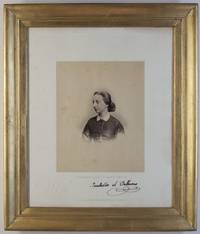
33048showing them each head and shoulders in slight profile looking towards each other 7½" x 5½" in mounts 12" x 10" with fine gilt frames no place no date London circa He became the Prince Royal heir-apparent to the throne when his father Prince Ferdinand-Philippe died in a carriage accident in 1842. He became King in 1848. His wife was the daughter of Infanta Luisa Fernanda of Spain and Prince Antoine Duke of Montpensier 18241890 the youngest son of Louis-Philippe of France and Marie Amalie of the Two Sicilies. They had eight children. In 1873 anticipating a restoration of the monarchy by the largely monarchist National Assembly that had been elected following the fall of Napoleon III the Count of Paris withdrew his claims to the French throne in favour of the legitimist claimant Henri V best known as the Comte de Chambord. In fact he died childless so the Count of Paris was recognized by most monarchists as Philippe VII of France. Louis Philippe died at Sheen House in Surrey in 1894. From the collection of Grand Duke Kyril & Victoria Melita. John Jabez Edwin Paisley MAYALL 1813 -1901 was an English photographer who in 1860 took the first carte-de-visite photographs of Queen Victoria. unknown
197854564Paris Fdration Nationale 1978 In-4, en feuilles, couverture imprime (embotage de l'diteur)."Ouvrages" est ddi ceux qui savent que recevoir ne suffit pas, ceux qui donnent, les uns aprs les autres, leurs forces et leurs c?urs, pour toujours refaire, modeler, voire parfaire la terre dans une sculpture sans cesse renouvele qui allie la beaut du site au mieux-tre de l'homme (texte d'introduction). Edition originale des textes de Pierre de Calan, Philippe Clment, Jean Janiaud et Paul Vialar. Le livre se dcompose en une prface de Philippe Clment (Prsident de la Fdration nationale des travaux publics) et 8 parties, chacune sous une couverture distincte avec les textes suivants: Le Mtier de btisseur (un chantier; des sols, des roches, des sables... Une faune de machines) - La Gense des travaux publics (Khops, Khephren, Mykrimos; Albi; fortifications; tour mtallique d'Eiffel; stade en encorbellement) - L'Eau (une cluse; digue sur la mer; le canal; docks; un barrage avec chteau d'eau) - La Terre (travailler le sol; terrassements; routes; galeries; voies ferres) - Le Feu (raffinerie; gazomtres; forage en mer; centrale; four solaire) - L'Air (piste d'envol; arodrome; ensembles aroportuaires; tlcommunications; antenne) - L'?uvre des hommes (l'eau; la terre; le feu; l'air). Les deux premiers textes sont de Pierre de Calan et Jean Janiaud. Les cinq suivants runissent des citations de Victor Hugo, Goethe, Emile Verhaeren, Albert Samain, Gilbert Tournier, Alexis de Tocqueville, Henri Bosco, Henri Aubert, Remy de Gourmont, Louis de Broglie, Eschyle, Cyriel Buysse, Antoine de Saint-Exupry, Edmond Rostand, Georges Sorel. Le dernier texte est de Paul Vialar. L'ensemble est illustr de 32 lithographies originales hors texte en couleurs de Peter Klasen (5), Alain Le Foll (5), Alain Le Yaouanc (7), Jacques Poli (5), Pierre Skira (5) et Raoul Ubac (5). Tirage limit 1.011 exemplaires sur vlin d'Arches. Un des 85 exemplaires accompagns d'une suite des 32 lithographies en couleurs, chaque preuve signe par l'artiste respectif. Exemplaire enrichi de la carte d'invitation illustre publie pour la soire de prsentation du livre qui a eu lieu la Galerie Adrien Maeght le 23 fvrier 1978.
186120316Nantes Charpentier 1861 -in-folio demi-chagrin 3 volumes, reliure d'époque demi-chagrin havane in-folio Editeur (binding half shagreen in-folio Editor)(49 x 33,5 cm), RELIURE EDITEUR D'EPOQUE (pour l'Edition de Luxe), dos à nerfs (spine with raised bands) décoré or (gilt decoration), plat orné d'un décor romantique en encadrement avec, au centre du premier plat, le blason de Paris, le Louvre médiéval et la devise de la capitale soutenus par deux personnages, toutes tranches dorées, illustré de 100 lithographies sur fond teinté, certaines rehaussées de détails en couleurs, d'après BENOIST, CHAPUY, ISABEY, etc. et 38 bois gravés in-texte, légères mouillures claires (sur moins de 3 cm2) au coin inférieur droit des 17 premiers feuillets du 1er volume et des 2 premiers feuillets du 3ème volume, [(4)-XII-88-(2)-122] + [(6)-76-(2)-44-(2)-24-(2)-22-(2)-36-(2)-26] + [(8)-76-(2)-80-(2)-34] pages, 1861 Nantes Paris : Imprimerie de Charpentier père, Fils et Cie Editeurs,
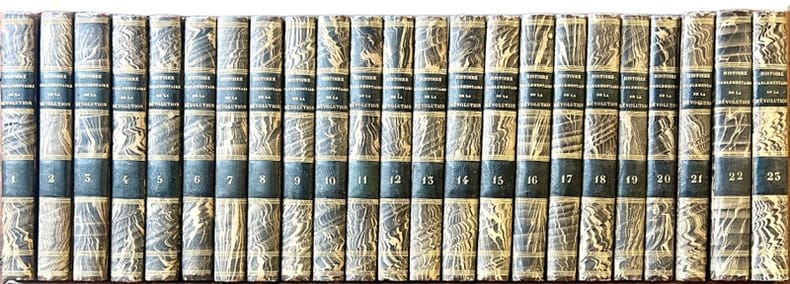
183412367Paris, Paulin, 1834-1838. 40 vol. in-8, cartonnage à la Bradel, dos lisse orné de filets dorés, pièces de titre et de tomaison de maroquin noir (reliure de l'époque).
169711811697 Amsterdam [Amstelaedami], Jean Wolters [Joannem Wolters], 1697. 24 x 18 cm (R), in-4, 1 f. bl. - titre frontispice entièrement gravé - 11 ff. n. ch. (dont titre, dédicace, adresse au lecteur, epistolae, table et privilège) - 565 pp. - 31 ff. n. ch. d'index - 2 ff. bl. - 2 planches, 3 tableaux et 41 (sur 43) cartes gravées hors texte, dont 40 sont dépliantes ou à double page, reliure hollandaise de l'époque en plein vélin doré, plats estampés à froid de motifs des Pays Bas espagnols dans un double encadrement de filets avec fleurons d'angle, dos estampé de filets et fleurons, titre manuscrit à l'époque, traces de lacets. (sig. *3, **4, ***4, A-Z4, Aa-Zz4, Aaa-Zzz4, Aaaa-Kkkk4)
232485Paris, Firmin Didot Frères, 1854-1860 19 vol. in-8, important index (tout le T. XIX), demi-chagrin brun, dos à nerfs, filets dorés et à froid (rel. de l'époque). Dos passé.
185413325Paris, Firmin-Didot, 1854-1860. 19 vol. in-8, demi-chagrin rouge, dos orné à nerfs (reliure de l'époque).
200043960Paris Les Bibliophiles de 2000 In-4, en feuilles, couverture imprime (embotage de lditeur).Edition originale, illustre par Julius Baltaza rde 9 gravures originales en taille-douce en couleurs hors texte et de 17 culs-de-lampe reproduits en gris fonc. Tirage unique limit 155 exemplaires numrots sur vlin dArches, signs par lauteur et lartiste. Exemplaire enrichi dune des 30 suites sur vlin dArches des 4 planches refuses en couleurs, justifies et signes par lartiste, et dune des 30 suites sur papier du Moulin de Pascal Jeanjean des 9 gravures originales en noir, chacune galement justifie et signe par Julius Baltazar.