Albert Camus; Hugh Levick [Translator]Biblio.com
American Journals Abacus Books
034910087X.Gpaperback. Good. Access codes and supplements are not guaranteed with used items. May be an ex-library book. paperback

Bonita · États-Unis60,83 $US≈ 51,47 €
3 904 résultats
1987Q-091372968XParagon House 1987-01-01. Hardcover. New. In shrink wrap. Looks like an interesting title! Paragon House hardcover
DADAX091372968XBrand: Paragon House 0000-00-00. First Edition. hardcover. New. 8.50x6.00x1.30. Buy with confidence. Excellent Customer Service & Return policy. Brand: Paragon House hardcover
034910087X.Gpaperback. Good. Access codes and supplements are not guaranteed with used items. May be an ex-library book. paperback
198734816New York: Paragon House Publishers 1987. First English Translation First Edition. 8vo publisher's original white cloth lettered in gilt on the spine and upper cover in the original black and white photographic dustjacket. 157 pp. A fine copy and the near fine dust jacket with one tiny 1/2" closed tear and light mellowing. FIRST EDITION FIRST ENGLISH TRANSLATION FROM CAMUS' PERSONAL NOTEBOOKS DATED 1935 UNTIL HIS DEATH 25 YEARS LATER. "Especially revealing and rewarding are these American Journals which chronicle his travels in North and South America between 1946 and 1949 when he was at the pinnacle of success. In them he observes new places and people formulates ideas for future work The Plague and reveals his dreams fears and desires - all relating to his intense struggle to find an ethic in this dark decade of human history." - Paragon Paragon House Publishers hardcover
1989431532London : Hamilton 1989. First Edition. Hardcover. Near fine cloth copy in a near-fine very slightly edge-nicked and dust-dulled dust-wrapper. Remains particularly well-preserved overall; tight bright clean and strong. Physical description: 155 pages ; 22 cm. Subjects: Camus Albert 1913-1960; Camus Albert 1913-1960. Diaries; 1900-1999; Authors French 20th century ; Biography; Écrivains français 20e siècle ; Biographies; Authors French; Authors French ; Biography; America Description and travel; United States Description and travel; South America Description and travel; French literature Camus Albert 1913-1960; Fiction in French Camus Albert 1913-1960 Biographies. London : Hamilton hardcover
091372968X.Ghardcover. Good. Access codes and supplements are not guaranteed with used items. May be an ex-library book. hardcover
1990465324Abacus. Good. 1990. Reprint. Soft Cover. T148 . Abacus paperback
198738998NY:: Paragon House. Very Good in Very Good dust jacket. 1987. Hardcover. 091372968X . Translated from the French by Hugh Levick. First American edition. Uniform age toning throughout text block else very good in a very good dust jacket. . Paragon House, hardcover books
19673131857Paris: "Les Belles Lettres" 1967. (4), 286 Seiten. 8° (17,5-22,5 cm). Orig.-Leinenband mit Goldprägung. [Hardcover / fest gebunden].
5221ALBERT CAMUS 1913-1960. Camus was a Nobel Prize-winning French author best known for his absurdism and works like The Stranger and The Plague. AM. 5pgs. N.d. 1946. N.p. An autograph manuscript draft of Albert Camus’s famous “The Crisis of Man†or “The Human Crisis†speech. Camus delivered this landmark speech at Columbia University on March 28 1946 during his only trip to the United States. Asked to talk about the French sensibility Camus delivered a compelling meditation about the Second World War and the crisis facing all humanity. The tone is both stirring and thought-provoking. Camus had been a resistance fighter during the war and his experiences obviously color his speech particularly in his descriptions of atrocities committed during the war. In 2016 Columbia held an event to commemorate the 70th anniversary of Camus’s speech. There actor Viggo Mortensen read Camus’s speech to a sold-out crowd in the Miller Theatre – the same venue where Camus had spoken. Even three-quarters of a century after its debut “The Crisis of Man†remains relevant and timely and people continue to reflect on it today. This manuscript is Camus’s draft of the speech. As such it differs in some places from the version he actually delivered. The manuscript is written in French. The English translation is as follows: “When it was suggested to me to do lectures at the EUDA the United States I felt scruples and hesitated. I am not of the age to give lectures and It was in the reflex as well as the categorical affirmation since I don’t show myself in person at what is generally held to be the truth. Having taken notice of my scruples they gave the very polite response that the important thing was not that I have a personal opinion. What was important was that I would in a way bring to France the various elements of information that would permit my audience to form an opinion. As to what about it was proposed that I tell my listeners about the current state of French theater literature and even philosophy. I responded that it might be at least as interesting to speak about the extraordinarily hard work of the French railroad workers and the…of which the miners from the North seem to work. I was told patiently that you should never force your talent and that it was good that the specialists were treated by those who were suspicious of them and that since I had been interested in literary questions for a long time and thus certainly knew nothing about railroad switches it was only natural that I would be asked to speak about literature rather than the railroad. I understood right away. And I agreed in short to speak of what I knew and to give an idea of France. That is precisely why I chose to speak neither of literature nor of the theater. Because literature theater philosophy and maybe even the hard work of railroad workers and mail carriers intellectual research and the hard work of an entire people are only the reflections of a fundamental questioning of a struggle for life and for man reflections that for us make up the entire problem of the time. The French feel that man is quite threatened and that he cannot go on believing a certain idea of man who is not…And that is why out of loyalty to my country I chose to speak of my…And even if it were a matter of speaking about what I knew I did not believe I could do better than retrace as clearly as possible the spiritual experience of people of my generation because that experience has had the whole…of the world crisis and because it may bring a faint shimmer and faith to the destiny of the railroad workers and an aspect of today’s French sensibility. How did that happen In this world that is deprived of value in this desert of the heart where we live what did this revolt mean It made men who say no out of us. But at the same time we were men who say yes. We said no to this world to its essential absurdity to the abstractions that threatened us to the culture of death that was being prepared for us. By saying no we affirmed that things had been like that for long enough that there was a limit that could not be passed. But at the same time we affirmed everything that was beyond that limit; we affirmed that there was something in us that defended the scandal and that was impossible to humiliate too long. And of course that was a contradiction but one that had to make us reflect. We thought that this world was and would continue to be without any real value. But then again there we were fighting against Germany. The men of the Resistance whom I met and who read Montaigne on the trains where they carried their tracts showed at least to us that one could not understand the skeptics while having a notion of honor. But consequently through the simple fact of living of hoping and of fighting we affirmed something. But some thing had a general value – did it extend beyond the thoughts of the individual – did it seem to serve as a rule of conduct The answer is simple. The men I am talking about accepted their death at the start of their revolt. And that death proved that they were sacrificing themselves for the good of a pay-off that went beyond their personal existence and thus their individual destiny. What these revolutionaries defended against an enemy destine was a value that is shared by all men. – When the men were tortured in front of their concierge when the nights were purposefully chopped up when mothers saw themselves forced to condemn their children to death and when the just were buried like hogs these revolutionaries decided that something inside of them was being denied to them that did not belong to them alone but was a common bond where the men found their solidarity all ready. Yes that was the big lesson of these terrible years when the wrong done to a student in Prague would touch a blue-collar worker in a suburb of Paris and when the blood spilled on the banks of a central-European river would bring a Texas farmer to spill his on the soil of the Ardennes that he had never seen before. And that in itself was absurd and crazy impossible almost anyway to imagine. But that absurdity at the same time carried in it the lesson that we were all in a collective tragedy and what was at stake was our common dignity a feeling of communion with each other that was crucial to defend and to maintain. Aside from that we knew how to act and we learned how the individual in the most absolute moral denouement again can find enough values to rule his conduct. For if that communication between individuals in the mutual recognition of their dignity was the truth then it was that communication that had to be helped. And in order to maintain that communication it meant people had to be free because there is nothing in common between a master and a slave and you cannot talk and communicate with someone who is subservient. Yes servitude is a form of silence the most terrible of all. And in order to maintain that communication we had to make sure that injustice would disappear because there is no contact between one who is oppressed and one who profits from it. Envy too is in the domain of silence. And in order to maintain that communication we had to banish lying and violence for someone who lies closes himself off from other people and someone who tortures and uses force imposes the ultimate silence. Aside from the negation of the simple movement of our revolt we also drew moral strength from liberty and sincerity. 2 This crisis then is based on the impossibility of persuasion. People live and can do so only because of the notion that they have something in common where they can always meet. You always believe that by speaking humanely to a person you can get a humane reaction. Yet we have also discovered this: there are people you cannot persuade. It was impossible for a victim in concentration camps to even begin to explain to the SS who were beating her that they shouldn’t do it. The Greek mother whom I have mentioned could not persuade the German officer that the terrible choice he put her in was just impossible. It’s because the SS or the German officer didn’t represent a person anymore or persons but an instinct that had been elevated to an idea or a theory. Passion even if murderous would have been preferable. Because passion has an end and another passion another scream from the heart or flesh can convince it. But a person who is capable of caring sincerely about the ears that he himself has previously torn that man is not impassioned he is mathematical and no one can stop or convince him. 3This crisis is also about the replacement of natural objects with print that is to say the increase of bureaucracy. Contemporary man more and more puts an abstract and complicated machine between himself and nature which throws him back into solitude. When there is no more bread tickets appear. The French have only 1200 calories of nutrition a day but they have at least six different pieces of paper all stamped a hundred times. And it is like that all over the world where bureaucracy has not ceased to multiply. To come to America from France I used a lot of paper in both countries. So much paper that I suspect I could have printed this lecture on some of it and have it copied here without even having to show up. With the help of paper offices and functionaries we are creating a world where human warmth disappears where nobody can touch anybody else unless it is through the maze of what is called formalities. The German officer who flattered my comrade about his wounded ears thought he could do so because he had torn them and it was part of his job as a functionary so consequently that couldn’t be bad. To summarize one only dies or loves or kills anymore by permit. That is what you call at least I think so a good organization. 4 The crisis is also about the replacement of the real person with the political person. Individual passions are no longer possible only collective passions meaning abstract passions. We are all introduced to politics by agreeing or by force. What counts is not that you respect or spare the suffering of a mother but that a doctrine triumphs. And human pain is no longer a scandal but only a numeral in an addition whose terrible sum total cannot be calculated yet. 5 It is clear that all these symptoms are replicated in one single one which is at once the cult of effectiveness and that of abstraction. This is why today’s European knows only solitude and silence. And that is because he cannot join others with their values that they have in common. Since he is no longer defended by human respect based on his values the only alternative open to him from now on is to be victim or else executioner.†This highly-significant manuscript is in fine condition overall. It has some crossouts red pencil underlining light toning a couple of folded corners horizontal folds on every page and a small stain on the third page. unknown books
1963329898np: New Labratory Press 1963. One of 30 copies hand set in 14 point Hunt Roman a type designed by Hermann Zapf printed at the New Labratory Press. 4pp. Small folio. Gray wrappers. Fine. One of 30 copies hand set in 14 point Hunt Roman a type designed by Hermann Zapf printed at the New Labratory Press. 4pp. Small folio. New Labratory Press unknown
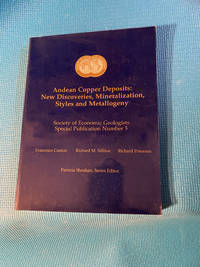
19981654<p><strong>Andean Copper Deposits: New Discoveries Mineralization Styles and Metallogeny</strong> is a foundational volume that provides a comprehensive and systematic analysis of the diverse copper endowment of the Peruvian Andes. Edited by Francisco Camus Richard H. Sillitoe and Richard Petersen this Special Publication from the Society of Economic Geologists offers a detailed synthesis that was critical for understanding one of the world's most important copper provinces at the close of the 20th century.</p><p>The book moves beyond a simple catalog of deposits to establish a robust metallogenic framework defining the spatial and temporal distribution of different copper deposit types and linking them to the distinct magmatic and tectonic episodes of the Andean Orogeny. It was instrumental in highlighting Peru not just as a porphyry copper district but as a region hosting a remarkable variety of economically significant copper mineralization styles.</p><p><strong>Key themes and contributions include:</strong></p><ul><li><p><strong>Diversity of Deposit Types:</strong> Provides detailed descriptions and genetic models for the wide spectrum of copper deposits in Peru including porphyry Cu-Mo skarn Cu-Fe-Au enargite-rich high-sulfidation veins volcanogenic massive sulfide VMS and sandstone-hosted copper.</p></li><li><p><strong>Metallogenic Domains:</strong> Establishes the concept of geographically and chronologically distinct metallogenic belts or domains each characterized by specific deposit types and associated with geochemically unique magmatic arcs.</p></li><li><p><strong>New Discoveries and Models:</strong> Features detailed accounts of major new discoveries and presents updated geological models that incorporate the latest research serving as a vital update to the region's exploration database.</p></li><li><p><strong>Exploration Implications:</strong> Clearly outlines the geological criteria and settings for each deposit type providing a powerful tool for generating new exploration targets and understanding regional-scale controls on mineralization.</p></li><li><p><strong>Authoritative Benchmark:</strong> As a collaborative work involving leading experts this volume became an essential reference for exploration geologists and researchers setting the standard for subsequent metallogenic studies in the Andes and other porphyry provinces.</p></li></ul><p>An indispensable resource for economic geologists this work remains a classic for anyone engaged in the study or exploration of copper deposits in the Andean Cordillera.</p><p><strong>Editors:</strong> Francisco Camus Richard H. Sillitoe Richard Petersen<br /><strong>Issuing Body:</strong> Society of Economic Geologists U.S.<br /><strong>Title:</strong> Andean Copper Deposits: New Discoveries Mineralization Styles and Metallogeny<br /><strong>Publisher:</strong> Society of Economic Geologists Littleton Colorado<br /><strong>Publication Year:</strong> 1998<br /><strong>Language:</strong> English</p> Society of Economic Geologists paperback
Mm 130x215 Europe: revue littéraire mensuelle, 67 année, n° 727-728, Novembre-Décembre 1989. Brossura editoriale di 290 pagine. Copia molto buona. Testo in lingua francese - french text. SPEDIZIONE IN 24 ORE DALLA CONFERMA DELL'ORDINE.
1940LFA-126728446Revue de 76 pages, format 140 x 225 mm, illustrée, brochée, Impr. du Courrier de l'Ain, bon état
Mm 170x240 Collana "Studi Filosofici" - Volume nella sua brossura originale, 398 pagine. Copia come nuova, spedizione in 24 ore dalla conferma dell'ordine.
196932912Paris Présence Africaine 1969 Petit In-8 traces de plis en coin de couvertures
22131HARDCOVER. GOOD /GOOD SOME TEARS . AGED SOME YET PAGES CLEAN hardcover
16653Broché - 15 x 21 - 97 pp - année 1996 - Opales / comptoir d'Edition -
1996513014Editions du Rocher 1996 121 pages 20x13x1cm. 1996. Broché. 121 pages. dos légèrement décoloré
1104617862.Gpaperback. Good. Access codes and supplements are not guaranteed with used items. May be an ex-library book. paperback
1165918382.Gpaperback. Good. Access codes and supplements are not guaranteed with used items. May be an ex-library book. paperback
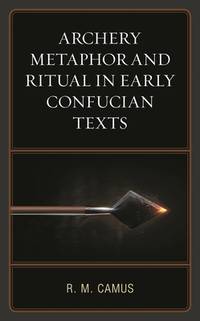
2020x-1498597203Lexington Books 2020. Hardcover. New. 152 pages. 9.00x6.00x8.99 inches. Lexington Books hardcover
1498597203.Ghardcover. Good. Access codes and supplements are not guaranteed with used items. May be an ex-library book. hardcover
2009DADAX1498597203Lexington Books 2020-09-28. hardcover. New. 6.36x0.65x8.99. Buy with confidence. Excellent Customer Service & Return policy. Lexington Books hardcover
2009SONG1498597203Lexington Books 2020-09-28. hardcover. Used: Good. 6.36x0.65x8.99. Buy with confidence. Excellent Customer Service & Return policy. Lexington Books hardcover