16 724 résultats
1967149869New York: Andy Warhol Film 1967. Vintage poster for the 1967 film. Two versions of the film were shot - one with an all nude all male cast that was never released publicly and one with both male and female actors wearing G-strings which was originally screened at the Hudson Theater in New York. <br /> <br /> A stylistic breakthrough in that the film entirely jettisons any pretense to plot dramatic action or sex found in Andy Warhol's previous sexploitation experiments instead featuring extended monologues by superstar Viva and conversations with others that touch on a variety of controversial topics. One of Warhol's most overtly political films also starring draft resister Andrew Duggan and the first pairing of Viva with Taylor Mead who would appear together in several more Warhol films. <br /> <br /> 19 x 25 inches rolled on archival linen with a small amount of professional restoration and repair. Near Fine with minor soil. <br /> <br /> Murphy The Black Hole of the Camera. Warholstars. Andy Warhol Film unknown
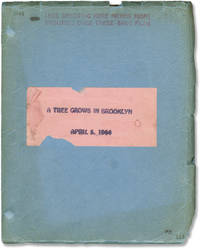
1944140644Los Angeles: Twentieth Century-Fox 1944. Final Shooting script from the 1945 film. With credit on the title page for screenwriter Anita Loos who would go uncredited in the final film. <br /> <br /> Based on the classic 1943 coming-of-age novel by Betty Smith. Nominated for Best Screenplay and James Dunn won for Best Supporting Actor. Peggy Ann Garner was also awarded a special Academy Juvenile Award for her lead performance. <br /> <br /> Blue titled wrappers noted as Shooting Final on the front wrapper rubber-stamped production No. 944 and copy No. 111 dated April 5 1944. Distribution page present with receipt removed. Title page present dated April 5 1944 noted as Final Script with credits for screenwriters Tess Slesinger and Frank Davis and "contributions by" Anita Loos. 200 leaves with last page of text numbered 198. Mimeograph duplication. Pages Fine wrapper Good bound internally with two gold brads. <br /> <br /> National Film Registry. Twentieth Century-Fox unknown
1928135601Paris: Studio Soulat-Boussus 1928. Vintage double weight photograph from the set of the 1928 film. Shot by Jean Soulat and Mauric Boussus of Studio Soulat-Boussus in Paris with respective stamps on the verso. <br/><br/>An excessively rare photograph from Dreyer's masterpiece capturing Maria Falconetti in what one could accurately described as "in character." Franconetti became a stage actress in Paris in 1918 and had appeared in only one other film. For this role today still considered one of the most astonishing performances ever committed to celluloid director Dreyer reputedly pushed her to the brink of emotional collapse. It was to be her final film role after which she returned to producing and starring in light stage comedies including work at the Comedie-Francais in Paris. In 1946 having fled to South America during World War II and having suffered a lifetime of mental illness she committed suicide in Brazil. <br/><br/>6.5 x 8.75 inches. In an archival mat. Fine. Studio Soulat-Boussus unknown books
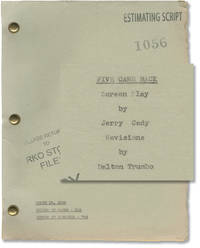
1939152589Culver City CA: RKO Radio Pictures 1939. Estimating script for the 1939 film.<br /> <br /> In his 1970 biography of Nathanael West Jay Martin notes: "On June 6 1938 West was hired for his 'established' salary of $350 a week by RKO Pictures-the first of five major studios to employ him-to make a screenplay from an original story by Richard Carroll. Putting everything else aside within a week he outlined his plans for treating the material. He fretted all weekend over whether the outline would be accepted knowing that he could be out of a job again on Monday. <br /> <br /> On late Monday afternoon he was persuaded to telephone the executive producer Lee Marcus who told him to go ahead at once to the screenplay. On July 20 West finished a first draft for what would be one of his most successful films. After eight weeks in all having polished his script West was released by RKO. <br /> <br /> At this point it appeared that West had a good chance to earn a single credit for this high budget B-quality movie but the studio called in a hack writer Jerry Cady to polish West's script. After Cady's work on it proved unsatisfactory Dalton Trumbo came in to do a revision before the film went into production. Trumbo eliminated most of the revisions made by Cady restored some of West's material and made still other alterations. By this time West had returned to New York and although his secretary demanded that he ask the guild to arbitrate the credits he appeared indifferent and nearly missed getting any screen credit at all."<br /> <br /> An aerial melodrama about nine passengers on a commercial flight from Los Angeles to Panama City who crash-land in the Amazon rainforest. The production helped launch the career of a then-unknown Lucille Ball and paved the way for later disaster epics of the 1970s as well as the popular television sitcom "Gilligan's Island." <br /> <br /> Set in Los Angeles and the Amazon rainforest. <br /> <br /> Green titled wrappers stamped ESTIMATING DRAFT on the front wrapper dated March 15 1939 with credits for screenwriters Jerry Cady and Dalton Trumbo. Title page integral with the first page of text. 133 leaves with last page of text numbered 133. Carbon typescript on yellow onionskin stock. Pages and wrapper Near Fine bound with three gold brads. RKO Radio Pictures unknown
1965133150New York: Filmmakers' Cinematheque 1965. An archive of two original posters for Don Snyder's multi-media presentation "Spectro-Mach 1" along with extensive manuscript annotations diagrams and charts. Instructions include visual and aural cues for projectionists and musicians detailed instructions for presentation sequence numbered 1 to 13 across the versos of the two posters random project development annotations and a handwritten note with event information. <br/><br/>"Spectro-Mach 1" was a largely undocumented collaborative multimedia performance developed by Don Snyder featuring poet and musician Angus MacLise Ralph Metzner co-author of "The Psychedelic Experience" and John Cale. Inspired by the psychedelic environments of Gerd Stern and Michael Callahan's "USCO" Snyder incorporated minimalist music similar to MacLise and Cale's work with Theatre of Eternal Music with hypnotic visuals and repetitive actions. This work proved influential on Andy Warhol's "Up-Tight" which premiered at the Filmmakers' Cinematheque two months later. <br/><br/>Snyder was a prolific and highly influential photographer. His most famous collection of photographs "Aquarian Odyssey" Liveright 1979 chronicles utopian communities in New York New England and San Francisco in the 1960s and the personalities that fueled them but it narrowly represents his career which was furiously active and varied since his start in the late 50s. He was also regarded as a master printer and struck photographs for Eugene Smith Diane Arbus and Gerard Malanga. <br/><br/>Posters 9 x 14.5 inches letterpress folded. Typescripts 8.5 x 11 inches folded. Manuscript cue charts 8.5 x 11 inches. Event information sheet 4 x 4 inches. All material is supple with some expected wear from use Very Good overall. <br/><br/>Gerard Malanga "Don Snyder 1934-2010" Berkshire Fine Arts. Filmmakers' Cinematheque unknown books
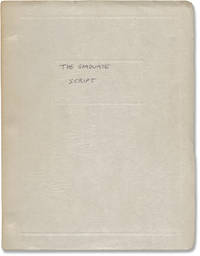
1967160795N.p.: N.p. 1967. Archive of material from the 1967 film belonging to an unknown crew member including one annotated Final Draft script and a bound set of manuscript breakdown sheets. Screenplay annotations primarily note scene changes with occasional mentions of transportation in the film. <br /> <br /> Based on Charles Webb's 1963 novel a satirical tale of the suffocation of the middle class told through a recent college graduate's ersatz relationship with an older married woman. Nominated for seven Academy Awards winning Best Director for Mike Nichols. <br /> <br /> In an introduction to a 2010 screening of the film screenwriter Buck Henry noted that it was not until he had completed his version of the script that he discovered Calder Willingham had written an earlier one-meaning there was no collaboration between the two writers whatsoever. Though Henry's was the script used for the film both screenwriters were ultimately credited. <br /> <br /> Set in Pasadena. <br /> <br /> Screenplay: <br /> <br /> Beige wrappers with title noted in manuscript ink annotation on the front wrapper. Title page present noted as Final Draft dated March 29 1967 noting production No. 20055 with credit for screenwriter Buck Henry. 162 leaves with last page of text numbered 176. Early xerographic duplication rectos only. Pages Near Fine wrapper Very Good plus with light rusting on the wrapper versos near the binding bound internally with three silver brads.<br /> <br /> Bound breakdown sheets:<br /> <br /> Beige wrappers with title noted in manuscript ink annotation on the front wrapper. Lacking title page presumably as issued. 154 leaves with last page numbered 154. Early xerographic duplication rectos only. Pages Near Fine wrapper Very Good plus with light rusting on the wrapper versos near the binding bound internally with three silver brads.<br /> <br /> National Film Registry. Criterion Collection 800. Clover Men Women and Chainsaws. N.p. unknown
1959139477Paris: Les Films du Carrosse 1959. Original French Grande poster for the 1959 film. Poster design by Boris Grinsson. <br /> <br /> Truffaut's auspicious debut winner of Best Director at Cannes nominated for the Palme d'Or and also nominated for a Best Original Screenplay Oscar the following year. <br /> <br /> 47 x 62 inches. Linen backed and rolled. Bright and Fine. <br /> <br /> Capitaine 207. Warren Vol. 1 p. 159. Les Films du Carrosse unknown
1981143723Los Angeles: CBS Television Network 1981. Wardrobe breakdown pages and shooting schedule for the 1981 television film which originally aired on October 24 1981 on CBS. Archive belonging to an unknown crew member in the wardrobe department with holograph annotations on every page and 94 Polaroid photographs tipped onto pages throughout. <br/><br/>A cult classic. Charles "Bubba" Ritter Larry Drake is wrongfully accused of attacking young Marylee Williams Tonya Crowe. He is murdered by a group of vigilantes while disguised as a scarecrow. The killers are tracked down and terrorized by a mysterious scarecrow after Bubba's innocence is revealed. <br/><br/>Set in the American South. Shot on location in California. <br/><br/>100 leaves xerographically duplicated without wrappers as issued. Pages and photographs Very Good bound with two gold brads. CBS Television Network unknown books
1924141664Berlin: Film-Kurier 1924. Original German programs for duology "Die Nibelungen" one each for "Die Nibelungen: Siegfried" and "Die Nibelungen: Kriemhild's Revenge." Based on the thirteenth century epic poem "Nibelungenlied." Text in German. <br/><br/>Film-Kurier was the first German film journal published daily beginning in 1919. Film-Kurier's classic era lasted until 1933 when its publisher Alfred Weiner had to flee Germany because of his Jewish origins. The issues from this era remain striking to this day because they were printed using a gravure reproduction process. Each day's issue would focus on a single film. <br/><br/>9 x 11.75 inches. Each program six pages folded loose leaves as issued. Very Good plus with a horizontal fold tiny pinholes to the corners and an occasional short closed tear. <br/><br/>Masters of Cinema 46. Film-Kurier unknown books
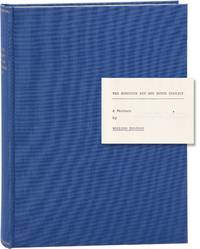
1969156803N.p.: N.p. 1969. Early Draft script for the classic 1969 Western film seen here under the working title "The Sundance Kid and Butch Cassidy." Bound in full blue cloth with the original wrappers bound in. <br /> <br /> A landmark of New Hollywood cinema and arguably the high spot as well as the beginning of an incredible streak of inventive cinematic achievements directed by George Roy Hill in the 1960s and 1970s including "Slaughterhouse-Five" 1972 "The Sting" 1973 and "Slap Shot" 1977. <br /> <br /> Loosely based on fact about two outlaws on the run from a lethal posse after a string of train robberies. They flee to Bolivia in search of a a better way to be thieves but ultimately meet their doom. Winner of four Academy Awards including Best Screenplay for William Goldman. <br /> <br /> Set in Wyoming and Bolivia and shot on location in New Mexico California Utah Colorado and Arizona in the US and in Morelos Guerrero and Sonora in Mexico. <br /> <br /> Blue untitled wrappers. Title page present undated with credits for screenwriter William Goldman. 177 leaves with last page of text numbered 175. Xerographic duplication rectos only. Pages Near Fine wrapper Very Good plus. Housed in a custom red and blue quarter-leather clamshell box. <br /> <br /> National Film Registry. Hardy The Western. Pitts 586. N.p. unknown
1969137566Beverly Hills CA: Emidela / United Artists 1969. Collection of vintage black-and-white negatives contact sheets and mounted slides and transparencies from the 1969 Italian-French film "Burn!" here under the original Spanish title "Quemada." From the collection of Sam Gilman with his name on several of the film processing envelopes in holograph ink. Gilman did not work in this film but worked with Brando on earlier films like "One-Eyed Jacks" 1961 and "The Young Lions " 1958 as well as later on "The Missouri Breaks" 1976. <br/><br/>Over 130 images representing on-the-set production featuring Marlon Brando on a lunch break director Pontecorvo riding a mule and members of the cast and crew as well as images of locals likely used as extras. Formats include 35mm color slides 35mm negative filmstrips medium-format negatives and mounted color transparencies and three 8 x 10 contact sheets. <br/><br/>Based loosely on the life of Sir William Walker 1824-1860. Walker Brando is a professional mercenary who ignites a slave revolt on an island in the Caribbean where the British sugar trade is in turmoil. After a successful mission Walker returns to Britain where he remains for ten years. The same slave revolt he helped initiate is now at war with the replacement regime and he is sent back to quell the revolt. Seen as a traitor to the natives Walker is subsequently assassinated riddled with guilt upon his death. <br/><br/>Shot on location in Colombia Morocco Italy and France. <br/><br/>All items Near Fine overall with slides transparencies and negatives still in the original film processing envelopes and boxes from the Emidela processing company in Barranquilla Colombia. <br/><br/>Complete collation details available on request. Emidela / United Artists unknown books
1952148414Los Angeles: Twentieth Century-Fox 1952. Revised Draft script for the 1953 film. With screenwriter Daniel Fuchs' holograph pencil and ink annotations throughout most noting substantive revisions and deletions.<br/><br/>Loosely based on Jean-Paul Le Chanois' 1951 French film "Without Leaving an Address." An ill-tempered New York cabbie helps an Irish immigrant with an infant son locate her missing husband. <br/><br/>Set and shot on location in New York.<br/><br/>Blue titled wrappers noted as Revised and WRITER'S WORKING SCRIPT on the front wrapper dated June 14 1952 noted as production No. 473. Title page present dated June 14 1952 noted as Revised Writer's Working Script with credits for screenwriter Daniel Fuchs. 116 leaves with last page of text numbered 115. Mimeographed on yellow stock rectos only. Pages Near Fine wrapper Very Good plus with a small dampstain to the bottom edge of the front wrapper bound internally with three gold brads. Twentieth Century-Fox unknown books
1964150570Beverly Hills CA: United Artists 1964. Collection of 15 vintage borderless reference photographs from the 1964 film all but one with a mimeo snipe on the verso. <br/><br/>The third James Bond film overall but the first to achieve blockbuster status and still arguably the best and still inarguably the one with the best theme song introducing many of the elements that would become staples of the franchise including the pre-credit sequence futuristic technology and gadgets and Bond's Aston Martin. Winner of an Academy Award also a first for the franchise. <br/><br/>Three photographs trimmed to 7.5 x 9.5 inches one trimmed to 7.5 x 9 inches the remainder 10 x 8 inches. Near Fine with slight curling and light edgewear. United Artists unknown books
1937147234Culver City CA: RKO Radio Pictures 1937. Treatment script for the 1939 musical here under the working title "Castles in the Air."<br/><br/>Based on real-life ballroom dancers Irene and Vernon Castle who rekindled an interest in Western ballroom dancing in the early 20th century. Irene Castle served on the film's production team and was purportedly quite difficult to please criticizing actor Ginger Rogers' refusal to bob her hair a style that Castle popularized in the US and more broadly the censorship restrictions which prohibited licentious-and Castle argued accurate-portrayals of the Ragtime Era or Jazz Age. A rare departure from the screwball comedies which characterized Fred Astaire and Ginger Rogers' earlier films and the final musical the pair would make with RKO Studios.<br/><br/>Set in New Jersey New York Paris and Britain.<br/><br/>White titled wrappers rubber-stamped "Please Return to RKO STORY FILES" and production No. 1010 on the front wrapper dated OCTOBER 13 1937 with credits for screenwriter Oscar Hammerstein II. Title page integral with the front wrapper as issued. 64 leaves with last page of text numbered 64. Carbon typescript on onionskin stock rectos only. Pages Near Fine wrapper Near Fine lightly edgeworn bound with three gold brads. RKO Radio Pictures unknown books
1936128046Paris: Robert and Raymond Hakim / Paris Film 1936. Draft script for the 1937 French film. An English-language version of the text issued by the Hakim brothers for use in the US. James M. Cain and John Howard Lawson adapted the story for a US film version in 1938 titled "Algiers" directed by John Cromwell and starring Charles Boyer and Hedy Lamarr. <br/><br/>A seminal noir antecedent oddly produced by the French who would go on to consider the Americans to be the inventors of the style. <br/><br/>White titled wrappers. Title page present with name of producers Robert and Raymond Hakim rubber-stamped at the bottom right corner. 150 leaves mimeograph duplication. Pages and wrapper Very Good plus with some spotting to the wrappers first few leaves and fore-edges bound with a single silver metal clip. <br/><br/>Criterion Collection 172. Hardy BFI Companion to Crime. Spicer US. Robert and Raymond Hakim / Paris Film unknown books
1927134522Beverly Hills CA: Metro-Goldwyn-Mayer MGM 1927. Shooting script for the 1928 film. Original typescript with descriptive text in black type and intertitles in red type. Holograph ink and pencil annotations on the front wrapper noting starring performers draft type and crediting screenwriter Meehan. With a few annotations in holograph pencil throughout. <br/><br/>Based on the 1923 Broadway play by David Belasco and Tom Cushing in turn an adaptation of the 1919 story "Ridi Pagliaccio" by Fausto Martini about two clowns who find an abandoned child. Years later one of the clowns falls in love with her and knowing that they can never be together performs a deadly stunt without safety protections. A partially lost film including an alternative happy ending. Nominated for an Academy Award in 1929 for Best Title Writing the only year for that category. <br/><br/>Set in Italy shot on location in Elysian Park a suburb of Los Angeles California. <br/><br/>Blue studio wrappers noted as FIRST TEMPORARY INCOMPLETE and struck through with Final Draft inscribed on the front wrapper rubber-stamped copy No. 1640 and production No. 5272 dated Nov. 19 1927 with credits for playwrights Belasco and Cushing and in ink screenwriter Meehan. 73 unnumbered leaves typescript on watermarked onionskin stock. Pages Near Fine wrapper Very Good split at the spine now encapsulated in mylar bound with two gold brads. Metro-Goldwyn-Mayer [MGM] unknown books
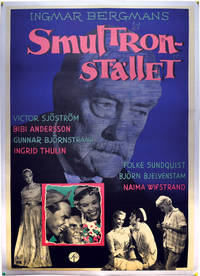
1957130149Stockholm: Svensk Filmindustri 1957. Original Swedish illustrated poster for the 1957 film. <br /> <br /> After exploring his disillusion with religion in the "Faith" trilogy Bergman took an unusually warm and humanistic view with this film a quiet reflection on old age youth and isolation. An aging medical professor travels to his former university to receive an honorary degree and finds himself in a euphoric state moving between the present and an abstract dreamlike muse that embodies his many regrets and disappointments but ending with a hauntingly beautiful return to the simplicity of his early days. <br /> <br /> 28 x 39 inches. Folded as issued. Near Fine. Svensk Filmindustri unknown
1928140443Beverly Hills CA: Metro-Goldwyn-Mayer MGM 1928. Draft script for the 1928 silent film seen here under the title "Chinatown." <br /> <br /> Lon Chaney is an undercover police detective who attempts to catch a thief notorious for slipping out of criminal charges by killing any witnesses set to testify against him though Chaney can't help but simultaneously get wrapped up with an attractive flapper along the way. Chaney hand-picked co-star Anita Page as his leading lady after seeing her performance in the 1928 film "Our Dancing Daughters." Now a partially lost film as two reels and the soundtrack for the picture have now been lost. <br /> <br /> Pale blue titled wrappers rubber-stamped copy No. 925 and production No. 1658 dated March 19 1928 with credits for screenwriter A.P. Younger. Title page integral with the first page of the text dated March 19 1928 with credits for screenwriter Younger. 169 leaves with unnumbered leaves. Carbon typescript on onionskin stock. Pages Very Good plus wrapper Very Good bound with two gold brads. Metro-Goldwyn-Mayer [MGM] unknown
158009Beverly Hills CA: Faces 1975. Draft script for the 1976 film. Copy belonging to crew member Lanie Heffernan with her annotations in manuscript ink on two pages in the script including her name on the top right corner of revision page 2A. <br /> <br /> Laid in with the script is a 30-page shooting schedule dated July 7 1975 and a four-page staff and crew list dated July 8 1975. <br /> <br /> The fourth of five films made by pioneering independent filmmaker John Cassavetes under his Faces distribution company about a strip club owner who is forced to perform a hit by the mob as payment for gambling debts. <br /> <br /> Red titled wrappers noted as copy No. 5 in manuscript ink annotation on the front wrapper. Title page present dated June 1975 with credit for director and screenwriter John Cassavetes. 115 leaves with last page of text numbered 96. Xerographic duplication rectos only with blue and pink revision pages throughout dated variously between 7/7/75 and 7/9/75. Pages Near Fine wrapper Very Good plus with moderate wear on the rear wrapper. Housed in a black three-ring binder. <br /> <br /> Criterion Collection 254. Silver Classic Noir. Spicer US. Faces unknown
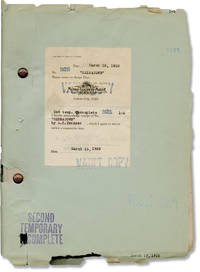
1946143620N.p.: Monogram Pictures 1946. Typescript of the Final Shooting script for the 1947 Poverty Row film noir. <br/><br/>Based on Cornell Woolrich's short story "Two Men in a Furnished Room" first published in the 1946 short story anthology "The Dancing Detective" under his pseudonym William Irish. <br/><br/>The tale of a manhunt for the murderer of a woman with a twin told through a series of flashbacks and plot twists "The Guilty" is a prototypical Poverty Row second feature. <br/><br/>Set in New York City. <br/><br/>Yellow titled self wrappers noted as "Exact typed copy of final shooting script" on the front wrapper dated 1946. Title page present with credits for screenwriter Robert Presnell Sr. and novelist Cornell Woolrich. 120 leaves with last page of text numbered 111. Carbon typescript on onionskin stock. Pages Fine wrapper Near Fine bound with three gold brads. <br/><br/>Grant US. Selby US Masterwork. Silver and Ward Classic Noir. Spicer US. Monogram Pictures unknown books
1969144659New York: Jerome Hellman Productions 1969. Draft script for the 1969 film. Copy belonging to the film's still photographer Ron Munkasci with his name in red manuscript ink at the top right corner of the title page.<br /> <br /> Based on the 1965 novel by James Leo Herlihy about an unlikely friendship between a would-be gigolo and an ailing con artist. Cornerstone film of the New Hollywood cinema nominated for seven Academy Awards winning Best Adapted Screenplay Best Director and Best Picture. <br /> <br /> Set in New York City shot on location in Miami Manhattan and Big Spring Texas. <br /> <br /> Dark blue titled wrappers noted as DRAFT SCREENPLAY at the bottom right and with the logo for JEROME HELLMAN PRODUCTIONS at bottom center. Title page present with credits for screenwriter Waldo Salt novelist James Leo Herlihy producer Jerome Hellman and director John Schlesinger noted as "A JEROME HELLMAN-JOHN SCHLESINGER PRODUCTION." 122 leaves with last page of text numbered 121. Mimeograph duplication rectos only. Pages Near Fine with some offsetting to the title page due to a newspaper clipping still present laid in wrapper Very Good plus.<br /> <br /> National Film Registry. Jerome Hellman Productions unknown
1955135819Universal City CA: Universal Pictures 1955. Revised Final Draft script for the 1956 film. Copy belonging to the script supervisor Adele Cannon profusely annotated throughout in holograph ink and pencil. Included is a studio still photograph from the film featuring the Creature and people in peril. <br/><br/>Third installment in the "Gill-man" series after "Creature from the Black Lagoon" 1954 and "Revenge of the Creature" 1955. After a laboratory fire severely damages the Creature's gills the head of the research team suggests an operation that will allow their subject to breathe air and walk on land. The operations seems successful until a violent confrontation leaves the Creature badly injured. Alone in alien territory the Gill-man shuffles off into the sea in anticlimactic resolution. <br/><br/>Where the first two films employed then-genre bending 3D effects this conclusion to the series was issued in 2D. Champion diver Ricou Browning again portrays the creature in the underwater sequences and Don Megowan as the land-walker. The Creature is perhaps the most popular of the underwater monsters of cinema rivaling Wes Craven's "Swamp Thing" 1982. <br/><br/>Set in Florida. <br/><br/>Salmon titled wrappers noted as FINAL SCREENPLAY on the front wrapper dated August 22 1955. Title page present undated with a credit for screenwriter Ross. 172 leaves with last page of text numbered 95. Mimeograph duplication with yellow blue and pink revision pages throughout dated variously between 8/29/55 and 9/22/55 and mimeograph scene annotations on the verso of nearly every page. Pages and wrapper Very Good plus bound with two silver screw brads. Photograph Very Good with staple holes and creases. <br/><br/>Lentz US. Universal Pictures unknown books
1996142445Hollywood: Paramount Pictures 1996. Revised Final rainbow production archive and script for the 1997 film. Copy belonging to uncredited crew member D. Maynard with their name in holograph ink on the half-title page and containing 88 tipped in Polaroid photographs throughout detailing cast hairstyles in particular scenes including numerous images of stars Joan Allen and Dominique Swain. <br/><br/>The second and most highly regarded of the six films legendary Hong Kong action director John Woo made in Hollywood and perhaps the purest distillation of his wildly over-the-top neo-noir aesthetic ever put to celluloid with a premise so gloriously nuts that one wonders how it ever was greenlit in the first place. Answer: it was the 1990s. John Travolta plays FBI agent Sean Archer who undergoes a face transplant to look like terrorist Castor Troy in order to infiltrate Troy's gang and discover the location of a bomb. Meanwhile Nicholas Cage plays terrorist Castor Troy who awaking to find out his face has been removed and placed on FBI agent Sean Archer forces the doctors to transplant Archer's face onto his in order to get his revenge. Archer now played by Cage must not only find the bomb but also track down Troy now played by Travolta before he kills his family. Guns are drawn explosions are walked away from scenery is chewed speedboats fly into midair and flocks of doves take flight. Nominated for an Academy Award. <br/><br/>Housed in a contemporary three ring binder. Yellow titled wrappers. Title page present dated October 22 1996 noted as Revised Final with credits for Mike Werb and Michael Colleary and revisions by Wesley Strick. 137 leaves with last page of text numbered 124. Xerographic duplication first generation copy with variously colored revision pages throughout dated variously between 11/7/96 and 3/13/97. Pages Fine wrapper Near Fine housed in generic three ring binder. <br/><br/>Grant US. Spicer Neo-Noir. Paramount Pictures unknown books
1957138838Czechoslovakia: N.p. 1957. Vintage keybook likely unique for the 1957 film comedy containing 119 vintage double weight photographs featuring both scenes from the film and candid photographs from the set. The photos are tipped in two to a page in a contemporary photo album with a title page credits in manuscript white paint including the director cinematographer producer and still photographer. Non-sequential numbering to the right of each photograph and occasional captions in silver ink and tissue paper between each page. <br /> <br /> An unconventional character-driven comedy about a group of varied and interesting folk occupying a Prague bus station platform and then a bus traveling on a four-hour journey from Prague to Karlovy Vary. <br /> <br /> Photographs approximately 7 x 5 inches. Near Fine extremely well preserved. <br /> <br /> Album 15 x 11.25 inches bound with string. Fraying to the extremities else Near Fine. N.p. unknown
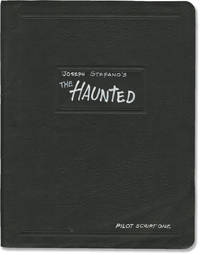
1964147167Los Angeles: Villa di Stefano Productions 1964. First Draft script for the 1964 television film which originally aired on CBS. With actor Martin Landau's copied annotations throughout. Included are a set of synopses for proposed episodes a shooting schedule a distributor's announcement booklet and various other documents related to production. <br /> <br /> Also included is an original celluloid print of the film on a single reel in its original mailing case with cloth straps dated 2/18/65 addressed from director Joseph Stefano to Landau on the mailing label in manuscript black ink and INSCRIBED by Stefano to Landau at the top left corner of the case in the same ink: "To Martin / Whose splendid brilliance and warmth put the special spark in this bright fire / Your grateful and admiring friend / Joe Stefano."<br /> <br /> Fearful of being buried alive a woman installs a phone in the crypt in which she plans to be in case of emergencies. Months after her death the phone begins to ring presenting a new ghostly case for Landau's paranormal investigator. <br /> <br /> The film was intended to be the pilot for a new paranormal thriller series tentatively titled "The Haunted" as titled on the front wrapper but the series wasn't picked up and the pilot was released as a television movie after additional footage was shot. <br /> <br /> Black titled wrappers with credits for director-screenwriter Joseph Stefano noted as PILOT SCRIPT ONE. Title page present dated July 27 1964 noted as PILOT SCRIPT ONE with credits for director-screenwriter Joseph Stefano. 77 leaves with last page of text numbered 76. Early Xerox rectos only. Pages Near Fine wrapper Near Fine bound internally with three silver brads. <br /> <br /> Film reel and film stock are unexamined. Villa di Stefano Productions unknown