16 722 résultats
1946149446Culver City CA: RKO 1946. Revised Final Script for the 1946 film with stamps "Revised Final Script" "Please Return to RKO Story Files" and production number "1838" on front wrapper. Carbon typescript on onionskin.<br/><br/>Based on Philip Van Doren Stern's 1943 short story "The Greatest Gift" about a man at the end of his rope during Christmas. Generally considered one of the greatest films ever made and nominated for five Academy Awards including Best Picture. <br/><br/>Shot on location in California. <br/><br/>Pink titled wrappers noted as REVISED FINAL SCRIPT on the front wrapper rubber-stamped production No. 1838 with credits for Frank Capra. 167 pages onionskin stock with last page of text numbered 167. Carbon typescript rectos only. Pages Near Fine wrappers Very Good plus bound with three gold brads with washers. RKO unknown books
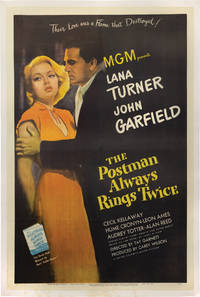
1946157187Beverly Hills CA: MGM 1946. Vintage one sheet poster for the 1946 film.<br /> <br /> Based on the 1934 novel by James M. Cain. A high spot of film noir as well as the careers of Lana Turner and John Garfield. <br /> <br /> Set and shot on location in Los Angeles.<br /> <br /> 27.25 x 41 inches. In an archival frame. Near Fine with some professional restoration and repair at the original folds.<br /> <br /> Grant US. Penzler 101. Selby US Masterwork. Silver and Ward Classic Noir. Spicer US. MGM unknown
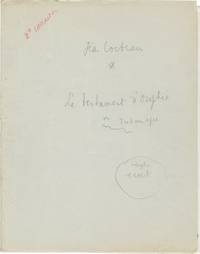
1958167441N.p.: N.p. 1958. Vintage ribbon copy typescript treatment for the 1960 French film. With substantive annotations in director Jean Cocteau's hand throughout noting deletions and amending dialogue. <br /> <br /> Full provenance available. <br /> <br /> The final film in Cocteau's "Orphic" trilogy following "The Blood of a Poet" 1930 and "Orphee" 1950. The only film in the trilogy featuring Cocteau himself as an aging poet who knows he is dying as indeed he was his greatest desire being to experience rebirth so that he can qualify for celestial immortality. <br /> <br /> With cameos by Pablo Picasso Charles Aznavour bullfighter Luis Miguel Dominguen and Yul Brynner. A few seconds of color are spliced in at one point a surreal effect used prior to this film in "Portrait of Jennie" 1948 and later in Samuel Fuller's "Shock Corridor" 1963. <br /> <br /> Having run out of funds in mid-production Cocteau was given money to complete filming by François Truffaut who used the prize money he had won at Cannes for "Les Quatre Cents Coups" 1959. <br /> <br /> Unbound housed in a gray paper folder. Title and Cocteau's name in manuscript pencil on the front of the folder. 31 leaves with last page of text numbered 28. Ribbon copy typescript on onionskin stock rectos only. Pages Fine unbound. N.p. unknown
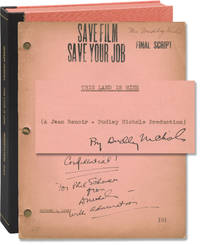
1942151348Santa Ana CA: RKO Radio Pictures 1942. Final Draft screenplay for the 1942 film. Copy belonging to legendary screenwriter Dudley Nichols inscribed by Nichols to Los Angeles Times film critic Phil Scheuer on the title page: "By Dudley Nichols / Confidential! / For Phil Scheuer from D. Nichols-with admiration." Nichols' ownership name is also in holograph pencil at the top right corner.<br/><br/>Renoir's second American feature an antifascist propaganda film following a meek schoolteacher in a German-occupied European country who is falsely accused of murder and forced to take a stand against the Nazis and their collaborators. <br/><br/>At the peak of his career Nichols worked with many key Golden Age directors including John Ford George Cukor Howard Hawks Fritz Lang and of course Jean Renoir. He was a founding member of the Screen Writers Guild and is best remembered for "The Informer" 1935 for which Nichols won an Academy Award "Bringing Up Baby" 1938 "Stagecoach" 1939 "For Whom the Bell Tolls" 1943 "Scarlet Street" 1945 "And Then There Were None" 1945 "The Bells of St. Mary's" 1945 and "The Tin Star" 1957. He continued to write prolifically for film up until the time of his death in 1960. <br/><br/>Housed in a custom quarter-leather clamshell box. <br/><br/>Pink titled wrappers noted as FINAL on the front wrapper rubber-stamped copy No. 104 dated OCTOBER 2 1942 with credits for director Jean Renoir and screenwriter Dudley Nichols. Distribution page present with receipt removed. Title page integral with the front wrapper. 169 leaves with last page of text numbered 162. Mimeograph duplication rectos only. Pages Near Fine wrapper Near Fine bound with three gold brads. RKO Radio Pictures unknown books
1960145469London: Warwick Film Productions 1960. First Draft script for the 1960 UK film. File copy belonging to the film's director Ken Hughes with a typescript note tipped on to the title page requesting its return to the director and noting it is the only script in existence for the film. <br/><br/>Peter Finch delivers a strong performance as the inimitable author Oscar Wilde in this film about Wilde's sodomy trial after his affair with Lord Alfred Douglas lifted in large part from the historical court records. One of two films about Wilde released in May of 1960 the other being director Gregory Ratoff's "Oscar Wilde." In order to compete with the other Wilde film production on "The Trials of Oscar Wilde" was made in only nine weeks from start to finish with filming wrapping a mere two weeks before the London opening. Composer Ron Goodwin was recording music before scenes were filmed most scenes were filmed in one take and four editing rooms were set up working in parallel during principal photography in order to deal with the rushed timeline. <br/><br/>Shot on location in England. <br/><br/>Green wrappers with a typescript title label. Title page present dated 28th January 1960 noted in holograph ink as First Screenplay. 210 leaves with last page of text numbered 208. Mimeograph duplication rectos only. Pages Very Good plus wrapper Very Good bound internally with two spring binder clips. Warwick Film Productions unknown books
1959133731Burbank CA: Warner Brothers 1959. Draft script for the 1960 film "Ocean's Eleven" seen here as "Oceans Eleven or And the Angels Sing." Copy belonging to actor Peter Lawford with his name to the front wrapper and his holograph annotations throughout. Lawford owned the rights to the film and accompanying this script is a signed note written on his wife's stationery that reads: "Oceans 11 / $10000 / 50-50- / P. Lawford" a copy of a contract between Lawford and talent agent Milton Ebbins and a clipping of a full-page advertisement for the film from "Variety" magazine. <br/><br/>A classic and well-loved heist film "Ocean's Eleven" is the quintessential Rat Pack picture in which a group of World War II veterans attempts a series of high-profile casino robberies in Las Vegas on New Year's Eve. Steven Soderbergh directed a popular 2001 remake of the film with two sequels starring George Clooney Brad Pitt and Matt Damon. <br/><br/>Set in Las Vegas and Los Angeles and shot on location in both cities. <br/><br/>Pale blue titled wrappers. Title page present. 162 leaves mimeograph duplication with white undated revision pages throughout labeled REVISED. Pages about Fine wrapper about Fine bound internally with three gold brads.<br/><br/>Lee The Heist Film. Warner Brothers unknown books
1972145005Burbank CA: Warner Brothers 1972. Original maquette demonstrating an early poster design for the 1973 film featuring a vintage silver gelatin photograph of the legendary streetlit scene of Father Merrin's first arrival to Georgetown in the film mounted to the poster.<br/><br/>A minimal design without the credits information seen in the completed original "purple style" poster variant and with a proposed but ultimately unrealized release date of Christmas Day shown at the bottom margin. This maquette compares both to the "purple style" poster in its use of said purple text but also to the original black and white "special poster" design both in size and compositional austerity. The "special poster" measured 25 x 19 inches as opposed to the standard 27 x 41 inches for the one sheet and stated nothing but the film's title and the stark photo of Father Merrin. <br/><br/>Based on the 1971 novel by William Peter Blatty and written for the screen by Blatty. One of the great genre films of the 1970s that accomplished the uncommon feat of being an over-the-top sensation upon its release and gaining subsequent status as a classic with a strangeness and depth supplied by Ellen Burstyn and Max von Sydow that only increases with repeated viewings. Another distinction was that it walked away with two Oscars including Best Screenplay for Blatty along with eight nominations including Best Picture a feat nearly unheard for a horror film. <br/><br/>Set in Washington DC and shot on location in Washington DC notably Georgetown University New York City and Mosul Iraq. <br/><br/>18 x 12.5 inches mounted on a 30 x 20 inch mat. Black with the vintage black and white photo of Father Merrin affixed at the center and a hand painted release date. Title letters are hand cut from purple paper and affixed in place. Good condition with water damage to the bottom three inches of the mat and with soil and loss of glue adhesion to the white mat. Archivally matted and framed in a museum-quality frame with UV glass.<br/><br/>National Film Registry. Clover "Men Women and Chainsaws. Warner Brothers unknown books
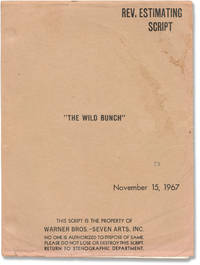
1967160830Burbank CA: Warner Brothers / Seven Arts 1967. Revised Estimating script for the 1969 Western film.<br /> <br /> Sam Peckinpah's classic revisionist Western of nearly inestimable importance and violence made at the peak of his career and which-along with "Straw Dogs" 1971-remains the lasting testament to his vision. A major contributor to the "end of the West" theme so prevalent of the genre in the 1970s and one of the earliest New Hollywood Westerns. <br /> <br /> Set in Mexico shot on location in Mexico and Spain. <br /> <br /> Beige titled Warner Brothers wrappers dated November 15 1967 noted as Rev. Estimating Script and stamped copy No. 75. Title page present dated 11/15/67 with credits for screenwriters Wallen Green and Sam Peckinpah and story credit for Roy Sickner. 125 leaves with last page of text numbered 123. Mimeograph duplication rectos only. Pages about Fine wrapper Very Good plus bound internally with two gold brads. <br /> <br /> National Film Registry. Ebert I. Hardy US. Pitts 4934. Rosenbaum 1000. Schrader Canon Fodder 28. Warner Brothers / Seven Arts unknown
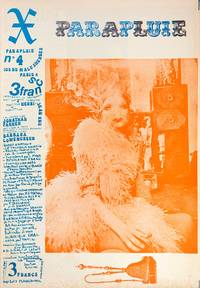
54774Paris; Imprimerie "Le Souterrain" 1970-1973. Folios 43.8 × 31 cm. Original color illustrated self-wrappers; first issue 16 all other issues 24 pp. each with numerous reproductions of photographs mostly printed in one or two colors as well as several comic strips. A few leaves somewhat toned and with wear to edges; one issue with small missing section of final leaf; else very good. Complete run of the rare Parisian underground music and counterculture monthly combining music journalism and radical politics with adventurous illustrations comics and written features on diverse aspects of the international counterculture experience particularly the psychosexual theories of Reich coverage of conflicts in Vietnam Algeria Ireland and South Africa the nascent ecological movement drug use and regulation film "anti-authoritarian education" occultism "sexual liberation" and underground new media.<br /> <br /> Experimental rocker and artist Enu was a major figure in the Parisian underground in the early 1970s and deeply committed to alternative media and new modes of distribution - primarily through Le Parapluie video and comics. International in scope Le Parapluie was a member of the Underground Press Syndicate network with notable contributions by artists and authors such as Dominique Tarlé Jean-Louis Brau Timothy Leary Allen Ginsberg and Andy Warhol and reviews or articles on music festivals and groups including the Isle of Wight Jimi Hendrix James Brown Roxy Music The Velvet Underground The Rolling Stones The Who John Lennon and Yoko Ono The Yardbirds David Bowie and Sun Ra among others. Together presenting a sophisticated and frank rendering of French counterculture shifting from the psychedelic era toward the harder-edge iconoclasm of protopunk.<br /> <br /> Bernière/Primois 32f.<br /> <br /> As of November 2024 KVK OCLC show only four holdings in North America. unknown
1949143058Tokyo: Film Art Association 1949. First Draft script for the 1949 Japanese film noir. Holograph ink and pencil annotations on two leaves. Text in Japanese. <br/><br/>Generally considered to be the greatest film noir made in Japan and hugely influential on American film noir of the 1950s and 1960s. <br/><br/>White titled wrappers. 96 leaves with last page of text numbered 96. Mechanical duplication. Toning due to aging throughout wrapper split at spine with mild foxing otherwise Good condition. <br/><br/>BFI 534. Criterion Collection 233. Grant Japan. Selby Japan. Spicer Japan Classic Noir. Film Art Association unknown books
1942151348Santa Ana CA: RKO Radio Pictures 1942. Final Draft screenplay for the 1942 film. Copy belonging to legendary screenwriter Dudley Nichols inscribed by Nichols to Los Angeles Times film critic Phil Scheuer on the title page: "By Dudley Nichols / Confidential! / For Phil Scheuer from D. Nichols-with admiration." Nichols' ownership name is also in manuscript pencil at the top right corner.<br /> <br /> Renoir's second American feature an anti-fascist propaganda film following a meek schoolteacher in a German-occupied European country who is falsely accused of murder and forced to take a stand against the Nazis and their collaborators. <br /> <br /> At the peak of his career Nichols worked with many key Golden Age directors including John Ford George Cukor Howard Hawks Fritz Lang and of course Jean Renoir. He was a founding member of the Screen Writers Guild and is best remembered for "The Informer" 1935 for which Nichols won an Academy Award "Bringing Up Baby" 1938 "Stagecoach" 1939 "For Whom the Bell Tolls" 1943 "Scarlet Street" 1945 "And Then There Were None" 1945 "The Bells of St. Mary's" 1945 and "The Tin Star" 1957. He continued to write prolifically for film up until the time of his death in 1960. <br /> <br /> Housed in a custom quarter-leather clamshell box. <br /> <br /> Pink titled wrappers noted as FINAL on the front wrapper rubber-stamped copy No. 104 dated OCTOBER 2 1942 with credits for director Jean Renoir and screenwriter Dudley Nichols. Distribution page present with receipt removed. Title page integral with the front wrapper. 169 leaves with last page of text numbered 162. Mimeograph duplication rectos only. Pages Near Fine wrapper Near Fine bound with three gold brads. RKO Radio Pictures unknown
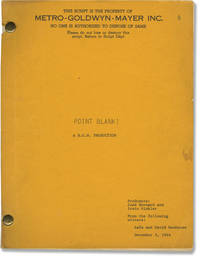
1966160106Beverly Hills CA: Metro-Goldwyn-Mayer MGM 1966. Early Draft script for the 1967 film seen here under the working title "Point Blank!" <br /> <br /> The lead character named Parker here as he was in the novel was renamed Walker in the finished film the role played by Lee Marvin. <br /> <br /> A foundational crime film of the late 1960s setting the stage for the New Hollywood era. A blunt unapologetic nihilistic work one of the gems of early neo-noir with touches of French New Wave. Viewers and critics have often questioned whether or not the film is really a dream that its protagonist has after he is shot in the very beginning. Director John Boorman claims to not have an opinion on the matter and has said that the film is about the lead character's brutalizing experiences in World War II that had dehumanized him and left him desperately searching for his humanity. <br /> <br /> The film's oblique final sequence wherein Parker/Walker realizes he has been unknowingly eliminating the competition for a shadowy figure who now wishes to hire him was not developed at this stage of the script's history. The ending instead adheres more closely to that of the novel. <br /> <br /> Goldenrod titled wrappers rubber-stamped copy No. 6 dated December 5 1966 with credits for screenwriters Rafe Newhouse and David Newhouse. Title page integral with front wrapper. 91 leaves with last page of text numbered 91. Mimeograph duplication rectos only all leaves dated variously between 12/4/66 and 12/9/66. Pages Near Fine wrapper Very Good plus bound with two gold brads. <br /> <br /> Housed in a green cloth clamshell box.<br /> <br /> Grant US. Silver Classic Noir. Spicer US. Metro-Goldwyn-Mayer [MGM] unknown
1971147168Beverly Hills CA: E-K-Corporation / United Artists 1971. First draft script for the 1973 film written nine months before the production began.<br/><br/>From the estate of film producer Elliott Kastner whose best known credits include "The Missouri Breaks" Arthur Penn 1976 and "Heat" Michael Mann 1996.<br/><br/>Based on Chandler's 1953 novel the sixth and penultimate Philip Marlowe book. Screenwriter Leigh Brackett who also co-wrote the screenplay for "The Big Sleep" 1946 updated not just the setting from the 1950s to the 1970s but the attitudes themes and relationships as well. The result was less of a straight adaptation than it was a satire of the traditional detective story a New Hollywood classic. <br/><br/>Shot on location in Los Angeles Malibu Hollywood and Mexico<br/><br/>Black titled Studio Duplicating Service Inc. wrappers. Title page present dated September 1971 noted as First Draft with credits for screenwriter Leigh Brackett. 109 leaves with last page of text numbered 108. Mimeographed rectos only. Pages Near Fine wrapper Near Fine bound with two gold brads.<br/><br/>Grant US. Hardy BFI Companion to Crime. Silver Classic Noir. Spicer US. E-K-Corporation / United Artists unknown books
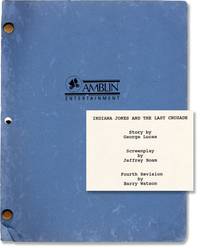
167957Los Angeles: Amblin Entertainment 1988. Fourth Revised Draft script for the 1989 film. All pages with a numeric watermark noting copy No. 0078.<br /> <br /> George Lucas and Steven Spielberg's beloved homage to the serialized Saturday matinee films of the 1930s and 40s. The third installment in the series features Indy fighting to retrieve his father an academic specializing in medieval studies who has been kidnapped by Nazis in order to help them locate the Holy Grail. Nominated for three Academy Awards winning one.<br /> <br /> Set in Utah Venice Berlin and Jordan shot on location in Mexico California Colorado Texas Utah New Mexico England Italy Spain Jordan and Germany. <br /> <br /> Generic blue Amblin wrappers. Title page present dated May 8 1988 noted as Fourth Revision with credits for story writer George Lucas and screenwriters Jeffrey Boam and Barry Watson the latter being the nom de plume of Tom Stoppard. 128 leaves with last page of text numbered 127. Mimeograph duplication rectos only. Pages about Near Fine wrapper Near Fine bound with two gold brads. Amblin Entertainment unknown
1933143459Beverly Hills CA: Metro-Goldwyn-Mayer MGM 1933. Collection of 70 vintage double weight reference photographs from the 1933 film including seven of cast and crew at work on the set three of which feature director Tod Browning. Also included is a later print of a fourth image of Browning on the set. From the estate of Tod Browning housed in a Kodak photographic paper box with his name in holograph pencil on the lid. <br/><br/>Based on an unpublished play by John W. McDermott about a pair of construction workers one a romantic the other a ladies' man who tries to prevent his friend from rushing into marriage with a con artist ex out to steal his friend's nest egg with dangerous consequences. A lesser known film and rare comedy from Browning. <br/><br/>8 x 10 inches. Very Good plus. <br/><br/>For complete collation details please inquire. Metro-Goldwyn-Mayer [MGM] unknown books
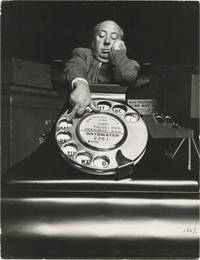
1954153634N.p.: N.p. 1954. Archive of five vintage borderless oversize photographs of director Alfred Hitchcock with various cast and crew members on the set of the 1954 film noir. Manuscript ink and pencil annotations to the verso including layout annotations "FILE" stamps and the stamp of photographer Sanford H. Roth. Four photographs with printed mimeo snipes affixed to the verso and four photographs with manuscript annotations noting their appearance in the May 24 1954 issue of Life magazine. <br /> <br /> Brooklyn-born photojournalist Sanford Roth was best known for his portrait photography capturing intimate and now iconic images of artists and actors throughout his decades-long career including Marc Chagall Joan Crawford Albert Einstein Henri Matisse and Elizabeth Taylor among many others. <br /> <br /> Based on the 1952 play by Frederick Knott who also wrote the screenplay about a tennis player who arranges to have his wife framed for murder after discovering her infidelity. The only Hitchcock film to be shot in 3D although the format would ultimately be discarded for theatrical release and the first of three Hitchcock films to feature actress Grace Kelly followed by "Rear Window" 1954 and "To Catch a Thief" 1955. <br /> <br /> One photograph features Hitchcock leaning over a giant rotary dial a prop made as a result of Warner Brothers' proprietary 3D camera rig. Hitchcock wanted the first shot of the film to feature a finger pressing the letter M on a rotary dial telephone but the specialized 3D camera was unable to focus the close-up correctly leading the director to order a giant finger made from wood and a proportionally large dial in order to achieve the effect. <br /> <br /> Four photographs 10 x 13.5 inches one photograph 9.5 x 13.5 inches. Lightly edgeworn else generally Near Fine. <br /> <br /> Grant US. Selby US. Spicer US. N.p. unknown
1986132794Universal City CA: Universal Pictures 1986. Archive of three title card maquettes hand lettered by Harold Adler for the 1963 film. Also included are two fascinating autograph letters both elaborately designed and executed in a calligraphic style from Adler to author illustrator and editor Fridolf Johnson relating to Adler's work with Hitchcock. <br/><br/>Harold Adler was a calligrapher who created hand lettered titles on over 100 films worked frequently with Alfred Hitchcock and was a favorite of legendary title sequence designers Saul Bass and Pablo Ferro. In addition to "The Birds" 1963 his credits include "Comanche!" 1956 "The Man with the Golden Arm" 1955 "The Seven Year Itch" 1955 "Carmen Jones" 1954 "Psycho" 1960 "In the Heat of the Night" 1967 and "Justine" 1969. <br/><br/>In 2012 an exhibition of Adler's work was organized by noted typographer and design historian Jill Bell at the American Advertising Federation Kansas City. <br/><br/>In the first letter dated May 16 1986 Adler describes after touching on other topics meeting Hitchcock and then presenting him with layout ideas for the titles. He then goes into detail regarding his answer to a question about the techniques of artist Eric Gill stating that Hitchcock "was amazed" by this answer and after that would "request 'to be sure to bring that nice young man along" meaning Adler whenever he had a job for Adler's firm. <br/><br/>The second letter dated June 10th 1986 focuses almost exclusively on Adler's work on "The Birds" going into some detail regarding both the creative and technical processes of producing hand lettered titles for films. He also describes Hitchcock as "an unusual person to work with. He was a master at what he did knew what he wanted and smoked the finest cigars." He then concludes the letter with some brief remarks on how his approach to title lettering evolved over the course of his career. <br/><br/>The letters themselves are works of art executed in a variety of inks in Adler's detailed penmanship with Johnson's name on each in particular receiving full calligraphic treatment. <br/><br/>Also included are draft title cards for the film stylistically similar to each other but much different from the titles used in the finished film. Two of the cards are marked as "camera ready" in holograph colored pencil with titles executed in white paint on black board. The third card photo stat on black paper which accompanied the June 10th letter has been annotated by Adler on both the recto and verso explaining the in more detail the technical process of putting the lettering on film. <br/><br/>Overall a significant collection of material illuminating a little explored aspect of film design with a direct and significant connection to a seminal work by a director known for personally overseeing all aspects of production. <br/><br/>Each letter 19 x 24 inches single leaf rectos only. May 16th letter folded twice for mailing June 10th letter folded. Two long diagonal creases to the May 16th letter else both are Fine. Original mailing envelope for the May 16th letter included. <br/><br/>"Camera ready" title cards 22 x 14 inches. Lightly rubbed and about Near Fine. Third card 18 x 4 inches. Near Fine. Universal Pictures unknown books
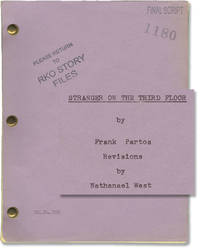
1940153773New York: RKO Radio Pictures 1940. Revised Draft script for the 1940 film noir generally considered to be the first in the American film noir cycle.<br /> <br /> An aspiring reporter is the key witness at the murder trial of a young man accused of cutting a cafe owner's throat and is soon accused of a similar crime himself. Widely regarded as the first film noir. Author and occasional screenwriter Nathanael West who is credited with revisions on the front wrapper was not credited on the finished film. <br /> <br /> Purple titled card wrappers stamped FINAL SCRIPT on the front wrapper dated MAY 24 1940 with credits for screenwriter Frank Partos and revision credits to Nathanael West. Title page integral with the title page as issued. 115 leaves with last page of text numbered 115. Mimeograph duplication on yellow onionskin stock rectos only. Pages Near Fine wrapper Near Fine bound with three gold brads.<br /> <br /> Grant US. Selby US. Silver and Ward Classic Noir. Spicer US. RKO Radio Pictures unknown
1949143058Tokyo: Film Art Association 1949. First Draft script for the 1949 Japanese film noir. Manuscript ink and pencil annotations from production on two leaves. Text in Japanese. <br /> <br /> Generally considered to be the greatest film noir made in Japan and hugely influential on American film noir of the 1950s and 1960s. <br /> <br /> White titled wrappers. 96 leaves with last page of text numbered 96. Mechanical duplication. Toning due to aging throughout wrapper split at spine with mild foxing otherwise Good condition. <br /> <br /> BFI 534. Criterion Collection 233. Grant Japan. Selby Japan. Spicer Japan Classic Noir. Film Art Association unknown
1939147520Los Angeles: Selznick International Pictures 1939. Early Continuity script pre-production stamped "TEMPORARY" with a credit for Alfred Hitchcock's wife and frequent screenwriter Alma Reville. "TEMPORARY" script includes screenwriting credit for Michael Hogan who along with Philip MacDonald were given adaptation credits in the final film.<br/><br/>Alfred Hitchcock's first American project the elegant dreamlike adaptation of Daphne du Maurier's 1938 novel of the same name about a young woman who marries a mysterious aristocratic widower and must contend with the spectral influence of the former mistress of the house the eponymous Rebecca. The film was the start of Hitchcock's work in Hollywood under contract with producer David O. Selznick a collaboration which produced six films in total including "Spellbound" 1945 "The Paradine Case" 1947 and "Under Capricorn" 1949. Although Selznick initially argued for "Rebecca" to remain fully faithful to the plot of the novel the Production Code Administration forbade murder to go unpunished and as a result the film's ending differed from du Maurier's-a change which purportedly angered Selznick so strongly that he considered releasing the film without code approval. Upon its release the film was nominated for eleven Academy Awards winning two for Best Picture and Best Cinematography.<br/><br/>Set on the French Riviera and southwest England shot partially on location in Big Sur Palos Verdes and Point Lobos State Natural Reserve California.<br/><br/>In a custom quarter leather clamshell box. <br/><br/>Blue titled wrappers stamped TEMPORARY on the front wrapper dated August 24 1939 with credits for novelist Daphne du Maurier continuity for Alama Reville and screenwriters Joan Harrison Michael Hogan and Robert Sherwood. Distribution page present with receipt intact dated August 24 1939. 163 leaves with last page of text numbered 162. Mimeographed rectos only. Pages Near Fine wrapper Very Good plus with several small closed tears and front wrapper separating at top punch hole bound with two gold brads.<br/><br/>National Film Registry. Criterion Collection 135. Grant US. Penzler 101. Rosenbaum 1000. Selby US. Spicer US. Selznick International Pictures unknown books
1942149240Universal City: Universal Pictures 1942. Archive of three scripts and one post-production script for the 1942 film.<br/><br/>First is a First Draft script under the working title "'Sherlock Holmes' #2" by screenwriters Edward T. Lowe and Scott Darling dated March 24 1942. Ribbon copy typescript on onionskin with annotations in holograph pencil on several pages inquiries about plotline question marks as well as dates and name of screenwriter Darling. Bound in preceding script are: A two-page carbon typescript breakdown of the story in 21 points with annotation of "1st rough draft" and "One 3/24/42" in holograph pencil in upper right of first page. A ribbon copy typescript "continuity" breakdown of locations and sequences in ten points dated 4/6/42. A ribbon copy typescript "comments on Sherlock Holmes #2" broken into nine points dated 4-6-42 and a three page ribbon copy typescript synopsis dated 3/24/42.<br/><br/>Second is a Third Draft script under the working title "'Sherlock Holmes' #2" crediting screenwriter Scott Darling on front wrapper and Edward T. Love and Scott Darling on title page dated April 22 1942. Annotation in holograph pencil of "mimeographed pink" on lower right of front wrapper. Ribbon copy typescript on onionskin with several annotations in red or graphite holograph pencil question marks an asterisk underlines and screenwriter S. Darling's name and date "4-27-42." <br/><br/>Third is a Draft script under the working title "Sherlock Holmes Fights Back" with name of screenwriter Edmund L. Hartmann on front wrapper. Title page credits to "Additional Changes by Edmund L. Hartmann" and screenwriters Scott Darling and Edward T. Lowe dated May 22 1942. Carbon typescript with mimeograph duplication revision pages. Bound in preceding script is a page describing concept for "The Miss Bently School for Girls" with photograph affixed illustrating concept. Annotations in red and graphite holograph pencil throughout noting dialogue locations shots characters as well as strikes and dates.<br/><br/>Lastly a Post-production Dialogue and Contitnuity script dated August 6 1942 with single annotation in holograph ink on front wrapper.<br/><br/>Loosely based on the 1903 Sherlock Holmes short story "The Adventure of the Dancing Men" by Sir Arthur Conan Doyle.<br/><br/>The fourth Sherlock Holmes movie starring Basil Rathbone and Nigel Bruce and the second produced at Universal Studios. Preceded by "Sherlock Holmes and the Voice of Terror" 1942 directed by John Rawlins and followed by "Sherlock Holmes in Washington" 1943 also directed by Roy William Neill who would go on to direct all subsequent Holmes films at Universal.<br/><br/>Watson and Holmes transplanted from their usual Victorian setting now in England in the midst of WWII have to protect Swiss scientist Dr. Franz Tobel and his invention an advanced bomb site from falling into the hands Nazi Germany as well as Holmes' arch-nemesis Professor Moriarty Lionel Atwill. The first Holmes film to feature Inspector Lestrade Dennis Hoey of Scotland Yard.<br/><br/>March 24 1942 script "'Sherlock Holmes' #2":<br/>Gray titled wrappers dated March 24 1942 with credits for screenwriters Edward T. Lowe and Scott Darling. Title page integral with first page dated 3/24/42 noted as 1st draft screenplay with credits for screenwriters Lowe and Darling. 103 leaves with last page of text numbered 96. Ribbon copy typescript on onionskin rectos only. Pages Near Fine wrapper Very Good with chipping and closed tears to extremities and one large 4.5 inch closed tear on bottom of front wrapper bound with three gold brads.<br/><br/>April 22 1942 script "'Sherlock Holmes' #2":<br/>Gray titled wrappers noted as THIRD DRAFT on the front wrapper dated April 22 1942 with credits for screenwriter Scott Darling. Title page integral with first page with credits for screenwriters Edward T. Lowe and Scott Darling. 110 leaves with last page of text numbered 110. Ribbon copy typescript rectos. Pages Near FIne wrapper Very Good with closed tears and chipping at extremities bound with three gold brads.<br/><br/>May 22 1942 script "Sherlock Holmes Fights Back":<br/>Gray titled wrappers with credits for screenwriter Edmund L. Hartmann. Title page present dated May 22 1942 with credits for Additional Chages by screenwriter Edmund L. Hartmann screenwriters Scott Darling and Edwart T. Lowe and author Sir Arthur Conan Doyle. 107 leaves with last page of text numbered 100. Carbon typescript with mimeograph duplication revision pages rectos only with pink revision pages throughout undated. Pages Near Fine wrapper Very Good with large closed tear to front wrapper and chipping and closed tears to extremities bound with three gold brads.<br/><br/>script:<br/>Titled self wrappers noted as DIALOGUE CONTINUITY on the front wrapperdated August 6 1942 with credits for director Neill. 109 leaves. Mimeograph duplication rectos only. Pages Near Fine bound at top with two gold brads. Universal Pictures unknown books
1897139206N.p.: Veriscope 1897. Two vintage fragments from a 63mm film print of the 1897 boxing match between "Gentleman" Jim Corbett and Bob Fitzsimmons. The first fragment consists of six frames depicting the fighters in a clinch while the second consists of four frames depicting the fighters in the center of the ring about to trade punches. <br/><br/>At over 100 minutes the film is the first feature length release anywhere and with an aspect ratio of 1.65:1 the first widescreen film ever produced. Though fragments such as this survive the film in its entirety is considered lost. <br/><br/>A five frame fragment is held the National Media Museum in the UK and approximately 19 minutes are available for viewing but OCLC locates no fragments in institutions. <br/><br/>The heavy weight title bout took place on March 17 1897 in Carson City Nevada which legalized boxing specifically to host this fight beginning the long and storied relationship between the Silver State and the sweet science. Boxing was already a popular subject for filmmakers however these were short films generally of single rounds. Using the new Latham loop technology which he claimed to have invented director Rector shot the Corbett-Fitzsimmons fight continuously using three adjacent ringside cameras with each camera capable of shooting six minutes of footage before reloading. In total approximately 11000 feet of film was shot over all 14 rounds of the contest. In addition to length the film distinguished itself from the boxing films of the time by presenting an introduction to the fight by former champion John L. Sullivan and his manager the fighters entering the ring in their robes the fighters resting between rounds and in later releases the immediate aftermath of the fight all of which are standards of boxing broadcasts to this day. <br/><br/>On release the film became a sensation and gained wide and lasting popularity proving the financial viability of feature length films as well increasing the public's interest in both motion pictures and boxing becoming a landmark in the history of film and sports. <br/><br/>Also included is a flyer for a showing of the film on September 21 1897 at the Fulton Opera House in Lancaster PA including a brief synopsis of the action. <br/><br/>First film print 2.5 x 7.25 inches. Very Good with chips to some of the sprocket holes on the right edge and to the upper right corner of one frame a 3/4 inch closed horizontal tear to the bottom frame and a bit of accompanying loss to the image and a vertical scratch running through the left edge of each frame. <br/><br/>Second film print 2.5 x 4.75 inches. Very Good plus with vertical scratches running through each frame. <br/><br/>Flyer 4.25 x 7.25. Near Fine. Light horizontal and vertical creasing from being folded light edgewear. <br/><br/>Film strips encapsulated in mylar. Housed in a custom quarter leather clamshell box. <br/><br/>National Film Registry. Veriscope unknown books
1941141535Culver City CA: RKO Radio Pictures 1941. Draft script for the classic 1942 film noir. <br/><br/>An American ballistics expert in Turkey finds himself targeted by Nazi agents. Safe passage home by ship is arranged for him but he soon discovers that his pursuers are also on board. <br/><br/>Set in Turkey. <br/><br/>Yellow titled wrappers rubber-stamped and production No. 1223 dated July 30 1941. 159 leaves with last page of text numbered 165. Carbon typescript with revision pages dated July 29 1941. Pages Very Good plus wrapper Very Good plus bound with three gold brads. <br/><br/>Godard Histoires du cinema. Grant US. Selby US. Silver and Ward. Spicer US. RKO Radio Pictures unknown books
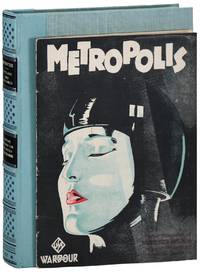
1927129753London: Wardour Films / Universum Film UFA 1927. Original program for the London premiere of the film on March 21st 1927 at the Marble Arch Pavilion preceded in English by the US release earlier that month but with different title cards. Director Lang's expressionist masterpiece based on the novel and written for the screen by then-wife von Harbou one of the most enduring and influential films of the silent era. <br/><br/>In addition to the normal synopsis photos and quotes from the actors the program presents pieces on the film's groundbreaking special effects and camerawork and most interestingly a side-by-side comparison of a portion of the film script with von Harbou's novel published the previous year. Any original paper relating to "Metropolis" is scarce with a 2012 post in Peter Harrington's blog ranking this program among the most difficult items. <br/><br/>Very Good plus in stapled wrappers. Owner stamp to the title page. Wrappers lightly creased horizontally and vertically front wrapper lightly faded and rubbed light foxing to the rear wrapper with tiny ink initials to the upper corner. Housed in a custom clamshell box. <br/><br/>Rossler Filmfieber p. 109. Wardour Films / Universum Film [UFA] unknown books
19277591London: UFA / Wardour Films Limited 1927. First U.K. Edition. Small quarto 24.5cm; original pictorial card wrappers saddle-stitched; 32pp; illus. Slim quarto 24.75cm; original pictorial card wrappers stapled; 30pp; illus. Trivial wear along the spine-fold some oxidation to staples with some mild dustiness to rear wrapper; contents are fresh and complete cover is rich in color with corners still sharp; a Near fine unrestored example. Housed in a custom clamshell case.<br /> <br /> Well-preserved program for the British premiere of Fritz Lang's epochal science fiction film held at London's Marble Arch Pavilion on 21 March 1927. The program contains 78 photos and stills - from the film itself and from behind the scenes - including a synopsis of the film casting information a dramatic centerfold and several short pieces written by Fritz Lang Thea Von Harbou Rudolf Klein-Rogge Gustav Frolich Carl Freund Alfred Abel and Brigitte Helm. A desirable and intensely visual piece of ephemera from a groundbreaking sci-fi film. Not found in OCLC. 7591. UFA / Wardour Films Limited unknown