16 721 résultats
1956141466Kanagawa Japan: Daiei Studios 1956. Draft script for the 1956 film. Text in Japanese. With annotations on a few pages in holograph ink. <br/><br/>Based on the novel "Susaki No Onna" by Yoshiko Shibaki. The last film of Mizoguchi this film is a vivid portrayal of prostitution in 1950s Japan shot before the Japanese government's anti-prostitution bill told through the perspective of several different women who work in the business for various reasons. <br/> <br/>Set in Tokyo and shot on location there. <br/><br/>White titled perfect bound wrappers. Title page present. 142 leaves with last page of text numbered 13. Mechanical duplication. Pages Near Fine wrapper Near Fine bound with two staples. <br/><br/>Criterion Collection Eclipse 13. Eureka Masters of Cinema. Daiei Studios unknown books
1929150433Beverly Hills CA: Metro-Goldwyn-Mayer MGM 1929. Two vintage reference photographs on the set of the 1929 film. Mimeo snipes on verso of both one with annotations in manuscript pencil and Culver Picture stamp on verso and one with "Menningen" and graphic stamps on verso. <br /> <br /> The first Black musical and one of the first all-Black films by a major Hollywood studio with arguably more depth than its predecessor Paul Sloane's "Hearts in Dixie" the first all-black Hollywood film released earlier the same year. <br /> <br /> King Vidor's first talkie written by screenwriter Wanda Tuchock who started in the silent era and went on to become one of the first women to be credited as a director on a Hollywood film. <br /> <br /> Although King Vidor had expressed his intent of an honest depiction of rural southern African American life the film still clearly advanced racial stereotypes of the era. "Hallelujah" had however authentically represented African American spiritual music from the period which no other film achieved.<br /> <br /> Shot on location in Memphis Tennessee and Arkansas.<br /> <br /> 8 x 10 inches. Very Good plus with some creasing and waviness one with a chip in the bottom left margin one with faint tape shadows on recto and paper tape on verso. <br /> <br /> National Film Registry. Rosenbaum 1000. Metro-Goldwyn-Mayer [MGM] unknown
1929150433Beverly Hills CA: Metro-Goldwyn-Mayer MGM 1929. Two vintage reference photographs on the set of the 1929 film. Mimeo snipes on verso of both one with annotations in holograph pencil and Culver Picture stamp on verso and one with "Menningen" and graphic stamps on verso. <br/><br/>The first Black musical and one of the first all-Black films by a major Hollywood studio with arguably more depth than its predecessor Paul Sloane's "Hearts in Dixie" the first all-black Hollywood film released earlier the same year. <br/><br/>King Vidor's first talkie written by screenwriter Wanda Tuchock who started in the silent era and went on to become one of the first women to be credited as a director on a Hollywood film. <br/><br/>Although King Vidor had expressed his intent of an honest depiction of rural southern African American life the film still clearly advanced racial stereotypes of the era. "Hallelujah" had however authentically represented African American spiritual music from the period which no other film achieved.<br/><br/>Shot on location in Tennessee and Arkansas.<br/><br/>8 x 10 inches. Very Good plus with some creasing and waviness one with a chip in the bottom left margin one with faint tape shadows on recto and paper tape on verso. <br/><br/>Complete collation details available on request.<br/><br/>National Film Registry. Rosenbaum 1000. Metro-Goldwyn-Mayer [MGM] unknown books
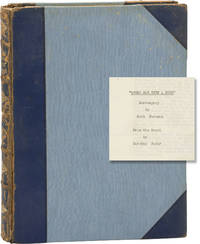
1950161272N.p.: N.p. 1950. Draft script for the 1950 film. Specially bound copy belonging to producer Jerry Wald with his name in gilt on the spine. Twelve reference photographs bound in variously among the script pages.<br /> <br /> Jerry Wald is best remembered for his long and successful association with Warner Brothers as both a screenwriter and producer of a number of notable films including "Mildred Pierce" 1945 "Humoresque" 1946 "Key Largo" 1948 and "Flamingo Road" 1949. In the 1950s he moved to Twentieth Century-Fox and was the producer there for "An Affair to Remember" 1957 "Peyton Place" 1957 and "Sons and Lovers" 1960.<br /> <br /> Based on the 1938 novel by Dorothy Baker in turn loosely inspired by the life of famed jazz cornetist Bix Beiderbecke. A young trumpet player finds himself caught in a love triangle between a talented singer and a beautiful but disturbed heiress. <br /> <br /> Set and shot on location in Los Angeles and New York.<br /> <br /> Bound in light blue cloth with navy quarter leather binding with five raised bands and gilt titles on the spine. Title page present undated with credits for screenwriter Carl Foreman and novelist Dorothy Baker. 158 leaves with last page of text numbered 141. Mimeograph duplication rectos only with blue revision pages throughout dated variously between 7/9/49 and 8/25/49. Pages Near Fine binding Good only cloth lightly foxed significant wear to the leather quarterbinding though spine titles can still be read. N.p. unknown
1944160051N.p.: N.p. 1944. Three page Autograph Letter Signed from writer Lillian Hellman to producer and longtime friend Herman Shumlin. Letter written in Fairbanks Alaska circa 1944. <br /> <br /> Shumlin first met Hellman then an aspiring playwright working as a reader in Shumlin's office in 1934. Sensing Hellman's talent after reading early drafts of "The Children's Hour" Shumlin agreed to produce and direct the play. The resulting production Hellman's debut launched her into the public eye and nearly won her the Pulitzer Prize for Drama. Shumlin would go on to produce and direct four other Hellman plays including "The Little Foxes" "Watch on the Rhine" and "The Searching Wind." <br /> <br /> Hellman received a passport to Russia in August 1944 as part of a goodwill program managed by the Society of Cultural Relations with the Soviet Union. On the first leg of the journey Hellman flew from Hollywood to Seattle to Fairbanks Alaska where she was picked up by the Russians for the voyage to Moscow. The story of her trip later became the subject of her article "Metropole Hotel" published in the Spring 1969 issue of the "Partisan Review." <br /> <br /> Hellman's letter to Shumlin begins with an entreaty to forget a previous dispute and goes on to describe a recent visit to the Kobers in Los Angeles-presumably referring to her ex-husband Arthur Kober and his second wife Margaret Frohnknecht. She also notes that "Hal Wallis and I worked quietly together . The conferences about the picture went well-he is a shrewd man sometimes too slick about stories". Wallis was then in works with Hellman on a film adaptation of her 1944 play "The Searching Wind" which would be released in 1946. <br /> <br /> Hellman then briefly discusses the difficulties of her time in Fairbanks as well as her trepidation about the trip to come: "There is no sense not saying that I'm scared. I am. I will try to cable you when I reach where I hope I will reach." Her fears would ultimately be justified-Hellman later described the flight across Russia as one of the most physically demanding journeys of her life the result of a rudimentary plane that made frequent stops due to bad weather and lack of heating in the passenger cabin. She would stay in Moscow from November 5 1944 to January 18 1945. <br /> <br /> Altogether an engaging and illuminating letter sent during a tumultuous time in the life of one of the foremost playwrights of the twentieth century.<br /> <br /> 6.25 x 10 inches. Three manuscript leaves rectos only. Near Fine. N.p. unknown
1915136474Neuilly-sur-Seine France: Gaumont 1915. Vintage double weight matte finish still photograph from the legendary 1915 silent film serial. With the Gaumont logo at the lower right corner. Shown here is Musidora as Irma Vep conferring with another member of The Vampires an anarchist criminal gang at the center of the story. <br/><br/>The director's magnum opus "Les vampires" is one of the great crime epics nearly 7 hours in length acknowledged as a strong influence on the surrealists and by directors Alfred Hitchcock and Fritz Lang in the development of the thriller as well as the earliest masters of avant-garden cinema. The second of Feuillade's three film serial masterpieces preceded by "Fantomas" 1913 and followed by "Judex" 1915 combining elements of both. <br/><br/>11 x 9 inches. Near Fine. <br/><br/>Hardy The BFI Companion to Crime. Gaumont unknown books
1969158374N.p.: N.p. 1969. Vintage script for the 1970 play. INSCRIBED by playwright Mart Crowley to author and film critic Parker Tyler on the title page: "NYC / 11-15-69 / For Parker Tyler / who makes me know I know very little / With warm and deep admiration / Mart Crowley."<br /> <br /> One of the first film critics to write extensively about experimental underground and avant-garde cinema Parker Tyler served as the film commentator for Amos Vogel's film society Cinema 16 and coedited the Surrealist magazine "View" with Charles Henri Ford. He also appeared in several experimental films most notably Maya Deren's 1944 silent film "At Land." His 1972 book "Screening the Sexes: Homosexuality in the Movies" was one of the first books about homosexuality and film preceding Vito Russo's "The Celluloid Closet" by nine years. His papers are held by the New York Public Library. <br /> <br /> Crowley's second play following "The Boys in the Band" 1968. Five men and three women attempt to escape their unhappy lives at a spacious villa in the Mediterranean but ultimately find themselves trapped in their own petty discomforts. The play debuted at the Ahmanson Theatre in Los Angeles on December 1 1970. <br /> <br /> OCLC locates one holding.<br /> <br /> Maroon titled Studio Duplicating Service wrappers with credit for playwright Mart Crowley on the front wrapper. Title page present undated with credit for playwright Mart Crowley. 138 leaves with last page of text numbered 2-47. Xerographic duplication rectos only. Pages Near Fine wrapper Very Good plus slightly yapped at the edges bound with two gold brads. N.p. unknown
1960141447Tokyo: Shockiku Ofuna 1960. Draft script for the 1960 film. Text in Japanese. <br /> <br /> A young woman is hitchhiking when the driver who picks her up attempts to molest her. A young gangster comes to her aid and then leads her on a wild relationship through the Japanese underground towards the eventual destruction of both of them. <br /> <br /> White titled perfect-bound wrappers. Title page present. 40 leaves with last page of text numbered 40. Mechanical duplication. Pages Near Fine wrapper Near Fine bound with two staples. <br /> <br /> Godard Histoires du cinema. Shockiku Ofuna unknown
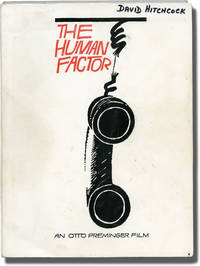
145780Beverly Hills CA: Metro-Goldwyn-Mayer MGM 1978. Draft script for the 1979 film. Illustrated front wrapper based on Saul Bass' poster design for the film. Copy belonging to uncredited crew member David Hitchcock with his name in manuscript ink on the front wrapper. Manuscript annotations throughout primarily indicating deleted scenes. <br /> <br /> Also included is a carbon typed letter signed by Otto Preminger dated 19th October 1979 to dubbing editor Peter Pennell terminating his employment at the conclusion of production. <br /> <br /> The final film directed by director Otto Preminger based on the 1978 novel by Graham Greene with screenplay written by Tom Stoppard about a low-level bureaucrat in the British Secret Service M16 who finds himself unknowingly used by the Soviets as he struggles with his love for his family and the ambiguity of his ethical responsibilities.<br /> <br /> Set and shot on location in UK and Kenya. <br /> <br /> White illustrated titled wrappers. Title page present dated 1978 with credits for screenwriter Tom Stoppard and novelist Graham Greene rubber stamped copy No. 146. 146 leaves with last page of text numbered 146. Xerographic duplication rectos only. Pages Fine wrapper Very Good plus bound internally with a silver prong binding. Metro-Goldwyn-Mayer [MGM] unknown
1978145780Beverly Hills CA: Metro-Goldwyn-Mayer MGM 1978. Draft script for the 1979 film. Illustrated front wrapper based on Saul Bass' poster design for the film. Copy belonging to uncredited crew member David Hitchcock with his name in holograph ink on the front wrapper. Holograph annotations throughout primarily indicating deleted scenes. <br/><br/>Also included is a carbon typed letter signed by Otto Preminger dated 19th October 1979 to dubbing editor Peter Pennell terminating his employment at the conclusion of production. <br/><br/>The final film directed by director Otto Preminger based on the 1978 novel by Graham Greene with screenplay written by Tom Stoppard about a low-level bureaucrat in the British Secret Service M16 who finds himself unknowingly used by the Soviets as he struggles with his love for his family and the ambiguity of his ethical responsibilities.<br/><br/>Set and shot on location in UK and Kenya. <br/><br/>White illustrated titled wrappers. Title page present dated 1978 with credits for screenwriter Tom Stoppard and novelist Graham Greene rubber stamped copy No. 146. 146 leaves with last page of text numbered 146. Xerographic duplication rectos only. Pages Fine wrapper Very Good plus bound internally with a silver prong binding. Metro-Goldwyn-Mayer [MGM] unknown books
1956149584Paris: Filmsonor 1956. Collection of six vintage borderless reference photographs from the 1956 French documentary including two showing director Henri-Georges Clouzot and artist Pablo Picasso on the set. With the stamp of Filmsonor on the verso.<br/><br/>A short documentary showing Picasso creating increasingly elaborate artworks on custom-built transparent canvases granting the camera a view of his creative process. The majority of the canvases were destroyed after production had ended.<br/><br/>9.5 x 7 inches. Three photographs Near Fine three photographs Very Good plus with small pinholes and light diagonal creases to the top left corner. Filmsonor unknown books
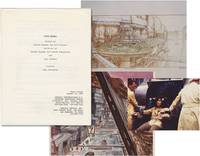
167966Los Angeles: Carolco 1987. Archive of material from the 1990 film including a Final script dated August 22 1989 25 color reference photographs 9 reference photographs with a Carolco copyright stamp on the rectos and 9 color set design illustrations. <br /> <br /> Based on Philip K. Dick's 1966 short story "We Can Remember it for You Wholesale." A wild and violent ride in the spirit of Paul Verhoeven's earlier release "Robocop" 1987 about a 21st-century construction worker who discovers that he is a secret agent with a memory chip implanted in his brain by the government. Nominated for two Academy Awards Best Sound Best Effects and winner of the Academy's Special Achievement Award for visual effects. <br /> <br /> Script:<br /> <br /> Self wrappers. Title page present dated August 22 1989 noted as Final Script with credits for Verhoeven and screenwriters Ronald Shusett Dan O'Bannon Steven Pressfield and Gary Goldman. 118 leaves with last page of text numbered 117. Xerographic duplication rectos only. Pages Near Fine unbound. <br /> <br /> Photographs and set design illustrations:<br /> <br /> Ranging in size from 11 x 8.5 inches to 7 x 5 inches. Fine. <br /> <br /> Spicer US. Carolco unknown
1969141375New York: Two Faces / New Yorker Films 1969. Vintage poster for the 1969 film an experimental mix of documentary and fiction. Poster designed by Robert Frank. <br /> <br /> Director Robert Frank's first feature film in which he follows poet Peter Orlvosky and his mentally ill brother Julius as they move through the late 1960s Beat scene while Peter tries to care for his mostly catatonic brother. When Julius wanders off he is replaced in the film by actor Joseph Chaikin. The film examines the boundaries of reality and sanity and features the screenwriting debut of Sam Shepard and the first feature film appearance of Christopher Walken. <br /> <br /> The film was restored and released by Steidl in 2007 along with a book publication outlining the film. From the Steidl book: "Frank's feature debut was first screened in 1968 at the Venice Film Festival. Everything which had defined Frank's art up to that point turns up in this film - the look at America 'from the outside' the poetic libertinage of the Beats the marginal in a central role. It celebrates the return of the poetic essay as assemblage the affirmation of the underground as a wild cinematic analysis in the form of a collage and skillfully weaves together opposites plays counterfeits against the authentic pornography against poetry acting against being Beat cynicism against hippie romanticism monochrome against colored. The story contains bizarre twists and turns and appears to be a rather artless-film-within-a-film being shown at a rundown movie theater."<br /> <br /> 26.75 x 20.75 inches. Near Fine. In a custom frame. Two Faces / New Yorker Films unknown
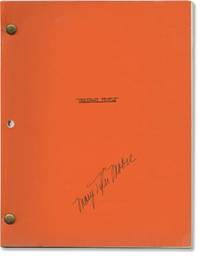
169929Burbank CA: Wildwood Enterprises 1979. Second Draft script for the 1980 film. Internally duplicated copy with copied punch holes but with a vintage wrapper and a mailing envelope with the MTM Mary Tyler Moore Productions at the top left corner. SIGNED by actor Mary Tyler Moore on the front wrapper. <br /> <br /> The script was originally signed and sent by MTM Productions to be sold at a charity auction in Tennessee.<br /> <br /> Robert Redford's directorial debut based on the 1976 novel of the same name by Judith Guest about the disintegration of a wealthy family following the accidental death of one of their two sons and the attempted suicide of the other. Nominated for six Academy Awards winning four: Best Picture Best Director Best Adapted Screenplay and Best Supporting Actor for Timothy Hutton.<br /> <br /> Set and shot on location throughout Illinois in Chicago Lake Bluff Fort Sheridan Lake Forest Wilmette and Northbrook and in Columbus Ohio.<br /> <br /> Orange titled wrappers. Title page present noted as second draft dated September 21 1979 with credit for screenwriter Alvin Sargent. 149 leaves with last page of text numbered 150. Xerographic duplication rectos only with revision pages throughout on white stock dated variously between 9/26/79 and 11/16/79. Pages Near Fine wrapper Near Fine bound with two gold brads. Wildwood Enterprises unknown
1921135637Berlin: Decla-Bioscop AG 1921. Vintage double weight matte finish reference photograph from the seminal 1920 silent film. Samuel Goldwyn discovered "Caligari" on a trip abroad and released this film in the US in 1921 at which time 11 x 14 inch photos such as this one were printed on matte paper. Reference number "4" noted in manuscript pencil at the lower right corner of the recto and on the verso as well. <br /> <br /> The photograph depicts Werner Krauss as Dr. Caligari walking through the streets of the obtuse-appearing city a prime example of the most basic elements of what would become known as German Expressionism. Producer Erich Pommer put the set design of the film in the hands of designer Hermann Warm and painters Walter Reimann and Walter Rohrig whom he had met as soldiers while painting sets for a German military theater. When Pommer began to have second thoughts about how the film should be designed the designers convinced him that it made sense to paint lights and shadows directly on set walls floors background canvases and to place flat sets behind the actors-a cost saving measure that was the essence of a groundbreaking stylistic innovation. <br /> <br /> 11 x 14 inches. Very Good to Near Fine with a small chip at the lower right corner slightly trimmed for publication though none of the image is affected only the margins and one small closed tear mended at the verso. Decla-Bioscop AG unknown
1957154183Hollywood: Howco Productions 1957. Draft script for the 1957 film. Copy belonging to actor Dick Miller with his manuscript pencil annotations throughout. Miller was apparently considered for the role of Stanley as many of Stanley's lines are marked with manuscript pencil and then struck through but was ultimately cast in the role of Ben. <br /> <br /> The gangster owner of a nightclub on a carnival pier is tormented by his love for the club's star who herself is in love with a local businessman with dreams of buying out the club. An early role for Miller who appeared in 14 films directed by legendary independent filmmaker Roger Corman between 1955 and 1961 and would continue to work with Corman throughout his career.<br /> <br /> Red titled wrappers. Title page present undated with credits for screenwriter Leo Lieberman. 72 leaves with last page of text numbered 71. Mimeograph duplication rectos only. Pages Near Fine wrapper Near Fine bound internally with three gold brads. Howco Productions unknown
1966141426Tokyo: Nikkatsu 1966. Draft script for the 1966 film. Text in Japanese. <br /> <br /> Based on a novel by Takashi Suzuki a repressed Catholic young man living in a boardinghouse is infatuated with the landlady's daughter and when he cannot express his feelings he turns to violence. He joins a gang and begins a fighting routine exploiting the weakness of classmates. <br /> <br /> Set in Okayama shot on location in Japan. <br /> <br /> Red titled perfect-bound wrappers. Title page present. 113 leaves with last page of text numbered 19. Mechanical duplication. Pages Near Fine wrapper Near Fine. <br /> <br /> Criterion Collection 269. Nikkatsu unknown
1959141461Tokyo: Nikkatsu 1959. Draft script for the 1959 film. Text in Japanese. <br /> <br /> Based on Sueko Yasumoto's novel and one of the first examples of media dealing with the plight of zainchi or ethnically Korean Japanese citizens and their identity and struggles. One man has always worked faithfully for the Toho Company and another man is working for an underworld boss trying to scam Toho. They find each other again when one begins trailing and investigating the other. <br /> <br /> White titled perfect-bound wrappers. Title page present. 177 leaves with last page of text numbered 16. Mechanical duplication. Pages Very Good plus wrapper Very Good plus bound with two staples. Nikkatsu unknown
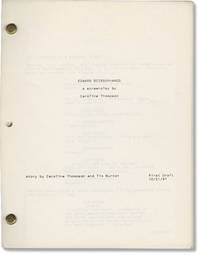
162755Los Angeles: Twentieth Century-Fox 1987. First Draft script for the 1990 film.<br /> <br /> Tim Burton's second "Modern Prometheus" film following his 1984 short "Frankenweenie" about a mad scientist who dies before he can complete his latest creation: a nearly complete human being. The creation is left with scissors for hands and doomed to live a life of solitude until a kindly mild-mannered Avon Lady welcomes him into her home.<br /> <br /> Often cited as the director's masterpiece released two years after his hilarious and creepy romp "Beetlejuice" 1988 one year after his beloved comic adaptation "Batman" 1989 and two years before his second and final contribution to the Dark Knight legend "Batman Returns" 1992. <br /> <br /> Self wrappers integral with title page dated October 21 1987. Noted as First Draft with credit for screenwriter Caroline Thompson. 117 leaves with last page of text numbered 116. Xerographic duplication circa late 1980s font rectos only. Pages about Fine wrapper Near Fine bound with two gold brads. Twentieth Century-Fox unknown
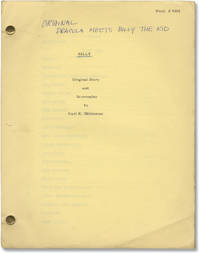
1965158305N.p.: N.p. 1965. Draft script for the 1966 film here under the working title "Billy." Annotation in manuscript ink on the title page amending the title to "Original Dracula Meets Billy the Kid." Copy likely belonging to screenwriter Carl K. Hittleman with annotations in manuscript ink and pencil on virtually every page amending dialogue and scene numbers with two unnumbered pages bound in created on a different typewriter.<br /> <br /> Dracula travels to the American West intent on making the fiancée of the now reformed Billy the Kid his next victim. One of director William Beaudine's final films originally released on a double bill with Beaudine's other Western horror picture "Jesse James Meets Frankenstein's Daughter." <br /> <br /> Front wrapper integral with title page with credits for screenwriter Carl K. Hittleman. 114 leaves with last page of text numbered 110. Ribbon copy typescript rectos only. Pages Near Fine with cello tape repair and reinforcement to final page bound with two gold brads. N.p. unknown
1968138950Los Angeles: Cinema Center Films / Duo Films / Solar Productions 1968. Revised Draft script for the 1969 film. Accompanying the script is a shooting schedule dated 8/22/68. <br /> <br /> Based on Faulkner's Pulitzer Prize-winning 1962 novel his last book. Boon McQueen and his buddy are reivers or thieves who steal the McCaslin family's new car a Winton Flyer. They are out on bond by the owner of the car but Boon can't help himself and steals the car again this time traveling to Memphis to see his beau Corrie Farrell. <br /> <br /> Shot on location in Mississippi. Nominated for two Academy Awards. <br /> <br /> Orange titled wrappers rubber-stamped copy No. 151. Title page present dated 8/9/68 with credits for screenwriters Ravetch and Frank. 128 leaves with last page of text numbered 119. Mechanical duplication with blue white green and yellow revision pages throughout dated variously between 8/14/68 and 9/4/68. Pages Near Fine wrapper Very Good plus bound with two gold brads. Shooting schedule 29 leaves mechanical duplication dated 8/22/68 to 1/3/69 Very Good bound with one gold brad. Cinema Center Films / Duo Films / Solar Productions unknown
1969143218Tokyo: Gendai Eigasha 1969. Draft script for the 1969 film. Front wrapper notes a date of 1969 and credit as a Gendai Eigasha production. <br /> <br /> The second page is a elegaic introduction to the film story: "On the erotology and insurrection of sugi Sakae who wrote of dancing as flowers strangled and left in spring and It Noe who lived her entire life in confused beauty-we the youth and you and I in our degenerate joy which reaches an unbalanced complicity are talking."<br /> <br /> Based on the life of anarchist Sakae sugi and his relationship with three women.It is the first film in Yoshida's trilogy of Japanese radicalism followed by "Heroic Purgatory" 1970 and "Coup d'Etat" 1973. Considered to be one of the most representative films from the Japanese New Wave movement. <br /> <br /> Set in and shot on location in Japan. <br /> <br /> White titled wrappers dated 1969. Title page present. 86 leaves with last page of text numbered d-44. Mechanical duplication. Pages Near Fine wrapper Very Good plus with mild foxing on rear wrapper title on spine. Gendai Eigasha unknown
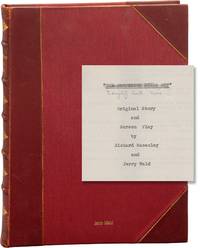
1938161383N.p.: N.p. 1938. Draft script for the 1939 film seen on the title page under the working title "The Professor Steps Out." Specially bound copy belonging to screenwriter Jerry Wald with his name in gilt on the front board.<br /> <br /> Jerry Wald is best remembered for his long and successful association with Warner Brothers as both a screenwriter and producer of a number of notable films including "Mildred Pierce" 1945 "Humoresque" 1946 "Key Largo" 1948 and "Flamingo Road" 1949. In the 1950s he moved to Twentieth Century-Fox and was the producer there for "An Affair to Remember" 1957 "Peyton Place" 1957 and "Sons and Lovers" 1960.<br /> <br /> During a business trip to New York a sober strict-minded university professor is drunkenly persuaded to market his orchestral masterpiece as a swing number to the chagrin of his college dean. <br /> <br /> Bound in red cloth with dark red quarter leather binding with five raised bands and gilt titles on the spine and front board. Title page present dated 10/25/38 with credits for director Ray Enright screenwriters Richard Macaulay and Jerry Wald and songwriters Harry Warren and Johnny Mercer. 134 leaves with last page of text numbered 132. Mimeograph duplication rectos only with blue revision pages throughout dated variously between 10/28/38 and 11/2/38. Pages Near Fine binding Near Fine. N.p. unknown
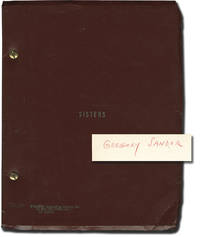
1970146086New York: Pressman Williams 1970. Draft script for the 1973 film. Copy belonging to cinematographer Gregory Sandor with his name in holograph pencil on the verso of the title page and holograph pencil annotations throughout.<br/><br/>Danielle is a beautiful model separated from her conjoined twin Dominique. When her neighbor an aspiring journalist suspects Danielle of a brutal murder the horror of Danielle's disturbing past begins to surface. Director Brian De Palma based his original story on a Life magazine article about conjoined twins in the Soviet Republic who had been successfully separated but were experiencing psychological problems as a result of the operation. <br/><br/>With its use of visually dense point-of-view and split-screen camera techniques "Sisters" is one of De Palma's earliest forays into erotic voyeurism as a conduit for psychological horror paving the way for a string of idiosyncratic psychosexual projects in the ensuing years such as "Obsession" 1976 "Dressed to Kill" 1980 "Blow Out" 1981 and "Body Double" 1984 among others. Given its focus on the anxiety of the gaze "Sisters" can also be read as an homage to Alfred Hitchcock-openly referencing "Rope" 1948 "Rear Window" 1954 and "Psycho" 1960-and indeed the film was even scored by Bernard Hermann a frequent musical collaborator for Hitchcock's films.<br/><br/>Set and shot on location in New York. <br/><br/>Maroon titled wrappers. Title page present dated 1970 with credits for screenwriters Brian De Palma and Louisa Rose. 138 leaves with last page of text numbered 138. Xerographic duplication rectos only. Pages Near Fine wrapper Very Good plus bound with two gold brads.<br/><br/>Arrow 1578. Criterion Collection 89. Grant US. Spicer US Neo-Noir. Pressman Williams unknown books
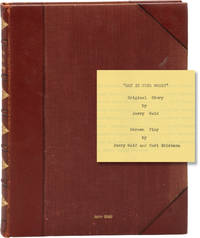
1934161349N.p.: N.p. 1934. Early Draft script for the 1934 film seen here under the working title "Say It With Music." Specially bound copy belonging to screenwriter Jerry Wald with his name in gilt on the front board and his annotations in manuscript pencil on several pages noting substantive revisions. <br /> <br /> An early working draft credited to Wald and Louis F. Edelman who would ultimately go uncredited in the final film.<br /> <br /> Jerry Wald is best remembered for his long and successful association with Warner Brothers as both a screenwriter and producer of a number of notable films including "Mildred Pierce" 1945 "Humoresque" 1946 "Key Largo" 1948 and "Flamingo Road" 1949. In the 1950s he moved to Twentieth Century-Fox and was the producer there for "An Affair to Remember" 1957 "Peyton Place" 1957 and "Sons and Lovers" 1960.<br /> <br /> A musical romance about a young serviceman who falls in love with a general's daughter while stationed in Hawaii. Nominated for two Academy Awards including Best Picture. <br /> <br /> Shot on location in Hawaii West Point and Los Angeles. <br /> <br /> Bound in red cloth with red quarter leather binding with five raised bands and gilt titles on the spine. Distribution page present with receipt removed. Title page present dated May 1934 with credits for screenwriters Wald and Carl Erickson. 120 leaves with last page of text numbered 116. Mimeograph duplication on yellow stock rectos only. Pages Very Good plus binding Very Good plus. N.p. unknown