6 569 résultats
43451Paris Pierre Seghers, Editeur 1957 in 8 (27,5x19) 1 volume reliure cartonnée de l'éditeur, couverture rempliée, plat supérieur illustré par Pablo Picasso, 37 pages {1], avec 12 photographies en noir et blanc par Lucien Clergue, dont 2 sur double-page. Poème liminaire de Jean Cocteau. Première édition. Bel exemplaire ( Photographies sur demande / We can send pictures of this book on simple request )
Barcelona, Trilla y Serra Editores,1880. Gran folio; 221 pp. de texto, con magníficas viñetas intercaladas entre el mismo, grabadas por Fusté y dibujadas por Apeles Mestres (1854-1936). Más 16 extraordinarias láminas aparte, litografiadas en color en la Litografía de Pigrau, obra del ilustrador Eusebio Planas(1833-1897). Encuadernación en media piel, de la época. La desgraciada peripecia de Margarita Gautier, la mas singular "traviata" de todos los tiempos, galantemente vestida aquí por Eusebio Planas, quien no puede reprimir guiños a su producción erótica del mismo año "Historia de una mujer", o a sus sicalípticas "Academias de mujer" y pornográfica "El noble arte del billar".
188486Madrid, Imprenta de D. M. de Burgos, mai 1817 in-12, [8]-263 pp., basane maroquinée cerise, dos lisse orné de guirlandes et fleurons dorés, pièce de titre verte, encadrement de guirlande dorée sur les plats, hachuré doré sur les coupes, tranches dorées (reliure de l'époque). Bel exemplaire.
16951000019AGAmsterdam, Johannes van Keulen, [1695]. Kupferstich altkoloriert. 54 x 63 cm (Blattgröße), [7 Warenabbildungen] unter Glas gerahmt, leichte Mittelfalte etwas knittrig, kleinere Randläsuren, Rahmen etwas bestossen,
Opera tratta dai "Los Caprichos", per la prima volta pubblicati nel 1799. Prova della quarta edizione di dodici, stampata dalla calcografia di Madrid, circa 1870. Aquaforte, acquatinta brunita e puntasecca, in perfetto stato di conservazione. La serie chiamata Los Caprichos, è composta da ottanta incisioni, la cui prima edizione [l’unica a non essere pubblicata postuma] venne alla luce ne 1799. Curata in fase d’edizione dallo stesso artista, la serie fu commercializzata e dopo poco tempo ritirata dal mercato. Infatti, a causa dei numerosi soggetti che ironizzavano sulla società spagnola di fine secolo, il Goya subì una censura. L’interpretazione dei soggetti rappresentati su queste lastre, sempre enigmatiche, è spesso controversa. Etching with burnished aquatint and engraving, 1799. From the fourth edition of twelve of the so-called "Los Caprichos" series, edited by the Madrid Calcografia [circa 1870].A very good impression, with good contrast, printed on contemporary paper, customary margins, in very good conditions. The series called Los Caprichos, consists of eighty etchings. This first edition of 1799, the only one not to be published posthumously, is imprinted on soft laid pape. Cured in phase edition by the same artist, the series was marketed and before long withdrawn from the market. In fact, because of the many subjects that mocked the Spanish society of the century, Goya suffered censorship. The interpretation of the subjects represented on these plates, always enigmatic, is often controversial. Harris 68, Delteil 70
Opera tratta dai Los Caprichos, per la prima volta pubblicati nel 1799.Prova della quarta edizione di dodici, stampata dalla calcografia di Madrid, circa 1870.Acquaforte, acquatinta brunita e puntasecca, in perfetto stato di conservazione.La serie chiamata Los Caprichos, è composta da ottanta incisioni, la cui prima edizione [l’unica a non essere pubblicata postuma] venne alla luce ne 1799. Curata in fase d’edizione dallo stesso artista, la serie fu commercializzata e dopo poco tempo ritirata dal mercato.Infatti, a causa dei numerosi soggetti che ironizzavano sulla società spagnola di fine secolo, il Goya subì una censura. L’interpretazione dei soggetti rappresentati su queste lastre, sempre enigmatiche, è spesso controversa. Etching with burnished aquatint and engraving, 1799.From the fourth edition of twelve of the so-called Los Caprichos series, edited by the Madrid Calcografia [circa 1870].A very good impression, with good contrast, printed on contemporary paper, usual wide margins, in very good conditions.The series called Los Caprichos, consists of eighty etchings. This first edition of 1799, the only one not to be published posthumously, is imprinted on soft laid pape.Cured in phase edition by the same artist, the series was marketed and before long withdrawn from the market. In fact, because of the many subjects that mocked the Spanish society of the century, Goya suffered censorship.The interpretation of the subjects represented on these plates, always enigmatic, is often controversial. Harris 68, Delteil 70.
Opera tratta dai "Los Caprichos", per la prima volta pubblicati nel 1799. Prova della quarta edizione di dodici, stampata dalla calcografia di Madrid, circa 1870. Aquaforte, acquatinta brunita e puntasecca, in perfetto stato di conservazione. La serie chiamata Los Caprichos, è composta da ottanta incisioni, la cui prima edizione [l’unica a non essere pubblicata postuma] venne alla luce ne 1799. Curata in fase d’edizione dallo stesso artista, la serie fu commercializzata e dopo poco tempo ritirata dal mercato. Infatti, a causa dei numerosi soggetti che ironizzavano sulla società spagnola di fine secolo, il Goya subì una censura. L’interpretazione dei soggetti rappresentati su queste lastre, sempre enigmatiche, è spesso controversa. Etching with burnished aquatint and engraving, 1799. From the fourth edition of twelve of the so-called "Los Caprichos" series, edited by the Madrid Calcografia [circa 1870].A very good impression, with good contrast, printed on contemporary paper, customary margins, in very good conditions. The series called Los Caprichos, consists of eighty etchings. This first edition of 1799, the only one not to be published posthumously, is imprinted on soft laid pape. Cured in phase edition by the same artist, the series was marketed and before long withdrawn from the market. In fact, because of the many subjects that mocked the Spanish society of the century, Goya suffered censorship. The interpretation of the subjects represented on these plates, always enigmatic, is often controversial. Harris 102, Delteil 104.
Opera tratta dai "Los Caprichos", per la prima volta pubblicati nel 1799. Prova della quarta edizione di dodici, stampata dalla calcografia di Madrid, circa 1870. Aquaforte, acquatinta brunita e puntasecca, in perfetto stato di conservazione. La serie chiamata Los Caprichos, è composta da ottanta incisioni, la cui prima edizione [l’unica a non essere pubblicata postuma] venne alla luce ne 1799. Curata in fase d’edizione dallo stesso artista, la serie fu commercializzata e dopo poco tempo ritirata dal mercato. Infatti, a causa dei numerosi soggetti che ironizzavano sulla società spagnola di fine secolo, il Goya subì una censura. L’interpretazione dei soggetti rappresentati su queste lastre, sempre enigmatiche, è spesso controversa. Etching with burnished aquatint and engraving, 1799. From the fourth edition of twelve of the so-called "Los Caprichos" series, edited by the Madrid Calcografia [circa 1870].A very good impression, with good contrast, printed on contemporary paper, customary margins, in very good conditions. The series called Los Caprichos, consists of eighty etchings. This first edition of 1799, the only one not to be published posthumously, is imprinted on soft laid pape. Cured in phase edition by the same artist, the series was marketed and before long withdrawn from the market. In fact, because of the many subjects that mocked the Spanish society of the century, Goya suffered censorship. The interpretation of the subjects represented on these plates, always enigmatic, is often controversial. Harris 111
Opera tratta dai "Los Caprichos", per la prima volta pubblicati nel 1799. Prova della quarta edizione di dodici, stampata dalla calcografia di Madrid, circa 1870. Aquaforte, acquatinta brunita e puntasecca, in perfetto stato di conservazione. La serie chiamata Los Caprichos, è composta da ottanta incisioni, la cui prima edizione [l’unica a non essere pubblicata postuma] venne alla luce ne 1799. Curata in fase d’edizione dallo stesso artista, la serie fu commercializzata e dopo poco tempo ritirata dal mercato. Infatti, a causa dei numerosi soggetti che ironizzavano sulla società spagnola di fine secolo, il Goya subì una censura. L’interpretazione dei soggetti rappresentati su queste lastre, sempre enigmatiche, è spesso controversa Etching with burnished aquatint and engraving, 1799. From the fourth edition of twelve of the so-called "Los Caprichos" series, edited by the Madrid Calcografia [circa 1870].A very good impression, with good contrast, printed on contemporary paper, customary margins, in very good conditions. The series called Los Caprichos, consists of eighty etchings. This first edition of 1799, the only one not to be published posthumously, is imprinted on soft laid pape. Cured in phase edition by the same artist, the series was marketed and before long withdrawn from the market. In fact, because of the many subjects that mocked the Spanish society of the century, Goya suffered censorship. The interpretation of the subjects represented on these plates, always enigmatic, is often controversial. Harris 109, Delteil 111.
Opera tratta dai "Los Caprichos", per la prima volta pubblicati nel 1799. Prova della quarta edizione di dodici, stampata dalla calcografia di Madrid, circa 1870. Aquaforte, acquatinta brunita e puntasecca, in perfetto stato di conservazione. La serie chiamata Los Caprichos, è composta da ottanta incisioni, la cui prima edizione [l’unica a non essere pubblicata postuma] venne alla luce ne 1799. Curata in fase d’edizione dallo stesso artista, la serie fu commercializzata e dopo poco tempo ritirata dal mercato. Infatti, a causa dei numerosi soggetti che ironizzavano sulla società spagnola di fine secolo, il Goya subì una censura. L’interpretazione dei soggetti rappresentati su queste lastre, sempre enigmatiche, è spesso controversa. Etching with burnished aquatint and engraving, 1799. From the fourth edition of twelve of the so-called "Los Caprichos" series, edited by the Madrid Calcografia [circa 1870].A very good impression, with good contrast, printed on contemporary paper, customary margins, in very good conditions. The series called Los Caprichos, consists of eighty etchings. This first edition of 1799, the only one not to be published posthumously, is imprinted on soft laid pape. Cured in phase edition by the same artist, the series was marketed and before long withdrawn from the market. In fact, because of the many subjects that mocked the Spanish society of the century, Goya suffered censorship. The interpretation of the subjects represented on these plates, always enigmatic, is often controversial. Harris 65
Opera tratta dai "Los Caprichos", per la prima volta pubblicati nel 1799. Prova della quarta edizione di dodici, stampata dalla calcografia di Madrid, circa 1870. Aquaforte, acquatinta brunita e puntasecca, in perfetto stato di conservazione. La serie chiamata Los Caprichos, è composta da ottanta incisioni, la cui prima edizione [l’unica a non essere pubblicata postuma] venne alla luce ne 1799. Curata in fase d’edizione dallo stesso artista, la serie fu commercializzata e dopo poco tempo ritirata dal mercato. Infatti, a causa dei numerosi soggetti che ironizzavano sulla società spagnola di fine secolo, il Goya subì una censura. L’interpretazione dei soggetti rappresentati su queste lastre, sempre enigmatiche, è spesso controversa. Etching with burnished aquatint and engraving, 1799. From the fourth edition of twelve of the so-called "Los Caprichos" series, edited by the Madrid Calcografia [circa 1870].A very good impression, with good contrast, printed on contemporary paper, customary margins, in very good conditions. The series called Los Caprichos, consists of eighty etchings. This first edition of 1799, the only one not to be published posthumously, is imprinted on soft laid pape. Cured in phase edition by the same artist, the series was marketed and before long withdrawn from the market. In fact, because of the many subjects that mocked the Spanish society of the century, Goya suffered censorship. The interpretation of the subjects represented on these plates, always enigmatic, is often controversial. Harris 53, Delteil 55.
1948002874Paris, Les Presses de la Cité, 1948
In -8°, pp. (16), 692; molte illustrazioni nel testo, legatura in piena pelle coeva. Celebre libro spagnolo di stemmi, edito per la prima volta nel 1640, conobbe diverse edizioni nell’arco di tutto il secolo. Bell’esemplare, rifilato, ma mai oltre metà delle testatine; testo e immagini sono intatti.
141328 Leigh St Burton Crescent London1 Dec. no year. Two pages 12mo bifolium tipped on to larger piece of paper substantial good condition. "My dear Sir.- I have alled on you twice . Mr Roscoe tells me that it is decided by you Mr Campbell & Mr Colburn that Mr Galiano see Note 2 below should write an Article for the New Monthly - on the subject of Spanish romance - taking as a text my romances - Of course this is highly desirable & I have no doubt Mr Galiano would do justice to the subject which I think will be interesting - But as I have already spoken to Mr Galiano about the other article - I think the communication would come with a better grace from you & Mr Roscoe - as I was unsuccessful in the first negotiation & besides as my 'Castilian' a work of his is to be noticed in the same article that the propposal should come from a third person. Will you write me a word or appoint a meeting - Is the article to be for this or for the next month - because if it is the first case there's no time to be lost."WITH: two copies of the cartoon of Trueba y Cosio that appeared in Maclise's "Gallery of Literary Characters" in "Fraser's Magazine" as "The Author of 'The Exquisites' a farce published in 1832 by Bentley with a copy of the accompanying letterpress in which it is claimed he is English not Spanish and his work e.g. "The Exquisites or a new portraiture of exclusive society" slated.Notes:1. He contributed to the autobiographical collection "Our Exile in England: autobiographical sketches of Spanish Refugees" in the "New Monthly Magazine" vol.44.44-49 May 1835 and "The Spanish Novelists" in the "Foreign Quarterly Review" vol.2:486-511 June 1828; 2. Antonio Galiano "Born June 22 1789 in Cadiz; died Apr. 11 1865 in Madrid. Spanish political figure; participant in the military uprising of R. Riego y Núñez which led to the reestablishment of the constitutional structure in Spain 1820. During the revolution of 1820–23 Alcalá Galiano was one of the prominent leaders of the Exaltados. Between 1822 and 1823 he served as deputy in the Cortes. He opposed the Comuneros—the leftmost wing in the Spanish revolution. After the defeat of the revolution Alcalá Galiano emigrated to England returning after the amnesty of 1834. He joined the moderate party the Moderados. In 1834 he served as minister of the navy and in 1865 as minister of the economy." In fact in collaboration with Sir John Bowring he wrote an article on "Spanish Novels" published in the "Westminster Review" vol. 6.278-303 October 1826 - does this suggest an approximate date for this letter. 8 Leigh St, Burton Crescent, [London]1 Dec. (no year) unknown
CD audiobooks ships directly from manufacturer. Pls. allow 20 - 25 days of business days deliveryt time. Junior Jukebox Espanol i s shipped to you individually packaged in four - color cardboard sl eeve.Junior Jukebox Espanol is a 24 CD collection of children's m usic wonderfully performed in Spanish by noted singer/songwriter Jorge Lan. This music is perfect for young Hispanic children or a s a teaching aid for English - speaking students looking to learn S panish in a musically - fun way. Weight: 2.50 lb(s) ASIN: B000U M4BB2 Shipping Method: UPS Manufacturer: PC Treasures
48 pages. This glamorous publication brought New York women important information including: news of the choicest fashion, entertainment, current happenings, where to go, what to see, and how much to pay. Features: Great color cover photo of cop writing ticket for fashionable lady whose dog has just soiled a hydrant; Nice one-page ad for Franklin Simon's features dresses for dining out; Letters; Half-page Best & Co. ad features photo of "Upholstery Damask"; Fantastic one-page ad for Singer sewing machines features attractive model and text aimed specifically to the women of New York; Opinions of the New York Woman; Great photos of people aboard New York subways; Fantastic photos of mannequins - under construction and finished; Women Among Men in the Business World; Photos of Spanish ex-pats in Manhattan's Spanish quarter protesting against the 'fascist raid on Spain'; Confessions of a Personal Maid (part 2 of 2); Gentlement for Hire - photo-illustrated article of Ted Peckham, who offers 135 impeccable male youths as escorts for lonely ladies; Fantastic one-page color photo of model in dark suede outfit; (Theatre) First Nighters are Terrible People; A Fashion Editor's Diary; Shoulders by Lynn Fontaine - photo-illustrated fashion article on selecting the right dress for the right body; Great winter fashion centerfold features black and white photo with color illustrations; So Much To Buy - So Much To Spend; Merrily We Roll Along - illustrated article on roller skating fashions; A Man's Closet; Rugs - pointers on selection and placing; Roasts for a family of two; Halloween table decoration; Leica photo contest entrants; Edna Ferber visits 47 W 53rd - home of theatrical hopefuls; Photos from the film "Garden of Allah" starring Marlene Dietrich; Interesting vintage half-page Kotex ad shows golfer in long dress and two other active ladies; Russeks Fifth Avenue half-page photo ad features squirrel fur coat; Tables About Town - details of offerings by local restaurants, with prices; Manhattan Date Book; Inside of back cover promotes upcoming feature article on photographer Victor Keppler with photos and text; and more. Unmarked with modest wear. A quality copy of this great vintage depression-era item. Magazine
Two volumes, complete. Jimenez Catalan's monumental bibliography of Zaragoza imprints from 1601 to 1800. XIII, 513, [6]; 489, [9] pp. 1420 + 1576 items arranged in chronological order and thoroughly described. Includes notes on the principal printers and booksellers, a few facsimiles, and lengthy extracts from particularly interesting publications. Fully indexed. 4to. First volume bound in quarter calf; second volume in buckram. Original front wrapper preserved in both volumes. A bit of wear to binding of first volume, else a FINE AND BRIGHT SET. Very scarce.
129359hardcover. Real Academia Nacional de Medicina. 16 vols. 8vo flexible white cloth; slightly soiled. Madrid: Julio Cosano 1921-1949.<br/> <br/> A scholarly set on internal medicine biography epidemics pediatrics and other topics.<br/> <br/> unknown
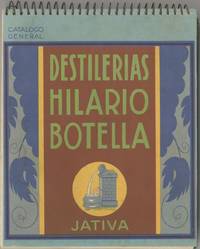
19206853Barcelona: Encuardernaciones Patentadas Spirax Sol; Papeles de Estano-Barna 1920. Booklet spiral-bound along top edge 17 x 13 cm. 58 leaves printed rectos only. Illustrated throughout in chromolithography. Title from cover. FIRST & ONLY EDITION. A trade catalog for the distinctive and elaborate bottles for wine and spirits from the firm of Destilerias Hilario Botella from Jativa in Spanish Valencia. The first offerings are the highly decorated bottles in styles such as Anfora Valenciana Nagasaki del Japon Carmen Sevilla Piramidal Conica and most exciting the Botella Pinguino Patentada– a 1000 gram bottle in the shape of a penguin. Bottles for dozens of types of spirits are included as well as a lemonade dispensing device and two pages of fine leather goods. Some offsetting throughout; rear wrapper panel soiled but mostly clean and bright. Some early ink scribbles to front wrapper verso otherwise generally very good or better. Scarce. OCLC locates no copies. Encuardernaciones Patentadas Spirax Sol; Papeles de Estano-Barna hardcover
171521225London 1715. A petition to Parliament by the officers of Lieutenant General George Hamilton's Regiment of Foot seeking pay due for services abroad in the War of the Spanish Succession. Lord George Douglas-Hamilton 1666-1737 was a Scottish Williamite officer during the Glorious Revolution who later married William III's mistress Elizabeth Villiers became a confidant of William was created Earl of Orkney in 1696 was appointed Governor of Virginia in 1714 and in 1736 was the first British general promoted to the rank of Field Marshal. In 1701 at the beginning of the War of the Spanish Succession Hamilton led the First Regiment of Foot the Royal Scots to the Netherlands where the regiment fought for the remainder of the war. Despite their long service and the high position of Hamilton the officers suggest in the present petition that having been so long overseas they had been forgotten by the British government and charge that they had not received their pay even after frequent petitions. The document is an early example of lobbying literature which first began proliferating in the lobby of the House of Commons at the time of the accession of King George I and the British general election of 1715. ESTC records four copies two at the British Library one at Oxford and one at the National Library of Scotland. unknown
19948471-38U.S.A.: Fondo Editorial de la Plastica Mexicana 1994. First Edition. . Hardcover. Good/Very Good. Spanish text. In good clean unmarked condition with minor shelfwear and a lightly cracked front hinge between two front end pages. Text block still tightly fastened. 126 pages fully illustrated. <br/> <br/> Fondo Editorial de la Plastica Mexicana hardcover
1970L242Taiwan: Pirated copy 1970. Hardcover. Pirated Edition Stated First Edition. 8vo. 422pp. Cloth boards. Soon after its original publication pirated editions of the lauded novel were proliferated throughout Taiwan and China due both to censor and lack of legal authorization. After being told of the widespread piracy of his works during a visit to China in 1990 Marquez is purported to have angrily stated 'not even one hundred and fifty years after my death will my books be authorized in China.' Even still the first legal and authorized Chinese edition was published in 2011 after much publisher bidding several years before his death in 2014. This particular copy is completely in English inferring an early issue and the text itself printed from the First U.S. Edition of Harper & Row. The half-title and title pages are identical save for the removal of all publisher mention and curiously the acute accents over the words Garcia and Marquez. The copyright page also with all publisher mention removed bears the First Edition statement in identical typeface and orientation but now off-middle set on the page and above a printing statement in Taiwanese. Of the pertinent information noted in Taiwanese: sold by the Royal Family Book Co. printed by the Guangda Printing Co. and an additional statement of First Edition. The dust jacket crudely reprinted retains the original price of $7.95 but lacks the exclamation mark after the first paragraph inferring use of the second issue. VERY GOOD in Very Good dust jacket protected in a removable mylar cover. The book itself with just a hint of shelf rubbing along the edges the pages up to the first chapter are slightly waved due to the quality of paper stock a small book exchange label on the back endpaper otherwise the binding is strong and tight the text is clean and unmarked and the boards remain bright and distinct. The dust jacket shows slight shelf rubbing along the edges with several very small chips a very short closed tear at the back panel otherwise remains colorful and distinct. As pictured. Pirated copy hardcover
1939WRCLIT28761New York: Modern Age Books 1939. Small quarto. Half white calf and blue cloth stamped in gilt. Plates. Some faint dust darkening and light rubbing to the white calf otherwise a fine copy in edgeworn slipcase short breaks at top joints and light foxing to label. First edition deluxe issue. One of 440 numbered copies specially printed and bound and signed by Quintanilla. This deluxe issue also includes four original lithographs and a loose color print not included in the trade edition. Other than Hemingway's Preface the text is by Elliot Paul and Jay Allen. Modern Age Books hardcover books
1836231491836. Diario Constitucional de Santiago de Cuba No. 57 November 1836 just months after the restoration of Spain's liberal Constitution of 1812. This newspaper records the transmission of Spanish constitutional government into eastern Cuba in late 1836 through decrees ministerial correspondence and public political dispute printed for circulation in Santiago de Cuba. Issued weeks after the political upheavals that restored constitutional rule in Spain this number shows how the language of the regency government the suppression and reorganization of state bodies and local declarations of loyalty to Isabel II reached colonial readers through the newspaper press. In a Cuban setting where metropolitan policy was filtered through governors ministries and municipal elites an issue such as this preserves the working connection between imperial administration and provincial print.<br /> <br /> Diario Constitucional de Santiago de Cuba. No. 57. Santiago de Cuba 27 November 1836. 4 pages. Folio newspaper issue. The masthead reads "DIARIO CONSTITUCIONAL / DE SANTIAGO DE CUBA" with the date line "DOMINGO 27 DE NOVIEMBRE DE 1836." Page 1 opens with "MINISTERIO DE LA GOBERNACION DEL REINO" followed by a circular and a substantial "EXPOSICION A LA REINA GOBERNADORA" leading into a "REAL DECRETO" concerning the suppression of the Consejo Real de España e Indias. Interior pages continue the decree and carry translatedly legible sections including "MISCELANEA" notices on "Las islas turcas libres" and "Noticias sobre Tejas" and a long exchange under "REMITIDOS" dated "Cuba 25 de Noviembre de 1836" addressing militia service volunteers of Isabel II and the political insult attributed to an earlier subscriber. The issue survives as a complete four page folio with dense double column text throughout and no wrappers as issued.<br /> <br /> Printed in Santiago the issue shows constitutional and monarchist language being adapted for a colonial audience that was expected to follow ministry decrees military loyalty and debates over public honor in the same sheet. Folded as issued with minor edge chipping small losses at corners and margins some toning and closed tears and pinholes; complete and legible. Overall good condition. The juxtaposition of metropolitan government text Caribbean and Atlantic news and the local controversy printed in "Remitidos" gives the number a documentary range broader than a routine official gazette placing state policy beside the contested language of provincial political life. unknown
129359hardcover. Real Academia Nacional de Medicina. 16 vols. 8vo flexible white cloth; slightly soiled. Madrid: Julio Cosano 1921-1949.<br/><br/> A scholarly set on internal medicine biography epidemics pediatrics and other topics.<br/><br/> unknown books