6 501 résultats
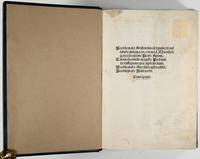
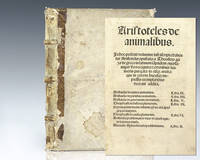
1514104082Venice: Gregorium de Gregorijs 1514. Rare 16th century printing of Aristotle's Posterior Analytics; bound together with Spanish Franciscan theologian Antonius Andreas's best known work Quaestiones super XII libros Metaphysicae Aristotelis. Quarto bound in contemporary parchment over handmade paper-covered boards woodcut initials text in two columns. In very good condition. A rare and desirable collection. The Posterior Analytics is a text from Aristotle's Organon that examines demonstration definition and scientific knowledge. In the work Aristotle distinguishes 'demonstration' as a syllogism productive of scientific knowledge and 'definition' as the statement of a thing's nature: the meaning of its name or of an equivalent nominal formula. In the Prior Analytics syllogistic logic is considered in its formal aspect; in the Posterior it is considered in respect of its matter. The "form" of a syllogism lies in the necessary connection between the premises and the conclusion. Aristotle concludes the book with the way the human mind comes to know the basic truths or first principles which are not innate because people may be ignorant of them for much of their lives. Of all types of thinking scientific knowing and intuition are considered as only universally true where the latter is the originative source of scientific knowledge. Gregorium de Gregorijs hardcover books
1501300661501. Problemata Alexandri Aphrodisei. Problemata Plutarchi cum gratia. - Venetiis Per Bonetum Locatellum 1501 Folio 304 x 210 mm 22 296 fl. double colum gothic letters woodcut initials printer device fine full leather binding. A broad marginated clean and well preserved copy of this beautifully volume printed on strong paper. The greatest scientific name after Hippocrates is that of Aristotle 384-322 B.C. who gave the medicine the beginnings of botany zoology comparative anatomy embryology teratology and physiology and use of formal logic as an instrument of precision. Aristotle a pupil of Plato and at one time tutor to Alexander the Great had a profound influence in determining the direction of medical and biological thought; perhaps no other man has so dominated and advanced science as a whole.The Aristotelian Problemata enjoyed considerable popularity in the Middle Ages especially its book IV dealing with sexual intercourse and generation which adapted in such manner that it became a kind of pornographic publication. Petrus de Abano 1250-1315 was one of the most illustrious and influential men of his time and probably the most influential medical writer of the later middle age. A native of Apano near Padua from which he takes his name he took his degree in Paris and his cures were so remarkable that he was able to obtain the highest fees of any physicians of his time. He was called the Consiliator because of his remarkable book published during his residence in the Paris University. He was consulted by such man as Pope Honorius IV and was in great demand for lectures consultation and teaching. Dante was among his pupils. Abano believed that air has weight that brain is the source of the nervous system and the heart the source of the blood vessels- novel ideas that were not validated for centuries. He was the first to acquaint the West with the Problemata from Aritotle`s school to which he wrote the present commentary. For his heretical and outspoken views he was several times accused of heresy. Later he was suspected of magic and persecuted on that account during the Inquisition. Dying before his trial his body was taken out and burned in the public square. The medical science of the scholastic was a part of the universitas litterarum the scholastic physicians were philosophers. The methods of thought had been prescribed by Aristotle and the learned man of Arab. "Petrus spent some time in Constantinople probably before 1293; during his stay found a copy of the Problems of Aristotle.he translated them into Latin for the first time. He began a commentary on these problems while in Paris and completed it at Padua in 1310.His experience and activity represents a landmark in the history of scientific humanism." -Sarton III 439 "Prefatory note by Domenico Massaria. The translatio antiqua of Aristotle is that by Bartholomaeus de Messina which usually accompanies the commentary by Pietro d'Abano; not the ancient Latin version beginning Omnes hominess.- The Problemata of Alexander of Aphrodisias is in the translation of Giorgio Valla; the Problemata Quaestiones convivales of Plutarch in that by Giovanni Petri edited by Giovanni Calfurnio." -Durling NLM no. 286 p. 36; Thorndike II 874-947 921; Sarton III/1 pp.439-446; Sigerist Great doctors 75-79; Gordon Medial & Renaissance Medicine pp. 333-337; Brit. Museum Ital. Books Aristotle p.55. This edition not in Osler Wellcome Cushing Waller Adams etc. RILEY Aristotle texts and commentaries in the Univ. of Pennsylvania Library 1961 has only an edition of 1505 no. 209 hardcover
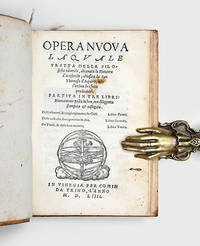
1554180648Venice: Comin da Trino 1554. Aristotleianism astrology and the development of Italian scientific prose First edition in Italian at the time the most complete translation of Aristotle's Meteorology in the vernacular together with extended commentary from two prominent medieval philosophers. This edition furthers the adaptation of Aristotle by medieval thinkers to support a range of contemporary interests most notably astrology. From its Latin translation in the 12th century until well into the 17th the Meteorology was "the unquestioned authority on weather theory" Frisinger p. 638. By 1554 Renaissance astrologers had long looked to it to support their conviction that the stars influence events on earth. Albertus Magnus c.1200-1280 among the most prominent medieval Aristotelians was one of the first to propose this astrological interpretation which characterizes the present edition. Following the great wave of scholarly Latin translations vernacular manuscripts of Aristotle's works began appearing from the 13th century onwards often commissioned by rising mercantile families. This edition is based on an anonymous translation made in 14th-century Florence. It pairs a revised and condensed version of the Meteorology with sections drawn from the commentaries of Albertus and to a lesser extent Thomas Aquinas. In several cases the editor has used their translation to bring Aristotle's text in line with Albertus's interpretation blurring the line between astronomy and astrology. Octavo 150 x 101 mm ff. iv 92. Woodcut printer's device to title page headpiece and historiated initial. Contemporary vellum spine lettered in manuscript ink remnants of morocco ties edges sprinkled red. Contemporary ink annotations between pp. 36-58 primarily focusing on explanations for atmospheric phenomena. Light rubbing and soiling infrequent minor browning and foxing: a very good copy. EDIT16 CNCE 2945; USTC 810943. H. Howard Frisinger "Aristotle and his 'Meteorologica'" Bulletin American Meteorological Society vol. 53 no. 7 July 1972; J. D. North "La 'Metaura' d'Aristotile: Volgarizzamento fiorentino anonimo del XIV secolo. Aristotle Rita Librandi" Speculum-A journal of medieval studies vol. 73 no. 2 1998. hardcover
In-4°; pp. (8), 190, (6), 191-357, (5), marca tipografica al frontespizio, buon esemplare. Legatura in piena pergamena coeva con tassello Dura opera di critica al De pietati Aristotelis di Fortunio Liceti, scritta nello stesso ambito dell’Accademia patavina da Ferchio, e relativa a una controversia teologica. Matteo Ferchio (1583-1669) filosofo e teologo seguace di Scoto, di origine croata; tenne la cattedra di teologia all’Università di Padova dal 1631.
in-4° (15,5 x 21,8 cm). [1], CXXXIX, [10] pp. Mezza pergamena. Al frontespizio, titolo inserito in cornice xilografica. Capilettera figurati. Copia molto marginosa, in ottime condizioni. Prima edizione. Questi opuscula ripercorrono i temi trattati da Aristotele nella “Meteorologia”, opera di ampio respiro dedicata non solo al tempo ma a tutti i principali fenomeni fisici osservati all’epoca. Da Platone Aristotele eredita un profondo interesse per le leggi della fisica, che tratta estensivamente in quest’opera. Per spiegare una di queste (la quarta, l’ultima trattata nell’opera) l’autore di serve di una metafora medica: compare per la prima volta l’illustrazione di una forcipe dentistica (come osservato da M. E. Ring). Durling 2794; Poletti 122; Wellcome I, n° 3744; Sander 3947; M. E. Ring ( ”The first picture of a dental forceps in a printed book”, Journal of the California Dental Association, 2004 )
1801Bv2422<p>First Edition of Aristotle's Metaphysics in English London 1801 translated by Thomas Taylor a leading English classicist of his day. Translated by Thomas Taylor a leading English classicist of the day. "In his knowledge of Plato and Aristotle he has never been equaled by any Englishman and he is still the most important disseminator of ancient philosophy in the history of English and American literature. Taylor went on to complete all the works of Aristotle but his introduction and important Dissertation which appear here were not included in the Works Axon 11. "If there is a philosophical Atlas who carries the whole of Western civilization on his shoulders it is Aristotle. He has been opposed misinterpreted misrepresented and -- like an axiom -- used by his enemies in the very act of denying him. Whatever intellectual progress men have achieved rests on his achievements" Rand The Objectivist Newsletter 1963. This "philosophical Atlas" was born in 384 B.C. in Stagira an ancient Greek city in the northeastern region of modern Greece. At seventeen Aristotle traveled to Athens to study at Plato's Academy. He remained at the Academy until Plato's death in 348 B.C. In 343 B.C. Aristotle was recruited to tutor King Alexander the III revered as "Alexander the Great" for his formidable conquests throughout Europe and Asia. Later he established his own school The Lyceum which instructed students in a breadth of branches from rhetoric and logic to philosophy and the natural sciences. The Metaphysics is one of the principal works of Aristotle and history's first major work on this fundamental branch of philosophy. Metaphysics is the branch of philosophy which studies existence as such of "being qua being" according to Aristotle. It "identifies the nature of the universe as a whole. It tells men what kind of world they live in and whether there is a supernatural dimension beyond it. It tells men whether they live in a world of solid entities natural laws absolute facts or in a world of illusory fragments unpredictable miracles and ceaseless flux. It tells men whether the things they perceive by their senses and mind form a comprehensible reality with which they can deal or some kind of unreal appearance which leaves them staring and helpless" Peikoff 23. "This edition contains some valuable matter by the translator not reprinted in the ninth volume of his complete translation of Aristotle s Works" Lowndes 69. Complete with blank leaves and half-title. In near fine condition no writings markings or bookplates of any kind; wide margins some scattered light foxing. Large quarto period-style full marbled calf gilt red morocco spine label marbled endpapers. A splendid example handsomely bound. Book #Bv2422. $5200. We specialize in Rare Ayn Rand and other Legends and Landmarks.</p> Davis, Wilks, and Taylor hardcover
In-4°; pp. (16), 826, (34), marca tipografica al frontespizio e all’ultima pagina; capilettera incisi su legno; il Liber secundus e tertius hanno un proprio frontespizio; edizione originale. Alcuni fori di tarlo passanti; bruniture. Krivatsy 6972. Celebre medico e filosofo ligure (1577-1657) Liceti affronta in quest’opera la questione della generazione animale.
150565845Venetiis: 1505-1507. later old quarter vellum over marbled baords. Some old ink annotations and a neat repair to one corner of the first leaf; neat old marginal annotations in Latin to the Aristotle. Some inoffensive scattered marginal stains; contents very attractive. 4to. hardcover
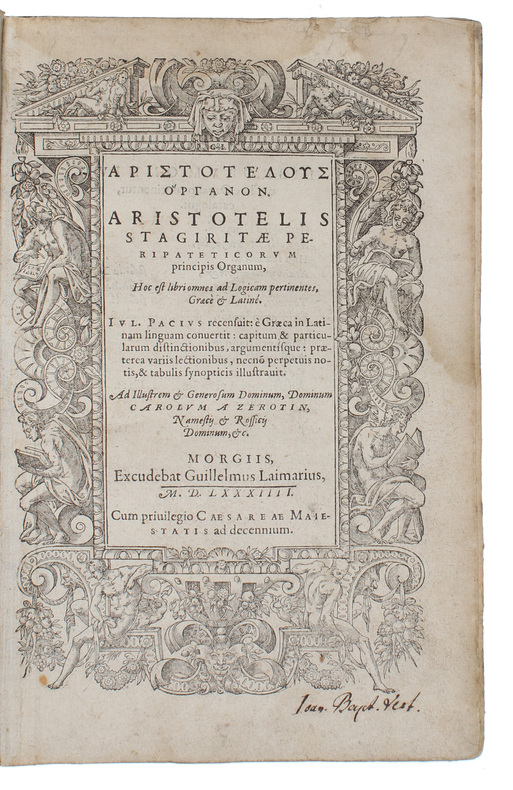
158450934Morgiis, Guillelmus Laimarius, 1584. Small folio. 18th century half vellum, somewhat soiled and worn. Corners and edges bumped and worn. Handwritten title to spine. Fore-edge with 2-line title in neat (contemporary?) hand and with the ""Societas Jesu"" (i.e. the Jesuit Society) symbol in white to the otherwise red fore-edge. Internally a very ni8ce copy, with the occasional browning and spotting. A faint damp stain to top marging of some leaves. A small hole to top of title-page, far from affecting print. Last leaves with neat strenthening of blank upper corners, far from affecting text. Old (presumably 18th century) owner's name to title page: ""Ioan. Bey A. Vest."" Front free end-papers heavily annotated (presumably by this same owner, in Latin, Greek, and German. The annotations include and elaborate handwritten index, information about the edition, and references to the Greek sentences. Verso of last leaf and back end-papers also with notes. A few underlinings here and there. Woodcut ornamental title-border, woodcut vignettes, woodcut initials, numerous woodcut illustrations and diagrams in the text. Greek-Latin parallel-text. (8), 831, (1) pp.
158450934Morgiis Guillelmus Laimarius 1584. Small folio. 18th century half vellum somewhat soiled and worn. Corners and edges bumped and worn. Handwritten title to spine. Fore-edge with 2-line title in neat contemporary hand and with the "Societas Jesu" i.e. the Jesuit Society symbol in white to the otherwise red fore-edge. Internally a very ni8ce copy with the occasional browning and spotting. A faint damp stain to top marging of some leaves. A small hole to top of title-page far from affecting print. Last leaves with neat strenthening of blank upper corners far from affecting text. Old presumably 18th century owner's name to title page: "Ioan. Bey A. Vest." Front free end-papers heavily annotated presumably by this same owner in Latin Greek and German. The annotations include and elaborate handwritten index information about the edition and references to the Greek sentences. Verso of last leaf and back end-papers also with notes. A few underlinings here and there. Woodcut ornamental title-border woodcut vignettes woodcut initials numerous woodcut illustrations and diagrams in the text. Greek-Latin parallel-text. 8 831 1 pp. <br/><br/><em>The very rare first edition of Julius Pace's seminal "Organon"-edition which was the standard-edition of the logical texts of Aristotle throughout more than a century running through at least 11 editions before 1624. Pace's version of the text in Greek-Latin parallels and with Pace's inspired commentaries and interpretations profoundly influenced Renaissance thought determining the course of the Organon-interpretation throughout this period and inspiring much original philosophical thought. Pace's interpretation of Aristotle's logical works - arguably the most influential collection of works in the history of Western thought - not only changed the face of Renaissance thought it has remained the authoritative reading of Aristotle's "Organon" to this day and is still considered the most important and authoritative reading of the texts. As Ross puts it in the Preface to his translation of the logical works the standard Oxford-edition: "My chief authority in matters of interpretation has been Pacius". "The Works of Aristotle Translated into English Under the Editorship of W.D. Ross. Volume I". Oxford University Press. To this day a proper study of Aristotle's "Organon" - and Porphyrios' "Isagoge" - is still unthinkable without references to Pace his rendering of the text and his interpretations of it. The famous "Porphyrian Tree" or "arbor porphyriana" which has gone down in history as a standard presentation of the basis of Aristotle's thought was presented by Porphyrios in his "Isagoge" which since Antiquity has accompanied Aristotle's "Ornanon" as an introduction thereof. The standard presentation of this tree is that of Pace in the present edition on p. 9. It is that rendering of it with occasional slight alterations which has remained standard ever since 1584. That which we ever since Antiquity have called the "Organon" comprises the logical works of Aristotle: 1. Categories 2. On Interpretation 3. Prior Analytics 4. Posterior Analytics 5. Topics 6. On Sophistical Refutations - which ever since late Antiquity/early Middle Ages have been accompanied by Porphyrios' 233/34-ca.310 "Isagoge" his introduction to Aristotle's "Categories". During the Renaissance all editions of Aristotle's "Organon" also comprised Porphyrios' "Isagoge" which was seen as necessary for the understanding of Aristotle's logic. Aristotle's logic has played a seminal role in the history of Western thought. No other collection of writings has had an impact on the history of philosophy that comes close to the "Organon" an impact that remains pivotal to this day. "Aristotle's logic especially his theory of the syllogism has had an unparalleled influence on the history of Western thought." SEP.From Antiquity the earlier middle ages had inherited Boethius' translation of the two first treatises of Aristotle's "Organon" along with Porphyrios' "Isagoge". These works formed the basis for logical study and teaching until the end of the 11th century. Only during the 12th and 13th centuries were Aristotle's writings - along with those of the Arabic and some of the Greek commentators - translated into Latin. When the medieval universities reached their full development during the thirteenth century Aristotle's works were adapted as the standard textbooks for all philosophical disciplines - thus modern terms for many philosophical and scientific disciplines correspond to the titles of Aristotle's works e.g. Ethics Physics Metaphysics. Through Aristotle's works the West thus acquired not only the specific problems and ideas that were being dealt with at the universities but also the terminology used to describe and discuss them and the systematic framework within which all relevant problems should and could be treated. But come the Renaissance we see a clear change in the use of Aristotle's works. We here witness something other than a mere continuation of the late medieval Aristotelianism. The Humanists began supplying new translations of Aristotle's works and translated all the Greek commentators of Aristotle many of them for the first time. And thus a tendency to emphasize the original Greek Aristotle developed a tendency that became pivotal for the development of modern thought - the development of modern science and modern philosophy is inextricably linked with the Renaissance Humanist editions of Aristotle's works in Greek with Latin parallel-text. The "Organon" Aristotle's seminal logical writings occupies a central position within the Aristotelian body of writing and thus within the development of Western thought. Certain Humanist versions of the Greek text and the Latin translations as well as the interpretations of them thus came to play a seminal role in the trajectory of Renaissance and modern though Pace's "Organon"-edition presumably being THE most important and influential edition ever to have appeared. "The medieval traditions of logical writing survived well into the sixteenth century particularly at Paris and at the Spanish universities though with considerable internal changes. Treatises on sophisms and on proofs of terms ceased to be written; whereas there was a sudden flurry of activity concerned with the various divisions of terms and with the opposition of propositions i.e. the logical relations between different kinds of categorical proposition. These internal changes were not however sufficient to keep the tradition alive and after about 1530 not only did new writing on the specifically medieval contributions to logic cease but the publication of medieval logicians virtually ceased. The main exceptions were the logical commentaries by or attributed to such authors as Thomas Aquinas and John Duns Scotus which found a place in their "Opera Omnia" and which benefited from a revived interest in the great medieval metaphysicians.The main changes in the teaching and writing of logic during the sixteenth century were due to the impact of humanism. First commentaries on Aristotle came to display a totally new style of writing. One reason for this was the influence of new translations of Aristotle and new attitudes to the Greek text. Another reason was the publication of the Greek commentators on Aristotle's logic Alexander Themistius Ammonius Philoponus and Simplicius. A third reason was the new emphasis on Averroes which expressed itself in the great Aristotle-Averroes edition of 1550-1552. The effects of these new factors can be seen in the commentaries on individual works of the "Organon" by such Italians as Agostino Nifo 1473-1546 and Jacopo Zabarella 1533-1589 the latter of whom offered a particularly influential account of scientific method. They can also be seen in the "Organon" edition of Giulio Pace 1550-1635 which was first published in 1584 and contained the Greek text side-by-side with a new translation which was designed not only to read well but also to capture the philosophical significance of Aristotle's words." Raul Corazzon "History of Renaissance and Modern Logic from 1400 to Stuart Mill"."No editor better understood the nature of this Treatise of Aristotle than Julius Pacius who was the preceptor of Casaubon and profoundedly skilled in all the arcane of the Peripatetic philosophy in both the Greek and Latin tongues." Dibdin I: 318Giulio Pace of Beriga or Julius Pace/Pacius 1550 - 1635 was a famous Italian Aristotelian scholar and jurist. He was born in Vicenza and studied law and philosophy in Padua. He was inspired by the Reformation and put on trial by the Inquisition. Therefore he had to flee Italy and escaped first to Geneva thereafter to Germany. While in Heidelberg he converted to Protestantism. He was highly respected as an academic and was widely known for his deep knowledge and understanding of Aristotle whom he became famous for translating. He was elected public professor in Geneva where he taught for ten years 1575-1585. The next ten years he spent teaching law at the University of Heidelberg where he got into different conflicts especially with the philosophical faculty for giving private tuition in the controversial Ramist logic. After Heidelberg he taught at different universities throughout Europe where he was especially well known for his 1584-edition of Aristotle's "Organon" which played a definitive role in Aristotle-scholarship and philosophy in general throughout all of Europe.Dibdin I:318; Adams A:1866. </em> hardcover
154632121546 Lugduni apud Seb. Gryphium, 1545-1546. 6 textes d'Artistote, tous éd. à Lyon par Sebastien Gryphius, reliés en 1 vol. in-8: 11 x 18 cm. Physicorum (trad. Byzantio), 1546, 214 pp.; De Coelo (trad. Byzantio) 1545, 115 pp.; De Generatione (trad. Vatablo), 1546, 67 pp.; Meteorologicorum (trad. Vatablo), 1546, 136 pp.; De Anima (trad. Byzantio), 1546, 90 pp.; Stagiritae (trad. Vatablo), 1546, 108 pp. Avec plusieurs vignettes de l'imprimeur représentant un gryphon; nombreuses lettrines initiales sur bois; quelques scolies manuscrites en marge du texte. Reliure moderne en parchemin. Dos à troix nerfs avec titre et date manuscits à l'encre noir. Bibli.: Baudrier, Biblio. lyonaise, VIII / Gültlingen, Biblio. imprimé à Lyon, V.
Due opere entrambe in edizione originale, buona copia. In -4°; pp. 119, (33) + pp. 78, (2 di 10, manca l’indice), ai frontespizi marca tipografica, al recto dell’ultima pagina non num. grande legno con l’emblema di Liceti e il motto Fortasse licebit, e il colophon excudebat Martinus. Leggere sporadiche bruniture. Krivatsy 6965 - 6954. Il De perfecta constituzione tratta delle questioni relative alla generazione, in special modo della formazione e sviluppo del feto: “A differenza di Aristotele, oltre al seme maschile egli ammette anche un seme femminile, che porta al feto l'anima vegetativa. Secondo il L. il seme è costituito da particelle provenienti da tutte le parti del corpo dei genitori, delle quali portano la forma. Questa teoria preformista, ben lontana dalle concezioni epigenetiche aristoteliche, fu utilizzata dal L. per spiegare lo sviluppo embrionale, la trasmissione ereditaria dei caratteri acquisiti, la produzione dei mostri e l'ibridismo interspecifico.” (DBI ad vocem). Il De coextensione tratta tra l’altro dell’anima delle piante e delle passioni dell’anima, un tema che sarà più tardi ripreso da Descartes. L’autore di riferimento è Aristotele.
In-folio, (6), 130pp, capilettera incisi; (2), 26, ritratto di Mose Finzio al frontespizio, capilettera incisi; (6), 84pp, marca tipografica al frontespizio e in fine. Legatura in pergamena contemporanea, nervature. In-folio, (6), 130pp, engraved drop caps; (2), 26, portrait of Mose Finzio on the title page, engraved initial letters; (6), 84pp, printer’s mark on the title page and at the end. Contemporary vellum binding, bands.
1525133419Venetiis: Octaviani Scoticiuis 1525. Rare early 16th century Venetian printing of Aristotle's pioneering work on zoology which had a powerful influence on zoology for over two thousand years. Folio bound in full vellum illustrated with woodcut initials. In very good condition. Deaccessioned from the Harvard College Library with their stamps and bookplate. Written in the fourth century B.C.E. Aristotle's History of Animals had a powerful influence on zoology for some two thousand years. Generally seen as a pioneering work of zoology Aristotle frames his text by explaining that he is investigating the what the existing facts about animals prior to establishing the why the causes of these characteristics. The book is thus an attempt to apply philosophy to part of the natural world. Throughout the work Aristotle seeks to identify differences both between individuals and between groups. The work contains many accurate eye-witness observations in particular of the marine biology around the island of Lesbos such as that the octopus had color-changing abilities and a sperm-transferring tentacle that the young of a dogfish grow inside their mother's body and that the male river catfish guards the eggs after the female has left. Some of these were long considered fanciful before being rediscovered in the nineteenth century. It continued to be a primary source of knowledge until in the sixteenth century zoologists including Conrad Gessner all influenced by Aristotle wrote their own studies of the subject. Octaviani Scoticiuis hardcover
16191903070006Lutetiae Parisiorum: Typis Regiis 1619. First Edition. Hardcover. Good. 1st edition of Du Val's collected works of Aristotle. 2 volumes bound in 4. Folio 40 x 26 cm. Bound in contemporary Cambridge-style paneled calf. Rebacked and restored bindings. 6 raised bands. Title pages in red and black with engraved portrait of Aristotle. Text in Greek and Latin in parallel columns. Institutional blind stamps. Dampstaining along bottom scattered marginal staining. First title has its margins trimmed and conserved. Collated: Tome 1 part 1: 16 430 p.; T.1 p.2: 431-1251 p. 19; T.2 p.1: 3 469 p. 1; T. 2 p.2: 470-1104 p. 16. <br> According to John Lempriere's Classical Dictionary Aristotle's "treatises have been published separately; but the best edition of the works collectively is that of Duval." p. 96. Refs: Brunet I. 459. <br> Subtitle: "Veterum ac recentiorum interpretum ut Adriani Turnebi Isaaci Casauboni Julii Pacil studio emendatissima. Cum Kyriaci Strozae Patritii Florentini libris duobus Graecolatinis de Republica in supplementum politicorum Aristotelis. Sed nouissimae huic editioni omnium quae hactenus prodierunt ornatissimae accessit breuis ac perpetuus in omnes Aristotelis libros commentarius siue Synopsis Analytica Doctrinae Peripateticae non antehac visa; in qua ut in expeditiore tabella Aristotelis philosophia omnis provt ea suo ordine descripta est perspicue breuiterque indicatur & pro rerum dignitate exponitur. ; Authore Guillelmo Du-Val Pontesiano Philosophiae Graecae & Latinae in Parisiensi Acade" <br> This is an oversized or heavy book which requires additional postage for international delivery outside the US. Lutetiae Parisiorum: Typis Regiis hardcover
In-4°; pp.(16), 429, (35), al frontespizio emblema inciso su legno con motto “ex duobus unum”; all’ultima pagina colophon e marca tipografica incisa su legno; testatine e finalini tipografici; legatura coeva in piena prgamena con titolo manoscritto al dorso; piccoli sporadici marginali fori di tarlo passanti. Edizione originale. Scienziato, filosofo e medico, Fortunio Liceti (1577-1657), che fu poi amico anche di Galileo, pubblica qui una delle prime opere, in uno dei campi di suo interesse che fu la filosofia naturale o fisiologia; in particolare il De ortu tratta dei problemi relativi alla generazione, allo sviluppo e al momento in cui i tre aspetti dell’anima (vegetativa, sensitiva, razionele) vengono accolti nel feto. L’adesione alla filosofia aristotelica è assoluta. Krivatsy 6964
STAN0061Paris Brumen 1577. 8°. 120 Bll. mit e. Druckermarke am Titelblatt Kopfleisten u. Initialen. - Und: ARISTOTELES. Aristotelis de Caelo Libri IIII. Ioachimo Perionio interprete: per Nicolaum Grouchium correcti & emendati. Parisiis Ex officina Thomae Brumennij 1577. 8°. 62 Bll. mit Druckermarke am Titelblatt u. Initialen. - Und: ARISTOTELES. Aristotelis Meteorologicorum libri Qvatuor. Ioachimo Perionio interprete : per Nicolaum Grouchium correcti & emendati. Parisiis Ex officina Thomae Brumennij 1577. 8°. 70 Bll. mit Druckermarke am Titelblatt Initialen u. einigen Skizzen in Holzschnitt. - Und: ARISTOTELES. Aristotelis de Ortu & Interitu Libri Dvo. Ioachimo Perionio interprete : per Nicolaum Grouchium correcti & emendati. Parisiis Ex officina Thomae Brumennij 1577. 8°. 36 Bll. mit Druckermarke am Titelblatt u. Initialen. - Und: ARISTOTELES. Aristotelis Libelli qui Parua naturalia Vvlgo Appelantvr. Ioachimo Perionio interprete : per Nicolaum Grouchium correcti & emendati. Parisiis Ex officina Thomae Brumennij 1577. 8°. Titelbl. Bl. 5-69 Bl. Bl. 72 1 nn. Bll. mit Druckermarke am Titelblatt Initialen u. einer Holzschnittskizze. - Und: ARISTOTELES. Aristotelis Liber de Mundo ad Alexandrvm Macedoniae Regem. Gulielmo Budaeo interprete. Parisiis Ex officina Thomae Brumennij 1577. 16 Bll. mit Druckermarke am Titelblatt u. Initialen. - Und: ARISTOTELES. Aristotelis de Animo Libri III. Ioachimo Perionio interprete : per Nicolaum Grouchium correcti & emendati. Parisiis Ex officina Thomae Brumennij 1577. 48 Bll. mit Druckermarke am Titelblatt u. Initialen. Lederband d. Zeit mit e. Rückenschildchen Streicheisenlinien u. kleinen Ziervignetten in abgeriebener Goldprägung am Rücken Einbanddeckel mit mehrfachen Streicheisenlinien gerahmt mit ausgefüllten Ecken mit Ziermotiven sowie jeweils einer medaillonartigen Verzierung in der Mitte in Goldprägung Lederüberzug schadhaft mit größeren Fehlstellen an den Ecken und am Rücken. Blätter gut erhalten nur wenig vergilbt oder fleckig teilw. schwach wasserrandig. Mit meist unkenntlich gemachten Besitzvermerken von verschiedenen alten Händen am ersten Titelblatt e. Schriftzug mit Bleistift am vorderen Innendeckel u. einer Anmerkung von alter Hand auf Bl. 15 des letzten Werks. Breitrandiger Druck. Pettegree French Books III11954677 54673 54680 54682 54675 u. 54670 Meteorologicorum libri quatuor nicht bei Pettegree Sammelband mit sieben außerordentlich seltenen Aristoteles-Drucken in der lateinischen Übersetzung durch Joachim Perion 1499-1559 bearbeitet von Nicolas de Grouchy 1510-1572 gedruckt in Paris bei Thomas Brumen 1532-1582. J. Perion Angehöriger des Benediktinerordens Doktor der Theologie und hervorragender Altphilologe und Romanist schuf mit seiner Übersetzung der Schriften des Aristoteles aus dem Altgriechischen einen wichtigen Beitrag zur Rezeption des altgriechischen Philosophen. Diese Ausgaben nicht bei BM French Books u. Adams. Paris, Brumen 1577. unknown
16199868Tolosae, Apud Dominicum & Petrum Bosc., 1619. In-folio de [32]-1248-[24] pages, plein veau fauve de l'époque, dos à 6 nerfs orné de fleurons, filets, roulettes et titre dorés, double filet doré encadrant les plats. Tampon de bibliothèque au titre.
15265283(Am Ende): Venedig, de Sabio, 1526. 4 nn. Bll., 107 num. Bll. mit wdh. Druckermarke in Holzschnitt. Gr.-4°. HPgmt des 17. Jahrhunderts mit hs. Rückentitel (etw. bestoßen und fleckig).
1810000014035Oxonii = Oxford: E Typographeo Clarendoniano = At the Clarendon Press 1810. Later edition. Hardcover. Very Good. 2 vol. 8vo. 9 ii-cxi 2 2-373 3; 5 378-757 3 pp. Contemporary full calf with gold borders on each board spines in five compartments with a maroon and a black morocco label lettered in gold on each spine gold decorations and flourishes on each spine. Text in Greek and Latin with the notes and commentary in Latin. Edited and compiled by Friedrich Sylburg with the Latin translation by Dionysius Lambinius and with notes by Guillaume Du Val. Graesse 215. Moss 129. Sylburg received praise from both Moss and Dibdin for his scholarship on Aristotle's writings. Aristotle's Politics are sometimes regarded as the natural sequel to his Nicomachean Ethics: once one knows what it is for a human being to flourish one can consider how the laws of human society can best guide and promote said flourishing. Aristotle undertook a massive effort to examine dozens of Greek city-state constitutions and aimed to discern the best and the worst political principles within them. His Politics then stands as a sort of history of Greece and its political structures. The Politics also contains an examination of the theory behind various forms of government: monarchy aristocracy democracy etc. Aristotle's Economics contains a thorough examination of both macro and microeconomics in ancient Greece. The economics of a city-state a kingdom and of an individual's home are all dissected here and the philosophy behind good home and wealth management is discussed at length. Both his Politics and Economics were highly influential on medieval society and pre-1850 publications of these works have become difficult to find in commerce. A touch of rubbing to the extremities. An armorial bookplate on each volume's front pastedown very light occasional pencil marginalia. E Typographeo Clarendoniano [= At the Clarendon Press] hardcover
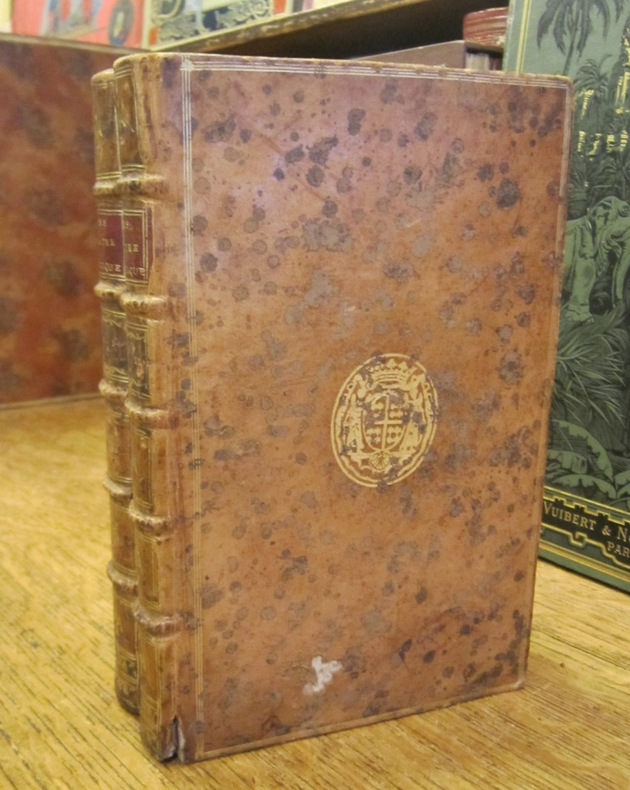
1771002357Paris Saillant & Nyon, Desaint 1771
77326Darmstadt Wissenschaftliche Buchgesellschaft 1958. Leinen gebunden; schwarze goldgeprägte Einbände / 35 Bände / Anz. Seiten: ca. 15000 / 175 x 245 cm / mit wenigen Tafeln und einigen Abbildungen im Text / Zustand: sehr gut geringe Gebrauchsspuren; Einbände teils leicht berieben ein Band an vorderem Aussengelenk geringfügig beschädigt Papier teils gebräunt Ausgaben bis 1975 mehrheitlich mit Besitzereinträgen auf Vorsatz Band 6 mit Kugelschreiber bearbeitet Begründet von Ernst Grumach; herausgegeben von Hellmut Flashar. Vollständige Ausgabe der bis jetzt erschienenen Titel in folgenden 35 Einzelbänden: 1.1.: Kategorien 1984; 1.2.: Peri hermeneias 1994; 3.1.: Analytica priora. In zwei Halbbänden 2007/2015; 3.2.: Analytica posteriora. In zwei Halbbänden 1993; 4.: Rhetorik. In zwei Halbbänden 2002; 5.: Poetik 2008; 6.: Nikomachische Ethik 1960; 7.: Eudemische Ethik 1962; 8.: Magna moralia 1958; 9.1.: Politik. Buch I 1991; 9.2.: Politik. Buch II 1991; 9.3.: Politik. Buch IV - VI 1996; 9.4.: Politik. Buch VII - VIII 2005; 10.1.: Staat der Athener 1990; 10.2.: Oikonomika 2006; 11. Physikvorlesung 1967; 12.: Meteorologie 1970; 12.3.: Über den Himmel 2009; 12.4.: Über Werden und Vergehen 2010; 13.: Über die Seele 1959; 14.2.: Parva naturalia II. De memoria et reminscentia 2004; 14.3.: Parva naturalia III. De insomniis 1994; 17.1.: Zoologische Schriften II. Über die Teile der Lebewesen 2007; 17.2./3.: Zoologische Schriften II. Über die Bewegung der Lebewesen. Über die Fortbewegung der Lebewesen 1985; 18.1. Opuscula I. Über die Tugend 1965; 18.2-3.: Opuscula II und III. Mirabilia. De Audibilibus 1972;18.5. Opuscula V. De coloribus 1999; 18.6. Opuscula VI. Physiognomonica 1999; 19.: Problemata physica 1962; 20.1.: Fragmente zu Philosophie Rhetorik Poetik Dichtung 2006; 20.3.: Die historischen Fragmente 2002. Dazu: Düring Ingemar: Aristoteles. Heidelberg Carl Winter; 1966 Leineneinband fleckig wenige Besitzereinträge und Bonitz H.: Index Aristotelicus. Graz Akad. Druck- und Verlagsanstalt secunda editio 1955 Darmstadt, Wissenschaftliche Buchgesellschaft, 1958 unknown
1531133411Parisiis: Petri Vidouei 1531. Rare 16th century French printing of Aristotle's third book of logic. Folio bound in full vellum elaborate woodcut vignette-border title-page illustrated with numerous in-text woodcut diagrams and woodcut initials. Ownership inscriptions including that of American philosopher Allan Gotthelf. Gotthelf received many honors for his work on Aristotle including in 2004 an international conference on "Aristotle on Being Nature and Life" held "in celebration of his contributions to the study of classical philosophy and science." In very good condition with some dampstaining and period marginalia throughout. Being one of the six extant Aristotelian writings on logic and scientific method The Prior Analytics was first composed around 350 BCE. The work represents the first formal study of logic where logic is understood as the study of arguments. In the Prior Analytics Aristotle identifies valid and invalid forms of arguments called syllogisms. A syllogism is an argument that consists of at least three sentences: at least two premises and a conclusion. Although Aristotle does not call them "categorical sentences" tradition does; he deals with them briefly in the Analytics and more extensively in On Interpretation. In the sixth century Boethius composed the first known Latin translation of the Prior Analytics. No Westerner between Boethius and Bernard of Utrecht is known to have read it. Petri Vidouei hardcover
1503D20057Venice: Octaviani Scoti per Bonetus de Locatellis 1503. Hardcover. Very Good. Small folio printed in gothic type in two columns woodcut initials & text diagrams; woodcut printer's device on final leaf. Bound in modern half parchment with printed paper boards. A copy with significant contemporary marginal notes in several sections the annotations run tight up against the outer margin. Title page cut down by one inch at the foot; some scattered spotting & worming but generally a nice copy of an early and uncommon to the market post-incunable edition worthy of future study. A recent edition was published in 2024 by the Aquinas Institute. Beth Mortensen summarizes the significance of the text: "All of us living in this Cartesian age grow accustomed to thinking of our bodies as animated machinesmachines that function better or worse subject to innumerable material factors. De Anima On the Soul reminds us that the human person is one whole and the soul is actively making the body what it is. This means that among other things the quality of the bodys functioning does not determine a human beings 'quality of life' and it is completely irrelevant to that persons worth or dignity." see: aquinas institute - commentary on de anima. <br/><br/> Octaviani Scoti per Bonetus de Locatellis hardcover
1549047<b>FIRST EDITION of this translation the FIRST ITALIAN TRANSLATION OF THE POETICS a little minor spotting in places tiny worm track to blank area of first two leaves early ownership inscription Jacobi Peruli Vabmatis' to title page pp. xii 355 25 4to eighteenth-century Italian vellum spine lettered in ink all edges blue a few tiny wormholes to backstrip a very good copy house in a maroon clamshell case with a black morocco label. A nice clean copy of the first edition of this translation of Aristotle's Rhetoric and poetics into Italian by Bernardo Segni 1504-1558 the first translation of the Poetics and the second of the Rhetoric to be printed. there was enough demand that a second edition was printed two years later.</b> Appresso Lorenzo Torrentino hardcover