Winslow, Russell; AristotleBiblio.com
6 501 résultats
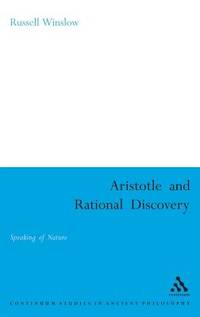
200791624Continuum. New. 2007. Hardcover. 0826496873 . FREE UPGRADE to Courier/Priority Shipping Upon Request - IN STOCK AND IMMEDIATELY AVAILABLE FOR SHIPMENT - Flawless copy brand new pristine never opened -- 160 pages. Description: "In this lively and original book Russell Winslow pursues a new interpretation of logos in Aristotle. Rather than a reading of rationality that cleaves human beings from nature this new interpretation suggests that for Aristotle consistent and dependable rational arguments reveal a deep dependency upon nature. To this end the author shows that a rational account of a being is in fact subject to the very same principle that governs the physical motion and generation of a being under inquiry. Among the many consequences of this argument is a rejection of both of the prevailing oppositional claims that Aristotle's methodological procedure of discovery is one resting on either empirical or conceptual grounds: discovery reveals a more complex structure than can be grasped by either of these modern modes. Further Winslow argues that this interpretation of rational discovery also contributes to the ethical debates surrounding Aristotle's work insofar as an ethical claim is achieved through reason but is not thereby conceived as objective. Again the demand for agreement in ethical/political decision will be disclosed as superseding in its complexity both those accounts of ethical decision as subjective for example 'emotivist' accounts and those as objective 'realist' accounts." -- with a bonus offer-- . Continuum hardcover
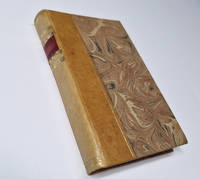
1378Venice: appresso Bartholomeo detto l'Imperadore & Francesco suo Genero 1551. Hardcover. Good. Octavo. 343 pages 5 leaves. Second edition. Title within ornate woodcut border. a8-z8 A8-V8 X4. In a nineteenth-century half red morocco binding over marbled boards. Illustrated with a few woodcut diagrams in the text. Adams A1837; Cranz Aristotle 108.220; Riley Aristotle 112. From the library of Jacobo Manzoni with his bookplate. Fine. <br/> <br/> Venice: appresso Bartholomeo detto l'Imperadore, & Francesco suo Genero, 1551. hardcover
16191907170004London: Edward Gifffin; Thomas Snodham 1619. First Edition. Hardcover. Very Good. First British edition of two works of Aristotle Rhetoric and Poetics both edited by Theodore Goulston. Printed in 1619 and 1623 respectively. Fine modern 1/4 speckled calf over marbled boards. Gilt ruled raised bands with 6 spine compartments. Collated: Aristotle's Rhetoric: vi 239 vi 2 blank. Aristotle's Poetics: iv. 74 iv. Both works title pages printed within engraved woodcut border large woodcut royal coat of arms on title versos. Parallel Greek and Latin texts. STC 2nd ed. 759. <br> The translator Goulston 1572-1632 dedicated this volume to Prince Charles. After graduating from Oxford he worked as a physician in London and became a fellow of the College of Physicians. According to Dibdin Goulston's version of Aristotle's Rhetoric was the most popular 17th century version. ARISTOTELOUV TECNHV RHTORIKHV BIBLIA TRIA. London: Edward Gifffin; Thomas Snodham hardcover
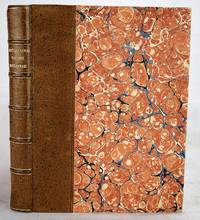
153420Leiden Lugduni Batavorum Ex Officina Plantiniana Apud Franciscum Raphelengium 1591. 8vo. 2 parts in 1: XVI2977 index; 231 blank p. Modern half calf. 16 cm Ref: STCN ppn 840465076; Cranz Bibliotheca Bibliographica Aureliana 108.713; Schwab 1520; Hoffmann 1285; Schweiger 153; Brunet 1464; Graesse 1213; Ebert 1137 Details: Restored half calf antique style with some gilding on the back and a red shield. Marbled boards. Plantin's woodcut printer's mark on the title motto: 'Labore et Constantia'. The first part p. 1-297 contains 'De Mundo'; the Greek text is divided in paragraphs and each paragraph is followed by 2 Latin translations of Apuleius and of Guillaume Budé and by explanatory notes scholia of Vulcanius. The second part which is often lacking in other copies has a title page of its own; it contains the 'editio princeps' of the Greek text of Gregorius Cyprius' 'Praise of the Sea' and reissue of Paulus Silentiarius' poem on the hotsprings Therma in Bithynia Condition: Paper yellowing. 2 names on the title. Right edge of the first leaves slightly thumbed the right lower corner of the first leaves somewhat dog-eared Note: The Greek scholar/philosopher Aristotle 384-322 B.C. is one of the foremost names in the history of thought and perhaps the most influential of all who have ever written. His influence on Western science and culture is immense. His boundless industry extended to most branches of higher learning. 74 treatises genuine and spurious have come down to us under his name. § One such work that has no claim to be genuine is the once popular philosophic treatise 'De Mundo' or 'On the Universe'. Edition Bekker 391-401 In it cosmological and meterological subjects are treated. The work was once ascribed to Aristotle but ever since the German scholar Wilhelm Capelle traced most of its doctrines to the Greek Stoic philosopher Posidonius of Apameia ca. 135 - ca. 51 B.C. the author is known as Pseudo-Aristotle. Neue Jahrbücher XV 1905 p. 529/68 Capelle dates the treatise in the first half of the second century A.D. It was translated into Latin in the second century A.D. by the Roman rhetorician and platonic philosopher Apuleius Madaurensis who is best known for his famous picaresque novel 'Metamorphoses' also known as 'The Golden Ass'. In 1533 the French classical scholar Guillaume Budé Guilielmus Budaeus published in Basel an edition of 'De Mundo' with a Latin translation of his own. This translation and the one of Apuleius was adopted in this Leiden edition of 1591 edited by the Flemish scholar Bonaventura Vulcanius De Smet in Flemish 1539-1614 from 1581 professor of Greek and Latin Letters at the recently founded University of Leiden. It is Vulcanius second edition of 'De Mundo' for in 1587 he had published the first edition. § In the short preface Vulcanius observes that he has restored 'De Mundo' to its original splendor emendating the manuscript and editions he used e.g. 'vetus codex meus habet' and 'In Aldina legitur' at quite a number of places and that he has cleansed Apuleius' translation from many horrific mistakes. 'In Aristotele itaque emendavi non pauca ab Apuleio innumera mendarum portenta profligavi totamque hanc Aristotelici pariter & Apuleiani Mundi fabricam pristinae suae quoad eius fieri potuit integritati restitui' p. 3 verso Vulcanius elucidated 'illustravi' 'De Mundo' also with a load of annotations that he hoped were useful for future philologists and even philosophers. In his annotations he examined how faithful to the Greek the Latin versions of Apuleius and Budaeus were and the 'emendations Vulcanius supplied were nearly all accepted by later editors of 'De Mundo' notably Bekker 1831 and Lorimer 1938'. H. Cazes ed. 'Bonaventura Vulcanius Works and Networks: Bruges 1538 - Leiden 1614' Leiden 2010 p. 346 3 years after this edition of 'De Mundo' Vulcanius produced for the same publisher an 'Opera Omnia' edition of Apuleius. § After 'De Mundo' Vulcanius has added in this edition of 1591 a separate volume containing 2 short Greek texts the 'editio princeps' of a prose work of Gregorius Cyprius 1241-1290 Patriarch of Constantinople the 'Encomium Maris' or the 'Praise of the Sea' p. 3/12 and a iambic poem of 189 verses composed by Paulus Silentiarius during the reign of Justinian 'Eis ta en Pythois Therma' on the hotsprings in Bithynia in Asia Minor p. 13/23 including Vulcanius' notes. It was Vulcanius explains in the 1 page introduction to this poem shoddily presented in the 'Anthologia Epigrammatum Graecorum' of Henri Estienne of 1566. He therefore decided to deliver a correct and sound text with his annotations. p. 13 These 2 small works were probably added by Vulcanius because they go well with and illustrate the passages in 'De Mundo' on the element water i.e. rivers seas oceans etc. p. 44/62 Provenance: On the title the name of 'Henricus Gesselius'. This might be the Dutchman Henricus Gesselius a 'Medicinae Doctor' who published in 1640 a 'Disputationum medicarum quinta de febre hectica & malignis' and 'Disputationum medicarum de febribus septima'. § If this is correct the other name 'Ioan. Cor. Gess.' might well be Johannes Cornelius Gesselius ca. 1550-1627 who was from 1574 rector of the Gymnasium of Amersfoort. He was fired in 1619 because he refused to renounce his catholic faith. NNBW 6 p. 579/80 Collation: 8 A-T8; a8 b4 leaf b4 verso blank Photographs on request hardcover
153420Leiden (Lugduni Batavorum), Ex Officina Plantiniana, Apud Franciscum Raphelengium, 1591.
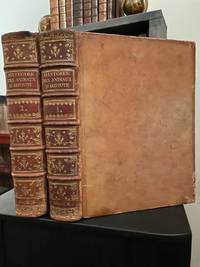
178310489Paris: Chez la Veuve DeSaint 1783. FIRST EDITION IN FRENCH. Including half-titles approbation and privilege du Roi. Volume I with the Greek and French translations on facing pages. Contemporary tree calf some wear to joints and corners; marbled edges some light waterstains in first volume. From the library of George Milton Smith with his bookplate.`. First edition. Camus' translation of Aristotle's descriptive zoology from Greek into French is a masterpiece of scholarship. This highly esteemed translation is much sought after for its extensive erudite commentaries and profound enlightenment of comparative anatomy. Divided into two books the first volume contains Aristotle's original Greek with Camus' French translation facing. Here he documents all the various manuscripts editions and translators cited in the work. The second volume a detailed study of natural history up to the modern time contains Camus' careful observations on the commentaries of other translators. This work is of particular importance for Camus' nomenclature of those living creatures originally described in Aristotle's account. He lists all of the animals found in Aristotle works including those "fanciful and primitive" and then details the differences in terms of the modern knowledge of natural history. <br /> <br /> So great was the influence of Aristotle that his teachings and thought were accepted and enlarged upon for nearly two millennia. He was acquainted with more than five hundred species of animals and had dissected and investigated in detail at least fifty kinds ranging over the entire animal kingdom. Many of his conclusions have stood the test of time. Among them may be mentioned his descriptions of the mechanisms of locomotion of the process of digestion in ruminants of the habits of bees of the mechanism of animal reproduction; his exposition of analogous structures in living bodies; and his methods of biological classification Eimas Heirs of Hippocrates 14.<br /> <br /> Camus 1740-1804 French revolutionist was a successful advocate before the Revolution. In 1789 he was elected by the third estate of Paris to the states general and attracted attention by his speeches against social inequalities. He was named archivist to the Constituent Assembly and in that capacity he organized the national archives and classified the papers of the different assemblies of the Revolution. He was restored to the office in 1796 and became absorbed in literary work. He remained an austere republican refusing to take part in the Napoleonic regime.<br /> <br /> This scarce work was included in Thomas Jefferson's library. Chez la Veuve DeSaint unknown
1799830021799. ARISTOTLE. ALBERTUS Magnus. Kurzgefasste Weiber-Buchlein. Enthalt Aristotels and Alberti Magni Hebammen-Kunst mit den darzu gehorigen Recepten. Harrisburg PA: Benjamin Mayer 1799. 10th ed. 24mo. 64 pp. In contemporary calf-backed boards. Close trimming to the fore-edge touches some text. Wear to the board edges nevertheless a remarkably well-preserved and attractive copy. Very good or better. Arndt 1173. Bristol B10844. Austin 1109. Brendle and Unger G19. While Bristol Austin and Brendle and Unger place this in Ephrata and from the press of G. Baumann Arndt notes this is a Harrisburg imprint from the press of Benjamin Mayers based on "typographical evidence." In terms of content Arndt has compared this with the 1796 edition and finds three chapters added: "Culpepper XVI" "Culpepper XII" and "Der Kaiserliche Schnitt." Arndt hypothesizes that the chapters likely come from Nicholas Culpeper's Directory for Midwives. Despite having been issued in several editions this early Pennsylvania German book on midwifery is rare in commerce. Text in German. unknown
155567038Venice:: I. Gryphius 1555. contemporary limp vellum. Marginal worming to Biii - Diiiii; vellum soiled and a little worn; fragments of leather ties present. . Folio. Engraved vignette on title page and a few text illustrations. A few old marginal annotations associated with underlined text. I. Gryphius, hardcover
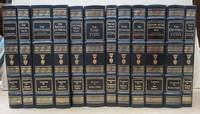
1995315699Easton Press 1995. Hardcover. Near Fine. Twelve volumes in uniform bindings of full bright red leather stamped in gilt spine titles in black labels. No corners or spine ends bumped or pushed. All have an unused bookplate laid in. Three have no flaws whatsoever to the page edge gilt eight have very minor almost imperceptible flaws Plato has two white spots on the top edge. This set will be remarkably attractive on your shelf. Please request a shipping quote before ordering. Easton Press hardcover
90809Norwalk Connecticut: Easton Press 2000. Full Leather. Fine. Complete 12 volume set uniformly bound in full black leather with gilt design lettering and AEG. Moire endpapers silk ribbon. 24 x 16.5 cm. "A note about" laid-in for each volume. Color frontispiece in each. A few small scratches to gilt edges of "Peloponnesian War" & Aristotle's Ethics larger scratch to top gilt edge of "The Odyssey<br /> <br /> <br /> Great condition overall of this set of classic Greek philosophy plays and history. Large set substantial extra charges will be required for international orders. List of titles:<br /> <br /> Aeschylus: The Oresteia 335pp. Translated by Robert Fagles.<br /> <br /> Aesop: The Complete Fables 262pp. Translated by Olivia and Robert Temple. <br /> <br /> Aristophanes: Four Comedies 393pp. Translated by Dudley Fitts. <br /> <br /> Aristotle: The Nicomachean Ethics 383pp. <br /> Translated by J. A. K. Thomson.<br /> <br /> Euripides: The Bacchae and Medea 451pp. Translated by Philip Vellacott. <br /> <br /> Herodotus: The Histories 622pp. Translated by Aubrey de Selincourt. <br /> <br /> Homer: The Iliad 683pp. Translated by Robert Fagles. <br /> <br /> Homer: The Odyssey 541pp. Translated by Robert Fagles.<br /> <br /> Menander: Plays and Fragments 265pp. Translated by Norma Miller.<br /> <br /> Plato: The Last Days of Socrates Translated by Hugh Tredennick and Harold Tarrant 237pp.<br /> <br /> Sophocles: The Three Theban Plays Antigone Oedipus the King Oedipus at Colonus 430pp. Translated by Robert Fagles. <br /> <br /> Thucydides: History of the Peloponnesian War 648pp. translated by Rex Warner. Easton Press unknown
14760Sans lieu Jacobus Berjon, Typographus Lugdunensis 1580 in 16 (13x8) 1 volume relié velin ivoire époque, 637 pages, figures scientifiques dans le texte. Bel exemplaire, petite galerie de vers sur l'extrémité de la marge interne, sans atteinte au texte, et visible sur 10 faux-feuillets
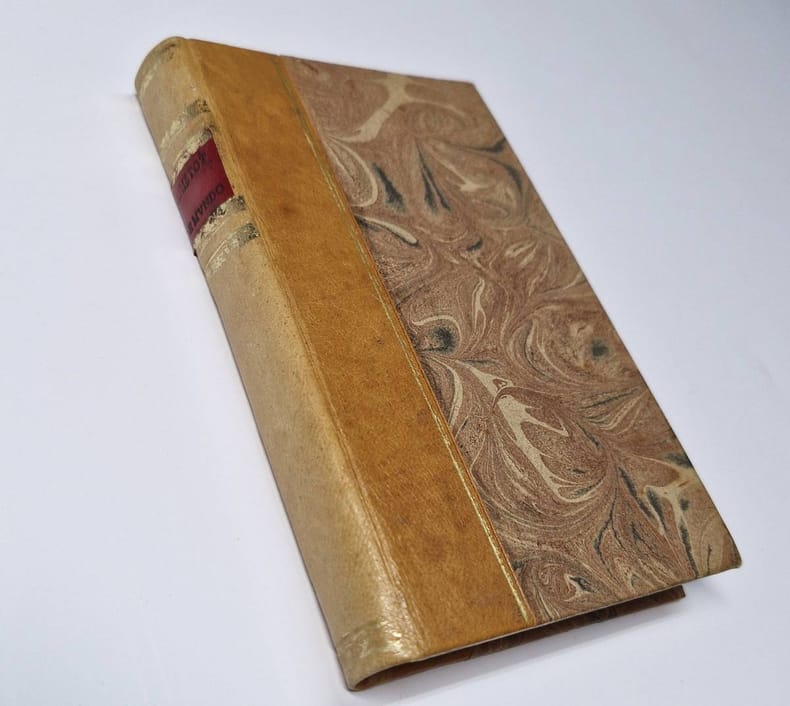
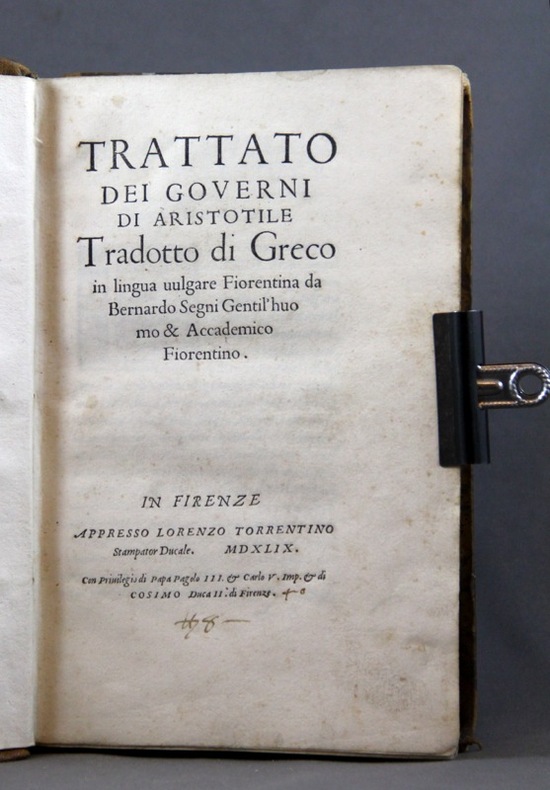
15496034Firenze, Lorenzo Torrentino, 1549. Petit in-4 de 420-[20]p. pour la table, demi-basane brune, dos lisse orné de filets et fleurons dorés, pièce de titre rouge (coins émoussés, quelques très rares rousseurs). Reliure XIXe ème.
32521AB1980. 31 Teil-Bände / 31 Volumes. Berlin / Darmstadt Akademie-Verlag / Wissenschaftliche Buchgesellschaft 1980-2017. Gross-Oktav 17.5 cm breit wide x 24.5 cm hoch high. Hardcover / Originalleinenbände ohne die Originalumschläge Original Hardcover black cloth with gilt lettering on spine and frontcover. Excellent condition with only minor signs of wear. With library stamp of Philosopher Philipp W. Rosemann. Die hier vorliegende Reihe 'Aristoteles - Werke in deutscher Übersetzung' enthält folgende Bände: Band 1 Teil I - "Kategorien". Übersetzt und erläutert von Klaus Oehler Mit Widmung. Zweite durchgesehene Auflage.359 Seiten erschienen 1986 Band 1 Teil II - "Peri Hermeneias". Übersetzt und erläutert von Hermann Weidemann VIII 483 Seiten 1994 Band 3 Teil I - "Analytica Posteriora Buch I". Übersetzt und erläutert Theodor Ebert und Ulrich Nortmann 924 Seiten 2007 Band 3 Teil II - "Analytica Posteriora Erster Halbband". Übersetzt und erläutert von Wolfgang Detel 438 Seiten 1993 Band 3 Teil II - "Analytica Posteriora Zweiter Halbband". Übersetzt und erläutert von Wolfgang Detel" 888 Seiten 1993 Band 4/I - "Rhetorik" - Erster Halbband". Übersetzt und erläutert von Christof Rapp 505 Seiten 2002 Band 4/II - "Rhetorik" - Zweiter Halbband". Übersetzt und erläutert von Christof Rapp 1007 Seiten 2002 Band 5 - "Poetik" - Übersetzt und erläutert von Arbogast Schmitt 789 Seiten 2008 Band 6 - "Nikomachische Ethik" - Übersetzt und Kommentiert von Franz Dirlmeier. Achte gegenueber der sechsten durchgesehenen unveraenderte Auflage 606 Seiten 1983. Band 7 - "Eudemische Ethik". Übersetzt und kommentiert von Franz Dirlmeier. Vierte gegenueber der zweiten durchgesehenen unveraenderte Auflage 504 Seiten 1984 Band 8 - "Magna Moralia". Übersetzt und kommentiert von Franz Dirlmeier. Fuenfte gegenueber der dritten durchgesehenenen unveraenderte Auflage 482 Seiten 1983 Band 9 Teil I - "Politik". Buch I: Über die Hausverwaltung und die Herrschaft des Herrn über Sklaven". Übersetzt und erläutert von Eckart Schütrumpf 390 Seiten 1991 Band 9 Teil II - "Politik". Buch II: Über Verfassungen die in einigen Staaten in Kraft sind und andere Verfassungen die von gewissen Männern entworfen wurden und als vorbildlich gelten. Buch III: Über die Verfassung". Übersetzt und erläutert von Eckart Schütrumpf 590 Seiten 1991 Band 9 Teil III - "Politik". Buch IV-VI". Enthaelt u.a.: "Verfassungstheorie" / "Die Vielfalt der Verfassungstypen" / "Innenpolitische Unruhen und Verfassungssturz" etc. Übersetzt und eingeleitet von Eckart Schütrumpf. Erläutert von Eckart Schütrumpf und Hans-Joachim Gehrke 670 Seiten 1996 Band 9 Teil IV - "Politik". Buch VII/VIII". "Über die beste Verfassung" Übersetzt und erläutert von Eckart Schütrumpf 685 Seiten 2005 Band 10 Teil I - "Staat der Athener". Übersetzt und erläutert von Mortimer Chambers 458 Seiten 1990 Band 11 - "Physikvorlesung". Übersetzt von Hans Wagner. Vierte unveraenderte Auflage 701 Seiten 1983 Band 12 - "Teil I - Meteorologie / Teil II - "Über die Welt". Übersetzt von Hans Strohm. Dritte gegenüber der zweiten berichtigten unveränderte Auflage 355 Seiten 1984 Band 12 - "Über den Himmel" - Übersetzt und erlaeutert von Alberto Jori. 533 Seiten 2009 Band 13 - "Über die Seele". Übersetzt von Willy Theiler. Siebte gegenueber der dritten durchgesehenen unveraenderte Auflage 156 Seiten 1986 Band 14 Teil II - "Parva Naturalia": "De Memporia et Reminiscentia". Übersetzt und erläutert von R.A.H.King 158 Seiten 2004 Band 14 Teil III - "Parva Naturalia": "De Insomniis de Divinatione per somnum". Übersetzt und erläutert von Philip J. van der Eijk 396 Seiten 1994 Band 17 Teil I - "Zoologische Schriften II: "Über die Teile der Lebewesen. Übersetzt und erläutert von Wolfgang Kullmann. 817 Seiten 2017 Band 17 Teil II/III - "Zoologische Schriften II: "Über die Bewegung der Lebewesen. Über die Fortbewegung der Lebewesen". Übersetzt und erläutert von Jutta Kollesch 144 Seiten 1985 Band 18 "Opuscula" - Teil I - "Über die Tugend". Übersetzt von Ernst A. Schmidt. 2. ueberarbeitete Auflage 152 Seiten 1980 Band 18 "Opuscula" - Teil II/III - "Mirabilia". Übersetzt von Hellmut Flashar und "De audibilibus". Übersetzt von Ulrich Klein. Zweite berichtigte Auflage 291 Seiten 1981 Band 18 "Opuscula" - Teil V - "De Coloribus". Übersetzt und erläutert von Georg Woehrle 134 Seiten 1999 Band 18 "Opuscula" - Teil VI - "Physiognomonica". Übersetzt und erläutert von Sabine Vogt. 499 Seiten 1999 Band 19 - "Problemata Physica". Übersetzt von Hellmut Flashar. Dritte gegenueber der zweiten durchgesehenen unveraenderte Auflage 766 Seiten 1983 Band 20 "Fragmente" - Teil I - "Fragmente zu Philosophie Rhetorik Poetik Dichtung". Übersetzt und erläutert von Hellmut Flashar Uwe Dubielzig und Barbara Breitenberger 448 Seiten 2006. Band 20 "Fragmente" - Teil III - "Die Historischen Fragmente". Übersetzt und erläutert von Martin Hose 307 Seiten 2002. hardcover
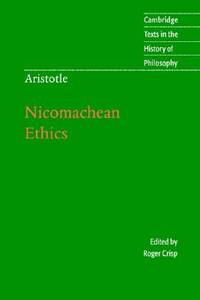
0521635462New. Brand new and still unused unknown
019875132XNew. Brand new and still unused unknown
0486462463New. Brand new and still unused unknown
154866468Basileæ Basel: Ex Officina Joan. Oporini Joannes Oporinus 1548. Good. Second volume of a work in three volumes. 667pp. Quarto 33 cm Mid-17th-century vellum binding likely Spanish but possibly Italian. Bold manuscript title on the spine. Gauffered edges. With tanned skin sewing supports. Initial letters. Text block hanging on to wraps by a single leather cord. Missing title page and prefatory pages to Aristotle's work on auscultation. Text block cracked a couple of times at the rear. Light marginal tidemarks to the preliminary pages. Occasional manuscript notations. Pages exceptionally bright. Latin text.<br /> <br /> Contents:<br /> <br /> Aristotelis Stagiritae Physicae Auscultationis Io. Argyropylo Byzantio Interprete: Liber Primus; Liber Secundus; Liber Tertius; Liber IIII; Liber V; Liber VI; Liber VII; Liber VIII.<br /> <br /> Aristotelis Stagiritae De Coelo Io. Argyropylo Byzantio Interprete: Liber Primus; Liber Secundus; Liber Tertius; Liber Quartus.<br /> <br /> Epistola Nuncupatoria ad Leonem.<br /> <br /> Aristotelis Stagiritae Peripa Teticae Disciplinae Autoris: Liber De Generatione & Interitu Prior Latinus á Petro Alcyonio factus; Liber De Generatione et Interitu Posterior Latinus á Petro Alcyonio factus.<br /> <br /> Petrus Alcyonius Antonio Prato S. P. D.<br /> <br /> Aristotelis Stagiritae Meteoron Petro Alcyonio Interprete: Liber Primus; Liber Alter; Liber Tertius; Liber Quartus.<br /> <br /> Aristotelis Stagiritae De Anima Ioan Argyropylo Byzantio Interprete: Liber Primus; Liber Secundus; Liber Tertius.<br /> <br /> Petri Alcyonii In Libros Decem Aristotelis De Animalibus Se Autore Latinos Praefatio Ad Octavium Pregosium.<br /> <br /> Aristotelis Stagiritae De Sensu et Sensilibus Aut De Communibus Animae et Corporis Functionibus Liber Eodum Petro Alcyonio Interprete.<br /> <br /> Aristotelis Stagiritae De Memoria et Reminiscentia Liber Eodum Petro Alcyonio Interprete.<br /> <br /> Aristotelis Stagiritae De Somno Liber Eodum Petro Alcyonio Interprete.<br /> <br /> Aristotelis Stagiritae De Somniis et Imaginibus Liber Eodum Petro Alcyonio Interprete.<br /> <br /> Aristotelis Stagiritae De Communi Animalium Motione Liber Eodum Petro Alcyonio Interprete.<br /> <br /> Aristotelis Stagiritae De Communi Animalium Gressu Liber Eodum Petro Alcyonio Interprete.<br /> <br /> Aristotelis Stagiritae De Diuturnitate et Brevitate Vitae Liber Eodum Petro Alcyonio Interprete.<br /> <br /> Aristotelis Stagiritae De Spiratione Liber Eodum Petro Alcyonio Interprete.<br /> <br /> Theodori Gazae Thessalonicensis In Libros Aristotelis De Animalibus.<br /> <br /> Aristotelis Stagiritae De Historia Animalium Theodoro Gaza Interprete: Liber Primus; Liber Secundus; Liber Tertius; Liber Quartus; Liber Quintus; Liber Sextus; Liber Septimus; Liber Octavus; Liber Nonus.<br /> <br /> Aristotelis De Partibus Animalium et Earum Causis Theodoro Gaza Interprete: Liber Primus; Liber Secundus; Liber Tertius; Liber Quartus.<br /> <br /> Aristotelis Stagiritae De Generatione Animalium Theodoro Gaza Interprete: Liber Primus; Liber Secundus; Liber Tertius; Liber Quartus; Liber Quintus.<br /> <br /> Aristotelis Problematum Sectiones Duædequadraginta Theodoro Gaza Interprete. The second volume of Aristotle's works published by Joannes Oporinus containing the following works: On Auscultation; On the Heavens; On Coming-to Be and Passing Away; Meterology; On the Soul; On Sense and the Sensible; On Memory and Recollection; On Sleep; On Dreams and Images; On the Common Motion of Animals; On the Common Gait of Animals; On the Longness and Shortness of Life; On Breathing; On the History of Animals; On the Parts of Animals and Their Causes; On the Generation of Animals; Aristotle's Problems Section.<br /> <br /> Aristotle 384-322 B.C.E. was born in Stagira in northeastern Greece. He ranks among the greatest philosophers of all time. His works defined centuries of philosophy from Late Antiquity through the Renaissance and are still considered relevant today. A remarkable researcher and writer Aristotle produced nearly two-hundred treatises from which about thirty-one survive. His extant writings cover an extensive range of disciplines including logic metaphysics and philosophy of mind ethics political theory and aesthetics and rhetoric. In addition Aristotle's works explore non-philosophical realms as well such as empirical biology where he provided detailed animal and plant observation and description.<br /> <br /> A scholarly work in a striking vellum binding. Ex Officina Joan. Oporini (Joannes Oporinus) unknown
1705428651London: Dan. Brown and Will. Turner 1705. Hardcover. Very Good. First edition. Octavo. 511pp. Later quarter goatskin with four raised banks stamped in gilt over blue cloth-covered boards. Pages evenly browned with some light wear soiling and tiny tears; very good and binding near fine. Dan. Brown and Will. Turner hardcover
1569D11176Venice: Hieronymus Scotum Scotus 1569. Hardcover. Very Good. Folio 315 x 215mm. 2 150pp. 2. Signatures: A-I 8 K4. Io. Grammatici in cartouche at head of title page. Woodcut profile bust of Aristotle on title with dedication Peripateticae Disciplina Principis Vera Aristotelis Stagiritae Effigies. Final leaf with woodcut printers device of Scotus of griffin in animated cartouche head-pieces and initials throughout. Text printed in double columns. Italic and Roman type. Original limp vellum vertically ruled in brown ink to front cover; edges slightly curled minor marginal dampstaining at beginning and end otherwise clean. Near contemporary ownership inscriptions in Latin on front flyleaf mostly faded but name and order of at least two young men Salvatoris and Bartolomei are given. 19th century stamp of the Seminario Vescovile of Volterra on title. The Tuscan Jesuit Seminary dedicated to Saint Andrew employed student novices throughout its history and one would have likely used this copy. Interestingly the seminary is still active today and maintains lodgings for travelers. This copy is further enhanced by a full-page pencil doodle of a mythological composition muses putti and foliate boughs on the rear flyleaf probably completed in the seventeenth century. <br/><br/>The last 1569 Scotus edition of Philoponuss commentary on the Posterior Analytics of Aristotle; an example-laden investigatory explanation on the classification of scientific knowledge Byzantine-era Philoponuss comments on the Posterior Analytics of Aristotle are interesting especially for their metaphysical analysis of the universal idea his account revealed his beliefs in Platonic forms as inherently part of the Divine Intellect. In his further reading of the Posterior Analytics Philoponus aimed to share his understanding of the concept of subordinate sciences which are sciences that can be classified by genus and species. A notion he supported was the idea that some sciences depended on higher ones for some of their principles Philoponus even goes as far to suggest formulating a taxonomy of the sciences. He maintains that philosophy dialectic and all the sciences employ common axioms regarding philosophy in particular it discovers and demonstrates the very principles of every science. Importantly Philoponus decided to take on this work because he thought that Aristotles concepts were too difficult and needed explanation. It was not the first he was indebted to the earlier work of Theophrastus and Galen but Philoponuss work is the earliest to survive. Philoponuss train of thought is frequently obscure and much of the discussion being carried out chooses investigatory examples over blatant argument. He wished to expound the meaning of the Aristotelian text rather than raising objections. It is clear Philoponus engages vigorously with the earlier commentators on the Posterior Analytics thus like most ancient commentaries this one maintains certain importance for the constitution of the text on which it comments. Scotus a prominent Venetian printer and elegant producer of texts was actively publishing a line of these philosophical treatises which were frequently revised and reprinted. The first Latin translation by Theodosius was published in 1539 and was reprinted frequently until 1569. This work remains important to the evolving tradition of early sixteenth century Italian university logic. Rare in North America OCLC lists holdings for this edition only at University of Oklahoma as part of the History of Science Collection. Hieronymus Scotum (Scotus) hardcover books
1619016801London: Edward Griffon 1619. Book. Good condition. Hardcover. First Edition. Octavo 8vo. vi pages 1-239 pages 1 blank page i tabulae page i blank iv pages. Original full calf binding very worn with front board detached. Several pages are dirty/soiled with a stain to the title page. Previous owner's names. Approximately 8.5 inches page height. Title within fine woodcut border and full page woodcut arms on verso of title. Enclosed and protected in an attractive clothbound clamshell box with a printed paper spine label. Edited by Theodore Goulston. Goulston is styled by Ant. a Wood "an excellent Latinist and a noted Grecian" and according to Dibdin his version of Aristotle's Rhetoric was the most popular of all 17th century vreions. This is the first printing of Aristotle's Rhetoric in Britain. Edward Griffon Hardcover
1783204<b>FIRST EDITION IN FRENCH. Including half-titles. Two leather bound volumes 8x10.5 are rubbed on the edges spines show some wear on raised bands and head/tail. Nice bookplate of C. Gulbranson on inside covers endpapers of handmade French marbled paper some tanning and light foxing. The first French translation of Aristotle's descriptive zoology. Text in Greek and French on facing pages. History of Animals is a natural history text by the Ancient Greek philosopher Aristotle who had studied at Plato's Academy in Athens. It was written in the fourth century BC; Aristotle died in 322 BC. Generally seen as a pioneering work of zoology Aristotle frames his text by explaining that he is investigating the what the existing facts about animals prior to establishing the why their causes. The book is thus an attempt to apply philosophy to part of the natural world. His method is to identify differences both between individuals and between groups. A group is established when it is seen that all members have the same set of distinguishing features; for example the birds all have feathers wings and beaks. This relationship between the birds and their features is identified as a universal. The History of Animals had a powerful influence on zoology for some two thousand years. It continued to be a primary source of knowledge until in the sixteenth century zoologists including Conrad Gessner all influenced by Aristotle wrote their own studies of the subject. </b> Published by Veuve Desaint hardcover
1619016801London: Edward Griffon 1619. Book. Good condition. Hardcover. First Edition. Octavo 8vo. vi pages 1-239 pages 1 blank page i tabulae page i blank iv pages. Original full calf binding very worn with front board detached. Several pages are dirty/soiled with a stain to the title page. Previous owner's names. Approximately 8.5 inches page height. Title within fine woodcut border and full page woodcut arms on verso of title. Enclosed and protected in an attractive clothbound clamshell box with a printed paper spine label. Edited by Theodore Goulston. Goulston is styled by Ant. a Wood "an excellent Latinist and a noted Grecian" and according to Dibdin his version of Aristotle's Rhetoric was the most popular of all 17th century vreions. This is the first printing of Aristotle's Rhetoric in Britain. Edward Griffon Hardcover books
19792606240072Easton Press 1979. Hardcover. Like New. 41 volume Easton Press set Hardcover. Bound in full leather. Stamped with 22kt gold gilt design on cover front back and spine. All edges gold. Silk moire fabric end papers. Satin ribbon place holder. Fine binding and cover. Clean unmarked pages. Some volumes still in publisher's shrink wrap. For more than 30 years the Easton Press has been the standard for finely bound profusely gilt classic leather bindings. <br>Attractive set appealing to the classics reader and decorator alike. Includes some of the most influential books of all time across poetry philosophy and literature. <br>This is an oversized or heavy book which WILL require additional postage for Priority Mail or International delivery outside the US. <br> Contains the following volumes: Aesop - Aesop’s Fables; Aristophanes – The Birds The Frogs; Aristotle – Politics & The Poetics; Bronte Charlotte – Jane Eyre; Bronte Emily – Wuthering Heights; Bunyan John – The Pilgrim’s Progress; Cervantes - Don Quixote; Confucius – The Analects of Confucius; Conrad Joseph – Lord Jim; Crane Stephen – Red Badge of Courage; Dante – The Divine Comedy; Dickens Charles – David Copperfield; Dickens Charles – Great Expectations; Doyle Sir Arthur Conan – The Adventures of Sherlock Holmes; Dumas Alexandre – The Three Musketeers; Fielding Henry – Tom Jones; Goethe Johann Wolfgang von – Faust; Grimm – Brothers Grimm’s Fairy Tales; Hardy Thomas – Return of the Native; Homer – Odyssey; Keats John – Collected Poems; Khayyam Omar – The Rubaiyat of Omar Khayyam; Machiavelli Niccolo – The Prince; Melville Herman – Moby-Dick; Milton John – Paradise Lost; Plato – Dialogues on Love and Friendship; Rousseau Jean-Jacques– The Confessions; Scott Walter – The Talisman; Shakespeare William – The Comedies; Shakespeare William – The Histories; Shakespeare William – The Tragedies; Sophocles – Oedipus the King; Sterne Lawrence – Tristram Shandy; Stevenson Robert Louis – Treasure Island; Swift Jonathan – Gulliver’s Travels; Thoreau Henry David – Walden; Turgenev Ivan – Fathers and Sons; Twain Mark – Huckleberry Finn; Voltaire – Candide; Whitman Walt – Leaves of Grass; Yeats W.B. – Collected Poems. Easton Press hardcover
16192011230008London: Typis Eduardi Griffini M.DC.XIX Edward Griffin 1619. First Edition. Hardcover. Good. First edition printed in England of Aristotle's Rhetoric. Quarto 22 x 17.5 cm. Bound in modern calf. 8 239 9 p. Large woodcut title engraving coat of arms verso of title. Printed in three columns with parallel Greek and Latin texts with commentary shoulder notes on third column. Early Oxford provenance: Charles Frayer sp 1717; Thomas Bland Exeter College Oxford. Signature on title and front blank. Refs: STC 766; Brunet I 476. <br> The translator Goulston 1572-1632 dedicated this volume to Prince Charles. After graduating from Oxford he worked as a physician in London and became a fellow of the College of Physicians. According to Dibdin Goulston's version of Aristotle's Rhetoric was the most popular 17th century version. Typis Eduardi Griffini, M.DC.XIX (Edward Griffin) hardcover
15551805240137Paris: Parisiis: Guil. Morelius apud Adrianum Turnebum typographicus Regium 1555. Hardcover. Good. Aristotle's Nicomachean Ethics in 10 books. Bound in 17th century morocco. 6 raised bands gilt ruled. Front hinge cracked. Gilt stamping to front board. All edges marbled. Marbled end pages. Small folio 29 cm. 4 253 1 pages. Text printed in parallel columns Greek and Latin. Pages generally unmarked. Minor toning. Some faded early marginalia. Adams A1810; BM STC French 1470-1600; p. 26. Colophon: Excudebat et cum graecis latina coniungebat Guil. Morelius M.D. LV. xii. Cal. Martias. <br> Book plate of Leon J Agourides "Knowledge is power." <br> Other titles: Aristotelis de moribvs ad Nicomachvm Lib. X. Aristotelis De moribus ad Nicomachum lib. XDe moribus ad Nicomachum lib. X Parisiis: Guil. Morelius, apud Adrianum Turnebum typographicus Regium hardcover