Francis BaconBiblio.com
8 003 résultats
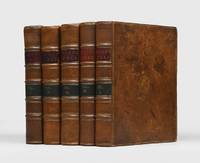
1765446London: A. Millar 1765. THIS COMPLETE FIVE VOLUME SET IS IN VERY GOOD CONDITION BEAUTIFULLY BOUND IN ORIGINAL FULL SPECKLED CALF BINDINGS SEVEN COMPARTMENTS AND SIX RAISED BANDS TO SPINE WITH BRIGHT GILT DETAILS AND TITLE. SPINE ENDS AND LEATHER HINGES PROFESSIONALLY REPAIRED. BINDING AND HINGES ARE EXCELLENT MARBLED END PAPERS AND PASTE DOWNS. NO LOOSE OR MISSING PAGES PAGES ARE BRIGHT AND CLEAN WITHOUT MARKS AND MINIMAL FOXING. BOOKS MEASURE 11.75"x9.5". SCARCE EDITION 259 YEARS OLD. A BEAUTIFUL SET IN GREAT CONDITION. FROM THE LIBRARY OF WILLIAM GRAVES WITH HIS BOOKPLATE TO INSIDE FRONT COVER. A. Millar unknown
13605Paris / Zurich: Galerie Lelong 1987. First Edition; First Printing. Softcover. Book condition is Very Good in wraps. Bumps to corners three small stains to rear panel. Bacon's inscription impressed itself through to page 3. Text is unmarked illustrated throughout. Text is in French. Bacon was photographed at this opening and laid-in is a business card from Elisabeth Kubler from Galerie Lelong in Zurich referencing a photo that was attached to this volume but is no longer present. Inscription is in French pour instead of for Monsieur Giamada. ; Signed and inscribed by Francis Bacon on the title page. ; 4to 11" - 13" tall; Signed by Artist. Galerie Lelong unknown
1643046710Utrecht: Joannem Waesberge 1643. First Edition. Hardcover Full Leather. Very Good Condition. Contemporary full calf rebacked old bookplates on endpapers some browning spotting early on wear in gutter to engraved title page edges browned otherwise clean internally with engraved title 5 folding maps and a plate. xiv 213 23; 106; 96 pp<br /> <br /> Joseph Hall's dystopian satire was written around 1605 and not intended for publication - it was first published anonymously in 1607 this is the second edition. Campanella Utopian La città del Sole was written in Italian around 1602 and first published in 1623 in Latin. Bacon's unfinished Utopian novel Nova Atlantis was first published in 1627. Hall's work is said to have inspired Gulliver's Travels and Bacon's and the Royal Society that it helped inspire are mocked by Swift in the same. First collected edition. Size: duodecimo 12mo. Quantity Available: 1. Shipped Weight: Under 1 kilo. Category: Literature & Literary; Science Fiction & Fantasy. Inventory No: 046710. Joannem Waesberge hardcover
182418854London: W. Baynes & Son 1824. 10 volumes 8vo later half red morocco gilt t.e.g. fore- and bottom edges uncut; fine bright set. With an engraved portrait of Bacon in volume I. The texts variously in English and/or Latin. <br/><br/> W. Baynes & Son unknown books
182418854London: W. Baynes & Son 1824. 10 volumes 8vo later half red morocco gilt t.e.g. fore- and bottom edges uncut; fine bright set. With an engraved portrait of Bacon in volume I. The texts variously in English and/or Latin. W. Baynes & Son unknown
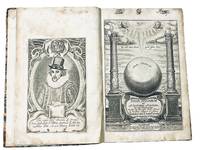
1622304161London: W. Stansky for Matthew Lownes and William Barret 1622. Second edition first published in 1622. Engraved frontispiece portrait of Henry VII by John Payne title within architectural woodcut border McKerrow & Ferguson 224 woodcut initials and headpieces text within ruled border with blank marginal columns for side-notes one printed side-note on X1b. iv 248 pp. Folio. Seventeenth-century calf covers tooled in blind to a panel design center panel of roll-tool and triple fillet border spine in six compartments with raised bands red morocco spine label printer's waste on pastedowns plain free endpapers. Ties and clasps perished joints cracked covers scuffed light foxing. Second edition first published in 1622. Engraved frontispiece portrait of Henry VII by John Payne title within architectural woodcut border McKerrow & Ferguson 224 woodcut initials and headpieces text within ruled border with blank marginal columns for side-notes one printed side-note on X1b. iv 248 pp. Folio. Large paper copy on thick paper of the second edition of Bacon's history of Henry VII. Bacon had promised the work to James I while on trial and he quickly completed the work following his impeachment for taking bribes. "It should be seen in the context of humanist historiography rather than as a precursor of its modern methods. Bacon was keenly interested in the conventional topics of virtue and fortune but was unconventional in placing a much stronger emphasis on fortune than virtue. The central lesson of The History of Henry VII was that a ruler must remain open to accident and ready to seize the opportunities it offered" ODNB. ESTC S122252; Gibson 116b. Provenance: Robert Eglesfield bookplate on verso of title-page; Joseph Dickinson signature on slip dated 1823 on front pastedown; C. Geldart signature on upper front free endpaper and numbered "26"; Robert S Pirie bookplate acquired from Seven Gables 1963 W. Stansky for Matthew Lownes, and William Barret unknown books
1635464F<p>London: 1635: Printed by John Haviland for William Lee and are to be Sold by Iohn Williams 1635. This copy is bound in 18TH CENTURY QUARTER Calf Binding tight and firm recently rebacked. A good clean copy of an early edition. The engraved title page and portrait of Bacon dated to 1631 and 1631 respectively are both present in this volume. With the bookplate of Abel Smith Woodhall Park .</p><p>Printed: 1635 1561-1626 Folio 7 x 10⁴ in Fourth edition p2 A-Z6 Aa-Bb6 Cc4 a-g4 g4 is blank <br /><br />The new method Bacon's big plan the Instauratio Magna is valueless because inapplicable unless it be supplied with materials duly collected and presented-in fact unless there be formed a competent natural history of the Phenomena Universi A short introductory sketch of the requisites of such a natural history which according to Bacon is essential necessary the basis totius negotii is given in the tract Parasceve appended to the Novum Organum The principal works intended to form portions of the history and either published by himself or left in manuscript are historia Ventorum Historia Vitae et Mortis Historia Densi et Rari and the extensive collection of facts and observations entitled Sylva Sylvarum <br />"Nature thus presented itself to Bacon's mind as a huge congeries of phenomena the manifestations of some simple and primitive qualities which were hid from us by the complexity of the things themselves The world was a vast labyrinth amid the windings of which we require some clue or thread whereby we may track our way to knowledge and thence to power This thread the filum labyrinthi is the new method of induction But as has been frequently pointed out the new method could not be applied until facts had been observed and collected This is an indispensable preliminary 'Man the servant and interpreter of nature can do and understand so much and so much only as he has observed in fact or in thought of the course of nature; beyond this he neither knows anything nor can do anything' The proposition that our knowledge of nature necessarily begins with observation and experience is common to Bacon and many contemporary reformers of science but he laid peculiar stress upon it and gave it a new meaning What he really meant by observation was a competent natural history or collection of facts 'The firm foundation of a purer natural philosophy are laid in natural history' 'First of all we must prepare a natural and experimental history sufficient and good; and this is the foundation of all" EB<br />This book is 'the foundation of all' consisting of all of Bacon's empirical experiments along with his utopian fable The New Atlantis</p><p>.</p> Printed by John Haviland for William Lee, and are to be Sold by Iohn Williams
12529Bacon Peggy. SPEAKING OF CHILDREN and PTA FRIEND'S SEMINARY. Flint 120. Etching 1933 together with a preparatory drawing titled "PTA Friend's Seminary." The etching titled dated an signed in pencil. The edition size is not known but likely small as the print is uncommon; there are no auction records for it after 1998. The drawing is titled and signed in pencil. The etching 6 3/4 x 9 3/4 inches plus margins; the drawing 9 1/4 x 11 5/8 the full sheet. There are numerous compositional changes from the drawing to the etching; we do not know whether other preparatory drawings exist. The etching and the drawing both in excellent condition. unknown
13050Bacon Peggy. THE LUNCH ROOM LUNCH AT THE LEAGUE. Flint 8. Drypoint 1918. Edition size not known but likely quite small as the print is uncommon. Signed and titled in pencil. 5 7/8 x 7 15/16 inches plate 8 1/4 x 11 3/4 sheet. The scene is the lunchroom of the Art Students League in New York. Among those pictured are Doris Rosenthal front center facing left Peggy Bacon figure farthest to the left in profile Dorothy Varian in striped sweater Isabel Howland center with hat and glasses Edmund Duffy standing at right looking left. In very good condition.See other works by Peggy Bacon at https://edpollackfinearts.com/cgi-bin/edp1/creator2011.htmlme=101242&te=2 unknown
1789WRCAM49194Cap Français 1789. 3pp. on a. single folded sheet. Cap Français was the capital of the northern province of Saint Domingue and Bacon de Chevalerie was the first president of its provincial assembly. In this declaration the Assemblée proclaimed itself a permanent body and distributed its activity between four offices. The local assemblies were still technically illegal under french law. Extremely rare with only one institutional holding in OCLC at the John Carter Brown Library. OCLC 859254837. unknown books
2012C102827Gallery. As New. 2012. Hardcover. FREE UPGRADE to Courier/Priority Shipping Upon Request - IN STOCK AND IMMEDIATELY AVAILABLE FOR SHIPMENT - FLAWLESS COPY BRAND NEW PRISTINE NEVER OPENED -- - Text in French and English. 120 pages. Catalogue Raisonne Catalog Raisonné Complete Works La Vie et L'uvre Oeuvre Life and Work Raisonnee -- with a bonus offer-- - May be EITHER: out of print OOP and extremely rare in this pristine condition; signed by author or contributor; or a first or special edition; inquire for details . Gallery hardcover
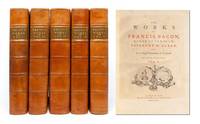
1778157043London: printed for J. Rivington and Sons; L. Davis; T. Payne; B. White; T. Davies; and 6 others in London 1778. Beautiful and accurate A handsome set of this "beautiful and accurate edition" Lowndes Vol. I p. 93 following the text edited by Thomas Birch which was first published in 1765. 5 vols quarto 296 x 231 mm. With 4 frontispieces and 2 folding tables. Contemporary calf recently rebacked with twin red and green labels Signet library supralibos to covers. 19th-century inscription in inner margin of title page shelflabel and inscription to front endpapers a few pencilled annotations. Lightly toned and foxed chip at foot of vol. I pp. xxxix/xl offsetting from plates 5 cm closed tear at foot of vol. II first contents leaf. A very good copy. ESTC T88307. unknown
1913006947USA: D. Appleton & Company 1913. 1st Edition 1st Printing. Hardcover. Very Good/Very Good. The Strange Cases of Dr. Stanchon by Josephine Daskam Bacon First Edition D. Appleton & Company 1913. No foxing to contents or edges. Clean and unblemished throughout. No previous owner's inscriptions. VG covers are bright and gilt lettering remains bold. In the original seldom seen pictorial dust jacket with all correct issue points. VG. <br/> <br/> D. Appleton & Company hardcover
198515178JLondon: Tate Gallery 1985. First Edition. Boldly signed by artist Francis Bacon on the half title page in red ink. Books signed by Bacon are rare. The large 246 page illustrated exhibition book to accompany the great retrospective showing of Bacon’s painting by The Tate Gallery. Approximately 9 by 12 inches 30 cm by 22.5 cm. Paperbound in original publisher's illustrated wrappers lettered white on the front cover and spine. Copiously illustrated in color and black and white throughout with numerous fold-out plates. Fine. Tate Gallery unknown books
1964102743London: Methuen 1964. First edition of this wonderfully illustrated work on Francis Bacon. Octavo original boards illustrated throughout. Presentation copy boldly inscribed on the front free endpaper "For George with all best wishes Francis Bacon." Fine in a near fine dust jacket. Jacket photograph of Bacon on the front panel by Cecil Beaton. Francis Bacon was a figurative painter known for his emotionally charged raw imagery and fixation on personal motifs. Best known for his depictions of popes crucifixions and portraits of close friends his abstracted figures are typically isolated in geometrical cages which give them vague 3D depth set against flat nondescript backgrounds. Bacon said that he saw images "in series" and his work which numbers c. 590 extant paintings along with many others he destroyed typically focuses on a single subject for sustained periods often in triptych or diptych formats. His output can be broadly described as sequences or variations on single motifs; including the 1930s Picasso-influenced bio-morphs and Furies the 1940s male heads isolated in rooms or geometric structures the 1950s screaming popes the mid-to-late 1950s animals and lone figures the early 1960s crucifixions the mid to late 1960s portraits of friends the 1970s self-portraits and the cooler more technical 1980s paintings. Bacon took up painting in his twenties having drifted in the late 1920s and early 1930s as an interior decorator bon vivant and gambler. He said that his artistic career was delayed because he spent too long looking for subject matter that could sustain his interest. His breakthrough came with the 1944 triptych Three Studies for Figures at the Base of a Crucifixion which sealed his reputation as a uniquely bleak chronicler of the human condition. From the mid-1960s he mainly produced portraits of friends and drinking companions either as single or triptych panels. Following the suicide of his lover George Dyer in 1971 his art became more sombre inward-looking and preoccupied with the passage of time and death. The climax of this later period is marked by masterpieces including his 1982's "Study for Self-Portrait" and Study for a Self-Portrait--Triptych 1985-86. Methuen hardcover books
161426952London: Printed for Robert Wilson 1614 1614. First edition. STC 1125; Gibson 102; ESTC 121055. Title-page a little browned; the outer edge of the title a little chipped and trimmed closely but not touching the text; very good copy. Small quarto modern dark red morocco gilt rules and lettering. Lacking the first and final blanks. One of Francis Bacon's first acts when he became the Attorney General under James I was to attempt to bring a halt to dueling a practice that was particularly fashionable among the ruling classes. James I issued an edict at Bacon's urging and Bacon then issued his own worded more strongly which was entered into the Stationer's Register on March 5 1614. Bookplate of Robert S. Pirie on the front paste-down. <br/><br/> (London:) Printed for Robert Wilson, 1614 unknown books
1964102743London: Methuen 1964. First edition of this wonderfully illustrated work on Francis Bacon. Octavo original boards illustrated throughout. Presentation copy boldly inscribed on the front free endpaper "For George with all best wishes Francis Bacon." Fine in a near fine dust jacket. Jacket photograph of Bacon on the front panel by Cecil Beaton. Francis Bacon was a figurative painter known for his emotionally charged raw imagery and fixation on personal motifs. Best known for his depictions of popes crucifixions and portraits of close friends his abstracted figures are typically isolated in geometrical cages which give them vague 3D depth set against flat nondescript backgrounds. Bacon said that he saw images "in series" and his work which numbers c. 590 extant paintings along with many others he destroyed typically focuses on a single subject for sustained periods often in triptych or diptych formats. His output can be broadly described as sequences or variations on single motifs; including the 1930s Picasso-influenced bio-morphs and Furies the 1940s male heads isolated in rooms or geometric structures the 1950s screaming popes the mid-to-late 1950s animals and lone figures the early 1960s crucifixions the mid to late 1960s portraits of friends the 1970s self-portraits and the cooler more technical 1980s paintings. Bacon took up painting in his twenties having drifted in the late 1920s and early 1930s as an interior decorator bon vivant and gambler. He said that his artistic career was delayed because he spent too long looking for subject matter that could sustain his interest. His breakthrough came with the 1944 triptych Three Studies for Figures at the Base of a Crucifixion which sealed his reputation as a uniquely bleak chronicler of the human condition. From the mid-1960s he mainly produced portraits of friends and drinking companions either as single or triptych panels. Following the suicide of his lover George Dyer in 1971 his art became more sombre inward-looking and preoccupied with the passage of time and death. The climax of this later period is marked by masterpieces including his 1982's "Study for Self-Portrait" and Study for a Self-Portrait—Triptych 1985–86. Methuen hardcover
163519986London: John Haviland for William Lee 1635. FIFTH EDITION. Complete with frontispiece portrait of the author and the uncommon second engraved title the tables and the recipe for gout in the first work woodcut vignette on the title page of New Atlantis. Contemporary calf rebacked; an excellent copy. Fifth edition of Bacon’s collection of exceedingly significant scientific experiments and observations on natural history published posthumously by his personal chaplain William Rawley. It was in this work that Bacon strove to separate his views of natural history from those of his contemporaries by building on a notion of the “new science†rather than collecting pleasant pictures and descriptions. The second work is Bacon’s highly acclaimed yet unfinished utopian novel New Atlantis which details the customs people society and history of the fictitious island of Bensalem and the Salomon House their cooperative college of science. The “new science†described in this work along with Bacon’s other writings was so influential that it eventually contributed to the formation of the Royal Society DSB I p. 376 and generally pp. 372-377.<br /> <br /> Bacon 1561-1626 was an English statesman natural philosopher and advocate of the inductive method in science. Ahead of his time Bacon conceived a new means of acquiring true knowledge by observation experiment and inductive reasoning. His new experimental method was to encompass an account of the current knowledge of the world with the new instruments where everyone would be capable of engaging in scientific investigation for the betterment of humankind. Although his personality was unattractive his views of scientific methods were influential.<br /> <br /> Gibson 174; STC 1172. John Haviland for William Lee unknown
17655684London: A. Millar; J. R. Tonson; William Bowyer 1765. Early edition. Bound to style in modern quarter calf over marbled boards with gilt and morocco labels to spines. All edges speckled blue. Measuring 285 x 225mm and collating complete including frontis to volumes I-IV no frontis called for in V and folding tables in volumes I and IV: 12 xlii 2 575 1; 6 658; 12 vi 7-681 74; 2 xx 529 1; vii 1 604. Top edges a bit dust-stained. Bookplates of Desmond Morris to front pastedown of each volume. Volume I with occasional marginal notes in pencil and with page 135 misnumbered 134. Volume III with chips closed tears and archival reinforcements to preliminary leaves not affecting text; additional chipping and marginal loss to pages 537-542 with no loss to text. Volume IV with mispaginations throughout and all text continuous; scattered foxing throughout. Volume V with paper flaw affecting the page numbers of 259-260 and a printer error to the numbering of page 391. Overall a clean pleasing and sturdy library set of this early edition of Bacon's most influential works. <br /> <br /> "Francis Bason was one of the leading figures in natural philosophy and in the field of scientific methodology in the period of transition from the Renaissance to the early modern era. As a lawyer member of Parliament and Queen's Counsel Bacon wrote on questions of law state and religion as well as on contemporary politics; but he also published texts in which he speculated on possible conceptions of society and pondered questions of ethics.To the present day Bacon is well known for his treatises on empiricist natural philosophy The Advancement of Learning Novum Organum Scientiarum and for his doctrine of the idols" Stanford Encyclopedia of Philosophy. His wide range of writings are reflected in this early five-volume set edited by Thomas Birch giving readers an opportunity to engage with study and appreciate Bacon's diverse intellectual contributions. <br /> <br /> ESTC T88309. A. Millar; J. R. Tonson; William Bowyer unknown
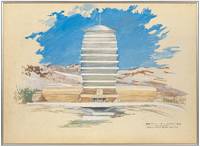
19603316851960. Near Fine. Original watercolor painting on artist’s board. Measures 29 ½†x 21 ½†to the inside edges of a silver aluminum metal frame 30†x 22 ¼â€. Captioned by the artist at lower right corner: “Sketch for a Corporate Headquarters Maurice Warder Bacon Arch. Eng.†A very attractive futuristic architectural design circa 1960 most likely proposed for the Michelin headquarters located at Clermont-Ferrand France. Light toning near fine. unknown
12007Bacon Peggy. Bacon Peggy American 1895-1987. ICE CREAM. Flint 6. Drypoint 1918. Edition size not known but likely very small. Titled "Ice Cream" dated "Nov. 1918" and signed in pencil. 3 15/16 x 5 inches. Printed by the artist with her smudges in the margins. In very good condition but with traces of adhesive verso. Rare. 1918 was the first year that Bacon made prints producing drypoints using a heavy steel needle on zinc plates which she printed on an unused press which she found in the corner of Kenneth Hays Miller's life drawing studio at the Art Students League. Working with fellow student Anne Rector she became so interested in drypoint that it supplanted painting as her main artistic medium. "The abstraction of design the physical distortion of the figures and the large flat areas of light and dark found in Peggy Bacon's earrly drypoints.dated November 1918 were a result of her confrontation with the avant-garde forces active in New York at the time." Roberta K. Tarbell "Peggy Bacon - Personalities and Places" Smithsonian Press DC 1975 pp. 9-10. unknown
17655332Annapolis: Jonas Green 1765. Measuring approximately 16.5" x 10.25" with 1763 numbered pages. <br /> <br /> This book is in good minus condition. Heavy chipping and wear to the leather boards with loss at the spine ends. Partially restored. Moderate foxing to the interior pages. <br /> <br /> Please view the many other rare titles available for purchase at our store. We are always interested in purchasing individual or collections of fine books.<br /> <br /> Inventory #H1-18. Jonas Green unknown
1941397729Philadelphia Pennsylvania 1941. Hardcover. Very Good. Small black three-ring binder. Quarto. Binding is very good with wear to the edges and the bottom front joints starting. Contents very good with reading wear at the ring holes and some modest toning and offsetting. Contains roughly 350 densely-typed pages both recto and verso with occasional ephemera mounted throughout. More than 150000 words and appears complete. An extraordinary vernacular history of the outbreak of World War II. Though the title page suggests a diary covering only a brief period the project seems to have quickly outgrown Bacon's original intentions. From the German invasion of Poland September 1 1939 through the bombing of Pearl Harbor for more than two years Bacon records the latest news and developments from Europe and elsewhere.<br /> Summarizing and sometimes transcribing both radio reports and newspaper headlines Bacon writes clearly and with a strong narrative often deftly juggling multiple developments throughout the world. Bacon’s father appears to have been a prominent Quaker from the Philadelphia area which may account for his obsession with the war. He attended Haverford College from 1920-23. Curiously the Haverford yearbook contains this remembrance of Bacon: "By no means the least marvelous of his accomplishments is his uncanny ability to sit down at a typewriter and tear off unlimited numbers of theses at the terrific rate of nearly a thousand words per hour."<br /> <br /> An intriguing day-to-day account of the war by a Philadelphia pacifist. hardcover
20024Paris, Charles Hulpeau, 1629 pour les 3 premiers textes, S.l.n.d., s.n pour le dernier. 4 ouvrages en 1 vol. in-16, [14]-103 pp. + [8]-152 pp. + 63 pp. + 39 pp., parchemin rigide de l'époque, tranchefile à passe, dos long (exemplaire défraîchi mais solide, annotations).
1622123021Folio. London: Printed by w. Stansby for Matthew Lownes and William Barret 1622. Folio 6 of 8 1-248pp. Fine engraved portrait of Henry VII by John Payne title within elaborate woodcut border of columns strapwork and scrolling vines woodcut head- and tailpieces initials text within ruled borders. Contemporary calf sides with borders double-ruled in blind rebacked. Title with early inscription: "ffran morse" and very early inscription at front see below. Preserved in a morocco backed Sangorski & Sutcliffe slip-case. § Second issue of the first edition with 3 errata corrected and four uncorrected; this copy is bound without the dedication leaf. At the front in a very early hand but perhaps not that of ffran morse are four lines of verse beginning "In vtrumque paratus Inglishedd" and continuing:"Patience amongst the vertues sitts as queene / Then welcome now that patience may be seene / but pale-faced woe if thou wilt needs depart / the dore stands ope be gone wth all my hart."Heather Wolfe kindly commented that "there's an emblem with that title from Whitney but it pairs two different things not patience and woe. It appears in other emblem books as well but with the same shovel/sword."Gibson 116b. Printed by w. Stansby for Matthew Lownes and William Barret unknown books