1 237 résultats
1850289715London. : The Religious Tract Society. No date circa 1850 . “New edition†. Green blindstamped cloth gilt spine title. . Very good slightly cocked a little sunning to covers old ink names to ffep. 12mo. 14.5x9.5 cm. . A popular 19th century juvenile novel now rather uncommon. weight: 0.3 lb. Wood engraving frontis. The Religious Tract Society. hardcover books
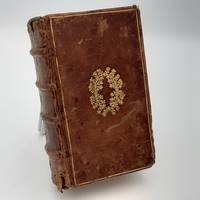
1674002378London: Printed by J. C. for Thomas Basset at the George in Fleet Street near Cliffords Inne 1674. First Edition. Very good. First edition; 6 3/4 x 4; pp. 8 1-250; 3/4 polished calf and marbled boards; rebacked; spine in 5 panels with raised bands and gilt decorations; engraved printer's device to title page verso; engraved vignette at beginning of first chapter; thin rubbed line along hinge of title page obscuring the first letter of the title; period brown-ink smudge and a small puncture to upper corner of title page; edges of first few leaves a bit brittle with several small nicks; two bookplates to endpapers - the first that of Colonel Robert Coleman Hall Brock 1861 - 1906 - prominent lawyer financier and scientist; the second that of Thomas Mitchell - possibly Lieutenant Colonel Sir Thomas Livingstone Mitchell 1792 - 1855 - surveyor and explorer of south-eastern Australia; a third period signature to bottom of last page; overall in very good condition. Called one of the earliest British scholarly histories of Russia written the book's authorship had been attributed to several figures including John Merrick Chief Agent of the English Muskovy Company. In fact the work was written by Sir Roger Manley 1626 - 1688 - soldier translator and author. Despite writing about the Time of Troubles without allegedly ever travelling to Russia Manley still produced a secondary source of great historiographical interest. Loewenson Leo. Sir Roger Manley's History of Muscovy: The Russian Impostor 1674. The Slavonic and East European Review vol. 31 no. 76 1952 pp. 232240. ESTC R22560 Wing M75 Printed by J. C. for Thomas Basset, at the George in Fleet Street, near Cliffords Inne hardcover books
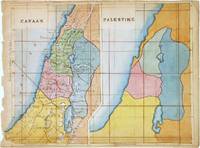
267840Map. Pen and ink with watercolor. Image measures 7 x 8.5".<br/><br/> This beautifully hand colored schoolgirl or schoolboy manuscript map of Canaan and Palestine Israel or Holy Land covers from Arish in northern Sinai north beyond Beirut. The Sea of Galilee and the Dead Sea are included. Essentially two maps on the same sheet the left hand map depicts the region as it existed during Biblical times when it was called Canaan. The Twelve Tribes of Israel are identified along with ancient place names. Topography is beautifully rendered.<br><br>The right hand side map covers the same region but is not labeled except for the title 'Palestine'. Territorial divisions are color coded. The map is in good condition with vivid hand color. On thin paper with minor foxing and toning. Top margin with some manuscript text cut off. <br><br>This map dates to circa 1880 and was most likely made by a student or apprentice as training in geography drafting and penmanship. Manuscript map-making was a useful educational tool in the 19th century a period of imperialism and increased world trade in which geography grew significantly as a field of study.<br><br>In the United States and northwestern Europe reform movements that sought to improve the quality and accessibility of childhood education pushed for the inclusion of geography in school curricula. One common method of teaching was the making of manuscript maps. Working from wall maps globes and atlases students were made to meticulously hand-reproduce maps in pen and ink and with watercolor. Such exercises not only provided a way to review and retain geographical knowledge but they also functioned as training in penmanship calligraphy and drafting. This map is a lovely document that straddles the line between art and geography.<br/><br/> unknown books
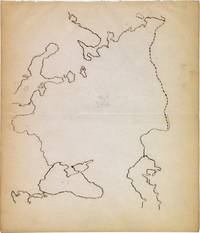
267847Map. Pen and ink with watercolor. Sheet measures 8.75 x 7".<br/><br/> This minimalist schoolgirl and schoolboy manuscript map depicts European Russia. Although unlabeled the region is easily identifiable. The Black Sea and the northern half of the Caspian Sea are included near the bottom of the map. Covers the modern day nations of Ukraine Russia Belarus Lithuania Latvia Estonia Finland and parts of Poland and Sweden. The eastern boundary is placed along the Ural Mountains. The map is in good condition with minor wear along the original centerfold and some foxing. An image of a skull is drawn in pencil at the center of the map.This map dates to circa 1880 and was most likely made by a student or apprentice as training in geography drafting and penmanship. Manuscript map-making was a useful educational tool in the 19th century a period of imperialism and increased world trade in which geography grew significantly as a field of study. In the United States and northwestern Europe reform movements that sought to improve the quality and accessibility of childhood education pushed for the inclusion of geography in school curricula. One common method of teaching was the making of manuscript maps. Working from wall maps globes and atlases students were made to meticulously hand-reproduce maps in pen and ink and with watercolor. Such exercises not only provided a way to review and retain geographical knowledge but they also functioned as training in penmanship calligraphy and drafting. This map is a lovely document that straddles the line between art and geography.<br/><br/> unknown books
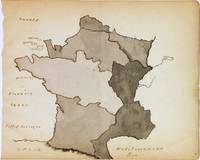
267843Map. Pen and ink with watercolor. Sheet measures 7 x 8.75". Archival frame 9 3/4 x 11 1/2 inches.<br/><br/> Lovely manuscript map depicting France as divided into territories. Color-coded in shades of gray the map is largely unlabeled except for a few islands and the surrounding waters identified. The Pyrenees mountains along the border of Spain and France are rendered in a delightful furry manner.<br><br>This map dates to circa 1880 and was most likely made by a student or apprentice as training in geography drafting and penmanship. Hand drawn map-making was a useful educational tool in the 19th century a period of imperialism and increased world trade in which geography grew significantly as a field of study.<br><br>In the United States and northwestern Europe reform movements that sought to improve the quality and accessibility of childhood education pushed for the inclusion of geography in school curricula. One method of teaching was the making of maps. Working from wall maps globes and atlases students were made to meticulously hand-reproduce maps in pen and ink and with watercolor. Such techniques not only provided a way to review and retain geographical knowledge but they also functioned as training in penmanship calligraphy and drafting. These maps are now called 'schoolgirl' or 'schoolboy' maps and they straddle the line between art memory devices and geography.<br/><br/> unknown books
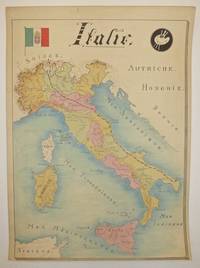
251171Map. Pen and ink with watercolor. Image measures 18 x 12.5".<br/><br/> This pen and ink map of Italy was produced around the middle of the 19th century likely by a student or apprentice as training in geography drafting and penmanship. The relative simplicity of the map suggests that the student was working from a school atlas as opposed to a more elaborate source. Major roads rivers and cities are all labeled in French but the anonymous cartographer has clearly paid more attention to correctly rendering the coastlines of the peninsula and the surrounding islands of Sardinia Corsica and Sicily. The railroad from Switzerland to the Mediterranean Sea is also indicated with dotted black line. The overall coloring of the map corresponds to common patterns of the day with a spectrum of blues used to highlight the peninsula and fill the surrounding water. The most striking feature of the map however is likely the rendering of mountains in a light brown watercolor wash intended to mimic the subtle technique used on engraved maps of the period. A finely written title at the top is flanked by a painter's palette in a black circle on the right and the Italian flag on the left. The map is in good condition on thick Lion drawing paper. Three pinholes in the top margin with paper watermark. Manuscript map-making was a useful educational tool in the 19th century a period of imperialism and increased world trade in which geography grew significantly as a field of study. In the United States and northwestern Europe reform movements that sought to improve the quality and accessibility of childhood education pushed for the inclusion of geography in school curricula. One common method of teaching was the making of manuscript maps. Working from wall maps globes and atlases students were made to meticulously hand-reproduce maps in pen and ink and with watercolor. Such exercises not only provided a way to review and retain geographical knowledge but they also functioned as training in penmanship calligraphy and drafting. Today these idiosyncratic projects offer a glimpse into the way 19th-century youth engaged with the world around them.<br/><br/> unknown books
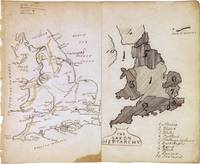
267849Map. Pen and ink with watercolor. Sheet measures 7 x 8.5".<br/><br/> This beautiful schoolgirl or schoolboy manuscript map of England and Wales beautifully depicts from Scotland south to the English Channel. Essentially two maps on a single sheet the left map depicts the region with detailed topography throughout. Towns rivers and mountains are noted with a key in the top left corner. The right hand side of the map depicts "The Saxon Heptarchy" and territories are numbered and shaded in. A key in the bottom right lists the territories numbered on the map. The Wall of Severus is identified. The speculative Wall of Severus was supposedly built by the Roman Emperor Septimius Severus as a defensive fortification but was most likely mistaken for either the Antonine Wall or the Hardian's Wall. The map is in good condition with minor wear along the original centerfold. Small stain in the bottom of centerfold. Minor toning and foxing with some edge wear.<br><br>This map dates to circa 1880 and was most likely made by a student or apprentice as training in geography drafting and penmanship. Manuscript map-making was a useful educational tool in the 19th century a period of imperialism and increased world trade in which geography grew significantly as a field of study.<br><br>In the United States and northwestern Europe reform movements that sought to improve the quality and accessibility of childhood education pushed for the inclusion of geography in school curricula. One common method of teaching was the making of manuscript maps. Working from wall maps globes and atlases students were made to meticulously hand-reproduce maps in pen and ink and with watercolor. Such exercises not only provided a way to review and retain geographical knowledge but they also functioned as training in penmanship calligraphy and drafting. This map is a lovely document that straddles the line between art and geography.<br/><br/> unknown books
181156305NP 1811. Quarto 4 pages very stained but legible. The first three pages contain "Russell's Adventures" while page four is entitled: "The Beggar". and is "signed" Seeva Moody's property Longmeadow MA March 17 1811. Offered with a typescript of Russell's Adventures. This seems to all be in the same hand. The anonymous author of the first work notes that he was born in Merimac New Hampshire and relates a tale of sea fearing adventures battles won and lost; victories and being captured and tortured. "The first of my pranks was off the Mantanzirs When a French Privateer gave us battle one day At length she grew sick of the tricks of the yankees She brailed up her mizen and so bore away" And again: "The next time I fought was with Black man the pirate On board of the Princess all on the north sea One shot they so galled him our valour so palled him He shifted Helm and from us did flee"Later he is captures and torured before finally escaping and making it to Jamaica and finally home. A marvelous tale. The final page has 6 numbered verses about how we are all beggars from birth and 12 lines about youth and death/. unknown books
1861TB18981New York: Charles Scribner 1861. First Edition. First printing Very good in the publisher's original green pebbled cloth covered boards with gilt text stamping on the spine and embossed borders on the boards. The end papers are brown clay covered. The end papers are lightly foxed but the text remains tight bright and clean. A small octavo measuring 7 5/8" tall by 5 3/8" deep overall containing 466 pages of text. A very nice copy with no prior owner's names dates or notations. Charles Scribner hardcover books
1993198151New York: Masquerade Books 1993. Paperback. 189p. ads very good first mass-market paperback edition in pictorial wraps. Erotica with lesbian content. Masquerade Books paperback books
1992198152New York: Masquerade Books 1992. Paperback. 189p. ads very good first mass-market paperback edition in pictorial wraps. Erotica with lesbian content. Masquerade Books paperback books
001587New York: Leavitt & Allen No Date circa 1850's. Stamped and gilt decorated red leather. all edges gilt. Black and white illus. throughout. 263 pages with 5 color plates lacking the 6th plate the presentation page plate. Boards are rubbed at tips and at spine; spine lightly faded. Contents are clean unmarked and tight. Overall a nice copy of this scarce piece of Masonic history. First Edition. Full-Leather. Very Good/No Jacket As Issued. 12mo - over 6¾" - 7¾" tall. Leavitt & Allen Hardcover books
1698202917Paris: Charles De Sercy 1698. Second. hardcover. very good. Avec la maniere de bien ordonner un Dessert et tout le reste que est du Devoir des Maitres d'Hotels Sommeliers Confiseurs et autres Officiers de bouche. Woodcut text illustrations and one folding plate depicting a set table. 458p. index small 8vo re-bound in fabricoid which is quite worn at the spine. Paris: Charles De Sercy au palais 1698.<br/><br/> Second edition of Massialot's book of preserves which documents classic cuisine in the time of Louis XIV. Some brown-stains in the text and repair on top corner of title page with some loss of text.<br/><br/> Charles De Sercy unknown books
19262327New York: Gallia Laboratories Inc. 1926. <br /><br />24mo 5 1/2 x 4 1/4 inches; 138 x 107 mm 8 pages in stapled wrappers. <br /><br />Promotional pamphlet for Kola Astier a product possessing "remarkable curative and stimulative properties quite unknown to any other preparation." According to the manufacturer Gallia Laboratories Kola Astier builds muscular strength fights fatigue relieves depression and "melancholia" stimulates the heart and helps in combatting bronchitis pneumonia and "senile debility." It also acts we're told as a "remarkable regenerator" for "tired overworked men and women." <br /><br />Where did this cure for every ailment come from According to the company Dr. P. Astier recognized the amazing properties of the kola nut. "Long before the white man traversed the midnight jungles and the wild plains of mysterious Africa the natives were using the fruit of the Kola Tree to increase their physical stamina and powers of endurance. Finally when the first white explorers forced their way into the heart of the Dark Continent they too soon recognized the value of this gift of the Gods." <br /><br />This text is accompanied by an illustration of spear-wielding African warriors. Other illustrations depict runners an apparently sick office worker and an exhausted home maker. <br /><br />Unfortunately for the company the U.S. Agriculture Department determined that Kola Astier contained no ingredients capable of producing any therapeutic or curative effects claimed by the company. <br /><br />In March 1933 the U.S. Attorney for New Jersey sought the seizure of 199 bottles of Kola Astier Granulated charging misbranding in violation of federal rules. Analysis by the U.S. Agriculture Department showed that the product consisted essentially of sugar 97.3% and small proportions of plant material including kola. A federal district court ordered that the 199 bottles be destroyed. <br /><br />That judgment didn't stop Gallia Laboratories from promoting its miracle cure. In June 1943 the Federal Trade Commission charged the company with making false misleading and deceptive statements about its products. It ordered the company to stop claiming that Kola Astier had any therapeutic value in the treatment of any disorder. <br /><br />This pamphlet is rare. OCLC shows no institutional holdings. None in commerce. <br /><br />CONDITION: Some staining soiling and a few small nicks to wrappers as well as rusting to staples. But the pages are clean bright and unmarked. A Very Good copy. Gallia Laboratories, Inc. paperback books
1789183453No place.: No publisher. 1789 . Contemporary half speckled calf over speckled boards. red spine label with gilt title. Corners light bumped light foxing otherwise a very good tight copy. 8vo. 18x11 cm. . French text. Scarce edition of the correspondence of Mirabeau denouncing the corrupt Prussian court. The book was censored by the French government hence the anonymous author and publisher. weight: 0.6 lb. No publisher. hardcover books
1779289620No place Amsterdam. : Au Temple de la VeriteÌ. 1779 . Publisher’s plain wraps stabbed. . Very good untrimmed in the wraps corners dog-eared. . 8vo. 21x13.5 cm. . French text. Consists of: Lettre d'une anonyme à un anonyme ou Procès de l'esprit et du coeur de Mr. d'Alembert. - Lettre à M. Fréron par Mme de La Motte. - Lettre de Mme de Saint-G à M. Fréron. - Extraits du "Journal de Paris". weight: 0.2 lb. Au Temple de la VeriteÌ. paperback books
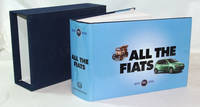
1999TB30491Turin: Editoriale Domus 1999. Sixth Edition. Fine in dark blue cloth covered boards with bold gilt text on the spine and on the front board. An oblong 24mo of 5 3/4 by 8 1/2 inches. In a fine unclipped dust jacket. Both the book and its jacket are contained within a fine dark blue cloth covered slipcase. 931 pages followed by 17 un-numbered pages of index to car models. Extensively illustrated from black and white photographs and line drawings. Editoriale Domus hardcover books
196638545Hanoi: Foreign Languages Publishing House 1966. 1st edition. White printed paper wrappers sage design black and red lettering. Stapled. Light wear to wrappers previous ownership stamp to inside rear wrapper. A VG copy. 55 1 pp. 7-1/2" x 4-3/4" <br/><br/> Foreign Languages Publishing House unknown books
196976327NY:: Grove Press. Fine in Near Fine dust jacket. 1969. Hardcover. B000IZCRGC . Translated from the French by a member of the Erotika Biblion Society. First printing. Fine in an about fine dust jacket. A bright clean and well preserved copy. ; 116 pages . Grove Press, hardcover books
196989342NY:: Grove Press. Very Good in Very Good dust jacket. 1969. Hardcover. B000IZCRGC . X-1015. Translated from the French by a member of the Erotika Biblion Society. First printing. Very good in a very good small tape repair on verso dust jacket. ; 116 pages . Grove Press, hardcover books
178426075Londres i.e. Paris: Et se trouve à Paris chez Pissot 1784. First Edition. Octavo; pp. 6264pp.; 4 A-Q8 R4; woodcut title page vignette head- and tail-pieces; full contemporary red imitation morocco double ruled in gilt flat spine decorated in gilt. Extremities rubbed with boards occasionally exposed contemporary blue ribbon marker detached but present. A Very Good attractive copy. Pechmeja's best-selling prose poem published anonymously under the patronage of one Madame de Beauvau presumably the Marquise de Boufflers. The work enjoyed both enthusiastic and scathing reviews from the most celebrated literary figures of the time. Readers admired the work's literary beauty and its touching description of friendship while others found fault with the moral and economic message which would be described as socialist in the modern sense. Among the most notable Télephe detractors was the author Jean-François de la Harpe who wrote "The author seems like Rousseau to make a crime out of private property without which no society could exist. He doesn't want children to inherit their fathers' fortunes as if inheritance wasn't a natural right and as if the fathers themselves didn't work for the sake of their children" my translation. Others including the relatively enthusiastic reviewer the Baron von Grimm were nonplussed by Pechmeja's dour description of the fate of man and the injustices of oppression maintaining that while virtue must always be exercised little happiness can ultimately be experienced even with the purest intentions my paraphrase of Michaud and Grimm. Grimm rejects comparisons made to Fénelon's novel Les Aventures de Télemaque 1699 saying that if Marmontel's Les Incas 1747 is the Télemaque for the age of the encyclopedia then Télephe is the Télemaque for economists. Within three weeks of publication sales had dropped dramatically and while the book was reprinted once in the 1790s and subsequently translated into English and German Télephe never re-experienced its initial popularity. ESTC T132203.<br/> <br/>References:<br/> <br/>Baron von Grimm and Denis Diderot's Correspondance Littéraire Philosophique et Economique Vol. XII mars 1794 pp. 80-3. <br/> <br/>Joseph Fr. Michaud Biographie Universelle Ancienne et Moderne Vol. 33 pp. 244-6. . Et se trouve à Paris, chez Pissot unknown books
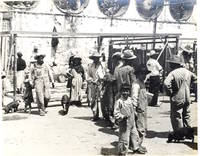
7251No place . Superb collection of 44 photographs black and white in large format measuring 10 x 8 inches. Subjects are primarily of campesinos and urban poor. There is no date or indication of whom the photographer might be but an occasional automobile indicates a time frame of about 1930. Views are in the smaller towns outside of Mexico City with a couple of exceptions. They all indicate a trained professional photographer's eye. See photos. Condition is very good. <br/><br/> unknown books
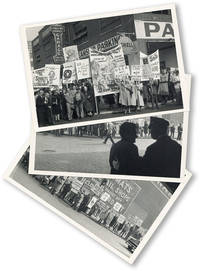
45800New York: 1952. Three original black-and-white photographs 4" x 6". Captioned in pencil on versos "10/15/1952". Fine condition. Three snapshots by an unknown amateur photographer depicting a 1952 street protest against Soviet occupation of the Baltic States. The protesters can be seen carrying placards in front of a large Horn & Hardart warehouse possibly in lower Manhattan. Signs read "Soviets Out of Lithuania;" "USSR is NOT Russia!;" "Stalin's Gang is not the Russian People;" "Stop Genocide in the Baltic States" etc. The protest would have coincided with the final throttling of the organized resistance movement in Lithuania following a series of mass deportations to Siberia of Lithuanians and other Baltic dissidents that began immediately following the Second World War and lasted until Stalin's death in 1953. Presumably a localized protest as we have been able to find no published record of it in contemporary newspaper reports; but an evocative glimpse into Cold War-era sentiments among Americans of Easter-European descent. unknown books
1601289617Paris.: Jean Coquerel. 1601. Contemporary leather raised bands gilt spine florets gilt rule borders gilt wreath designs on both covers. Good plus marked wear to the corners and spine ends two small worm holes to spine ffep partly detached armorial bookplate to pastedown pages lightly toned still a sound tight unmarked copy. 8vo. 18x10.5 cm. . French text. Uncommon title in a rare Paris edition printed by Coquerel. Crespet was a Catholic preacher noted for his works on theology and demonology. This work is a discussion of vices in the first volume and virtues in the second. weight: 1.6 lb. Jean Coquerel. hardcover books
197612226New York: The Viking Press 1976. Octavo cloth-backed boards. First edition in English. Translation of Berlinguer e il Professore 1975. Reginald 16506. A fine copy in fine dust jacket. #12226 The Viking Press unknown books