Victor HUGOBiblio.com
31 338 résultats
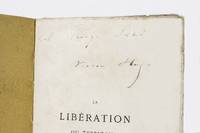
187369841Paris: Michel Lévy frères 1873. Fine. Michel Lévy frères Paris 1873 15.50 x 24 cm broché sous chemise et étui First edition mention of second edition. Our copy is presented in a case and shirt with a green canvas back and marbled paper boards. We enclose the cover of the catalog of the sale of the library of George and Maurice Sand in 1890 on which was pasted the descriptive sheet of our copy with its hammer price in pencil. Exceptional autograph shipment signed by Victor Hugo to Georges Sand. ""But what did they think of each other these two outstanding personalities of literary life in the 19th century Because they never met these two yet they were perfectly contemporary: Victor Hugo 1802-1885 George Sand 1804-1876. Certainly there were the ups and downs of life: George Sand did not really publish until 1832 at a time when Victor Hugo was already aware of his glory; and then there was the exile of Victor Hugo from 1851 to 1870 but that does not explain everything! At the beginning they are not really part of the same coterie: Victor Hugo Pair of France support of Louis-Philippe on one side George Sand socialist on the other. They do not really appreciate each other even if George Sand has a certain annoyed admiration for Victor Hugo called grandiloquent: ""the most talkative of sublime poets"" while Hugo him finds bluntly that ""Sand does not know how to write""! Then with the coup d'etat of Napoleon III Victor Hugo evolves politically; he quickly overflows George Sand on his left goes into exile while George Sand accommodates internal exile. Their relationship heats up only very very weakly: ""George Sand has talent that's all"". In exile Victor Hugo publishes ""Les Châtiments"" a very critical work which is obviously prohibited in France. George Sand would like Victor Hugo to be less intransigent in his writings so as to be published. The publication of ""Contemplations"" in 1856 much less controversial is welcomed by George Sand and marks a new phase in their relations. In fact their first letter contact does not concern literary life. Nini the little girl of George Sand dies in 1855 Victor Hugo still very marked by the death of his daughter Léopoldine sympathizes; the loss of a loved one brings them together. Here they are friends George Sand becomes a ""genius"" she will often be invited to Guernsey . without further action their relationship will never be familiar. Victor Hugo supports him during the publication of the Beaux Messieurs de Bois Doré 1858 but George Sand gets angry when he refuses the amnesty of 1859 while on her side she seeks to soften the situation of the proscribed. When Les Misérables was published 1862 Victor Hugo sought the support of George Sand but this support was lacking. Victor Hugo is saddened George Sand will say that he prefers the poetry of Victor Hugo to his prose work. On the return from exile with the Commune here is a new misunderstanding; Victor Hugo argues George Sand is horrified: legalist and shocked by the violence she condemns in extremely harsh terms this Paris Commune. Nevertheless from there these two support and defend themselves as soon as one or the other is attacked. In 1876 it was Victor Hugo who delivered the famous funeral praise of George Sand: ""I mourn a dead woman I salute an immortal ."" The relationships of George Sand and Victor Hugo have therefore evolved a great deal during their lives. It is undoubtedly a reflection of their personal development but perhaps their entourage political ideas or the opinion that the other had of his own work also interfered with literary criticism; even our great personalities are under influence! ""Victor Hugo and George Sand what if they had met"" »This is a fictional play by Danièle Gasiglia. But maybe as Danièle Bahiaoui suggests: Both of them in the same room it's one too many! »» Blog ""We in Boischaut Sud"" conference by Danielle Bahiaoui Arnaud Laster and Danielle Gasaglia Provenance: Maurice Sand Venet Ferrou Michel Lévy frères hardcover
183556714Paris: Eugène Renduel 1835. Fine. Eugène Renduel Paris 1835 14 x 21.50 cm relié First edition.Bound in red half Russia with corners spine with four raised bands gilt-ruled and decorated with double gilt panels date in gilt at foot within a compartment marbled endpapers and pastedowns rare wrappers and spine preserved top edge gilt uncut binding signed by Bernasconi.The catalogue leaf of Victor Hugos works is present. A few folding creases to some leaves. Mounted opposite the definitive version printed on p. 223 is a precious autograph poem by Victor Hugo entitled La pauvre fleur disait au papillon céleste on two folded leaves mounted on a stub. This is a first version consisting of four quatrains. These verses were reworked by Hugo with some variants in the definitive version augmented with four additional quatrains. The poem was composed by Hugo for his mistress Juliette Drouet whom he had met two years earlier. It symbolizes the nature of their relationshipthe poet bound by his marital and literary life the young woman condemned to wait for himand played a central role in their shared imagination: Juliette Drouet frequently quoted the line Et moi je reste seule à voir tourner mon ombre / À mes pieds ! in her love letters to Victor Hugo. The double motif of the flower and the butterfly alongside their entwined initials also appears in the painted decoration of the Chinese salon from Hauteville Fairy Juliette Drouets residence in Guernsey a décor conceived by Hugo himself and now preserved at the Maison Victor Hugo in Paris. A fine uncut copy in a charming signed binding enriched with a very rare autograph poem by Victor Hugo written for Juliette Drouet. Eugène Renduel hardcover
188047658Paris: Michel Lévy 1880. Fine. Michel Lévy Paris 1880 15.50 x 23.50 cm relié First edition. Contemporary half red shagreen over marbled paper boards a few discreet repairs spine in six compartments date to foot marbled paper-lined endpapers and pastedowns covers preserved top edge red. A very handsome autograph inscription signed by Victor Hugo to Alphonse Daudet. Mrs. Daudet's collection stamp to first endpaper. Victor Hugo represented for Alphonse Daudet as for the other writers of his generation the incontestable master of the Pantheon of the arts. His benevolent attention runs through Daudet's work often listed side by side with Rousseau Byron Sand and Delacroix. If during Daudet's childhood and youth Hugo an exile of enormous stature in Guernsey remained a distant ideal ""almost above humanity"" his return to France allowed him finally to meet the master. Around 1875 just after his first works appeared Alphonse and Julia Daudet were thus invited to Hugo's house; Hugo was living with Juliette Drouet at the time. From then on they become frequent visitors to the house right up to the poet's death. Hugo helped with the young Léon Daudet's education his grandson Georges' best friend and later for a short while Jeanne's husband. In her Souvenirs d'un cercle littéraire Memories of a Literary Circle Julia Daudet talks of their friendship of ten years with ""the idol of lyric France"": ""I can see Victor Hugo at the end of his great table: the aged master a little cut off a little deaf presiding with god-like silence the little absences of a genius on the verge of immortality. His hair all white his face colorful and his eyes like an old lion's that would occasionally flash with ferocious bursts of force. He is listening to my husband and Catulle Mendès between whom there is a very animated discussion on the subject of the youth and celebrity of famous men and their charm for women.During the debate we moved through to the salon with Hugo musing beside the fire famous omni-present and a demi-god but perhaps still missing his youth a little as Mme Drouet sleeps softly."" The friendship between this great Romantic writer and one of the masters of the nascent naturalist school is testimony to Hugo's sharpness who even during his glory days preserved a special and benevolent attention for modern literature no matter how far removed it was from his own lyricism. This inscription from Hugo to Daudet on a work considered - along with Le Pape The Pope and La Pitié suprême The Supreme Compassion - a ""philosophical testament"" by Henri Guillemin resonates strongly the passing of the writer's political and moral responsibilities to a devoted disciple. Provenance: Alphonse Daudet his sale at Sicklès 1990 IV n°1200 then Philippe Zoummeroff's sale 2 Avril 2001. An extract from Memories of a Literary Circle by Julia Daudet : ""How could I forget that first visit to his in the rue de Clichy in a modest apartment so out of proportion to his glory to the image of his glory that we had which would have filled entire palaces. He got up out of his chair beside the fire opposite Madame Drouet his old friend.I was shocked by how small he was but soon after he had greeted me and begun talking to me I felt him very big indeed very intimidating. And this timidity that I felt then I would always feel towards him the result of my great admiration and respect something akin to that for an absent god that my parents had inculcated within me for inspired poets. I could never overcome that wobble in my voice whenever I would reply to his kind words and I was shocked to hear women over the course of almost ten years when admitted to his presence regale him with their personal matters and their everyday chatter. That evening when he had introduced me all in a flutter to Madame Drouet she said to me with her most charming grace: 'This is the old people's bit you know and you're far too young for us. But Mon Michel Lévy hardcover
110339St. Petersburg Paetz 1896. . Oblong folio 39.3 x 52.8 cm; chromolithographed title page & 10 chromolithographed plates slight wear to edges of plates original blue cloth portfolio with title stamped in silver on front cover folds a little worm covers slightly stained without the original ties a good copy.<br /> Very good example of this souvenir album published on the eve of the coronation in a limited edition to be distributed among the nobility close to the Imperial family. <br /><br />Along with a title page the publisher's portfolio contains a full set of ten chromolithographs depicting Tsar Nicholas II in the uniforms of ten regiments which were under his direct command. <br /><br />The lithographs have been executed after paintings by Hugo Karlovich Backmanson 18601953 a Finnish born artist and painter of battle-pieces who from 1884 served as an officer in the Izmailovskiy regiment. Rare when complete.<br /> St. Petersburg, Paetz, 1896. hardcover
LCS-17869Précieux exemplaire conservé dans son élégante reliure de l’époque en demi-veau bleu. Paris, Charles Gosselin, 1831. 2 volumes in-8 de : I/ (4) ff. pour le faux titre, le titre et la préface, 404 pp. ; II/ (2) ff., 536 pp. pour le tome 2. Les deux titres sont ornés de vignettes de Tony Johannot gravées sur bois par Porret. Relié en demi-veau bleu, dos lisses. Reliure de l’époque. 205 x 126 mm.
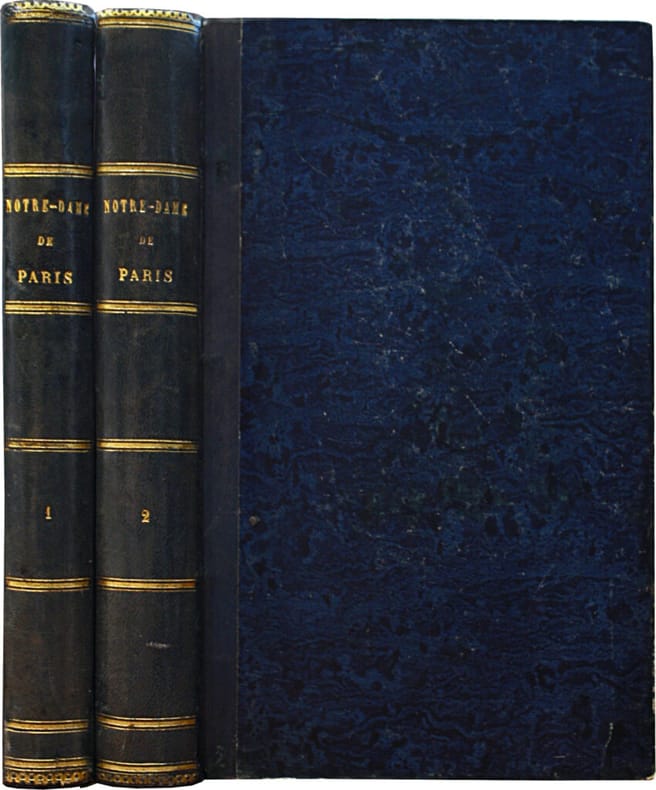
1831LCS-17869<p><strong>The first edition of"<em>Notre-Dame de Paris</em>" The Hunchback of Notre-Dame one of only 1100 copies printed.</strong></p><p>Two 8vo volumes 205 x 126 mm of: I/ 4 ll. for the half-title title and foreword 404 pp. ; II/ 2 ll. 536 pp. for part 2. Both titles are decorated with <em>Tony Johannot's</em> woodcuts engraved by <em>Porret</em>. Bound in blue half calf flat spines. <em>Reliure de l'époque.</em></p><p>First edition of the famous and first great novel by Victor Hugo.</p><p>Carteret I pp. 400-402; Escoffier 870; Vicaire <em>Manuel de l'amateur de livres du XIXe siècle</em> IV 256-257.</p><p>This copy belongs to the second state with the author's name on the title and the fictitious mention "<em>Seconde edition</em>" below the title.</p><p>"<em>Since Gosselin's copy appeared at auction Leroy auction March 26-27th 1931 N°328 it became indisputable that the mention of a second or third edition doesn't take anything from the first edition nature of a book.</em></p><p><em>Gosselin-Leroy's copy bore indeed on a fourth edition of Notre-Dame de Paris 1831 the following autograph note:</em></p><p><em>'</em>First edition published in 1100 copies that have been following the habits of the bookselling at the time divided into four editions. Signed. Charles Gosselin editor' ".</p><p>Escoffier <em>Le Mouvement romantique</em> 870.</p><p>Michaud comes to the same conclusion in the Bulletin du bibliophile 1931: "copies<em> falsely pointed out as second or third edition authentically belong to the first edition"</em>.</p><p>"This first edition in good condition is the rarest of all the author's works; it had a worldwide impact and it's one of the most difficult to get from the Romantic period" Carteret.</p><p>A precious copy preserved in its elegant contemporary blue half calf binding.</p><p>FRANCAIS</p><p><strong>L'édition originale de " Notre-Dame de Paris " tirée à 1100 exemplaires.</strong></p><p><strong>Précieux exemplaire conservé dans son élégante reliure de l'époque en demi-veau bleu.</strong></p><p>Edition originale du celebre et premier grand roman de Victor Hugo.<br />Carteret I pp. 400-402 ; Escoffier 870 ; Vicaire <em>Manuel de l'amateur de livres du XIXe siècle</em> IV 256-257.</p><p>Exemplaire de la seconde tranche avec le nom de l'auteur figurant sur le titre et la mention fictive " <em>Seconde édition</em> " au-dessous du titre.</p><p>" <em>Depuis que l'exemplaire de Gosselin est passé en vente publique Vente Leroy 26-27 mars 1931 n° 328 il n'y a plus de discussion possible sur le fait que la mention d'une deuxième ou troisième édition n'enlève rien au caractère d'édition originale d'un livre.</em> <em>L'exemplaire Gosselin-Leroy portait en effet sur une quatrième édition de Notre-Dame de Paris 1831 la note autographe suivante :</em></p><p><em>"</em>Edition originale tiree a 1100 exemplaires qui ont ete suivant l'usage de la librairie a cette epoque divises en quatre editions. Signé. Charles Gosselin éditeur<em>".</em> "<br />Escoffier <em>Le Mouvement romantique</em> 870.</p><p>Michaux conclut de même dans le <em>Bulletin du bibliophile</em> 1931 : " <em>les exemplaires ainsi faussement désignés de seconde voire de 3e édition appartiennent authentiquement à l'édition originale</em> ".</p><p>" Cette edition originale en bel etat est la plus rare de toutes les uvres de l'auteur ; elle a eu un retentissement mondial et c'est une des plus difficiles a se procurer de la periode romantique " Carteret.</p><p>Précieux exemplaire conservé dans son élégante reliure de l'époque en demi-veau bleu.</p> Charles Gosselin.
BB09<p>Paris Charles Gosselin 1831.</p><p>Two 8vo volumes 205 x 126 mm of: I/ 4 ll. for the half-title title and foreword 404 pp. ; II/ 2 ll. 536 pp. for part 2. Both titles are decorated with <em>Tony Johannot's</em> woodcuts engraved by <em>Porret</em>. Bound in blue half calf flat spines. <em>Reliure de l'époque.</em></p><p><strong>First edition of the famous and first great novel by Victor Hugo.</strong></p><p>Carteret I pp. 400-402; Escoffier 870; Vicaire <em>Manuel de l'amateur de livres du XIXe siècle</em> IV 256-257.</p><p>This copy belongs to the second state with the author's name on the title and the fictitious mention "<em>Seconde edition</em>" below the title.</p><p>"<em>Since Gosselin's copy appeared at auction Leroy auction March 26-27th 1931 N°328 it became indisputable that the mention of a second or third edition doesn't take anything from the first edition nature of a book.</em></p><p><em>Gosselin-Leroy's copy bore indeed on a fourth edition of Notre-Dame de Paris 1831 the following autograph note:</em></p><p><em><strong>'</strong></em><strong>First edition published in 1100 copies that have been following the habits of the bookselling at the time divided into four editions. Signed. Charles Gosselin editor' ".</strong></p><p>Escoffier <em>Le Mouvement romantique</em> 870.</p><p><strong>Michaud comes to the same conclusion in the Bulletin du bibliophile 1931: "copies</strong><em><strong> falsely pointed out as second or third edition authentically belong to the first edition"</strong></em><strong>.</strong></p><p>"This first edition in good condition is the rarest of all the author's works; it had a worldwide impact and it's one of the most difficult to get from the Romantic period" Carteret.</p><p><strong>A precious copy preserved in its elegant contemporary blue half calf binding.</strong></p><p><u>French</u></p><p>Paris Charles Gosselin 1831.</p><p>2 volumes in-8 de : I/ 4 ff. pour le faux titre le titre et la préface 404 pp. ; II/ 2 ff. 536 pp. pour le tome 2. Les deux titres sont ornés de vignettes de <em>Tony Johannot</em> gravées sur bois par <em>Porret</em>. Relié en demi-veau bleu dos lisses. <em>Reliure de l'époque.</em></p><p>205 x 126 mm.</p><p><strong>Edition originale du celebre et premier grand roman de Victor Hugo.</strong> Carteret I pp. 400-402 ; Escoffier 870 ; Vicaire <em>Manuel de l'amateur de livres du XIXe siècle</em> IV 256-257.</p><p>Exemplaire de la seconde tranche avec le nom de l'auteur figurant sur le titre et la mention fictive " <em>Seconde édition</em> " au-dessous du titre.</p><p>" <em>Depuis que l'exemplaire de Gosselin est passé en vente publique Vente Leroy 26-27 mars 1931 n° 328 il n'y a plus de discussion possible sur le fait que la mention d'une deuxième ou troisième édition n'enlève rien au caractère d'édition originale d'un livre.</em> <em>L'exemplaire Gosselin-Leroy portait en effet sur une quatrième édition de Notre-Dame de Paris 1831 la note autographe suivante :</em></p><p><em><strong>"</strong></em><strong>Edition originale tiree a 1100 exemplaires qui ont ete suivant l'usage de la librairie a cette epoque divises en quatre editions. Signé. Charles Gosselin éditeur</strong><em><strong>".</strong></em><strong> "</strong> Escoffier <em>Le Mouvement romantique</em> 870.</p><p>Michaux conclut de même dans le <em>Bulletin du bibliophile</em> 1931 : " <em>les exemplaires ainsi faussement désignés de seconde voire de 3e édition appartiennent authentiquement à l'édition originale</em> ".</p><p><strong>" Cette edition originale en bel etat est la plus rare de toutes les œuvres de l'auteur ; elle a eu un retentissement mondial et c'est une des plus difficiles a se procurer de la periode romantique "</strong> Carteret.</p><p><strong>Précieux exemplaire conservé dans son élégante reliure de l'époque en demi-veau bleu.</strong></p> hardcover
1831307333Paris: Charles Gosselin 1831. First edition third issue. Title vignettes by Tony Johannot. viii 404; iv 536 pp. 2 vols. 8vo. Bound to style in the early 20th-century in red half morocco and embossed paper over boards smooth spines stamped in gilt and blind to cathedral design t.e.g. the rest uncut by René Aussourd signed in gilt at foot of spine and on front free endpaper. Slight rubbing to extremities expert paper repair to lower outside corner of vol. I half-title and repairs to a few other paper faults throughout. In a custom gilt-ruled full brown morocco slipcase and chemise by R. Patron. Johannot Tony. First edition third issue. Title vignettes by Tony Johannot. viii 404; iv 536 pp. 2 vols. 8vo. First edition third issue of Hugo's first great success as a novelist The Hunchback of Notre-Dame in a fine retrospective binding by René Aussourd. Though styled the "Troisème Édition" on the title-page this is in fact the third issue of the first edition. The entire edition consisted of four separate issues of 275 copies each with each issue designated as a separate edition on the title-page. <br/><br/>Notre-Dame de Paris is more commonly known in English as The Hunchback of Notre-Dame the title under which the first English translation by Frederic Shoberl appeared in 1833. Set in 15th-century Paris the novel introduces a memorable cast of Romantic characters; some such as the hunchback Quasimodo and the gypsy girl Esmérald have so permeated our culture that they've reached the status of archetypes. Hugo hoped that his novel would reverse the sad neglect of Gothic architecture in his country much of which had fallen into ruin or been brutally altered. Indeed Hugo created a depiction of Notre-Dame "so erudite and familiar that it caused a revolution in architectural taste. The success of this darkly moving novel was immediate establishing Hugo as the premier historical novelist of his time" Oxford Companion to Literature in French.<br/><br/>In a fine retrospective French romantic binding by René Aussourd recalling the work of Simier or Thouvenin. Aussourd studied under his uncle Charles Meunier and was first gilder at Chambolle-Duru before starting his own business in 1912 Devauchelle III p. 243. Carteret I p. 402 Charles Gosselin unknown books
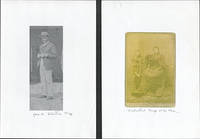
51-6734Paris: circa 1900. Later scans.29 x 21cm. Original Ppatinum print of the grandmother by Henri Ledvelly 26 x 20cm.Valentine Gross met her future husband Jean Hugo grandson of the influential French author Victor Hugo in 1917 at the home of Mimi and Cypa Godebski. In 1919 they were married with Cocteau and Satie as their only witnesses. Neither of Jean's parents consented to the marriage perhaps contributing to its eventual demise.In March of 1926 Valentine attended one of the first Surrealist expositions where she met Paul Éluard. Their meeting sparked a friendship that would continue until his death in 1952. In 1927 after working as costume designer on the set of La Passion de Jeanne d'Arc Valentine returned to Paris a full-fledged Surrealist; Jean Hugo however never embraced the Surrealist movement. In the years following their hurried nuptials their tastes diverged leading to separation in 1929 and finally divorce in 1932. Despite the end of their marital relations Valentine and Jean remained friends until her death in 1968.Provenance: Pierre Spivakoff 1933-2012…Après des études au Cours Simon Pierre Spivakoff crée à Paris le tout premier café-théâtre « Le Royal » situé boulevard Raspail où il met en scène des pièces de Fey¬deau Ionesco Dumas Rachilde Molière et Corneille. En 1973 il met en scène «Délirante Sarah» une pièce autour de Sarah Bernhardt où il interprète le rôle prin¬cipal. Le spectacle représentera la France dans de nom¬breux Festivals européens Rome Belgrade Berlin… et se prolongera à la comédie des Champs-Elysées durant toute l’année 1974. Habité par la divine Sarah Il est l’auteur du livre « Sarah Bernhardt vue par les Nadar » éditions Herscher 1997. Par ailleurs il monte « L’Homme aux camélias » au Théâtre La Bruyère ou « Monsieur Vénus » au Théâtre des Mathurins. Également metteur en scène et professeur d’art dramatique il dirigera de très nombreux acteurs avant d’ouvrir une classe de théâtre à l’American Center aventure qui durera plus de 10 ans. Enfin son cours de coaching d’avocats et de personnalités politiques a durablement marqué l’éloquence à la française chez les ténors ténors du barreau . Paris: circa 1900 unknown
1831307333Paris: Charles Gosselin 1831. First edition third issue. Title vignettes by Tony Johannot. viii 404; iv 536 pp. 2 vols. 8vo. Bound to style in the early 20th-century in red half morocco and embossed paper over boards smooth spines stamped in gilt and blind to cathedral design t.e.g. the rest uncut by René Aussourd signed in gilt at foot of spine and on front free endpaper. Slight rubbing to extremities expert paper repair to lower outside corner of vol. I half-title and repairs to a few other paper faults throughout. In a custom gilt-ruled full brown morocco slipcase and chemise by R. Patron. Johannot Tony. First edition third issue. Title vignettes by Tony Johannot. viii 404; iv 536 pp. 2 vols. 8vo. First edition third issue of Hugo's first great success as a novelist The Hunchback of Notre-Dame in a fine retrospective binding by René Aussourd. Though styled the "Troisème Édition" on the title-page this is in fact the third issue of the first edition. The entire edition consisted of four separate issues of 275 copies each with each issue designated as a separate edition on the title-page. <br /> <br /> Notre-Dame de Paris is more commonly known in English as The Hunchback of Notre-Dame the title under which the first English translation by Frederic Shoberl appeared in 1833. Set in 15th-century Paris the novel introduces a memorable cast of Romantic characters; some such as the hunchback Quasimodo and the gypsy girl Esmérald have so permeated our culture that they've reached the status of archetypes. Hugo hoped that his novel would reverse the sad neglect of Gothic architecture in his country much of which had fallen into ruin or been brutally altered. Indeed Hugo created a depiction of Notre-Dame "so erudite and familiar that it caused a revolution in architectural taste. The success of this darkly moving novel was immediate establishing Hugo as the premier historical novelist of his time" Oxford Companion to Literature in French.<br /> <br /> In a fine retrospective French romantic binding by René Aussourd recalling the work of Simier or Thouvenin. Aussourd studied under his uncle Charles Meunier and was first gilder at Chambolle-Duru before starting his own business in 1912 Devauchelle III p. 243. Carteret I p. 402 Charles Gosselin unknown
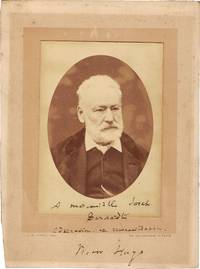
1872804Paris: J.M. Lopez 1872. Bust portrait of Victor Hugo 3 7/8†X 5 3/8†mounted on its original card 6 1/4†X 8 3/8â€. Inscribed in black ink trailing from the photograph down to the card “A mademoiselle Sarah Bernhardt admiration et reconnaissance. Victor Hugo†To Miss Sarah Bernhardt admiration and gratitude. Victor Hugo. The card is backed with contemporary framing craft paper and mounted to it is an image of Bernhardt’s study showing this very photograph a fillet on the former frame hanging on the wall centered over her desk. Slight edge darkening and slighter spotting to the photograph but very good the inscription sharp and unfaded the card to which it is mounted has some mat burn and a few spots of foxing its edges cleanly cut but the lower left corner was cut on a slight angle. A monumental association between at the time the most famous author and the most famous actress and there are no 19th century comparables like this one that are nearly as great as this one. <br /> <br /> Here is a précis of Bernhardt’s story. She was born in 1844 and attended her first play at 15 with her mother and 2 of her mother’s friends Charles de Morny and Alexandre Dumas. She was so emotionally taken by it that she cried throughout. Dumas calmed her afterwards spoke with her at length and told her mother that Sarah’s intellect and emotional wiring destined her to be an actress and a star. Morny who was half–brother to Napoleon III fixed her acceptance into the Paris Conservatory Dumas coached her and she made her professional debut at 18. A dozen other roles followed but she left Paris for Belgium had a sultry romance with The Prince of Linge then returned to Paris to have their child. In 1866 she signed with Théâtre de L’Odéon and in 1868 became the star Dumas had predicted playing the lead role in the revival of his play Kean. She served as a nurse during the Franco–Prussian war converting the Odéon into a hospital and when the French 2nd empire was replaced by the 3rd republic Victor Hugo returned to France from a 19–year political exile and met Bernhardt. Once the siege of Paris was over and the theaters reopened Hugo’s play Ruy Blas was staged in Jan. 1872 to celebrate his homecoming. Bernhardt played the lead role as the Queen of Spain and her fame already prodigious rose to the pinnacle with a triumphant performance. The bond between author and actress combined mutual respect and appreciation a victorious professional relationship unparalleled satisfaction for an adoring public and a well–known ongoing tryst recounted with intimate details and frankness in the book My Erotic Life. Already the most renowned actress in France Bernhardt toured England Belgium and Denmark with her own troupe in 1879 and 1880 then sailed to America toured 51 cities and returned to France with $194000 in gold coin. Now the most famous actress in the Western world the first superstar she performed across the rest of Europe except for Germany then returned to Paris and shined there again. Other world tours followed and she came home from one of them with 3 1/2 million francs. In 1893 she bought the Théâtre de la Renaissance where she performed and directed sold it 1899 and leased a larger concert hall where she staged whatever struck her mood often playing male roles and every time she wanted more money she would do another tour. She injured her leg in a stunt leap on stage had to have it amputated in 1915 weathered W. W. I. continued to perform made a few films and died in 1923 still the most acclaimed actress in the world. We have already said that she was the first superstar and so she was of course the earliest born person awarded a star on the Hollywood Walk of Fame. <br /> <br /> “There are five kinds of actresses: bad actresses fair actresses good actresses great actresses––and then there is Sarah Bernhardt.†–Mark Twain. J.M. Lopez unknown
18312996Paris, Charles Gosselin, 1831 (imprimerie de Cosson) ; deux tomes in-8 réemboités dans une reliure romantique d'époque, plein veau glacé bronze, dos à nerfs plats décorés, fleurons romantiques dorés entre-nerfs, palette décorative dorée en pied, plats ornés d'un grand décor romantique à la plaque gravée, toutes tranches dorées, liseré bordeaux en bord des plats et des coiffes replié plus largement à l'intérieur avec roulette dorée et filet doré sur les coupes ; tome I ; (4) ff. (faux-titre, au verso Oeuvres de Victor Hugo et nom d'imprimeur, titre avec une vignette de Tony Johannot gravée sur bois par Porret, préface datée de mars 1831), 404 pp. ; tome II ; (1) f. (absence du faux-titre, titre avec une autre vignette de Tony Johannot gravée sur bois par Porret), 536 pp., fautes de pagination : les pages 491 et 495 sont paginées par erreur 391 et 395.
187369841Michel Lévy frères | Paris 1873 | 15.50 x 24 cm | broché sous chemise et étui
183556714Eugène Renduel | Paris 1835 | 14 x 21.50 cm | relié
188047658Michel Lévy | Paris 1880 | 15.50 x 23.50 cm | relié
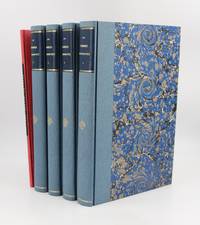
187883249Paris: Léon Vanier 1878. Fine. Léon Vanier Paris s. d. 1878-1899 & 1886-1892 19.50 x 28.50 cm 5 volumes reliés First edition of Les Hommes d'aujourd'hui 33 issues lacking out of 469. Five volumes bound in light blue half-cloth smooth spines blue morocco title labels decorated with double filets marbled paper boards 4 volumes. The color title pages have been preserved and bound in. Marginal tears without damage to the text no. 163; no. 165; no. 184 p. 2. Marginal restorations without damage to text on 8 leaves between nos. 214 and 223. Two leaves of no. 224 backed. Marginal tear with some paper missing no. 345 p.1. Format of quires in the first volume varies; some are trimmed more than others. First edition of Les Femmes du jour very rare complete collection in 11 issues published between 1886 and 1892 the last very rare Réjane issue appeared in 1892 six years after the other 10. Bound in half red cloth smooth spine midnight-blue morocco title labels framed in gilt gilt title lengthwise marbled paper boards. An impressive gallery of prominent 19th century women and men caricatured and described by the foremost avant-garde artists and writers of the time. Created by writer Félicien Champsaur and illustrator André Gill in 1878 this exceptional literary and satirical review was later directed by Léon Vanier the publisher of the Parnassiens poets from 1885 to 1899. Each issue is a portrait of a contemporary figure in the world of arts and letters politics science or technology. The full set includes 469 monographs written by some of the most provocative voices of the time: Jules Laforgue Gustave Kahn Joris-Karl Huysmans Jean Moréas Félix Fénéon. The only contributor Vanier ever paid for those written portraits was Paul Verlaine famously always short of money. Each issue includes on the front page a large and fine color lithographed caricature by artists such as Manuel Luque André Gill and Félix Régamey but also world-renowned painters: Toulouse-Lautrec Steinlen Pissarro Seurat Signac to name a few. The actress Sarah Bernhardt was so famous she appeared both in the men-issue Hommes d'aujourd'hui as well as one of the very rare women-issues Femmes du jour! The literary issues cover every school and movement of the second half of the 19th century including Buveurs d'eau Vilains bonshommes Hydropathes Parnassiens Naturalists Decadents Symbolists and Incohérents. There is also a number of avant-garde painters belonging to the Pont Aven school Schuffenecker Pissarro Emile Bernard Maximilien Luce the circle of the Montmartre Affichistes Chéret Willette Caran d'Ache Georges Auriol Job Steinlen as well as Post-Impressionnists Cézanne Toulouse-Lautrec Anquetin Pointillists Signac Seurat and Symbolists Redon. Musicians are also featured with fine portraits of Gounot Massenet Verdi Camille Saint-Saëns Rubinstein and Reyer. An exceptional and rare set bearing witness to the free spirit of 19th century French intellectuals and artists. Léon Vanier hardcover
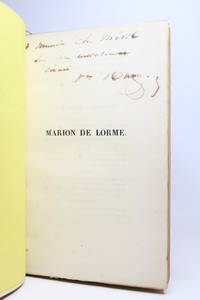
183173562Paris: Eugène Renduel 1831. Fine. Eugène Renduel Paris 1831 14 x 22.50 cm relié First edition rare copy with no statement of print. Full blue morocco binding spine with raised bands in the Jansenist style endpapers and pastedowns of combed marbled paper gilt dentelle framing the pastedowns double gilt fillets and gilt tooling to headcaps and board edges top edge gilt with untrimmed margins preserved original front wrapper bound in binding signed by Marius Michel. Monogrammed bookplate mounted on the verso of the first endpaper. This copy is enriched with four hors-texte plates by Louis Boulanger and Alfred Johannot. Signed autograph inscription by Victor Hugo on the half-title: « À Monsieur Charles Mévil son bien cordialement dévoué Victor Hugo. » Valuable and intriguing presentation inscription to the administrator and principal shareholder of the highly influential Revue de Paris publisher of Balzac whom the young Hugo was likely hoping to win over. It was only in 1834 two years after the success of Notre-Dame de Paris that Hugo would publish a text in the Revue Claude Gueux alongside his prolific rivals Le Père Goriot. Presentation copies of this title by Victor Hugo are exceedingly rare. In his Chronologie des livres imprimés de Victor Hugo published in 2013 Éric Bertin records only nine such inscriptions in this edition: to Sainte-Beuve Taylor Paul Lacroix Charles Mévil this copy Charles Nodier Loève-Veimars Armand Bertin H. Romand and the faithful Paul Meurice. The work also notes that this copy appeared in the Latour sale 1885 and more significantly the Noilly sale 1886. Magnificent copy bound by Marius Michel enriched with engravings and a signed autograph inscription by the author. Eugène Renduel hardcover
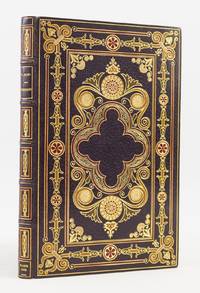
1830ST19754Paris: Mame et Delaunay-Valleé 1830. FIRST EDITION. 225 x 143 mm. 8 3/4 x 5 3/4". 2 p.l. vii 1 154 pp. 7 leaves ads. <br/> DAZZLING AUBERGINE CRUSHED MOROCCO ELABORATELY INLAID AND GILT BY GRUEL stamp-signed at foot of spine and on front turn-in covers inlaid to an Art Nouveau design of curving lines and botanical elements in red citron tobacco ivory and teal morocco raised bands spine compartments with tan morocco and gilt centerpiece BEAUTIFUL MOSAIC DOUBLURES with a complex Moorish lattice design in turquoise red and dark brown morocco and much gilt dark brown jacquard silk endleaves all edges gilt on the rough. In the matching suede-lined morocco-backed chemise and morocco-trimmed slipcase. Original paper wrappers bound in. Bibliotheque de M. René Descamps-Scrive II 423 this copy; Carteret II 399. A FLAWLESS COPY.<br/> <br/> This is the superb Descamps-Scrive copy of Hugo's revolutionary play in a binding by one of the great French masters—a bibliopegic achievement that reflects the play with its memorably exuberant and flamboyant style as seen particularly in the intricacy of its highly decorative doublures. When "Hernani" debuted on 25 February 1830 it caused a fierce argument among the audience--between the young Romantics led by Hugo's friend Théophile Gautier and the fans of classical theatrical styles--that became known as the Battle of Hernani. According to the Library of Congress "The clashes lasted several days and marked the triumph of romantic drama which dominated the stages of French theaters for years to come." Gautier would later reminisce: "February 25 1830! This date remains written in the depths of our past in flamboyant characters: the very first performance of Hernani! That evening decided our lives! It was there that we received the impetus which still drives us on after so many years and which will see us through to the end of our career." The binding here is as uninhibited by tradition and as over-the-top dramatic as the play with arresting design motifs inspired by Art Nouveau and Orientalism and with richly colored leathers that both contrast with and complement each other. In her "Bookbinders and their Craft" Prideaux says that the Gruel firm founded in 1811 "has always had the highest reputation . . . for initiative in artistic matters as well as for irreproachable execution in the detail of its many-sided achievements." Our binding stands as testament to the truth of this statement. The Gruel bindery was managed by several family members over the years most famously by Léon Gruel 1841-1923 and the list of binders who trained at the Gruel atelier is the most distinguished in Europe. Our binding was very probably done by Léon in the late 19th century for the famed French bibliophile René Descamps-Scrive 1853-1924 whose collection was as prestigious as Henri Beraldi's. Descamps-Scrive owned the volume in any case as it was auctioned after his death as part of his library at the Parisian gallery Georges Petit in May 1925 where it was lot no. 423 with full-page illustration. Like Beraldi Descamps-Scrive collected beautiful bindings that typified major styles and periods and was known for his insistence on acquiring only volumes in perfect condition. We have sold many fine bindings with elaborately decorated doublures but nothing quite like the ones seen here: they resemble a kind of fiery thicket although formed with rigorous control by a masterly binder. Mame et Delaunay-Valleé unknown
183173562Eugène Renduel | Paris 1831 | 14 x 22.50 cm | relié
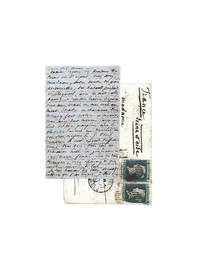
1855Hugo17<p><strong>HUGO Victor 1802-1855</strong></p><p>Autograph letter to Alphonsine Masson<br />Marine Terrace Jersey 5th August 1855 4 pp. small in-12°<br />With autograph envelope<br />Postmark: ANGL –5 Augt departure / CHEVREUSE 99th Août arrival<br />Fine condition throughout</p><p><strong>A long unpublished letter with mystical overtones addressed to his psychic friend Alphonsine Masson through which Victor Hugo addresses a message to his former love Léonie Biard – The exiled poet expresses in the manner of a prose poem and like a waking dream the power of loving memory for the woman he was forced to leave behind during the coup d'Etat of December 2 1851</strong></p><p><u>We transcribe here only a few fragments</u></p><p><em>" Comme toutes les femmes de cœur et d'esprit vous avez Madame outre toutes vos grâces personnelles des hasards profonds et éloquents. <strong>Avec ce mot : <u>elle partie c'est ma lumière disparue</u></strong><u></u> <strong>vous avez remué en moi tout un monde sombre et charmant vous m'avez fait revivre et mourir vous avez fait monter jusqu'au bord de ma paupière tout le flot des larmes non versées et qui sont toujours là. Je vous remercie de cette exquise souffrance que je vous dois</strong>.</em> …<em>. Rien ne vous manque ; vous charmez de près et vous consolez de loin.</em><br /><em>Je suis heureux des deux douces lettres que j'ai reçues. <strong>Je sais bien ce qui manque à l'une mais <u>elle</u> le sait aussi. Et – qui connaît l'avenir </strong></em><br /><em>Vous me faites un adorable tableau ; je vous vois toutes deux dans cette belle nature qui vous aime parce qu'elle voit vos âmes ; vous êtes là dans les fleurs sous les astres harmonies vous-mêmes ; vous causez ; je retiens mon souffle et il me semble que je vous entends.</em><br /><strong><em>Et tous les soirs je regarde là-haut je fais des signes d'intelligence aux yeux célestes de la nuit et il me semble que je la vois.</em></strong><br /><em>Je suis avec elle dans l'inexprimable. Elle qui pourtant devrait tout comprendre elle ne comprend pas cela. Elle me dit : écrivez-moi donc.</em> … <em>Je regarde les étoiles en songeant à elle et je lui dis : traduisez-moi.</em><br /><em>Soyez heureuse. Soyez heureuses. La beauté lui revient. Est-ce qu'elle était partie Est-ce qu'elle partira Qu'<u>elle</u> ouvre la sombre poitrine de l'absent ; il y a là un miroir. Qu'elle s'y regarde.</em><br /><em>Je dis l'absent. Et vous vous n'êtes pas absentes où vous êtes où elle est la présence est. <strong>Je regarde avec dédain et pitié ce Paris qui me fait l'effet d'un grand vide depuis qu'elle n'y est plus.</strong></em><br /><em>Je veux m'arrêter car il y a des portes d'écluses qu'il ne faut pas rouvrir. À quoi servirait le flot qui en sortirait </em><br /><em>Pardonnez-moi toutes deux ce mélange de rêves et de souvenirs.</em> …. <strong><em>Qu'elle en prenne ce qu'elle voudra. Qu'elle y lise ce qu'elle voudra</em></strong><em>. Je suis sûr des commentaires de votre noble et charmant cœur. –</em> …<br /><strong><em>Un jour elle me comprendra. En attendant elle fait ce qu'elle peut pour croire à un abîme ; elle dit toujours <u>fini</u> à moi qui ne sait pas d'autre mot qu'<u>infini</u>. Qu'elle me voie donc où je suis ; dans la mort et dans le ciel ; dans la mort par l'absence dans le ciel par sa pensée</em></strong><em>. "</em></p><p><u>Léonie Biard's loving memory from exile</u><br />A great love of Victor Hugo Léonie Biard 1820-1879 was the only woman for whom the writer hesitated to leave Juliette Drouet. Born into a family of minor nobility Léonie Thévenot received a good education before marrying the painter François Biard. In the spring of 1843 she met Victor Hugo perhaps in Fortunée Hamelin's salon. They became lovers in December of the same year. Léonie inspired him to write many poems of which we can find traces in <em>Les Contemplations</em>. In July 1845 the two lovers were caught in the act of adultery. Léonie Biard was arrested and thrown into the prison of Saint-Lazare where she remained from 5 July to 10 September. She was then transferred to the convent of Sentenced by the Seine court she lost custody of her children. Victor Hugo benefiting from his inviolability as Peer of France will always feel indebted to her. He sent her money regularly and continued to send her his books. Their affair was abruptly interrupted during the coup d'état of 2 December 1851 forcing the poet into exile. Juliette Drouet unaware of the affair learned of this seven-year affair from Léonie herself who on June 28 1851 sent her back the poet's letters. They were published by Jean Gaudon and are kept at the Maison de Victor Hugo after having belonged successively to Juliette Drouet Louis Koch Paul Meurice Alexandrine de Rothschild sale I n°67 and then to Colonel Sickles II 1989 n°361.</p><p><u>Alphonsine Masson the spiritual link</u><br />The direct recipient of this letter Alphonsine Masson played an essential role as an intermediary between the poet and Léonie Biard. The two friends knew each other from before the exile. It is therefore through her that Victor Hugo can reach Léonie through words. An exalted personality Alphonsine wanted to go beyond a wise conjugal existence through literary essays and an eventful spiritual quest. Marked by an education received from a militant agnostic father and a pious mother she first devoted herself to spiritualism establishing contacts with spirits from beyond the grave. In 1857 she was a member of an association that had rediscovered Franz Mesmer's scorned and abandoned science. Around 1860 she suddenly lost her ability as a medium: "Whatever I did then to get it back together I couldn't do it." She then proclaimed herself a Christian convert and published an autobiography <em>Ma conversion</em> Paris 1864 in which she recounted her spiritual journey. At the same time as this conversion remembering that she had been asked to write for many years by friends eminent in letters she became emboldened and responded to her late vocation. She wrote three novels: <em>Louise</em> <em>Les Trois amies</em> <em>La Perle noire</em> which appeared only in serials in <em>L'Estafette</em> <em>Le Siècle</em> and other Parisian newspapers.</p><p>Why did Victor Hugo pass on his messages to Léonie Biard through Alphonsine Masson Was it a question of not reviving the scandal that had marked the discovery of adultery No doubt the poet wanted to escape any police control over this correspondence which if revealed could have compromised the exile in the eyes of public opinion. He might also be afraid of hurting Juliet by reviving an old wound.</p><p><u>Provenance:</u><br />Alphonsine Masson's etate until 2002<br />Then private collection</p>
18313576Paris: Charles Gosselin Libraire 1831. NOTRE-DAME DE PARIS- Victor Hugo- Illustrated Title Vignettes by Tony Johannot- Charles Gosselin Libraire- Paris 1831- 1st Edition-1st Impression-4th Issue- The publishers own statement on May 10th 1831 in the Journal des Débats that the first impression of 1100 copies were divided into 4 groups of 275 designating Premiere to Quatrieme edition- He did this to lure people into believing that the novel was popular due to the many editions already out there- This one is falsely designated as Quatrieme Edition as stated on the title page- errors as per the first issue- Vol II pagination errors 339 instead of 439 and 391 instead of 491.- original publishers 1/2 leather and marbled boards rubbed at extremities but sound and clean- 5 smooth gilt compartments on spine with some legibility of titles and volume- Vol I: 4ff un-numbered 1-404 Vol II: 2ff un-numbered 1-536.-no tears no writing-small amount of foxing especially towards endpapers- A nice set in the original bindings- Bookplate of long time collector René Escande de Messières in both volumes- SEE PHOTOS- Hugo's first full length novel and also the rarest of all his 1st editions- nice woodcut title vignettes by Tony Johannot.- Fiction-adventure-romance-French-France-classic 3576 . 1st Edition-1st Impression-4th Issue. 1/2 Leather & Marble Boards. G-VG/No Jacket as Issued. Illus. by Tony Johannot. 8vo - over 5¾" - 6¾" Tall. Charles Gosselin, Libraire Hardcover
LCS-17489Précieux exemplaire finement relié par Mercier avec les rares couvertures gris clair imprimées conservées. Paris, chez Persan, 1823. 4 tomes en 4 volumes in-12 de : I/ viii pp., 316 ; II et III/ (2) ff. et 237 pp. ; IV/ (2) ff., 347 pp. Ex libris manuscrit répété sur les titres. Reliés en demi maroquin bleu nuit à grain long à coins, filets dorés délimitant les zones de maroquin, dos lisses finement ornés en long de fers rocaille et filets dorés, non rognés, couvertures grises imprimées et dos conservées. Reliure signée de Mercier. 180 x 108 mm.
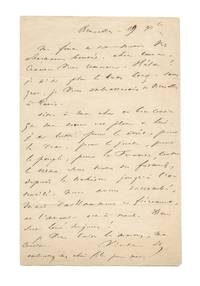
1851Hugo2<p><b>HUGO Victor 1802-1885</b></p><p>Autograph letter signed "<i>Victor H</i>" to Joséphine TrébuchetBrussels 19th December 1851 1 page in-8 on double sheetFold marks</p><p><b>Vibrant and precious letter from Victor Hugo written in the early hours of his exile from Brussels just 17 days after Napoleon III's coup d'état</b></p><p><b><br /></b></p><p><i>"Brussels – 19 XbreMy wife tells me all your lovely gratitude dear cousin how to thank you. <b>Alas! I no longer have a long arm</b> otherwise I would kiss you from Brussels to Paris.Tell my dear and good cousin that my heart is full of him. <b>I have fought for the right for the truth for the righteous for the people for France against crime in all its forms from treason to atrocity. We have succumbed but valiantly and proudly and the future is ours</b>. Praise God always!I kiss your hands my cousin.Victor H.Kiss my dear daughter for me."</i></p><p><i><br /></i></p><p><i><br /></i></p><p>On December 2nd 1851 the day of Napoleon III's coup d'état Victor Hugo was put a price on his own head for his opposition to the emperor and for trying in vain to organize the resistance by raising the Parisian masses. 25000 francs reward are promised to whoever captures him. On 11 December Hugo with a false passport leaves Paris for Brussels on the 8pm train under the name Jacques-Firmin Lanvin. He is alone.</p><p>On the same day as our letter December 19 Hugo wrote to Paul Meurice: "<i>If we could colonize a small corner of free earth! Exile would no longer be exile. I'm making this dream."</i></p><p>This small corner of free land was first the Channel Island of Jersey then the island of Guernsey where it settled as early as 1855. His exile lasted for nearly 20 years.</p><p>At the capitulation of Napoleon III following the stinging failure of the French army in Sedan on September 1st 1870 Victor Hugo returned to France on the 5th of the same month and uttered these unforgettable words that would forever last:<i>"Citizen I said: The day the Republic returns I will return. </i><i>Here I am.</i> … <i>Defend Paris keep Paris. </i><i>Saving Paris is more than saving France saving the world. Paris is the very center of humanity. Paris is the sacred city. Whoever attacks Paris attacks the whole human race.</i> … <i>Let us all gather around the Republic in the face of invasion and be brothers. We'll win. It is through brotherhood that freedom is saved."</i></p>
1862122855Bruxelles: Lacroix Verboeckhoven & Ce 1862. Rare first printing of this classic work of literature published in Brussels on the 30th or 31st March 1862. Octavos 10 volumes bound into 5 bound in contemporary full morocco gilt titles and tooling to the spine all edges gilt marbled endpapers. From the library of painter George Cooke with his bookplate to the front pastedown of each volume. Cooke was a painter who specialized in portrait and landscape paintings and was one of the South's best known painters of the mid nineteenth century. In very good condition. A nice example with noted provenance. Victor Hugo's "great novel has been hailed as a masterpiece of popular literature an epic poem in prose about God humanity and Hugo. Hugo hoped that Les Miserables would be one of if not the 'principal summits' of his body of works. Despite its length complexity and occasionally unbelievable plot and characterization it remains a masterpiece of popular literature. It anticipates Balzac in its realism but in its flights of imagination and lyricism its theme of redemption and its melding of myth and history it is uniquely Hugo" Dolbow 149 214. Charles E. Wilbour was hired by the Carleton Publishing Company to translate Hugo's grand masterpiece and he did so very quickly allowing the first American edition to be published within months of its French release. The intense advertising campaign waged by Carleton resulted in massive sales for Les Miserables solidifying Hugo's epic in second place behind only Uncle Tom's Cabin in pre-Civil War American book sales. Lacroix, Verboeckhoven & Ce unknown books
187946925Paris: Michel Lévy 1879. Fine. Michel Lévy Paris 1879 15.50 x 23.50 cm relié Original edition. Binding half old red grief with some discreet restorations back with five nerves when tail paper plates to the tank and contreplats combed guards lined paper preserved covers red head contemporary binding. Precious autograph signed by Victor Hugo Alphonse Daudet. Buffer library of Madame Daudet on the first guard. Victor Hugo is for Alphonse Daudet like other writers of his generation the undisputed master of arts Hall of Fame. His father figure sprinkles the works of Daudet commonly called alongside those of Rousseau Byron Sand and Delacroix. If during childhood and youth Daudet Hugo exiled giant on his island of Guernsey remains an unattainable ideal ""almost beyond humanity"" Back in France allows him to meet him someday. Around 1875 shortly after the publication of his first works Alphonse Daudet and Julia are well received in Hugo who now lives with Juliette Drouet. They therefore become intimate of the house until the poet's death. Victor Hugo is involved in the education of the young Léon Daudet best friend grand-son of Hugo George and later husband of Jeanne ephemeral. In his Memories of a literary circle Julia Daudet evokes friendship of ten years with the ""idol of all France poetic"" ""I see the great Victor Hugo end of his table; the old master a bit isolated a little deaf sits with God silences absences of a genius on the brink of immortality. The white hair colored head and this eye old lion that develops side with power ferocity; he listens to my husband and Catullus Mendes between which is very lively discussion about youth and celebrity known men and their attractiveness to women. . During the debate we went to the salon Victor Hugo dream by the fire and famous universal and demigod regret perhaps his youth while Mrs Drouet sleeping quietly. » The friendship between the last great romantic writer and one of the masters of the early naturalist school reflects the sharpness of Victor Hugo who at the height of his fame and retains a special kind attention for the remote yet modern literature Hugo's lyricism. This dedication Hugo Daudet on a skilled with The Pope and Religions and Religion of ""philosophical testament"" by Henri Guillemin symbolically resonates as a legacy by a devout follower of the political and moral responsibility of the writer. Provenance: Alphonse Daudet sales Sickles 1990 IV No. 1200 and Philippe Zoummeroff sale 2 April 2001. Gift extract of a literary circle by Julia Daudet: ""How can we forget that first visit home rue de Clichy in the modest apartment so disproportionate to his glory the idea we had of the glory that had filled palaces: He gets up the seat he occupied the fire in front of Madame Drouet his old friend . I am amazed at its size but soon when it will meet me and talk to me I would find it very big very intimidating. And this I felt so shy I always try them in front of Victor Hugo the result of this great admiration respect it as an absent god my parents instilled in me the genius of a poet. I will overcome never that trembling voice every time I answer his kind words and I say astonish for nearly years to hear women admitted to him maintain their inner and their usual trivia. That night when he had made me quite confused Mrs Drouet she said with a charming good grace - Here is the corner of the old and you are too young for us. But Victor Hugo will introduce you to his daughter Mrs. Lockroy; alone has standing to that. And I was driving on the other side of the room moderately large though but that was as divided in two by a table topped with a bronze elephant very majestic Japanese or Chinese I think. It was enough to make two very distinct small groups that communicate easily but without merging. At the time of his return Victor Hugo was dazzling wit many memories and told with an inexhaustible verve when the policy is not too Michel Lévy unknown