AnonBiblio.com
6 956 résultats
1885769R35Paris: Gauthier-Villars 1885. Leather. Very Good Indeed. 11.5" by 9". None. A fascinating geological work based on the findings of the expedition to observe the transit of Venus in the late nineteenth century complete with marvellous colour plates. Lacking the original half title title page and table of contents.The geological volume.Written by Henri Filhol 1843-1902 a French scientist who served as naturalist and expedition doctor on the Transit of Venus Expedition of 1874 to Campbell Island six-hundred kilometres south of New Zealand. The expedition sought to observe the transit of Venus a rare astronomical occurrence. This expedition was one of six French expeditions dispatched.Illustrated with thirteen plates including a number of magnificent colour plates depicting geological discoveries.A scarce example of this work. In a modern full calf binding. Externally lovely. Ownership bookplate to the front pastedown. Contemporary inscription to the first page. Internally firmly bound. Pages are a little spotted but otherwise clean. Very Good Indeed Gauthier-Villars hardcover
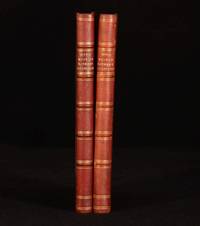
1904LTH18-E-13Oxford: Oxford University Press 1904-12. Leather. Very Good. 8.5" by 5.5". None. Various reports of the Oxford University Natural History Museum. Including the Sixteenth Annual Report of the Delegates of the University Museum for 1903 and the Seventeenth Annual Report of the Delegates of the University Museum for 1904 in volume I. Report of the Hope Professor of Zoology 1910 Report of the Hope Professor of Zoology 1911 and Report of the Hope Professor of Zoology 1912. Two volumes containing complete reports. Details of research laboratory work and acquisitions. The Oxford University Museum of Natural History sometimes known simply as the Oxford University Museum is a museum displaying many of the University of Oxford's natural history specimens. The Hope Entomological Collections are held by the Oxford University Museum of Natural History. The Hope Department was founded by Frederick William Hope. George Alexander James Rothney 1849-1922 formed an extensive collection of Oriental Hymenoptera during his travels in India. His library and collection was donated to the Hope Entomological Collections Oxford. In half morocco bindings. Externally very sound although rubbed. Internally firmly bound. Bright and clean throughout just the very odd spot. Some small red crayon marks in the second volume. Slight evidence of past worming to volume I from the rear board to a few pages at the end but this is very slight. Very Good Oxford University Press hardcover
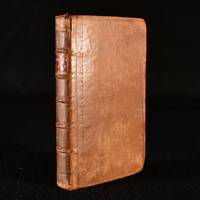
1750807R39London: Henry Lintot 1750. Leather. Very Good. 7" by 4.5". None. A smart fifteenth edition work on tenants and landlords bound in contemporary leather. The fifteenth edition. This work was an early work on tenancy laws covering rent waste crops growing frauds trespassing and fire prevention.An interesting work on British law in the eighteenth century bound in a smart contemporary leather binding. In a full calf binding. Externally generally smart; a little bumped to the extremities. Joints are a little cracked at the head and boards are a touch rubbed. Internally firmly bound. Pages are generally bright and clean. Very Good Henry Lintot hardcover
1815LTH8-B-21London: The Clarendon Press 1815. Leather. Very Good. 8.5" by 5". None. A handsome volume of The Book of Common Prayer. Stereotype edition. With eminently readable text. A sought after edition rather uncommon and in the original binding. Pointed as they are to be sung or said in Churches. In a full red morocco leather binding. Externally sound with slight rubbing. Internally firmly bound. Pages are generally bright and clean with some scattered light foxing. Very Good The Clarendon Press hardcover
177357123Published at Winton. 1773. Hardcover. Very Good. 2 volumes. Xi 237pp 299pp 2 frontises and 11 other plates 6.5"x4.5" nice and clean internally. Bound in full leather sl rubbed pagination omits pps 265 tp 268 obviously just a printers error as text complete. Scarce set of this early book; 12mo 7" - 7½" tall . Published at Winton hardcover
1843017777London: J. Hatchard 1843 Full vellum gilt stamped binding 224pp. Early photograph frontis. Very Scarce. First Edition. Hard Cover. Very Good. 8vo - over 7¾" - 9¾" tall. J. Hatchard hardcover
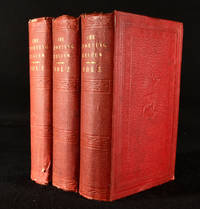
1851706L14London: Rogerson and Co 1851. Cloth. Very Good. 9.5" by 6". Not Stated. An uncommon three volume set of 'The Sporting Review'. This periodical looks at fox hunting and horse racing with both fictional serials and real accounts. Illustrated with twelve plates to volume I twelve plates to volume II and twelve plates to volume III. Collated complete. In the publisher's original cloth bindings. With articles such as 'Fashions connected with Fox hunting' 'Friends to Fox-hunting' 'Hunting in Australia' and ' The literature across these volumes include 'Memoir of James Chapple the Celebrated Jockey' 'Lameness in Horses' ' In the publisher's original cloth bindings. Externally sound with small loss to the head and tail of spines. Front hinge to volume II is strained but firm. Gatherings A-B1 of volume I are loosening. Bookplate to the front endpaper Sidney Hacker. Internally firmly bound. Pages are bright. Scattered spots to the first and last few pages. Very Good Rogerson and Co hardcover
1819NY105London: A . K. Newman and Co. Leadenhall Street 1819. Hardcover. Near Fine. 16mo - over 5¾ - 6¾" tall. viii184pp. No date c 1819 111mm x 73mm. Engraved frontis. depicting a father and a wise son under a tree. Pub. original quarter red calf binding with marble boards. Gilt titles to the spine. All original in sound condition. Some minor rubbing to the extremities. Printed by J.Darling Leadenhall Street London. A RARE ITEM. One copy traced in Copac.University of Oxford Libraries. Printed by J. Darling. nb several editions were pub. by other presses PLEASE EMAIL FOR PHOTOS. J. Darling was associated with the Minerva Press on Leadenhall Street London <br/> <br/> A . K. Newman and Co. [Leadenhall Street] hardcover
182030249London Edwards & Knibb 1820. 8vo. Recent half morocco with gilt back. Uncut. Engraved frontisp. og General Washington. 738 pp. and 1 statistal table. The title page calls for a sheet map of the United States and a table of the post and cross roads neither of which are present in this copy. <br/><br/><em>First edition. Sabin 26974. </em> unknown
182030249London, Edwards & Knibb, 1820. 8vo. Recent half morocco with gilt back. Uncut. Engraved frontisp. og General Washington. 738 pp. and 1 statistal table. The title page calls for a sheet map of the United States and a table of the post and cross roads, neither of which are present in this copy.
165839004Göteborg Amund Grefwe 1658. Uden omslag. 16 sider. Sidste blad repareret for en revne uden tab af tekst.Tæt beskåret. ANON - <br/><br/><em>Collijn 292. Amund Grefwe ca. 1610-1677 was the first printer in Göteborg. He studied Latin at the University of Uppsala and was the author of a few minor works. He began his printing career in Uppsala working for Professor Wallius's private press and later for Laurentius Paulinus Gothus. Grefwe moved to Stockholm where he worked for the royal translator Ericus Schroderus and when he moved back to his place of birth in Nyköping Grefwe goes with him. In 1646 he was offered a job in Göteborg. When he had finished the work on "Carionis Chronika" he moved to Göteborg in 1650. He was not satisfied with the promised conditions and complained to the Governor of Västergötland. In 1653 he was given priviliges by Queen Kristina which allowed him to publish and sell his own works and also scholarly books. In 1650 he published the first book printed in Göteborg: " Christelige Gåfwors Apoteek." </em> unknown
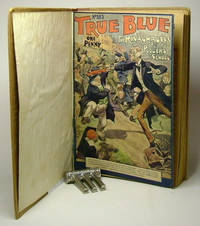
190433049London: Aldine Publishing Co 1904. 1st Edition. 1st Edition. TRUE BLUE LIBRARY. Published Weekly. 4to. 32 pages per issue. THE RIVAL HALVES OF PODGER'S SCHOOL plus 11 other titles. London : Aldine Publishing Co. 1904. 4to. tan cloth backed untitled plain beige boards. Original coloured wrappers bound-in. Illustrated throughout in black & white. A run of 12 isssues: Nos 263 264 265 267 268 270 271 276 277 278 282 286. In very good antiquarian condition. TRUE BLUE weekly magazine was published for boys just prior to the turn of the 19th century & featured one complete & patriotic adventure story per issue set. Intended to celebrate Britain 's glorious national past in a creative range of historical periods each issue had a full colour illustrated themed wrapper with black & white drawings inside. Each issue generally ran 32 pages. Extremely popular in their day these junior magazines had a lengthy run waning only as alternative forms of entertainments gradually took over their audience's attention. Penny Dreadful Dime Novels were the American version was a term applied to nineteenth century British fiction publications usually lurid serial stories appearing in parts over a number of weeks each part costing a penny. The term however soon came to encompass a variety of publications that featured cheap sensational fiction such as story papers and booklet "libraries." The Penny Dreadfuls were printed on cheap pulp paper and were aimed primarily at teenage boys from the working class though there is some evidence that many girls read them as well. Penny Parts The penny part stories got underway in the 1830s originally as a cheaper alternative for the working class adults but by the 1850s the serial stories were aimed exclusively at teenagers. The stories themselves were reprints or sometimes rewrites of Gothic thrillers such as The Monk or The Castle of Otranto as well as new stories about famous criminals. Some of the most famous of these penny part stories were The String of Pearls which ostensibly introduced Sweeney Todd The Mysteries of London inspired by the French serial The Mysteries of Paris and Varney the Vampire. Highwaymen were popular heroes. Black Bess or the Knight of the Road outlining the largely imaginary exploits of real-life highwayman Dick Turpin continued for 254 episodes. Working class boys who could not afford a penny a week often formed clubs that would share the cost passing the flimsy booklets from reader to reader. Other enterprising youngsters would collect a number of consecutive parts then rent the volume out to friends. Penny Dreadfuls In 1866 Boys of England was introduced as a new type of publication an eight page magazine that featured serial stories as well as articles and shorts of interests. It was printed on the same cheap paper though sporting a larger format than the penny parts. Numerous competitors quickly followed with such titles as Boys Leisure Hour Boys Standard Young Men of Great Britain etc. As the price and quality of fiction was the same these storypapers also fell under the general definition of Penny Dreadfuls also known as Penny Bloods or Blood and Thunders in their early days. American dime novels were edited and rewritten for a British audience. These appeared in booklet form such as the Boys First Rate Pocket Library. Frank Reade Buffalo Bill and Deadwood Dick were all popular with the Penny Dreadful audience. Half-penny Dreadful In the mid-1890s a publisher Alfred Harmsworth decided to do something about what was widely perceived as the corrupting influence of the Penny Dreadfuls. He issued new story papers The Half-penny Marvel The Union Jack and Pluck all priced at one half-penny. At first the stories were high-minded moral tales reportedly based on true experiences but it was not long before these papers started using the same kind of material as the publications they competed against. A.A. Milne once said 'Harmsworth killed the penny dreadful by the simple process of producing the ha'penny dreadfuller. '. Aldine Publishing Co unknown
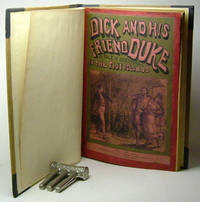
189027012London: Brett Limited 1890. 1st Edition. Soft cover. 1st Edition. Soft cover. DICK AND HIS FRIEND DUKE. A Tale Of Adventure In the Fiji Islands. London: Edwin J. Brett Limited. n.d. c.1890 4to. 138pp. Half dark blue cloth over plain beige boards. Illustrated throughout. Original Illustrated front cover carefully backed & bound-in some early sympathetic colour enhancement. Complete. In very good antiquarian condition. Brett published Jack Harkaway in America c. 1890 Penny Dreadful Dime Novels were the American version was a term applied to nineteenth century British fiction publications usually lurid serial stories appearing in parts over a number of weeks each part costing a penny. The term however soon came to encompass a variety of publications that featured cheap sensational fiction such as story papers and booklet "libraries." The Penny Dreadfuls were printed on cheap pulp paper and were aimed primarily at teenage boys from the working class though there is some evidence that many girls read them as well. Penny Parts The penny part stories got underway in the 1830s originally as a cheaper alternative for the working class adults but by the 1850s the serial stories were aimed exclusively at teenagers. The stories themselves were reprints or sometimes rewrites of Gothic thrillers such as The Monk or The Castle of Otranto as well as new stories about famous criminals. Some of the most famous of these penny part stories were The String of Pearls which ostensibly introduced Sweeney Todd The Mysteries of London inspired by the French serial The Mysteries of Paris and Varney the Vampire. Highwaymen were popular heroes. Black Bess or the Knight of the Road outlining the largely imaginary exploits of real-life highwayman Dick Turpin continued for 254 episodes. Working class boys who could not afford a penny a week often formed clubs that would share the cost passing the flimsy booklets from reader to reader. Other enterprising youngsters would collect a number of consecutive parts then rent the volume out to friends. Penny Dreadfuls In 1866 Boys of England was introduced as a new type of publication an eight page magazine that featured serial stories as well as articles and shorts of interests. It was printed on the same cheap paper though sporting a larger format than the penny parts. Numerous competitors quickly followed with such titles as Boys Leisure Hour Boys Standard Young Men of Great Britain etc. As the price and quality of fiction was the same these storypapers also fell under the general definition of Penny Dreadfuls also known as Penny Bloods or Blood and Thunders in their early days. American dime novels were edited and rewritten for a British audience. These appeared in booklet form such as the Boys First Rate Pocket Library. Frank Reade Buffalo Bill and Deadwood Dick were all popular with the Penny Dreadful audience. Half-penny Dreadful In the mid-1890s a publisher Alfred Harmsworth decided to do something about what was widely perceived as the corrupting influence of the Penny Dreadfuls. He issued new story papers The Half-penny Marvel The Union Jack and Pluck all priced at one half-penny. At first the stories were high-minded moral tales reportedly based on true experiences but it was not long before these papers started using the same kind of material as the publications they competed against. A.A. Milne once said "Harmsworth killed the penny dreadful by the simple process of producing the hapenny dreadfuller." Legacy Two phenomenally popular characters to come out of the "Penny Dreadfuls" were Jack Harkaway introduced in the Boys of England in 1871 and Sexton Blake who began in the Half-penny Marvel in 1893. Blake soon took over the lead spot in Union Jack and appeared in roughly 4000 adventures right up into the 1970s a record only exceeded by Nick Carter and Dixon Hawke. Harkaway was also popular in America and had many imitators. Over time the Penny Dreadfuls morphed into the British comic magazines. Brett Limited unknown
17381106401738. Londres i.e. Amsterdam : Aux dépens de la Compagnie 1738. <br /> <br /> 12mo 4 179pp. Title- printed in red and black. Ink signature "Carteret Harvey" on A1. 19th-century blue cloth red label red edges very good.<br /> <br /> § OCLC: 12073708: "Miscellany comprising a grotesque fairy tale a philosophical epistle and a series of letters addressed from hell to the world above. The whole is redolent of political and philosophical overtones intended as a criticism of the Regency and the morality of the age. L'amour magot is a fable about the dangers of romantic love in an inexperienced young heroine. The 'lettres infernales' are written by inhabintants of hell. One letter is written from a bookseller addressed to his colleagues on earth in which he discusses hell's booktrade." OCLC locates in all about 18 copies but doubtless there are more. No one hazards a guess at the authorship. A pencil note in the book states: "Anon see Bulletin du bibliophile 16 série p. 372. Comte d'I.". unknown
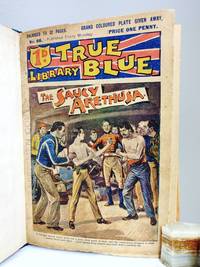
190133815London: Aldine Publishing Co 1901. 1st Edition. 1st Edition. TRUE BLUE LIBRARY. Published Every Saturday. 32 pages per issue. THE HUG OF THE BEAR plus 11 other titles. A Story Of Russian Despots. London: Aldine Publishing Co. c. 1903. 4to. blue cloth backed untitled plain beige boards. Original coloured wrappers bound-in. Illustrated throughout in black & white. A run of 12 issues: Nos 222 223 230 231 232 243 245 247 249 259 260 261 262. In very good antiquarian condition. TRUE BLUE weekly magazine was published for boys just prior to the turn of the 19th century & featured one complete & patriotic adventure story per issue set. Intended to celebrate Britain 's glorious national past in a creative range of historical periods each issue had a full colour illustrated themed wrapper with black & white drawings inside. Each issue generally ran 32 pages. Extremely popular in their day these junior magazines had a lengthy run waning only as alternative forms of entertainments gradually took over their audience's attention. Penny Dreadful Dime Novels were the American version was a term applied to nineteenth century British fiction publications usually lurid serial stories appearing in parts over a number of weeks each part costing a penny. The term however soon came to encompass a variety of publications that featured cheap sensational fiction such as story papers and booklet "libraries." The Penny Dreadfuls were printed on cheap pulp paper and were aimed primarily at teenage boys from the working class though there is some evidence that many girls read them as well. Penny Parts The penny part stories got underway in the 1830s originally as a cheaper alternative for the working class adults but by the 1850s the serial stories were aimed exclusively at teenagers. The stories themselves were reprints or sometimes rewrites of Gothic thrillers such as The Monk or The Castle of Otranto as well as new stories about famous criminals. Some of the most famous of these penny part stories were The String of Pearls which ostensibly introduced Sweeney Todd The Mysteries of London inspired by the French serial The Mysteries of Paris and Varney the Vampire. Highwaymen were popular heroes. Black Bess or the Knight of the Road outlining the largely imaginary exploits of real-life highwayman Dick Turpin continued for 254 episodes. Working class boys who could not afford a penny a week often formed clubs that would share the cost passing the flimsy booklets from reader to reader. Other enterprising youngsters would collect a number of consecutive parts then rent the volume out to friends. Penny Dreadfuls In 1866 Boys of England was introduced as a new type of publication an eight page magazine that featured serial stories as well as articles and shorts of interests. It was printed on the same cheap paper though sporting a larger format than the penny parts. Numerous competitors quickly followed with such titles as Boys Leisure Hour Boys Standard Young Men of Great Britain etc. As the price and quality of fiction was the same these storypapers also fell under the general definition of Penny Dreadfuls also known as Penny Bloods or Blood and Thunders in their early days. American dime novels were edited and rewritten for a British audience. These appeared in booklet form such as the Boys First Rate Pocket Library. Frank Reade Buffalo Bill and Deadwood Dick were all popular with the Penny Dreadful audience. Half-penny Dreadful In the mid-1890s a publisher Alfred Harmsworth decided to do something about what was widely perceived as the corrupting influence of the Penny Dreadfuls. He issued new story papers The Half-penny Marvel The Union Jack and Pluck all priced at one half-penny. At first the stories were high-minded moral tales reportedly based on true experiences but it was not long before these papers started using the same kind of material as the publications they competed against. A.A. Milne once said 'Harmsworth killed the penny dreadful by the simple process of producing the ha'penny dreadfuller. '. 1st Edition. TRUE BLUE LIBRARY. Published Weekly. 4to. 32 pages per issue. THE SAUCY ARETHUSA plus 11 other titles. London : Aldine Publishing Co. 1901. 4to. tan cloth backed untitled plain beige boards. Original coloured wrappers bound-in. Illustrated throughout in black & white. A run of 12 issues: Nos 66 85 130 141 152 159 160 171 172 190 191 and 193. In very good antiquarian condition. TRUE BLUE weekly magazine was published for boys just prior to the turn of the 19th century & featured one complete & patriotic adventure story per issue set. Intended to celebrate Britain 's glorious national past in a creative range of historical periods each issue had a full colour illustrated themed wrapper with black & white drawings inside. Each issue generally ran 32 pages. Extremely popular in their day these junior magazines had a lengthy run waning only as alternative forms of entertainment gradually took over their audience's attention. Penny Dreadful Dime Novels were the American version was a term applied to nineteenth century British fiction publications usually lurid serial stories appearing in parts over a number of weeks each part costing a penny. The term however soon came to encompass a variety of publications that featured cheap sensational fiction such as story papers and booklet "libraries." The Penny Dreadfuls were printed on cheap pulp paper and were aimed primarily at teenage boys from the working class though there is some evidence that many girls read them as well. Penny Parts The penny part stories got underway in the 1830s originally as a cheaper alternative for the working class adults but by the 1850s the serial stories were aimed exclusively at teenagers. The stories themselves were reprints or sometimes rewrites of Gothic thrillers such as The Monk or The Castle of Otranto as well as new stories about famous criminals. Some of the most famous of these penny part stories were The String of Pearls which ostensibly introduced Sweeney Todd The Mysteries of London inspired by the French serial The Mysteries of Paris and Varney the Vampire. Highwaymen were popular heroes. Black Bess or the Knight of the Road outlining the largely imaginary exploits of real-life highwayman Dick Turpin continued for 254 episodes. Working class boys who could not afford a penny a week often formed clubs that would share the cost passing the flimsy booklets from reader to reader. Other enterprising youngsters would collect a number of consecutive parts then rent the volume out to friends. In 1866 Boys of England was introduced as a new type of publication an eight page magazine that featured serial stories as well as articles and shorts of interest. It was printed on the same cheap paper though sporting a larger format than the penny parts. Numerous competitors quickly followed with such titles as Boys Leisure Hour Boys Standard Young Men of Great Britain etc. As the price and quality of fiction was the same these storypapers also fell under the general definition of Penny Dreadfuls also known as Penny Bloods or Blood and Thunders in their early days. American dime novels were edited and rewritten for a British audience. These appeared in booklet form such as the Boys First Rate Pocket Library. Frank Reade Buffalo Bill and Deadwood Dick were all popular with the Penny Dreadful audience. Half-penny Dreadful In the mid-1890s a publisher Alfred Harmsworth decided to do something about what was widely perceived as the corrupting influence of the Penny Dreadfuls. He issued new story papers The Half-penny Marvel The Union Jack and Pluck all priced at one half-penny. At first the stories were high-minded moral tales reportedly based on true experiences but it was not long before these papers started using the same kind of material as the publications they competed against. <br /> <br /> A.A. Milne once said 'Harmsworth killed the penny dreadful by the simple process of producing the ha'penny dreadfuller. '. Aldine Publishing Co unknown
173811064012mo. Londres i.e. Amsterdam : Aux dépens de la Compagnie 1738. 12mo 4 179pp. Title- printed in red and black. Ink signature “Carteret Harvey†on A1. 19th-century blue cloth red label red edges very good. § OCLC: 12073708: “Miscellany comprising a grotesque fairy tale a philosophical epistle and a series of letters addressed from hell to the world above. The whole is redolent of political and philosophical overtones intended as a criticism of the Regency and the morality of the age. L'amour magot is a fable about the dangers of romantic love in an inexperienced young heroine. The 'lettres infernales' are written by inhabintants of hell. One letter is written from a bookseller addressed to his colleagues on earth in which he discusses hell's booktrade.†OCLC locates in all about 18 copies but doubtless there are more. No one hazards a guess at the authorship. A pencil note in the book states: “Anon see Bulletin du bibliophile 16 série p. 372. Comte d’I.†Aux dépens de la Compagnie hardcover books
19944451483Dun & Bradstreet Ltd 1994. Volume 1 2 3 & 4. Volume 2. This is an ex-library book and may have the usual library/used-book markings inside. . .This book has hardback covers. In fair condition suitable as a study copy. Please note the Image in this listing is a stock photo and may not match the covers of the actual item8250grams ISBN:0901491829 Dun & Bradstreet Ltd hardcover
50295London : s.n. 1924. Printed by Norbury Natzio & Co. Manchester. Quarto embossed lettered wrappers card endpapers pp. 62 ruled borders a fine copy. Extremely rare and substantial handbook for Jammu and Kashmir State published for the British Empire Exhibition at Wembley Park London in 1924. The Exhibition ran from 23 April to 1 November 1924 and from 9 May to 31 October 1925 being closed over the winter months. The India Pavilion modeled on the Taj Mahal and Jama Masjid was divided into twenty-seven courts representing various provinces. Kashmir was featured within this structure displaying its arts and crafts silk garments and natural resources. Three copies recorded on OCLC and none sold on Rare Book Hub. unknown
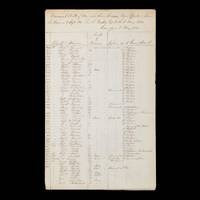
19085Drop title Nominal Roll of of Men who have become Non Effective Since the Regiment left New South Wales up to the 1 May 1843 Cawnpore 1843. Manuscript in ink on pale blue wove paper folio 340 x 205 mm 2 bifolia written on 6 sides in a neat clerical hand manuscript column rules; a very well preserved document. The 50th Queen's Own Regiment of Foot 1755-1881 which at the time was comprised of soldiers chiefly of Irish origin arrived in New South Wales in 1834-35 in detachments serving as military guards on convict transports. The regiment remained in the colony for six years and was distributed mainly in the Parramatta Windsor Liverpool and Berrima districts. In January 1841 it sailed for Bengal. This manuscript document kept as a regimental record is a testament to the horrors of life and death in India suffered by the men of the 50th initially in Chinsurah and Fort William and later at Cawnpore. Only a handful of men had died whilst the regiment was stationed in New South Wales but in its first two years in India between April 1841 and May 1843 the regiment lost an average of a dozen men per month - 280 in total - almost exclusively to infectious diseases. Cholera and to a lesser extent dysentery were responsible for the overwhelming majority of the deaths recorded in this document. In each case the soldier's regiment number name and rank and date cause and location of death are listed. unknown
1997mon0000422555Heligan Manor Gardens Project 1997T. paperback. Good. in x in x in. Heligan Manor Gardens Project paperback
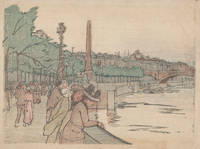
19052681905. Woodcut. 225mm by 300mm image. Unsigned. unknown
1953mon0000431522Independent Press Ltd 1953T. hardcover. Good. in x in x in. NOT an ex-library book. Clean copy in good condition. This is the 1960 Seventh Impression. Dedication on first page. Some wear top spine. Ink spot on fore-edge. Independent Press Ltd hardcover
1827216216np. 1827. Leather. Marbled end papers. Hard cover. Near fine copy very light shelf wear. . Folio. Very rare ship's log. Very scarce in this condition. Close-up photographs will be supplied upon request. np. hardcover
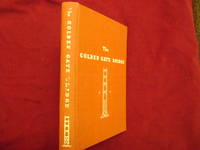
1938227615San Francisco.: Golden Gate Bridge and Highway District. January 1938. First edition. Decorated hard cover. . Fine copy very light rubbing to spine lettering small names on half-title page. Folio. . Folding plates color frontis. Architectural details. Photographs. Very rare in this condition. Limited edition number 711. Golden Gate Bridge and Highway District. hardcover
1870278711870. np nd and unsigned. All are laid into a beautifully gilt tooled full calf oblong quarto portfolio 9-3/4 x 12 inches. One of the designs has some rubbling to the edge the rest are bright and clean. unknown books