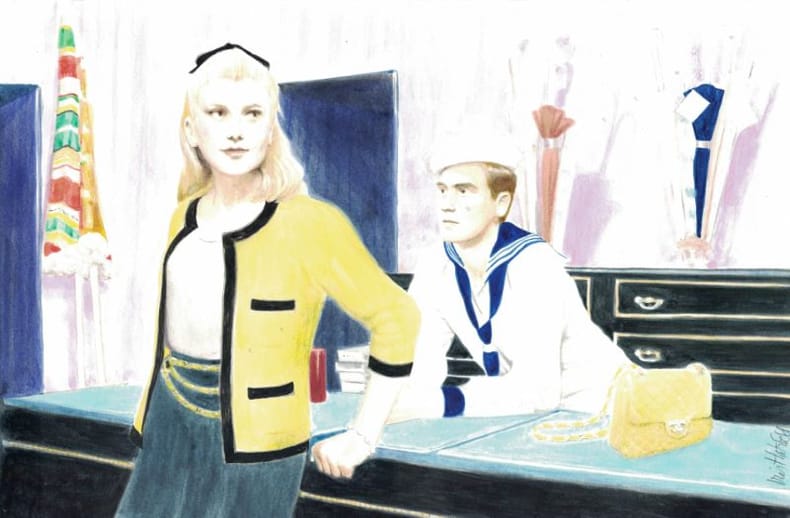
DEMY - CHANEL - GRAZIA. HATZFELD (Iris).Livre Rare Book
8 019 résultats
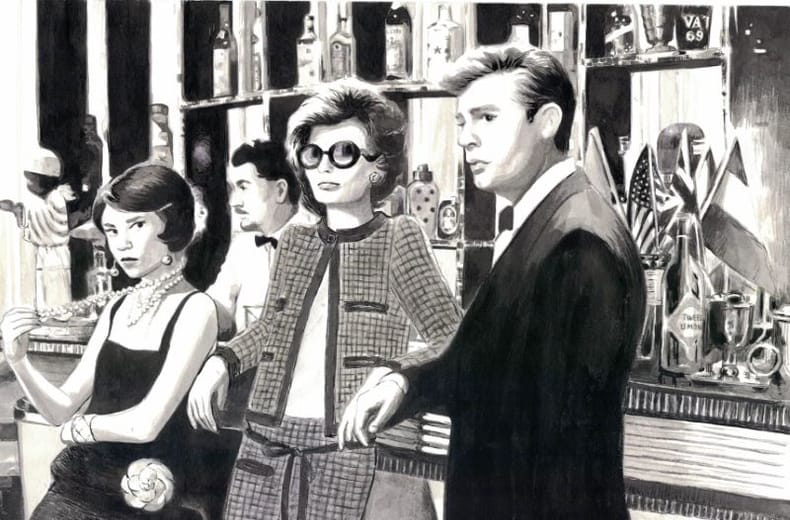
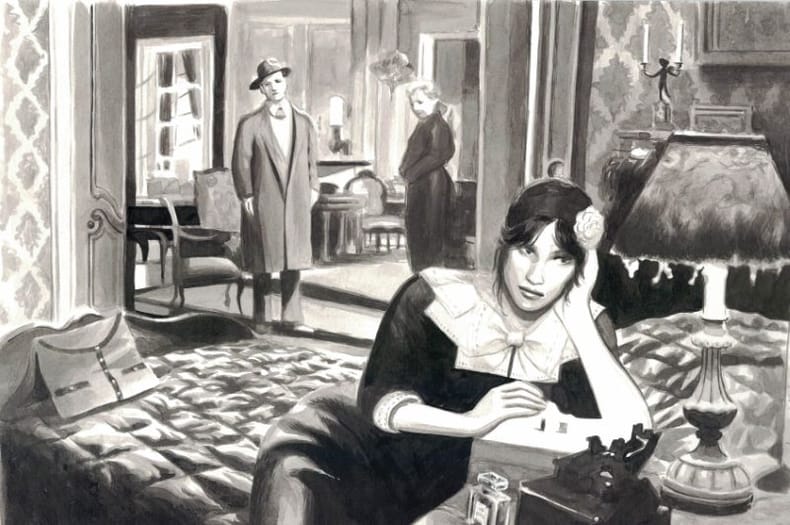
2015234492015 Dessin à l'encre noire, signé en bas à droite, 2015, titré au dos, 21 x 30 cm.
2015234482015 Dessin à l'encre noire, signé en bas à droite, 2015, titré au dos, 21 x 30 cm.
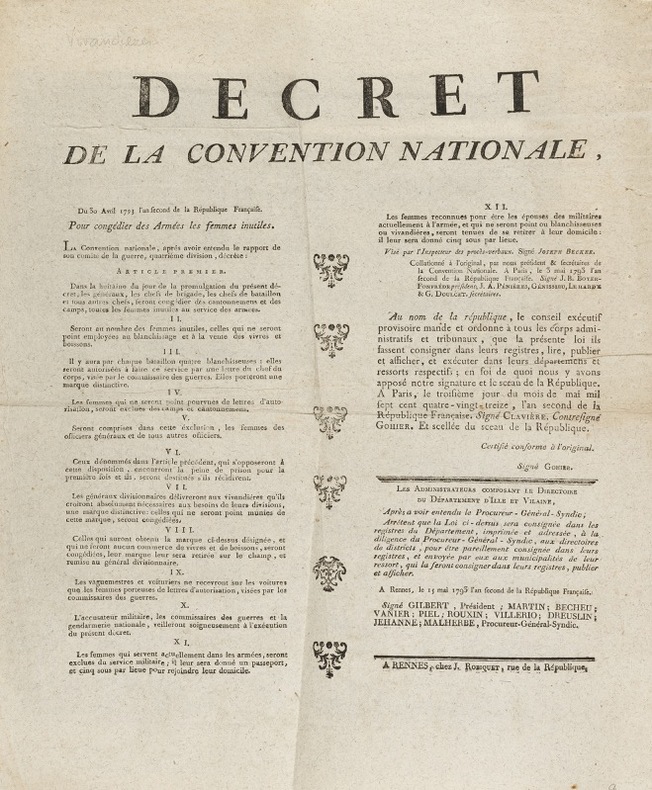
179325514Rennes J. Robiquet s.d. [1793] placard in-folio (43 x 35 cm) en feuille
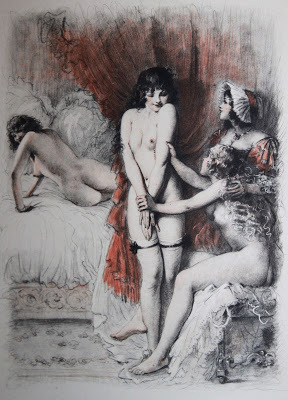
1950AMO-430LE MALHEUREUX PETIT VOYAGE ou La misérable fin de Madame de Conflans, Princesse de la Marsaille rapportée par Marie-Toinon Cerisette sa fidèle et dévouée servante. Gravures sur cuivre de Paul-Emile Bécat. Aux éditions du Baniyan, Paris, 1950 1 volume in-4 (24,5 x 19 cm), en feuilles sous couverture rempliée imprimée, 183-(1) pages, 4 eaux-fortes en couleur hors-texte et 16 eaux-fortes en couleurs à mi-page, soit 20 eaux-fortes en tout. Notre exemplaire contient en outre la suite des 20 eaux-fortes en noir avec remarque. Emboîtage papier de l'éditeur. Excellent état, proche du neuf, emboîtage insolé cependant. TIRAGE A 765 EXEMPLAIRES. CELUI-CI, 1 DES 25 EXEMPLAIRES NOMINATIFS RÉSERVÉS AUX COLLABORATEURS ETC. CELUI-CI SPÉCIALEMENT IMPRIMÉ POUR PAUL-EMILE BÉCAT, L'ILLUSTRATEUR, AVEC SUITE EN NOIR AVEC REMARQUES. Cet exemplaire est sur vélin Renage teinté.
2015234502015 Dessin à l'encre de couleurs, signé en bas à droite, 2015, titré au dos, 21 x 30 cm.
188643334Paris, Damascène Morgand, 1886. 2 vol. in-4 de 466 pp. ; 476 pp., demi-maroquin citron à coins, dos à nerfs, titre frappé or, date frappée or en pied, tête dorée, non rogné, couverture et dos conservés (Ch. Septier).
2015234512015 Dessin à l'encre noire, signé en bas à droite, 2015, titré au dos, 21 x 30 cm.
2015234522015 Dessin à l'encre de couleurs, signé en bas à droite, 2015, titré au dos, 21 x 30 cm.
2015234532015 Dessin à l'encre de couleurs, signé en bas à droite, 2015, titré au dos, 21 x 30 cm.
Very Good Turkish, Ottoman (1500-1928) In contemporary cloth bdg. Roy. 8vo. (24 x 17 cm). In Ottoman script. 43, 59 p. Divan literature is described as "a certain tradition literature with its rules and boundaries" in the most general form. These rules and boundaries have enabled the formation of common expressions in religion and in Sufi intellection in particular and in poetry by the influence of Persian literature, and they have made it traditional in time. In this context, in classical Turkish poetry, whose male poets are predominant in quality and quantity, patriarchal rhetoric presents an outlook that its frame has been established by common tropes, metaphors, poetic themes and in short by similar imaginations and ideas. The divans of Lady Mihri (died after 1512), Lady Leyla (died in 1848) and Lady Seref (1809-1861) have different aesthetic understandings in that context. Laylâ Hanim was one of the few Turkish women poets who made a collection of her poems. Lived in Istanbul and died in 1848. Her family was close to the Ottoman Sultanate and Leylâ Hanim, witnessed the reign of Mahmud II (1808-1839) and Abdülmecid I (1839-1861). She is the daughter of Moralizâde Hâmid Efendi. Her mother Hadîce Hanim is the sister of Keçecizâde Izzet Molla, a notable bureucrat and poet of the times. She has three brothers, Atâullah Mehmed Efendi, Nurullah Mehmed Efendi and Hâlid Efendi, who died at a young age. She had financial problems after her father's death and she expressed those in her poems. Some of her poems in the divan mention that her father and brother Hâlid Efendi have lived in Bursa for a while. She is educated by Keçecizâde Izzet Molla, she is quick-witted. She experienced a short marriage, which lasted about a week; after the divorce she devoted herself to poetry. Her grave is in Galata Mevlevîhanesi. Following books include information of her life, characteristics and poetry: Fatin Tezkiresi (363), Ahmet Rif'at's Lugat-i Târîhiyye ve Cogrâfiyye (154), Tuhfe-i Nâ'ilî (895), Sicill-i Osmânî (93), Bursali Mehmet Tahir's Osmanli Müellifleri (406), Haci Begzâde Ahmet Muhtar's Sâir Hanimlarimiz (51-2), Mehmed Zihnî Efendi's Mesâhir'ün-Nisâ (195), and Semseddin Sâmî's Kâmusü'l-A'lâm (4060). These resources indicate that Leylâ Hanim is from a noble family and the links of the family to the high cadres of Ottoman bureaucracy and their intellectual property have left traces in her poetry. AH 1299 = AD 1882. Fourth Edition. (Source: All poetry). OCLC 163633996.; Özege 4177 / 2. First Bulaq Edition. Litho. Rare.
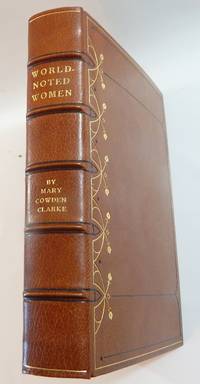
185818363New York: D. Appleton and Company 1858. First edition. Hardcover. Near fine. LArge 4to. 407pp. Illustrated with full page engraved portraits of Sappho Lucretia Aspasia Cleopatra St. Cecilia Heloise Laura Valentine de Milan Joan d'Arc Margaret of Anjou Isabella of Castile Lady Jane Grey Pocahontas La Valliere Maria Theresa Catherine II Florence NIghtingale.<br /> <p><br /> A lovely Arts and Crafts binding in full Niger Morocco in a medium brown color. Spine in six compartments with nicely spaced gilt titles in two. Blind tooling along the bands and onto the boards in a suggestion of clasps. The boards both upper and lower with gilt and blind rules in a pleasing rectangular design interrupted by a "Noveau-style" design on the binding side with gilt curves ending in gilt leaves and dots. Simple parallel gilt line inner dentelles with box-shapes and blind dots at the corners of the inner line peach water-color endpapers all edges gilt. A sumptuous binding. The pastedowns have been nicely repaired occasional trace of foxing not affecting the images else this is in fine condition.<br /> <p><br /> Unsigned binding though almost certainly the work of the Guild of Women Bookbinders based on the design and the tools used. <br /> <p>. D. Appleton and Company hardcover
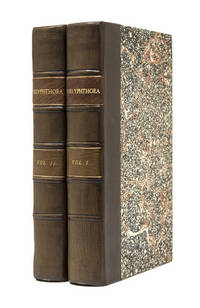
178155463London: J. Dodsley 1781. The second edition enlarged. 2 vols. 8vo. Recent quarter brown morocco and marbled boards. Inoffensive traces of dampstains else fine. The second edition enlarged. 2 vols. 8vo. Controversial argument in favor of polygamy as compatible with Mosaic law and Christianity and an alternative to the evils of prostitution. J. Dodsley unknown
1810338060Baltimore: Publshed by Edwar J. Coale. 1810. First Edition. 12mo. Contemporary mottled American calf leather spine label isncription on title-page lacvking ffep some foxing. First Edition. 12mo. Rare in commerce. Publshed by Edwar J. Coale. unknown
16586Women's College Photo album of a young woman college student including 85 Gelatin silver print photos taken from 1919-1922. Includes images of women's dormitories schoolmates and details extracurricular programs such as social dances and boating excursion. Most photos from Washington state. 7 x 10 1/2 in. Original black cloth boards. 23 pages filled with 85 black and white photos of various sizes ranging from 2.5 x 1.5 in. to 5.5 x 3.5 in. Three are loose photos. Inscribed on inside front cover: "From Papa Merrie Christmas 1921."<br/><br/>A major facet of this young woman's life was her education as she includes more photos and captions that reference this than anything else. The album owner shows great pride in her dormitory room in which she is shown reading in a chair with a Harvard pennant prominently affixed tot he wall behind her. "Taken in my room "77" 1922". Another image shows the view from window in this room: "Lookout Mt" taken from my window '77'". This time was so important for her that she even takes care to remember the room numbers of her roommates and other fellow students such as: "My old roommate of 1919 Room 44" and "Miss Fiddler Roommate "Room 28" Summer School 1920". She even notes that one former classmate who "roomed in "27" 1921-22 was "A Good Kid". Also includes one photo of four students in a Home Economics high school class.<br/><br/>Album also includes images of her friends and family and recent memories from World War I including one handsome 5 1/2 x 3 1/2 photo of two soldiers in WWI-era uniforms kneeling with their firearms. A smaller photo of a man in military uniform dated 1919 includes this caption: "In days of old 'do you remember the telephone office' and those letters Ha! Ha." The album's owner certainly had a sense of humor and often includes nicknames inside jokes and playful asides. "I looked like this the Summer of 1920. But those times are over." Next to a photo of people out boating she writes: "Out on the lake.Washington" and "Some bunch of "chickens". And in a series of photos in which she models fancy clothes she writes: "Do you think I look natural" She also includes humorous outtakes of her friends such as "W.L. asleep after the dance Ha! Ha!" and notes family members work machinery very helpful technology at the time "Malcolm's little old machine". Very good condition. unknown books
193953215New York: Singer Sewing Machine Manufacturing Co. Departamento de Educacion January 1941; 1939. Two vols. 1st - Tall 8vo. 225 1 pp. Over 150 colour and black & white photo illustrations diagrams. Black textured softcovers gilt lettering & decoration printed on front cover edgewear bumping to corners minor soiling old tape repairs to front cover still G- copy; 2nd -- Oblong 4to. 12 x 7.75 in. 54 pp. on pink-tinted paper with 57 tipped-in fabric embroidered sewing samples including over on linen silk lace satin and wool textiles each w/ school stamp approving sample. Half-blue cloth post-binder over blue goards gilt lettering stamped on front cover sewn at gutter margin w/ white silk ribbon soiling minor dampstain curving to covers from the bulk of the tipped-in samples on the leaves still a VG exemplar. Both preserved in blue textured cardboard box & lid minor edgewear faint tidemark to lower fore-edge 1 corner. Fourth revised edition of this well-illustrated embroidery guide on stitches to be learned and executed on Singer Sewing Machines together with a beautifully done sample book showing Ms. Alos’ skills in learning the necessary skills in her Singer school in Villa Canas Argentina. The Singer Sewing Machine company developed special Singer Sewing Academia in Argentina Mexico and many other South American countries as well as Spain between the World Wars. These special private schools for professional dressmakers using the Singer manuals allowed female-owned dressmaking businesses to grow and create professional spaces separte from men. In addition these academias allowed women to pay by the class and embroidery was one of the advanced skills which commanded higher wages for women at the time. Singer actively encouraged this movement in order to develop home-based businesses and academias which in turn increased their sales of sewing machines. The sample book begins with a number of decorative types of embroidery stitches monograms and then displays floral patterns spider-web patterns laces a beautifully embroidered red roses and carnations on purple silks and satins. Worldcat locates 2 copies of the Libro Singer Bibliotecas del Tecnologico de Monterrey Mexico; British Library 3rd editions; See: Ketteler Sewing through the years in art women and society; Paula de la Cruz-Fernandez Atlantic Threads: Singer in Spain and Mexico 1860-1940 pp. 198-210. Singer Sewing Machine Manufacturing Co., Departamento de Educacion, paperback
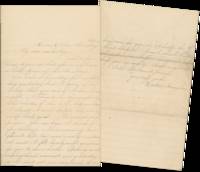
1909List3421Ohio Illinois Michigan and Ontario 1909. Seventy-four letters in thirty-seven envelopes mainly dating between 1885 and 1895. With two undated and one empty envelope. Conditions vary with a few letters having damage intersecting with significant amounts of text and others Near Fine. Overall excellent. A collection of letters mainly sent between Captain William Faragher 1842–1921 and his second wife Harriet Chamberlin 1853–1920 with several from Faragher’s children from his first marriage Burton 1872–1961 and Maude 1875–1952. Most letters are from Chamberlin to Faragher with fourteen from Faragher to Chamberlin.<br /> <br /> Faragher owned and captained several merchant ships in Lake Erie and Lake St. Clair—presumably sailboats as he frequently complains of having been stuck without wind. He also describes more severe weather out on the lake writing from St. Clair Michigan:<br /> <br /> “I am anxious to get down from here but as the day advanced the wind began to frisken and it began to snow hard and as it was freezing hard it had rained then snowed and then froze hard saturday night so the poor Venture was in a sad plight but she was in a worse one when we got to where we lay run as it breezed up fresh and the wind dead ahead the water was flying over her in all directions and froze wherever it fell and besides it had turned into a blinding snow storm but we had a certain point to make . she seemed as anxious to get to a place of safety as I did and as the boys say she got there and none too soon as it has been blowing a gale ever since and snowing and freezing but we are in the lee and at a good dock and are comfortable but oh the wind is whistling through the rigging .†November 20 1887<br /> <br /> In the 1880s steamships were increasing in popularity on the Great Lakes primarily because of sailboats’ susceptibility to both calm and weather; steamboats were bulky for their capacity and slow but more reliable whereas sailboats could carry overall more cargo.1 Generally steamers took packaged goods and passengers and sailboats mainly schooners took bulk cargo. The Great Lakes were the site of much shipping innovation; Faragher’s fleet was not yet behind the times but steam would overtake sail in the 1880s and 90s.<br /> <br /> Faragher’s cargo was mainly produce—apples and grapes—though he does mention picking up salt and other materials. His letters indicate that his business involved both shipping and mercantile aspects: he chose and bought the products shipped them to their destination and then also had to find and sell to customers. The grapes in particular seem to cause a lot of trouble:<br /> <br /> “We left Lorain Sunday morning early and had a nice trip to the Island got there at 4 PM bustled around monday morning and bought 400 baskets of grapes and had them all aboard by dark . it commenced to snow just as we got to Marine City bad bad omen for grapes but imagine my chagrin when I went up town and not a store or commission house wanted a grape folks were full of grapes and there was no sale for them and they said that I had got left and if the truth were known they were glad of it but its a cold day when I get left if trying will lit me out but one thing certain the weather and the lateness of the season were against me but you know I never cross a bridge before I get to it well we hauled up to our old Island Saturday morning and I sold out to my old friend . we had sold since 11 am 190 baskets of grapes . only half our cargo and at a good margin too. People would ask are you the man that was arrested here for selling grapes when told yes they seldom failed to buy but the strangest part was the number of ladies that came to buyâ€. October 28 1887<br /> <br /> Though he does not narrate the incident in which he was arrested for grape peddling—nor does it appear to have made the paper—he later mentions yet another grape-related debacle this time at Port Huron:<br /> <br /> “Sander and I went to town to sell the grapes today . when down came a city official and wanted to know if I had a license to sell . well I couldent sell another grape without paying 5.00 a day license that was a stormer you see the whole sale men were going to drive me out of the market . but they were not as sharp as they thought they were I went and gave a bill of sale of my whole cargo to a citizen here and he appointed one of his agents to sell the grapes†September 20 1888<br /> <br /> Faragher’s letters here do not discuss the financial state of his business but given Chamberlin’s statements it cannot have been all too positive. Chamberlin’s letters depict a woman struggling with her financial circumstances and with how the era’s expectations of her gender intersected with them. In one illustrative letter she writes:<br /> <br /> “A man drove by here Sat. asking for you. Ms. Lawler has given him her note to collect. He says the interest brings it to nearly fifty dollars. I told him I thought you could not meet it just at present but he said he must have the money and would give you just one week and if it was not paid then he would let the law settle it. Marvin and Laird are his lawyers. Mr. Laird is the one who helped get my money from father’s estate. I would not have them connected in this way about you for – O a great deal!! I have thought and planned till it seems as though my brain would burst. I have inquired about that law regarding taking any more married women as teachers. If Mr. Day would work for me it might perhaps be broken. There will be a vacancy in the Detroit building this fall. Will if I possibly can I want to commence teaching in Sept. The children would have to learn to do more about the house and with both of us earning it seems as though some of these harassing debts must be settled after a time. The frequent calls of men with bills against you have taken away all my pride and I believe I am humble enough to do most anything now.†July 11 1887<br /> <br /> In 1887 Ohio passed the Married Women’s Property Act which allowed married women to keep their own property separate from their husbands’—in fact Chamberlin occasionally mentions “her†money in her correspondence. At the same time the state’s Board of Education was debating passing an act that would not only ban school districts from hiring married women as teachers but also fire all the married women it then employed. Newspaper reporting at the time indicates that this measure was not particularly popular not the least because married women tended to be older and more experienced with the job.<br /> <br /> Chamberlin clearly perceives her role as a wife in a rather more progressive way at one point writing to Faragher that “a true wife†is “not a doll-baby to be kept in finery†N.d. after he had taken out a loan to send her money for a new hat. Throughout their correspondence Chamberlin is perhaps surprisingly open with Faragher about her opinions particularly on his work and their financial affairs; for instance:<br /> <br /> “I should like to examine your pocket-book after that $25 tax money left it. What are you going to live on up there while you are hunting for freight Sawdust won’t put any fat on your bones. Sailing up and down past Saginaw bay won’t prolong your life or lessen your grey hairs. What are you sailing for anyway For the sake of wearing yourself out and giving employment to two or three men and keeping the Root from rusting out I guess I am naughty!†May 25 1894<br /> <br /> She also frequently provides her opinion on whether and at what rate Faragher should sell his two other ships besides the Root the Venture and the Sassacus. She continues in the same letter:<br /> <br /> “I know I almost had a regular fight yesterday morning right there on the lounge. I wanted to do my housework and I couldn’t. I wanted to sew and I couldn’t sit up long for that. I wanted to help you and I couldn’t. I wanted to earn money and whereas I used to earn fifty-five cents for every hour I worked now I can not earn anything. Then if I could not do for self and family I wanted to make church and S.S. calls but I couldn’t walk for that.†<br /> <br /> Of course she was at that time prevented from these activities by her health not by gendered standards but she clearly had financial ambitions for herself. After her time as a regular school teacher Chamberlin taught at a Sunday school where she earned a few cents per student and in one letter reported having eighty-one students in a single session. <br /> <br /> Chamberlin also struggles with the expectations of her as step-mother to Faragher’s two children from his first marriage to Emma Humphrey 1848–1880. She writes:<br /> <br /> “I get so discouraged sometimes and it seems as though I am in the wrong place as mother. I think of Emma as my sister. I want to do as she would have me. I look upon my work as sacred. And yet sometimes I feel as though life was not worth living.†November 5 1886<br /> <br /> She frequently describes conflict with Burt who was then in his late teens to early twenties writing that she could not “have quite the very own mother-love for him†though she is “sure that Emma was not more conscientious in her desires to do right by him than I am†May 20 1891. As it still is today the role of step-mother was a difficult and frequently demonized one with the trauma of losing a mother and wife often in conflict with the feminine duty of maintaining perfect domestic harmony. In general Chamberlin seems to have been somewhat out of step with the feminine ideal of the time even telling Faragher in a letter describing the death of an acquaintance’s baby how glad she was to not have any children of her own.<br /> <br /> Overall a look at the private lives and difficulties of a middle-class Ohio household as despite the relative prestige of its head being a captain-owner it struggled with debt. Of interest to both historians of Great Lakes trade and those of women’s roles in the late nineteenth century.<br /> <br /> 1 Dina M. Bazzill “The Missing Link Between Sail and Steam: Steambarges and the Joys of Door County Wisconsin†East Carolina University Program in Maritime Studies Research Report no. 19 2007. unknown
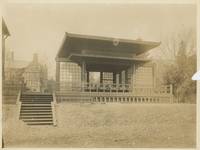
1910List2847Bryn Mawr Pennsylvania; and others 1910. Eleven photographs approximately 7 x 9 ½ inch and smaller. With stamps for Brown Brothers Illustrations Bureau and E.J. Reily verso; most with captions verso. Most with chipping and wear at edges; overall good. Open-air schools became popular in the United States in the early 20th century in response to public health crises including tuberculosis.1 Conducting lessons in open-air classrooms reduced the transmission of diseases which allowed many children to attend school despite their often chronic illnesses. Offered here are eleven photographs of open-air schools three of which are identified as the Phebe Anna Thorne Model School at Bryn Mawr.<br /> <br /> The Phebe Anna Thorne Model School opened in 1913 under the direction of the College’s president Carey Thomas using funds donated by Samuel Thorne in memory of his sister Phebe Anna.2 The Thornes were an affluent New York Quaker family; Phebe Anna 1828–1909 was the only daughter to survive to adulthood and was a philanthropist and supporter of progressive social causes.3 <br /> <br /> The school was part of Bryn Mawr’s Department of Education which trained its students in teaching younger pupils rather than those of highschool or college age – the students in most of these photos are probably in about 4th or 5th grade.3 It also allowed testing of more cutting-edge pedagogical practices: the structure of the school was quite experimental including open-air classrooms outdoor naptime a flexible curriculum and less formal assessment. <br /> <br /> Of interest to scholars of the history of education especially experimental pedagogy.<br /> <br /> 1 Sherman C. Kingsley & F.B. Dresslar “Open-Air Schools†Department of the Interior Bureau of Education Bulletin 23 1916.<br /> 2 Cornelia Meigs What Makes a College A History of Bryn Mawr The MacMillan Company 1956.<br /> 3 Olive Floyd Phebe Anna Thorne: Quakeress Privately Printed in Rye New York 1958. unknown
192645424Amherst MA: Samuel T. Dana & Harriet Dana 1926. Six volumes. 4to. 32; 38; 38; 27; 37; 34 leaves; an additional 16 leaves in manuscript in 3 of the albums written by Harriet Dana at age 10. Approx. 300 real photos of Harriet & George Ruth Dana Samuel Dana many street scenes numerous large studio photos tipped-in of sights in Rome Florence Dresden and other areas. Over 450 black & white tipped-in photo postcards many of them real photo postcards a few gold-tone photo postcards; approx. 75 tipped-in colour postcards; two letters of introduction from Yale University Secretary Robert Maynard Hutchins letter of introduction from U.S. Secretary of Agriculture William Marion Jardine who served under Presidents Coolidge and Hoover; printed invitations to the Congress World Forestry Congress credentials numerous programs to operas and theaters in European cities; menus to the S.S. President Harding; Menus for the S/Y Meteor; menus for the conferences; Children’s Tea Menu for the S.S. President Harding; Passenger lists for the United States Lines President Harding; tourist maps pictorial maps manuscript annotations and more. Uniformly bound in pebbled black cloth two-ring binders 1 of them with SS President Harding ribbon stretched around the binding wear & rubbing to the corners bumping to the spines a couple of the binders with hinges starting many of the leaves with wear and some loose at the gutter margin still a remarkable archive. An incredible Jazz Age archive of travel photos ephemera and documents assembled by Samuel T. Dana and his daughter Harriet during the family’s five month trip through Europe for the First World Forestry Congress held in Rome Italy. The albums are filled with documentation and souvenirs from their grand tour through Europe. Included are photos of the participants in the World Forestry conference two of them are of Dana’s subcommittee at the meeting many of the registration credentials letters of introduction as well as invitations to meetings and parties associated with the conference. The Dana family had an audience with the Pope in Rome saw Benito Mussolini visited the major sights of Venice with pictures of young George Dana feeding the pigeons in the Plaza in front of St. Mark’s Cathedral. They attended Verdi’s opera La Traviata featuring the soprano Violetta Valery. From there they traveled through France Switzerland Austria Czechoslovakia Germany Denmark Norway Sweden and Finland. They have included their brochures for visiting assorted museums folk festivals operas in Munich historical sights in Prague the beautiful city of Dresden tramped through all parts of Paris voyaged on the S/Y Meteor of the Norwegian Steamship Lines through Sweden Finland and Norway with the special treat of including their menus for breakfasts lunches dinners and children’s teas great photo of the children for the Captain’s tea on the SS President Harding. The photographs feature street scenes in assorted places views from the top of the Arc de Triomphe and the Eiffel Tower many of the people they met in their travels and more. Dana met with foresters and visited timber stands throughout northern Europe and Scandinavia.Of particular interest are the many leaves hand-written by the 10-year old Harriet Dana 1916-2011 describing the places they visited her impressions of the sights the many experiences she had as well as very charming notes from family friends tipped-in which were to be opened during their travels. She has annotated many of the postcards and photos. These albums and her impressions offer an invaluable cultural insight into travel during the Jazz Age for the well-to-do. In addition there are several leaves in manuscript written in both pencil and pen of the prices and types of souvenirs purchased throughout Europe including dolls pennants mosaics many lead soldiers a toy loom toy boat decks of cards clothing china and many different types of jewelry. Harriet Merrill Dana Carroll would later attend Swarthmore college graduate from Yale Nursing School in 1941 and eventually retire in Bethesda Maryland in 1986. Samuel Trask Dana 1883-1978 was a world renowned forestry expert who graduated from Yale in 1907 entered the U.S. Forest Service where he began groundbreaking studies in the culture of renewable white pine and paper birch forests. He established several forest experimental stations intended to further research and promote the economic value of forests. He served in World War I and from 1923 to 1927 was the director of the Northeastern Forest Experiment Station in Amherst Massachusetts where his most significant achievement was helping to organize the First World Forestry Conference. This Congress was significant because he succeeded in helping to establish an international body to compile and track forestry resources all over the world. Subsequently he became the first dean of the University of Michigan School of Natural Resources which pioneered many trends in modern forestry. He served as chairman of the U.S. Timber Conservation Board President of the Society of American Foresters was appointed in 1958 by President Eisenhower to serve on the National Outdoor Recreation Review Commission and also studied proposals to preserve California’s redwood forests. Samuel T. Dana & Harriet Dana, hardcover
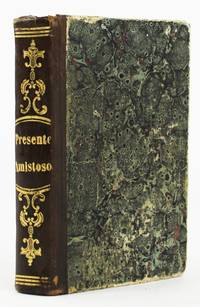
18505777Mexico: Luis G. Gonzalez 1850. About very good. 82541pp. plus four plates. 16mo. Contemporary quarter calf and marbled boards spine gilt. Light wear at edges and spine ends a bit heavier to corners. Light dampstaining at outer corners of plates otherwise light toning and an a occasion fox mark internally. Scarce 1850 issue of this Mexican gift book for women which in its introduction claims to "Ofrecer al bello sexo mexicano una coleccion de articulos que por su variedad puedan servir de agradable entretenimiento en los ratos de ocio." The contents are comprised principally of poetry religious stories and and moral tales four of which are illustrated with lithograph plates. Interestingly the other publications in the series which ran only from 1847 to 1852 were printed by Ignacio Cumplido whereas the present issue bears the imprint of Luis Gonzales. No individual copies catalogued of this 1850 issue in OCLC; nor could we locate any examples in the serial records. Luis G. Gonzalez unknown
195561565London & New York: T.V. Boardman & Co. Ltd. 1955. 12mo. 207 1 pp. Black tweed boards silver lettering & silver SciFi logo on front board minor shelfwear dustsoiling to fore-edges of textblock w/ d.j. Sword & Sorcery cover art of Matt Carse holding the sword of Rhiannon minor chipping & tears to head & foot of spine minor creasing still VG/G copy. First British edition of Leigh Brackett’s famed homage to Burroughs and Robert E. Howard first issued as an Ace Double No. D-36 with Howard’s Conan the Conqueror. The noted Los Angeles author “Queen of Space Opera†also shows the influences of Clark Ashton Smith Catherine Moore and Henry Kuttner of this Sword and Sorcery title set against the backdrop of ancient Mars. Brackett 1915-1978 was born in Los Angeles CA daughter to a young Pasadena socialite as well as up-and-coming real estate developer and promoter but by 1920 was only child to a widowed mother. By 1940 she was regularly contributing as author during the golden age of science fiction pulp magazines wrote the Newbery Award winning children’s Western “Ride the Free Wind†and also worked as screenplay writer for some of the most significant Hollywood films in the 20th Century. She co-wrote the screenplay for “The Big Sleep†with William Faulkner; as well as director Howard Hawks’ most successful films such as Rio Bravo Hatari! El Dorado and Rio Lobo all starring John Wayne. After marrying fellow science fiction writer Edmond Hamilton in 1946 collaborated together on science fiction as well as writing some of her own classics including “The Sword of Rhiannon†which had first appeared in shorter parts in pulps. She also wrote the screenplay for George Lucas’s critically acclaimed “Empire Strikes Back 1980†later refined into the final version by Lawrence Kasdan. See: Sven Mikulec Leigh Brackett: A Terrific Writer Ahead of Her Time just as She Was Ahead of Her Colleagues Beyond Cinephila 2025; Steve Swires Leigh Brackett Writer of Two Worlds Starlog Interview -- from 1974 World Science Fiction Convention in Washington D.C. Feb. 1987. T.V. Boardman & Co., Ltd., hardcover
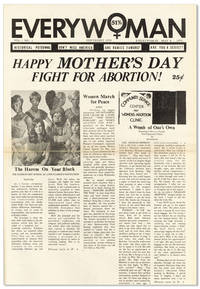
197026759Los Angeles later Venice CA: Everywoman 1970-1972. First Edition. 32 issues varying formats approx. 28-45cm.; illus. Tabloid issues with horizontal fold line as usual some light toning else a Fine collection. Color printing introduced in issue no. 5. Later published with the banner "Every woman is our sister" this California-based periodical was founded by Movement members Ann Forfreedom and housewife Verda One. The first issue which was published May 8 1970 commemorates Mother's Day with the heading "Happy Mother's Day / Fight for Abortion!" Among the recurring columns are "Manglish" a glossary of words with sexist implications "Hysterical" for example; and Forfreedom's biographical column "Herstory." Contents include poetry by Judy Grahn and two interviews with Anais Nin. Everywoman unknown
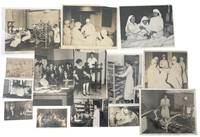
1900231121900. Women in Medicine Women's Employment Photo archive documenting women's participation in medicine nursing surgery laboratory science and public health from approximately 1900 through 1946 providing primary-source evidence of women working within institutional medicine during the decades in which their access to formal medical training and professional authority remained limited and uneven. The images document women in operating rooms clinical instruction environments laboratory settings and patient care contexts establishing record of how women functioned within medical institutions as practitioners trainees and technical specialists.<br /> <br /> Archive of fourteen silver gelatin photographs press prints and real photo postcards dating from c. 1900 to 1946 varying in size and format from 3.5" x 5" to 8" x10" with multiple examples retaining original verso captions typed press slips and annotations identifying subjects and contexts. The archive includes a estimated 1900 surgical preparation scene with women in operating attire working alongside male colleagues; a 1925 press photograph identifying "Kuniko" a Japanese woman working in the medical and chemical research field with the caption noting her public commitment to remain unmarried in order to pursue scientific work; a 1925 image of a women's medical board representing multiple organizations; a 1926 University of Cincinnati Medical College photograph documenting nurse Miss Mabel Miller participating in a nationally broadcast demonstration of human heartbeats; a 1931 image of Simmons College nursing students conducting a basal metabolism test with detailed clinical procedure noted in the caption; a 1932 press photograph of Spanish nursing students studying American medical methods; laboratory scenes from the 1920s showing women conducting chemical work; a 1935 clinical interior with a woman retrieving medical supplies; a real photo postcard depicting a surgical demonstration observed by suited male spectators with women among the surgical team; a Latvian postcard showing a nurse weighing schoolchildren in a public health context; and a 1946 anatomy class photograph documenting a predominantly female cohort performing cadaver dissection with student signatures preserved on the verso.<br /> <br /> The archive's geographic and chronological range corresponds to major developments in the history of women in medicine including the expansion of formal nursing education the gradual admission of women into medical training programs and the increasing specialization of laboratory and clinical work in the interwar and postwar periods.The University of Cincinnati broadcast photograph situates a named nurse within early intersections of clinical medicine and mass communication while the Simmons College image documents technical clinical training at a women's institution. The Kuniko press photograph documents a Japanese woman publicly identified as a professional scientific researcher underscoring the visibility of women in medical and laboratory fields across national contexts. The 1946 dissection photograph records a moment of postwar expansion in women's medical education preserving the identities of participants in a cohort entering a rapidly changing profession. Light silvering and minor edge wear to several prints; press photographs retain captions and stamps; postcards show age toning. Overall in good condition. A cohesive and internationally scoped documentary archive of women's medical training professionalization and clinical labor in the first half of the twentieth century. unknown
15467WOMEN IN SPORTS. Curated photographic collection of 25 rare vintage photos and photographic postcards celebrating girls and women in sports. Dated approximately 1900-1940. Materials in overall very good condition. <br/><br/>Curated photographic archive celebrating female athletes who overcame stereotypes of women as the "weaker" sex. Because early social constructs regulated physical activity for women few were able to rise up as professional sports competitors until the 20th century. This archive is a testament to these women's historic strides revealing their early physical training their membership in early sport clubs as well as their most daring record-breaking feats. pieces reveal professional women competitors through rare surviving press photos of champions and record breakers including tennis champion Helen Wills Moody who set records by winning 31 Grand Slams from 1923-1938. And an Gertrude Ederle on being the first woman to swim the English Channel in 1926. This unique and well-rounded collection uncovers the accomplishments both of young girls and women whose efforts proved women's physical strength and prowess. unknown books
19229947Shanghai: World Book Co 1922. Modernized version of an ancient Chinese classic being the second volume of "One Hundred Beauties" with 50 full-page portraits and pictorial titlepage and colophon text in Chinese original green printed front wrapper and tan back wrapper hand-sewn. Wrappers a bit soild and worn at edges as are some pages but generally sound housed in custom-made black cloth over boards clamshell box. Issued during the Republic period when Shanghai was know as the Paris of the East and the Chinese cinema flourished as a new art form - that effect seen in the images in this book. World Book Co unknown books
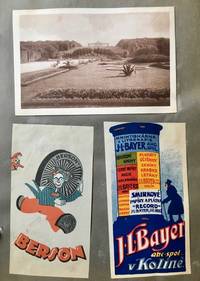
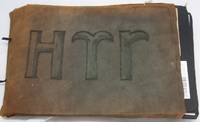
16992Photo Album Women College Photo album from student at Colorado Women's College c. 1911-1912. Filled with 56 original silver gelatin print photographs and 41 ephemera including invitations newspaper clippings table cards from socials original drawings and numerous items from Greek sorority Eta Upsilon Gamma. Photo dimensions 2.25 x 3.25 in. Original green suede covers. 7 x 11 in. Greek symbols for Eta Upsilon Gamma on front cover. 36 pages. Originally belonged to student Jessie Gutshall. Most items are related to the sorority Eta Upsilon Gamma including a certificate of induction to the society many color illustrated table or dance cards menus from formal dinners and newspaper clippings on the group's activities. Including invitations for events at Denver's historic Brown Palace Hotel. Comes with 1911 Song Book sorority Constitution and Annual report with updates from local charters. Report on Lambda CWC chapter includes their work with the YWCA and on campus: "We have no opposing sorority and so do not get a chance to show our superiority." Green suede book on history of "Eta Upsilon Gamma" with 12 signatures from friends on first pages. Some handwritten notes included: "Here's to those who'd love us if we only cared. Here's to those we'd love if we only dared." Photos of the sorority sisters at a train station on a farm climbing a windmill and posing around sign for "Pine Grove Herd of Galloway Cattle". One photo of girls playing tennis outdoors in full-length dresses. Many items show artistic creativity including the "Summons to Initiation" for the sorority which was written on a sheet with decorative burnt edges and a crude Jolly Roger drawing mimicking a Pirate document. Many other pieces of ephemera include drawings or color illustrations. Invitation to a "Class Dinner" that includes a drawing of a woman in graduation cap and gown. Colorado Women's College opened in 1909 in Denver CO and its first class had 59 students. Minor wear to cover: toning and fading to edges two small tears at foot of spine and top edge of front cover. Very good condition. unknown books