8 019 résultats
197048787Falls Church VA: Woman Activist 1970-1976. First Edition. 37 staplebound newsletters 27.5cm. with publication sequence as follows: Vol. 1 nos. 1-13 1970/1; Vol. 2 no. 1-11 1972; Vol. 3 no. 12 1973; Vol. 4 nos. 1 3 & 8 1974; Vol. 5 nos. 1-6 & 9 1975; Vol. 6 no. 8 1976. Vol. 2 no. 8 titled "The Woman Activist Guide to the 1972 Elections: August 26th Commemorative Issue"; Vol. 2 no. 12 titled "The Woman Activist Guide for Woman Candidates--Campaign 73: December Gift Issue 1972"; Vol. 3 no. 12 titled "The Woman Activist Guide for Woman Candidates--Campaign 74: December Gift Issue 1973"; Vol. 4 no. 8 titled "The Woman Activist Guide to Lobbying: August 26 Commemorative Issue 1974." Accompanied by broadsheet order form verso providing a photocopy of the New York Times article "Feminists Rate House Members" Thursday January 20 1972. Trivial wear and occasioal toning to extremities else Near Fine overall. Newsletter published under the banner "An Action Bulletin for Women's Rights." The Bulletin was the brain child of Virginia feminist Flora Crater who also founded the Virginia chapter of the National Organization for Women NOW. Crater published The Woman Activist as an information newsletter on the activities of the National Ad Hoc Committee for the Equal Rights Amendment. Woman Activist unknown books
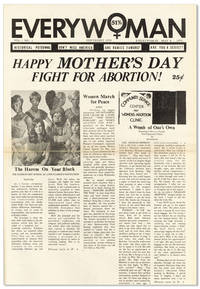
197026759Los Angeles later Venice CA: Everywoman 1970-1972. First Edition. 32 issues varying formats approx. 28-45cm.; illus. Tabloid issues with horizontal fold line as usual some light toning else a Fine collection. Color printing introduced in issue no. 5. Later published with the banner "Every woman is our sister" this California-based periodical was founded by Movement members Ann Forfreedom and housewife Verda One. The first issue which was published May 8 1970 commemorates Mother's Day with the heading "Happy Mother's Day / Fight for Abortion!" Among the recurring columns are "Manglish" a glossary of words with sexist implications "Hysterical" for example; and Forfreedom's biographical column "Herstory." Contents include poetry by Judy Grahn and two interviews with Anais Nin. Everywoman unknown books
1900231291900. Women's History Women's labor photo archive documenting women at work across millinery laundry commercial kitchen precision bench and wartime relief settings preserving a concentrated visual record of how female labor was publicly pictured in the years immediately preceding and overlapping World War I. Several photographs bear Brown Bros. New York stamps placing part of the group within the sphere of press photography while the verso inscription "Russian Women Filling Bandages for the front" situates one image within the culture of wartime female service and aid production. The photographs show women's work as a visible and varied part of early twentieth-century public life where skill repetition discipline and service shaped how female labor was pictured.<br /> <br /> Photo archive of 8 photographs 7 silver gelatin and one mounted sepia photograph ranging from 6 x 4 to 9.5 x 7 inches including New York and other unidentified locations circa 1900-1915. One Brown Bros. photograph shows a seated woman trimming or assembling hats at a worktable crowded with millinery forms and materials framing decorative labor as skilled commercial production rather than private handiwork. Another image shows four women and one man gathered around tables stacked with folded cloth corresponding to the handwritten verso note "Russian Women Filling Bandages for the front." A larger photograph inscribed on the verso "women workers / compass making" shows a woman seated at a bench adjusting a circular instrument with tools and components arranged before her. Another workplace view pictures a woman handling a metal object beside machinery and a crate with partial printed text ending in ".products. Cleveland." The photograph inscribed "women in Laundry" shows several women bent over long tables in a bright workroom lined with tall windows while the mounted sepia image depicts six apron-clad women at long counters beneath a large hooded vent in a commercial kitchen. Across the group aprons work dresses caps tables tools and stacked materials recur giving the photographs a shared emphasis on feminine labor as organized visible and socially legible.<br /> <br /> The archive belongs to a period when women's wage labor was expanding in both scale and visibility and when photography increasingly circulated images of female work as part of modern urban and wartime culture. Its strength lies in the range of roles pictured: decorative trade work industrial handling laundry labor food preparation and aid work directed toward the front all of which show how women's labor was understood through service dexterity endurance and collective effort. The bandage-making image is especially important because it connects ordinary workplace culture to the wartime recasting of women's labor as patriotic and humanitarian duty. Light surface wear scattered creasing minor silvering and fading and general handling wear; mounted sepia photograph with heavier toning. Overall good condition. A compact and pointed visual record of the cultural meaning of women's work at the point where everyday labor and wartime service converged. unknown
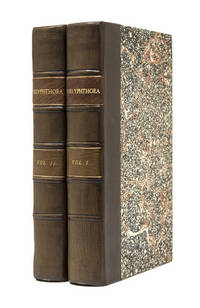
178155463London: J. Dodsley 1781. The second edition enlarged. 2 vols. 8vo. Recent quarter brown morocco and marbled boards. Inoffensive traces of dampstains else fine. The second edition enlarged. 2 vols. 8vo. Marriage Whoredom and Fornication Adultery Polygamy Divorce. Controversial argument in favor of polygamy as compatible with Mosaic law and Christianity and an alternative to the evils of prostitution. J. Dodsley unknown books
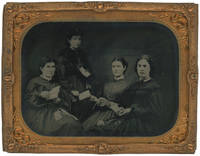
1860LIST0125American 1860. Tintype in case 3 ¼ x 4 ¼ inches. Fine. A quarter plate tintype of a women's sewing circle probably circa 1860s. Three women hold patterns while one sews. Ante-bellum sewing circles were often anti-slavery or missionary in nature though we can find no details here that offer clues as to the nature of this circle. A sharp image with good contrast fine condition. unknown books
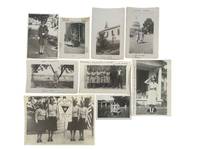
1943220591943. Women's Army Corps service photographs dated 1943 to 1944 document the participation of enlisted women in U.S. Army support operations during World War II with particular attention to transportation training environments and stateside military life. The images identify individual service members including Hilda Goble described in captions as an "ambulance driver during War II" and Abbie E. Bachelder situating named women within the broader expansion of female labor following the establishment of the Women's Army Corps in 1942. These photographs support research into women's military service wartime labor structures and the integration of women into logistical and medical support roles essential to the functioning of the U.S. Army during the war.<br /> <br /> Archive consists of 9 original silver gelatin photographs most approximately 3 x 5 inches several with scalloped or deckled edges and period ink captions identifying subjects and dates. Two portraits show Hilda Goble in full uniform standing before a porch and saluting each inscribed "Hilda Goble Ambulance driver during War II" documenting her role in transporting injured personnel within military systems. A group photograph captioned "Ambulance Driver Team War II Hilda Goble" depicts seven uniformed women indicating coordinated service within ambulance units. Additional images include a portrait labeled "Abbie E Bachelder / June - 1944" showing a uniformed WAC posed before a landscape of barracks buildings and another dated 1943 identifying Bachelder outside a wooden structure. A photograph captioned "Oct 29 - 1944 / Reims" shows two women identified as Roberta and Abbie posed on the grounds of the U.S. Capitol indicating travel or official assignment within government contexts. Other photographs depict WAC personnel standing near a military chapel and within training or hospital environments while one image titled "Marine Corps Wives of America - Hdqtrs Chap 1" shows four women beneath an organizational banner documenting affiliated civic or support networks connected to military service.<br /> <br /> These images documents the Women's Army Corps expantion to meet wartime labor demands assigning women to clerical transportation medical and logistical roles across domestic and overseas installations. The presence of ambulance drivers within the archive demonstrates the direct involvement of women in medical transport and support infrastructure while scenes at the U.S. Capitol and organized groups indicate both official recognition and the development of social and institutional networks among servicewomen. Light edge wear and minor creasing with one photograph showing tape residue; images otherwise clear with captions legible; overall very good condition. This archive provides a concentrated visual record of named WAC personnel and their roles within the operational and social framework of the U.S. Army during World War II. unknown
folio [37 x 26 cm]; 2 volumes, xxii [ii], 464; xxiv, 444 pp, 2 frontis, numerous illus, plans, bibliography. original 2 part cloth, gilt lettering and decoration on front covers, and gilt title on spine, cover of volume I lightly spotted, light crease of endpaper, else a clean near fine set, volume I has the scarce dust jacket (chipped at edges. A picture of thi A massive work with hundreds of illustrations from photos, early sources, drawings. The books are organized by state, with Volume I covering New England, New York, Rhode Island, New Jersey, Great Lake states, Pennsylvania and Volume II on the southern states including Florida and California, together with a chapter on fences and enclosures in each volume. A classic of landscape architecture.
17119Women Education Scrapbook from woman student at Connecticut Agricultural College 1919-1923. Filled with 215 handwritten notes and signatures from classmates; 119 pieces of ephemera including mailed letters greeting cards ticket stubs and newspaper clippings; and 88 original silver gelatin print photographs of various sizes from 1 x 1 inch to 3 x 5 inches. 62 pages. Original blue boards. 12.5 x 17 inches. University seal printed in center of front cover. Front cover personalized with original owner's name printed in bottom right corner "Marion V. Toole '23". Filled with images and ephemera from the Conn. Ag. College campus now the University of Connecticut located in Storrs CT. <br/><br/>Filled with photographs of friends and classmates around campus and at the dormitories. Photographs of Whitney Hall dormitory and residents labelled "Whitney Hall tribe" Koons Hall and nearby bodies of water. Other campus activities are also photographed such as sledding a co-ed Basketball team swimming and a tug-of-war tradition-the "Freshman-Sophomore Rope Pull." Photographs of young men practicing military drills in a field; in the early days after WWI military preparedness remained an issue of national concern. Other photos of local travel to Springfield MA; Sachem's Head on the Connecticut Coast; Kingston Rhode Island; and the "Eastern State Exposition." Also have photos of doctors at New Haven Hospital-perhaps a photo of a friend or former classmate. <br/><br/>215 signatures notes and autographs from friends and classmates. Most contain a short line or two on shared memories friendship or future plans. "You're all right Marion and I wont' forget it in a hurry." Many of the notes are from dormitory friends and include inside references to rules regarding their communal living: "Here's to my roomie who goes to dinner and supper late. I wonder why I'll never tell". "Oh girls! Put on the lights. There's something on my bed. 1AM." "Lights out at 10:15 PM and breakfast at 6:45 AM." The dormitory was evidently a strict place with many rules as there is even a typed note included addressed to residents of a women's dormitory regarding tidiness: "The girls rooms must be kept neat and tidy if the condition of the rooms does not improve daily inspection will be necessary."<br/><br/>Unique and diverse ephemera from all aspects of a college student's academic life and extracurricular activities. Report card with coursework in Military Sc. & Drill English Zoology Home Ec. and Phys. Ed. Many items from clubs or extracurricular groups in which Marion Toole participated: Green felt clover for 4-H; metal pin from the Boys and Girls Club; 1920 Membership Card for American Red Cross Third Red Cross Roll Call; Shakespeare Club. Numerous ticket stubs and receipts. Cutting with panoramic view of the historic campus in the 1920s; Valentine's and Christmas Cards; programs; and sentimental items such as a ribbon from a special box of chocolates. Includes schedules and newspaper clippings regarding football games against Boston University U Mass Holy Cross and Rhode Island. UConn was founded in 1881 as the Storrs Agricultural School; women began attending classes just 10 years later in 1891 and were officially admitted in 1893. In 1899 the name changed to Connecticut Agricultural College; and in 1939 the college became the University of Connecticut. A few pages with tears or small losses at edges. In very good condition. unknown books
8vo (175 x 115 mm), woodcut vignette to title, light staining and age toning throughout, blank fore-edge margin of title page with small chip, disbound, uncut. Rare Cheap Repository tract by Hannah More, aimed through the use of a moral tale at helping less educated and poor women run efficient, economical kitchens which could still provide nutritious food to their families. One of several editions published between 1795 and 1810, all of which are scarce. Maclean, p. 78.
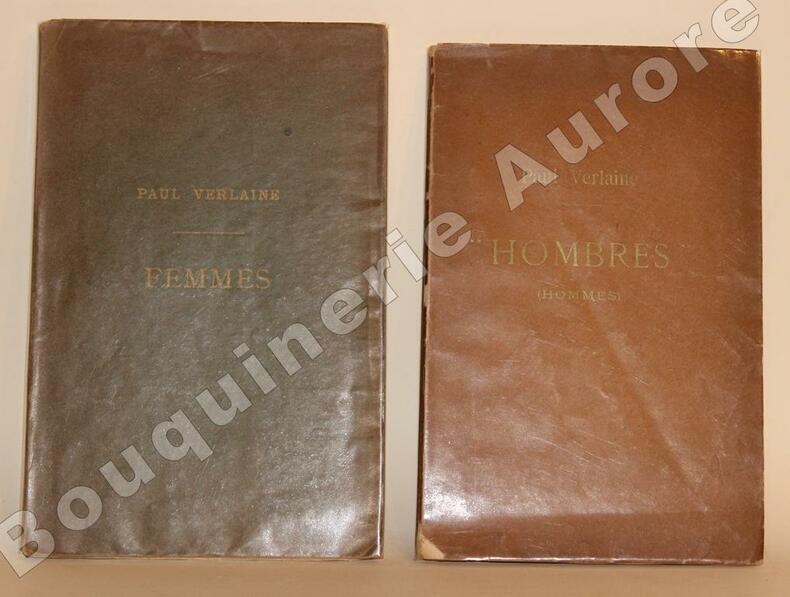
1903137851903 Imprimé sous le manteau et ne se vend nulle part, [P., Albert Messein, 1903], 1 vol. in-12 (192 x 123 mm) broché sous couverture rempliée papier havane imprimé à l'or, de (2) ff. (faux-titre et titre (justification au verso)) - 48 pp. - (2) ff. (table). Petits manques et marques de plis sur le dos, léger pli peu marqué en diagonale sur les plats et cahiers, papier parfaitement blanc, mériterai une reliure.
177319930Berlin, C. J. Decker, 1773 ; 3 parties reliées en 2 tomes in 12, veau fauve glacé, dos à faux nerfs dorés, décoré et doré, pièce de titre grenat et tomaison vert foncé, encadrement doré sur les plats, tranches rouges (reliure de l'époque) ; XXII, [2], 469 ; 256, 232 pp. Carte dépliante de la Grande Muraille de l'Egypte ancienne au tome 2.
191923717Paris Camille Bloch. 1919 1 in-12 Orné de gravures au burin de Jean-Emile Laboureur, Paris, Camille Bloch, 1919, in-12, maroquin bois de rose orné sur les plats de filets encadrant un décor floral, dos lisse orné titré, tête dorée, couverture couleur lilas motif imprimée et réalisée par Jean-Emile Laboureur, 74 pages, (P. Gazaly Relieur).
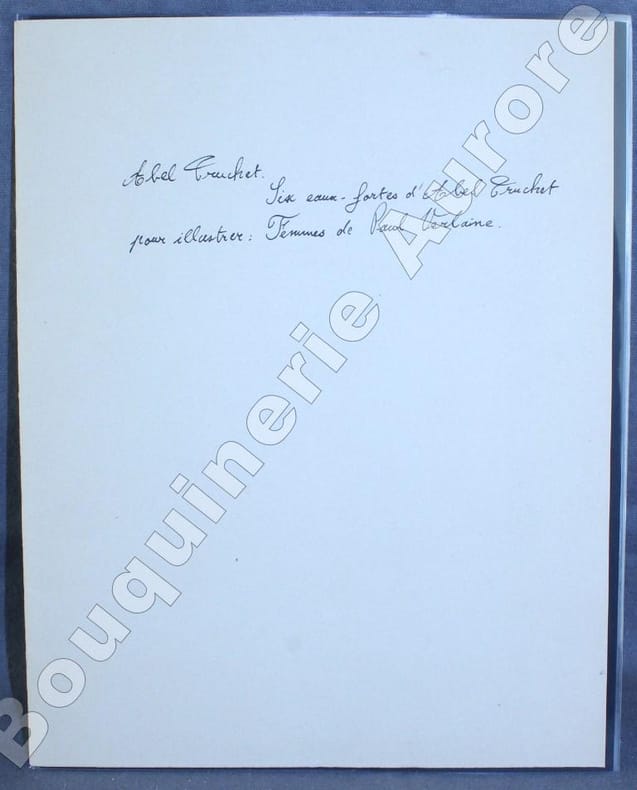
14112Rare suite de 6 eaux-fortes libres, non signées.Epidermures marginales sur 2 d'entre elles, bel exemplaire par ailleurs.Dimensions des eaux-fortes : 156 x 95 mm - marges : 250 x 180 mm.
1900198691900 Sculpture en étain signée d'un double cachet à sa base, (1900), 11 x 34 x 22 cm.
2020232982020 Calligraphie à lencre de Chine, 2020, 50 x 65 cm.
400Paris : F. Ferroud, 1911. SUITE DE 28 SUPERBES EAUX-FORTES SUR VÉLIN D'ARCHES AVEC REMARQUE MISES EN COULEURS PAR L'ARTISTE
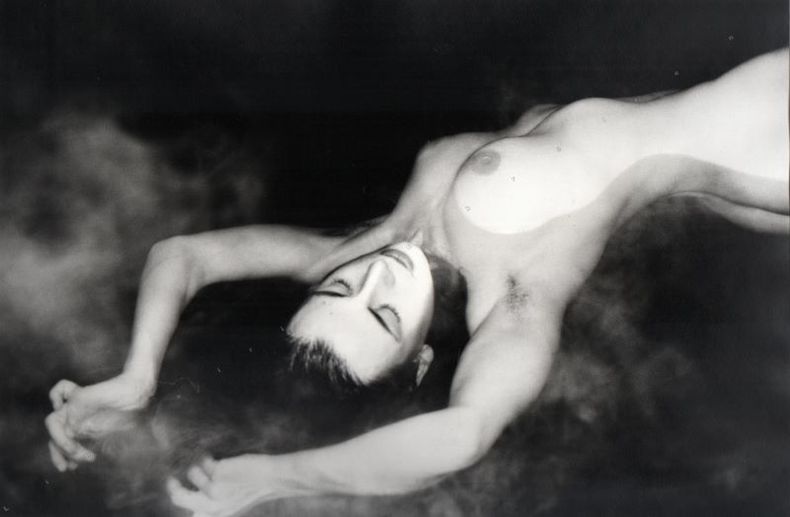
1980209551980 Photographie tirage argentique, signée au dos et numérotée au crayon, (1980), 1/10, 24 x 35,5 cm.
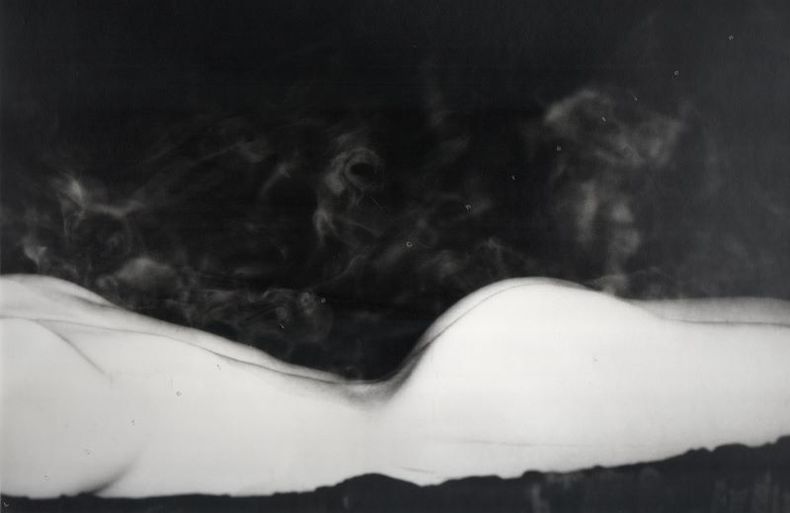
1980209561980 Photographie tirage argentique, signée au dos et numéroté au crayon, 1/10, (1980), 24 x 35,5 cm.
19933070EBBerlin., o. V., [1993]. 32,3 x 26,5 x 3 cm. [8] unpaginierte S.; [6] unpaginierte S. Kopien., 3070E Sehr gutes Exemplar.
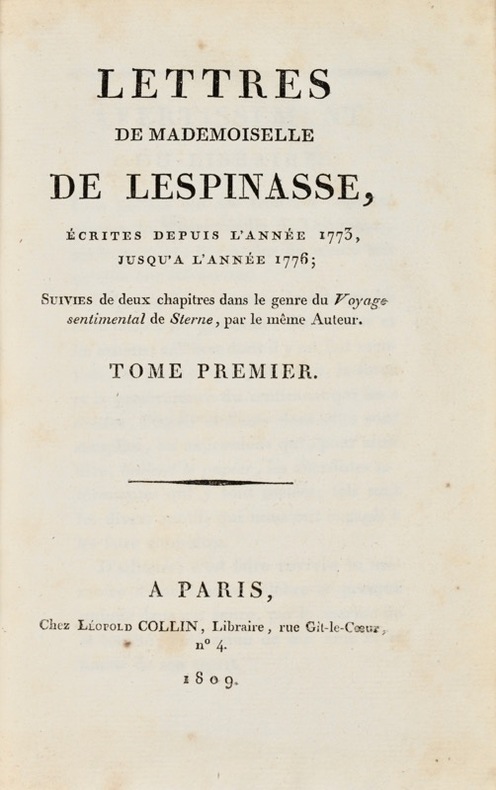
180941605Paris, Léopold Collin, 1809. 2 vol. in-8 de VIII-320 et (4)-322 pp., veau marbré, dos lisse orné, pièces de titre et de tomaison en maroquin rouge, filets et roulette dorés d'encadrement sur les plats (reliure de l'époque).
20514Aérographe sur papier, contrecollé sur papier fort, signé à l'aquarelle bleue, 50 x 24 cm.
20515Aérographe sur papier, contrecollé sur papier fort, signé à l'aquarelle bleue, 50 x 24 cm.
20516Aérographe sur papier, contrecollé sur papier fort, signé à l'aquarelle bleue, 50 x 24 cm.
201167980ABo. O., o. V., 2011. 29,5 x 22,5 x 5 cm (Kartonschachtel). o. S., 67980A 1. Auflage. Sehr gutes Exemplar.
1980210521980 Deux planches de bande dessinée, feutre noir sur papier fort, signées et numérotées 18/88 et 18/89, (1980), 24 x 16 cm et 24,8 x 17,5 cm.