WomenBiblio.com

7 962 résultats
1805368829Argyle NY 1805. 6pp. Small 4to. Pinned together at an early date. Usual folds minor foxing. 6pp. Small 4to. Much of the minutes of two meetings of the elders of the Argyle were taken up with the case of Joseph Wright who was accused of beating his wife. The minutes include the testimony of two female witnesses that Wright had beaten his wife with a broomstick as well as the testimony of another female witness that she had heard rumor that Wright had beaten his wife "because he was jealous with her being great with a Negro & expected that the last child she had would be black. unknown
186944744Boston: Woman's Foreign Missionary Society of the Methodist Episcopal Church 1869-72. First Edition. Quarto 18cm. Bound volume of 25 consecutive monthly issues comprising the entirety of the first two years of publication. Mild external scuffing and wear; occasional spotting and soil within; Very Good. The official monthly organ of the Woman's Foreign Missionary Society. In addition to financial reports and notices of internal affairs includes much of interest on women's welfare in less-developed regions of the world primarily the Indian subcontinent where the Society's activities were the most prolific but also other regions of Southeast Asia China and North Africa. Woman's Foreign Missionary Society of the Methodist Episcopal Church unknown books
16326Childbirth Midwives were responsible for the safe delivery of the foetus. Their work could be a steady and chosen occupation. Initially there was no formal training or the need to obtain a license but this changed within Europe in the 1700's since some town authorities recognized the need for trained midwives in order to protect the safety of the public. In contrast to the 'norm' of the 15th and 16th centuries midwives were women concerned with public affairs since they were employed by the municipal authorities and were entitled to a salary. They were also paid by their private clients. Hence in a male oriented society midwives -who came from the lower middle class were called to challenge gender divisions. <br/><br/>Four decrees printed in German block lettering related to the Mainz School of Midwifery from 1784-1785. 5 sheets 12 ½ x 7 ½ in. Decrees relate to registration exam protocols and professor approbation's issued by Baron von Frankenstein. Documents contain handwritten notes at bottom. Light scattered foxing and thumb-soiling. Horizontal crease in all sheets. Very good condition. unknown books
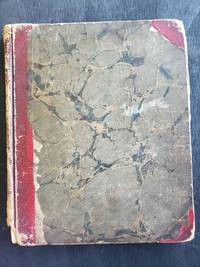
17043Women Education Handwritten A schoolgirl's memory album with 20 handwritten entries and 39 pieces of ephemera 1842-1877. A memorabilia recording many aspects of the first major movement of women's education in the United States brings depth to a movement that was groundbreaking in its time but today is largely at risk of disappearing from the historical record. Signed "C.F. Key / January 19th 1842" on first end page. 9 x 7.5 in. Green marbleized boards with red leather binding. 64 pages. 20 handwritten inscriptions. 24 pieces of paper ephemera primarily engravings and images from newspaper clippings such as one depicting "Her majesty leaving Buckingham Palace June 28 1838" and medieval images such as "Marriage of Henry the 6th." Includes 15 color wax seas from friends and schoolmates mostly women. Seals include music ledgers personalized initials trees and animals such as dogs and lions. Large hand-drawn pencil illustration of a small thatched-roof building in a forest. Memory albums held autographs sentiments and reminiscences of friends and schoolmates similar to yearbooks today.<br/><br/>Handwritten entries on topics such as Happiness and The Bride. Many entries have to do with marriage and domestic life such as "A Lady's Choice of Husband": "The man who would my heart engage Must not be forty years of age His statue of the middle size His features pleasing to my eyes. His brown must seldom wear a frown In manners neither fop nor clown." One entry it titled "Making Love": "What's making love said Jane what can it mean Pray Charles can you make love I'n now sixteen Errors I make make scones make amends Make samplers tippets and make bosom friends But as to making love; I really doubt it. At least I know not how to set about it. Ah charming girl said Charles that kind confession bespeaks a stock of love in your possession Love is not science by not art is shown But the most sweet confession ever known." Binding loose with loss to foot of spine. First 2 pages and last 3 pages detached. In good condition. unknown books
17109Women Education Scrapbook from a young woman studying at Stephens College Columbia Missouri and Kansas State Teachers College 1921-1943. Filled with 78 original silver gelatin photos and 43 pieces of ephemera including numerous certificates two cloth Varsity letters report cards. 39 pages. Original cream boards with embossed detail to front cover. 10.5 x 13.5 inches. Photos range in size from 2.5 x 2" to 8 x 10". Originally belonged to Mary Jane Hinshaw. Scrapbook documents Hinshaw's life from infancy to adulthood. Hinshaw was an active and popular student. Comes with membership card for Delta Sigma Epsilon Sorority; party invitations and dance cards from Sigma Tau Gamma Delta Sigma Epsilon and Alpha Delta. Silver gelatin photos of family school photos and a vacation in the western United States with images of sweeping landscapes and dramatic rock formations.<br/><br/>In 1941 Hinshaw graduated from a two-year program at Stephens College and began studying at Kansas State teachers College with coursework in Library studies. Commencement invitation for Stephens College 1941. Report card from Stephens College 1940-1941 with coursework in Survey of English Literature Intermediate French English History Introduction to Psychology General Sociology Appreciation of Music Physical Education Educational Psychology and Elementary French Conversation. Three later report cards from Kansas State Teachers College of Emporia 1941-1943 with marks in Teaching History of Education American History 1492-1817 Library Administration Cataloguing and Classification Reference Book Selection Library word with Children Literature of H.S. Subjects. Comes with one handwritten postcard from a Stephens College classmate who went on to pursue studies at the University of Wisconsin: "I am having a glorious time-It certainly isn't like Stephens much much better."<br/><br/>Album begins with Baptism and Birth announcements and photographs of her as a small child. Class photos of her in elementary to high school. Cutouts and information on Marysville High School where Mary Jane Hinshaw's father served on the Board of Education. Vibrant green cloth "M" varsity letter felt Bulldog and Debate letter. Founded in 1833 Stephens College is the second-oldest female educational establishment that is still a women's college in the United States. The Kansas State Normal School Emporia was established in March 1863 and it is the third-oldest public university in the state of Kansas. The first class graduated two women; and the in 1977 the college was renamed Emporia State University. Tear with loss above right portrait adhered to first page. 1 page detached. Front hinge is loose. In good to very good condition. unknown books
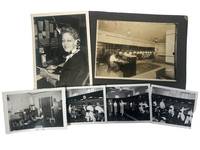
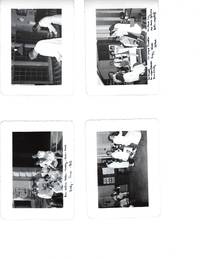
1900200911900. Telephone operator photo archive circa 1900 to 1958 documents women's labor within telephone exchange systems showing how urban communications depended on trained female operators seated at switchboards connecting calls handling information and maintaining the human infrastructure behind early and mid twentieth century telephone service. The material documents telephone communication labor through photographs of switchboard rooms operators wearing headsets plug boards supervisory presence and grouped clerical activity revealing how connection work operated in practice before automated dialing fully displaced manual exchange work. The archive supports research into women's wage labor communications history gendered office work New York telephone service and the disciplined workplace culture that positioned young women as the public voice and operational center of the telephone network.<br /> The archive consists of six black-and-white photographs including five silver gelatin photographs and one early albumen photograph with images measuring from approximately 3.5 x 4.25 inches to 7 x 9 inches. The date range appears to extend from the early twentieth century to 1958 based on the later dated images. Several photographs show women seated in tight rows facing large switchboards wearing heavy headsets with horn mouthpieces and working among dense arrangements of cords and plugs. The early albumen photograph shows a row of women facing the switchboards while a female supervisor watches over the room indicating both the gendered hierarchy and procedural discipline of the exchange floor. One image shows an operator turning toward the camera with a plug in hand smiling while gesturing toward the board. Four smaller photographs dated 1958 show teams of women moving between boards and a small group with paperwork behind the operating area; pencil inscriptions on the versos identify the location as New York.<br /> The photographs are valuable because they make visible the labor system behind telephone service: rows of operators standardized equipment supervisors paperwork and the coordinated manual routing of calls. They also record the gendered character of communications work in which women's voices posture speed and manner were made part of the service itself. Light handling wear minor edge wear and expected age toning; images remain crisp with equipment and personnel details clearly visible; overall very good. Strong women's labor and communications history archive documenting the human operation of telephone exchange systems across the first half of the twentieth century and into the postwar period. unknown
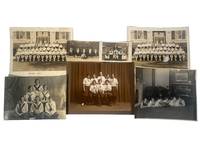
1919185111919. Unidentified photographers photograph archive of women's basketball teams 1919 to 1932 documenting the early development of organized women's athletics in the United States following the introduction of basketball as a women's sport in the 1890s. The material provides primary visual evidence of women's participation in competitive team sports supporting research into gender physical education and the expansion of athletic opportunities for women in the early twentieth century. These images capture institutional and team-based participation during a period when women's athletics remained contested yet increasingly visible.<br /> <br /> Archive of seven silver gelatin photographs depicting formal team portraits ranging from small groups of five players to a large team of approximately thirty-seven individuals. Photographs measure between approximately 3.5 x 5.5 inches and 8.75 x 10.75 inches. Players are shown arranged in rows often with a central figure holding a basketball marked with team initials and year. Uniforms include high-top athletic shoes short skirts and sailor-style tops reflecting standardized early women's basketball attire. Several photographs include handwritten identifications on the verso naming individual players while one larger image on matte paper bears the inscription "Basketball 1931-32" along with a studio stamp indicating production in Boston. The sequence of images demonstrates changes in uniform style and team size over more than a decade while maintaining consistent compositional formats typical of organized team portraiture.<br /> <br /> Seven photographs. Women's basketball introduced by physical educator Senda Berenson shortly after the sport's invention in 1891 became a significant avenue for women's physical activity despite ongoing debates about propriety and health. By the 1920s women's teams were established across schools and regional leagues reflecting broader acceptance of female athletic participation. This archive documents that period of expansion preserving visual records of team organization and identity prior to the formal institutionalization of women's professional basketball later in the twentieth century. Minor edge wear and light foxing to some prints; one duplicate image with tears and surface loss; remaining photographs clear and stable; overall very good condition. A concise visual record of early women's basketball teams and the growth of female athletic participation. unknown
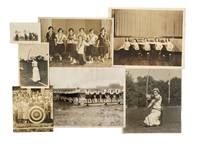
1910219051910. Archive of original photographs documenting women's participation in athletics and organized physical culture during the early twentieth century when women's sports and exercise programs increasingly became accepted within schools colleges camps and recreational organizations. The photographs show women engaged in archery synchronized gymnastics calisthenics and cheer leading during a period when female athletic participation expanded alongside broader debates concerning women's health education public visibility and social independence. The photographs provide visual evidence of the physical culture movement as it shaped women's recreational and educational environments in the United States and abroad preserving both formal athletic training and communal performance activities that contributed to changing expectations surrounding women's physical activity and public presence.<br /> Collection consists of seven original silver gelatin photographs dating approximately from the 1910s through the 1930s. The archive includes several photographs of women participating in organized physical education exercises and athletic activities while dressed in period sporting attire. One image dated July 5 1928 documents uniformed women performing synchronized gymnastic drills during a Sokol Festival dress rehearsal in Prague capturing rows of participants in coordinated motion during a major international physical culture gathering influenced by Central European nationalist and athletic traditions. Another photograph from the 1910s-1920s shows a group of young women posed with medicine balls Indian clubs and batons while wearing sailor-inspired gymnasium uniforms associated with school or collegiate athletic programs. A separate 1930s image depicts a cheerleading squad in matching lettered "S" sweaters posed in formation within a school auditorium. Archery appears prominently throughout the archive. One press photograph portrays Olympic diver and sportswoman Helen Meany Balfe standing with a bow on the grounds of White Sulphur Springs West Virginia as identified by a typed caption on the verso. Another image depicts Stella M. Ives identified in manuscript drawing a bow while dressed in full sporting attire. A vernacular photograph portrays four young women practicing archery in the hills above Troy New York including one identified as Louise Hatch of Troy with a handwritten verso inscription linking the group to Bridgewater Massachusetts. The final photograph shows a large assembly of young women gathered on outdoor steps beside a prominent archery target possibly at a camp or collegiate event emphasizing organized recreation and group participation.<br /> The archive documents the increasing visibility of women's athletic participation during the early twentieth century when organized exercise and sports became associated with women's education health reform and public modernity. Physical culture programs in schools colleges camps and civic organizations promoted athletics as both disciplined recreation and social training while sports such as archery and gymnastics offered women expanded opportunities for public competition and physical expression. Particularly notable is the range of activities represented from regimented calisthenic performance to recreational archery and cheerleading illustrating the broad spectrum of athletic environments available to women before the widespread professionalization of women's sports. Light wear and occasional handling marks consistent with age; photographs remain well-preserved overall in very good condition. A visually engaging archive documenting the growth of women's athletics and physical culture in the early twentieth century. unknown
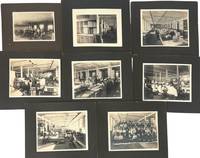
1918234351918. Women's industrial labor in an American textile finishing mill photographed likely between 1918 to 1922 documenting the inspection folding hemming and stamping of finished blankets and sheeting in the years around the First World War. The work shown belonged overwhelmingly to women who by 1920 made up about a fifth of the American labor force and were concentrated in exactly this kind of semiskilled textile work. The wartime labor shortage had pulled women deeper into industrial production and these images catch that expanded workforce on the floor before the 1919 recession and returning soldiers pushed women's share of factory labor back down. The conical galvanized fire buckets stenciled "Fire" mounted on posts in several frames date the images and tie them to the workplace fire safety reckoning that followed the 1911 Triangle Shirtwaist fire in which 146 workers most of them young women died.<br /> Photo archive of eight silver gelatin photographs approximately 6.5 x 8 inches mounted to card stock each measuring 12 x 10 inches with one smaller image American textile mill circa 1918 to 1922. Seven photographs show the mill interior: long finishing floors lined with cast iron columns and overhead pipe runs electric pendant lamps and tables stacked with uniform folded and rolled white goods tied with string. Women predominate at every station. They sit at inspection benches turning over folded cloth stand at long tables rolling and bundling sheeting and run a row of treadle and electric sewing machines hemming finished pieces with thread spools and machine heads sharp in the foreground. One worker operates a rack of hand stamps the date and numbering stamps used to mark finished goods before shipment. A few older men in vests dark suits and detachable collars stand among them as foremen and supervisors. One frame shows the shipping area with finished goods crated in wooden boxes stenciled for transport. The classroom image stands apart from the mill series: teenage students seated at ornate cast iron school desks a wall clock and a chalkboard covered in arithmetic. The eighth and largest subject is a full staff group portrait of roughly eighty workers overwhelmingly women posed on the production floor against stacked bundles of finished cloth with a length of white sheeting unrolled across the floor at their feet.<br /> The years these images were made were among the most volatile in American labor history. In 1919 more workers went on strike than in any year before some four million people twenty-two percent of the workforce and in June 1920 Congress created the Women's Bureau within the Department of Labor by Public Law 66-259 the first permanent federal agency charged with the welfare of wage-earning women which began studying the eight-hour day for women in 1921. The textile finishing trade these women worked in had been built on female labor since the start of the industrial revolution and the staff portrait records the scale and the gender composition of one such workforce directly. These photographs showing women's industrial work the fire buckets the stamping rack the sewing line the crated shipment ties the archive to specific developments in labor safety and women's employment law. Overall in very good condition with the mounts showing minor edge wear and some en verso pencil markings. unknown
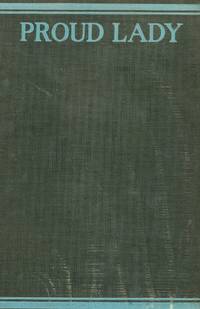
1923List327New York: Alfred A. Knopf 1923. First Edition. With an autograph letter signed with the envelope affixed to the front pastedown. With the bookplate of John and Rebecca Lowrie on front free endpaper. Lowrie reviewed the work for the New York Post and her review of the book affixed to the half-title. Very Good. Neith Boyce was an author and theater artist who worked across genres publishing a range of works and co-founding the Provincetown Players. Boyce and her husband Hutchins Hapgood were at the social center of a large circle of writers and artists including Gertrude Stein Georgia O'Keefe and Djuna Barnes. Their papers held at Yale provide rich insight into their artistic and literary era. <br /> <br /> Proud Lady was the second-to-last novel Boyce wrote and it was apparently her favorite. The novel is the story of Mary Carlin a woman who seeks spiritual perfection in others and who because of her pride cannot make herself leave her unfaithful husband. Rebecca Lowrie in her review written for the New York Post and included here states "all the vividness of the setting the touches which make the people so sure a part of their surroundings are secondary to the tragic figure of the proud lady and the victims of her pride."<br /> <br /> Boyce's letter to Lowrie effusively thanks her for her review of the book which from her tone appears to have been misunderstood by other critics. She writes "I have just seen your review of my novel Proud Lady. It is the most intelligent and best-written review that I have seen so far and I would like to convey to you my appreciation and the pleasure your attitude toward the book has given me." <br /> <br /> Overall a very nice association and a very good copy of an uncommon book. Some light wear and rubbing a few faint scuffs to cloth on the front board slightest bowing to spine but very good. Letter near fine with minimal wear. <br /> <br /> $450. Alfred A. Knopf unknown books
1914List520Nome: Lomen Brothers 1914. Silver gelatin print 6 1/2 x 9 1/2 inches. Fine. Women's baseball evolved alongside men's leagues beginning in the 1860s with many teams and leagues appearing throughout the following decades often playing indoors and often unrecorded in the annals of baseball history. Women's baseball was particularly popular in Minnesota and parts of the Midwest in the early part of the twentieth century. This photograph bears evidence as to the game's migration to Alaska Territory where long winters would have been particularly conducive to an indoor league. This photograph by the Nome Alaska firm Lomen Brothers shows the champion team of the Ladies Indoor Baseball League in Nome. We find no record in contemporary newspapers or anywhere else of the league. The Nome Brothers were a well-known photographic firm who migrated from Minnesota to Alaska at the height of the Nome Gold Rush in 1903. By 1909 at the end of the gold rush the population of Nome declined substantially to 2500 from 20000 just a few years earlier. This photograph shows interesting documentation of Nome post-rush and also of the spread of women's sports through migrant populations. We find one other example in the Fred Henton collection at the Anchorage Museum at Rasmuson Center. A fine example. Lomen Brothers unknown books
18220007721Paris: Chez Bechet 1822. First French Language edition. Original Boards. Good. 8vo xiv 351; vi 359 pages untrimmed in contemporary boards. Very scarce. <br/><br/>Attracted by the ideals of the "Declaration of Independence" Fanny Wright traveled extensively through the U.S.A. tracking how those ideals were being realized. In France who became almost like a daughter to Gen. Lafayette. She and her sister returned to America and with Lafayette were guests of Jefferson at Monticello. Later as a U.S. citizen she founded the Nashoba commune in Tennessee in anticipation of emancipation. She visited New York and Philadelphia West Point Niagara Falls Lake Errie and on to Lower Canada Montreal Lake Champlain Burlington Vermont Washington D.C. to Virginia with many observations along the way. This edition has a dedication to Lafayette by the translator who also supplied a new translation. Vol. 1 ends with remarks upon Morris Birkbeck's letters about the Illinois country. All in all Fanny Wright became one of the most remarkable women of the first half of the 19th century: among other accomplishments being the first woman to write this work the first travelogue by a woman. Howes D74; Sabin 18642; Clark Old South 16; Buck 137. Chez Bechet hardcover
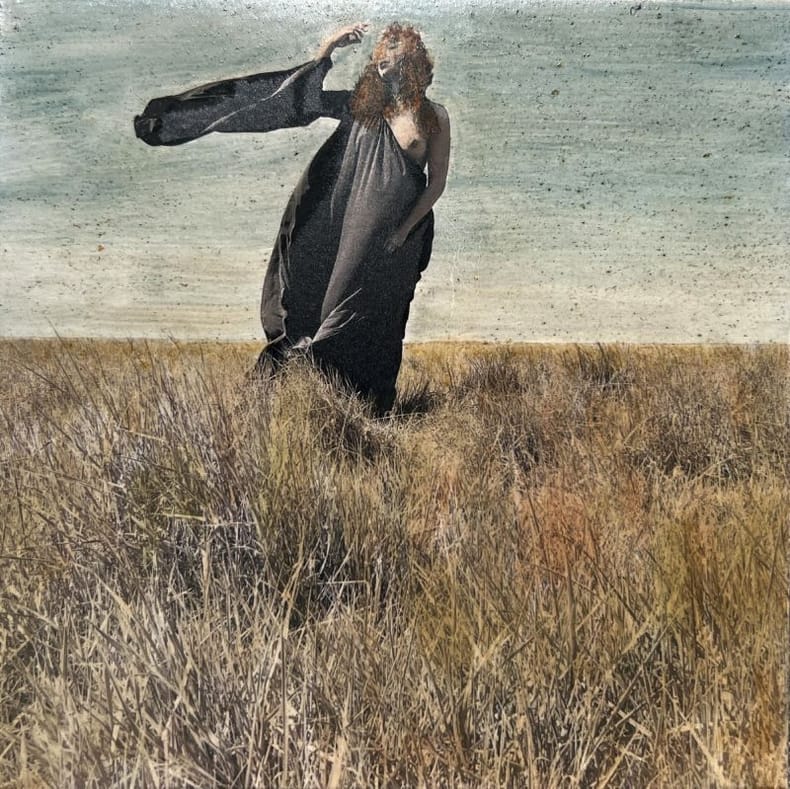
2020241752020 Épreuve photographique transférée sur bois, rehauts de pigments et lavis d'huile, 2020, 20 x 20 cm., encadrée.
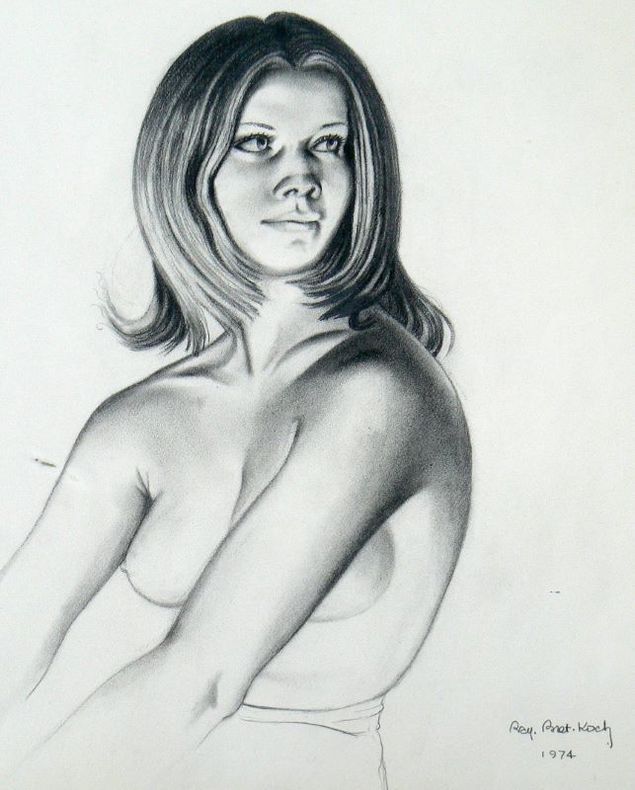
1974161871974 Dessin à la mine de plomb, signé et daté en bas à droite, 1974, 55 x 46 cm.
199768671ABHamburg-Langenhorn., Griffelkunst e. V., 1997. 33,5 x 91,3 cm; 29,6 x 40,3 cm (Blattformat), 21,7 x 30,2 cm (Motivgröße). 5 Blätter., 68671A Eine Kante gering bestoßen, sonst sehr gutes Exemplar.
21001701Japan n.d. ca 1880's. Hand-made Washi paper cover accord- ion folding album 11 images mounted with old corners each 9 x 14 cm. hand-colored pastel colors albumen types clear & strong images little fading superbly posed. R A R E The photographs are of high quality skillfully composed the photographer is unknown likely the work of Kimbei or his school. The portraits are posed some in a studio others in Japanese homes. True to the times in which these girls and ladies lived during the Meiji 1868-1912 they all wear the stunning and traditional elaborate Kimono with matching coiffeurs with hair pins and other accessories. The Kimono reflect the season some show winter type with heavy over wear others for warmer seasons. Images are: Three Japanese girls and a rickshaw puller: two ride-one with umbrella the other stands nearby. A Japanese woman wears an elaborate Kimono & sits on Tatami mats holding a "Tama" or thread ball. Young girl stands with umbrella. Four women have tea & cakes around the Hibachi a Tansu in the background as they sit on Tatami. Three women pose: two stand one sits. Four women sit on the studio floor and pose rice bowls sit on a tray nearby with a small square Hibachi one holds a fan. Two girls pose one holds her large Kasuri textile Kimono sleeve on her lap they wear Tabi socks and pose. Five women pose pose: two stand three sit on the floor Tansu & small squ- are Hibachi with a tray of tea cups. A woman stands by a foreign type table with a potted plant & table cloth while holding a folded black umbrella. Three women sit on the floor two hold fans three other fans sit on the floor adj- acent to them is a small shrine or Mikoshi they all sit on Zabuton pillows one smokes a long pipe Kiseru. Two women pose one stands the other sits. By and large an excellent and most exquisite view of period Japanese women their life style costume and manners. What is additionally wonderful about these delicate photographs are the expressions on the women's faces. Some show a stoic or "inscrutable look" others reveal a bewildered look as they are posing for the difficult to understand camera and photographer. All reflect an earlier period of Japanese innocence and awe in the unusual use of the latest mode of "high technology" while posing. A nice lot ! Photographs of this high quality and fascinating subject matter are SCARCE. . unknown
First edition, November printing (The play opened in October, 1955, the month prior) . Original paper wrappers. 8vo. 52 pages; 23cm. Program for the Original Broadway Production, at the Cort Theater, of The Diary of Anne Frank with the original cast, from the month after it opened. The entire cast and crew of the production, Kermit Bloomgarden, Joseph Schildkraut, Susan Strasberg, Frances Goodrich, Albert Hackett, Dennie Moore, Jack Gilford, Clinton Sundberg, Lou Jacobi, Garson Kanin, Boris Aronson, Helene Pons, and Leland Watson, had successful careers in the entertainment industry. Joseph Schildkraut, the actor who played Otto Frank, was a prolific film and theatre actor who performed in Show Boat (1927) , The Twilight Zone (1961) , Marie Antoinette (1938) among several others. He received an Academy Award for Best Supporting Actor for his role as Alfred Dreyfus in The Life of Emile Zola (1937) and was nominated for a Best Actor Emmy Award in 1963 (Wikipedia, 2016) . Susan Strasberg, daughter of Lee Strasberg of the Actors Studio, was the youngest actress to star on Broadway with her name above the marquee title for her Tony nominated role as Anne Frank in this production (Wikipedia, 2016) . Strasberg starred and guest-starred in many other roles throughout her career and wrote two books, one an autobiography and one about her friendship with Marilyn Monroe. Jack Gilford, the actor who played Mr. Dussel, was discovered by his mentor Milton Berle, was nominated for several Tony Awards and an Academy Award, and started the comedy tradition of monology later used by comedians such as Lenny Bruce and Woody Allen. His career was derailed when choreographer Jerome Robbins named him and his wife, Madeline Lee, as Communist sympathizers to HUAC. Features hundreds of illustrated advertisements, some with cartoons and some with black-and-white photographs, for restaurants, cars, clothing stores, and more. Includes several articles such as What the man will wear, Whats What, and Facing Your Audience. SUBJECT(S) : Anne Frank, Broadway, Theatre. OCLC lists no holdings worldwide. Minimal markings and wear. Very good + condition. Rare. (Holo2-133-10A)xx
pp. vi, (2), 262. LACKS 2 pages of advertisements. Slight loss at bottom of pp. 235/236. 8vo. 210 mm. Full leather binding; boards detached. Full title: SIX SKETCHES ON THE HISTORY OF MAN. Containing, the Progress of Men as Individuals. I. The Diversity of Men, and Languages. II. Of Food, and Population. III. Of Property. IV. The Origin and Progress of Commerce. V. The Origin and Progress of Arts. VI. The Progress of the Female Sex. With an Appendix, concerning, the Propagation of Animals, and the care of their Offspring. Age stain. Foxed. Loss bottom margin and a few lines of text on pages 235 & 236. Manuscript ownership of Robert Ross on title page. Capt. Robert Ross (1753-1823) was born in Lancaster, PA, and died in Nicholson Twp, Fayette Co. PA. In 1776 Robert took the oath of allegiance before Col. Miller of Lancaster Co. PA. and enlisted in the Revolutionary War as a private in Capt. James Taylor's company, 4th Penn. Battalion. Ross was regimental color bearer in 1776, under Gen. Anthony Wayne, at the storming of Stony Point (NY). In 1779 at Brandywine and through the Canadian campaign to the close of the war. Robert Ross fought also in the Indian Wars of 1790-1794. Robert Ross was an early settler, of Nicholson Twp. It does not appear that in the early part of the Revolutionary war he was reckoned among the adherents of the patriot cause, but in June, 1779, he took the oath of allegiance to Pennsylvania, and afterwards served to the end of the war under General Wayne. At the close of the struggle he, like thousands of others, was paid the arrears due him for services in Continental money, which was depreciated to one-fortieth of its face value. He afterwards served in the various Indian campaigns in Ohio and Indiana, rising to the rank of captain. In the Whiskey Insurrection of 1794, Capt. Ross was on the side of the insurgents, and commanded a company of about one hundred men of the western and southwestern parts of the county, a part of the (supposed) available force of the insurrectionists to be used in opposition to the government. At the head of this company Capt. Ross marched to Uniontown in August, 1794, to raise the 'liberty poles' in the town, and two miles south of it at Gaddis' place. When Gen. Lee came in with his army to suppress the insurrection, a squadron of cavalry was sent towards the Monogahela for the capture of Robert Ross as insurgent leader, but the expedition was unsuccessful. Evans 14801. Scarce. EVANS1
1901STLD0011Wien, J. Löwy 1901. 34 x 28 cm. 1 Bl. Vorwort, 1 Bl. Inhalt (mit Abbildung), 24 numm. Tafeln, 1 numm. Farbtafel, in bedruckter Flügelmappe, Umschlagtitel. Die Mappe randrissig, die beiden Textblätter am Innenrand fleckig. Erfüllt von den malerischen Reizen Bosniens und der Herzegovina, von dem interessanten Getriebe des Volkes und den eigenartigen Thierformen versuchten die Maler .. die auf Studienreisen gesammelten Eindrücke mit Stift und Pinsel wiederzugeben Ewald Arnd
180382211803 reliure pleine toile rouge (cloth-bound) in-octavo, dos long (spine without raised band) nerfs (spine with raised bands) - pièce de titre à filets sur fond bleu-marine (label of title with gilt line), plats muets (cover without text), gouttière long papier (fore-edge great paper), légères piqûres in fine (light smalls points of redness marks at rear), 156 pages, 1803 - An XII à Paris Chez Desessarts Libraire,
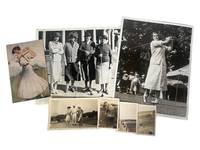
1910200811910. Women's competitive golf archive 1910s to 1930s documents women golfers in practice tournament and club settings during the formative decades of organized women's golf in the United States. The group provides visual evidence of women's athletic participation in a sport long associated with country-club respectability social access and gendered expectations about dress leisure and competition. The U.S. Women's Amateur Championship began in 1895 as one of the USGA's first three championships and the USGA identifies it as marking the beginning of women's competitive golf in the United States; these photographs and postcard show how that competitive culture appeared in everyday and press imagery in the decades that followed. <br /> <br /> The archive consists of seven items dated between the 1910s and 1930s: six silver gelatin photographs and one brightly illustrated postcard measuring from approximately 1.75 x 2.75 inches to 7.25 x 9 inches. The photographs include a 1934 press image of golfer Barbara Stoddard in a swing position; a 1935 lineup from the Annual Women's St. Valentine Golf Tournament identifying Helen Waring Sarah Fownes Wadsworth Myrom W. Marr and W.C. Fownes Jr.; three small circa 1928 photographs of women positioned with clubs on a golf range; and an early 1930s image of two women posed with a man at a country club the women holding several clubs with one woman wearing trousers. The illustrated postcard from the early twentieth century shows a woman swinging a club in an athletic outfit still shaped by long-skirted fashion rather than later sportswear. Across the group recurring details include golf clubs held as markers of athletic identity posed swings tournament lineup conventions country-club settings and changing women's clothing from long skirts to less restrictive dress.<br /> <br /> The archive records women's golf as both competitive sport and social performance making visible the relationship between athletic skill class-coded club culture and evolving public ideas about women's physical capability. Its strongest research value lies in the mix of press photographs vernacular practice images tournament documentation and illustrated popular culture allowing comparison between women as actual competitors and women as stylized sporting subjects. Light handling wear minor edge wear and typical surface wear to photographs and postcard; images remain clear and identifiable; overall very good. Cohesive women's sports archive documenting early twentieth-century women golfers as competitors club participants and subjects of changing athletic representation. unknown
16666Women Education Medical School Photo archive of women students at Duke University School of Medicine Class of 1950. Consist of 23 original Gelatin silver print black and white photos. 3 x 4 ¼ inches. c. 1940s-1950. Images show students at work in blood banks in labs studying and relaxing between classes. Includes photos of school buildings such a the Medical School entrance in addition to several instructors. Some include handwritten captions giving a little more information such as a picture of the "Class of 1950" with 8 women and 1 man identified: "Bev Helen Belle Monkey Noni Ann Betty Joann Bill". Other captions include names of doctors instructors fellow students and the type of work being done in images such as "Bev - vaccine" and "Beth Bueliner - Blood Bank". Other photos identify the subject as the Media Lab Chemistry Lab working with EKG and studying Hematology blood. Students outside of medical school entrance. Photos of a quick break grabbing a coffee and snack of animal crackers.<br/><br/>Although women had participated in the informal practice of medicine for hundreds of years there were relatively few women studying medicine in the United States at this time. By 1900 only about a dozen medical schools had opened to coeducation and female graduates often found themselves unable to access training hospitals and professional associations. The trailblazing young women in these photos whom we see performing experiments and examining patients bucked the trend of their generation to become doctors. Early images of women in medicine are very rare and a fine addition to a collection. Very good condition. unknown books
1944147961944. Bloom Barbara C. Typed Letter Signed to WAVES officer's mother and accompanying photographs 1944 documents United States Navy WAVES service during World War II and the recognition of women's military labor within the wartime home front. The material captures the relationship between enlisted women's service and familial acknowledgment situating women's naval participation within the broader Allied military campaigns against Germany and Japan. The letter explicitly ties the daughter's service to active wartime offensives while the accompanying photographs provide visual evidence of WAVES personnel in both formal and informal settings offering insight into daily life camaraderie and presentation of women in uniform during the final year of the war.<br /> <br /> Bloom Barbara C. Typed Letter Signed. Office of Naval Procurement December 1944. One page. Accompanied by six black-and-white photographs of Navy WAVES stationed aboard USS Hunter. The letter addressed to Mrs. Cadman praises her daughter's contribution to the war effort stating: "You have the right to be very proud of what your daughter has done in speeding our recent offensive ever closer to the heart of Germany and Japan" and includes statements attributed to Franklin D. Roosevelt and Ernest J. King recognizing the WAVES' service. It further references the daughter's conduct discipline and contribution to the reputation of the organization. The six photographs depict groups of uniformed WAVES women aboard USS Hunter including posed portraits group formations and informal off-duty scenes in which women are gathered socially. One larger photograph bears period handwritten identifications on the reverse naming the women pictured. Image sizes range from small personal formats to larger prints capturing both individual and collective representation.<br /> <br /> The Women Accepted for Volunteer Emergency Service WAVES program established in 1942 expanded the role of women within the U.S. Navy by assigning them to non-combat duties thereby releasing male personnel for deployment. By 1944 WAVES had become an established component of naval operations with thousands serving in administrative technical and logistical roles. The letter reflects official efforts to frame women's service as both militarily essential and socially respectable emphasizing family pride moral conduct and national duty. The photographs reinforce this narrative through visual presentation of uniformed discipline and group cohesion. Together the materials provide direct documentation of women's participation in wartime service and the integration of that service into domestic and public recognition structures during World War II. Light edge wear and minor foxing to photographs; one image with handwritten identifications on verso; letter with docket holes at top margin not affecting text; overall very good condition. A cohesive grouping linking official wartime communication with visual documentation of WAVES personnel. unknown
Hardcover quarto in dark brown cloth boards with half of spine missing. 428 pages frontispiece (portrait) 21 cm Women -- Social conditions. 19th century women. Domestic sphere. Ancient dieties. Margaret Fuller. Early American Feminism
16935Women's College Photo album from student at Georgia State College for Women class of 1923. Album includes time she was at school with images of classmates around school buildings. 138 photographs of various size approximately 1 x 1" to 3.5 x 2.5". Photos are dated from 1919-1926. Original black textured cloth boards. 8.25 x 11". "Photographs" gilt on front cover. 100 pages. Hand lettered on first page: "Marion Tye / Devereux / GA". Images of young women at leisure between classes. One page labelled "Roomies / Terrell Annex - Room 211" has photos of friends captioned "A Queen of hearts" "Flossie" "The Black Sheep" and "My Gurls." Page 7 features small cutouts of women's portraits arranged in a "23" configuration likely containing images of all members of the class of 1923. Georgia State College for Women was founded in 1889 as the Georgia Normal & Industrial College as a women's institute; and in 1917 it was authorized to grant 4-year degrees to women pursuing teaching degrees. It is now Georgia College recognized as one of the best undergraduate teaching programs in the US South. The remaining pages are filled with memories of friends and family. Some include interesting trips from nearby locations such as Lake Junaluska North Carolina and "Mt. City" Mountain City GA. A photo of 8 young men wear "Landa Park" tanks. One photo of a man playing saxophone with caption "Alabamy Bound." Many of the remaining photos are of young children. As this figure attended a teacher's college these photos could likely be from students she later taught. 2 pages detached 3 loose photos. Good to very good condition. unknown books