8 007 résultats
Madeline, LaurenceIn Pristine Condition. Ltd. Edition unknown
Alsterdal, ToveIn Pristine Condition. unknown
AMA-1021S.l., L’Extrême Contemporain, 2022. In 8°, broché, couverture à rabats. 238 pp., [5 ff.].
2091502133536951Keisoshobo N.A. Soft Cover. Fine. Number of books: 1 Keisoshobo paperback
197622305NY: National Assoc. of Women Artists 1976. 8vo pp. 58. Paper wraps. Illustrated with black and white reproductions of the prize-winning entries. VG. Includes a membership list and a list of the works with their gallery locations. National Assoc. of Women Artists unknown books
2091502133536950Keisoshobo N.A. Soft Cover. Fine. Number of books: 1 Keisoshobo paperback
964s. l. : 1861-1889. « [MADAME PARENT] EST À L'ENSEIGNEMENT PROFESSIONNEL DU PIANO CE QUE MME DE SÉVIGNÉ FUT AUX LETTRES »
011070[Boxe], Archipel de Tonga, scène de Pugilat entre deux femmes. Gravure vraisemblablement issue d'un livre, dessiné par Danvin (?) gravé par Massard. 125*205mm. [189-2] 15
Very Good Russian Original concert advert in Russian with autograph signature and inscription by Turkish female pianist Idil Biret. (21x14 cm). Printed advert in Russian, inscription and signature in Turkish. 4 p. Signed to Turkish diplomat Ismail Berduk Olgaçay, (1925-). [Concert advert of Idil Biret, Moskovskaia Gosudarstvennaia Filarmoniia with autograph signed Biret to Turkish diplomat Ismail Berduk Olgaçay]. Illustrated cover. Rare.
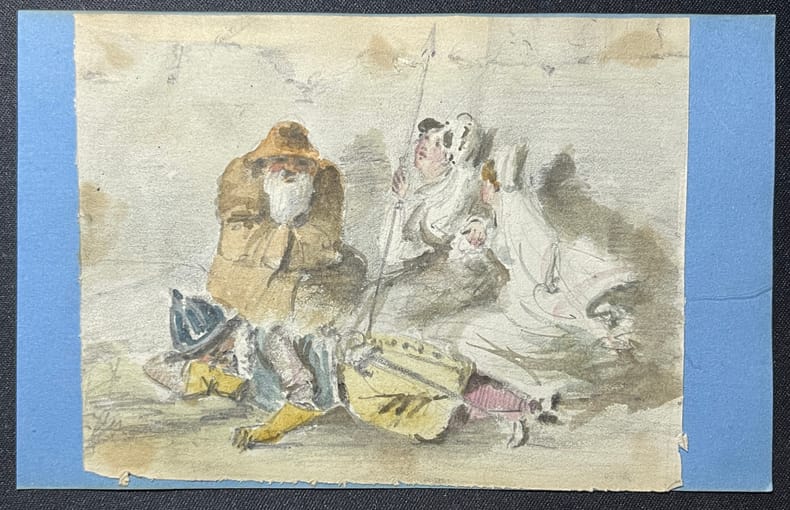
015924[Dessin romantique] Vieillard, Militaire & deux femmes. Crayon sur une feuille contrecollé sur une feuille bleue, environ 100*155mm, ca.1830. [229]
Very Good Turkish Original wrappers. 12mo. (16 x 13 cm) In Turkish. 95, [1] p. Early edition of this scarce first book of Tugcu, a non-fictional work including interesting advice for women "to keep their husbands" as well as advices such as "being clean, not showing bare feet to the husbands, dressing nicely", etc. In the early Republican period, this book was one of the early-modern examples of 'mansplaining'. Tugcu was a prolific writer who wrote more than 200 novels in the literary field, which were aimed mostly at children and young people. He was particularly known for his novels with pathetic subjects and melodramatic lattices. Not located in OCLC.
Very Good French Original wrappers. Roy. 8vo. (24 x 16 cm). In French. [v], 163, [1] p. Chippings on extremities of cover, rubbed on spine, overall a good copy. First edition of this scarce book titled in English "The Legal Status of Women in the Law of Islam", written by Al-Yafi who was the Prime Minister of Lebanon serving twelve times between 1938 and 1969, and at the forefront of the struggle to give women the right to vote, which he was able to achieve with his cabinet in power in 1952. Abdallah Al-Yafi is the first Arab to receive a PhD from the Sorbonne University, where he wrote his thesis about women's rights in Islam. The thesis subject was "The Legal Status of Women in the Law of Islam" (French: La Condition Privée de la Femme dans le Droit de l'Islam). Drawing from Quranic decrees and Islamic principles, he made a case about how women are supposed to be allotted more rights in society. Al-Yafi believed that the empowerment of women was crucial for building a stronger society, equality providing a steadier base. These thoughts, when expressed in the 1920s, had quite an 'avant-garde' ring to conservative Muslim ears: they were not always welcome with wide open arms or minds. Later on in his political life, Abdallah Al-Yafi's political opponents brandished his thesis as a weapon of defamation to tarnish his reputation. According to them, he was not a "righteous Muslim" but a French minion who had given in to the French authorities-the colonial mandate authority in Lebanon at the time-in blaspheming the Islamic religion in reward of a "Doctorat d'État". These were aimed at ruining the honest image that he so carefully cultivated throughout his life.
015642[Lyon, Femmes enceintes, Promotion de l'allaitement, Beaumarchais] Institut de bienfaisance de Lyon - lot de 4 imprimés. Lyon, Faucheux, 1784 & Lyon, Bruyset, 1784-1785. In-4, 12p. Très intéressant ensemble autour de la fondation de l'Institut de bienfaisance. Cet institut, fondé fin 1784 et actif de 1785 à 1790, aida 475 mères allaitantes dont seulement 16% des enfants sont morts alors que les enfants mis en nourrice mourraient dans 2/3 des cas. Il s'agissait d'apporter un secours financier aux mères afin qu'elles puissent allaiter. La révolution eut probablement raison de cette oeuvre financée par les notables. Nos documents sont donc : -un « troisième avis » aux femmes enceintes qui accoucheront en 1785 et voulant allaiter. Cet avis liste les noms des officiers et administrateurs dans chaque quartier (sd, permis d'imprimer du 24 décembre 1784). -La délibération des officiers en chef de la garde et milice bourgeoise actant la contribution de ceux-ci à l'oeuvre (22 décembre 1784). -Une instruction pour la formation des bureaux particuliers des quartiers de la ville (28 décembre 1784). -Le règlement provisoire de l'institut, signalant pourvoir déjà secourir 112 femmes à raison de 4 dans chacun des 28 quartiers et indiquant comment les choisir (sd, permis d'imprimer du 12 janvier 1785). C'est Beaumarchais qui avait proposé cette création le 4 août 1784. Très rare ensemble autour de cette oeuvre éphémère. [90]
183040052Sans lieu, , (c. 1830). 2 vol. in-8 manuscrits à pagination continue de (1)-922 pp. à 19 lignes par page, veau brun granité, dos lisse orné, filet et frise dorés d'encadrement sur les plats, tranches dorées (reliure de l'époque).
198969258ABBath., Artsite Gallery., 1989. 28,7 x 21 cm. 79 S. Illustrierter OKarton., 69258A Erste Auflage. Sehr gutes Exemplar.
Very Good Turkish Archive of documents of (Margot Dernbach, later Uzmay) an emigrated woman from Nazi Germany to Turkey; of the wife of Kutlu Oguz Hakki Uzmay who was the son of the Turkish politician and sociologist Ismail Hakki Uzmay (1881-1950), and brother of Afet Inan (1908-1985). This collection contains sixteen documents: Six insured employment certificates, a health certificate of herself including her son Can Uzmay and her husband Kutlu Oguz Hakki Uzmay prepared in 1972, a tax card prepared in 1965, two payment certificates from the German Hospital in 1975, a tax registration slip prepared in 1965. Some documents are with a photograph of Margarete Uzmay; and Nursing certificate prepared by the General Nursing Council for England & Wales in 1959, two b/w photographs, a "certified copy of an entry of marriage act, 1949" in 1963, a student report prepared by "Volksschule" in Niedermendiz in Germany, in 1942 in the name of Margot Dernbach. One document is in German, one is in English; all the others are in Modern Turkish. This fine archive of Margaret Dernbach [Uzmay], who emigrated from Nazi Germany probably in the late period of WWII to the Turkish Republic. She was born on May 31, 1928, in Obermendiz, Germany. Her father's name is Friedrich Karl Dernbach. She married Afet Inan's brother in 1963 in Turkey and they had at least one child. She worked in Alman Hastanesi [i.e. German Hospital] in Beyoglu (Pera).
Very Good Turkish Original oil on canvas with a grey frame. Signed by artist "T. Onat, [1]980". One of her early paintings depicting of a woman in abstract form, mostly with green tones. A fine oil on canvas. Prof. Tülin Onat was born in Istanbul in 1946. She graduated from the Department of Advanced Painting at Istanbul State Fine Arts Academy (Mimar Sinan University) in 1970. She studied with Prof. Adnan Çoker, Prof. Zeki Faik Izer and Prof. Özdemir Altan. She continued her master's degree at her alma mater between 1970 and 1971. In 1973, she was given a scholarship by the Austrian Government to study at the Salzburg Internationale Sommer Academie für Bildende Kunst. In 1977, she began teaching at Marmara University. She completed her doctoral degree with proficiency arts at Marmara University in 1985. Onat became an Associate Professor in 1990. Between 1967 and 1993, she researched painting and arts in museums and galleries in Europe. In 1987, Onat established Derimod Culture Centre with Hasan Yelmen and realized retrospective exhibitions. She has had many solo exhibitions and participated in numerous group exhibitions in Turkey and abroad. As of today, Onat continues to teach at Marmara University.
Very Good Turkish, Ottoman (1500-1928) In contemporary cloth bdg. Roy. 8vo. (24 x 17 cm). In Ottoman script. 43, 59 p. Divan literature is described as "a certain tradition literature with its rules and boundaries" in the most general form. These rules and boundaries have enabled the formation of common expressions in religion and in Sufi intellection in particular and in poetry by the influence of Persian literature, and they have made it traditional in time. In this context, in classical Turkish poetry, whose male poets are predominant in quality and quantity, patriarchal rhetoric presents an outlook that its frame has been established by common tropes, metaphors, poetic themes and in short by similar imaginations and ideas. The divans of Lady Mihri (died after 1512), Lady Leyla (died in 1848) and Lady Seref (1809-1861) have different aesthetic understandings in that context. Laylâ Hanim was one of the few Turkish women poets who made a collection of her poems. Lived in Istanbul and died in 1848. Her family was close to the Ottoman Sultanate and Leylâ Hanim, witnessed the reign of Mahmud II (1808-1839) and Abdülmecid I (1839-1861). She is the daughter of Moralizâde Hâmid Efendi. Her mother Hadîce Hanim is the sister of Keçecizâde Izzet Molla, a notable bureucrat and poet of the times. She has three brothers, Atâullah Mehmed Efendi, Nurullah Mehmed Efendi and Hâlid Efendi, who died at a young age. She had financial problems after her father's death and she expressed those in her poems. Some of her poems in the divan mention that her father and brother Hâlid Efendi have lived in Bursa for a while. She is educated by Keçecizâde Izzet Molla, she is quick-witted. She experienced a short marriage, which lasted about a week; after the divorce she devoted herself to poetry. Her grave is in Galata Mevlevîhanesi. Following books include information of her life, characteristics and poetry: Fatin Tezkiresi (363), Ahmet Rif'at's Lugat-i Târîhiyye ve Cogrâfiyye (154), Tuhfe-i Nâ'ilî (895), Sicill-i Osmânî (93), Bursali Mehmet Tahir's Osmanli Müellifleri (406), Haci Begzâde Ahmet Muhtar's Sâir Hanimlarimiz (51-2), Mehmed Zihnî Efendi's Mesâhir'ün-Nisâ (195), and Semseddin Sâmî's Kâmusü'l-A'lâm (4060). These resources indicate that Leylâ Hanim is from a noble family and the links of the family to the high cadres of Ottoman bureaucracy and their intellectual property have left traces in her poetry. AH 1299 = AD 1882. Fourth Edition. (Source: All poetry). OCLC 163633996.; Özege 4177 / 2. First Bulaq Edition. Litho. Rare.
Very Good Turkish, Ottoman (1500-1928) Original cloth bdg. with marbled boards and brown cloth spine. Fading on spine and foxing on boards and pages. Overall a good copy. Roy. 8vo. (24 x 17 cm). In Ottoman script (Old Turkish with Arabic letters). 118 p. Lithographed. Early edition of this rare poem collection by Leyla Hanim (?-1847), who was a few female poets in the Ottoman literature, known for her lyrical love poems. Divan literature is described as "a certain tradition literature with its rules and boundaries" in the most general form. These rules and boundaries have enabled the formation of common expressions in religion and in Sufi intellection in particular and in poetry by the influence of Persian literature, and they have made it traditional in time. In this context, in classical Turkish poetry, whose male poets are predominant in quality and quantity, patriarchal rhetoric presents an outlook that its frame has been established by common tropes, metaphors, poetic themes, and in short by similar imaginations and ideas. The divans of Lady Mihri (died after 1512), Lady Leyla (died in 1848), and Lady Seref (1809-1861) have different aesthetic understandings in that context. Leylâ Hanim was one of the few Turkish female poets who made a collection of her poems. Lived in Istanbul and died in 1848. Her family was close to the Ottoman Sultanate and Leylâ Hanim, witnessing the reign of Sultan Mahmud II (1808-1839) and Sultan Abdülmecid I (1839-1861). She is the daughter of Moralizâde Hâmid Efendi. Her mother Hadîce Hanim is the sister of Keçecizâde Izzet Molla, a notable bureaucrat, and poet of the times. She has three brothers, Atâullah Mehmed Efendi, Nurullah Mehmed Efendi and Hâlid Efendi, who died at a young age. She had financial problems after her father's death and she expressed those in her poems. Some of her poems in the divan mention that her father and brother Hâlid Efendi have lived in Bursa for a while. She is educated by Keçecizâde Izzet Molla, she is quick-witted. She experienced a short marriage, which lasted about a week; after the divorce, she devoted herself to poetry. Her grave is in Galata Mevlevîhanesi. Several books include information of her life, characteristics, and poetry such as Fatin Tezkiresi (363), Ahmet Rif'at's Lugat-i Târîhiyye ve Cogrâfiyye (154), Tuhfe-i Nâ'ilî (895), Sicill-i Osmânî (93), Bursali Mehmet Tahir's Osmanli Müellifleri (406), et alli. These resources indicate that Leylâ Hanim is from a noble family and the links of the family to the high cadres of Ottoman bureaucracy and their intellectual property have left traces in her poetry. AH 1299 = AD 1882. (Source: All poetry). OCLC 949496080.; Özege 4177 / 4. First two editions were printed in Cairo.
Very Good Turkish Original b/w press photo. (12x18 cm). Portrait photograph. [Photograph of Zehra Kosova]. Photograph by Hande Ertem.
555Paris : Nadar & Cie, 1864. UN RARE PORTRAIT PHOTOGRAPHIQUE SUR ÉMAIL INÉDIT DU GRAND NADAR
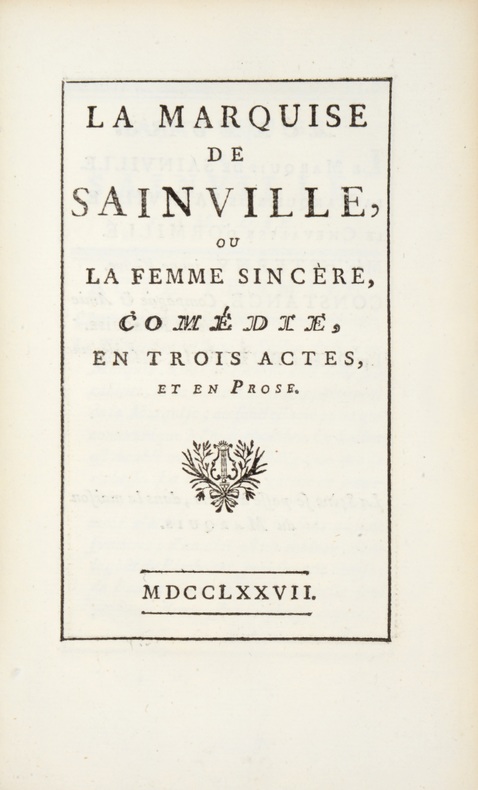
177215319[], [], 1772-1777. 4 pièces en 2 volumes in-8, texte encadré, veau marbré, dos lisse orné à la grotesque, pièces de titre en maroquin rouge et de tomaison en maroquin noir, tranches rouges (reliure de l'époque).
114727Série de cinq volumes in-12 de 90 x 150 mm environ comportant 40 textes. Demi-chagrin bleu, dos à quatre nerfs portant titres et tomaisons dorés, gardes marbrées. Intérieur frais et ensemble en bon état malgré les défauts à signaler : un dos insolé, de discrets frottements sur les coins et les coiffes.
182240059Sans lieu, , (circa 1820-1822). 2 parties en 1 vol. in-8 manuscrit de (1)-241-125 pp. à 19 lignes par page, veau brun granité, dos lisse orné, filet et frise dorés d’encadrement sur les plats, tranches dorées (reliure de l’époque).
1371787Paris: Musée de l'Homme, Museum National d'Histoire Naturelle, 1983 in-4, 96 pages, illustrations. Broché, cachet, très bon état. Sommaire: J. GUIART. Les femmes et l'ethnologie. - T. BATTESTI. Les femmes du Livre des Rois. - S. THIERRY. Quelques images de la femme cambodgienne. - J. GARCIA-RUIZ et P. PETRICH. La femme, la lune, la fécondation chez les Mocho. - A. CADORET. La malheureuse histoire de Dona Ana. La femme et la Semaine sainte. - D. CHAMPAULT. Etre femme au Yémen. - A. DUPUIS. Etre ou ne pas être. Quelques sociétés de femmes au Gabon.