WAR MEMOIR, SPAIN – MONTVAILLANT, H deBiblio.com
11 490 résultats
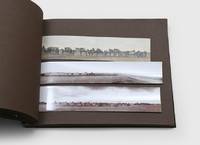
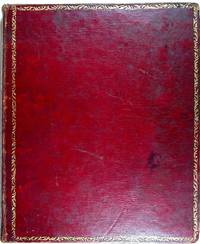
18142677Hunthill House Scotland 1814. Written in English in a small and narrow but legible italic hand with occasional corrections or additions in a different hand on wove paper watermarked Budgen & Wilmott / 1812. Four unnumbered pages of French text at front and four at back the latter dated 27 May 1814 in a different hand apparently the author’s on different paper with no visible watermark. Very good; some occasional spotting. Contemporary red straight-grained morocco gilt edges scuffed and scraped joints strained head of spine chipped.<br /> <br /> An unpublished first-hand memoir filled with searing descriptions of the horrors of war by a French army officer veteran of the terrible Peninsular War. The narrator was one of few survivors of the surrender of French forces after the Battle of Bailén in July 1808. The background to this event was Napoleon's attempt to complete the isolation of England from the continent by sending a French army into the Iberian Peninsula to occupy Portugal and Spain thereby preventing British trade with the Continent.  Napoleon later referred to the Peninsular War characterized by appalling cruelty on both sides as the ‘Spanish ulcer’; it was to be one of the primary factors in his downfall. <br /> <br /> General Pierre Dupont de l'Étang was charged with securing French control of the major cities in Spain. Dupont's 20000 men had initial success but as they penetrated deeper into Spain they faced increasing resistance. This memoir by H. de Montvaillant an 18-year-old Protestant officer from Montpellier who was serving in the second Corps d’Observation of the Gironde recounts the route and experiences of Dupont's army to its furthest point of penetration into Spain: Córdoba. There after a particularly bloody and cruel occupation the army was forced to withdraw and was soon overwhelmed. Dupont surrendered his army at Bailén. Originally promised safe passage most of the French were slaughtered immediately after their surrender. <br /> <br /> Montvaillant’s account commences with the French arrival in Bayonne in November 1807. By December 22 the French troops had arrived in the town of Vittoria 50 miles west of Pamplona and by January 9 1808 they had advanced to south of Burgos. Detailed descriptions of the monuments churches libraries art and inhabitants of various localities passed through in their zigzagging progress south through French-occupied Spain enliven this first part of Montvaillant’s narrative: he describes with evident pleasure Burgos Valladolid Guadarrama and the Escorial Madrid and Toledo where the troops spent most of May. He makes the acquaintance of many Spaniards. In Toledo a young woman explains to him the contradictions of Spanish women rendered emotionally susceptible by their extreme religious devotion but whose sometimes shocking to the French frankness contrasts with a strict sexual morality. Later he deplores the time wasted in Toledo while the Spanish insurgents were building up their strength. <br /> <br /> As the French troops proceed southward the local populations exhibit increasing hostility often hidden under excessive politeness. They encounter a Frenchwoman who has fled Bailén saying that she was not safe there because of her nationality but the soldiers assume that she exaggerates. By the end of May the French pass the Sierra Morena and enter Andalusia and the truth becomes evident. It is at this point that the narrative takes on an ominous tone. Montvaillant notes that the population had abandoned the villages taking all foodstuffs. He records that the senior officers had assumed that the army would only be harassed by small bands of “brigands†a far cry from the massive resistance that it encountered: “We learned that the insurgents each day gathered strength and that the Junta of Seville was determined to stop us in our March. The following day we got to the little town Baylen in whose plains two months afterwards our destiny was decided†p. 86. <br /> <br /> The first battle was engaged at Alcoléa just upstream from Córdoba an event Montvaillant describes in a poem in French transcribed. The next day the French arrived at Córdoba where the Spanish enemy had taken refuge. A musketry attack upon their arrival so enraged General Dupont that “he gave up the town to pillage" p. 88. Allowed to run wild the French soldiers sacked the city committing hideous crimes: “Neither tears promises or humble supplications could arrest the thirst for pillage.†p. 89. Discipline was nonexistent drunkenness and looting continued for eight days. The soldiers raped the women and ransacked homes. Montvaillant presents himself as a savior of women and the elderly on several occasions but notes that some of the Spanish whom he and fellow officers placed under protection in Córdoba were later “the first to persecute the unprotected French prisoners and even those who had been their Benefactors†p. 92. While he does not detail the contents of the soldiers’ plunder it is known that the rich churches of Córdoba were heavily looted. Notwithstanding the circumstances he manages to visit and describes in amazement the great mosque-cathedral scarcely changed in a thousand years. <br /> <br /> Nine days after the French entrance into Córdoba Montvaillant and his troops were ordered back to Alcolea to guard a bridge crossing. En route there from Cordóba he discovered and graphically describes the many mutilated corpses of the French sick and wounded who had been left along the line of march while the main body of General Dupont's troops had taken Córdoba. “It is almost incredible how people calling themselves Christians could push inhumanity to such an excess†p. 96.<br /> <br /> The army moved back to Andújar near Bailén and encamped. Montvaillant records that the general staff had by now realized that the French were outnumbered and that the opposition had organized itself. Dupont's army was isolated without hope of reinforcement or re-supply defending a garrison situated on a flat plain in the scorching sun. The narrative becomes one of revenge heat troop dispositions losses tactical mistakes errors of the general staff and increasing difficulties. Dupont's surrender came on July 20 1808 and thus begins the second part of the memoir devoted to the narrator’s experiences as a prisoner of war. <br /> <br /> The officers were segregated from the defeated army before being escorted supposedly to return to France. Most of the army was slaughtered within days. Montvaillant records details of the survivors’ months-long “death march†southwards to the coast. Having finally arrived at Jerez de la Frontera near Cádiz to await embarkation to France they waited in vain. Their captors kept them in Jerez having discovered that the ruling Junta of Seville had abrogated the surrender treaty and that the inhabitants were planning to massacre them on their approach to Cádiz. Montvaillant’s account is henceforth devoted to anecdotes of captivity and of the prisoner’s horrendous treatment at the hands of their escorts and guards. He is unclear as to exact dates but it seems that the French captives were held at Jerez until mid-December and then hastily driven aboard ships to sail for the Balearic Islands. A severe storm intervened and they were blown off course to Africa finally coming to port at Gibraltar; several days later they were blown back to Andalusia at Málaga. After more storms and much sailing having been at sea 25 days for a voyage which normally took a week they finally made the Balearics. <br /> <br /> And here the worst surprise of many bad surprises awaited them: the desert island of Cabrera. Montvaillant counts some 4000 soldiers and 400 officers who were forced to survive as best they could on this scorching hot nearly waterless uninhabited island p. 148. Details of his account square with Denis Smith’s monograph on the subject. During the next four years close to 9400 French prisoners of war were exiled to this island; possibly 40% died of disease or malnutrition. The officers as usual fared much better than their soldiers. Montvaillant was one of 216 officers who were collected from this exile after a month and taken to the capital Palma p. 150; another group was sent to Mahon in Minorca. There imprisoned in better circumstances the group waited although the news from outside was threatening as the Spanish "mobs" were calling for their "sacrifice." The officers between attempting escapes were able to conjure up some distractions. The narrator passed the time translating Spanish poems and plays and spending up to eight hours at a stretch playing chess. They also freely imbibed the good Mallorcan wine danced and partied; making do without women Bacchus presided as he delicately puts it. <br /> <br /> But nearly half these officers were massacred during a riot and assault on the prison by the inhabitants of Palma described by Montvaillant in gory detail pp. 158-162. The survivors were returned to Cabrera in March 1810 as were the officers from Mahon. They found there a diminished population of half-naked walking skeletons. During the next five months spent on Cabrera Montvaillant was nonetheless able to observe a thriving “political economy†on the island where enough food was still provided that the prisoners had the energy for theater productions and dances. Describing the gender-bending that took place as the men playing female roles in the performances instinctively took on conventionally feminine attitudes even to the point of inspiring crushes bickering and jealousy among the audience members Montvaillant comments that the theatrical chronicle of Cabrera would make quite a book â€un bel in folioâ€- p. 170.<br /> <p>In early August Montvaillant and the officers were removed from the island on an English ship — all unhesitatingly leaving their men to rot on the island where they remained for four more years. A diplomatic impasse kept the officers off the coast at Gibraltar for several weeks until they were finally put on ships for Portsmouth and Plymouth. Montvaillaint went on to Salisbury for a short time and then embarked again for Leith en route to his final destination in Scotland where he remained in comfortable exile until the accession of Louis XVIII in 1814. <br /> <br /> The text is written in an occasionally stilted English a translation from the author’s own French account by a family whom he had befriended at Hunthill House near Jedburgh Scotland where he stationed. Eight pages of notes in French by the author are inserted four pages at the beginning the bifolium is inserted using wax seals and four pages at the end. The French preface contains a romanticized account of the author’s Scottish sojourn including a temptress fairy and concludes with the author’s promise to never forget his friends in Scotland. The English text is preceded by the title-leaf and a one-page dedicatory poem introduced by a statement that these “`Recollections’ in an English Garb are presented by the sincerest of Friends to the Author†and dated Hunt Hill 1 January 1814. <br /> <br /> Following the narrative in a letter to his family dated from Jedburgh 27 May 1814 Montvaillant explains the history of the manuscript the remaining pages contain literary notes including translations into French of poems by Robert Burns and Sir Walter Scott. During his years of exile in Jedburgh Montvaillant had become deeply attached to the owners of Hunthill House and to their three daughters. Without them he claims he would not have survived the loneliness of his exile. In homage and gratitude he dedicated his memoir to them. His friends retained the original French version as a keepsake of their friend and an engrossing biographical narrative and presented him with this translation which he brought back to France planning to render it anew into French to share with his family and close friends. He emphasizes that he plans to keep the manuscript unpublished; perhaps the memories were too painful. <br /> <br /> Cf. Denis Smith The Prisoners of Cabrera: Napoleon's Forgotten Soldiers 1809-1814 New York 2001.</p> unknown
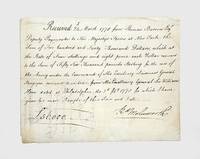
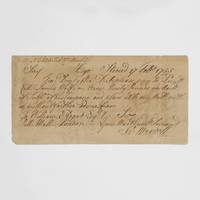
1778155748Rhode Island: 24 March 1778. Sustaining Burgoyne's Wandering Army Revealing a crucial moment in the aftermath of Saratoga this 1778 receipt documents the transfer of £56000 from New York to support General Burgoyne's imprisoned Convention Army in Boston. The receipt was signed at a delicate point for the British Army. In the summer of 1777 General William Howe succeeded in taking Philadelphia but in October a separate force under John Burgoyne was forced to surrender to Horatio Gates following the two battles of Saratoga in the autumn of 1777. Subsequently the Convention Army named for the treaty of surrender was marched to Boston where they were held prisoner. Burgoyne was permitted to leave for England in April 1778 but his army remained in captivity until the end of the war. This immense sum of £56000 perhaps equivalent to £9500000 today was sent to Burgoyne to feed his starving army. The Battles of Saratoga represented the turning point of the Revolutionary War winning the assistance from France "which was the last element needed for victory" Morgan pp. 82-3. The receipt was signed by Richard Molesworth 1737-1799 a longstanding deputy paymaster in the War Office. Molesworth is briefly mentioned in a letter to Howe on 10 April 1778 where the need for money to support General Burgoyne and his army in Boston is discussed. Richard was the brother of the Robert 5th Viscount Molesworth who inherited the title from his cousin Richard Nassau Molesworth 4th Viscount Molesworth who died without heirs. This document was previously folded and kept in an envelope mounted on the front pastedown of a book from the Molesworth family library a first edition of the English translation of Souligné's The Desolation of France Demonstrated. It was gifted by Souligné to Robert Molesworth 1st viscount Molesworth 1656-1725. Molesworth has inscribed the front blank: "Donum Authoris" Gift from the Author and his note on the title-page reads: "Mons. De Souligny sic Grandson to the famous Du Plessis Mornay". The 1st Viscount Molesworth was an experienced political figure and a prominent member of the Privy Council of Ireland who later held a seat for Dublin County in the Irish House of Commons. The book has a later ownership inscription of Samuel Crompton 1753-1827 on the preliminary blank. Crompton was a pioneer of the spinning industry and was married to Harriet Molesworth the daughter of John Edward Nassau Molesworth. John was the great-grandson of Robert Molesworth 1st Viscount Molesworth. A 20th-century bookplate of another viscount Molesworth is pasted over the white envelope which held the subsistence receipt on the front pastedown. Also present is a manuscript bankers' draft dated 1796 signed by the 5th Viscount Molesworth requesting a payment to his son-in-law John Forster Hill. Single leaf 147 x 187 mm hand-written on both sides in black ink; the book: octavo 186 x 117 mm; also with manuscript bankers' draft dated 1796 and signed by Robert 5th Viscount Molesworth. The book: contemporary black crushed morocco raised bands spine gilt in compartments covers ornamentally gilt marbled endpapers. Ink annotations possibly in Crompton's hand. Rubbed minor loss at spine ends a few marks to covers binding open to the cords after free endpapers but sound occasional minor staining. ESTC R8752; Goldsmiths' 3380. 3380. Edmund Sears Morgan The Birth of the Republic 1763-89 1956; Report on the American Manuscripts in the Royal Institution of Great Britain volume 9 No. 180. hardcover
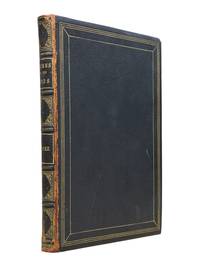
1826154580London: Printed by Thomas Davison c.1826. Dividing the spoils of the Maratha Empire A remarkable sammelband of 12 exceptionally rare papers documenting the financial aftermath of the Third Anglo-Maratha War 1817-19 focused on Pune Nagpur and Mahidpur and on the campaigns against Baji Rao II and Bhima Bai Holkar. Only eight of the twelve items are institutionally recorded each by a single copy at the British Library or National Library of Scotland. Together they constitute an unusually full record of the disputes that followed Sir Thomas Hislop's Deccan campaign including the controversies surrounding his conduct at Talnar and the long bitter wrangle over the "Deccan Prize". The papers offer a detailed narrative of operations official correspondence on the suppression or disclosure of reports formal statements of service by the divisions engaged and extensive memorials and claims submitted by Hislop and his officers. Running through them is a sustained argument over entitlement: whether booty seized at Pune Nagpur and Mahidpur belonged to the forces directly engaged under Hislop or must be shared with the more distant but formally "co-operating" Bengal Army under Lord Hastings. Viewed collectively the papers illuminate both the scale of the spoils and the legalism of their distribution. Several documents analyse the enormous sums involved from the c. £200000 formally recognised as prize to the far larger amounts in treasure and arrears appropriated by the Company's government including the celebrated hauls at Nagpur Nashik Belgaum and from arrears due to the Peshwa - figures running into millions of pounds. Others reconstruct the fighting strength movements and actions of the Deccan Army providing granular detail on its pursuit of the Peshwa the capture of his forts and the Reserve Division's decisive role in the operations against Holkar. Hislop's own long memorial to the Treasury closes the group setting out his defence and the claims of his officers in the face of adverse public scrutiny and protracted litigation. These documents are unusually revealing of East India Company warfare at the moment when the Maratha confederacy collapsed. They expose the transactional reality of campaigning - the expectation of plunder the complex distinction between "prize" and "pillage" and the intense competition between presidencies for the proceeds. They also underscore why Indian service remained attractive: opportunities for promotion were rapid conditions often lethal and the prospect of prize money a powerful incentive. Provenance: ownership inscriptions of William Rothery 1775-1864 one dated June 1833 probably the Treasury's legal adviser on slave-trade matters and later a witness before the 1864 Royal Commission on Army Prize. The volume is numbered "Vol. 3" evidently once part of a larger set now dispersed. A full list of the contents is available on request. Quarto 254 x 203 mm. Contemporary dark blue diced calf spine with four low raised bands gilt decorated and lettered direct covers with blind anthemion frame gilt edge roll Spanish on Italian pattern marbled endpapers. Binding professionally refurbished and presenting handsomely a number of papers with light vertical fold internally very good. Richard H. Davis Lives of Indian Images 1999; Rosie Llewellyn-Jones The Great Uprising in India 1857-58: Untold Stories Indian and British 2007; Carolyn Steedman The Radical Soldier's Tale: John Pearman 1819-1908 2016. hardcover
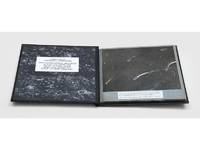
1944150498May-July 1944. Eyes over Normandy - the Reich in ruins Taken between February and July 1944 these remarkable large-scale images portray major operations against Axis infrastructure and the preparations for and execution of the Allied invasion of Europe. This is a well-curated selection in terms of both subject matter and size and quality of the prints. We have traced one other copy in institutional libraries at the Library of Congress donated by General Carl Spaatz commander of Strategic Air Forces in Europe in 1944. The shots gathered here include the bombing of Berlin "vast areas of Berlin in ruins"; the destruction of aircraft factories at Limoges Gotha Leipheim and Marienburg and of the railway marshalling yards around Paris; 14 images relate to the D-Day landings and the operations immediately following including landing craft protected by war ships off the coast and at the beaches temporary harbour with "breakwater which consists of Merchantmen and old warships anchored in a continuous line while special pontoon sections make up another and also piers and jetties"; Horsa and Hamilcar gliders at Caen; the bombardment of Caen; Tirpitz at her moorings in Kaafjord; oil refineries at Hamburg in flames; 13 images relating to the V Weapons project: Bois Carré the first V1 launch site to be identified before and after bombing; a V1 in the air pursued by a Hawker Tempest photographed from an American Lockheed Lightning; attacks on the V2 site at the "La Coupole" bunker complex at Wizernes and "the massive concrete structure at Mimoyecques. probably connected with Germany's V.2 rocket weapon" but which was actually intended to house a battery of V-3 cannons the "London Gun" supergun the site was put out of commission by 617 Squadron - "The Dambusters" - with 11900lb Tallboy bombs. A full listing of the photos is available on request. Contemporary landscape quarto post-backed album 288 x 367 mm black sand-grain cloth black marbled paper pastedowns. Containing 54 large-format original photographs 200 x 230 mm to 230 x 330 mm mounted on 27 leaves of heavy grey paper stock all with detailed typed captions giving location details of the events portrayed and in most cases date aircraft crew and height. Calligraphic title page. Binding lightly rubbed the mount leaves lightly rippled but the attached plates in excellent state; overall very good indeed. hardcover
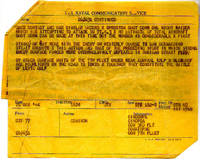
886016 Radio Telegrams including detailed Action Reports Tactical Operation Commands Battle Assessments Damage Reports etc. spanning the full duration of The Battle of Leyte Gulf 24 October - 28 October 1944. Imprinted upon wartime U.S. Communication Service USS Hector - 20M Sets yellow onionskin paper. 8" x 6.5". 7 designated "Secret- Urgent" 4 designated "Operational Priority-Secret" 2 designated "Priority-Secret" 1 designated "Top Secret-Operational Priority" 1 designated "Secret-Op-Op-Op"1 designated "Routine-Confidential". TRANSCRIBED DESPATCHES #240315 10/24/44 06;14 From: CTF 77-Vice-Admiral Kinkaid--7th Fleet - King II Attack Force Action: CTG 77.2 - Rear-Admiral Olendorf - Bombardment & Fire Support Group CTF 78 - Rear Admiral Barbey - Northern Attack Force CTF 79 - Vice-Admiral Wilkinson - Southern Attack Force CTG 77.3 - Rear Admiral Berkey - Close Covering Group CTG 70.1 - Commander S.S. Bowling - MTB Group PREPARE FOR NIGHT ENGAGEMENT X ENEMY FORCE ESTIMATED 2 BB 4 CA 4 CL 10 DD REPORTED UNDER ATTACK BY OUR CARRIER PLANES IN EASTERN SULU SEA AT 09101 24 OCT X ENEMY CAN ARRIVE LEYTE GULF TONIGHT X MAKE ALL PREPARATIONS FOR NIGHT ENGAGEMENT X TG 77.3 ASSIGNED TO CTG. 77.2 AS REINFORCEMENT X CTG 70.1 STATION MAXIMUM NUMBER PT'S LOWER SURIGAO STRAIT TO REMAIN SOUTH OF 10-10N DURING DARKNESS. #240504 10/24/44 06:34 From: CTG 70.1 - Commander S.S. Bowling - MTB Group Action: All TFC 7th Fleet All TGC 7th Fleet AGP 8 Wachapreague EXPECT TOKYO EXPRESS TONIGHT X BEFORE DARK STATION BOATS IN SECTIONS OF 2 OR 3 BOATS EACH AT FOLLOWING POSITIONS X SOUTHWEST TIP PANOAN X SOUTH OF MADILAO POINT X SOUTH OF LIMASAWA ISLAND X 2 SECTIONS PATROL BETWEEN AGIO POINT BOHOL PAST CAMIGUIN ISLAND TO SEPACG POINT MINDANAO X VITAL EASC OSTOKOWSW FILE REPORT CONTACTS AND THAT OTHER SECTION LEADERS AND WACHAPREAGUE RELAY THESE REPORTS TO CODLIVER X 21 BOATS FROM OYSTER BAY STATIONED BY SECTIONS AS FOLLOWS x SOURGDB T TIP PANOAN ISLAND X BILAA POINT MINDANAO X IN SURIGAO STRAIT 5 SECTIONS X 1 OFF SUMILON ISLAND X 1 MEDCHANTRN OFF KANHATID POINT DINAGAT ISLAND X 2 OFF KANIHALN ISLAND X 1 SOUTHEAST AMAGUSAN POINT X WACHAPREAGUE INFORM LCIS LAST STATION X SECTIONS ATTACK INDEPENDENTLY AFTER MAKING CONTACT REPORT X CTG 70.1 SENDS. #240938 10/24/44 From: CTG 77.4 - Rear Admiral T. L. Sprague - Escort Carrier Group - CarDiv22 Action: CTG 77.4 THE SUPERB AIRMANSHIP AND FIGHTING SPIRIT DISPLAYED TODAY WILL LIVE IN HISTORY X IT IS MY OPINION THAT THIS IS THE FIRST DAY OF A RUNNING FIGHT WHICH WILL MARK THE ECLIPSE OF JAPANESE SEA POWER x TO BE EQUAL TO THE TASK IS ONLY TO REPEAT WHAT YOU HAVE DONE TODAY X UNIT COMMANDERS PASS TO THOSE UNDER YOUR COMMAND. #242232 10/25/44 From: CTG 77.4 - Rear Admiral T. L. Sprague - Escort Carrier Group - CarDiv22 Action: CTF 77 Vice-Admiral Kinkaid--7th Fleet - King II Attack Force CTF 78 Rear Admiral Barbey - Northern Attack Force CTF 79 Vice-Admiral Wilkinson - Southern Attack Force All CTG's TF 77 King II Attack Force COMPLETE REPORT OF ESCORT CARRIERS OPERATIONS TWENTY FOUR OCTOBER X ENEMY AIR RAIDS IN FORCE CAUSED CANCELLATION OF VISAYAS STRIKES AND SOME REDUCTION OF SUPPORT AIRCRAFT X OUR REINFORCED COMBAT PATROL SHOT DOWN FORTY EIGHT TWIN ENGINE AND EIGHTEEN SINGLE ENGINE JAP PLANES PLUS EIGHT MORE TWIN ENGINE PLANES PROBABLY DESTROYED IN A WILD MELEE OVER LEYTE ISLAND THE BEACHES AND SHIPPING IN LEYTE GULF X PLANES SHOT DOWN INCLUDED TWENTY LILYS EIGHTEEN SALLYS SEVEN FRANCES AND WIDE ASSORTMENT OF OTHER ARMY AND NAVY TYPES X HIGH SCORE FOR THE DAY WAS MADE BY LT CDR FUNK OF SANTEE WITH FIVE KILLS ON A SINGLE FLIGHT WHILE SAWANNEE PILOTS REPORTED KNOCKING DOWN EIGHT OUT OF EIGHT IN ONE GROUP X OUR LOSSES IN COMBAT WERE TWO PILOTS AND EIGHT PLANES WHICH INCLUDED ONE FOX SIX FOX FOUR FOX MIKE TWO TARE BAKER MIKE PLUS ONE FOX MIKE MISSING X OPERATIONAL LOSSES WERE ONE FOX MIKE WHICH SPUN IN JUST AFTER TAKEOFF DURING DARKNESS WITH THE LOSS OF THE PILOT X SPECIAL STRIKE ON BACOLOD FIELD DESTROYED TWO IRVINGS ONE KATE ONE BETTY AND ONE SINGLE ENGINE PLANE ON THE FIELD DAMAGED ONE IRVING AND ONE TOJO AND SANK ONE LUGGER AND FOUR BARGES X ONE JUDY CAME OUT TO FIND OUT WHAT WE WERE DOING OUTSIDE WAS CHASED FROM FIFTEEN THOUSAND TO FIFTY FEET AND SHOT DOWN BY THE LLERT LOCAL CAP X ALL IN ALL A GRAND DAY X FROM COMTASKFBBUP SEVENSEVEN DOT FOUR. #242348 10/25/44 01:07 From: COM 3RD FLT - Admiral Halsey -Commander 3rd Fleet Action: CTG 38.1 - Vice-Admiral John McCain PROCEED AT BEST POSSIBLE SPEED TO SOUTHWEST STRIKE EARLIEST POSSIBLE ENEMY FORCE REPORTED TO BE 4 BB'S8 CA'S PLUS DD'S IN VICINITY11-20N 127-00E AT 0800 X FROM COM 3RD FLT ACTION CTG 38.1 INFO ALL TGC'S 3RD AND 7TH FLTS CTF 77 ALL TFCS 3RD AND 7TH FLTS. #250615 10/25/44 07:08 From: CTU 77.4.3 - Rear Admiral G.A.F."Ziggy" Sprague -Escort Carrier Group - CarDiv 25 Action: CTG 77.4 - Rear Admiral T. L. Sprague - Escort Carrier Group - CarDiv22 SECOND BATTLE DAMAGE REPORT X KALININ BAY RECEIVED 15 SHELL HOLES IN HULL IN ADDITION TO A FEW SMALL FRAGMENTATION HOLES X MOST HOLES PLUGGED UP AND ONLY LEAKING SLIGHTLY NOW X NUMEROUS HOLES IN FLIGHT DECK BY SUICIDE PLANE BEING REPAIRED X AT01L FLOODED BUT UNDER CONTROL X SMALL FIRE IN FUEL OIL TANK UNDER MACHINE SHOP X GYRO OK BUT HAVING GREAT DIFFICULTY STEERING X ELEVATOR LOWERED AND DECOMMISSIONED X ALL COMMUNICATIONS ON BRIDGE OUT X CAN RECEIVE VHF ONE CANNOT TRANSMIT ON ANYTHING NO RADAR X CANNOT STAND ANY INCREASE IN DRAFT XX 1020 HOEL REPORTED STOPPED TO PLUG HOLE 6 FEET IN DIAMETER 2 FEET BELOW WATERLINE X ONE GUN OUT X SOUND GEAR OUT X 200 ROUNDS OF AMMO LEFT NO TORPEDOES X NOT HEARD FROM SINCE X KITKUN BAY DAMAGE TO SHIP NEGLIGIBLE FROM NEAR BOMB HIT AND CRASH OF ENEMY PLANE X ONE KILLED 16 WOUNDED. #260139 10/26/44 06:05 From: CTF 77 - Vice-Admiral Kinkaid--7th Fleet - King II attack Force Action: None Information: CTF 38 - Vice Admiral Mitscher - Fast Carrier Forces COMAF 5 - Lt. General Ennis C Whitehead COMFEAF - General George Kenney ENEMY CRUISER AND FIVE DD PROCEEDING COURSE 300 FROM BULALAOUI POINT NORTH CEBU X SHIPS 1000 POSITIONS FROM 5 TO 45 MILES NORTH CEBU X CRUISER IN VAN X CVE STRIKE NOW IN PROGRESS BUT ADDITIONAL STRIKES NEEDED. #260427 10/26/44 04:55 From: CTF 77.4 - Rear Admiral T. L. Sprague - Escort Carrier Group - CarDiv22 Action: CTF 77 - Vice-Admiral Kinkaid--7th Fleet - King II attack Force UNDER AIR ATTACK X SUWANNEE HIT BY SUICIDE DIVE FORWARD OF BRIDGE X FIRE UNDER CONTROL. #260551 10/26/44 06:07 From: CTF 77.4 - Rear Admiral T. L. Sprague - Escort Carrier Group - CarDiv22 Action: CTF 77 - Vice-Admiral Kinkaid -7th Fleet - King II attack Force RECOMMEND ESCORT CARRIERS BE RETURNED TO MANUS IMMEDIATELY DUE SHORTAGE FUEL BOMBS TORPEDOES AND LOSS YESTERDAY OF ABOUT TOTAL OF 130 PLANES X DETAILS IN MESSAGE FOLLOWING. #260631 10/26/44 16:24 From: CTF 77 - Vice-Admiral Kinkaid--7th Fleet - King II attack Force Action: COMINCH Admiral Ernest King - Commander-In-Chief U.S. Fleet Information: CINCSWPA General Douglas Macarthur - Commander U.S. Forces Far East CINCPOA Admiral Chester Nimitz - Commander-In-Chief Pacific Fleet COM3RDFLEET Admiral Halsey -Commander 3rd Fleet COMA/RPAC Vice-Admiral John Hoover - Task Force 57 - Forward Area Central Pacific COM7THFLEET Vice-Admiral Kinkaid -7th Fleet - King II Attack Force WITH THE DEEPEST REGRET ITEM REPORT THE LOSS OF 2 CVE'S 2 DD'S AND 1 DE PLUS DAMAGE TO OTHER SHIPS IN A BATTLE FOUGHT TO THE EASTWARD OF SAMAR ON 25 OCT BETWEEN ENEMY AIR AND SURFACE FORCES AND A GROUP OF 16 CVE'S PLUS DD AND DE ESCORTS X THIS GROUP WITH SUPERB DETERMINATION AND SKILL FOUGHT AND DEFEATED A STRONG ENEMY SURFACE FORCE SUPPORTED BY REPEATED ATTACKS BY SHORE BASED ENEMY AIRCRAFT X THEY STRUCK REPEATEDLY WITH ALL MEANS AT THEIR DISPOSAL UNTIL THE ENEMY RETIRED DEFEATED AND CONTINUED TO STRIKE HIS RETREATING FORCES UNTIL DARKNESS X THE REPORT OF THE VALLIANT COMMANDER OF THIS GALLANT GROUP REAR ADMIRAL T.L. SPRAGUE IS TRANSMITTED HEREWITH X QUOTE X CTG 77.4 DESPATCH 25_00 X AS A RESULT OF TODAY SURFACE AND AIR ACTIONS CTU 77.4.3 REPORTS SAINT LO FORMER MIDWAY HIT BY DIVE BOMBER FOLLOWED BY HEAVY EXPLOSION WHICH DESTROYED SHIP X GAMBIER BAY JOHNSON AND ROBERTS MISSING SINCE BOMBARDMENT BY STRONG ENEMY FORCE BELIEVED TO CONTAIN 4 BB 8 CA AND CL 7 OR MORE DD ALL VERY FAST X ALL CARRIER GROUPS WERE UNDER ATTACK THROUGHOUT THE DAY X SANTEE RECEIVED TORPEDO HIT AND SUICIDE CRASH ON DECK WHICH STARTED FIRE AND PENETRATED BOTH FLIGHT AND HANGAR DECK X SANGAMON HAD SUICIDE CRASH ALONGSIDE WHICH PUNCTURED SIDE IN MANY PLACES X FIRES AND DAMAGE WERE BROUGHT UNDER CONTROL AND ALL VESSELS CONTINUED TO LAUNCH STRIKES AGAINST ENEMY FORCE TILL SUNDOWN X VESSELS OF TU 77.4.2 WERE UNHIT UP TO LATE AFTERNOON AND THIS GROUP LAUNCHED A TOTAL OF 6 HEAVY STRIKES ARMED WITH TORPEDOES AND HEAVY BOMBS X NORTHERN GROUP TU 77.4.3 WAS UNDER MORE OR LESS CONTINUOUS FIRE OF ENEMY BATTLESHIPS CRUISERS AND AIRCRAFT THROUGHOUT THE DAY X ALL SURVIVING CARRIERS WERE DAMAGED X WHITE PLAINS FANSHAW BAY AND KITKUN BAY GOT FIRES AND OTHER DAMAGE UNDER CONTROL AND CONTINUED TO LAUNCH ATTACKS UNTIL THE END OF THE DAY X LAST STRIKES FROM ALL SHIPS WERE OVERTAKEN BY DARKNESS AND MANY LANDED ON LEYTE X DAMAGE TO ENEMY CANNOT BE ASSESSED AT PRESENT BUT UNKNOWN DAMAGE INCLUDES 4 TORPEDOES IN BB AND NATORI CLASS CRUISER STOPPED AND SET AFIRE IN MINDANDO SEA X OFF SAMAR 2 BB WERE HIT BY TORPEDOES AND ONE CA STOPPED DEAD X DD AND DE OF SCREEN TU 77.4.3 MADE A GALLANT HEAD ON ATTACK WITH GUNS AND TORPEDOES WHEN THE CARRIERS WERE BROUGHT UNDER FIRE BY THE ENEMY BB X CASUALTIES OF SUNK AND MISSING SHIPS CANNOT BE ESTIMATED X THERE WERE 40 DEAD AND 40 CRITICALLY WOUNDED ON SANTEE X ONE DEAD ON SANGAMON X ONE DEAD ON ROWELL X REPORTS FROM OTHER TASK UNITS ARE NOT YET AVAILABLE X RICHARD S BULL AND EVERSOLE WERE ORDERED TO SCENE OF SINKING TO RECOVER SURVIVORS REPORTED IN WATER X REPORT ON SINKING RECEIVED TOO LATE TODAY BUT SEARCH WILL BE CONTINUED ASSISTED BY AIRCRAFT TOMORROW X DURING RETIREMENT COOLBAUGH GOT WHAT IS BELIEVED TO BE A SUB 11 GROUPS MISSED X SHE WAS ORDERED TO SIT ON HER CONTACT THROUGHOUT THE NIGHT X THE SPROSTON ALSO HAD GOOD CONTACT AND HAS SIMILAR ORDERS X SPROSTON SHOT DOWN ONE NIGHT RAIDER WHICH WAS ATTEMPTING TO ATTACK TU 77.4.3 X NO ESTIMATE OF TOTAL AIRCRAFT SHOT DOWN CAN BE MADE AT THIS TIME BUT THE NUMBER IS CONSIDERABLE X FIRST STRIKES OF THE DAY WERE WITH THE ENEMY ON A WESTERLY COURSE TO SAN BERNARDINO STRAIT UNQUOTE X THIS ACTION AND THAT OF THE PRECEDING NIGHT IN WHICH STRONG ENEMY SURFACE FORCES WERE OVERWHELMINGLY DEFEATED IN SURIGAO STRAIT BY OTHER SURFACE UNITS OF THE 7TH FLEET UNDER REAR ADMIRAL RALP B OLENDORF ARE HIGHLIGHTS ON THE ROAD TO TOKYO X TOGETHER THEY CONSTITUTE THE BATTLE OF LEYTE GULF. #261131 10/26/44 16:53 From: CTF 77 - Vice-Admiral Kinkaid -7th Fleet - King II attack Force Action: CTF 77.4 Rear Admiral T. L. Sprague - Escort Carrier Group - CarDiv22 Information: All TGC & TFC 3rd and 7th Fleets ESSENTIAL THAT SIX OF YOUR CARRIERS REMAIN THIS AREA IF AT ALL POSSIBLE TO PROVIDE FIGHTER COVERAGE REFERRING YOUR 260614 x DESIGNATE SIX THAT ARE IN BEST OPERATING CONDITION TO REMAIN X FILL THEM WITH FIGHTERS RETAINING ONLY SUFFICIENT VT FOR YOUR OWN ASP X SEND REMAINING CVE's TO MANUS WHEN TRANSFER OF PLANES EFFECTED X GROUP REMAINING WILL BE FUELED ACCIPITER 28 OCTOBER X CTF 77 SENDS. REF ATTACHED. #262355 10/27/44 09:43 From: CTU 77.4.3 - Rear Admiral G.A.F."Ziggy" Sprague -Escort Carrier Group - CarDiv 25 Action: CTF 77 Vice-Admiral Kinkaid--7th Fleet - King II attack Force CTG 77.4 - Rear Admiral T. L. Sprague - Escort Carrier Group - CarDiv22 Information: COMINCH - COMINCH Admiral Ernest King - Commander-In-Chief U.S. Fleet CINCPAC - Admiral Chester Nimitz - Commander-In-Chief Pacific Fleet COMAIRPAC -Vice Admiral George Murray - Commander Air Force Pacific Fleet COM3RDFLT - Admiral Halsey -Commander 3rd Fleet COM7THFLT - Vice-Admiral Kinkaid -7th Fleet - King II Attack Force CINCSOWESPAC - General Douglas Macarthur - Commander U.S. Forces Far East NPM PASS TO COMINCH CINCPAC COMAIRPAC FOR INFO X MAIN ENEMY BODY SIGHTED BY ASP AS PER MY CONTACT REPORT AT 0603 ITEM OCT 25 X FOR OVER 2 1/2 HOURS THIS FORCE WAS SUBJECTED TO ENEMY BB CA AND DD GUN AND TORPEDO ATTACK X WE WERE HIT NUMEROUS TIMES X GAMBIER BAY HAD ONE ENGINE PUT OUT OF COMMISSION DROPPED BACK AND MUST HAVE BEEN SUNK BY ENEMY GUNFIRE PLUS HOEL JOHNSTON AND ROBERTS X REMAINING 5 CVE EMERGED FROM THIS DAMAGED BUT ABLE TO MAINTAIN 16 KNOTS X ABOUT 1 HOUR 20 MINUTES LATER 6 SUICIDE BOMBERS ATTACKED X ATTACK HAD TO BE SEEN TO BE BELIEVED X 3 PLANES HIT BY AA NARROWLY MISSED SHIPS X 1 HIT PORT CATWALK OF KITKUN BAY X 1 SKIDDED LENGTH OF KALININ BAY FLIGHT DECK OVER BOW X 1 WENT THROUGH DECK OF SAINT LO WHICH SHORTLY BLEW UP X PRELIMINARY REPORTS FROM SUCH OF OUR PILOTS AS ARE IN COMPANY SHOW FOLLOWING DEFINITE DAMAGE BY OUR PLANES X 1 CA SEEN TO BLOW UP AND SINK X 1 CA HIT BY 2 TORPEDOES AND 20 MINUTES LATER OBSERVED ON ITS SIDE X 3 MORE CA TORPEDOED X 1 BB DAMAGED X THE REST GOT AWAY X THIS UNIT TOGETHER WITH PLANES OF TU 77.4.1 AND 77.4.2 TURNED BACK ENEMY FLEET BEFORE ANY OTHER OFRENBURCPNAO COUOD ATTACK X 3 REMAINING SHIPS OF MY DIVISION REQUIRE EXTENSIVE NAVY YARD REPAIRS BEFORE COMBAT DUTY X PRELIMINARY REPORT OF CASUALTIES OF SHIPS NOW WITH ME X 10 KILLED 59 WOUNDED X I UNDERSTAND 800 SANIT LO SURVIVORS HAVE BEEN PICKED UP X DETAILED REPORT LATER. #270122 10/27/44 03:45 From: CTG 77.4. - Rear Admiral T. L. Sprague - Escort Carrier Group - CarDiv22 Action: CTF 77 Vice-Admiral Kinkaid--7th Fleet - King II attack Force FOR ADMIRAL KINKAID x I DEEPLY REGRET THE EMBARRASSMENT WHICH MY 260614 MUST HAVE CAUSED YOU X YOUR 261328 HAS RELIEVED MY ANXIETY FOR MY SHIPS WHICH HAVE DEMONSTRATED A HOPELESS DEFENSE AGAINST THE CURRENT TECHNIQUE OF SUICIDE DIVES X MY RECOMMENDATION WAS BASED ON ERRONEOUS INFORMATION THAT THE AIR CORPS HAD ARRIVED X SPRAGUE #271147 10/28/44 00:40 From: CTF 77 Vice-Admiral Kinkaid--7th Fleet - King II attack Force Action: COMINCH - Admiral Ernest King - Commander-In-Chief U.S. Fleet Information: CINCSWPA - General Douglas Macarthur - Commander U.S. Forces Far East CINCPAC - Admiral Chester Nimitz - Commander-In-Chief Pacific Fleet COM3RDFLT - Admiral Halsey -Commander 3rd Fleet COM7THFLT - Vice-Admiral Kinkaid -7th Fleet - King II Attack Force All TFC & TGC 3rd and 7th Fleets ON THE 26TH CVE COVERING GROUP TG 77.4 DESPITE BATTLE LOSSES SUFFERED FROM THE PRECEDING DAY CONTINUED TO COVER OUR FORCES IN THE LEYTE GULF AREA AND LAUNCHED STRIKES IN THE CAMOTES SEA X 1 ENEMY CL WAS HIT WITH 4-500 POUND BOMBS AND 1 TORPEDO AND 1 DD CONFIRMED SUNK AFTER STRAFING ATTACK BELIEVE IT OR NOT X OTHER ATTACKS AS YET UNREPORTED X ABOUT 1100 OUR CVES WERE ATTACKED BY ENEMY PLANES X AFTER COMBAT PATROL HAD SHOT DOWN 4 OF GROUP 8-12 PLANES NIPS BEGAN A SERIES OF SUICIDE DIVES X 3 SHOT DOWN BY SHIPS GUNFIRE X 1 LANDED ON FLIGHT DECK SUWANNEE AMONG PARKED PLANES X SEVERE DAMAGE TO SHIP AND PLANES X MANY PERSONNEL CASUALTIES NUMBER UNDETERMINED X DE ROWELL OF CVE GROUP ABOUT 0900 SIGHTED PERISCOPE AND ATTACKED X MUCH OIL AND DEBRIS KEPT RISING DURING THE DAY X CLAIMS SUNK X CTF 77 SENDS ACTION COMINCH INFO CINCSWPA CINCPAC COM3RDFLT COM7THFLT ALL TFC AND TGC 3RD AND 7TH FLEETS X CRUISER AND DESTROYER GROUP HAVING REPLENISHED FUEL AND AMMUNITION AFTER THE SURIGAO STRAIT ACTION IS NOW WITH CVE COVERING GROUP X FAST CARRIERS OF 3RD FLEET ARE NOW PROVIDING CLOSE SUPPORT OF LEYTE AREA X ENEMY AIR RAIDS CONTINUED TODAY BUT WITH REDUCED EFFECTS CONTRIBUTED TO THE EFFECTIVENESS 3RD FLEET FAST CARRIERS AGAINST THE ENEMY AIR FIELDS X MORE ACCURATE INFORMATION IS NOW AVAILABLE ON THE RESULTS OF THE NIGHT BATTLE OF SURIGAO STRAIT STARTING EARLY MORNING OF 25 OCTOBER X 05 THE ENEMY FORCE WHICH ATTEMPTED TO FORCE INTO LEYTE GULF VIA THE SURIGAO STRAIT 2 BB 2CA 2 CL AND 10 DD ONLY 1 CA 1 CL AND 4 DD GOT OUT THE WAY THEY CAME IN X 2 BB IDENTIFIED AS YAMASHIRO AND BUSO 1 CA 1 CL AND 6 DD WERE DEFINITELY SUNK BY THE COMBINED TORPEDO ATTACKS OF OUR PT'S SNF DD'S AND THE NOTE: REMAINDER OF MESSAGE ABOUT 25 GROUPS MISSED ON BOTH MANUS AND BELLS TRANSMISSIONS. #272207 10/28/44 01:08 From: CTF 77.4 Rear Admiral T. L. Sprague - Escort Carrier Group - CarDiv22 Action: CTF 77 Vice-Admiral Kinkaid--7th Fleet - King II attack Force Information: TO WELCOME THE AIR CORPS CTF 78 Rear Admiral Barbey - Northern Attack Force CTF 79 Vice-Admiral Wilkinson - Southern Attack Force ALL TGC OF TF 77 OPERATIONS 27 OCTOBER X COMTASKGROUP 77.4 SENDS X BOTH OPERATING GROUPS WERE REINFORCED BY CRUISERS AND DESTROYERS TODAY AND ALL HANDS BREATHED EASIER TO SEE THE BRISTLING GUNS WHICH SPELL THE ONLY KNOWN REMEDY FOR THE REPEATED SUICIDE DIVES WHICH THE ESCORT CARRIERS HAVE EXPERIENCED X ONE FORMATION OF JAPS ATTACKED IN THE EARLY MORNING BEFORE THE RENDEZVOUS WITH THE CRUISERS BUT WERE BEATEN OFF BY SHIPS GUNFIRE X LATER ANOTHER GROUP OF BOGIES APPROACHED BUT WERE DRIVEN OFF WITH ONE SHOT DOWN BY CAP X SUWANNEE WAS SENT TO KOSSOL TO EVACUATE WOUNDED AND PROCEED MANUS X SANTEE WAS ORDERED TO PROCEED TO MANUS DIRECT X A REDUCED CAP OVER THE LANDING AREA SHOT DOWN 6 ENEMY PLANES AND PROBABLY GOT 3 MORE X 3 WERE SHOT DOWN BY THE CAP OVER THE FORCE WHILE 1 BETTY WAS DESTROYED AND 6 WERE DAMAGED ON LAHUG FIELD X THE LAST FLYABLE PLANES FROM THE LANDINGS OF THE NIGHT OF THE BATTLE OF LEYTE GULF WERE RECEIVED ABOARD X PLANES OF TU 77.4.3 HELPED TO REPLACE LOSSES OF THE OTHER GROUPS X ALL HANDS WERE DELIGHTED. #272351 10/28/44 02:00 From: COMPHIBGROUP 8 Rear Adm. W. M. Fechteler Action: COMINCH - COMINCH Admiral Ernest King - Commander-In-Chief U.S. Fleet CINCSWPA - General Douglas Macarthur - Commander U.S. Forces Far East COM7THFLT - Vice-Admiral Kinkaid -7th Fleet - King II Attack Force CTF 77 Vice-Admiral Kinkaid--7th Fleet - King II attack Force COMCARDIVS 23 25& 26 - Commander Carrier Divisions 23 25 - Rear Admiral G.A.F. Sprague 26 - Rear Admiral Ofstie CINCPAC - Admiral Chester Nimitz - Commander-In-Chief Pacific Fleet SENIOR SURVIVOR CAPT VIEWIG NOW IN FREMONT REPORTS GAMBIER BAY SANK ABOUT 0900/I 25 OCTOBER IN LAT 12-30N LONG 126-30E AS RESULT ABOUT 20 8-INCH HITS FROM NIP HEAVY CRUISERS FINAL RANGE 2000 YARDS X COMPHIB GROUP 8 THROWS ACTION TO COMINCH CINCSWPA COM7THFLT CTF 77 COMCARDIVS 23 25 AND 26 CINCPAC X NO COMPROMISE CLASSIFIED MATTER X 18 FIGHTERS AND 8 AVENGERS AIRBORNE AND PRESENT STATUS UNKNOWN X ABOUT 650 OFFICERS AND MEN RESCUED. Cataloguers Note - No designation for CARDIV 23 appears in "Command Communication Manual for King II" ADDITIONALLY - 1. Communication Manual for King II. 86pps.4.5" x 5.5".Designated TOP SECRET with admonition - " THIS BOOKLET WILL NOT BE TAKEN ASHORE NOR CARRIED IN AIRCRAFT". Copy # 0157 and marked Flag Bridge this is presumably Rear Admiral T. L. Sprague's copy whilst Commanding Taffy 1 Task Group aboard USS Sangamon during the Battle of Leyte gulf. 2. Propaganda Leaflet 2-J-1 - Japanese Soldier In A Rowboat.1944. 8.25" x 5.25". One of the earliest Army leaflets dropped on Japanese troops is 2-J-1 entitled Japanese soldier sitting in a rowboat. The U.S. did not want to antagonize the Japanese so they used a technique they call soft-soaping to point out their predicament without appearing to gloat. The leaflet depicts an unhappy Japanese soldier alone in a rowboat near a barren island. It appears that the 6th Army liked the leaflet so much that they reprinted it and used it in their section of the Philippines. The text on the front translates to: "Left Behind With Only Small Boats an Army Chokes With Grief!" The back is all text and says in part: "Soldiers and Officers of Japan. We wish neither to insult nor make fun of you. Because at Bataan and Corregidor we faced the same miserable conditions you are now facing we cannot but sympathize with you Where are the ships that brought you and your supplies here Where is the Navy which escorted your transportsWhen ships can no longer reach an island garrison do you not realize for the first time that the island has been abandoned" 3. Propaganda Leaflet - 2-F-1 MacArthur Has Returned.1944. 10.5" x 8" Notice that it is MacArthur that has returned and not thousands of American soldiers and sailors. Still the General apparently believed that the Filipinos reacted to his own charisma and personality and perhaps he was correct. The two page bi-fold above shows MacArthur saluting on the front and debarking from an aircraft on the back. There are three black and white pictures of him inside the booklet. It appears that all the F leaflets were to the Filipinos after the American landing. The front of the leaflet depicts General MacArthur saluting. The back of the leaflet depicts the general stepping off an aircraft with the text: "General MacArthur steps out of a plane at an advance airbase somewhere in New Guinea." When the bi-fold is opened there are three black and white photographs inside the leaflet with MacArthur on a warship walking down a Philippine road and in a landing craft. The text is: "General MacArthur keeps his pledge. When General MacArthur left Corregidor under orders from President Roosevelt to proceed to Australia and organize the offensive against Japan his last words were I shall return. From that moment his one driving ambition has been to get back to the Philippines to drive out the Japanese and to restore the legitimate government of the Philippines. Today General MacArthur is back in the Philippines. He has returned as he promised. His great task is now entering its final phase. The forces under his command are assaulting the Japanese invaders throughout the Philippines. With these forces General MacArthur will accomplish the liberation of the Filipino people. But that liberation can be accomplished more quickly and at smaller cost to American and Filipino lives with your help and co-operation. General MacArthur will tell you over the radio in proclamation and by leaflet exactly how and when you can help. Watch closely for these instructions." 4. Propaganda Leaflet 3-F-1 - A Message to Every Filipino.1944. 8" x 5.5" This leaflet bears a Philippine seal on the front and a picture of the president on the back. This leaflet bears no code but my files show that it was 3F1. Some of the text is: President Osmena elected to high office by the Filipino people at the last popular elections held in this country has returned to the Philippines with General MacArthur. He and the members of his government with the complete support and backing of the American government come to assist in the restoration of your freedom. There is a photograph of President Osmena on the back in front of a CBS microphone addressing the Philippine people. The title is: "The Need for Unity". 5. Propaganda Leaflet 4-F-6 - The Yanks Have Landed On your Island.1944. "8.5" x 5.25". Leaflet depicts American soldiers walking ashore. It was prepared on 23 September 1944 to be used on islands where the Americans land from D-Day to D plus 5. The back text is in English and warns the Filipinos to stay away from Japanese military objectives and ends with: "Remember: Planes bombs and shells cannot tell a friend from a foe." 6. Propaganda Leaflet 3-J-1 - Island Hopping.1944. 8.25" x 5.25". Army Psychological Warfare Branch leaflet 3-J-1 seems to be the first in a series of leaflets that depicts Japanese soldiers left behind as General MacArthur advanced using his "Island-Hopping" campaign. Other similar leaflets depicted a lone Japanese soldier standing on an island 6-J-1 or a lone Japanese soldier watching a battle take place on a nearby island 22-J-1. These leaflets all had the basic same message. You are cut off and there will be no resupply. There will be no food no water no ammunition and no reinforcements. Some of the text on this leaflet is: "Before you reach this miserable state which is more than men ought to endure so far from home we want you to keep something in mind. Those who choose to come to an honorable understanding with us will find that we treat them as human beings not as enemies. We shall hold it a duty to see that they gave clothing food shelter and medical care." This leaflet does not ask the Japanese soldier to surrender. To save face it simply asks that he reach an "honorable understanding" with the Americans. 7. Propaganda Leaflet 1bJ1 - I Surrender.1944. 9.5" x 13" Leaflet with English text on front and Japanese text on reverse. Some of the message is: "Officers and Soldiers of Japan The battle you have put up has our sincere respect. We are quite confident however that victory will be ours as in past operations. We have this confidence because of our officers and men our superior scientific equipment our artillery and our bombing. When you left home many thousands of miles away you thought the Japanese would win. You have since learned that your planes and equipment are no match for those of the Allied forces. Through the operations of our Air Force and navy air and sea supremacy on the Pacific south of Taiwan belongs to us. Because of this it is impossible to move raw materials of military importance from the South Seas to Japan. Therefore what is needed on the front line is lacking. For the same reason the very moving of supplies to the front line is difficult. We take it for granted therefore that you know you have no hope of winning. It is clear that your plight is not your fault but the fault of the army and navy staffs. With the battle hopeless what can you do You can come to an understanding with our forces and preserve yourself for the rebuilding of Japan. That was what Japanese officers and men on Guadalcanal and New Guinea did. They realized the futility of bloodshed and came to an understanding with us for the sake of their country after the war ." Propaganda leaflet research and cataloging by- SGM Herbert A. Friedman Ret. The United States PSYOP Organization in the Pacific during World War II. 8. Plan of the Day-U.S.S. Sangamon- for Tuesday 31 October 1944.Marked "Restricted".1 page Ship's Schedule listing activities 0435 - 1800 hours to front page. Reprinting of 3 congratulatory Radio despatches from Battle Commanders CINCPAC Nimitz Kinkaid Sprague to men participating in the Leyte Gulf Battle. 9. Radio Manus NTF Frequency Employment. Official Photograph. Chief of the Bureau of Aeronautics.15 August 1944.Chart depicting tree of radio frequencies disseminated throughout Radio Manus Control. Stamped "Confidential" to front and rear. Marked "CVE. 26" USS Sangamon in ink to rear. 8" x 10.5". 10. Aircraft Radio Frequency Tables and Air Ground Liaison. Official Photograph. Chief of the Bureau of Aeronautics.15 August 1944.Stamped "Confidential" to rear.Stamped USS Sangamon to rear.8" x 10.5". 11. Frequency Chart Task Force 78. Associated Ships and Commands. Appendix I Annex C. n.d. 1944.Stamped "Confidential" to rear. Chart detailing frequency distributions to ships and commands of Task Force 78 Northern Attack Force commanded by RearAdmiral Daniel Barbey at the Leyte Gulf Battle. 8" x 10.5". 12. Army Air Force Cloth Chart - Philippine Series.No. C-40 Luzon Island.Army Air Force Cloth Map - Asiatic Series. No. 34 Southeast China. Folding 2 sided limp cloth.1944. 20.5" x 27". 2 copies. 13. Army Air Force Cloth Map. No. 20 Ambonia. No.21 Halmahera. Folding 2 sided limp cloth. 1944. 28" x 34" . Sporadic Light Foxing. 14. Royal Australian Air Force Silk Map.Halmahera. n.d. c.1944. 31" x 23" Radiograms are beyond Very Good with crisp texture and highly legible text. King II Communication Manual presents wear and soiling to covers as expected. Staples rusted. Some sporadic usual soiling to internals. A Very Good nicely preserved copy. Very Good "I Surrender" propaganda leaflet presents a 1 inch nonintrusive split along mid-line fold crease. All other leaflets Near Fine. Radio Frequency Tables all Near Fine. Cloth and Silk maps present standard creasing from folding. All Fine and bright. Ship's schedule presents repairs to chipped and folded edges with polyethylene adhesive tape. Delicate but Very Good. Radiograms are beyond Very Good with crisp texture and highly legible text. King II Communication Manual presents wear and soiling to covers as expected. Staples rusted.Some sporadic usual soiling to internals. A Very Good nicely preserved copy. Very Good "I Surrender" propaganda leaflet presents a 1 inch nonintrusive split along mid-line fold crease. All other leaflets Near Fine. Radio Frequency Tables all Near Fine. Cloth and Silk maps present standard creasing from folding. All Fine and bright. Ship's schedule presents repairs to chipped and folded edges with polyethylene adhesive tape. Delicate but Very Good. Full Photos of this collection may be found at: http://www.heldfond.com/pages/books/8860/the-battle-of-leyte-gulf-a-gathering-of-original-combat-despatches-and-various-original-ephemera hardcover
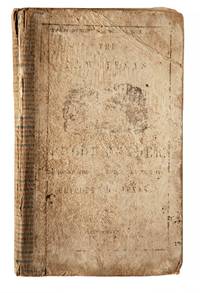
1864373734Houston Texas: Published by E. H. Cushing 1864. First edition. Full page cut of a Texas lone star. viii 184pp. 12mo. Publisher's striped cloth backed lettered paper boards heavily worn front hinge starting. First edition. Full page cut of a Texas lone star. viii 184pp. 12mo. A very rare Texas-printed Confederate juvenile reader intended for Texas children in the midst of the Civil War. The contents are largely historical in nature with sections on Texan history and heroes as well as accounts of Civil War battles in which Texas troops played a role. "Among the large number of original articles here presented we have bestowed special care on those which relate to our State . with the view of inspiring our youth with a love of Texas and an admiration for Texan heroes. The struggles of those who settled the country and fought its battles should be familiarly known to our children . The 'Texas Reader' is a home production. It is a Southern work and is called for not merely from the feelings of State pride but is also demanded by the wants of the country" Preface. Lessons include the history of the first American settlement by Stephen F. Austin the Fall of the Alamo the Texas Santa Fe Expedition Battle of Sabine Pass and many more. <br /> <br /> The publisher's preface notes that "in preparation of this book we are largely indebted to Rev. J. R. Hutchinson D.D. of the Houston Academy and many other gentleman and ladies of our State." A few of the articles include bylines by B. H. Hollinsworth.<br /> <br /> The last example of this work in the auction records not to be confused with another rare work titled New Texas Primary Reader published in 1863 appeared in 1930. Parrish & Willingham 7705 noting 8 copies Published by E. H. Cushing unknown
1755374677Stroud 1755. Other endorsements on verso. Other endorsements on verso. A very rare French and Indian War signature. Wolfe fell famously in battle on the Plains of Abraham during the siege of Quebec in 1759. unknown
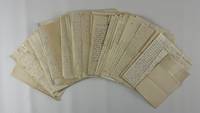
186412722Various locations in Virginia Maryland and Washington DC 1864. Occasionally soiled foxed and toned. Minor closed tears along old folds. One letter separated along central horizontal fold. Overall very good. An extensive archive of approximately ninety letters consisting of sixty-four letters from Dr. Charles T. Simpers occasionally signed "Sempers" to his wife Elisa along with eighteen of her replies and eleven letters from assorted friends and family. Dr. Charles T. Simpers 1821-1903 enlisted into service from North East Maryland on August 21 1862 as an Assistant Surgeon. He served with General Grant in the Wilderness campaign and was captured at the Second Battle of Winchester on June 13 1863 while tending to the wounded. There is a gap in the present archive from June to December of 1863 while he spent six months in Libby Prison. After his release he was promoted to Surgeon and served as an Executive Officer of the military hospital at Camp Parole before fighting in the Overland Campaign at the Battle of the Wilderness; he was discharged October 26 1864.<br /> <br /> Dr. Simpers' letters average in length from two to four pages and begin a few days after his enlistment. The first is dated August 25 1862 with the bulk of Simpers' letters ending on July 31 1864 though a handful of letters from family continue past that point until July 1865. His letters offer a glimpse into the daily life of a Civil War hospital camp life and military news. While Maryland stayed loyal to the Union there were many Confederate sympathizers within the state. Though staunch Unionists themselves Charles and Elisa write extensively to each other about the sympathetic feeling to the Confederacy amongst other citizens of the state offering a unique glimpse into life within a border state at a time of war.<br /> <br /> A few weeks after enlisting Simpers writes to Elisa about the damage to crops and bridges throughout the countryside created by the retreating Confederates. On September 21 he writes: "the residents of this section of Maryland hailed our arrival with unmistakable evidence of joy as they do the arrival of all the federal troops they do not desire a second visit from such deliverers as Jeff but amongst them they found that instead of being delivered from Lincoln's tyranny they were delivered of their property." He was placed in charge of a hospital after another surgeon was injured in October of 1862; he wrote to Elisa to complain that "I much prefer living in camp and sharing the fortunes of my regiment than to be pent up in a noisome hospital." Despite his preference he excelled during his time at the "Brigade Hospital" in Williamsport. On November 8 he writes that the Sanitation Commission informed him he had the best-regulated brigade hospital they had examined so far and that the patients "ask to come to the hospital they say they know I will attend to them but them other fellers they think don't care wheather sic they get well or not and they try to get under my care" but despite his diligence "Typhoid Fever is the dominant disease in hospital &.there is a sprinkling of everything else from the mumps down we have not had any small pox yet and I trust may not have."<br /> <br /> By the following February Simpers was back with the regiment at Harper's Ferry however the trials of the first six months of service had begun to wear on him. On February 1 he writes to Elisa that "this soldering business tests the material of which men are made. Some improve under it while others become broken down." By March 25 his patience with the enemy had worn thin and he writes a harshly open letter to his wife venting his frustrations: ".If I have betrayed the feelings I entertain for Rebbels.no reasonable minded person would wonder at it if they could come to this part of accursed rebeldom and see as I have the true character of those engaged in the Rebellion.were I in command of the federal armies I would burn every town and house where Rebels are. I would execute or transport or expatriate or consign to close confinement in prisons.all not avowedly loyal I would totally exterminate them both in person and property not only in this country but in the north and any one that enters your house and talks treason or speaks favourably of the Rebbel cause tell them your husband is in the service of the Federal Government endeavoring to aid in sustaining the only Republican Government on earth."<br /> <br /> On May 29 1863 while in Berryville Virginia Simpers witnesses the devastation in the countryside and ruminates on the cost of such widespread loss: "I write you more in detail of the country through which I have passed and the condition of the suffering inhabitants of Old Virginia. Virginia has paid dearly for her error and will require years of patient toil to restore her to her former prosperous condition but what is the loss of property in comparison to the slaughter of her sons.what is the slaughter of her sons in armed rebellion compared to the sacrifices of the lives of patriots upon her soil battling for the preservation of the best Government on the Earth It is dust in the balance - of no value whatever. I feel as if this blessed Government of ours must be preserved at every cost - if need be to the last dollar and the last man." On June 13 General Lee attacked the brigade at Berryville capturing Simpers at the Second Battle of Winchester while he tended to the wounded. He was sentenced to six months in Libby Prison and the archive picks back up in December of 1863 upon his release and promotion to Surgeon. While in prison their infant son Harry passed away in the northeast and Simpers's health took a significant downturn. He was placed at Camp Parole to serve at a military hospital while he recovered.<br /> <br /> Simpers recovered enough to be present for the Wilderness Campaign in the Spring of 1864. He writes to Elisa describing the losses they'd sustained at the Battle of the Wilderness on May 10: "Having an opportunity to send you word by mail of my safety and preservation through the perilous days that have passed recently. I have been.constantly employed with little time for sleep & none for rest. I came on to this place with a large number of wounded & arrived here yesterday and have established hospitals & have the worst cases under shelter. Our dear old flag is pressing on gloriously the enemy feels the valorous arms that now are dealing to them blows heavy and which must subdue them. Maj. J.C. Hill of our Regt is wounded though not seriously a flesh wound of the thigh. Capt Martin & Lieut Myers of the 6th Md are killed & all the officers of our Regt except the Col. One Capt and three Lieuts are wounded our Regimental loss is heavy it opened the fight was in the front for three days during the fighting & then took its turn. After three days fighting our regt surrendered about one hundred and fifty men."<br /> <br /> Just days before the Battle of Cold Harbor Simpers wrote to his wife that they were a handful of miles from Richmond: "I am again with the Hospital of the 3rd Division of the 6th Corps which I enjoined on Tuesday night last. Our position at present is on the south side of the Pamunkey River & near Hanover Court House we are about from 12 to 15 miles from Richmond and expect in a few days to be knocking at its gates for admission." He does not write again until his final letter in the archive on July 15 when the regiment was near Baltimore in order to aid in repulsing General Early from Washington. He writes to Elisa that he intends to resign as soon as possible and was summarily discharged on October 26 1864. After the war he returned home to Cecil County Maryland where he practiced medicine until his death in 1903.<br /> <br /> An example of his wife's responses reads as follows from her letter on "New Year's Night" 1864: "I have been very busy all day preparing eatibles to send tomorrow to you in a box & have just got through at this late hour. Asbery is sick and have no one to assist me but got along very well. The cakes I send you I think will keep and carry better than crullars & hope they will please your taste. The fruit cake I fear is baked too much. Our cow does much better. I send you some butter. Would send more but used part of the churning in your cakes & butter is not to be obtained here often."<br /> <br /> The present collection of Dr. Simpers' war-date letters as well as the smaller collection of his wife's homefront responses provide a detailed picture of Civil War medical and military life over the course of the conflict's first two years with ample opportunities for deeper research. unknown
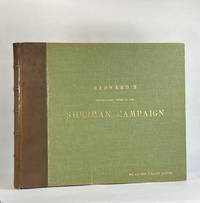
195310075Herman Manasse 1953. Quarter Leather. Very Good binding. Oblong folio. 3 61 ll. Photographic reproduction. All pages are photographic paper likely sliver gelatin prints stubbed and bound in cloth boards backed in morocco. Binding is 16" x 19." Cover titled in gilt with presentation name in gilt below: "Mr. and Mrs. T. Harry Gatton." The first leaf is a photographic reproduction of the endpaper of the original copy capturing an ownership note in French dated 1952. This note along with a printed inclusion also part of the photograph identifies the copy used for reproduction as belonging to G. M. ver Hulst having come to him from his uncle the Comte Francois de Montholon who died 23 December 1951. The printed inclusion notes that this reproduction was done "by Herman Manasse especially for Mr. & Mrs. T. Harry Gatton of Raleigh North Carolina." We use the endpaper inscription as the earliest possible date of reproduction. Based on the physical aspects of the book it was probably done not long after that time. <br /> <br /> Only light wear to the binding. The "contents" leaf has a small closed tear to the top margin; rippling to the photographs throughout. It appears that during the rephotographing process the border of each photograph was masked off except for each photograph's title. Count Montholon's copy was exceptionally clean making this a remarkably good reproduction a couple of the images capture some abrading to the original but generally these are very clean bright images of one of the great American photographic works. As official photographer of the Military Division of Mississippi Barnard photographed Sherman's march to the sea capturing the devastation left in the wake of the general's controversial scorched earth campaign. The images are indeed striking. A contemporary review calls this "a splendid volume containing 61 imperial photographs embracing scenes of the Occupation of Nashville the Great Battles around Chattanooga and Lookout Mountain the Campaign of Atlanta March to the Sea and the Great Raid through the Carolinas. These photographs are views of important places of noted battle-field of military works; and for the care and judgment in selecting the points of view for the delicacy of execution for scope of treatment and for fidelity of representation they surpass any other photographic views which have been produced in this country—whether relating to the war or otherwise." Harper's Weekly Dec. 8 1866. p. 771. And indeed it has held up as a monument of American photography. While the first edition does come to market periodically it realizes some extraordinary prices. <br /> <br /> We've been unable to determine how many copies of this full-sized reproduction were created. Though the inclusion on the first leaf specifically states that this copy was for Gatton a series of cards could have been substituted as the leaf was repeatedly photographed individualizing each copy. So while it is certainly possible that this is a one-off it is more likely that a very small number were reproduced and presented to friends family and notables. To that end Thomas Harry Gatton 1918-2001 was a notable North Carolinian. Beyond his professional endeavors he was a World War II veteran chairman of the North Carolina Historical Commission and was appointed to the American Battle Monuments Commission by presidents Kennedy Johnson and Carter. In short one to whom this presentation would have been warranted and meaningful. Howes B-150; Sabin 3462; De Renne p.1317 all for the first edition Taft Photography and the American Scene p. 232 486. Herman Manasse unknown
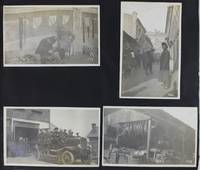
19223735Mainly Vladivostok 1922. Very good. 261 images about half real photo postcards and half vernacular photographs between 2.5 x 1.5 inches and 3.5 x 5.5 inches. Oblong folio. Contemporary brown leather photograph album string-tied. Lacking fore-edge flap spine chipped moderate rubbing and scuffing to boards. Minor occasional wear to photographs. A unique collection of photographs documenting the joint military expedition by Allied Forces into Vladivostok in southeastern Russia after the conclusion of World War I the October Revolution and the Russian Civil War most likely assembled by an American soldier serving there at the time. The American contingent of the incursion was called the American Expeditionary Force Siberia which partnered with nine other countries to attempt to bring stability to the region rescue 40000 members of the Czechoslovakian Legion being held up by Bolsheviks outside Vladivostok protect and retrieve American supplies in eastern Russia and stem the early spread of Communism. A similar expedition to northern Russia now known as the Polar Bear Expedition was attempted in Archangel. By practically every standard the joint missions failed and in fact damaged relations between the Allied Forces and Russia especially for the United States for decades to come. <br /> <br /> The present collection of photographs and real-photo postcards opens with several photo postcards with printed captions showing parades of the military forces of the various Allied countries who participated in the expedition to Vladivostok as they arrived in the city. These include the British Army landing in Vladivostok the Imperial Japanese Expedition marching in front of the Czech Headquarters the Japanese Vanguard relieving the Imperial Japanese Naval Party the French Army landing in the city the Allied Naval Fleet in the Vladivostok harbor and two views of the landing of the American Army. Two additional captioned postcards show the Czech forces joining the French Army and a rather shocking image of about ten dead Czech soldiers with the image captioned "Czech victims in vicinity of Nicholoske former Bolshevik Head-quarters at Vladivostok." <br /> <br /> The remainder of the photo postcards and photographs capture additional parades numerous street scenes but also scores of images showing the outskirts and countryside around Vladivostok ships from various countries anchored in the harbor or trying to navigate the icy conditions military patrols often carrying weapons American and other soldiers interacting with the locals scenes along the railway views of refugees fleeing the region and much more. Upon arriving in Vladivostok American soldiers were tasked with guarding segments of the rail lines of the Trans-Siberian Railroad running into and out of Vladivostok. American forces are seen here performing those duties but also overseeing a temporary dormitory of beds in an evacuation hospital patrolling the area around the city as well as the refugees along the railway hanging out in their makeshift barracks and more with one image even showing a group of American soldiers posing in baseball uniforms.<br /> <br /> Particularly striking are the images of the indigenous refugees posed near the railroad and in other locations. Some of the subjects appear to be Siberian nomads but others traveling along the rail line are almost certainly Czech refugees fleeing Russia after their role in fighting for their own freedom against the new Russian regime. Several photos here capture groups of people obviously en route to somewhere else along the railroad at train depots and resting in makeshift encampments or tent cities overseen by military personnel.<br /> <br /> Historical material from the Vladivostok expedition is exceedingly rare especially images of soldiers with boots on the ground. The present collection provides a fascinating glimpse of life in Vladivostok during this volatile moment in Russian history as well as a notable instance when American and Allied gunboat diplomacy utterly failed. unknown
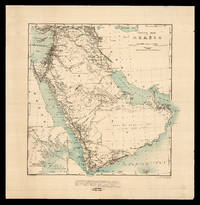
190617633London: Intelligence Division War Office Geographical Section 1906. 490 by 475mm 19.25 by 18.75 inches. British map charting the progress of the Hejaz Railway Colour printed lithographed map. Produced by the War Office Intelligence Division in 1906 the present map depicts the Arabian Peninsula at the beginning of the twentieth century with an inset map of 'Koweit and Surrounding Country'. During this period the Ottoman Empire maintained control over most of the peninsula which was a mosaic of tribal rulers subject to Ottoman suzerainty. Throughout the nineteenth century the Al Saud strove to regain the control that they had briefly held at the beginning of the century. By 1891 however they had been defeated by their Al Rashid rivals who cooperated closely with the Ottomans and were driven into exile in Kuwait. Of the tributary Arab states the Sharif of Mecca was the most important who ruled the western Hejaz region where the important cities of Mecca and Medina are located. In 1900 the Ottomans had initiated the project of building a railway line between Damascus and Medina passing through the Hejaz. From the beginning however the railway line was subject to attacks from local Arab tribes and although no one of these was ever particularly successful they caused considerable difficulties for Turks posted to the project. Nonetheless by the time the present map was produced a significant length of tracks had been laid through Hejaz indicated by the solid black line and the rest of the track planned down to Medina. The following year the line reached Al-'Ula and amid the celebration of this achievement a group of Harb tribesmen began a small rebellion with the hope of halting the project. Their attempt ultimately failed and by 1908 the line between Damascus and Medina had been completed. At the outset of the twentieth century the British presence in the Arabian Peninsula was concerned primarily with maintaining access to British India protecting the Suez Canal supporting the declining Ottoman power against the threat posed by Russia guaranteeing an oil supply from the Middle East administering protectorates in present-day Yemen Oman and the United Arab Emirates and enforcing its naval role in the Mediterranean. At this time railways were widely considered an indispensable tool in administering gaining and buttressing power not only in this region but across the world. This is probably why the present map which was made some time earlier was revised and updated in 1906 with the changes recently made to the Hejaz Railway: "Corrections July 1905; Railways revised Sept 1906". It also shows other transport routes as well as regional boundaries numerous significant cities and settlements and relief indicated by hachures. Furthermore in the lower left-hand corner there is an inset map showing Kuwait and parts of the surrounding areas. Kuwait had become a British protectorate in 1899 and remained so until 1961. Along the lower edge of the map beneath the list of agents licensed to sell it is a manuscript signature in black ink which is likely by the same hand as the annotations found on the map across parts of Hejaz. Provenance: Annotations adding place-names in black ink. [Intelligence Division, War Office] Geographical Section, unknown
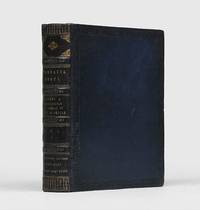
18251238721825. First Edition. RAWLE William. A View of the Constitution of the United States of America. Philadelphia: H.C. Carey & I. Lea 1825. Octavo period-style three-quarter brown calf and marbled boards red morocco spine label. $8000.First edition of Rawle's groundbreaking study of the Constitutionthe ""first authoritative interpretation"" of the right of state secessiona powerful influence on ""subsequent leaders and supporters of the Confederacy although in fact Rawle opposed secession.Rawle's early and highly influential study of the U.S. Constitution contains a foundational consideration of the rights of states to secede and offers a major consideration of the several powers in the Constitution including freedom of speech and the scope of the Second Amendment. This is the ""first authoritative interpretation in which was admitted the abstract right of state secession. These views exerted a profound influence on Southern political thought"" Howes. Rawle's View of the Constitution with its crucial views on the right of secession ""was used as a textbook for many years at West Point It is therefore generally considered to have influenced subsequent leaders and supporters of the Confederacy although in fact Rawle opposed secession"" Cohen. ""Elected to the Pennsylvania legislature in 1789 Rawle declined Washington's repeated offers to serve as the first Attorney General. He accepted Washington's appointment as U.S. Attorney for Pennsylvania however and held the post from 1792 to 1800."" Rawle also greatly influenced legal interpretations of the 2nd Amendment in this work. ""Writing a century and a half before the Congressional power 'to regulate commerce among the several States' was construed as a power to ban the simple intrastate possession of firearms Rawle stated that even putting the 2nd Amendment aside Congress would have no power to disarm the people"" Kopel Brigham Young University Law Review. A trustee of the University of Pennsylvania and first president of the Historical Society of Pennsylvania Rawle also founded Rawle and Henderson the law firm with the longest continuous practice in the United States. Sabin 68003. Howes R77. Cohen 2893. Shoemaker 22035. Harvard Law Catalogue 426. NYU 401. Warren 541. Faint ownership signature of William Samuel Johnson likely a descendant of the signer of the Declaration of Independence of the same name.Some foxing to text; binding attractive and fine. hardcover
1865333099Vp 1865. Approx. 290 clipped signatures approx. 48 songsheets many illustrated and printed in colors and approx. 10 photographs cdvs removed from their mounts. Each autograph and photograph mounted recto and verso within the album the songsheets generally tipped in. Oblong small folio 7-1/2 x 11 inches. Black leather worn. Approx. 290 clipped signatures approx. 48 songsheets many illustrated and printed in colors and approx. 10 photographs cdvs removed from their mounts. Each autograph and photograph mounted recto and verso within the album the songsheets generally tipped in. Oblong small folio 7-1/2 x 11 inches. Includes signatures by Robert E. Lee E. Kirby Smith Daniel Ruggles Gideon Pillow Raphael Semmes Alexander Stephens M.F. Maury Jubal Early N.B. Forrest John Breckinridge S. Buckner Lew Wallace George Sykes W. T. Sherman P. H. Sheridan Daniel Sickles W. Rosencrans Fitz John Porter O.O. Howard G. B. McClellan H. W. Halleck D. C. Buell and more. The songsheets include many published by the Supervisory Commission for Recruitng Colored Regiments as well as examples by Magnus and Magee. unknown
49735Raymond M. Stevenson born 1840 was an American journalist in Pennsylvania who after service in the Union Army during the Civil War was appointed by Abraham Lincoln vice consul to the American Consul in Sheffield England a post he held until 1866 after which he headed west and resumed newspaper work in Colorado. DS 3pp lettersheet 8¼" X 13½" Sheffield Great Britain 12 February 1864. Addressed to R.M. Stevenson. Very good. On blue stationery a large group of makers of renowned "Sheffield steel "sign this letter to the new American consul. "In reply to your enquiries" it begins "we the undersigned Merchants and Manufacturers in Sheffield and the Neighborhood beg to say that your Consular Business has invariably been attended to with promptness and despatch and to express our entire satisfaction with your existing arrangements for the discharge of your official duties and also with the attention we have received from Messrs. Branson & Sonwith whom we have every confidence." It continues "We further beg to say that we consider your office to be most centrally and conveniently situated for the despatch of Consular Business having been used for that purpose for a great number of years and that you could not meet with an office in a more suitable Locality." The bottom this of this page is then signed by twenty persons and/or firm names the second leaf is signed by another twenty-one persons and/or firms and the third leaf is signed by twelve persons and/or firms. The first signer on the first page is Thomas Jessop who adds "Mayor & Master Cutler." Jessop1804-87 serves as mayor of Sheffield 1863-64 and headed the steelmaking firm founded by his father -- on the second leaf he signs the firm's name "Wm Jessop & Sons." Nearby is John Brown 1816-96 who adds "Ex Mayor." Brown was Jessop's predecessor in 1862-63 an important industrialist known as "Father of the South Yorkshire Iron Trade." He signs a second time as "John Brown & Co." on behalf of the firm. Other signers on this page and the subsequent pages in no particular order include: John Martin & Co. major steel manufacturer and iron exporter; Charles Cammell & Co. iron works; Hargreaves Smith & Co. knives of all sorts; Sanderson Brothers steel manufacturers; Spear & Jackson signed twice woodworking tools manufacturers; John Wigfall & Co. butchers' knives; S & C Wardlow knife and razor manufacturers; George Wostenholm & Son cutlery table knives and forks pen and pocket knives; Wilson Hawksworth Ellison & Co. butchers' and skinning knives; Moulson Brothers saws and tool manufacturer; Charles Wild 1823-86 knife manufacturer; William Wild 1810-69 spring-knife manufacturer; Joshpe Rodgers & Sons cutlers and silversmiths; Jackson Newton knife manufacturer; Frederick Reynolds 1814-77 razor manufacturer; Thomas Firth & Sons steelmakers to the field armaments industry; and many more. Scholar Lee Tigner notes in a 2017 essay that "Sheffield Cutlers were in full swing supplying the American demand through the Civil War. Sheffield steel would have been found in most pockets on the battlefield at Gettysburg." David Hay elaborates in a 2005 article that "Geoffrey Tweedale. has shown how the American market was largely responsible for the remarkable expansion of the Sheffield crucible steel industry between the Napoleonic Wars and the American Civil War. In good years a third or more of Sheffield's steel output was sent across the Atlantic in addition to the vast trade in cutlery and edge tools. Large fortunes were made from the American trade by the steel firms of Sanderson Jessop Vickers Greaves Butcher and Cammell." American steel manufacturing was scattered and unreliable in the mod 19th-century and while the federal government made attempts to reduce its heavy reliance on Sheffield steel including an 1861 tariff on imported goods the need remained strong and the North remained anxious that their supply lines remain open. A steady supply of iron and steel knives and edges weapons and material for gun manufactuting and all manner of other military uses was crucial to the federal government; there was concern that Great Britain would side with the Confederacy who was in far greater need for imported goods than was the North -- and indeed at least one Sheffield steel firm had refused to sell materials to the U.S. government. When young consul Stevenson was appointed by Lincoln to the steel-producing center of England one of his main charges would have been to insure the smooth steady supply of materials to the federal government. This intriguing document appears to be the Sheffield steel industry's attempt to assure the American government that they would remain faithful supplies for the Union cause. A pencilled note in unknown hand on the blank fourth leaf "Testament of the Sheffield Manufactories & c to Management of Consular Agent" gives title to this remarkable document. unknown
1883Original with family inscriptions. Wooden Case. Very Good. Original wooden case for a brass set of scales used by Dr. David Townsend during the battle of Bunker Hill and other events requiring medical attention during and after the American Revolutionary War. unknown
18729402N.p.: Privately Printed 1872. First edition. 8vo 20x14cm 3 98pp with 50pp consisting of 13 separately printed Pike poems and "In Memoriam Albert Pike" from 1898 bound in at rear. Lengthy presentation inscription from Pike to Capt. Fayette Hewitt and dated in 1872 Washington on separate leaf in front; and opposite a lengthy presentation inscription from Hewitt to a J.H. Johnson in 1896 Frankfort KY memorializing his friendship with Pike and gifting the book. Additionally Pike has briefly inscribed 2 of the poems bound in at rear to Hewitt one dated in 1870. Bound for Hewitt in full gilt-ruled black morocco binding spine and turn-ins tooled in gilt gilt lettering on spine marbled endpapers g.e. Spine ends joints and corners rubbed. Few of the poems at rear with light transmittal folds. <br /> <br /> Tremendous presentation copy of this privately printed collection of mythological poems from the Confederate General and architect of the Southern Scottish Rite Albert Pike 1809-1891. This copy presented to his close friend and subordinate Captain Fayette Hewitt 1831-1909 who served under Pike during the Civil War including the period of Pike's treaty negotiations in Indian Territory. Contemporary accounts from Pike on Hewitt illustrate the foundations of their relationship:<br /> <br /> "He daily deserved praise and won the love and admiration of all who knew him. He became as dear to me as my own sons. Brave courteous amiable unassuming obliging and kind to every one firm in the performance of duty—a nobler gentleman or better soldier never lived."<br /> <br /> <br /> This association is further deepened by the volume itself which Pike inscribed to “Capt. Fayette Hewitt†and which Hewitt preserved for over two decades before presenting it onward in 1896. Expanded with a substantial group of privately circulated poems including one inscribed in 1870 the volume documents a longstanding association between the two men later reinforced by Hewitt’s memorial presentation.  L. Boyden in his Bibliography of the Writings of Albert Pike 1921 records many of these bound-in poems as separately issued printings spanning from 1859 through the early 1870s with titles including "Cruiskeen Lan" "The Light of Days Long Past" "After the Midnight Cometh Morn" "The Fine Arkansas Gentleman" and others.  <br /> <br /> In all this volume represents a singular object at the intersection of the Civil War Southern fraternal culture and the personal legacy of Albert Pike preserved through his wartime friend and subordinate Fayette Hewitt.<br /> <br /> <br /> <br /> <br /> <br /> . Privately Printed unknown
192052937Klamath Falls OR: Colonel Boyd Yaden & Myrtle Madison Yaden Public Works Administration United States Army Corps of Engineers ca. 1920-1960. Eight albums. 1st - Oblong 14 x 9.25 in. 80 pp unpaginated. With 244 photos sized from 1 x 1 in. up to 7 x 10 in. many hand-coloured as well as a few Real Photo Postcards. Limp calf stamped & decorated in colour on front & back covers sewn w/ rawhide tie at gutter margin; 2nd - Oblong 4to. 11.25 x 7.25 in. 100 pp unpaginated. With 249 original photos many w/ annotations some w/ markings within the negative sized 2.75 x 3.5 in. up to 6.75 x 10 in. Limp black simulated leather post-binder sewn at gutter margin w/ black silk braid silver lettering stamped on front cover. 3rd - 4to. 96 pp unpaginated on thick toned paper stock w/ 154 original photos tipped-in taped and mounted with corners into album some with ink annotations below or beside images. Black boards post-binder sewn at gutter margin w/ black silk braid scuffing edgwear some rubbing occasional tears. 4th - Thick folio. 12.25 x 14.25 in. 70 pp unpaginated. on thick toned paper stock. With 104 photos sized from 4 x5 in. up to 8 x 10 in. most 7 x 10 in. nearly all with text in lower fore-edge of negative or printed in blank below image on lower fore-edge all mounted either with tape or glue. Tan padded boards post-binder sewn at gutter margin w/ brown silk braid some scuffing edgewear rubbing. 5th - Thick folio. 154 pp unpaginated. With 239 photographs sized 3.75 x 5.75 up to 8 x 10 in. many of them are 9 x 9 in. most with text in lower fore-edge of negative or printed in blank below lower fore-edge all mounted either with tape or glue. Embossed & decorated padded dark brown boards post-binder nickel-plated screwposts rear hinge repaired in black tape scuffing rubbing. 6th - 4to. 32 pp unpaginated. typed sheets attached to portfolio leaves with 17 original photos mounted 1 large folding colour map 4 pp. TLS signed by Governor Paul Fannin on Arizona State letterhead 2 TLS from Harry Wildnauer Federal Works Agency and Guy Kirksey Air Corps tipped-in. contained with padded leather portfolio gilt decorations silk endpapers minor scuffing. 7th - Oblong 4to. 12 x 7.5 in. 96 pp unpaginated. thick black paper stock. With 228 original photos sized 7 x 11 in. with two 4 pp. programs for Pig’n Whistle Evening Concerts in Seattle WA. Limp embossed Arts & Crafts brown cloth post-binder black silk braid rounded corners front inner hinge starting. 8th - Oblong folio. 13 x 10.5 in. 100 pp unpaginated. on thick black paper stock. With 484 original photographs many with annotations on versos some mounted with glue others with corners some loose a few missing sized from 1 x 2 in. up to 8 x 10 in. Limp textured brown calf post-binder rounded corners sewn at gutter margin with brown silk braid some edgewear rubbing weakening to many leaves at gutter margin an excellent archive filled with bright images strong contrast. This immense photo album archive assembled by Lt. Colonel Boyd Yaden 1906-1980 incorporates eight albums. The first of these albums document his career serving with the Provisional Co. No. 2 1st Battalion 55th Coastal Artillery of the U.S. Army serving the batteries at Fort Kamehameha Fort Kam. The 55th CA was equipped with 155 mm. Grande Puissance Filloux guns typically mounted atop concrete Panama Mounts which enabled the pieces to traverse 360 degrees as well as 75 mm. field pieces. These remarkable images show the artillery gun crews test firing the 155 mm. guns loading shells night firing camp drills inspections athletics expanding the tracks for the 41st Coast Artillery Locomotive at Fort Kamehameha and more. Of special interest are three photos documenting the first Navy Pacific Flight by Commander John Rodgers in the PN-9 Seaplane from San Pablo CA non-stop to Honolulu HI which ran out of gas and landed in the Pacific Ocean. The crew fashioned sails from wing fabric and later leeboards to steer the flying boat and finally came within 15 miles of Kauai where it was discovered by the USS R-4 submarine. The second & third albums chronicle Boyd Yaden’s life with his wife Myrtle Yaden 1901-1988 moving from Klamath Falls OR to Alaskan Resident Engineer and Inspector for the Public Works Administration overseeing the installation of the sewer system in Petersburg Alaska with several photos showing street scenes digging up of streets to lay pipe earthmoving equipment steam shovels and finally the finished streets with bustling economic activity. In addition there are photos of building railroad trestles bridges and logging operations on Wrangell Island Alaska with photos showing the construction logging sites totem poles and then his work as supervising engineer for the Public Works Administration during the Depression building a power plant near Anchorage AK followed by the project of rebuilding the power plant in Seward AK with photos showing the phases of construction. The third album includes photos of the couple on the steamship SS Hazel B No. 2 hunting & fishing in Alaska and the Pacific Northwest the Pioneers Home in Sitka as well as documenting trips to visit relatives in Seattle North Dakota and New York. Two very large photo albums are devoted to Colonel Yaden’s activities as Division Engineer for United States Army Corps of Engineers and later for the Air Transport Command in Alaska and Western Canada. The albums open with an extensive group of photos of Hammer Field near Fresno California now Fresno Yosemite International Airport with images showing the laying of foundations training crash of a B-24 Bomber June 27 1942 the theaters bowling alley Sub Exchange NCO Club tennis courts recreational facilities swimming pool sandstorms and more. In addition Yaden oversaw the mineral and strategic materials facilities in Trona CA with images of the nearby Ruth Mine loading operations onto trucks and railcars. In 1943 Yaden began an engineering and photographic survey of the Western Canadian air bases for the ATC and has included large photos of Calgary Air Base aerial views of Edmonton Air Base and the Edmonton Air Base Edmonton Airport Wing Hangars under construction the Edmonton Satellite Airport aerial views and detailed photos of the Namao Airbase Alberta along with others such as the Grand Prairie Airbase Dawson Creek Fort Neslon Airbase Watson Lake Y.T. Whitehorse Y.T. and the ATC engineering post including the sawmill lumber racks and construction equipment in Canada. The last half of the fifth album is devoted to airfields and airbases in Alaska including the Northway Airfield showing aircraft landing hangars under construction engineering and structural detail photos Tanacross Airport AK Ladd Field and a whole series of large aerial views of the Galena Flood. Yaden also oversaw Airfield site surveys in Port Clarence Nome Point Spencer Imuruk Basin even including a dog sled team and Native American guide in the depths of winter. In addition The final two albums are devoted to the life and activities of Myrtle A. “Madison†Yaden 1901-1988 who taught school in Whitefish Montana then moved to Mullan Idaho the Puget Sound region during the 1920s and later Klamath Falls where she would meet Boyd Yaden. This album includes photos of the gold dredges in Mullan Idaho near Wallace North Dakota Agricultural College band members Montana High School basketball champions football teams hijinks with fellow students and teachers the YWCA Camp on Bainbridge Island treks to Seattle Poulsbo and other areas around the Sound. Boyd Yaden was the nephew of Oregon Pioneer George Nurse who founded Linkville attended the Univ. of Oregon served with the 55th Coast Artillery in Hawaii joined Battery D 249th Coast Artillery of the Oregon National Guard was commissioned a 2nd Lieutenant became a licensed civil engineer in Klamath Falls worked in Alaska Canada California and Oregon where he became an engineering expert on building and working on permafrost in the Arctic and later worked with the Flood Control Agency in Phoenix AZ before returning to Klamath Falls OR as basin engineer. See: Laisa Leao Remembering Hammer Field U.S. Department of Veterans Affairs 2015; William Gaines Coast Artillery Organizational History 1917-1950. Part I Coast Artillery Regiments The Coast Defense Journal Vol. 23 Issue 2 pp. 29-31; Siemon Muller Frozen in Time: Permafrost and Engineering Problems 2008. Colonel Boyd Yaden & Myrtle Madison Yaden, Public Works Administration, United States Army Corps of Engineers, hardcover
186713090Morrison WI 1867. Broadside 26.75 x 20.25 inches printed on thin paper. Old folds some creasing edges occasionally a bit frayed with a few small nicks or tears a couple of minor losses along folds. Overall very good condition. A striking and seemingly unique surviving broadside advertising a January 26 1867 lecture by Clara Barton entitled "War & Incidents of Army Life" part of a popular post-Civil War lecture series she delivered across the United States. Barton spent two years touring and recounting her battlefield experiences which helped popularize her and fund her subsequent efforts to locate missing soldiers. The present lecture was delivered to the Young Men's Literary Association of Morrison Wisconsin at the local Concert Hall. In addition to the bold title containing the relevant information on the lecture and the information on obtaining tickets at the bottom much of the lower portion of the broadside prints several laudatory "Recommendations" from various entities in Indiana and other locations in Wisconsin including a January 7 1867 review from The Milwaukee Sentinel. Noted temperance lecturer John B. Gough also praises Barton's lecture stating that "I never heard anything more touching more thrilling in my life."<br /> <br /> Typographically the broadside is interesting for employing several sizes of fonts likely wooden type especially near the bottom of the Recommendations section where the printers needed to reduce the size of the font to fit in the entirety of a quote from The Daily Wisconsin as well as a line in the smallest font from the Concert Hall promoter noting that the foregoing group of recommendations is "enough" and praising Barton for her "noble character which she has won by her efforts to ameliorate the sufferings of our sick and disabled soldiers."<br /> <br /> Clara Barton 1821-1912 was a noted educator and humanitarian who helped distribute needed supplies to the Union Army during the Civil War and later founded the American Red Cross. Barton garnered nationwide recognition for her efforts during the war and quickly became known as the "Angel of the Battlefield." After the war Barton's lecture tour brought her in contact with other notables of the day including Susan B. Anthony and Elizabeth Cady Stanton and also Frederick Douglass who involved her in the suffrage and civil rights movements respectively. In the Fall of 1866 Barton began to lecture on her Civil War experiences in lyceum halls churches town halls and schools. Though she never felt comfortable in front of an audience wherever she spoke Barton was well received. Her contemporary biographer Percy Epler wrote that "a tear-stained multitude thronged everywhere to hear her" as she had made it her mission to show not "the glories of conquering armies but the mischief and misery they strew in their tracks; and how while they march on.some one must follow closely in their steps crouching to the earth faces bathed in tears and hands in blood. This is the side which history never shows."<br /> <br /> From 1866 through 1868 Barton delivered over 200 lectures throughout the northeast and midwest regarding her Civil War experiences. She shared platforms with other prominent figures including the aforementioned Douglass as well as Ralph Waldo Emerson William Lloyd Garrison and Mark Twain. She often earned $75 to $100 per lecture. Original broadsides advertising her lectures especially of this size are exceedingly rare to say the least. We could locate just a single result in auction records of a much smaller example and OCLC reports just one institutional holding of any Barton lecture broadside again much smaller for an 1867 event in New Haven located at the Library of Congress. unknown
186321808<p>A field report from the Battle of Gettysburg by Major Allen G. Brady commander of the 17th Connecticut Regiment written on the 4th of July 1863 the day after the battle ended in a great victory for the Union.</p><p><i>"We had not more than time to form before the enemy were discovered advancing rapidly upon us on our right & a full Brigade obliquely towards our left….our fire was so destructive it checked their advance the troops on our left giving way the enemy came in behind us but we still remained firmly at the stone wall until the rebels were driven back."</i></p> <b>CIVIL WAR – GETTYSBURG.</b>Allen G. Brady Autograph Manuscript Gettysburg Pennsylvania July 4 1863. 6 pp. in pencil an unsigned draft or retained copy.<p>With: <b>ANDREW JOHNSON.</b> Officer's commission of brevet Lieutenant Colonel to Allen G. Brady <i>"for gallant conduct at the Battle of Chancellorsville Va to date from March 13 1865"</i> March 20 1866 signed with stamp not in ink; and</p><p>With: <b>ALLEN G. BRADY.</b>Autograph Letter Signed to the Adjutant General U.S. Army May 19 1877 seeking a copy of the military record of General Hugh Brady who had fought in the War of 1812; and</p><p>With: <b>WHARTON J. GREEN.</b> Autograph Letter Signed to Allen G. Brady December 13 1885.</p><p><b>Complete Transcript</b></p><p><i>Head Quarters 17 Regt Conn Vol. </i></p><p><i>July 4 1863</i></p><p><i>Lieut. H. Whitney Chatfield </i></p><p><i>A.A.A.G. 2d Brig. 1st Div. 11 Corps</i>.</p><p><i>Lieut.</i></p><p><i> In compliance with instructions from head quarters I have the honor to make the following report the part taken by the 17 Conn Vol in the engagement of the 1st 2d & 3d inst. The Regt. arrived in Gettysburgh between one & two O'Clock & were marched with the other Regt. of the Brigade to the lower end of the town & halted for a moment. Four companies were immediately ordered out under Maj Brady </i>2 <i>two of the four Companys under Maj. Brady were deployed from the bridge to the right as skirmishers the other two held in reserve. The remainder of the Regt under the Command of Lieut Col. Fowler advance with the rest of the Brigade to the front & left of the village. Directly in rear of the 107 Ohio Vol. - who were closed in mass by Division & were ordered to the front Deployed & advanced at Double quick our men held their ground notwithstanding they rushed to the rear of troops directly in advance until ordered by the Brigade Commander to fall back. </i></p><p><i>This order was obeyed the men loading & firing as they were retreating it was <b>about this time Lieut Col. Fowler was killed. Upon reaching the village the four companys</b> </i>3 <b><i>still skirmishing briskley with the enemy </i></b><i>& retiring in good order & ordered by the Comdg Genl to rejoin the Regt. <b>Maj. Brady immediately taking command after deploying & firing in several streets running to the left of the main street of the town on account of the rapid advance of the enemy we were ordered to fall back out of the town & while retreating through the main street the Regt was halted & faced to the rear & poured several destructive vollys into the enemy.</b> We then fell back out of the town & formed in front of the battery <b>pursuant to order from Maj. Genl. </b></i>Oliver Otis <b><i>Howard we then advanced to the stone wall in rear of the village </i></b><i>& remained a few moments there again advanced to a rail fence still further to the front & then remained until </i>4 <i>late in the evening when the whole Regt was sent out on picket & performed that duty <b>until late in the afternoon of 2d when we were relieved & took our old position behind the rail fence w</b></i>h<b><i>ere we remained exposed to fire of the enemy's battery & sharp shooters until about 7 o'clock P.M. were ordered to the extreme right of the Brigade behind a stone wall on each side of the lane below the battery opposite the cemetery entrance one company was advanced to the grain field near the woods we covered the wall on each side of the land by compelling 200 straggling soldiers to fall into our line. We had not more than time to form before the enemy were discovered advancing rapidly upon us on our right & a full Brigade obliquely towards our left. The Regt were ordered to fire obliquely to the left upon the Brigade our fire was so destructive it checked their advance the troops on our left giving way the enemy came in behind us but we still remained firmly at the stone wall until the rebels were driven back.</i></b></p><p><i>It was during this engagement that Maj. Brady was wounded </i>5 <i>by a fragment of shell hitting his right shoulder blade. </i></p><p><i>After the enemy had been driven back & the firing ceased except occasional shots from their sharpshooters. We were relieved by the 4 Ohio Vol. and were ordered to change front to the left behind a wall running at right angles with the fence we had occupied and fronting the town where the rebels entered on our left. During that night & the 3d inst. exposed to a cross fire of the rebel batterys & to the fire of the sharp shooters who were watching our movements. </i></p><p><b><i>When the Regt entered the engagement on the 1st inst it numbered 17 officers & 369 enlisted men. We report at the present time 9 officers & 120 enlisted men. </i></b><i>Capt. Wilson French is the </i>6 <i>only officer known to have been taken prisoner he was wounded in the engagement of the first inst & we are not aware of his being paroled</i>"</p><p><b>Historical Background </b></p><p>The Battle of Gettysburg fought July 1-3 1863 was a major turning point in the Civil War. Over the course of three grueling days Union Major General George G. Meade's Army of the Potomac beat back desperate attacks by Confederate General Robert E. Lee's Army of Northern Virginia including the ill-fated "Pickett's Charge" on July 3. The Union victory ended Lee's short-lived invasion of the North.</p><p>Many soldiers of the 17th Connecticut had been stung by criticisms leveled at their unit after the Battle of Chancellorsville where the corps was surprised and driven from the field with a flank attack by Stonewall Jackson. As Brady reports here events on the first day of the Battle of Gettysburg were eerily similar to Chancellorsville. On July 1 their regiment was again divided outnumbered and outflanked by the same Confederate unit as it had been at Chancellorsville although this time under command of Richard Ewell. As he drove the Connecticut soldiers from the field and through the streets of Gettysburg on the first day of fighting Union Lieutenant Colonel Douglas Fowler was killed. In a disciplined retreat that evening the 17th Connecticut fell back and was posted near the center of the Union line on Cemetery Hill near a stone wall. Their position where the Union lines' "fishhook" curved southeastward toward Culp's Hill exposed them to murderous crossfire from Confederate artillery on three sides. The unit sustained high casualties for the next two days; of the unit's 386 men at Gettysburg 20 were killed 81 wounded and 96 reported missing. Brady himself was wounded by a shell fragment on July 2.</p><p>The regiment performed heroic service on the second day of the battle protecting Cemetery Hill from the attacks of Jubal Early's division specifically Harry Hays's brigade of "Louisiana Tigers." The 17th Connecticut then withstood the Confederate bombardment of July 3 spending much of the day trading shots with sharpshooters in town. Brady's report in slightly revised and expanded form is reprinted in <i>Official Records</i> Series 1 Vol. 27 Chap. 39 Part 1 pp. 716-719. In closing there Brady said "The regiment behaved gallantly. No troops in the world behaved better. Both officers and men are deserving of great credit for their coolness and bravery throughout the entire three days' battle."</p><p><b>Allen G. Brady </b>1822-1905 was from Torrington Connecticut. He enlisted in May 1861 as part of the 3rd Connecticut Infantry Regiment. In August 1862 he was commissioned into the 17thConnecticut Volunteers. Brady was brevetted Lieutenant Colonel for his valor at the Battle of Chancellorsville just two months before Gettysburg. There Brady assumed command after the colonel and lieutenant colonel of his regiment each fell. Brigadier General Charles Devens commended Brady in his official report stating "The Seventeenth Connecticut under command of Major Brady – its colonel having been wounded and lieutenant-colonel killed – was in fact rallied and reformed in their positions." In October 1863 Brady was discharged for disability presumably from his wound suffered at Gettysburg three months previous. He was mustered into the Veteran Reserve Corps and served as Provost-General at the Point Lookout Union Prison Camp in 1864. He was brevetted Colonel in August 1865.</p>
1932W2805<p>Redlands California: Unpublished 1932. Original watercolor and color pencil drawing on artist board. SIGNED. Near Fine. 9 inches by 18 Inches.</p><p>Dean Cornwell 1892-1960 studied under Howard Pyle's student Harvey Dunn and the influence of the Brandywine School in much of Cornwell's work. Nicknamed "The Dean of Illustrators" by his peers Cornwell completed more than 1000 paintings as illustrations for stories and advertisements in books and magazines such as <em>Cosmopolitan Life Redbook</em> and many others.</p><p>Although he was very successful as an illustrator Cornwell decided to become a muralist; so in the late 1920s he spent 3 years in England studying mural painting with Frank Brangwyn. His first commission was to create his now famous murals for the Los Angeles Public Library. In 1932 he completed murals for the Lincoln Memorial Shrine in Redlands California. Although the study offered here was not selected for inclusion it may well have been the inspiration for the 2 allegorical murals he completed for the project because it includes both of the elements that were the focus of each of the selected murals: "He Freed the Slaves" and "He Preserved the Union." Included with the watercolor are 2 vintage postcards picturing the murals. Also the scene in this study is placed atop a plinth that is quite similar to those in the murals. The study also includes the muralist technique of surrounding figures with strong outlines which Cornwell adopted both in his own murals and in his later illustration work.</p><p>Paintings by Cornwell have been exhibited in the Whitney Museum of American Art The Art Institute of Chicago the National Academy of Design and the Pennsylvania Academy of Fine Arts. In 1959 he was inducted into the Society of Illustrators' Hall of Fame.</p> Unpublished
193164664Washington DC: United States Government Printing Office 1931. Presumed first editions first printings. Hardcover. Good. 898 71 6 p. Includes index. Three parts bound together in one volume. Folding charts. No dust jacket. Ex-library. Signed by previous owner. Cover has some wear and soiling. Usual library markings. Some marks to text/margins noted. The Message from the President of the United States was transmitting a communication from the Secretary of War Chairman of the War Policies Commission Submitting additonal documents in connection with the study may by the Commission as required by provisions of the Public Resolution creating the Commission March 12 1931 72d Congress First Session House Document No. 271. Also includes is 72d Congress FIrst Session House of Representatives Document No. 264 transmitting in accordance with the provisions of Public Resolution No. 98.the final recommencation of the Commission. The Chairman outlined the purpose of the Commission as follows: "To carry out the task assigned by law there must first be assembled and analyzed such data as well set forth clearly the essential needs of the country in a major emergency. Next there must be determined the reasons why in the GOvernment efforts to supply its needs in all past wars opportunity has been presented to some individuals to reap extraordinary financial profit while others have been called upon to bear more than a proprotionate share of the burdens. Based upon these analyses the commission must develop basic methods and policies whereby the economic burdens of war may be made to fall with equal weight on every element of our citizenship. This is a most difficult and intricate problem and a correct solution of it is of tremendous importance. " The Commission recommended constitutional amendments Presidential power to stabilize prices control natural resources commandeer property to procure without competitive bidding between government agencies for industry products and no use of cost plus percentage contracts. United States Government Printing Office hardcover
186523320<p>Brigadier General William Cogswell offers a dramatic farewell message to the troops under his command in the Army of Georgia. A Salem Massachusetts lawyer Cogswell turned his law office into a recruiting station after learning the 6th Massachusetts had been attacked in Baltimore. He was first in last out in his Civil War service: In 24 hours he raised the first full company of the war Company C 2nd Massachusetts Volunteers and his brigade fought in the final battle of the war in Bentonville North Carolina. Despite his relative obscurity Cogswell's eloquence rivals the great farewell messages in military history.</p> <b>WILLIAM COGSWELL. CIVIL WAR.</b>Manuscript Document Signed. General Orders No. 14. Farewell to the Army of Georgia Near Washington D.C. June 9 1865. 1 p. 7¾ x 12 in.<p><b>Complete Transcript</b></p><p><i> Head Quarters 3rd Brigade 3d Div. 20th Army Corps </i></p><p><i> Near Washington D.C. 9th June 1865</i></p><p><i>General Orders</i></p><p><i>No. 14</i></p><p><i>Officers and Enlisted Men of the 3rd Brigade 3rd Division 20th Army Corps Army of Georgia.</i></p><p><i>In a few days your organization will be broken up. Some of you will go to your homes and the civil pursuit of life while others remain for still further duty in the West. </i></p><p><i>Your noble record the history of the deeds of valor you have performed and of the part you have taken in this "War of the great Rebellion" now so gloriously ended have preceded you to your homes while the West knows them already by heart. </i></p><p><i>Although I have been with you but six short months yet by your valor by your patience by your fortitude and by your courtesies I have learned to love and respect you and I shall part with you with sorrow and regret. </i></p><p><i>No part of my military life has been so pleasant as that which links its history with yours. </i></p><p><i>From the earliest of battle fields to the last grand blow at Bentonville N.C. your blood has stained Alas! too many a sod. </i></p><p><i>Quick soldierly in camp patient willing and obedient on the march brave in battle with never an inch of ground lost participating to an unusual extent and with unsurpassed valor in the last battle of the War – March 19 1865 – your record will be remembered wherever the "battles of the Potomac" are known or the "Campaign of Sherman" read. </i></p><p><i>That the pleasures and comforts of home may attend you that go that additional honor and laurels may await you that remain that an Almighty and good God may forever lead you in ways of pleasantness and paths of peace that industry and virtue may crown you with their rewards that all that good brave men deserve may be yours that those who remain may shortly be sent to home and friends and that the blessings of a kind heaven may always be with you wherever you go is the last best wish of your Brigade Commander.</i></p><p><i> Wm Cogswell</i></p><p><i> Bvt. Brig Gen Commanding</i></p><p><b>Historical Background</b></p><p><b>William Cogswell</b> 1838-1895 was the son of the founder of the Massachusetts Republican party. He left Dartmouth College and spent two years on a square-rigger sailing around the world. When he returned he attended Harvard Law School and became a lawyer in Salem Massachusetts. When word reached Salem that the 6th Massachusetts had been attacked in Baltimore on April 19 1861 Cogswell turned his law office into a recruiting station and raised Company C of the 2nd Massachusetts Volunteer Infantry in 24 hours. He went on to become its commander.</p><p>Though the regiment suffered heavy losses Cogswell's company distinguished themselves well at the Battle of Antietam. Cogswell was promoted from company to regimental commander. During the Battle of Chancellorsville Cogswell was seriously wounded which resulted in his missing the Battle of Gettysburg where the 2nd Massachusetts lost another commander resulting in Cogswell's promotion to colonel. Cogswell was brevetted brigadier general on December 15 1864 and took command of the 3rd brigade 3rd division of the 20th Corps a part of the Army of Georgia that participated in Sherman's Savannah Campaign better known as the March to the Sea.</p><p><b>Condition</b></p><p>Very good. Lower half of left margin somewhat tattered affecting only one word go edge wear at upper right half some toning. Superb for display.</p>
1619161520Aden: 1916-19. The First World War in south Arabia A fine personal album of unique images of the AFF in the field taken and compiled by Captain A. G. Dyce 1886-1959 deputy assistant director Supply and Transport Corps. It includes photographs of infantry cavalry and artillery units the use of balloons and the signal contribution of ship-launched aircraft under the command of Charles Rumney Samson. On the outbreak of war Ottoman forces advanced into the Western Aden Protectorate from Yemen forcing the British to withdraw from Lahej and part of the Aden settlement. While Turkish encouragement of jihad fell on deaf ears in central Arabia "it found resonance in Yemen. Ali Said Pasha the skilful Turkish commander was so successful in radicalising the tribes for the Ottoman cause that he was able to push British forces into the enclave of Aden. The tactic that defeated Ali Said Pasha was the use of Imam Yahya who argued that Yemen was not for the British or Ottomans but the Arabs. Arab nationalism eroded Said Pasha's influence and saw England supporting a treaty with Imam Yahya as monarch of Yemen which concluded in 1920" Infantry p. 43. Born in India and educated at Wellington College Alan George Dyce 1886-1959 son of Brigadier-General G.H.C. Dyce Indian Staff Corps joined the Indian Army in 1906 serving initially with 22nd Sam Browne's Cavalry. He was a keen photographer appearing in an issue of Amateur Photographer for 1917 and mountaineer being on the committee of the Himalayan Club. Despite being taken in the field while on active service Dyce exhibits a good eye and composes his pictures with care. There are many shots of the combined arms operating with the AFF: No. 13 Kite Balloon Section of the Royal Navy Air Service five images the Mountain Battery of the Malay States Guides lancers of what are presumed to be the 26th King George's Own Light Cavalry and medical facilities including a cavalry field ambulance at Sheikh Othman an advance dressing station a camel ambulance tonga a two-wheel vehicle common in India and camels with cacolets cradle-like structures mounted either side of the camel's hump. One image signed by Dyce in pencil on the verso is captioned: "The GOC Aden F.F. leaving the dais with the Sultan after the installation ceremony" and shows 'Abd al-Karim II ibn al-Fadl al-'Abdali Sultan of Lahej reigned 1915-1947 being handed down from the dais by Brigadier-General William Crawford Walton. There is a sequence of six images covering the "Fight at Jabir" 7 December 1916 described in General Sir Charles Monro's despatch as having had "a demoralising effect on the Turkish Arab auxiliaries and to have produced the intended result viz. preventing the withdrawal towards the Yemen of Turkish troops from Lahej". One panoramic shot shows British officers observing the shelling of Turkish positions and three others the sighting positioning and firing of what appears to be a six-inch naval gun. Three wide-angle shots show the mountain battery and its camel team hauling 15-pounder mountain guns. A trio of crisp sepia-toned prints depict Indian Army troops of the "water column" perhaps the 66th Punjabis who are named elsewhere: "filling water carts with condensed water sent from Aden" "filling canvas tanks" and "water column moving out". Commander Samson 1883-1931 features in one image "Seaplane: Cmdr. Sampson sic" which shows a huddle of figures around the cockpit of what appears to be a Short 184 its wings detached and apparently undergoing repairs. This accompanies "Signalling to plane with lamp and canvas strips" another excellent wide-angle shot taken from a high position that encompasses a rail track steamroller and men laying out a triangular canvas-strip indicator. Most intriguing is a small snapshot of a manned seaplane suspended from a derrick over the side of a ship probably HMS Ben-my-Chree. The pilot may be Samson and the plane a Short 184 that he modified by adjustments to the wings and tail fin and christened the "Short Cut". Captured Turkish prisoners feature in eight images including their commander Said Pasha; two are captioned "Turks marching in to surrender" and "Turks going in by train" while a series of five is titled "Turkish prisoners and guns" including a touching image of two Turkish soldiers under escort their eyes bandaged one holding the other's coat tails. Landscape folio album 240 x 280 mm. 49 ff. some blank. With 92 photographs from 40 x 65 to 170 x 270 mm portrait and landscape format mounted on rectos only on brown leaves including a panorama in two parts joined with tape some images loose one hand-coloured many captioned in pencil on verso or in white on mounts. Commercial Kodak album of black morocco-grain faux leather. Spine ends a little worn many images loose but clean and unfaded: very good. Infantry Volume 97 Number 1 2008. hardcover
1947017554Amsterdam: Uitgeverij Contact 1947 IX 253 pagina's. Eerste druk juni 1947 3 foto's 1x Anne Frank 2 van de Schuilplaats plattegrond van het "Achterhuis" 2 handgeschreven pagina's kopies van het dagboek . Inleiding door Annie Romein-Verschoor. Afmeting 109 x 187 centimeter. Goede staat ondanks de fragiele binding en papierkwaliteit / scheurtje achterzijde rug van 5 centimeter / rug verkleurd. Geen inscripties van de vorige eigenaar geen plakband geen restauraties originele schutpagina's. Scan op verzoek. The true first edition June 1947 of The Diary of a Young Girl a book which continues to hold its place at the top of many literary lists: the most famous diary of modern times the most famous work by a teenager most famous work on the Holocaust most famous 20th Century work by a Jew. Lacks the exceedingly rare dustjacket. 3 photographs 1 Portrait of Anne 2 x photographs of the shelter and a plan of "het achterhuis" and two facsimiles of author's handwriting. This copy is in an good condition inspite the fragile binding and paperquality / small tear of 5 centimeter on the backside of the spine / spine browned. No inscriptions of previous owner no tape no restaurations original endpapers. Size 109 x 187 centimeter.Scans on request. 1ste / 1st. cardboard / karton - hardcover. good / goed/no dust jacket/geen stofomslag. A5 formaat. Uitgeverij Contact hardcover
1784elala979Paris: Ponce & Godefroy c1784. 1784. 4to. 16 engraved plates incl. title. contemporary bds. rebacked in calf. First Edition. An attractive series of sixteen plates and maps of the American Revolution engraved by Nicolas Ponce and François Godefroy after designs by Fauvel Marillier Le Paon and other notable French artists of the period. Recorded here are some of the major events of the War and of the larger global conflict between Great Britain and France including the tarring and feathering of John Malcom at Boston the battle of Lexington the capitulation of Burgoyne at Saratoga the capture of Dominica Senegal Grenada Pensacola and Tobago the surrender of Cornwallis at Yorktown the battle of St. Eustache the siege of Fort S.Philippe and the attack on Brimstomhill. There is also a general map of the United States and a composite map of the Gulf of Mexico Barbary Minorca and Tobago. Below each view forming part of the engraved surface is brief explanatory text by Niquet. The engraved title contains a précis of the War surmounted by five inset views of military and naval engagements while the final plate decorated with four similar insets gives a précis of the Treaty of Versailles in 1783 and a list of the principal officers killed or wounded in the war. Howes describes this as the first French book with a title-page mentioning the United States. Another issue of the book is also recorded with additional title-page Collection d'estampes. and with several of the plates unnumbered. Cohen-De Ricci 862. Howes C-576. Sabin 68421. Winsor VI p. 185. cfJCB II 2997. 1st Edition. Paris: Ponce & Godefroy, [c1784]. unknown