11 490 résultats
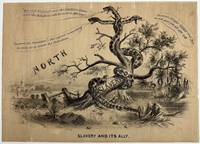
186412816N.p. 1864. Lithograph 14.5 x 20.5 inches. Noticeable toning small areas of light discoloration along top margin short closed tear to left edge minor dust-soiling numerous creases and wrinkles. About very good. A dramatic political cartoon issued during the Civil War and satirizing the dangerous influence of those who argue a compromise on slavery or an easy solution to the war. The work was likely issued in the midst of the 1860 but more likely the 1864 presidential election campaign. The central image of the lithograph involves a three-headed snake -- labeled "The People's Party" and emerging from the American "South" personified by a moss-covered swamp -- which is wrapped around the length of a large tree labeled "Slavery." Each snake vocalizes a different misleading message about the issue of slavery and compromise seemingly aligned with political entities such as the Peace Party and the Copperheads. The messages from each snake head read respectively "Extend Slavery over the Northern States and the Rebellion will be over in 60 days;" "Persevere till after election and then we will give you all you ask;" and "'Support the President' - but oppose everything he may do to crush the Rebellion." This latter message indicates the author of the work supported President Lincoln. The North is personified in the background at left by a depiction of the U.S. Capitol Building. The central image of the lithograph carries echoes of the story of the Book of Genesis with the involvement of a deceptive serpent amid the tree of life.<br /> <br /> The lithograph is signed in the stone at bottom right reading simply "Brooks." Though the work came to us proposing the identify of the artist as Reuben Brooks 1794-1870 we were ultimately unable to confirm this authorship. The lack of an imprint in the lithograph also precludes easy research and identification. In fact the rarity of the lithograph makes it difficult to expound much more about it at all. OCLC reports just a single copy at the Peabody Essex Museum and it is not listed in Weitenkampf or Reilly. Given its rarity and content the present lithograph offers an outstanding opportunity for further research and contextualization. unknown
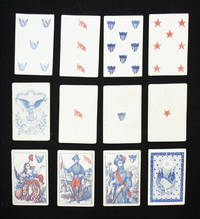
186268782New York: Benjamin W. Hitchcock 1862. CIVIL WAR. New York: Benjamin W. Hitchcock 1862.<br> <br> A complete deck of 52 Civil War playing cards. Each card standard size 3 9/16 x 2 1/2 inches; 91 x 63 mm. The usual suits are replaced with "National Emblems" including blue Federal eagles blue 13-star shields red stars and red American flags. Jacks are replaced by majors Queens by the Goddess of Liberty and Kings are replaced by colonels. The ace of eagles is a large illustration with publisher's imprints as well. Backs of cards are printed in blue with a shield flags a star with the letters "US" an anchor and oak leaves and acorns. Housed together in the original pull-top box. Box embellished on the front with an images of the Goddess of Liberty and the words " National Emblems!! Something New in the Card World! Time for a Change! Foreign Emblems Used Long Enough in the U.S." The back side of the box reads<br> <br> "THE AMERICAN CARD CO. Confident that the introduction of NATIONAL EMBLEMS in place of Foreign in PLAYING CARDS will be hailed with delight by the American People take pleasure in presenting the UNION PLAYING CARDS. As the first and only Genuine American Cards ever produced in the fullest confidence that the time is not far distant when they will be the leading Card in the American market. EXPLANATION. The Union Cards are calculated to play all the Games for which the old style of Playing Cards are used. The suits are EAGLES SHIELDS STARS and FLAGS GODDESS OF LIBERTY in place of Queen COLONEL for King MAJOR for Jack. In playing with these Cards they are to be called by the names the emblems represent and as the Emblems are as familiar as household words everywhere among the American people they can be used as readily the first occasion as Cards bearing Foreign emblems."<br> <br> After this run of cards in 1862 the American Card Company produced another pack of these cards in 1863 but here the backgrounds of the kings and knaves cards had been removed.<br> <br> Cards are in very good to about fine condition with just a mild amount of finger soiling and toning. The 7 of Stars card with a small half-inch closed tear. Box is a bit toned and with some minor chips. With a "2-cent" George Washington stamp affixed to inner lip of the box. Stamp has been canceled with the date "1864." Overall an about fine collection of Civil War playing cards.<br> <br> HBS 68782.<br> <br> $4500. Benjamin W. Hitchcock unknown
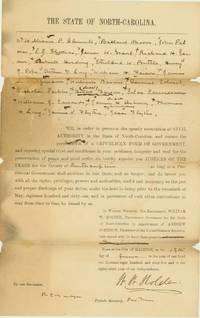
1865218141865. No binding. Fine. Archive of materials relating to the administering of loyalty oaths in North Carolina after the Civil War during presidential Reconstruction. 1865-1866. 21814.01. William H. Bagley Autograph Letter Signed as private secretary of Governor William Holden to William Barrow John Odom and others. Raleigh N.C. July 10 1865 1 p. quarto on State of North Carolina Executive Department lettersheet.Excerpt""Your Memorial . has been received at this office and the Governor directs me to say in reply that the matter therein referred to will be attended to at the earliest possible moment. This however cannot be done until the Enrolling Boards shall have accomplished their work in the different counties in administering the oath of amnesty to the people - separating the loyal from the disloyal. In the meantime the preservations of the Public peace will devolve upon the Justices of the Peace in the several counties who have the right on all occasions to control the Local Police and posses the power to increase the same to such a number as they may deem necessary to meet any emergency which may arise in which they may think is likely to arise .""21814.02 W.W. Holden Printed Letter Signed in Type as Provisional Governor to Col. David A. Barnes with matching cover addressed ""To the Clerk of the County Court of Northampton County Jackson N.C."" Entitled ""Directions for Qualifying Magistrates and Organizing the County Courts."" Raleigh N.C. July 8 1865 1 p. quarto on State of North Carolina Executive Department lettersheet.Excerpt"".If necessary you will call on the officers of the Local Police to notify the Justices to meet at the Courthouse on a day to be appointed by you. And said officers are hereby commanded to aid you in notifying the Justices to attend. When the Justices shall have assembled you will administer to them first the oath of amnesty; secondly the oath to be found in the Revised Code chapter 76 page 434 to maintain the Constitution of the State not inconsistent with the Constitution of the United States; thirdly the oath of office to be found in Revised Code chapter 76 page 441. No Justice or other officer who is included in any of the fourteen excluded classes of the President's amnesty proclamation will be permitted to take the oaths prescribed or enter on the performance of duty until a pardon shall have been received by him from the President. And the oath of amnesty is not to be administered to any one who is not disposed to take it willingly and cheerfully. If any Justice named in the commission hesitates to take the oath it will be your duty to withhold it from him . The Clerk will make a full and complete record on his books of the proceedings of the Justices a copy of which you will at once transmit to this office.""21814.03 W.W. Holden Printed Letter Signed in Type as Provisional Governor. September 15 1865 1 p. quarto on State of North Carolina Executive Department lettersheet.Excerpt""You are hereby directed to retain the Amnesty Oath books until further orders as they will be kept open to allow the people to take said oath up to the time of voting for Governor members of Congress & c.""21814.04 Manuscript Document Oath. Northampton County N.C. August 15 1865. 1 p.21814.05 Printed Document Oath of Allegiance 1865 unissued. 1 p.21814.06 W.W. Holden Partly Printed Document Signed appointing twenty-two men 2 of whom are identified as dead as Justices of the Peace. Raleigh N.C. June 19 1865. 1 p.Excerpt""WE in order to promote the speedy restoration of CIVIL AUTHORITY in the State of North-Carolina and ensure the perpetuation of a REPUBLICAN FORM OF GOVERNMENT and reposing special trust and confidence in your prudence integrity and zeal for the preservation of peace and good order do hereby appoint you JUSTICES OF THE PEACE for the County of Northampton as long as a Provisional Governor shall conti. See website for full description
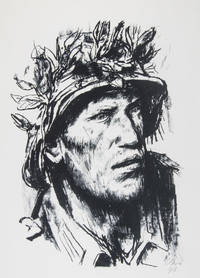
194344673Russland: Frontdruckerei "Panzerfaust 1943. First edition. Loose leaf. g to near fine. 58/100 hand-numbered on title page and signed Joachim Fischer at end of text. All lithographs signed Clevé 43. Elephant Folio 18 x 14". 32 leaves incl. 15 full-page lithographs 17 3/4 x 13 3/4". Original cream portfolio with black lettering on cover protected by modern mylar. Title page with small ochre image of the golden clasp below title and black publisher's device. Additional unsigned lithograph on last printed page below Fischer signature.<br /> <br /> This is an extravagant limited edition produced during the Russia campaign for an elite circle of officers. Laid in a typed letter to Major Zeck site commander at Vitebsk dated November 1 1943 and signed Fischer first lieutenant and company commander "Enclosed a portfolio in the hope you might like it. With obedient recommendations your devoted "Fischer". <br /> <br /> The printed text describes the heroic combat of Staff Sergeant Bergmann from the Tank Division 697. The fighting takes place in the trenches in hand-to-hand combat as well as other combat situations during Bolshevik attacks in 1942 through June of 1943 including an injury of the Staff Sergeant's arm incurred during one of the attacks. At times the enemy seriously outnumbers the German force and the report is highlighting Bergmann's bravery that led to the bestowal of three decorations and eventually the Golden Close Combat Clasp on July 2 1943. The impressive lithographs depict various combat situations.<br /> <br /> Text in German. Portfolio with light wear along edges small chip at bottom of front cover and portfolio flap folds expertly repaired. Lightly sunned along edges. Portfolio in overall good interior in near fine condition. Frontdruckerei "Panzerfaust unknown
19451175131945. WORLD WAR II. Airplane fragment. Japan/Philippines 1945. Painted metal fragment from a World War II Japanese aircraft measuring 3-1/2 by 4-1/4 inches. Housed in a custom chemise and clamshell box. $4500.Original fragment of a Japanese World War II airplane used in the successful kamikaze attack on the USS Salamaua in the Lingayan Gulf on January 13 1945 with its identification scratched into the paint by its owner Lt. Commander Fred R. Salisbury II of the Salamaua.This is a fragment of a Japanese airplane that was flown by a kamikaze pilot into the USS Salamaua on January 13 1945. The ship had participated in the invasion of Lingayen Gulf in the Philippines. It was one of 91 ships damaged or sunk by kamikaze attacks during the war. The aircraft in this case was a Nakajima Ki-84 Hayate single-seat fighter Japan's fastest fighter plane. First produced in the spring of 1942 the Ki-84 did not see major operational use until the Battle of Leyte at the end of 1944. After that point it became a favored airplane and was heavily used.The kamikaze attack carried out by this Ki-84 left a 16-foot by 32-foot hole in the Salamaua's flight deck. It also sparked a number of fires. The plane had carried two 551-pound bombs allowing it to penetrate deeply into the lower decks. One bomb detonated near the tank tops just above the bilge and narrowly missing the bomb stowage compartment. The blast sent debris and fuselage across the flight deck collapsing a number of bulkheads. The second bomb failed to explode and was ejected through the starboard side of the ship at the waterline. The 20-inch hole it left allowed seawater to rush into the ship. As a result the ship lost power communications and steering becoming a sitting duck.While the Salamaua sat immobile two more planes tried to strike it. One crashed into the sea while another detonated in mid-air as it approached. The failure of those pilots meant that the attack killed only 15 of the Salamaua's crew. Another 88 crewmen were injured some seriously.When Rear Admiral Calvin T. Durgin in command of a task force asked for the origin of the smoke he saw coming from the Salamaua he received the reply ""Something just went through our flight deck."" The starboard engine was submerged and the ship listed 8 degrees to starboard. Yet the crew managed to get the ship functional using only the portside engine. Ten long hours after the attack the Salamaua was able to break away to Leyte for repairs. An entire day of pumping failed to alleviate the flooding so the ship merely underwent stabilization repairs before being sent to San Francisco for two rounds of repair. The Salamaua returned to the Philippines in May and eventually was retired from service in 1946 earning the dubious distinction of being the last ship to be successfully attacked by a kamikaze. This fragment belonged to Lt. Commander Fred R. Salisbury II of Minnesota. Salisbury worked in his father's business a furniture manufacturer until the outbreak of World War II Salisbury enlisted in the U.S. Navy in February of 1942 and was assigned to be lieutenant commander of the USS Salamaua a Casablanca-class escort aircraft carrier. Salisbury was released on inactive duty in March 1946 and became vice president of the family business. Salisbury was responsible for etching the inscription""Piece of Jap Kamikazi that hit USS Salamaua of Lingayan Guld Jan 13 1945into the airplane fragment. Accompanied by Salisbury's identification card from the U.S. Naval Reserve dated ""28 NOV. 1945.""A fascinating World War II artifact. unknown
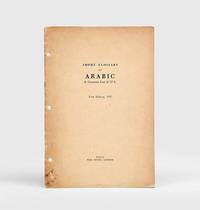
1947184799London: Geographical Section General Staff 1947. Arabic and military cartography Rare first and only edition of this Arabic glossary for use on foreign maps produced by the British War Office. It explains the use of Arabic terms on maps covering territories to the east of the Libyan-Egyptian border and was part of an extensive series published in the 1940s. The spelling and transliteration follow the RGS II System conventions devised by the Royal Geographical Society's Permanent Committee on Geographical Names in 1921 updating those used by the War Office and Admiralty after 1885. The introduction includes a survey of the history of the Arabic language its alphabet pronunciation and dialects in view of instructing soldiers pilots and surveyors on how to read and pronounce names on maps of the Middle East. "An Arabic word may appear on European maps in numerous transliterated forms each depending upon the national authority of the map and the principle of transliteration applied to the names on it" p. 2 due to the "considerable play" between a e and i and other such alternative renditions of specific letters and sounds. The four-column table provides abbreviations transliteration the Arabic-script version and the meaning of Arabic words commonly found on maps. For instance aqra' is rendered as "without vegetation" ashqar as "reddish" ghurd as "sand dune" and zallaq as "slippery place" specifying if a noun is a plural and/or in a different grammatical case. Words originating from other languages Berber Hebrew Greek Latin Turkish and Persian are also identified. Octavo 270 x 185 mm. pp. 28 2. Text in Arabic and English. Original printed brown paper wrappers three punch holes. Wrappers lightly waterstained along lower edge foot of spine rubbed traces of adhesive at foot of front wrapper contents toned but clean: a very good copy. unknown
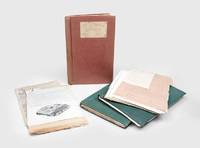
1942176989South-east Asia: 1942-45. The 9-inch gun is believed to have been mounted. in the Japanese Golf Course grounds A far-reaching archive assembled by an artillery officer attached to GHQ India including confidential intelligence and technical summaries and documents as well as material reproduced from War Information Circular issued by Military Intelligence GHQ India and other friendly and enemy sources. Organized into sections the information in these binders is very detailed and concerns the structure of artillery groups tactics and deployment and particular campaigns. For example a section on the attack on Hong Kong notes "The Japs were adept at dragging guns to the tops of hills and siting them in positions very difficult to locate. Ammunition was plentiful and was maintained by forced local Chinese labour. Any coolie failing to work up to Japanese expectations was shot out of hand. The 9-inch gun is believed to have been mounted on a previously and secretly prepared concrete mounting in the Japanese Golf Course grounds or even in the Club House on the mainland" Vol. 1 f. 9. Other material offers technical data and specifications for different guns and shells and included are pages from Periodical Technical Summary a restricted briefing issued by military intelligence in India. Supporting the text are photographs taken from other sources skilled technical drawings of weaponry and diagrams and sketch maps. The collection offers a forensic perspective on the conduct of Japanese artillery offensives in south-east Asia and the channels through which Allied personnel aggregated important strategic and technical information. The compiler may be either Captain J. E. Lee RA GHQ India Counter Battery Pool or Captain David Rogers RA GHQ Counter Battery Team 1 the recipient and addressee of a letter in this collection. Together 3 quarto springback binders and loose material. Original green or brown cloth laid-down title label housing several hundred sheets of bound-in and loose material including notes and documents in typescript letterpress and manuscript sketch maps and diagrams and illustrations. Material actively used and therefore creased marked and annotated a few items split and soiled: a very good working collection. hardcover
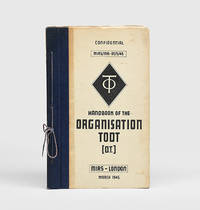
1945184356London: 1945. OT is indispensable in any protracted resistance the Nazis may offer A confidential Anglo-American intelligence report on the Organization Todt produced in the final few months of the war in Europe highlighting its central role in the Nazi war effort and the threat it could pose as a force of last resistance. The Military Intelligence Research Section MIRS was a joint Anglo-American intelligence agency established in 1943 to analyse and exploit captured Axis documents. MIRS produced a series of handbooks on Nazi military and paramilitary organizations for Allied intelligence officers and military officials. This report charts the history of the organization from its founding in 1933 through to the war where it assumed under the control of Albert Speer vast control over engineering and wartime infrastructure. It includes details on the organization's activities uniforms and insignia. There is respect for the organization - "It has carried out in the space of a little over five years the most impressive building programme since Roman times. It has developed methods of standardisation and rationalisation in construction to an extent and on a scale heretofore unattempted". However "OT is indispensable in any protracted resistance the Nazis may offer. Its officials are with few exceptions not only early and ardent Nazis belonging to either the SS or SA but have been leaders of men for many years. Their connections with high officials of the SS and SA are both intimate and of long standing. Above all their standing in the Party combined with their technical qualifications will earn them the confidence of Nazi leaders in any plans for a last-ditch resistance". Provenance: Evgenii Semenovich Mollo 1904-1985 a military historian specializing in uniforms and insignia with his "Mollo Collection" bookplate to the front pastedown. Folio. With 7 plates of which 4 coloured 11 folding plates folding map. Original dark blue quarter cloth cream boards printed in blue string tied. Very minor wear at extremities slight soiling to boards short closed tear to title page contents a little toned. A very good copy. hardcover
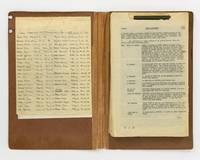
121405First Edition. Hardcover. Very Good. Foolscap folio 253 leaves of duplicate typescript printed rectos only containing 118 depositions or interrogation reports of between 1 and 6 pages each with several diagrams some in colour. Post-bound in the original cloth-backed folder now a little creased and worn with three holes punched in the front cover; one leaf detached; a few tears and other signs of age and use; overall in very good condition. These retained duplicate typescripts comprise 51 depositions signed by the deponent interpreter if applicable and Scott as Investigating Officer and 67 interrogation reports signed by Scott alone. The interrogations took place between 13 January 1949 and 27 January 1950 in Tokyo. The investigation focuses on the activities of the Nankai Shitai South Seas Detachment of the Japanese Army and the Kempeitai Military Police in relation to the treatment of prisoners of war and non-combatants in the Madang area of northern New Guinea. <p>Many of the interrogations concern: the capture of VX148 Lieutenant Colonel Arthur Samuel Key commanding officer of 2/14th Australian Infantry Battalion captured near Kokoda in 1942 and presumed dead; the disappearance of missionaries near Alexishafen; the execution and mistreatment of local 'native' people; and the fate of a downed aircrew brought aboard the ship 'Matsue Maru' in the Coral Sea. <p>Several of the depositions give first- or second-hand accounts of the execution of prisoners. One gives an eye-witness account of the massacre of some 300 Australian troops at Laha airfield Ambon with diagrams showing the sites of the executions. Another describes the execution of Australian airmen at Matupi crater near Rabaul also with a diagram. In yet another Colonel Miki professes to be shocked to hear of the maltreatment of prisoners by soldiers under his command: 'I was very surprised to hear about the unhappy event and the circumstances under which an Australian soldier was drowned and the subsequent torture and ill-treatment of witnesses which followed . I never heard any complaints from the prisoners'. <p>Elsewhere there are references to Changi Sandakan prisoners of war sent to Japan Blakang Mati Sentosa and United States Air Force personnel. <p>The files are arranged in reverse chronological order with the most recent at the top and a manuscript index of the files compiled by Scott quarto 3 leaves rectos only is mounted on the inside surface of the front cover. hardcover
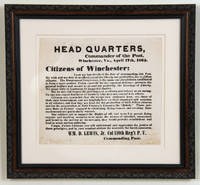
186222128<p>Broadside describing the first occupation of Winchester Virginia during the Civil War.</p> <b>CIVIL WAR.</b>Broadside signed in type by Colonel William D. Lewis Winchester Virginia April 17 1862 1 p. 12½ x 11 in.<p><b>Partial Transcript</b></p><p><i>"HEAD QUARTERS </i></p><p><i>Commander of the Post </i></p><p><i>Winchester Va. April 17 1862. </i></p><p><i>CITIZENS OF WINCHESTER: </i></p><p><i>Upon me has devolved the duty of commanding this Post. My wish and my duty is to afford you all the </i>liberty<i> and </i>protection<i> due to </i>fellow citizens<i>. The </i>Government<i> I represent is </i>the same our forefathers established <i>to form a more perfect </i>Union<i>. . . promote the </i>general welfare<i> and secure to </i>us and our posterity<i> the blessing of </i>Liberty<i>. We mean truly to represent its impartial </i>Justice.</p><p><i>But no one can expect the privileges of a </i>citizen<i> and behave as an </i>enemy<i>. No one can expect kindness . . . who does not extend it to others. </i></p><p><i>Citizens are reminded that the troops now stationed here are those of </i>their own Government<i> and are </i>lawfully<i> here on their </i>country's soil<i>. . . they are here for the </i>protection<i>of their fellow citizens and for the prosecution of their Country's Enemies the 'Rebels.' Those persons Male or Female engaged in circulating flying rumors and creating false excitements are particularly warned. </i></p><p><i>Our soldiers are to support the </i>Rights of all<i> and were I to permit flying reports and insulting remarks to be made the means of mischief annoyance and insult to the service or its servants they would provoke retaliations and lead to much useless suffering. </i></p><p><i>I trust Fellow Citizens you will understand and appreciate the justice of these principles and by your conduct obviate the necessity for harsh measures"</i></p><p><b>Historical Background</b></p><p>Colonel William D. Lewis issues a warning to the citizens of Winchester Virginia imploring them to submit to his occupation or face <i>"harsh measures."</i> This was the first official occupation of a town that would change hands nearly seventy times during the war. Union General Nathaniel Banks entered the Shenandoah Valley in March 1862 occupied Winchester on March 12 and defeated the Confederates at the battle of Kernstown on March 23. On May 25 Union forces were defeated by Stonewall Jackson at the first battle of Winchester and forced to withdraw from the town towards Harper's Ferry thus ending the first Federal occupation of Winchester.</p><p><b>Condition</b></p><p>Very good</p>
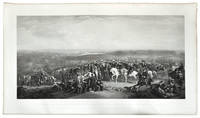
82925Garle Browne Leicester and M. Newman Manchester 18th June 1860. . Large print engraved by Charles G Lewis after Barker with etching engraving and stipple engraving 145 x 86 cm; some closed tears in the lower margin not affecting the plate.<br /> An impressive and scarce large-format engraving of the winners of the Crimean War shown on horseback set in a military camp with Sebastopol and its bay in the background. Published by John Garle Browne the owner of the original oil painting which was sold at auction in London in 1997.<br /> Garle Browne, Leicester, and M. Newman, Manchester, 18th June 1860. unknown
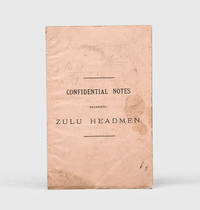
1879167372Pietermaritzburg: Printed by P. Davis & Sons 1879. Detailed intelligence issued shortly before Isandlwana First and only edition unrecorded institutionally this the only copy known. "This small pamphlet contains considerable detail on its subject: 'Compiled from information obtained from the most reliable sources and published by direction of the Lieut.-General Commanding Lord Chelmsford for the information of those under his command'" Raugh. The brief but informative notes are followed by a tabulation of the headmen detailing their father age regiment tribe principal residence and finally remarks expanding on the notes as to the number of men they command their relationships to Cetewayo and status within the Zulu political and military structure. Provenance: Pencilled inscription to the front panel of the wrappers of "Major Grenfell Deputy Assistant Adjutant General 14.1.79" this was Francis Wallace Grenfell 1841-1925 60th Rifles later field-marshal lord Grenfell and commander at Suakin and Toski in the Mahdist War. Grenfell had gone out to South Africa in 1874 and was aide-de-camp to Sir Arthur Cunnynghame commander-in-chief; he saw action at Quntana in the Xhosa War of 1878 and in the Anglo-Zulu War at Ulundi having witnessed the aftermath of the debacle at Isandlwana remarking that "officers and men behaved splendidly - dying back to back - and at the last rallying round the colours not a man of the regulars attempted to escape till all was lost" Emery p. 106. Part of lot 421 Quentin Keynes Sale Christie's 8 April 2004. Octavo pp. 6; 4 double-page tables on 5 leaves. Sewn in original printed pink paper wrappers. Some "service wear" wrappers soiled and rubbed mildly damp cockled back panel with vertical crease where once folded back and consequent soiling to the last blank page contents with pale toning and lightly rippled at the edges from atmospheric damp overall very good. Raugh 575. Frank Emery The Red Soldier: Letters from the Zulu War 1879 1977. unknown
1898134209Umtata and Cape Town: issue 1 A. L. Middleton Umtata; the remainder Dennis Edwards & Co. 1898-99. Chronicling regimental life in South Africa An unusual near-complete run of this rare regimental periodical created for and by the Cape Mounted Rifles preserved with notable ephemera from the Boer War and originating from its "prime mover" Sir Harry Charles St Lo Malet who served as a corporal in the regiment. Provenance is recorded in an inscription by his son Sir Edward William St Lo Malet noting his father's role in founding the magazine before joining the 8th King's Royal Irish Hussars. Harry St Lo Malet transferred from the CMR in December 1900 later serving with distinction in both the Boer War and the First World War earning the DSO and OBE. Additional postal evidence links the volume to the family home in Maidenhead. The run comprises 17 of 19 issues: the complete sequence from May 1898 to August 1899 plus the final number November 1899. Only four institutions in South Africa appear to hold complete sets. Qakamba - apparently a Xhosa or Nguni-derived term referring to the regiment's distinctive bullet-shaped forage cap - was a comparatively polished regimental magazine offering news verse sports and regimental "chit-chat". The Cape Mounted Rifles originated as a colonial gendarmerie in 1855 and became part of the regular army in 1878. During the Second Boer War they served in Colonel Brabant's Colonial Division praised by the Marquess of Anglesey as "the most important body of colonials". Contemporary observers admired their combination of regular-army discipline with deep knowledge of Boer tactics and the terrain. The accompanying ephemera is of particular interest. It includes Francis William Reitz's manifesto of the Orange Free State an eight-page bilingual open letter attacking British policy reportedly circulated widely and read in Parliament annotated as having been "picked up in the Town Hall on the occupation of Ficksburg". Also present is a satirical "Government Gazette Extraordinary Vryheid District 17 August 1901" ridiculing Kitchener's 7 August surrender proclamation and threatening in mock-official style to "banish" British officers unless they depart by 15 September. Further items include a Boer identity card for Carl Pieter van Rooyen of the Vryheid Commando; a brief manuscript receipt by Lt. Geo. W. Ogilvie acknowledging 49 prisoners on 15 May 1900; and a contemporary newspaper cutting on the Siege of Wepener April 1900 annotated in pencil. The 16-day defence of Wepener - later commemorated by a clasp to the Queen's South Africa Medal - was a key action for the Cape Mounted Rifles. 17 issues bound in 1 vol. quarto 245 x 183 mm; extent of each issue between 16 and 24 pages with continuous pagination. Illustrated throughout from photographs original artwork and line-drawings wrappers carrying advertisements for local businesses. Contemporary dark brown half morocco for H. Sotheran & Co. preserving the original printed wrappers tawny morocco twin labels Double Marble gold vein patterned sides and endpapers top edge gilt. Binding just a little rubbed wrappers slightly dusty overall very good. Chris Ash Kruger Kommandos & Kak: Debunking the myths of the Boer War 2014; The Marquess of Anglesey A History of the British Cavalry 1816-1919 Volume IV 1899 to 1913 1998; Bud-M'Belle Kr Scholar's Companion 1903; Mansell South African Bibliography vol. IV p. 16 for Reitz's pamphlet 1979; Christopher Wilkinson-Latham The Boer War 1977. unknown
1915132388Aldershot: Gale & Polden Ltd Art Printers for the Brigade 1915. First and only edition no other copy traced. This copy owned by Capt. John Fox Brigade Veterinary Officer signed by him on the first blank together with seven other senior officers including Brig.-General Heyworth Commanding XXth Brigade. A few pencilled annotations to the portrait plates noting wounded or killed. The text is essentially a calendar for 1914 with brief notes as to significant events relating to the Brigade through the year accompanied by snippets of text humorous and factual. Landscape small folio 186 x 245 mm. Illustrated throughout with numerous portraits of officers from photographs colour uniform studies and humorous sketches from the Front. Contemporary black diced skiver title and owner's name gilt to the front board pale grey-green pastedowns original dun wrappers bound in title and brigade badge embossed and gilt to the front wrap silk ribbon in brigade colours attached. Brigade office and censor stamps applied to the verso of the front wrap. A little rubbed and bumped both boards with minor creases wrappers browned and slightly stained first few leaves with some minor finger-soiling overall very good. hardcover
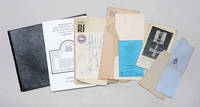
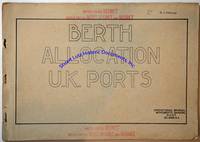
5396MEYER J. FRECHIE 1907-1988. An American Army Lieutenant Colonel in World War Two Frechie was Chief of the Operational Branch of the Transportation Office and was responsible for coordinating the transportation logistics of the Normandy Invasion D-Day. Archive. More than 1600 pieces. 1942-1953. The archive of Lieutenant Colonel later Colonel Meyer J. Frechie. The archive primarily dates from 1942 to 1945. It includes letters to and from his family in Philadelphia including his wife young son parents and sister and military papers including some interesting material directly related to his work in Allied transportation.Frechie a graduate of the Wharton School of Business at the University of Pennsylvania worked as a traffic manager for the railroad and steamship industries before the war. After the United Statess entry into World War Two the military actively courted Frechie for his skill in transportation logistics. He joined the war effort as a civilian traffic manager for the Army in 1941 before officially joining the Army at the rank of Captain in February 1942 and being sent to London. There he was put in charge of coordinating the covert transport of Allied servicemen and supplies from England to Normandy for D-Day. According to the lengthy text accompanying his citation for the Legion of Merit Frechies war-time activities were in part as follows:The Operational Branch Movements Division Office of the Chief of Transportation was activated in August 1943. Lt. Col. Frechie being the only officer available with amphibious operational experience was designated Chief of said Branch. He developed his staff by sending his officers and men thru a series of strenuous exercises with the British and American Forces at various places in the United Kingdom in preparation for D-DayLt. Col. Frechie as Chief of the Operational Branch was responsible for the movement of all troops vehicles equipment and supplies for movement OVERLORD. From D-Day to 7 September 1944 a total of 1302954 personnel 260433 vehicles and 1272532 deadweight tons of supplies have been shipped from the United Kingdom ports to the Continent. The entire OVERLORD movement program was executed by the movement instructions issued by the Operational BranchLt. Col. Frechie arranged for the building of scale models of various landing craft and scale wood blocks of various general purpose and special purpose vehicles to be used in movement OVERLORDParticipating in actual exercises where one or more of the plans were tested by actual execution Lt. Col. Frechie analysed the results and proceeded t make final plans for movement to implement Army requirements. Lectures were made to the Air Force and Ground Services outlining movement plans; ports and depots were visited and careful studies made of their capacity to handle the vast quantity of supplies vehicles and personnel necessary to sustain the operation. Many obstacles were confronted and surmounted by Lt. Col. Frechie in perfection of operation OVERLORDThis required the greatest flexibility in operation which the Operational Branch under Lt. Col. Frechie was able to exert with dispatchAt all times Lt. Col. Frechies superior judgment keen foresight expert planning and unselfish devotion to duty maintained an exceedingly high state of morale among the officers and men associated with him and his efforts can be directly attributed to the prolonged success of this vitally important mission of the Transportation Corps.Frechie was discharged from active duty in November 1945 and served in the Army Reserves until 1953. He was promoted to Colonel in 1946.The archive contains two large boxes and three small boxes of letters and documents. All are in at least good condition with the exception of a few torn letters. Highlights are as follows:One large box of military paperwork. The highlight is a book entitled Berth Allocation Ports UK and marked Most Secret on the cover; it examines many British ports and their capacity in preparation for the D-Day Landings. It includes a booklet of secret maps and information about ports in the United Kingdom. There is also a thick file of diverse paperwork relating to Frechies military career a mix of originals and copies some of it quite mundane such as records of his travel within the UK booklets written by Frechie including Preliminary Analysis and Recommendations Cargo Documentation Procedure and Historical Critique of the United Kingdom Overlord Movements three copies certificates of appointment as Lieutenant Colonel and Colonel copies of his Honorable Discharge citations for the Bronze Star and Legion of Merit and a thick file of documents relating directly to his work on the Normandy landings. Much of the most interesting and unique material can be found in this box. The two thick files are hundreds of pages each.One large box of hand-written letters and copies of V-Mail to and from Frechies wife Rita and son Allen. There are 659 letters from Frechie to Rita and Allen including many duplicates. They are dated 1942-1945 and 1947 and there are also numerous letters dated only with the month and day. The greatest number are dated late 1942 and 1943 when he wrote multi-page letters to her every day often more than once per day. There are also 230 letters to Frechie from his wife and son the majority dating to 1942. This is the bulk of the archive both in number of unique items and in quantity of pages.One small box of hand-written letters and copies of V-Mail to 144 and from 246 Frechies parents Bessye and Jack. There are numerous copies of V-Mail from Frechies mother including some duplicates.One small box of hand-written letters and copies of V-Mail to 43 and from 206 Frechies sister Fleurette Lang brother-in-law Stanley and niece Jackie. The majority is copies of V-Mail letters from Fleurette.One small box of miscellaneous cards newspaper clippings assorted Army-related pamphlets etc.This is the substantial archive of a man who made a unique and valuable contribution to the Allied victory in World War Two. unknown
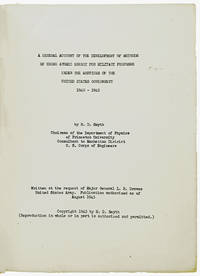
1945S13207Washington D.C.:: Government Printing Office 1945. 1945. 10x7 inches Sm. 4to. 193 pp. With page IV-7 printed upside down IV-8 positioned correctly. After the unpaged front matter which is printed on one side of the leaf each chapter has separate pagination and the pages of the Appendices are numbered A1-1 and so forth." Original cream-colored textured card-wrappers lithoprinted on the front "Released for Publication on _________" side-stapled 2; corners curled variously soiled representative of 'normal' exposure. Signature of M.J. Coffee. Good. / PROVENANCE: "M.J. Coffee / Rm 213 Chemistry Bldg. / Ohio State Univ. / Columbus Ohio" With an inscribed index card "This is my copy of the A-Bomb record sent to all the people who were instrumental in perfecting the bomb used on Hiroshima Nagasaki. It was sent out after the war to people who worked for the Manhattan Project. I was at the Ohio State University in Columbus Ohio." FIRST OFFICIAL PUBLIC ANNOUNCEMENT ON THE MANHATTAN PROJECT :: THE CREATION OF THE ATOMIC BOMB. LIMITED EDITION of about 1000 copies. Jones. First official government statement printed and released on August 12 1945 solely for persons related to the project and the press being the first printed account of the development of the Manhattan Project and the atomic bomb issued just six days after the bombing of Hiroshima. The lithoprinting was done in the Adjunct General's Office in the Pentagon. / Coleman describes the conditions by which this book was put together "It is apparent that gathering the leaves for binding was done in haste under the pressure of tight security precautions. Pages are lacking or repeated in several copies that have been seen." :: p. 206. This copy is complete. / "Researchers should note that correspondence dealing with the writing and editing of the Smyth Report is mainly located in Series V Smyth Report. This correspondence appears to have been filed by Smyth with related materials i.e. notes draft manuscripts early printings for several reasons. His primary intent appears to have been continuity; the correspondence discussing his work on the Smyth Report often refers to specific drafts now also filed in Series V. These letters were also often classified "Secret" and "Top Secret" along with his various manuscript versions from 1944 through 1945. These materials remained together over the years while in Smyth's possession periodically undergoing review for declassification as a group by the U.S. AEC. For these reasons as well as the fact that Smyth meticulously arranged Series V himself the correspondence dealing with the Smyth Report has been maintained in its original order and assigned to this separate series. Cross referencing has been done for correspondents who appear in Series V Smyth Report; the existence of letters in Series V has been noted under the appropriate correspondent's name in the Series I section of the container list." :: American Philosophical Society Henry DeWolf Smyth Papers. / In addition page VI-12 contains the sometimes missing "secret" classified content dealing with plutonium production rates. This copy contains both the entire section V and the plutonian production rates from VI-12. / "The story of the development of the atomic bomb by the combined efforts of many groups in the United States is a fascinating but highly technical account of an enormous enterprise. Obviously military security prevents this story from being told in full at this time. However there is no reason why the administrative history of the Atomic Bomb project and the basic scientific knowledge on which the several developments were based should not be available now to the general public. To this end this account by Professor H. D. Smyth is presented./ All pertinent scientific information which can be released to the public at this time without violating the needs of national security is contained in this volume . . ." :: Major General L.R. Groves foreword. / "There was published on 12 August 1945 six days after the atomic attack on Hiroshima the remarkably full and candid account of the development work carried out between 1940 and 1945 by the American-directed by internationally-recruited team of physicists under the code name of 'Manhattan District' which culminated in the production of the first atomic bomb. . . Compiled by Professor Smyth of Princeton a consultant to the 'Manhattan District' project at Los Alamos whose commandant General L.R. Groves provided the foreword 'the Smyth Report' as it is familiarly known was published at one dollar by the U.S. Superintendent of Documents" :: Printing and the Mind of Man 422e. / Smyth 1898-1986 Professor of Physics at Princeton served as a consultant to the Manhattan Project from 1943-45. After the war he was appointed Commissioner of the U.S. Atomic Energy Commission from 1949-54. / REFERENCES: Coleman 3 and earliest obtainable issue see: Earle E. Coleman "The 'Smyth Report': A descriptive checklist" Princeton University Library Chronicle vol. 37 1976 pp. 204-218; Smyth "The 'Smyth Report'" Princeton University Library Chronicle 37 1976 pp. 173-189. Jones Vincent Manhattan: The Army and the Atomic Bomb. Washington DC: United States Army Center of Military History 1985 pp. 560-1. Government Printing Office, 1945. unknown
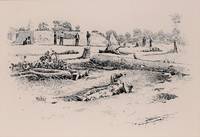
1884W2434New York: The Century Co. 1884. The image is 4 5/8 inches by 7 1/4 inches on artist board measuring 14 1/2 inches by 12 1/4 inches. Original ink drawing by Walton Taber 1857-1933 after a post-battle photograph. The scene shows dead Confederate soldiers in front of Battery Robinette on October 5 1862 the morning after the battle at Corinth Mississippi. Civil War historians J. Matthew Gallman and Gary W. Gallagher attributed the photograph to Ohio born and Corinth based photographer George Washington Armistead . However the Library of Congress has a virtually identical photographic negative that is attributed to Nicholas D. Brown. Although the photographer's identity remains uncertain it is clear that the drawing is by Walton Taber and is signed by him in the lower left corner of the image. Taber did the drawing for the Century Company who published it on page 751 of volume 2 of Battles and Leaders of the Civil War. This drawing along with others by Taber that were included in the Century Collection of Civil War Art was auctioned by Christie's in New York in 1988. Born in New Bedford Massachusetts Taber was one of the most important American illustrators during the late nineteenth and early twentieth centuries. His pen and ink drawings provided the Century Company almost 250 illustrations for Battles and Leaders. The drawing offered here is in near fine condition: clean and bright on artist board that is lightly and uniformly toned on the recto; there is some minor soiling on the verso along with notations made by Century editors and a later framer. The drawing is now archivally matted and ready for a 16" by 16" frame. SIGNED. Original. Single Sheet. Near Fine. Illus. by Isaac Walton Taber. 4 5/8" by 7 1/4". Fine Art Print. The Century Co.
186327010Washington: Coastal Survey Office 1863. Folding map 24 x 25 1/2 inches mounted in twenty-four sections on linen. Original card covers with printed paper label. Contemporary ownership inscription on label. Light wear. Minor foxing. Rare field operations map of Mississippi.<br/> <br/> This rare Civil War map was created by the Coast Survey office the main cartographic arm of the Union Army for use in the Union campaigns into the South. This copy was owned and used by Colonel Joseph Corson Read the Chief Commissary of the Army of the Cumberland. In November 1863 the Union armies captured Chattanooga the "Gateway to the South" enabling them to stage a prolonged offensive into the Southern heartland. Grant moved very quickly to overwhelm the South and immediately ordered Sherman to move against Atlanta and its vital railroad supply lines at the same time as he sent Nathaniel Banks to attack Mobile Alabama. Joseph Corson Read 1831-1889 was one of the first wave of men to take up Abraham Lincoln's call for volunteers to put down the rebellion in April 1861. He remained continuously in the army serving first on General Jesse Reno's staff and rising to the rank of Chief Commissary for the Army of the Cumberland commanded by George H. Thomas. Thomas was impressed with Read and on May 1 1864 with the spring campaign against Atlanta imminent Thomas named Read Chief Commissary of the Army of the Cumberland in the Field. This meant that although Colonel A.P. Porter was the Army's overall chief Read would serve alongside Thomas in the field and had the responsibility to supply the entire army as it moved South. During the long and arduous Atlanta campaign he was the man on the ground making the supply side work. Read developed a close relationship with Thomas one with both personal and professional aspects. This map scaled at ten miles to the inch shows Mississippi and Alabama from Jackson to Montgomery starting about fifty miles north of those two points and continuing south to New Orleans and the Gulf of Mexico. Rivers roads and rail lines and all the towns they connect are detailed with waterways printed in blue. Two of the railroads the Mobile & Pensacola and the Mobile & Great Northern construction and removal dates during the war. An important map that would have been used by the Union Army in the field specifically by the Chief Commissary of the Army of the Cumberland.<br/> <br/> Library of Congress Civil War Maps 260.1; Library of Congress Railroad Maps 140. Coastal Survey Office unknown
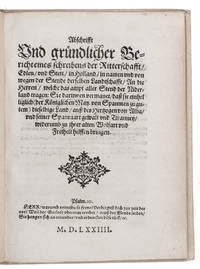
157417001Germany 1574. Modern boards. 4to. With a woodcut arabesque ornament on the title-page woodcut interlaced tailpiece at the end and 1 woodcut gothic decorated initial. Set in fraktur types with incidental schwabacher. Rare second or third edition of the German translation of an anti-Alva anti-Spain pamphlet written by the nobility of Holland and representatives of its cities addressed to the States in Dutch Staten the provincial governments of and all magistrates in the seventeen provinces of the Low Countries promulgated at Delft on 12 September 1573 as noted at the end of the text but not printed even in the original Dutch before 2 October 1573 when William the Silent Prince of Orange wrote to his brothers that the pamphlet was being printed Groen van Prinsteren. That is just before Alva was dismissed on 19 October and left the country on 18 December 1573. The text was first published in Dutch: Delft Aelbrecht Hendricksz. October 1573 TB 1289 Knuttel 210 and soon after: Dordrecht Jan Canin 1573 TB 1290 Knuttel 211 both under the title: Copie eens Sendtbriefs der Ridderschap Edelen ende Steden van Hollandt aen die Staten vanden Landen van Herwaerts overe hough it has sometimes been supposed it was printed in Delft it seems more likely to have been printed in Germany so that it does not appear in Valkema Blouw Typographia Batava or the various pamphlet catalogues. There appears to be only one copy in the Netherlands at Utrecht University Library.Blind stamp on the title-page. Apart from some browning a very good copy of an important but little-known pamphlet.l USTC 608308 3 copies; VD16 N1634 same 3 copies; cf. N1632-33; WorldCat 257783005 630546807 837235844 730242093 6 copies including the same 3; 1130127579 links to images of an Utrecht UL copy; cf. Groen van Prinsteren Archives 4 p. 215 1573 Dutch ed.; Knuttel 212 1573 German ed. Picarta 1573 German ed.; TB 1289-1290 1573 Dutch eds.; Wagenaar Vaderlandsche historie 6 pp. 452-453 Dutch ed. hardcover
1863ABC_47223Pont-à-Mousson France 1863. Size of the whole when folded and closed: 22.5 x 18 cm. Élie Haguenthal colophon: Paul Toussaint Half red cloth and hand coloured lithographed paper sides. Lithographed folding panorama showing 8 different lithographed scenes captioned in and beneath the illustrations of the Italian War of 1859 from the French-Italian perspective.The 8 scenes 5 3-leaf scenes and 3 single leaf scenes are assembled to make a single long foldout as assembled with the text: 21.5 x 395 cm; image size 19 x ca. 310 cm coloured by a contemporary hand. 5 ll. of letterpress text and the lithographed folding panorama. Second known copy of a lithographic panorama of the Italian War of 1859 also known as the Second Italian War of Independence. This war was fought in the northwest Piedmont region of Italy pitting the Second French Empire and Savoy-Piedmont-Sardinia against the Austrian Empire and it proved crucial in the process of Italian unification. The text and following hand-coloured lithographs describe and depict eight stages of the war from the departure of French troops for Italy to their return some months later and highlighting several important battles including those at Magenta and Solferino. As a result the influence of the Austrian Empire in Italy was greatly reduced.The present work is extremely rare: we have located only one other copy at the Bibliothèque Nationale de France and it moreover differs slightly from the present one.The title-page functions as the front paste-down the text and illustration of the panorama fold out from there. The text and illustration have been printed on one side of the paper. With a French inscription in pencil at the head of the first page. The binding is somewhat foxed and browned the front board is slightly cracked the red cloth around the spine is slightly faded the back hinge is weakened some occasional staining and very slight foxing throughout. Otherwise in good condition.l Cf. WorldCat 461406796 1 copy of a later ed.: Bibliothèque Nationale de France; for the publisher Haguenthal: Dictionnaire des imprimeurs-lithographes du XIXe siècle http://elec.enc.sorbonne.fr/imprimeurs/node/25785. ABE CAT Art History hardcover
186427011Washington 1864. Folded map 24 x 33 inches in thirty-two segments mounted on linen. Original card covers with printed paper label. Contemporary ownership inscription on label. Some light wear and minor soiling. Detailed field map for the Union Army in Northern Mississippi and Alabama.<br/> <br/> A highly detailed map of the northern half of Mississippi and Alabama showing the border with Tennessee and all points south to Vicksburg and Montgomery produced to support the operations of the Union Army there in 1864. This is one of several maps compiled by the U.S. Coast Survey in an attempt to adequately map the South during the Civil War for military purposes. A note on the map indicates that the present map was compiled from various sources including "campaign maps and information furnished by Capt. O.M. Poe Chief Engineer Military Division of the Mississippi and by Capt. W.E. Merrill Chief Engineer Department of the Cumberland." Merrill was Sherman's chief topographical engineer and he contributed to several important maps of the area including one of Northern Georgia produced in Chattanooga following the vital capture of that city. With the beginning of the Civil War the United States Army found itself scrambling to obtain adequate field maps for military operations in the South. The most established cartographic branch of the Government the Coast Survey was pressed into service to provide these maps some with a coastal component but mainly for landlocked locations. The cartographers of the Coast Survey reviewed all of the existing cartography available but also drew on military and scouting reports and covert agents to assemble the most detailed possible maps of places roads railroads natural features. The topography is illustrated with hachured and shaded relief and railroads shown in red. The circulation of these maps was controlled and only officers ranking major or higher were supposed to control copies. As a result they are rare today. Two key figures in the Coast Survey effort during the War were Henry Lindenkohl and his brother Adolph who were responsible for actually drawing many of the field maps. The Lindenkohls were born in Germany but emigrated to the United States as teenagers and became American citizens. Adolph had already worked at the Coast Survey before the War began and Henry joined in 1861. Together they made a huge contribution to the war effort through their superb cartographic work producing and revising maps of different theatres of operations through 1865. Both continued with the survey for the rest of their lives; Adolph died in 1904 after fifty years on the job and Henry in 1920 after fifty-nine. This map has the ownership inscription of Col. Joseph Corson Read 1831-1889. Read was one of the first wave of men to take up Abraham Lincoln's call for volunteers to put down the rebellion in April 1861. He remained continuously in the army serving first on General Jesse Reno's staff and rising to the rank of Chief Commissary for the Army of the Cumberland commanded by Gen. George H. Thomas. Thomas was impressed with Read and on May 1 1864 with the spring campaign against Atlanta imminent Thomas named Read Chief Commissary of the Army of the Cumberland in the Field. This meant that although Col. A.P. Porter was the Army's overall chief Read would serve alongside Thomas in the field and had the responsibility to supply the entire army as it moved South. During the long and arduous Atlanta campaign he was the man on the ground making the supply side work. Read developed a close relationship with Thomas one with both personal and professional aspects. An important map of Northern Mississippi and Alabama particularly interesting as part of the greater project undertaken by the Coast Survey to map out the South during the Civil War and with excellent provenance and associations. unknown
178579297Council=Chamber January 19 1785. handsomely matted. Very fine condition. Approx. 3-1/2 x 5-1/2 inches . The printed date 1784 was altered in ms. to 1785. unknown
1934055677London: War Office Geographical Section - General Staff No. 2957 1934. No Binding. Very Good. Original chromo-lithographed map mounted on cloth consisting of 50 adjoining sheets folded in light brown original wrappers. 1405 x 1315 cm. Light tear and water stain on the cover label slightly loose on connections of the cloth. Otherwise a very good copy. A rare colour lithographed fiftyfold wall map of the Middle East centred on the Arabian Peninsula with North and East African shores the Gulf of Aden the Persian Gulf the Red Sea the Sinai Peninsula the Mediterranean Turkey Iran Saudi Arabia Aden Yemen the Gulf of Oman. The map was produced with the method of Conical Orthomorphic Projection by the War Office probably in London. To its maximum extent it includes the complete Middle East of the 1930s as well as the European side Balkans and Italy etc and the Caucasus. The War Office was a department of the British Government responsible for the administration of the British Army between 1857 and 1964 when its functions were transferred to the new Ministry of Defence MoD. The Topographical Section was responsible for the series consisting mainly of topographical maps produced for British intelligence and military use. As of December 2023 we could not trace any copies of this map in the OCLC although the LoC includes newer editions 40s & 50s. <br/> <br/> War Office, Geographical Section - General Staff No. 2957 unknown
198016109Austin: Univ of Texas Press 1980. First edition. Hardcover. Fine/Near fine. 192 pages index. Blue cloth boards. Dust jacket with price intact has couple of small rubs and edgewear at spine. <br/><br/> Univ of Texas Press hardcover
1829259017Roma : Tipografia della Società Editrice 1829. First Edition. Hardcover. Finely bound set in half gilt-blocked vellum over marble boards with leather gilt-blocked titles. Some wear and tear as with age. Remains well-preserved overall; tight bright clean and sharp-cornered. Physical description; 8 vols. : ill. ; 43 cm. Notes; Engraved title pages. Subjects; Vatican. Painting — Vatican City. Sculpture — Vatican City. Roma : Tipografia della Società Editrice hardcover