[CUBA/INDEPENDENCE WAR].Biblio.com
11 490 résultats
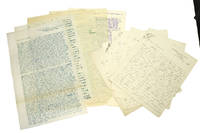
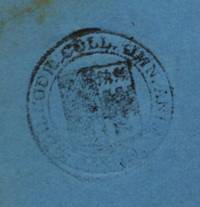
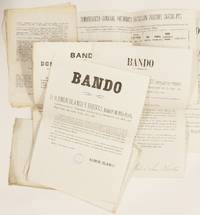
1896RF 818<p><i><b>Collection of 23 original edicts February 1896-September 1898 by the Captain Generals of Cuba 19 by General Valeriano Weyler 4 by General Ramón Blanco the last Spanish Captain General of Cuba. The edicts concern the attempts by the Spanish authorities to control the insurrection. They range from Weyler's efforts to concentrate the population in fortified encampments a measure often considered the precursor of concentration camps to Blanco´s establishing of a ceasefire in 1898.</b></i></p><p>23 ORIGINAL EDICTS; some manuscript annotations and the stamp of the Army of Cuba on some communiqués. The collection includes three items of related ephemera.</p><p>Notable collection of original edicts from Spanish authorities who participated in the Cuban War of Independence and attempted unsuccessfully to end the insurrection. The Cuban War of Independence the War of 1895 is the name given to the final Cuban war against Spanish domination. It is one of the last American wars against the Kingdom of Spain. The war began on 24 February 1895 with a simultaneous insurrection in 35 Cuban localities known as Grito de Oriente formerly known as Grito de Baire and ended in 1898 with the surrender of the Spanish Colonial army to the U.S. military advance with the assistance and support of <i>mambises</i>members of the Independentist Cuban army in the conflict known as the Spanish-American War. </p><p>Details on each of the edicts available on request. G. 11653/ RF 818. X99X001160 </p>
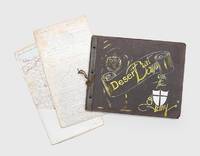
19421763761942-43. The Allied triumph in the Western Desert An artfully composed collection centring on preparations for the Second Battle of El Alemein and its aftermath. The photographs document captured and destroyed Axis tanks and artillery the advance eastwards to Tunis and visits by Churchill and senior military figures. 285 Air Reconnaissance Wing was formed in July 1942 to oversee all reconnaissance in the Western Desert. The album opens in September-October 1942 when the Middle East Interpretation unit was operating near RAF Landing Ground 89 an important strip for bombing operations. Images from the battle - abandoned tanks and two eery night-time shots of firing artillery - are followed by evidence of his involvement in mid-November in the recapture of the strategic port of Tobruk which had been surrendered to Rommel in June. Photographs show the advance of British trucks and traces of recent hostilities an abandoned German tank and a destroyed bridge as well as the subsequent Allied push towards Benghazi. Between January and March 1943 he was based out of RAF Castel-Benito photographing the celebratory entrance into Tripoli. Press and snapshot photographs record Churchill's inspection tour at Berg-el-Arab in September 1942 accompanied by air vice-marshals Tedder and Coningham. Others document Coningham's visit to LG 89 on 20 October his address to troops his Fieseler Storch captured from the Germans and a seized Stuka dive bomber. Churchill Montgomery and General Freyberg thank the 8th Army at Castel-Benito in February 1943 General Giraud's visits Monastir in May and Freyberg takes the surrenders of generals Giovanni Messe and Kurt Freiherr von Liebenstein in the same month. Further subjects are a funeral for pilots conducted at LG 89 in August 1942 burial grounds for Axis soldiers "war paint" on American Kitty Hawk fighters and the trailer at Monastir where soldiers developed photographs. Landscape quarto album. With 327 gelatin silver photographs mostly snapshot- to postcard-size c. 50 x 80 mm to 90 x 130 mm a few smaller or larger all mounted on brown card leaves fully captioned in calligraphic hand in white ink or later roller ball pen decoration in colour. Brown card covers tied through holes with light brown cord front cover with manuscript title in yellow and white inks manuscript 8th Army and RAF badges gold highlights. Covers a little worn one photograph now loosely inserted photographs generally bright occasional mirroring: very good indeed. unknown
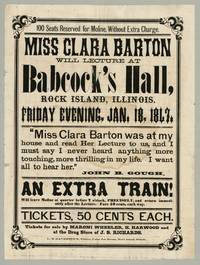
186713091Rock Island IL: L.M. Haverstick Printer Union Job Rooms 1867. Broadside 24 x 18 inches. Old folds minor creasing a few small chips short closed tear to left edge near the "B" in "Babcock's" faint circular dampstain in center minor scattered foxing. Withal very good condition. A visually appealing and seemingly unique surviving broadside advertising a January 18 1867 lecture by Clara Barton. At the time Barton was touring with her lecture entitled "War & Incidents of Army Life" part of a popular post-Civil War series of talks she delivered across the United States. Barton spent two years touring and recounting her battlefield experiences which helped popularize her and fund her subsequent efforts to locate missing soldiers. The present lecture was delivered at Babcock's Hall in Rock Island Illinois. In addition to the bold title containing the relevant information on the lecture and the information on obtaining tickets at the bottom the middle portion of the broadside prints a quote by noted temperance lecturer John B. Gough praising Barton's lecture: "Miss Clara Barton was at my house and read Her Lecture to us and I must say I never heard anything more touching more thrilling in my life. I want all to hear her." Below this quote is a notice that although Moline and Rock Island are only a few miles apart "An Extra Train" on the famed Rock Island Railroad will be provided to transport attendees of the lecture from Moline for a ten-cent fare. Typographically the broadside is interesting for employing several sizes and types of fonts likely wooden type which provides multiple opportunities for catching the eye of the observer. This includes a rather Gothic-style font when printing the date of the lecture.<br /> <br /> Clara Barton 1821-1912 was a noted educator and humanitarian who helped distribute needed supplies to the Union Army during the Civil War and later founded the American Red Cross. Barton garnered nationwide recognition for her efforts during the war and quickly became known as the "Angel of the Battlefield." After the war Barton's lecture tour brought her in contact with other notables of the day including Susan B. Anthony and Elizabeth Cady Stanton and also Frederick Douglass who involved her in the suffrage and civil rights movements respectively. In the Fall of 1866 Barton began to lecture on her Civil War experiences in lyceum halls churches town halls and schools. Though she never felt comfortable in front of an audience wherever she spoke Barton was well received. Her contemporary biographer Percy Epler wrote that "a tear-stained multitude thronged everywhere to hear her" as she had made it her mission to show not "the glories of conquering armies but the mischief and misery they strew in their tracks; and how while they march on.some one must follow closely in their steps crouching to the earth faces bathed in tears and hands in blood. This is the side which history never shows."<br /> <br /> From 1866 through 1868 Barton delivered over 200 lectures throughout the northeast and midwest regarding her Civil War experiences. She shared platforms with other prominent figures including the aforementioned Douglass as well as Ralph Waldo Emerson William Lloyd Garrison and Mark Twain. She often earned $75 to $100 per lecture. Original broadsides advertising her lectures are exceedingly rare to say the least. We could locate just a single result in auction records of a much smaller example and OCLC reports just one institutional holding of any Barton lecture broadside again much smaller for an 1867 event in New Haven located at the Library of Congress. L.M. Haverstick, Printer, Union Job Rooms unknown
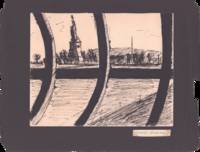
1941List2962New York City 1941. Thirty-three sketches mainly measuring 6 x 8 or 8 x 10 inches affixed to black construction paper. Sketches are pen and ink or pencil some with captions. With seventeen typed pages mainly measuring 6 ½ x 7 inches. In an 11 x 14 ½ inch portfolio. Spine of portfolio missing all pages separated; sketches excellent construction paper with much marginal chipping; typed pages with adhesive verso else excellent. Overall very good to excellent. Bitia Rosendor 1920–2011 was a Jewish artist born in Jerusalem and raised in Antwerp Belgium. Rosendor studied painting and sculpture at the Koninklijke Academie voor Schone Kunsten in Antwerp but her studies were interrupted by the outbreak of World War II. The Rosendor family fled Europe via Portugal in 1941 and were detained at Ellis Island where these sketches were produced.<br /> <br /> The sketches include portraits of other detainees and immigration employees and views from the island. Most have captions including brief notes about the subjects such as “She became hysterical and was taken to the hospital†“A little orphan going all alone to the Dominican Republic†and “‘Liberty’ through barsâ€â€”the latter on an illustration of the Statue of Liberty seen through the bars on the internment center’s windows.<br /> <br /> The typed text describes Rosendor’s experience waiting for the family’s Visa to be approved. The ordeal is mostly one of boredom; she writes:<br /> <br /> “Everyone had the same endless day to pass but everyone passed it differently. There was no possible way to be original but each of us retained her or his personality. The emptiness of the hours was heavy to bear.â€<br /> <br /> The boredom though is punctuated by “incidentsâ€; some negative as when “Once a Chinese girl wept for three days uninterrupted refused to eat refused everything†and some positive as when “A friend seen last time at the Antipodes†disembarks “from a newly entered ship . and suddenly: ‘YOU’! -’YOU’â€.<br /> <br /> Rosendor would live with her family in Brooklyn until the 1950s when she returned to Europe with her husband Jewish-American painter Martin Reisberg a fellow immigrant whom she met in the city. The pair returned to Belgium where they ran a gallery and created exhibitions together until Rosendor’s death in 2011.<br /> <br /> Of interest to scholars of the Holocaust American immigration and the Jewish immigrant experience in the 1940s. unknown
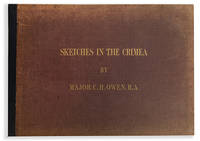
114199London Colnaghi 1856. . First edition; landscape folio 37.1 x 56.8 cm; hand-coloured lithographed title with vignette 8 hand-coloured lithograph plates on 6 leaves one folding armorial bookplate to front pastedown some light spotting and fraying to title and final folding plate with margins and fold repaired the rest of the plates have only very light marginal spotting and remain bright; original morocco backed cloth boards title lettered in gilt to upper boards a very good copy.<br /> Very rare. There is no copy in the Blackmer Atabey or Abbey collections.<br /><br />Henry Charles Cunliffe-Owen 1821-1867 had a distinguished military career from 1839 until 1850 when he accepted a civilian appointment under the Royal Commission for the Great Exhibition of 1851. He rejoined the army on the outbreak of the Crimean war and saw Sevastapol but was wounded and invalided home before the heavy fighting of the siege. After the War he rose in rank to Lieutenant-Colonel and amongst his achievements was the fortification of Devonport.<br /><br />The illustrations depict: The Chapel in the Caves at Inkermann title vignette; 2 views of the dockyard at Balaklava; Sebastopol from the picket battery; Harbour of Sebastopol from the Crow's Nest Inkermann; Greek battery Sebastopol; Monastery of St. George and the Valley of Baidar; Sebastopol from the 2nd Parallell Right Attack folding plate.<br /> Bobins 207; not in Blackmer Abbey or Atabey. London, Colnaghi, 1856. hardcover
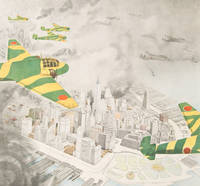
1943260152Tokyo: Dai Nihon Kaiyo Bijutsu Kyokai Greater Japan Pacific Art Association 1943. 35 mounted color plates with captioned tissue-guards. 1 vols. Oblong folio. Publisher's blue cloth boards printed paper label on cover. Fine. 35 mounted color plates with captioned tissue-guards. 1 vols. Oblong folio. "The purpose to publish this book is nothing but to let the people in Japan understand well the bravery and activity of the Japanese Navy. Every picture contained in this book signifies how vigorous and brave our Navy is fighting a desperate battle in the Pacific ." translated from the Preface. An imposing and colorful work of WWII propaganda by Imperial Japan illustrating events both true and wished-for. In the former category are the bombing of Pearl Harbor the sinking of the British Prince of Wales and Repulse at the Battle off Molaya the Japanese occupation of Singapore the Japanese assault on Wake Island showing captured Allied soldiers stripped to their briefs and waving a white flag and the Japanese landing on the Alaskan Aleutian Islands. In the latter category a Japanese plan to attack New York City showing Japanese bombers assaulting lower Manhattan. Dai Nihon Kaiyo Bijutsu Kyokai [Greater Japan Pacific Art Association] unknown
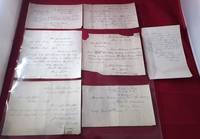
18633837Goodrich's Landing LA: Original 1863. Original Letters. Very Good. Important collection of six war-date letters written by Union Brigadier General John Parker Hawkins while in command of Colored Troops at Goodrich's Landing LA. Goodrich's Landing was the name for the cotton plantation owned by Henry Goodrich that was siezed by Union troops early in the war. The site was prepared as a staging area for an eventual attack on Vicksburg. As early as 1862 escaped slaves sought refuge at Goodrich's Landing. Hawkins was promoted to Brigadier General and named to command the District of Northeastern Louisiana with a division of colored soldiers in 1863. Every single original letter in this collection is written by Hawkins from Goodrich's Landing.<br /> <br /> John Parker Hawkins 1830 - 1914 born in Indiana graduated 40th in the West Point class of 1852. He began the Civil War as assistant commissary in St. Louis was promoted to chief commissary of the XIII Corps and then chief commissary of the Army of the Tennessee. In 1863 Hawkins was promoted to brigadier general of volunteers and named to command the District of Northeastern Louisiana with a division of COLORED SOLDIERS. He commanded at Vicksburg for much of the rest of the war and took part in the Mobile campaign of 1865. At the end of the war he was promoted to major general of volunteers and of regulars.<br /> <br /> The collection includes the following letters:<br /> <br /> ALS. John P. Hawkins Brig. Genl. Comdg. H.Q. Dist. N.E. La / Goodrich's Ldg. / Oct. 28 1863. Addressed to: Brig. Genl. J.L. Kieman / Milliken's Bend. "A Boat is in route to take the priisoners to Vicksburg have them ready and escort one capt two Lieuts & twenty five men. John P. Hawkins Brig. Genl. comdg." In ink. 4 3/4 X 7 7/8 Inches.<br /> <br /> ALS. John P. Hawkins Brig. Genl. Comdg. Head Qrs. Dist. N.E. La / Goodrich's Ldg. / Oct. 28 '63. Addressed to: Brig. Genl. Kiernan / Comdg / Milliken's Bend. "Genl Search and take from the Rebel deserters all arms of any kind place them under a strong guard and send them to Vicksburg by first Boat under strong guard. John P. Hawkins Brig. Genl. Comdg." In ink. 7 3/8 X 7 3/4 Inches.<br /> <br /> ALS. John P. Hawkins Brig. Genl. Comdg. Hd Qrs Dist N.E. La. / Goodrich's Ldg. Nove 8th 1863. Addressed to: Commdg Office / Milliken's Bend. "It is reported four-thousand rebels have crossed below Grand Gulf into La. Key out scouts on Richmond road. John P. Hawkins Brig. Genl. Comdg." In ink. 6 X 7 7/8 Inches.<br /> <br /> ALS. John P. Hawkins Brig Genl. Comdg. Goodrich's Landing / Nov. 9 63. Addressed to: Brig. Genl. J.L. Kiernan / Comdg. / Milliken's Bend. "Four Thousand Rebel Cavalry & eight Pieces of Arty are reported at Floyd. John P. Hawkins Brig. Genl. Comdg." In ink. 4 7/8 X 7 3/4 Inches. <br /> <br /> ALS. John P. Hawkins Brig. Genl. Comdg. Goodrich's Landing / Nov. 17 1863. Addressed to: Maj. Genl McPherson / Vicksburg. "Colonel Ballinger at Milliken's Bend telegraphs that Rebel Cavalry yesterday and today were crossing the Mississippi River below Perkins Ldg. Reported to be Wirt Adams Command. John P. Hawkins Brig. Genl. Comdg." In ink. 6 1/2 X 7 7/8 Inches.<br /> <br /> ALS. John P. Hawkins Brig. Genl. Comdg. Goodrich's Ldg. / Jany 24 64. "Have the Madison & Dligent left Vicksburg / John P. Hawkins / Brig. Genl. / Comg. / To Maj. Genl. McPherson." In ink. 4 5/8 X 7 3/4 Inches.<br /> <br /> Accompanied by what appears to be a field copy of a seventh letter from Hawkins to Col. Ballinger - ALS Secretarial. John P. Hawkins Brig. Genl. Comdg. No date. Circa 1863. "Col. Ballinger / Lieut. Johnson a recruiting officer from Vicksburg is reported conscripting Negroes near Omega Ldg. Should he visit your place put him in close arrest and report the fact to these H.Qs. By order & c. John P. Hawkins Brig. Genl. Comdg." In pencil. 7 7/8 X 5 Inches.<br /> <br /> Julian Bryant the nephew of famed journalist editor and poet William Cullen Bryant served in 1863 as a Major of the newly organized regiment the 1st Mississippi Infantry African Descent. He and his regiment fought at Milliken's Bend a brutal engagement where colored soldiers and white officers of colored regiments were targeted by the Confederate Army. With the help of this uncle Bryant participated in the campaign to allow colored units equal responsibilities including combat with regular white units. Bryant filed a full and detailed report on HAWKINS on October 10 1863. In his report he found that the contrabans were nearly always unfairly treated and government contracts with the blacks were often ignored treating them as nothing more than a slave labor force. Upon reading the report GENERAL HAWKINS commented that if improvements were not made soon then the newly free blacks would be better off with their former masters. <br /> <br /> CONDITION: Light toning and some wear to edges. A few fold marks. VG overall. <br /> <br /> PROVENANCE: From the personal collection of Thomas Truxton Moebs author of "Black soldiers - Black sailors - Black ink : research guide on African-Americans in U.S. military history 1526-1900 Original unknown
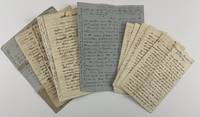
18656112Mainly South Carolina but also Massachusetts and Florida 1865. Very good. Fifteen autograph letters signed totaling approximately fifty-six pages and about 7000 words. Original mailing folds minor overall wear. An insightful collection of original correspondence from Joshua Giddings Dodge written to his brother-in-law Samuel Douglas Wilson with information on family business matters in the South Civil War news his postwar life in Iowa and most importantly Dodge's work with the Freedmen's Bureau in South Carolina. Joshua Giddings Dodge 1813-1904 was born and raised in Massachusetts worked as a farmer in Illinois for awhile then returned to Massachusetts to work as a gilder and dealer in fine art. At the age of just 19 Dodge met William Lloyd Garrison and shortly thereafter became an important figure in the Boston abolitionist movement serving in leadership positions for the Middlesex New England and Massachusetts anti-slavery societies as well as the Boston Vigilance Committee. During the Civil War Dodge served as a superintendent in the Freedmen's Bureau in South Carolina and Florida where he was also appointed as supervisor of Mitchelville a town built for former slaves on Hilton Head Island. Following the war Dodge farmed in Iowa for a while before returning to Massachusetts to live out his remaining years.<br /> <br /> Dodge's critical work for African Americans in South Carolina is covered in some depth in five letters in the present collection which also reveal his opportunistic business dealings in South Carolina and Florida. His earliest letter is dated November 8 1863 from the Graham Plantation on Hilton Head. Here Dodge discusses possible investment for himself and Wilson on Hilton Head should they wish to purchase the plantations for sale on the island. Dodge informs Wilson that "the Graham plantation contains 2000 acres appraised 4000 dolls & will be sold if no more than 2000 is bid but not less." He also discusses the value of buildings and "pine land." Dodge then details a long selection of items he wants Wilson to send to him noting that he "can always sell to the negroes what I dont want although the gov't does not allow me to make money out of them."<br /> <br /> Dodge's next South Carolina letter here comes later on February 17 1865. In fact the final four of Dodge's South Carolina letters are dated between February 17 and April 21 1865 and contain critical information on his work with the Freedmen's Bureau and his business activities in the South. His February 17 letter is datelined from Atwood on Hilton Head; here Dodge discusses the fact that he has recently returned from Florida as he worked for the Freedmen's Bureau there too during this period. He also advises against opening a family business in Savannah in light of the impact of General Sherman's activities there: "Shermans Army has left in consequence that market is shattered & many are now suffering serious losses. Good I am told can be purchased for less there than here." Dodge discusses much about his business activities namely land purchases recently made in Florida. He notes that "Negroes are now at work in our cotton field to which I shall turn my attention for a little." Dodge's letter of March 13 is the shortest here at two pages and the first of two datelined "Office Supt. Freedmen;" in it he follows up with Wilson on expected shipments to him on Hilton Head and again mentions Sherman: "Business grows dark here as SHerman with his great army recedes & the Sect. of War is changed. Think business in my office is more lively perhaps than in any other."<br /> <br /> Dodge's last two letters from South Carolina are easily the most important and content-rich letters present here. His penultimate letter dated March 27 is again datelined from the Freedmen's Bureau's Superintendent's Office. Dodge opens with detailed information on some sent letters that were apparently lost in the mails noting that he had written previously to Wilson about various matters including a meeting with General Rufus Saxton in Savannah and "His offer of an Island on which to colonize negroes" as well as another letter where Dodge informed Wilson of the sale of their cotton plantation and "my appointment as Gen'l Superintendent of Freedmen." Dodge writes that he has his hands full with superintendent duties and mentions that General Saxton has issued him a "free pass throughout the 'department of the South'" which he hopes to use more. Dodge concludes the letter with an important notice: "Today have been to Beaufort with Gen. Littlefield to see Saxton & get things fixed to our minds allowing me to be supervisor of Mitchelville as well as Superintendent of Hilton Head Island." Mitchelville was a town created in 1862 for former slaves. Residents of Mitchelville supported themselves largely through manual labor for the Union Army and eventually died out after northern authorities left during Reconstruction.<br /> <br /> Dodge's final letter from South Carolina is dated April 21 1865 and contains the most content regarding his duties for the Freedmen's Bureau. He writes: "My hands are full of various matters. The care of the negroes here & at Mitchelville requires much time. Held court for them at the latter place today calling to my aid as associate judges two of the negroes. Since that adjournment have been riding about with Provost Marshall trying to secure justice for half dozen negroes who have been dispossessed of their lands." He also notes that he "purchased an entire island for 250 dolls" and deems it a great bargain; whether the island was purchased for personal enrichment or for the Freedmen's Bureau is unclear. Dodge then proceeds to discuss the "mixture of terribly sad & gloriously good news" received lately namely the assassination of President Lincoln the surrender of Lee and Johnson and the capture of Mobile. He wishes that "For the latter let us thank the Lord & Gen. Sherman. For the former invoke the wrath of the Almighty on the head of the Confederacy."<br /> <br /> The present collection also includes two war-date letters from Dodge written from Florida during his brief sojourns there while working for the Freedmen's Bureau but also pursuing his own business interests. His first letter is datelined from Fernandine Florida on December 28 1864 with an additional letter written in pink ink between the lines of the earlier letter and dated December 30. In this letter Dodge relates to Wilson his attempts to purchase land in Florida for himself or the Atwood plantation. He also remarks on Fernandine: "It is a pretty town built on an Is. & considered a healthy location. The winter weather here is charming. Much like what we had in N.Y. in Sept. Gardens here look green & flourishing. Some are planting while others are gathering the fruit of their planting in the fall. Green peas are now being picked from some & notice peach trees in blossom. Flowers also of various kinds are not scarce. Water fowl of different kinds are abundant & birds are met with wheresoever we journey." He thereafter provides a detailed description of Dungeoness Dungeness Castle on Cumberland Island Georgia which he had recently visited. One of the aspects of the castle he describes are "a long row of brick chimneys marking the spot where the slaves were quartered" and he also mentions the Butler Plantation: "But little distance from Cumberland is the island on which was situated the cotton plantation of Pierce Butler made famous a few years since by the Tribune's account of the auction sale of the slaves & still more so since by the published letters of his wife Fanny Kemble Butler." Dodge's December 30 letter beginning on the third page here and written between the lines of the December 28 letter relates his reception of war news including Sherman's capture of Savannah the "glorious victory" at Nashville and the supposed death of Jefferson Davis.<br /> <br /> Dodge's second letter from Florida emanates from St. Augustine about a month later on January 20 1865. He spends a great deal of the initial part of the letter expressing his sympathies and offering advice regarding a disastrous fire that happened at Wilson's premises in New York. He then swiftly turns to his recent experiences in St. Augustine describing the area thusly: "The house is a very good one. Comfortable & pretty but not extravagant. The grounds surrounding however are charmingly beautiful. Within reach of my hand at the window where I sit hang large golden oranges which barrels of them may be seen hanging on the trees in various parts of the grounds. Other fruit bearing trees are in reach of my eyes such as lime lemon citron olive date pomegranate guava fig grape peach banana plum & others while flowering shrubs add beauty to the picture & fragrance to the atmosphere."<br /> <br /> The collection also includes five earlier letters written between August 9 and September 13 1863 when Dodge was still living in West Cambridge Massachusetts. These letters provide fuller context and greater detail regarding the family's mercantile business in the South. Notably in his first letter of August 27 1863 Dodge comments on his later position in South Carolina: "Am expecting letter this morning from a Boston Committee assigning me a position as servant to the darkies in S.C. Probably superintendent of plantations. Shall keep you fully advised." In his next letter Dodge comments on the impact of their business based on "whether Charleston is taken or not." In his last three letters Dodge writes about the family turpentine business Indian rubber "Boston spirits" and other goods commenting in his last letter that he plans to take to South Carolina "a lot of various trinkets cheap kinds for the darky children which may be distributed from time to time to my advantage." He then remarks that his "mission south is of course but an experiment & may soon reach a termination."<br /> <br /> The final three letters in the archive were written by Dodge during his brief years as a farmer in Iowa. The first two letters are addressed from Dodge's residence in Grinnell Iowa and written to Wilson in the summer of 1868. He writes about personal finance matters harvesting "some 16 or 18 acres" of wheat local railroad matters his investments in South Carolina and more. His final letter is also written from Grinnell but addressed to Wilson's wife and his own sister Susan Wilson Dodge in December 1869. He discusses various family health education and business matters and most notably mentions a recent situation regarding a family member's flirtation with women's suffrage: "Am greatly pleased at what you say of Auntie in relation to the Women's Rights meeting. Hope she will become a confirmed convert & identify herself with the movement make acquaintance with its advocates & labors in its behalf."<br /> <br /> An excellent archive containing vital information on Dodge's business activities some might call them profiteering amid his work for the Freedmen's Bureau in the South during the Civil War with much to mine for further researchers. unknown
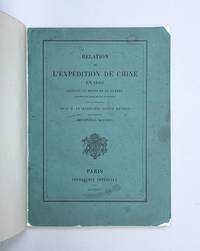
1862160274Paris: Imprimerie Impériale 1862. With the atlas of eight finely engraved maps First edition with the scarce wrappers retained of this official French account of the Franco-British expedition northwards to Beijing together with a well-preserved first edition of the accompanying atlas volume. The detailed narrative encompasses such pivotal moments as the third battle of the Taku Forts the taking of Tianjin the burning of the Summer Palace and the battles of Zhangjiawan and Tongzhou. The finely engraved atlas includes maps of the Chinese coast the December 1857 capture of Canton the occupation of Tianjin by Anglo-French naval forces in May 1859 and the Western camp at Chefoo. Four other maps all folding show the Franco-British landing at Peh-tang the battles of Zhangjiawan and Baliqiao and the route of the Western advance from the mouth of the Peiho to Beijing. These works were produced at the behest of the Dépôt de la Guerre the country's principal military archive and cartographic institution. Between 1852 and 1867 the Dépôt was run by Antoine Lucien Blondel 1801-1883 a major military cartographer. From 1859 Blondel reported to Jacques Louis César Alexandre Randon 1795-1871 a veteran of Napoleon's European campaigns and Marshal of France from 1856. Two works. Atlas comprising 8 maps 4 folding with occasional hand-colouring all engraved by Erhard Schièble. Relation: quarto 281 x 200 mm. Mid-20th-century green boards Claude Honnelaitre brown spine label lettered in gilt original green wrappers tipped-in top and bottom edge trimmed fore edge untrimmed. Atlas: folio. Original green cloth-backed orange boards front cover lettered in black. Wrappers well-preserved with some staining and a few small losses atlas volume with soiling to boards couple of surface losses on rear cover and wear to extremities text and maps clean atlas with just occasional foxing. Very good copies indeed. Cordier 2nd edition 2496. hardcover
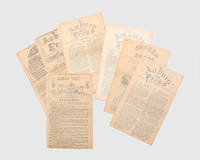
1945185980Pacific theatre: 1945. Iwo Jima's first American newspaper Scarce examples of this American naval publication. In 1945 Auburn participated in the assault on Iwo Jima allowing the editors to bill the Auburn Press as "Iwo Jima's first American newspaper". We have traced physical copies at the Wisconsin Veterans Museum Research Centre and the University of Wisconsin-Madison only. According to the 4 March 1945 instalment the circulation numbered 700 copies. As typical for the genre each number combines news with lighter-hearted and recreational content including at times a crossword. That for 16 March proudly proclaims "Iwo Secured" on its special front page while under the headline "Jap Suicides Becoming Popular" the 15 September number describes the abolition of Japan's Imperial General Headquarters and the drastic measures taken by some senior military and government officials to escape accountability for the war. A separate notice issued in late September gives the current newspaper staff and surveys the ship's contribution to the Allied victory. a Volume III Number 4 4 March 1945 8 pp. 1 page blank. b Volume III Number 16 16 March 1945 12 pp. c Volume III Number 17 17 March 1945 8 pp. d Volume III Number 19 19 March 1945 8 pp. e Volume IX Number 15 15 September 1945 10 pp. f Volume IX Number 21 21 September 1945 10 pp. g Single-sheet notice c. 28 September 1945. 6 issues and single-sheet notice c. 330 x 200 mm. Text mimeographed across 57 sides in total. Issues wire-stitched top-left. For a full inventory see note. Couple of contemporary annotations. Generally in well-preserved condition toning and printing inconsistencies as expected one sheet detached from wire stitching old creasing and occasional short closed tears: very good. unknown
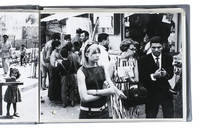
1967ABC_47179Israel 1967. Oblong album ca. 20 x 26 cm; photographs in slightly varying sizes ca. 18.5 x 24 cm. Grey faux-leather photo album with a small white label on the front board: "42 x Israël 1967 23-24-25 Juli". 44 silver gelatin photographs including 2 duplicates and 1 other loosely inserted. 44 photographs in an album with 30 clear plastic inserts. A rare collection of fascinating original photographs capturing the first Western tourists in Israel and Israeli captured territories approximately a month after the Six-Day War in 1967 by Dutch journalist and photographer Bianca Maria Dony. The 44 photos in the album show the passenger ship SS Pegasus soldiers local people in the streets of Jerusalem and other cities an early war monument checkpoints destroyed military vehicles and other remnants of the war. The album is from the archive of the photographer; some of these photographs were sold to and published in national Dutch and international newspapers and magazines while others remained unpublished.Bianca Dony was part of a group of 150 Christian tourists from various European countries who were now - after the Israeli capture of these areas - able to visit the holy places in the old city of Jerusalem Bethlehem and other places that had previously been inaccessible. The tourists in the present photographs were the first of many and Dony took this opportunity to not only document the trip itself but also the general aftermath of the war.With an additional leaf in the inside front pocket of the album containing notes of how many photographs were sold to different newspapers and magazines including 10 to the "Haagsche Courant" written in blue and red ink and in pencil. Added to the first photograph in the album is a newspaper clipping from the "Jerusalem Post" with the headline "Haifa direct to old city for first time" about the first tourists visiting Israel after the Six-Day War. Some of the clear plastic inserts have small round white stickers on them with different abbreviations connecting the photographs to the newspapers and magazines that possibly printed them for example "HC" for Haagsche Courant etc. 3 photographs are loosely inserted and 2 of these are duplicates of other photo's in the album the 2 duplicates contain a blue stamp "foto bianca dony 147 Malakkastraat Den Haag - Tel. 5582540 Giro 303814" and a manuscript caption in red ink on the back. Most other photographs are simply numbered in pencil on the back. This rare collection of 44 historically significant photographs is in very good condition.l Cf. Rebecca L. Stein "Souvenirs of conquest: Israeli occupations as tourist events" International Journal of Middle East Studies vol. 40 no. 4 2008 pp. 647-669. hardcover
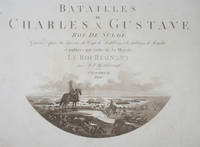
180645461Stockholm 1806. Large folio oblong. 44 x 61 cm. Contemp. hcalf covers with marbled paper. Titlelabel in red and gilt pasted on frontcover. Wear to foot of spine otherwise fine. Engraved titlepage battle view engraved plate depicting the Carl Gustav on horseback in front of a battle scene and 11 engraved plates showing battlescenes after Dahlberg's drawings. All engravings in beautiful toned sepia aquatint. A few marginal brownspots. A very fine copy. <br/><br/><em>Very scarce first printing of this series of plates aiming at glorifying the Swedish victories showing battlescenes - Warsaw Carnova Columbi Guesne and the crossing of the Belt in Denmark - from the wars against Poland and Denmark 1655-58 in fine engravings by Skjöldebrand. </em> unknown
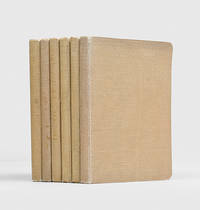
1941144403London: 2 September 1939 - 26 July 1941. Had he been a great man Winston would have accepted the blame himself A thorough and honest narrative by an Admiralty insider well-placed to document the onset of total war and the attitudes - in his view sometimes misguided - that shaped the navy's decision-making. In October 1939 Bell b. 1892 transferred from the Plans Division to Phillips's staff. The diary opens a month earlier one day before the declaration of war and during its two-year span Bell writes with a candour only possible in private. In the war's early months he handled "stupid questions from our ambassadors" 11 October 1939 and viewed British defensive preparations for a German invasion as "nonsense" 29 October 1939. By 1940 amid air-raid warnings there was far too much to do each day Bell like Phillips working late and more and more "dining at his desk". Pervading the account is a scepticism common to mid-ranking officers towards high-level decision makers "Admiralty suggested an attack now and then at the last moment and God knows why called off the operation" 8 April 1940. Not even Churchill is immune especially when the prime minister tries to blame the Royal Navy for decisions he took himself: "Had he been a great man Winston would have accepted the blame himself - since it lies on him squarely" 8 October 1940. In October 1941 Bell became Captain of the Fleet Eastern Fleet serving under Phillips onboard HMS Prince of Wales. After the disastrous sinking of the ship and Phillips's death Bell remained with the Eastern Fleet until the end of hostilities assuming the post of Director of Service Conditions at the Admiralty in peacetime. A note on the front endpaper of the final volume records that Bell left these volumes in London when he joined Prince of Wales. A further volume kept at sea went down with the ship. 6 vols quarto. Each vol. 240 pp. filled in neat manuscript or with tipped-in manuscript sheets rear pastedown of first vol. with affixed duplicated-typescript letter from Bell to Rear-Admiral H. C. Allen summarizing Bell's naval career. Original light brown cloth marbled edges. Slight rubbing to spines ends generally internally clean and fresh; a well-preserved diary. hardcover
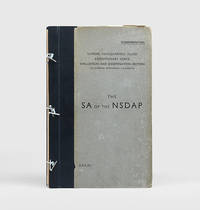
1944184333London: 1944. Know your enemy A confidential Anglo-American intelligence report on the SA produced as the Allies advanced into Germany. It provides considerable detail on the organization and Allied understanding of it. The report warns that the SA as a paramilitary organization so deeply embedded in Germany poses a serious threat to the Allies and must be totally destroyed. The Military Intelligence Research Section MIRS was a joint Anglo-American intelligence agency established in 1943 to analyze and exploit captured Axis documents. MIRS produced a series of handbooks on Nazi military and paramilitary organizations for Allied intelligence officers and military officials. This report covers the origin of the SA the rise of the rival SS the purge of Röhm its declining power in the latter 1930s and its wartime revival. It offers detailed information on the SA's regiments and commanders training and records uniforms and insignia and terminology. The report stresses that the SA still numbered roughly 500000 active members and concluded that the organisation must be "not only disbanded but completely wiped out. the SA with its ramified structure and wide range of duties is not only a valuable defence and security organisation on the German home front today but presents a substantial counter-intelligence problem as a potential source of disturbance and conspiracy during and after the initial stages of the Allied occupation of Germany". Provenance: contemporary pencilled signature of "Captain Kettler" probably Hans Kettler transferred to the Intelligence Corps in 1942 and who worked at the London Cage Britain's interrogation centre for captured Nazis. "In the summer of 1944 he was listed as a captain on a regular emergency commission. Strong die-hard Nazis were said to quail before him. Kettler was regarded as 'outstanding in his rough treatment of prisoners'" Fry p. 43. There are numerous ink annotations to the text presumably Kettler's. The report was afterwards in the collection of Evgenii Semenovich Mollo 1904-1985 a military historian specializing in uniforms and insignia with his "Mollo Collection" bookplate to the front pastedown and his stamps throughout. Folio. With 3 coloured and 4 uncoloured plates folding map. Original black quarter cloth grey boards printed in black string tied ties renewed. Rubbed and a little worn at extremities title page loose browned occasional chipping and closed tears. A good copy. Helen P. Fry The London Cage 2017. hardcover
1901303348VP including Ladysmith Geluk Farm Vluchfontein et al. 1901. Nine ALS three TLS eight carbons. 64 pp in total. Folio & 4to. Very good some tiny chips to carbons and one two spots of minor dampstaining not affecting legibility. In manilla folder. Nine ALS three TLS eight carbons. 64 pp in total. Folio & 4to. A fine group of letters by an English intelligence officer steadily rising through the ranks. In 1899 he is "sleeping in the open air only one blanket & one waterproof sheet." Within a year he was Lord Roberts' private clerk and in December 1900 he is stationed at the Commander-in-Chief's Office Kitchener's doing "confidential military work for the Military Secretary to Lord Kitchener." <br /> <br /> Although part of the intelligence service Carter saw more than his share of fighting. He describes the march to Ladysmith and the action at Elands Laagte Station noting "a bullet going through the top of my helmet and cutting off some of my hair but without even scratching the skin."<br /> <br /> The next four letters were written from Ladysmith and provide a full account of the siege. "The Boers had big siege guns mounted on the hills around Ladysmith which quite outclassed our light field guns . They'd completely invested Ladysmith & cut the telegraph lines & pulled up the Railway . Then began the long dreary siege." Carter reports using "a lot of pigeons" and the cost of Kaffir and Zulu runners to get letters out of Ladysmith and at least one of his letters not here was published in the Hamilton Spectator.<br /> <br /> The siege is depicted much like a holiday camp citing football matches swimming races water polo cricket. "We got so indifferent to the Boer 'snipers' that you would see most of our chaps having an afternoon siesta behind their trenches while bullets would be chipping the stones around them. We also used to organise pools when we could see some of the Boers and have a long range shooting match the man who bowled the first Boer over taking the pool." Yet there is also much on troops movements information on the Boers the conditions of Ladysmith accounts of engaging the enemy and reflections on the experience of combat: "the actual fighting is all right as the excitement deadens your faculties but after a battle when . you see your poor companions who a few hours before were joking with you lying dead or else writhing in the agonies of pain caused by frightful wounds then you feel your courage leaving you and your nerves getting like wax." <br /> <br /> The remaining correspondence includes three letters as Carter's regiment treks across the Transvaal through August and September 1900. These too are full of detail of life in the field bivouacking scouting enemy positions and action: "There was a grand opportunity for our Field Artillery. They simply pumped shrapnel into them the Artillery Officers going mad at the sight and shrieking to the gunners 'fire! fire! hurry up you b----- fools you never had such a chance fire!' . You could see at every discharge of the guns the Boers falling and at the same time our splendid Infantry running for all they were worth trying to get at them with the bayonet . It is very seldom the Boers leave any wounded or dead behind them and it proves how hard we pressed them . It was like a shambles . one two or more bodies horribly mutilated by the effects of the Lyddite."<br /> <br /> The final group commences with Carter being stationed at the Commander-in-Chief's office and he wastes no opportunity to use the special mail service for his own correspondence. He describes Kitchener at work and provides insight to life in the office. Yet beneath this is a yearning for the war to end and a frustration that it can't be done in one swift battle: "We cannot get a good fight out of the beggars they simply have a few shots at us and as soon as we get near enough to do some damage off they go helter-skelter." <br /> <br /> This group were all addressed to Carter's long time friend we know only by the name of Jose. Given the warmth and detail included here it's possible that he was using these letters as a substitute for a diary. Carter served with some distinction in 1st Manchester Regiment and was mentioned in the despatches. unknown
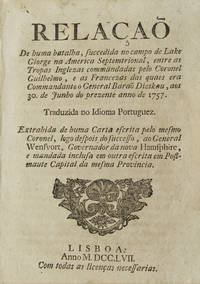
1757303318Lisboa: Domingos Rodrigues 1757. First edition. Woodcut vignette to title-page. 7 blank pp. Small 4to. A very good copy some very faint dampstaining. First edition. Woodcut vignette to title-page. 7 blank pp. Small 4to. A Portuguese translation of General William Johnson's "Letter to the Governours of the Several Colonies who raised Troops on the Present Expedition" signed in the text "Wilhelmo Gonson." <br /> <br /> Not long after the commencement of the Seven Years' War Johnson was appointed British agent to the Iroquois. On 28 August 1755 he renamed Lac Saint Sacrement Lake George in honor of the British monarch and proceeded north as part of a four-pronged attack on the French specifically to capture the French-held Fort St. Frédéric at Crown Point. <br /> <br /> "It was not the greatest battle of the French and Indian War but it came when a victory was needed and the results were momentous. It retrieved both the glory and morale so badly depleted when Braddock fell at the forks of the Ohio the previous July. It blunted a French drive which menaced Albany and the northern frontier set up a new English outpost in that area and the capture of a distinguished French general Dieskau was triumph for the victors and humiliation for the enemy" Hamilton.<br /> <br /> The publication of this letter was of course a remarkable source of propaganda for the English and boosted Johnson's career signficantly. The letter was reprinted in London an engraved plan of the battle was produced as well as portrait. This Lisbon printing is however very rare and little known. It's not in COPAC there wasn't a copy in the Streeter Sale. In fact the last copy on the market we can find was in 1928. Not in Church; Sabin 38661; Maggs "Biblioteca Americana" IV 2998; Milton W. Hamilton "Battle Report: Genreal William Johnson's Letter to the Governors Lake George September 9-10 1755" in Proceedings of the American Antiquarian Society April 1964 pp 19-36 [Domingos Rodrigues] unknown
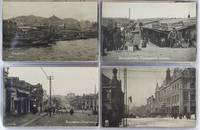
19223734Vladivostok Russia; China; Japan; Philippines; Cuba; Panama; and Egypt 1922. Very good plus. Ninety-six real photo postcards postcards and photographs each about 3.5 x 5.5 inches or slightly smaller. A very well-preserved group arranged in clear plastic sleeves in a brad-bound folder. An informative and ultimately unique collection of mostly annotated images documenting the military exploits of Lester W. Soden of Portland Oregon a Navy Midshipman serving in important locations in Asia and elsewhere in the years immediately following World War I. Soden sent the postcards and photographs home to various family members and friends in Portland Oregon. On the verso of the great majority of the postcards and photographs Soden has added vital typed or handwritten captions describing the subject location or other important information for each image as well as occasionally adding a personal note about them. Most of the images do not exhibit postmarks so were likely sent along by Soden with letters.<br /> <br /> Most important among Soden's experiences here and encompassing almost half of the images forty-seven in fact was his time in Vladivostok Russia in 1918-1920 as part of the American Expeditionary Force Siberia. All but four of the postcards and photographs from Russia have typed captions on the verso providing critical background information on Soden's experiences. Soden's captions run from one line "Street scene in Vladdie" to a couple of lines "View of Vladivostok Siberia showing section of the city along the tracks of the Siberian railroad and one of the fine Russian churches in the back ground. This was taken but a week ago" to detailed much longer efforts for example: "Since coming to Siberia I have not seen a single saw mill where modern machinery such as power driven saws and etc was used. Here is a picture I took the other day in Vladivostok showing the Asiatic method of making lumber. The Chinamen do the work two men to a saw one on top of the framework that serves for a work bench the other stands on the ground and away they saw on logs turning out lumber of various thicknesses. When first I witnessed such ancient methods it seemed as tho I had stepped into a land of long ago but time has accustomed me to such sights in Siberia."<br /> <br /> Soden's other images provide a deep picture of the Vladivostok area at a crucial time in its history picturing street scenes the funeral of "a deceased shipmate who died at Vladivostok" the Bay of the Golden Horn Japanese headquarters and a Japanese market in the city troops and ships from other Allied countries a YMCA train car serving coffee to soldiers a Bolshevik armored car stuck in the mud a portrait of Czech leader General Radola Gajda here spelled Gaida two images of Gajda's armored train car which he used in a failed attempt to occupy Vladivostok in 1918 and much more. Part of the Allied mission in Vladivostok involved protecting and providing passage for Czech troops who had fought for their own freedom against Lenin and the Russian revolutionaries. One of Soden's captions concern these freedom fighters: "Czech troops along the trans-Siberian R.R. coming into Vladivostok. They have some sort of decorations on the cars. You will notice the odd style of cars used with single axeled wheels that are not solid steel like the car wheels we have in the States where only double tracks are used. The cars here are very short tho once in a while one notices standard sized cars with double tracks identical to the ones used in the States in fact they were built there."<br /> <br /> In addition to his time in Siberia Soden also served in China Japan Manchuria the Philippines Egypt Panama and Cuba. Seventeen postcards document his experiences in China as well as sixteen in Japan and Manchuria eight in the Philippines and the remainder from Egypt Panama and Cuba. Most of these images are also captioned on the verso picturing street scenes a Peking sawmill the city of Shanghai Tartar Wall Hankow a Dragon Festival in Hong Kong the Nanking Road and more in China. Most of the Japanese images show the celebrations in Tokyo for the return of Hirohito from a tour of Europe but also temples in Nikko the American fleet in Yokohama and two street views of Dairen City Manchuria. Other images depict a child's funeral "The other day I was lucky enough to see a native funeral one of the strangest sights I've ever seen. You would think it's a parade" and a Manila river scene in the Philippines; Guantanamo Bay in Cuba; the United Fruit Company's offices in Panama; and more. The only non-visual item included with the postcards and photographs is a black ribbon reading "U.S.S. Scorpion" presumably Soden's ship. unknown
186146001N.p. n.d. but circa 1861. A few splits along the short joints of the top half of the box; otherwise very nice. Approx. 14 x 11 x 1". Original hand-colored lithographed game board and original pictorial lithographed two-part box. The pictorial folding board measures 20-1/2 x 26 inches consisting of 61 numbered squares each with a lithographed vignette depicting a scene from the Civil War. The box is decorated with a large pictorial onlay with hand-colored vignettes and cameo portraits of Union Generals McClellan Dix Banks Lyon Wool Anderson Fremont and Buttler sic. and two battle scenes Mill Spring and the naval battle Port Royal. The game lacks the instructions and playing pieces. Only one other copy located in the New York Historical Society Playing Card and Game Collection. unknown
140997London: His Majesty's Stationary Office. Softcover. near fine. 1st Editions. Folio. 146 separate reports. Original blue wrappers where issued. Small ex-libris stamp to front wrapper of some. The vast majority of these reports are in near fine condition although there is some minor chipping and wear to some. Black and white illustrations maps charts and tables in many of the reports. Overall this collection is in impressively fine condition. near fine The first report--Papers Relating to the Complaints of British Subjects in the South African Republic--is from June 1899 and the final reports are from 1906. Some other noteworthy reports include: "Further Correspondence Relating to the Political Affairs of the South African Republic" from October 1899 which includes a declaration of war; "South African War: Telegrams from Field-Marshall Lord Roberts to the Secretary of State for War" contains a discussion on the abuse of the white flag; "Correspondence Relating to the Prolongation of Hostilities in South Africa" 1901 with a proclamation to Boers continuing to carry out guerrilla warfare that unless they surrender they will be banished from South Africa upon capture. Please contact us for a complete list of the reports in this collection. His Majesty's Stationary Office paperback
1865222651865. Hardcover. Very Good. Book. Bound collection of separately printed General Orders from the Adjutant General's office for 1865. Containing 168 of 175 consecutive orders and a 94-page index at front. Bound for Major General William Scott Ketchum with his name in gilt on the spine and his markings or wartime notes on numerous pages. 4 3/4 x 7 in. Early resolutions concern the rates of pay for officers' servants equal clothing allowances for commissioned and non-commissioned officers and widow's rights to prize money and equal pay for both black and white volunteers Order No. 31/Public No. 57 and freedom for the wives and children of any army or navy volunteer Order No. 33/Public Resolution No. 25. Also includes several orders relating to the assassination of President Lincoln: Order No. 66 announcing the assassination; Order No. 67 announcing Andrew Johnson's ascent to President; and Order No. 69 announcing the closing of military bases in observance of the funeral of Abraham Lincoln with the official Order of the Procession for the ceremony on April 19th; also includes a Special Order regarding the transportation of President Lincoln's remains to Springfield Illinois and Order No. 72 assigning the Honor Guard to accompany the casket.Orders signed in type by Andrew Johnson concern ending the blockade and restrictions on internal commerce with the exceptions of weapons and gray cloth.Lacking order numbers 15 97 128 133 140 148 & 168 apparently never bound in.Condition Very good. Minor rubbing some staining to top of index pages. Later ink stamps of the Office of the Chief of Finance on front endpapers.William Scott Ketchum 1813-1873 graduated from West Point in 1834. He served in the Seminole Wars and on the Western frontier. As a captain he fought in the 1857 Expedition against the Cheyenne and the Battle of Solomon's Fork where he commanded the 6th Infantry Regiment. During the Civil War in February 1862 he was appointed brigadier General of Volunteers serving in Washington DC. hardcover
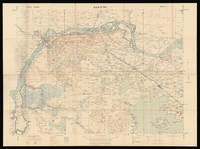
192715017War Office Geographical Section General Staff 1927. 745 by 995mm. 29.25 by 39.25 inches. Coloured lithograph map dissected into 32 4 by 8 sections mounted on linen. Scale 1:250000 Nanking in 1927 was a treaty port located on the southern shores of the Yangtze River. Because the foreign interests in China were largely American and European squadrons of foreign naval vessels were stationed along the Yangtze to protect their citizens doing business at the treaty ports. The British Royal Navy operated the China Station under Rear Admiral Sir Reginald Tyrwhitt and the United States Navy the Yangtze Patrol; both lasted for around 80 years until World War II. War Office, Geographical Section, General Staff unknown
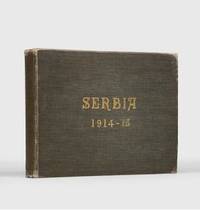
1915142361Various places: c. 1915. We had seen the awful need. and we were itching to begin An interesting record of British involvement in the south-eastern front with photographs captured in the field. The British Red Cross arrived in Uskub now Skopje in North Macedonia in 1914 and spent the following year treating the wounded and typhus sufferers. The photographs show their journey the hospitals doctors and patients and the local scenery. The Serbian Campaign was ignited in July 1914 when Austria-Hungary invaded the kingdom. They were defeated by the Serbs in August considered the first Allied victory of the war. In October 1914 six doctors and twelve St John's Ambulance orderlies were sent to the front line equipped with supplies for a field hospital. Arriving at the front line via Malta and Greece they were instructed to take charge of four full hospitals in Uskub. Despite the great logistical challenge they kept the wards functioning and eventually opened a dedicated typhus hospital before returning in 1915. This mission was recounted by one of the doctors James Johnston Abraham in his 1921 autobiography My Balkan Log. Plates IV VI XIV and XV were produced from photographs in this album and as Abrahams mentions bringing a camera on Page 130 perhaps the album was compiled by him. A number of images show the hospitals and their doctors treating wounded and infected soldiers. Five of the six doctors Abraham Banks Benbow Higginson and Kadish are pictured and identified in the captions as are many of the orderlies interpreters and house staff. It opens with images of Malta Athens and aboard the SS Caucase in stark contrast to the rest of the album filled with shots of the wards patients being bandaged and the graves of typhus victims. There are also many photographs of village life and of the Austrian prisoners of war who worked on the wards. Oblong quarto. With 66 gelatin silver photographs approximately 86 x 137 mm mounted landscape and portrait on recto of 45 leaves 5 blank manuscript captions in white ink. Original grey-green cloth front board lettered in gilt rear board stamped with double-fillet border in blind. Minor silvering of photographs otherwise bright a few marks on mounts binding a little rubbed at extremities: a very well-preserved example. hardcover
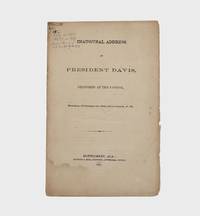
1861377687Montgomery: Shorter & Reid 1861. First edition. 8pp. 8vo. Unbound. Minor staining. Early 20th century price annotations on upper corner of the title in ink and pencil. First edition. 8pp. 8vo. Once secession became a reality in late 1860 the rebellious states had to decide what form of government they would take. As in 1787 when the original thirteen states wove themselves into the United States through a constitution the South wove itself into a Confederacy by creating their own constitution. In early February 1861 representatives of the six seceded states Alabama Georgia Louisiana Mississippi South Carolina and Florida met in Montgomery to draft a provisional constitution and officially establish the Confederate States of America. The document would be unanimously ratified on February 8th and the following day Jefferson Davis would be unanimously elected to the provisional presidency of the Confederacy. Davis was not among the members of the convention however having returned to Mississippi from Washington after resigning his Senate seat. He immediately traveled to Montgomery delivering his inauguration address on February 18 the same day that the delegates signed the provisional constitution.<br /> <br /> Delivered on the steps of the Capitol building Davis invoked the principles of the 1776 Declaration of Independence to justify the secession and independence of the southern states: "It illustrates the American idea that governments rest on the consent of the governed and that it is the right of the people to alter or abolish them at will whenever they become destructive of the ends for which they were established. The declared purpose of the compact of the Union from which we have withdrawn was to "establish justice insure domestic tranquillity provide for the common defense promote the general welfare and secure the blessings of liberty to ourselves and our posterity;" and when in the judgment of the sovereign States composing this Confederacy it has been perverted from the purposes for which it was ordained and ceased to answer the ends for which it was established a peaceful appeal to the ballot box declared that so far as they are concerned the Government created by that compact should cease to exist."<br /> <br /> His address continued by further linking the actions of the seceding states to the Founding Fathers noting that the provisional constitution they have drafted was in the spirit of the original: "We have changed the constituent parts but not the system of government. The Constitution framed by our fathers is that of these Confederate States. In their exposition of it and in the judicial construction it has received we have a light which reveals its true meaning."<br /> <br /> He defended secession by arguing that their sole purpose is the protection of their social and economic system though does not mention the word slavery and "actuated solely by the desire to preserve our own rights and promote our own welfare the separation by the Confederate States has been marked by no aggression upon others and followed by no domestic convulsion."<br /> <br /> Just a few weeks later on the steps of the Capitol in Washington Abraham Lincoln would deliver his own first inaugural address: "In your hands my dissatisfied fellow-countrymen and not in mine is the momentous issue of civil war . We are not enemies but friends. We must not be enemies. Though passion may have strained it must not break our bonds of affection. The mystic chords of memory stretching from every battlefield and patriot grave to every living heart and hearthstone all over this broad land will yet swell the chorus of the Union when again touched as surely they will be by the better angels of our nature." <br /> <br /> While Lincoln's inaugural is quite common published as a government document the first separate printing of Davis's inaugural address although well represented institutionally is quite scarce on the market. Parrish & Willingham 895; Crandall 607; Sabin 15274 Shorter & Reid unknown
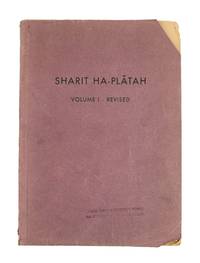
1946365526Munich: Central Committee of Liberated Jews in Bavaria 1946. 4to. Publisher's purple wrappers upper and lower corner of upper wrapper trimmed minor loss to bottom of spine inked stamp of Jewish Family & Children's Services of Pittsburgh on upper wrapper. Text toned and brittle. 4to. A revised and expanded compilation from previously published regional volumes that appeared between May and October 1945 the list includes approximately 85000 names of Holocaust survivors in displaced persons camps. Entries include maiden names where applicable birthplace birth year and then-current location.<br /> <br /> The Hebrew ש×רית הפליטה translates to "surviving remnant" and is a term from the Book of Ezra and 1 Chronicles. Central Committee of Liberated Jews in Bavaria unknown
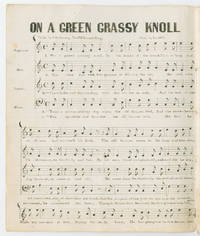
1864248261864. No binding. Condition: Fine. Manuscript Pen and Ink Folk Art Song Book ca. 1864. 24 pp. 6 5/8 x 8 in. This hand-sewn booklet contains eight songs popular during the Civil War era with music and lyrics in calligraphy. Songs include "On a Green Grassy Noll" by J. D. Canning with music by Ira Odell; "The Old Mountain Tree" by James G. Clark; "Harmonian Waltz"; "Year of Jubilee or Kingdom has Come!"; "Squire Jones's Daughter"; "The Sweet Birds Are Singing"; "Lament of the Irish Emigrant"; and "Soon and For Ever" by J. B. Monsell. The last page of the booklet is dated February 21 1864. Partial Transcript: Year of Jubilee or Kingdom has Come! I come up Norf on a little bender Left Missus at home wid no one to tend her Ole Massa's gone I dun-no what to; Sambo pretty sure he don't much care to. Chorus: Den sound de horn beat de drum Sound de horn and beat de drum De year ob jubilee am come Sound de horn and beat de drum De year ob jubilee am come. Met genral Bloaregard on my way here He told me dat I had better stay dere He said up Norf dey would skin and eat me Dat was a yarn dat a little heat me. He said he had just whipp'd Gen-ral Bu-el Grant and Wallace All three in a duel. I axed him den why he was running away Sam-bo says he dat question aint fair play. Oh times down Soth am getting quite rotten He's so berry scarce they have to burn cotton I left dat land ob oppression and gas And roam de free Norf without nary pass. Molasses Junction was a big scarecrow Nigh its wooden guns nobody didn't dare go; But when McClellan got a good ready De Southern Gentry seemed quite unsteady. Abraham Lincoln and Emancipation De two tallest tings in dis tall nation; Hurrah den boys let us still be merry Kingdom has come boys we've good times berry. Historical Background: Music played a prominent role in the American Civil War. On the battlefield and in the camps it boosted morale and released tensions. On the homefront it helped individuals and families express political sentiments grief and longing. Music entertained and often carried political religious and social messages. "The Year of Jubilee or Kingdom has Come!" was written by "Sambo" and first published in 1862 by H. M. Higgins in Chicago. "Squire Jones's Daughter" tells of the virtues of "The prettiest girl in the State of Maine" and was copyrighted by New York publisher Henry De Marsan in 1860. "The Sweet Birds Are Singing" is a cheerful pastoral duet about springtime that dates to at least 1836. "On a Green Grassy Noll" by J. D. Canning was first published in Boston in 1852 and is an elegy for a nameless old farmer who has "ploughed his last furrow." "The Old Mountain Tree" is a ballad in the form of a quartet by James G. Clark first published in 1854. It expresses longing for an old homestead. Clark 1829-1897 enlisted in the 35th New York as a 1st lieutenant and was detailed to remain in the recruiting service. He used music in his efforts to enlist soldiers in the cause and was dubbed "The People's Poet." "Lament of the Irish Emigrant" is a ballad by Helen Blackwood 1807-1867 with music by William R. Dempster 1808-1871 first published in Boston around 1840. It tells the story of an Irish emigrant who has buried his wife Mary and their child. Blackwood Baronness Dufferin and Claneboye was a British songwriter composer poet and author. Dempster a Scottish singer was very popular in the United States. "Soon and For Ever" is a sentimental hymn by J. B. Monsell about the Christian's union with Christ in Heaven. Rev. James Samuel Bewley Monsell 1811-1875 was an Irish Anglican clergyman and poet. He wrote the poem in 1853 or earlier.Condition: Very minor soiling else near fine.<br />