MOORE Sir JohnMareMagnum

119 836 résultats
8vo., Fourth Edition, with two large folding engraved maps COLOURED BY HAND (one map with short tear in one fold); handsomely bound in contemporary tan full straight-grained morocco BY [Francis] JULLION, sides with multiple frame borders in decorative gilt and blind enclosing blind frame border stopped at corners with floral sprays, back with five raised bands tooled in gilt, second compartment lettered in gilt, all other compartments richly tooled in gilt with stylised sprays, gilt doublures, all edges gilt, rose endpapers, a splendid copy in wholly unrestored period binding with virtually no trace of the usual offsetting and age-staining. A SPLENDID COPY WITH THE ENGRAVED HERALDIC BOOKPLATE OF CAROLINE, COUNTESS OF KINGSTON, AND THE EMBOSSED COLOURED BOOKPLATE OF MAX SALOMON, ON FRONT PASTE-DOWN. WITH THE TRADE TICKET OF JULLION OF LONDON ON FRONT FREE ENDPAPER VERSO. The maps are coloured to depict the various armies' battle-positions. Caroline King, nee FitzGerald {1754-1823) was wife to Robert King, 2nd Earl of Kingston. Francis Jullion was binder to HRH the Duke of Gloucester. Sandler 2400.
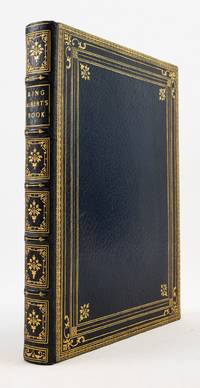
1915ST20854New York: Hearst's International Library Co 1915. First American Edition. 280 x 215 mm. 11 x 8 1/2". 187 1 pp. <br/> HANDSOME DARK BLUE MOROCCO GILT covers framed by decorative roll and multiple gilt rules floral spray cornerpieces raised bands spine compartments with central floral spray within a delicate frame gilt lettering PICTORIAL DOUBLURES using plates from the book Arthur Rackham's "Unconquerable" at front; Waterlow's "Harvest Moon" at rear each picture with gilt tooling at edge within a wide frame of red and dark blue morocco tooled in gilt blue morocco hinges ivory watered silk free endleaves all edges gilt. WITH 25 PLATES consisting of a photographic frontispiece portrait of King Albert 14 color plates mounted on heavy stock and 10 black & white plates printed on glossy stock almost all of these with original tissue guards. Just the faintest hint of shelf wear one color plate with minor tear but still a fine and handsome copy--clean and fresh internally in a lustrous decorative binding.<br/> <br/> This sumptuously illustrated publication celebrating Belgium and its King Albert I is offered here in a lovely contemporary binding. Assembled in the early days of the First World War this publication aimed to raise broader awareness and support for the plight of the Belgians at the hands of the Kaiser's armies as well as honoring the nation's bravery. Novelist Hall Cain 1853-1931 who edited the anthology wrote in the introduction that "Belgium has fought not only her own battle but also the battle of France the battle of Great Britain and the battle of Freedom. By her brave stand against incalculable odds she has added a new and inspiring chapter to the heroic annals of humanity and perhaps lifted to a higher level the future destinies of man." Following the 1914 British edition by only a few months our American printing includes a note that the publisher's proceeds are to be donated to the Belgian Fund. "King Albert's Book" includes text music and illustrations by nearly 240 contributors including religious leaders Aga Khan the Archbishop of Canterbury politicians William Howard Taft Winston Churchill authors Rudyard Kipling Baroness Orczy scientists Guglielmo Marconi Flinders Petrie composers Claude Debussy Camille Saint-Saëns and of course artists: the plates include works by Arthur Rackham Charles Dana Gibson Kay Nielsen Maxfield Parrish Edmund Dulac and others. Two of these plates by Rackham and Sir Ernest Albert Waterlow have been mounted as doublures in the present copy. The luxury binding though unsigned was evidently the work of a very skilled artisan. The quality of the finishing is excellent and the design is harmonious though sufficiently restrained to be respectful of the subject matter. Hearst's International Library Co unknown
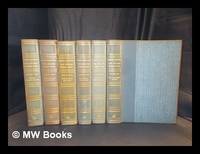
5 vols., 8vo., First Edition, with 5 portrait frontispieces, 66 plates on 40, 7 illustrations and charts in the text, 22 folding or double-page charts (the majority coloured in outline) bound in, and 16 folding charts coloured in outline in pocket at end of third volume; navy cloth, gilt backs, a very good, bright, clean set in unclipped dustwrapper (one wrapper price-clipped), the wrappers to fourth and fifth volumes lightly rubbed at extremities. With the publisher's compliment slip, and separately printed corrigenda sheet, loosely inserted in first volume. The set comprises Volume I: The Road to War, 1904-1914 (1961); Volume II: The War Years: to the Eve of Jutland (1965); Volume III: Jutland and After (May 1916-December 1916) (1966); Volume IV: 1917: Year of Crisis (1969); Volume V: Victory and Aftermath (January 1918-June 1919) (1970). THE DEFINITIVE HISTORY OF THE ROYAL NAVY IN THE YEARS LEADING UP TO AND DURING THE GREAT WAR. Arguably the finest contribution to the literature of naval history since Mahan. SCARCE AS A COMPLETE SET, ESPECIALLY IN THE DUSTWRAPPERS. Enser, p.310
Fine Turkish, Ottoman (1500-1928) Original manuscript autograph letter signed by Ottoman Sheikh al-Islam Musa Kâzim Efendi. 22,5x14 cm. In Ottoman script. With a printed letterhead "Bâb-i Fetvâ - Dâire-i Mesihât" in very Ottoman calligraphic style. On a special 'Joyns.. Superior' watermarked paper. It starts with 'Huve', in elqab, "Huzûr-i sâmî-i cenâb-i sadâretpenâhîye, Marûz-i dai' kemîneleridir ki,'. "Müddet-i medîdeden beri Zerdüstîler'in riyâsetinde bulunan Ardesli Monsieur 'Adolci' zât-i sâmî-i mülûkâneleriyle mülâkât arzusunda bulunmus olmak ol bâbda emr ü irâde hazret-i ...". Dated fî Zilkadde sene 1328 = fî Tesrinievvel 1326 [October 1909]. Sent to Hüseyin Hilmi Pasha. Musa Kâzin Efendi was a clergyman who served as the Sheikh of Islam four times in the last years of the Ottoman Empire. He was a Naqshbandi. He was also a member of the Committee of Union and Progress.
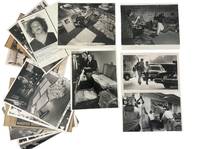
1970231661970. Narcotics raids arrests rehabilitation scenes and evidence displays across Florida in press photographs and magazine pages. Photograph archive spanning Miami Fort Lauderdale Pasco County and related Florida sites from 1970 to the early 1990s establishing how drug control operated through police action newspaper circulation and treatment institutions during the War on Drugs. Produced for press use by newspaper staff photographers wire services and law enforcement publicity channels the group shows the public face of narcotics enforcement at the point when South Florida had become a major corridor in the national drug economy and anti drug policy was being made newly visible through staged photographs official briefings and widely circulated arrest imagery. Named figures included such as Bob Gladden Larry Csonka Jim Kiick Admiral Rickover Carl Mingo and several rehab subjects identified by hand on the versos. The photographs depict suspects detained searched paraded identified displayed beside seized contraband and in other cases shown within rehabilitation settings revealing how law enforcement courts newsrooms and treatment programs handled the same crisis through different institutional forms.<br /> <br /> Photo archive of 18 press photographs including 16 silver gelatin press photographs and 2 wire photos approximately 8 x 10 inches Florida 1970 to early 1990s. The core images show narcotics policing in action: a helmeted officer beside a paddy wagon crowded with detainees; a bench filled with young men under detention in an interior holding space; two handcuffed men led from a courthouse or station entrance; a police-released mugshot with typed caption identifying former New England Patriots running back Bob Gladden after arrest in Fort Lauderdale on a marijuana charge; and a street arrest with an armed officer escorting a suspect between parked cars. Several photographs center on the staged display of evidence including tables covered with packets of drugs stacked currency pistols taped "cookie sheets" and open suitcases packed with bricks or cutting materials. One image shows a narcotics dog inspecting rows of luggage; another shows officials at microphones before a sign for the Vice President's National Narcotics Border Interdiction System; another records cocaine seized from a concealed boat compartment. The group also includes rehabilitation scenes with young adults identified en verso in cursive extending the archive beyond arrest photography into treatment culture. Versos carry a dense record of press handling and editorial use including Miami Herald staff photo stamps dated Dec. 15 1970 and Jan. 5 1971 a St. Petersburg Times credit and clipping backing for a Pasco County drug ring case dated May 29 1974 typed bureau captions circled editorial notations such as "cocaine" "marijuana" "drug raid" and "Operation Crackdown" plus handwritten shot descriptions and date-used stamps.<br /> <br /> The earliest prints fall at the threshold of the modern War on Drugs while later additions carry the record forward into the crack era and the more theatrical seizure photography of the 1980s and early 1990s. Florida is central to that story not only as a site of smuggling and interdiction but as a place where narcotics enforcement became highly visual with press conferences celebrity linked arrests tactical raids canine inspections and rehabilitation coverage all translated into newspaper images for public consumption. The present grouping combines an earlier core of related press photographs with later additions and it preserves a strong visual record of how narcotics control was communicated to the public through local papers wire distribution and agency captioning. Light surface wear minor edge and corner handling editorial markings and stamps to versos scattered adhesive residue and toning; overall very good condition. A concentrated Florida press record of the machinery publicity and human management of drug enforcement across two decades. unknown
First and only English edition, 12mo (170 x 115 mm), [2], x, 264pp., with half-title, 3 folding engraved plates, a clean copy with minimal browning, new endpapers, later full calf, retaining the original morocco label to spine. Luca Antonio Porzio (1639-1724), chief professor of medicine and anatomy in the Royal University of Naples. The English translation of Porzio's De Militis in castris sanitate tuenda, first published in Vienna in 1685 in Latin. It was published as a direct result of Porzio's presence in Venice in 1683 when the forces of the Ottoman Empire were laying siege to Vienna. The health of sailors is a short section, but on page 236 the author recommends keeping root vegetables in sand and fruit as juice "I am very certain, that the juices of fruits, as Oranges, Lemons, and Apples, might be boil'd to the consistence of a thick syrup or Rob, and preserved in proper vessels for any given times, so that a spoonful or more of it might occasionally be taken, dissolved in water, with very good effect, as a preservative against the bad consequences of such an animal diet as I have above taken notice of." Rare; ESTC locates 3 copies in the UK (BL; Durham; Wellcome) and 3 further copies in North America (Society of Cincinnati; National Library of Medicine; University of Illinois).
1949012579New York: Harper & Brothers 1949. 626pp/illus. Inscribed by General Arnold on the ffep. General Henry H. Arnold chief of the Army Air Corps during World War 2 was involved in Army aviation from its earliest days. This book contains reminiscences of his training by the Wright brothers in Dayton 1911 experiences in the Philippines and Panama and as a staff officer in Washington during WW1 when the Air Corps was first formed as a fighting rather than an experimental unit. Text clean. First Edition. Cloth. Very Good/Very Good. 8vo - over 7¾" - 9¾" tall. Harper & Brothers Hardcover
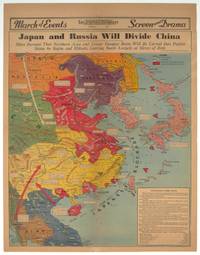
1940209821Los Angeles.: Los Angeles Examiner. 1940. Printed colour pictorial map on a single newspaper leaf 42.3 x 39.9 cms; 54.3 x 42.5 cms sheet archivally laid down on linen slight discoloration to lower centrefold and sheet slightly age-toned but in very good condition. A striking geopolitical map by Los Angeles Examiner artist Howard Burke covering China Japan Southern Russia and the northern part of French Indochina and Siam showing how the "Aggressors Divide China." Areas under Japanese occupation are shown in red and their naval blockade shown by an arc of naval vessels with vivid arrows indicating lines of supply. Text labels including sources of agricultural and raw materials provide a dynamic overview of the geopolitical situation and show the influence of American scientific illustrator and cartographer Richard Edes Harrison who argued for examining geographic issues from multiple perspectives and Los Angeles Times artist Charles Owens. . Los Angeles Examiner. unknown
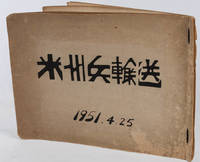
1951218840Japan. 1951. Eight black and white photographs 20.5 x 25.5cm each captioned in Japanese the handmade album is titled and dated in ink 23.5 x 32.8cm 9pp cord ties. One photograph has been removed card leaves and covers are browned surface of upper cover abraded in places some other minor wear but the photographs are in very good condition. A private album containing eight high-quality large-format photographs showing US forces being welcomed to the northern Japanese city of Muroran Hokkaido on 25 April 1951 - at the height of the Korean War. The first two photos show the US forces being welcomed by a local brass band. There is then a shot of US officers and Japanese officials standing under a large sign saying "Welcome Thunderbirds - Muroran City" indicating that the troops being welcomed are from the 45th Infantry Division nicknamed the Thunderbirds one of two US Army National Guard units engaged in the Korean War and recruited largely from the state of Oklahoma. <br> <br>The 45th Infantry Division received their initial training for combat in Korea in the US itself in 1950 and then sailed from New Orleans to Japan in early 1951 arriving at the ports of Otaru and Muroran in Hokkaido April of that year. From there they were sent for further training at Camp Crawford a US military base on the outskirts of the city of Sapporo and at a newly created camp south of Chitose before being transfered to Korea in December 1951. The album also contains two photos of the ships "General C.G. Morton" and "General William Weigel" which were built during World War II and used as a troop transport ship during the Korean War and were presumably among the ships which brought the 45th Infantry Division to Japan. Other images show local officials explaining the geography of the region to US officers as they peruse a large map and a Japanese woman beign presented with a badge by an American officer. <br> <br>Muroran was one of many Japanese ports whose life was transformed by the mass arrival of UN mostly American forces during the Korean War although the town's role in the war is less well documented than the roles of ports like Yokohama Kobe and Sasebo. These pictures give a vivid impression of the Korean war journeys of US troops and of Hokkaido during the Korean War. . unknown
8vo., First Edition thus, Large Paper, on hand-made laid paper, free endpapers mildly browned as often; original blue buckram, gilt back, gilt top, uncut, backstrip very lightly sunned (but all gilt bright and clear), a very good, bright, crisp copy. EDITION LIMITED TO 300 NUMBERED COPIES SIGNED BY THE AUTHOR (THIS COPY NO. 127). This splendid edition of the final volume of the 'Sherston' trilogy is considerably scarcer than the signed edition of 'Memoirs of an Infantry Officer' of which 750 copies were printed. Keynes, A40b.
1954381723London : The Educational Book Company Ltd 1954. First Edition. Hardcover. 1st Chartwell Edition. Very good copies all original gilt-blocked blue morollo cloth. Slight suggestion only of dust-dulling to the spine bands and panel edges. Remains particularly well-preserved overall; tight bright clean and strong. Physical description : 6v. plates ; 8vo. Notes : The ""Chartwell"" edition. Subjects : Second World War. Hitler. German Second World War. Great Britain WW2. European History. London : The Educational Book Company Ltd hardcover
176136901London: Chez D. Wilson T. Beckett & P. A. DeHondt 1761. First English edition. Pp. 2 60. Wanting half-title. 1 vols. 4to. Calf-backed marbled boards spine lettered in gilt. Some rubbing stitchmarks some light discoloration. Ink notation concerning first edition on title else very good. Provenance: John Carter Brown armorial bookplate with deaccessioned stamp on the bookplate and ink stamp on verso of title. First English edition. Pp. 2 60. Wanting half-title. 1 vols. 4to. Choiseul's narrative and commentary with the state diplomatic correspondence and papers relating to the treaty of 1762 dealing primarily with the areas of the cession of Canada the fisheries of Newfoundland Cape Breton and the West Indies and the limitation of Louisiana. Sometimes attributed to Jean François de Bastide. The London edition is considerably more scarce than the French first edition published the same year. Goldsmith's Kress 9718; Sabin 47516; Howes M-507 Chez D. Wilson, T. Beckett & P. A. DeHondt unknown
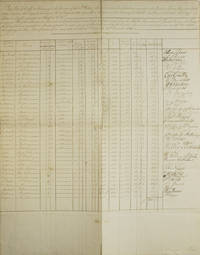
1783303187Minorca 1783. Two single sheets. Folio. Very good copies a little toned old folds. Two single sheets. Folio. The first is titled: "No. 26 Pay List for additional Subsistence etc to the officers in st. Philips Castle from 25 Dec. 1781 to 23 Feb. 1782." The second has written on the verso: " No. 136 Pay List to make up Subs. to Brevet Officer etc equal to the Rank where in they respectively serve in The Garrison of Fort St. Philips during the Siege Decemb. 24 1781 - Dollars 4350-50." These two officer pay lists are signed by each of the 36 and 44 listed officers. They're a wonderful souvenir of the siege and with a sample of every officer's signature a valuable source for further research. <br /> <br /> The five month Siege of Minorca August 19 1781 - February 5 1782 was a vital victory over England in the European theatre of the Revolutionary War. Throughout most of the eighteenth century English possession of the island was of real strategic importance from its deep-water harbor the Royal Navy could launch attacks against the Mediterranean fleets of Spain France and Italy. unknown
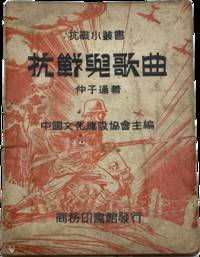
1938AG-10011<p><b>Anti-Japanese: Songs and the War of Resistance by China Culture Construction Association 1938-Zhong Zitong</b><br /></p><p>Changsha: Published and distributed by The Commercial Press February 1938 third edition 62 pages 8vo slight tears and colophon page stuck to inside rear cover overall good condition.</p><p>The author describes the dangerous situation that all Chinese are facing and appeals the importance of learning resistance songs for students. The book contains 24 music of songs in total.</p><p>《抗战与æŒæ›²ã€‹ï¼Œä»²å通著</p><p>出版于1938å¹´2月商务å°ä¹¦é¦†ï¼Œç¬¬ä¸‰ç‰ˆã€‚由仲å通著,ä¸å›½æ–‡åŒ–建设å会主编。共62页,末页有撕裂,部分粘连在书皮上。作者æ述了当时被日本侵略和æ€æˆ®çš„时代背景,呼å人们起æ¥è¿›è¡Œå抗,并é˜æ˜Žäº†å¦ç”Ÿéœ€è¦å¦ä¹ æŒæ›²çš„é‡è¦æ€§ã€‚书ä¸åŒ…括了24首曲谱。</p> The Commercial Press, paperback
1813260669Burlington: Samuel Mills 1813. First. hardcover. very good. 151 2 pages. Slim 8vo full contemporary mottled calf ex-library with only a few markings; pages just a bit toned. Burlington VT: Samuel Mills 1813. First Burlington edition. Exceedingly scarce military book in very good condition.<br/> <br/> The rules and regulations for the War of 1812 including important issues and some more mundane. 60 pages at end are a listing of all the officers in the Army and Navy. Final 2 pages are the three acts of Congress: To raise the pay for enlisted men to fill the ranks of regular army; To raise enlistment period to 5 years for infantry; To raise three additional Regiments of Riflemen. Not in Howes. -- S&S 30373; Gilman p. 236.<br/> <br/> Samuel Mills unknown
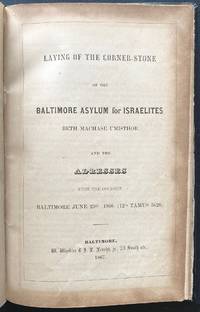
186743137Baltimore: W. Winkler & J.L. Leucht Jr. 1867. 1st edition. Later leather binding 12mo 30 pages. In English and German. Singerman Nr. 1986.<br> Early-post-Civil War Jewish Baltimore imprint. Included are “Introductory Remarks by the Vice President Dr. Joshua J. Cohen†pages 5-7 followed by a prayer in English by “The Rev. Dr. Benjamin Szold Rabbi of the Oheb Shalom Congregation" pages 8-9.<br> Page 11 announces the event and lists the officers board of managers and building committee of the Hebrew Benevolent Society of Baltimore Chebroh Shangare Soshiyo 26 names as well as the Architect and Building and also the President of the US the Governor of Maryland and the Mayor of Baltimore. <br> “After the completion of the ceremony of depositing the box in the corner-stone the following brief remarks on pages 12-17 were addressed to the audience by Dr. Abram Arnold. <br> The exercises closed with a short but very impressive sermon pages 18-23 printed in both English and German by the Rev. Henry Hochheimer Rabbi of the F.P. Heb. Friendship Congregation….<br> Mr. Henry Straus the chairman of the Building Committee introduced to the Assembly the orator of the day the Rev. Dr. Solomon Deutsch Rabbi of the Har Sinai Temple….The admirable address in German of the Doctor…occupies the closing pages pages 24-30 of this pamphlet.â€<br> It is also noted that “Mr. Ignatius Lauer the Secretary of the Baltimore Hebrew Benevolent Society read the inscription on the metal plate and a list of the articles which were deposited in the corner stone….â€<br> In the History of Baltimore City and County Maryland J. Thomas Scharf notes that “The Hebrew Hospital owes its existence to the Hebrew Benevolent Society which in March 1863 appointed a committee to report a plan for the establishment of a hospital. The corner-stone was laid on the 25th of June 1866 marked by this booklet but the ‘Hebrew Hospital and Asylum Association’ was not chartered until Jan. 13 1868 and in May of that year the building corner of Ann and Monument Streets was completed at a cost of sixty-three thousand dollars and opened for the reception of patients. <br> The object of the association is to ‘afford surgical and medical aid comfort and protection in sickness to the suffering and needy and to provide an asylum for the infirm and destitute and for all other purposes appertaining to hospitals asylums and dispensaries.’<br> The average number of inmates is between twenty and twenty-five; the hospital will accommodate thirty-two patients. The income is derived from subscriptions donations bequests etc. The officers are Joseph Friedenwald president from the beginning until the present time; Vice-President B.F. Ulman; Treasurer A.S. Adler; Secretary Ignatius Lauer. The Ladies’ Hebrew Hospital Association which was formed in 1868 was dissolved on the 7th of Maryland 1880. It had been largely instrumental in the construction and support of the hospital.â€<br> For more on the Hebrew Hospital see the relevant content in “Medicine in Maryland 1752-1920†online at mdhistoryonline.net/2018/06/02/h23/.<br> OCLC: 82997874. OCLC & Singerman together locate 6 copies worldwide AHJS NLI JTSA Penn HUC Maryland Historical Soc. <br> Apparently lacks the original front paper cover though title page and all text pages are present. Light toning a few spots Very Good Condition attractive copy. BK5 AMR-72-2-'. Baltimore: W. Winkler & J.L. Leucht, Jr. unknown
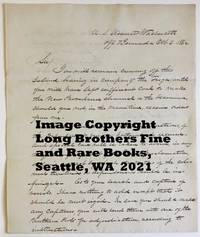
18624808USS Wachusett off Bermuda 1862. Single sheet folio. Near Fine. Single sheet measuring 15.75 x 12.5 inches folded to four pages. Dark brown ink on cream wove paper. Wilkes orders on first leaf recto and verso signed "Charles Wilkes/Rear Admiral/Comdr. West Indian Squadron". With clerical handwriting on second leaf verso "Order of October 2nd 1862." Document had been folded thrice horizontally as if to fit in a narrow envelope. Those creases now mellowed. Creases lightly toned and with a one-inch closed tear along center fold else Fine. On 8 September 1862 Wilkes was selected to command a "flying" squadron of seven ships to search for Confederate commerce raiders in the West Indies most particularly the Alabama and the Florida. In these orders Wilkes refers Stevens of the USS Sonoma to previously issued orders as they hunt off Bermuda adding that Stevens take care to avoid infringing the Queen's Proclamation regarding respect of Colonial Territorial waters to keep friendly his intercourse with US Consul Allen and hoping he will suffer nothing to escape him going in or out. And finally to allow Rodgers of the USS Tioga to read and copy these orders. Evidence of the calm cultivated side of "Stormy Petrel" Wilkes written in a graceful hand. Preserved in a clear archival sleeve with acid-free backing. unknown
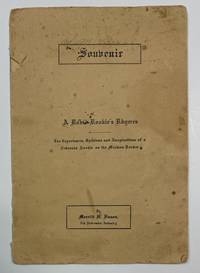
19164822N.p. possibly Brownsville Tx 1916. Very good. 111pp. Original tan printed wrappers stapled. Wrappers soiled partially split along spine penciled ownership signature on front cover. Light creasing occasional minor foxing to text. An unrecorded collection of poetry by First Sergeant Merritt H. Fuson of the 5th Nebraska Infantry capturing military life during the U.S.-Mexico Border War in 1916-1917. Sergeant Fuson's poems begin with "A Rookie's Prayer" and generally describe the incessant drilling and preparations for battle in southern Texas. One of the poems was given to Fuson before he left home and one other poem is credited to a "Minnesota artilleryman name unknown" but the remainder of the poems appear to be authored by Fuson himself. Fuson's poem "War Is Hell" particularly encapsulates the difficulties of military camp life during his service but does not capture the horrors of war which Fuson apparently never experienced. Fuson does express his desire to return home to Nebraska in at least two poems and his homesickness comes through in others in passages such as "Sing a song of Texas Drill and sweat and dig One Nebraska soldier Dirty as a pig." The 5th Nebraska Infantry had a short and uneventful stay in Llano Grande outside Mercedes in the McAllen-Brownsville region of south Texas. They arrived in July 1916 and drilled and camped until returning to Nebraska in February 1917. An interesting collection of wartime poetry by a young Nebraska man serving in the Texas-Mexico borderlands. No copies in OCLC auction records or any other sources we consulted. unknown
1869List2723United States Germany and others 1869. Seven letters approximately twenty-six total pages most about 8 x 5 inches. One letter dated 1862; one dated 1863; two dated 1864; one dated 1869; two without date. Two of the letters are written in French untranslated. Generally very good or better with one showing water damage though legible. Tracy Peck 1838–1921 was born in Bristol Connecticut to a family who had been in the Hartford area since the 17th century. According to his obituary in The Classical Journal Vol. 17 No. 6 Peck studied at Yale and then abroad in Germany returned to the United States to teach Latin at Cornell and Yale and then went back to Europe again where he served as the Director of the American School of Classical Studies in Rome until his death.<br /> <br /> Offered here is a group of letters from friends and family to Peck mainly written during the American Civil War when Peck was studying in Germany. The letters update Peck on the war politics and the activities and fortunes of various friends.<br /> <br /> Many of Peck’s friends were academics and avoided involvement in the Civil War nearly as well as Peck himself did. Not all were so lucky though. A friend probably a Yale classmate writes from Massachusetts “with a notice of the death of F.S. Davisâ€:<br /> <br /> “He died poor fellow in the hospital at Chattanooga about the middle of April. After leaving college he spent the first winter at home joined the ‘Memphis Southrons’ in March ‘62 He was at many battles and suffered untold hardships for one year when he died the first martyr of our class.†August 17 1863<br /> <br /> Another friend Sheldon had just completed his service:<br /> <br /> “He had been in several severe battles had been captured and taken to Richmond. While in service he met Bob Stiles who wouldn’t shake hands with him but tried to prove that unionism was oppressionâ€.<br /> <br /> Though the war would continue for several more years the friend writes that zeal for it is already waning:<br /> <br /> “The war goes on languidly. The enthusiasm has died out. Everyone expects the war to close by the south yielding to reasonable conditions. There is no apprehension felt as to the final issue. It has about ceased to be talked of.â€<br /> <br /> That same friend would later travel abroad as well though his aspirations would be less intellectual than were Peck’s. He writes from Egypt where it is so hot that “Except for some luscious oranges which we got of a lightly-clad nymph we should have perished of thirst†about a comical scene:<br /> <br /> “A tall muselman at one of the intermediate train stations had lain down his silk mantle and turning to the east gave through the prostrations prayers of his religion with great fervor and to the intense satisfaction of the ladies. Suddenly he touched his forehead to the ground leaped up. Their interest redoubled their attention with it when to my great amusement he squatted down unbuttoned his trousers began to pump ship in full view. The abrupt descent from prayer to pissing was too much for the females while I stifled a laugh in a cough my jacket handkerchief.†No Date<br /> <br /> A later comment in the same letter where he describes being escorted up one of the pyramids and then “shouting ‘be quiet’ to the clamoring Egyptiansâ€â€”whom he also describes as a “rapacious broodâ€â€”is likewise revealing of his attitude towards the locals.<br /> <br /> The latest letter in the group from Richard Harck is more high-minded. Harck inquires whether as Peck’s “foot . again walks on hallowed native soil†he has “acquired such a situation among the lumina of your country as your knowledge and learning deserve†July 30 1869. Harck is in Germany where there “is an utter stagnation in politics†as they approach the unification:<br /> <br /> “The particularities and sectional ideas of the southern population and their sovereigns the antagony of the there powerfull clergy and the partly illiberal constitution and laws of the North German Union. Bismarck may be a great statesman and minster for foreign affairs but not a fit man to rule the interior of a constitutional state. . But he cannot stop the progress of the ever advancing ideas of liberalism and freedom; the powerful public opinion overwhelms him .â€.<br /> <br /> Overall a look at the effects on ordinary lives of several important political upheavals of the mid-19th century. unknown
196763382Carbondale & Edwardsville IL: Southern Illinois University Press 1967- 1991. Eighteen vols. xxxix 1 458; xxxiii 1 399 1; xxv 1 479 1; xxv 1 520; xxv 1 458; xxiv 2 492; xxiv 588; xxiii 1 609 1; xxiv 700; xxv 1 618; xxvi 497 1; xxv 1 520; xxvi 599 1; xxvi 548; xxv 1 691 1; xxvi 635 1; xxiii 1 663 1; xxiii 1 661 1; xxiv 651 1 pp. With frontispiece’s photo illustrations facsimiles of letters maps. Uniformly bound in brick-red publisher’s cloth black & gilt spine labels minor bumping to upper right corner vol. 1 w/ d.j.’s from the Clark County Historical Society deaccessioning material. First editions of the first 18 volumes in this massive project encompassing Ulysses Grant’s letters and correspondence from his Prewar career through Reconstruction. Beginning with his 17-year-old cadet letters home at West Point and then service in Louisiana Texas the Mexican War and at Fort Vancouver entry into the Civil War the early campaigns of Fort Donelson Battles of Shiloh Corinth Vicksburg ascension to Lieutenant General the battles of Petersburg Cold Harbor & the Wilderness General Sherman’s March Appomattox assassination of President Lincoln the capture of Jefferson Davis and finally the disbanding of the immense Union Army. Simon d. 2008 drew upon a vast number of previously unpublished or unknown letters memorandum and writings of Grant and together with extensive notes and analysis offered an essential research tool for the study of American History the Civil War Reconstruction and the steps to the Grant Presidency. The set continues in production and Simon himself oversaw the first 31 annotated volumes. He also edited the memoirs of Julia Dent Grant. Southern Illinois University Press, hardcover
1940List3520United States and Japan 1940. Photo album measuring 10 ½ x 13 inches containing approximately 350 photos. With four copies of Jane Whitaker’s discharge and immunization papers and the Navy’s Marching to Victory songbook 13th printing Naval Reserve Midshipmen’s School 1943. Album with covers detached and wear to pages; fair. Contents excellent. Overall very good. A photo album belonging to siblings Jane 1924–d. and James 1921–1997 Whitaker of Florida. Both siblings were in the US Navy; the copy of Jane’s discharge paper indicates that she enlisted in 1943 and was honorably discharged in 1946. The siblings are descendants of founding Florida figures William Wyatt and Mary Wyatt Whitaker.<br /> <br /> The album mainly covers their time in Hawai’i and Japan. Alongside eighteen photographs of a large military parade one labeled “V-J Day Honolulu†with floats including the Filipino Federation of America’s celebration of General MacArthur and a bilingual float reading “AGGRESSORS GONE FOREVER†and fifteen likely souvenir photos of the Pearl Harbor attack there are approximately 120 candid photographs of the sailors’ lives. These include spending time with family and children sitting on a tank on the beach barbecuing at a park fishing and doing laundry outside. Some of these were taken in Hawai’i and others in Japan; a number show a sign for Nimitz Recreation Field which is likely at the US Fleet Activities in Sasebo Nagasaki. Thirty show men not in uniform but also likely sailors mainly during similar recreational activities. Others include photos of military installations and from inside barracks—bunk beds the kitchenette and dining area. Individuals in the photos are occasionally identified verso by first name.<br /> <br /> The album is uncommon for the candid nature of the personnel photos. Of interest to historians of life in the US Navy in Hawai’i and Japan during WWII. unknown
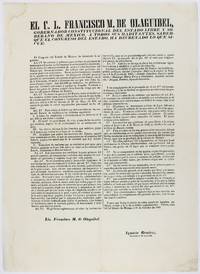
18472633Toluca: February 11 1847. Very good. Broadside 16.75 x 12 inches. Previously folded. Faint dampstaining at left corners. Two small wormholes affecting one letter of text. Otherwise minor edge wear and light dust soiling. Unrecorded printings of two decrees by the legislature of the State of Mexico at Toluca that sought to raise emergency funds to defend the country against American invasion during the Mexican-American War. Passed on February 8 & February 11 1847 these acts authorized the state legislature to borrow 300000 pesos with one third of this money allocated to the army and the remainder to equip the national guard. This expenditure would be covered by a salary tax on government employees and additional taxes on alcohol including pulque and aguardiente sugar and lumber. The second decree provides guidance and stipulations for the collection of these taxes. At this point in time Santa Anna's army was rushing north to meet Zachary Taylor's forces at Buena Vista. Not in OCLC. February 11 unknown
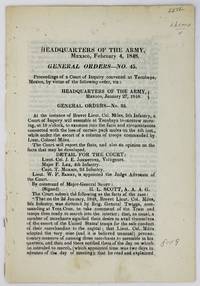
18482272Mexico City 1848. Very good. 3pp. Printed on a single folded sheet. Dbd. Old vertical fold minor foxing. A rare United States Army field printing pertaining to a notable incident that occurred during the Mexican-American War. In early January 1848 Lt. Col. Miles was ordered by Brig. Gen. Twiggs to take command of a wagon train and a small cadre of troops and then conduct them from northern Mexico to Mexico City. Mexican merchants availed themselves of the escort for safe conduct of their merchandise to the capital city and other destinations in the interior of the country. The wagon train consisted of 316 government wagons which stretched to three miles in length with 1700 pack mules adding another nine miles to the procession. Col. Miles had 1300 troops under his command but only 150 of them were cavalry. Mexican guerillas under the command of Zenobia attacked the train between Santa Fe and Rio San Juan resulting in the loss of 300 pack mules along with the goods belonging to the Mexican merchants. Col. Miles was then brought up on charges in a military Court of Inquiry at Tacubaya Mexico the details and results of which are recorded in the present work. In short Col. Miles was exonerated of any misconduct especially considering that he only had "a small number of troops" at his command. The heart of the judgement states that "Lieut. Col. Miles exercised unusual prudence and foresight in his precautionary measures and that his entire arrangements upon the march were most judicious and officer-like and that instead of meriting censure or even animadversion the conduct of Lieut. Col. Miles entitles him to high commendation."<br /> <br /> The incident was described in a contemporary account recorded by American soldier Orlando B. Wilcox: "July 19. New acquaintance named Clark a sutler who was at Buena Vista.saw Zenobia's attack on Col. Miles' train. The Mexican merchants &c. whose pack mules the escort was protecting stood on a hill & saw Walker whipt & gave no assistance though they were numerous together & well armed. Zenobia made a dash at the pack mules. Clark was driven along with the crowd. Saw a volunteer try to cut the girth to save his pack; a lancer cut his head off at a clip. Zenobia left Clark as a prisoner charge of two men to 'whip the yankees.' Charge in deep files cavalry toward Walker's whose forty men dismounted. Walker was at their head; they gave way. Mex's dashed forward & on coming up wheeled to right & left" - Willcox.<br /> <br /> Dixon Stansbury Miles 1804-1862 served a wide-ranging career in the American Army. He fought in the Indian Wars the Seminole Wars and with particular distinction during the Mexican-American War before losing his life early in the Civil War. While commander of the Union garrison at Harper's Ferry in 1862 a time in his career when he had been censured by the Army for drunkenness he was mortally wounded while surrendering to Stonewall Jackson's forces during the Confederate invasion of Maryland.<br /> Willcox Orlando B. Forgotten Valor: The Memoirs Journals & Civil War Letters of Orlando B. Willcox Kent Ohio & London: Kent State University 1999 p.117. unknown
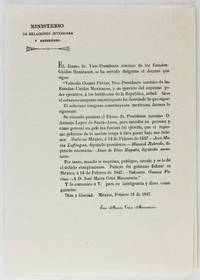
18473327Mexico City: February 15 1847. Near fine. 1pp. Quarto on a folded folio sheet. A rare Mexican decree in which the acting Vice President of Mexico Valentin Gomez Farías gives President Antonio Lopez de Santa Anna permission to leave office and fight the Mexican-American War in person. Shortly following the date that this announcement was made Santa Anna gathered roughly 14000 troops to fight General Zachary Taylor’s army of 5000 men at the Battle of Buena Vista. The proclamation is largely ceremonial since Santa Anna had already been in the field with his army for several weeks but it is nevertheless an interesting artifact of the northern campaign of the Mexican-American War. Signed in print by the Minister of Internal and Foreign Affairs José María Ortiz Monasterio; OCLC reports just one copy at Yale. February 15 unknown
16609736London: Printed by J. Cottrell for William Roybould at the Unicorn and Henry Fletcher at the Three Gilt Cups in St. Paul's Church-Yard 1660. First edition. 8vo 7 459 I.e. 359pp. Engraved portrait frontis title page in two colors. Bound in half morocco spine lettered in gilt with gilt ruling marbled endpapers t.e.g. Lacks half title. Paper flaw to h4 affecting several words from the ends of about 4 lines on both upper and lower corners but not the sense. Otherwise text clean and complete binding tight and attractive. <br /> <br /> First edition of this important early biography of Cromwell offering a relatively sympathetic account of his military and civil career issued in the year of the Stuart Restoration. This work has been attributed to Henry Fletcher and William Raybould the publishers. There was a second edition in 1680 but the first remains quite scarce in the trade. <br /> <br /> ESTC R18473. Printed by J. Cottrell for William Roybould at the Unicorn, and Henry Fletcher at the Three Gilt Cups in St. Paul's Church-Yard unknown