1 575 résultats
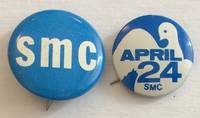
1971202537Philadelphia: SMC 1971. Tiny 3/4 inch pin with dove very good. SMC unknown books
1971258492Philadelphia: SMC; mfg. by Horn Co 1971. Tiny 3/4 inch pin with dove and slightly larger one with initials only very good. SMC; mfg. by Horn Co unknown books
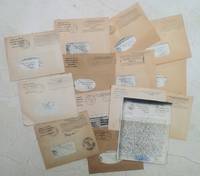
9009During WW II V-mail system was adopted by the US Post Office in 1942 to save space. The weight of 150000 letters was reduced from 2575 pounds to a mere 45. V-mail consisted of miniaturized messages reproduced by microphotography. Individual facsimiles were reproduced in the States and then delivered to the addressee. Lot of 12 War & Navy V-Mail from WW II from one officer to his family. All dated between 1943 and 1945 each about 4 x 5" These 12 letters are from Capt. W.H. Minnich in original transmittal envelope with post marked date. Mostly personal correspondence to family but some interesting comments: December 18 1944 ".This war is a terrible thing and I for one shall be glad when its all over." ".It won't be long until it gets cold again and I hope by then the Germans will have enough. unknown books
16409World War II Original war time U.S. War and Navy Departments first editionsPocket Guide books for 18 countries. These guidebooks were prepared by the U.S. War and Navy Departments to educate American soldiers stationed overseas during the conflict. It includes points on culture language including slang local history and the military justification for American presence in the area; in this sense these pocket books are a unique distillation of American wartime policy composed by the highest decision-makers in government for the soldiers actually setting foot on foreign soil. These guides provide a concise yet rich example of wartime indoctrination and the resulting cultural associations and relationships formed within the average American by the war.<br/><br/> All 18 guide books are war dated and they include: Alaska 1943; Australia 1944; Egypt 1943; France 1944; Paris and Cities of Northern France 1944; Cities of Southern France 1944; Great Britain 1944; India 1944; Iran 1943; Iraq 1943; Italian Cities 1944; New Caledonia 1944; New Guinea and the Solomons 1944; New Zealand 1943; Northern Ireland 1942; Panama 1943; Syria 1942; West Africa 1943. Washington DC: War and Navy Departments 1942-1944. Stapled bindings. 5.25" x 4.25" inches. All first editions. Written often in a casual approachable way From the Pocket Guide to Iraq: "Herr Hitler knows he's licked if the peoples united against him stand their ground" these guides repeatedly drill in the strategic necessity for Americans to create diplomatic relations wherever they are stationed. For example from the Pocket Guide to New Zealand: "Always remember that it is to our enemies' advantage to sow seeds of discord between us and our allies and it is to our advantage to understand them and to make them our friends." They also illustrate explicit policy motivations as with the Pocket Guide to Iran: "As an American soldier assigned to duty in Iran once called Persia you are undertaking the most important job of your life. There is no other war theater where military success by the United States and her fighting allies will contribute more to final victory over the axis. You've heard a lot of talk in this war about life lines - the sea lanes and land routes by which military supplies flow into the combat zones to be turned against the enemy. Iran is much more that a life line. It is a major source of the power that keeps the United Nations' military machine turning over -- oil. Because of its prime strategic value Iran in the only country in the world where the armies of three of the United Nations -- Great Britain Russia and the United States -- are operating in daily touch with each other . You as an American have a responsibility that goes beyond the ordinary military duties required of you. Your country has a reputation throughout the world for decency and unselfishness in its dealings with other nations. That reputation is a major asset for us in this global war. By your actions you can uphold it or destroy it." Includes period maps of the respective regions as well as cartoon illustrations to accompany the instructional text. Scattered soiling and wear. Altogether very good. unknown books
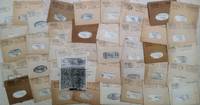
9008During WW II V-mail system was adopted by the US Post Office in 1942 to save space. The weight of 150000 letters was reduced from 2575 pounds to a mere 45. V-mail consisted of miniaturized messages reproduced by microphotography. Individual facsimiles were reproduced in the States and then delivered to the addressee. Lot of 42 War & Navy V-Mail from WW II from one officer to his family. All dated between 1943 and 1945 each about 4 x 5" These 42 letters are from Capt. W.H. Minnich in original transmittal envelope with post marked date. Mostly personal correspondence to family but some interesting comments: dated May 21 1945 ".All I want now is for the war to end and then an early return home. I hope to do that in another year after all these Germans and Japs can't fight forever. unknown books
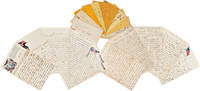
1865WRCAM55678Various locations including Washington D.C.; City Point Va.; Petersburg Va.; Brandy Station Va.; Annapolis Md.; and others 1865. Thirty-two war-date letters totaling approximately 95pp. plus ten retained transmittal covers and assorted post-war family papers. Original folds minor wear creasing and toning. A few letters slightly clipped likely to retain the patriotic letterheads. Overall very good. In mylar sleeves within a modern three-ring binder. An interesting Civil War collection of thirty- two letters spanning the length of the war almost all addressed to Mary H. Winant of Staten Island along with ten original transmittal covers and other documents and family papers. Many of the letters are from Mary's family members serving in the war including her brother James her cousin George F. Rezeau and her uncle James E. Rezeau as well as a few other friends. The letters present the experiences of war from numerous different perspectives showing how the conflict affected extended families and whole communities all of them sent to the same woman back home a beloved sister relative and friend. <br> <br> James Winant writes to his sister on November 10 1861 after his unexpected enlistment. It appears that he had not intended to join the army but was swept up in the fervor after many of the young men from their hometown answered the call. He writes to Mary from Camp Campbell in Washington D.C.: <br> <br> "I was expecting to come down the first of November but Mr. Alfred Dart was getting up a Company of cavalry & quite a number of the Herrick boys put their names to the list & wanted me so I did not mean to back out. I put my name to the list the 15th of October & started for Harrisburg the 23. I had but a little time to get reddy sic to go with that company as I should have come to see.I have been in to the Capital & I saw a site the city is well surrounded by our northern troops we expect to hear of a battle every day on the other side of the Potomac. There was about 20000 soldiers left since Friday." <br> <br> Despite having seemingly joined the Union Army on a whim James Winant took his duty very seriously. Two weeks later James tells his sister in a November 23 letter: "I should like to see you but I do not know when that will be but I shall not leave without orders if I was shure that I would never be found out I never would. I will die in the battlefield before I be a Diserter sic never. I came to Fite sic for my country and I shall if called on and never flinch in that course." However that did not mean that James was thrilled with life in the army. His January 15 1862 letter reads in part: ".I hope you enjoy your new year well although I did not enjoy mine very well for I had to stand on guard and that is the worst part of soldiering we have to be out in all kinds of weather and the weather is very changeable. One day it is almost like summer and the next day it is cold enough to freeze a person.It takes 104 men to guard our camp." Moreover by February 25 James was thoroughly restless and tired of being at Camp Campbell writing: <br> <br> "Our Regiment is No.1 & it is referred for the City Provost Guards. There is two Companys out of our regiment guarding the city now & we expect to go in a week. We expect to get our horses this week. I would rather be in the army acrost sic the Potomac for I am getting tird sic of guarding this old camp. When we get to the city we will have better times. There has been quite a move for the last two weeks. The federal troops has got a strong hold of the rebels & I hope they will keep on crossing it." <br> <br> Interestingly in one of the only letters not addressed to Mary James writes his father with much of the same information he includes in this letter. It reads in part: "Our troops is doing good business in the South they have taken the most important places & a large number of prisoners & they will soon take the rest. I wish our company was in the army acrost the Potomac. I should like to see a fight with the rebels for I am getting tired of guarding this camp." <br> <br> In the only response from Mary retained in the collection she writes back to James trying to offer her brother some comforting words although she was worried about him being sent into battle. In a letter written on April 28 Mary writes to James to beg him to put his faith in God. She included a poem to let him know she was always thinking of him. The letter reads in part: <br> <br> "O James how it cheers my Lonely Heart to hear from you.that you would not be cald sic to the battlefield but since I read your last letter wich sic informs me that you have been ordered to march in pursuit of the Enemy. My hope is well nigh expired though I know Dear Brother that you have Enlysted sic in a noble cause and given your heart and hand to your Country and now there is one step more noble for you to take and that is give your heart and head to God and you will be indeed a brave soldier." <br> <br> Mary also received a couple letters from her cousin George Rezeau in Pennsylvania and a few from her uncle James Rezeau. George does not appear to be serving in the military yet when he first writes to Mary though he would enlist shortly. By November 1862 George writes to check in on Mary from Camp Simmons and Camp McClellan. He signs off the former letter "Your naughty cousin G.F. Rezeau." <br> <br> George's father Uncle James Rezeau is also a Union man. He writes to Mary from Annapolis in August 1862 that he is anxious for his regiment to join the battle and that "if our regiment don't go on soon I will leave it and go into York State and join some other one and go down South for I enlisted to fight for my Country.I want to see the Elephant Old Jeff Davis and feed him some cold lead or else about twelve inches of cold steel." <br> <br> The latest letter in the archive is also from James Rezeau dated March 3 1865 to Mary written from the 67th Regiment Headquarters near Petersburg Virginia. Here a month before the war's end Mary's uncle writes to her check on her as he had heard she was sick. Uncle James also writes about war wages and sending money home to various family members including Mary whom he sends seventy-five cents. He also writes a letter to Mary's parents his own brother- in-law and sister from Brandy Station in early February 1864. He talks about his various health ailments including dysentery and diarrhea "It seems almost as bad as consumption for it reduces a man to almost a Skeleton" how he can't keep down any real food the bitterness of the cold and muddy Virginia winter and how he looks forward to seeing "all of you when this cruel War is over." <br> <br> There are also a handful of letters between family members i.e. a letter to Mary from her mother Eliza and some from friends and other soldiers. One letter dated August 26 1864 is from a friend "M. McPherson" who writes to Mary with news of her wounded cousin George: <br> <br> "G.F. Rezeau started for the Hospital this morning. He was wounded yesterday in a Battle between Shepherds Town and Winchester his wound is through the left hand the ball passed through his hand and spoiled the pocket in his shirt his glasses and his pocket combs beside bruising his side right smart. His wounds were very Lucky ones if there is any such. At the time George was wounded we were just going to charge he went to the Rear the Regt charged and we received a Perfect Shower of Rebel Compliments. There was a whole Brigade of Reb Infantry lying in ambush when we charged upon the Hill. They raised up there position was such they had a cross fire upon us." <br> <br> Included at the end of the archive are a number of documents and forms from after the war and as late as the turn of the century. They appear to be unrelated to Mary Winant although they could have belonged to her family or descendants. There are also ten original transmittal covers addressed to Mary Winant. <br> <br> An informative and research-worthy collection of Civil War and Civil War-era family correspondence. unknown books
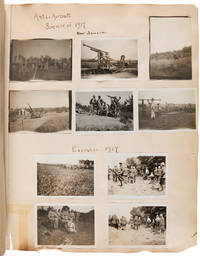
1919WRCAM55818France 1919. Three photograph albums one small framed photograph one small portfolio one book. 1115 photographs most mounted in albums ranging from 1 3/4 x 2 1/2 to 7 1/2 x 5 inches; 162 pieces of ephemera most mounted in albums. Two photograph albums: Folio. Olive green buckram both with burgundy morocco labels on front board and spine with gilt initials "WBO JR" and volume number. Minor wear to extremities some leaves slightly cockled due to photo mounting small chips and closed tears to margins of leaves. Third photograph album: Oblong octavo. Black limp cloth boards with black cord binding. Some wear to extremities some closed tears to leaves a few photographs cut out. Framed photograph: Glass cracked some tarnishing to frame. Portfolio: Tan leather with a snap clasp. Pocket partially torn well worn. Book: Publisher's half red cloth with illustrated paper boards inscription on front free endpaper. Front board and spine starting to detach from text block first few leaves detached but present. The archive in very good condition overall. An engaging and carefully assembled collection of photographs recounting the World War I service of 1st Lt. William B. Olmsted Jr. along with a substantial collection of ephemera and letters described below. The photographs document all aspects of his war service showing the aftermath of important battles American soldiers French soldiers and civilians scenes of the countryside and devastated towns and villages moments of calm and recreation and images in France from the period of the Armistice and in the months after. The ephemera provides a detailed paper record of Olmsted's service in France. <br> <br> William Olmsted Jr. 1893-1948 was born in Southboro Massachusetts. His father the Rev. William B. Olmsted was the Headmaster of Pomfret School in Connecticut. Olmsted was Yale Class of 1915 and also did graduate work at Trinity College. After the war he joined the staff of American Viscose Corporation and was Vice-President in Charge of Sales and a director at the time he died. Olmsted volunteered for the American Field Service formerly the American Ambulance Field Service in France in June 1917 and then enlisted in the American Expeditionary Forces later that year. He attended French Officers' School at Meaux and was commissioned Second Lieutenant in February 1918. Olmsted served in the Réserve Mallet a French army unit made up of American volunteers who transported ammunition and trench equipment and anything else that needed transporting wherever it was most needed. <br> <br> The first olive green album begins with a large page in manuscript recording Olmsted's service in France. The next page has "Volume 1 1917-1919" in manuscript and Olmsted's Registration Certificate i.e. draft card June 1917 affixed below. Photos begin on the following page starting with "Chevigny Farm" in August 1917. Olmsted annotates some photos individually but there are also titles and dates for each section which are grouped geographically but not chronologically. The subjects are wide- ranging - Olmsted's photos feature fellow American and French soldiers including the Army of Africa French civilians scenes of the countryside as well as ruined buildings and landscapes military encampments and cemeteries. There are also photos of airplanes both ready to fly and shot down a gas alarm and a Fourth of July gathering. <br> <br> Many of Olmsted's photos are candid and some can be haunting as well. One set chronicles the devastation following the Battle of Montdidier. Part of the second phase of the larger Battle of Amiens the conclusion of this offensive was later known as "the black day of the German Army" and was a major turning point in the war. Nevertheless hardly a structure is left standing in Olmsted's photos. Happier scenes are featured at La Capelle for the Armistice on November 11 1918 including cars that ferried German delegates there to negotiate the peace. The photos feature German as well as French and American troops. Even after the peace was signed however Olmsted still has much devastation to document. He also includes a series of photos he acquired from German soldiers depicting a funeral for a fallen aviator and German soldiers "at play." At this point Olmsted's combat travels take him to Paris and then this sequence ends. <br> <br> The next series of photos begins with the heading "Trip in Ford. 16 days - Cost of car rent gas oil $137.50." Accompanied by his wife Margaret this is clearly a tourist trip albeit a somber one beginning in Soissons and ending in Argentan. Olmsted includes photos of cathedrals and repairs to cathedrals cafés the American cemetery at Belleau Woods as well as French and German graveyards shots of trenches and forts near Rheims and friends and families he meets along the way. This sequence ends with scenes aboard a ship. <br> <br> The second olive green album "Volume 2 1917-1919" begins with "French Tanks Going into Action." Photos in this album are often annotated but there are fewer locations noted. There are some apparent combat scenes in this album as well as more devastation from shelling and bombing and a short sequence of airplanes including a downed German fighter. A sequence titled "Pictures taken by Capt. F.O. Robinson" finishes the photo section. Robinson's pictures do not vary substantially in form or content but add areas not covered by Olmsted particularly in and around Bazoches. <br> <br> The last two-thirds of this album is titled "Volume 3 1917-1919" and consists of ephemera and letters. It begins with a comic sketch of Olmsted and a cloth insignia of his unit the Réserve Mallet. Then follows all of the official documentation of Olmsted's military service including his commission and promotion and ultimately his discharge papers. Also included are Olmsted's folio sheet-size passport with photograph and a substantial collection of orders leave permissions and other administrative documentation from both French and American forces issued to Olmsted. In the midst of these materials he has mounted his American Field Service Medal and Victory Medal with battle clasps: Somme-Defensive Aisne Montdidier-Noyon Aisne-Marne Somme- Offensive Oise-Aisne Defensive Sector along with an envelope labeled "From Cathedral at Rheims" holding pieces of broken blue glass and a small card wishing him happy new year from the superior and sisters at Crecy-en-Brie. Olmsted also preserved a few watercolors one depicting a soldier possibly Olmsted himself with the sisters at Crecy-en-Brie another of a man in a horse-drawn carriage and a larger one of Olmsted standing next to a monument displaying an American eagle and shield and with a truck in the background. There are several sketches by the same artist included as well. Towards the end Olmsted has mounted his dog tags and two pamphlets about the Réserve Mallet. <br> <br> The smaller black photo album seems to overlap somewhat timewise but features photos primarily in the United States many of which are annotated in white pencil in a hand different from that of Olmsted. It may have been created by his wife Margaret. There are several photos taken in the Bay Area of northern California including the campus of the University of California and Golden Gate Park. Interspersed are photos from an apparent road trip including "Dallas" "New Orleans Docks" "Camp Sheridan" Nebraska and "Montgomery" Alabama. <br> <br> Final material relating to Olmsted's life include a small leather portfolio of clippings of his obituary printed in papers around the country and other ephemera. Among this material is an envelope labeled "Bearers at my funeral." with notes inside from Olmsted on whom he wants to conduct his funeral hymns to be included and so forth; an enveloped labeled "Lily from my Wedding bouquet June 23 1917" and a condolence letter to his widow Margaret. Included loose are a menu from a restaurant in Paris 1917 a portion of a letter on teaching military strategy that begins in code and two documents related to Margaret being named a Chevalier of the Légion d'Honneur by the French government for her work directing overseas activities of the American Aid to France foundation during World War II. Finally there is a well-worn dedication copy of "I WAS THERE": WITH THE YANKS ON THE WESTERN FRONT 1917-1919 by C. Leroy Baldridge New York: G.P. Putnam's Sons 1919 given to the Olmsteds by the commandant of the Réserve Mallet. <br> <br> A truly impressive collection chronicling an American's service in France. hardcover books
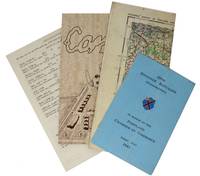
194444720v. p. 1944. The archive includes a copy of Contact Ryan Field Hemet CA class book; Checklist 44-F class book from Pecos Army Air Field Pilot School Twin Engine an aeronautical map 2nd Edition 1942 of "England South East and London" "Areas Dangerous to Flying are not Indicated on this Sheet" 1941 Army Day program Portland 'Restricted Extract' Operation Order Number 1 23 June 1945. 9cc. Dawe senior officer and listed pilot; photograph of Dawe in uniform; program for 'Graduation Class 44-F June 27 1944. Pecos Army Air Field Pecos Texas' and an unused invitation with accompanying envelope for said graduation ceremony. General signs of use. 'Contact' with Dawe's signature as well as some fellow 8th Squadmates' signatures at their photograph. Overall Very Good. Divers paginations. Illustrated. Map: folded 12-1/4" x 5-1/2"; unfolded 24-3/8" x 30-3/4" <br/><br/>Lt Wesley Dawe from San Francisco served in the Army Air Corps during WWII ultimately flying the B-17-G with here collected a number of items documenting his early aeronautical career primarily from the pilot training days of his second enlistment his first stint was 1938 - 1941 mustering out ~ 6 months before Pearl Harbor; he re-upped in 1943. unknown books
1919WRCLIT84351London: Chatto & Windus 1919. Cloth paper label. First edition of the author's first solely published collection of verse. Handsome bookplate on pastedown by Reynolds Stone. A very good copy. FIFOOT OA3a. REILLY WWI p.295. Chatto & Windus hardcover books
1930WRCLIT80923New York: Jonathan Cape and Harrison Smith 1930. xiii5820pp. Large thick octavo. Blue cloth. Endsheet maps appendix index bibliography and notes on books and authors. First edition. Spine and boards quite sun-faded otherwise very good and sound. Exclusively prose personal narrative fiction and other. Jonathan Cape and Harrison Smith hardcover books
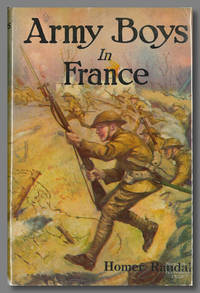
1919WRCLIT78317Cleveland: World Syndicate Publishing Co. 1919. Blue cloth lettered in black. Frontis. Reprint utilizing the plates of the Sully & Co. edition. Faint foxing to endsheets otherwise very good or better in highly pictorial dust jacket with short closed at top edge of front panel. World Syndicate Publishing Co. hardcover books
8186E LANSING MSU PRESS1960. FIRST EDITION THUS VERY GOOD. F. E LANSING, MSU PRESS,1960 unknown books
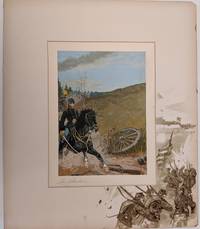
1887692New York: Koch Sons & Co. 1887. Folio. 480 x 405 mm. 19 x 16 inches. Printed index of plates followed by 12 chromolithographic images after original drawings by L. K. Harlow. Each image is mounted to a cardboard mat 11 of which have lithographic vignettes in the lower corner of the mat. Each image is preceded by a tissue with the title of plate printed; some of the tissues are creased and chipped at the out edges. Each plate is signed by Harlow in pencil and a few are signed in the plate; the images are clean and bright but the mats show some toning and a few have minor chips to the edges.  The folio plates are housed in a folding portfolio the spine and flaps are worn and probably should be discarded. Deluxe Edition numbered "79". Sold by Subscription Only. Scarce portfolio of Civil War paintings by the noted Boston artist Louis Kinney Harlow.  Harlow was noted for his water color illustrations that were used to illustrate scores of books and which keep the printer Louis Prang very busy in the 1880's and 1890's. Fielding writes "In 1880 he opened his studio in Boston. Since that time he has been much sought after by publishers of fine books his illustrations having color brilliancy." The plates in this portfolio depict aspects of army life and battle scenes including Grant at Vicksburg Sherman on his march and Sheridan at the Battle of Cedar Creek Each is finely designed and colored and each is signed in pencil in the lower margin. The color plates were printed by Koch and Sons and demonstrate the technical skills of the printer and his attention to detail and color registration. Copies of this portfolio were scarce in the trade. NUC lists only the Boston Public Copy and OCLC adds seven others all in American libraries. Mantle Fielding Dictionary of American Painters p. 158. . Koch, Sons, & Co. unknown books
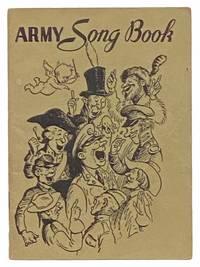
19412311387U.S: Secretary of War 1941. Stapled Binding. Very Good. Wrappers creased. 1941 Stapled Binding. 64 pp. Great mix of songs starting with the Star Spangled Banner and going on to cover a vast range of both military anthems and popular folk songs; also lesser-knowns sillies and novelty songs. Some of the later are: Aloha Oe Song of the Army Engineer Bombed One Keg of Beer For the Four of Us Parody Field Artillery Song Cindy Colombo Arms for the Love of America K-K-K-Katy The Monkeys Have No Tails in Zamoanga The Raw Recruit The New River Train Slum and Gravy etc. Secretary of War unknown books
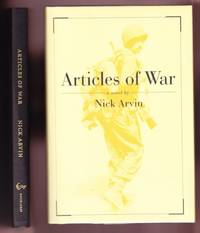
2005121836NY: Doubleday 2005. First edition first prnt. Quarter cloth and paper-covered boards. Unread copy in Fine condition in a Fine dustjacket with an archival cover. Arvin's first novl following a story collection.l. First Edition. Hardcovers. Fine/Fine. 12mo - over 6¾" - 7¾" tall. Doubleday Hardcover books
189140279Chicago: Kurz & Allison 1891. 18 x 25 inches. Matted. 1 vols. Some chipping at margins else fine. 18 x 25 inches. Matted. 1 vols. Kurz & Allison unknown books
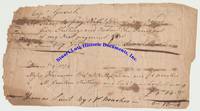
4254DS. 8 ½†x 4 ½â€. December 7 1775. No place likely Massachusetts. A manuscript document signed “Samuel Place†concerning military disbursements: “Capt Gerrish Sr Please to pay Nathl Pearson one pound five Shilling and reduct the same out of my next payment Samuel Place Decemb 7 1775…Moses Harvarne Bot sic of Nath Pearson one pr Breeches at fourteen shillings and eight pence lawful money…â€. Colonel Jacob Gerrish of Newbury headed a company that marched from Newbury to Cambridge for the Lexington Alarm on April 19 1775. Nathaniel Pearson was a private in Gerrish’s regiment and a Minuteman during the Lexington Alarm as was Samuel Place. The document has irregular edges and some ink that has bled through from the verso; it is in very good condition. An interesting Revolutionary War document. unknown books
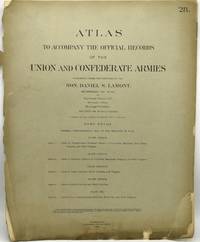
1894289628Washington NY 1894. Five folded lithographic sheets 46.5 cm x 72 cm. These with some damping and light stain; very modest loss and closed tear at the bottom of the fold not affecting any of the printing. Chipping to the front cover. unknown books
186424202<p>Two tickets to the Great Central Fair in Philadelphia. One admitted a pupil of the public schools of Philadelphia and was used on Saturday June 11 according to the stamp on the verso. The other is an apparently unused "Season Ticket" that admitted the bearer "<i>To All Parts of the Fair</i>" except the Children's Exhibitions but was "<i>Forfeited if Transferred and Not Good unless Endorsed</i>." The verso includes the oath "<i>I hereby promise that this Ticket shall be used to obtain admission to the Fair by myself only</i>" and a blank line for a signature.</p> <b>CIVIL WAR. ABRAHAM LINCOLN.</b>Great Central Fair Tickets June 1864. Pair of passes for the Great Central Fair held in Philadelphia June 7-28 1864. One ticket is for one day's admission for a public school student. The other is a season ticket. 1 p. each 3½ x 2¼ and 3½ x 2 in.<p><b><br /></b></p><p><b>Historical Background</b></p><p>During the Civil War several northern cities hosted sanitary fairs between 1863 and 1865 to raise money for the care of wounded soldiers. The Great Central Fair held at Logan Square in Philadelphia in June 1864 was a fundraiser for the United States Sanitary Commission and was one of the largest fairs. The main exhibit building constructed in forty working days by local volunteer skilled labor enclosed 200000 square feet. It featured nearly one hundred departments offering a broad range of displays from Arms and Trophies to Fine Arts to Umbrellas and Canes. Curiosities included a $1000 doll house a recreated parlor of William Penn with Penn artifacts the boat used by Arctic explorer Elisha Kent Kane and George Washington's carriage.</p><p>Over three weeks the fair welcomed more than 400000 visitors. The season ticket offered here cost $5 a week's pay for a day laborer or a domestic and several days' wages for skilled workers. The fair served more than 9000 meals per day in its restaurant and had a daily newspaper with descriptions of the various departments. During its existence the fair raised approximately $1 million for the Sanitary Commission second only to New York City in money raised.</p><p>President Abraham Lincoln attended the fair with his family on June 16. He also donated forty-eight signed copies of the Emancipation Proclamation printed under the auspices of George Boker of the Union League which were sold for $10 each.</p><p><b>Condition</b></p><p>Both have glue discolored on the reverse sides. The smaller card has a 1" edge tear on the right side neatly repaired with archival tape.</p><br /> books
5962Historic WWII Newspaper. Baltimore News Post MD August 24 1945. Large bold banner above the masthead: "ATOMIC BOMB RAYS KILL THOUSANDS JAPS CLAIM". Also has small front page photo of MacArthur. In very good condition. unknown books
193732039Philadelphia: The Wistar Institute of Anatomy and Biology 1937. 1st edition thus Broadfoot p. 634 incorrectly listing this edtion as 2 vols; Howes W-598; Kurutz 691b; Mintz 501; cf Cowan II p. 692 & Graff 4724 for the 2v 1914 edition. Blue buckram cloth binding with gilt stamped lettering. Printed blue paper dust jacket. NF/VG spine sunned a bit/pc. vii 1 blank 528 pp including Index. Unopened. Fronts portrait. 8 internal illustrations/plates. Folding map at rear. Royal 8vo. <br/><br/>An affordable alternative to the 2v limited edition issued in 1914 also by the Wistar Institute. The Wistar Institute of Anatomy and Biology hardcover books
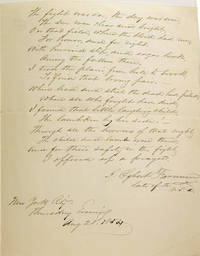
1854307508New York City 1854. 3 pp. pen and ink on bifolium. 8vo. Old folds very minor stain to edge of bottom right corner on first page not affecting text else fine. 3 pp. pen and ink on bifolium. 8vo. A SURPRISINGLY POIGNANT POEM FROM A HARDENED VETERAN. Romantic in a style befitting the era Farnum offers a graphic account of a a heart-wrenching scene from battle which he describes as "carelessly written but respectfully dedicated to Maria L. Green." Reading in part:<br/><br/>."Where hot and fiercest raged the fight<br/> Where lead came down like rain ~<br/> Where bursting bombshells feeble light<br/> Discovered heaps of slain ~<br/> I saw a little laughing sprite<br/> A joyous little dear<br/> Leading a pet lamb through the fight<br/> Without one though of fear. ~"<br/><br/>Soldier express rider mercenary adventurer and notoriously hard drinking brawler John Egbert Farnum's 1824-1870 military career began in the Mexican American War where he served as a sgt. major in the 2nd Pennsylvania Infantry Regiment. He would go on to see action in the Crimean War and the jungles of Cuba and Nicaragua before enlisting as a major in the Union Army in 1861. Farnum fought gallantly in some of the bloodiest engagements of the American Civil War including Fredericksburg Chancellorsville and Gettysburg before his wounds forced him to retire from active service Farnum was shot 19 times and suffered two saber wounds. He was promoted to brevet brigadier general for his meritorious service. <br/>Despite his incredible war record Farnum is more often remembered for his involvement in the infamous voyage of the schooner Wanderer. Built as a luxury racing yacht the Wanderer was purchased by William Corrie in 1858 with the assistance of southern "fire eater" Charles A.L. Lamar. Corrie had the schooner refitted as a slave ship and along with Farnum who later claimed ignorance of the scheme and the ship's crew sailed to Africa and loaded 407 slaves aboard. They arrived off Jeckyll Island Georgia in November and were arrested for violating the 1807 Act Prohibiting the Importation of Slaves. Farnum was charged with piracy. He escaped jail but was recaptured and after a lengthy and sensational trial in which the President of the United States James Buchanan came to his defense he was acquitted of all charges. unknown books
1865261000New Orleans 1865. 6 pp. 8 x 5 inches on 2 sheets. Separations at folds crude tape repairs minor chipping. 6 pp. 8 x 5 inches on 2 sheets. Confed. ship attempting to run the Mississippi River blockade at the close of the war. Here a Union sailor describes one of the last naval incidents of the war in which the CSS Webb made a desperate run down the Red River and the Mississippi in a bid for the open ocean before finally being scuttled by its crew past New Orleans. The unidentified author devoted most of his long letter to a description of the pursuit: "There has been a very dareing sic deed committed on this river since I wrote.All the men of war below us fired at her but did not hit her. She was going down the river at the rate of 30 miles an hour. There was a torpedo projecting from her bow. . . . The prevailing opinion here is that Jeff Davis or some other of the leaders of the Confederacy were on board. unknown books
17861008004 page letter sheet I pp of text 13 lines of test signed and mailed remnant of wax seal labeled duplicate docketed on last page. Legible probably a second copy made for legal purposes signed by author some wear at folds and some staining second sheet split and cracked a bit but text page in very good condition. Interesting letter that appears to have the wrong date on the front page. What appears to be January 20 1706 should read January 20 1786 according to the docketted date on the last page. The letter is written by Stephen Lush 1753-1825 to Jellis Jacob Fonda 1751-1839. It relates to taxes on land in New York owned jointly by Lush and Fonda. John Lansing an attorney and former delegate to the Constitutional Convention seems to have resquested the payment of one shilling per acre on the 40000 of acres they own jointly. Provides some interesting content on land taxation for the period. Lush practiced law in Albany until the War for Independence; he was commissioned a captain and saw action in New York City but was captured by the British. Major Fonda was considered one of the first patriots of Schenectady and after Lexington he formed a company of Minutemen. He fought in the Campaign against Burgoyne and at the Battle of Bemis Heights. Fonda organization website. ny education government website. books
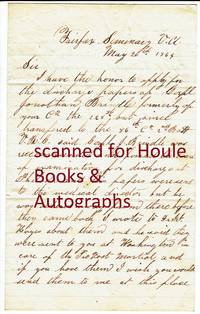
500991<p>5" x 8" letter to Captain J.K. Murphy Fairfax Seminary hospital Virginia May 26 1864. 1 1/4 pages with integral leaf. Very good.</p><p>In part: "Sir: I have the honor to apply for the discharge papers of Corpl. Jonathan Brindle formerly of your company - was recommended and passed the board of examination for discharge at Philadelphia and his papers were sent - but he was ordered away from there before they came back - ."</p> books